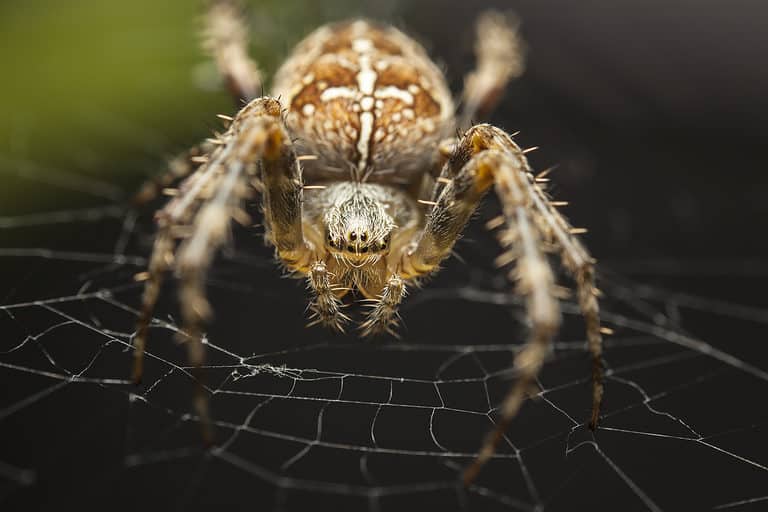
The People’s Republic of China, or just China, is the second most populated place on earth. The country is so large that it has five time zones! The landscape in China is highly diverse and has something for everyone. On the one hand, in the arid north, it has the ever-expanding Gobi and Taklamakan deserts and a humid, subtropical area to the south. It has vast mountain ranges like the Himalayas and Tian Shan but also spacious grasslands and alluvial plains. Even the Yellow and Yangtze Rivers and their deltas are home to many life forms. With the many different temperature and altitude zones, China is hugely diverse regarding flora and fauna.
Chinese weather is determined by two different times of the year; the monsoon season and the dry season. Most spiders shy away from water because their book lungs’ location is on the outside of their body. Such spiders can drown in a drop of water without an escape. The dry season can also be deadly to spiders. Many species can go for at least several days without water, but with high temperatures and lack of water, most spiders will perish if they cannot get out of the heat and find water.
It’s estimated that over 4300 different species of arachnids can be found in China. Of those, 560 are jumping spider species. That’s a whole lot of spiders! The only place that we know of having more jumping spiders than China is Brazil. Brazil also has an extremely diverse geography and climate, which allows for so many species to live comfortably in the same country.
An estimation of over 4300 different species of arachnids lives in China. Of those, 560 are jumping spider species. That’s a whole lot of spiders! Brazil is The only place we know of having more jumping spiders than China. Brazil also has a highly diverse geography and climate, allowing many species to live comfortably in the same country.
Chinese Spiders
In China, you can find everything from tropical arachnid species in the south to desert species in the north, with cold and warm temperature spiders making the difference between extremes. More and more spiders are being discovered in caves there, as well. Maybe it should also be known as the Republic of Spiders.
1. Chinese Hourglass Spider (Cyclocosmia ricketti)
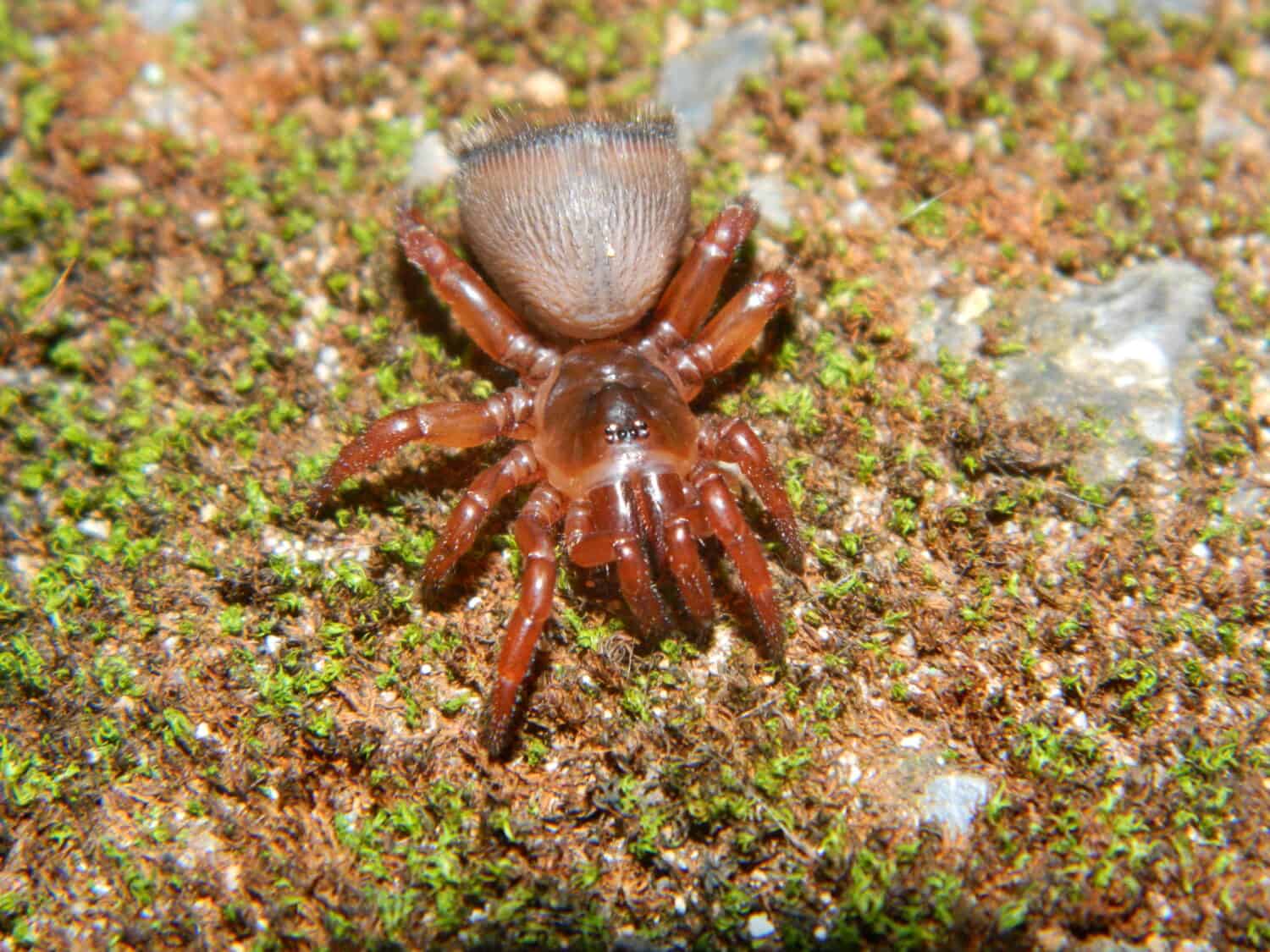
The hourglass trapdoor spider is one of the latest spiders to gain hype on the internet.
©Venus Saksongmuang/Shutterstock.com
Despite the hype, the hourglass trapdoor spider is not harmful to humans. Their venom is strictly for immobilizing prey insects that wander across the spider’s trapdoor in their tunnel. Their bite is painful and though rare, can happen. Like most, the hourglass trapdoor spider is generally a very shy arachnid. However, the males can be aggressive and may attack for self-defense if they feel threatened.
These copper-colored spiders are rare and stay hidden for most of their lives. They tend to be approximately one inch big. They are jokingly called the Oreo cookie spider since their backside looks like a coin or an Oreo cookie. When they feel threatened, they dig a hole and plug the entrance with their coin-shaped behind to trick passing predators.
2. Pantropical Huntsman Spider (Heteropoda venatoria)
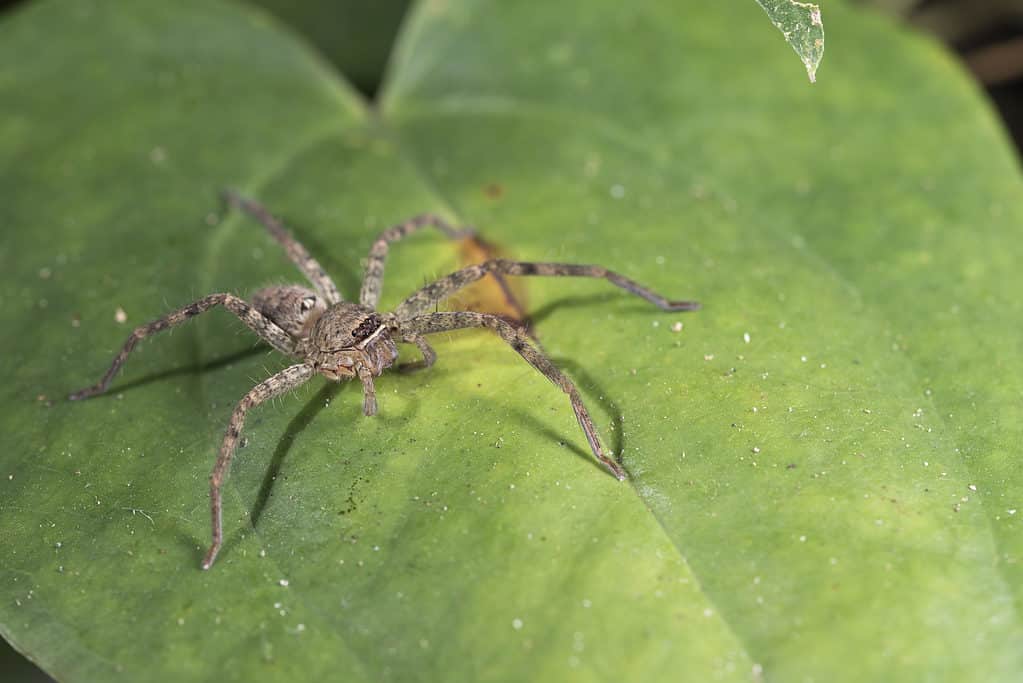
The pantropical huntsman spider (Heteropoda venatoria) is a large spider that has been shipped all over the world in tropical goods like bananas.
The pantropical huntsman spider is one of the larger spidered species you will find in China. It is, however, harmless to humans. Occasionally, these spiders may be aggressive. They would much instead run and hide than attack, even if cornered.
The pantropical huntsman spider can reach a body length of one inch and have a leg span of up to five inches. They are varying colors of brown and grey and have black dotted legs. These giant spiders do not make webs but hunt for prey on the ground. The males live for around a year, and the females live slightly longer.
3. Chinese Bird Spider (Haplopelma schmidti)
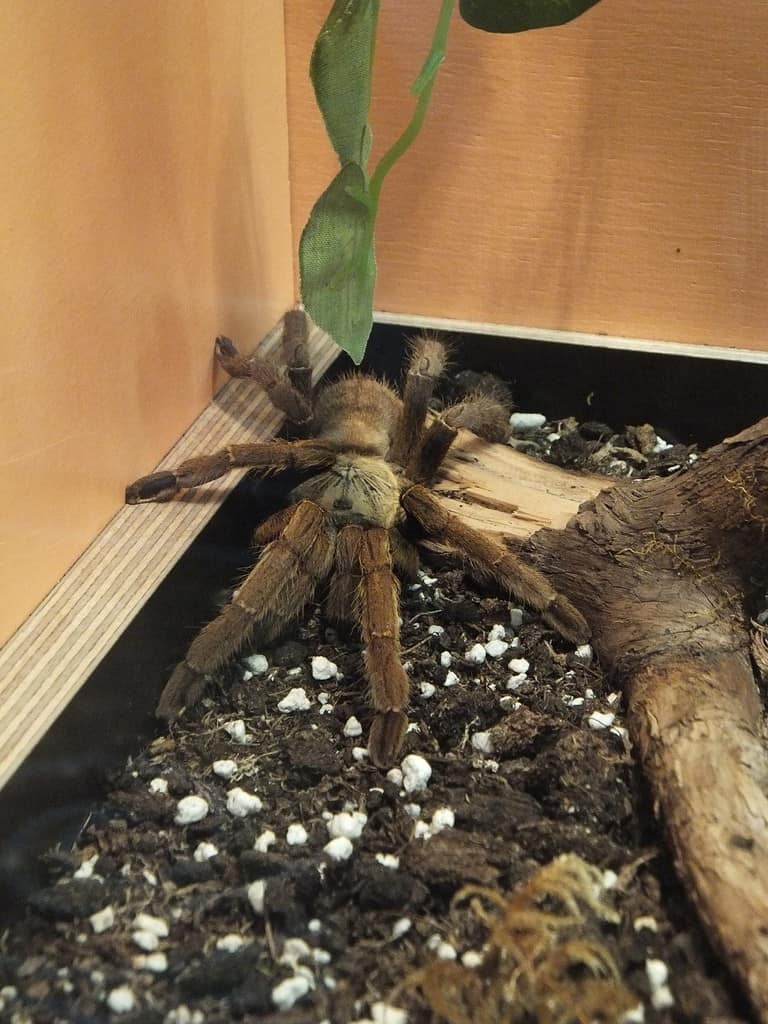
Chinese bird spiders (Haplopelma schmidti) do not have kicking hairs like new world tarantulas.
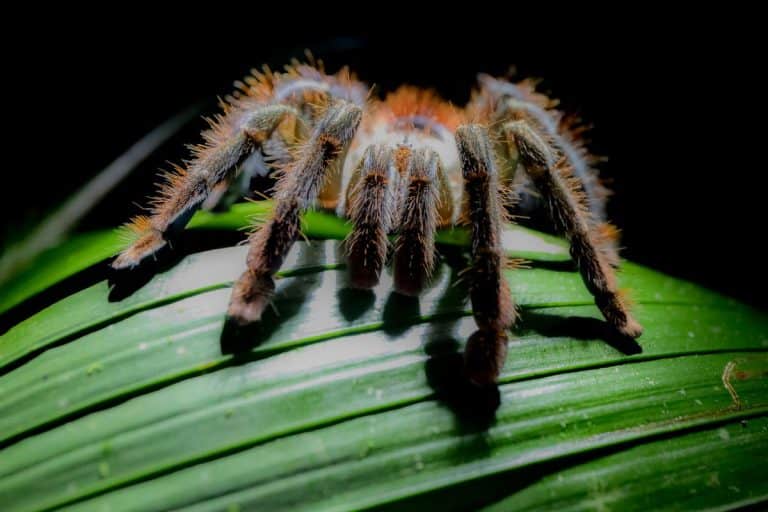
The Chinese bird spider is an old-world tarantula meaning it lacks the urticating hairs that new-world tarantulas have for defense. The hairs are kicked at a predator and can cause blindness, irritation, and death. Without the hairs, the old-world spider defends itself by biting its attacker. Old-world tarantulas are much more aggressive than new-world tarantulas. The female Chinese bird spider can live to be 30 years old. Their body length is between two and three inches long, and their leg span is up to eight inches.
A bite from an old-world tarantula, such as the Chinese bird spider, can cause pain, swelling, moderate to severe muscle cramping, exhaustion, trouble breathing, and fever. These side effects can also take days to appear.
4. Prehistoric Mesothelae Spider (Songthela zhongpo)
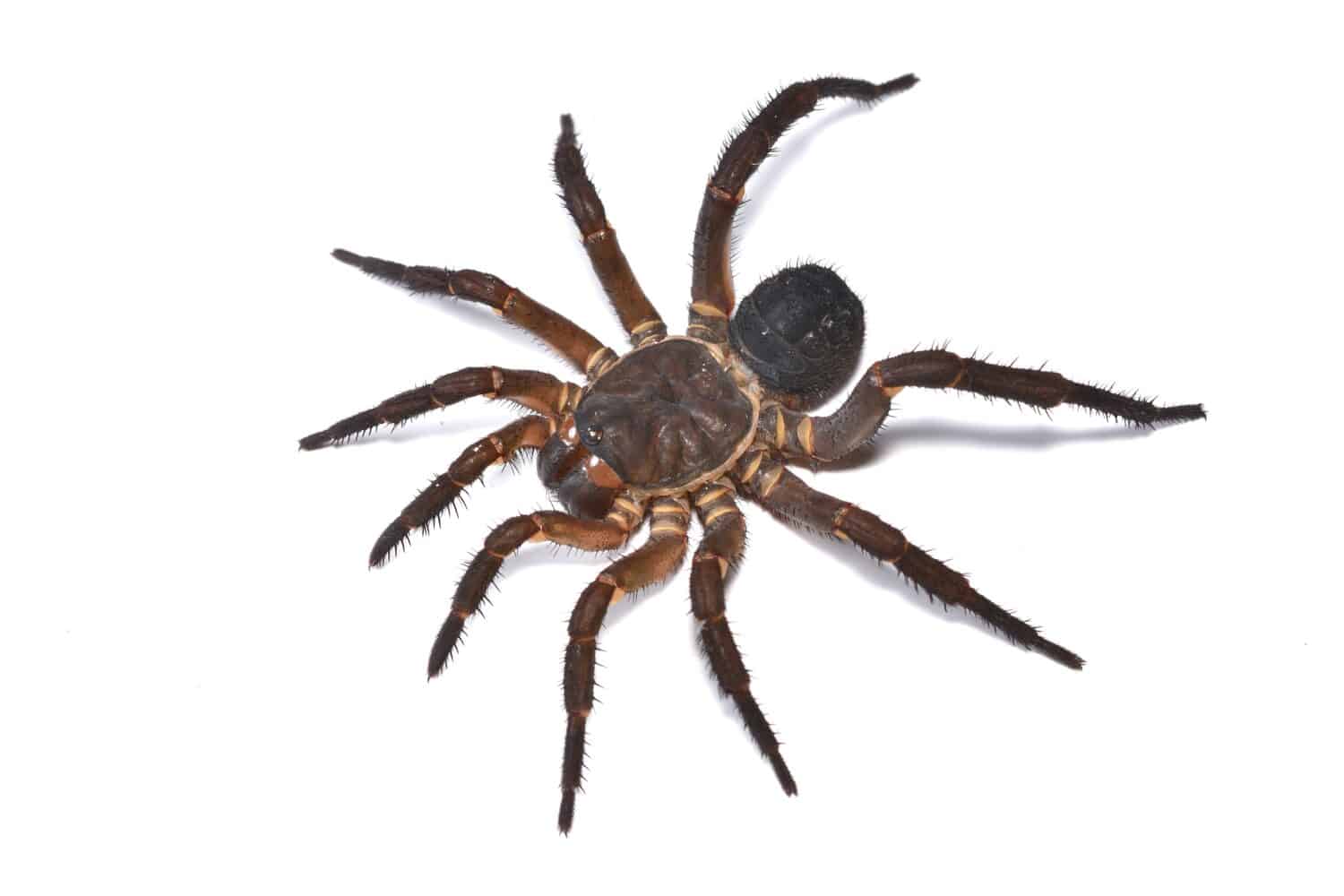
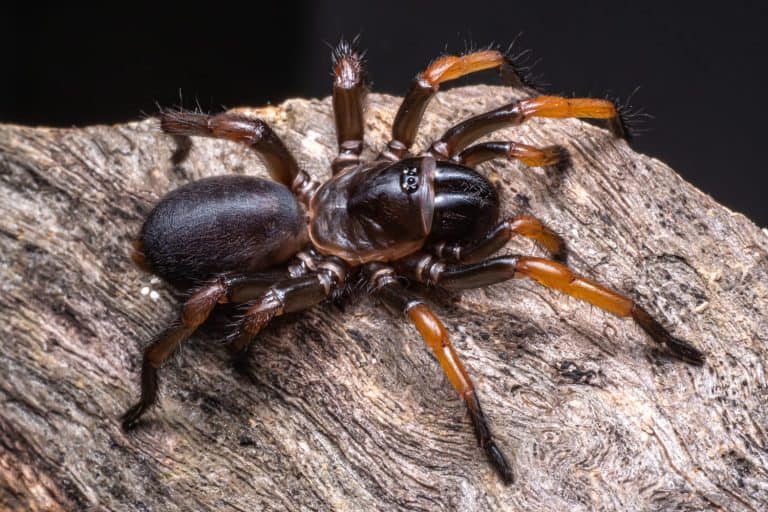
This is not a photo of the Songthela zhongpo but a segmented trapdoor spider with similar characteristics.
©Tobias Hauke/Shutterstock.com
In early 2023, scientists found three new mesothelean spiders in Hunan, China. The spiders are from the genus Songthela (Mesothelae, Liphistiidae, Heptathelinae) and are three types of primitively segmented spiders. Trapdoor spiders are very similar to these super old world spiders that are said to have lived before dinosaurs walked the earth 300 million years ago.
These spiders have segmented legs like trapdoor spiders. The ancient spider has spinnerets situated mid-abdomen instead of at the end of the abdomen, as seen on common spiders. The mesothelean spiders also have a segmented abdomen with armor plates on top, similar to shrimp. They hunt from the safety of a tunnel with a false door at the entrance with sticky web lines. When insects or small prey touch the line, the spider shoots out of the trapdoor and grabs its victim before disappearing into its lair.
5. Joro Spider (Trichonephila clavata)
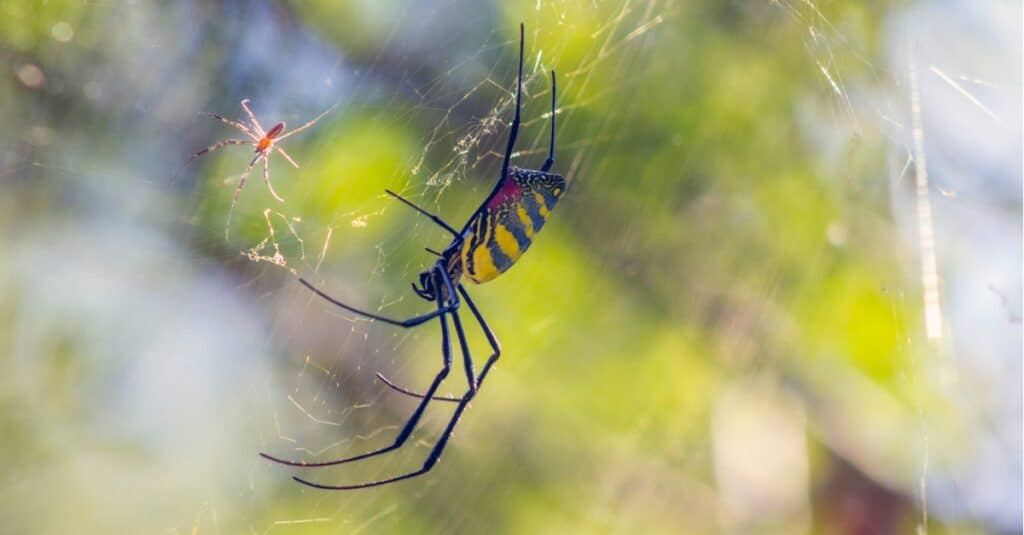
The Joro spider gets a heavily exaggerated bad rap as a terrifying, enormous spider that flies.
©iStock.com/LizMinkertJohnson
Joro spiders are orb weavers and are sometimes mistaken for giant golden orb weavers or “garden spiders.” These giant spiders are incredibly timid and want nothing to do with humans. They make massive orb-shaped webs to catch insects and sometimes small birds. Their bite, though painful, is harmless to humans.
Technically, these spiders do not fly. When their slings are ready to start their own lives, they make tiny balloons using webbing still connected to their spinnerets to catch a ride with the next breeze and fly to their new homes. If an adult tries the same, it is due to a pressing need to evacuate quickly and possibly without touching the flooded floor. During monsoon season, these spiders face death by drowning if they don’t act quickly.
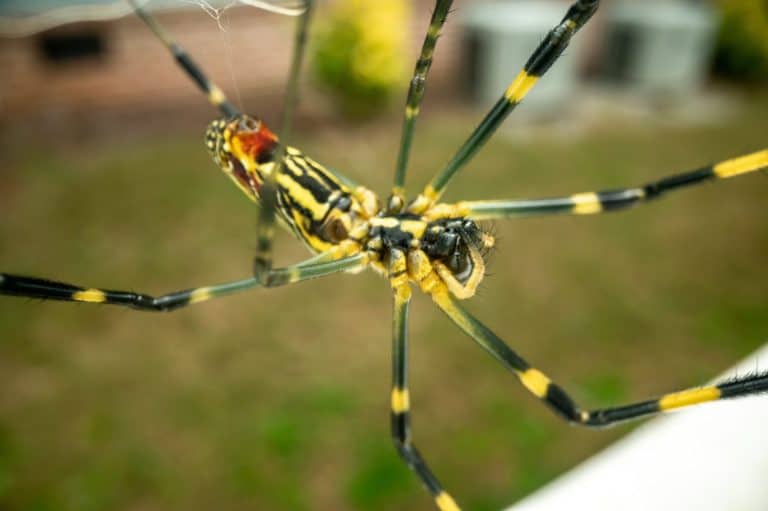
The Joro spider’s body is approximately one inch long with a leg span of up to four inches. The males are much smaller (as seen in the photo) and tend to hang out on the perimeter of the female’s web, hoping to mate. Spiders are cannibals, and females may eat the male if irritated by his presence.
6. Long-Horned Orb Weaver (Macracantha arcuata)
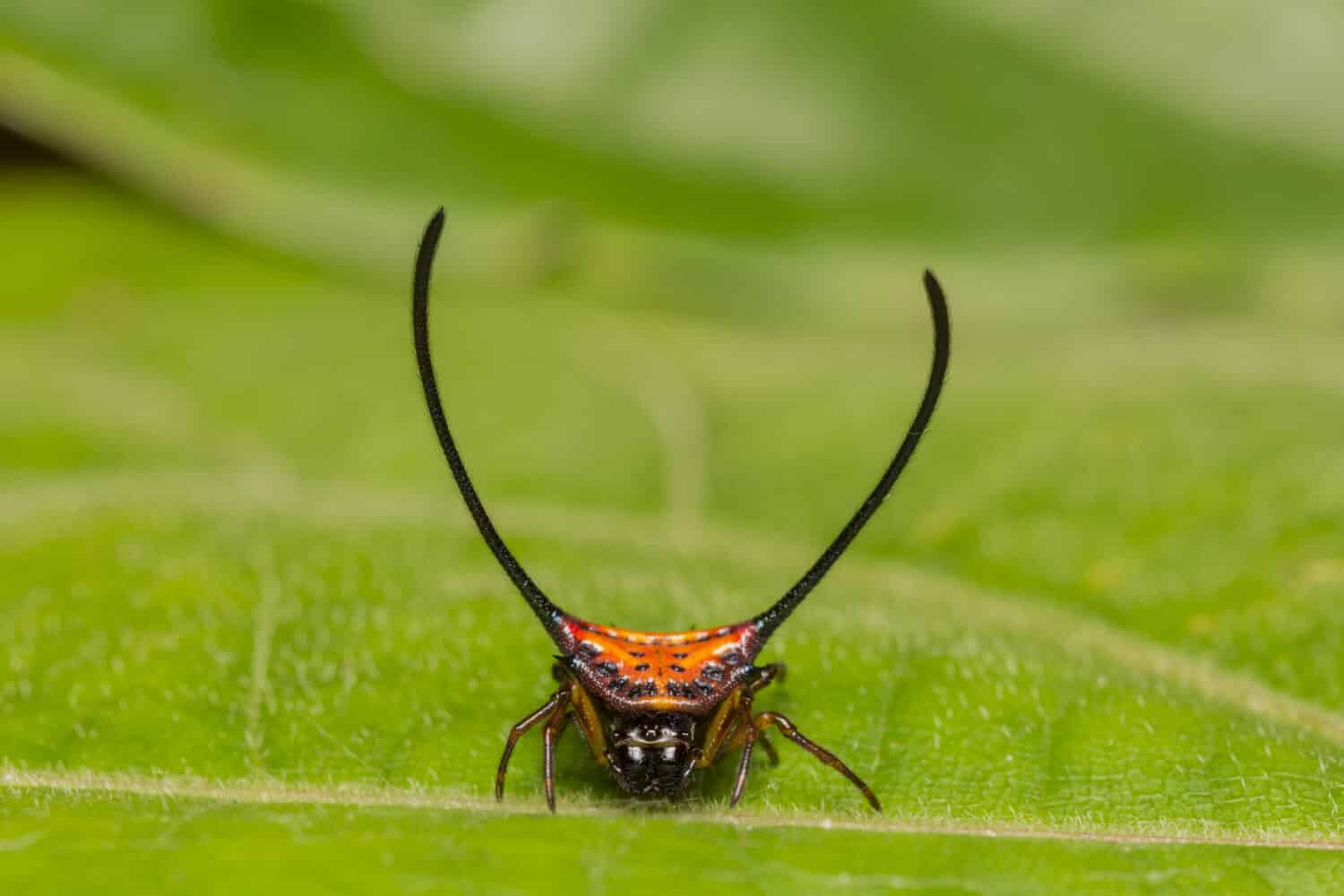
The adorable long-horned orb weaver may look strange, but they are very timid.
©Koragit/Shutterstock.com
The long-horned orb weaver, also known as the wishbone spider, is one of the most interesting-looking arachnids. Orb weavers, in general, are some of the most unique-looking spiders that exist. It’s hard to believe the massive “flying” Joro spider is in the same superfamily, Araneoidea. This family of spiders makes up one of the largest groups in the Araneomorphae infra order of spiders. The female long-horned orb weaver is a tiny, shy spider at 8mm long. Its long horns are over three times its length and serve the purpose of making them unpalatable for frogs, lizards, and birds. Its predators take one look at the stabby-looking horns and pass on by.
These mini spiders prefer woodlands or brush, with plenty of bushes and trees to stretch their ornate webs. They feast on small insects that get stuck in their webs. The spiders are brightly colored, which is generally a warning to predators that they are poisonous if eaten. When you’re that small, you must pull out all your best tricks to avoid becoming a meal.
7. Giant Golden Orb Weaver (Nephila pilipes)
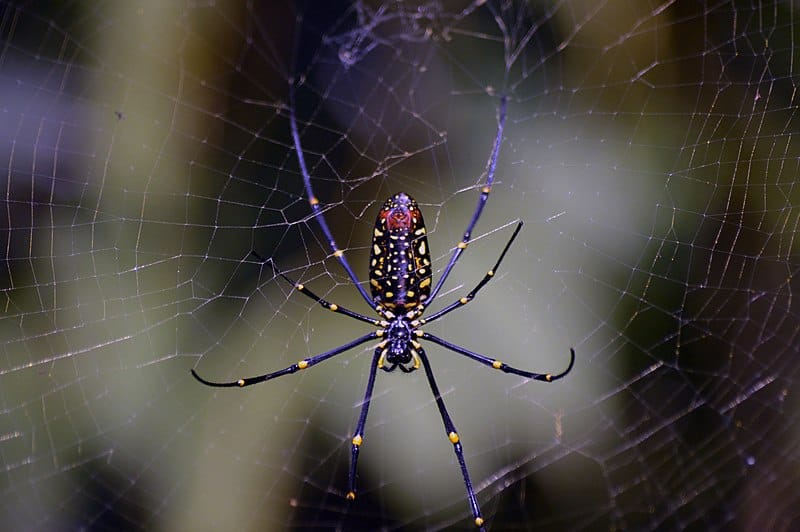
Like the Joro spider, the giant golden orb weaver is a timid spider that makes enormous webs between trees or bushes.
The giant golden orb weaver is another large, beautiful spider that people are generally terrified of. They are entirely harmless unless threatened. If you leave them no choice, they will bite, and the bite is a painful one. Similar to the Joro spider, these large orb weavers spend their time on the edge of forests or in the brush, waiting for casually flying insects to make the mistake of flying into their webs. The orb weaver sleeps at night and builds its web early in the morning. They wrap the insects up tightly in webbing before consuming them.
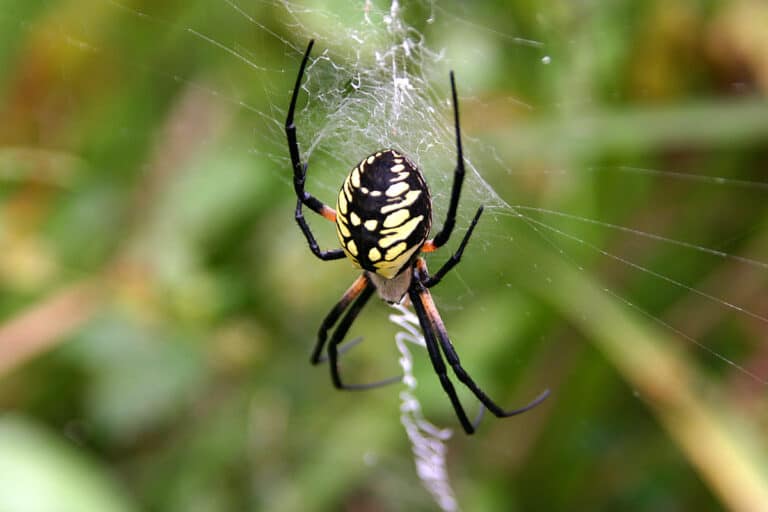
The giant golden orb weaver is between one and two inches long with a leg span of up to four inches, like the Joro spider. Their faces have an eerie appearance of a skull. The orb weaver’s body is yellow and back with a touch of red on the underside, as seen in the photo. Like many spiders, they employ the balloon technique when leaving the nest as a sling or when there’s imminent danger on the ground. It makes traveling long distances efficient like it is when we jump on an airplane.
8. Chinese Wolf Spider (Lycosa singoriensis)
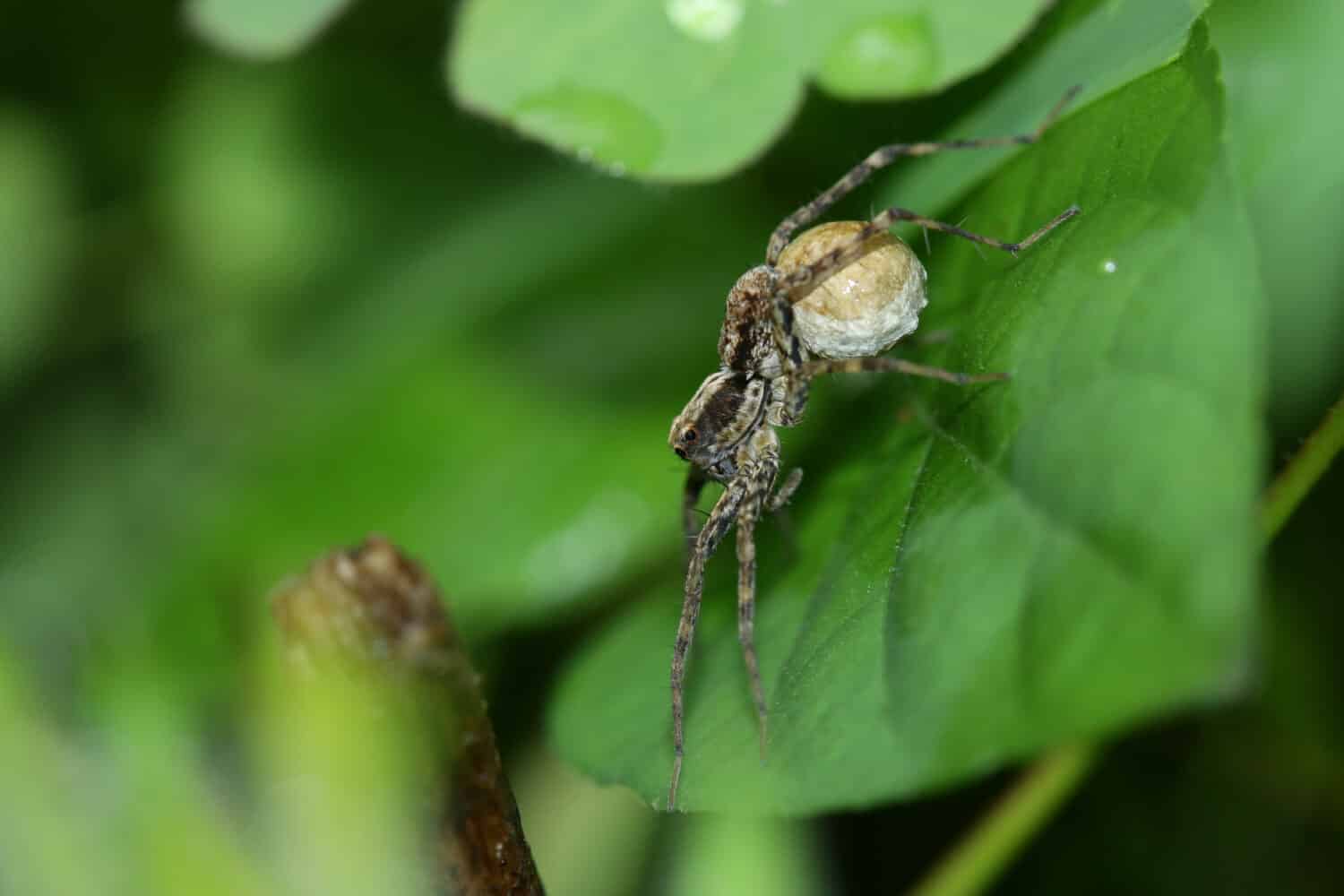
A mother wolf spider is very devoted and carries her egg sac with her until they hatch. Then the babies hop onto Mama’s back until they are big enough to be on their own.
©Tukkatar/Shutterstock.com
The Chinese wolf spider is relatively large, and people are afraid for that reason. They are also speedy runners, and people sometimes believe the spider is chasing them when trying to escape. The wolf spiders do not chase people and are ultimately terrified of humans like all other spiders. They erratically run when frightened and sometimes run towards the predator out of confusion or the possibility of confusing their stalker. They are ground dwellers and do not have nests or webs. Instead, they hunt their prey like a wolf.
The Chinese wolf spider can reach an inch in length and four inches in leg span. If you are bitten by one, it may be painful, itch, and have slight swelling but is otherwise harmless to humans. They are grey, brown, and black with two large forward-facing eyes.
9. Hasselt’s Spiny Spider (Macracantha hasselti)
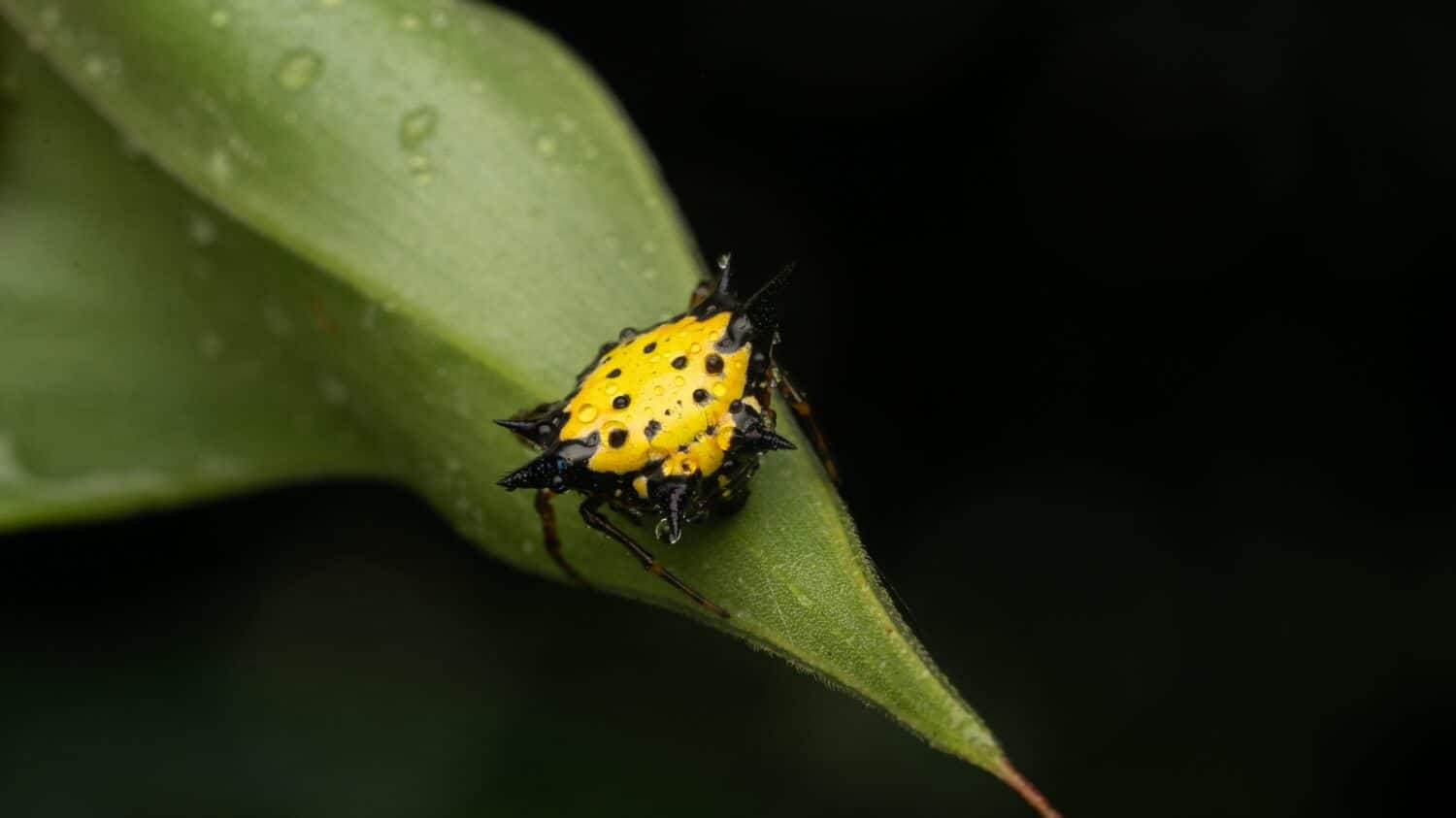
The spiny orb weaver is a tiny, brightly colored spider that’s also harmless to humans.
©Tushar Chindarkar/Shutterstock.com
Hasselt’s spiny orb weaver is an oddity in the spider world but not in the orb weaver world. Orb weavers are some of the most interesting-looking beings on this planet. They are capable of producing strong silk that they weave their webs with. These webs are generally large, ornate, and between two bushes or trees to catch fly-through insects. They wrap their dinner tightly in silk and sometimes save it for a later meal. They are excellent at food prepping and keeping gnats, mosquitos, and flies to a minimum.
These little spiky friends are very timid and tiny at only 8mm big. The males are much smaller than the females and do not have the brightly colored carapace like the females. The females are bright yellow with black spikes along the sides of their bodies. This is to hinder attacks from predators. The bright color warns the predator that these spiders are poisonous if eaten, which they aren’t. The spikes protect against predators wanting to swallow this tiny spider. Like all spiders, these spiders are venomous, but their venom is only harmful to insects.
10. Abandoned Web Orb Weaver (Parawixia dehaani)
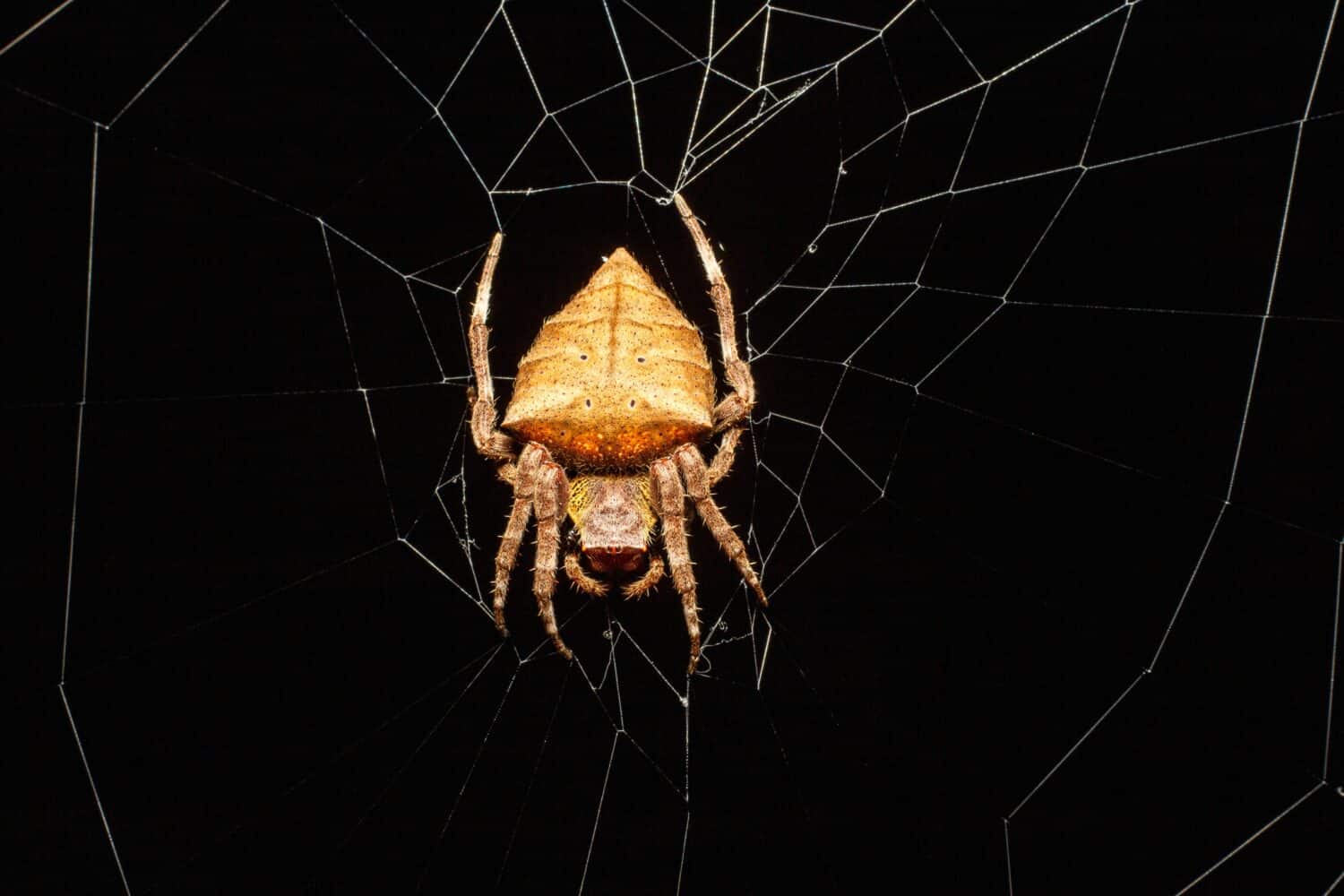
The small brown abandoned orb weaver looks like a very convincing brown leaf.
©Vishnu M C/Shutterstock.com
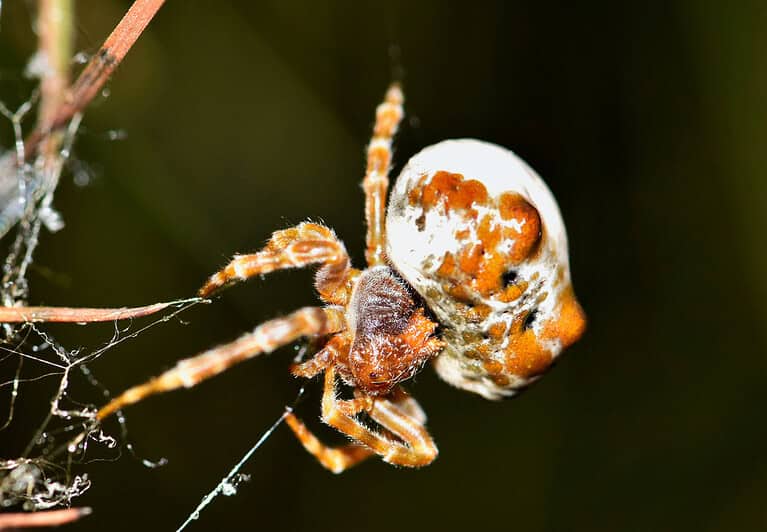
Like all orb weavers, the abandoned orb weaver is a slight spider that comes equipped with a fantastic costume. These small spiders blend perfectly with the forest floor, leaves from bushes, or trees they use to string their webs. This innocent-looking leaf is built for battle. It has sharp spikes along its body to remind predators why they are not a good meal.
These nocturnal spiders are named for the hole they leave in their webs to make it look like it’s been abandoned. They also leave loose webbing and strings to further the look. The abandoned orb weaver will leave its web and watch for prey to become entangled from the ground or a nearby post. If they are seen or feel threatened, they will fall to the ground with their legs tucked in, pretending to be a dead leaf or dead spider.
11. Red Weaver Ant-Mimicking Spider (Myrmaplata plataleoides)
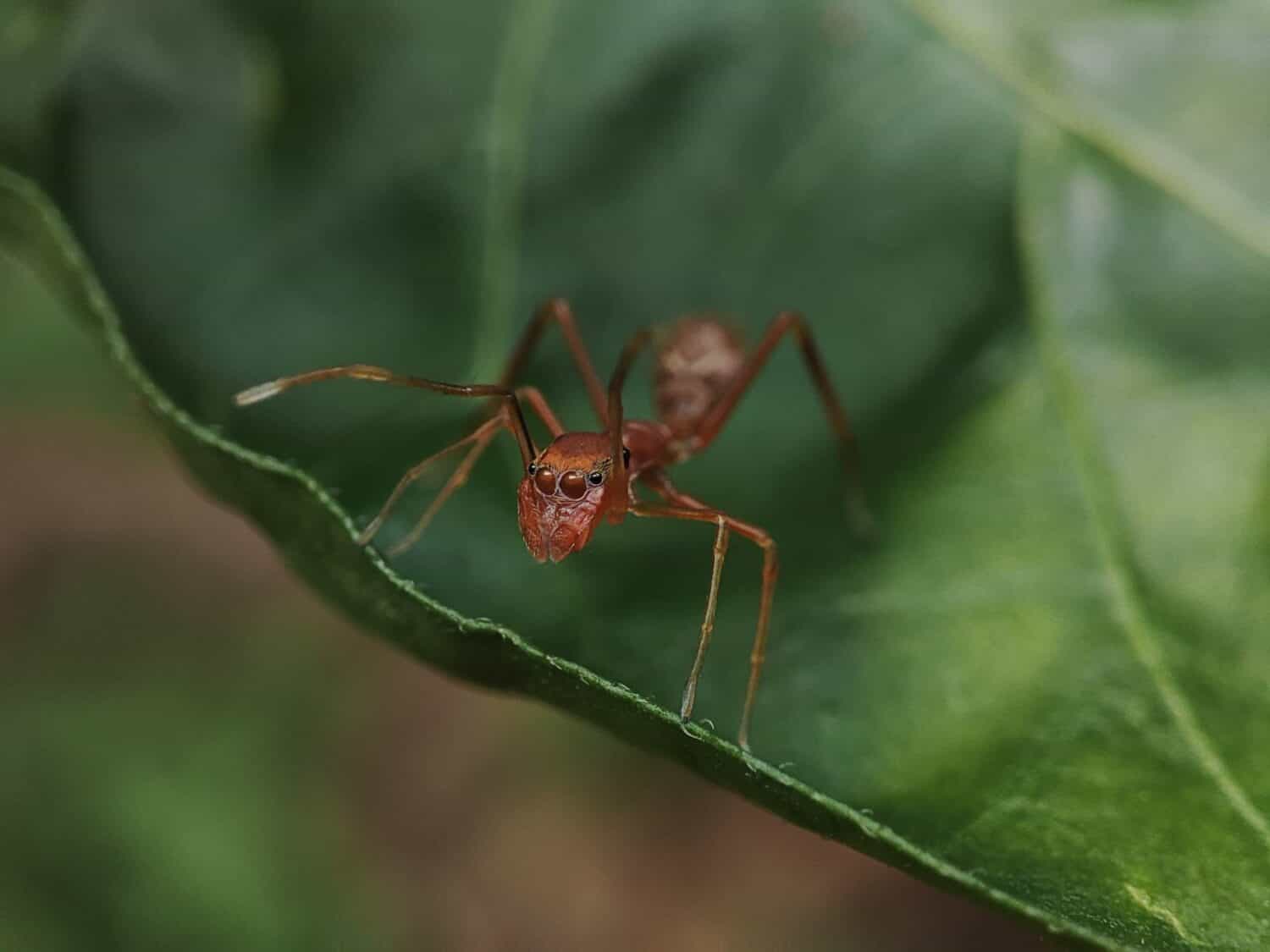
There are many types of mimicking jumping spiders like this red weaver ant-mimicking jumping spider. They may be tiny, but they are intelligent.
©Udara Jayawickrama/Shutterstock.com
The red weaver ant-mimicking jumping spider has a few tricks up its anty sleeve. They look very much like the Asian red weaver ant and use this disguise to sneak away from predators looking to eat a tasty little spider. The red weaver ants taste bad, and by sticking near them, the jumping spider lives longer among its fake tribe. These are timid spiders who would rather hide than fight. Adult females can reach 12mm long, while males are substantially smaller.
Though they look like they could fit in with the ants, they avoid coming into contact with them. Instead, these spiders make small hammocks under the leaves of the tree and stalk their prey. They do not make traditional webs like orb weavers and rely on their jumping and ambushing abilities to hunt.
12. Pear-Shaped Opadometa (Opadometa/Leucauge fastigata)
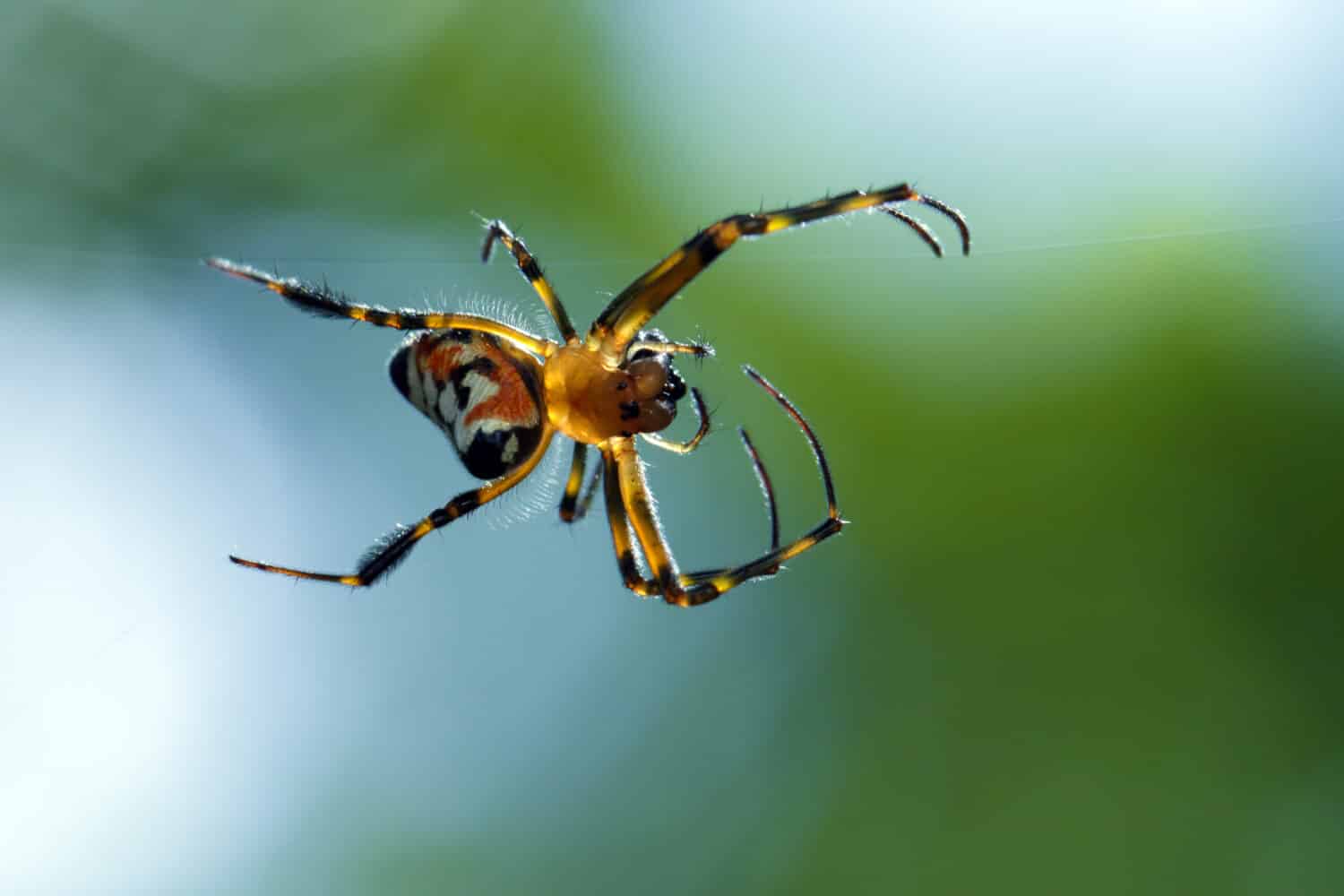
The pear-shaped Opadometa is a colorful spider with fuzzy banded legs that help alert the spider of danger by picking up vibrations.
©yod 67/Shutterstock.com
The pear-shaped Opadometa is a unique-looking spider with bright orange and yellow markings on its carapace. These long-jawed orb weavers are native to China, India, and Sulawesi, all of which provide a tropical or subtropical environment in which it thrives. This is an orb weaver as if you couldn’t tell by its bright colors and odd looks. The thick black leg warmers the pear-shaped Opadometa wears on its fourth legs are unique to this species.
The small female spider only reaches 8mm as an adult, with the male being considerably smaller at 3mm. Like most orb weavers, this spider makes circular-shaped webs between trees or bushes and waits for unsuspecting insects to get caught in its strong silk. These are timid spiders who will not bite unless given no other choice. Their bite is medically insignificant to humans.
13. Long-Bodied Cellar Spider (Pholcus phalangioides)
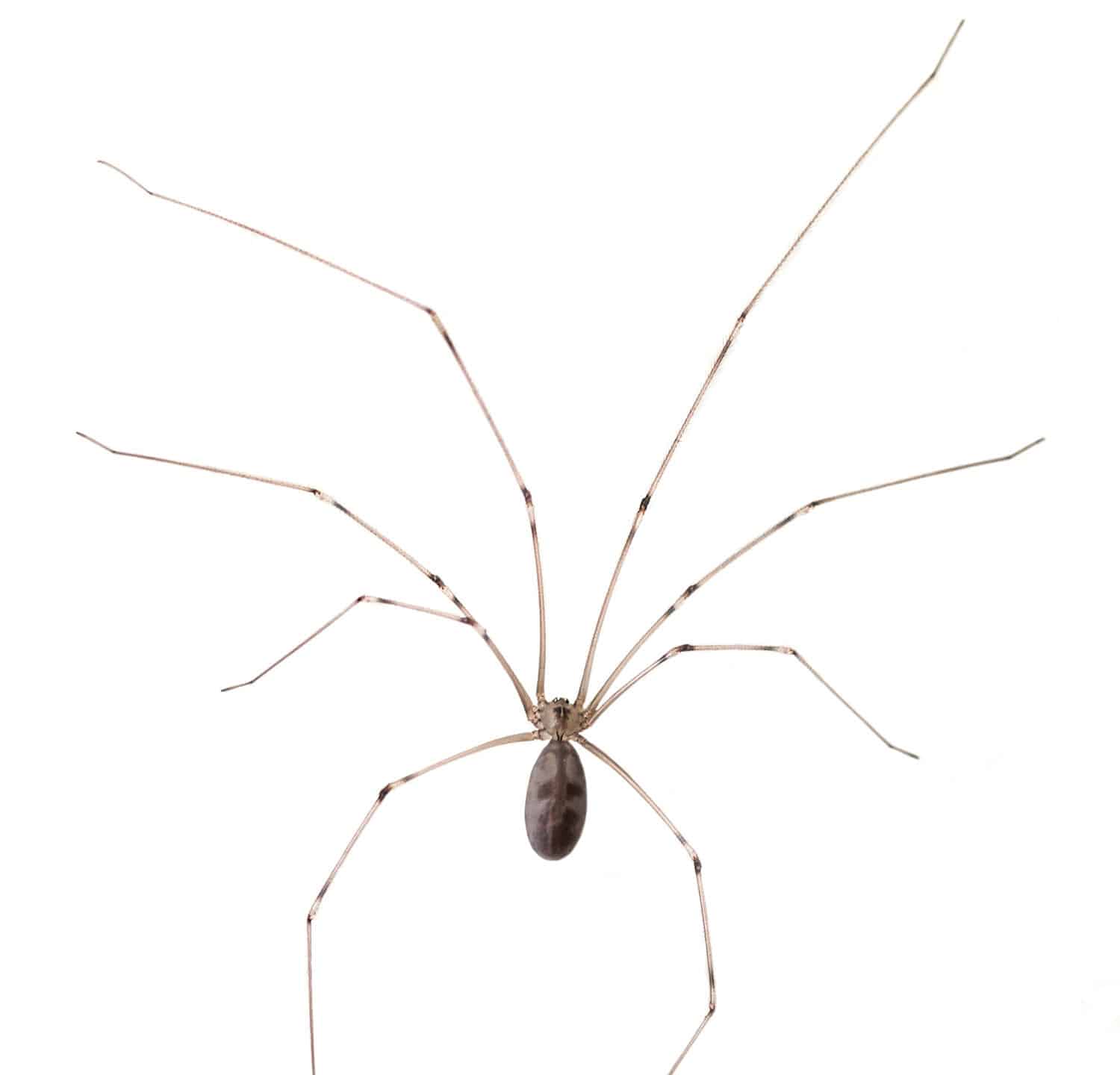
The long-bodied cellar spider is cannibalistic and will eat other spiders.
©Melinda Fawver/Shutterstock.com
Long-bodied cellar spiders, sometimes called daddy long legs, are social arachnids. These spiders are named for their preferred location to hunt; the cellar. They are also found on ceilings, caves, and crawl spaces beneath homes. They are nocturnal and are known for hunting other spiders. People tend to harm these spiders less than other species. They have petite 8mm bodies with very long slender legs. Their leg span is around three or four inches at most. The cellar spider is harmless to humans, and their silk has been verified as medically significant.
The long-bodied cellar spiders are a pale greyish tan with grey legs. Their venom is strong enough to kill redback spiders but is not medically significant to humans. They can live in groups as long as food is plentiful and don’t need to resort to cannibalism. It’s a good thing they sleep with eight eyes open in case their roommate decides it wants a midnight snack.
14. Common House Spider (Parasteatoda tepidariorum)
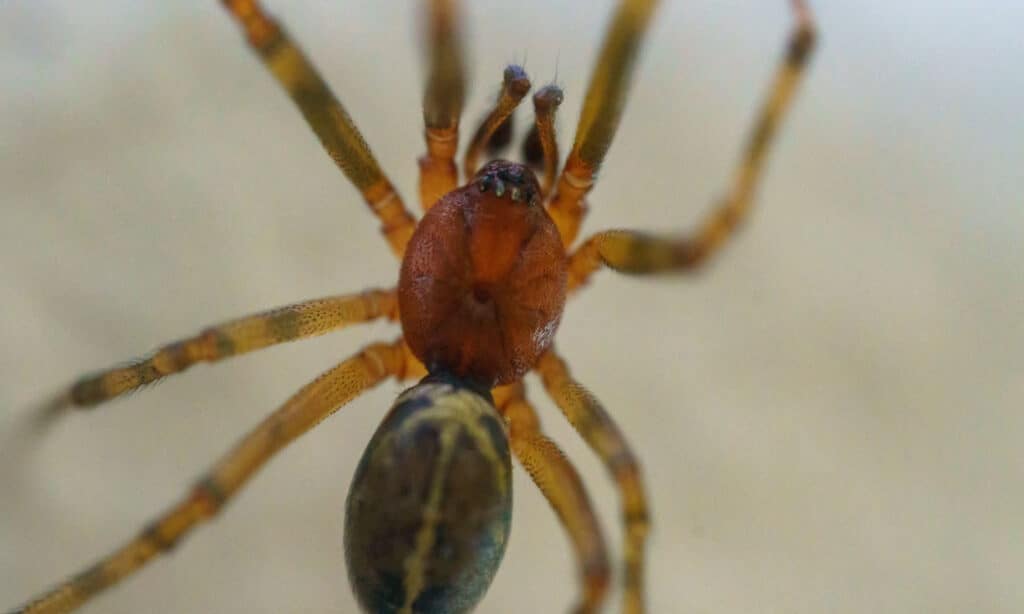
The actual species that is called a “house spider” differs all over the world.
©M-Production/Shutterstock.com
House spiders in China are not much different than house spiders anywhere else in the world. They are harmless; medium-sized arachnids typically dwell in the high-ceiling corners of homes or the bathroom, where water is plentiful. They prefer being indoors where it is warm and dry. The house spider is a suitable type of housemate because they catch and eat nuisance insects like gnats and mosquitos.
These spiders are usually greyish-brown or tan with some lighter-colored markings on their backs. They have long legs and look like a typical spider. They sometimes hide in sheets or clothing, so a bite from one is relatively common. It is not medically significant to humans. At most, you will have an itchy bump that goes away in about a week.
15. Pilot Spider (Platythomisus xiandao)

The Platythomisus xiandao is a flattened crab spider wearing what looks to be a clown costume. This strange little spider mimics a poisonous caterpillar or insect. Showing its bold, bright colors and spots sends predators a message that it will not taste good and is toxic. In all reality, it is not poisonous, but as a mimicking spider, it does what it needs to stay alive.
These small 20mm spiders were just discovered in 2019. The males are significantly smaller and are a red or pinkish color. Initially, these spiders were mistaken for a Platythomisus octomaculatus.