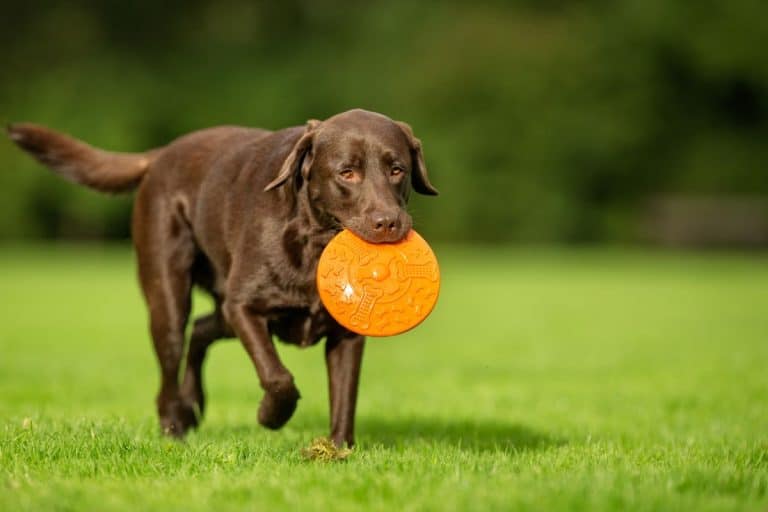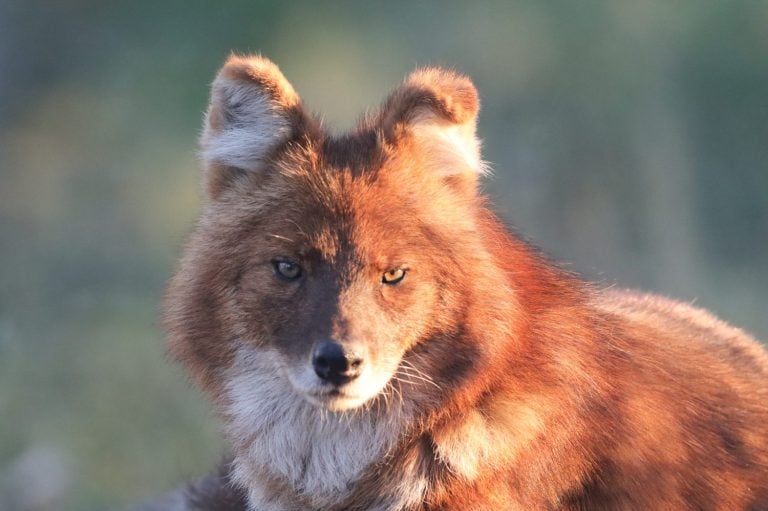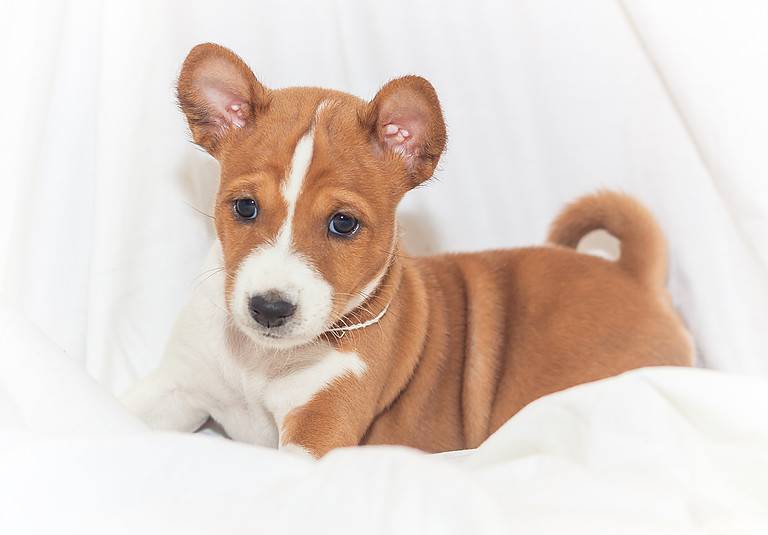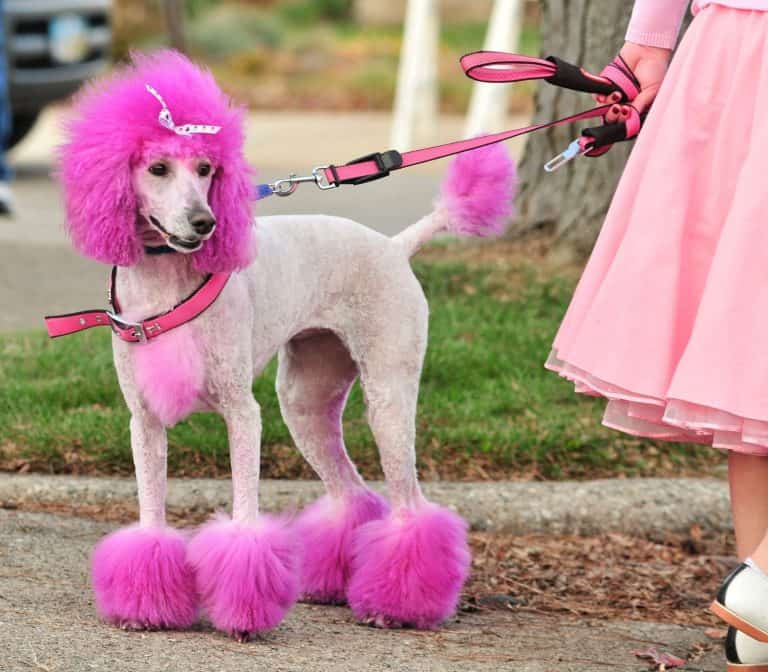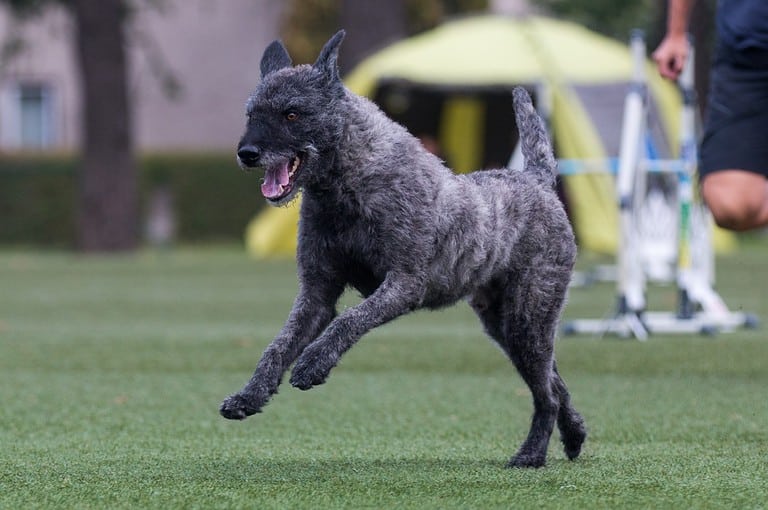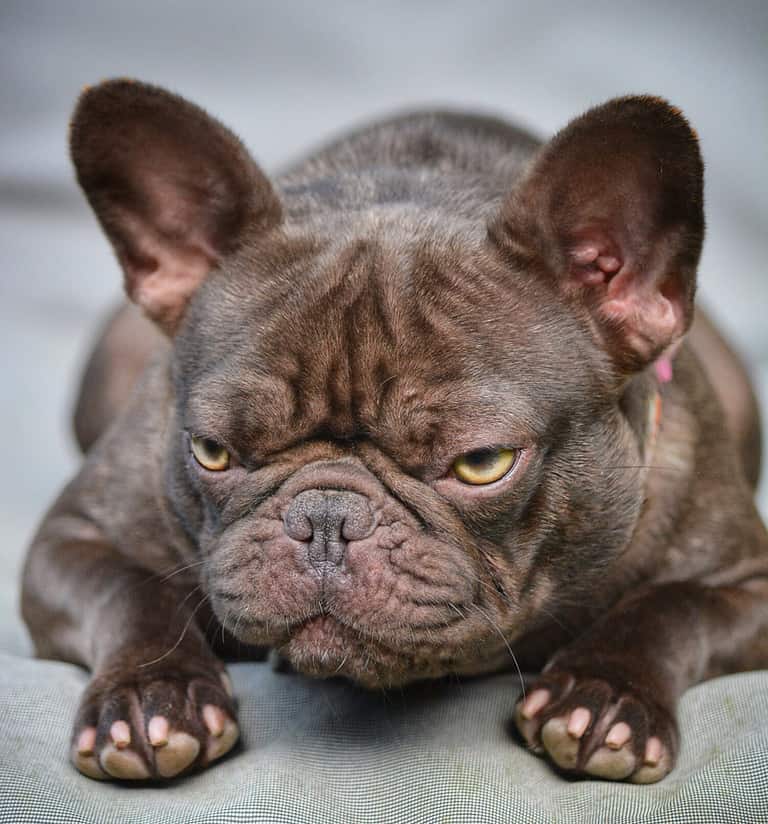

Everyone has a favorite dog breed, from the lovable Labrador to the stalwart bulldog or regal poodle. Popular breeds enjoy widespread distribution, and major kennels work to ensure these breeds remain abundant. However, some other breeds are not so lucky. The rarest dogs in the world face extinction due to waning interest or lack of visibility.
The rarest dog breeds may be geographically isolated or not formally recognized by established kennel clubs. This is why it’s essential to recognize these breeds so that they don’t disappear forever. In this article, we’ll discuss 11 of the rarest dogs in the world so that you can help spread awareness of these incredible dogs. Hopefully, with more awareness, we can ensure they continue to delight owners around the world.
11. Canaan Dog
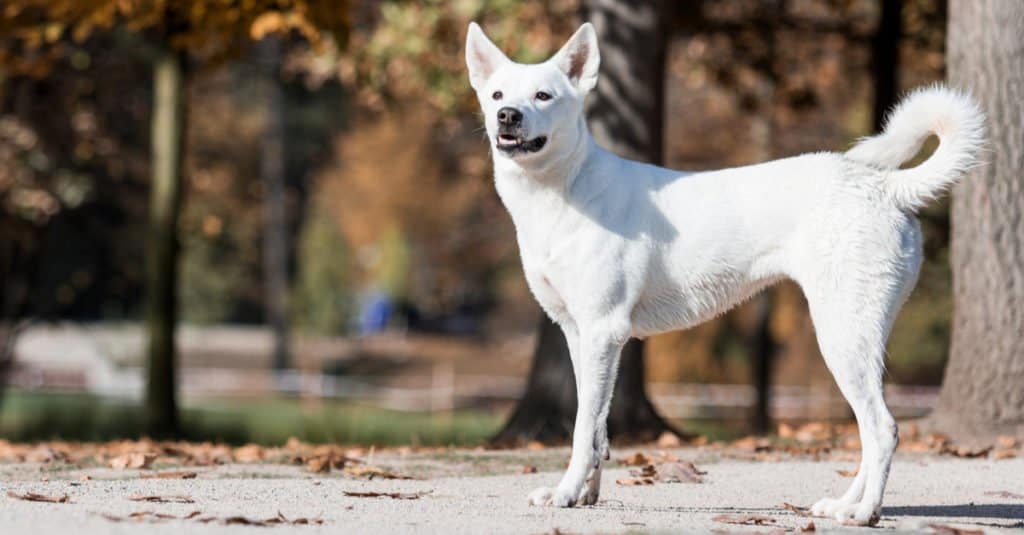
Canaan dogs are an ancient breed, but only 2,000 to 5,000 still exist worldwide.
©Aneta Jungerova/Shutterstock.com
Also known as the Bedouin Sheepdog and Palestine Pariah Dog, the Canaan Dog is a standardized breed of ancient dog from the Middle East. Due to their common status as outcasts or strays, Canaan Dogs often get classified as pariah dogs, from the Hindi word for “outsider,” or pahi. Today, you can find Canaan Dogs throughout Jordan, Lebanon, Egypt, Iraq, and Syria, with the majority residing in Israel.
Although estimates vary, around 2,000 to 5,000 Canaan Dogs exist worldwide. Traditionally, the Bedouin people used them as guard dogs for their livestock and camps. The breed became standardized thanks to the work of Dr. Rudolphina Menzel, who helped to domesticate and train semi-wild populations in Israel. They retain their wild appearance, with a wolfish head, square build, dense coat, and curled tail. While defensive by nature, they are not overly aggressive.
10. Pumi
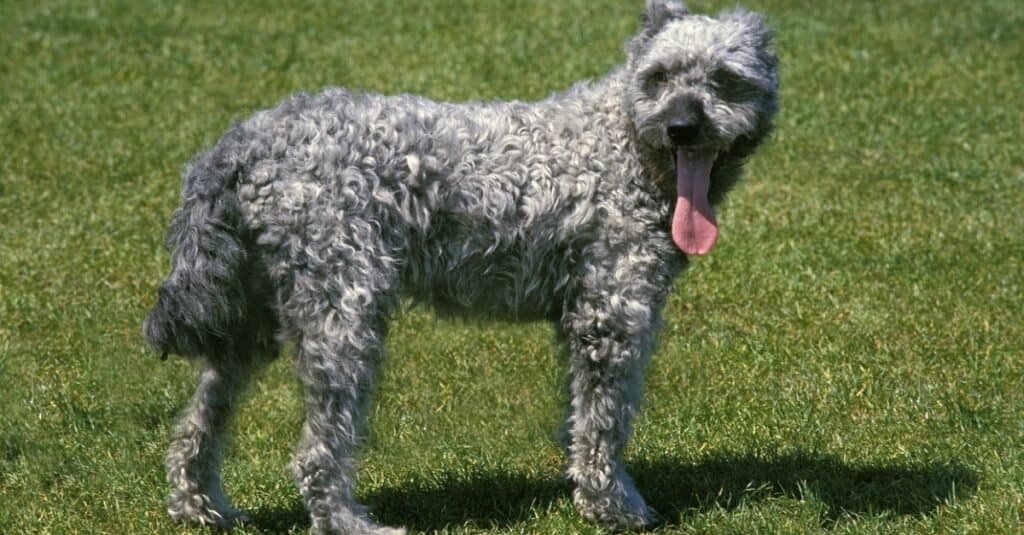
The Pumi is a rare breed from Hungary that is a cross between a terrier, Spitz, and Puli.
©iStock.com/slowmotiongli
The Pumi is a medium-sized sheepdog that hails from Hungary. It is also known as the Hungarian herding terrier due to its similar frame, alertness, and temperament to most terriers. Unlike some planned breeds, the Pumi emerged spontaneously during the 17th and 18th centuries due to interbreeding between German Spitz, French Briard, Hungarian Puli, and terrier dogs.
A little over 2,000 Pumis exist worldwide, mainly in Hungary, with smaller populations in Finland, Sweden, the U.S., the U.K., and Germany. Pumis have thick, curly coats in grey, black, white, or fawn colors. Known for their lively, expressive attitudes, they are easy to train and highly alert. They excel at agility sports and can make good family dogs if socialized early.
9. Lagotto Romagnolo
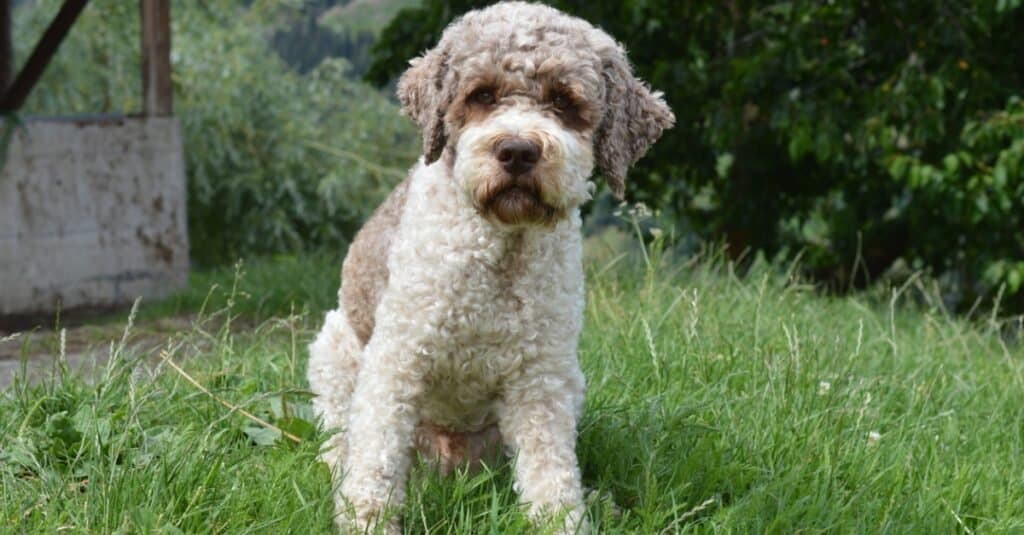
The Lagotto Romagnolo is the only dog bred specifically to hunt truffles.
©iStock.com/Sigena Semmling
The Lagotto Romagnolo is an Italian breed from the wetlands of the Delta del Po in eastern Italy. Its name comes from the Italian càn lagòt, which translates as “water dog.” Originally bred as gun dogs, today they are frequently used to search for truffles. While some sources suggest there are only 2,000-3,000 worldwide, the dog’s population has grown in recent years. King Charles III also adopted a Lagotto Romagnolo, which has caused another surge of interest in the dogs.
While not the tallest dogs, they possess a robust build. They have coarse, shaggy hair that looks like sheep’s wool. The most common colors include off-white with brown or orange patches, or fully brown or orange. Although their coats are hypoallergenic, they require a significant amount of maintenance. Known as affectionate, dedicated dogs, they love to please their owners and generally get along well with children and families if socialized.
8. Dandie Dinmont Terrier
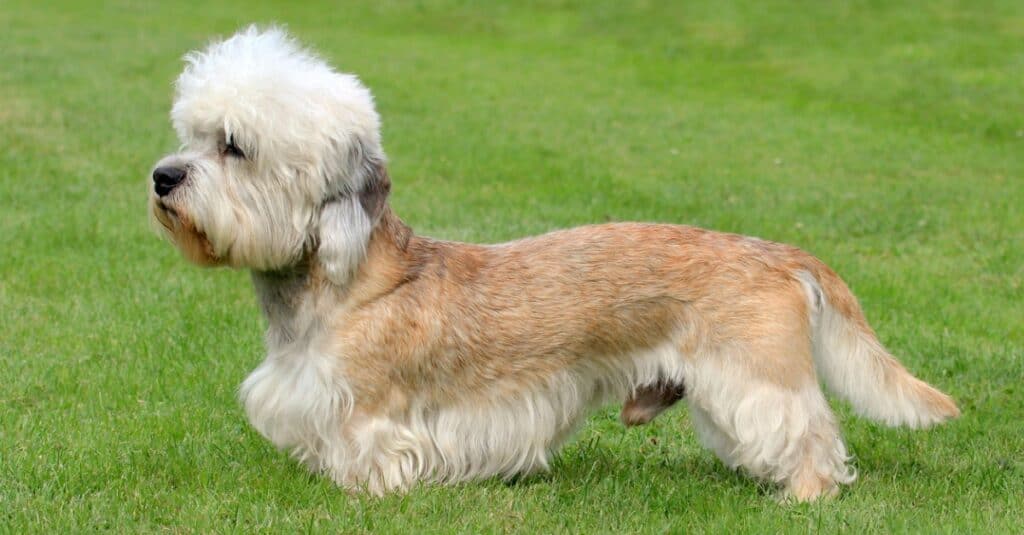
The Dandie Dinmont Terrier sports a unique topknot.
©iStock.com/CaptureLight
The Dandie Dinmont Terrier is an unusual terrier originally from Scotland. Descended from earlier terriers, hunters in Scotland and England originally bred Dandie Dinmont Terriers in the 1600s to hunt badgers and otters. It gets its name from a character in Sir Walter Scott’s book, Guy Mannering, which makes it the only known breed named after a fictional character. The author was said to have likened the character to the breed’s supposed founder, James Davidson.
Currently, between 1,000 and 2,000 dogs are registered in the U.K., where it is listed as a Vulnerable Native Breed due to low annual puppy registrations. The breed is distinguishable by its short legs and long, stretched-out body. They grow a silky coat and sport a distinctive topknot of long hair on their heads. While a hardy breed, they are also quite docile and generally suitable for families.
7. Norwegian Lundehund
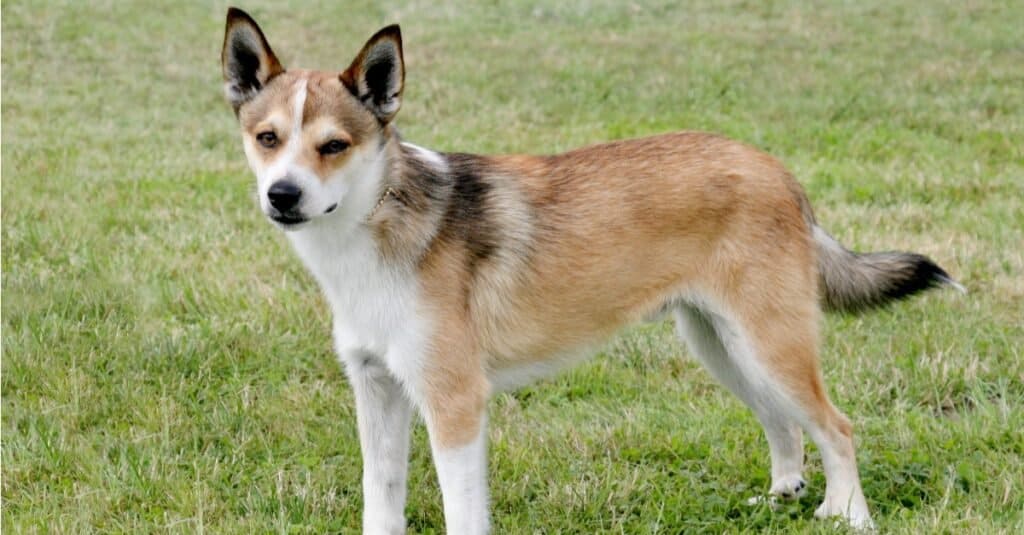
Hunters in Norway bred the Norwegian Lundehund to hunt for puffins and their eggs.
©iStock.com/CaptureLight
Also known as the Norwegian Puffin Dog, the Norwegian Lundehund is a small Spitz breed. Its name comes from the Norwegian word lunde, or “puffin,” and hund, or “dog.” Traditionally, hunters used the breed to hunt for puffins and their eggs on cliff sides and other challenging terrain. The breed is quite ancient, having worked in some regions of Norway for around 400 years. However, today there are only around 1,500 worldwide, mostly in Norway and the United States.
Norwegian Lundehunds can bend their joints at crazy angles, which helps them to navigate narrow paths on cliff sides. In addition, they grow six toes instead of the usual four toes per foot. Although their outer coat grows quite dense and rough, their undercoat is comparatively soft. Unfortunately, Norwegian Lundenhunds experience numerous health issues, including shortened lifespans, digestive disorders, and high infant mortality, primarily due to inbreeding.
6. Thai Ridgeback
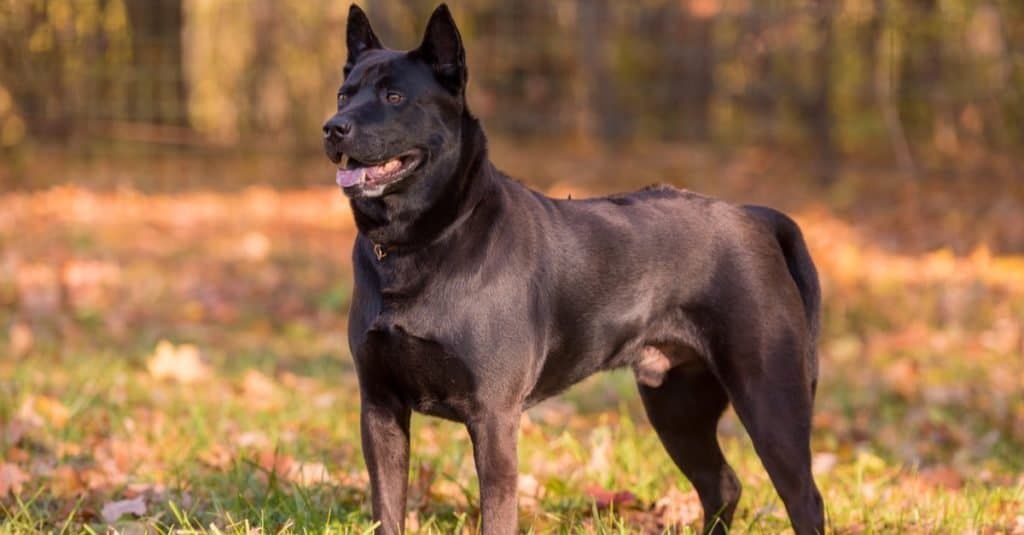
The Thai Ridgeback is a rare sight outside of Thailand, with only around 100 dogs living in the U.S.
©photosounds/Shutterstock.com
The Thai Ridgeback is a primitive breed of sentry and hunting dog from Thailand. A pseudo-pariah breed, they rarely get spotted out of their native country, although their popularity is on the rise. Currently, around 1,000 Thai Ridgebacks live in Thailand, with an additional 100 or so dogs in the U.S.
They represent one of only three breeds that grow hair along their back in the opposite direction of the rest of their coat. Typically, Thai Ridgebacks appear muscular and feature a wedge-shaped head, short coat, and pricked ears. Thanks to their short coat, they are easy to groom and maintain and don’t usually affect people with allergies. Due to their history as semi-wild dogs, they remain independent-minded. This trait, along with their intelligence and high level of energy, makes them difficult dogs to train for novice handlers.
5. Belgian Laekenois
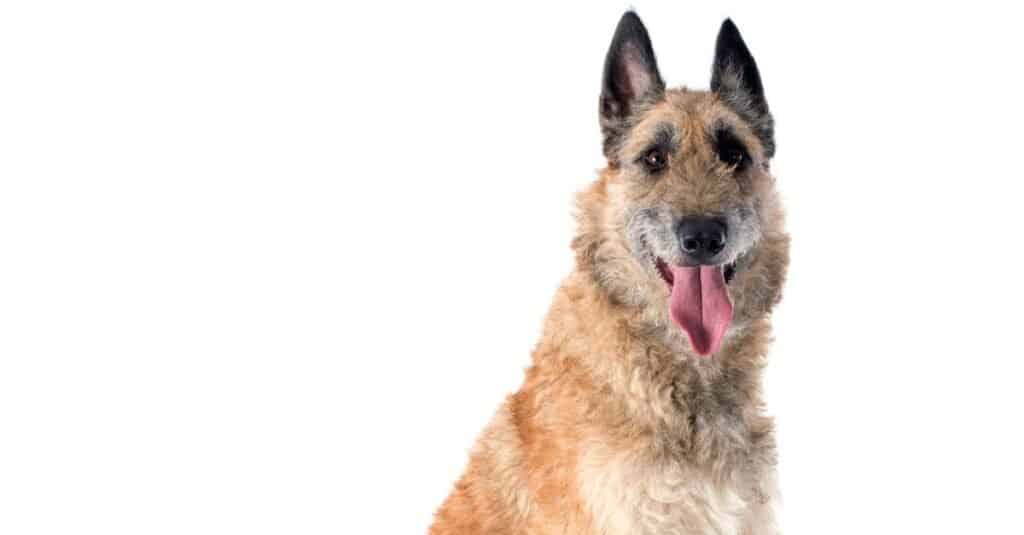
The Belgian Laekenois is the rarest of the four recognized Belgian Shepherds.
©cynoclub/Shutterstock.com
The Belgian Laekenois is one of the rarest dogs in the world and the most uncommon of the four breeds of Belgian Shepherds. Bred initially as sheep herding dogs in the late 1800s, Belgian Laekenois only recently started to gain widespread attention. The American Kennel Club only officially recognized the breed in 2019, despite some still not considering it distinct from other Belgian Shepherds.
It is estimated that there are only around 1,500 Belgian Laekenois worldwide, mostly in Belgium and the United States. They sport a wiry coat that comes in a variety of colors, including fawn, mahogany, and red. Due to their history as shepherds, they may not get along with small animals or children unless they are properly socialized. In general, they do better with larger animals and older children and shouldn’t be left alone for long stretches of time. That said, they can still be very affectionate and protective toward their owners.
4. Peruvian Inca Orchid
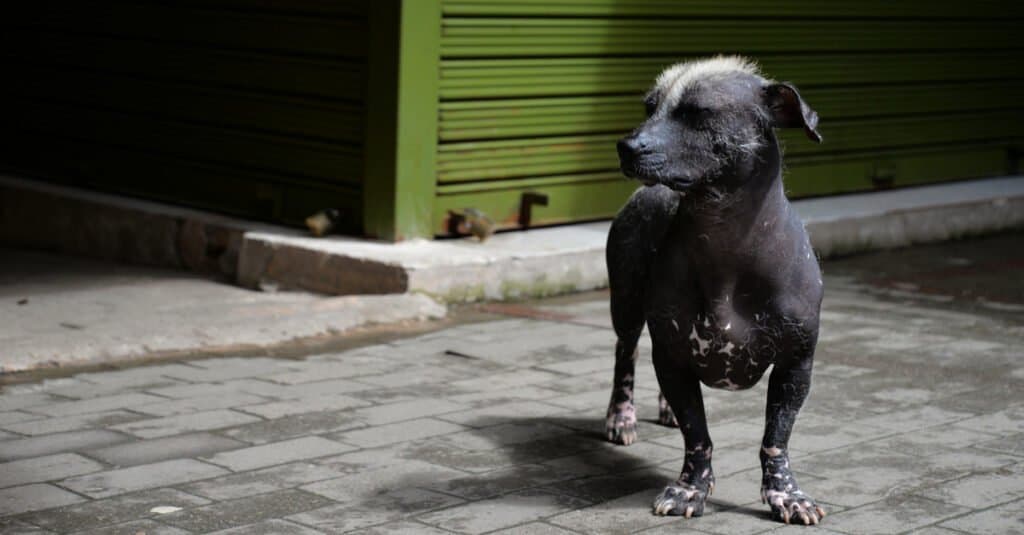
The Peruvian Inca Orchid can trace its ancestry back more than 1,000 years.
©EdithFotografeert/Shutterstock.com
Also known as the Peruvian Hairless Dog, the Peruvian Inca Orchid is a domesticated breed native to Peru. Specifically, all members of the breed can trace their heritage to 13 dogs that came from Peru in the early 20th century. Evidence suggests that the Incan people kept these dogs as pets, and depictions of the dogs exist in artworks that date back over 1,000 years.
Sources estimate around 1,000 Peruvian Inca Orchids exist worldwide, but the breed has gained more recognition in the last decade. The dog is part of Peru’s national heritage and is often celebrated in media and artwork from the country. Its distinguishing feature is its hairlessness, which is due to a particular gene mutation. Common skin colors include brown, grey, copper, or mottled. While easy to groom, they do not tolerate extreme temperatures. Known as a lively breed, they tend to be protective of their owners and can quickly get bored with repetitive tasks.
3. Chinook
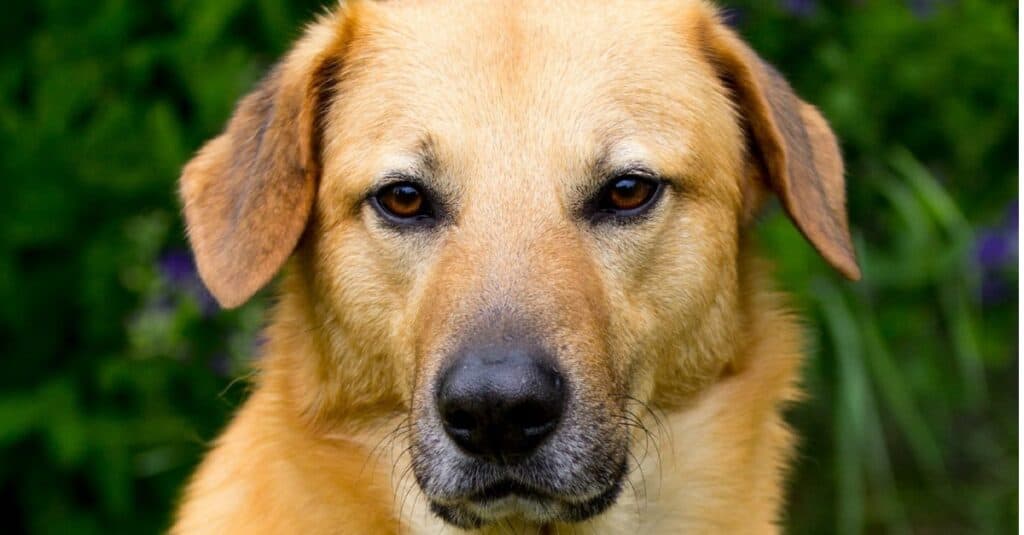
The Chinook almost went extinct in the 20th century, with only 11 breeding pairs left in 1981.
©iStock.com/Kathleen Riley
The Chinook is a rare breed of sled dog from the United States. Today, the breed is recognized as the state dog of New Hampshire. Originally bred by Arthur Treadwell Walden in New Hampshire during the early 20th century, Chinooks represent a mix between a Greenland Dog and Mastiff/St. Bernard. Its name comes from Walden’s lead sled dog, “Chinook,” and all modern dogs can attribute their heritage to this one ancestor.
Due to lax breeding efforts, the number of Chinooks declined to only 11 breedable dogs in 1981. Thanks to the efforts of breeders across the country, around 800 Chinooks live in the United States today, with around 1,200 worldwide. A medium-sized breed, Chinooks possess a balanced but muscular frame. They typically appear tawny-colored or reddish-gold and sport a medium-length coat. Highly trainable and adaptable, Chinooks work well with other dogs and make great family pets.
2. Otterhound
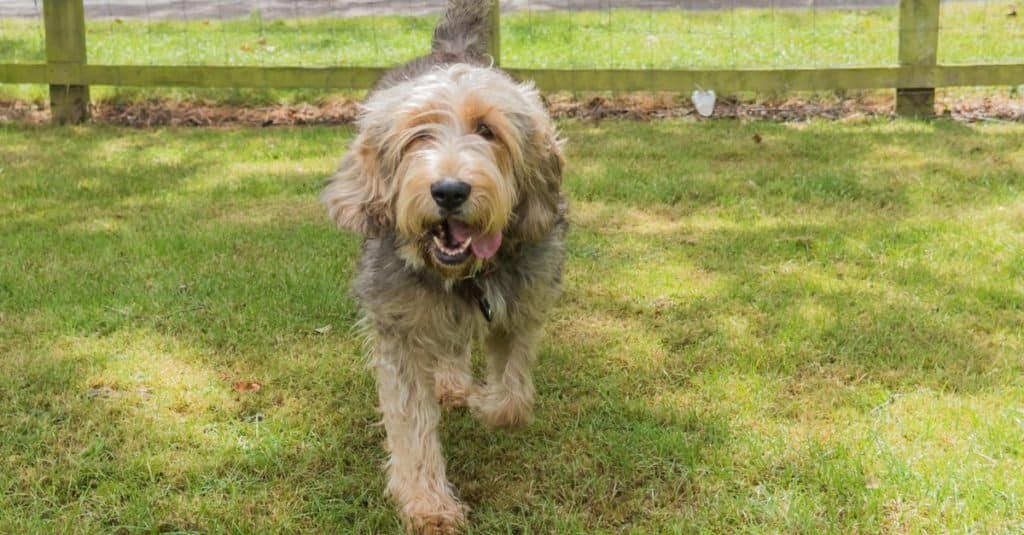
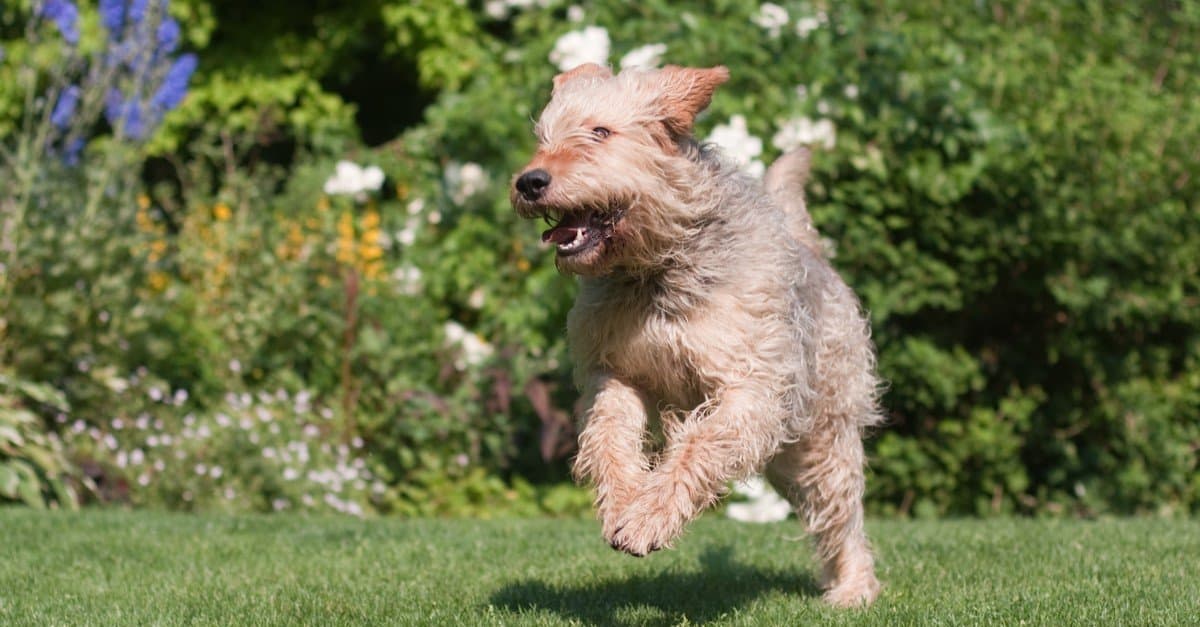
The popularity of the Otterhound declined after otter hunting became illegal in the UK.
©iStock.com/LourdesPhotography
The Otterhound is a breed of scent hound from England. As its name implies, the breed originally served as a working dog that specialized in tracking and hunting otters. Although otter hunting stretches back hundreds of years, evidence suggests the breed dates back to the early 1800s. Due to the decline in otter populations during the mid-20th century, the breed also experienced a subsequent decline in popularity.
Today, it is believed that there are fewer than 800 Otterhounds worldwide, mostly in the U.K. While some have adapted to hunting mink, most now live as pets. They have a typical hound coat, featuring an oily, rough double coat and webbed feet. Otterhounds possess extremely sensitive noses and can be quite dedicated when investigating a new scent. Despite their powerful build and hunting instincts, they enjoy a reputation as friendly dogs, although they require strict supervision due to their size and strength.
1. Catalburun Dog
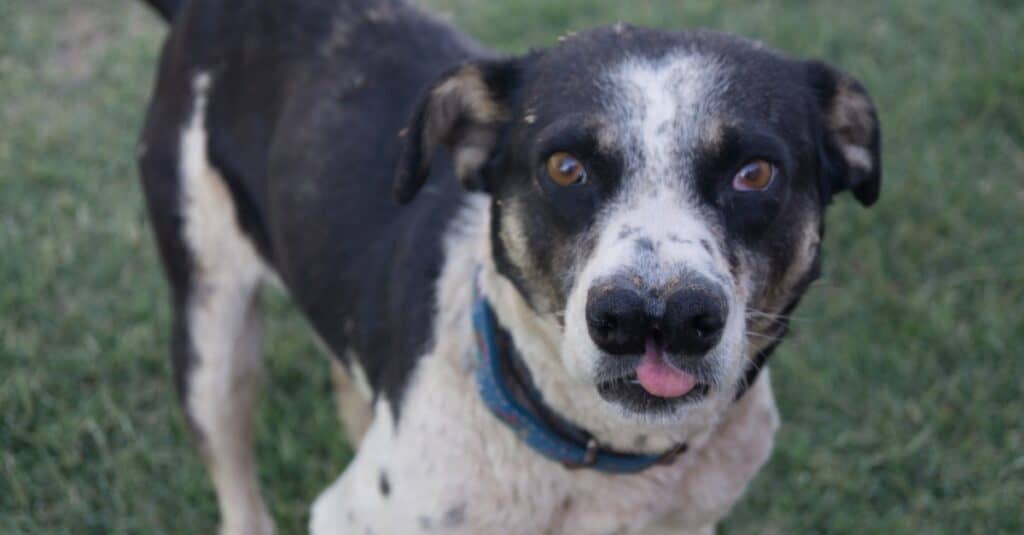
The Catalburun is one of the rarest breeds in the world, with only 200 dogs thought to be left worldwide.
©iStock.com/pepe_euforia
The Catalburun, or Turkish Pointer, is an extremely rare breed from Mersin in southern Turkey. It is one of only three dog breeds in the world with a split nose, the others being the Panchon Navarro from Spain and the Andean Tiger Hound from Bolivia. In fact, its name comes from this distinctive feature, as catal in Turkish translates to “fork,” while burun means “nose.”
It is one of the rarest dogs in the world, with only 200 Catalburuns believed to exist worldwide, the vast majority of which still live in Turkey. Originally raised as hunting dogs, the breed still enjoys a reputation as a dedicated working animal. They possess a strong, athletic build and sport a short coat in white, black, brown, and tan colors. Although they rarely bark, they can act aggressively toward other dogs or strangers. In addition, they face several health complications due to years of inbreeding.