


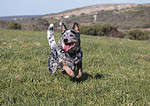
P
Species Profile

Pumi

Canis lupus familiaris

Hungary's curly-coated stock driver
Kerrie T/Shutterstock.com

Pumi Distribution

Click a location to explore more animals from that region

Origin Location

This map shows the native origin of the Pumi. As a domesticated species, they are now found worldwide.

Loading map...

Found in 1 country

Size Comparison

Human 5'8"
Pumi 1 ft 5 in

Pumi stands at 24% of average human height.

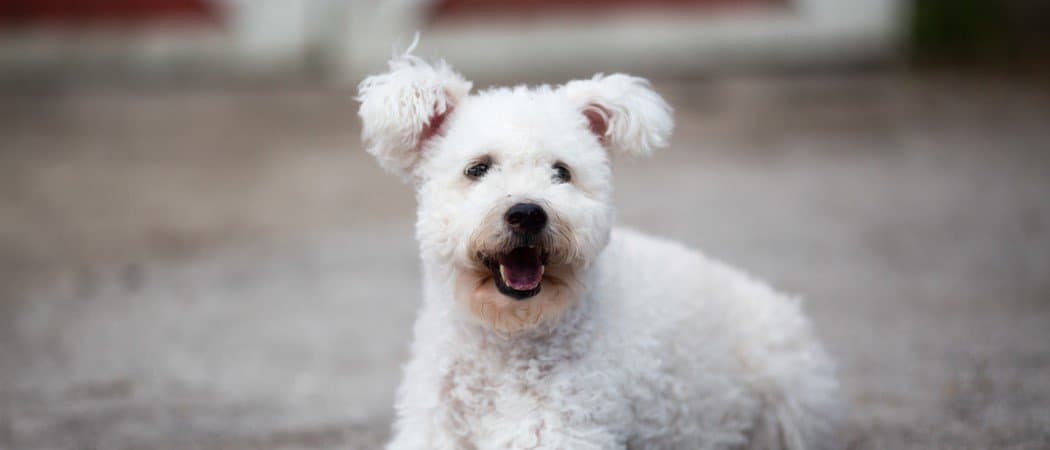
Pumi close-up

At a Glance

Domesticated
Diet Omnivore
Activity Diurnal+
Lifespan 4 years
Weight 15 lbs
Status Not Evaluated
Did You Know?

The Pumi developed in Hungary as a farm "all-rounder," especially valued for driving and gathering livestock.

Scientific Classification

The Pumi is a medium-small Hungarian herding dog developed for driving and gathering livestock, known for its lively, alert temperament and distinctive semi-erect, tipped ears.

Kingdom
Animalia
Phylum
Chordata
Class
Mammalia
Order
Carnivora
Family
Canidae
Genus
Canis
Species
Canis lupus

Distinguishing Features

  • Curly/wavy coat (often described as corkscrew curls), typically not corded like the Puli
  • Semi-pricked ears with forward tips
  • Square, agile build suited to herding and quick directional changes
  • High energy, vocal alertness typical of herding dogs

Physical Measurements

Males and females differ in size

Height
♂ 1 ft 5 in (1 ft 4 in – 1 ft 7 in)
♀ 1 ft 4 in (1 ft 3 in – 1 ft 5 in)
Length
♂ 2 ft 2 in (1 ft 12 in – 2 ft 4 in)
Weight
♂ 28 lbs (22 lbs – 33 lbs)
♀ 23 lbs (18 lbs – 29 lbs)
Tail Length
♂ 9 in (7 in – 10 in)
Top Speed
30 mph
running

Appearance

Primary Colors
Secondary Colors
Skin Type Typical domestic-dog pigmented skin under a dense, curly, weather-resistant double coat; coat can mat if neglected, and ears need regular checks.
Distinctive Features
  • Domestic dog (Canis lupus familiaris) breed selectively developed in Hungary for herding/stock-driving, unlike the wild-type wolf build and coat.
  • Medium-small, square-proportioned, athletic herding dog built for agility and quick turns.
  • Distinctive semi-erect ears with forward-tipping tips; highly expressive and constantly alert.
  • Curly, springy coat with corkscrew-like waves; differs from the Puli by being curly, not corded.
  • Harsh outer coat with softer undercoat; typically maintained by combing and occasional trimming to preserve texture.
  • High-set tail carried in a curl over the back; contributes to the breed's lively outline.
  • Pronounced facial furnishings (eyebrows, beard/mustache) that accentuate an alert expression.
  • Temperament-linked appearance: bright, vigilant demeanor; quick head/ear movements typical of stock-driving dogs.
  • Care requirement: regular grooming to prevent matting; avoid heavy softening/bathing that reduces coat texture.
  • Care requirement: high daily exercise and mental work (training, herding-style games) to prevent nuisance barking/restlessness.
  • Health concern (breed-associated): hip dysplasia and patellar luxation can affect gait/stance.
  • Health concern (breed-associated): primary lens luxation and other eye issues; routine ophthalmic screening recommended.
  • Health concern (breed-associated): occasional epilepsy/neurologic issues reported; responsible breeding and veterinary monitoring advised.

Sexual Dimorphism

Males are typically slightly taller and heavier, with broader heads and more pronounced neck/forequarter muscling. Females are usually finer-boned and lighter in build, while maintaining the same curly coat type and ear carriage.

♂
  • Slightly larger overall height and weight; more robust bone.
  • Broader skull and stronger muzzle; thicker neck/forequarters.
  • Often a more substantial ruff/furnishings appearance due to heavier build.
♀
  • Slightly smaller, lighter frame; more refined head.
  • Narrower chest and finer bone while remaining athletic.
  • Same curly coat and tipped ears, but overall outline appears more delicate.

Did You Know?

The Pumi developed in Hungary as a farm "all-rounder," especially valued for driving and gathering livestock.

Its hallmark look is semi-erect ears with forward tips, giving an expressive, constantly "listening" silhouette.

The Pumi's coat is curly/cork­screw-textured (not corded like the Puli), helping it shed dirt while working outdoors.

Historically, the breed likely arose from Hungarian herding dogs crossed with continental European terrier-type dogs, reflected in its brisk, busy style.

Pumik are known for a distinctive, high-energy "bounce" when moving-useful for fast direction changes around stock.

Compared with many pet dogs, the Pumi is more "work-driven" and can invent its own jobs if under-stimulated.

As a domestic dog (Canis lupus familiaris), the Pumi shares wolf ancestry but has been selectively bred for human-guided herding and responsiveness rather than hunting in packs.

Unique Adaptations

  • Curly, elastic coat: offers weather resistance and freedom of movement during all-day farm work; typically needs regular trimming/combing to prevent matting.
  • Semi-erect tipped ears: combine sound collection with expressive signaling-helpful for fast communication with people and awareness in open fields.
  • Compact, agile build: enables tight turns, quick acceleration, and endurance while driving stock in variable terrain.
  • Behavioral adaptation to human work: strong biddability and task persistence shaped by selective breeding for farm utility (a key distinction from the base wolf species' independent hunting ecology).

Interesting Behaviors

  • Intense environmental scanning: quick head turns and ear flicks as it tracks movement and sound-useful for monitoring livestock and predators.
  • "Driving" behavior: circles or approaches from behind to move animals forward, often using speed and presence more than physical contact.
  • Vocal alerting: many Pumik are naturally talkative, using sharp barks to signal change or pressure livestock (and to announce visitors).
  • High handler focus: rapid check-ins and responsiveness, especially when trained with tasks and clear cues.
  • Problem-solving play: will manipulate toys, open simple latches, or create routines-an extension of working intelligence.
  • Motion sensitivity: may chase bicycles/joggers if herding instincts aren't channeled into structured outlets.

Cultural Significance

The Pumi is a Hungarian herding dog used on farms to herd sheep, cattle, and other animals. With the Puli and Mudi, it shows Hungary's working dog tradition. It's a national heritage breed often shown in herding and dog sports.

Myths & Legends

Hungarian countryside breed lore often describes the Pumi as a "little farm sentinel," a dog said to hear trouble before it arrives-an anecdotal reputation tied to its tipped ears and vigilant barking on isolated homesteads.

Breed stories say the Pumi came from mixing Hungarian herding dogs with western European terrier-type dogs brought by traders and drovers, making a fast, alert stock-driving dog for busy market routes.

In Hungarian pastoral storytelling, herding dogs are frequently credited with near-human cleverness-outwitting stubborn livestock and guiding them home through fog or night-an archetype that modern Pumi tales echo in farm anecdotes and local recollections.

Conservation Status

NE Not Evaluated

Has not yet been evaluated against the criteria.

Population Stable

Life Cycle

Birth 5 pups
Lifespan 4 years

Lifespan

In the Wild
1–8 years
In Captivity
10–16 years

Reproduction

Mating System Polygynandry
Social Structure Managed Domestic
Breeding Pattern Serial
Fertilization Managed Selective
Birth Type Internal_fertilization

As a domestic dog, Pumi matings are typically human-arranged, with serial pairings across heats and no lasting pair bond. Breed context: energetic Hungarian herder needing heavy exercise/training; screen for hip dysplasia, patellar luxation, and primary lens luxation/eye disease.

Behavior & Ecology

Social Pack Group: 4
Activity Diurnal, Cathemeral
Diet Omnivore Animal-protein-forward meals (e.g., chicken, turkey, beef) as part of a complete, balanced dog diet

Temperament

Breed vs base species context: more human-directed and trainable than wolves; reduced predatory sequence, amplified herding/chase-control.
HUBS (herding breeds): strong motion sensitivity, handler focus, and problem-solving; intensity and vocality vary by line.
Lively, alert, quick-reacting; may startle or bark at novel sounds/movement without habituation.
Highly biddable and task-oriented; thrives on structured work (herding-style games, agility, obedience).
Can be reserved with strangers; benefits from early, frequent socialization to prevent suspicion/reactivity.
Generally social with familiar dogs but may attempt to control/play-herd; needs clear boundaries.
High energy and endurance; under-stimulation often shows as nuisance barking, pacing, or destructive behavior.
Care requirements: daily aerobic exercise plus mental work; consistent reward-based training and impulse control.
Care requirements: coat needs regular combing and periodic trimming; monitor ears for debris/irritation.
Common breed health concerns: hip dysplasia, patellar luxation, PRA/other eye disease; screen hips/eyes in breeding stock.

Communication

Sharp alert barking when perceiving change or intruders
Excited yips/whines during anticipation or play
Growls as distance-increasing warning when stressed
Soft grumbles/sighs during relaxation or attention-seeking
Semi-erect tipped ears and head tilts to localize sound and signal attention
Intense staring, circling, and body-blocking to control movement Herding motor patterns
Muzzle nudges, pawing, and jumping to solicit interaction; can be persistent
Tail carriage, posture stiffening, and weight shifts to signal arousal or uncertainty
Scent investigation and marking during walks; uses routine-based spatial mapping

Habitat

Biomes:
Temperate Forest Boreal Forest (Taiga) Tundra Temperate Grassland Mediterranean Desert Hot Desert Cold Alpine Freshwater Wetland +4
Terrain:
Plains Hilly Plateau Valley Riverine
Elevation: Up to 16404 ft 3 in

Ecological Role

Domestic omnivorous canid in human-managed ecosystems; the Pumi is distinguished from wild Canis lupus by reliance on human-provided food and selective breeding for herding/stock-driving rather than hunting specialization.

livestock management (herding/driving reduces human labor and predation risk) localized pest deterrence (discourages rodents/mesopredators around farms) cultural/working-dog roles that support pastoral systems nutrient cycling via waste production and carcass/offal consumption in rural settings (when permitted/managed)

Diet Details

Main Prey:
Small mammals Small birds and eggs Fish Invertebrates Carrion, offal and human-provided animal products
Other Foods:
Berries and other soft fruits Apples and pears Roots and tubers Grains and cooked cereals Grasses and other incidental vegetation

Human Interaction

Domestication Status

Domesticated

Canis lupus familiaris (domestic dogs) came from gray wolves over thousands of years with humans. The Pumi is a Hungarian herding breed developed in the 17th–18th centuries from local herding dogs mixed with terrier-type dogs. Bred to drive and gather livestock, it is quick, vocal, alert, has a curly coat and semi-erect tipped ears, and works closely with handlers.

Danger Level

Low
  • Nipping/heel-biting behaviors when under-exercised or insufficiently trained (herding instinct expressed toward people, especially running children)
  • Reactive barking and defensive behavior toward strangers if poorly socialized (rarely severe, but can escalate)
  • Accidental scratches/knocks from high arousal during play
  • Bite risk increases with pain, fear, guarding behavior, or improper handling-similar to other high-drive herding breeds

As a Pet

Suitable as Pet

Legality: Generally legal to own as a domestic dog breed in most jurisdictions. Typical canine regulations apply (licensing, leash laws, vaccination/rabies compliance, and breed-neutral dangerous-dog ordinances). Not commonly subject to breed-specific bans.

Care Level: Experienced

Purchase Cost: $800 - $2,500
Lifetime Cost: $15,000 - $35,000

Economic Value

Uses:
Companion animal Working/herding dog Dog sports and events Breeding and kennel services Training and behavior services Grooming and pet care services
Products:
  • livestock herding/driving services (farm work)
  • sport participation (agility, obedience, rally, herding trials)
  • show/competition value (conformation)
  • trained pet/working dog sales
  • related services: training, boarding, grooming

Relationships

Ecological Equivalents 5

Animals that fill a similar ecological role in their ecosystem

Quick Take

  • Reaching American Kennel Club recognition in 2016 required a lineage spanning over 1,000 years of history.
  • The degenerative myelopathy gene creates a specific nervous system failure that owners must proactively identify.
  • Its stuffed animal appearance is at odds with a terrier temperament that demands total authority.
  • A post-combing stage involving water is essential to maintain the coat’s unique curly structure.

The Pumi — referred to in the plural as the Pumik — wasn’t recognized as a breed by the American Kennel Club until 2016, but its stuffed animal appearance and larger-than-life personality are winning it a lot of fans. Hailing from Hungary, the Pumi has both the personality and the stature of a terrier, and their role as herders means that they have a tendency to develop bossy personalities. Give these herding dogs something to do, and you can count on them to meet and exceed your expectations. But leave them to their own devices, and you can expect them to get into some serious trouble.

This is a breed that demands a lot from its owners, but they’ll pay you back with their fierce sense of loyalty, their relentless work ethic, and their infectious optimism.

A green and white infographic titled 'The Pumi: Hungary's Unique Herder' featuring icons and dog illustrations to describe the breed's traits and care needs.
It looks like a plush toy but commands like a terrier. Discover why this 1,000-year-old Hungarian secret is finally taking the world by storm. © A-Z Animals

History of the Breed

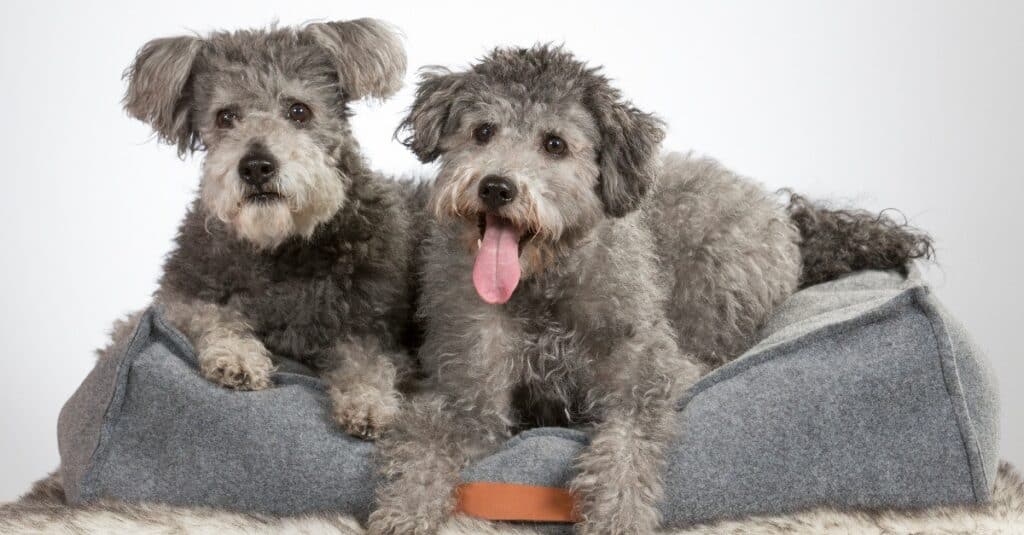
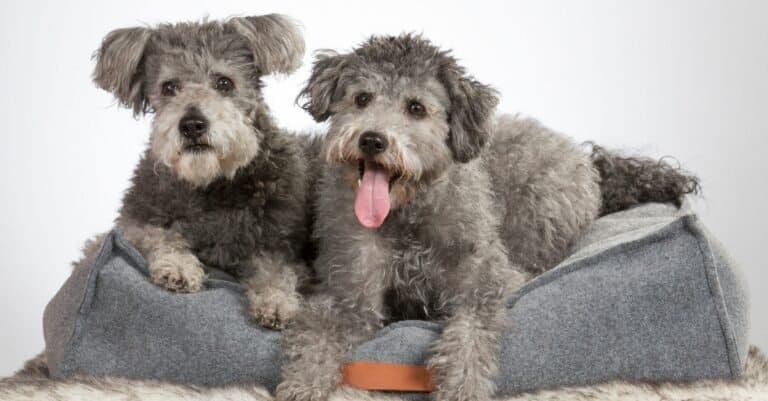
Two Pumi dogs lying on a dog matress.

The Pumi dog was developed in the 18th or 19th century.

The Pumi has been around for quite some time, having originated in Hungary around the 18th or 19th century, and is a descendant of the Puli, a breed that is believed to have been introduced in Hungary about 1,000 years ago. The development of the rare herding Pumi dogs began by mixing the ancestral Puli-type herding dogs, which are said to be the Pomeranian Schafpudel, a sheep poodle, with German herding spitz, the Hütespitz (considered an extinct breed), as well as terriers.
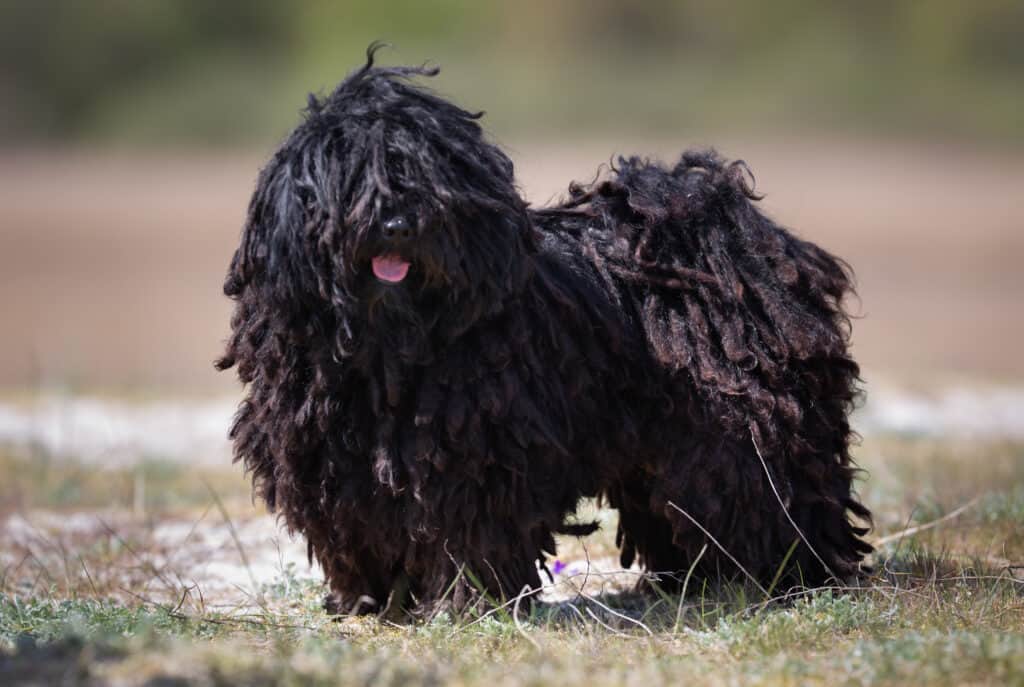
Puli dog outside on grass.

Puli dogs have long hair that forms into tight curls and waterproof cords.

3 Pros and Cons of Owning a Pumi

Pumik are adorable, but that’s not reason enough to make them a part of your family. If you’re considering tracking down breeders for this Hungarian dog, here’s what you should know.

ProsCons
Their sharp minds and desire for purpose make them well-suited to a variety of tasks. Whether you’re looking for a guard dog or an exterminator, these canines can prove surprisingly helpful around the house. Their highly communicative nature often translates into shrill barks. These dogs are vocal, and that’s unlikely to change completely even with behavioral training.
They’re healthy dogs that aren’t particularly prone to any serious health issues. They can be highly excitable, requiring a great deal of attention both in the form of physical exertion and socialization.
They communicate well and are generally eager to learn more tricks and tasks. They’re inclined to suffer from bad separation anxiety if left alone for extended periods of time.

Size and Weight

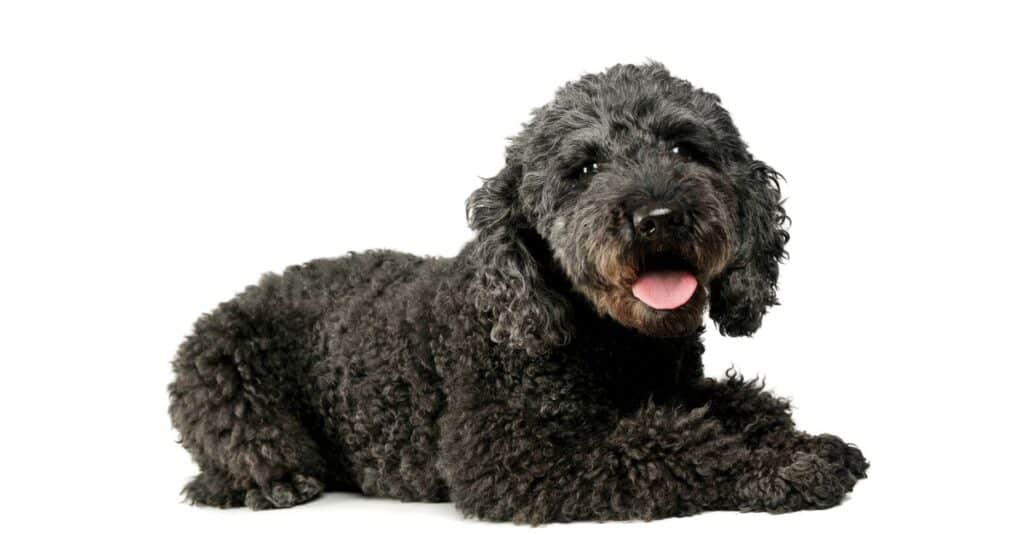
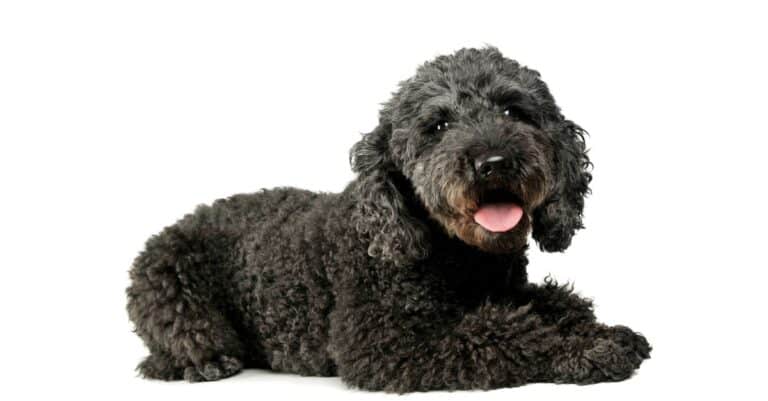
Pumi isolated on white background.

A pumi is going to stand at a height of roughly a foot and a half, and its weight can vary.

Pumik have huge personalities, but they lean towards the smaller end of medium-sized when compared to other dogs. Males are slightly larger than females, and they have a few extra pounds on their bodies to compensate. On average, a pumi is going to stand at a height of roughly a foot and a half tall, and their weight can vary from about 22 to almost 30 pounds depending on their size and their gender.

Height (Male) 16 – 18.5″ tall
Height (Female) 15 – 17.5″ tall
Weight (male) 27 – 29 lbs, fully grown
Weight (female) 22 – 24 lbs, fully grown

Common Health Issues

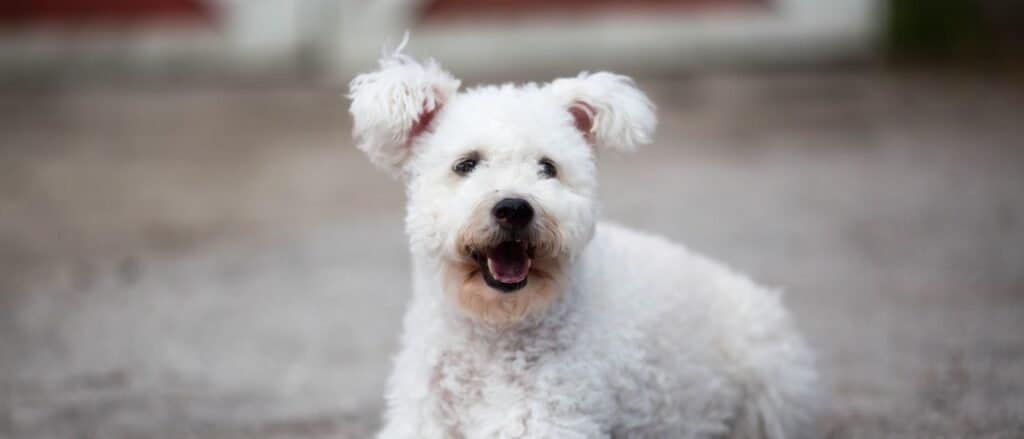
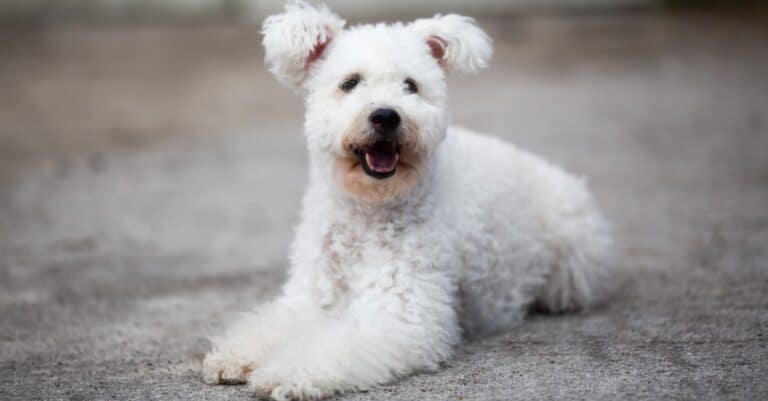
Pumi close-up

Some pumik also carry the gene for a disease known as degenerative myelopathy, but you can determine whether or not your particular canine possesses it with genetic testing.

Pumik rank among one of the healthier breeds, likely in part because these miniature Hungarian sheepdogs haven’t been over-bred like some of their purebred counterparts. Still, there are a couple of health conditions that are common to this Hungarian dog. Primary lens luxation is a relatively common but manageable eye condition that can lead to blindness if untreated. Some pumik also carry the gene for a disease known as degenerative myelopathy, but you can determine whether or not your particular canine possesses it with genetic testing. They’re also prone to hip dysplasia — a common condition in dogs that results in a deformed bone.

Temperament

Herding dogs have a tendency to be hyperactive, agile, and whip-smart — and pumik are no exception. And while they can be standoffish to strangers and other animals when they just meet them, they show a bright and loving personality to the people they choose to let into their lives. These are not a dog for families that just like to lie around, nor is it one for people who aren’t willing to put in the effort to set boundaries. As a herding dog, they’ve gained the tendency to be bossy — and they’ll extend that bossiness to you if you give them half a chance.

How To Take Care of a Pumi

Pumik can require a bit more care than the average dog, but this breed tends to reward that effort with its own diligent work ethic and overgrown affection. Here’s what you need to know to care for Pumik from the time they’re puppies all the way through the length of their lifespan.

The Best Dog Food
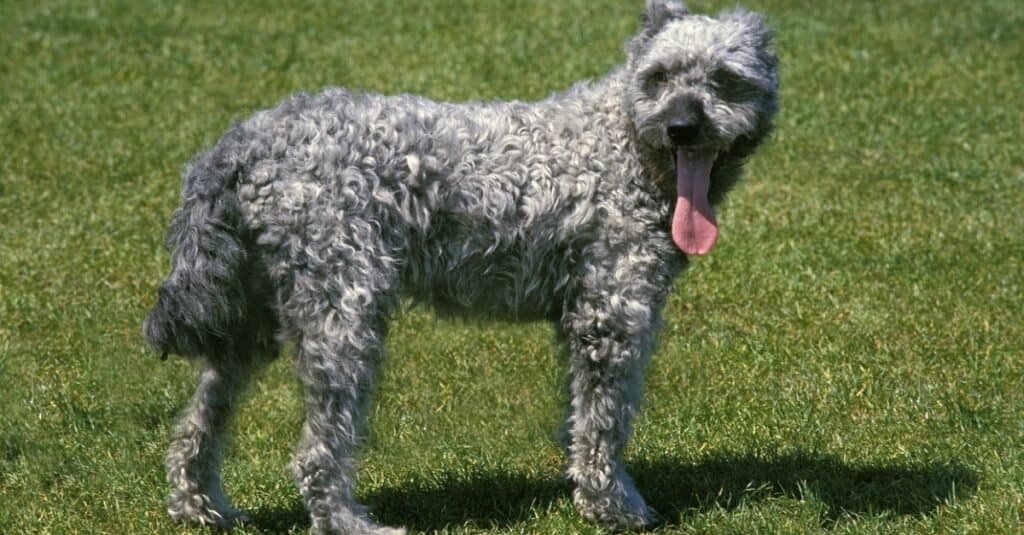
Rarest Dogs: Pumi

Make sure that you’re feeding them the right food for their age and that you’re using high-quality food with a decent meat content.

Pumik don’t come with any particular dietary restrictions, but you may want to seek out food that’s designed for more active dogs. Make sure that you’re feeding them the right food for their age and that you’re using high-quality food with a decent meat content. Treats can be a great way to reward behavior and train Pumik, but be careful that treats don’t become a de facto replacement for a real meal.

Degenerative myelopathy is a heartbreaking condition for dogs like Pumik to go through. So when looking for the right dog food, Pumi owners should prioritize dog food nutrients that are essential to the nervous system.

Maintenance And Grooming

The uniquely curly coat of Pumik is made up of a combination of soft and wiry hair, and these hairs winding together cause the coat to puff up. But there’s no need to worry if that curly hair is intimidating, as Pumik require little in the way of grooming. These dogs rarely shed, and they only need to be combed every three to six weeks. Be sure to get the fur wet after combing to make sure the fur curls back up. A semi-regular trim should be performed to keep the fur neat, but only do it after the fur has curled again to keep the length consistent.

Training
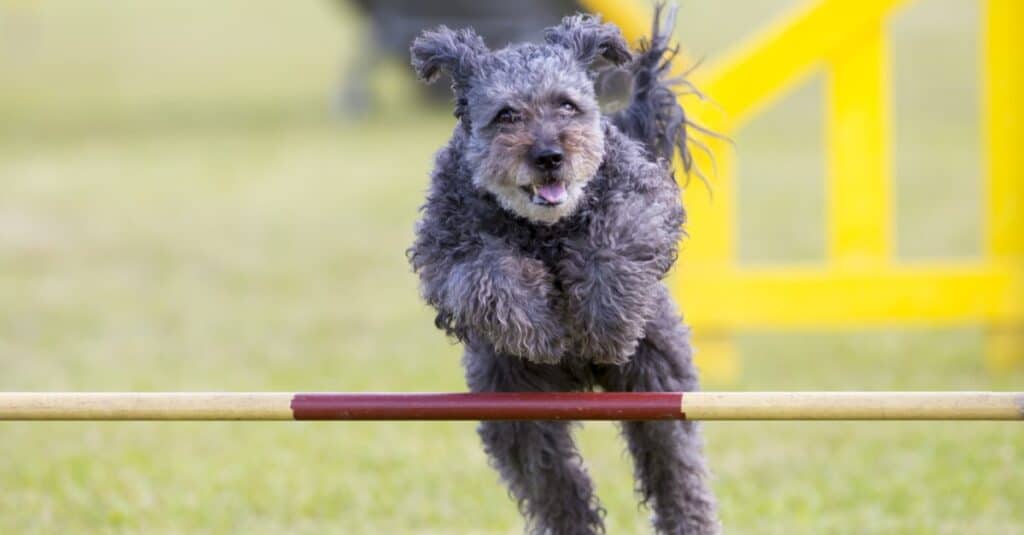
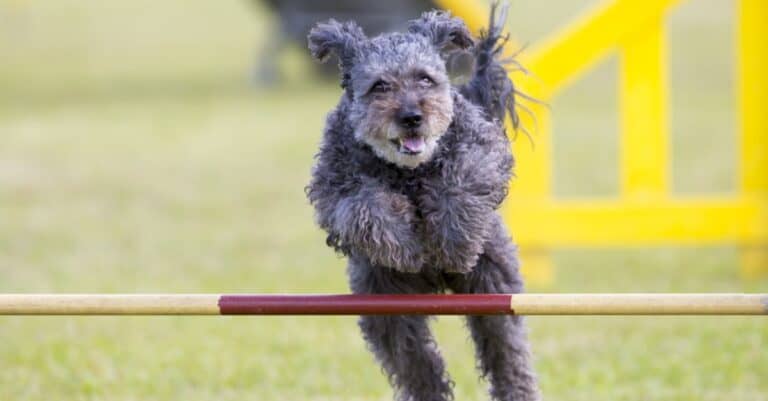
Pumi jumping over an obstacle on an agility course.

Pumik love having a task to perform and engaging actively in training.

Pumik are smart dogs, but that also means they have a tendency to overthink. This can quickly lead to them developing their own habits — and their stubborn nature ensures that these habits can be hard to break. Fortunately, Pumik love having a task to perform and engaging actively in training. Their intelligence can sometimes get the best of them, however, and they can grow bored with the same tasks over and over again. Making sure that you find the right motivation to keep them engaged and offer some variety in their training will lead to significantly more successful results.

Exercise
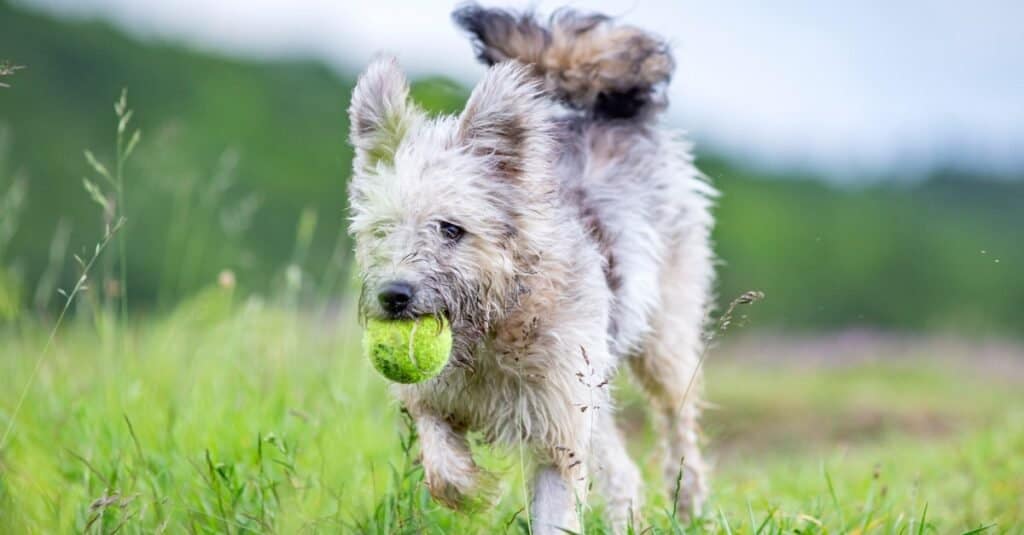
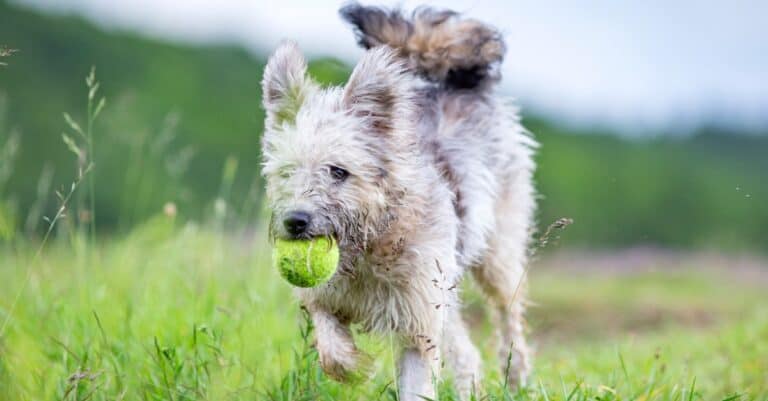
Cute Hungarian Pumi shepherd dog enjoying outdoors in spring.

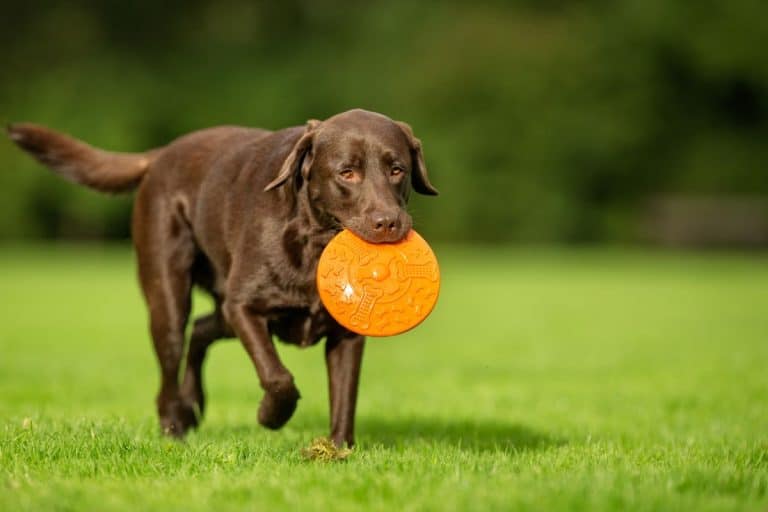
Active play is a necessity, and Pumik are particularly prone to enjoying fetch.

Pumik were raised to manage entire herds of sheep and cattle, so it only makes sense that they’re highly active dogs. You should be walking your Pumi regularly, but these dogs require diversity in their playtime. Built to be nimble, they excel at agility tasks and can make great performers. Even if you keep your Pumi engaged, you can expect them to climb over, under, and around everything in your home. Active play is a necessity, and Pumik are particularly prone to enjoying fetch. Frisbees and balls will get a lot of use in a home with this breed.

Puppies

A Pumi can be a handful fully grown, and that’s doubly true of puppies. Highly social with the people they bond with and incredibly active, you can count on your new Pumi puppy to require a lot of your time. Socialization should start early, as these dogs tend to naturally be shy and hesitant about animals and people that they haven’t met before. Obedient, training should be adopted early and consistently, as Pumik will push back against training if the process isn’t thorough and devoted. Pay special attention to noise training, as these dogs are very vocal — and very shrill — by nature.

Pumi And Children
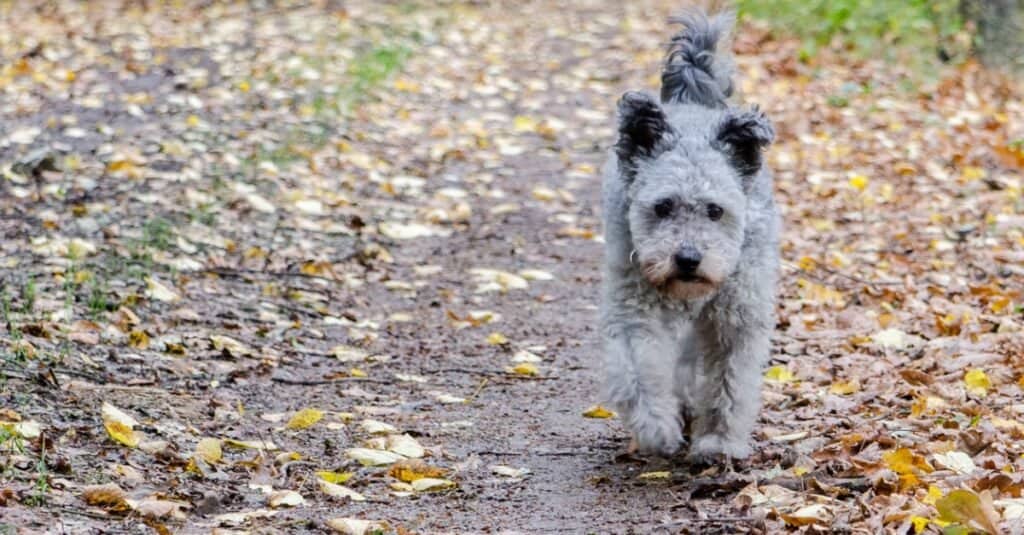
Pumi running down a path covered in leaves

Early and persistent training can reduce the likelihood of them herding and nipping at the heels of smaller children.

Curious, vibrant, and friendly, Pumik can be great with kids if properly socialized. Starting them off as puppies and making sure that the children they interact with know the proper etiquette for dealing with dogs can go a long way toward ensuring a harmonious relationship with Pumik and the kids in your household. It is always important to remember that these are herding dogs through and through, and they may have a tendency to treat children as their flock. Early and persistent training can reduce the likelihood of them herding and nipping at the heels of smaller children.

Dogs Similar to Pumi

Pumik have only recently gotten attention throughout the world, but this breed dates back a long time in their native Hungary, and they share obvious similarities with quite a few breeds. These similarities can be most dramatically seen when comparing these dogs to the Corgi, Puli, and Berger Picard.

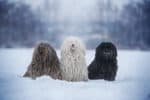
  • Puli: The similarly named Puli is actually believed to be an ancestor of the Pumi. As a smaller variety of herding dog, they’re known for their unique coats, which resemble a large and dense bundle of yarn.
  • Berger Picard: Pumik are believed to share a lineage with French herding dogs like the Berger Picard. These larger dogs have the same confidence and work ethic as the Pumi, but they tend to have a more mellow personality, making them appropriate for less active homes.
  • Corgi: The Corgi is technically two separate breeds, but both share the size, purpose, and energetic optimism of the Pumi. They may not have the same woolly coats, but they’re plenty adorable in their own right.

View all 246 animals that start with P

Sources

  1. American Kennel Club / Accessed October 3, 2021
  2. Dog Breeds List / Accessed October 3, 2021
  3. Vetstreet / Accessed October 3, 2021
  4. Hungarian Pumi Club of America / Accessed October 3, 2021
Melissa Bauernfeind

About the Author

Melissa Bauernfeind

Melissa Bauernfeind was born in NYC and got her degree in Journalism from Boston University. She lived in San Diego for 10 years and is now back in NYC. She loves adventure and traveling the world with her husband but always misses her favorite little man, "P", half Chihuahua/half Jack Russell, all trouble. She got dive-certified so she could dive with the Great White Sharks someday and is hoping to swim with the Orcas as well.
Connect:

Thank you for reading! Have some feedback for us?


Pumi FAQs (Frequently Asked Questions)

Kids love the boisterous personalities of Pumik, and these dogs tend to get along well with kids in return. Just be sure that they get the training they need, as they can develop the habit of herding children, which can involve some light nipping and barking.