



P
Species Profile

Pointer

Canis lupus familiaris

Freeze. Focus. Point.
ToB / Creative Commons

Pointer Distribution

Click a location to explore more animals from that region

Origin Location

This map shows the native origin of the Pointer. As a domesticated species, they are now found worldwide.

Loading map...

Found in 1 country

Size Comparison

Human 5'8"
Pointer 2 ft 2 in

Pointer stands at 38% of average human height.

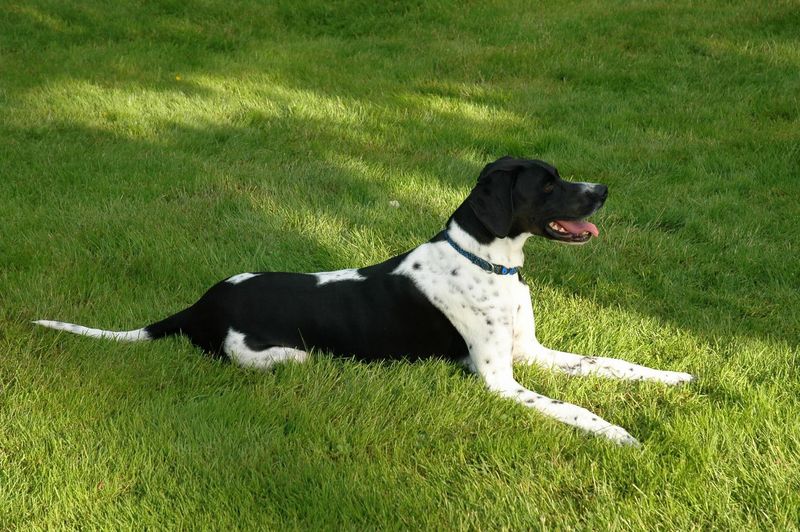
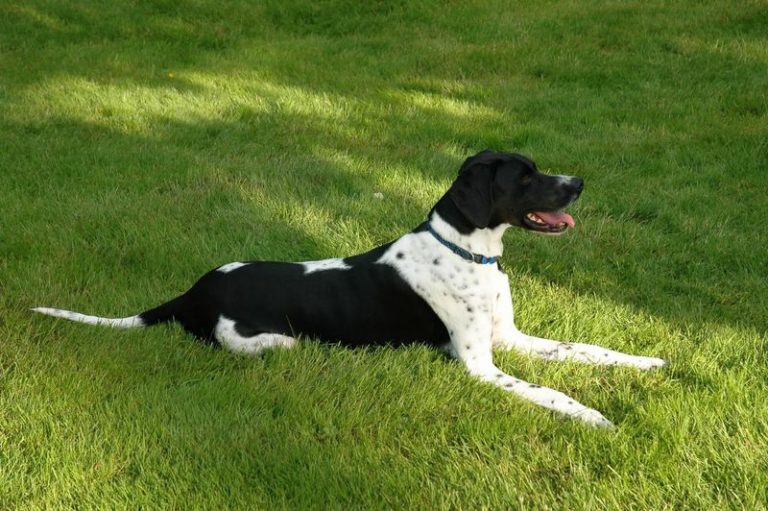
Pointer laying in the grass

At a Glance

Domesticated
Also Known As Bird dog, Gundog, Pointing dog
Diet Omnivore
Activity Diurnal+
Lifespan 5 years
Weight 34 lbs
Status Not Evaluated
Did You Know?

The classic "point" is an exaggerated freeze: head, tail, and body aligned toward the scent source.

Scientific Classification

The English Pointer is a domesticated dog breed developed as a gundog specializing in locating game birds and indicating their position by “pointing” (a characteristic rigid, directed stance).

Kingdom
Animalia
Phylum
Chordata
Class
Mammalia
Order
Carnivora
Family
Canidae
Genus
Canis
Species
Canis lupus

Distinguishing Features

  • Classic “pointing” posture: head and muzzle aligned toward scent source, body rigid, often one foreleg raised
  • Athletic, deep-chested, short-coated sporting dog build adapted for endurance and speed
  • Bred for strong scenting ability and field work with humans

Physical Measurements

Males and females differ in size

Height
2 ft 2 in (2 ft 1 in – 2 ft 3 in)
1 ft 12 in (1 ft 11 in – 2 ft 1 in)
Length
3 ft 3 in (2 ft 11 in – 3 ft 5 in)
Weight
64 lbs (55 lbs – 75 lbs)
52 lbs (44 lbs – 60 lbs)
Tail Length
1 ft 1 in (11 in – 1 ft 2 in)
Top Speed
35 mph
running

Appearance

Primary Colors
Secondary Colors
Skin Type Short, fine, close-lying coat over relatively thin, sometimes sensitive skin.
Distinctive Features
  • Domesticated Canis lupus familiaris breed within Canidae (Order Carnivora), selected for field performance.
  • Athletic, streamlined build with deep chest, tucked-up waist, and long legs for speed and endurance.
  • Distinctive 'pointing' behavior: rigid stance, head and tail aligned, indicating game bird location.
  • Long, lean head with defined stop; pendant ears; long, tapering tail carried level while working.
  • Short coat sheds lightly; minimal grooming, but poor cold tolerance-benefits from coats in winter.
  • High prey drive and strong ranging instinct; needs secure fencing and reliable recall training.
  • Very high daily exercise and mental work needs (running, scent games, field training).
  • Health considerations: hip dysplasia and elbow issues can occur; maintain lean body condition.
  • Health considerations: gastric dilatation-volvulus (bloat) risk in deep-chested dogs; use meal management.
  • Health considerations: allergies/skin irritation and ear issues possible; regular ear checks after fieldwork.
  • Health considerations: epilepsy and hypothyroidism reported in the breed; monitor for related signs.
  • White-heavy individuals may have higher congenital deafness risk; consider hearing screening.

Sexual Dimorphism

Males are typically taller and more muscular with broader skulls and heavier necks. Females tend to be slightly smaller and finer-boned, often appearing more refined through the head and forequarters.

  • Slightly taller and heavier overall; more pronounced musculature.
  • Broader head and thicker neck; deeper forechest common.
  • Often more substantial bone and larger paws.
  • Slightly smaller frame; finer bone and narrower head.
  • More refined neck and shoulders; lighter overall build.
  • Often matures with a sleeker outline while retaining athleticism.

Did You Know?

The classic "point" is an exaggerated freeze: head, tail, and body aligned toward the scent source.

Puppies may "point" spontaneously at moving objects-an inherited hunting behavior shaped by selective breeding.

Pointers were developed to work with hunters and, later, with firearms-finding birds so people could approach and flush them.

The breed's short coat was favored for field work because it dries quickly and sheds burrs more easily than longer coats.

In field trials, Pointers are known for wide-ranging searches and fast, efficient ground coverage.

The English Pointer helped influence other pointing breeds and modern gun-dog field work styles.

Compared with many breeds, they tend to have a naturally "clean" doggy odor due to the short, sleek coat (though all dogs can smell if wet/dirty).

Unique Adaptations

  • Selective domestication for cooperative hunting: unlike wild Canis lupus, the Pointer is bred to work closely with humans, taking direction at distance (whistle/hand signals).
  • Enhanced "freeze" response to bird scent: a breed-typical inhibition of chase at the moment of strongest scent, allowing a controlled approach-an artificial selection outcome rather than a wild-wolf trait.
  • Lean, aerodynamic build: deep chest, long legs, and strong loin optimize endurance and speed in open-country search patterns.
  • High olfactory performance in field conditions: long muzzle and large nasal passages support sustained scenting while running.
  • Short, tight coat and thin skin: supports heat dissipation during high activity (but increases sensitivity to cold and abrasions).

Interesting Behaviors

  • Pointing stance: the dog halts mid-stride, muscles taut, nose high or casting, tail held straight, indicating game location for the handler.
  • Scent-casting and quartering: sweeping back and forth across wind to sample scent cones efficiently.
  • "Honoring" (backing): trained dogs may also freeze when they see another dog pointing, reinforcing team hunting etiquette.
  • High-speed field gallop: a powerful, ground-eating run suited to covering large hunting fields.
  • Strong handler check-ins: in well-trained dogs, wide ranging is paired with periodic visual/whistle recall to stay in contact.
  • Object fixation: many will intensely lock onto birds/squirrels or fluttering items, reflecting prey-drive and visual tracking.
  • Soft-mouth tendency varies: some individuals retrieve gently, but Pointers are primarily locators/indicators rather than dedicated retrievers.

Cultural Significance

The English Pointer (Canis lupus familiaris) is a British sporting dog central to upland bird hunting and field trials in Europe and North America. Its nose-forward, tail-straight pose became an icon of skillful teamwork, finding game but letting the hunter finish.

Myths & Legends

Sporting lore often credits early Pointers with being so "bird-mad" they would lock into an immovable point-stories describe hunters walking all the way around the dog to confirm the line before flushing.

Traditional British and continental hunting anecdotes tell of "honoring" dogs that would freeze the instant they saw a teammate point, as if bound by an unwritten code of field manners.

Name-origin tradition: "Pointer" became the breed's identity because the pointing pose was so distinctive that it served as a living signpost for game-an old field term elevated into a proper name.

Field-trial campfire stories in the 19th-20th centuries often celebrated legendary Pointers that could "read the wind," casting in sweeping arcs until they pinned the scent cone and stopped like a statue.

Some country hunters believed a Pointer that pointed at empty cover could sense birds that had moved on or risen without sound. It was a sign to trust the dog and move on.

Conservation Status

NE Not Evaluated

Has not yet been evaluated against the criteria.

Population Stable

Life Cycle

Birth 7 pups
Lifespan 5 years

Lifespan

In the Wild
3–8 years
In Captivity
10–15 years

Reproduction

Mating System Polygyny
Social Structure Managed Domestic
Breeding Pattern Serial
Fertilization Managed Selective
Birth Type Managed_selective

English Pointers reproduce via human-managed pairings, often using a single selected sire across multiple bitches per season. Pair bonds are temporary, focused on genetic selection for pointing ability and screening for hip dysplasia, cardiac disease, and allergies.

Behavior & Ecology

Social Pack Group: 3
Activity Diurnal, Crepuscular, Cathemeral
Diet Omnivore High-protein meat-based foods (especially poultry such as chicken or turkey)

Temperament

Species context (Canis lupus): inherently social, forms affiliative bonds, flexible roles compared with wild wolves.
Breed distinction: gundog specialist that uses sustained attention and a rigid "pointing" freeze to indicate birds.
Highly energetic and endurance-oriented; needs daily vigorous running plus scent/field-style mental work.
Typically friendly and people-oriented; less protective/guarding than many other dog breeds.
Strong prey drive and chase instinct; requires recall training and secure areas for off-leash exercise.
Biddable yet can be independently focused when hunting; responds best to positive, consistent training.
Generally sociable with other dogs; may be exuberant, benefiting from early impulse-control training.
Sensitive to harsh handling; stress can increase vocalizing, pacing, or inattentiveness during work.
Care: structured exercise, enrichment (tracking, retrieves), and calm recovery time to prevent over-arousal.
Health concerns to monitor: hip dysplasia, epilepsy, hypothyroidism, allergies, eye disorders, bloat/GDV risk.

Communication

bark
whine
growl
yip
howl Infrequent
signature pointing posture Freeze, head/forelimb aligned
tail carriage and wag patterns signaling arousal or friendliness
ear and facial expressions for attention, uncertainty, or appeasement
body lean, pawing, and nudging to solicit play or contact
scent investigation and urine marking; strong use of olfactory cues
eye contact and gaze alternation between handler and target to coordinate

Habitat

Biomes:
Temperate Grassland Temperate Forest Mediterranean Boreal Forest (Taiga) Tundra Alpine Desert Hot Desert Cold Wetland Freshwater Marine Savanna Tropical Dry Forest Tropical Rainforest +8
Terrain:
Plains Hilly Valley Coastal Island Plateau
Elevation: Up to 16404 ft 3 in

Ecological Role

Human-associated mesopredator/hunting companion derived from gray-wolf ancestry; in managed settings functions primarily as a gundog that locates (points) upland game rather than independently killing and consuming prey.

Assists humans in harvesting game by locating/pointing birds Can reduce local pest pressure on small mammals when roaming is permitted (though typically leashed/managed) Provides companionship and working partnership in sporting/field contexts Acts as a sentinel/alert animal around the home and field camps

Diet Details

Main Prey:
Other Foods:
grasses Berries and other fruits Roots and tubers Plant scraps Grains and starches

Human Interaction

Domestication Status

Domesticated

Domestic dogs (Canis lupus familiaris) come from gray wolves (Canis lupus), shaped by people for tameness and work. The English Pointer was bred in England (17th–19th centuries) to find upland game birds and hold a point. Breeders chose scenting skill, stamina, trainability, speed, lean build, strong prey drive, and hard‑wired pointing.

Danger Level

Low
  • Bite risk exists as with any dog, typically situational (fear, pain, guarding); generally people-friendly when socialized
  • High prey drive may lead to chasing-risk of knocking over small children or causing falls during high-speed play
  • Off-leash running can create hazards (collisions, road running) affecting both humans and the dog
  • Mouthiness in adolescents and overarousal in under-exercised dogs can cause minor injuries (scratches/bruises)

As a Pet

Suitable as Pet

Legality: Generally legal as a companion animal where domestic dogs are permitted; subject to local dog licensing, leash laws, vaccination requirements, and housing/breed-neutral ordinances. Not typically restricted by breed-specific legislation.

Care Level: Moderate

Purchase Cost: $500 - $2,000
Lifetime Cost: $18,000 - $45,000

Economic Value

Uses:
Hunting and gundog work Sport and competition (field trials, hunt tests, conformation) Companion animal market Professional training and boarding services Veterinary and preventive care services Rescue and rehoming networks
Products:
  • field/hunting services (bird-finding/pointing and retrieval support in mixed teams)
  • breeding stock and puppies
  • training (gunfire conditioning, steadiness, recall, off-leash handling)
  • equipment and supplies (GPS collars, e-collars where legal, crates, high-activity nutrition)
  • organized events (entry fees, memberships, trials/tests)
  • Hunting assistance (a gun dog used to locate and point upland game birds for hunters).

Relationships

Ecological Equivalents 6

Animals that fill a similar ecological role in their ecosystem

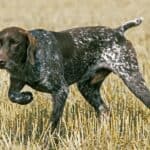
German Shorthaired Pointer
German Shorthaired Pointer Canis lupus familiaris Occupies a similar gundog niche: locates upland game birds, points/holds, and often retrieves. Compared with many general-purpose pointers, the English Pointer is especially specialized for fast ground coverage and intense, statuesque pointing.
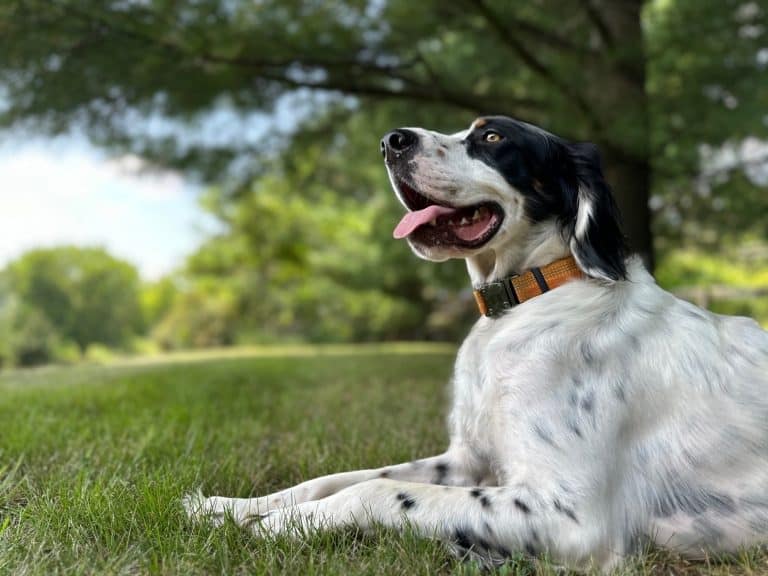
English Setter
English Setter Canis lupus familiaris Similar upland bird-finding role. Setters traditionally 'set' (crouch) while pointers stand rigid and point; both are high-endurance field dogs needing substantial daily exercise and training.
Brittany
Brittany Canis lupus familiaris Occupies a similar bird-hunting and pointing niche but is typically smaller and often more versatile as a close-working, all-day hunter. English Pointers are commonly bred for wide-ranging field search and strong pointing intensity.
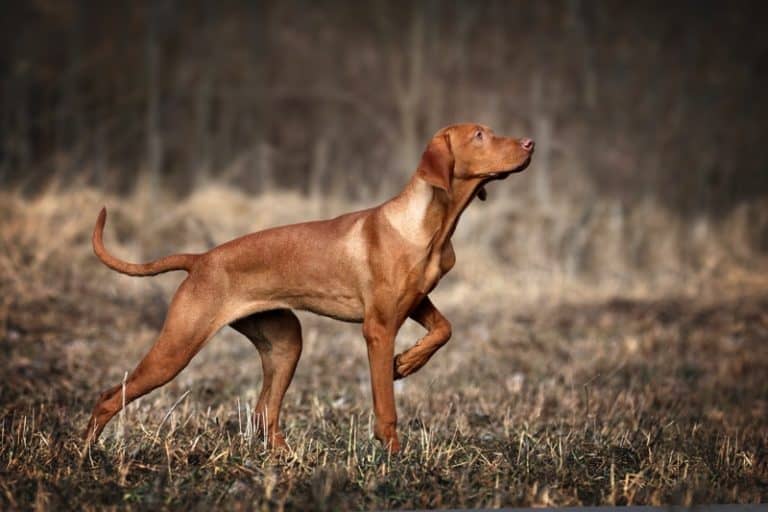
Vizsla
Vizsla Canis lupus familiaris Shares a pointing and human-partner hunting niche; both are athletic and people-oriented. English Pointers are often leaner, have very high stamina, and are strongly driven to range and lock-on point.
Weimaraner
Weimaraner Canis lupus familiaris Similar 'find-and-indicate' hunting role; historically used for larger game as well. Both breeds require heavy exercise and mental stimulation. English Pointers are classically optimized for locating upland birds and holding point until the handler arrives.
Border Collie
Border Collie Canis lupus familiaris Not a gundog, but an ecological analogue due to intense selection for handler-focused work, high trainability, and high daily activity needs, highlighting that English Pointers require structured exercise, enrichment, and consistent training to thrive.

Pointers are a very active, energetic, and friendly dog breed. They make a great family dog for families that are active and able to give the dog the exercise it needs each day. Pointers were originally bred to track and point out small prey, particularly birds. Pointing refers to the dog alerting its owner to the location of the prey. To do this, the dog stops, freezes, and aims its nose in the direction of a bird, for example, letting the owner know where to find it. Some types of Pointers also retrieve the bird.

History
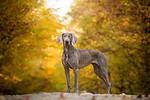
Types of Pointer Dogs

This large French Pointer, like all Pointers, is bred primarily as a hunting companion, single-minded when out in a field environment. 

This breed is usually attributed to Spanish origins, but some say it was developed by the Portuguese in the 1200s. The British might have had the dog already in medieval times, but a popular story is that British soldiers brought the dog to England from Spain in 1713. Others say a Portuguese merchant brought the breed to England, and there is a record of the breed in England in 1650. However it happened, the British developed the dog as it is known today, with some crossbreeding with French and Spanish pointers to create an excellent companion for gamebird hunting.

3 Pros and Cons of Ownership

Pros!Cons!
Healthy
Overall, pointers are a healthy breed and have fewer serious health concerns than other breeds.
Require a Lot of Exercise
Pointers should get a few hours of exercise each day. If their exercise needs are not met, pointers may find less desirable ways to fill their need for activity.
Good Family Dog
Pointers make a great family dog. They are friendly, playful, and love being around people and kids.
Needy
Pointers are very friendly, but they can also be very needy. They may constantly try to be right with their owner, so if this is not something you’re looking for, a pointer may not be the right dog for you.
Easy to Groom
Maintaining a pointer’s coat is relatively easy. They’ll only need weekly brushing to keep their fur looking nice.
Not Good with Other Non-Canine Pets
Pointers can be trained to do well with other dogs, but they do not do well with cats, hamsters, or other pets. They tend to see these smaller animals as prey.
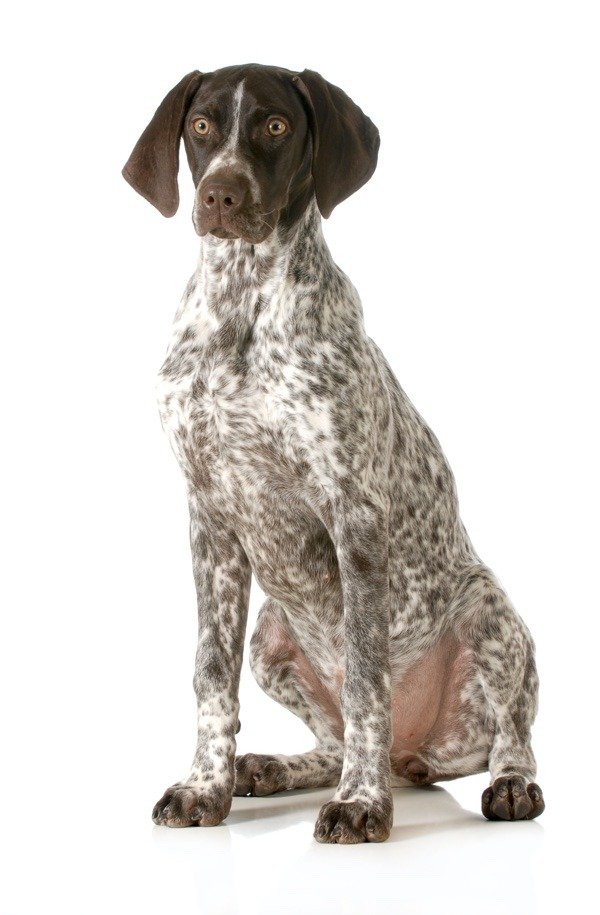
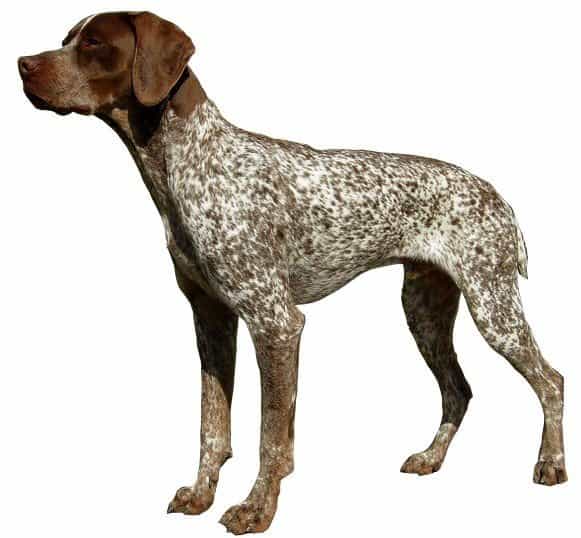
Brown and white pointer on isolated background

A mid- to large-sized dog breed, pointers are full-grown by 16 months.

Size and Weight

Pointers are a mid- to large-sized dog breed. Males are typically between 25 and 28 inches tall and weigh between 55 and 75 pounds. Females are a little smaller than their male counterparts and are generally between 23 and 26 inches tall. Females weigh between 45 and 65 pounds. At the age of 3 months, a female pointer puppy will weigh somewhere between 14 and 25 pounds, while a male puppy will weigh between 16 and 28 pounds. Pointers are fully grown by the time they are 16 months old.
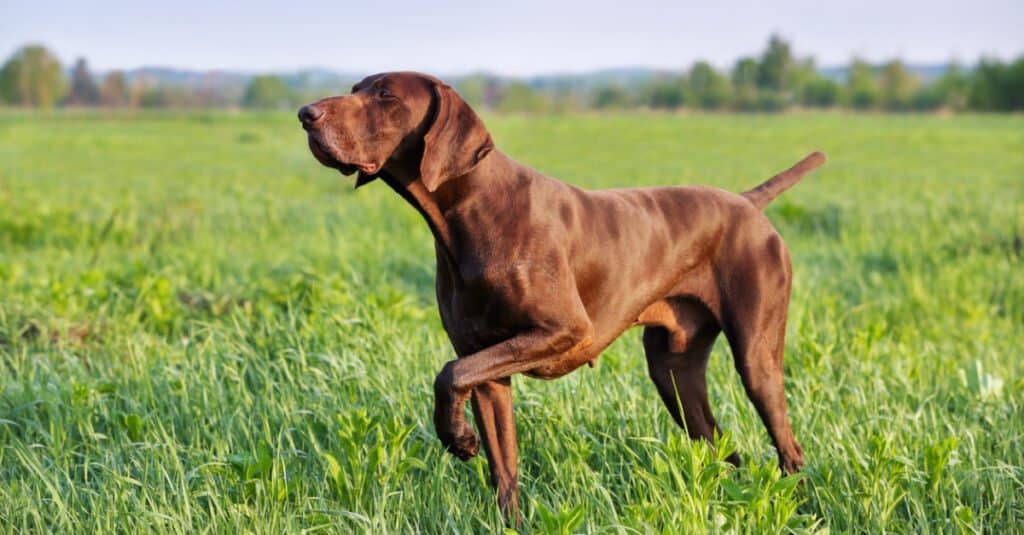
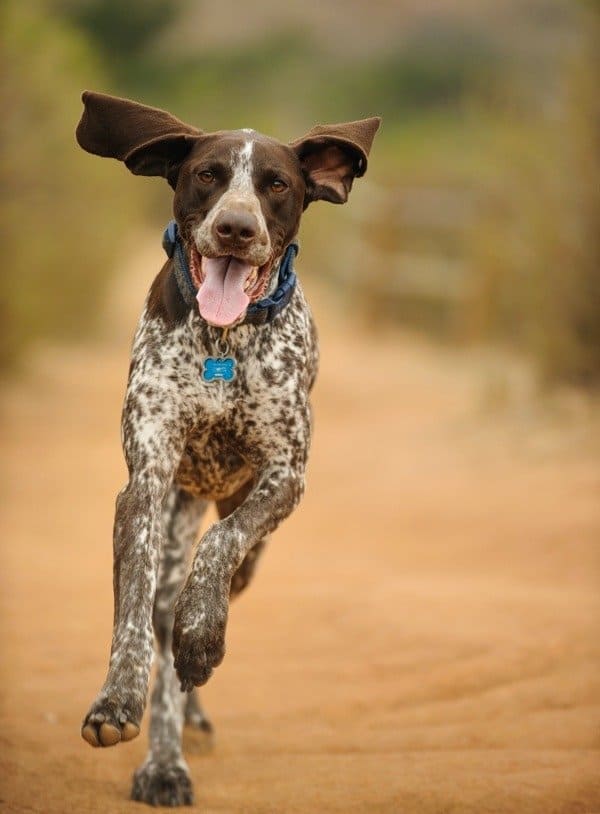
Brown German Shorthaired Pointer

With its beautiful coat and regal pose, the brown German Shorthaired Pointer is eye-catching and a very healthy dog breed.

Common Health Issues

Compared to other dog breeds, pointers are overall very healthy. However, there are still a few common health problems you’ll want to be on the lookout for if you adopt a pointer.

Like many dog breeds, pointers can be at risk for developing cancer as they age, so regular veterinary checkups are important for early detection. When caught early, there are more treatment options, and the prognosis for your dog will be much better.

Pointers also have a higher rate of hemangiosarcoma, a bleeding tumor that often forms in the spleen, but may develop in other organs in the body as well. If not caught, this tumor can rupture, causing internal bleeding in the dog.

Bloat is another health concern to be on the lookout for. Dogs with narrow and deep chests, like the pointer, are more at risk for bloat. If a pointer bloats, its stomach gets twisted and fills with gas. This can be fatal very quickly, so keeping an eye out for any of the signs and seeking emergency treatment immediately will be critical. You may also be able to talk to your veterinarian about scheduling preventive surgery for your dog.

Some pointers may also suffer from hip or elbow dysplasia. This is an inherited disease that causes arthritis due to a pointer’s joints developing improperly. If you notice that your dog is limping or having trouble getting up from their bed, it could be a sign that they are experiencing pain. If you notice any of these symptoms, you’ll want to be sure to schedule an appointment with the vet.

Pointers have also been known to suffer from allergies, particularly skin allergies (atopy). Allergens, such as pollen, dust, or mold, can cause their skin to itch. Most of the time, the folds of their skin, their ears, their feet, and their stomachs are the areas that are impacted. A pointer who frequently rubs their face or licks their paws may have allergies. Another sign of allergies in pointers is regular ear infections.

In summary, here are some of the main health issues Pointers face:

  • Cancer
  • Hemangiosarcoma
  • Bloat
  • Hip and elbow dysplasia
  • Atopy (skin allergies)
Types of Pointer Dogs

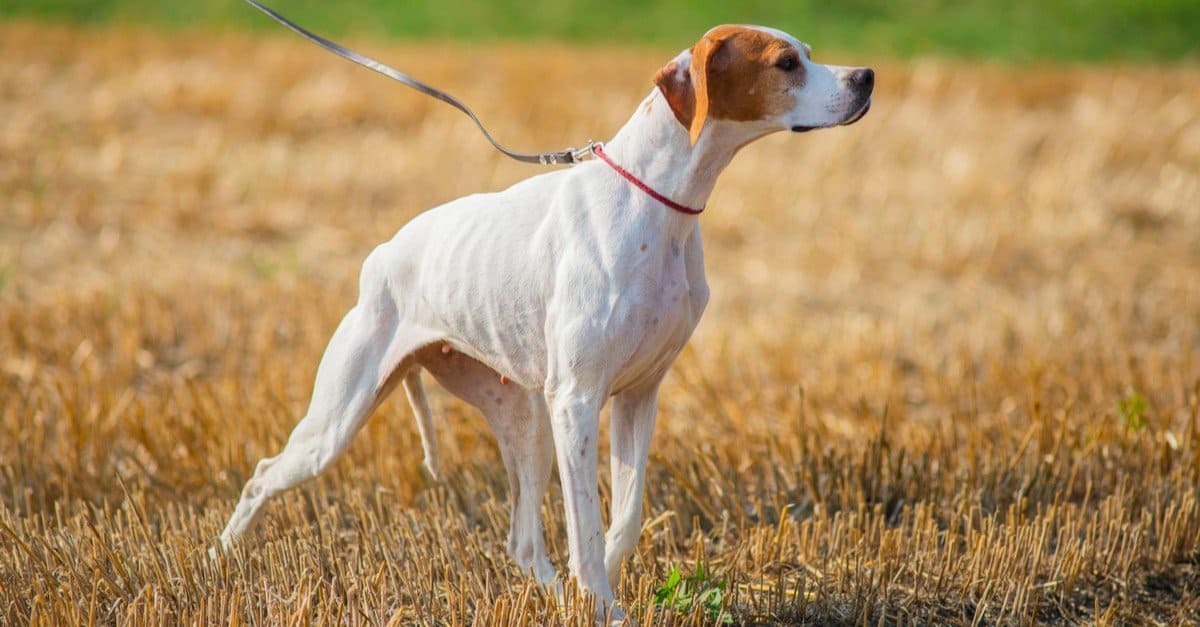
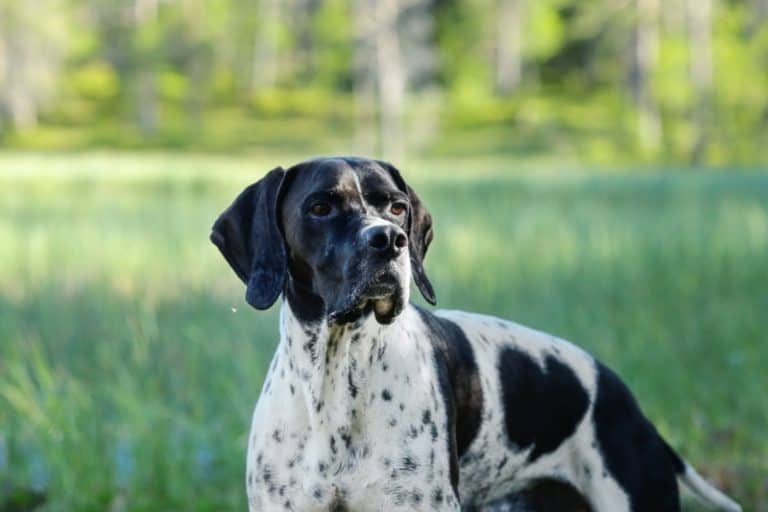
Red and white English Pointer in the field. They are great for tracking small prey, but good dogs for families as well.

Temperament

Pointers have a very even-tempered personality, which, along with their behavior, makes them a great family pet for many families. However, pointers are also very energetic and active. Because of these traits, it is essential to make sure that a pointer gets regular exercise and activity each day. Otherwise, they may find less desirable ways to get their energy out inside the house.

Another personality trait of a pointer is that they love interacting with their family. They will look for frequent attention and want to spend their time close to their human family members. They also love playing with and spending time with children, though because they can be very hyper, it will be best to closely supervise them around children, especially younger children.

Care

If you are considering adopting a pointer dog or puppy, there are a few key things you’ll want to keep in mind as you plan for their care. A pointer’s personality, exercise and nutrition needs, and common health concerns, such as bloat, should all be considered before you add this dog breed into your family.
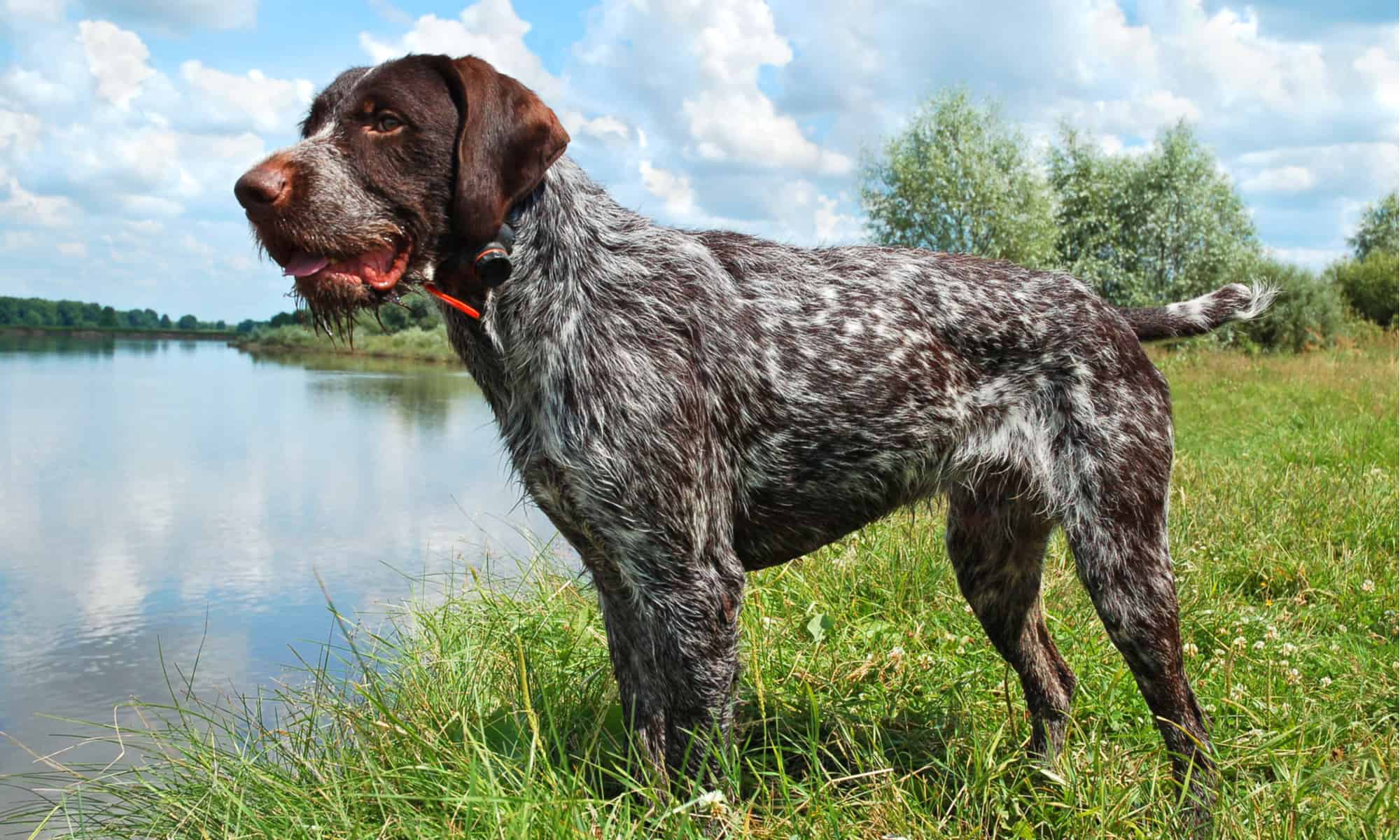
German Wirehaired Pointer

German wirehaired pointers require a lot of exercise and stimulation. Pointers enjoy being outdoors.

Best Dog Food

When selecting food for your pointer, it will be important to choose something that offers a good balance of carbohydrates, fatty acids, proteins, vitamins, and minerals. Ideally, you’ll select foods that offer a similar makeup to what pointers used to eat from their natural environment.

Foods that are good for pointers and pointer puppies include poultry, fish, and brown rice. These are foods that the ancestors of the pointer would have eaten in Spain. You will want to avoid foods such as soy, beef, beet pulp, or horse meat when planning your pointer’s diet.

Always select high-quality food options from reliable companies. Look for products that are made without artificial preservatives. You can also consider cooking your own food for your pet. Either way, consulting with your veterinarian to make sure the nutritional needs of your dog are being met is advisable.
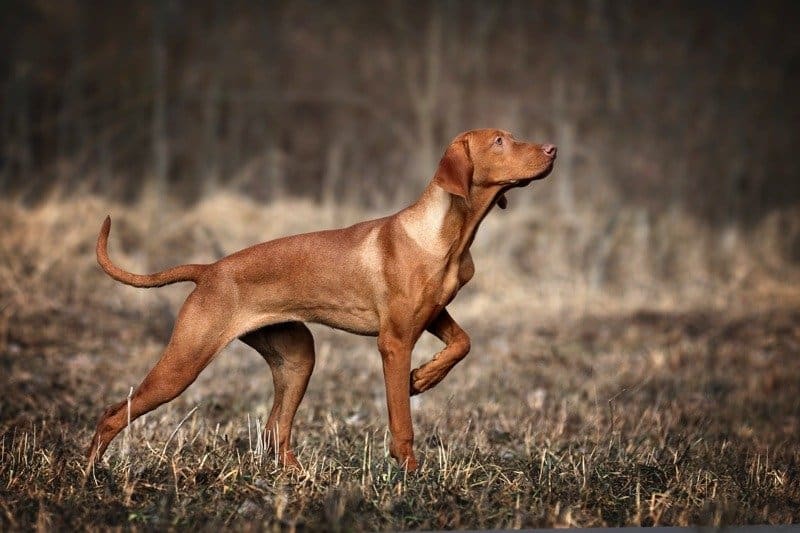
Brown pointer dog pointing its nose while hunting

Pointers are low-maintenance dogs and easy to train.

Maintenance and Grooming

Pointers are relatively low-maintenance dogs. You’ll want to brush their coat about once a week using a hand glove or a soft-bristled brush. This will remove loose hair and any dirt that may have become trapped in their coat.

Another important task will be keeping your pointer’s ears clean. You can purchase an ear cleaning solution and use it along with some soft gauze to remove any dirt or debris from their ears. Additionally, be sure to regularly trim your dog’s nails so they don’t get so long that they become uncomfortable for them to walk. Be sure to brush your pointer’s teeth regularly to prevent any dental problems.

Training

Pointers are relatively easy to train. While you may notice that your pointer is stubborn, most will respond well to positive reinforcement, such as praise or treats. Be prepared to spend some time training your pointer, but once they have mastered some basic commands, you’ll find it relatively easy to continue their training. They are very intelligent and able to learn quickly. It is best to begin training a pointer when they are very young.

While pointers can be trained as therapy or emotional support animals due to their pleasant personality, they are less commonly used as service animals compared to breeds like Labradors or Golden Retrievers.

Exercise

Pointers are a very active breed. Providing sufficient exercise each day will be essential for their health and well-being. Each day, you’ll need to make sure that your dog gets a few hours of exercise. Exercising a pointer may include taking a walk, playing fetch or another game together, or letting them run around in a fenced backyard. Because of the amount of activity they need, pointers do better in a single-family home with a yard than in a small apartment.

Puppies
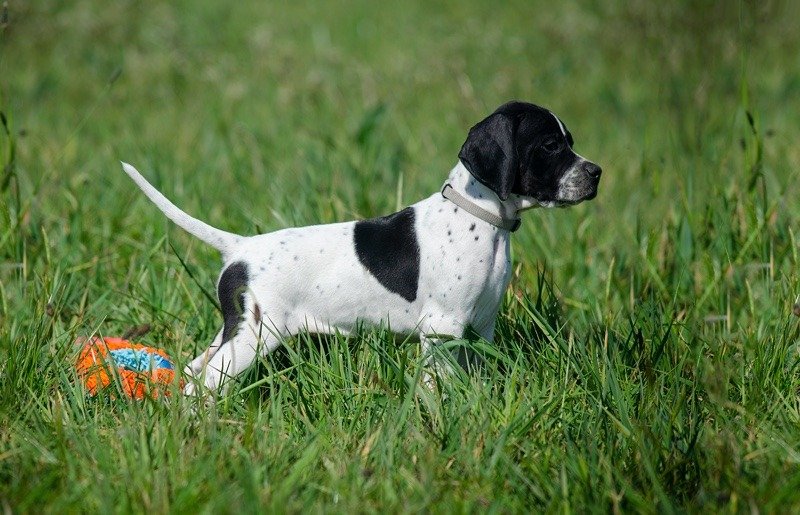
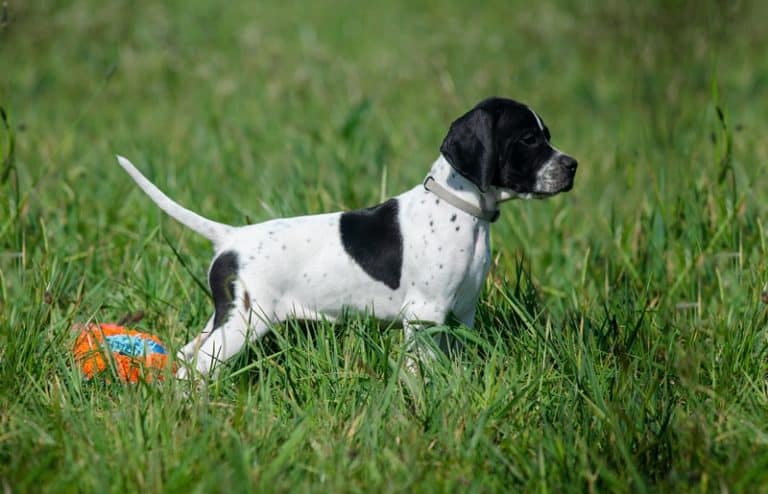
Black and white pointer puppy

A black and white pointer puppy is playing in the grass.

When you adopt a new puppy, it will be important to begin training them right away. Even as young puppies, pointers are very intelligent and able to begin learning commands and expectations. Be sure to closely supervise your new puppy and puppy-proof your home to prevent any accidental injuries or damage to your important belongings.

Make sure your new puppy gets plenty of exercise and playtime. These dogs are very energetic, so they need lots of activity.

Children

The pointer is a good dog to have around children, but not ideal for homes that have infants or toddlers. Pointers enjoy playing with kids, but could accidentally injure a baby or toddler by jumping onto them or knocking them with their wagging tail. It is important to note that you’ll always want to supervise children around a pointer, as you would with any other dog breed. Teach children how to appropriately play and interact with your dog to prevent accidental injuries to the dog or your child.

Types

The main differences among these pointers are their coloration, hair type, and country of origin. However, they have common ancestors and were all bred to be good hunting dogs skilled at pointing.

  • English Pointer: Perhaps the most famous of the pointers because of its pointing stance, the English variety has a white coat with reddish brown, black, or orange patches. The hair is short and fine.
  • German Shorthaired Pointer: This dog is white with a reddish brown roan appearance, but they can be solid colored or with patches.
  • German Longhaired Pointer: Excellent at tracking, pointing, and retrieving, the German Longhaired Pointer can also jump high. Coloring is brown, speckled, or brown with white markings, and the ears are furry.
  • German Wirehaired Pointer: Versatile, sturdy, and eager to work, no matter the climate, this breed is a blend of many different hunting and tracking dog types, including wirehaired pointing griffons.
  • Weimaraner: Because of its distinctive silver-gray coat, this dog is called the “Gray Ghost.” The coat is solid gray with an occasional small white spot on the chest. The eyes are amber or blue-gray.
  • Large French Pointer: Also known as the Braque Francais, this may be the parent breed of all pointers, particularly the short-haired ones. The Braque Francais is the smaller and more popular of the two types; the other is the larger Gascony. The breed came from the Pyrenees Mountains hundreds of years ago.
  • Wirehaired Pointing Griffon: Considered a superior gundog, the “Griffs” have a harsh and bristly coat. Their coloring is gray with brown markings, and they have a big mustache and eyebrows.
  • Cesky Fousek: A rare breed that is possibly centuries old, this dog hunts, points, and retrieves. Its name means Czech whiskers, which are part of its rough coat. The brown or amber eyes have a distinctive almond shape.
  • Auvergne Pointer: From Auvergne, France, this breed is a close relative of the Braque Francais. Noted as good retrievers, this breed has a black and white spotted coat, short and smooth, and usually a solid black head.
  • Old Danish Pointer: Developed in the early 1700s, possibly by Martin Bak (the locals call it the Bakhound). This breed has short heads, lean bodies, and brown eyes.
  • Perdigueiro Portugueso: This Portuguese Pointer is square in build with a short and coarse coat but velvety fur on its triangular ears and beagle-like face.
  • Large Munsterlander: Not related to the Small Munsterlander, the Large Munsterlander was bred from the German Longhaired Pointer. It has long, black and white fur, great endurance in all kinds of weather, and is especially loyal and obedient.

Similar Dogs

Stabyhouns, Spinone Italianos, and Irish setters are three other dog breeds that are similar to pointers in that all have hunting and pointing in their heritage.

  • Stabyhoun: A rare breed, this medium-sized dog with silky hair is best suited as a farm dog and hunter/tracker. The stabyhoun, although friendly and affectionate, makes a good guard dog. The breed is very active, but obedient and docile.
  • Spinone Italiano: From an old Italian dog breed going back to at least the 15th century, this dog was once a pointer and still is good for waterfowl hunting. Mostly, it is a friendly, patient dog well-suited to being with a family. A large dog that likes to be outside and has medium hair in orange, white, or brown.
  • Irish Setter: A medium-sized dog with medium-length hair, this dog is playful and very energetic. A Setter has a good nose for searching, so it is a good hunting dog, but it is too friendly to be a guard dog. The hair can be a reddish maroon or red and white. The setter’s eyes are very expressive, and the dog makes a good companion or family dog.

Famous Pointers

There are a few famous people you may recall who own (or owned) pointers:

  • Bradley Cooper previously owned a German Shorthaired Pointer named Samson, who passed away in 2010.
  • Clark Gable had a German shorthaired pointer.
  • Judy was a famous pointer dog that helped the crew of the HMS Gnat and HMS Grasshopper (ships during WWII) by notifying them when she detected incoming aircraft.
View all 247 animals that start with P

Sources

  1. American Kennel Club www.akc.org/dog-breeds/pointer/ / Accessed September 10, 2018
  2. Dog Time / Accessed September 10, 2018
  3. Wikipedia en.wikipedia.org/wiki/Pointer_(dog_breed) / Accessed September 10, 2018
  4. Harlingen Veterinary Clinic / Accessed September 10, 2018
  5. EmboraPets.com / Accessed September 10, 2018
  6. Dogell.com / Accessed September 10, 2018
  7. Healthy Homemade Dog Treats / Accessed September 10, 2018
  8. Prestige Animal Hospital / Accessed September 10, 2018

Thank you for reading! Have some feedback for us?


Pointer FAQs (Frequently Asked Questions)

The cost of adopting a pointer puppy can vary based on their pedigree and breed lines. While the average cost is around $700, you could easily pay over $1,800 for some dogs. Some other factors that could impact what you pay include the breeder you choose and their reputation, the size of the litter, and if the puppy has been trained yet.

In addition to the cost to adopt a pointer, you’ll also want to budget for other costs of pet ownership. These include supplies such as leashes, crates, dog beds, bowls, and toys. You’ll also need to pay for food, regular veterinarian visits, and preventative medications. Your first year owning a pointer, you should expect to spend between $500 and $2,000. After the first year of ownership, you should still budget between $500 and $1,000 for expenses and care.