



E
Species Profile

English Pointer

Canis lupus familiaris

Built to find birds, born to point
Svetlana Valoueva/Shutterstock.com

English Pointer Distribution

Click a location to explore more animals from that region

Origin Location

This map shows the native origin of the English Pointer. As a domesticated species, they are now found worldwide.

Loading map...

Found in 1 country

Size Comparison

Human 5'8"
English Pointer 2 ft 2 in

English Pointer stands at 38% of average human height.

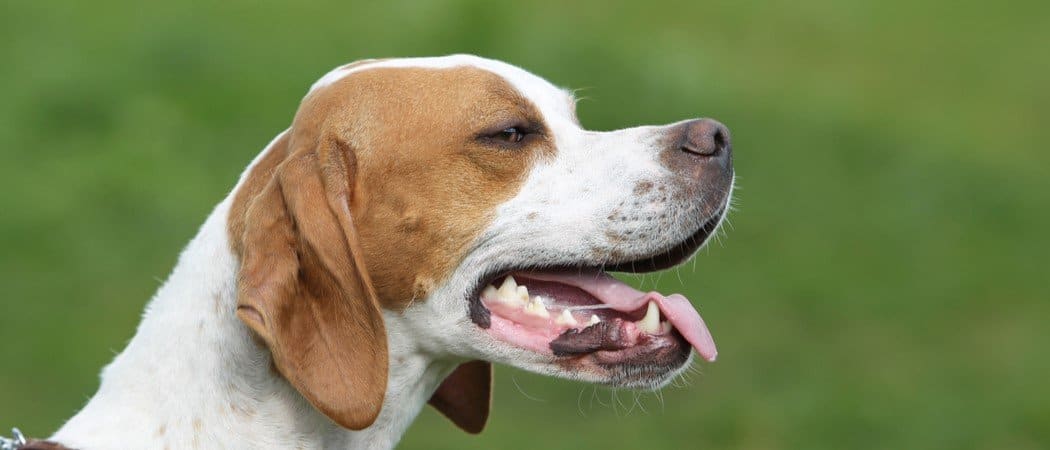
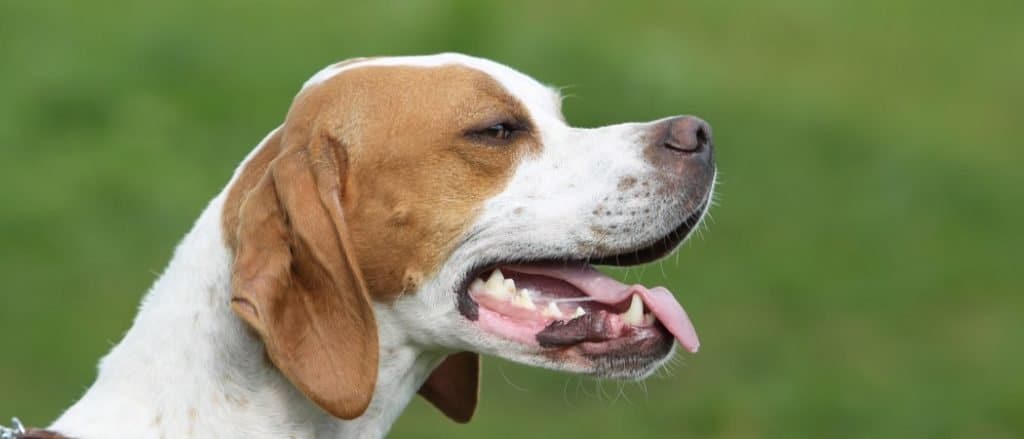
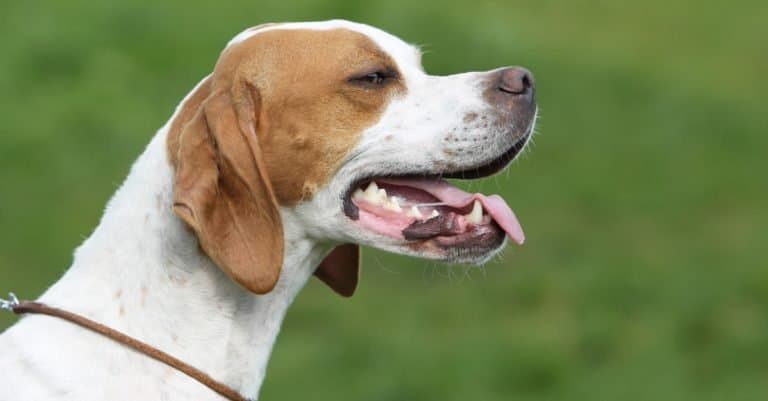
English pointer close-up

At a Glance

Domesticated
Also Known As Pointer, Bird dog, Pointing dog
Diet Omnivore
Activity Diurnal+
Lifespan 13 years
Weight 34 lbs
Status Not Evaluated
Did You Know?

The Pointer's hallmark "point" stance is a fixed, statue-like pause that indicates game to a hunter without flushing it.

Scientific Classification

The English Pointer is a domesticated dog breed developed primarily as a pointing gundog—locating game birds and freezing in a characteristic ‘point’ stance to indicate their position to hunters.

Kingdom
Animalia
Phylum
Chordata
Class
Mammalia
Order
Carnivora
Family
Canidae
Genus
Canis
Species
Canis lupus familiaris

Distinguishing Features

  • Lean, athletic, deep-chested gundog build optimized for endurance and speed
  • Characteristic rigid ‘point’ posture with raised foreleg and focused head/neck alignment when scenting game
  • Short, smooth coat often in liver/white, lemon/white, orange/white, black/white, or tricolor patterns
  • Long tail carried straight and used expressively while working (often ‘flagging’)
  • High drive and stamina; typically requires substantial daily exercise and mental work

Physical Measurements

Males and females differ in size

Height
2 ft 2 in (2 ft 1 in – 2 ft 3 in)
2 ft 1 in (2 ft – 2 ft 2 in)
Length
3 ft 7 in (3 ft 1 in – 4 ft 1 in)
Weight
64 lbs (55 lbs – 75 lbs)
54 lbs (44 lbs – 64 lbs)
Tail Length
1 ft 2 in (12 in – 1 ft 4 in)
12 in (10 in – 1 ft 2 in)
Top Speed
35 mph
Fast long distance runner

Appearance

Primary Colors
Secondary Colors
Skin Type English Pointer has a short, sleek coat that lies close to thin skin, with little undercoat. Bred for speed, it gets cold in wet weather and may have sensitive skin.
Distinctive Features
  • Domesticated dog (Canis lupus familiaris) selectively bred as a pointing gundog: distinctive behavioral 'point' stance-intense focus, head and nose oriented toward scent, tail carried straight/level, one forelimb often lifted-used to indicate gamebird location.
  • Athletic, racy morphology compared with the general domestic dog: tall, long-legged, deep-chested with pronounced tuck-up for efficient galloping and endurance in open fields.
  • Head is clean and refined with a strong muzzle; nose prominent for scent work; ears are medium-length, thin, and drop close to the head.
  • Tail is medium length, tapering, and typically carried level; acts like a 'rudder' when running and during pointing.
  • Coat is very low-maintenance (occasional brushing), but the short coat offers little protection-often benefits from a coat in cold weather and careful management on rough cover to avoid cuts/abrasions.
  • Temperament (breed-typical): energetic, people-oriented, and affectionate; highly driven outdoors with strong prey/field focus-needs structured training and recall work to manage off-leash interest in birds and scent trails.
  • Exercise and enrichment needs are high: thrives with daily vigorous running, field-style games (tracking/scent work), and consistent reward-based training; under-exercised dogs may become restless, vocal, or destructive.
  • Care considerations: monitor and clean drop ears to reduce ear irritation; maintain lean body condition to protect joints; provide slow-feeding/rest after meals to reduce bloat risk; routine nail/foot care due to high mileage activity.
  • Health issues vary by line: hip dysplasia and other joint injuries from lots of activity; bloat (gastric dilatation-volvulus); skin allergies; hypothyroidism; some heart problems; very white dogs may have sun sensitivity or congenital deafness.

Sexual Dimorphism

As in many medium-large domestic dog breeds, males are typically taller and more heavily muscled, while females are slightly smaller and more lightly built; both retain the same sleek, athletic silhouette characteristic of a field-bred pointing dog.

  • Generally larger frame with broader chest and heavier bone/muscle, especially through neck and shoulders.
  • Head may appear slightly broader with more pronounced musculature of cheeks and neck.
  • Slightly smaller, lighter, and more refined build; often more visibly 'racy' through waist and limbs.
  • Head and neck tend to be a bit finer while retaining the same breed outline and field function.

Did You Know?

The Pointer's hallmark "point" stance is a fixed, statue-like pause that indicates game to a hunter without flushing it.

Modern Pointers were refined in Britain to work in front of hunters, later becoming a foundation for many pointing gundog lines.

Their short, tight coat commonly comes in liver, lemon, black, or orange with white-patterns that improve visibility in fields.

They're built for speed and endurance: deep chest for lung capacity and long legs for covering ground efficiently.

The breed's name is literal-"pointer" refers to the dog pointing its muzzle and often lifting a foreleg toward scent.

Many individuals retain strong scenting and chase instincts even as family pets, reflecting their field heritage.

Unique Adaptations

  • Specialized scent-work behavior: selective breeding amplified a prolonged "freeze" response rather than immediate chase, enabling controlled hunting.
  • Athletic morphology for open terrain: long stride length, lean musculature, and efficient gait help cover large fields quickly.
  • Short, low-maintenance coat: sheds dirt and dries fast, but provides less insulation-often needs warmth in cold weather.
  • Temperament tuned for cooperation: typically biddable and handler-focused compared with more independent canids, reflecting domestication and gundog selection.
  • Enhanced trainability for cues at distance (whistle/hand signals): useful for field control when the dog is far ahead.

Interesting Behaviors

  • Classic "point": head and tail aligned, body rigid, one forepaw often raised-an instinctive behavior selected in pointing breeds.
  • Air-scenting and ground-scenting: may lift the head to catch drifting bird scent, then "lock on" as odor strengthens.
  • Quartering the field: naturally sweeps back and forth in front of a handler to systematically search for scent.
  • High arousal in movement-rich environments: can become intensely focused when birds, squirrels, or fast motion are present.
  • People-centered "working partnership": many Pointers check back visually with their handler after ranging out, especially with training.
  • Vocality varies, but frustration barking can appear if exercise needs aren't met-common in high-drive gundogs.

Cultural Significance

The English Pointer (Canis lupus familiaris) helped shape British and European field sports and modern gundog work. Its steady pose in art and books stands for skill, calm, and the human-dog hunting partnership. It shows how people shaped wolves into scent-detecting, pointing dogs steady around guns and game.

Myths & Legends

In British sporting tradition, old kennel tales celebrated "the dog that could point for an hour," a legendary exaggeration used to praise steadiness-handlers swapped such stories as measures of a line's quality.

A long-running story says Spanish Pointers were brought to Britain around the War of the Spanish Succession and helped improve British pointing dogs; country folk called them the 'foreign spark'.

Field lore in parts of Britain and Ireland said the English Pointer (Canis lupus familiaris) would not leave its point even if the bird ran. Stories taught sportsmen discipline and reliability.

In American plantation-era hunting culture, pointers were sometimes spoken of as "gentlemen's dogs," with anecdotes portraying suggesting that a well-bred pointer's calm, statuesque point reflected its handler's status and taste.

Conservation Status

NE Not Evaluated

Has not yet been evaluated against the criteria.

Population Stable

Life Cycle

Birth 7 pups
Lifespan 13 years

Lifespan

In the Wild
12–15 years
In Captivity
12–17 years

Reproduction

Mating System Polygynandry
Social Structure Managed Domestic
Breeding Pattern Serial
Fertilization Managed Selective
Birth Type Internal_fertilization

English Pointer (Canis lupus familiaris): Under human care, mating is serial polygynandry—no lasting pair bonds. People arrange matings; one male may father many litters, and females may have different mates. Artificial insemination is used.

Behavior & Ecology

Social Pack Group: 4
Activity Diurnal, Crepuscular
Diet Omnivore Lean animal protein (commonly chicken/turkey-based diets)

Temperament

Highly social and human-oriented; typically friendly with familiar people and often good with other dogs when properly socialized (breed distinction vs. the base domestic dog: selectively intensified sociability for cooperative hunting work).
Very high energy and stamina; developed to range, quarter ground, and maintain focus in the field-requires substantial daily aerobic exercise (running/off-leash in safe areas) and structured training to prevent restlessness.
Strong prey drive and scent motivation; may chase wildlife/cats and can become 'nose-led' and less responsive if recall is not well proofed-secure fencing and long-line training are common care requirements.
Biddable and responsive but can be sensitive to harsh corrections; typically does best with consistent, reward-based methods and plenty of repetition around distractions.
Distinct working behavior: the characteristic 'point' (freeze/stance with focused gaze) is a breed-typical behavioral output shaped far beyond the average domestic dog.
Generally even-tempered at home if exercised; under-stimulated individuals may become destructive, vocal, or develop nuisance behaviors.
Potential social/behavioral concerns: separation anxiety or frustration, over-arousal in stimulating environments, and adolescent impulsivity; early socialization and calmness training are important.
English Pointers often have hip dysplasia and other joint strain—limit high-impact exercise when young. Allergies, skin problems, and ear infections can make them more irritable; deep-chested dogs risk bloat—feed and exercise carefully.

Communication

Barking Alerting, excitement, demand
Whining/whimpering Attention, anticipation, stress
Growling Boundary-setting; less common in well-socialized individuals but present as normal canine signaling
Howling Infrequent; may occur in response to sirens or social triggers
Body posture and facial expressions Relaxed vs. tense stance, lip licking, yawning as appeasement/stress signals
Tail carriage/wag patterns Broad wag with soft body when affiliative; high, fast wag when aroused
Scent communication Urine marking, sniffing, overmarking-common canine social information exchange
The 'point' stance: rigid freeze, head and nose directed at scent source, often with lifted forelimb-functions as a learned/selected signal to humans and sometimes to other dogs during cooperative hunting contexts
Orienting and checking-in behavior with handler Looking back during ranging; strengthened through training
Play signals Play bow, bouncy gait) and polite greeting rituals (curving approach, sniffing

Habitat

Biomes:
Temperate Grassland Temperate Forest Mediterranean Desert Hot Desert Cold Boreal Forest (Taiga) Tundra Alpine Wetland Freshwater Marine Savanna Tropical Dry Forest Temperate Rainforest Tropical Rainforest +9
Terrain:
Plains Hilly Valley Plateau Coastal
Elevation: -3937 in – 18044 ft 8 in

Ecological Role

Domesticated companion and specialized hunting aid (pointing gundog) rather than a natural ecosystem predator; when free-ranging, functions as a generalist omnivore/scavenger with opportunistic predation on small animals.

Assists humans in locating/harvesting game birds (hunting utility) Can contribute to localized pest control (deterring/dispatching small mammals) Companionship and working-dog roles that support human activities (recreation, field work) Acts as a managed consumer in human food systems (primarily fed by people rather than self-provisioning)

Diet Details

Main Prey:
Other Foods:
Cooked grains and starches Vegetables Fruits Grass and plant matter

Human Interaction

Domestication Status

Domesticated

Dogs (Canis lupus familiaris) were shaped by humans from gray-wolf ancestors. The English Pointer is a gundog refined in Britain 1600s-1800s from European pointers and local stock to find game birds and hold a steady point. Breeders favored scent, speed, wide search and trainability. People use them for bird hunting, trials, dog sports, showing, rescue, and active homes.

Danger Level

Low
  • Bites/scratches possible if frightened, in pain, poorly socialized, or mishandled (risk increases around rough play with children if untrained)
  • High energy and speed can cause accidental collisions/knock-downs
  • Strong prey drive may lead to chasing small animals; risk is primarily to other pets/wildlife rather than humans
  • Off-leash running in unsafe areas can create traffic hazards and secondary injury risk to people attempting to intervene

As a Pet

Suitable as Pet

Legality: Generally legal to own as a pet in most jurisdictions; subject to standard dog licensing/leash laws and local kennel limits. Not typically targeted by breed-specific legislation (BSL), though housing/insurance policies may impose restrictions unrelated to breed.

Care Level: Experienced

Purchase Cost: $500 - $2,500
Lifetime Cost: $18,000 - $45,000

Economic Value

Uses:
Companion animal ownership Hunting and shooting-sports economy Professional training/boarding/kennel services Sporting events and clubs (field trials, hunt tests, conformation) Veterinary, rehabilitation, and pet insurance services Breeding programs and stud services Pet products (food, gear, enrichment)
Products:
  • Working gundogs for bird hunting (pointing)
  • Field-trial/hunt-test competitors
  • Breeding stock (puppies, stud services)
  • Training services (bird introduction, steadiness, recall, gun conditioning)
  • Equipment/gear demand (e-collars where legal, GPS trackers, crates, boots, vests)

Relationships

Ecological Equivalents 6

Animals that fill a similar ecological role in their ecosystem

German Shorthaired Pointer
German Shorthaired Pointer Canis lupus familiaris Closest functional analog among common gundogs: a versatile pointing breed bred to locate birds by scent and indicate with a rigid point. Typically more versatile (often including retrieving and water work) than the more 'specialist pointer' style of many English Pointers.
Vizsla
Vizsla Canis lupus familiaris Occupies a similar niche as an athletic, short-coated bird dog that relies heavily on scenting and close cooperation with a handler; both require high daily exercise and structured training to channel prey drive.
Brittany
Brittany Canis lupus familiaris Comparable upland-bird hunting role: finding and pointing birds in fields and brush. Brittanys are usually smaller and often work closer; English Pointers are typically rangier, faster, and bred for a more intense, statuesque point.
English Setter
English Setter Canis lupus familiaris Occupies the upland bird-dog niche; setters historically "set" (freeze) on birds in a similar way. Distinction: English Pointers are usually leaner and faster in the field, while setters commonly have longer coats that require more grooming.
Weimaraner
Weimaraner Canis lupus familiaris Large, endurance-oriented hunting dog with strong scenting ability and high exercise needs. Overlaps as a field companion but is often selected for broader game versatility and guarding tendencies, compared with the generally people-friendly, bird-focused Pointer.
Domestic dog
Domestic dog Canis lupus familiaris English Pointer (Canis lupus familiaris): bred for fast quartering, strong airborne scenting, and pointing. Lean, deep-chested, with a short coat and high stamina. Requires daily aerobic and scent work. Monitor for hip dysplasia, eye conditions, epilepsy, hypothyroidism, and bloat; screen hips and eyes and avoid heavy exercise near meals.

English Pointers were bred to accompany their owner on hunting trips. When they spot a rabbit, bird, fox, or other game, these dogs stand perfectly still, pointing their tail straight out. This is a clear signal to their owner that they’ve found prey. English Pointers are believed to be descendants of foxhounds and greyhounds. They are members of the sporting group.

Though these dogs were bred for hunting and pointing, they are a great choice for a family dog. They have a sweet temperament and love to be around their family members, including children. The only factor to keep in mind is that these canines need lots of exercise every day to keep them both physically and emotionally healthy.

3 Pros and Cons of Owning an English Pointer

Pros!Cons!
An easy grooming routine
This canine’s short coat only needs to be brushed every one or two days.
Needs lots of exercise
This energetic canine needs at least 60 minutes of exercise each day.
Low shedding
English Pointers shed very little hair.
Prey driven
These dogs were bred to hunt so they need to be watched around the family’s pet rabbit, bird, etc.
A gentle temperament
These dogs love to cuddle with their owners on the sofa as much as they love to run around outdoors.
A stubborn streak
This dog is known to be independent and even stubborn at times. This can make obedience training a challenge.
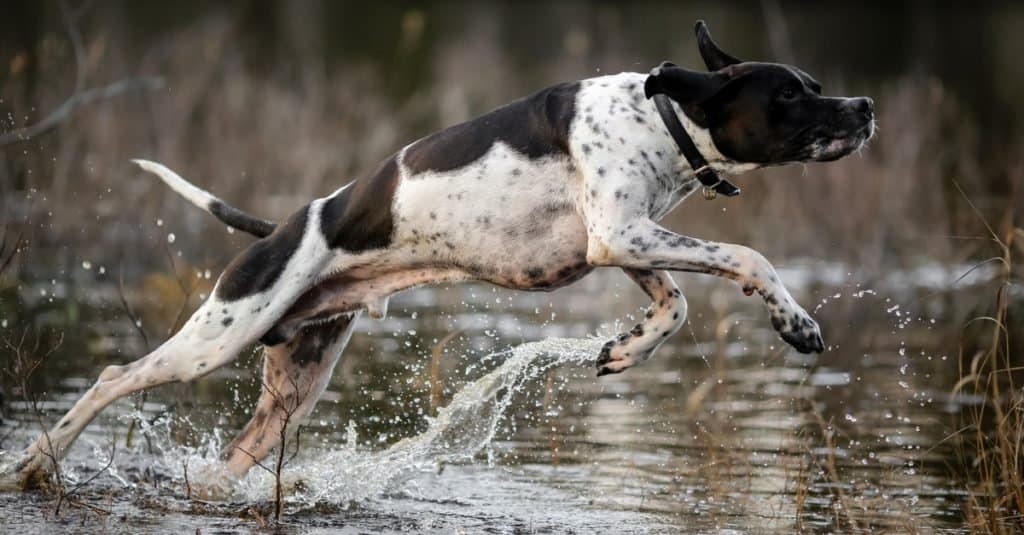
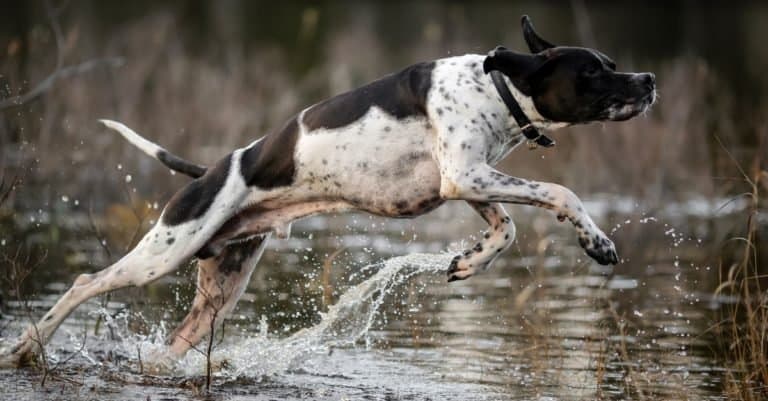
English pointer jumping into the water in a swamp.

English pointers are amazing athletes.

Size and Weight

These are dogs of medium to large size with a coat of short hair. English Pointer males can weigh up to 75 pounds full-grown, whereas females weigh up to 65 pounds full-grown. Males can grow to a height of 28 inches, while females can reach 26 inches. An 8-week-old English Pointer weighs around 7 pounds. They are considered fully grown at 18 months to 2 years old.

Common Health Issues
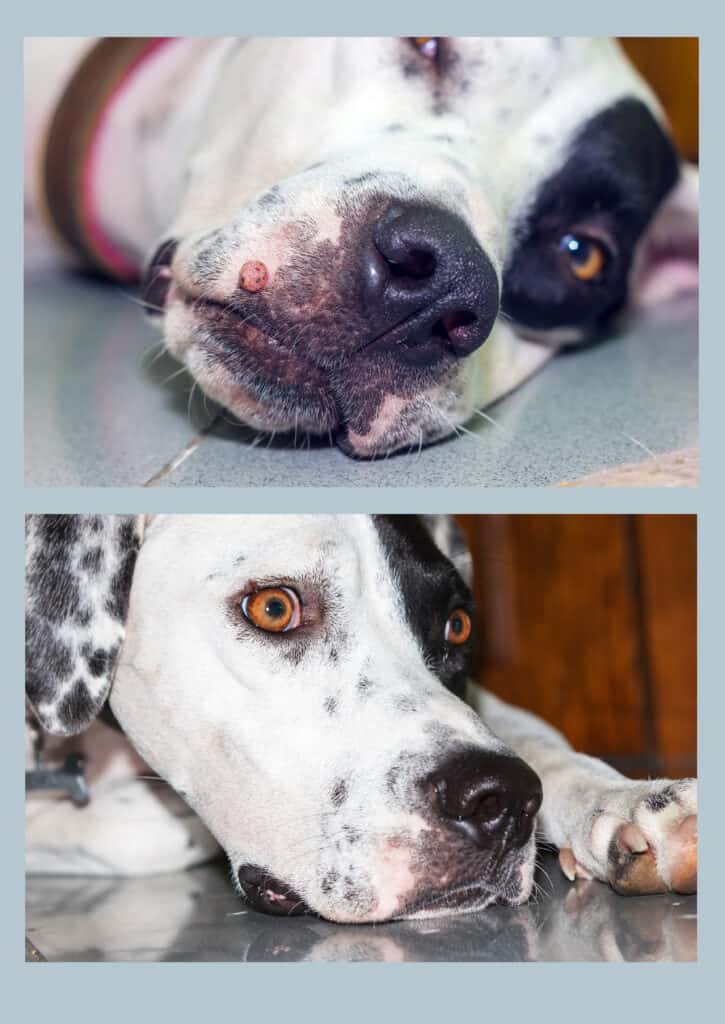
This photo shows an English Pointer before and after getting a wart removed.

Most dogs have some common health issues, and the English Pointer is no exception. One of these issues is hip dysplasia. Hip dysplasia happens when the ball and socket of the hip joint don’t fit together properly. This causes it to limp, hop, or run awkwardly. Physical therapy, supplements, weight loss, and surgery are all possible treatments for this condition. The specific treatment needed depends on the severity of the hip dysplasia.

A second common health issue is called bloat. This is when a dog’s stomach fills with fluid, gas, or even food. This brings on a twisting of the stomach that’s very dangerous to the dog’s health. A dog with bloat must be treated by a veterinarian right away.

Another health issue of these dogs is cataracts. Cataracts take the form of cloudiness in one or both of a dog’s eyes. Some dogs live fairly well with cataracts, while others need surgery due to severe loss of vision.

Temperament and Behavior
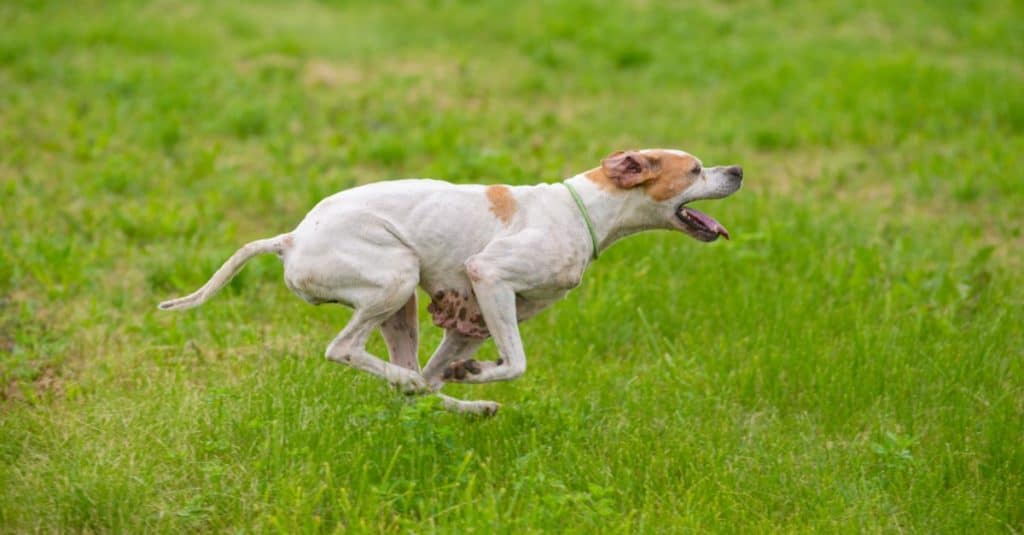
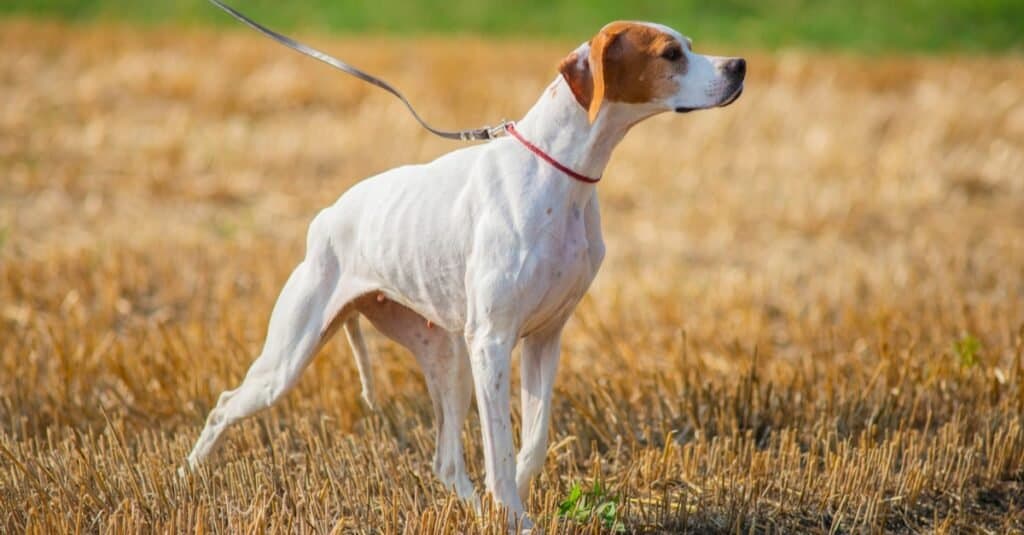
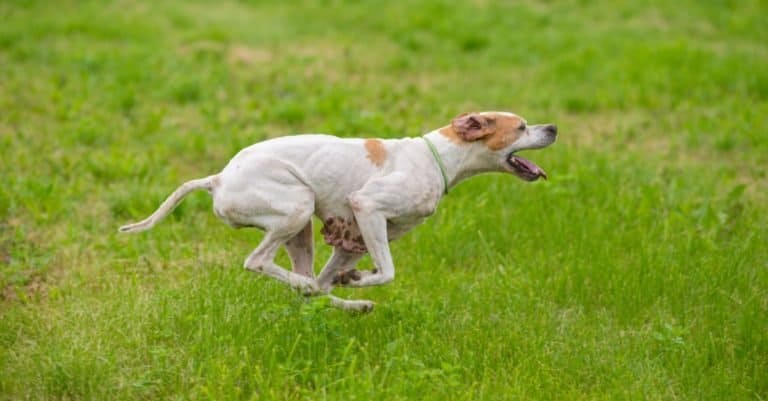
Red and white English Pointer running in the field.

English Pointers are incredibly fast runners, and they love to do it!

English Pointers were bred to be hunting dogs, so it’s not an exaggeration to describe their behavior as very energetic! They enjoy running, jumping, and playing with family members. These dogs have friendly personalities and like being around people as well as other dogs.

Intelligence is one of the most appealing traits of this dog. Though these dogs can sometimes exhibit stubborn behavior, they pick up their obedience training lessons fairly easily. A family interested in a smart, energetic dog with a sweet temperament is likely to be pleased with an English Pointer.

How to Take Care of an English Pointer
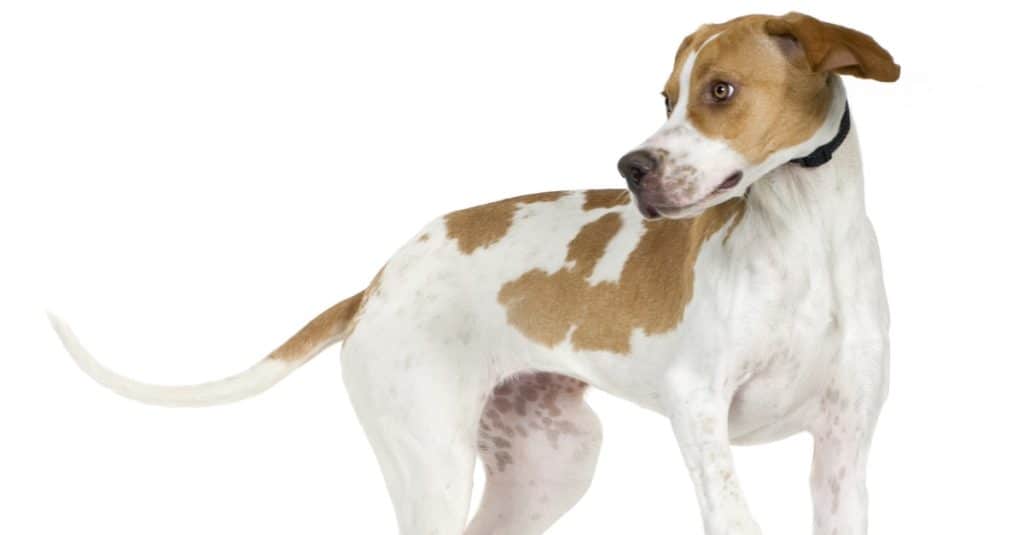
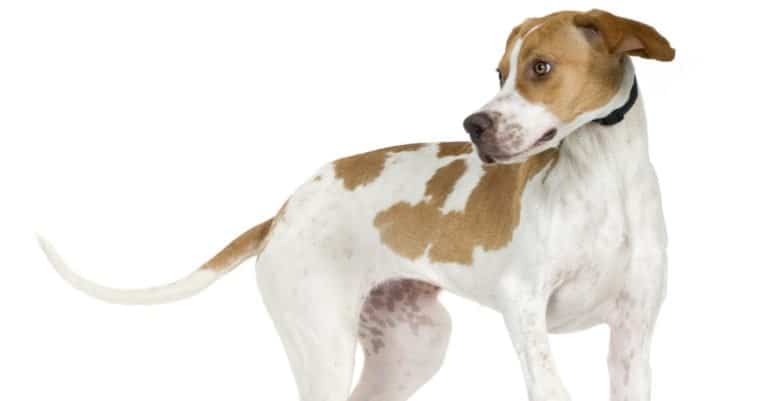
English Pointer (5 months) in front of a white background.

English Pointers need significant amounts of time outdoors to be happy.

Whether someone plans to buy an English Pointer puppy or adopt an adult dog from a rescue organization, it’s important to learn all about this breed. Being aware of the healthcare, grooming, dietary, and exercise requirements of this dog can help an owner to take the best possible care of their pet.

The Best Dog Food for English Pointers

English Pointer adults and puppies need different types and amounts of nutrients to maintain optimal health. That means, giving an English Pointer a diet that includes certain nutrients can help to prevent some common health issues. So look at some information to keep in mind:

English Pointer puppy food: Omega-3 fatty acids and DHA support brain and vision development in this puppy. Lean protein contributes to healthy muscles, tissue, and joints. Protein is especially important in the diet of a dog prone to hip dysplasia. A high amount of calcium supports the bones of a growing puppy. Fat in this puppy’s diet supplies it with the energy it needs to run, jump, and explore.

English Pointer adult dog food: Lean protein in the form of chicken or fish contributes to maintaining healthy muscles and joints. Vitamin A supports eye health, which helps in the fight against cataracts. Calcium is needed to maintain strong bones and teeth. Vitamin C supports an adult dog’s immune system. A limited amount of fat in their diet gives these pets much-needed energy while not adding extra fat to their lean frame.

Maintenance and Grooming

How much does an English Pointer shed? These pointing dogs shed a low amount of hair. Furthermore, they have a coat of short hair that requires brushing every one or two days. A rubber grooming brush is useful for removing knots or small tangles in this dog’s coat. The rubber bristles of this brush reach down into this dog’s thin coat without scratching or hurting the skin beneath. A grooming glove is another valuable tool that makes it easy for an owner to brush a Pointer’s coat without missing any spots.

English Pointers are prone to a skin condition called atopic dermatitis. This condition can be brought on by an environmental allergy. The dog could be sensitive to pollen, dust, or other floating debris. A dog with atopic dermatitis usually spends a lot of time biting and scratching its skin. Red and dry patches of skin are other signs of this condition. A veterinarian can help an owner determine the source of the allergy and recommend treatment.

Training
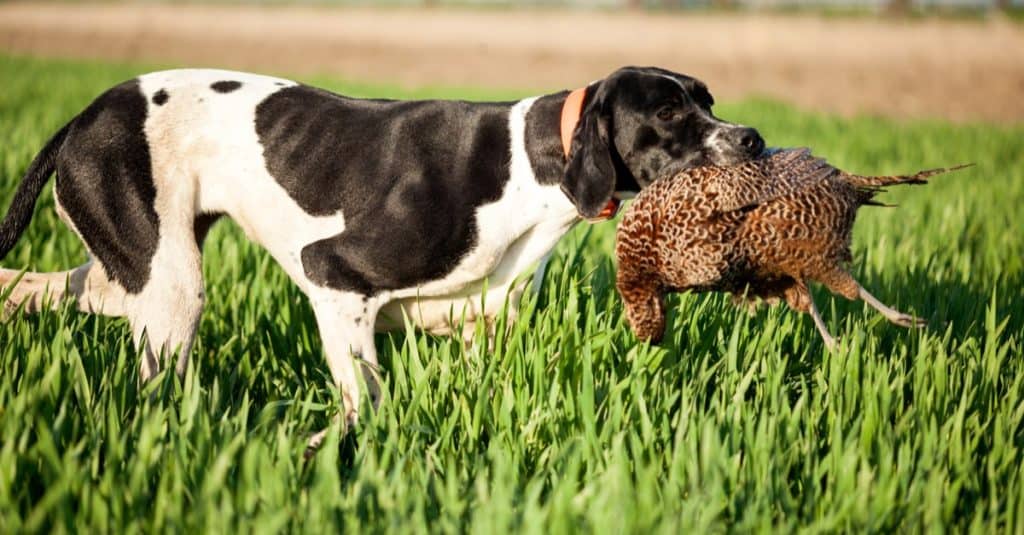
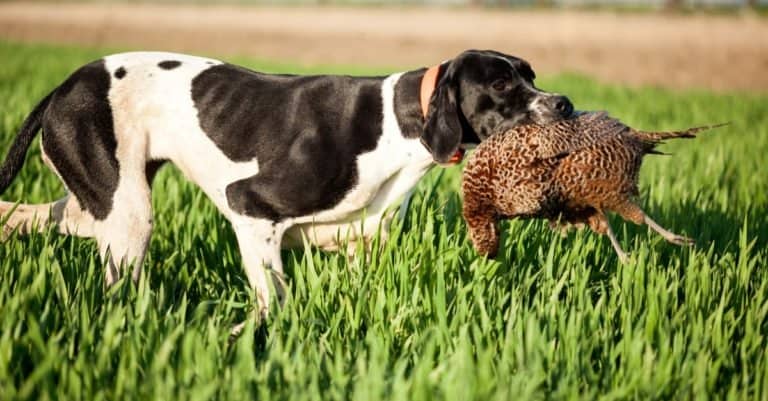
English pointer fetching a pheasant on a hunt.

English pointers are one of the best dog breeds to train for hunting.

The intelligence of an English Pointer is a benefit when obedience training. However, many of these dogs are stubborn, which can be a stumbling block during training. So, an owner training an English Pointer must be patient and persistent. The good part is that once this canine learns a lesson, it doesn’t forget it!

Exercise

One of the main things to remember about this dog is that it needs 60 minutes or more of exercise each day. Getting out in a field or in the woods to run is good for both physical and emotional health. Going to a dog park or playing a game of chase or fetch in the backyard are great ways to give this dog proper exercise.

This pointing dog is a familiar sight in agility and sports activities and competitions for canines. One of the sports it excels in is called tracking. This sports activity requires a dog to follow a particular scent. Another sports activity English Pointers love is going over agility jumps. Though these dogs are large, they are nimble and light on their feet.

English Pointers are not suitable pets for apartment dwellers due to their size and active nature.

Puppies

One consideration for English Pointer puppies relates to socialization. It’s best to start socializing puppies so they get used to knowing that the human is the boss. This makes it a little easier when obedience training sessions begin.
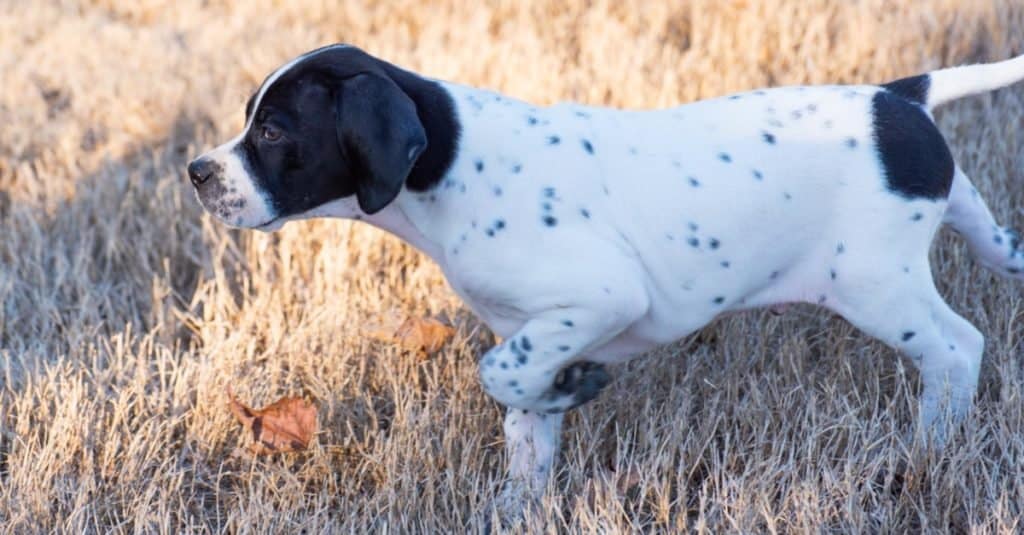
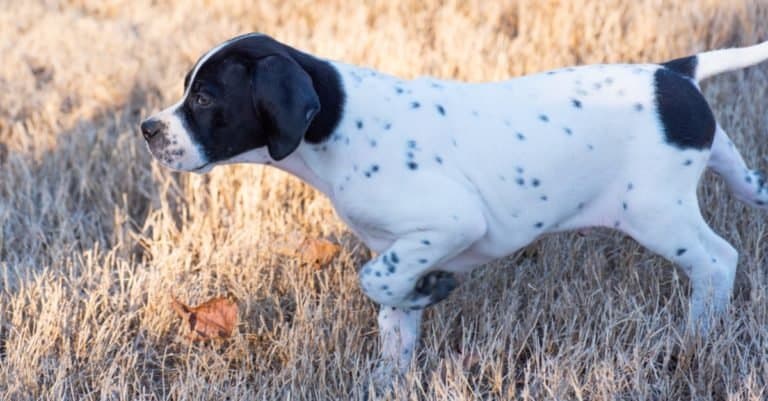
Cute English Pointer puppy pointing at prey.

Pointer puppies are already able to perform their namesake signal at just a few months old.

English Pointer and Children

Types of Pointer Dogs

Since pointers were bred to only locate prey instead of retrieving it, they are imbued with a calm demeanor that’s great for kids.

Socialized English Pointers are good with children. They have a gentle temperament and are known to be people pleasers.

Similar Breeds
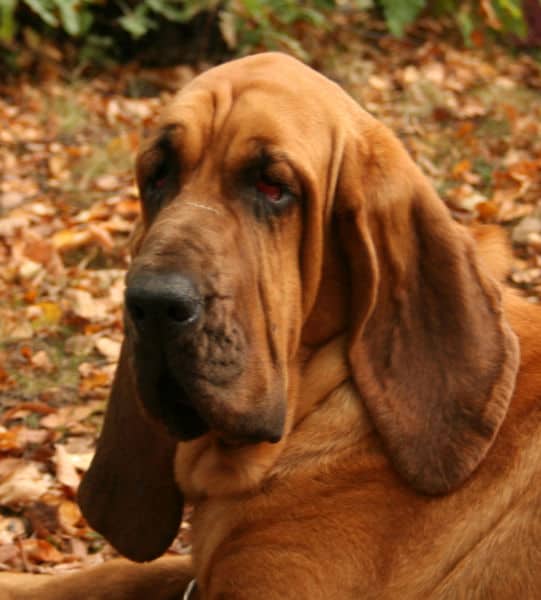
Headshot of a bloodhound lying down on fallen leaves

Bloodhounds are much larger than English Pointers, but have a similar personality.

Dogs similar to the English Pointer include bloodhounds, greyhounds, and Labmaraners.

  • Bloodhounds: Like English Pointers, bloodhounds are known for their gentle temperament and intelligence. However, bloodhounds weigh more than English Pointers.
  • Greyhounds: Greyhounds and English Pointers are about the same size, and both have a gentle nature. But greyhounds are not as good with young children because their skin is delicate and can be easily injured.
  • Labmaraner: Labmaraners are smart hunting dogs like English Pointers and have a lot of energy. But, English Pointers have more coat color variations than Labmaraners.

View all 185 animals that start with E

Sources

  1. Wikipedia / Accessed June 29, 2021
  2. American Kennel Club / Accessed June 29, 2021
Corinna Cybele

About the Author

Corinna Cybele

My name is Corinna! In my profile photo you can see me with one of my two cats, Bisky! The other's name is Yma and she's a beautiful black Bombay kitty. I'm 24 years old and I live in Birmingham, AL with my partner Anastasia and like to spend my free time making music, collecting records and reading. Some other animals I've owned were a hamster, 2 chihuahuas and many different kinds of fish.

Thank you for reading! Have some feedback for us?


English Pointer FAQs (Frequently Asked Questions)

The initial cost for purchasing an English Pointer puppy from a breeder is around $1100. There are also English Pointer rescue organizations that charge a small adoption fee for their dogs. Contacting a rescue organization is a good option for families that want to get an English Pointer at a lower cost.

The yearly cost for veterinary services ranges from $500 to $700.

Monthly food costs for this pointing canine range from $50 to $140.