S
Species Profile

Stabyhoun

Canis lupus familiaris

Friesland's do-it-all gundog
Max Jongkoen/Shutterstock.com

Stabyhoun Distribution

Click a location to explore more animals from that region

Origin Location

This map shows the native origin of the Stabyhoun. As a domesticated species, they are now found worldwide.

Loading map...

Size Comparison

Human 5'8"
Stabyhoun 1 ft 7 in

Stabyhoun stands at 28% of average human height.

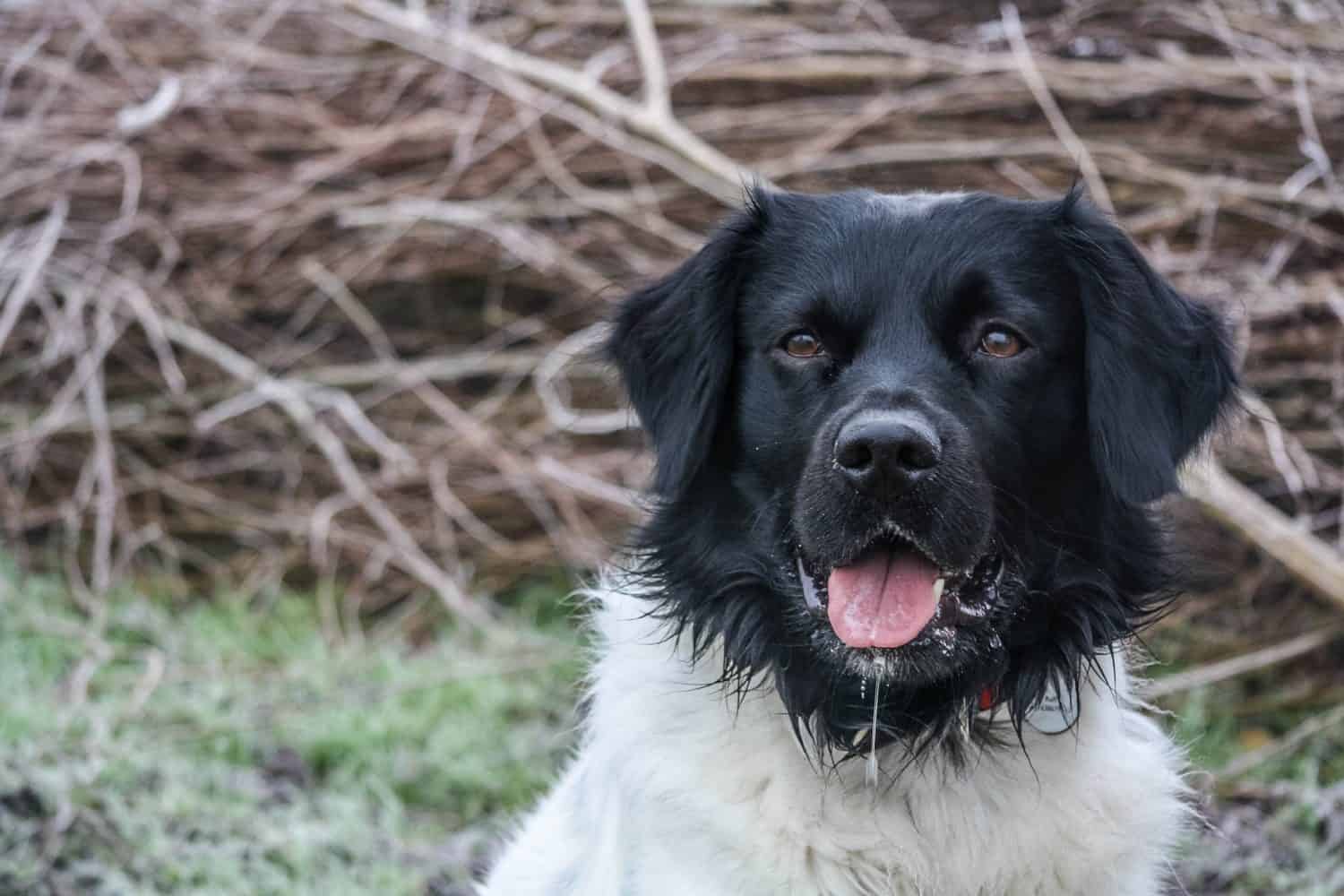
Frisian Stabyhoun Raffi

At a Glance

Domesticated
Also Known As Stabij, Staby
Diet Omnivore
Activity Diurnal+
Lifespan 14 years
Weight 27 lbs
Status Not Evaluated
Did You Know?

"Stabijhoun" is the Frisian spelling; "Stabyhoun" is a common alternate form.

Scientific Classification

The Stabyhoun (Stabijhoun) is a versatile Dutch gundog breed originating in Friesland, historically used for small-game hunting, pest control, and as an all-around farm dog; today it is also kept as a companion and sporting dog.

Kingdom
Animalia
Phylum
Chordata
Class
Mammalia
Order
Carnivora
Family
Canidae
Genus
Canis
Species
Canis lupus

Distinguishing Features

  • Medium-sized, sturdy, athletic gundog build
  • Black-and-white is most common (also brown-and-white or orange-and-white), often with ticking/roaning
  • Drop ears with some feathering; moderately long coat with feathering on legs and tail
  • Tail carried with a gentle curve and feathering
  • Reputation for being biddable, calm, and versatile (pointing/retrieving/utility work)

Physical Measurements

Males and females differ in size

Height
♂ 1 ft 9 in (1 ft 8 in – 1 ft 10 in)
♀ 1 ft 8 in (1 ft 7 in – 1 ft 8 in)
Length
♂ 2 ft 9 in (2 ft 4 in – 3 ft 1 in)
Weight
♂ 51 lbs (40 lbs – 60 lbs)
♀ 45 lbs (40 lbs – 51 lbs)
Tail Length
♂ 9 in (7 in – 10 in)
♀ 1 ft 3 in (1 ft 2 in – 1 ft 5 in)
Top Speed
28 mph
running

Appearance

Primary Colors
Secondary Colors
Skin Type Pigmented canine skin with a medium-length, weather-resistant double coat; feathering on legs and tail
Distinctive Features
  • Medium-sized, athletic gundog build distinct from wild Canis lupus: compact proportions and refined head
  • Slightly rounded skull, moderate stop, and soft, intelligent expression
  • Drop ears set fairly low, feathered with longer hair
  • Feathering on tail and backs of legs; tail carried level or slightly curved, not tightly curled
  • Dense, water- and bramble-resistant coat suited to Friesland farm and hunting work
  • Typical movement: efficient, ground-covering trot for field work and tracking
  • Temperament/working trait: biddable, calm in the home, persistent scent-worker; versatile farm-dog heritage
  • Grooming/care: weekly brushing (more during seasonal shedding); feathering prone to tangles and burrs
  • Exercise/care: daily moderate-to-vigorous activity plus nosework/retrieving; thrives with structured training
  • Health considerations: hip dysplasia risk; monitor elbows/patellas; maintain lean body condition
  • Health considerations: epilepsy reported in the breed; discuss family history with breeder/vet
  • Health considerations: hereditary eye issues (e.g., PRA/cataracts) possible; routine ophthalmic screening recommended

Sexual Dimorphism

Males are typically taller and heavier with broader heads and more substantial bone. Females are slightly smaller and finer-boned, often with a more refined muzzle and overall outline.

♂
  • Broader skull and muzzle; thicker neck and heavier bone
  • Slightly greater height/weight; more pronounced chest depth
  • Often carries more coat volume around ruff and feathering
♀
  • Finer head and lighter bone; more tapered muzzle
  • Slightly smaller frame; narrower chest and waist
  • Coat/feathering similar but can appear less bulky overall

Did You Know?

"Stabijhoun" is the Frisian spelling; "Stabyhoun" is a common alternate form.

The breed developed in Friesland as a multipurpose farm dog-hunter, ratter, and family companion.

It's considered a "versatile gundog," often willing to point, flush, retrieve, and track depending on training.

Typical coat pattern is black-and-white with ticking/roaning; brown-and-white also occurs.

Stabyhouns are rare outside the Netherlands, with careful breeding programs emphasizing health and temperament.

Historically, they were valued for working all day and then settling calmly at home.

They're often described as "soft" and cooperative-responding best to patient, reward-based training.

Unique Adaptations

  • Generalist working design: compared with the base domestic dog (Canis lupus familiaris) overall, the Stabyhoun is selectively bred for broad utility-hunting, vermin control, and farm companionship rather than a single specialized job.
  • Weather-tolerant double coat: medium-length coat with feathering helps shed light rain and chill common in the Dutch lowlands, while remaining practical for field work.
  • Endurance over extreme speed: built for sustained effort and varied terrain rather than sprinting specialization.
  • Biddable temperament: selection for cooperative work around farms and people tends to produce a steady, trainable dog when handled gently.
  • Sensitive handling "adaptation": many thrive with low-conflict training-an inherited tendency that favors calm direction and consistent routines.

Interesting Behaviors

  • Methodical scent work: tends to track with a steady, nose-down approach rather than frantic quartering.
  • Natural "farm helper" tendencies: may patrol boundaries and investigate new sights/smells with quiet confidence.
  • Retrieving drive with a gentle mouth is common, especially when introduced early and positively.
  • Strong focus on their person: many show "shadowing" behavior and prefer to work in partnership rather than independently.
  • Calm-off-switch indoors: after exercise, many settle quickly and choose close proximity to family.
  • Can be reserved with strangers at first, warming up through calm, non-pushy introductions.
  • Problem-solving around tasks: some will try different approaches (circling, re-scenting) when a track goes cold.

Cultural Significance

In Friesland, the Stabyhoun (Stabijhoun) (Canis lupus familiaris) is part of local dog history. Once a yard-and-field helper that hunted small game and caught pests, Dutch clubs now keep its nature, work skills, and health as it spreads worldwide.

Myths & Legends

Name lore in Friesland links "Stabijhoun" to the idea of "stand by me, dog," reflecting the breed's reputation for staying close to its person on farms and in the field (a commonly repeated regional etymology/story).

Frisian farm stories tell of one Stabyhoun doing "three jobs in a day"—catching barn rats, helping on hunts, then resting by the hearth—an old origin tale explaining the breed's wide usefulness.

Older rural stories portray the Stabyhoun as a steady "yard guardian" that would raise an alarm without needless aggression, a valued trait in isolated farmsteads where a dog's judgment was part of its legend.

Conservation Status

NE Not Evaluated

Has not yet been evaluated against the criteria.

Population Stable

Life Cycle

Birth 6 pups
Lifespan 14 years

Lifespan

In the Wild
13–15 years
In Captivity
10–16 years

Reproduction

Mating System Polygynandry
Social Structure Managed Domestic
Breeding Pattern Transient
Fertilization Managed Selective
Birth Type Internal_fertilization

In Stabyhoun, mating typically occurs via human-managed pairings with health-screened sires and dams; females may be bred in limited, planned cycles rather than forming stable pair bonds. Reproduction is internal fertilization, and litters are raised by the dam with human support.

Behavior & Ecology

Social Pack Group: 3
Activity Diurnal, Crepuscular
Diet Omnivore Meat- and fish-based foods (e.g., poultry or oily fish like salmon)

Temperament

Breed vs base species context: more biddable and family-focused than wild Canis lupus pack dynamics, yet retains hunting persistence.
HUBS pattern: typically affectionate, gentle, and steady indoors; energy rises sharply with outdoor scenting or play.
Often reserved or cautious with strangers; usually not sharp, warms up with calm introductions.
Strong cooperative streak with owners; responds best to reward-based training and consistent routines.
Independent problem-solving can appear when following scent; recall benefits from early, structured practice.
Prey drive: may chase small animals due to gundog/pest-control heritage; manage with leash and enrichment.
Good family dog when well-socialized; generally patient with children, prefers respectful handling.
Dog-dog sociability usually good; may be selective with rude or pushy dogs, especially intact males.
Care requirements: daily exercise plus nosework/retrieving games to prevent boredom-driven nuisance behaviors.
Care requirements: medium-long coat needs regular brushing; feathering mats if neglected; ears need routine checks.
Health concerns to monitor in the breed: hip dysplasia, elbow issues, epilepsy reported; use screening breeders.
Health concerns to monitor in the breed: patent ductus arteriosus (PDA) and other cardiac issues reported in lines.

Communication

alert barking when someone approaches
short, repetitive barks during excitement or play
whining/whimpering for attention or anticipation Walks, food
low growls as boundary-setting or discomfort signal
occasional howling in response to other dogs or siren-like sounds
expressive tail carriage and whole-body wagging to signal friendliness
soft eye contact and leaning to solicit contact; turning away to de-escalate
play bows and bouncy gait inviting chase/retrieving games
nose-led investigation and scent-trailing; pauses and head turns to indicate interesting odor sources
pawing or nudging owners to request interaction or assistance
mouth-carrying objects (toys, leads) as engagement and retrieving invitation
scent marking during walks; increased marking in novel environments

Habitat

Biomes:
Temperate Forest Temperate Grassland Wetland Freshwater Marine Boreal Forest (Taiga) Tundra Alpine Mediterranean Desert Hot Desert Cold Savanna Tropical Dry Forest Tropical Rainforest Temperate Rainforest +9
Terrain:
Coastal Plains Riverine Muddy
Elevation: Up to 14763 ft 9 in

Ecological Role

Domestic omnivorous mesopredator/companion animal closely tied to human-managed ecosystems; historically a multifunction farm and gundog contributing to pest suppression and small-game hunting rather than an apex predator role typical of wild wolves.

rodent/pest control around farms and homesteads (historical use) assistance in hunting and retrieving small game and birds (sporting role) human companionship and protective/watch presence participation in working-dog activities that shape human-managed animal populations (training, controlled hunting)

Diet Details

Main Prey:
small game Ground-nesting birds Rodents and other farm pests
Other Foods:
Berries and other fruits Vegetable matter Grasses

Human Interaction

Domestication Status

Domesticated

Stabyhoun (Stabijhoun) (Canis lupus familiaris) is a Dutch dog from Friesland, bred by people from wolves for a calm, willing nature and versatile gundog/farm work. It hunts small game, controls pests, watches farms, and is a family companion. The breed is rare worldwide and mainly pets and hunting partners.

Danger Level

Low
  • Bite risk is generally low but possible if fearful, in pain, under-socialized, or mishandled-especially around resources (food/toys) or during rough play
  • Prey drive may lead to chasing small animals; can cause accidental injury if the dog knocks someone over during high arousal
  • Poor recall/off-leash chasing can create indirect risks (traffic incidents, conflicts with other dogs)

As a Pet

Suitable as Pet

Legality: Generally legal to own as a domestic dog in most jurisdictions. Subject to standard local requirements (licensing, leash laws, rabies vaccination). Breed-specific bans are uncommon for Stabyhouns, but housing/insurance policies may impose size or canine restrictions regardless of breed.

Care Level: Moderate

Purchase Cost: $1,500 - $3,500
Lifetime Cost: $18,000 - $40,000

Economic Value

Uses:
Companion animal value (pet ownership industry) Sporting/hunting dog utility Breeding (rare-breed, health-tested lines) Training/behavior services and canine sports participation
Products:
  • Puppies from health-tested breeders
  • Stud services (where permitted/regulated)
  • Training (obedience, field training, gun-dog skills)
  • Canine sport participation/club activities (entry fees, memberships)

Relationships

Ecological Equivalents 5

Animals that fill a similar ecological role in their ecosystem

Large Münsterländer Canis lupus familiaris Similar all-around gundog niche: versatile pointing and retrieving in fields and wetlands; comparable size, biddability, and 'do-it-all' hunting use.
Small Münsterländer Canis lupus familiaris Versatile continental gundog used for upland birds and for tracking and retrieving; plays a similar "hunt and family companion" role to the Stabyhoun.
Drentsche Patrijshond Canis lupus familiaris Another Dutch-origin versatile gundog and farm companion with similar temperament expectations—steady, cooperative, and family-oriented—and comparable field utility.
English Springer Spaniel
English Springer Spaniel Canis lupus familiaris Comparable all-purpose sporting-dog role in flushing and retrieving, with similar exercise and training needs as a cooperative, people-focused worker.
Domestic dog
Domestic dog Canis lupus familiaris Stabyhoun (Stabijhoun) is a standard Frisian gundog and farm dog. As a domestic dog breed it fills the medium-sized working-dog niche—trainable, gentle with family but reserved with strangers—and is used for hunting and retrieving. It commonly requires daily exercise, training, and grooming, and is predisposed to health issues such as hip dysplasia, elbow or patellar problems, epilepsy, and progressive retinal atrophy/cataracts.

Quick Take

  • Maintaining the world’s 5th rarest breed requires managing a global population of only 6,000 Stabyhoun.
  • Missing the 12-week socialization window creates permanent behavioral risks for this sensitive sporting breed.
  • Unlike most long-haired dogs, the Stabyhoun features a naturally self-cleaning coat that rarely needs bathing.
  • Formal breed separation became mandatory in 1938 to preserve unique traits once lost to crossbreeding.

The Stabyhoun is a sporting dog breed from the Netherlands and is among the top five rarest breeds in the world. Although it is excellent as a tracker, pointer, retriever, cart dog, and watchdog, these days it is popular as a companion animal or family pet. Its other names in Dutch are Stabij, Stabijhoun, Fryske Stabij, and Beike, while in English it’s also known as the Dutch Stabyhoun, Stabij, or Frisian Pointer.

A detailed infographic about the Stabyhoun dog breed with illustrations of the dog, a world map, and icons for temperament and health stats.
With only 6,000 left on Earth, this 'self-cleaning' Dutch sporting dog has a developmental window that closes forever at 12 weeks. One missed deadline could mean permanent behavioral risks for this incredibly rare companion. © A-Z Animals

Different Types of Stabyhoun and Stabyhoun Mixes

There is one standard for the breed, although there are a few different colors. The coat can have a slight wave but should never be curly, which would indicate crossbreeding, nor should it be tricolor. Spotting and roan are acceptable. The most common coat color is black and white, while less common colors are brown and white and orange and white.

The breeding of purebred Stabyhouns is tightly regulated. Some examples of Stabyhoun mixes are crossbreeds of the breed with a Kooikerhondje, Wetterhoun, Flat-Coated Retriever, Golden Retriever, Border Collie, Kai Ken, Sealyham Terrier, or Braque du Bourbonnais.
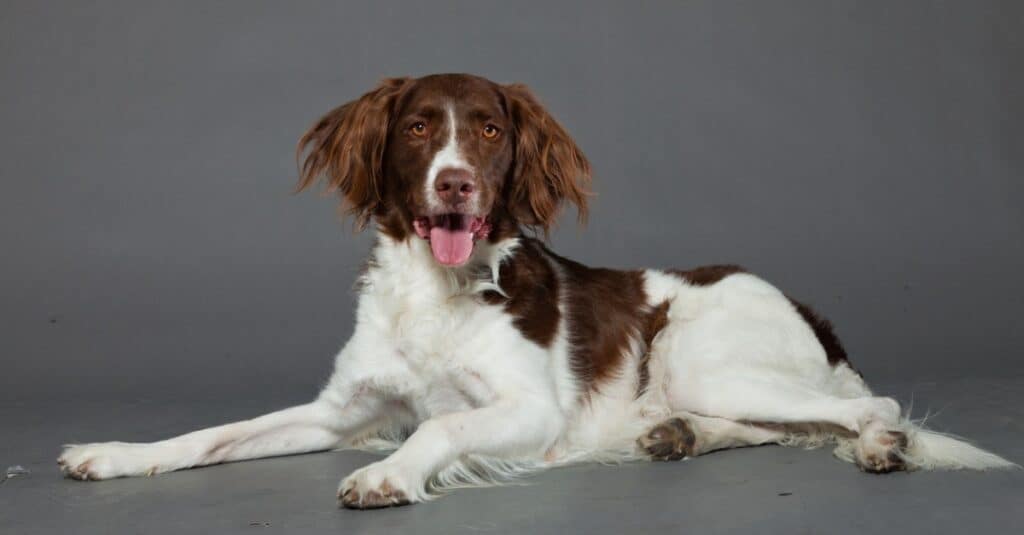
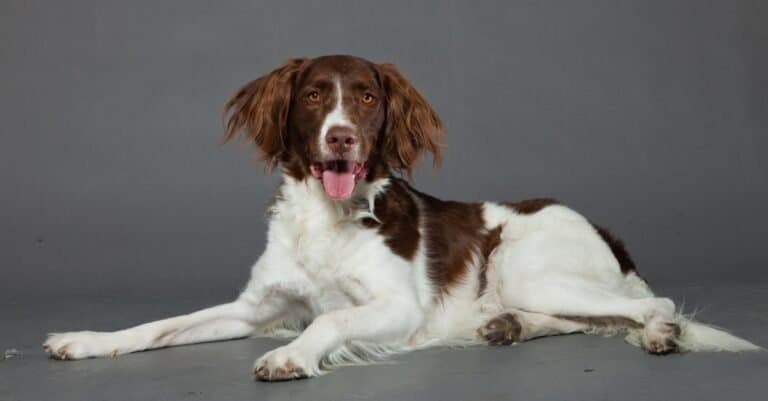
Stabyhoun isolated on a grey background.

The Stabyhoun’s most common coat color is black and white. Other colors are brown, white and orange and white.

3 Pros and Cons of Owning Stabyhouns

ProsCons
Beauty: There’s no denying that the Stabyhoun is good-looking with its solid color, white coat, and well-built body.Stubborn: This breed is described as being as stubborn as its countrymen, so it can be willful.
It’s protective: If you’re looking for a watchdog to protect your property or family, this breed is a great choice. Needs lots of physical activity: As with any other sporting breed, this breed is active. In order to burn off excess energy and stay healthy and calm, its owner must give it enough exercise every day.
It’s loving and clever: Personality-wise, this breed is loyal, loving, and intelligent all at the same time. It’s an ideal pet and all-around working dog. High shedding: Although it only sheds very heavily twice a year to change its coat, its shedding is described as creating bales of fur during spring. You can control shedding with regular grooming, but it’s not hypoallergenic and will shed the rest of the time.

Evolution and Origins

The Stabyhoun hails from the forested province of Friesland and was first mentioned in Dutch literature in the early 1800s. With its name meaning “stand-by-me dog” or “stand-by-me hound” from the Frisian words stabij and houn, it was originally the dog of small landowners, day laborer farmers, and dairy farmers, and used for hunting foxes, birds, rats, moles, European polecats, and small game.

The Stabyhoun is related to the Drentsche Patrijshond and Heidewachtel breeds. In the early 20th century, the Stabyhoun was often crossbred with Wetterhoun dogs until 1938, when breeders began to develop them separately to ensure the uniqueness of each breed, with both breeds officially recognized in 1942.

The first record of Stabyhouns being born in the United States was in 1994. While its popularity has grown across North America and Europe, the breed remains rare, with the worldwide population estimated in 2025 to be around 6,000 dogs.
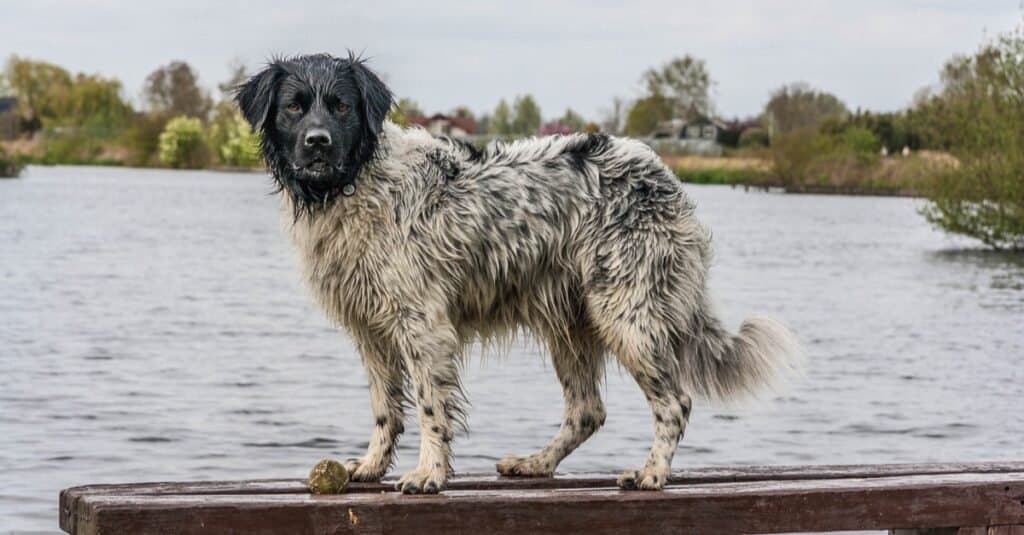
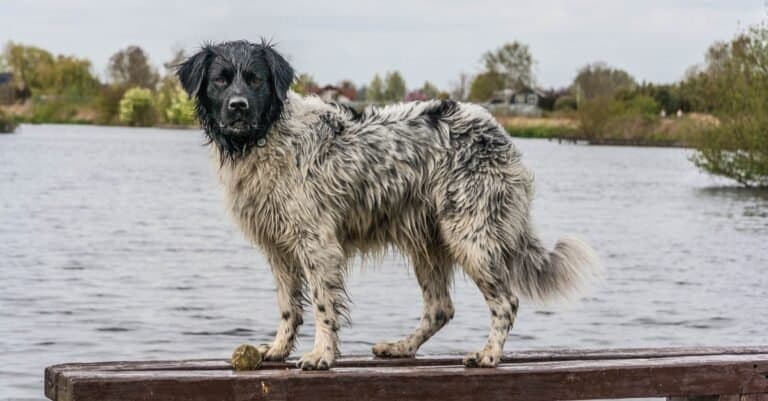
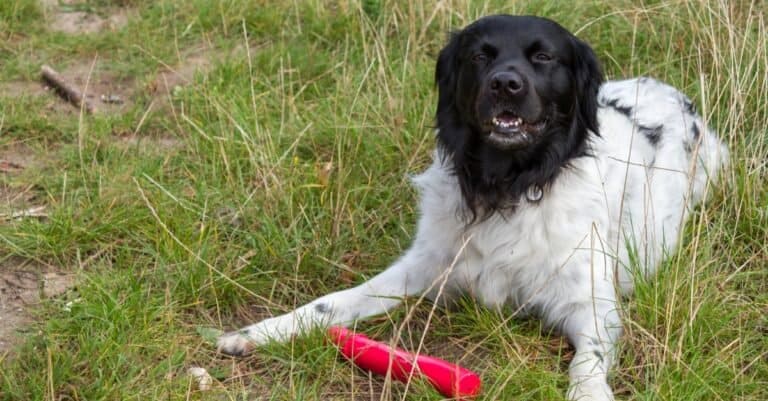
Stabyhoun playing at the lake.

The Stabyhoun is excellent as a tracker, pointer, retriever, cart dog, and watchdog.

Size and Weight

The Stabyhoun is a medium-sized semi-long hair dog with an average withers height of 21″ for males and 20″ for females, or about 19 to 20″ at the shoulder. Males weigh about 50 to 55 pounds fully grown, while females weigh about 45 pounds fully grown. Stabyhoun puppies weigh 7 to 8 pounds on average at 8 weeks of age and are typically fully grown between 12 and 15 months.

Common Health Issues

Like other dog breeds, the Stabyhoun has unique health issues for prospective owners to consider. The breed does not have common health problems and lives 12 to 15 years, which is more than average. It is a generally very healthy breed, with many owners adhering to the careful breeding rules according to breed associations.

Some congenital conditions may occur, such as joint dysplasia, patent ductus arteriosus (PDA), epilepsy, and Type 1 von Willebrand Disease (vWB). Epilepsy was an issue in the past, but not anymore. Some documented conditions are hereditary cataracts, radius curvus, cancer, and steroid-responsive meningitis-arteritis (SRMA), with most having uncertain heritability.
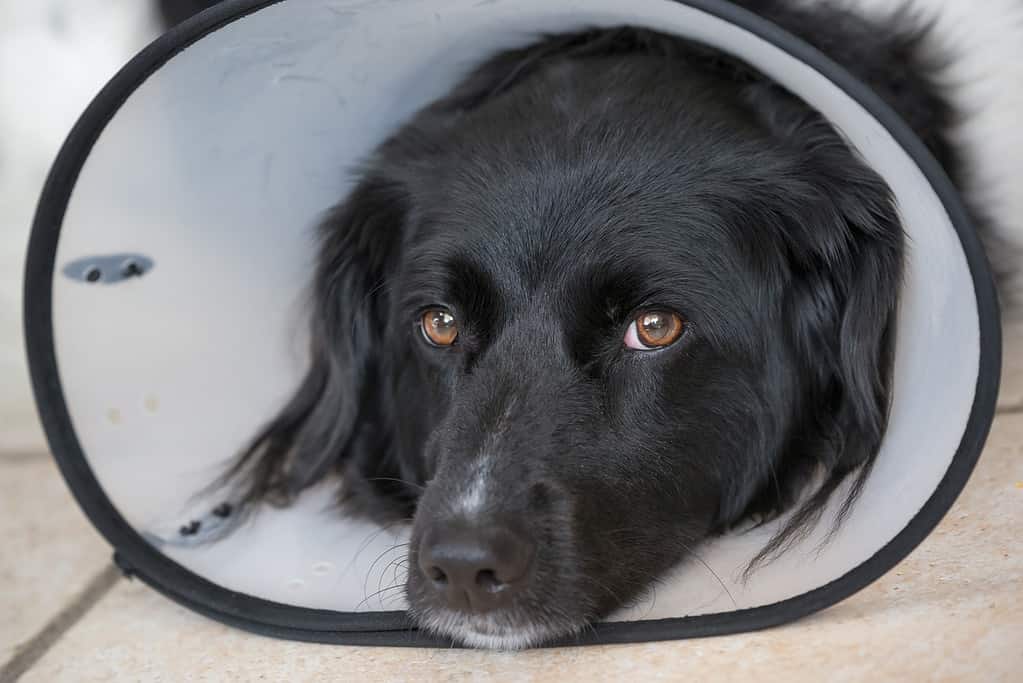
Adult Stabyhoun dog wearing a protective collar

Some congenital conditions, such as joint dysplasia and patent ductus arteriosus, may occur in Stabyhouns.

Temperament

The Stabyhoun is a sporting breed used for hunting, as a cart dog, watchdog, and family pet. As such, it has traits of protectiveness, loyalty, obedience, willingness to please, and intelligence. It has a sensitive and calm temperament with a patient, peaceful, tolerant, gentle, and friendly personality that makes it great around people, strangers, children, other dogs, and other animals.

Among its working traits is the ability to be a soft-mouth retriever, meaning it gently carries the game in its mouth. It’s also great at tracking, pointing, guarding, and pulling carts, although its versatility means it doesn’t have a specialized skill.
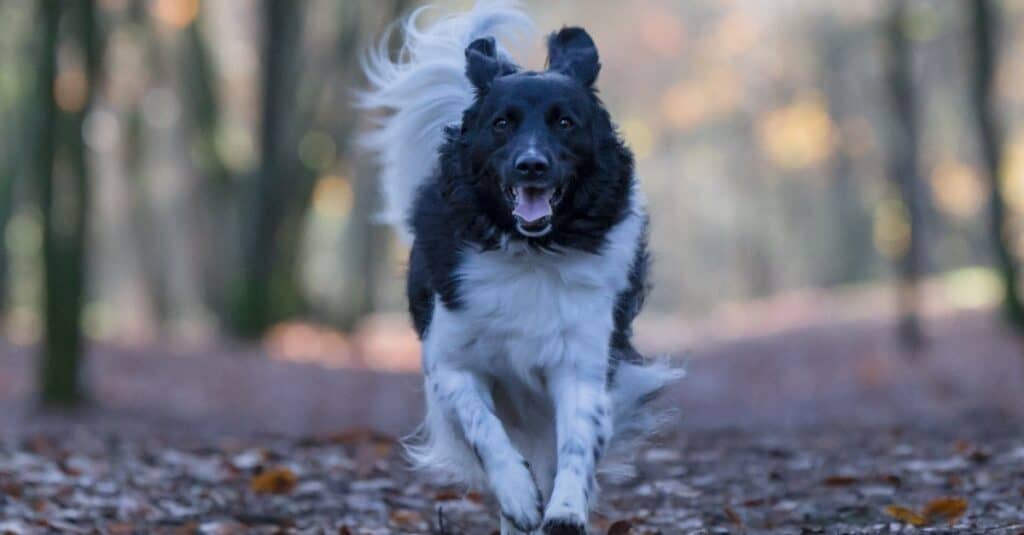
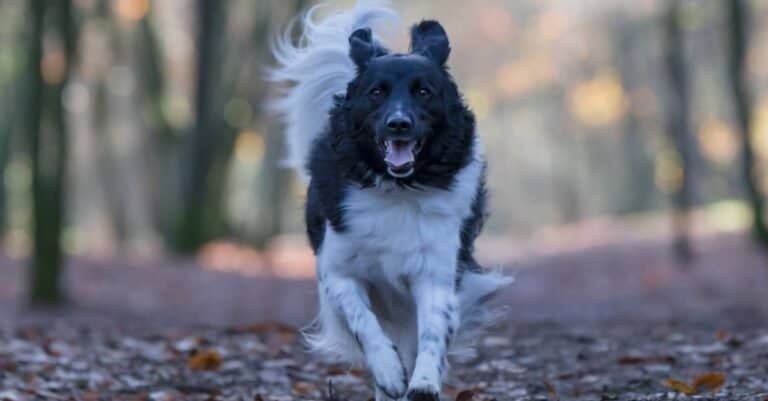
An adult female Stabyhoun dog running over a path with leaves in a forest at fall.

The Stabyhoun has traits of protectiveness, loyalty, obedience, and willingness to please.

How to Take Care of Stabyhouns

All dogs have unique needs for their care, especially puppies, and the Stabyhoun is no exception. Diet, care, environment, and exercise are very important for prolonging its health and lifespan. Prospective owners should be prepared with knowledge about the breed.

The Best Dog Food

Stabyhouns, especially puppies, have certain health considerations and nutritional needs that other dog breeds might not. Hence, new owners should consider these factors when choosing the food they will feed their pets.

Stabyhoun puppy food: Puppyhood is a crucial time for the dog’s development, and the Stabyhoun is a medium-sized breed. Although it is active, the wrong food or overfeeding can cause it to gain weight. Therefore, the food should be specifically formulated for puppies as well as AAFCO-compliant. It should also focus on animal protein as its first and predominant ingredient, plus whole grains and vegetables. This will provide the fiber and the variety of vitamins and minerals it needs.

You can supplement their diet with fish oil for skin, coat, eye, and brain health. Look out for calcium and phosphorus levels, too, because too much can cause rapid growth and lead to joint dysplasia later in life. A raw diet with the aforementioned nutrients is a possible option.

Stabyhoun adult dog food: Stabyhoun adult dogs need food that is formulated not only for their medium size but is also for active dogs. This will keep them healthy and fit through the years as they age. Adult dogs one year of age or older usually need one large meal or two smaller meals a day.

Also, realize that Stabyhouns are vulnerable to the heart condition patent ductus arteriosus. So you should know about the link between legumes in dog food and heart failure in dogs, and think about going for legume-free dog food.

Maintenance and Grooming

A semi-long, silky coat is characteristic of the Stabyhoun. However, its fur is self-cleaning, although it does shed. It needs bathing on the rare occasion it is very dirty or smelly, thanks to its skin oils, and needs regular grooming to remove tangles, control shedding, and fur trimming according to the breed standards.
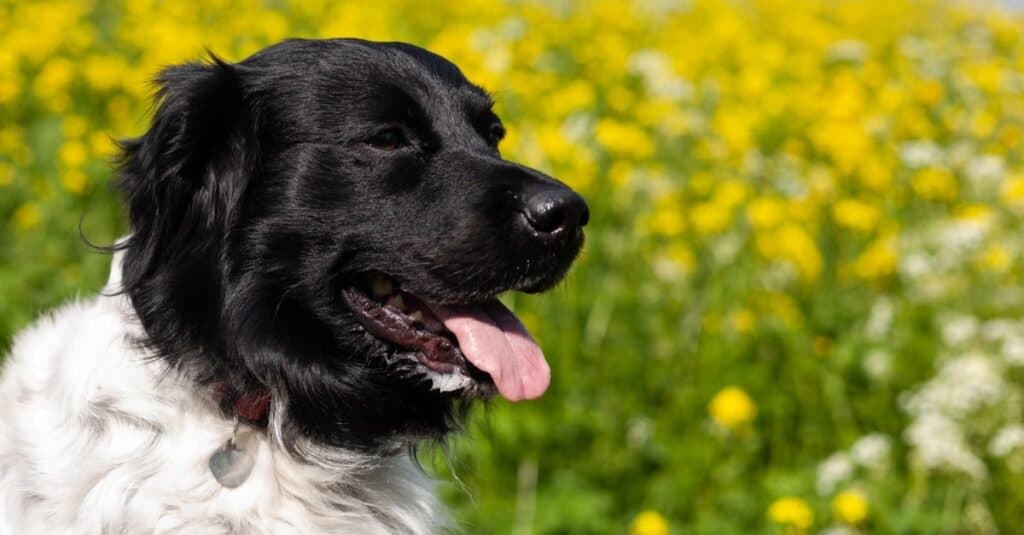
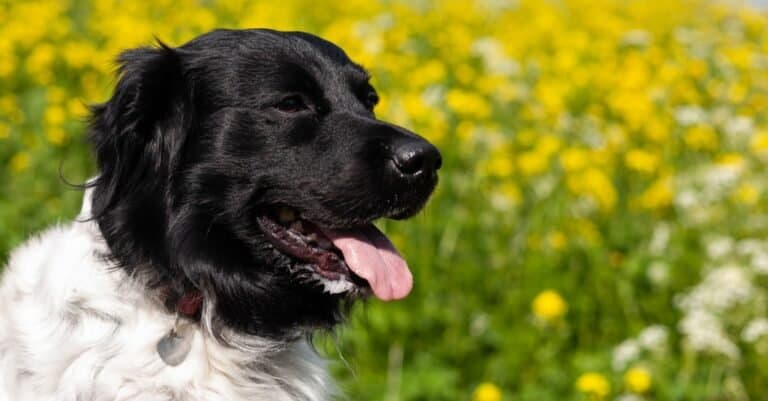
Beautiful Frisian Stabyhoun sitting in a field of flowers.

Stabyhouns have a semi-long, silky coat that is self-cleaning.

Training

The Stabyhoun is intelligent and emotionally intuitive. It takes well to early training and enjoys having jobs to do. Although it can be stubborn, gentle, and consistent, steady training reflects well on the dog. Harsh training or yelling will stress it out and make it shut down, and not addressing its tendency to be a “velcro” dog will lead to separation anxiety.

Training it for good recall is important, so it doesn’t stray too far. Also, it can have a high prey drive. This breed is a natural watchdog and will be on alert to bark and let you know about noises and anything strange. On the other hand, it has a low tendency to chew, nip, and herd.
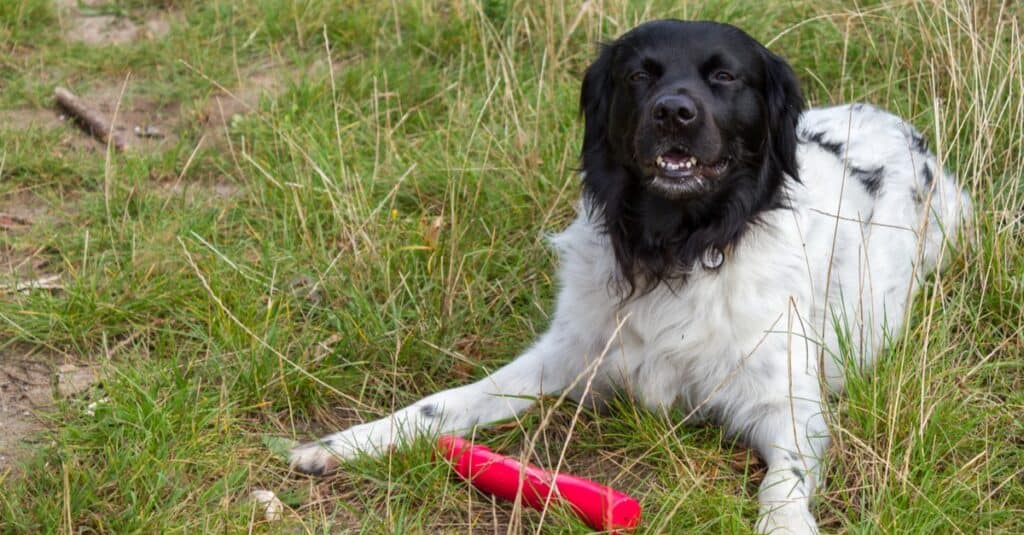
Frisian Stabyhoun having fun at the dogpark.

The Stabyhoun takes well to early training and is a natural watchdog.

Exercise

A small dwelling, such as an apartment, is not a suitable environment for the Stabyhoun, which needs a lot of room to move around and play. Some amount of physical activity every day is necessary. At a minimum, it needs long walks a few times a week in addition to daily stimulation and movement. Swimming is ideal, and it’s their favorite activity. It likes to dig trenches in yards and will become destructive without proper enrichment. If you have an uncovered pool, it could be difficult to avoid swimming in it at every opportunity.
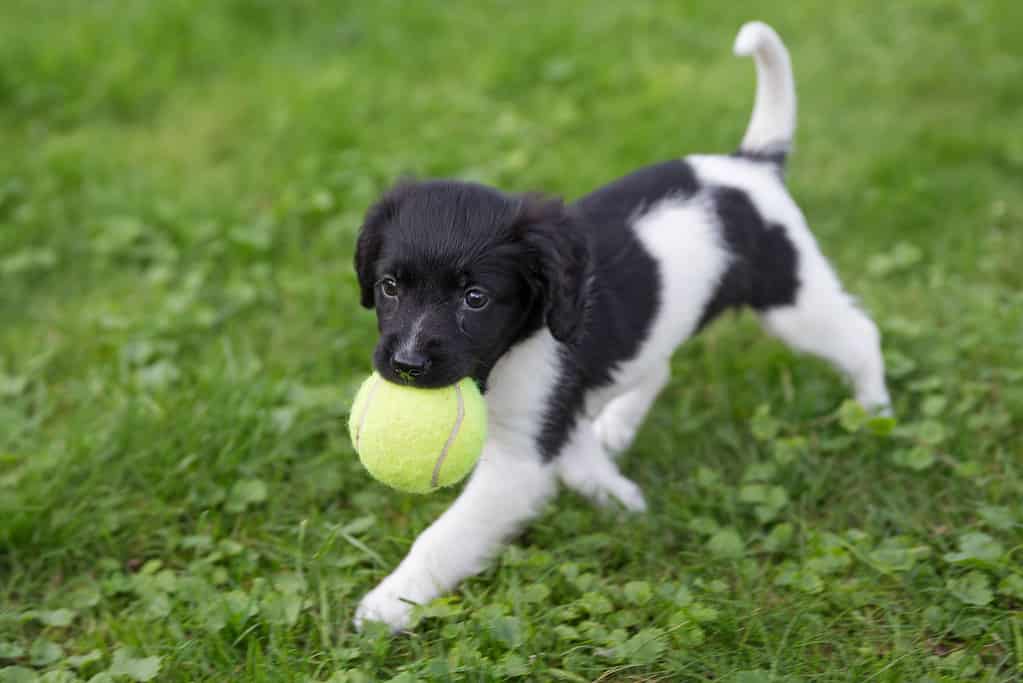
A cute 7 weeks old female Stabyhoun puppy ('Friese Stabij in Dutch') walking in a meadow with a tennis ball in her mouth

The Stabyhoun needs a lot of room to move around and play.

Puppies

People usually get Stabyhoun puppies at 8 weeks of age. The breed’s socialization window starts to close at 12 weeks, so socialization should begin right away. This means allowing the puppy to see, hear, and experience as many different things as possible in order to associate them with pleasure.

As for purchasing, a Stabyhoun puppy is hard to find and can cost anywhere from $3,200 to $4,000, depending on the breeder, less common coat colors, and whether you are importing it from overseas. The average set price by the American Stabyhoun Association is around $4,000.
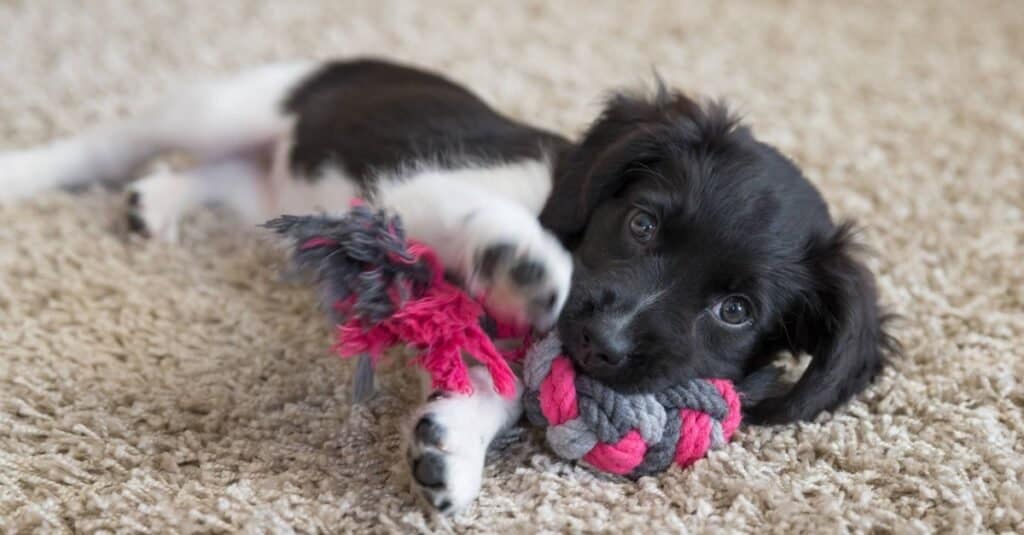
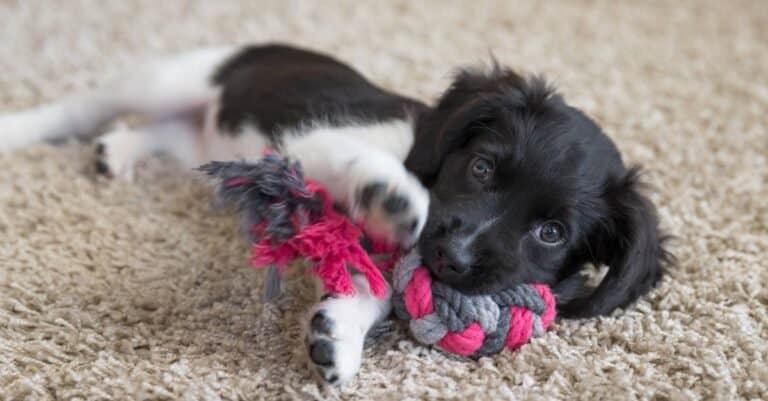
Stabyhoun puppy playing with a colored string.

Stabyhouns’ socialization window starts to close at 12 weeks, so socialization should begin right away.

Stabyhoun and Children

The Stabyhoun is excellent with children, being very friendly, tolerant, and loving to play. Like many other breeds, it is initially reserved with strangers, including child strangers.

Dogs Similar to Stabyhouns

Some dogs that are similar to Stabyhouns include Border Collies, Golden Retrievers, Bourbonnaise Pointers, Schapendoes, Wetterhouns, and Kooikerhondjes.

  • Schapendoes: Also called the Dutch Sheepdog, the Schapendoes is likewise from the Netherlands, but specifically from the province of Drenthe. The herding and farm dog also shares its medium size and black and white coat.
  • Wetterhoun: Wetterhoun is from the Friesland province of the Netherlands and is also called the Frisian Water Dog. It also has in common with the Stabyhoun a similar color, build, and appearance, medium size, and use as a hunting dog. Differences include larger size, curly fur, and skill in hunting otters.
  • Kooikerhondje: The Kooikerhondje, also called the Dutch Spaniel or Dutch Decoy Spaniel, is another Dutch breed and a working dog. It is small, used for luring ducks, has an orange and white coat, and is common in paintings by the old Dutch masters Rembrandt and Jan Steen.
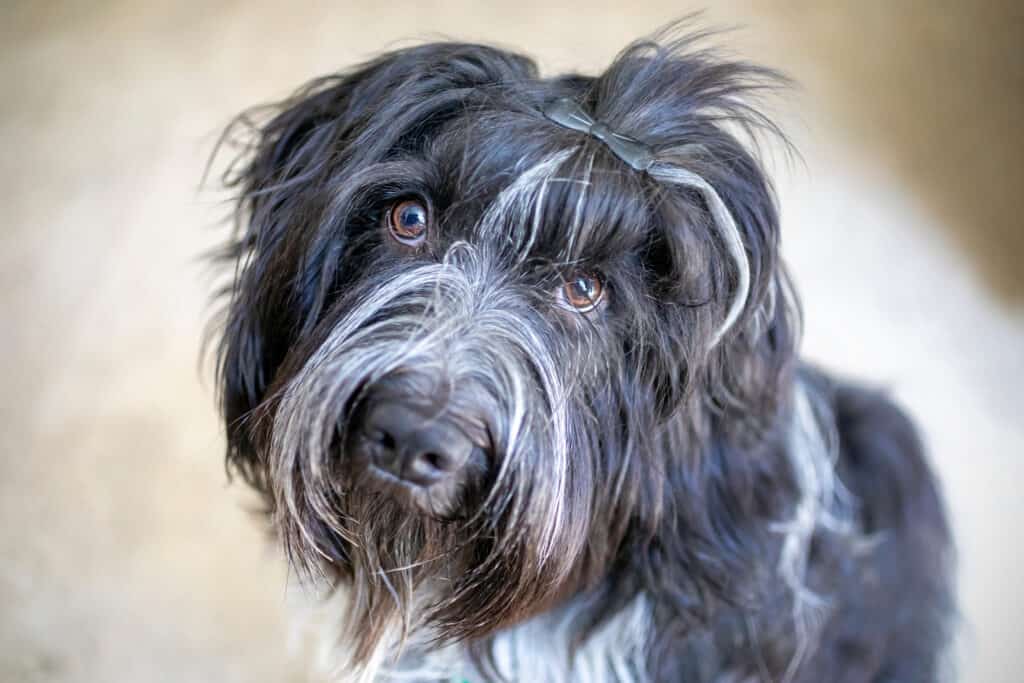
Schapendoes

Stabyhouns and Schapendoes are both medium-sized dogs from the Netherlands.

Famous Stabyhouns

Being such a rare breed of dog, you wouldn’t expect to hear about a famous Stabyhoun, let alone one outside the Netherlands. Suffie is a dog owned by Judy Wiltsek of Mill Spring, North Carolina. Wiltsek became an advocate for the breed, stating that it’s one of the most emotionally intelligent breeds she’s ever experienced, thanks to Suffie. She joined the ASA and hopes to breed Suffie.

View all 391 animals that start with S

Sources

  1. Wikipedia / Accessed September 7, 2021
  2. Dog Care Knowledge / Accessed September 7, 2021
  3. Pet MD / Accessed September 7, 2021
  4. Ameri-Can Stabyhoun Association / Accessed September 7, 2021
  5. UK Stabyhoun Association / Accessed September 7, 2021
  6. Dog Breeds List / Accessed September 7, 2021
  7. Next Day Pets / Accessed September 7, 2021
  8. Paws N Pups / Accessed September 7, 2021
  9. Puppy Toob / Accessed September 7, 2021
  10. Shop For Your Cause / Accessed September 7, 2021
  11. Global Dog Breeds / Accessed September 7, 2021
Catherine Gin

About the Author

Catherine Gin

Catherine Gin has more than 15 years of experience working as an editor for digital, print and social media. She grew up in Australia with an alphabet of interesting animals, from echidnas and funnel-web spiders to kookaburras and quokkas, as well as beautiful native plants including bottlebrushes and gum trees. Being based in the U.S. for a decade has expanded Catherine's knowledge of flora and fauna, and she and her husband hope to have a hobby farm and vegetable garden in future.

Thank you for reading! Have some feedback for us?


Stabyhoun FAQs (Frequently Asked Questions)

Yes, Stabyhouns are excellent pets, as long as they have proper diet, care, environment, and exercise.