














T
Species Profile

Tiger Shark

Galeocerdo cuvier

Striped. Serrated. Supremely adaptable.
iStock.com/Howard Chen

Tiger Shark Distribution

Click a location to explore more animals from that region

This map shows coastal regions where Tiger Shark are found.

Loading map...
Largest Tiger Shark - tiger sharks swimming together

At a Glance

Wild Species
Diet Carnivore
Activity Cathemeral+
Lifespan 27 years
Weight 635 lbs
Did You Know?

Maximum reported total length is about 5.5 m; adults commonly measure 3.0-4.2 m.

Scientific Classification

The tiger shark (Galeocerdo cuvier) is a large, wide-ranging requiem shark known for bold, dark vertical bars on juveniles and a broad diet. It is an apex or near-apex predator in many tropical and subtropical seas and is notable for its large, serrated teeth adapted to varied prey.

Kingdom
Animalia
Phylum
Chordata
Class
Chondrichthyes
Order
Carcharhiniformes
Family
Carcharhinidae
Genus
Galeocerdo
Species
Galeocerdo cuvier

Distinguishing Features

  • Juveniles show dark “tiger” vertical bars
  • Broad, blunt snout and robust body
  • Large, highly serrated, cockscomb-shaped teeth
  • Extremely generalized diet and scavenging behavior

Physical Measurements

Males and females differ in size

Length
9 ft 10 in (7 ft 5 in – 12 ft 6 in)
12 ft 6 in (8 ft 2 in – 18 ft 1 in)
Weight
441 lbs (176 lbs – 992 lbs)
1,102 lbs (441 lbs – 1,400 lbs)
Top Speed
20 mph
swimming

Appearance

Primary Colors
Secondary Colors
Skin Type Dermal denticles
Distinctive Features
  • Robust, blunt snout; broad head with large lateral eyes.
  • Dorsal gray-brown countershading; pale white to cream ventrum.
  • Juveniles show bold dark vertical bars; stripes fade in adults.
  • Teeth large, oblique, deeply serrated; designed for slicing hard prey.
  • Common adult length 3.0-4.2 m total length.
  • Verified maximum about 5.5 m total length (Compagno 2001).
  • Birth size 51-76 cm; litters 10-82 pups.
  • Aplacental viviparity; gestation roughly 13-16 months.
  • Coastal to oceanic tropics/subtropics; often shelves, reefs, estuaries.
  • Mostly solitary, opportunistic; recorded long migrations and >1,000 m dives.
  • Broad diet: fish, rays, turtles, birds, mammals, carrion, debris.
  • IUCN Red List Near Threatened; affected by fisheries and fin trade.

Sexual Dimorphism

Females generally grow longer and heavier and mature later than males; males possess claspers. Color pattern is similar between sexes, but large females more often dominate offshore movements and produce larger litters.

  • Paired pelvic claspers; thicker pelvic-fin bases than females.
  • Matures around 2.26-2.90 m total length (Ebert et al. 2021).
  • Typically larger; maturity about 2.50-3.50 m total length.
  • Higher maximum size; individuals >4 m total length mostly females.
  • Pregnant females carry 10-82 pups; neonates 51-76 cm.

Did You Know?

Maximum reported total length is about 5.5 m; adults commonly measure 3.0-4.2 m.

Vertebral ageing studies report maximum observed age around 27 years for this species.

Pups are born live at ~51-76 cm total length after ~13-16 months gestation.

Litters are large-about 10-82 pups-among the biggest litter sizes in requiem sharks.

Males mature roughly 2.3-2.9 m TL; females about 2.5-3.5 m TL.

Recorded from coastal shallows to at least ~350 m depth, using reefs, lagoons, and open water.

Unique Adaptations

  • Broad, strongly serrated, cockscomb-shaped teeth slice efficiently through turtle shells, bone, and tough-skinned prey.
  • Very wide diet tolerance supported by powerful jaw mechanics and a large gape for bulky prey handling.
  • Highly developed sensory suite-lateral line and ampullae of Lorenzini-detects low-frequency movement and bioelectric cues.
  • Dermal denticles reduce drag and protect skin, improving efficiency during long-range movements in warm seas.
  • Large oil-rich liver aids buoyancy control, helping the shark glide and maneuver while cruising and diving.

Interesting Behaviors

  • Juveniles show bold vertical bars that fade with age, helping camouflage in dappled, shallow coastal water.
  • Often patrols reef edges, channels, and sand flats, switching between coastal hunting and offshore roaming.
  • Uses "test bites" and close passes when investigating unfamiliar objects, including potential prey or carrion.
  • Telemetry shows frequent vertical "yo-yo" diving, moving between surface and deeper layers over short time scales.
  • Scavenges readily, consuming carrion and discards, which can concentrate sharks near fishing activity or ports.

Cultural Significance

In many Pacific islands, sharks are respected as powerful sea beings and guardians. Today tiger sharks also support ecotourism and public safety programs, symbolizing both ocean wildness and top-predator conservation needs.

Myths & Legends

Hawaiian tradition tells of a shark god who can take human form and guides travelers across the sea.

In Hawaiian belief, some family guardian spirits appear as sharks, protecting descendants who recognize and respect them.

One Hawaiian legend describes a man with a shark nature, linked to secret killings and eventual downfall.

Fijian stories tell of a great shark deity who tests sailors and guards the waters from evil spirits.

In New Zealand tradition, supernatural water guardians sometimes appear as giant shark-like beings, guarding places or punishing those who break rules.

Conservation Status

NT Near Threatened

Likely to qualify for a threatened category in the near future.

Population Decreasing

Life Cycle

Birth 35 pups
Lifespan 27 years

Lifespan

In the Wild
10–33 years
In Captivity
0.1–8 years

Reproduction

Mating System Promiscuity
Social Structure Solitary
Breeding Season Spring to early summer (region-dependent)
Breeding Pattern Transient
Fertilization Internal Fertilization
Birth Type Internal_fertilization

Solitary adults mate via internal fertilization (male claspers), typically in spring in many regions; females likely mate with multiple males. Gestation lasts about 13-16 months; litters are typically 10-82 pups, born late spring-summer with no parental care.

Behavior & Ecology

Social Shiver Group: 1
Activity Cathemeral, Nocturnal
Diet Carnivore sea turtles
Seasonal Migratory 2,175 mi

Temperament

Bold
Opportunistic
Curious

Communication

electroreception
lateral-line sensing
chemical cues
body posture
bite displays

Habitat

Coastal Open Ocean Coral Reef Rocky Shore Beach Estuary Mangrove Seabed/Benthic Deep Sea Kelp Forest +4
Biomes:
Terrain:
Coastal Island Sandy Muddy
Elevation: Up to 3727 ft

Ecological Role

Near-apex predator shaping coastal and pelagic food webs

trophic regulation scavenging cleanup controls mesopredators stabilizes food webs

Diet Details

Main Prey:
Teleost fish Rays Small sharks Sea turtle Seabird Cephalopods Crustaceans Marine mammals +2

Human Interaction

Domestication Status

Wild

Not domesticated. Tiger sharks have no history of selective breeding; they are occasionally held short-term by public aquaria for display and research. Captive breeding is not established; large size and pelagic habits prevent practical domestication.

Danger Level

High
  • Unprovoked bites; ISAF ranks among top species
  • Fatal bites documented; large serrated teeth
  • Bold approach to divers; investigatory biting
  • Attracted to fishing activity and carrion

As a Pet

Not Suitable as Pet

Legality: Generally illegal privately; public-aquarium permits only.

Care Level: Expert Only

Purchase Cost:
Lifetime Cost: $1,000,000 - $10,000,000

Economic Value

Uses:
Fisheries Tourism Research Conservation
Products:
  • meat
  • fins
  • leather
  • oil
  • teeth

The tiger shark, also known as a man-eater shark and spotted shark, is a warm, saltwater fish living in various areas throughout the world.

This is the only member of the Galeocerdo genus. It is known for the vertical dark stripes on its back and the fact that it eats many types of prey. It’s hunted by humans for its fins, cartilage, and oil.

5 Incredible Tiger Shark Facts

  • A large litter: A female can have from 10 to 82 babies in one litter. Not surprisingly, she only has one litter of babies every three years.
  • Speedy hunters: Though tiger sharks are fish that move slowly through the water most of the time, they use quick bursts of speed to capture prey. They can swim at a speed of around 20mph.
  • Few predators: Killer whales and humans are their only predators. They are sometimes caught in commercial fishermen’s nets either deliberately or by accident.
  • Garbage fish: Tiger sharks are sometimes referred to as garbage fish because they swallow a lot of items besides their prey. Plastic, empty cans, and license plates are just some of the items found in a tiger shark’s stomach.
  • Powerful teeth: A tiger shark’s teeth are so strong and powerful that they can bite through a sea turtle’s shell or a clam.

Classification and Scientific Name

Tiger Shark

The tiger shark belongs to the Carcharhinidae family, which contains 60 species.

The scientific name of the tiger shark is Galeocerdo cuvier. Galeocerdo cuvier comes from the Greek words Galeus (shark) and cerdo (fox). This relates to the sneaky way it approaches its prey. It’s also known as the maneater, leopard, and spotted shark. It belongs to the Carcharhinidae family, which contains 60 species. Its class is Chondrichthyes.

It belongs to the order Carcharhiniformes along with 270 other species of sharks, including the Blacktip Reef Shark, Bull Shark, and Gray Reef Shark, among many others. However, this species is the only member of the genus, Galeocerdo.

Favorite and Most Popular Animals: Shark

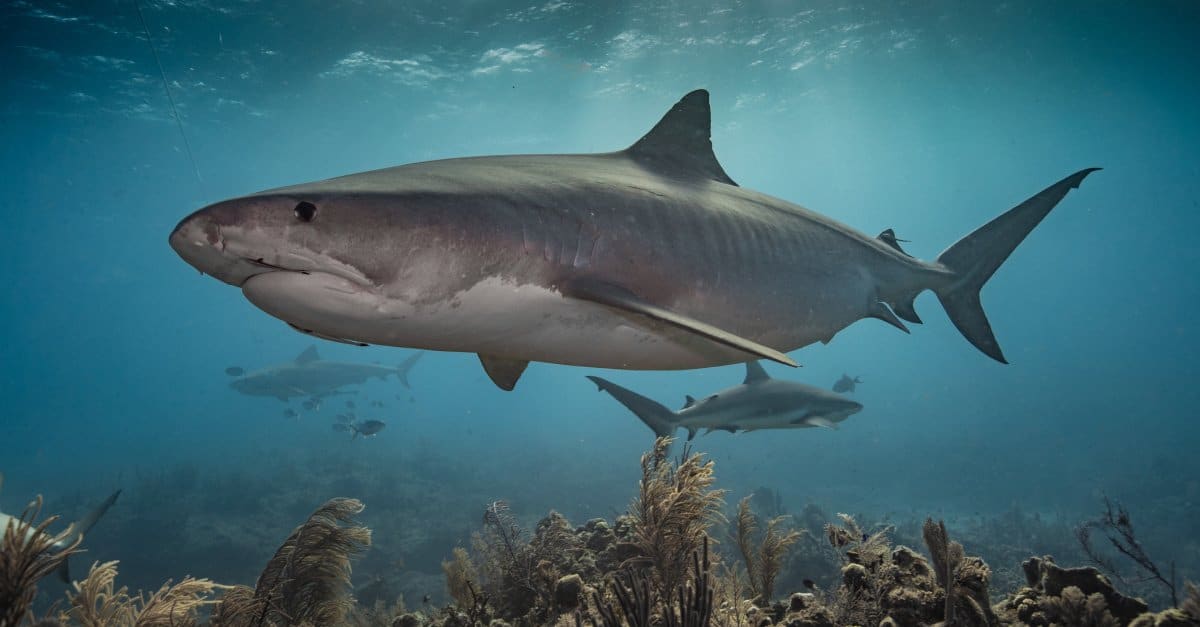
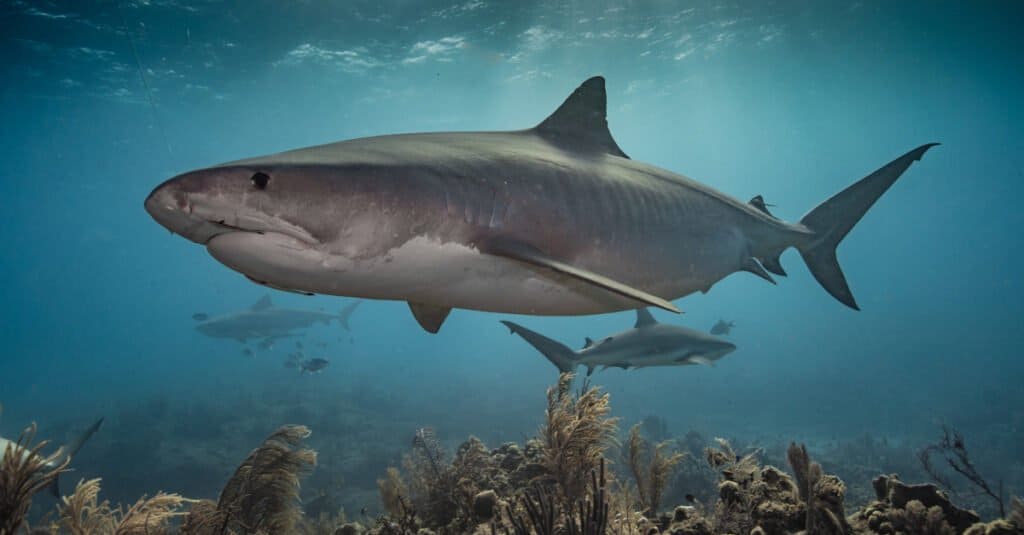
A tiger shark swims over the reef. Sharks have been swimming in the ocean for more than 400 million years.

Evolution and Origins

The tiger shark’s origin was formerly thought to have occurred around 5.3 million years ago. Nonetheless, scientists were able to locate several 13.8 million-year-old fossil shark teeth, proving that they existed considerably earlier than previously thought.

The majority of scientists think sharks first appeared 400 million years ago. Before the dinosaurs, by 200 million years! They are said to have originated from a tiny fish with the shape of a leaf that lacked eyes, fins, and bones. Eventually, these fish evolved into the two major families of fish that exist today.

While fishing for swordfish in the southern Mediterranean, people unexpectedly snagged one male and one female Galeocerdo cuvier tiger shark specimen. This discovery proves beyond a shadow of a doubt that the tiger shark was found in the Mediterranean Sea’s waters at some point during their evolution.

Appearance

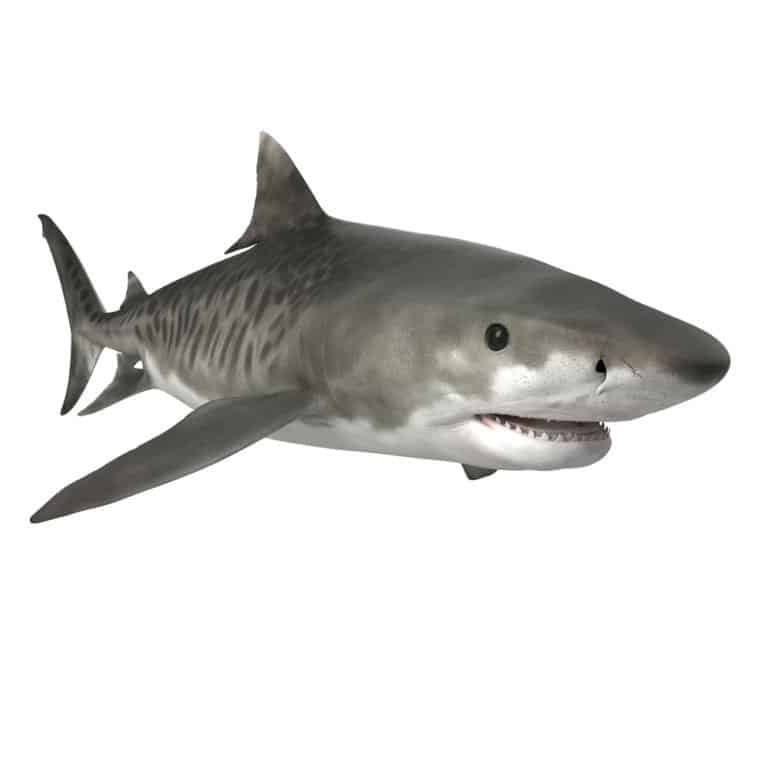
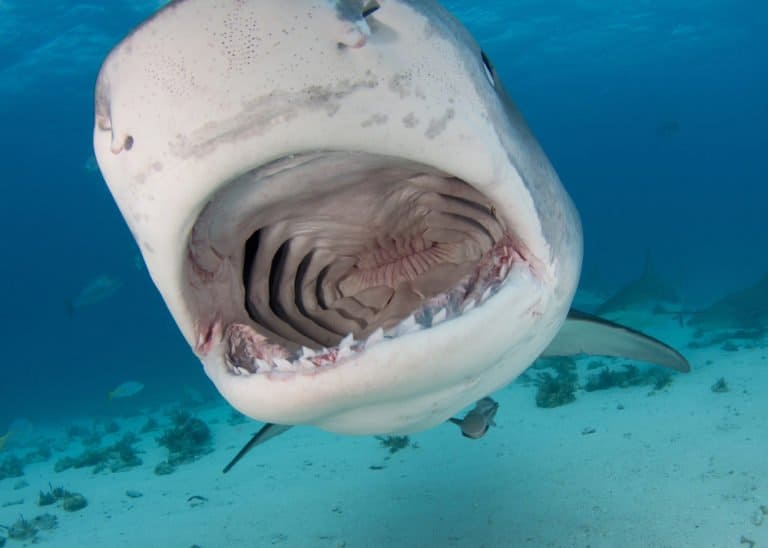
A tiger shark is a fish with smooth, gray skin, a white underside, and dark gray or black vertical stripes on its back. Its nose is rounded and broad. The teeth are curved toward the inside of its mouth. In addition, each of its teeth has a serrated edge. The design of their teeth helps them to bite through shells and the other hard exteriors of prey.

These sharks range from 10 to 14 feet in length. Their weight range is from 850 to 1,400 lbs. The longest tiger shark measured 24.6 feet, while the heaviest weighed in at 1,780 lbs.

Its gray color helps it to blend into the murky water. Not surprisingly, this can also help a tiger shark to sneak up on prey swimming in the same area.
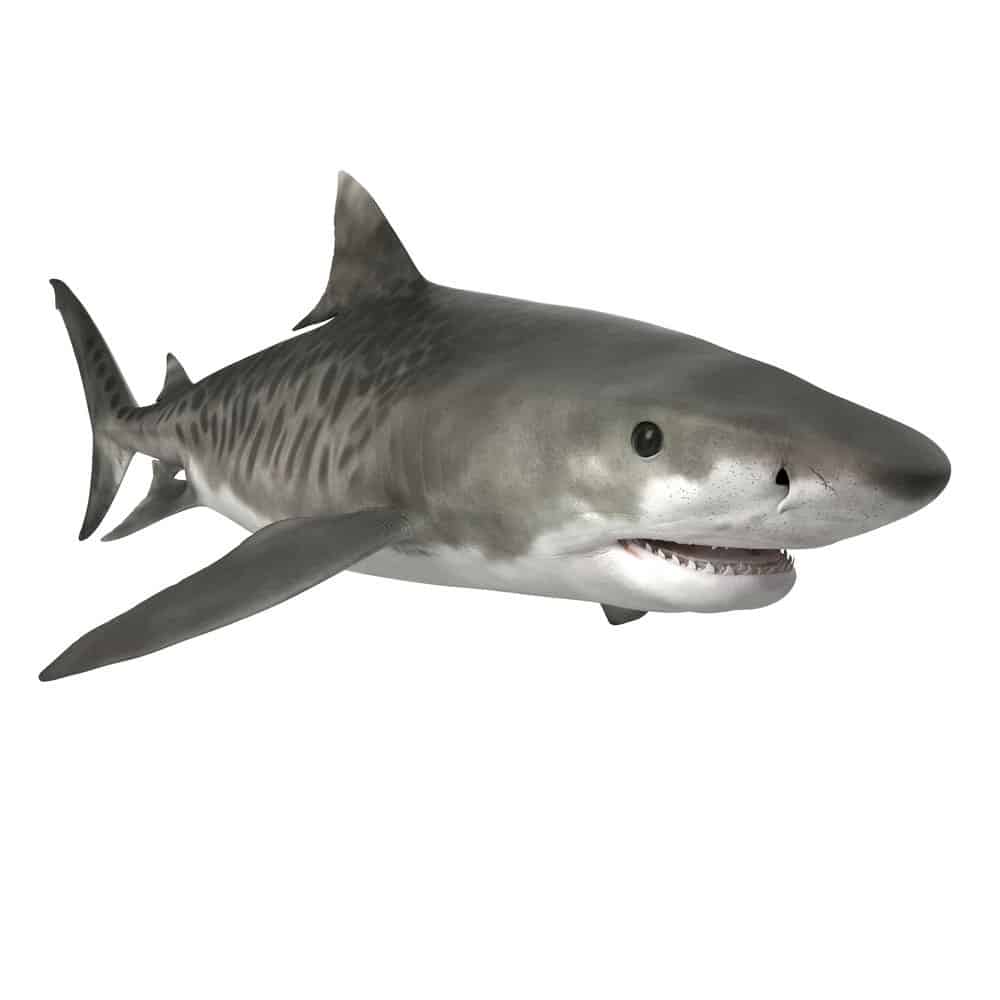
Tiger Shark

One of the most notable features is the stripes on its back. As it grows older, its stripes begin to fade.

Tiger Shark Stripes

One of the most notable features is the stripes on its back. As it grows older, its stripes begin to fade.

Distribution, Population, and Habitat

The tiger shark lives in tropical waters in many places throughout the world. They are saltwater fish that have been seen around the central Pacific islands, in the Gulf of Mexico off North America, and the Caribbean Sea. They have been seen off the coast of South America, China, Australia, Indonesia, Africa, and India. Though this shark spends time swimming near the surface, it normally swims at a depth of around 460 feet.

These sharks migrate with the change of seasons. When the weather turns cold, they move from temperate waters to tropical waters. Alternatively, when the warm weather returns, they move from a tropical habitat to a temperate one.

There is a lack of data regarding the population of this creature. However, the official conservation status is Near Threatened. Its numbers are decreasing due to poaching. They are hunted for their fins, their skin, and the oil contained in their liver. They are often caught in commercial fishing nets.

Predators and Prey
What Do Tiger Sharks Eat
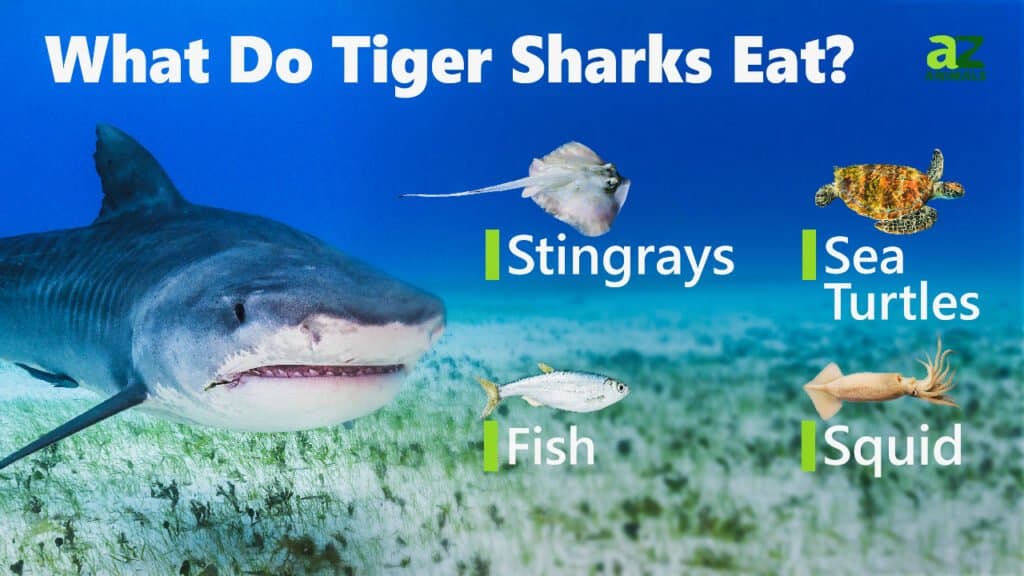
Tiger sharks eat stingrays, sea turtles, fish, and squid.

Killer whales and humans are both predators of adult tiger sharks. Killer whales are larger in size and weight than tiger sharks, allowing them to overwhelm these fish. Humans capture baby and adult tiger sharks in commercial fishing nets and kill them for their skin, liver oil, and cartilage.

Baby tiger sharks are sometimes as small as 20 inches long at birth. This makes them vulnerable to being eaten by larger sharks and seals.

A tiger shark has a long list of prey. Some of the things these sharks hunt include squid, sea turtles, dolphins, smaller sharks, clams, rays, and seabirds. This shark will swallow things it finds in the ocean, including plastic, license plates, and anything that looks tasty! They hunt at night, which means they are even harder to see in the murky water.

Reproduction and Lifespan

Largest Tiger Shark - tiger shark's distinctive feature

Once born, tiger shark pups immediately head out to live on their own.

In the northern hemisphere, the breeding season of this shark goes from March to May, while the breeding season in the southern hemisphere goes from November through the beginning of January. After the male mates with the female, the babies develop in eggs inside the mother. After a 13- to 16-month gestation period, the female gives live birth. She can have from 10 to 80 babies or pups. A female tiger shark has a litter of pups just once every three years.

Shark pups can be from 20 to 30 inches in size at birth. Each baby leaves its mother right away to live independently. These sharks reach sexual maturity at about 7 to 10 years old. Tiger sharks live to be about 15 years old, but it seems they can live a lot longer — the oldest tiger shark on record was 50 years old.

Fishing and Cooking

Tiger sharks may not make for good eating, but they are quite photogenic, at least this one is for a group of scuba divers.

Tiger sharks are sometimes caught in commercial fishing nets by accident and sometimes deliberately. Either way, tiger sharks are usually killed for their skin, fins, cartilage, and the oil in their liver. The number that is caught in commercial fishing nets is not known.

This shark is not one that many humans eat. Its meat has a strange taste. Plus, this fish ingests lots of different items, both edible and non-edible. This makes them even less appetizing.

View all 606 animals that start with T

Sources

  1. National Geographic / Accessed November 8, 2019
  2. Kids' Animal Facts / Accessed November 8, 2019
  3. Government of Canada / Accessed November 8, 2019
Rebecca Bales

About the Author

Rebecca Bales

Rebecca is an experienced Professional Freelancer with nearly a decade of expertise in writing SEO Content, Digital Illustrations, and Graphic Design. When not engrossed in her creative endeavors, Rebecca dedicates her time to cycling and filming her nature adventures. When not focused on her passion for creating and crafting optimized materials, she harbors a deep fascination and love for cats, jumping spiders, and pet rats.
Connect:

Thank you for reading! Have some feedback for us?


Tiger Shark FAQs (Frequently Asked Questions)

Tiger sharks live in tropical waters around North America, South America, Australia, India, China, Indonesia, and Africa.