



Quick Take
- Maintaining a 100-million-year lineage requires meeting specific ancient physical standards to survive today.
- A specific gill cover measurement often creates identification problems for those tracking Lepisosteus platyrhincus.
- Paradoxically, toxic eggs are the primary requirement for larval survival in the wild.
- Navigating the annual dry season requires a sediment burial process to regulate critical metabolic rates.
The Florida gar is among the most ancient and unique freshwater fish of North America. It is not necessarily the most popular type of fish, however, since the commercial market for gar meat is relatively small, and even among recreational fishers, it’s more of a niche catch. But for the people who know about it, the Florida gar is one of the unique aquatic treasures of the Florida peninsula.

4 Incredible Florida Gar Facts
- The Florida gar is part of an ancient lineage of gars that dates back more than 100 million years. It still retains many “primitive” physical characteristics, including a swim bladder that doubles as a lung, which allows it to breathe air in low-oxygen environments.
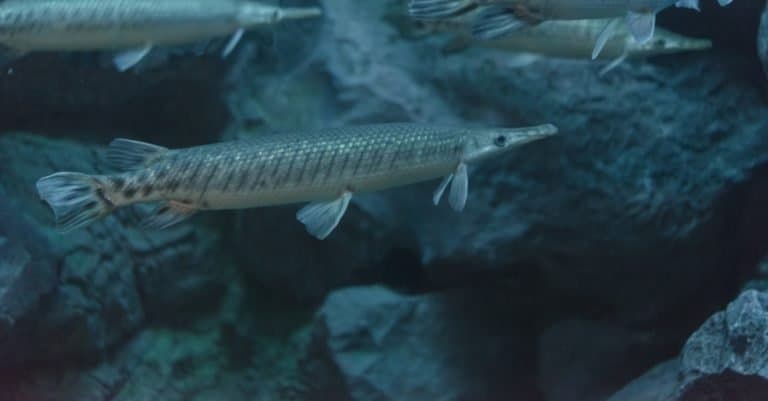
- The Florida gar travels in groups of between 2 and 10 fish at a time.
- The Florida gar survives the annual dry season by burrowing into the sediment. As its metabolic rate dramatically falls, this fish can survive long periods without food.
- Native Americans once used the hide and the scales of the Florida gar.
Classification and Scientific Name
The scientific name of the Florida gar is Lepisosteus platyrhincus. The genus name Lepisosteus, which includes three other species of gar, is derived from two Greek words meaning scale (lepis) and bone (osteon). It is one of seven species of gar in the entire Lepisosteidae family.
Appearance
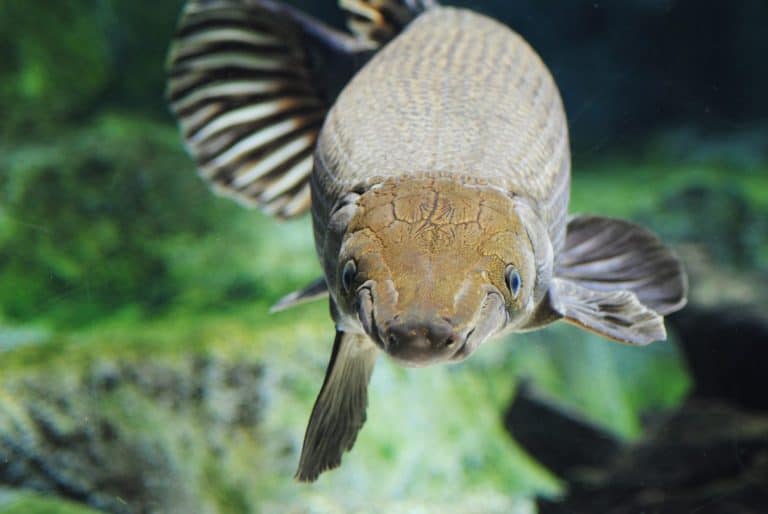
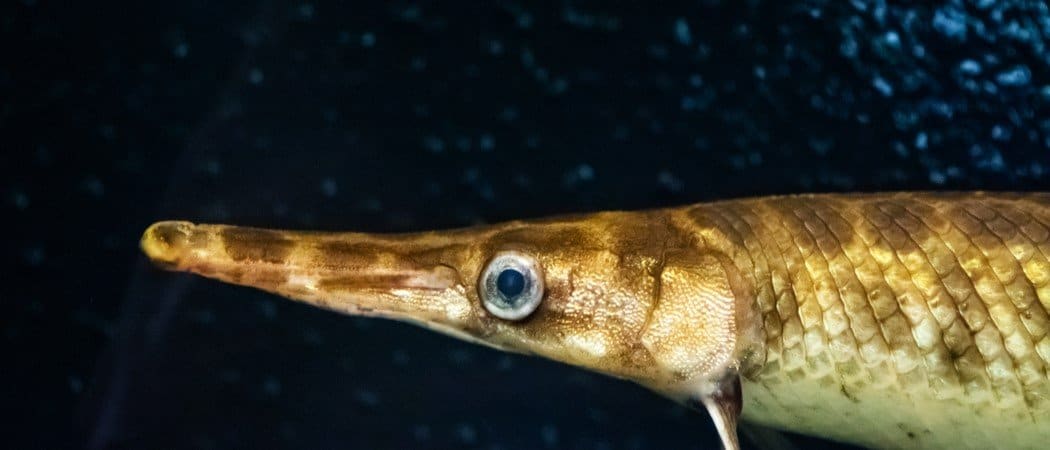
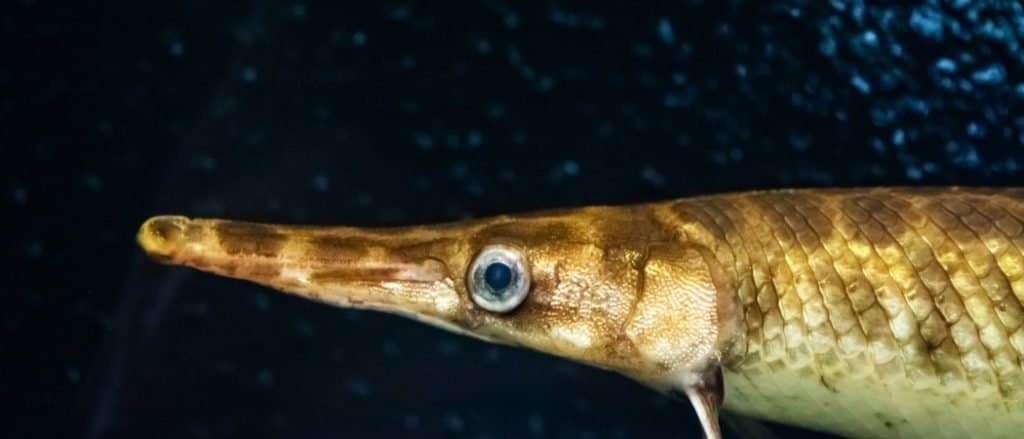
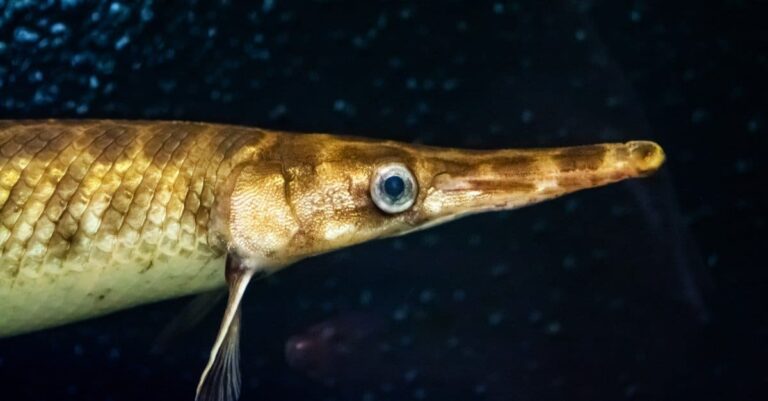
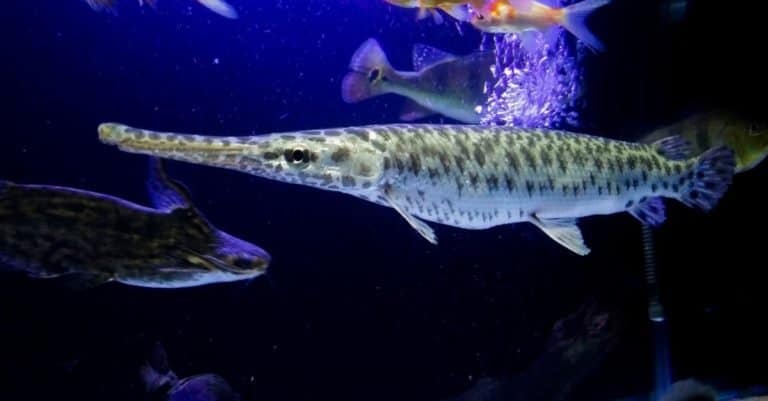
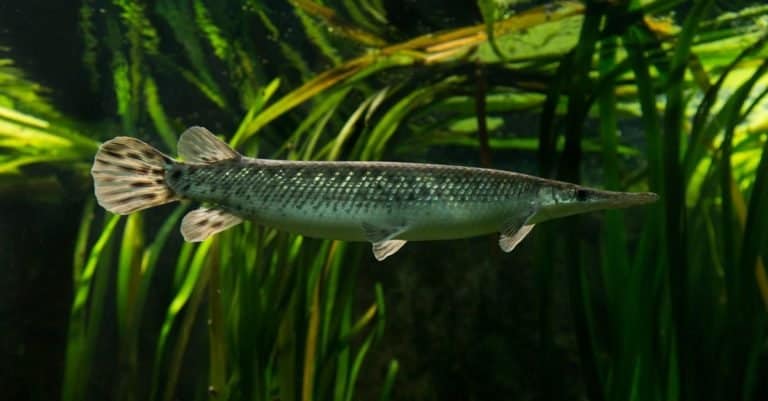
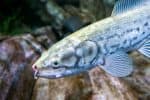
Like every other type of gar, the Florida gar has a very long, torpedo-shaped body with a pointed snout and rows of sharp teeth. The body color is dark olive and brown around the upper back and white or yellow around the stomach. This is overlaid with irregular black spots on the head, body, and fins. The typical adult measures about 13 to 34 inches in size, but the largest size ever recorded was 52 inches and 10 pounds. The females are on average larger than the males, but otherwise, the two sexes look mostly the same. The body is also covered in hard diamond-shaped scales, which offer protection against predators.
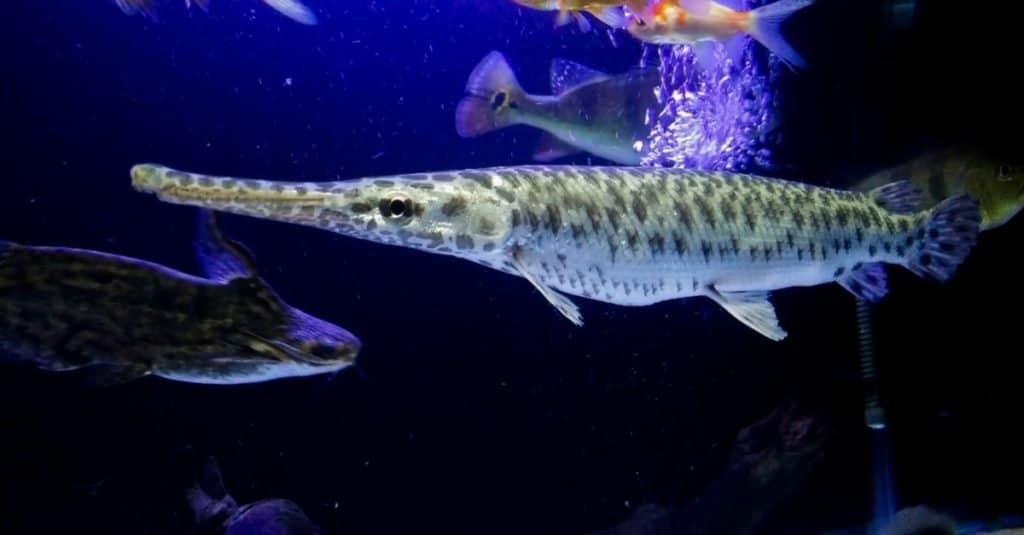
The typical adult Florida gar measures about 13 to 34 inches.
©Oyek Photo/Shutterstock.com
Florida Gar vs. Spotted Gar
The Florida gar and spotted gar are sometimes difficult to tell apart from each other because they are similar in appearance, though their habitat doesn’t overlap very much. The main difference is the length of the head. The Florida gar has a shorter distance between the front of the eye and the back of the gill cover in comparison to the size of the snout. The spotted gar has a longer distance between the eyes and the gill. Other than that, location is a big factor. It’s almost certainly a spotted gar if you find one in the panhandle near the Apalachicola River. The Florida gar is more likely to appear in the actual Florida peninsula, where it overlaps with the longnose gar.
Distribution, Population, and Habitat
The Florida gar is endemic to freshwater streams, canals, wetlands, and lakes across the states of Florida and Georgia. This species seems to prefer areas with muddy bottoms and plenty of underwater vegetation. It can be found at almost any depth of the water.
The Florida gar is considered to be a species of least concern by the IUCN Red List. Despite being vulnerable to the loss of some wetland habitat, the gar’s population numbers appear to be in stable condition. As more freshwater environments throughout Florida and Georgia are protected, this will help to secure their long-term survival.
Predators and Prey
These fish are one of the top predators in their native habitat, eclipsed only by the most capable apex predators. This fish relies on vision and chemical cues to find food. It slowly stalks the prey and then lunges out with a quick strike of its snout. It then thrashes its head from side to side before swallowing the prey.
What does the Florida gar eat?
An adult Florida gar preys upon shrimp, crayfish, and smaller fish. The larva mostly feeds upon tiny plankton and insect larvae.
What eats the Florida gar?
The Florida gar is sometimes preyed upon by eagles, ospreys, herons, and alligators. It becomes especially vulnerable when the water recedes, and the gar are packed closely together.
Reproduction and Lifespan
These fish have a single annual spawning season that takes place between the months of February and April, when large groups of males and females come together in a single place. These fish are broadcast spawners, meaning they release their genetic material separately into the water (usually deposited directly on aquatic plants) and let them mingle together. This can result in the female’s eggs being fertilized by multiple males at a time. Once this task is accomplished, the parents play no actual role in the further development of the young. The larvae have only a single means of defense against hungry predators: the highly toxic eggs.
After a few days, the larvae hatch from the eggs and then remain attached to the vegetation with a small adhesive organ at the end of the snout. In these first few crucial days of life, they absorb whatever is left from the yolk sac until they are almost an inch long and ready to live on their own. As juveniles, they feed on small bits of plankton, insect larvae, and smaller fish, which enable them to grow rapidly in their first year or two of life. After about two to four years, they are ready to begin breeding on their own. However, it is not exactly clear how long they tend to live in the wild.
Fishing and Cooking
These fish have very limited popularity in recreational fishing circles, perhaps because they’re not quite as common and harder to catch compared to most recreational game fish. But among a certain niche of fishers, this species can offer a rewarding challenge and a tough catch. There are currently few regulations in the state of Florida for the size and number of the catch. Only the much larger alligator gar has any regulations associated with it.
These fish have white, firm flesh with a mild taste; they can be fried, roasted, or prepared another way. However, the toxic eggs should not be ingested under any circumstances, since they can make people sick.
Florida Gar Pictures
View all of our Florida Gar pictures in the gallery.

Andriy R/Shutterstock.com
Sources
- Animal Diversity Web / Accessed February 12, 2021
- IUCN Redlist / Accessed February 12, 2021
- Florida Museum / Accessed February 12, 2021
- Florida Sportsman / Accessed February 12, 2021