N S W E
Wildlife Expeditions

Wildlife of
Vietnam

Vietnam is a biodiversity hotspot where visitors come for rare, often elusive endemics-especially primates and the legendary Annamite forest fauna-set against a sweep of habitats from misty mountains to mangrove-rich deltas and coral-fringed islands.
399 Species
331,212 km² Land Area
Overview

About Vietnam

Vietnam's wildlife character is defined by dramatic geography and endemism: a long, narrow country that compresses tropical lowlands, limestone karsts, and high-elevation cloud forests into a relatively small area. This variety has produced extraordinary species found nowhere else, from Delacour's langur and the Tonkin snub-nosed monkey to the vibrant red-shanked douc. Vietnam also holds some of the world's most enigmatic mammals in the Annamite Range-most famously the saola-making the nation a place where conservation often focuses on protecting the last strongholds of globally rare species rather than huge, visible herds.

Key ecosystems span the Annamites' evergreen and montane forests (vital for endemic mammals, gibbons, and hornbills), the limestone karst landscapes of the north and center (harboring cave systems and specialized fauna), and the wetlands of the Red River and Mekong deltas (critical for migratory waterbirds along the East Asian-Australasian Flyway). Coastal Vietnam adds another layer: mangrove forests, seagrass beds, and island reefs that support dugongs in select areas, dolphins offshore, and nesting sea turtles on protected islands like Côn Đảo.

On the global conservation stage, Vietnam is both a priority and a proving ground. It sits at the crossroads of Indochina's biodiversity and faces intense pressures from habitat loss and the illegal wildlife trade-challenges that have driven stronger protected-area management, species-focused programs for primates, and influential rescue-and-rehabilitation efforts that support regional enforcement and education. For visitors, the experience is uniquely "forest-and-wetland" oriented: dawn choruses of gibbons, patient searches for leaf-eating langurs on karst cliffs, night walks for civets and other small mammals, and world-class birding in delta marshes-wildlife encounters earned through exploration rather than guaranteed spectacle.

Physical Features

Geography

Vietnam's long north-south shape spans strong climatic and elevational gradients-from cool montane forests in the north and central highlands to tropical lowlands and vast river deltas in the south. The Annamite Range and other mountain systems create rugged, high-rainfall refuges that drive endemism and isolate populations, while the Red River and Mekong deltas form expansive wetlands and floodplains critical for waterbirds, fishes, and amphibians. Extensive coastline, estuaries, and mangroves support migratory shorebirds and coastal fisheries, but dense human settlement in lowlands concentrates habitat loss and fragmentation, making remaining forest blocks, karst systems, and protected watersheds disproportionately important for wildlife persistence and connectivity.

331,212 km² Land Area
About the size of New Mexico; ~66th largest country by area Size Rank

Key Landscapes

  • Annamite Range along the Laos border-montane evergreen forests, high endemism, key large-mammal refuges
  • Northern highlands and Hoang Lien Son Range (including Fansipan)-cool montane forests, cloud forest elements, elevationally zoned habitats
  • Central Highlands (Tay Nguyen: Dak Lak, Dak Nong, Gia Lai, Kon Tum, Lam Dong)-upland forests and watershed headwaters influencing lowland rivers
  • Red River Delta-lowland floodplain and wetland mosaics important for waterbirds and freshwater biodiversity
  • Mekong Delta-one of Asia's largest deltas; seasonally flooded wetlands, swamp forests, canals, and rice mosaics supporting aquatic fauna and birds
  • Major river corridors (e.g., Mekong, Red River, Dong Nai, Srepok/Sesan, Perfume River)-riparian habitats and dispersal pathways
  • Karst landscapes of the northeast (e.g., Ha Giang-Cao Bang and Ha Long region)-caves, limestone forests, high localized endemism (bats, snails, plants)
  • Coastal plains, lagoons, and estuaries (central and southern coasts)-brackish wetlands, mudflats, migratory shorebird sites
  • Mangrove systems (notably in the south, including Can Gio and parts of the Mekong delta)-nursery habitat for fish/crustaceans and coastal protection
  • Offshore islands and archipelagos (e.g., Cat Ba, Con Dao, Phu Quoc, parts of the Spratly Islands area)-seabird, reef, and island-endemic habitats

Ecoregions

  • Tonkin subtropical forests (northern Vietnam)
  • South China-Vietnam subtropical evergreen forests (northeast Vietnam)
  • Northern Indochina subtropical forests (northwest Vietnam and adjacent areas)
  • Annamite Range montane forests (Laos-Vietnam border mountains)
  • Northern Annamites rain forests (north/central Annamites)
  • Southern Annamites montane rain forests (central highlands and higher peaks)
  • Indochina dry forests (parts of south-central/lowland interior, historically more extensive)
  • Mekong River Delta swamp forests (southern delta)
  • Southeast Indochina lowland forests (southern Vietnam lowlands)
  • Gulf of Thailand mangroves (southwestern coastal mangroves)
  • Hainan-Vietnam coastal evergreen forests / coastal lowland evergreen forests (Vietnam's coastal belt; naming varies by source)
Parks & Reserves

Protected Areas

Vietnam's protected area network is anchored in the "Special-Use Forest" system managed primarily by the Ministry of Agriculture and Rural Development and provincial authorities. It includes National Parks, Nature Reserves, Species/Habitat Conservation Areas, and Landscape Protected Areas, with additional Marine Protected Areas (MPAs) along the coast and around key islands. These sites safeguard globally important biodiversity-especially the Annamite Range's montane forests and Vietnam's remaining lowland forests and wetlands-though many face strong pressures from habitat fragmentation, snaring/poaching, and infrastructure and agricultural expansion.

Protected Coverage

Approximately ~7-8% of Vietnam's land area is under formal protection in protected areas (often cited for Special-Use Forests; figures vary by source and category definitions).

Notable Parks & Reserves

Phong Nha-Ke Bang National Park

National Park; UNESCO World Heritage Site (natural)

A vast limestone karst landscape of forests, caves, and underground rivers that supports high endemism and important primate populations in the Annamite region. It is one of Vietnam's flagship biodiversity and landscape conservation areas.

Ha Tinh langur
Red-shanked douc
Southern white-cheeked gibbon
Sunda pangolin
Asiatic black bear
Asiatic black bear
Annamite striped rabbit

Cát Tiên National Park

National Park; Biosphere Reserve (UNESCO Man and the Biosphere, Dong Nai)

One of Vietnam's most important remaining lowland tropical forest complexes, critical for large mammals, primates, and wetland-associated species. It is a prime conservation site in southern Vietnam with strong research and species recovery focus.

Asian elephant
Asian elephant
Gaur
Siamese crocodile
Southern yellow-cheeked gibbon
Green peafowl
Smooth-coated otter

Cuc Phuong National Park

National Park

Vietnam's oldest national park, protecting limestone and evergreen forest with exceptionally rich primate and small carnivore diversity. It is also notable for prominent conservation breeding/rescue programs (e.g., primates and pangolins).

Delacour's langur
Northern white-cheeked gibbon
Owston's civet
Sunda pangolin
Stump-tailed macaque

Yok Don National Park

National Park

Vietnam's largest national park and a key stronghold for dry dipterocarp forests-an ecosystem more typical of mainland Southeast Asia than Vietnam's humid forests. It remains important for wide-ranging mammals and open-forest bird communities.

Asian elephant
Asian elephant
Gaur
Banteng
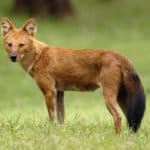
Dhole
Dhole
Green peafowl
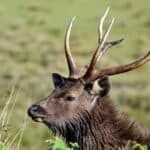
Sambar
Sambar

Bach Ma National Park

National Park

A biodiversity-rich montane corridor between northern and southern Vietnam, with high rainfall forests and strong Annamite endemism. It is especially important for threatened primates and rare forest birds in central Vietnam.

Red-shanked douc
Crested argus
Northern pig-tailed macaque
Sambar
Sambar
Asiatic black bear
Asiatic black bear

Pu Mat National Park

National Park; Biosphere Reserve (UNESCO Man and the Biosphere, Western Nghe An)

A major protected block in the northern Annamites, safeguarding remote evergreen forests that are globally important for threatened mammals and primates. It is part of a larger landscape of conservation areas supporting some of Vietnam's rarest forest fauna.

Northern white-cheeked gibbon
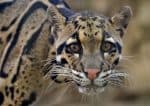
Clouded leopard
Clouded leopard
Asian elephant
Asian elephant
Gaur
Sun bear
Sun bear
Sunda pangolin

Tram Chim National Park

National Park; Ramsar Wetland of International Importance

A flagship Mekong Delta wetland protecting seasonally inundated grasslands and floodplain habitats vital for large waterbirds. It is one of Vietnam's best sites for wetland birdwatching and waterbird conservation.

Sarus crane
Sarus crane
Lesser adjutant
Spot-billed pelican
Oriental darter
Grey-headed fish eagle
Smooth-coated otter

Xuan Thuy National Park (Red River Delta)

National Park; Ramsar Wetland of International Importance

A crucial coastal mudflat and mangrove complex on the East Asian-Australasian Flyway, supporting internationally important concentrations of migratory shorebirds. It is among Vietnam's top sites for coastal wetland biodiversity conservation.

Black-faced spoonbill
Saunders's gull
Nordmann's greenshank
Spoon-billed sandpiper
Eurasian curlew

UNESCO World Heritage Sites

  • Ha Long Bay (natural)
  • Phong Nha-Ke Bang National Park (natural)
  • Trang An Landscape Complex (mixed cultural/natural)
Animals

Wildlife

Vietnam is one of Southeast Asia's most biologically diverse countries, spanning a long latitudinal range and steep elevation gradients-from subtropical montane forests in the north, to the Annamite (Truong Son) Range's evergreen forests, to lowland floodplains, mangroves, and the Mekong Delta. Its wildlife character is defined by high endemism (especially in the limestone karsts and Annamites), exceptional primate diversity, and globally important wetland/coastal habitats on the East Asian-Australasian Flyway. While many large mammals have declined sharply due to habitat loss and hunting, Vietnam remains a key stronghold for several highly threatened, range-restricted species and a hotspot for newly described reptiles and amphibians.

≈ 310+ species Mammals
≈ 900-950 species Birds
≈ 500+ species Reptiles
≈ 200-230 species Amphibians

Iconic Species

Red-shanked Douc One of Vietnam's most celebrated primates (often called the "queen of primates"), strongly associated with central Vietnam. Frequently sought around Son Tra Peninsula (Da Nang) and some protected forests along the Annamites.
Delacour's Langur A flagship primate of northern Vietnam's limestone karst landscapes, best known from Van Long Nature Reserve and nearby karst protected areas; extremely range-restricted and a major focus of primate conservation tourism.
Tonkin Snub-nosed Monkey Among the world's rarest primates, confined to a small area of northern Vietnam. When conditions allow, it is most associated with protected forests in Ha Giang and Tuyen Quang provinces (e.g., Khau Ca area).
Asian Elephant
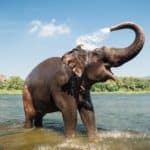
Asian Elephant Vietnam's remaining elephants persist in small, fragmented populations, most notably in the Central Highlands (e.g., Yok Don region and parts of Dak Lak/Dong Nai landscapes). Sightings are difficult but the species remains iconic of Vietnam's forest wildlife.
Indochinese Leopard A symbol of Vietnam's threatened big-cat fauna. Now extremely rare and hard to observe; its presence (historical and possibly remnant) underscores the country's conservation challenges in large forest blocks.
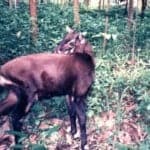
Saola
Saola A globally famous "Annamite mystery" bovid discovered in the 1990s, known only from the Annamite Range of Vietnam and Laos. Almost never seen in the wild, but it defines Vietnam's reputation for unique, little-known large mammals.
Pangolins (Sunda Pangolin) Vietnam is central to pangolin conservation in Southeast Asia due to intense trafficking pressure and ongoing rescue/rehabilitation efforts. Wild sightings are rare, but pangolins are emblematic of Vietnam's wildlife protection story.
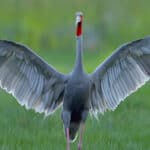
Sarus Crane
Sarus Crane A marquee wetland bird historically associated with the Mekong Delta's seasonally flooded grasslands (especially Tram Chim National Park). Numbers fluctuate and have declined locally, but the species remains a top target for birders visiting delta wetlands.
Siamese Crocodile Critically Endangered and historically widespread in Indochina. Vietnam has had small remnant/reintroduced occurrences in select wetlands; it is an iconic conservation symbol rather than a reliably seen species.

Endemic Species

Cat Ba Langur (Golden-headed Langur) A critically endangered primate restricted to Cat Ba Island's limestone forests; one of Vietnam's most famous single-site endemics and a flagship for karst/island conservation. Endemic
Delacour's Langur Endemic to northern Vietnam's limestone karsts; among the most range-restricted primates in Asia and a defining species of Vietnam's karst biodiversity. Endemic
Tonkin Snub-nosed Monkey Endemic to northern Vietnam; a globally significant, highly threatened primate dependent on remaining evergreen forest fragments. Endemic
Edward's Pheasant Endemic to central Vietnam's lowland/foothill forests. Rare and difficult to detect; emblematic of Vietnam's threatened central Annamite lowland biodiversity. Endemic
Vietnamese Three-striped Box Turtle A highly threatened turtle largely confined to Vietnam (and sometimes treated as part of a Vietnam-centered complex). It represents Vietnam's exceptional (and heavily pressured) freshwater turtle diversity. Endemic
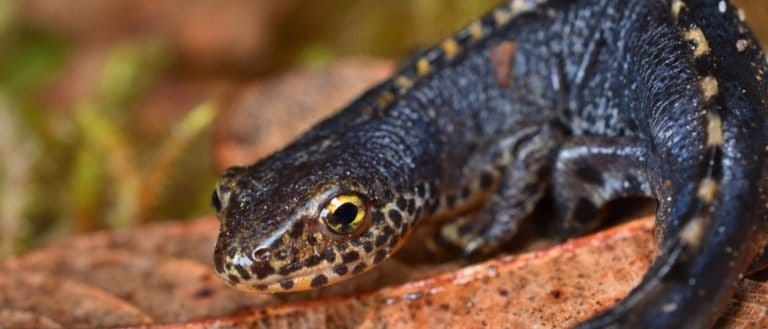
Vietnamese Warty Newt A near-endemic salamander associated with northern Vietnam's montane forests and breeding pools; highlights Vietnam as a hotspot for narrowly distributed amphibians. Endemic

Notable Populations

  • Vietnam holds essentially the entire global wild population of the Cat Ba Langur, confined to Cat Ba Island (one of the most site-restricted primates on Earth).
  • Vietnam contains nearly the entire natural range and remaining wild populations of Delacour's Langur, making it globally pivotal for the species' survival.
  • All wild populations of the Tonkin Snub-nosed Monkey occur in Vietnam, giving the country full global responsibility for this species.
  • The Annamite Range in Vietnam (shared with Laos) is the only place on Earth where Saola occurs, making Vietnam part of a globally unique large-mammal endemism center.
  • Coastal wetlands such as Xuan Thuy (Red River Delta) are internationally important stopover/wintering sites for migratory shorebirds on the East Asian-Australasian Flyway.
Protection

Conservation

Primary Threats

  • Vietnam is both a destination market and a major transit hub for illegal wildlife (e.g., pangolins, ivory, rhino horn, big cats, turtles). Trade networks exploit ports and land borders (China, Laos, Cambodia) and online marketplaces; laundering through captive-breeding claims and wildlife farms has historically complicated enforcement. This pressure is a central driver of declines in many native mammals and reptiles even inside protected areas.
  • Widespread snaring and hunting for bushmeat, traditional medicine, and trade has caused severe defaunation, particularly in Annamite forests. Wire snare lines in and around protected areas are pervasive and have devastated ground-dwelling mammals (e.g., saola's landscape, muntjacs), pheasants, and primates; enforcement is often outmatched by the scale and economic incentives.
  • Conversion and degradation of natural habitats continues, especially lowland forests and wetlands. Key drivers include expansion of plantations (rubber, acacia, coffee in some highland areas), aquaculture and agriculture in the Mekong and Red River deltas, and land conversion associated with settlement and industrial zones. Remaining intact forests are increasingly confined to mountainous regions and fragmented protected areas.
  • Although large-scale natural forest logging has been restricted, illegal logging and timber laundering persist, especially in remote border areas and high-biodiversity forests (Central Annamites, Central Highlands). Selective extraction and associated road access degrade habitat quality and facilitate hunting pressure; demand for timber and wood products also increases pressure on both domestic and imported sources routed through Vietnam.
  • Agricultural intensification and expansion-plantations in uplands, rice and aquaculture expansion in deltas-reduce habitat connectivity and simplify landscapes. In the Mekong Delta, conversion to shrimp ponds and intensified rice systems has reduced natural floodplain and mangrove habitats, affecting fisheries nursery grounds and waterbirds.
  • Rapid build-out of roads, hydropower, ports, and industrial parks fragments habitats and increases access for poachers and loggers. In mountainous regions, road expansion and hydropower projects can bisect corridors critical for primates and ungulates; in coastal areas, infrastructure and sea-dyke systems alter sediment flows and wetland dynamics.
  • Hydropower and river engineering alter flow regimes, sediment transport, and flood pulses, with major implications for the Mekong system and associated wetlands. Dams and embankments reduce connectivity between rivers and floodplains, affecting migratory fish, floodplain productivity, and delta stability; coastal mangrove systems are also modified by dyke construction and shoreline hardening.
  • Industrial effluents, agricultural runoff (nutrients, pesticides), and plastic pollution impact rivers, estuaries, and coastal habitats. In the Mekong Delta and near major urban/industrial zones, water quality issues contribute to fish kills, eutrophication, and degradation of seagrass and coral areas; hazardous waste management and wastewater treatment capacity remain uneven.
  • Coastal and inland fisheries face heavy pressure from high fishing intensity, destructive gear, and reduced nursery habitats (mangroves, seagrass). Nearshore depletion in the South China Sea/Gulf of Thailand waters has pushed effort further offshore and contributes to declines in reef-associated species; inland, altered flows and intense harvest affect Mekong fisheries.
  • Sea-level rise, saltwater intrusion, and increased storm intensity threaten the Mekong Delta and coastal wetlands, accelerating erosion and mangrove loss. Temperature and precipitation shifts increase fire risk in some forest types and stress montane ecosystems; climate impacts compound existing river regulation and land subsidence in delta areas.
  • Mining (e.g., limestone quarrying in karst areas, metals and construction materials in uplands) causes direct habitat loss and water pollution. Karst landscapes-important for endemic snails, bats, and specialized flora-are especially vulnerable to quarrying, with irreversible loss of cave and cliff habitats.
  • Rapid expansion of cities and peri-urban industrial zones (notably around Hanoi, Ho Chi Minh City, and coastal economic corridors) drives land conversion, increases pollution loads, and adds pressure on nearby protected areas via demand for resources and infrastructure. Urban sprawl also encroaches on remaining wetlands and flood retention areas.
  • Conflict occurs where agriculture interfaces with forests-crop raiding by macaques and wild pigs, occasional incidents involving elephants in some central and southern landscapes, and retaliatory actions. Fragmented habitats and expanding farms increase encounter rates; mitigation and compensation mechanisms are improving but remain inconsistent.
  • In freshwater and agricultural landscapes, invasive species (notably some invasive plants and introduced fish) can alter habitats and compete with native species. In wetlands and reservoirs, invasives can reduce habitat quality for native fish and waterbirds, especially where nutrient loading and disturbance facilitate spread.
  • Disease risks are relevant in wildlife farming and captive facilities (and at wildlife-livestock interfaces), with potential spillover affecting conservation breeding and reintroduction efforts. High-density farming and trade conditions can facilitate pathogen transmission among reptiles, mammals, and birds.
  • Tourism, recreation, and resource collection (fuelwood, non-timber forest products) disturb sensitive species in popular protected areas and karst caves. Disturbance is particularly significant for cave-dwelling bats and breeding waterbirds in accessible wetlands, and it often coincides with increased access for hunting.
  • Extraction of fuelwood, sand mining in rivers, and intensive harvest of non-timber forest products can degrade habitats and reduce ecosystem resilience. River sand mining contributes to bank erosion and habitat loss, amplifying delta and coastal erosion issues when combined with reduced sediment from upstream dams.
  • Small, isolated populations of highly threatened species (many primates, some ungulates, and localized endemics) face inbreeding and reduced genetic diversity. Fragmentation of Annamite and northern montane forests limits dispersal, increasing extinction risk without active corridor protection and metapopulation management.
Visit

Wildlife Tourism

Vietnam is one of Southeast Asia's most biodiverse countries, with wildlife tourism centered on national parks, karst landscapes, the Annamite Range, and wetlands from the Red River Delta to the Mekong. Economically, wildlife tourism is a meaningful niche within Vietnam's broader nature/adventure travel sector (alongside trekking, caving, and beach tourism), supporting park fees, local guiding, homestays, transport, and conservation-linked livelihoods - especially in places like Cuc Phuong, Cat Tien, Phong Nha-Ke Bang, and the Mekong Delta. Historically, Vietnam's protected-area system expanded substantially from the late 20th century onward, and many parks now pair biodiversity protection with visitor programs (guided night walks, primate rescue education, birdwatching towers, boat routes). Accessibility is generally good: major wildlife regions are reachable by road from Hanoi, Hue/Da Nang, or Ho Chi Minh City (HCMC), with a growing network of eco-lodges and community-based tourism. Practical note for planning: Vietnam's standout wildlife is often smaller or more elusive (primates, birds, reptiles, amphibians, rare ungulates), so guided activities, dawn/dusk timing, and patience pay off; ethical viewing matters because some species are threatened and sensitive to disturbance.

Best Time to Visit

Wildlife viewing is possible year-round, but timing around Vietnam's regional monsoons and breeding/migration seasons improves chances.

- Dec-Mar (cooler, drier in the north): Best for northern birding and comfortable forest hikes. Look for wintering waterbirds in Red River Delta wetlands; good visibility in northern limestone/karst forests.
- Feb-Apr (shoulder season across much of the country): Excellent for multi-region itineraries - forests are active, trails are more comfortable, and many sites are accessible before peak rains.
- Mar-May (warming, still relatively dry in many areas): Strong bird activity (singing/display), butterflies and insects increase, and primate tracking can be productive in several forest parks.
- Jun-Aug (hot; rainy season in many regions): Lush forests and peak amphibian/reptile activity - great for guided night walks and herping, but expect leeches, muddy trails, and storm disruptions.
- Sep-Nov (many areas dry down after rains; central coast can be stormy later): Often excellent for southern parks and wetlands as water levels and food availability concentrate wildlife; migratory birds begin returning.

Regional quick guide:
- North (Hanoi area, karst, montane parks): Best generally Oct-Apr for hiking and birding.
- Central (Annamites, Phong Nha-Ke Bang): Often best Feb-Aug for caves/forest activities; watch for heavier rains/flooding risk Sep-Nov.
- South (Cat Tien, Mekong wetlands): Often strong Nov-Apr for drier trails and productive birding/boat wildlife.

Top Wildlife Experiences

  • Dawn birdwatching from a wetland hide or observation tower (e.g., Tram Chim or other delta wetlands): arrive before sunrise to scan flooded grasslands and canals for herons, egrets, storks, raptors, and seasonal migrants; pair with a quiet boat transfer to reduce disturbance.
  • Guided night walk in lowland forest (e.g., Cuc Phuong or Cat Tien): a ranger-led spotlight walk to look for civets, porcupines, flying squirrels, frogs, geckos, and spectacular insects; ideal in warmer months or after light rain.
  • Gibbon listening and tracking morning: start pre-dawn with a local guide to hear territorial calls, then hike to vantage points to watch canopy movement; focus on minimizing noise and keeping distance (great in intact Annamite forests and select protected areas).
  • Boat safari on a river/canal network (Mekong Delta): slow-paced wildlife viewing for waterbirds, monitor lizards, and riverside biodiversity; combine with a visit to community-managed areas and mangrove edges where possible.
  • Ethical primate conservation visit + forest walk: visit a reputable rescue/rehabilitation center or conservation education program (commonly associated with major national parks), then join a guided hike focusing on habitat and field identification rather than guaranteed close encounters.
  • Karst forest hike + cave ecology focus (Phong Nha-Ke Bang region): trek through limestone forest to cave entrances and learn about bat colonies, swiftlets, invertebrates, and fragile cave microhabitats; best with small groups and strict leave-no-trace.
  • Butterfly and insect-focused day in tropical forest: a slow walk on sunny edges and streamlines to photograph butterflies, dragonflies, and beetles; strongest in warmer months (roughly Mar-Aug depending on region).
  • Mangrove wildlife outing (southern coastal forests): guided boardwalk/boat exploration for mudskippers, crabs, mangrove birds, and coastal reptiles; time around mid-tide for the most surface activity.
  • Dawn-to-dusk wildlife photography loop in a southern park: cycle or vehicle shuttle to rotate between river edges, open glades, and forest trails at golden hours, maximizing chances for deer-like ungulates, macaques, and birdlife without rushing.
  • Highland/Annamite forest trek with local guides: multi-hour hike emphasizing tracks, calls, and canopy scanning for primates and rare birds; combine with a community homestay to extend early-morning field time when wildlife is most active.

Safari Types Available

  • Guided forest hikes (day walks) focused on birds, primates, and forest ecology
  • Night safaris / spotlight walks on park trails (small mammals, amphibians, reptiles, insects)
  • Boat safaris (rivers, canals, flooded grasslands) in deltas and wetland reserves
  • Mangrove boardwalk and boat excursions (coastal wetland wildlife)
  • Birdwatching from hides, towers, and dike trails (wetlands and forest edge)
  • Cycling-based wildlife loops on quiet park roads/tracks (low-impact viewing at dawn/dusk)
  • Cave-and-karst eco-excursions (bat/swiftlet ecology, invertebrates, habitat interpretation)
  • Community-based wildlife experiences with local guides and homestays (early starts, local knowledge)
  • Specialist trips: birding tours, herping (reptile/amphibian) nights, macro-insect photography walks
Fun Facts

Did You Know?

Vietnam's Annamite Range is a modern "new-species hotspot": in just a few years scientists described multiple large mammals from the Vietnam-Laos border forests, including the saola (1992) and the giant muntjac (Megamuntiacus vuquangensis, 1994)-a rare modern-era example of big mammals being newly recognized by science.

The saola is so elusive that no scientist has ever been able to study one in the wild in a sustained way; much of what's known comes from remains (e.g., horns) and a small number of camera-trap records.

King cobras in Vietnam don't just lay eggs and leave-females are famous for building a leaf nest and guarding it, an unusually "parental" behavior for a snake.

Some of Vietnam's most threatened monkeys are limestone-karst specialists: species like Delacour's langur (Trachypithecus delacouri) live on steep karst cliffs and caves in northern Vietnam, meaning their habitat can be destroyed simply by quarrying a few isolated limestone hills.

The Annamite striped rabbit (Nesolagus timminsi) was described in 1999 from Vietnam/Laos-and it wasn't first found by a wildlife expedition, but via specimens seen in local markets-showing how even distinctive mammals can stay scientifically "hidden" in Vietnam's forests.

Vietnam is part of the range of the king cobra (Ophiophagus hannah), the world's longest venomous snake (often reaching 3-4 m, with exceptional individuals longer).

Vietnam has the sun bear (Helarctos malayanus), the world's smallest bear species-an adult can weigh as little as ~25-65 kg.

The Cat Ba langur (Trachypithecus poliocephalus), endemic to Cat Ba Island, is one of the rarest primates on Earth, with a wild population hovering around only a few dozen to <100 individuals in recent years.

The saola (Pseudoryx nghetinhensis)-discovered by scientists in 1992 in the Annamite forests along Vietnam's border-is often cited as one of the world's rarest large mammals.

Vietnam is one of the last refuges for the Yangtze giant softshell turtle (Rafetus swinhoei), among the world's largest freshwater turtles; only a handful of individuals are believed to remain globally, with known survivors in Vietnam's lakes.

Below you can find a complete list of Vietnamese animals. We currently track 0 animals in Vietnam and are adding more every day!

Vietnam belongs to the Indomalayan realm of biogeographic areas. It’s considered to be very high in biodiversity. The climate of Vietnam varies according to region. Vietnam has several regions such as plains, tropical forests, mountains, rivers, and beaches.

It is also affected by tropical storms and typhoons. Vietnam is ranked 16th in biodiversity compared to the rest of the world.

It is home to roughly 16% of all species in the world. Vietnam is home to about 260 species of reptiles, 120 species of amphibians, 840 species of birds, and 310 species of mammals.

Some examples of Vietnam’s animal species include:

The Official National (state) Animal of Vietnam
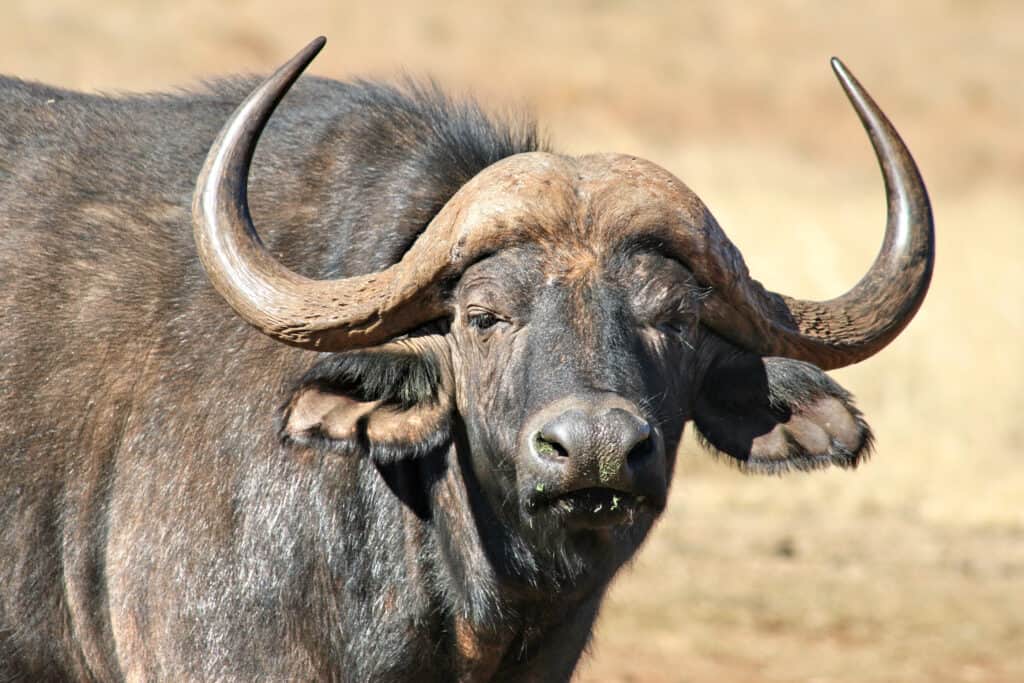
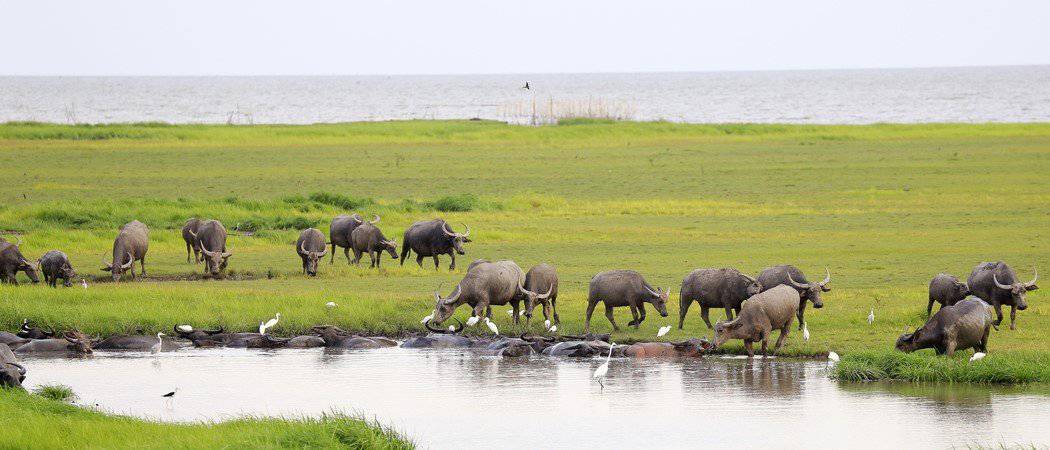
bufallo

The official national animal of Vietnam is the water buffalo.

The official national animal of Vietnam is the water buffalo. The water buffalo is very important to Vietnam’s culture and history.

Its docile and gentle demeanor allows it to be tamed easily, and it is widely used for farming and other work tasks. Water buffalos are so crucial to farmers in Vietnam that they are treated as a member of the family.

Water buffalos are considered endangered and are often hunted for their hide and horns. Natural predators of the water buffalo include tigers and crocodiles. They are herbivores and love spending time in the water. Aquatic vegetation makes up the majority of their diet.

Rarest Animals Found in Vietnam
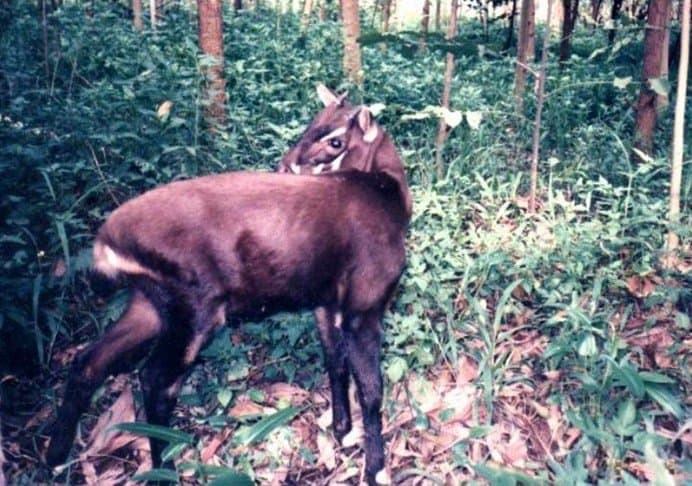
The Saola, commonly referred to as the “Asian unicorn,” is an antelope-like species that can only be found in the Annamite Mountains on the boundary between Vietnam and Laos. It is a severely endangered species.

Vietnam is home to a diverse range of flora and fauna, including many unique and rare animal species.

Here are some of the rarest animals found in Vietnam:

  • Saola – The Saola, also known as the “Asian unicorn,” is a critically endangered antelope-like species that is found only in the Annamite Mountains on the border between Vietnam and Laos.
  • Giant ibis – The Giant ibis is a critically endangered bird species that are found only in Cambodia, Laos, and Vietnam. It is the largest ibis species in the world and is one of the rarest birds in Southeast Asia.
  • Red-shanked douc – The Red-shanked douc is a critically endangered primate that is found only in the central highlands of Vietnam. It is known for its striking and colorful appearance.

Largest Animals Found in Vietnam
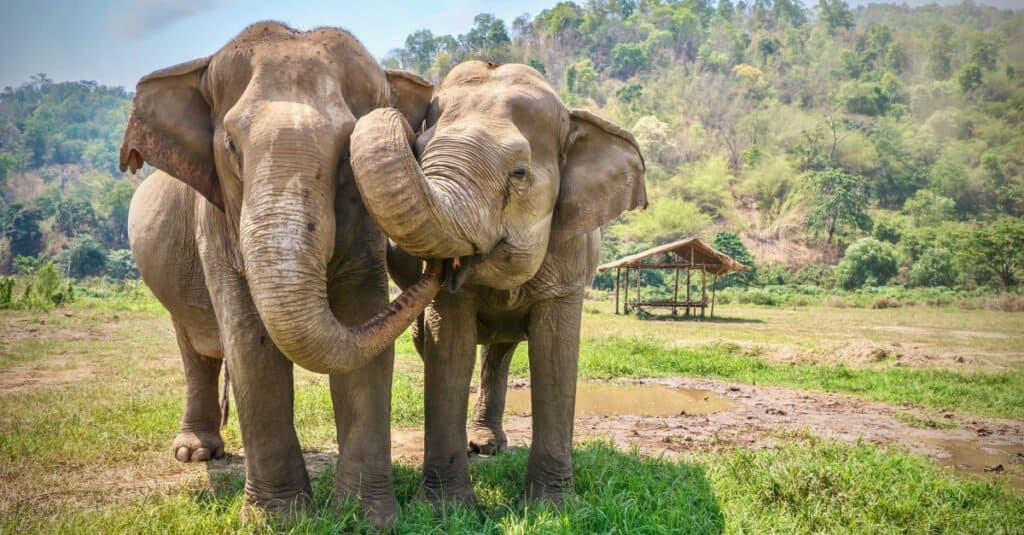
Asian elephants eating together

In Vietnam, the Asian elephant, which may weigh up to 5,500 kg, is the largest land animal. It can be found in the southern and central Vietnamese woodlands.

Several huge animal species, as well as a wide variety of plants and animals, may be found in Vietnam.

The following list includes some of the biggest animals in Vietnam:

  • Asian elephant – The Asian elephant is the largest land animal in Vietnam and can weigh up to 5,500 kg. It is found in the forests of central and southern Vietnam.
  • Saltwater crocodile – The saltwater crocodile is the largest crocodile species in the world and can weigh up to 1,000 kg. It is found in the rivers and coastal areas of southern Vietnam.
  • Gaur – The gaur, also known as the Indian bison, is the largest wild cattle species in the world and can weigh up to 1,500 kg. It is found in the forests of central and southern Vietnam.
  • Water buffalo – The water buffalo is an important domestic animal in Vietnam and can weigh up to 900 kg. It is used for farming and transportation in rural areas.

Where To Find The Top Wildlife in Vietnam
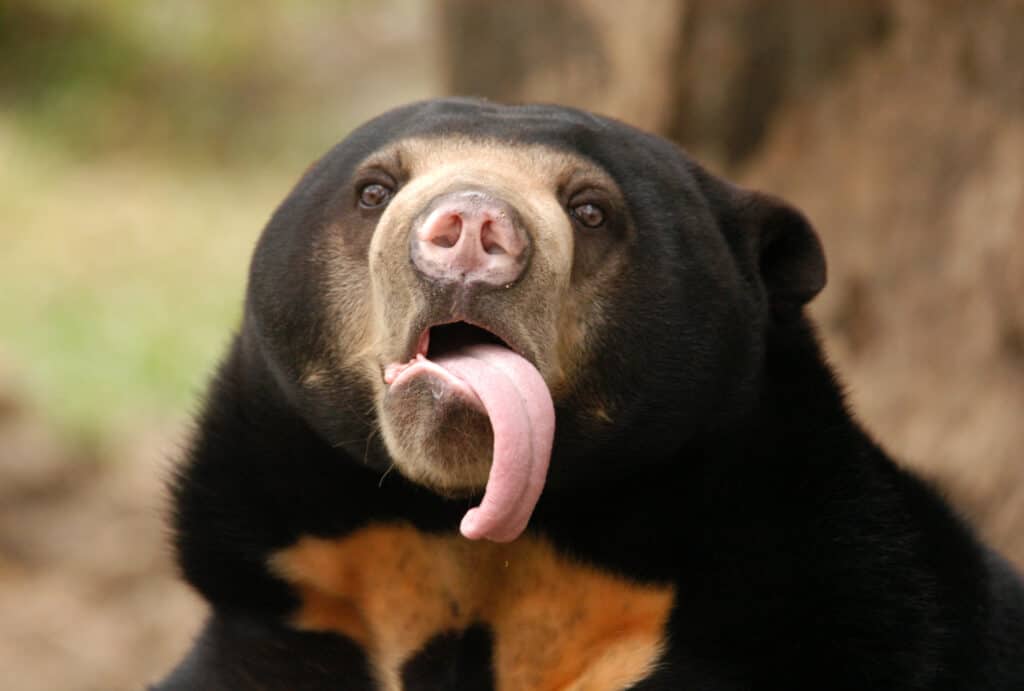
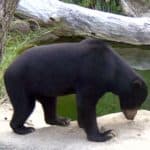
Sun bear

Sun bears are found in Vietnam.

Vietnam has a large number of colorful wildlife species. Some of the more famous native animals and where you can find them are as follows:

  • Red-Shanked Douc – these colorful monkeys live high in the Vietnam jungle canopies. You can find them primarily in central Vietnam between Pleiku and Vinh.
  • Great Hornbill – the hornbill is an easily recognizable bird with its large size, distinctive bill, and colorful plumage. You can find them flying and perching in the hilly old-growth forests of Vietnam.
  • Indian Elephant – Indian elephants are native to Vietnam, but their numbers are few. Many of them are now in reserves and sanctuaries. You can find them in Dak Lak Province.
  • Sun Bear – these small bears are also called honey bears because honey is mainly what they eat. They can be found throughout Vietnam, but they are shy and reclusive.
  • Vietnamese Mossy Frog – this native frog has green bumpy skin that looks like moss, which makes it hard to spot. It’s mainly found in north Vietnam.
  • Asian Water Monitor – this large lizard species can grow to two meters in length. It’s found throughout Vietnam near water sources. Its large size and powerful tail can make it dangerous if provoked.
  • Water Buffalo – the water buffalo is the national animal of Vietnam and can be seen in nearly any rural area.
  • Burmese Python – this shy, nonvenomous snake is found throughout Vietnam but primarily near water sources. They are often kept as pets.

The Most Dangerous Animals In Vietnam Today
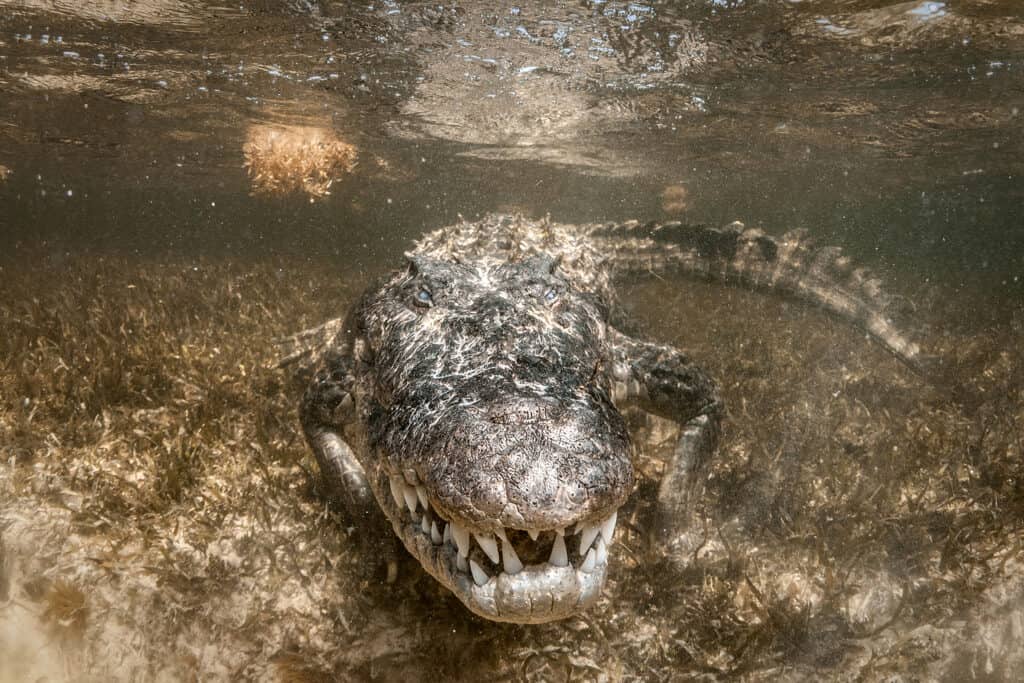
Crocodile close up underwater

Crocodiles are some of the oldest predators still roaming the earth and have been spotted in Vietnam.

The dangerous animals in Vietnam mainly come in the form of venomous snakes. There are several species of venomous snakes in Vietnam, including the king cobra, many-banded krait, white-lipped pit viper, and the Malayan pit viper.

Of these, the Malayan pit viper and the king cobra are the most aggressive and most likely to stray into human territory.

Vietnam is also home to saltwater crocodiles, which are the largest living reptiles in the world. The specimens found in Vietnam tend to be larger than average. However, the good news is that they are largely extinct in Vietnam. They mainly live in the northern wetlands near China.

Vietnam has a few dangerous insects in the Vietnamese giant centipede and the mosquito. Malaria and dengue fever rates in Vietnam tend to be quite high. The giant centipede is mainly found in jungles, but it’s fairly aggressive and contains neurotoxic venom.

Endangered Animals In Vietnam
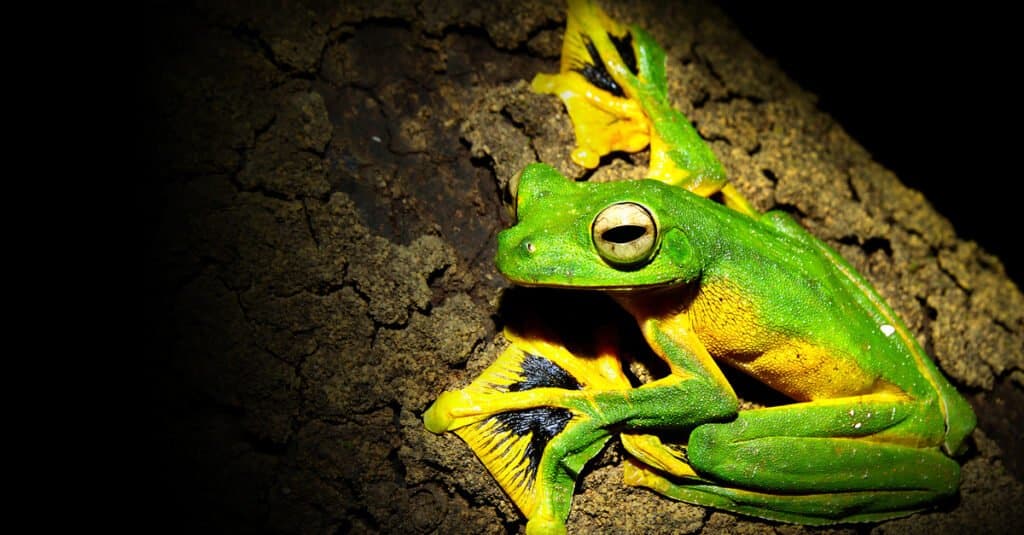
Animals that fly – flying frog

With their unique webbed feet, Wallace’s flying frogs jump between branches. They are also found in Vietnam.

There are a number of endangered animals in Vietnam, including famous species like the water buffalo. The following are some other endangered animals in Vietnam:

  • Black-crested gibbon
  • Indochinese tiger
  • Red-shanked douc
  • Siamese crocodile
  • Vietnam flying frog
  • Vietnamese gecko
  • Delacour’s langur
  • Banded eagle ray

Extinct Wildlife In Vietnam
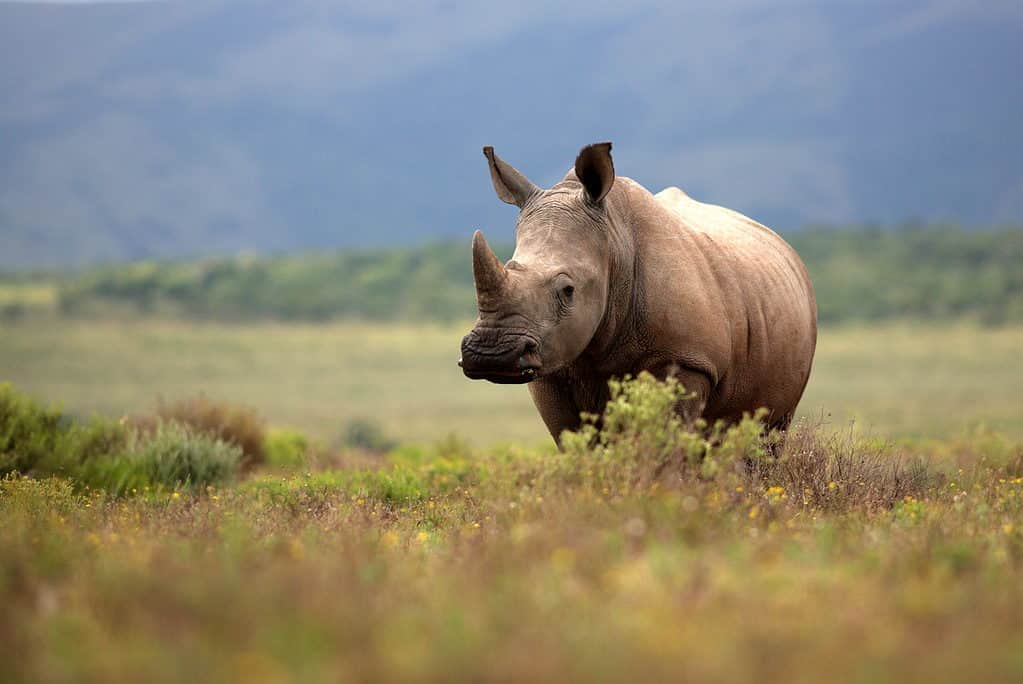
Rhino looking at camera

Rhino horns are prized items in some cultures. They are also found in Vietnam.

The Indochinese tiger may be extinct in Vietnam, but scientists aren’t 100% sure. The Javan rhinoceros and Northern Sumatran rhinoceros used to be quite prevalent in Vietnam, but are now extinct.

A number of different bird, snake, and frog species are likely extinct in Vietnam, but actual numbers are unknown.

Native Wildlife To Vietnam
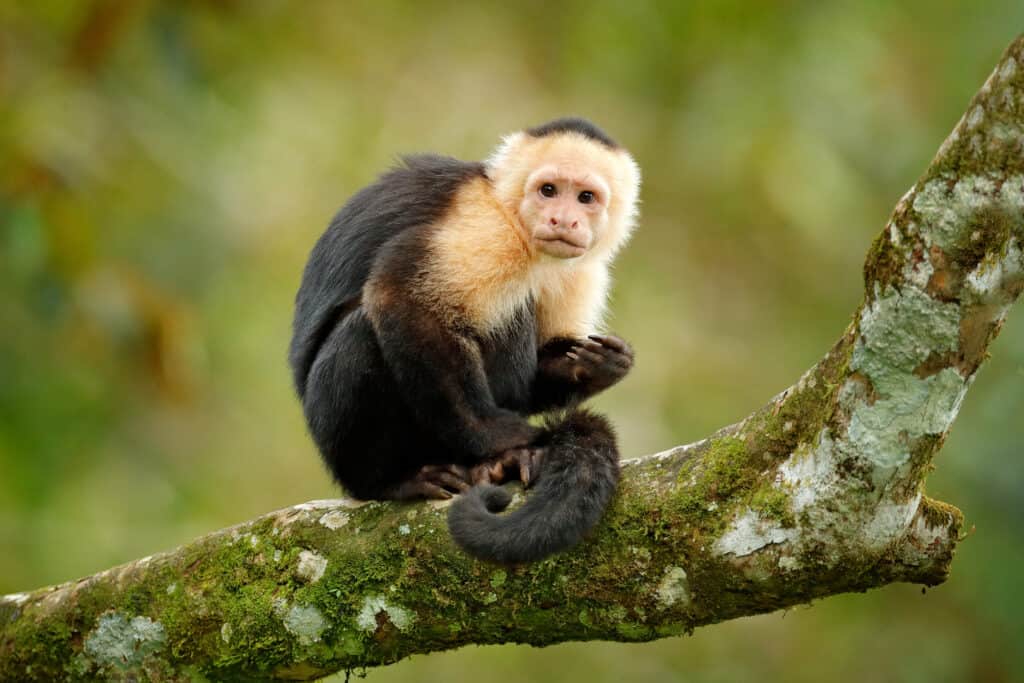
capuchin monkey

Various monkeys are native to Vietnam, including the lar gibbon and douc monkey species.

Vietnam has roughly 11,217 species of native animals in a generally hot and humid climate. Various monkeys are native to Vietnam, including the lar gibbon and douc monkey species. Vietnam is also home to a large number of reptiles, including venomous and nonvenomous snake species as well as crocodiles and monitors lizards. Vietnamese waters are home to a variety of sea life as well.

Here are a few animals that are native to Vietnam:

  • Tigers
  • Black bears
  • Asian elephants
  • Asian wild dogs
  • The Giant Munjac

The reticulated python is the largest snake in Vietnam.

Vietnam Flag
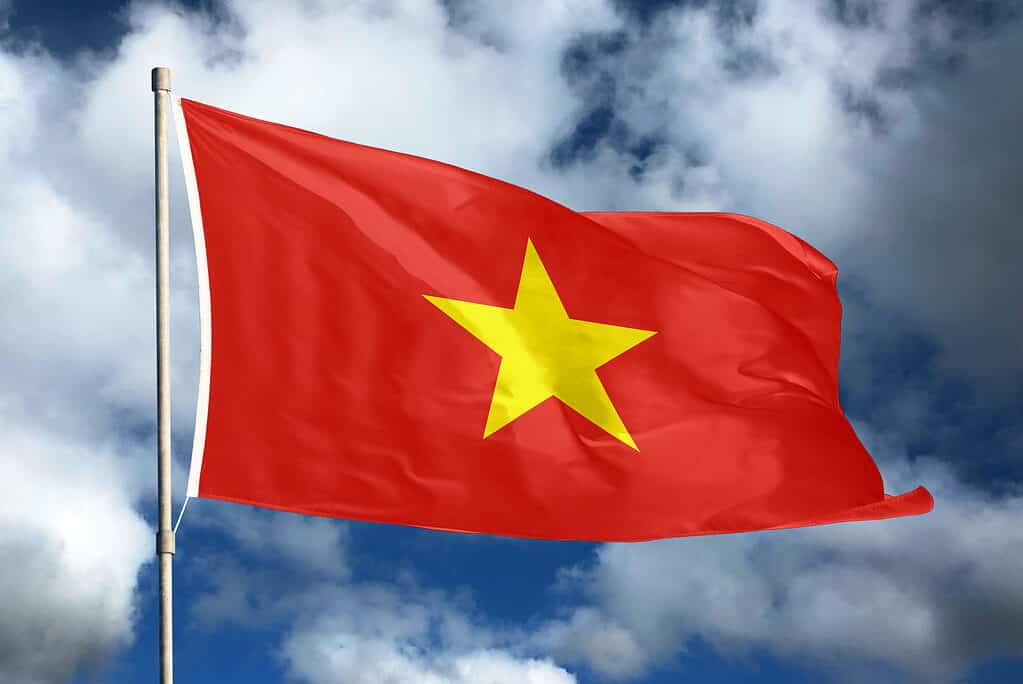
Vietnam flag

The Vietnam flag features a yellow star and red background.

The flag of Vietnam has transitioned multiple times over the years, due to changing political and religious movements. One flag contains three red stripes, representing the blood of its people throughout the country, in southern, northern, and central Vietnam. The most common flag features a large five-point yellow star with a bright red background.

The flag represents the nation’s fight against French and communist leadership dominance. Despite its stormy past, the country is still united as a nation, as symbolized by the star on its flag.

National Flower of Vietnam

Water Lily, Lotus Water Lily, Pond, Water Plant, Photography

The lotus is not only widespread across the country, but it is also an important part of Vietnam’s culture, often seen adorning buildings, in the country’s art, or on the menu of local restaurants and various tea shops.

The national flower of Vietnam is the lotus flower (Nelumbo nucifera). The lotus is not only widespread across the country, but it is also an important part of Vietnam’s culture, often seen adorning buildings, in the country’s art, or on the menu of local restaurants and various tea shops.

The lotus flower symbolizes the dignity and resiliency of the Vietnamese people, who resonate with the plant’s ability to grow out of the mud and float on top of the water with beauty and dignity.

Animals Found in Vietnam

399 species documented in our encyclopedia

Thank you for reading! Have some feedback for us?