
Quick Take
- One shark with a famously lazy reputation can outswim far scarier-looking predators.
- A shark's tail may move far faster than the shark itself, and it's a deadly weapon.
- The most infamous shark of all doesn't come close to the top of this list.
- The champion has a rival with a suspiciously familiar look, and some wild speed claims don't hold up.
There are more than 500 species of sharks in the world today and they are some of the best-known predators around. Although most sharks typically swim around at a leisurely pace, some are capable of devastating bursts of speed which they use to great effect when hunting prey. Although some sharks are naturally built for speed, there are others that are surprisingly quick despite their appearance. So just how fast can they really swim? Join us as we discover the fastest sharks on Earth.
There are more than 500 species of sharks in the world today, and they are some of the best-known predators around. Although most sharks typically swim around at a leisurely pace, some are capable of devastating bursts of speed which they use to great effect when hunting prey. Some sharks are naturally built for speed, while others are surprisingly quick despite their appearance. So just how fast can they really swim? Join us as we discover the fastest sharks on Earth.
10. Tiger Shark
The first shark on the list is the formidable tiger shark (Galeocerdo cuvier). Tiger sharks are well known as one of the most dangerous species due to a high number of unprovoked and fatal attacks on humans. They typically inhabit coastal waters in tropical and subtropical oceans around the world, which is why they often come into contact with people.
Tiger sharks are apex predators and eat virtually anything they come across. One of the reasons why they are such incredible hunters is their speed. Tiger sharks are capable of accelerating incredibly quickly and can reach up to 20mph. They use this ability to seize their prey before it can escape. Tiger sharks also have the advantage of size, as they can reach lengths of up to 18 feet.
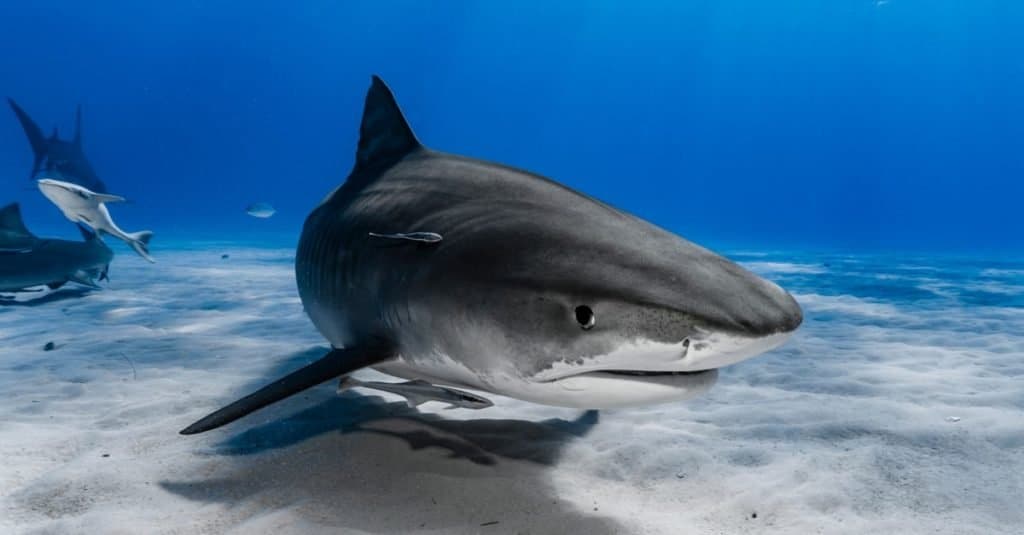
Tiger sharks are fierce predators which can reach speeds of up to 20mph.
©kaschibo/Shutterstock.com
9. Hammerhead Shark
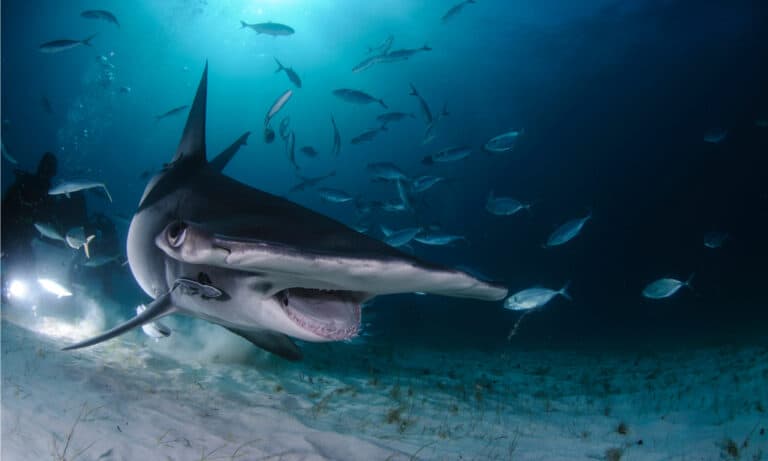
Also capable of reaching speeds of up to 20mph are hammerhead sharks. Named for their distinctive hammer-shaped head, there are 10 species of hammerhead sharks, and their size ranges between around 2.9 feet and 19.67 feet. Hammerheads live in warm water around the world along coastlines and continental shelves.
They eat a wide variety of prey including fish, crustaceans, squid, octopus, stingrays, and other sharks. They frequently swim along the ocean floor in search of food. Great hammerheads (Sphyrna mokarran) are the largest hammerhead species and often eat other sharks. Both great and scalloped hammerheads are critically endangered, mainly as a result of overfishing.
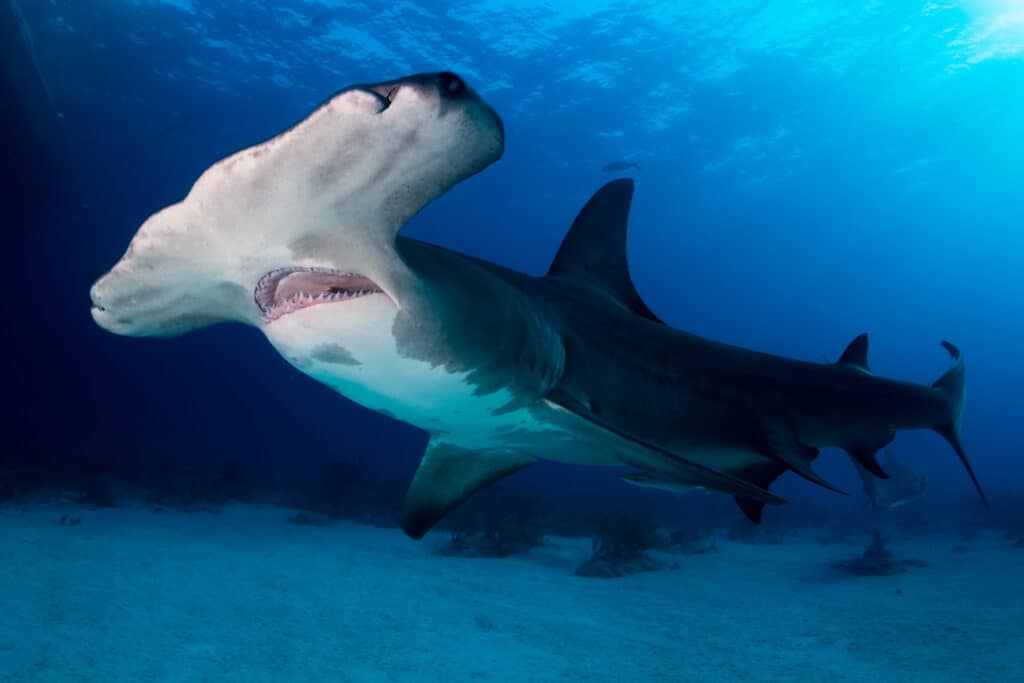
Hammerheads have a distinctive appearance and use their large heads to pin prey to the ocean floor.
©HakBak/Shutterstock.com
8. Bull Shark
A shark with a particularly notorious reputation is the bull shark (Carcharhinus leucas), which can reach speeds of up to 25 miles per hour. Bull sharks are large requiem sharks that usually reach around 11 feet long. Although they typically live in coastal regions, they are renowned for their ability to tolerate freshwater and are frequently seen hundreds of miles upriver.
Bull sharks are solitary hunters and feed on a range of prey including bony fish, stingrays, turtles, and dolphins. They are opportunistic feeders and hunt using a method known as “bump and bite.” This is when they bump something with their nose first to see what it is and then bite to see if it is edible. Bull sharks often continue to bump and bite their prey until it is too exhausted, or unable, to swim away.

Bull sharks can reach 25mph and will attack and chase their prey until they are completely defeated.
©Katja Tsvetkova/Shutterstock.com
7. Nurse Shark
Despite their appearance and reputation for being slow-moving sharks, nurse sharks (Ginglymostoma cirratum) can actually reach 25mph. Nurse sharks are a vulnerable species that inhabit tropical and subtropical waters in the Eastern Pacific and the Eastern and Western Atlantic oceans. They typically reach 10 feet long and have distinctly rounded heads with two barbels between their nostrils.
Nurse sharks are bottom-dwellers and mainly prey on small fish, stingrays, crustaceans, and mollusks. They have dense, flattened teeth rather than sharp and pointy ones so that they can crack open the shells of their prey easily. Incredibly, they use suction to pull their prey into their mouths.

Despite their reputation for being lethargic, nurse sharks can move fast when they want to.
6. Thresher Shark
Some of the most fascinating and unique sharks are thresher sharks, of which there are three existing species. Thresher sharks live in all tropical and temperate oceans. They are large sharks that can reach lengths of up to 20 feet. They are incredibly distinctive as they have extremely long tails, which can be almost as long as their bodies.
Common thresher sharks (Alopias vulpinus) often whip their tails violently, frequently slashing or stunning their prey with them. They mainly feed on tuna and mackerel, but also sometimes prey on seabirds. Thresher sharks can swim at 30mph, but can whip their tail at up to 80mph. Their unique appearance, combined with the speeds that they can reach and their ability to jump out of the water, makes them a popular choice as a game fish.
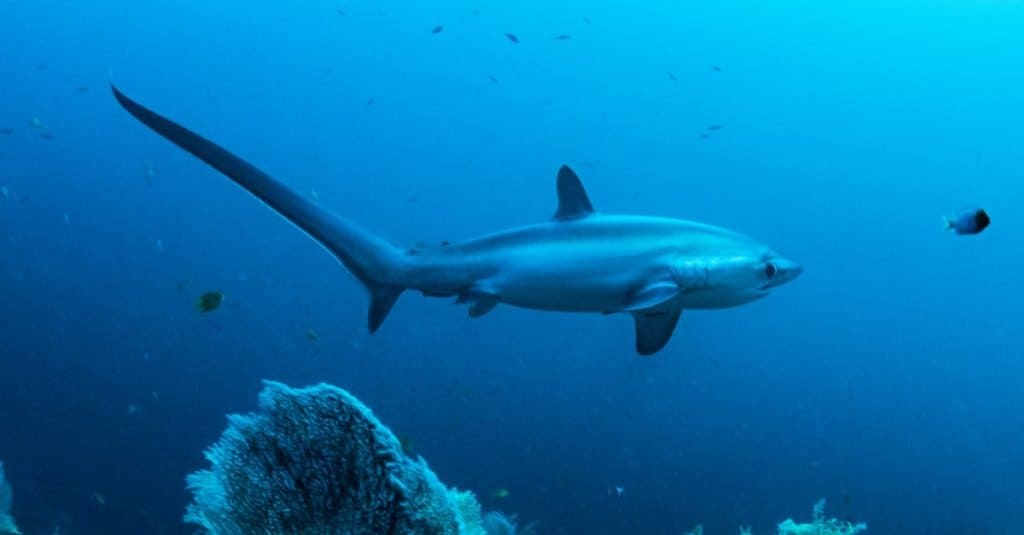
Thresher sharks have an unusually long tails which they use to whip their prey with.
©Shane Gross/Shutterstock.com
5. Grey Reef Shark
One of the most agile and aggressive predators is the grey reef shark (Carcharhinus amblyrhynchos) which can reach speeds of up to 31mph in short bursts. Grey reef sharks are an endangered species of requiem shark. They are native to the Indian and Pacific oceans where they typically live at depths of less than 200 feet. They frequently live around coral reefs, hence their name. These sharks are among the fastest swimmers within their habitat.
Grey reef sharks have streamlined bodies with blunt snouts and are no bigger than 8.5 feet long. They feed mainly on bony fish, squid, octopus, crabs, and lobsters. Grey reef sharks are particularly well known for their “threat displays,” which involve adopting a hunched posture and swimming in an exaggerated side-to-side motion.

Grey reef sharks are some of the fastest swimmers to inhabit coral reefs, being capable of up to 31mph.
©William Eburn / Creative Commons – Original
4. Great White Shark
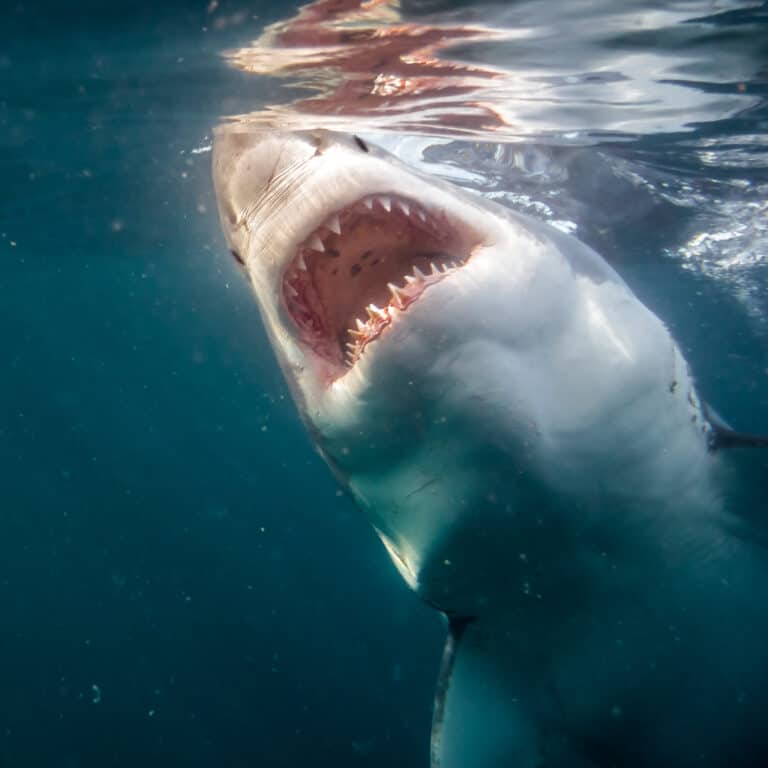
Easily the best-known shark on the list and the one with the most notorious reputation is the great white (Carcharodon carcharias). Great white sharks are considered to be the most dangerous of all sharks, given their unpredictable nature and their relatively high number of attacks on humans. So, knowing that they can achieve speeds of up to 34mph probably isn’t much comfort.
Great whites are large mackerel sharks that can reach 20 feet in length and weigh up to 5,000 pounds. They inhabit virtually all oceans with water between 54° and 75°F. Great whites are apex predators and have an estimated bite force of 4,000psi. They eat a wide range of prey, including seals, fish, dolphins, porpoises, whales, turtles, and birds.

The great white shark is responsible for the largest number of unprovoked shark attacks on humans.
©Ramon Carretero/Shutterstock.com
3. Blue Shark
Also known as the wolves of the sea, blue sharks (Prionace glauca) can reach an impressive speed of 43mph. Although they generally appear to be fairly slow and lethargic, blue sharks attack their prey from below using a sudden burst of speed. Their main prey is squid, although they also eat fish, sea birds, and smaller sharks. Blue sharks can reach 12 feet long and have a long and slender build.
These sharks inhabit deep temperate and tropical waters up to around 1,150 feet. Blue sharks are viviparous and give birth to up to 135 live young per litter. Blue sharks are typically preyed on by killer whales, great white sharks, and tiger sharks.
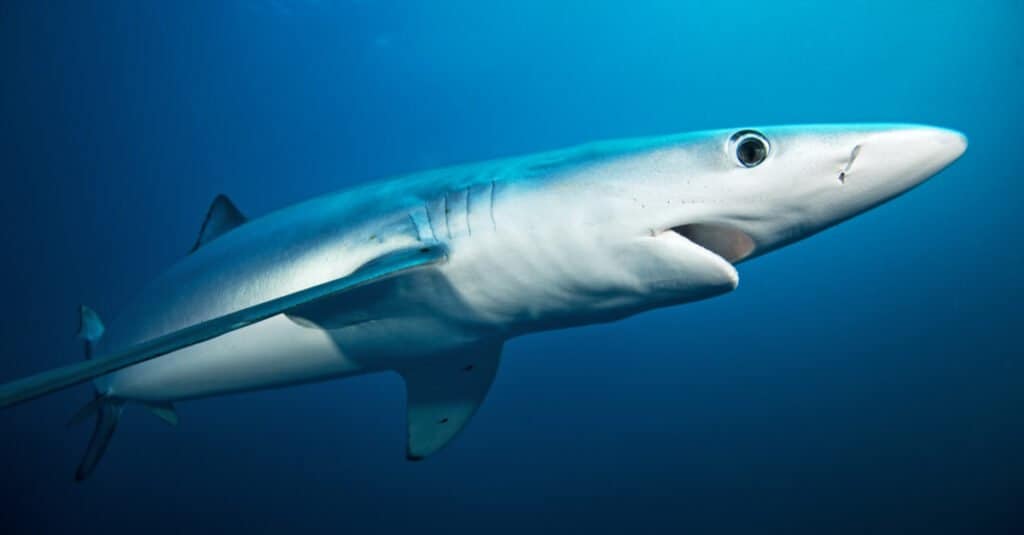
With their long and slender bodies, blue sharks are built for speed.
©Martin Prochazkacz/Shutterstock.com
2. Salmon Shark
Coming in at a close second is the salmon shark (Lamna ditropis) which can reach speeds of up to 45mph. Although there have been reports of them attaining much higher speeds, these are widely disregarded as being inaccurate. Salmon sharks are generally around 10 feet long and are grey to black on their upper bodies and white below, often giving them the appearance of a great white.
These sharks are native to the North Pacific Ocean, where they are an apex predator. As their name suggests, salmon sharks regularly prey on salmon, although they also eat squid, herring, and sablefish. They may migrate alone or in groups of 30 to 40 individuals, following schools of Pacific salmon

Closely resembling the great white, salmon sharks are fierce predators.
©Warren Metcalf/Shutterstock.com
1. Shortfin Mako Shark
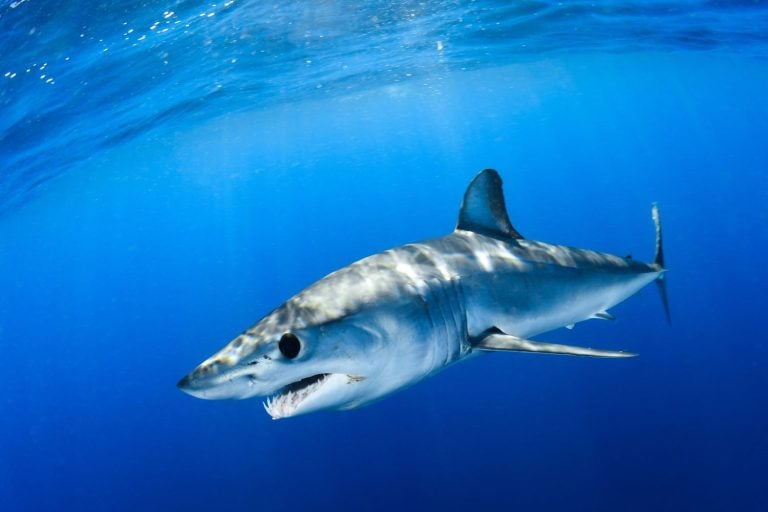
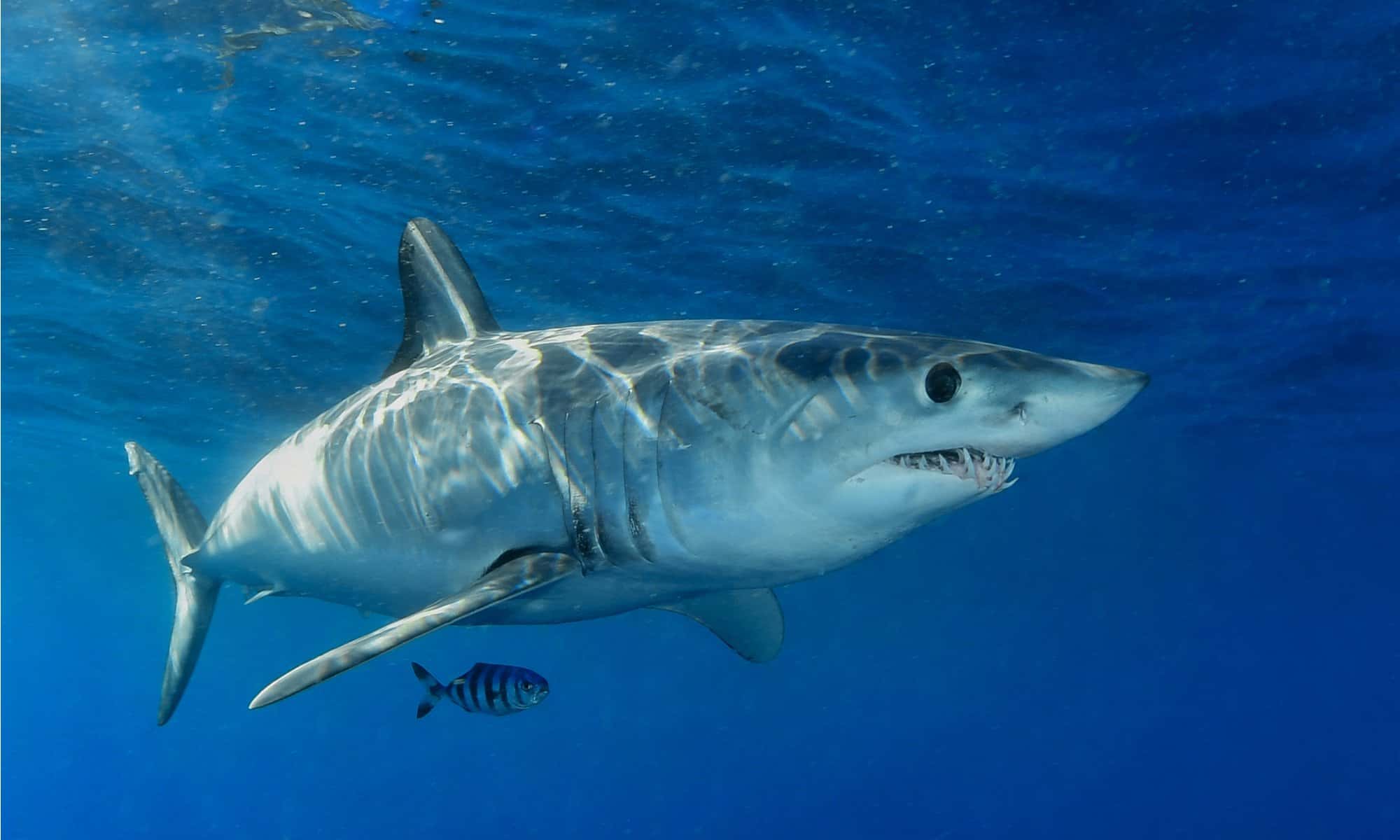
The fastest shark in the world is the shortfin mako shark (Isurus oxyrinchus). Shortfin mako sharks have a cruising speed of 31mph but can attain 46mph in short bursts. Shortfin mako sharks reach approximately 13 feet long and are blue on their dorsal side and white on their underside. They live in temperate and tropical oceans around the world and are an endangered species.
Shortfin mako sharks eat a wide range of prey, including mackerel, tuna, porpoises, turtles, and other sharks. They use their speed to lunge upwards in the water towards their prey before their prey even notices them, biting their flanks and fins.

Shortfin makos are fast, aggressive predators with a high cruising speed and an incredible top speed.
©wildestanimal/Shutterstock.com