
Quick Take
- Two common brown snakes in Georgia are so often mistaken for venomous cottonmouths that many are wrongly killed. Here is how to tell them apart. Northern water snake vs. cottonmouth →
- One venomous snake on this list has a surprising trick that allows it to mimic a rattlesnake without actually being one. See the rattlesnake mimic →
- The world's largest rattlesnake species calls Georgia home, and its hunting range goes far beyond what most people would expect. World's largest rattlesnake →
- Not all venomous snakes in Georgia are equally dangerous. One pit viper's bite is far less threatening than its reputation suggests. Weakest pit viper venom →
With miles of coastline, stunning mountains, and acres of farmland, there are many rich and diverse ecosystems within Georgia. Some of the most abundant animals to call Georgia home are snakes. There are 47 species of snake in the state, including six that are venomous. Although many snakes are brightly colored and have many stunning patterns, some use their color to help them to blend in with their surroundings. In fact, some of the best-camouflaged snakes are brown snakes, as they are difficult to spot among logs and leaf litter. Continue reading to discover 10 brown snakes found in Georgia.
Eastern Worm Snake
One of the smaller brown snakes in Georgia is the Eastern worm snake (Carphophis amoenus amoenus), which is brown on the dorsal side and either pink or orange on the underside. Eastern worm snakes are typically 7 to 11 inches long, with maximum lengths approaching 14.5 inches, and have narrow heads with small eyes.
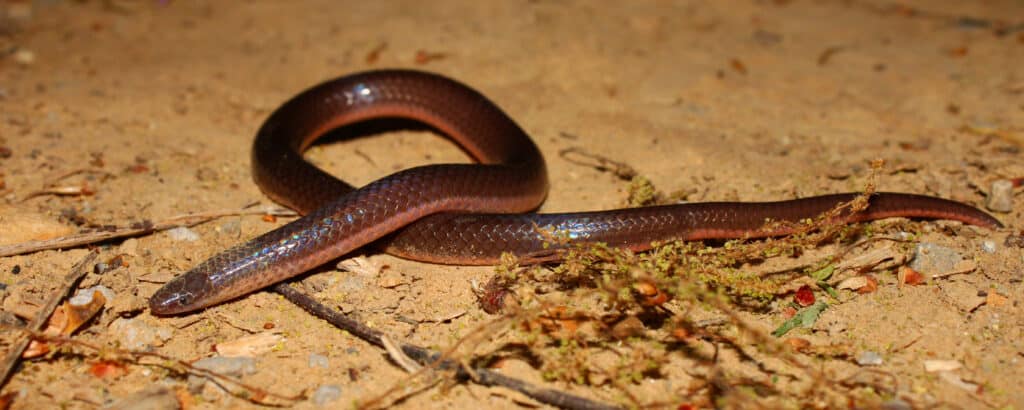
Worm snakes typically have dark tops and lighter-colored undersides.
©Jason Patrick Ross/Shutterstock.com
They are particularly shy and secretive, which makes them difficult to spot; they spend much of their time hiding in leaf litter or buried in loose soil. Eastern worm snakes are not venomous, and they eat earthworms and soft-bodied insects and larvae.
Queen Snake
A small semi-aquatic snake, the queen snake (Regina septemvittata) typically ranges from 15 to 24 inches in length, though individuals can reach up to 36.3 inches. Queen snakes are dark brown to gray, with yellowish bellies and faint yellowish stripes running down their bodies, giving them a similar appearance to garter snakes.
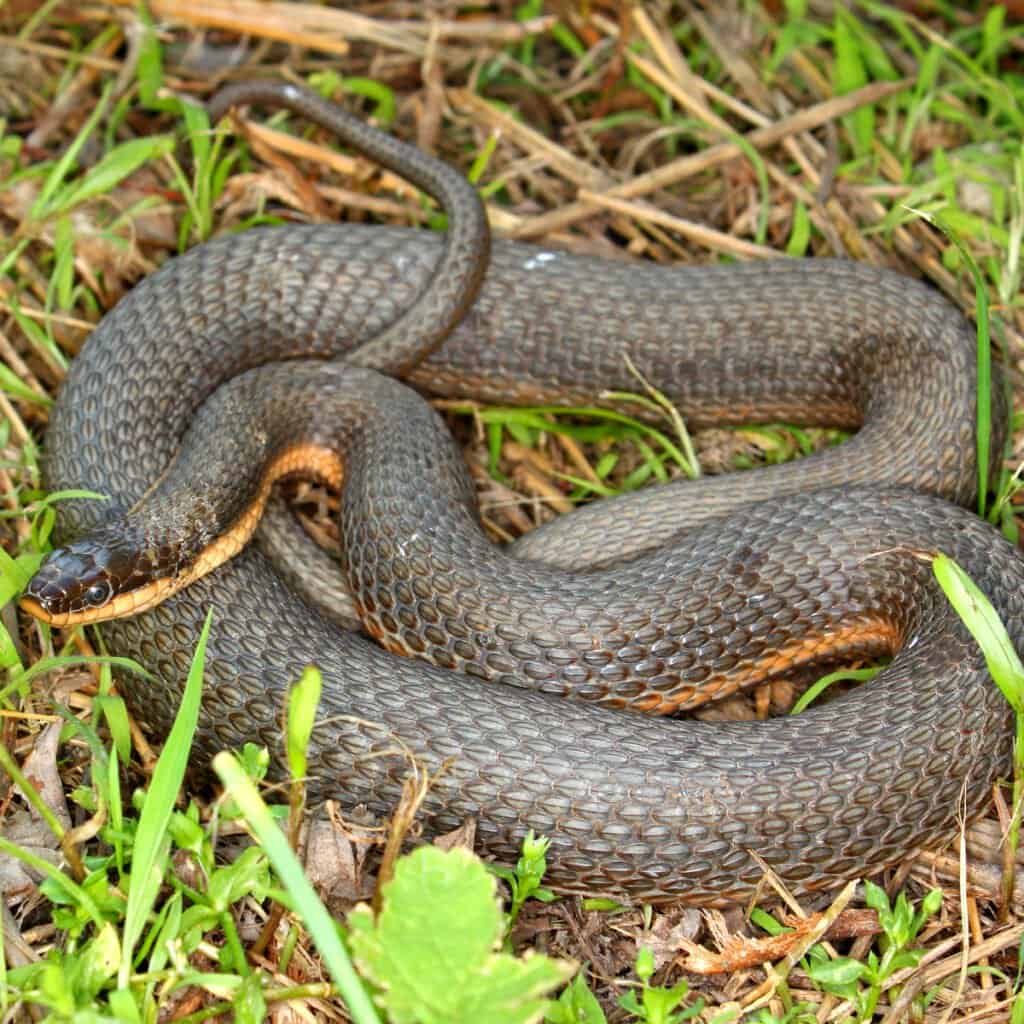
The queen snake is a non-aggressive, non-venomous snake found in North America.
©Jason Patrick Ross/Shutterstock.com
These snakes have narrow heads with thick scales on both the top and the underside of their chins — a unique adaptation that provides protection when they chase their prey underneath rocks. Their habitat is always in and around rocky-bottomed streams.
Queen snakes prey almost exclusively on freshwater crayfish, which they detect using their keen senses, including chemosensory detection.
Smooth Earth Snake
Small, non-venomous snakes, smooth earth snakes (Virginia valeriae) have an average length of 7 to 10 inches. They are almost entirely brown but have small black rings around their eyes and may have small dark spots on their backs. They also have pointed snouts and white on the underside of their head.
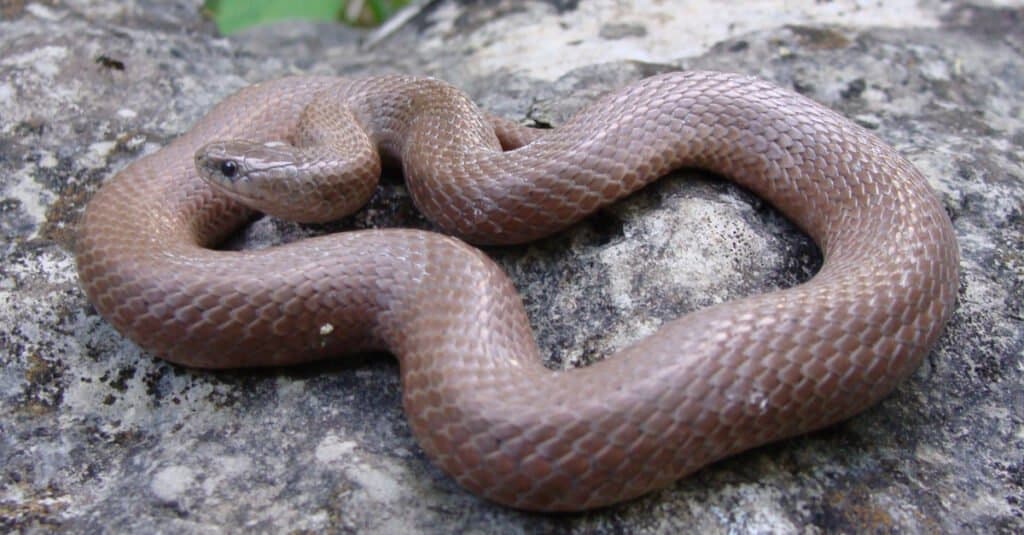
Smooth earth snakes are small brown snakes that like to hide away in leaf litter.
©Matt Jeppson/Shutterstock.com
Smooth earth snakes are typically found in forest habitats where they can hide away underneath rocks, logs, and leaf litter. Females usually give birth in late summer to anywhere from 2 to 9 tiny juveniles, which are between 3 and 4 inches long. Smooth earth snakes mainly eat earthworms, slugs, and snails.
Mole Kingsnake
The mole kingsnake (Lampropeltis rhombomaculata) is a nonvenomous snake that is between 30 and 40 inches long. Mole kingsnakes are light brown-to-gray with reddish-brown or chestnut blotches down their backs. Due to their appearance, they are often mistaken for rat snakes which often look similar. Mole kingsnakes prefer to live in open grasslands close to forest edges and a permanent water source.
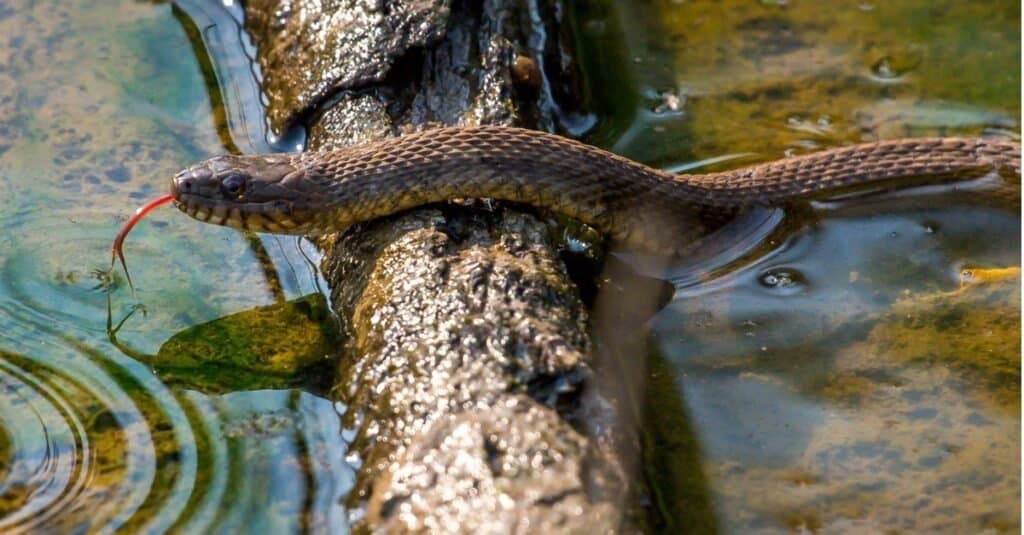
Mole kingsnakes are rarely seen in the wild since they tend to be fossorial, spending much of their time underground and out of sight.
©iStock.com/William Krumpelman
When threatened, they typically vibrate their tail in the leaf litter, which creates a warning buzzing or rattling sound, although they are not rattlesnakes. Mole kingsnakes mainly eat rodents, which means they are actually beneficial to humans, as they keep rodent populations in check.
Pine Woods Snake
The pine woods snake (Rhadinaea flavilata) is a secretive snake that inhabits pine forests and damp woodlands where it typically hides underneath leaves and rotten logs. At only 10 to 13 inches long, pine woods snakes are also among the smallest snakes in Georgia.
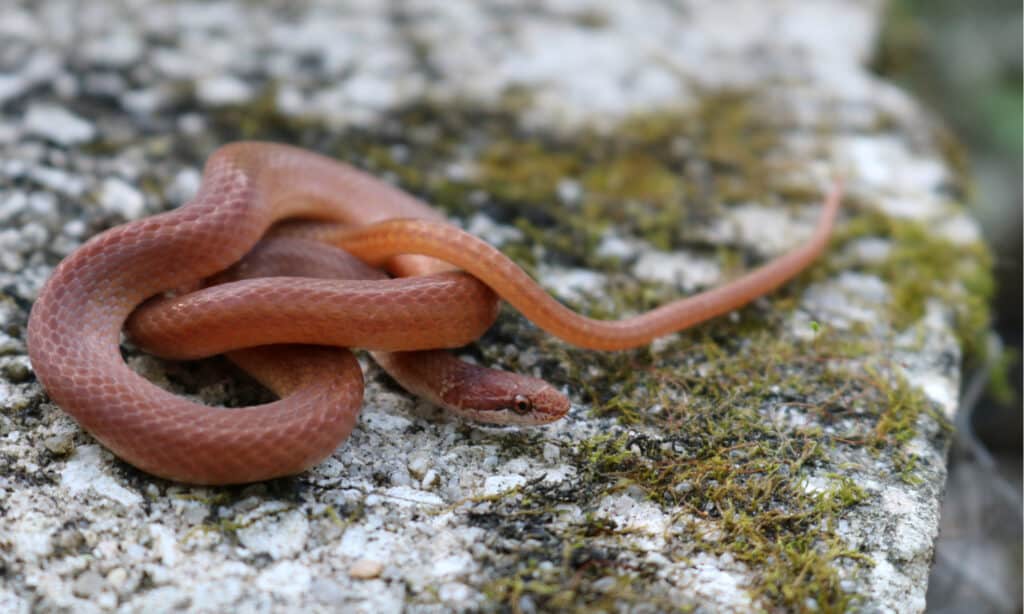
Pine woods snakes are small and secretive snakes that live in woodlands.
©Andrew Jeffries/Shutterstock.com
They are a reddish-brown to reddish-orange color, with a lighter stripe down their back. Pine woods snakes feed on frogs, lizards, and small amphibians. Pine woods snakes are rear-fanged anf mildly venomous, but they are not dangerous to humans.
Brown Water Snake
One of the most common brown snakes in Georgia is the brown water snake (Nerodia taxispilota), which lives in rivers and streams throughout the Southeastern United States.
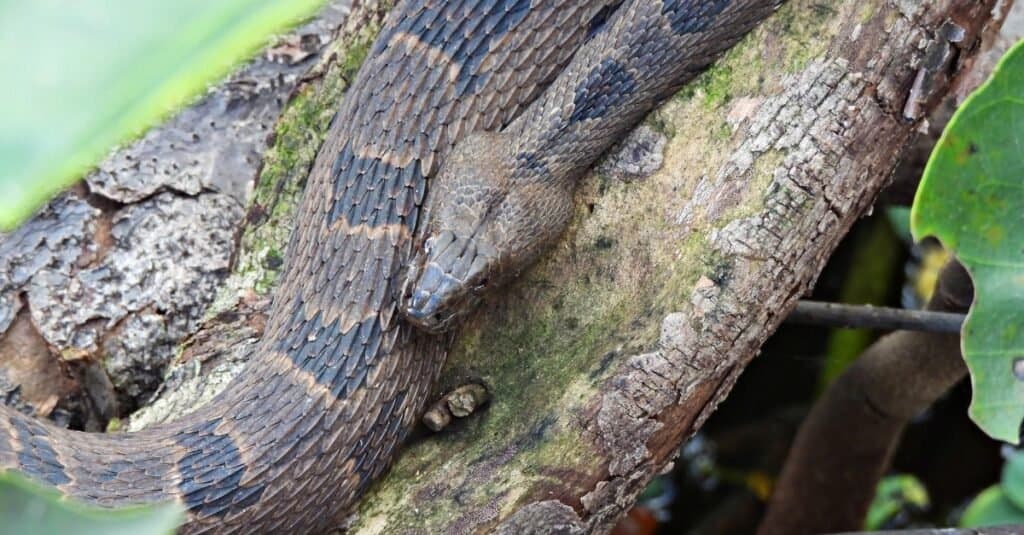
Brown water snakes are large brown snakes that have Y-shaped markings down their backs.
©iStock.com/passion4nature
Brown water snakes are typically 30 to 55 inches long, although longer specimens are not uncommon. Given their appearance and habitat, they are often mistaken for venomous cottonmouths.
However, despite having large bodies, brown water snakes have a neck that is significantly narrower than their head, which is usually their most distinguishing feature. These snakes feed almost exclusively on small catfish, particularly as adults. Although they are not venomous, brown water snakes can be aggressive when threatened, and bites can be painful.
Northern Water Snake
Also known as common water snakes, Northern water snakes (Nerodia sipedon) are widespread and completely harmless. They are large snakes that can reach almost 4.5 feet long, with females being larger than males. These snakes are brown or brownish-black with dark crossbands and blotches. Their appearance, like that of the brown water snake, often leads to them being mistaken for venomous cottonmouths, and as a result, many are wrongly killed.
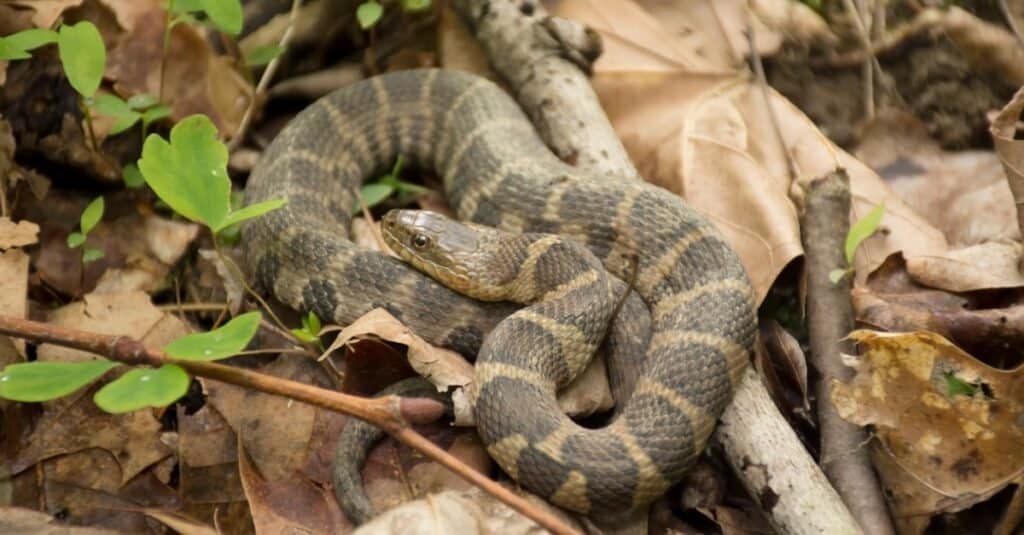
The Northern water snake has a flat head that is as wide as its neck.
©iStock.com/IcemanJ
Northern water snakes live near permanent water sources, such as rivers, streams, ponds, and swamps.
They spend much of their day basking on rocks and logs but flee into the water at the first sign of danger. Northern water snakes hunt near the water’s edge and in the shallows, preying on fish, frogs, salamanders, lizards, birds, and other small mammals.
Eastern Copperhead
The venomous Eastern copperhead (Agkistrodon contortrix) is between 20 and 37 inches long. Copperheads have heavy, taupe bodies covered with tan or brown crossband markings. They are found in deciduous forests and mixed woodlands, often near swamps.
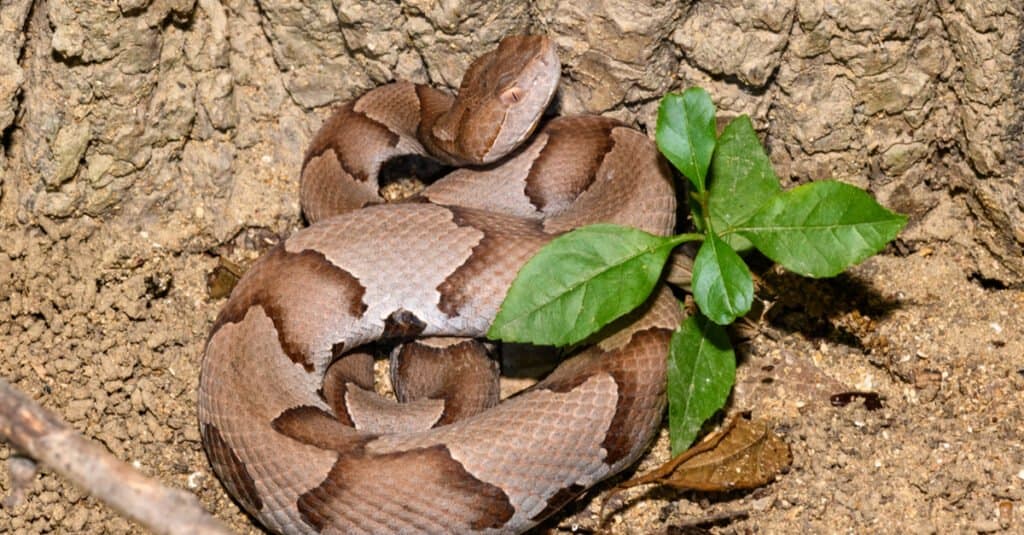
Eastern copperheads are venomous snakes that have large brown blotches over a pinkish-tan base color.
©Jeff W. Jarrett/Shutterstock.com
Copperheads are nocturnal during the summer months and diurnal during the spring and fall. Although copperheads in colder areas typically brumate (hibernate) in communal dens or crevices with other snakes, including rat snakes and timber rattlesnakes, those in warmer climates, like that in Georgia, tend to overwinter alone. Eastern copperheads have a mixed diet of invertebrates, lizards, rodents, birds, and other snakes.
Although they are venomous, studies have found that their venom is the weakest of all the pit vipers. Also, Eastern copperheads tend to give a warning bite first, which injects little to no venom.
Timber Rattlesnake
Another venomous brown snake in Georgia is the timber rattlesnake (Crotalus horridus), which is widely distributed throughout Eastern North America. Timber rattlesnakes are between 36 and 60 inches long and have thick, heavy bodies that are brown with black or brown crossband markings. They live in a variety of habitats but typically prefer deciduous forests.
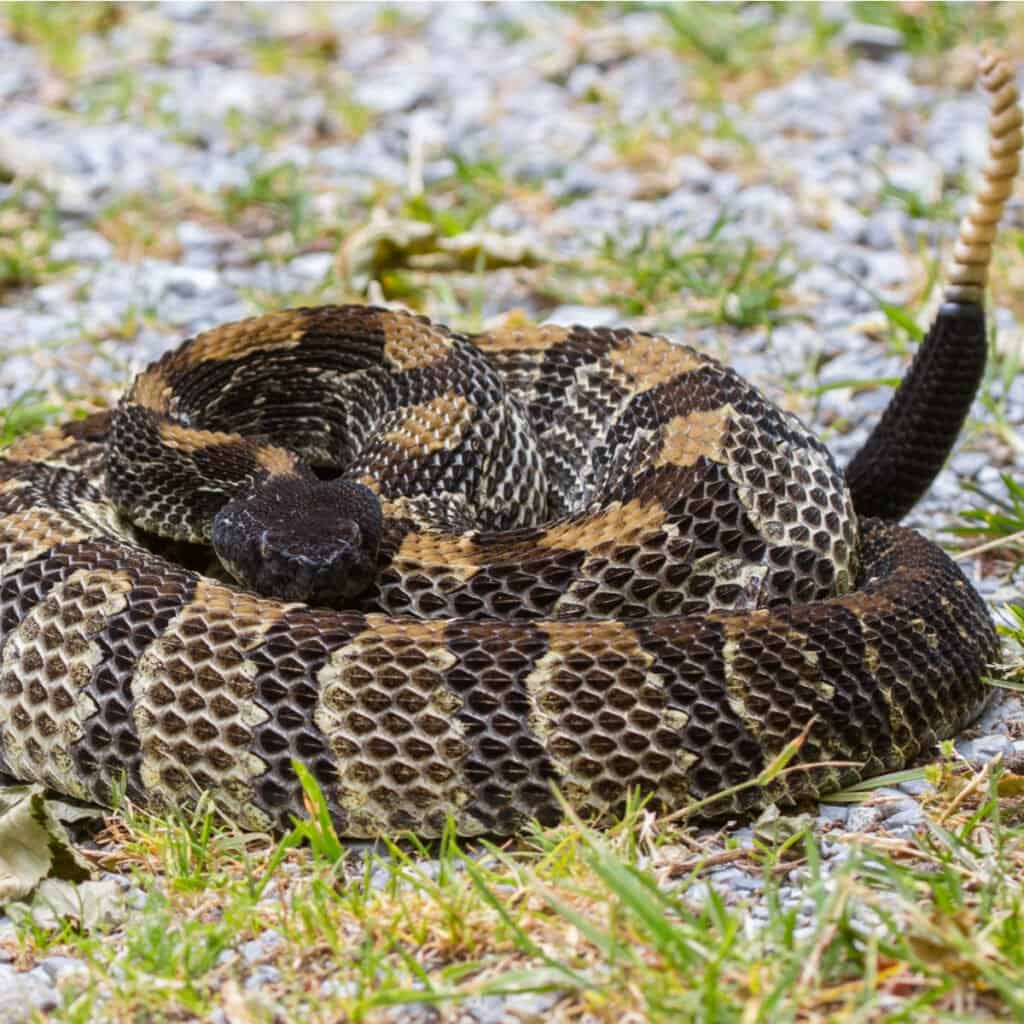
Timber rattlesnakes are brown with darker crossband markings providing excellent camouflage in forests.
©Frode Jacobsen/Shutterstock.com
Timber rattlesnakes feed on birds, rodents, frogs, and other snakes (particularly garter snakes). Although they are not aggressive and tend to flee in the presence of a threat, timber rattlesnakes are highly venomous. A timber rattlesnake bite requires immediate medical attention, including antivenom.
Eastern Diamondback Rattlesnake
The largest species of rattlesnake in the world, the Eastern diamondback rattlesnake (Crotalus adamanteus), is typically between 3 and 6 feet long.
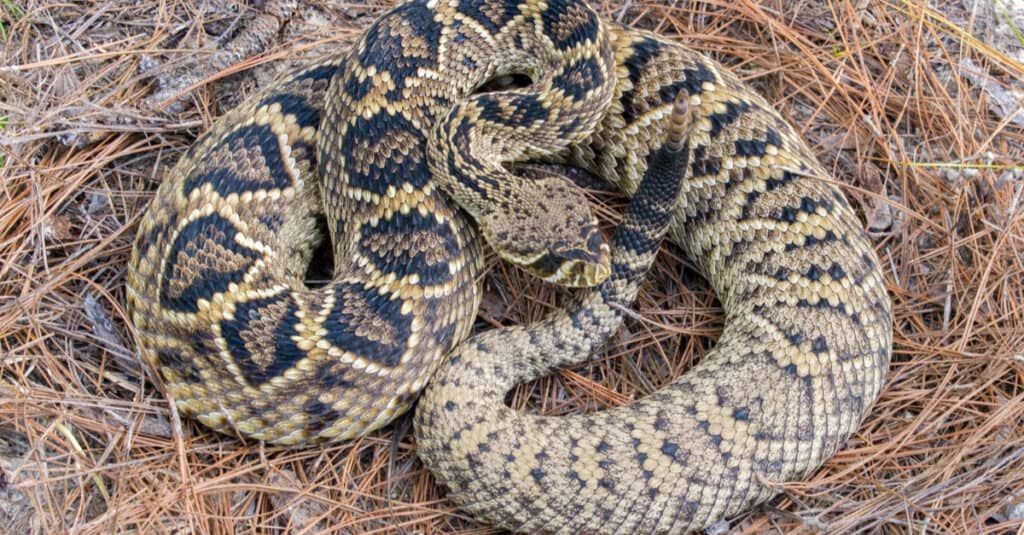
Eastern diamondback rattlesnakes have a pattern that often fades towards their tail.
©Chase D'animulls/Shutterstock.com
These snakes have heavy, brownish bodies that are overlaid with stunning diamond markings that have dark brown centers and cream borders. They live in pine forests, sandhills, cypress swamps, and salt marshes.
Eastern diamondback rattlesnakes are known to inhabit active or abandoned gopher tortoise burrows, occasionally sharing them with the tortoise. Eastern diamondbacks are excellent swimmers and have been spotted swimming between barrier islands miles out at sea.
They can strike from up to four feet away and prey on rabbits, rodents, and birds.