
Quick Take
- Some snakes in Arizona that look identical to deadly venomous species are actually harmless, and knowing which is which could save or cost you your life.
- One small snake Arizonans routinely try to remove from their yards is actually doing them a major favor they don't realize.
- Not all of Arizona's venomous snakes will seriously hurt you, so knowing which ones won't is just as important as knowing which ones will.
- The rattlesnake experts consider the most dangerous in the U.S. is not the one most people fear, and it lives in Arizona.
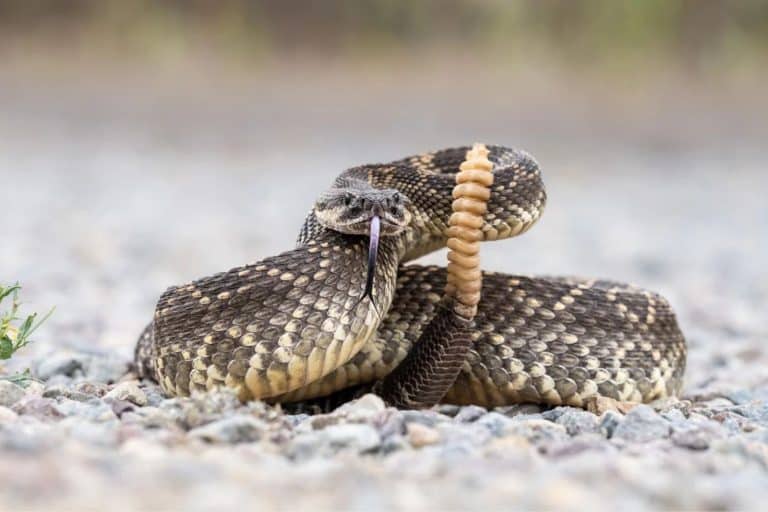
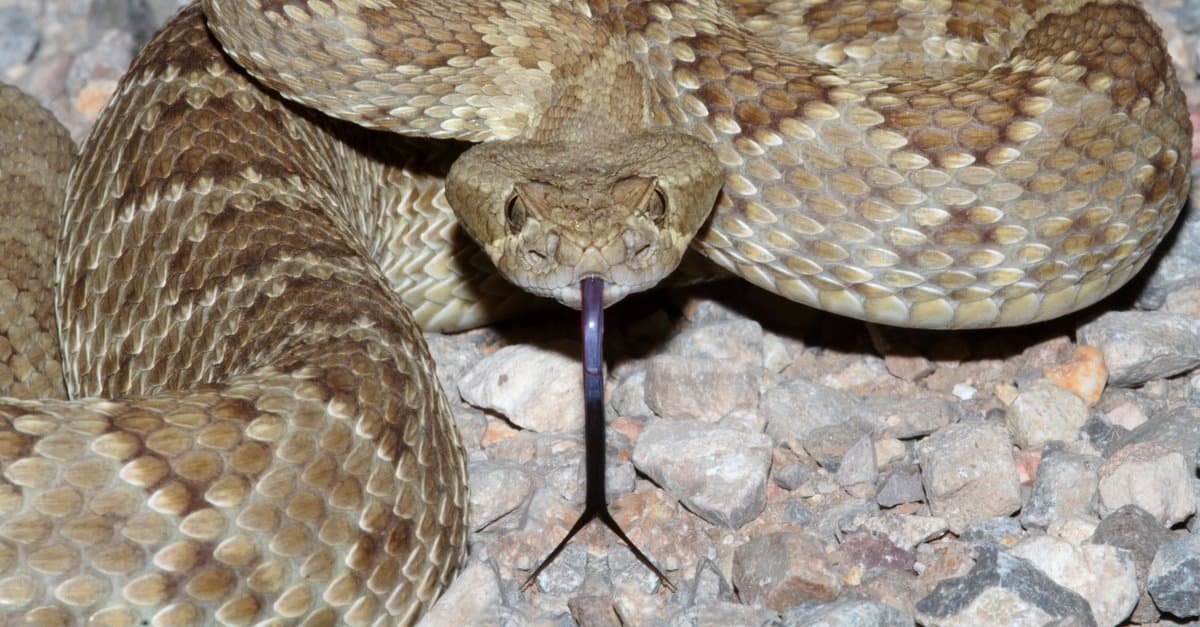
Arizona has one of the highest concentrations of venomous snake species in the United States, including a wide variety of rattlesnakes and coral snakes known for potent neurotoxic or hemotoxic venom. Balancing this hazardous population is an equally diverse array of non-venomous snakes, many of which actively help control rodent populations and some that prey on the state’s venomous species. Interestingly, several of these harmless reptiles have evolved clever survival strategies, mimicking the warning sounds, shapes, or color patterns of their dangerous neighbors to ward off potential threats. Continue reading to learn more about the snakes in Arizona.

Arizona has the most venomous snakes of any U.S. state.
©iStock.com/pmphoto
Milk Snake
Milk snakes (Lampropeltis triangulum) are frightening because they have a very similar color pattern to venomous coral snakes. There are venomous coral snakes in Arizona, so knowing the difference between a milk snake and a coral snake is important.
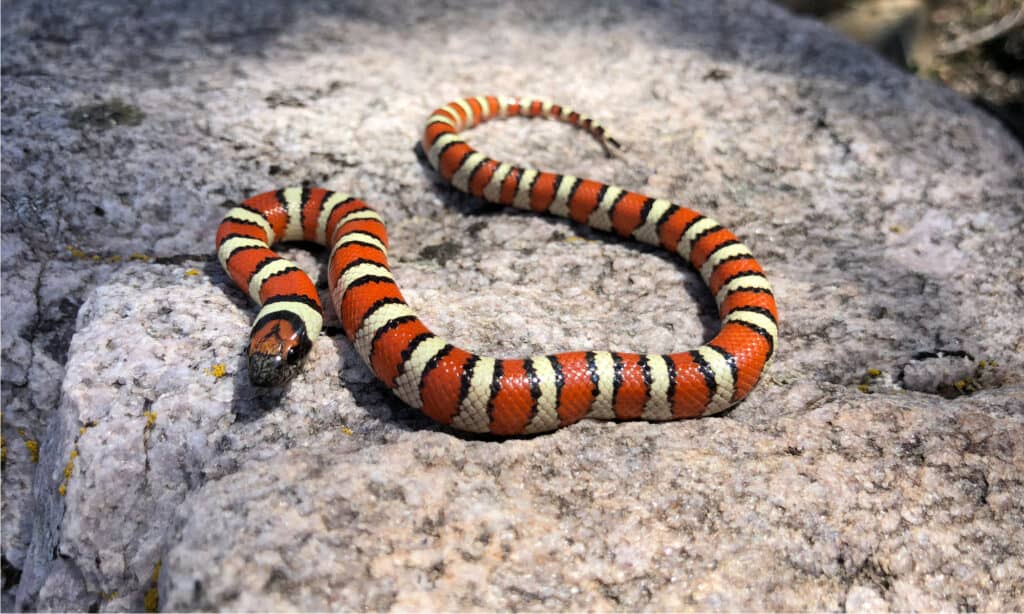
Milk snakes mimic the color of venomous snakes (such as the coral snake) but aren’t dangerous.
©Matt Jeppson/Shutterstock.com
Sometimes the order of colored bands can help you tell a milk snake from a coral snake. Milk snakes have black bands next to the red bands and yellow bands after the black bands. A coral snake will also have yellow bands next to the red bands, so the key difference is that on a coral snake the red bands touch the yellow bands directly, while on a milk snake the black bands separate them.
While this rule generally works for native species in the Southeastern United States (like Florida and Georgia), it is not accurate in other regions. Arizona coral snakes, for example, have white or cream bands rather than the bright yellow bands seen in eastern species.
Glossy Snake
Glossy snakes (Arizona elegans) resemble gopher snakes in size and color. Most individuals are under about 3.3 feet long, though some can reach over five feet, and they are found in arid desert habitats. These snakes vary in color, but most have light coloration.
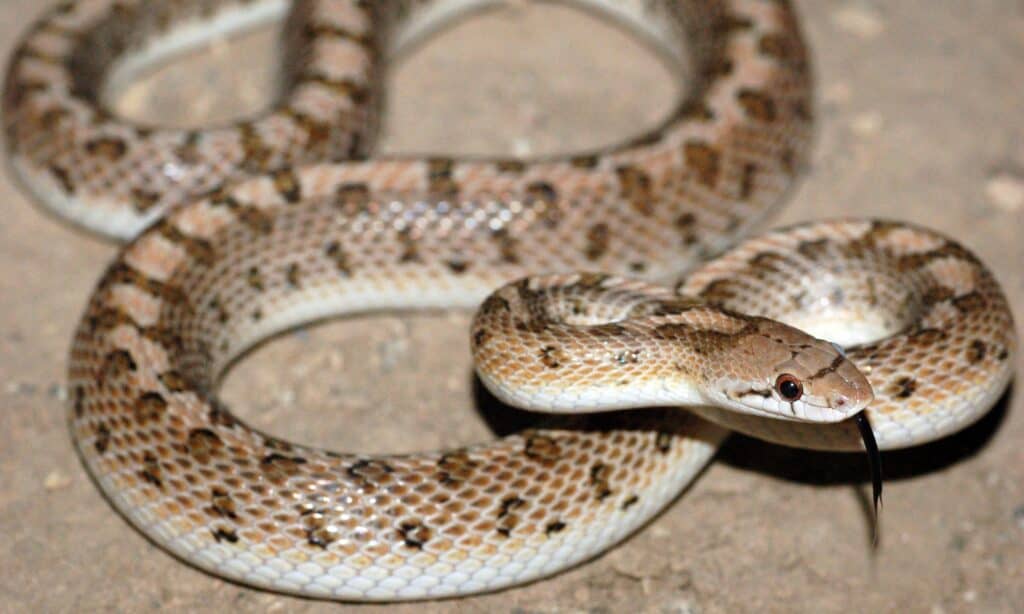
Glossy snakes can grow up to about five feed long
©Jason Mintzer/Shutterstock.com
Glossy snakes can be light gray, tan, brown, or green depending on the area. These snakes are nocturnal.
Desert Kingsnake
Desert kingsnakes (Lampropeltis splendida) may appear threatening because of their size. These snakes are approximately three to four feet long, but desert kingsnakes are docile and try to avoid humans. If you come upon a desert kingsnake, it will usually try to flee. If it does not slither away, it may play dead by flipping onto its back and lying motionless.
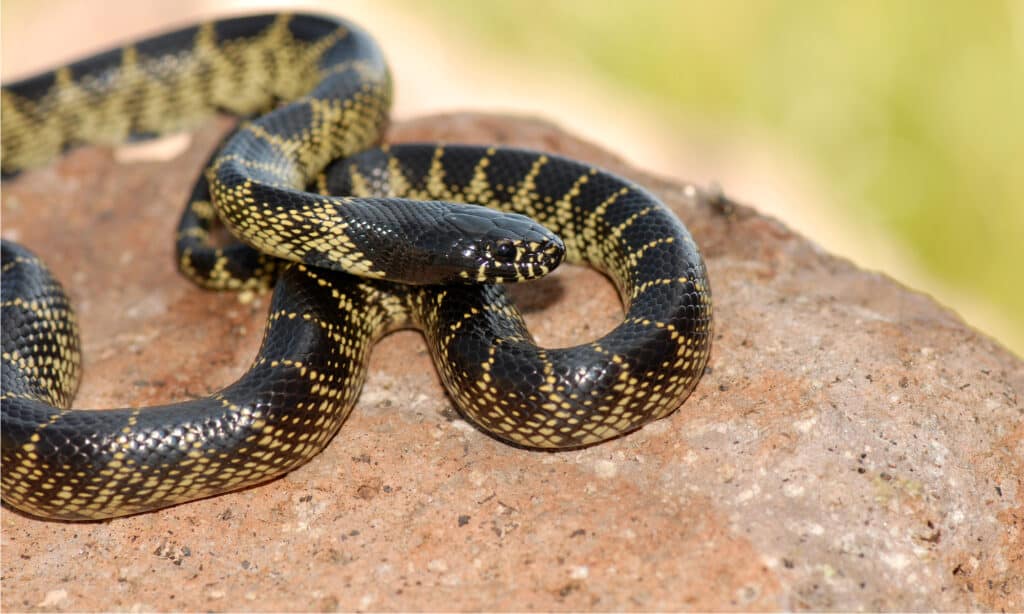
Desert kingsnakes have a black and yellow pattern.
©Rusty Dodson/Shutterstock.com
Sonoran Gopher Snake
Sonoran gopher snakes (Pituophis catenifer affinis) are typically four to six feet long, but they look bigger because they have very wide bodies. Their primary diet consists of small mammals, particularly rodents such as mice, which they kill by constriction. Gopher snakes are found throughout Arizona, from Fort Huachuca to Santa Cruz County and throughout the rest of the state. Sonoran gopher snakes are typically brown to tan with faded brown or brownish-red markings.
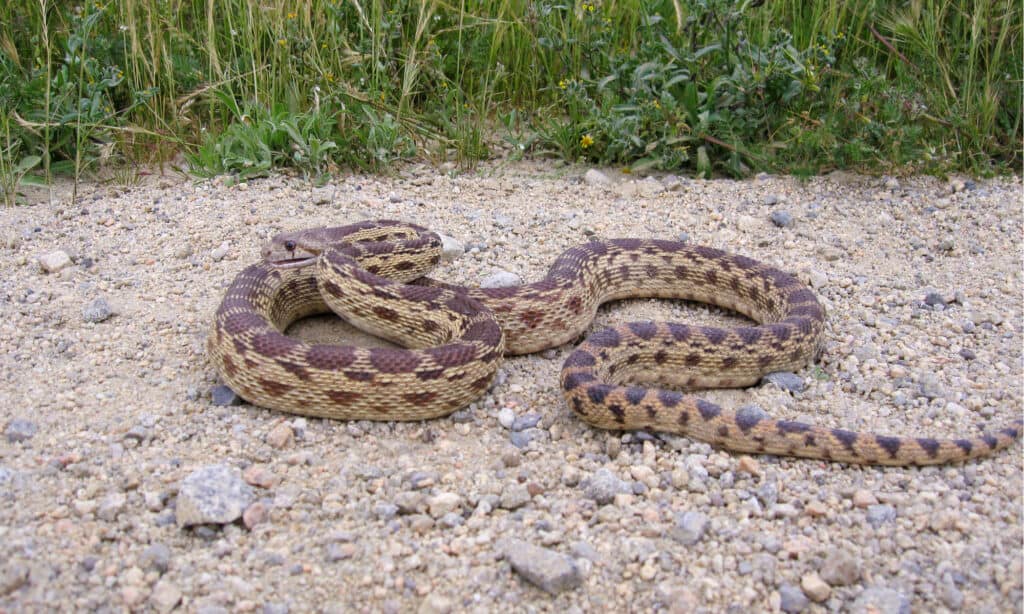
A gopher snake is coiled up and ready to strike.
©rawaccess/Shutterstock.com
Western Shovel-nosed Snake
The western shovel-nosed snake (Chionactis palarostris / Chionactis occipitalis) has a unique facial structure. The nose is flat and juts forward like a shovel, allowing the snake to essentially swim through and maneuver in sand, which is why this desert snake is so at home in Arizona.
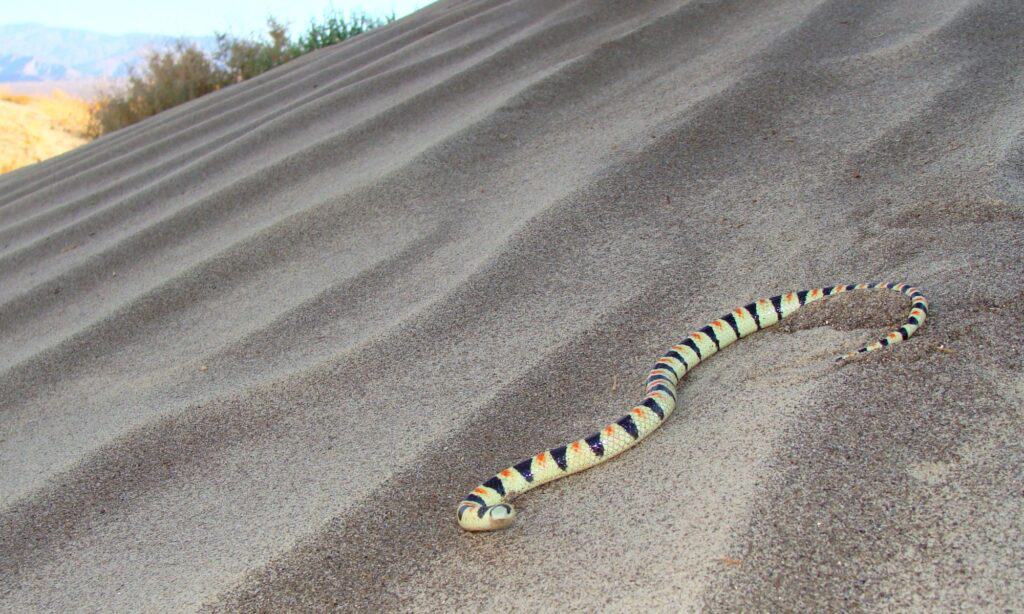
The western shovel-nosed snake has a color pattern consisting of alternating saddle-like bands of black, white, or cream, often with bright red or orange.
©Matt Jeppson/Shutterstock.com
Because the western shovel-nosed snake lives in the sand, you may never see one, even if there is one close by. Western shovel-nosed snakes typically range from 10 to 17 inches long. Their small size and ability to hide in the sand make them difficult to spot. They are no threat to humans.
Night Snake
Night snakes (Hypsiglena torquata) are small and slender, typically ranging from 12 to 26 inches in length. They are sometimes mistaken for juvenile rattlesnakes. Most of the time, these snakes are light gray or light tan with dark brown or black blotches. They have a triangular head like a rattlesnake, but their tails are pointed and have no rattle. They are most active at night, so you may see one crossing a road or trail after dark.
Although night snakes are mildly venomous, their venom is not considered dangerous to humans.
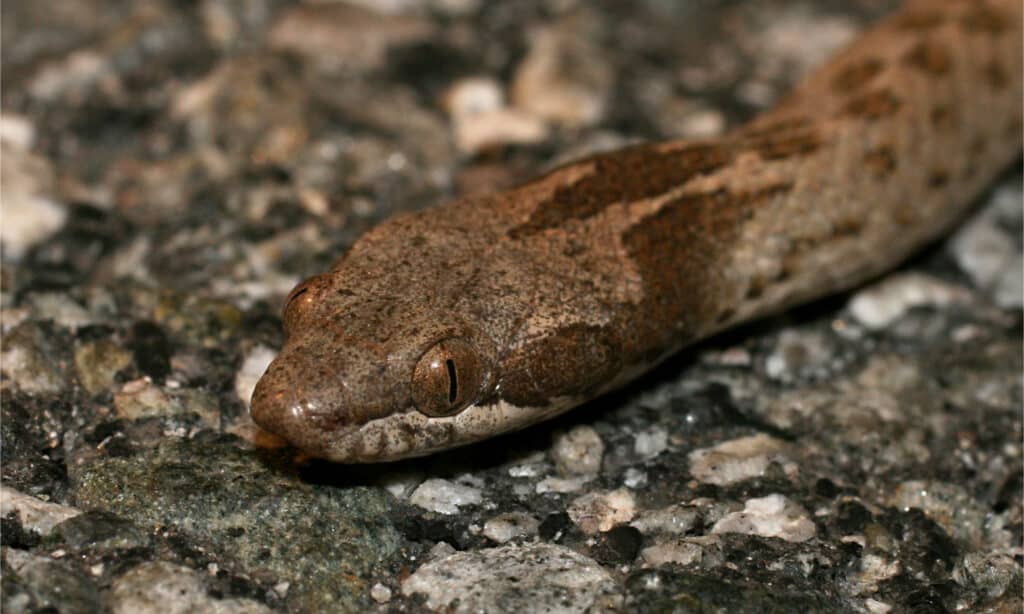
Night snakes are so named because they hunt at night.
©Casey K. Bishop/Shutterstock.com
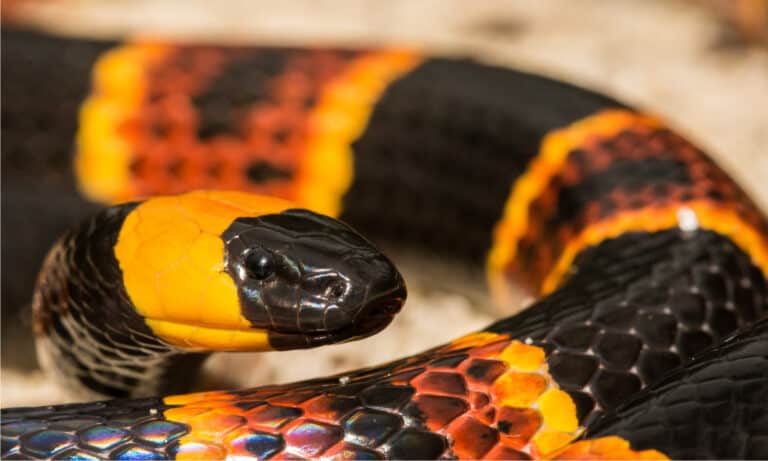
Arizona Coral Snake
The Arizona coral snake (Micruroides euryxanthus) is a small and highly venomous snake found in Central and Southern Arizona. These snakes are between one and two feet long and have a blunt, solid-black head. The Arizona coral snake is easily recognized by its striking pattern of broad, alternating red and black rings separated by narrower bands of white or pale yellow, rather than the vivid yellow bands seen in other coral snake species.
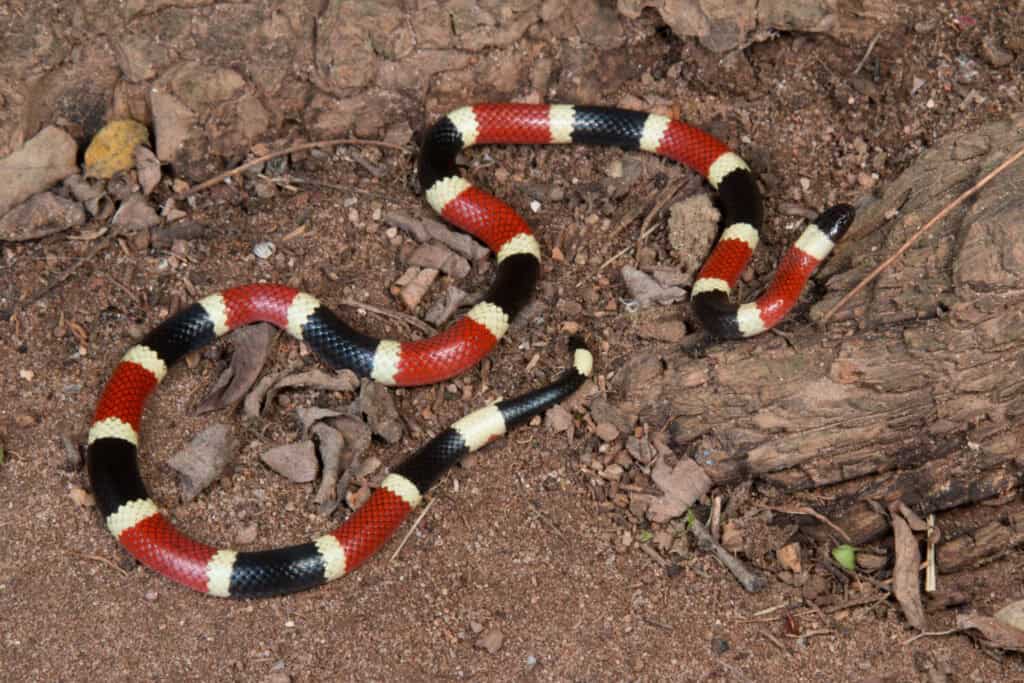
Because Arizona coral snakes tend to lack yellow bands, experts strongly emphasize that the rhyme “Red on yellow, kill a fellow; red on black, venom lack” is unreliable in Arizona.
©Nathan A Shepard/Shutterstock.com
Mexican Vine Snake
The venom of a Mexican vine snake (Oxybelis aeneus), also called the brown vine snake, won’t kill you. The toxin in the Mexican vine snake’s venom causes little pain but significant itching, which may require medical attention.
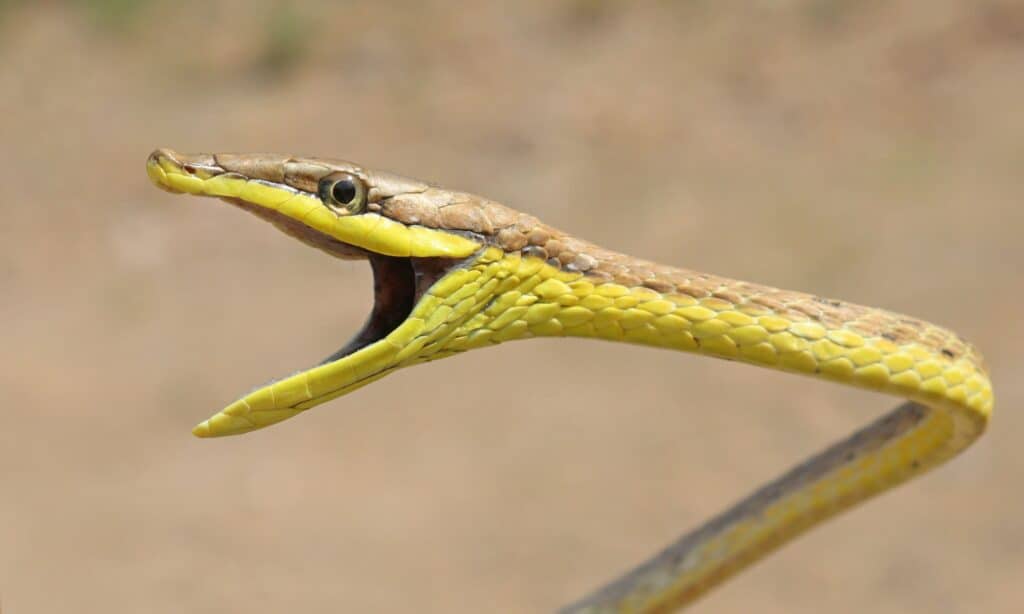
Mexican vine snakes are extremely thin and have bites that are non-fatal.
©Creeping Things/Shutterstock.com
Mexican vine snakes are very slender and usually between three and six feet long. They are masters of disguise and easily conceal themselves in foliage. Always exercise caution in Arizona when reaching into trees, leaf litter, or vines.
Sonoran Lyresnake
Sonoran lyresnakes (Trimorphodon lambda) are found in rocky areas such as canyons and mountains. These snakes are light brown or tan with dark brown blotches along the length of their body. They also have dark brown V-shaped markings on their heads. Lyresnakes are venomous, but like the vine snake, their venom isn’t medically significant to humans. Their bites typically result in itching, swelling, and pain at the bite site.
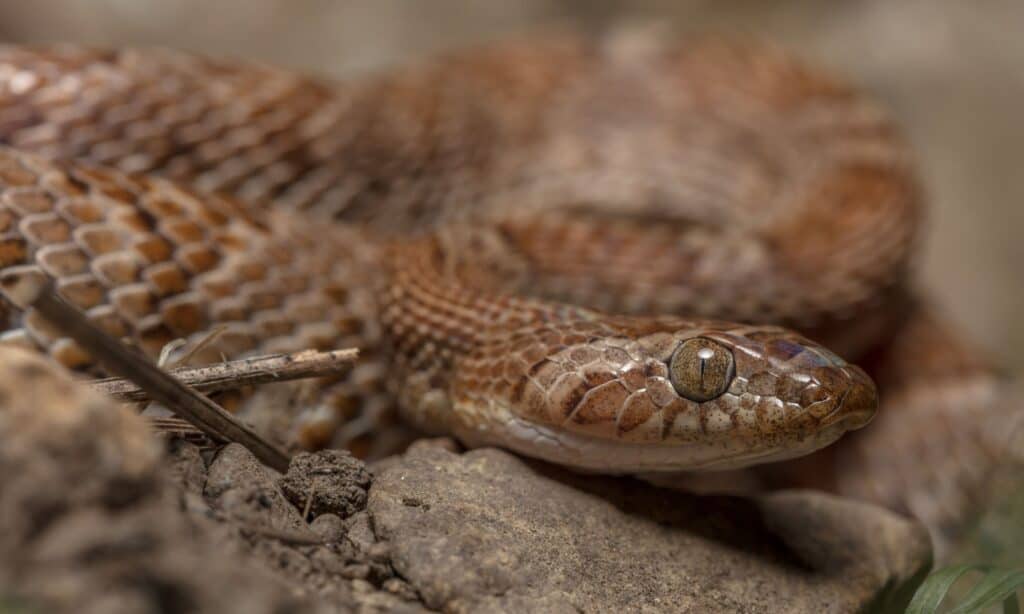
Sonoran lyresnakes are prevalent in Arizona’s 100 Mile Circle area, a radius of 100 miles from Tucson, Arizona, in all directions.
©Alexander Wong/Shutterstock.com
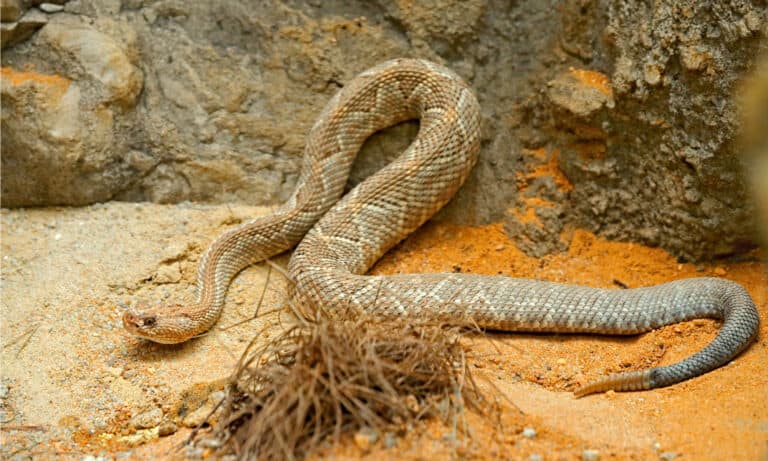
Rattlesnakes
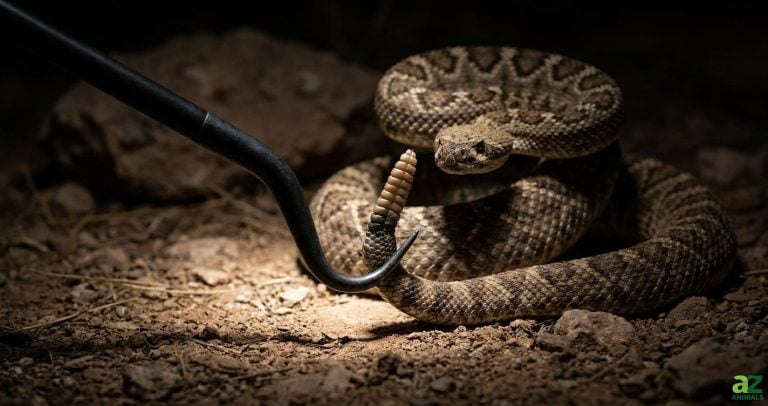
There are 13 different species of rattlesnakes in Arizona.
Most are desert-colored, consisting of a mixture of tan, brown, and black. Rattlesnakes are typically between two and six feet long.
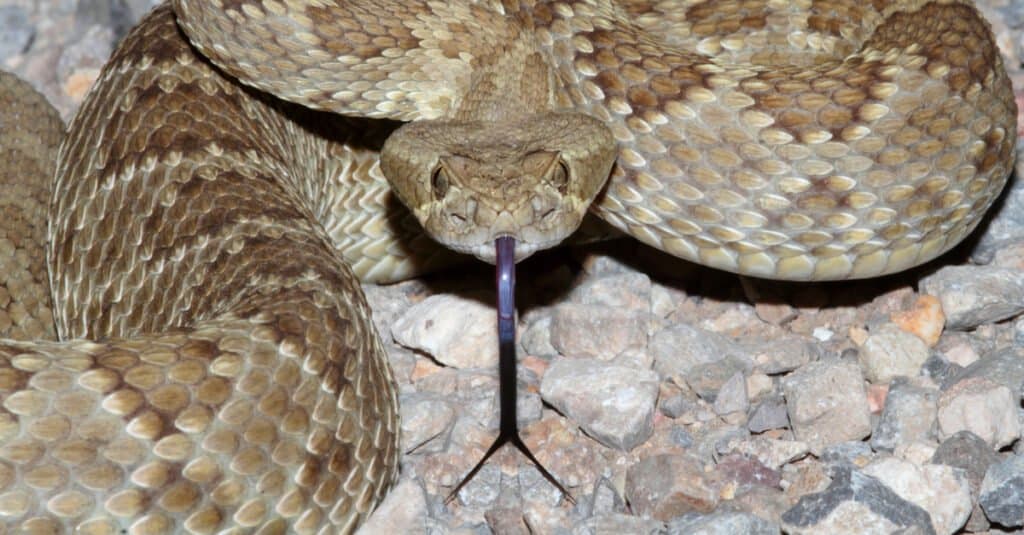
The Mojave Rattlesnake is widely considered the most deadly snake in the United States.
©Steve Byland/Shutterstock.com
You may see a rattlesnake when you are out and about in Arizona, especially if you’re in a state park or other recreational area. Always be cautious when hiking, camping, or engaging in any outdoor activities in Arizona. Rattlesnakes are masters of camouflage, so watch the ground around your feet carefully and always listen for their telltale rattle.
- Sidewinder Rattlesnake
- Arizona Black Rattlesnake
- Great Basin Rattlesnake
- Hopi Rattlesnake
- Mojave Rattlesnake
- Tiger Rattlesnake
- Ridge-nosed Rattlesnake
- Northern Blacktail Rattlesnake
- Speckled Rattlesnake
- Prairie Rattlesnake
- Western Diamondback Rattlesnake
- Twin-Spotted Rattlesnake
- Grand Canyon Rattlesnake