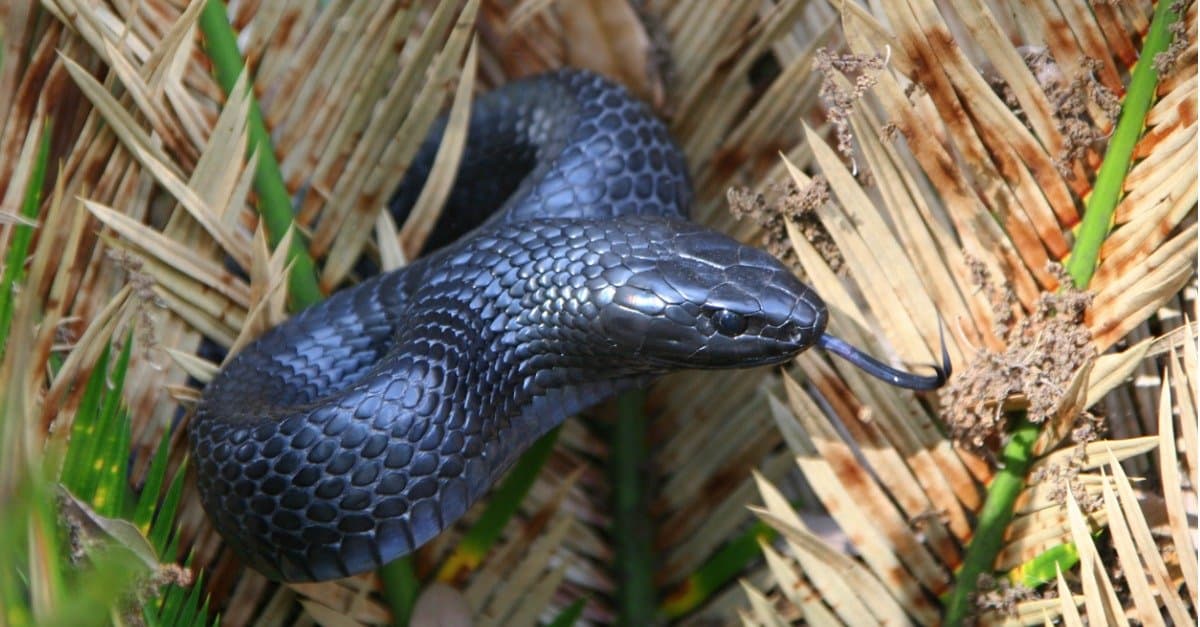

Among its abundance of snakes, Florida is home to some of the largest snake species. According to the Florida Fish and Wildlife Conservation Commission, the state is home to 44 native snake species, many of which are found near Tampa and the Gulf Coast. Continue reading to learn about the seven largest snakes near Tampa and the Florida Gulf Coast.
7. Eastern Rat Snake
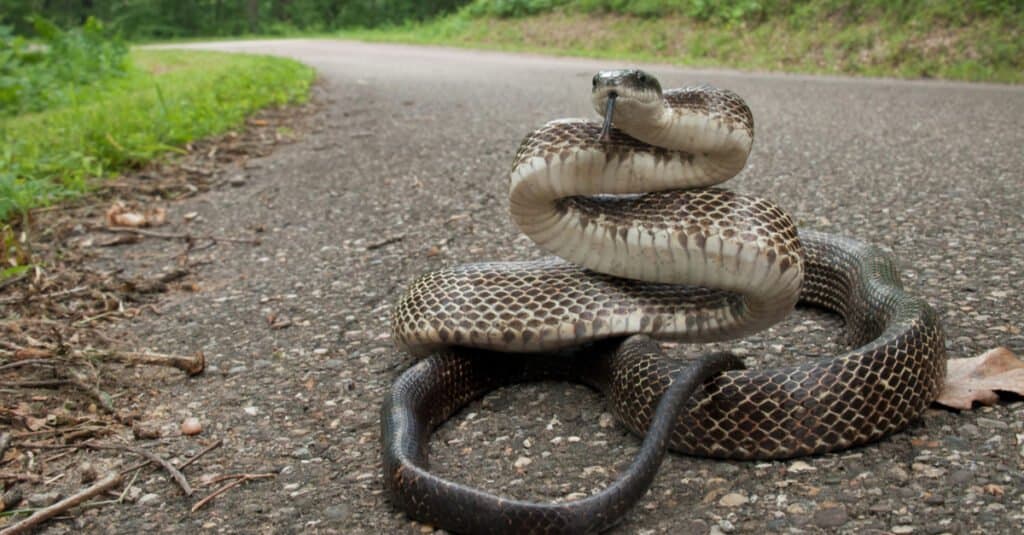
Eastern rat snakes are intelligent snakes known to mimic venomous snakes to ward off predators.
©Mike Wilhelm/Shutterstock.com
Generally, rat snakes are among the longest snakes, and Eastern rat snakes (Pantherophis alleghaniensis) are no exception. They measure 36 to 72 inches long, with a maximum length of 90 inches, and weigh 1.1 to 6 pounds. They have shiny black scales over their upper sides, cream or white bellies, and their throats and chins are also white.
Eastern rat snakes are intelligent snakes known to mimic venomous snakes to ward off predators. One way they do this is by fiercely vibrating or flicking their tails to mimic rattlesnakes.
6. Florida Pine Snake
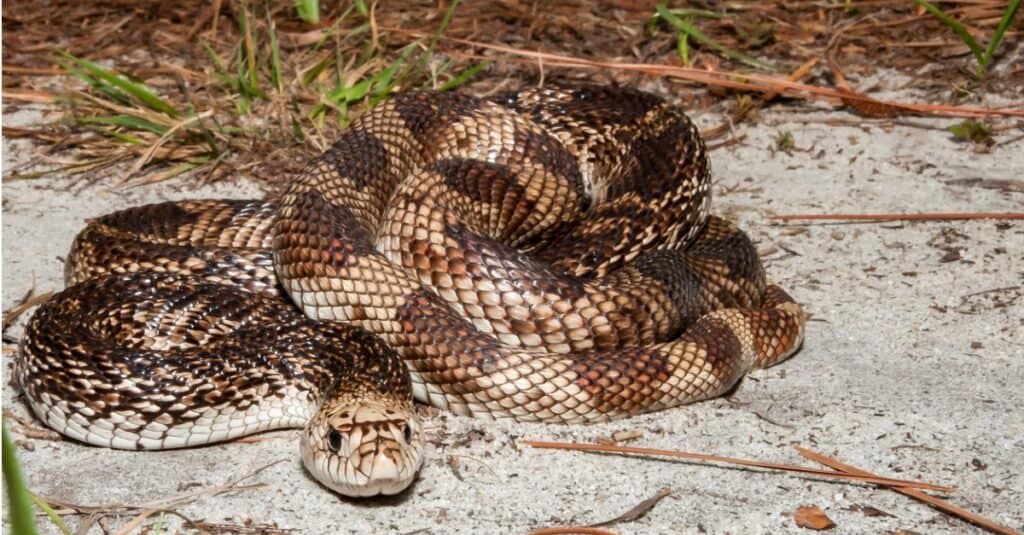
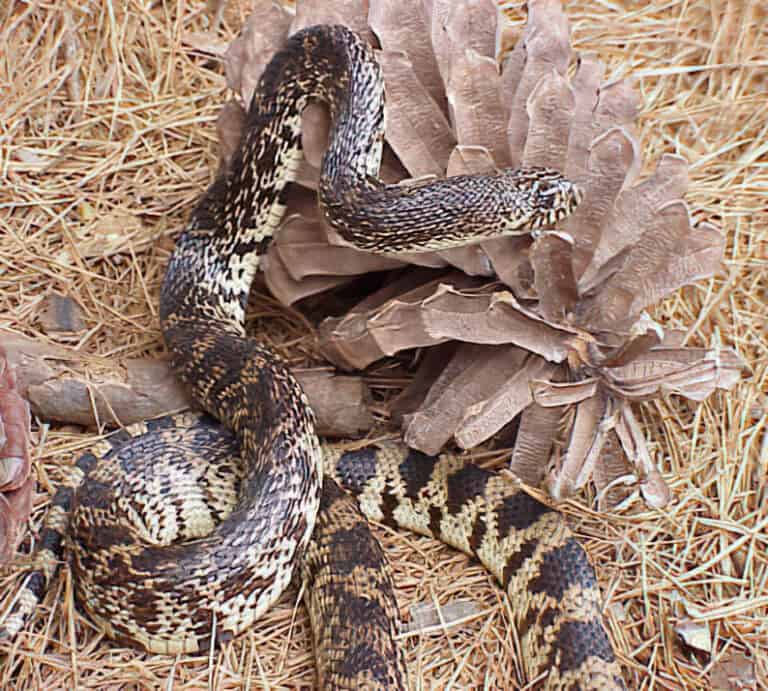
As they are nonvenomous, the Florida pine snake kills its prey by constriction.
©iStock.com/JasonOndreicka
Florida pine snakes (Pituophis melanoleucus mugitus) are nonvenomous colubrids that reach 7.5 feet long and weigh 4 to 8 pounds. They are native to the Southeastern United States. Although they vary slightly in color, they are usually tan with dark brown blotches that run down their backs, but not their bellies, which are plain white.
Despite their lack of venom, these snakes are known to have a powerful bite. Most recorded bites from these animals are in self-defense. However, they rarely bite and often bluff by striking and hissing loudly to scare off threats instead. The Florida pine snake’s bite is not life-threatening.
5. Eastern Indigo Snake
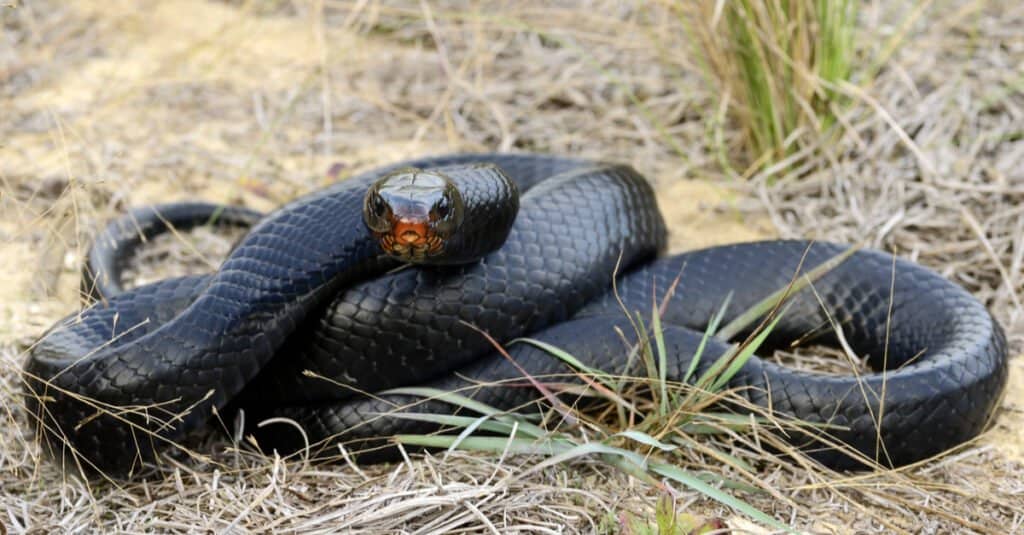
The Eastern indigo snake is a nonvenomous colubrid snake.
©Patrick K. Campbell/Shutterstock.com
Eastern indigo snakes (Drymarchon couperi) are nonvenomous colubrid snakes known for their docile nature. They are also North America’s largest native species. On average, Eastern indigo snakes measure 3.6 to 8 feet and weigh 2 to 10 pounds.
Eastern indigo snakes are named for their beautifully colored dorsal and ventral scales, which are a glossy blackish-purple. Often kept as pets, Eastern indigo snakes are federally listed as threatened under the U.S. Endangered Species Act because of human activity. Habitat loss and fragmentation are two major reasons that they have been virtually eliminated from parts of Florida.
4. Eastern Diamondback Rattlesnake
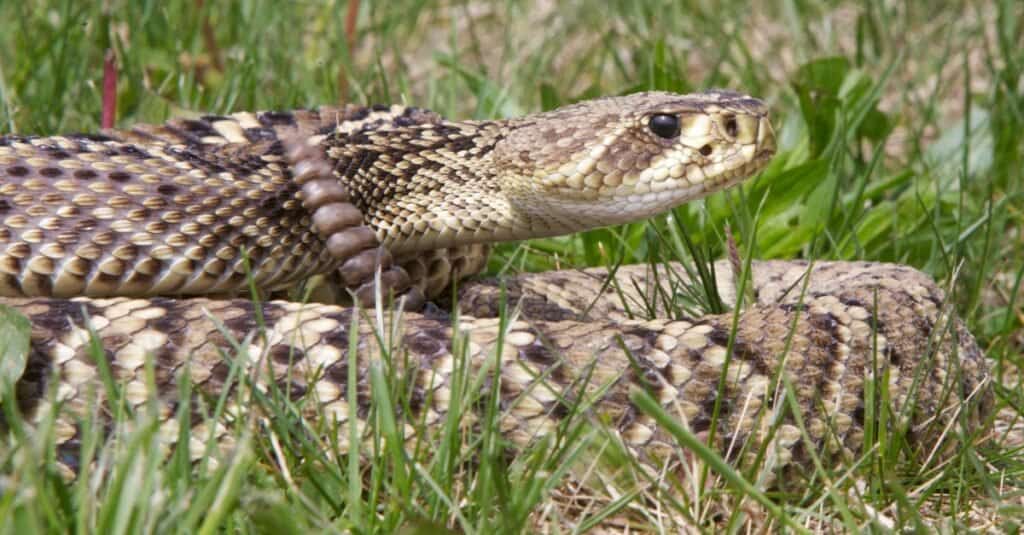
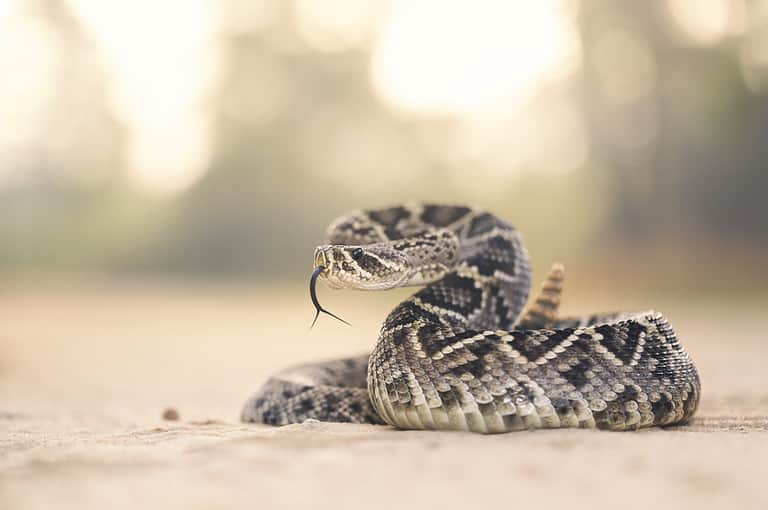
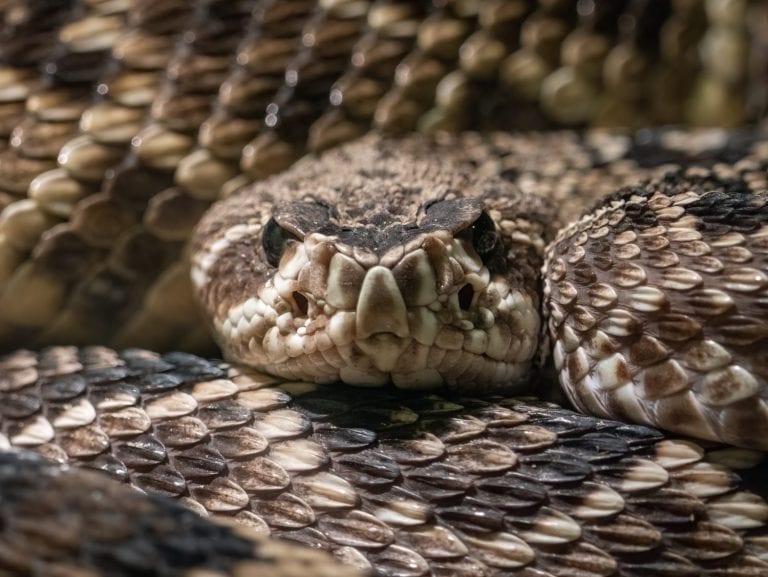
The Eastern diamondback rattlesnake was a symbol on one of the first flags of the United States.
©iStock.com/NajaShots
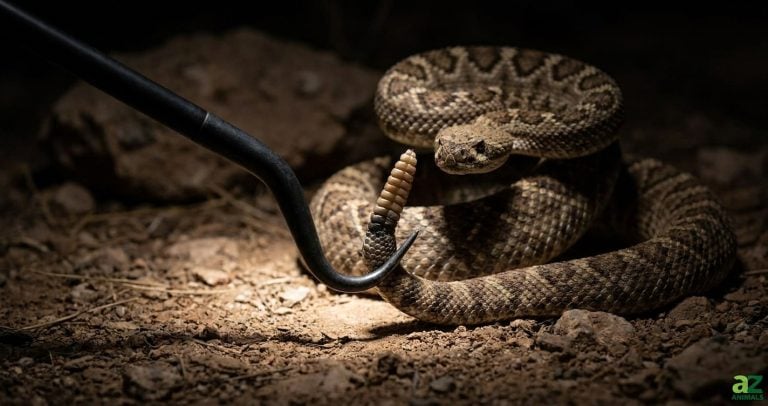
Eastern diamondback rattlesnakes (Crotalus adamanteus) are venomous rattlesnakes found all over North America and can be spotted near Tampa and the Florida Gulf Coast. These snakes are 4 to 5 feet long and weigh 5 to 10 pounds on average. They are blackish-gray, olive green, and muddy gray in color, making it easy for them to hide and camouflage in the wild.
In addition to their size, Eastern diamondback rattlesnakes have highly potent venom. They are quick to bite and have hemotoxic venom that attacks blood cells. Hemotoxins cause circulatory and respiratory problems in addition to swelling and necrosis in the bite area. Victims often report bleeding, swelling, hypotension, and intense pain. Untreated Eastern diamondback rattlesnake bites have a fatality rate of 10% to 20%, although fatalities are now rare with prompt medical treatment.
3. Boa Constrictor
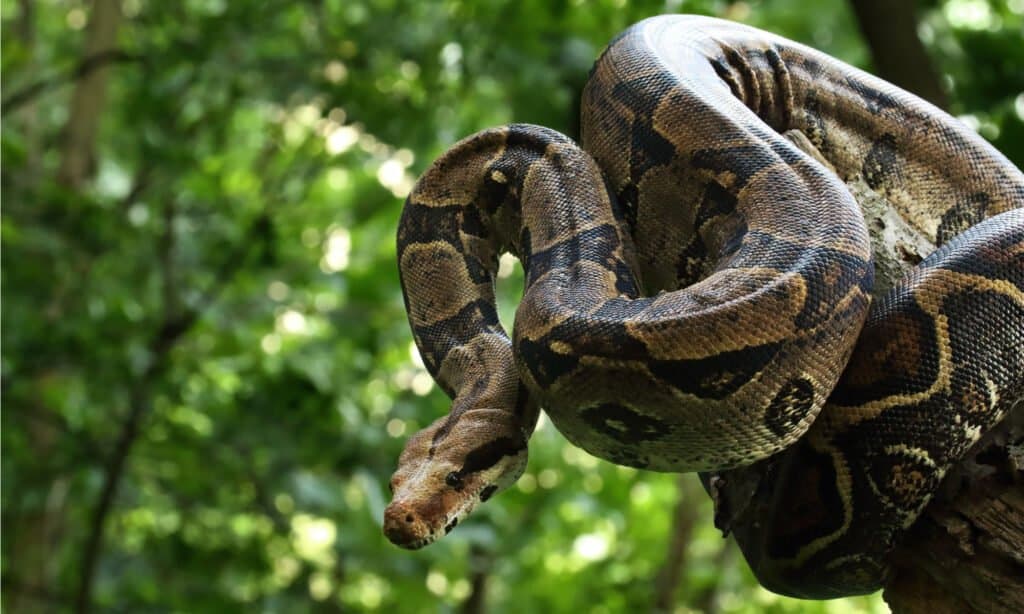
The boa constrictor is found in tropical South America and some islands in the Caribbean.
©Jan Hejda/Shutterstock.com
Boa constrictors (scientific name also Boa constrictor) are also known as red-tailed boas or common boas and are found in tropical South America, some Caribbean islands, and Florida. These snakes are large and heavy-bodied, making them deadly constrictors. However, they do not produce venom, as they are members of the Boidae snake family.
Boa constrictors measure 6 to 10 feet long but can reach up to 12 feet in length. These snakes are also heavy, weighing 22 to 33 pounds, with rare individuals weighing 100 pounds. It is important to note that this species varies in size, and its weight depends on its location and the amount of available prey.
2. Central African Rock Python
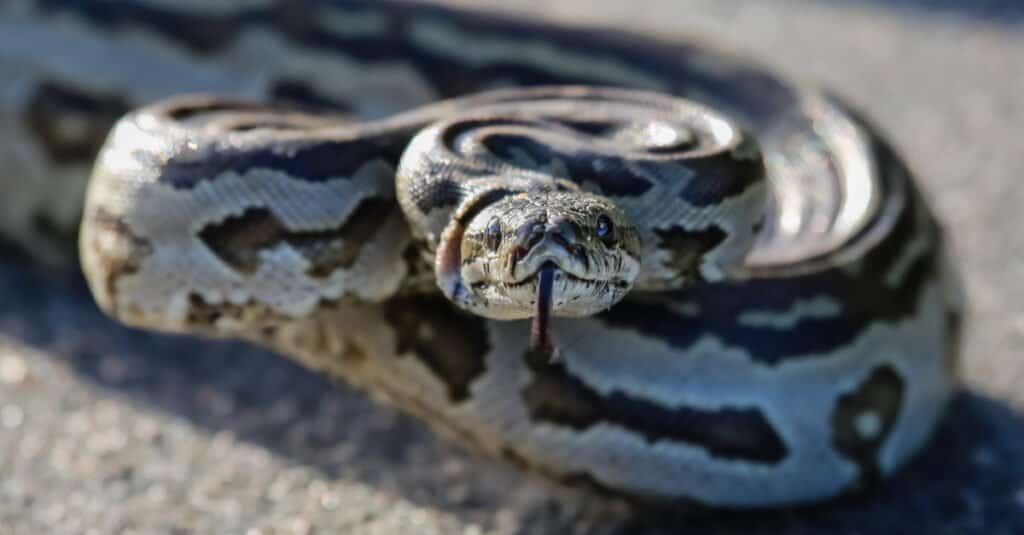
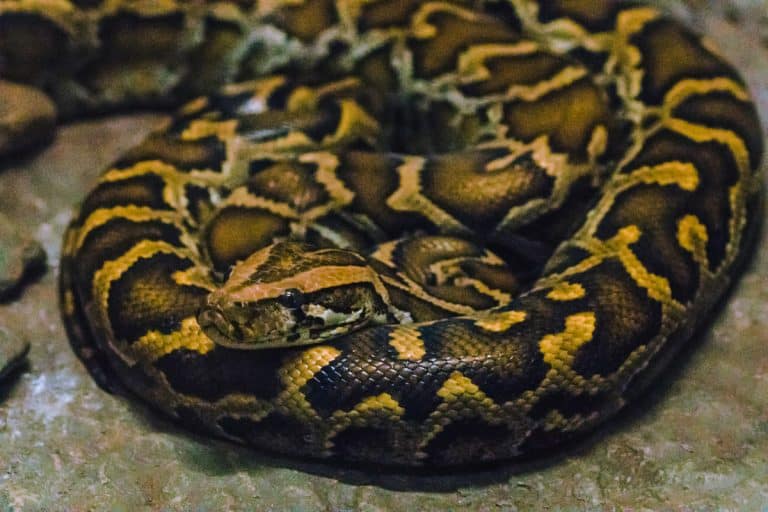
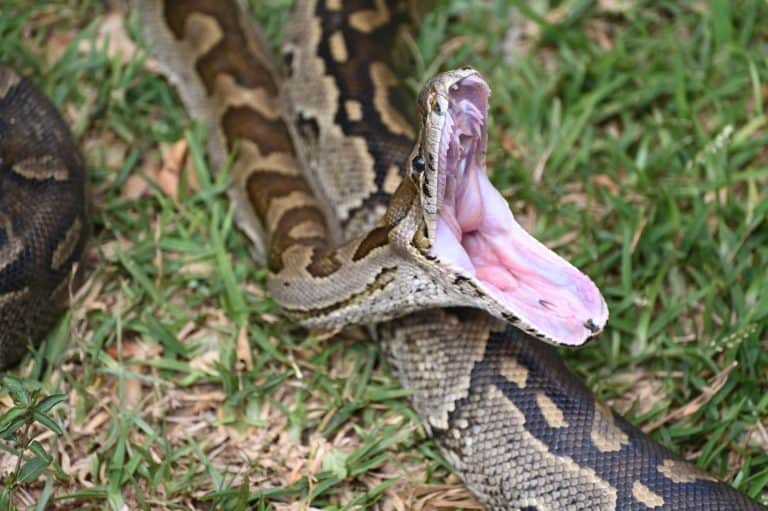
The largest snake species in Africa is the Central African rock python.
©Uwe Bergwitz/Shutterstock.com
The Central African rock python (Python sebae) is the largest species of snake in Africa, as well as one of the six largest snake species globally. Also known as the rock python, this constrictor measures 10 to 16 feet long, with a 14-foot specimen being the largest observed in Florida. They weigh an average of 121 to 143 pounds.
Central African rock pythons are not native to Florida. However, the Central African rock python has been reported in Florida and is considered an invasive species, though most invasive python management in Florida focuses on the Burmese python (Python bivittatus). Because of their massive size, Central African rock pythons have caused human fatalities through constriction.
1. Burmese Python
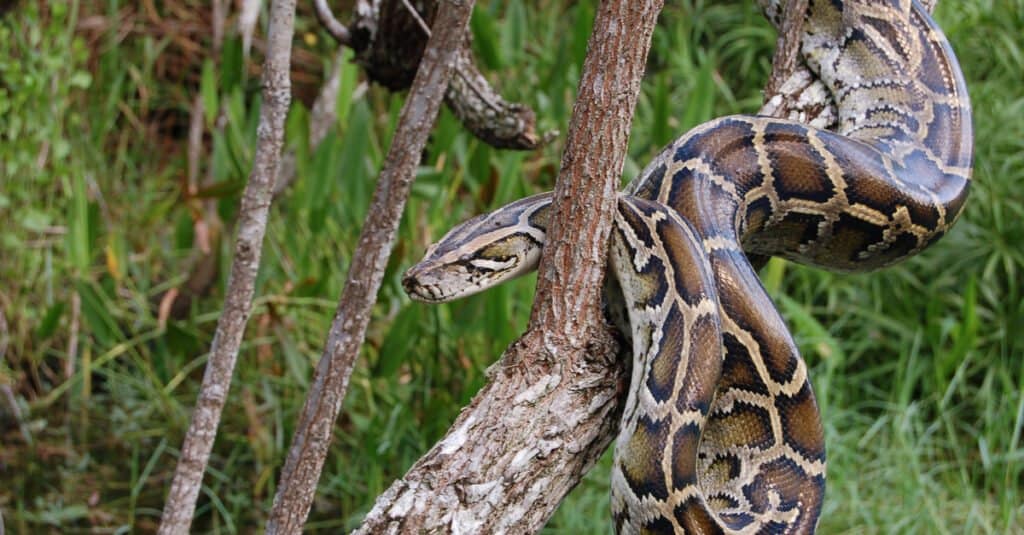
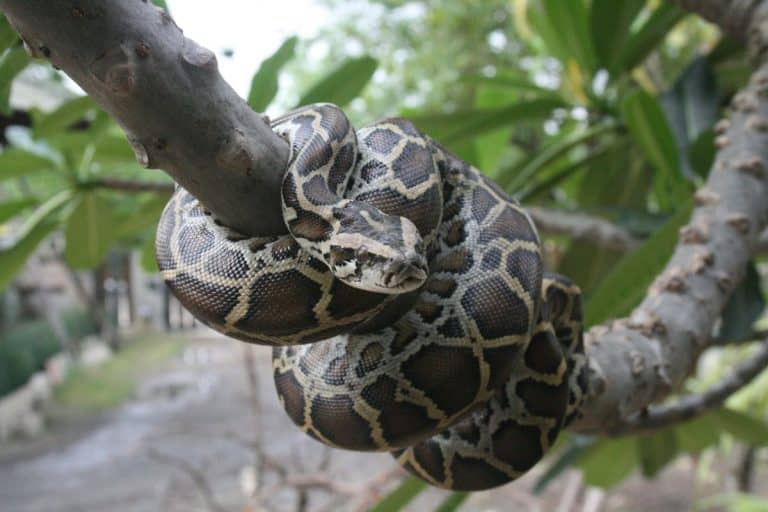
Burmese pythons are the largest species of snakes found in Florida.
©Heiko Kiera/Shutterstock.com
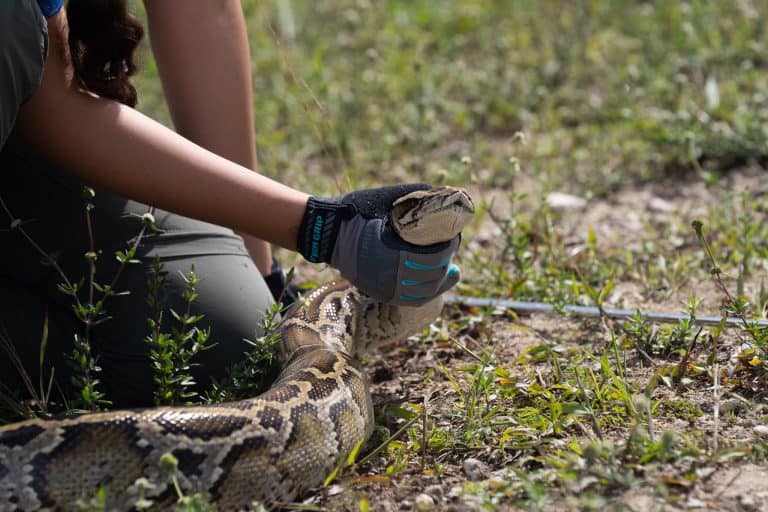
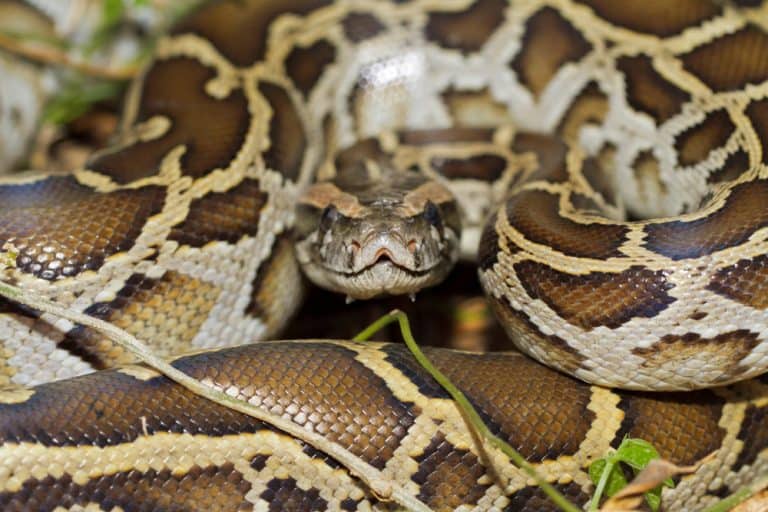
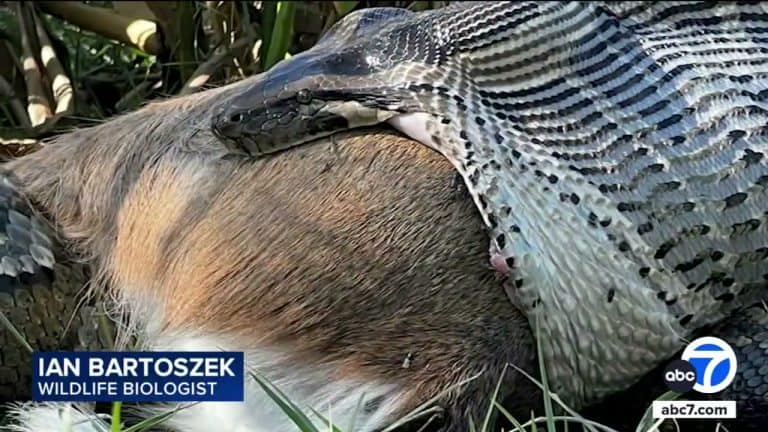
The largest species of snake found in Florida is the Burmese python (Python bivittatus). However, these pythons are not native. When a species invades a new location, it often thrives because the area may lack natural predators that can eat or compete with it for food.
Consequently, Burmese pythons grow larger than they normally would in their native habitats. This is one reason that Florida has a large number of large Burmese pythons. As hatchlings, they are approximately 2 feet long, and as adults, they average 16 feet in length and weigh around 200 pounds. In Florida, individuals as large as 19 feet and as heavy as 215 pounds have been recorded.