
J
Species Profile

Jackrabbit

Lepus

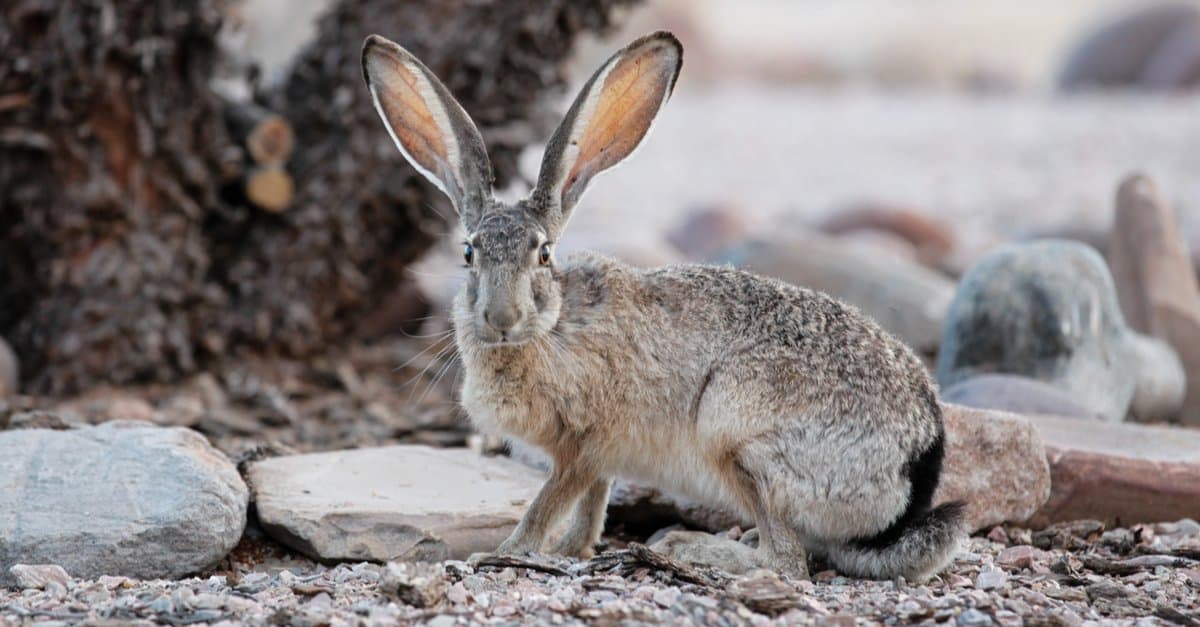
Long ears. Longer legs. Lightning leaps.
Ingrid Curry/Shutterstock.com

Jackrabbit Distribution

Click a location to explore more animals from that region

Invasive Species
Loading map...

Found in 83 countries

Size Comparison

Human 5'8"
Jackrabbit 1 ft 2 in

Jackrabbit stands at 20% of average human height.

jackrabbit sitting by tree

At a Glance

Genus Overview This page covers the Jackrabbit genus as a group. Stats below are general traits shared across the genus.
Also Known As Hare, Jackass rabbit, Liebre
Diet Herbivore
Activity Crepuscular+
Lifespan 3 years
Weight 7.5 lbs
Status Not Evaluated
Did You Know?

"Jackrabbit" isn't a single species-it's a common name for several hare species in the genus Lepus, especially in North America.

Scientific Classification

Genus Overview "Jackrabbit" is not a single species but represents an entire genus containing multiple species.

Jackrabbits are large hares (genus Lepus) characterized by long ears, long legs, high-speed running, and a tendency to rely on sprinting and camouflage rather than burrowing. They are primarily crepuscular and inhabit open landscapes.

Kingdom
Animalia
Phylum
Chordata
Class
Mammalia
Order
Lagomorpha
Family
Leporidae
Genus
Lepus

Distinguishing Features

  • Very long ears (often with dark tips) aiding hearing and heat dissipation
  • Long hind legs adapted for fast running and bounding escape
  • Generally larger and longer-limbed than most “rabbits” (e.g., cottontails)
  • Usually forms shallow resting depressions (“forms”) rather than digging extensive burrows

Physical Measurements

Males and females differ in size

Height
12 in (8 in – 1 ft 4 in)
1 ft 1 in (10 in – 1 ft 6 in)
Length
1 ft 10 in (1 ft 5 in – 2 ft 2 in)
1 ft 10 in (1 ft 7 in – 2 ft 2 in)
Weight
7 lbs (3 lbs – 9 lbs)
Tail Length
3 in (2 in – 4 in)
3 in (2 in – 4 in)
Top Speed
43 mph
Lepus: about 55–75 km/h

Appearance

Primary Colors
Secondary Colors
Skin Type Dense mammalian fur adapted for insulation and camouflage; seasonal molt common (often 1-2 major molts/year); soles are furred for traction/thermal protection; skin itself typically not visible except on nose/ears margins.
Distinctive Features
  • Jackrabbit is a common name for several large hare species in the genus Lepus, found across North America, Eurasia, and Africa, varying by size, coat, and habitat.
  • Lepus young are precocial—born furred, eyes open and able to move—and usually kept in shallow nests, while many true rabbits (e.g., Sylvilagus cottontails) have altricial, helpless young and use burrows.
  • Jackrabbits (Lepus) vary in size: body length about 35–75+ cm and weight about 1–7 kg. Ears are long, about 7–16+ cm, longer in hot, open areas.
  • Cursorial build: long hind legs, elongated feet, and a light, athletic body plan specialized for rapid acceleration and high-speed running; anti-predator strategy emphasizes sprinting, zig-zagging, and crypsis over burrowing.
  • Ears are long and highly vascular for heat exchange; ear length and pigmentation vary with climate (tending longer and more thinly furred in hotter regions, shorter and more densely furred in colder regions).
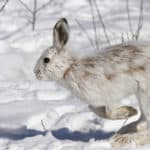
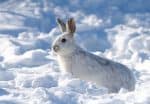
  • Coat variation across the genus: many species are brown/tan/gray year-round, while several northern/alpine species show strong seasonal whitening; degree of winter white varies by latitude, elevation, and local snow conditions.
  • Many jackrabbits (Lepus) prefer open places like grasslands, deserts, shrub-steppe, tundra edges, and farm mosaics. Some live near woods, heath, or in mountain/alpine areas and often rest by day.
  • Activity/ecology generalization: commonly crepuscular to nocturnal, resting by day in cover; some populations shift activity with temperature, predation pressure, and human disturbance.
  • Diet: primarily herbivorous browsers/grazers (grasses, forbs, leaves, twigs, bark), with seasonal shifts; coprophagy (reingestion of nutrient-rich pellets) is typical of lagomorphs.
  • Lifespan range across Lepus: many wild individuals live ~1-5 years (high juvenile predation common), while maximum longevity can reach roughly ~8-12+ years in captivity or low-risk conditions; exact values vary strongly among species and environments.
  • Predation/defense: reliance on camouflage, stillness in forms, and explosive escape running; many species show vigilant posture, large eyes placed laterally for wide field of view.
  • Reproduction (generalized across the genus): multiple litters per year are possible where climates/resources allow; litter size and breeding season length vary substantially by latitude and rainfall/productivity.

Sexual Dimorphism

Sexual dimorphism is generally subtle across Lepus: sexes are similar in coloration and pattern; females are often slightly larger/heavier on average, but overlap is broad and dimorphism varies by species and population.

  • Typically slightly smaller-bodied on average (variable and often hard to distinguish visually).
  • External genitalia may be visible during handling/close inspection; otherwise field separation by appearance alone is often unreliable.
  • Often slightly larger/heavier on average, particularly during breeding season (species- and population-dependent).
  • Enlarged nipples may be apparent in lactating females; otherwise coloration/pattern usually matches males.

Did You Know?

"Jackrabbit" isn't a single species-it's a common name for several hare species in the genus Lepus, especially in North America.

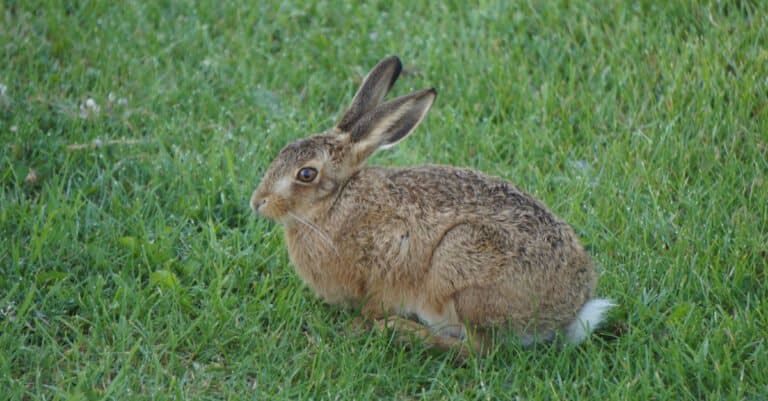
Hares (including jackrabbits) are born furred with eyes open and can move soon after birth-unlike rabbits, which are typically born blind and helpless in nests.

Across Lepus, ear length and body size vary a lot, but long ears and long hind legs are common-built for speed and heat exchange.

Many Lepus species rely on camouflage and stillness ("freezing") more than hiding in burrows; they often rest in shallow forms (day beds) scraped on the ground.

Top speeds are famously high in several Lepus species; escaping predators often involves sudden zigzags and long bounds rather than straight-line flight.

Seasonal coat color changes occur in some Lepus (turning white in winter), while others keep browner desert/grassland camouflage year-round.

Jackrabbits are important prey for many predators (coyotes, foxes, raptors), making them key links in open-land food webs.

Unique Adaptations

  • Cursorial build: Long hind limbs, enlarged feet, and a lightweight frame support rapid acceleration and sustained running in open terrain.
  • Oversized ears: Increase hearing sensitivity and, in many warm-climate species, help shed heat; ear size varies with climate and species.
  • Cryptic coloration: Grizzled browns/greys blend with soil and vegetation; in several northern Lepus, seasonal whitening provides snow camouflage.
  • Precocial young: Leverets are born furred and alert, reducing dependence on a fixed nest; mothers typically visit briefly to nurse, limiting scent trails.
  • Wide field of view: Eye placement provides near-360° awareness-useful in open habitats with aerial and terrestrial predators.
  • Efficient chewing and digestion: Like other lagomorphs, Lepus practice hindgut fermentation and re-ingest soft feces (cecotrophy) to recover nutrients from fibrous plants.
  • Thermal flexibility: Behavior (shade-seeking, timing activity) and anatomy (ears, coat) help cope with both desert heat and northern cold across the genus.

Interesting Behaviors

  • Crepuscular activity: Many Lepus are most active at dawn and dusk, though timing varies with season, temperature, and predation pressure.
  • Forming (not burrowing): Commonly rest in exposed or lightly sheltered "forms" in grass/shrubs; some species use cover more heavily than others depending on habitat.
  • Freeze-and-flush strategy: Sit motionless to avoid detection, then explode into rapid flight when a predator gets close; the distance at which they flush varies by species and local risk.
  • High-speed evasion: Powerful sprinting with sharp turns, zigzags, and long leaps; some species favor open sprinting, others use denser cover for evasive maneuvering.
  • Solitary to loosely social: Often seen alone, but may feed in loose aggregations when resources are concentrated; social tolerance differs among species and environments.
  • Boxing and chasing: During breeding periods, hares may "box" with forefeet and chase-behaviors linked to courtship and competition.
  • Seasonal and regional diet shifts: Mostly herbivorous grazers/browsers; grass-heavy diets in many open habitats, with more shrubs/woody browse in dry seasons or winter.
  • Long-distance movement: Generally have home ranges rather than true migration, but movements can expand when drought, snow cover, or food scarcity changes resource distribution.

Cultural Significance

Hares (Lepus), including jackrabbits, symbolize speed, alertness, and wild open lands. Farmers see them as game and prey but also crop pests. They appear in art, stories, spring/Easter customs, and place names or mascots.

Myths & Legends

The Hare in African and African-diaspora folklore: In many Bantu-language traditions and in related diaspora stories, the hare is a clever trickster who outwits stronger animals through speed and cunning.

Khoisan traditions: A well-known San/Khoikhoi cycle features the hare in stories explaining why the hare has a split upper lip-often tied to mishaps while carrying a message from the Moon or other powerful being.

Br'er Rabbit: In the Uncle Remus stories (rooted in African American folklore with West/Central African antecedents), the rabbit/haresque trickster survives by wit; while not taxonomically exact, the cultural figure draws on the broader hare/rabbit archetype.

Celtic and British/Irish lore: Hares are frequently treated as liminal animals; in some traditions witches are said to take hare form to evade capture or steal milk, and harming a hare could bring misfortune.

Greek tradition: The hare was associated with Aphrodite and Eros; hares appear as love-gifts and symbols of desire and pursuit in classical art and literature.

East Asian lunar hare: In Chinese, Korean, and Japanese myths, the Moon Hare lives on the moon, often pounding medicine or rice cakes. The tale links moon marks with sacrifice and renewal.

European Easter hare: German-speaking regions preserve the folklore of the Easter hare, a springtime bringer of eggs that later spread widely; while often depicted as a rabbit, the older motif is hare-linked in many areas.

Conservation Status

NE Not Evaluated

Has not yet been evaluated against the criteria.

Population Unknown

Protected Under

  • Varies widely by country and species: many Lepus populations occur within protected areas and/or benefit from habitat protections at national or subnational levels.
  • Many species are managed as regulated game (seasons, bag limits, licensing); effectiveness depends on local enforcement and monitoring.
  • Genus-level status is not governed by a single global instrument; international trade is generally limited/regulated at national levels rather than via a genus-wide listing.

You might be looking for:

Black-tailed Jackrabbit

33%

Lepus californicus

The most widespread and commonly referenced North American jackrabbit of deserts, grasslands, and shrublands; very long ears with dark tips.

White-tailed Jackrabbit

22%

Lepus townsendii

Large jackrabbit of western/central North America; turns white in winter in many populations; typically higher-elevation prairies and open habitats.

Antelope Jackrabbit

15%

Lepus alleni

Extremely large-eared jackrabbit of the Sonoran Desert region (AZ and NW Mexico), adapted to hot arid environments.

European Hare

10%

Lepus europaeus

A hare species often colloquially likened to “jackrabbits”; widespread in Europe and introduced elsewhere.

Life Cycle

Birth 3 leverets
Lifespan 3 years

Lifespan

In the Wild
1–12 years
In Captivity
3–14 years

Reproduction

Mating System Promiscuity
Social Structure Solitary
Breeding Pattern Transient
Fertilization Internal Fertilization
Birth Type Internal_fertilization

Jackrabbits and hares (Lepus) usually mate with many partners: males and females both do, and they do not form long bonds. They are solitary except short breeding gatherings. Males compete and chase; some females are induced ovulators. Mothers care for young.

Behavior & Ecology

Social Loose aggregation Group: 1
Activity Crepuscular, Nocturnal, Cathemeral, Diurnal
Diet Herbivore Tender green grasses and forbs when available (often shifting to woody browse in dry or winter seasons; varies by species and habitat across Lepus).

Temperament

Highly vigilant and wary
Skittish/flight-prone with strong startle response
Generally non-aggressive outside breeding
Seasonally increased aggression among males during rut (chasing/boxing)
Risk-averse and cover-oriented; boldness varies with predation pressure and human disturbance

Communication

high-pitched distress scream when seized or threatened
low grunts/snorts during close interactions or agitation Reported in some species
tooth-clicking/chattering during aggressive encounters Variable among species
hind-foot thumping/drumming as alarm or agitation signal Variable
ear and body postures (ear orientation, freezing, crouching) to signal vigilance and intent
scent marking via urine/feces and glandular secretions; rubbing/chinning and scrape-like marking reported in some species
chasing, circling, and boxing as courtship and male-male competition displays

Habitat

Biomes:
Temperate Grassland Temperate Forest Boreal Forest (Taiga) Tundra Alpine Mediterranean Desert Hot Desert Cold Savanna Tropical Dry Forest Wetland +5
Terrain:
Plains Plateau Hilly Mountainous Valley Coastal Island Rocky Sandy Riverine +4
Elevation: Up to 16404 ft 3 in

Ecological Role

Widespread mid-sized herbivores of open and semi-open landscapes (grasslands, shrublands, deserts, steppes, tundra margins), functioning as major primary consumers and as key prey for a wide suite of predators; impacts and plant associations vary substantially across the diverse Lepus genus and its habitats.

Transfers energy from plants to higher trophic levels (supports raptors, canids, felids, mustelids, and other predators) Vegetation shaping via grazing/browsing pressure, influencing plant community structure and regeneration Nutrient cycling through concentrated fecal deposition and caecotroph production Potential seed dispersal and seed predation (depending on local diet composition and season) Creates spatial heterogeneity in vegetation through selective feeding and movement patterns

Diet Details

Other Foods:
grasses Forbs and herbaceous wildflowers Shrubs and subshrubs Woody browse Bark and cambium Leaves of low desert and steppe plants Seeds and grain from grasses and forbs Cultivated plants +2

Human Interaction

Domestication Status

Wild

Lepus (hares/jackrabbits) are not domesticated and have no history of selective breeding like domestic rabbits (Oryctolagus). People sometimes keep them short-term for wildlife rehab, research, education, or zoos, but hares get very stressed and are hard to manage. They live in deserts, grasslands, tundra, and other open habitats.

Danger Level

Low
  • Zoonoses and parasites when handling carcasses or stressed animals (e.g., tularemia/Francisella tularensis in some regions; ticks/fleas; other enteric pathogens)
  • Bites/scratches and powerful kicks when captured/handled (not typically aggressive but can injure)
  • Indirect hazards: vehicle collisions in rural/open landscapes; hunting-related injuries if safety practices are poor
  • Crop/garden damage leading to conflict, trapping, or poisoning risks (human exposure depends on control methods)

As a Pet

Not Suitable as Pet

Legality: Generally restricted: many places treat Lepus spp. as native wildlife, making it illegal to keep without wildlife rehab, education, or scientific permits. Laws vary by country/state; import, transport, and care rules may still bar pet keeping.

Care Level: Expert Only

Purchase Cost: Up to $2,000
Lifetime Cost: $3,000 - $20,000

Economic Value

Uses:
Subsistence and recreational hunting Meat and fur/hides (limited/variable by region) Agricultural conflict and pest management Wildlife tourism/education and ecological value Scientific research (ecology, physiology, disease) Cultural significance (folklore, symbolism, traditional practices)
Products:
  • Meat (local/subsistence; sometimes commercial where legal)
  • Fur/hides (small-scale/variable demand)
  • Byproducts for traditional crafts (region-dependent)
  • Ecosystem services: prey base supporting predators; grazing impacts influencing plant communities (non-market value)

Relationships

Related Species 9

European hare Lepus europaeus Shared Genus
Snowshoe hare
Snowshoe hare Lepus americanus Shared Genus
Arctic hare
Arctic hare Lepus arcticus Shared Genus
White-tailed jackrabbit Lepus townsendii Shared Genus
Antelope jackrabbit Lepus alleni Shared Genus
Desert cottontail Sylvilagus audubonii Shared Family
Eastern cottontail
Eastern cottontail Sylvilagus floridanus Shared Family
European rabbit
European rabbit Oryctolagus cuniculus Shared Family
Pygmy rabbit Brachylagus idahoensis Shared Family

Ecological Equivalents 4

Animals that fill a similar ecological role in their ecosystem

Cottontails Sylvilagus spp. Both are medium-sized, ground-dwelling herbivores and key prey for many predators. Lepus species rely more on thick cover and edges than on open sprinting; sizes (1.5–7 kg) and habitats vary widely.
Springhare Pedetes capensis Convergent open-habitat, long-limbed, saltatorial/sprinting herbivore with nocturnal/crepuscular activity and heavy predation pressure. Not closely related (a rodent), but occupies a similar grazer/browser niche in African savannas and semi-deserts.
Patagonian mara
Patagonian mara Dolichotis patagonum Convergent, cursorial open-country herbivore that relies on high-speed predator avoidance and wide sightlines; not closely related (a caviomorph rodent), but ecologically analogous in arid/steppe environments.
Pampas deer Ozotoceros bezoarticus Shares open-landscape vigilance and predator-avoidance behavior (flight response in exposed habitats); although much larger and a ruminant, it illustrates similar ecological pressures shaping movement and anti-predator strategies in grassland systems.

Types of Jackrabbit

5

Explore 5 recognized types of jackrabbit

Black-tailed jackrabbit Lepus californicus
White-tailed jackrabbit Lepus townsendii
Antelope jackrabbit Lepus alleni
White-sided jackrabbit Lepus callotis
Tehuantepec jackrabbit Lepus flavigularis

“A black-tailed jackrabbit can cover ten feet of distance in just one leap”

A black-tailed jackrabbit is a hare found in the south and western parts of the United States as well as in Mexico. Along with having a black tail, this hare has fur colors of grayish-brown on most of its body with white fur on its face. It’s an herbivore eating grass, bark, cacti, and twigs. The lifespan of this hare is five to eight years.
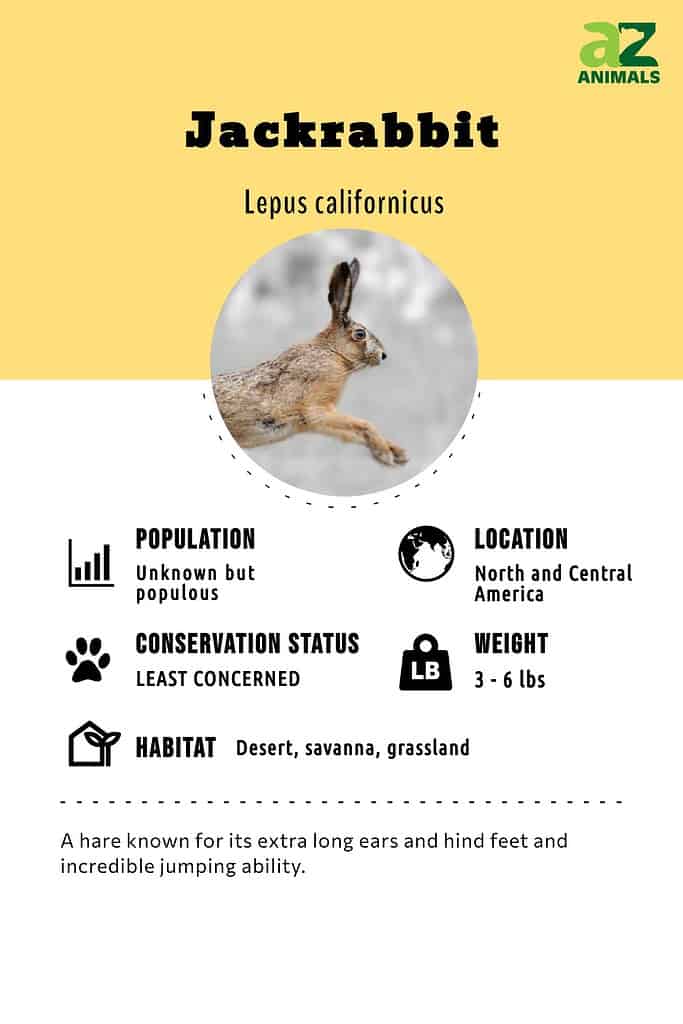
5 Incredible Jackrabbit Facts!

  • Its typical habitat includes fields, plains, and the desert.
  • This hare has scent glands near its tail it uses to mark its territory.
  • It has a running speed of at least 40mph.
  • It runs in a zig-zag pattern to elude coyotes, bobcats, and other predators.
  • The lifespan of this hare goes up to eight years in the wild.

Scientific name

Lepus californicus is the scientific name of the black-tailed jackrabbit. Another name for this animal is the American desert hare. The word Lepus refers to this hare’s genus and the word californicus refers to California which is one place where this animal is found. It is in the Leporidae family and the class Mammalia.
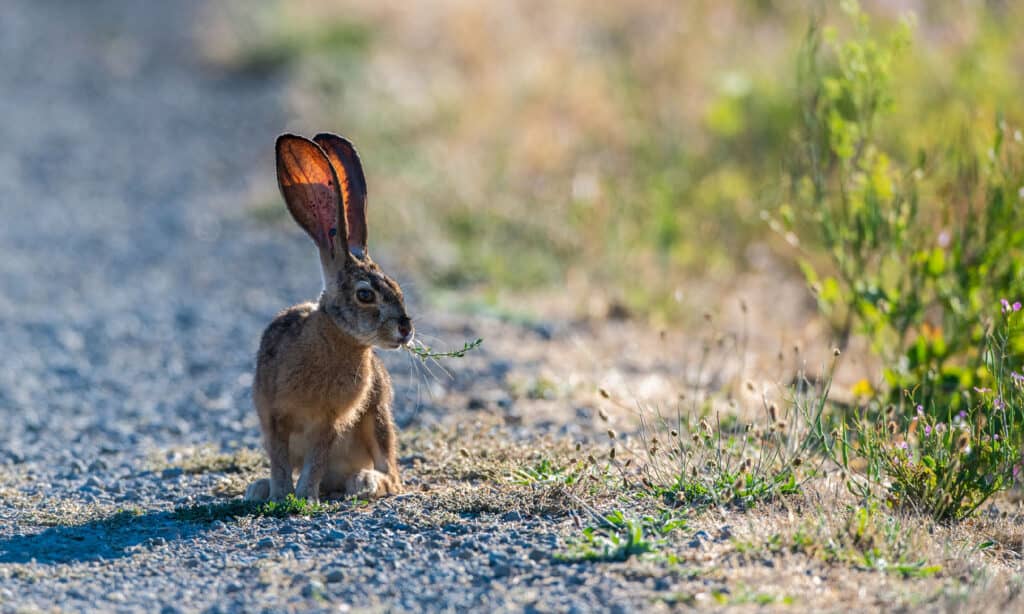
Black-tailed Jackrabbit, Color Image, Horizontal, Infectious Disease, Infestation

Ancestors of the black-tailed jackrabbit lived in North America 2.5 million years ago.

Evolution

According to fossil evidence, the genus Lepus was represented in North America around 2.5 million years ago, by the extinct jackrabbit species, Lepus giganteus. This giant rabbit was very similar to the antelope jackrabbit and is believed to be the common ancestor of the antelope jackrabbit and the black-tailed jackrabbit.

Subspecies

Subspecies of the black-tailed jackrabbit are:

  • Lepus californicus californicus
  • Lepus californicus deserticola
  • Lepus californicus madalenae
  • Lepus californicus melanotis
  • Lepus californicus texianus
  • Lepus californicus insularis

Appearance & Behavior
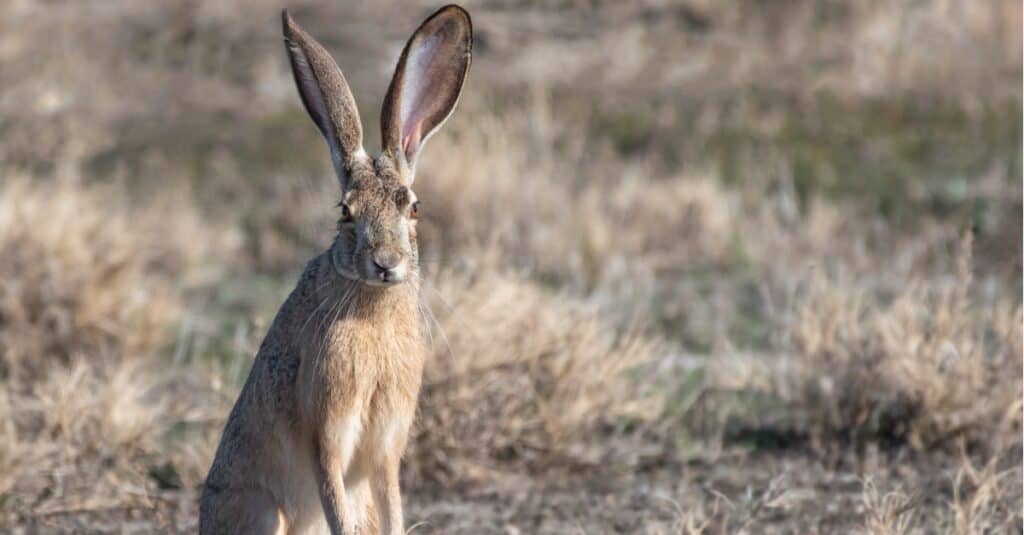
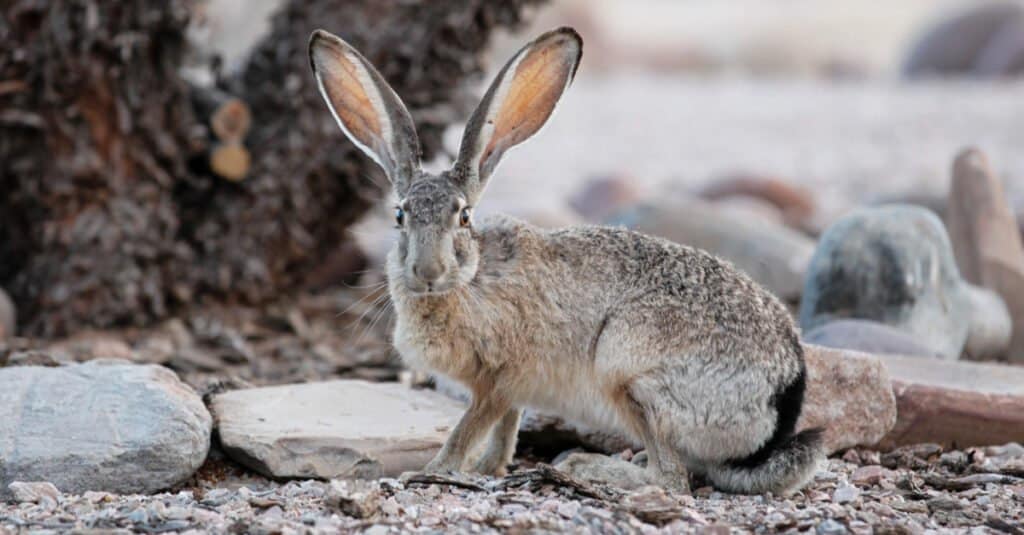
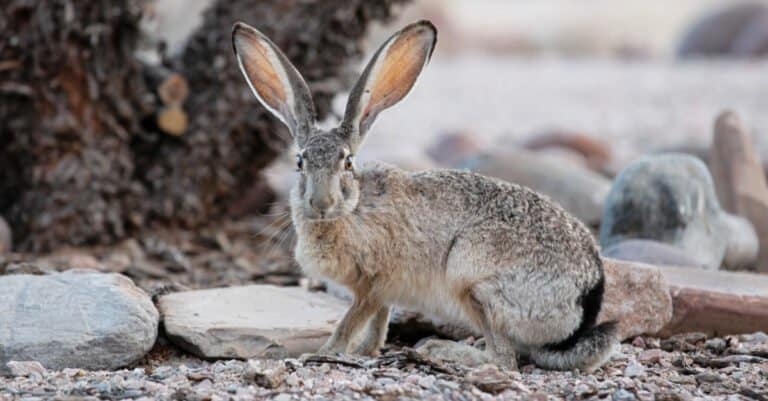
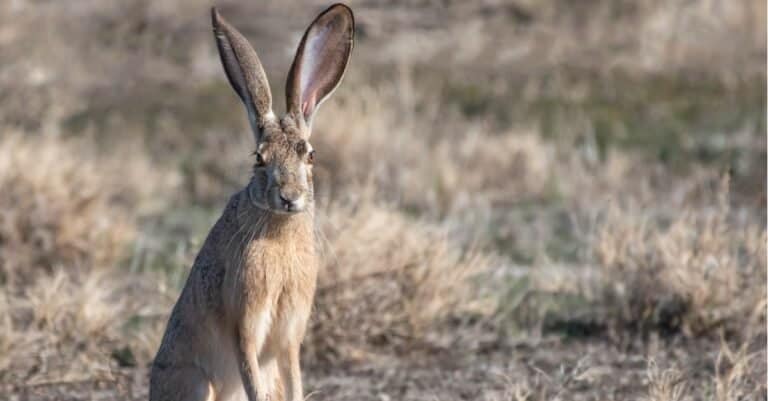
The most distinctive feature of a jackrabbit is its long, erect ears.

The fur of this animal features a combination of colors, namely gray and brown. Along with a black tail, it has white fur on its face and yellow eyes with round black pupils. This hare is up to two feet long and can weigh three to eight pounds. Ten pounds is the heaviest this hare can be.

Its long ears are the most notable feature of this animal. When it comes to proper identification, a hare’s ears can grow as long as seven inches while a rabbit’s ears are only three or four inches long. The back feet of a hare are also longer than a rabbit’s hind feet. A hare uses its long hind feet to propel itself off the ground to leap a distance of ten feet while running. When you picture this animal leaping ten feet, keep in mind that a distance of ten feet is equal to half the length of an adult giraffe!

The gray and brown fur of a black-tailed jackrabbit helps it to blend in with its desert and plains habitat. This camouflage helps protect these hares from predators. This animal’s speed is another defense it has against predators. This animal can reach a speed of up to 45 mph. Furthermore, it runs in a zig-zag pattern which can put even more distance between this animal and its predators.

These are solitary animals. This is another difference in identification between hares and rabbits. Rabbits are social animals living in large groups. Hares are known to be shy and non-aggressive.
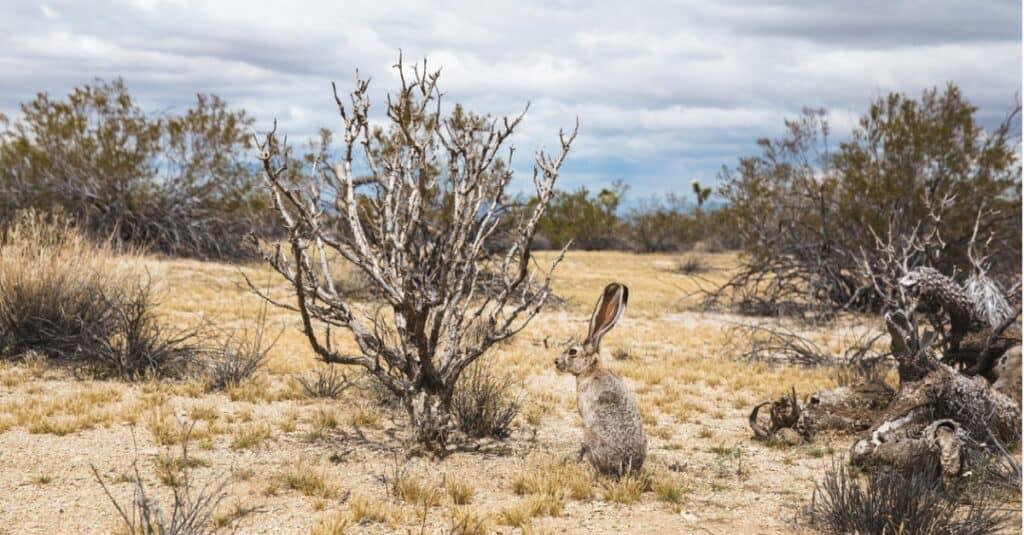
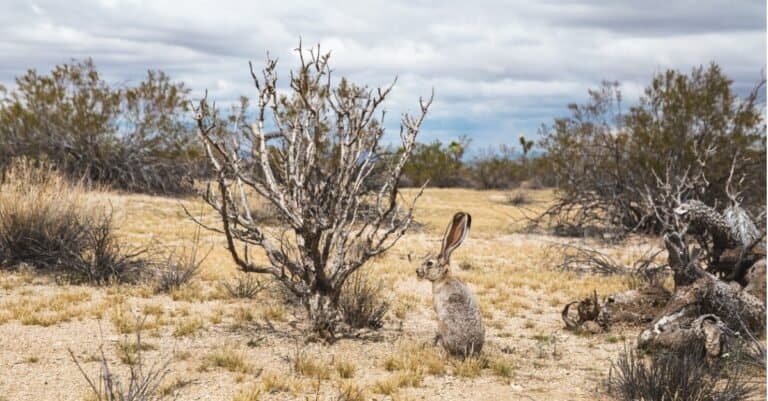
jackrabbit sitting in field of dead trees

Jackrabbits thrive in open plains, rocky areas, and desert habitats.

Habitat

Black-tailed jackrabbits live in the western and southern parts of the United States and the northern part of Mexico. They are found on the open plains, in rocky areas, and in a desert habitat. These hares can survive in an arid to temperate climate.

Hares rest during the day between large rocks or beneath dense bushes. This helps them to stay cool in more arid environments. They come out in the evening as the sun is going down and are active during the night. Their eyes are excellent at detecting motion in the dark. However, their sense of smell and hearing is much sharper than their sense of sight. Though these animals are frequently on the move within their territory, they’re not considered migratory animals.

Diet
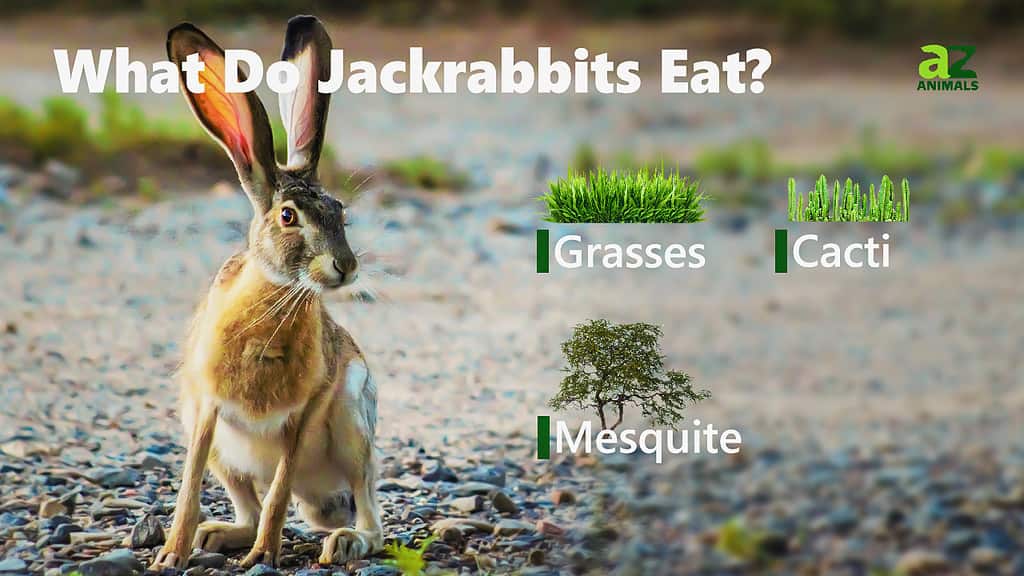
What Do Black-tailed Jackrabbits Eat?

The main part of a black-tailed jackrabbit’s diet is grass. If the grass is sparse in their environment, they may eat bark, weeds, or even cacti.

A hare is able to digest cacti, bark, and other hard vegetation because it travels to the appendix where it’s broken down before it reaches the animal’s stomach.

Predators

What Eats Black-tailed jackrabbits?
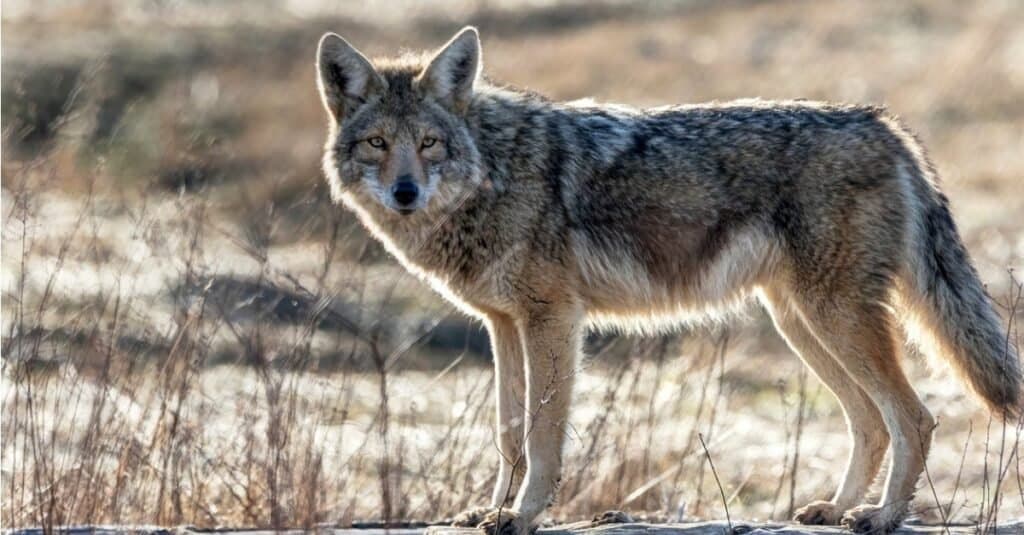
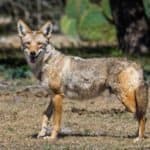
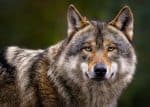
Types of Wild Dogs

Coyotes are the main predators of jackrabbits.

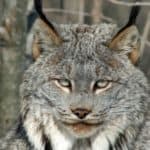
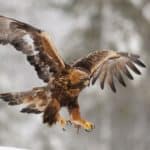
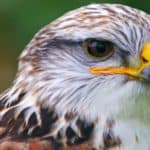
Coyotes are the main predators of these hares. Other predators include bobcats, hawks, and eagles.

All of these predators can travel at a high rate of speed just like the black-tailed jackrabbit. A coyote or bobcat may stalk a jackrabbit out looking for vegetation at dusk. Those two animals are experts at hiding and stalking their prey. Alternatively, a hawk or an eagle may spot one while sitting on a high branch in a tree. These birds can swoop down and pick up this mammal with their sharp talons. Furthermore, they are large enough to carry the weight of this hare as they fly away.

These speedy animals are at risk of habitat loss. Their population is decreasing; however, their conservation status is the Least Concern.

Reproduction, Babies, and Life Cycle
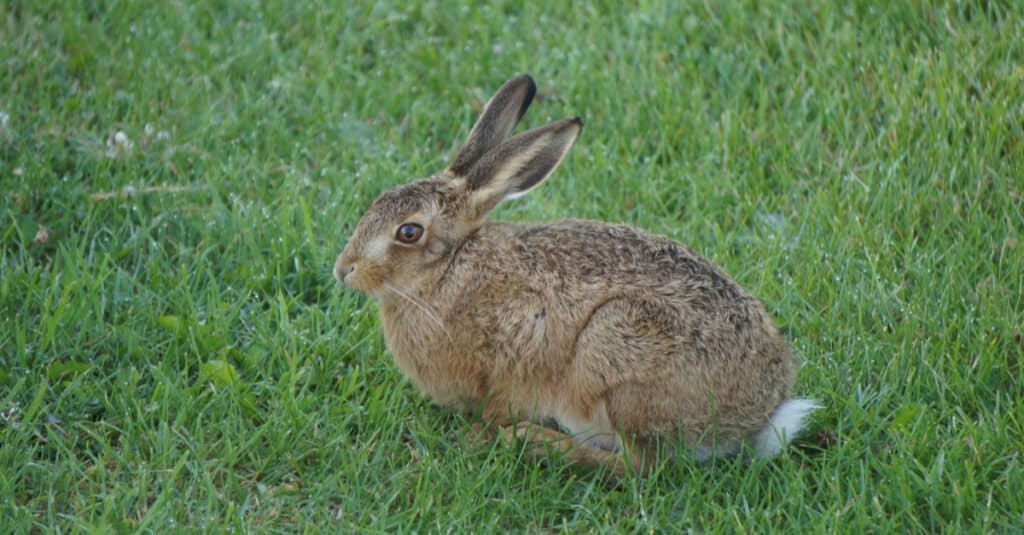
baby jackrabbit

Baby jackrabbits are called leverets and are left alone to live independently after they are two weeks old.

The mating season of this hare goes from January to August. During this time, male and female black-tailed jackrabbits run around chasing each other and leaping in the air, all in an effort to find a mate. These hares have many different partners in a mating season, and a female has three to four litters of babies each year. The gestation period is 41 to 47 days long and the female gives live birth to between one to eight babies. Compare this to a rabbit’s gestation period of 30 days. Also, the typical litter of a rabbit contains four to twelve bunnies.

Female black-tailed jackrabbits have their young in a shallow depression on a stretch of ground. They don’t create a nest. Newborns weigh just a few ounces. A black-tailed jackrabbit’s babies are called leverets. They are born with a thin layer of fur and their eyes are open. The mother jackrabbit nurses her newborn leverets but leaves them to live independently within two weeks of birth.

The lifespan of the black-tailed jackrabbit is five to eight years. These hares are vulnerable to an infection called Tularemia. It can kill a hare and can be transmitted to humans via a tick or an animal bite.

Population

The population of the black-tailed jackrabbit is unknown but listed as decreasing. However, these hares have a conservation status of Least Concern.

View all 52 animals that start with J

Sources

  1. mt.gov / Accessed January 29, 2022
  2. Texas Parks & Wildlife / Accessed January 29, 2022
  3. Friends of Malheur / Accessed January 29, 2022
  4. National Park Service / Accessed January 29, 2022
  5. Woodland Trust / Accessed January 29, 2022
Lisha Pace

About the Author

Lisha Pace

After a career of working to provide opportunities for local communities to experience and create art, I am enjoying having time to write about two of my favorite things - nature and animals. Half of my life is spent outdoors, usually with my husband and sweet little fourteen year old dog. We love to take walks by the lake and take photos of the animals we meet including: otters, ospreys, Canadian geese, ducks and nesting bald eagles. I also enjoy reading, discovering books to add to my library, collecting and playing vinyl, and listening to my son's music.

Thank you for reading! Have some feedback for us?


Jackrabbit FAQs (Frequently Asked Questions)

One of the facts hares share with rabbits is they are both herbivores.