
With a planet full of diverse animals, it’s no surprise that they come in all shapes and sizes. Some animals survive solely based on appearing to be threatening, while others mimic poisonous species to fool predators. There are even predators that have developed appearances to lure prey to their eventual doom.
These 10 amazing animals look just like plants, and you’ll be amazed at their reasons for doing so.
#10. Satanic Leaf-Tailed Gecko
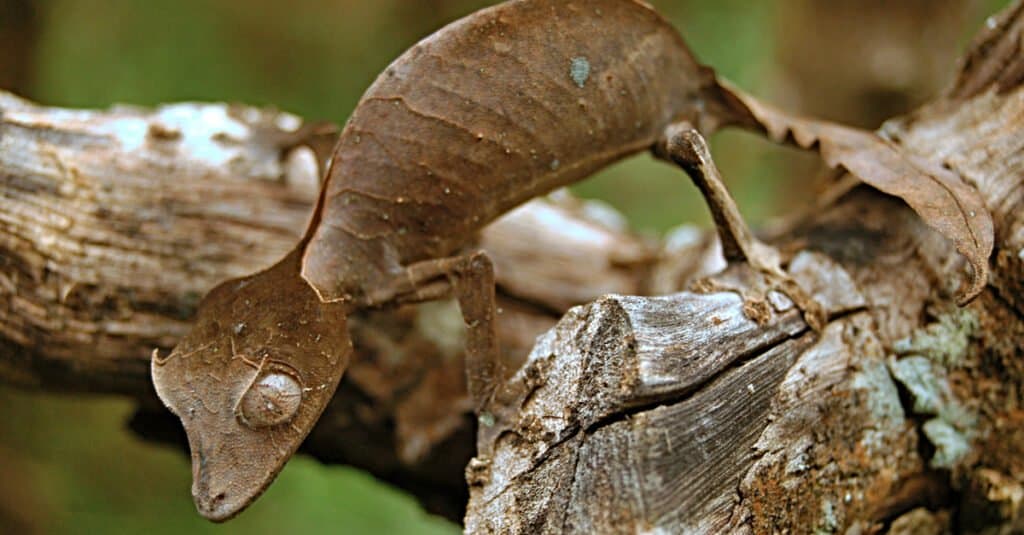
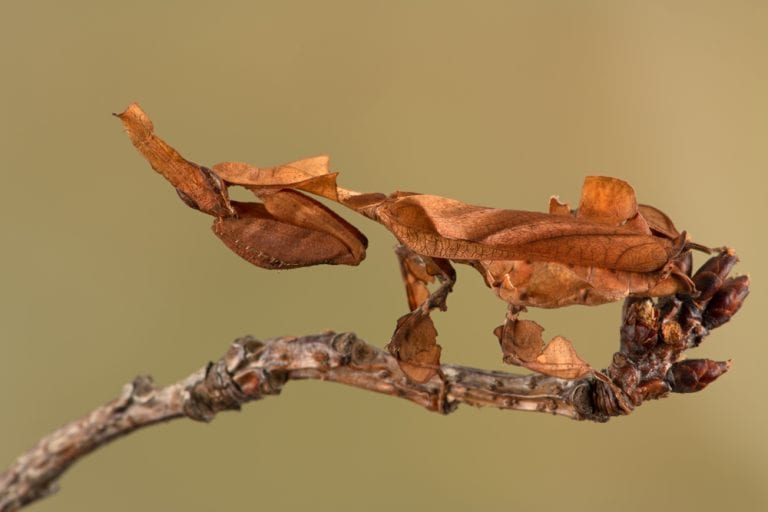
The satanic leaf-tailed gecko looks uncannily like a dead leaf.
©Jiri Balek/Shutterstock.com
The 10th place on our list is held by what is probably the most threatening in appearance when taken out of the environment for which its camouflage is designed. The satanic leaf-tailed gecko (Uroplatus phantasticus) is fully committed to its plant costume. This reptile not only has a tail shaped like a leaf, but it also has horned eyebrow ridges that look like branches and ridges down its body like leaf veins. This specific species also steps up its game compared to other leaf-tailed geckos throughout the world; its coloring in the red, orange, and brown range makes it appear like a dead leaf so even herbivores don’t mistake them for a possible meal.
This gecko’s primary purpose for plant mimicry is self-defense, and concealment isn’t the only defense mechanism the satanic leaf-tailed gecko relies on. When threatened, they will occasionally let out a tremendous scream given their small size in an attempt to frighten off predators. Found only in the rainforests of Madagascar, the satanic leaf-tailed gecko is yet another unique species native to that island nation.
#9. Orchid Mantis
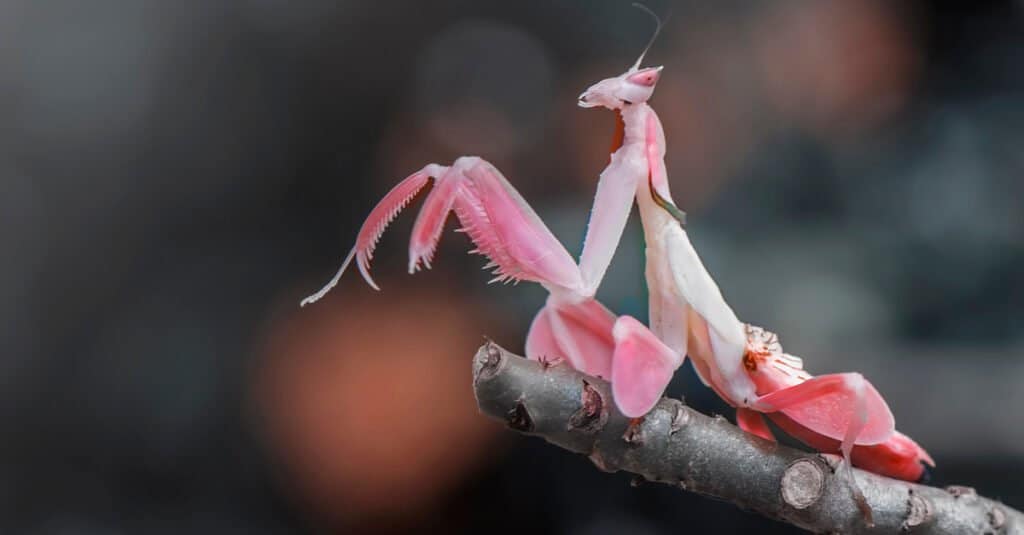
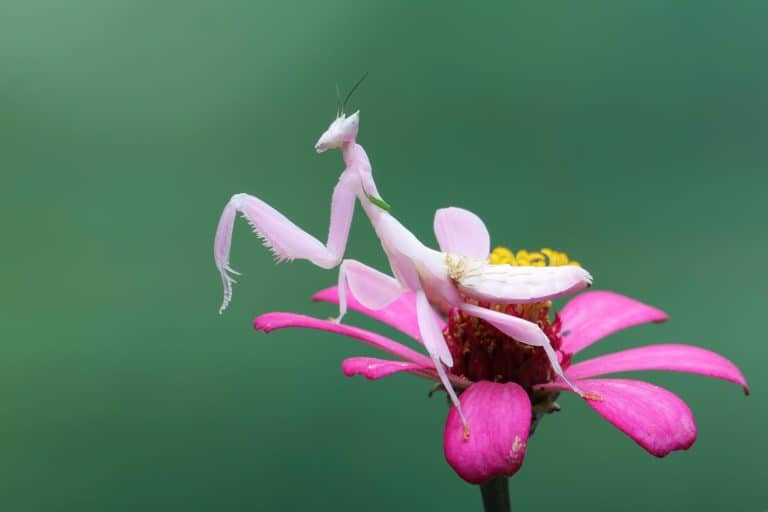
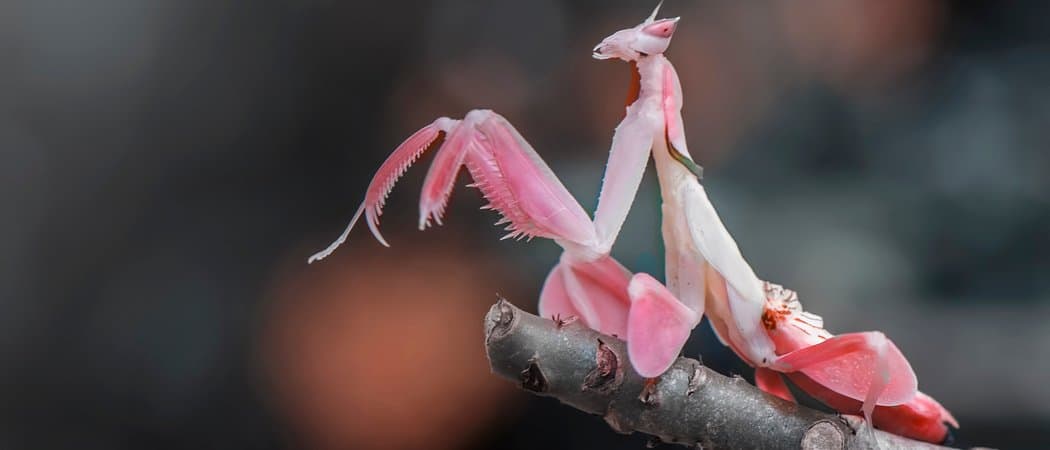
The orchid mantis mimics both the colors and petal structure of an orchid.
©Galuh M/Shutterstock.com
The orchid mantis (Hymenopus coronatus) is another tricky predator on our list that uses beautiful camouflage to capture its meals. Native to Southeast Asian rainforests, this mantis perches on branches and flowers to lure unsuspecting insects into their grasp. Not only does the coloring of this species mimic the flowers they are named after, but their legs are actually formed into the shape of orchid petals as well.
The orchid mantis is not categorized by the IUCN in any category; however, they are so rare that it was only recently discovered that they actively use their appearance to draw in prey as opposed to simply hiding from them. Originally discovered in the 1800s, their remote habitat makes research exceedingly difficult.
#8. Walking Stick
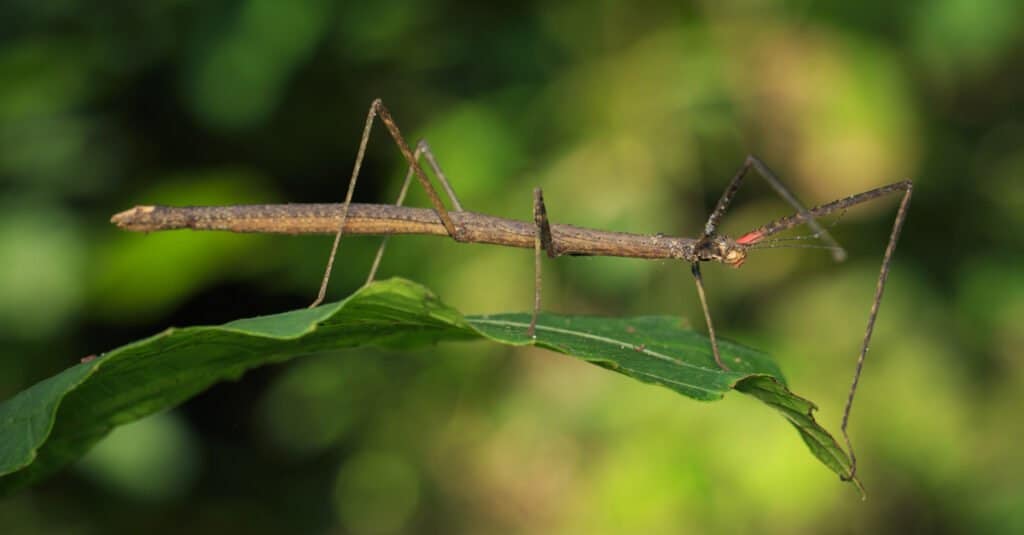
Walking sticks, more commonly known as the stick bug, sway back and forth to mimic a branch in the breeze.
©yod 67/Shutterstock.com
Walking sticks of the order Phasmida account for more than 3,000 different species of insect. Found everywhere except Antarctica, these bugs survive by trying to hide from their predators in plain sight. Walking sticks don’t just look like a stick; some species actually sway back and forth to mimic a branch in the breeze!
A stick is the perfect disguise for this herbivore that uses powerful mouthparts called mandibles to feed on leaves. However, this deception doesn’t work on all predators. Bats that hunt with echolocation are not fooled by these tricks. Depending on where they live, walking sticks may also have to watch out for hungry spiders, reptiles, birds, and primates.
#7. Coral
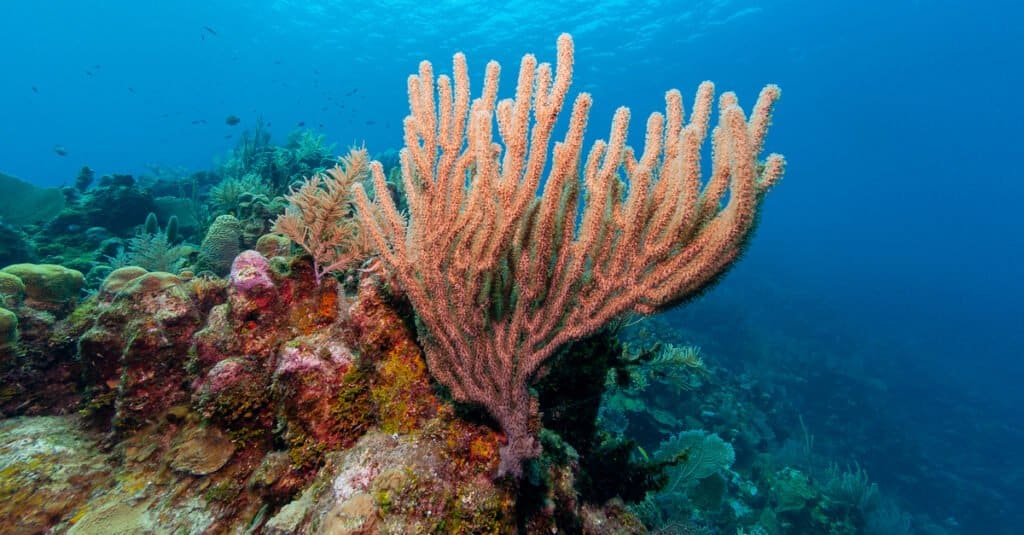
Coral kills its prey by using the nematocysts, or venomous thread, on their tentacles.
©Jesus Cobaleda/Shutterstock.com
Coral reefs are composed of hundreds to hundreds of thousands of individual animals called polyps. These small organisms have only one opening into their body surrounded by tentacles. Their tentacles have nematocysts on them that allow the coral to sting and kill their prey, which can be anything from microscopic plankton to small fish depending on the size of the polyp. They consume their meal and then excrete any waste back out through their mouths.
#6. Star-Nosed Mole
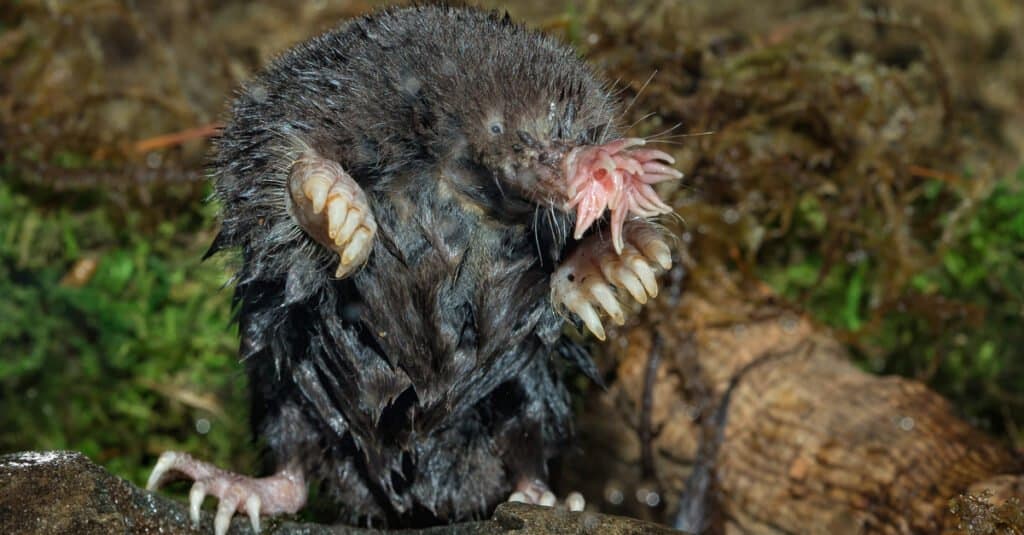
The star-nosed mole touches the ground nearly 10 times per second to navigate its environment.
©Agnieszka Bacal/Shutterstock.com
Star-nosed moles (Condylura cristata) are the only species of mole that live in swamps and marshes, and they are a veritable treasure trove of interesting abilities. When viewed head-on, the star-shaped nose that is the inspiration for their name gives off the appearance of a strange flower. This mole’s nose is comprised of 22 tendrils called rays, and this is much more than just an olfactory organ. Star-nosed moles have terrible eyesight and navigate their underground world primarily by touch. They touch their nose against the ground upwards of 10 times per second and receive detailed information about their environment. This allows them to find the insects they feed on and they consume them within an amazing time of 0.25 seconds.
Star-nosed moles spend the most time above ground compared to any other species of mole, and they don’t hibernate at all. These moles burrow deeper into the ground to combat the colder winter temperatures, but biologists are not sure how they can avoid damage to their sensitive noses in extreme cold. Furthermore, these moles are the only known mammals that can smell underwater. They perform this feat by blowing out air bubbles from their nose and sucking them back in.
#5. Flower Hat Jelly
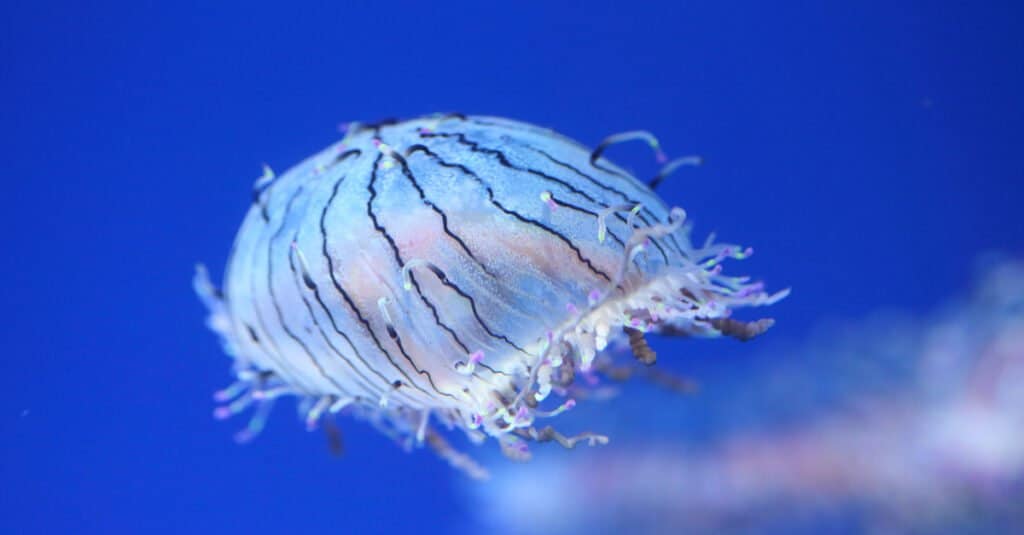
The flower hat jelly uses its curled tentacles to capture prey.
©feathercollector/Shutterstock.com
The flower hat jelly (Olindias formosus) is our next ocean-dwelling invertebrate with striking plant characteristics. Unlike any of the other rankings on this list, the flower hat jelly looks less like a plant directly and more like a fancy hat covered in plants. This jellyfish is also unique among other jellies in that it spends a fair amount of time just sitting on the ocean floor.
The flower hat jelly has a traditional bell shape, but it also has tentacles of varying length and arrangements. This gives it the flower hat appearance that it is named after. These curled tentacles can quickly be unfurled to capture prey. Given their bottom-dwelling tendencies, these floating tentacles also help them to blend in with the kelp and seagrass that they spend a large amount of time near.
#4. Sea Cucumber
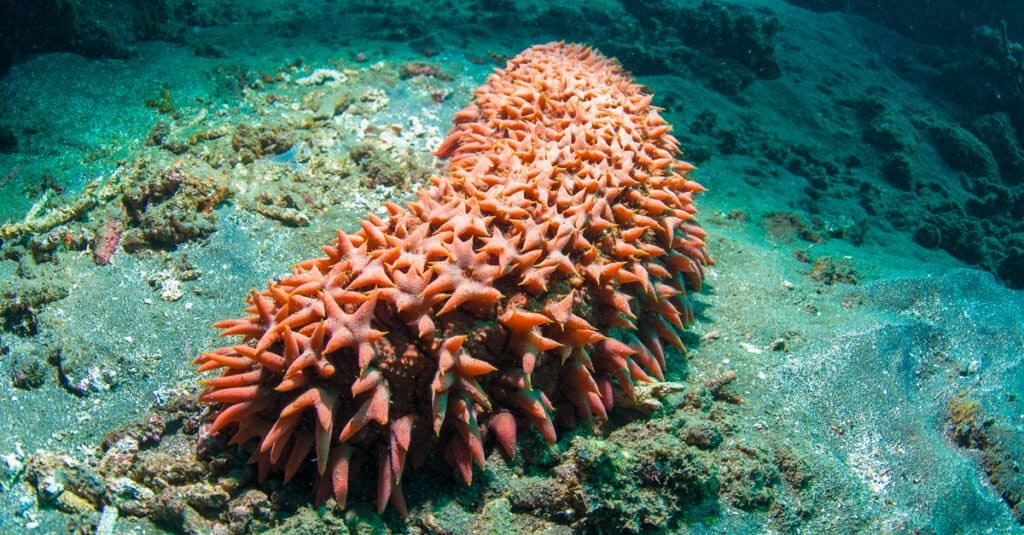
Predictably, sea cucumbers resemble the vegetable for which they are named.
©e2dan/Shutterstock.com
Back underwater for our next plant-like animal, we have the common sea cucumbers of the class Holothuroidea. Species in this class can vary greatly in size from less than 1 inch to over 6 feet long, and they look exactly like lumpy cucumbers. Using tubular feet for both locomotion and feeding, these marine invertebrates move along the seafloor and consume algae or any other invertebrate species that wanders too close. Those feet are used to push any of the scavenged food into their mouths.
Sea cucumbers can be found in environs throughout the ocean, from shallow waters to very deep regions. Some species even expel their internal organs and push them towards predators as a defense mechanism. These organs are toxic to other creatures and will eventually grow back, causing no long-term damage to the cucumber.
#3. Pale Tussock Moth
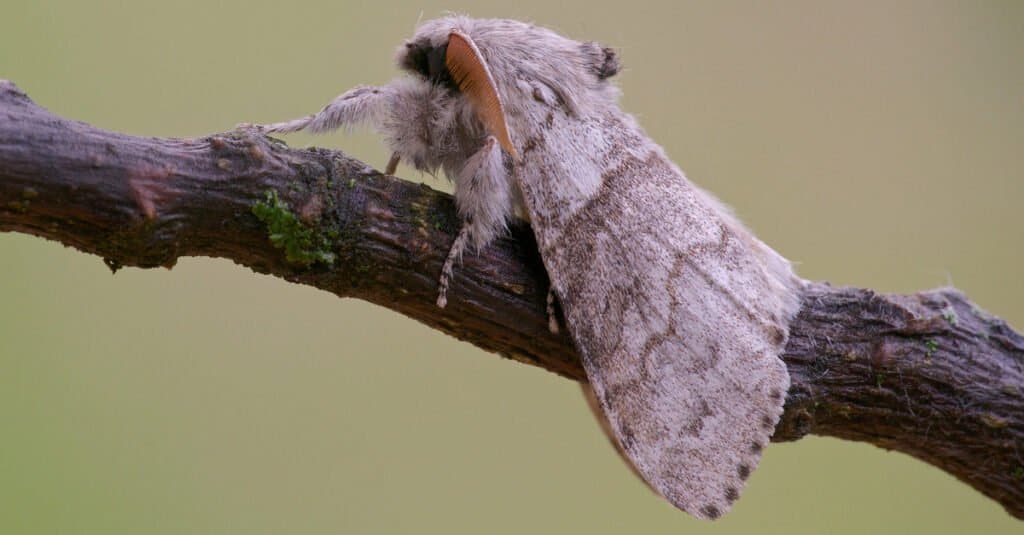
An adult pale tussock moth blends in very well with the bark of shade trees.
©Rob Blanken/Shutterstock.com
The pale tussock moth (Calliteara pudibunda) has a caterpillar and a final moth form, and both of these iterations of the moth look like different plants. In caterpillar form, the pale tussock is bright green with tufts of spiked hairs on its back and a brightly colored head. This allows the moth to conceal itself in the gardens where it is frequently found. In adult moth form, the furry brown and gray wings and head allow it to blend in with the bark of shade trees in its native regions of the United Kingdom and Ireland.
#2. Sea Anemone
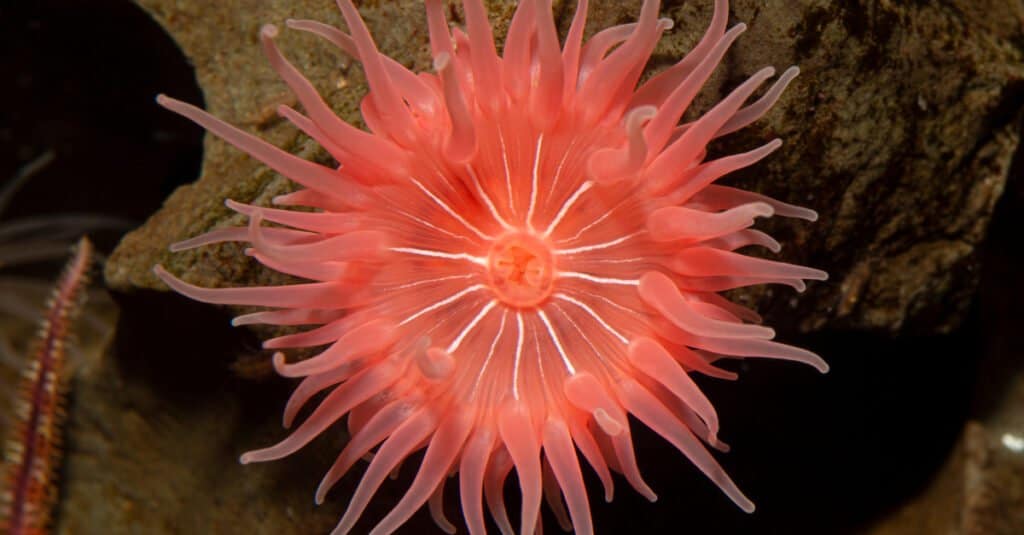
The sea anemone, which closely resembles a flower, has venomous stingers used to capture prey.
©Ernie Cooper/Shutterstock.com
Another marine invertebrate species that looks like a plant is the sea anemone. These animals are often found on the seafloor or coral reefs in tropical waters. They use tentacles and venomous stingers to capture prey and shovel them into their tubular mouths. Giving the appearance of a harmless flower, it’s no surprise that crabs, fish, and plankton fall victim to a false sense of security around them. One larger species of anemone called the dahlia anemone (Urticina felina) is big enough to hunt starfish and jellyfish.
#1. Sea Fan
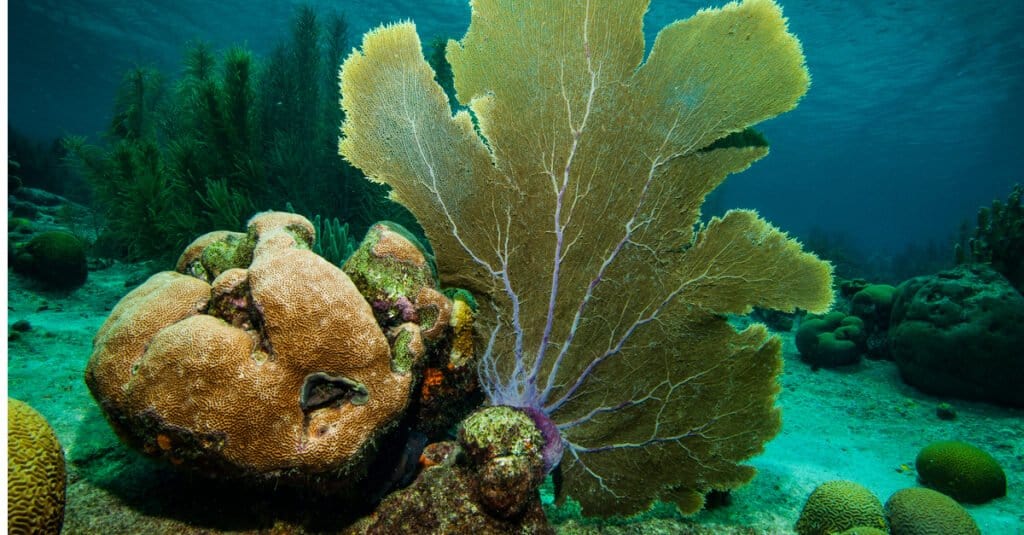
Sea fans, native to more tropical temperatures, can also be found in frigid waters around Antarctica.
©RLS Photo/Shutterstock.com
Sea fans, sea whips, and sea pens are all related marine invertebrate species that bear a striking resemblance to plants. These species form colonies on the seafloor that branch out into sizes that can be many feet across. Some sea fan species can even be several feet high. One species of sea fan (Tauroprimnoa austasensis) that has only recently been discovered, makes its home in the frigid seas around Antarctica.
This is unique in that the majority of other sea fan and sea whip species are native to tropical-temperature waters. Sea fans have a symbiotic relationship with photosynthetic algae called zooxanthellae, which live within their tissues and provide nutrients through photosynthesis, a process inherently attributed to plants.