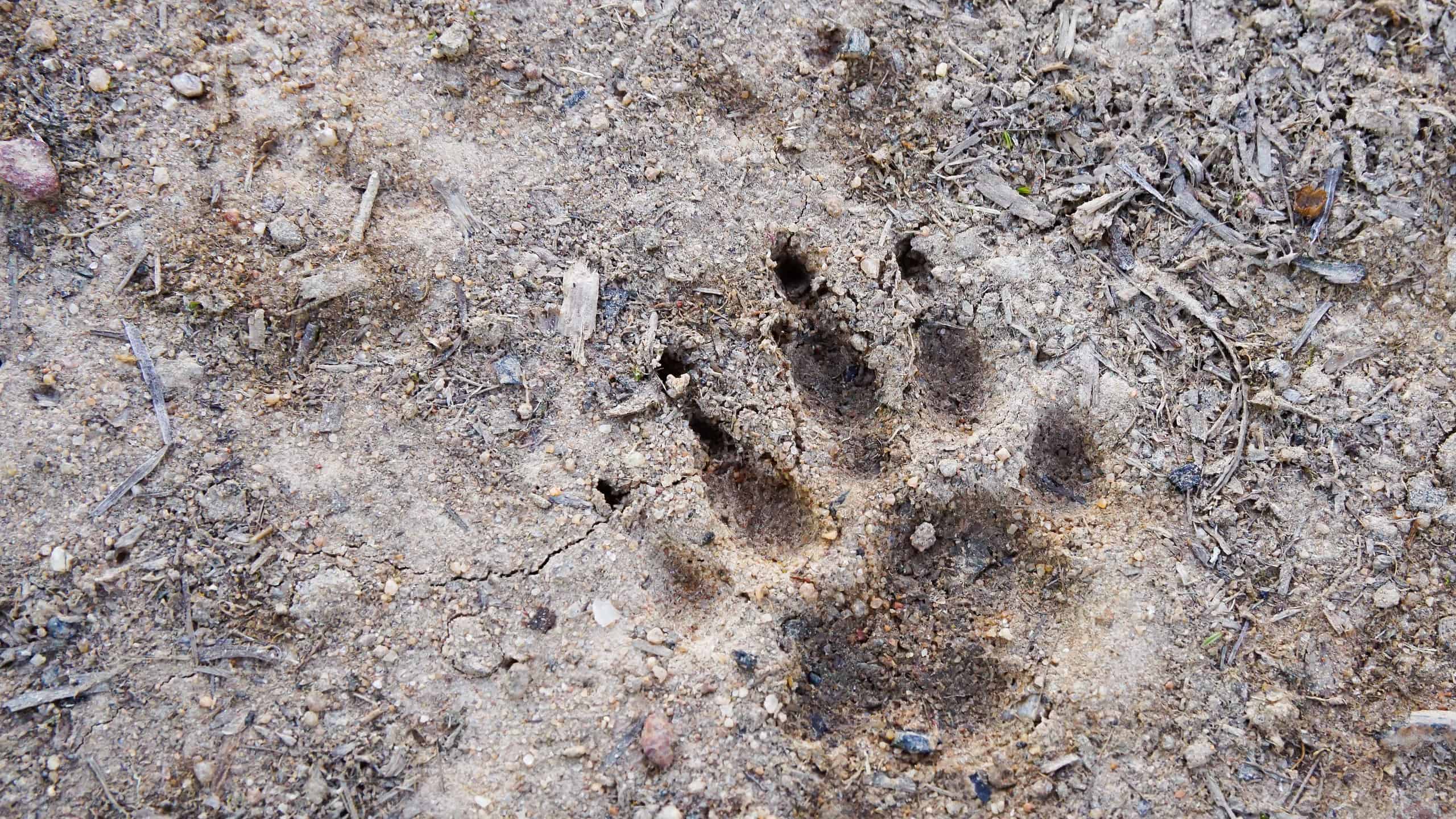

Badgers are common woodland animals and are easily distinguished by their black and white facial markings. But have you ever wondered what their tracks look like? Or perhaps you’ve been out for a walk and come across a paw print that you don’t recognize? It can be both fun and useful to be able to identify an animal by its tracks alone, so in this article we’ll discuss everything you need to know about badger tracks. We’ll include what their prints look like, how big they are, and how to identify them in snow and in mud.
All About Badgers

Most badgers have distinctive black and white stripes down their faces along with grey-colored bodies.
©Coatesy/Shutterstock.com
Badgers are mammals in the Mustelidae family group and there are fifteen living species which are distributed across North America, Europe, sub-Saharan Africa, and parts of Asia. Although there is some variation between the different species, badgers typically have broad bodies with short legs and sharp claws which are highly adapted for digging. Most of them also have distinctive black and white stripes down their faces along with grey-colored bodies. Their size also varies between species, but the largest is the European badger which is typically 24 to 35 inches long and weighs between 15 and 29 pounds.
Badgers often inhabit woodlands, agricultural land, and pastures. They live in underground burrows which are called setts. These setts are a vast network of tunnels that can be up to 300 feet long with as many as 40 or 50 entrance holes. Most badgers are social animals and live in groups which are known as clans or cretes. The size of the group typically depends on the size of the territory and the amount of food that is available.
When it comes to food, badgers are omnivores and have a varied diet. Obviously, it depends on what food is available in the country or region that particular species lives in, but insects, worms, slugs, and snails make up a large part of their diet. However, they also eat fruit, nuts, seeds, birds, eggs, small mammals, amphibians, and even reptiles.
Badger Tracks
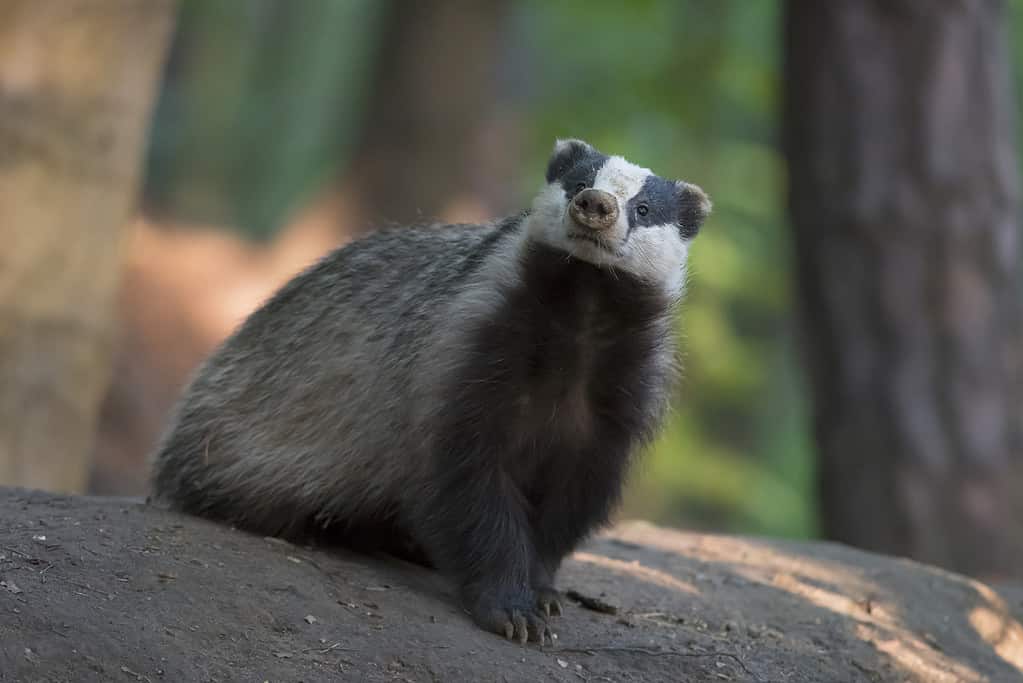
Badgers have large paws with long, sharp claws.
©iStock.com/Maciej Jaroszewski
As we mentioned earlier, badgers have paws which are adapted to digging. They have large paws with long, sharp claws. Their paws are typically up to 2.5 inches wide, although the front ones are usually slightly broader than the back ones. Badgers also have a large palm pad which is broad and shaped like a kidney. They have five toes on both their front and back feet but the claws are longer on the front ones as they are primarily used for digging and scooping soil with. However, the inner toes on the back feet are often positioned slightly further forward than the they are on the front paws.
| Front Paws | Back Paws | |
|---|---|---|
| Size | Up to 2.5 inches wide | Up to 2.5 inches wide |
| Number of Claws | 5 | 5 |
| Retractable Claws | No | No |
| Toe Pads | 5 | 5 |
| Palm Pad | Broad, kidney-shaped pad | Broad, kidney-shaped pad |
| Distinguishing Features | Front claws are longer so show up long, distinguishable marks | Shorter claws which don’t always show up as well in prints. Inner toes sometimes further forward than on front paws. |
Snow
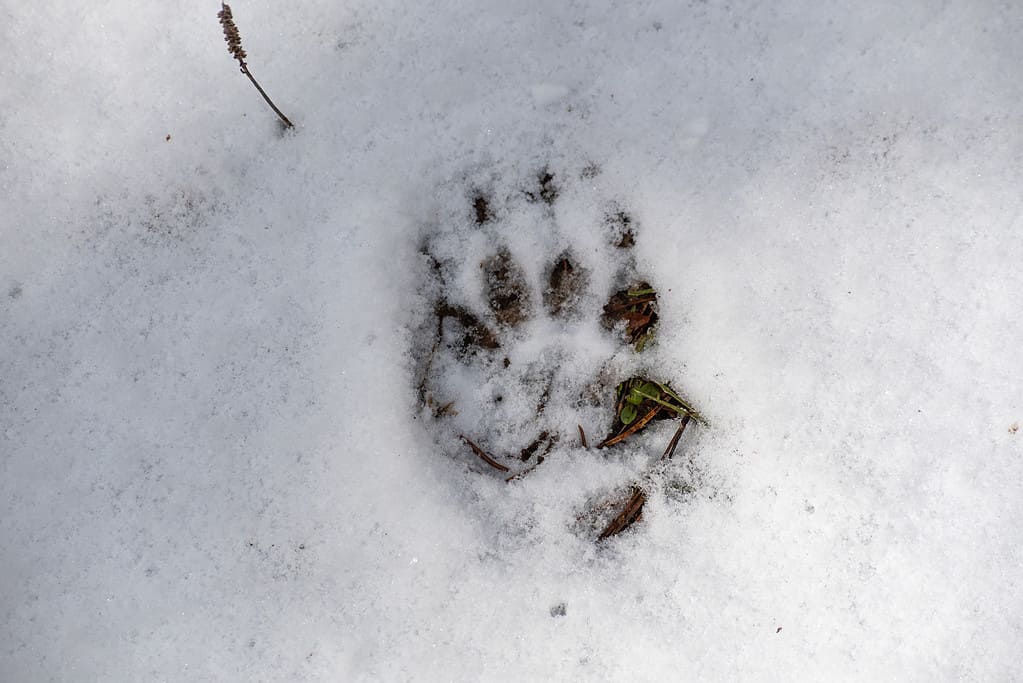
A thinner layer of snow will typically produce clear badger tracks which are easy to identify.
©Michele Ursi/Shutterstock.com
With such distinctive paws it stands to reason that badgers will have tracks that are pretty easy to identify. However, what they look like can actually depend on the conditions underfoot.
Several badger species inhabit areas where there is seasonal snow. Although they do not hibernate they do tend to be less active during the winter months. However, they do still need to go out in search of food. Badger tracks in snow can differ depending on the depth and quality of snow. A thinner layer of snow will typically produce clear tracks which are easy to identify, whereas deeper or finer snow can produce tracks which are difficult to identify. In deeper snow there may be what appears to be a scuff or a streak between the prints. This is where the badger’s paw has moved through the top of the snow rather than completely clearing the top of it.
That said, if you do come across badger tracks in a thin layer of snow then they’re usually easy to distinguish. Badgers have broad prints with five toes and a well-defined paw pad. The claws marks on the front feet are long and are easy to see in snow. However, the claw marks on the back feet are noticeably shorter. Sometimes badgers can place their back foot into the same place that their front foot has just left. This can make the print look longer and a little confusing, although it can still be identified by the claw marks.
Mud
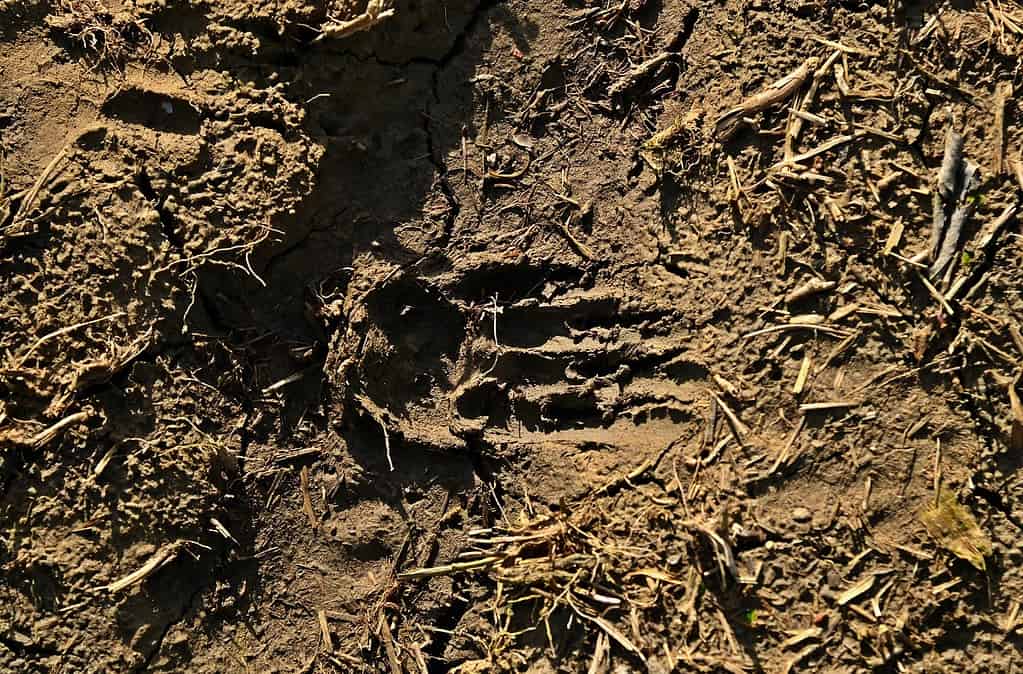
The most distinguishable feature of badger prints is their claw marks, and these are often pronounced in soft mud.
©Zsolyomi/Shutterstock.com
Identifying badger tracks on mud is usually fairly easy in shallow mud. However, deeper or particularly soft ground may distort them a little. The mud in forests, woodlands, wetlands, and river banks is usually able to provide a easy-to-identify imprint of badger tracks. Once again, the most distinguishable feature of badger prints is their claw marks, and these are often pronounced in soft mud.
Other Surfaces
You may be able to identify badger tracks on other surfaces — such as dry mud. As badgers have such large, sharp claws their prints are much easier to identify on harder ground than smaller animals such as squirrels. However, on this type of surface the claw marks will be the points show up the most. The rest of the paw print — the toes and the paw pad — may only make a shallow indentation or not show up at all, depending on how hard or dry the surface is.