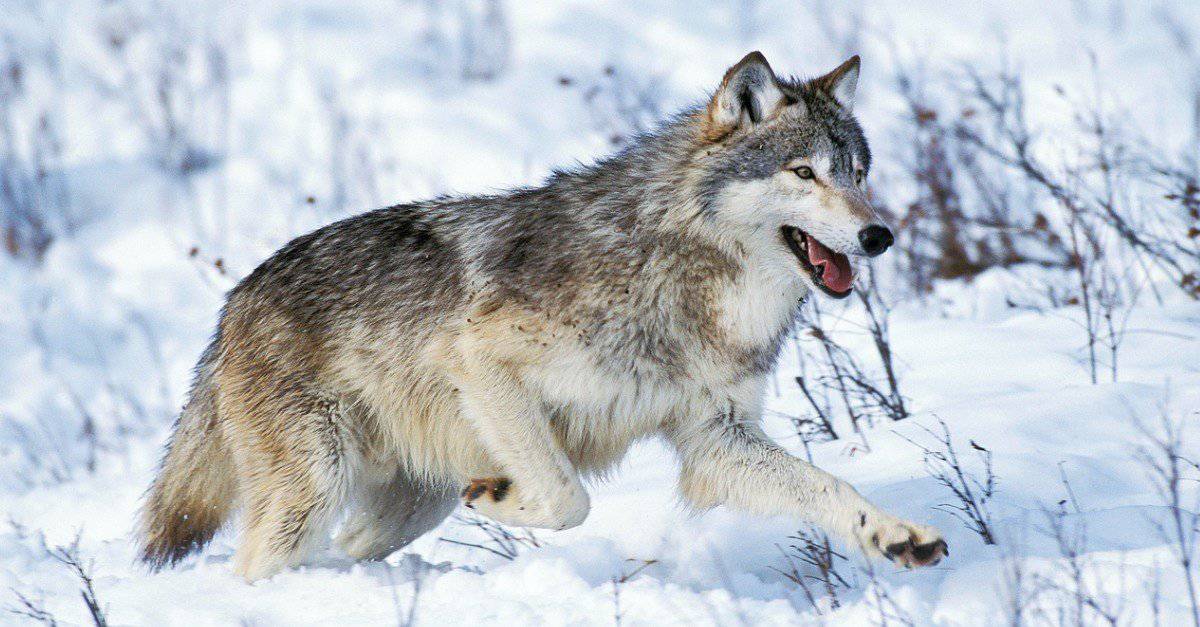

Canines are approximately 35 to 37 species in the Canidae clade, including wolves, coyotes, foxes, jackals, dingoes, and domesticated dogs. There is a massive size range among canines, from the tiny fennec fox, which weighs no more than three pounds, to the gray wolf, weighing over 100 pounds. Continue reading to learn about the 10 largest canine species.
10. Red Fox
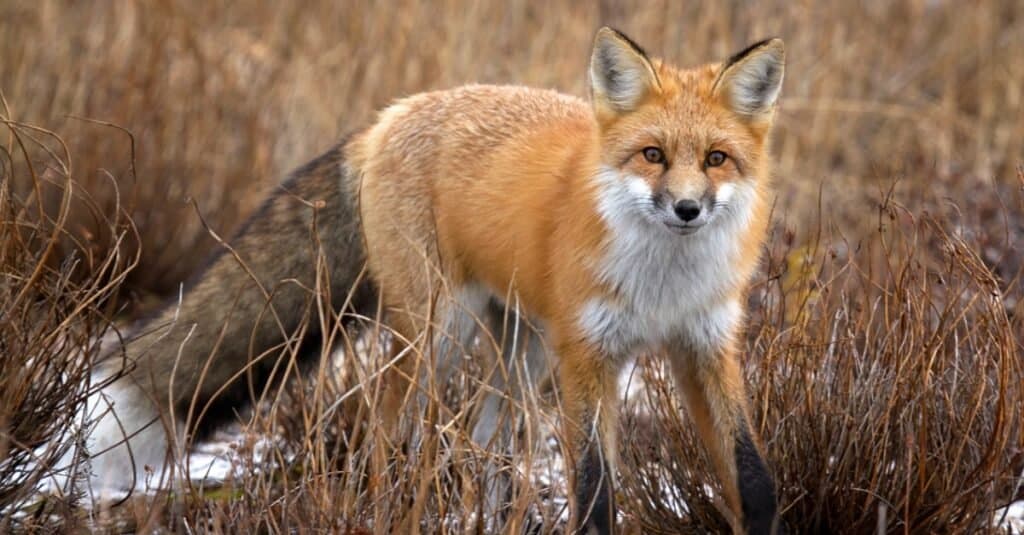
The red fox has beautiful reddish-orange fur making it one of the most lovely orange animals.
©iStock.com/Lynn_Bystrom
Red foxes (Vulpes vulpes) are the largest true foxes and are native to Asia, Europe, North America, and North Africa. They have been introduced to Australia, where they are now considered an invasive species. Red foxes are red with white chins, throats, and chests. They have long, bushy tails but short limbs, measuring 35 to 42 inches nose to tail. On average, red foxes stand approximately 15 to 16 inches tall at the shoulder and weigh between 5 and 31 pounds. Red foxes are adaptable and live in a wide variety of habitats. They are omnivores and eat a range of different foods. Red foxes have many predators, depending on the country. In North America, mountain lions, bobcats, and wolves are the main ones.
9. Dhole
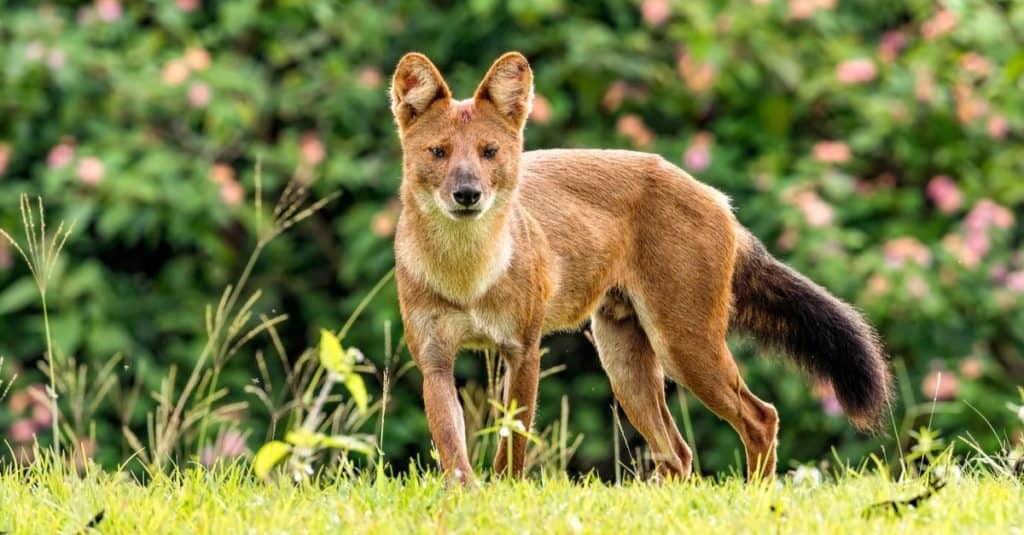
The dhole lives in big, loosely organized groups with several breeding females. The groups usually have about 12 dholes, but some have over 40.
©Nimit Virdi/Shutterstock.com
Native to Asia, dholes (Cuon alpinus) weigh 22 to 37 pounds and measure approximately 20 inches tall at the shoulder and 3 feet in length. Dholes live in mountainous and forest regions, where they form large clans with little social hierarchy. Litters consist of four to six pups, usually born in dens along river banks. While a female dhole is nursing her pups, other members of the clan bring food to her den. Their diet consists of berries, insects, rodents, hares, livestock, and deer.
8. Coyote
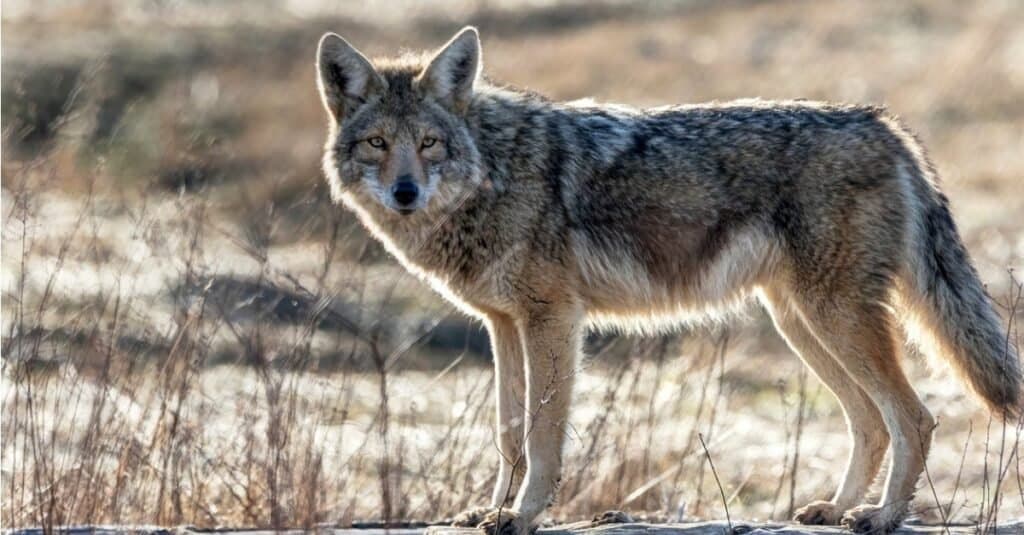
Opportunistic coyotes will take advantage of pet food, garbage, and other food left out by humans, especially in urban environments.
©iStock.com/jamesvancouver
Coyotes (Canis latrans) weigh between 15 and 40 pounds, stand 1.9 to 2.2 feet at the shoulder, and measure approximately 4 feet long. They are native to North America, where they live in grasslands, mountains, deserts, and forests. Dens are made in hollow tree trunks, and around six pups are born after a 63-day gestation period. Coyotes are vocal animals, communicating through a series of howls, yelps, barks, and growls. They have a varied diet, and their main predators are gray wolves and mountain lions.
7. Ethiopian Wolf
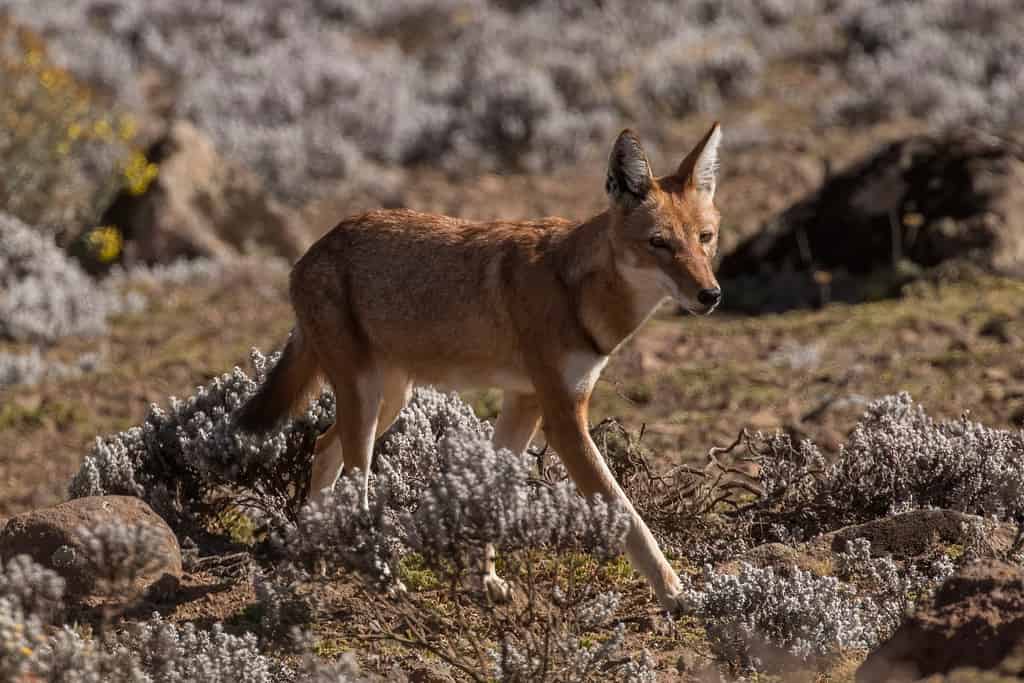
The Ethiopian wolf is one of the largest canine species in the world.
Ethiopian wolves (Canis simensis) are native to Ethiopia, where they are limited to grassland mountain ranges at altitudes between 9,800 and 14,500 feet above sea level. They weigh between 24 and 44 pounds, stand 21 to 24 inches at the shoulder, and measure 45 to 56 inches nose to tail. Ethiopian wolves live in packs of up to 20 adults, along with their pups. They prey almost exclusively on rodents such as African mole rats, grass rats, and highland hares. These wolves don’t hunt in packs; instead, they hunt individually during the day.
6. Maned Wolf
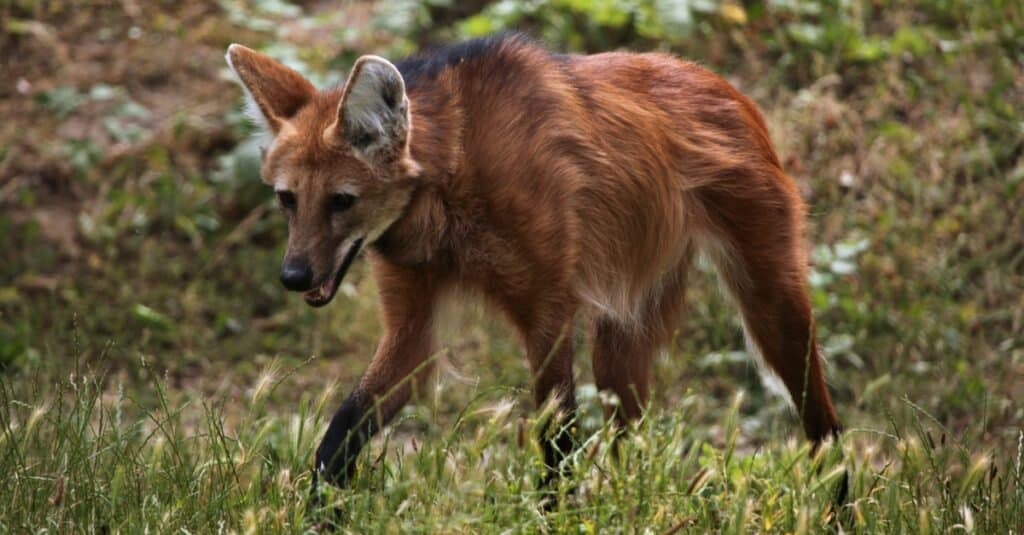
The maned wolves are named for the characteristic mane on their necks, which stands erect when they sense danger.
©Vladimir Wrangel/Shutterstock.com
Maned wolves (Chrysocyon brachyurus) are native to Argentina, Brazil, Paraguay, and Uruguay. They weigh between 44 and 66 pounds, stand 29 to 36 inches at the shoulder, and measure 48 to 72 inches nose to tail. Maned wolves are reddish with a black mane, a white tuft on the tail, and white underneath their throat. They are solitary wolves that hunt during the twilight hours. They are omnivorous and feed on birds, rodents, fish, deer, and wolf apples.
5. Eastern Wolf
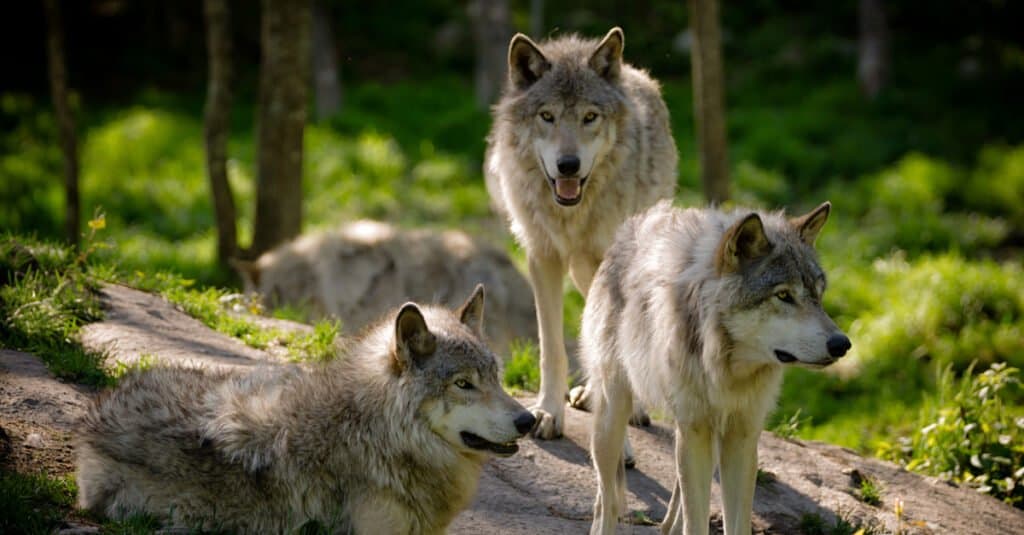
The Eastern timber wolf numbers are currently low, but they inhabit forests in Canada and North America.
©iStock.com/GatorDawg
The Eastern wolf (Canis lycaon) is native to southeastern Canada and the Great Lakes region. Eastern wolves weigh between 50 and 70 pounds, stand 25 to 32 inches tall at the shoulder, and measure 4.5 to 5.5 feet nose to tail. They live in forests, and the clearance of their natural habitat for farmland development is a serious threat to them. Eastern wolves are also threatened by hunting, and a combination of the two means that they are classed as an at-risk species in Canada. Eastern wolves are one of the main predators of whitetailed deer, but they also prey on beavers and other small to medium-sized mammals.
4. African Wild Dog
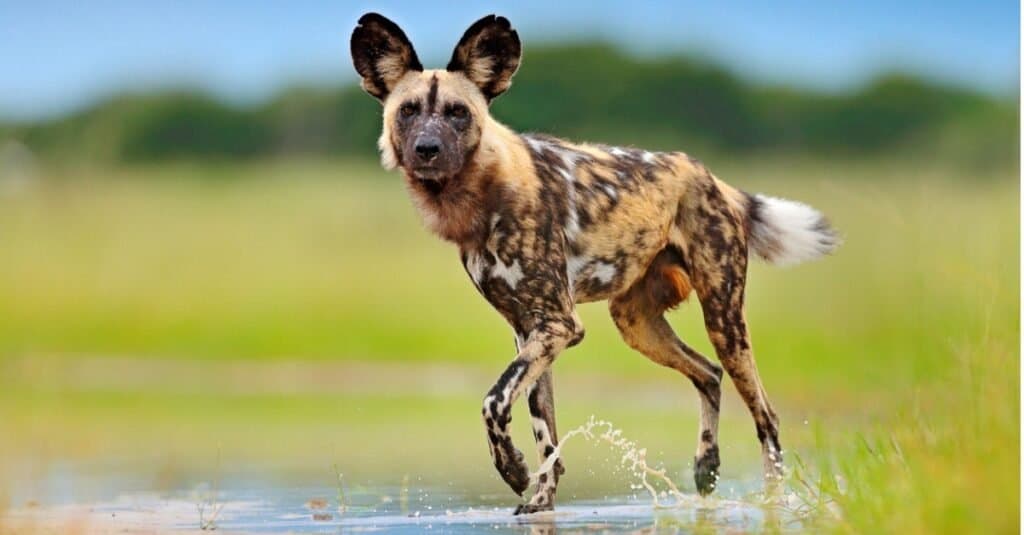
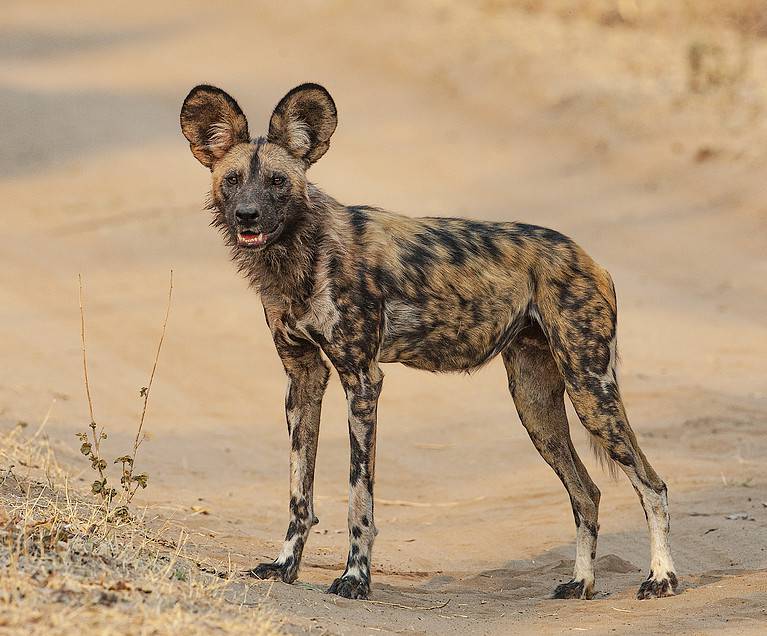
The African wild dog is one of the world’s most endangered mammals and can be identified by its long legs and irregular fur patterns.
©iStock.com/Ondrej Prosicky
The largest canine species in Africa is the African wild dog (Lycaon pictus), which weighs between 40 and 79 pounds. They stand 24 to 30 inches tall at the shoulder, and measure 42 to 61 inches nose to tail. African wild dogs are native to Sub-Saharan Africa, and there are five recognized subspecies. They predominantly live in open grasslands and are characterized by their large, oversized ears and blotched black, brown, and yellow appearance. African wild dogs live and hunt in packs that can be as large as 25 adults. They prey on Thomson’s gazelles, impala, springbok, and wildebeest. African wild dogs are an endangered species, and their main predators are lions. Many African wild dogs are killed by lions because they are seen as competitors, rather than prey.
3. Red Wolf
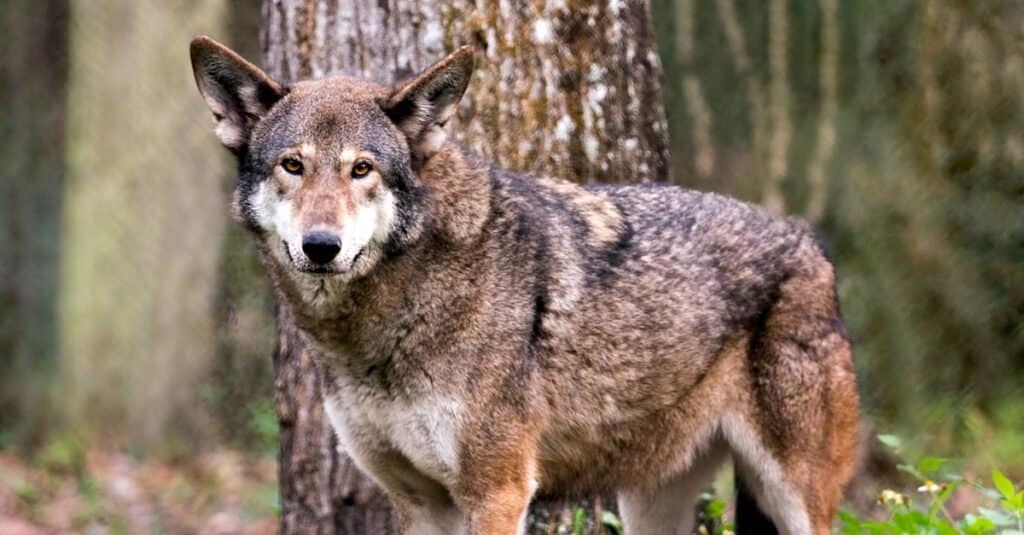
The red wolf is critically endangered according to the IUCN Red List.
©Rejean Bedard/Shutterstock.com
Native to the Southeastern United States, red wolves (Canis rufus) weigh between 40 and 80 pounds. They stand 26 inches tall at the shoulder, and measure 4 to 5 feet nose to tail. Red wolves make dens along stream banks and in hollow tree trunks where they have between two and six pups. Red wolves prey on small mammals such as rabbits, raccoons, and rodents, although they also sometimes prey on whitetail deer. They are the subject of captive breeding programs and have been successfully reintroduced to the wild in North Carolina.
2. Domesticated Dog
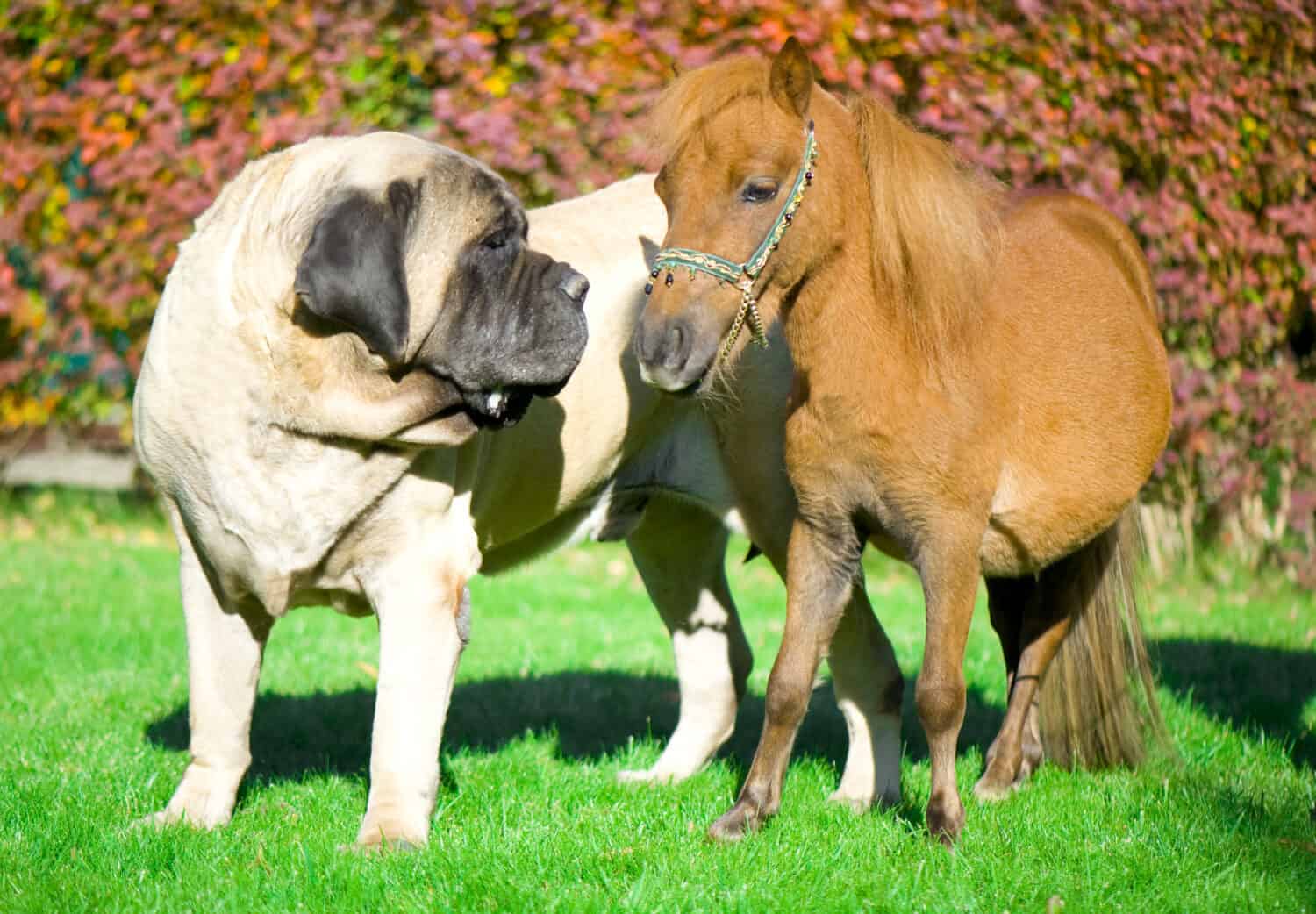
An English mastiff and a miniature horse.
©Kachalkina Veronika/Shutterstock.com
The domesticated dog (Canis familiaris) has many breeds of drastically differing sizes. The English Mastiff is the largest breed. Females weigh 120 to 170 pounds, and males weigh 160 to 230 pounds. Both males and females stand 28 to 36 inches tall at the shoulder, and measure 44.5 to 53 inches nose to tail. An English mastiff named Zorba held the Guinness World Record for the longest dog at 8.3 feet. Zorba stood 35 inches at the shoulder and weighed 319 pounds when he was measured in September 1987.
1. Gray Wolf
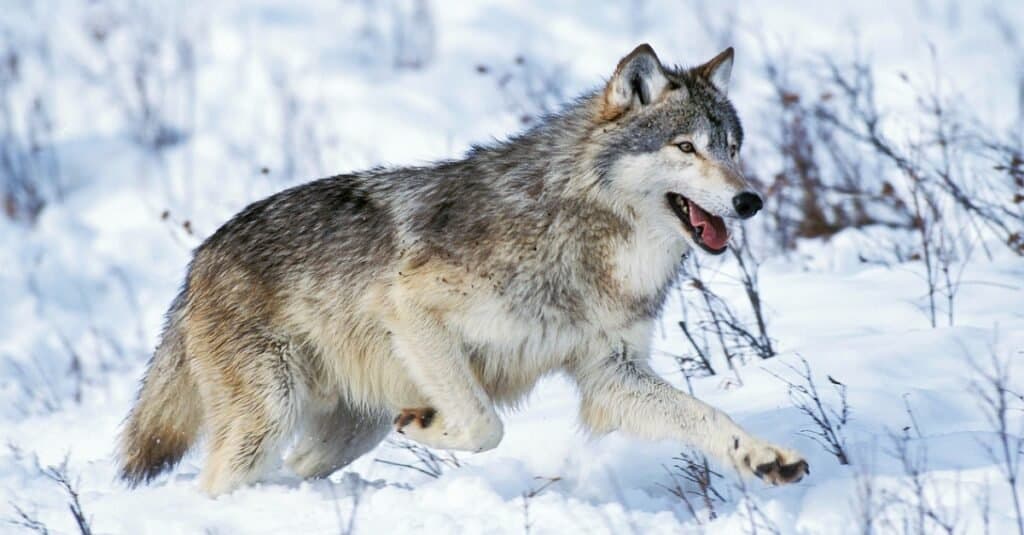
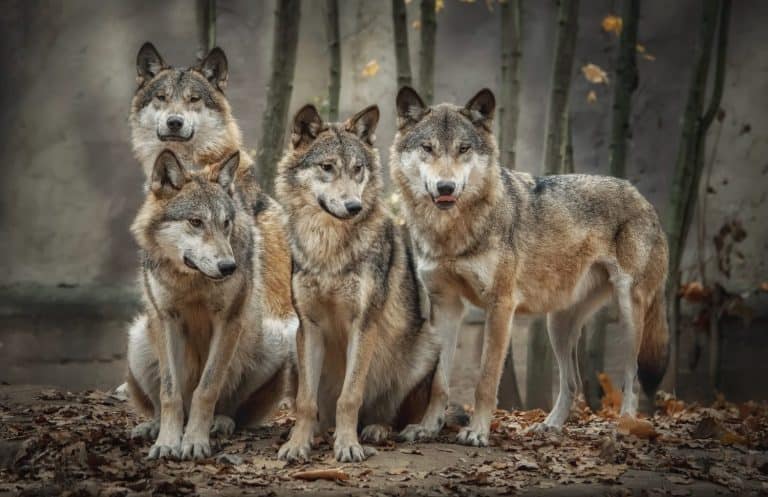
Gray wolves are considered elegant predators and highly social animals that form tight packs.
©iStock.com/slowmotiongli
The largest canine species in the world is the gray wolf. Gray wolves (Canis lupus) stand 2.6 to 2.8 feet at the shoulder, measure 4.5 to 6.5 feet nose to tail, and weigh 51 to 180 pounds. There are more than 30 recognized subspecies native to Eurasia and North America, with the largest being found in Alaska, Canada, and Russia. Gray wolves are incredibly skilled hunters capable of bringing down large prey when they work as a pack, including moose, deer, elk, and caribou. They are under constant threat from human hunters, often in retaliation for livestock predation.