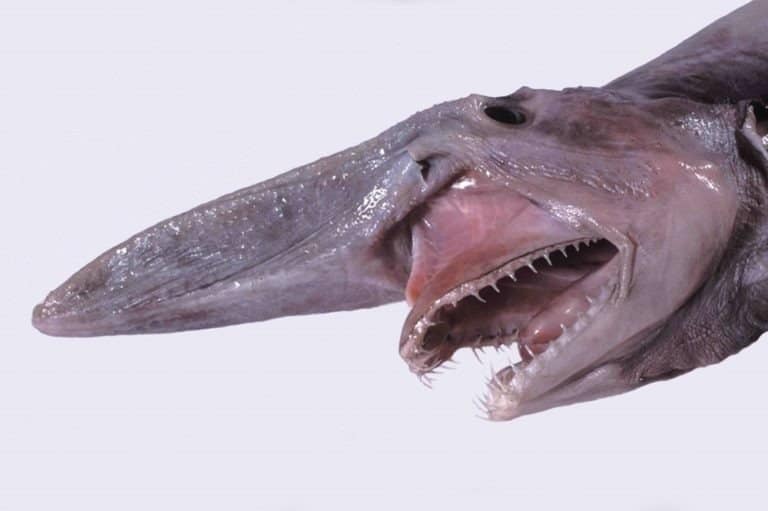
Goblin Shark
The deep-sea "slingshot-jaw" shark

The deep-sea "slingshot-jaw" shark
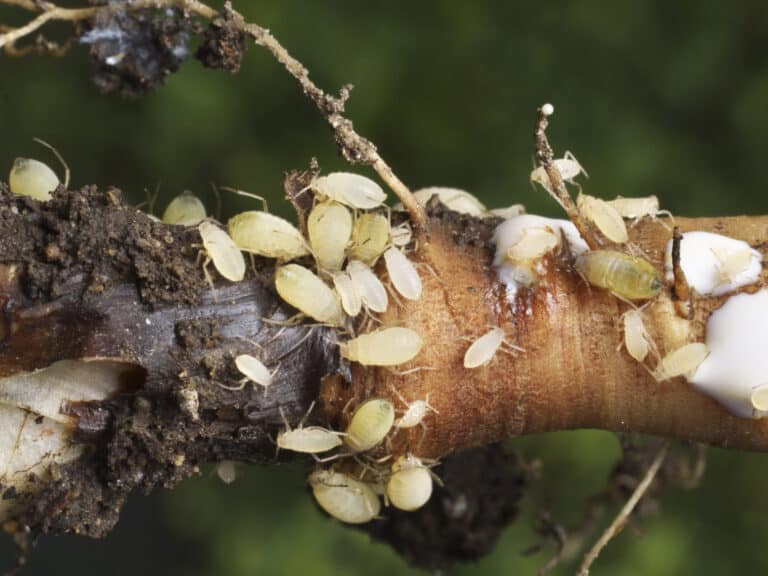
Small sap-feeders, big ecosystem impact
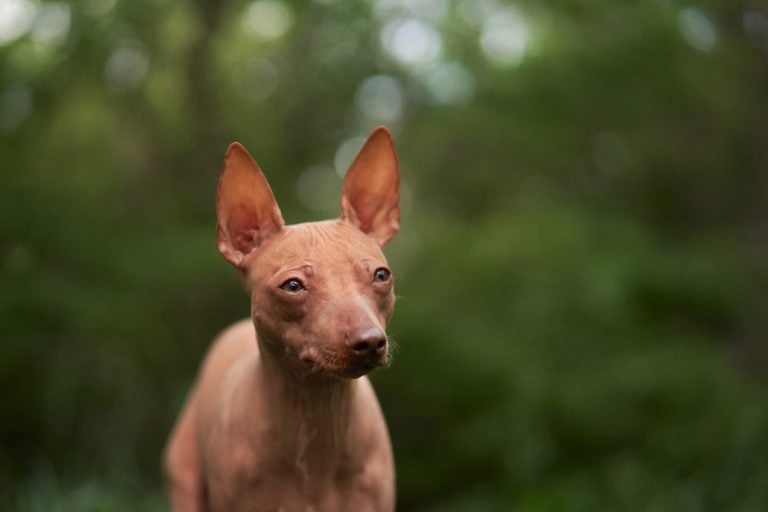
All terrier, no hair.
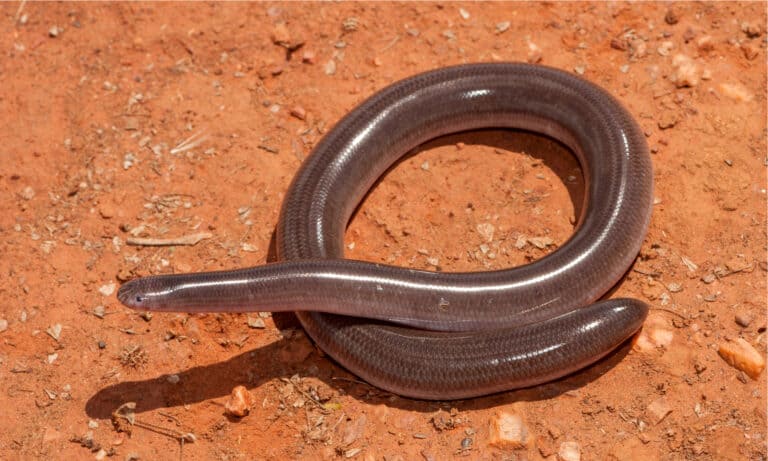
Wormlike, but 100% snake.
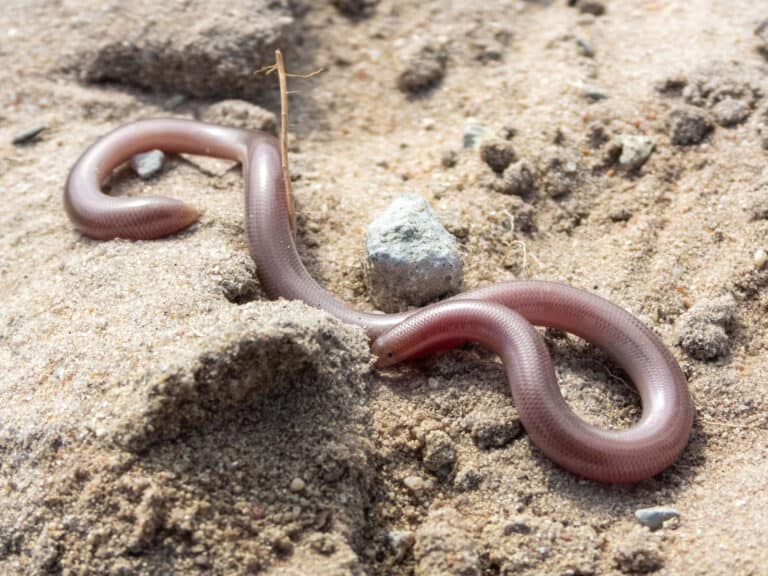
The harmless "worm" that's a snake
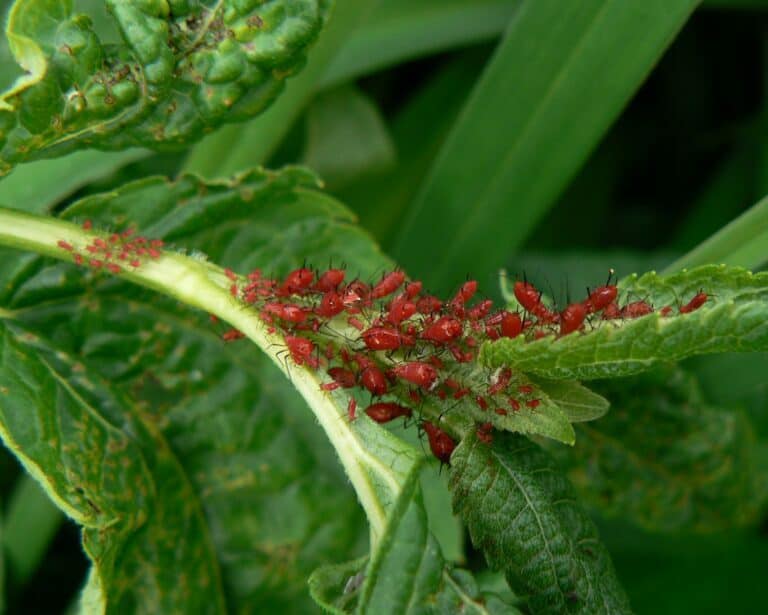
Tiny red sap-sippers, big plant impact
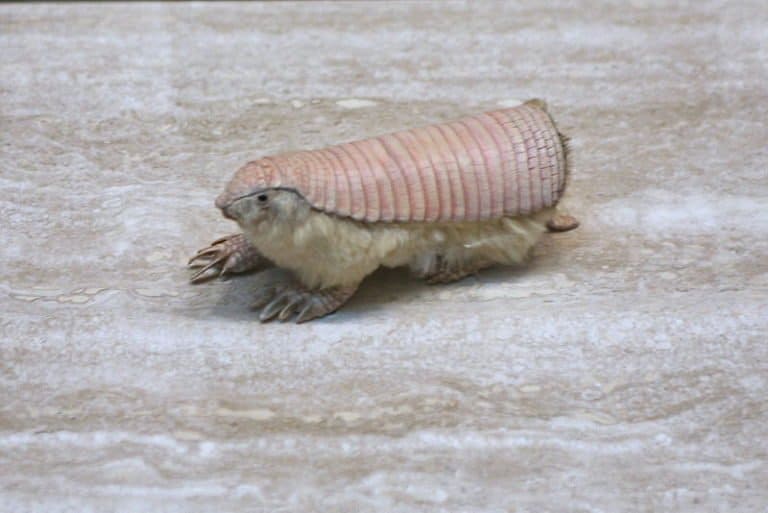
The pink "sand-swimmer" of Argentina
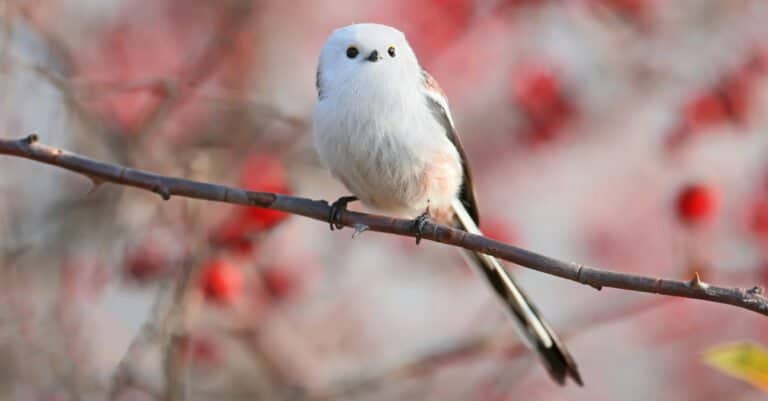
Long tail, tight flock, big personality
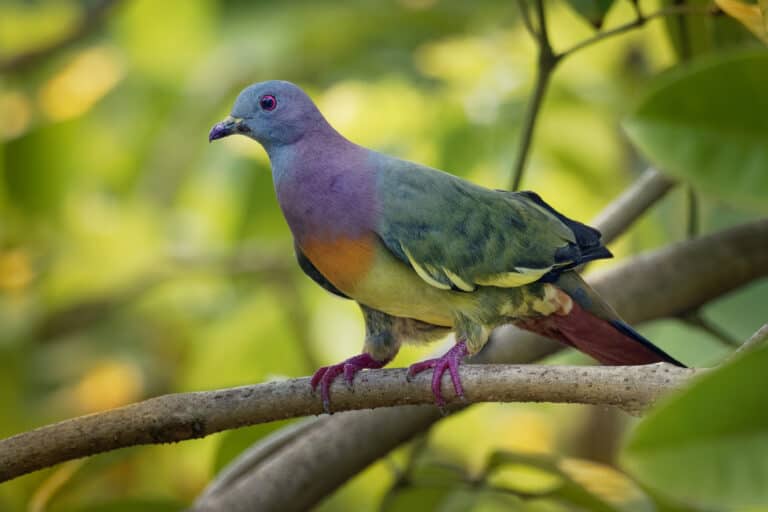
Pink neck, green cloak-seed sower

Tentacled tunnel-hunters of the tropics
In animal coloration, pink is a pale to moderately saturated red hue produced either by dilute red pigments (commonly low-density pheomelanin or carotenoid deposition) in integumentary structures or by the optical effect of oxygenated blood and underlying tissues showing through weakly pigmented, thin, or sparsely insulated skin. It occurs as a true pigmentary color in feathers, fur, scales, or cuticle, and as a structural/physiological appearance in bare parts and mucous membranes.
Pink in animals is best understood as a "light red" that can arise through two main routes: pigment and physiology. In pigment-based pink, red-to-orange pigments (such as carotenoids, and in some mammals/birds pheomelanin-related tones) are present at lower concentration, mixed with white, or distributed in ways that reduce saturation, yielding a soft rosy appearance. In physiological pink, the color is not primarily in the surface itself-rather, it emerges when lightly pigmented or thin tissues allow blood-rich layers to influence the reflected light, producing the familiar blush of skin, bills, feet, and other bare parts.
Because pink can be both a stable coloration and a dynamic signal, it often carries information. Diet strongly influences carotenoid-derived pinks; animals may become paler when carotenoid intake is limited and more vivid when resources are abundant. In many species, pink bare-part coloration can change with temperature, hydration, oxygenation, inflammation, or hormonal state, making it a real-time indicator of condition, stress, or reproductive readiness.
Across the animal kingdom, pink appears in diverse contexts-from dilute reddish plumage and pale mammalian coats to the translucent skin of amphibians, reptiles, and invertebrates. It is especially common on mucous membranes and sparsely covered skin regions, where reduced melanin and minimal keratin/fur/feather coverage let underlying tissues contribute to color. This combination of pigment dilution and vascular "show-through" makes pink one of the clearest examples of how anatomy, physiology, and ecology interact to produce visible coloration.
On animals, pink typically reads as a pale to moderately saturated red that looks "soft," "fleshy," or "rosy" rather than strongly pigmented. It is most common in areas with little to no covering (skin, mucous membranes, bare facial skin, ears, noses, footpads, eyelids, beaks/cere, wattles, and genital skin), where it often comes from blood perfusion showing through thin, lightly melanized tissue. Pink can shift rapidly with physiology: warmer, more blood-filled tissue looks brighter/rosier; cooler or constricted tissue looks paler, grayish, or slightly bluish. In covered regions (fur/feathers/scales), pink is usually a dilute red (low pigment load, reduced melanin density, or structural scattering over a faint red base) and tends to look pastel, "salmon," or "blush." On wet surfaces (gills, oral tissue) it can appear glossy and more saturated; on dry keratinized surfaces (some beaks/skin plates) it may look chalkier and less luminous. Lighting strongly affects it: in shade it can seem beige/peach; in warm light it intensifies toward coral; in cool light it can flatten toward pale mauve.
Not a single spectral band; perceived pink is typically a mixture dominated by long wavelengths (red ~620-750 nm) with added shorter-wavelength light (often white illumination). A common perceptual correlate is reduced intensity/saturation of red, or red + broad-spectrum (white) contribution.
~#FADADD to #FF69B4 (very pale blush to hot pink); common animal-adjacent pinks often fall around #F8B7C8-#F4A6B5 (skin blush), #FFB6C1 (light pink), #FA8072 (salmon), #FF7F50 (coral).
Humans: Humans perceive pink as a light/diluted red and are very sensitive to small changes in saturation and warmth; we often interpret it as "skin-like," "healthy," "inflamed," or "juvenile" depending on context. Pink on bare skin stands out strongly against darker fur/feathers and is often read as a cue of blood flow (heat, stress, arousal) or low melanin coverage. Non-human animals (general patterns): Many mammals have vision similar to dichromatic systems (often two cone types), reducing discrimination between reds/pinks and some browns/greens; to these species, pink may appear as a lighter gray-beige or a modest brightness contrast rather than a distinct hue. Trichromatic primates (including many Old World monkeys and apes) are closer to human perception and can distinguish subtle pink/red differences well, which may support social signaling (e.g., flushed skin). Birds: Many birds are tetrachromatic and often UV-sensitive; they may perceive additional contrast or patterning (including UV reflectance) in "pink" tissues/feathers that humans can't see. A surface that looks uniformly pink to humans may contain UV cues that change how conspicuous it is to birds (mates/competitors) and predators. Reptiles/amphibians/fish: Visual systems vary widely; some are sensitive to longer wavelengths and can see pinkish hues distinctly, while others emphasize different bands depending on habitat (water depth, forest shade). Underwater, longer wavelengths attenuate quickly, so pinks may appear duller/gray at depth compared with air, shifting conspicuousness by environment. Key takeaway: For many species, "pink" is at least partly a brightness/contrast signal (light, bare, perfused tissue) rather than a uniquely vivid hue; in species with strong long-wavelength sensitivity (humans, many primates, many birds with broad color vision), pink can function as a nuanced color signal tied to health, condition, and reproductive state.
Very pale, slightly warm pink commonly seen in sparsely furred skin (ears, snouts, eyelids) where blood subtly shows through; often looks peachy or beige-pink in strong sun and almost cream in shade.
A more vivid "healthy" pink driven by increased blood flow (e.g., exertion, heat, arousal). Can change quickly over minutes; appears most on thin skin, mucosa, wattles, and exposed facial skin.
Warm pink with an orange cast (salmon/coral direction), often associated with carotenoid deposition in feathers/skin/eggs or with structural + pigment effects; reads as "sunset" pink.
Brighter, more saturated warm pink that sits between pink and orange-red; can appear on bare parts (beaks/legs) or plumage where carotenoids are strong but not fully red.
Desaturated, slightly purplish pink that may occur under cool lighting, in shadow, or where tissue is less perfused; in fur/feathers can look "dusty rose" rather than peach.
High-saturation pink rarely produced by blood alone; more typical where strong pigments (often carotenoid mixes or unique biochemical pigments) and/or structural effects push toward vivid pink, sometimes with a purplish cast.
Irregular pink-and-pale areas caused by variable vascularization, sparse hair/feather coverage, scarring, inflammation, or localized pigmentation differences; common on ears, noses, and some reptiles/amphibians.
Pink bare parts (faces, cere, legs, throat sacs) may brighten during breeding due to hormones increasing blood flow and/or pigment display; outside breeding season it can fade to pale or dull pinkish-gray.
Reddish/yellowish melanin. When total melanin is reduced and/or eumelanin is minimized, pheomelanin-based coloration can appear as pale red (pinkish) in fur, feathers, or skin appendages; often looks "pink" when diluted by white scattering or low pigment density.
Red carotenoids that, when deposited at low concentration or over a light/white background, yield pink (e.g., flamingos, salmonids; also some insects and reptiles). Often responsible for "salmon-pink" to pastel pink.
Yellow carotenoids that can shift perceived color toward peach/pink when combined with low eumelanin and structural whitening, or when partially converted to redder ketocarotenoids.
Red-to-pink pteridine pigments common in many insects, some amphibians and reptiles; diluted deposition or mixing with light scattering can appear pinkish.
Porphyrins can impart pinkish-red to reddish-brown hues in some bird feathers/eggshells and certain tissues; may fluoresce under UV and can photobleach, sometimes leaving a paler pink appearance.
Not a pigment, but a frequent contributor: fine-scale scattering increases brightness and reduces saturation, turning red/orange pigment signals into pastel pink.
In many mammals and other animals, "pink" skin (ears, nose, paw pads, mucosa) is mainly the red of blood seen through thin epidermis with low melanin and/or low hair/feather coverage; oxygenation and perfusion shift the intensity.
Pink coloration is adaptively versatile because it can be produced either as dilute pigment or as dynamic, blood-flow-based signaling on bare parts. This allows individuals to switch between cryptic, thermoregulatory, and social/sexual signaling roles depending on habitat background, temperature, and social context. Its value is highest when environmental substrates include pale reddish tones or when social communication benefits from a conspicuous-but-modulable cue; it is constrained by predation risk and UV exposure in open, high-contrast settings.
Blends with pale red/pink substrates or backgrounds (e.g., salt flats, pink sands, reddish rock, coral rubble) and can reduce contrast when the animal's surface is lightly pigmented or translucent (skin/bare parts). In aquatic settings, pink can approximate the appearance of some crustaceans or coralline algae when viewed through water color and scattering.
Effectiveness: High where backgrounds are pale reddish/pink or where visual conditions desaturate color (haze, shallow turbid water). Moderate in mixed substrates (mottled coral/sand). Low in green vegetation, dark soils, or against high-contrast backgrounds where pink stands out.
Conspicuous pink can function as an aposematic or startle component when paired with high contrast (black/white) or patterns; it may signal unprofitability (toxicity, stinging, bad taste) or difficulty of capture. Often works best when displayed suddenly (flash coloration on wings/underparts) rather than continuously exposed.
Effectiveness: High when contrast is strong and predators have learned associations; enhanced by patterns and repeated exposure. Moderate in communities where pink is uncommon but paired with other warning cues (odor, spines). Low where predators are naïve or where pink is common and not reliably linked to defense.
Supports Batesian or Müllerian mimicry by matching pink tones of defended models (e.g., stinging insects, toxic nudibranchs, chemically defended amphibians) or by resembling uninteresting background organisms (e.g., pink sponge/coral patches) to avoid detection.
Effectiveness: High when the model is abundant and predators generalize the pink signal. Moderate when hue matching is approximate or models vary seasonally. Low when models are absent, predators discriminate finely, or lighting makes pink shift strongly (deep water/forest shade).
Pink skin patches or plumage/integument can act as a condition-dependent ornament: intensity often correlates with vascularization, hormones, carotenoid access (in some taxa), or health. Displays (inflation, flushing, posture) can amplify perceived pinkness during courtship or dominance contests.
Effectiveness: High when mates assess color under consistent lighting and when pink reliably indicates condition. Moderate when coloration is transient (flushing) or environment changes illumination frequently. Low where predation cost of conspicuousness outweighs mating benefits or where mate choice relies on other cues (song/odor).
Light pink/bare, lightly pigmented tissues can aid heat management: increased blood flow deepens pink, enabling heat dissipation; reduced perfusion pales the tissue, reducing heat loss. In lightly furred areas, pale coloration can reduce solar heat absorption relative to darker reds/browns.
Effectiveness: High in animals with controllable blood flow in bare parts (ears, bills, skin patches) and in warm climates. Moderate in cooler climates where vasoconstriction helps but exposure increases heat loss. Low when thick insulation covers the surface or when behavior (shade/burrowing) dominates thermoregulation.
Visible pink in bare parts (face, rump, gular sacs, fins) can signal arousal, aggression, submission, or reproductive state via rapid changes in blood flow. Pink also enhances detectability at moderate distances without being as conspicuous as saturated red in some lighting.
Effectiveness: High for close-range social interactions and species with frequent face-to-face signaling. Moderate in noisy visual environments (dense colonies) where multiple signals compete. Low at long distances, in low light, or where the receiver's visual system is less sensitive to long wavelengths.
Indirect protection via reduced UV absorption in lightly pigmented tissues can be offset by behavioral/structural defenses (mucus layers, scales) or by localized thickening/keratinization in pink bare parts. Pink can also function as 'flash' distraction: sudden exposure draws attacks to less vital areas.
Effectiveness: Moderate when paired with structural barriers (thick skin, mucus, armor) or when used as flash/distraction. Low if lightly pigmented areas are chronically exposed to intense UV without protective structures/behaviors.
Pink patches in consistent locations (bills/legs in birds, facial skin in primates, flank/fin markings in fish) can help individuals identify conspecifics, age class, or breeding status, reducing hybridization and misdirected aggression/courtship.
Effectiveness: High when patterns are stereotyped and displayed during encounters. Moderate when pink varies with season or condition but still provides categorical cues. Low in communities with many similarly colored species or where lighting strongly masks pink.
Often present when pink functions in sexual selection or reproductive signaling: males (or the courting sex) commonly show larger, brighter, or more frequently displayed pink patches (facial skin, bills/legs, fins), sometimes seasonally intensified. Females may be duller/paler pink, restricted to smaller areas, or show pink mainly during fertility, pregnancy, or high vascular states. In species where pink is primarily camouflage or thermoregulation, dimorphism is reduced and both sexes appear similarly pale pink or only show pink in bare, functional areas.
Pink coloration can substantially shape conservation outcomes through human perception, detectability, and market forces. Charismatic pink species often receive disproportionate public attention, which can be leveraged for fundraising and habitat protection (e.g., wetland conservation linked to flamingos). Conversely, conspicuous pink individuals may face higher predation risk in some habitats and be more easily detected by humans, increasing vulnerability to harassment or capture. Color can also serve as a visible proxy for diet and habitat quality: in several taxa, pink/red hues are carotenoid-based and reflect access to specific foods and intact ecosystems, so fading or shifts in population coloration can signal ecological degradation. However, public fixation on "rare pink" individuals can encourage wildlife disturbance (crowding, feeding, boat traffic) and drive illegal collection in the pet/ornamental trade. Managers sometimes must balance the outreach value of pink animals with strict visitor guidelines, anti-poaching enforcement, and messaging that emphasizes habitat protection over individual novelty.
Flamingos aren't born pink: chicks hatch with grayish down, and their color builds as they eat carotenoid-rich foods (algae and small crustaceans).
"Pink" often isn't a pigment at all-it can be blood flow showing through lightly pigmented skin. That's why hairless or sparsely furred animals (like some naked mole-rats or pigs) can look pink even without pink pigments.
Two animals can look equally pink for totally different reasons: flamingos and spoonbills get pink from carotenoids in their diet, while many "pink" amphibians in captivity (like leucistic axolotls) look pink because pale skin makes red blood vessels visible.
The same class of molecules that make carrots orange and salmon pink-carotenoids-also power a lot of pink in birds and fish. Many animals must obtain these pigments from food rather than making them from scratch.
A "pink" insect isn't necessarily albino. Rare pink katydids and grasshoppers are often pink due to a genetic color variant (erythrism), and they can be fully healthy-just unusually conspicuous to predators.
Hippos don't actually sweat blood, but they do ooze a reddish secretion sometimes nicknamed "blood sweat." It can make skin look pinkish-red and functions like a natural sunscreen and antimicrobial coating.
Flamingo pink is basically "diet made visible": the pigments involved are closely related to the ones that tint salmon flesh-so a flamingo's color can be thought of as a living indicator of how carotenoid-rich its menu has been.
An Amazon river dolphin's pink can intensify like a human blush: activity, social excitement, and warm water can increase blood flow near the skin and make the animal look noticeably pinker.
A leucistic axolotl's feathery external gills look like pink pom-poms because they're packed with tiny blood vessels-more like seeing the color of a fingertip through thin skin than a true "pink dye."
Pink fairy armadillos are roughly hamster-sized, so their rosy armor looks like a tiny, moving seashell-an extreme contrast to the "giant pink-bird" vibe of flamingos.
Spoonbill wing color can be more "highlighter pink" than flamingo body color: spoonbills often concentrate brighter pink in patches, while flamingos tend to spread pink more evenly across many feathers.
Greater flamingos (Phoenicopterus roseus) are the tallest flamingo species (often ~1.5 m tall), and can also be among the most intensely pink large birds when carotenoid-rich food is abundant.
The pink fairy armadillo (Chlamyphorus truncatus) is the smallest living armadillo-and one of the only mammals famous for a distinctly pink, rosy "shell," partly from thin, vascular skin beneath the armor.
Roseate spoonbills (Platalea ajaja) are among the most striking "hot-pink" wading birds; their brightest wing and shoulder patches can look neon when they're well fed on carotenoid-rich prey.
Amazon river dolphins (Inia geoffrensis) are among the largest animals that can appear truly pink; adult males in particular can look pinker than females, making them one of the most conspicuously pink mammals.
Galahs (Eolophus roseicapilla) are among the pinkest parrots-showing broad areas of soft, bubblegum-pink plumage that's produced by feather pigments rather than "skin showing through."
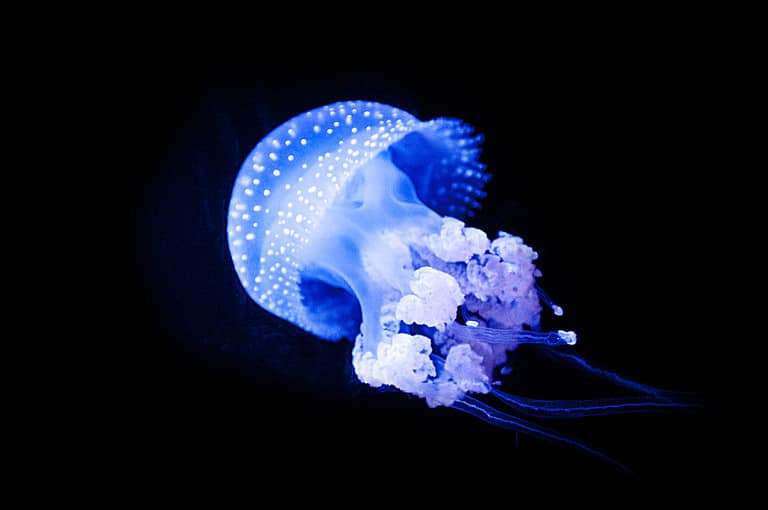
Sting-powered drifters of the sea
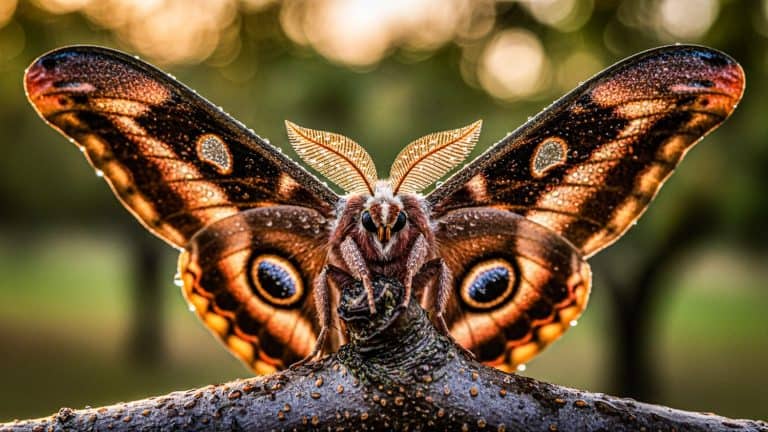
More than night flyers
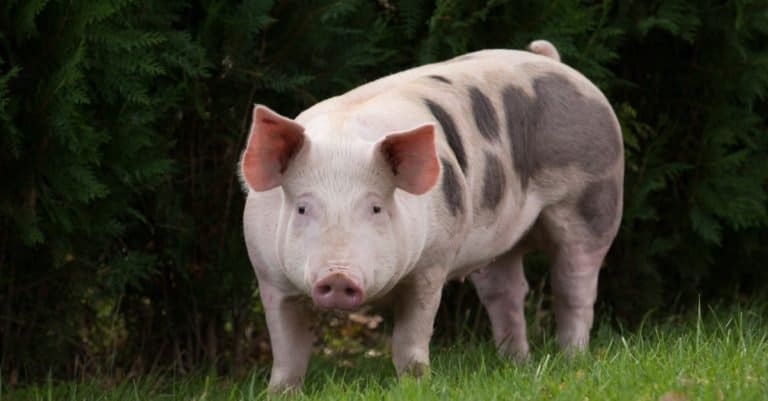
Root, grunt, outsmart the barn.
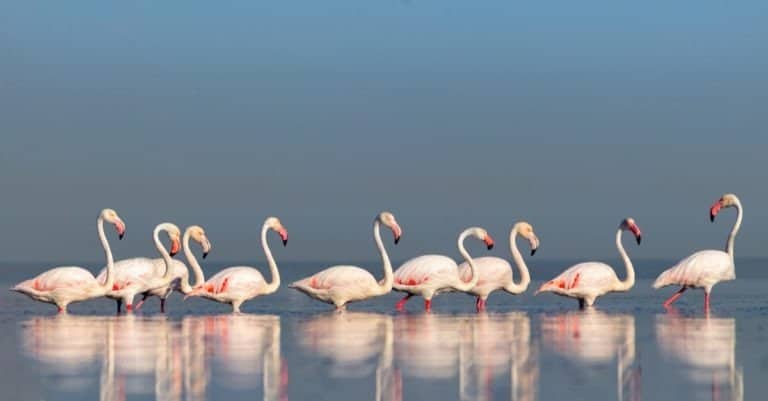
Pink by diet, united by colonies
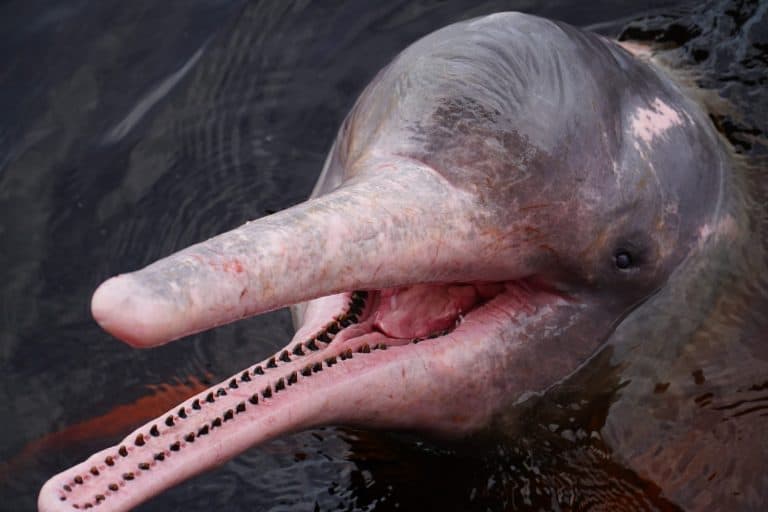
The pink dolphin of flooded forests
The pink "sand-swimmer" of Argentina
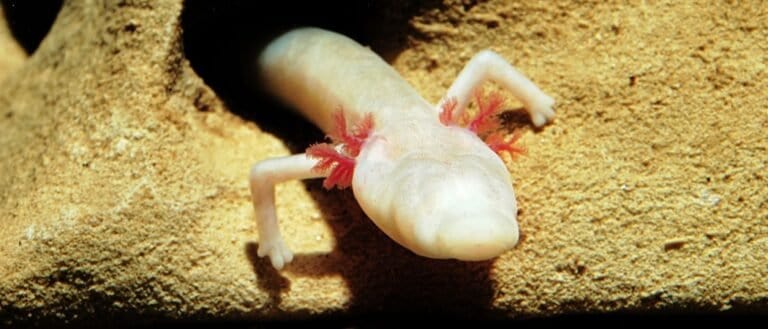
The dragon's "baby" of the karst
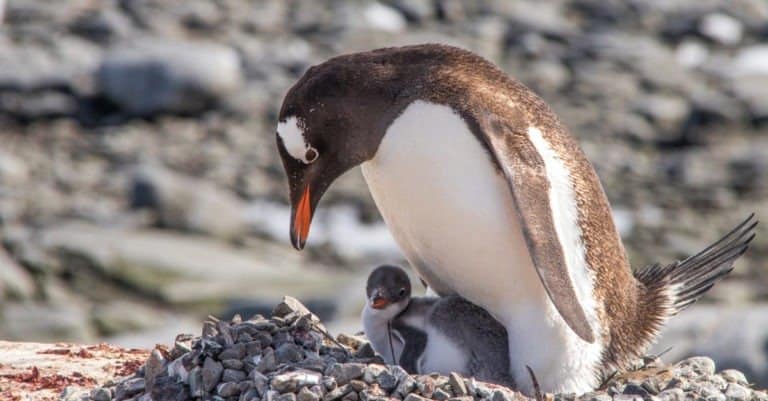
White-capped speedster of the South
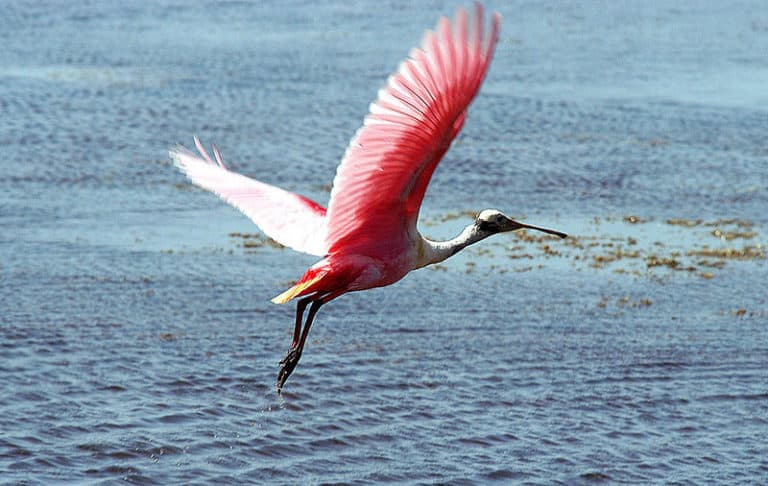
Sweep. Snap. Pink perfection.
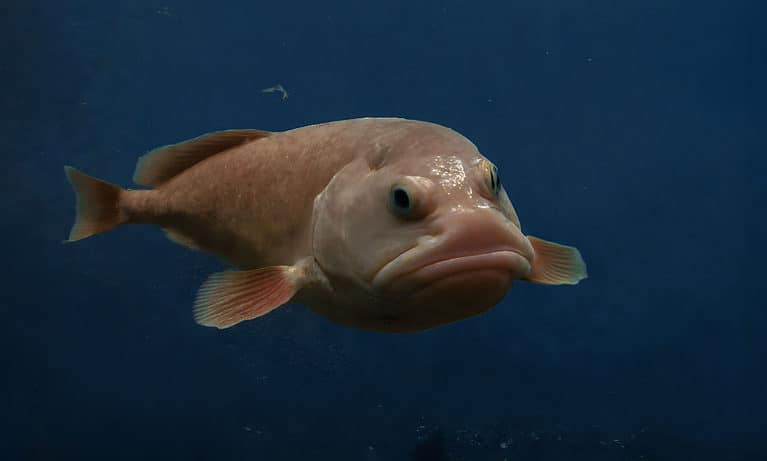
Built for pressure, not photoshoots
The deep-sea "slingshot-jaw" shark
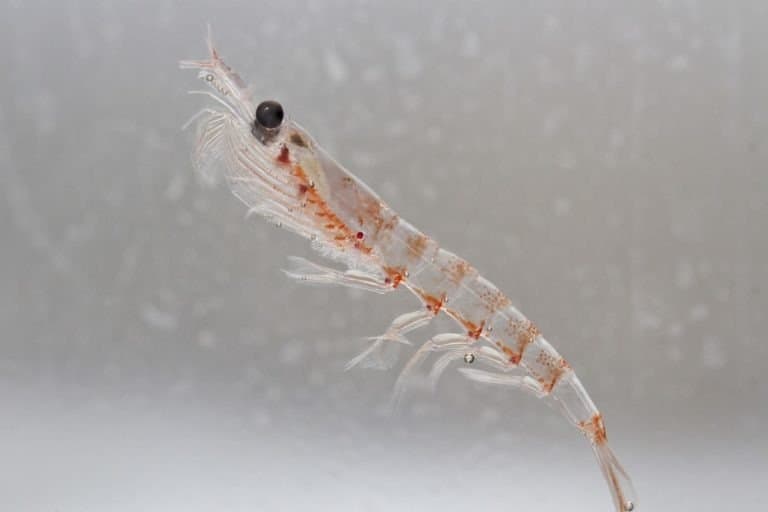
Tiny swarms, giant ocean impact
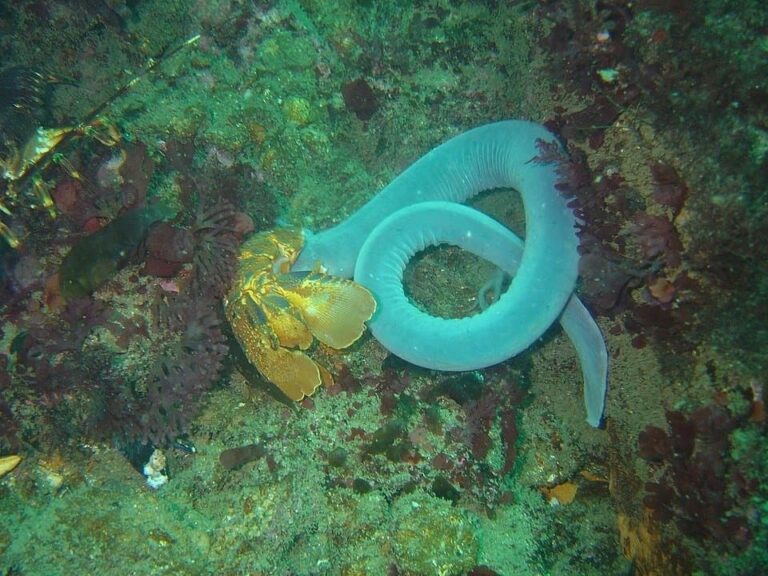
Slime, knots, and ancient jaws-none!
All terrier, no hair.
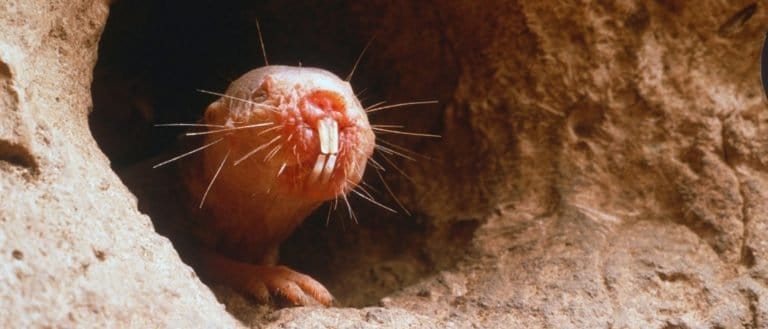
One queen. Hundreds of helpers. No air? No problem.
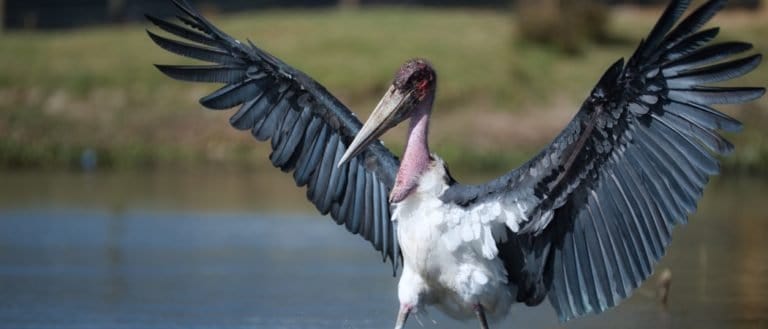
Africa's clean-up crew with a bill
Armored Antarctic hunter on the seafloor
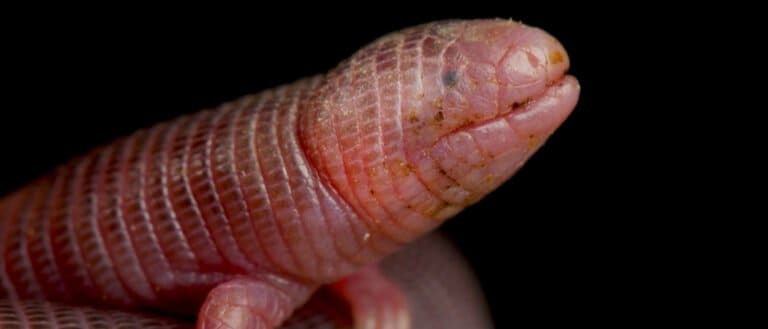
Two arms. One mission: dig.
Tentacled tunnel-hunters of the tropics
Long tail, tight flock, big personality
The harmless "worm" that's a snake
Wormlike, but 100% snake.
Tiny red sap-sippers, big plant impact
Small sap-feeders, big ecosystem impact
Thank you for reading! Have some feedback for us?
We appreciate your help in improving our content.
Our editorial team will review your suggestions and make any necessary updates.
There was an error submitting your feedback. Please try again.