
There are many rare birds in North America, and it’s exciting for birders who catch glimpses of these elusive birds. Rare birds are often endangered, so conservation efforts are critical. However, we shouldn’t forget all of the wonderful backyard birds we often take for granted.
These common birds of North America are abundant in our gardens, parks, and woods. They bring song and color to our trees and bird feeders. Here are 10 of the most common birds you’re likely to see in cities, towns, woods, wetlands, and farms all over the continent.
#10: Red-Bellied Woodpecker
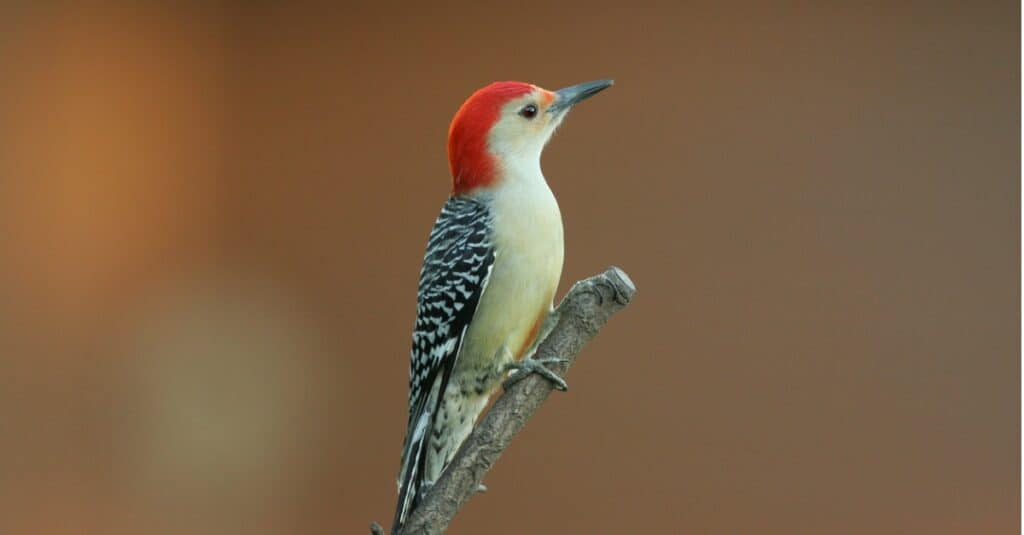
As confusing as the red head may be, the red-bellied woodpecker does, in fact, have a red belly.
©iStock.com/Flatcoater
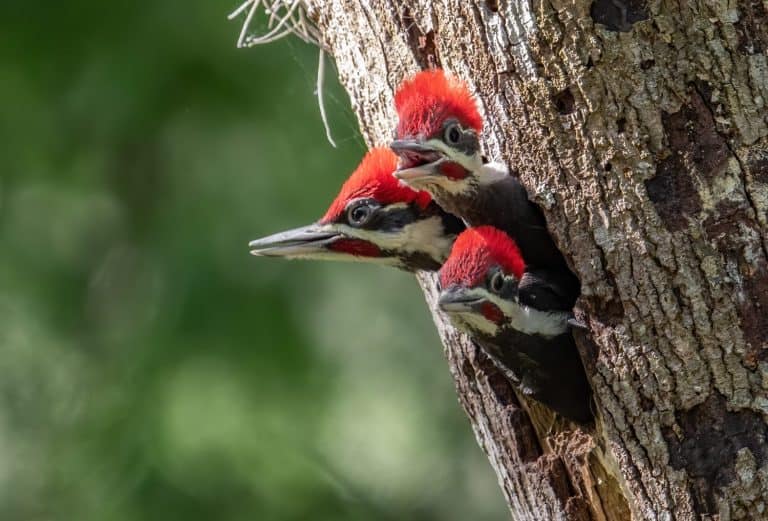
The name may seem confusing, as the first thing you see is this beautiful bird’s bright red head. However, on closer inspection, you can see the faint wash of red on its belly that gives this common bird its name. Identification of the red-bellied woodpecker (Melanerpes carolinus) is easy with its striking black and white feathers, long black bill, and bright red cap. They are primarily found in the eastern U.S., with global breeding populations estimated to be around 16 million birds.
You can hear woodpeckers digging into trees in search of insects. Many people are charmed by the beauty of woodpeckers and the rhythmic noise of their pecking. If you’d like to see more of these birds in your yard, hang a feeder holding a suet cake made from suet, nuts, and berries. Many birds appreciate a hanging suet feeder in the winter, but woodpeckers will eat from it all year.
#9: Chickadee
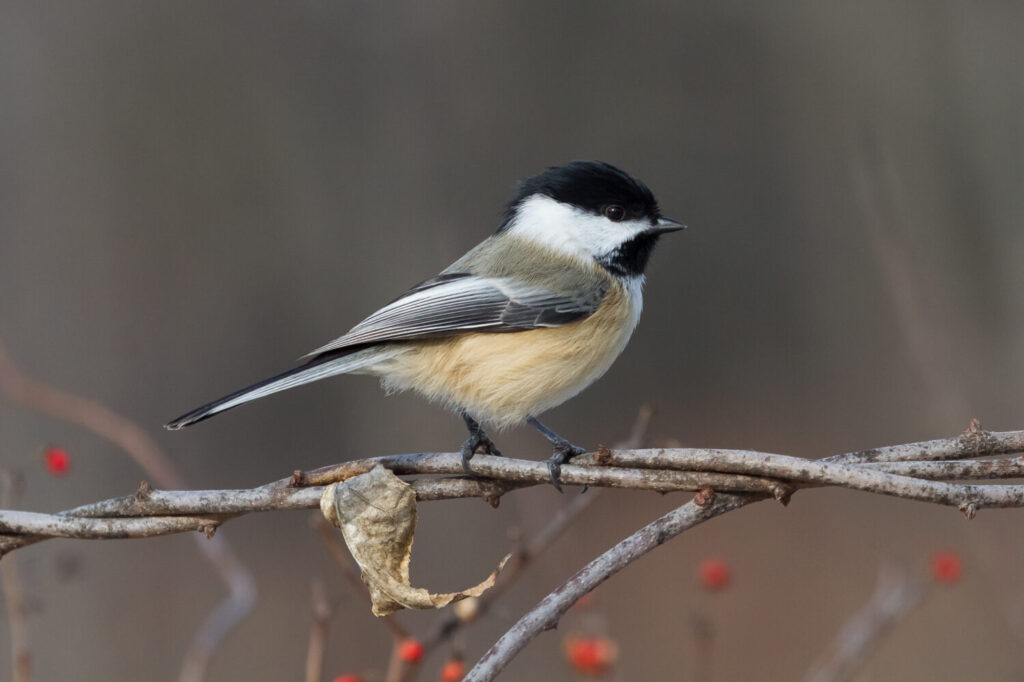
Chickadees are some of the smallest songbirds.
©Paul Roedding/Shutterstock.com
The black-capped chickadee (Poecile atricapillus) is a cute little bird that is a common visitor to backyards, parks, and gardens all over the northern U.S. and southern Canada. There are seven species of chickadee, but the black-capped chickadee is believed to be the most numerous, with a global population of around 43 million individuals.
Chickadees are among the smallest songbirds. It has a distinctly round body with a black cap, a wide black collar, and a round breast. For easy identification, look for a tiny bird whose eye may be hidden by its dark cap. They prefer forests, open woods, and parks, but they are highly adaptable to any environment. If you’d like to see more of these adorable birds in your yard, set out black oil sunflower seeds, sunflower hearts, or suet.
#8: Northern Cardinal
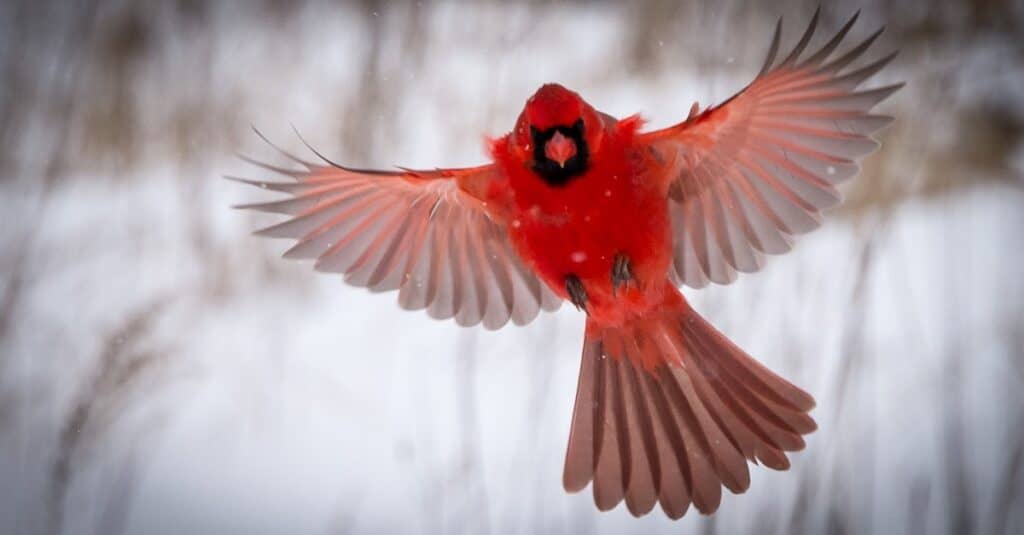
Seven states list the cardinal as their state bird.
©iStock.com/Lynnae_Lowe
A bright red Northern cardinal (Cardinalis cardinalis) against a snowy backdrop is one of the most beautiful sights of winter. It graces Christmas cards and holiday scenes every year. The cardinal is a large red songbird found across the eastern U.S. and Mexico. Its popularity led it to become the state bird of Indiana, Illinois, Kentucky, Ohio, North Carolina, Virginia, and West Virginia.
Cardinals have a unique body and bill shape that makes them easy to identify. The females have the same body and head shape as the males, but they are pale brown. Males are bright red with red bills. They are popular visitors to urban and suburban bird feeders. If you want to attract cardinals, put out chopped peanuts, black oil sunflower seeds, and berries. There are around 130 million Northern cardinals according to recent estimates.
#7: Mallard
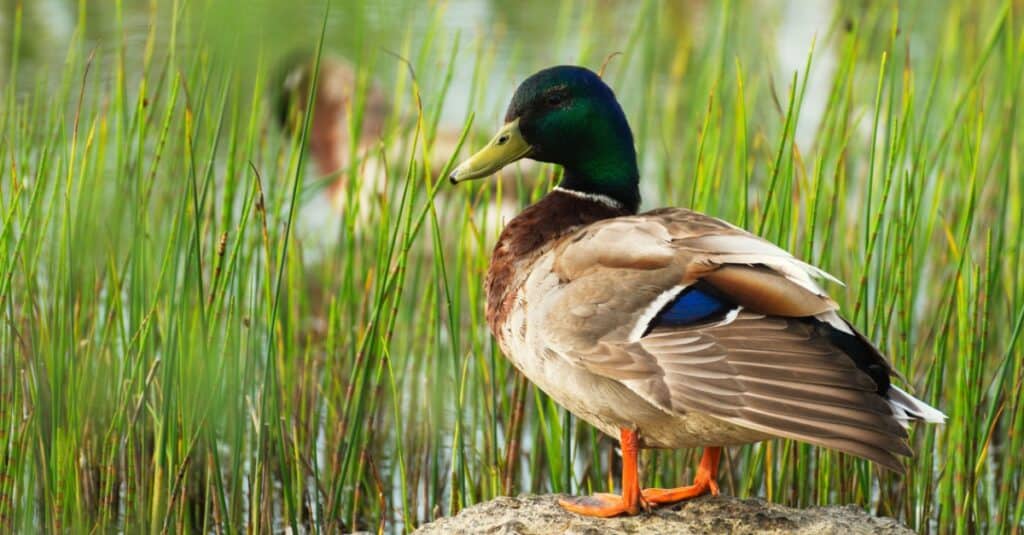
Instead of diving, mallards dip their heads into the water.
©iStock.com/M-Production
This common duck inhabits the waterways of almost every state in the Union. Male mallards (Anas platyrhynchos) are distinctive for their bright green heads, white-collar bands, and yellow bills. The females have a softer coloring of deep brown and gray. You are likely to see mallards when you visit lakes, ponds, and streams.
Mallards are dabbling ducks. They don’t dive; instead, they dip their heads into the water to feed on underwater plants. You are certain to see these playful, energetic birds on almost any body of water. Most mallards are used to being around humans, who often toss food to them in public areas. It is common to see them in large groups with other dabbling ducks. Recent estimates put mallard populations at around seven million individuals.
#6: Red-Eyed Vireo
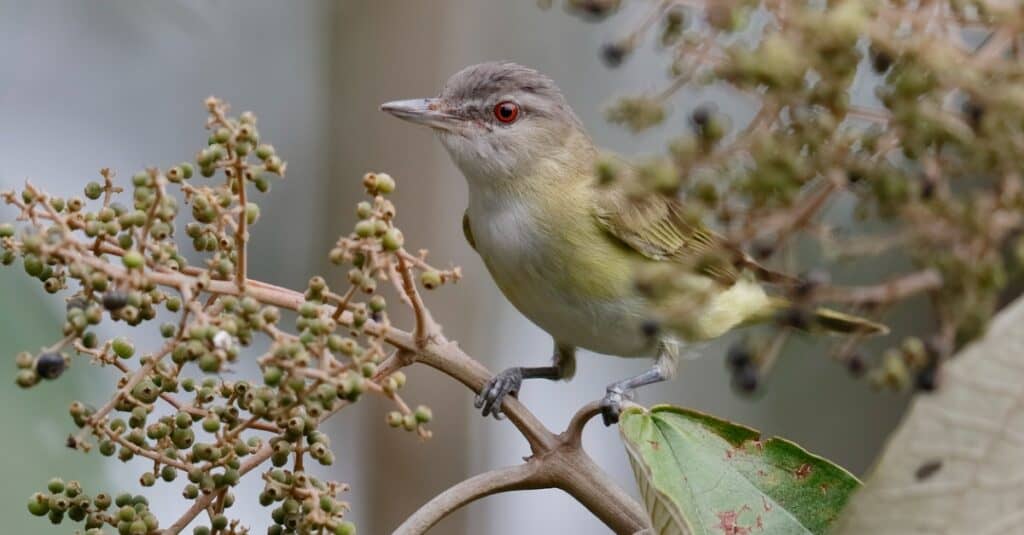
The red-eyed vireo is known for its singing.
©iStock.com/BrianLasenby
Although it’s very common, this pretty bird with greenish feathers is elusive and hard to spot. With their camouflage and their preference for building nests in dark foliage, vireos are good at hiding from view. Red-eyed vireos (Vireo olivaceus) are large, chunky birds with long, slightly hooked bills. They are known for their lovely singing. Unlike many other birds, vireos continue singing in the hot summer months.
They are commonly found in forested areas of the eastern U.S. Vireos live on caterpillars and other insects. If you want to attract them, create an insect-friendly yard and plant trees more likely to attract caterpillars. This includes maples, oaks, elderberries, wild cherry, and sumac. Global populations are believed to be around 130 million individuals.
#5: Chipping Sparrow
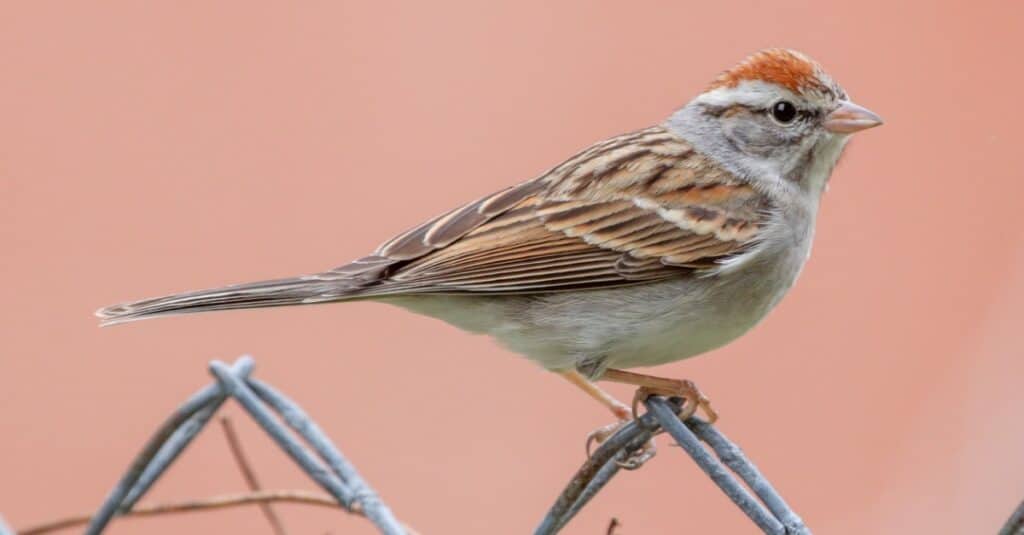
Chipping sparrows are historically one of the most populous birds in North America.
©iStock.com/Wesley Lawrence
These small, common birds should not be confused with European house sparrows, which are an invasive, non-native species. Chipping sparrows (Spizella passerina) were once one of the most populous birds in North America, and they are still very common. To identify them correctly, look for a brightly colored cap. The chipping sparrow has a pale gray or cream breast, brown feathers, and a chestnut cap. It also has a distinct black eye line. Males and females look alike.
Chipping sparrows migrate south in the winter, and you can expect to see them when the weather gets warm. If you see a sparrow in your yard in the winter, it may be a winter sparrow — a visitor from Canada or Alaska. If you want to see more chipping sparrows in your yard, spread birdseed on the ground and grow native grasses in your yard. There are believed to be around 240 million birds across the continent.
#4: American Robin
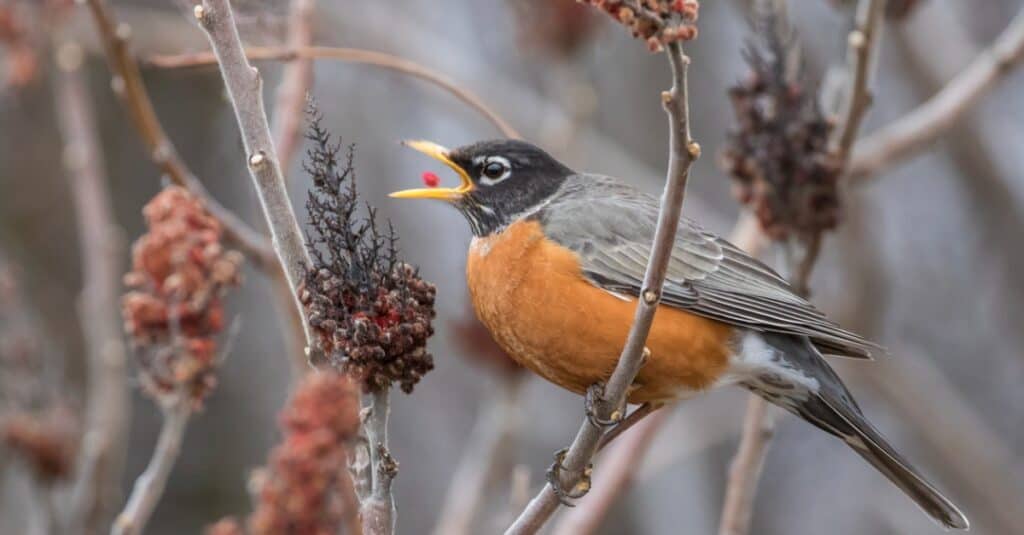
Robins are easily identified by their distinct call.
©iStock.com/mirceax
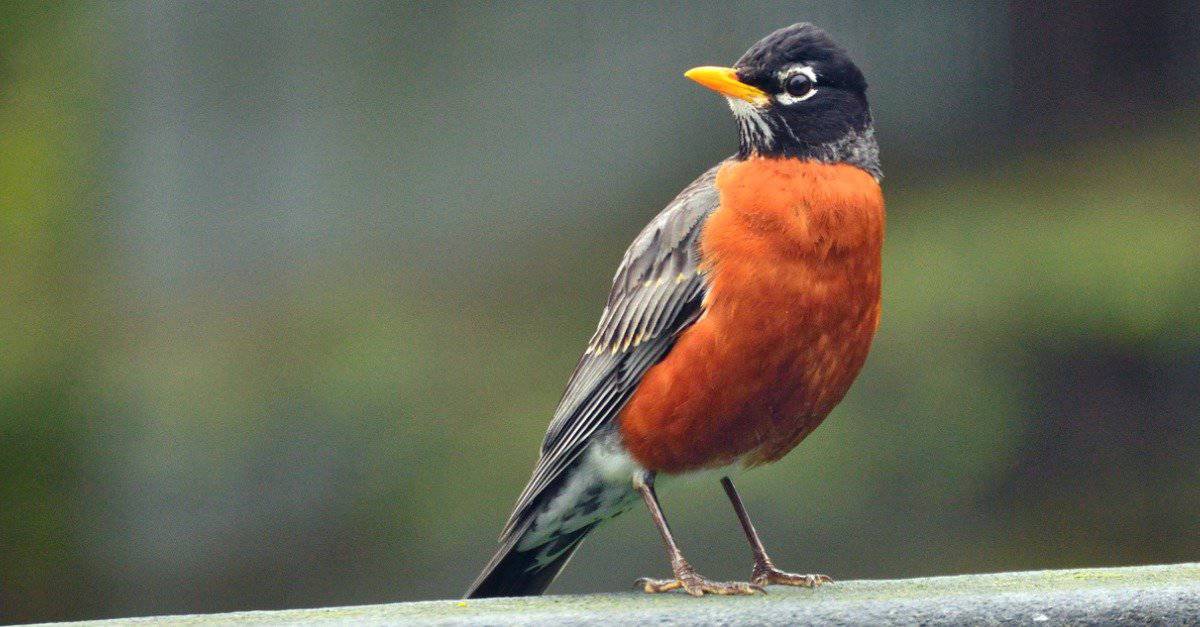
American robins (Turdus migratorius) were once forest dwellers. Like raccoons and other animals, they have learned to thrive in urban and suburban areas. They live all over Canada and in almost every U.S. state. Robins are a legendary herald of spring. Their bright red breasts and clear, ringing calls are classic elements of any backyard garden. Robins have a distinct call that makes identification easy. Once you have heard it, you will always know when a robin is around.
Robins are not seed eaters. They like to eat fat, juicy worms and slugs. If you’d like to attract more of them, create small piles of leaf litter around your yard. Leaf litter attracts worms and other insects that are the favorite food of robins and thrashers. Robins also eat tree berries, including chokecherries and dogwood. There are an estimated 370 million American robins across North America.
#3: Mourning Dove
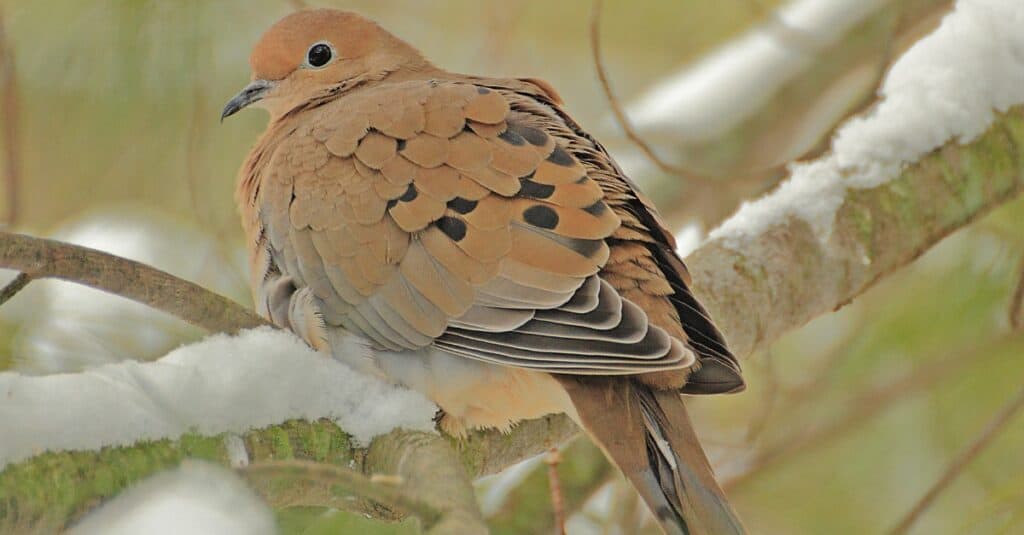
Mourning doves, also known as turtle doves, are commonly found in pairs.
©iStock.com/gregvandeleest
The mourning dove (Zenaida macroura) gets its name from its mournful, haunting call. Also known as the turtle dove, mourning doves live all over the United States. You will often spot them stepping gracefully on the ground, where they prefer to feed. It is common to see mourning doves in pairs, as they are affectionate and mate for life.
They don’t always migrate in the winter, so you can often enjoy them all year. Do you want more of these graceful, year-round visitors? Mourning doves will return to a reliable feeding source, and it is easy to entice them to your yard. They enjoy cracked corn, sunflower seeds, wheat, and berries. Place these treats on a ground-level platform feeder or directly on the ground. Mourning doves have an estimated population of 350 million birds.
#2: Red-Winged Blackbird
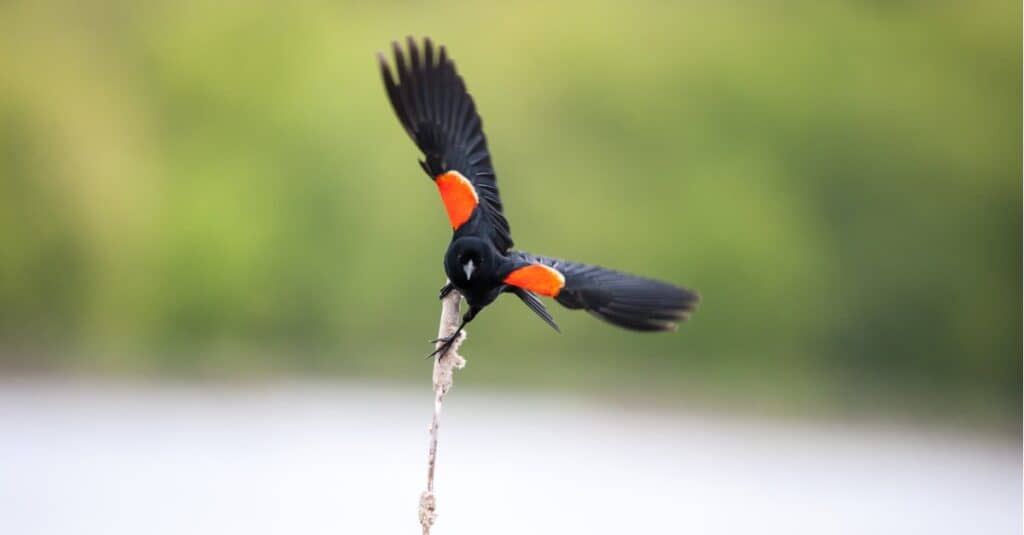
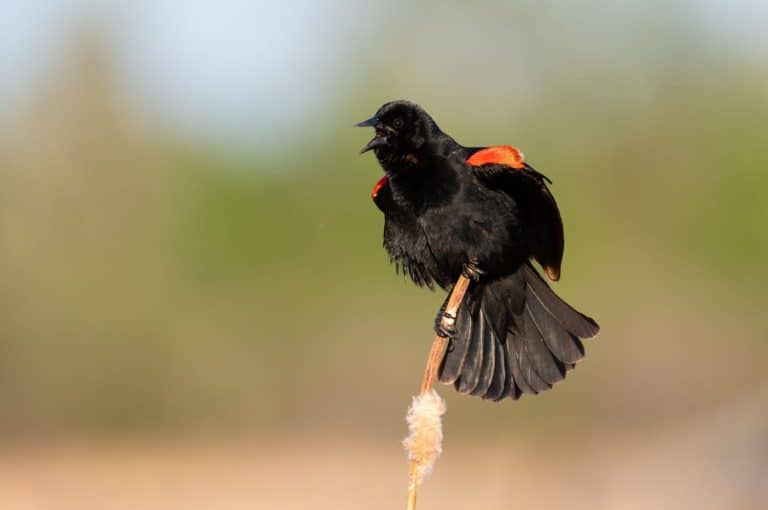
Male red-winged blackbirds have prominent red and yellow feathers on their wings.
©iStock.com/maiakphotography
These large birds are striking with their dark black feathers. Red-winged blackbirds (Agelaius phoeniceus) look like regular blackbirds, but their shoulder feathers help with identification. The males sport bright red and yellow patches at the top of their wings. The females are less showy. Female red-winged blackbirds often have brown feathers.
Red-winged blackbirds prefer to live near wetlands. They eat seeds, slugs, and insects. They are found in Canada, Mexico, and every state in the U.S. Do you want to see more red-winged blackbirds in your yard? It helps if you live near a wetland area and hang a suet feeder in the trees. Populations are estimated to be about 180 million total birds.
#1: Dark-eyed Junco
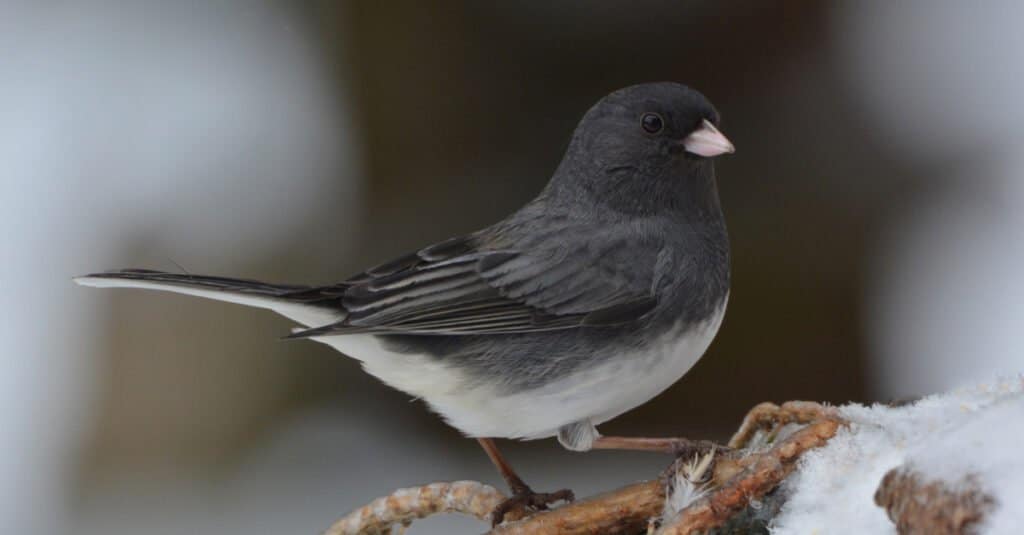
The female dark-eyed junco has more muted coloring than the male.
©C. Hamilton/Shutterstock.com
Dark-eyed juncos (Junco hyemalis) look like fluffy gray balls. These energetic little birds may be the most numerous birds in North America. It’s common to see them hanging around your tree branches and making their loud, joyful noises. Identification of these birds depends on where in the country you spot them. In the eastern states, they are gray and white, but out west, they come in various colors, including a reddish-brown.
Juncos are winter visitors who visit North America from even colder climates up north. Because of this, some people call them “snowbirds.” Some juncos do not migrate. Instead, they winter deep in the woodlands or move to higher elevations. If you want to see more of them, spread cracked corn and sunflower seeds on ground-level feeders. Recent estimates put their total population at approximately 630 million birds.