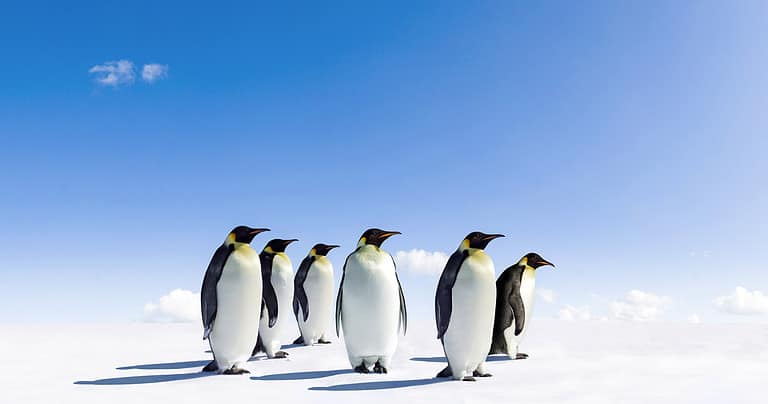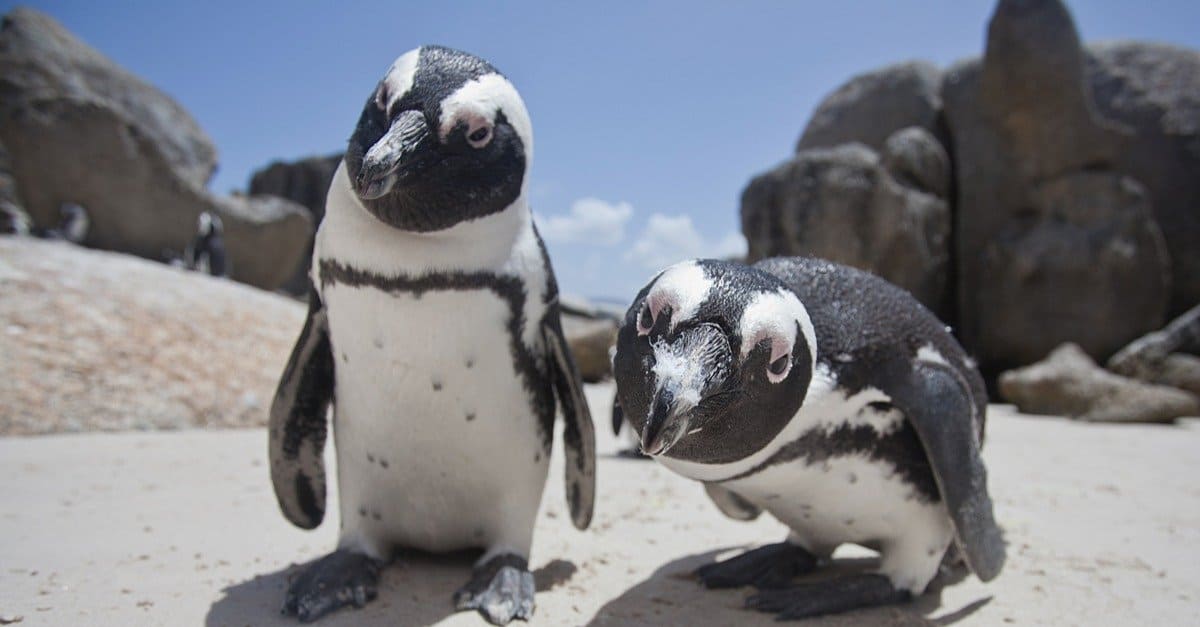

Penguins are known for their distinctive waddle and black and white markings. These flightless birds are predominantly found in the Southern Hemisphere. There are approximately 18 species of penguins remaining in the wild, with 11 classified as Near Threatened, Endangered, or Critically Endangered. The smallest species is the little penguin (Eudyptula minor), also known as the little blue penguin or fairy penguin, which stands about one foot tall and weighs about three pounds. However, the majority of penguin species are significantly larger. Continue reading to learn about the 10 largest species of penguin, presented by height.
10. African Penguin
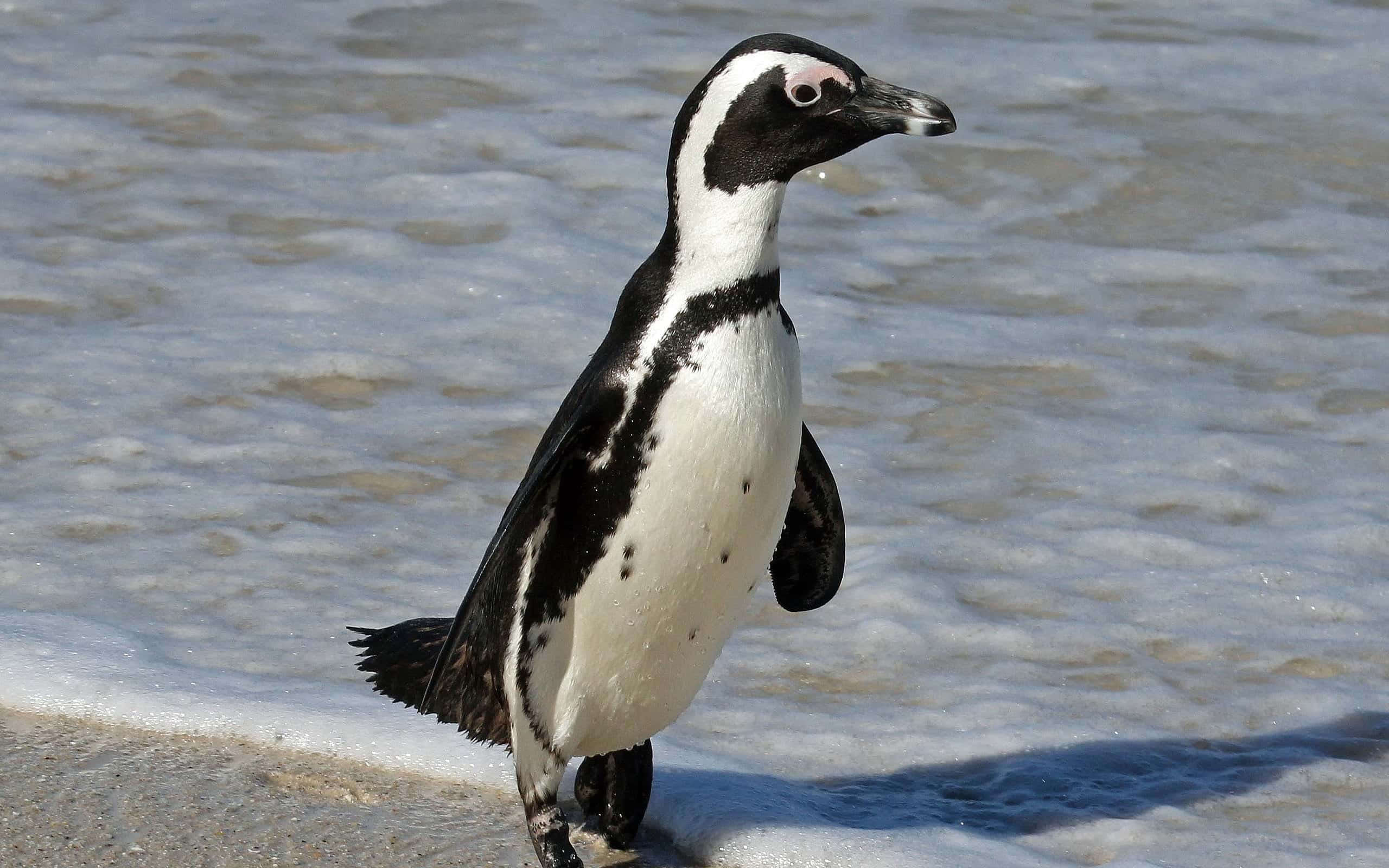
African penguins sound like braying donkeys.
©Dick Daniels (http://theworldbirds.org/), CC BY-SA 3.0, via Wikimedia Commons – Original / License
The African penguin stands 26.5 to 27.5 inches tall and weighs 4.9 to 7.7 pounds. Also sometimes known as the jackass penguin, these birds make a sound much like that of a donkey braying. They are easily distinguished by the iridescent markings above their eyes, which are actually glands used to regulate body temperature.
Tragically, African penguins are endangered for several reasons. Threats from predators, localized fishing, and oil spills have significantly harmed their numbers. They are now classified as Critically Endangered on the IUCN Red List.
9. Humboldt Penguin
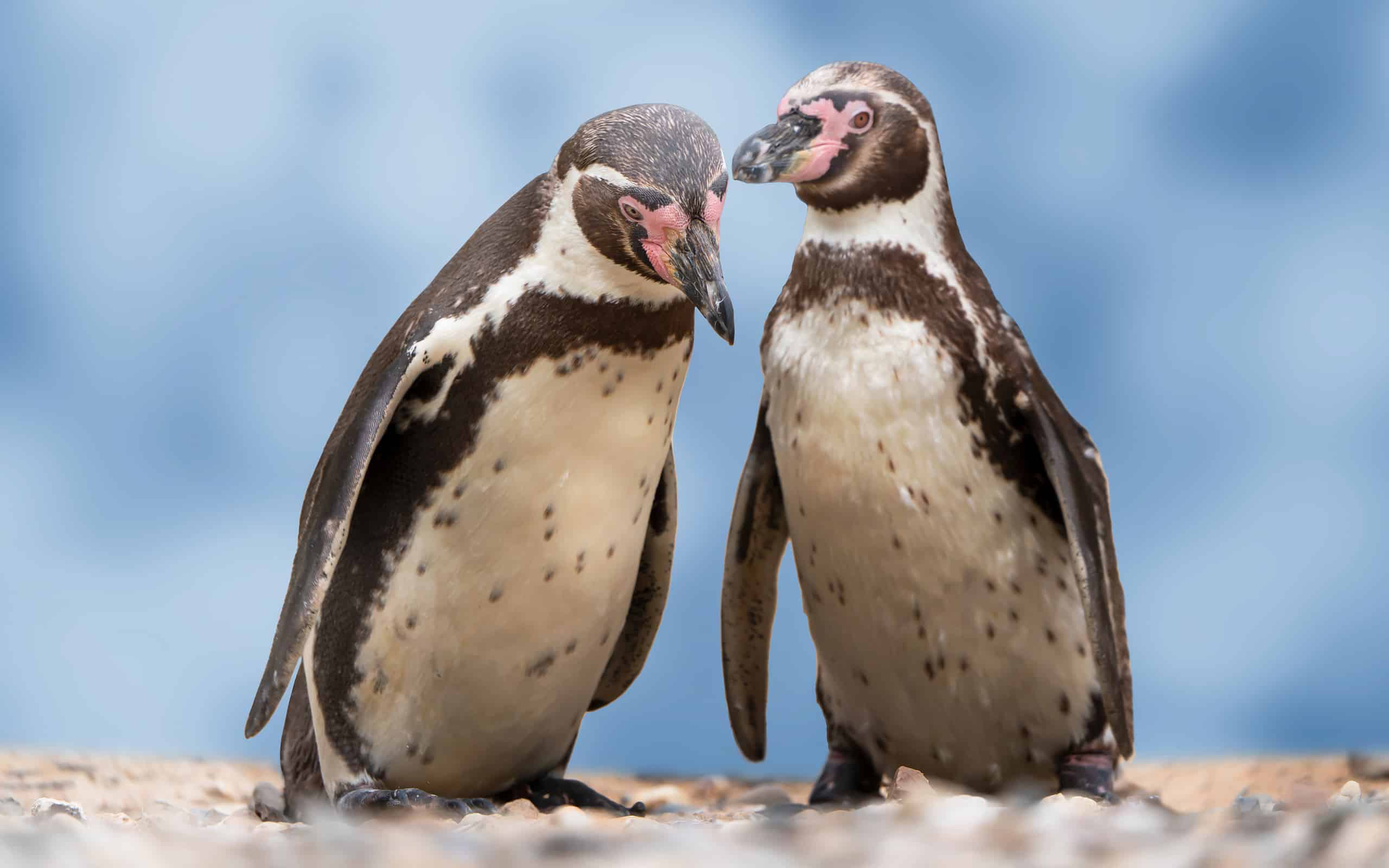
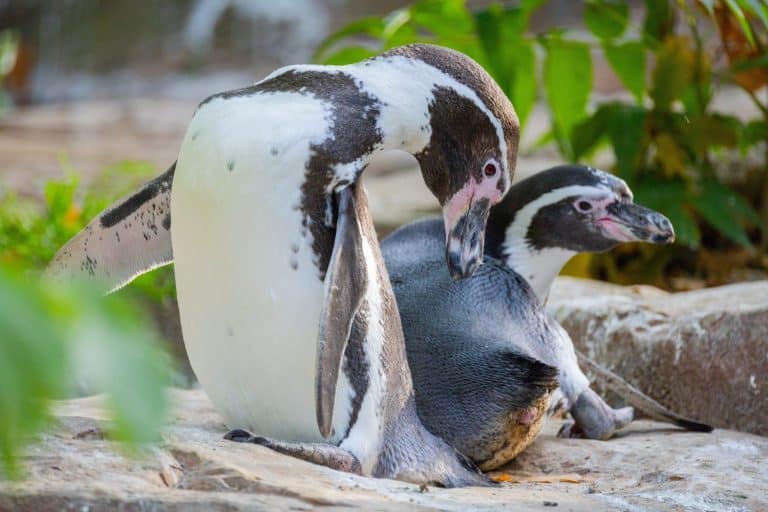
Humboldt penguins eat fish and squid.
©winyuu/iStock via Getty Images
The Humboldt penguin (Spheniscus humboldti) has a similar appearance to the African penguin, having the same spotted white bellies, but they are slightly larger, standing 28 inches tall and weighing 8 to 13 pounds. They are native to South America, specifically Chile and Peru, and are occasionally found in Colombia and Ecuador. Their habitat consists of rocky shorelines and caves, where they build their nests during the March to December breeding season.
The Humboldt penguin primarily preys on fish, although some colonies are known to eat squid and crabs. Due to industrialization, mining, and predators such as rats eating their eggs, the population is declining, and they are now officially classified as a Vulnerable species.
8. Macaroni Penguin
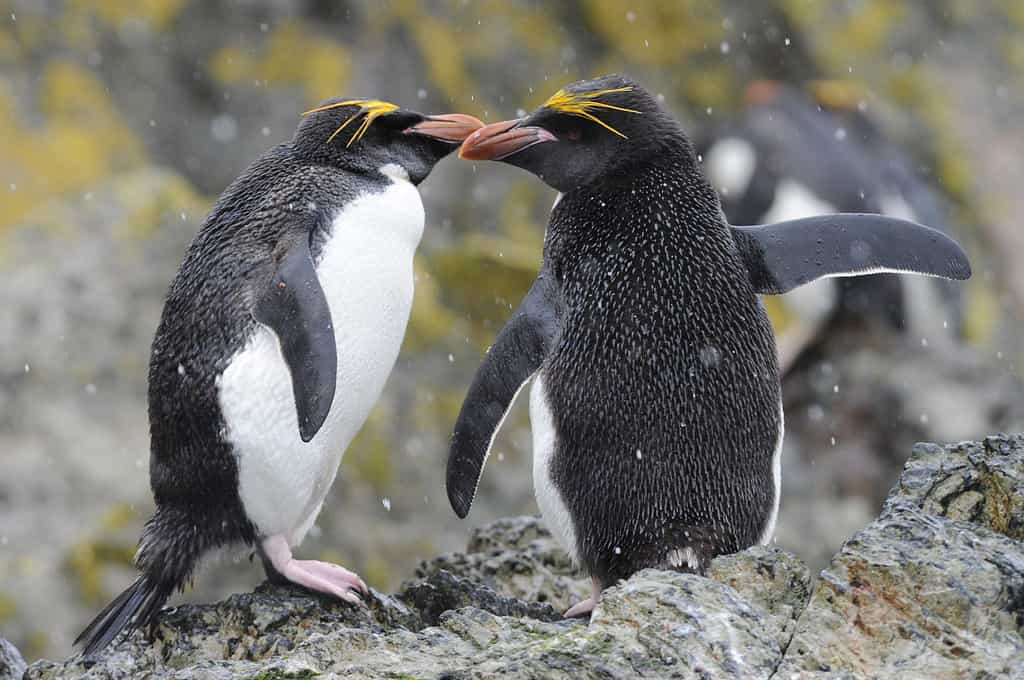
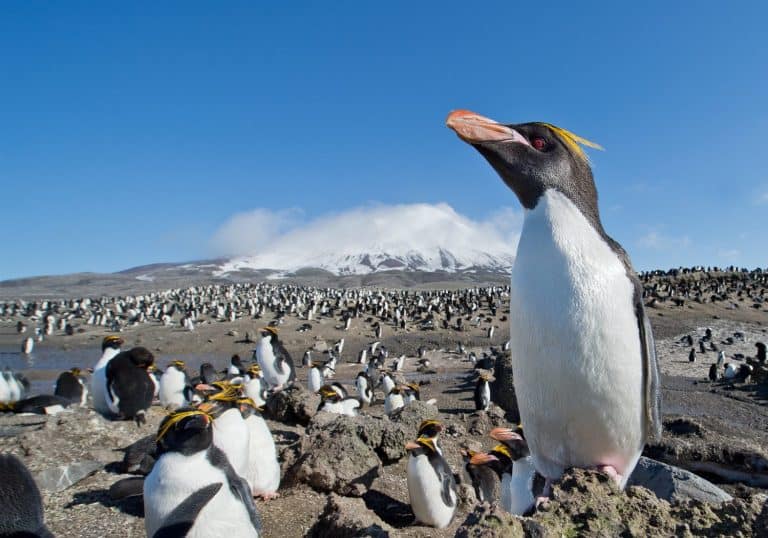
The unique yellow crest sets macaroni penguins apart.
©Tsvyatko Terziev/ via Getty Images
The Macaroni penguin (Eudyptes chrysolophus) stands approximately 28 inches tall and weighs 9.9 to 15.4 pounds. These penguins are found in the Falkland Islands, Chile, and on islands around Australia, New Zealand, and South Africa. They are crested penguins and have a yellow or orange crest on their head and a large orange beak.
The macaroni penguin is a migratory bird that can be found on rocky cliffs next to the sea during the breeding season from October to April, then spends the next six months in the open sea, traveling as far as the Indian Ocean. Although there was once a healthy, thriving population, their numbers have declined in recent years, and they are now classed as Vulnerable.
7. Magellanic Penguin
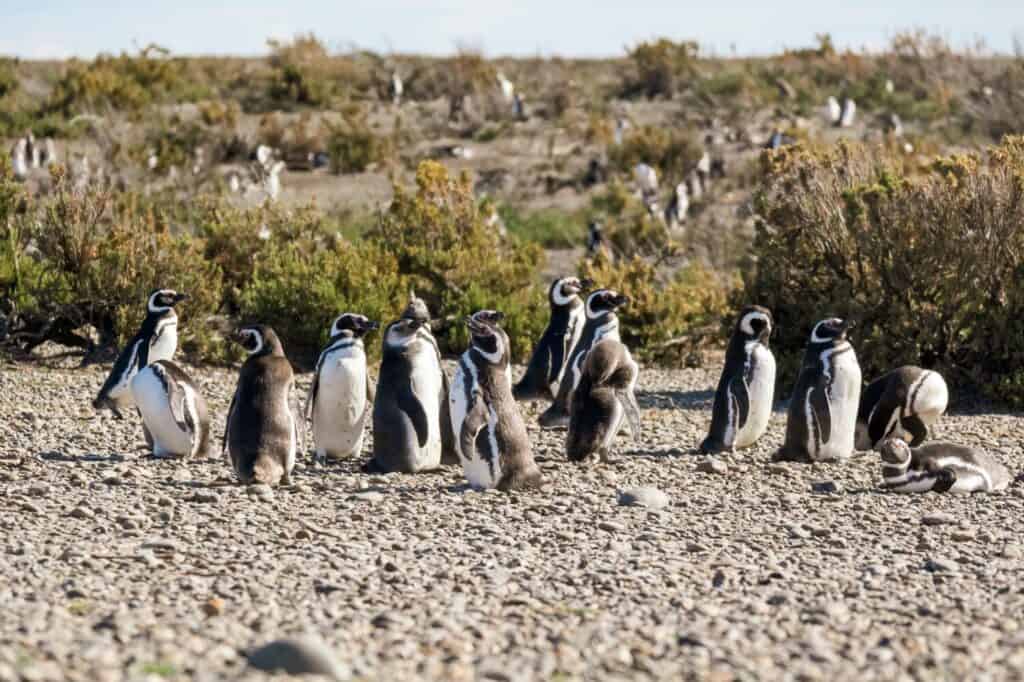
This tall penguin returns to the same nest every single year.
©Claudio Barrientos/Shutterstock.com
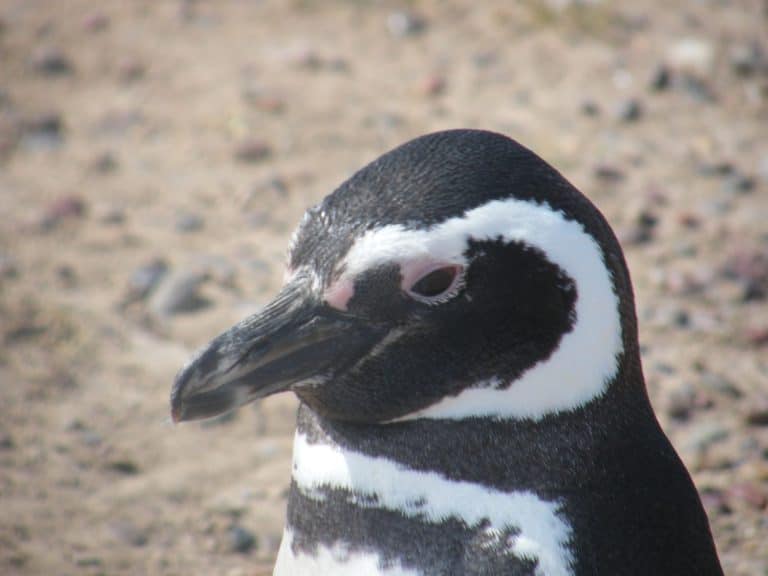
The Magellanic penguin (Spheniscus magellanicus) stands 24 to 30 inches tall and weighs 5.9 to 14.3 pounds. It is found in Argentina, Chile, and the Falkland Islands. They are closely related to both the African penguin and the Humboldt penguin, and share the same black stripe on their bellies. The Magellanic penguin also has a black band around the top of its head.
Unlike other species, the Magellanic penguin mates for life and nests in the same place each year, usually where there is plenty of vegetation for shelter. They head out to sea at the end of the breeding season, just like the macaroni penguin, and travel thousands of miles before returning to nest again.
6. Royal Penguin
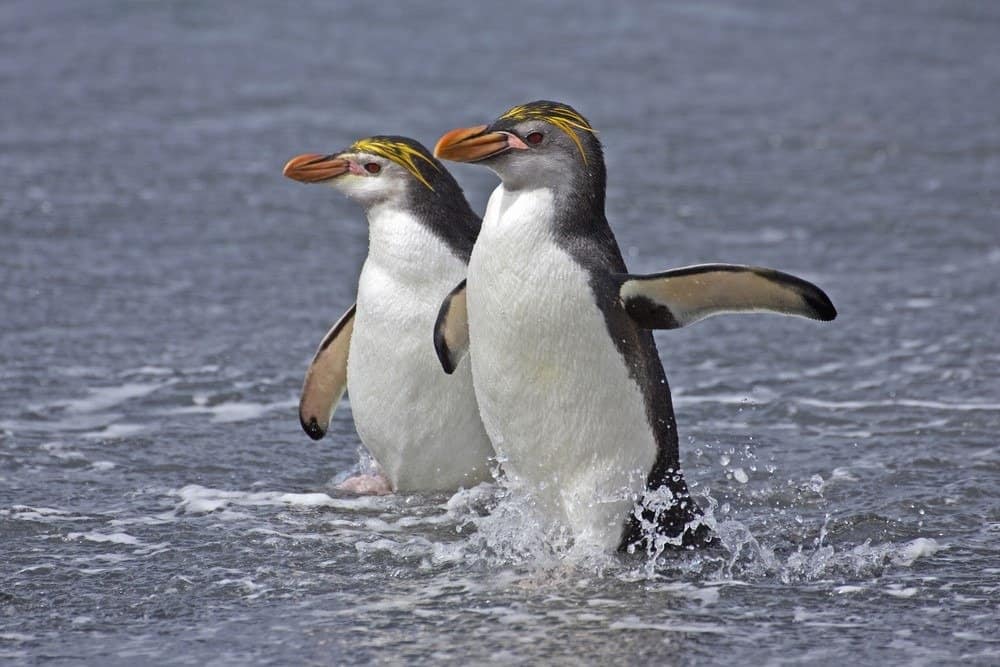
Endemic to Australia, royal penguins lay two eggs.
©BMJ/Shutterstock.com
The royal penguin (Eudyptes schlegeli) is the largest of the crested penguins and stands 26 to 30 inches tall and weighs up to 18 pounds. Royal penguins have a striking yellow crest.
They are endemic to the sub-Antarctic Macquarie Island and some surrounding islands. Although they lay two eggs, only one of them hatches. Royal penguins live on beaches or bare areas near the sea and prey on small fish and squid.
5. Yellow-Eyed Penguin
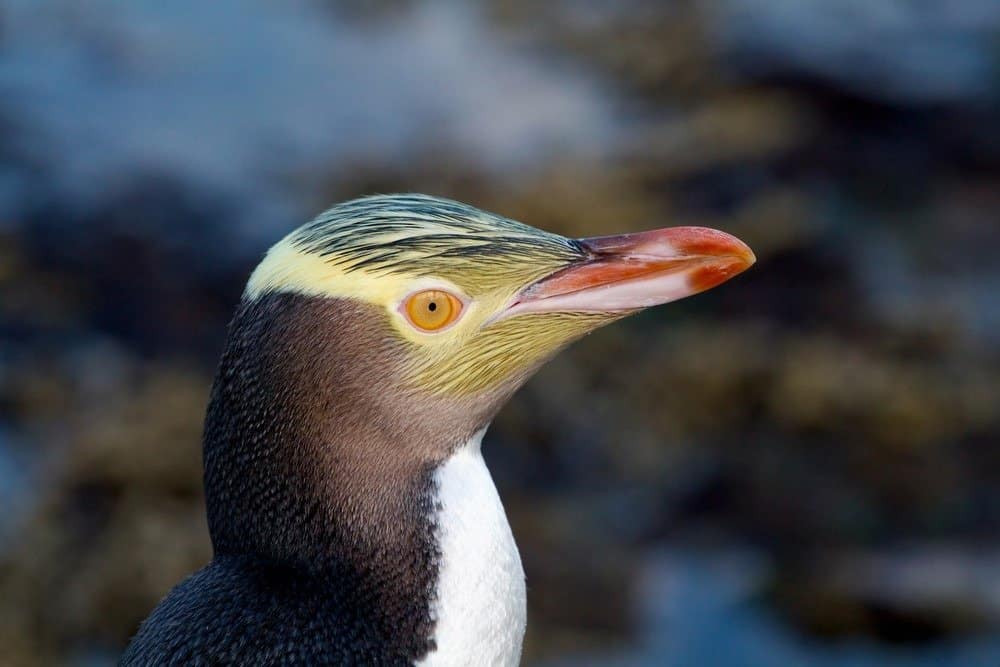
The Yellow-eyed penguin, or Hoiho, is a rare penguin endemic to New Zealand.
©Anders Peter Photography/Shutterstock.com
The yellow-eyed penguin (Megadyptes antipodes) stands 24 to 31 inches tall and weighs 8 to 20 pounds. It is endemic to New Zealand. They are easily recognizable by their yellow eyes and a pale yellow band that extends from their eyes around the back of their heads.
Yellow-eyed penguins do not nest within sight of another pair, unlike most other species. Both the male and female take turns incubating the eggs and caring for the chicks once they have hatched. Unfortunately, the yellow-eyed penguin is at risk from a novel Gyrovirus and poor nutrition because of the decline of red cod (Pseudophycis bachus) populations. Because of these factors, the IUCN lists them as Endangered.
4. Chinstrap Penguin
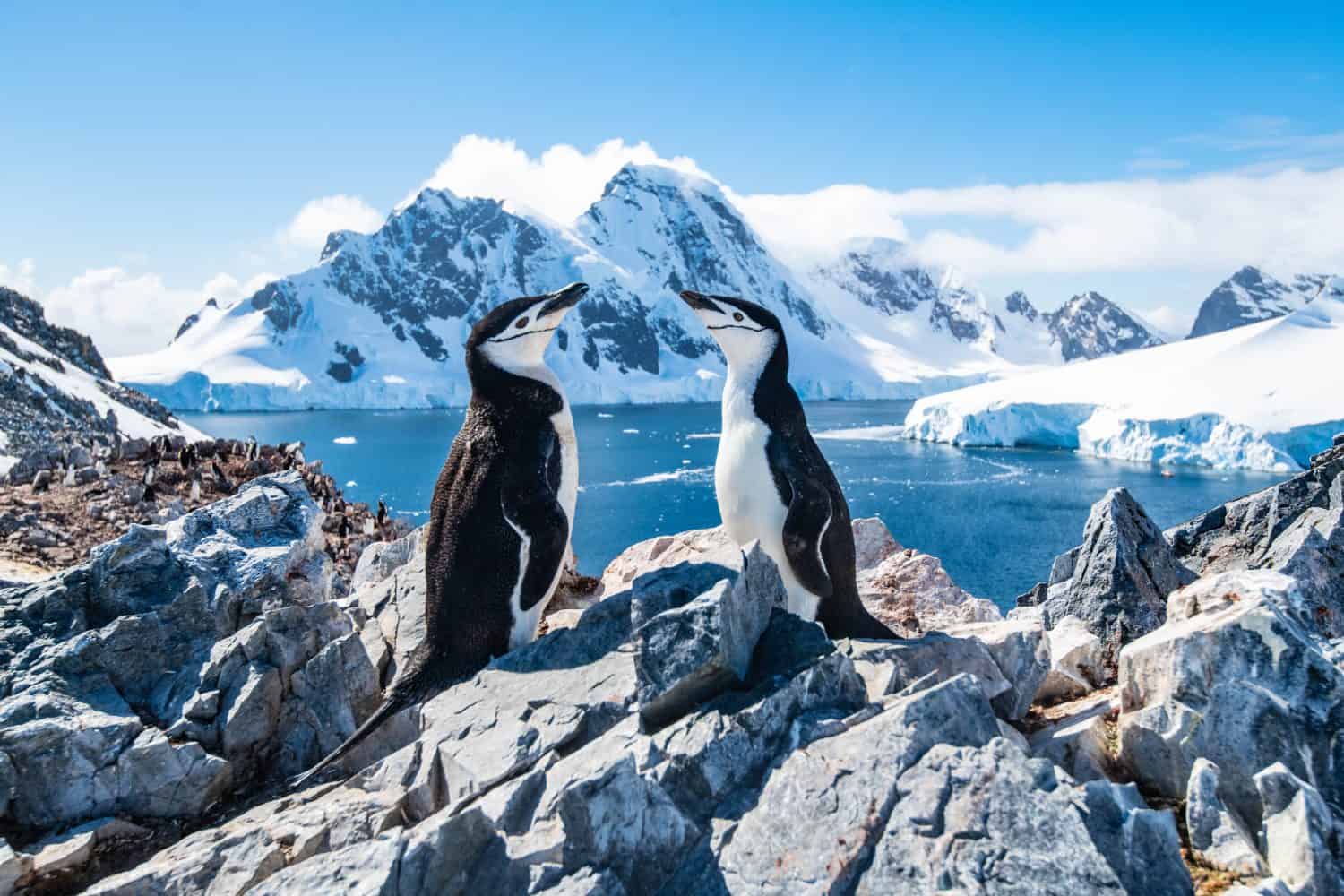
This Antarctic penguin builds nests out of stones.
©SZakharov/Shutterstock.com
The chinstrap penguin (Pygoscelis antarcticus) is widespread across Antarctica, the Falkland Islands, Chile, Argentina, and other surrounding islands. They measure 28 to 31 inches tall and weigh 7.1 to 11.7 pounds. These penguins have a distinct thin black band underneath their chin. They build their nests with stones, and the eggs are incubated by both parents.
Chinstrap penguins swim up to 50 miles per day when hunting, but they are often at risk both on land and at sea from predators. Their primary predators are leopard seals (Hydrurga leptonyx) and large seabirds such as skuas (Stercorarius) and the Southern giant petrel (Macronectes giganteus). Despite these threats, their population remains healthy, and they are classified as Least Concern.
3. Gentoo Penguin
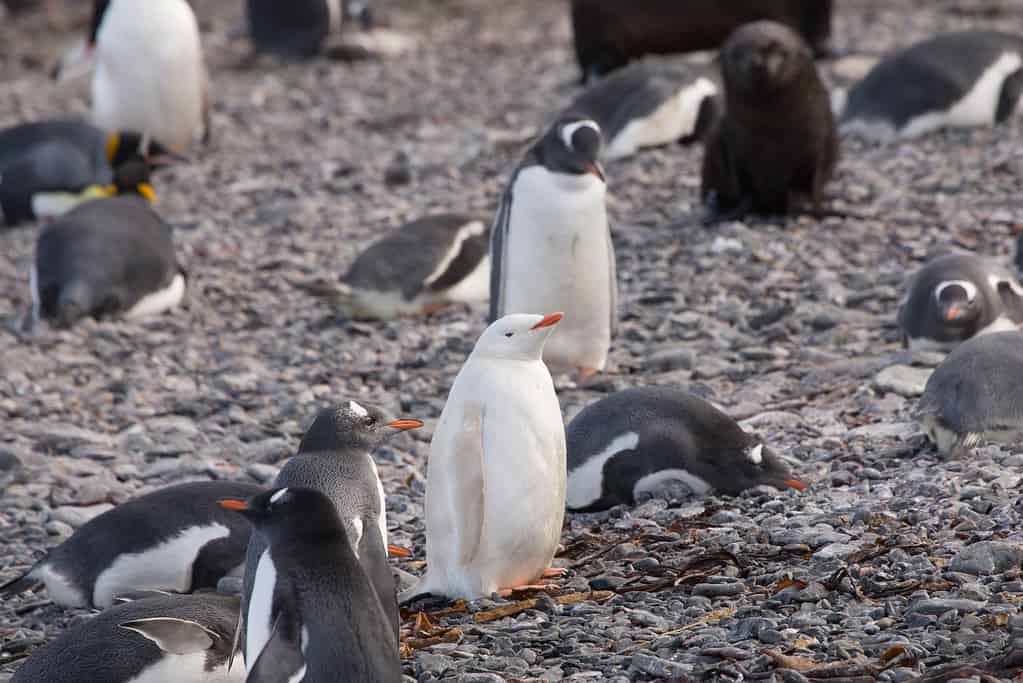
Most gentoo penguins have white stripes or spots on their heads.
©robert mcgillivray/ via Getty Images
The Gentoo penguin (Pygoscelis papua) stands 31 to 35 inches tall and weighs 10 to 20 pounds. They are found predominantly in Antarctica, the Falkland Islands, and South Georgia Island. Gentoo penguins have a black head with a white stripe across it, which makes them easily recognizable from other species of penguin.
They make their nests in piles of stones and can be extremely territorial over them, with fierce fights often breaking out between males. Although other large seabirds often prey on the eggs and chicks, healthy adults have no predators on land. However, killer whales and seals pose a threat to them while they are in the water. They are listed as Near Threatened.
2. King Penguin
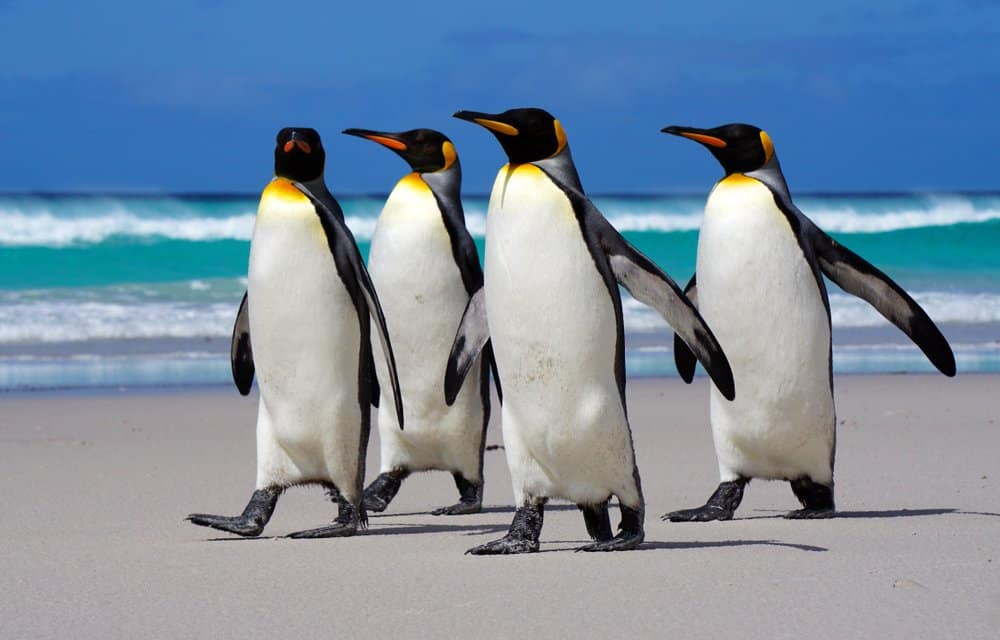
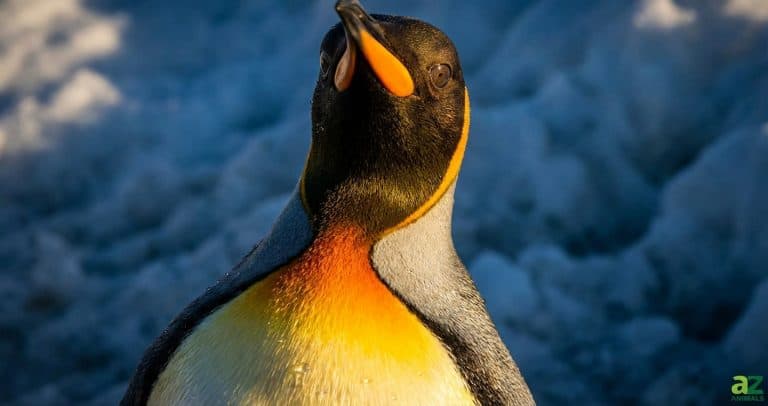
King penguins are similar to emperor penguins.
©Phil West/Shutterstock.com
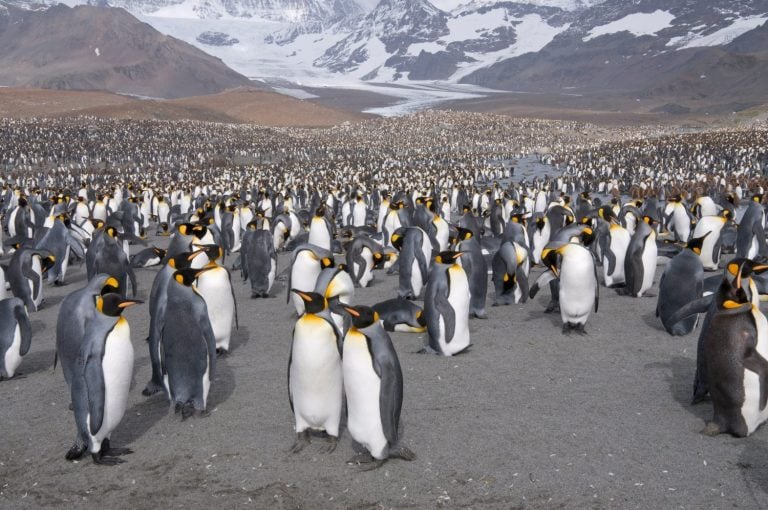
The king penguin (Aptenodytes patagonicus) stands 33 to 37 inches tall and weighs 20 to 40 pounds. They are found in Antarctica, South Georgia Island, and the surrounding islands. As well as the traditional penguin markings of a black back and white underside, they have a black head with orange patches on each side and an orange ombré on their upper chest.
King penguins are adept swimmers and can dive to depths of over 200 feet when hunting for small fish and squid. These penguins are particularly unique as their eggs are pear-shaped and they do not build nests. Instead, king penguins carry their eggs around on their feet and incubate them in a pouch. Although overfishing threatens their food source, king penguins are classified as Least Concern.
1. Emperor Penguin
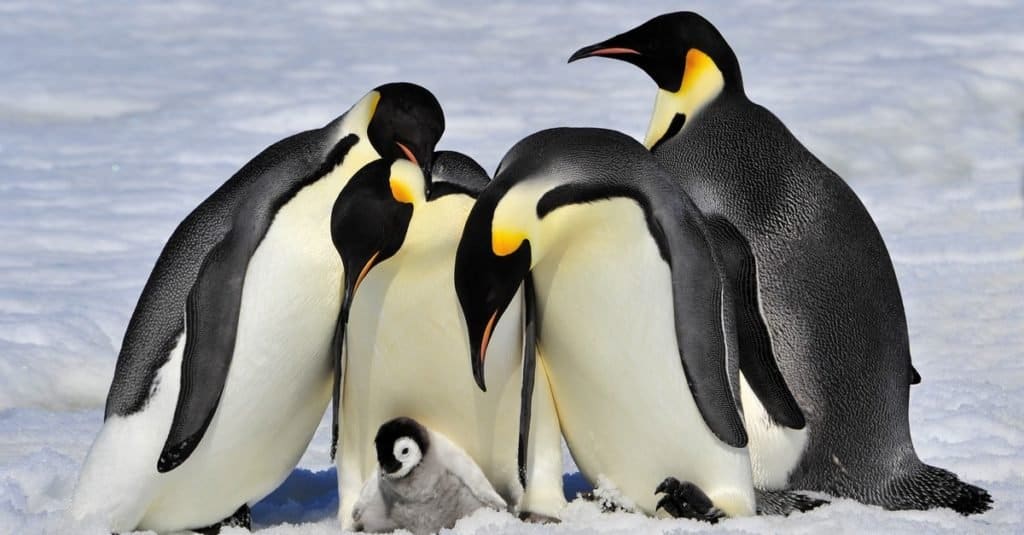
The black and white tuxedo look donned by most penguin species is camouflage called countershading.
©vladsilver/Shutterstock.com
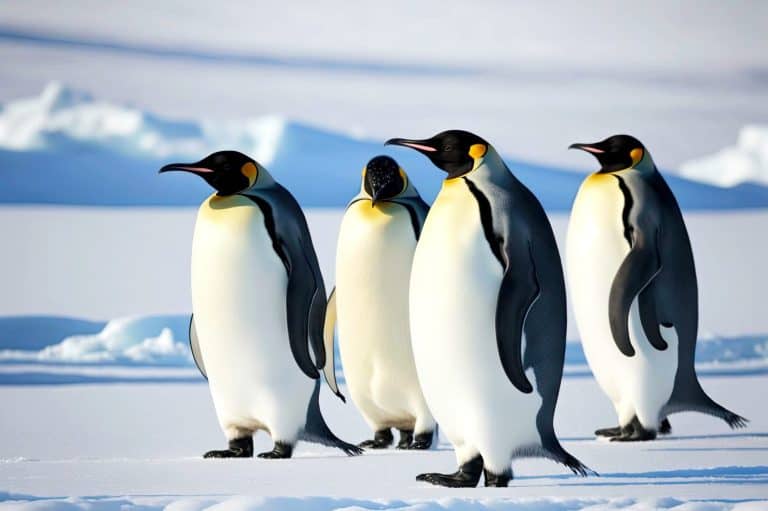
The largest penguin in the world is the emperor penguin (Aptenodytes forsteri). Standing 45 inches tall, these giants weigh 49 to 99 pounds. They are quite similar in appearance to the king penguin, but their orange ombré begins on their heads. Emperor penguins are endemic to Antarctica, and they breed during the harsh winter. During this time, the male incubates the egg on his feet and does not eat at all for the entire 65 to 75 days it takes for it to hatch. Emperor penguins commonly huddle together for warmth as they endure the harsh Antarctic winter.
Emperor penguins are also known for being able to dive the deepest of any species of penguin, having been recorded diving to depths of over 1,000 feet. Due to a decreased hatching rate and the effect of fishing on their food source, the emperor penguins are listed as Near Threatened on the IUCN Red List.