N S W E
Wildlife Expeditions

Wildlife of
Alabama

From longleaf pine to Mobile Bay, Alabama is a Southeast biodiversity hotspot with world-class freshwater mussels, turtles, and coastal birds.
253 Species
131,170.8 km² Land Area
Overview

About Alabama

Alabama has Appalachian foothills in the north, forested uplands and rivers in the center, and the Gulf Coastal Plain with barrier islands in the south. This mix of habitats creates biodiversity, especially in freshwater life. Alabama rivers have some of North America's richest mussels, snails, and fish, plus reptiles and amphibians. White-tailed deer and wild turkey are common. American black bears live mostly in the southwest and in a small northeastern group. Migratory songbirds and raptors pass through in spring and fall. Key ecosystems include longleaf pine savannas and woodlands, which support fire-loving species like red-cockaded woodpeckers and grassland wildflowers. The Mobile-Tensaw Delta and Mobile Bay estuary are productive wetlands—freshwater swamps, tidal marshes, seagrass beds, and oyster reefs that serve as nurseries for fish and crustaceans and host shorebirds and waterfowl. You can go in a day from mountain streams to blackwater wetlands to coastal dunes and find different wildlife.

Physical Features

Geography

Alabama's wildlife variety comes from a strong north-to-south change from Appalachian foothills and upland plateaus to the Gulf Coastal Plain. Elevation, soils, and water flow shape different homes: hardwood and mixed pine-hardwood forests in the north, longleaf pine and wiregrass across the Coastal Plain, and large river floodplains and estuaries around Mobile Bay that support many aquatic and wetland species.

131,170.8 km² (land area) Land Area
30th largest U.S. state (by total area) Size Rank
State Type
Elevation Range

Sea level (Gulf Coast) to ~734 m (2,413 ft) at Cheaha Mountain (Talladega National Forest), creating habitat shifts from coastal marsh/estuary to upland forest communities

Coastline

Gulf of Mexico coastline (~85 km / ~53 mi) featuring Mobile Bay estuary, Mississippi Sound influence, coastal marshes, dunes, and barrier islands (e.g., Dauphin Island) important for shorebirds, sea turtles, and estuarine-dependent species

Key Landscapes

Appalachian foothills and ridge-and-valley terrain in the northeast (including Lookout and Sand Mountain) supporting upland forests and cliff/rock outcrop habitats Cumberland Plateau and Interior Plateau uplands with mixed hardwood forests and headwater streams Piedmont belt in east-central Alabama with rolling hills, streams, and oak-hickory/pine forests Gulf Coastal Plain (dominant in the south) with sandy soils, longleaf pine-wiregrass ecosystems, and pine savannas historically maintained by fire Tennessee River system in the north, including broad river corridors and reservoirs influencing fish, waterfowl, and riparian habitats Major river basins and floodplains-Alabama, Tombigbee, Coosa, Tallapoosa, Cahaba, and Black Warrior-supporting bottomland hardwood forests, oxbows, and rich freshwater fauna (notably mussels and fishes in places like the Mobile Basin and Cahaba River corridor)
State Symbols

Official Wildlife Symbols

bird

Yellowhammer (Northern Flicker)

Designated 1927

animal

American black bear

Designated 1996

fish

Largemouth bass (state freshwater fish)

Designated 1975

fish

Atlantic tarpon (state saltwater fish)

Designated 1975

insect

Monarch butterfly

Designated 1989

reptile

Alabama red-bellied turtle

Designated 1990

amphibian

Red Hills salamander

Designated 2000

wildflower

Oak-leaf hydrangea

Designated 1999

tree

Longleaf pine

Designated 1949

Parks & Reserves

Protected Areas

Alabama's protected areas are a mix of federal lands (national forests, national parks, wildlife refuges), state parks, and wildlife management areas. They protect freshwater life in the Mobile Basin (rivers, springs, wetlands), longleaf pine in the Coastal Plain, coastal and estuary habitats near Mobile Bay and the Gulf, plus migratory birds, sea turtles, black bears, and important fish and mussels.

Protected Coverage

Approximately 7-10% of Alabama's land is managed primarily for conservation and public natural-resource protection (federal + state protected lands; varying protection levels).

National Parks & Preserves

Little River Canyon National Preserve (National Park Service)

≈15,000 acres

Protects one of the deepest canyons in the eastern U.S. and a rare mountaintop river system, supporting rich assemblages of forest, cliff, and aquatic wildlife; strong site for raptors, songbirds, and river-associated mammals.

River otter Black bear (regionally present in surrounding landscape) Bald eagle Barred owl Wood duck

Russell Cave National Monument (National Park Service)

≈310 acres

Cave, forest, and creek habitats support bat populations and diverse woodland wildlife; notable for cave-associated species and intact riparian corridors.

Gray bat Tri-colored bat Eastern box turtle White-tailed deer Red-tailed hawk

State & Provincial Parks

Gulf State Park (Alabama State Parks)

≈6,150 acres

A premier coastal conservation and wildlife-viewing site with beaches, dunes, coastal scrub, freshwater lakes, and wetlands; important stopover for migratory birds and nesting habitat for sea turtles.

Loggerhead sea turtle Least tern Brown pelican American alligator Piping plover (wintering/migratory)

Cheaha State Park (Alabama State Parks)

≈2,800 acres

High-elevation forests around Alabama's highest point create cooler-microclimate habitats and strong raptor/songbird viewing; adjacent to large public forest blocks that support wide-ranging wildlife.

Black bear Broad-winged hawk Scarlet tanager White-tailed deer Timber rattlesnake

Oak Mountain State Park (Alabama State Parks)

≈9,940 acres

Alabama's largest state park protects forests, lakes, and wetlands near the Birmingham metro area; reliable for common mammals, woodland birds, and wetland wildlife viewing.

White-tailed deer Beaver Barred owl Red fox Great blue heron

DeSoto State Park (Alabama State Parks)

≈3,500 acres

Lookout Mountain plateau forests, waterfalls, and stream corridors support diverse breeding songbirds and forest wildlife; strong spring-fall migration potential in surrounding landscapes.

Wood thrush Black-throated green warbler Pileated woodpecker Raccoon Eastern box turtle

Wildlife Refuges

Wheeler National Wildlife Refuge (U.S. Fish & Wildlife Service)

≈35,000 acres

One of the Southeast's most important wintering and migration areas for waterfowl and other birds along the Tennessee River; excellent for birdwatching and wetland conservation.

Sandhill crane Snow goose Bald eagle Great egret American coot

Bon Secour National Wildlife Refuge (U.S. Fish & Wildlife Service)

≈7,000 acres

Protects critical Gulf Coast dunes, scrub, and maritime forest; essential for threatened beach/dune wildlife and migratory birds, with important coastal resilience value.

Alabama beach mouse Loggerhead sea turtle Piping plover Wilson's plover Peregrine falcon (migratory)

Mobile National Wildlife Refuge (U.S. Fish & Wildlife Service)

≈34,000 acres

A large complex of bottomland hardwoods, swamps, and tidal habitats in the Mobile-Tensaw delta region; key for waterbirds, raptors, and floodplain wildlife.

American alligator Swallow-tailed kite Prothonotary warbler Wood duck River otter

Eufaula National Wildlife Refuge (U.S. Fish & Wildlife Service)

≈11,000 acres

Managed wetlands and forested edges around the Chattahoochee River/Lake Eufaula support wintering waterfowl, wading birds, and raptors; a strong birding destination.

Bald eagle Wood stork (seasonal/nearby occurrences) Blue-winged teal Great blue heron Osprey

Wilderness Areas

  • Sipsey Wilderness (Bankhead National Forest) - Alabama's largest wilderness; remote hardwood forest, canyons, and streams
  • Cheaha Wilderness (Talladega National Forest) - rugged ridgelines and upland forests near Alabama's highest elevations
  • Dugger Mountain Wilderness (Talladega National Forest) - extensive backcountry providing habitat connectivity for forest wildlife
  • Choccolocco Wilderness (Talladega National Forest) - roadless forested slopes and headwater streams
  • Shoal Creek Wilderness (Talladega National Forest) - roadless upland forest and headwater streams
Animals

Wildlife

Alabama is a Southeast biodiversity hotspot where Appalachian foothills, longleaf pine savannas, blackwater rivers, extensive wetlands, and the Mobile Bay estuary meet. The state's wildlife character is defined by exceptionally diverse freshwater life (fish, turtles, mussels, salamanders), large forest mammals, and a strong coastal component (wading birds, shorebirds, dolphins, sea turtles). Longleaf pine ecosystems, the Mobile-Tensaw Delta, and the Mobile Basin river network are especially important for species richness and endemism.

~60-70 species Mammals
~420+ species recorded (including migrants) Birds
~90+ species Reptiles
~70+ species Amphibians
~300+ freshwater species; plus ~150-200 marine/estuarine species along the Gulf coast (approx.) Fish

Endemic & Rare Species

Alabama Sturgeon

Scaphirhynchus suttkusi

Federally Endangered; extremely rare

A Mobile Basin endemic that symbolizes the conservation challenges of large Gulf-slope rivers (habitat fragmentation, channel alteration). Alabama is the core of its historic range.

Red Hills Salamander

Phaeognathus hubrichti

Federally Threatened; Alabama endemic

One of Alabama's most distinctive endemics, restricted to a small area of south-central Alabama where it depends on intact, moist ravine slopes and soil stability.

Cahaba Shiner

Notropis cahabae

Rare/range-restricted; conservation concern

A Mobile Basin fish strongly tied to clear, flowing river habitats; best known from the Cahaba River system, a celebrated biodiversity river in the state.

Alabama Map Turtle

Graptemys pulchra

Endemic to Mobile Basin (regional endemic); localized

A striking river turtle associated with larger streams and rivers of the Mobile drainage; part of Alabama's globally notable freshwater turtle diversity.

Black Warrior Waterdog

Necturus alabamensis

Federally Endangered

A fully aquatic salamander restricted to the Black Warrior River system; threatened by habitat changes, water quality issues, and altered river flows.

Perdido Key Beach Mouse

Peromyscus polionotus trissyllepsis

Federally Endangered (subspecies); very range-limited

A dune-dependent coastal endemic (shared with the immediate AL-FL border area) that highlights the vulnerability of barrier-island habitats to storms and development.

Eastern Indigo Snake

Drymarchon couperi

Federally Threatened; rare in Alabama

A wide-ranging longleaf pine and coastal plain species that is now uncommon in Alabama; it represents longleaf ecosystem health and connectivity.

Notable Populations

  • Mobile Basin (Mobile-Tensaw-Alabama-Tombigbee river network) is among North America's most important freshwater biodiversity regions, with exceptionally high richness and endemism in fishes, turtles, and especially freshwater mussels and snails.
  • Mobile-Tensaw Delta is one of the largest and most wildlife-rich river deltas in the United States, supporting extensive wetland food webs and high bird diversity.
  • Alabama's remaining longleaf pine landscapes support regionally significant populations of longleaf-associated wildlife (e.g., gopher tortoise systems and specialist birds), where habitat restoration is active.
  • Dauphin Island and the Alabama Gulf Coast are nationally significant migration and stopover areas for neotropical migrant songbirds and shorebirds along the Gulf flyway.
  • Mobile Bay estuary is a major nursery and feeding area for coastal fishes, dolphins, and seabirds, linking inland river biodiversity to Gulf marine ecosystems.

Recent Changes

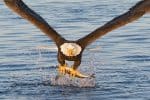
  • Recovery and increased visibility of Bald Eagles statewide over recent decades due to reduced contaminants and protection.
  • American Alligator populations rebounded from historical overharvest; now a common and managed species in coastal plain wetlands.
  • Sea turtle nesting activity on Alabama's Gulf beaches is closely monitored; nesting and hatchling protection efforts have intensified, with year-to-year variability influenced by storms and beach conditions.
  • American Black Bear presence has been increasing/expanding in parts of Alabama (notably the southwest), with more reports as landscapes and populations change.
  • Ongoing declines and imperilment in portions of Alabama's freshwater fauna (especially mussels and some river fishes) driven by dams, altered flows, habitat loss, and water-quality stressors.
  • Active longleaf pine restoration and targeted management have supported some longleaf-associated species, though habitat fragmentation remains a major limiting factor.
  • Conservation programs for rare Mobile Basin species (including sturgeon recovery actions) have increased monitoring and management focus, but many species remain at very low abundance.
Visit

Wildlife Viewing

Alabama has great wildlife viewing in three zones: Gulf Coast/Mobile Bay estuaries (shorebirds, dolphins, sea turtles); Black Belt prairies and river floodplains (wading birds, alligators, waterfowl); and Appalachian foothills (songbirds, raptors, black bear). Public lands, longleaf, cypress-tupelo swamps and barrier islands are often a few hours apart, so visitors can plan trips around migrations, nesting, wildflower peaks, and winter waterfowl.

Best Seasons

Spring (Mar-May)

Peak migration and breeding activity: warblers and neotropical migrants move through coastal woodlands and uplands; shorebirds gather along the coast; frogs and salamanders are active in wet forests; wildflowers and pollinators ramp up in longleaf pine landscapes. Expect comfortable temps, high bird diversity, and busy dawn/dusk viewing.

Summer (Jun-Aug)

Coastal and wetland specialties: sea turtle nesting and hatchling season on Gulf beaches (view responsibly and with permitted programs), dolphins in nearshore waters, wading birds and herons active around marshes and bayous, and excellent nighttime opportunities for owls and amphibians. Hot, humid days favor early-morning paddles and sunset boardwalk walks.

Fall (Sep-Nov)

Second wave of migration: southbound songbirds and raptors, plus strong shorebird movement on the coast. Cooler weather improves hiking in uplands and longleaf tracts. In late fall, waterfowl begin arriving to river bottoms and managed wetlands.

Winter (Dec-Feb)

Waterfowl and eagle season: ducks, geese, and swans concentrate on rivers, reservoirs, and coastal marshes; bald eagles are more visible; sparrows and wintering songbirds use grasslands and scrub. Leaf-off conditions improve wildlife spotting in forests; coastal days can be crisp but productive for birds.

Top Wildlife Experiences

  • Paddle the Mobile-Tensaw Delta (near Mobile) at sunrise to look for alligators, barred owls, prothonotary warblers (seasonal), river otters, and wading birds-choose calm backwaters and bring binoculars for canopy birding.
  • Explore Gulf Shores/Orange Beach (Gulf State Park): scan dunes and shorelines for migrating shorebirds and terns, watch for dolphins from the beach or a kayak, and take an evening walk for night herons and bats.
  • Take a day trip to Dauphin Island and explore the Audubon Bird Sanctuary: a legendary stopover for spring/fall migrants; combine forest trails with beach and lagoon edges for a high species count in a small area.
  • Visit Wheeler National Wildlife Refuge (Tennessee River near Decatur) in winter for large waterfowl concentrations and eagle viewing; use observation platforms and auto routes to minimize disturbance while maximizing sightings.
  • Walk the boardwalks and wet trails at Weeks Bay National Estuarine Research Reserve (near Fairhope): excellent for herons, egrets, ospreys, and seasonal migrants; pair with a kayak outing in calm conditions for close-in marsh views.
  • Seek longleaf pine biodiversity in Conecuh National Forest (south Alabama): look for red-cockaded woodpecker habitat (view from a distance), pine savanna wildflowers, and specialized birds; visit during spring for songbird activity and blooming understory plants.
  • Explore Bankhead National Forest/Sipsey Wilderness (northwest Alabama) for forest birds, amphibians in seeps and streams, and scenic canyon habitats; aim for spring after rains for the best herp activity and waterfalls.
  • Join a permitted sea turtle program on the Gulf Coast during nesting/hatching season (where offered): learn how monitoring works and how to view tracks/hatchling events responsibly without lights or interference.

Wildlife Watching Types

Birding hotspots (migratory songbirds, shorebirds, raptors, winter waterfowl) Dolphin watching (Gulf Coast and Mobile Bay) Sea turtle nesting/hatchling viewing (seasonal, via permitted/managed programs) Alligator and wetland wildlife viewing (delta, marshes, swamps) Wildflower-and-pollinator walks (longleaf pine savannas, prairie remnants) Herping (frogs, salamanders, reptiles) in wetlands and Appalachian foothills Paddling-based wildlife watching (kayak/canoe in deltas, bays, slow rivers) Raptor watching and eagle spotting (especially winter along major waterways) Night wildlife walks (owls, bats, amphibians-best with guides)

Guided Options

  • Dauphin Island Bird Sanctuaries/Audubon-affiliated bird walks and seasonal migration events (often scheduled during peak spring/fall movement)
  • U.S. Fish & Wildlife Service programs at Alabama refuges (e.g., Wheeler NWR, Bon Secour NWR): interpretive events, viewing areas, and seasonal wildlife-focused programming
  • Weeks Bay National Estuarine Research Reserve: guided nature walks, paddle programs, and interpretive center resources focused on estuary wildlife
  • Gulf State Park Naturalist Programs (Gulf Shores): guided hikes, coastal ecology programs, and family-friendly wildlife education outings (seasonal schedule)
  • Local guided kayak/canoe ecotours in the Mobile-Tensaw Delta and coastal bays (sunrise/sunset trips are especially productive for wildlife)
  • Sea turtle education/monitoring programs on the Gulf Coast (participation/viewing typically requires permitted organizations and strict lighting/disturbance rules-check current offerings and rules before visiting)
Habitats

Ecosystems

Alabama spans the Gulf Coastal Plain, Black Belt prairies, Piedmont, and Appalachian foothills, creating a high-diversity mosaic of pine savannas/woodlands, mixed hardwood forests, large river systems, extensive freshwater wetlands, and a productive Gulf Coast estuary complex (Mobile Bay). Fire-adapted longleaf pine landscapes, floodplain forests, and one of North America's richest freshwater faunas (notably mussels and fishes) are key ecological themes.

Biomes

Temperate Forest

Dominant biome across most of the state, including mixed hardwood-pine forests of the Coastal Plain and Piedmont and oak-hickory forests in uplands; strong gradients from drier sandhills/ridges to moist bottomlands.

Widespread statewide; the prevailing terrestrial biome across most counties.

Temperate Grassland

Occurs as prairie/grassland remnants and open herbaceous systems, especially in the Black Belt (calcareous soils) and scattered glades/open fields maintained historically by fire and grazing.

Patchy and localized; most prominent in the Black Belt region.

Freshwater

Extensive rivers (Tennessee, Coosa, Tallapoosa, Alabama, Tombigbee, Black Warrior, Cahaba) with diverse aquatic communities; includes reservoirs, springs, and headwater streams from the Appalachians to the Coastal Plain.

Statewide along major basins; densest networks in northern and central Alabama.

Wetland

Large floodplain swamps, bottomland hardwood wetlands, beaver wetlands, marshes, and peat-leaning boggy seepage areas; especially associated with the Mobile-Tensaw Delta and Coastal Plain river floodplains.

Common along river corridors and lowlands; highest concentration in the southwestern Coastal Plain and deltaic areas.

Marine

Gulf of Mexico coastal waters and nearshore habitats supporting seagrass beds, oyster reefs, and estuarine-dependent species; influenced strongly by Mobile Bay outflow.

Narrow coastal strip along the Gulf (Baldwin and Mobile counties) and adjacent nearshore waters.

Habitats

Forest

Extensive forest cover statewide, including upland pine/hardwood mixes and rich mesic forests in protected coves and ravines.

Deciduous Forest

Oak-hickory and mixed hardwood forests across the Appalachian Plateau, Ridge-and-Valley, and parts of the Piedmont; vibrant seasonal canopy and mast production important for wildlife.

Coniferous Forest

Pine-dominated systems (notably longleaf, loblolly, slash) on the Coastal Plain; longleaf pine-wiregrass communities are fire-maintained and biodiversity-rich.

Woodland

Open pine woodlands and sandhill communities maintained by frequent fire; includes longleaf pine woodlands and mixed pine-oak woodlands on drier sites.

Grassland

Black Belt prairie remnants and other open herbaceous habitats; high wildflower diversity where maintained and not converted to pasture/cropland.

Savanna

Longleaf pine savannas with grassy understories (wiregrass and other bunchgrasses) and scattered shrubs; dependent on regular prescribed fire.

Shrubland

Early-successional thickets, powerline rights-of-way, and sandhill scrub patches, providing habitat for pollinators and shrub-nesting birds.

Mountain

Appalachian foothills and plateau features in the north (e.g., Lookout and Sand Mountains) with elevational microclimates and rocky outcrops.

Cave

Karst caves and subterranean systems in north Alabama (notably in the Interior Plateau/Ridge-and-Valley areas) supporting bats and specialized cave fauna.

Cliff/Rocky Outcrop

Sandstone bluffs and rock shelters on the Cumberland Plateau and along river gorges; important for nesting raptors and specialized plants.

River/Stream

Major river corridors and shoals (e.g., Cahaba River shoals, Coosa/Tallapoosa systems) with exceptional fish and freshwater mussel diversity.

Lake

Large reservoirs (e.g., Guntersville, Wheeler, Martin, Lay) and natural oxbows; important for waterfowl, fisheries, and recreation.

Pond

Farm ponds, borrow pits, and beaver-influenced impoundments across rural landscapes; breeding habitat for amphibians.

Wetland

Bottomland hardwood wetlands, floodplain forests, beaver wetlands, and wet pine flats; critical for water quality, flood attenuation, and wildlife.

Swamp

Bald cypress-tupelo swamps and backwater forests, especially in the Mobile-Tensaw Delta and major Coastal Plain floodplains.

Marsh

Coastal and estuarine marshes along Mobile Bay and the Mississippi-Alabama barrier-island/lagoonal systems; includes brackish and salt marsh zones.

Bog

Localized pitcher-plant bogs and seepage wetlands in the Coastal Plain (often in longleaf landscapes), dependent on groundwater seepage and fire.

Estuary

Mobile Bay estuary complex (including Mobile-Tensaw Delta) with strong freshwater-saltwater mixing, oyster reefs, and nursery habitat for Gulf fisheries.

Coastal

Gulf Coastal Plain shoreline habitats including dunes, maritime forests, bays, and tidal wetlands around Mobile Bay and Perdido Bay.

Beach

Sandy Gulf beaches (e.g., Gulf Shores/Orange Beach; Dauphin Island) with dune systems important for shorebirds and sea turtle nesting.

Rocky Shore

Limited; primarily engineered shorelines and occasional shell/rock exposures around bays and inlets rather than extensive natural rocky coasts.

Seabed/Benthic

Nearshore sandy/muddy bottoms off the Alabama coast supporting benthic invertebrates and demersal fishes.

Urban

Urban ecosystems around Birmingham, Montgomery, Huntsville, Mobile; includes urban streams, parks, and fragmented forest patches.

Suburban

Expanding suburban matrix around major metros, interspersed with secondary forests and small wetlands/ponds.

Agricultural/Farmland

Row crops and pasture, especially in the Black Belt and parts of the Coastal Plain; interwoven with riparian buffers and woodlots.

Plantation

Managed pine plantations (loblolly/slash) common in the Coastal Plain; differing understory structure and fire regimes relative to natural longleaf systems.

Ecoregions

WWF: Appalachian mixed mesophytic forests WWF: Southeastern mixed forests WWF: Southeastern conifer forests WWF: Southern coastal plain mixed forests EPA Level III: Southeastern Plains EPA Level III: Southern Coastal Plain EPA Level III: Blackland Prairies EPA Level III: Piedmont EPA Level III: Ridge and Valley EPA Level III: Southwestern Appalachians EPA Level III: Interior Plateau
Protection

Conservation

Primary Threats

  • Conversion and fragmentation of longleaf pine, bottomland hardwoods, and coastal dune systems due to development, intensive pine management, and historical wetland loss; ongoing shoreline hardening and dune disturbance on the Gulf Coast reduce habitat for beach mice and nesting sea turtles.
  • Sea-level rise and stronger hurricanes increase overwash and erosion on Dauphin Island, Fort Morgan, and Perdido Key, squeezing dunes and marshes; warmer temperatures and altered rainfall shift stream temperatures/flows and can intensify drought-flood cycles that stress sensitive mussels and fishes in the Mobile River Basin.
  • Nutrient/sediment runoff from agriculture and urban stormwater degrades streams and Mobile Bay (turbidity harms submerged aquatic vegetation and oyster reefs); industrial discharges and legacy contaminants (including localized PFAS concerns near some facilities) can affect aquatic food webs and drinking-water sources.
  • Cogongrass displaces native understory in pine systems; feral hogs damage wetlands and groundcover and increase erosion; aquatic invasives (e.g., hydrilla) alter habitats; lionfish predation pressures nearshore reef communities in the northern Gulf.
  • White-nose syndrome threatens cave-hibernating bats (e.g., gray and Indiana bats) in north Alabama; periodic fish kills and disease events are exacerbated by warm, low-oxygen conditions in nutrient-enriched waters; wildlife health surveillance is needed for emerging diseases as ranges shift.
  • Generally regulated, but localized overharvest/illegal take can affect sensitive species (e.g., sea turtles or protected birds) and can compound other stresses; enforcement and outreach remain important in heavily used coastal and riverine recreation areas.
  • Illegal collection pressure can occur for turtles and rare reptiles/amphibians, and for some native plants; online marketplaces increase enforcement complexity, particularly for species with restricted ranges in Alabama's aquatic and upland hotspots.
  • Pressure on Gulf and estuarine fisheries (e.g., red snapper management, blue crab, and historically oysters) can reduce resilience of Mobile Bay food webs; bycatch and gear interactions can affect sea turtles in nearshore waters.
  • Heavy beach use, lighting, and off-trail traffic on dunes disturb nesting sea turtles and shorebirds and degrade beach mouse habitat; boating and shoreline recreation disturb sensitive marsh and seagrass areas in Mobile Bay and adjacent sounds.
  • Expanding suburbs increase conflicts with white-tailed deer, coyotes, and black bears (especially in north and west Alabama), plus nuisance alligators in coastal/river communities; conflicts can drive negative attitudes and lethal control without preventive measures.
  • Small, isolated populations (e.g., beach mice on individual barrier island units; some imperiled fish/mussel populations isolated by dams) face reduced gene flow, heightening vulnerability to storms, disease, and demographic swings.
  • Water withdrawals and competing demands (municipal, industrial, agricultural) can reduce flows during drought, stressing flow-dependent mussels and fishes; loss of oyster reef structure reduces natural filtration capacity and nursery habitat in Mobile Bay.
  • Dams and reservoirs on the Coosa-Tallapoosa-Alabama systems and navigational structures on the Black Warrior-Tombigbee alter flow regimes, block migration, and fragment habitats; roads and bridges contribute to runoff and wildlife mortality; coastal armoring interrupts natural sand movement.
  • Fire suppression reduces longleaf pine ecosystem function and habitat for species dependent on open pine savannas; channelization, dredging, and engineered flow management simplify river habitats and affect sediment transport to Mobile Bay and coastal marshes.
  • Expansion/intensification of row crops and pasture in parts of the Coastal Plain increases nutrient and sediment runoff and reduces riparian buffers, impacting Alabama's exceptionally diverse freshwater fauna.
  • Growth around Birmingham-Hoover, Huntsville, Montgomery, Mobile, and coastal Baldwin County increases impervious surfaces, stormwater pulses, stream incision, and habitat fragmentation; coastal real-estate growth amplifies dune and marsh losses.
  • High timber production can reduce structural diversity and degrade stream buffers when best management practices are not followed; conversion to dense pine plantations can reduce native groundcover needed for longleaf-associated wildlife.
  • Legacy and active coal mining in the Appalachian/foothill region and widespread sand/gravel extraction can increase sedimentation and alter hydrology; mine drainage and spoil areas can impair headwater streams that feed larger river systems.
Fun Facts

Did You Know?

Mobile Bay has "jubilees": on certain summer nights, wind and low-oxygen conditions can drive crabs, flounder, and other marine life into the shallows, where people have traditionally gathered them by hand or with nets-an unusual, locally famous coastal event.

A canyon that glows: Dismals Canyon is known for "dismalites," a natural bioluminescent display produced by larvae of a fungus gnat; the glowing dots can be seen on damp canyon walls after dark.

Alabama has a beach-only mammal found nowhere else: the Alabama beach mouse lives only on Alabama's coastal dunes (notably the Fort Morgan Peninsula), where it depends on sea oats and intact dune systems for cover and food.

Some of Alabama's rarest wildlife lives underground by choice: the Red Hills salamander is endemic to a small area of southern Alabama, spending much of its life in burrows in the state's distinctive Red Hills clay soils.

Gopher tortoises in Alabama's longleaf pine and sandhill areas dig long, deep burrows that shelter dozens of other animals—snakes, frogs, and small mammals—making one species very important to many others.

U.S. hotspot: Alabama is widely cited as having more freshwater fish species than any other U.S. state (300+ species), thanks largely to the Mobile River Basin and Tennessee River systems.

National leader in mussels: Alabama's rivers historically supported about 180 species of freshwater mussels-more than any other state-making it a global-scale center of freshwater mussel diversity (with many species now endangered).

Giant wetland complex: The Mobile-Tensaw Delta (~250,000 acres) is often described as the second-largest river delta in the contiguous United States and one of the most biodiverse wetland landscapes in North America.

Major crane gathering place: Wheeler National Wildlife Refuge in north Alabama regularly hosts winter peaks in the tens of thousands of sandhill cranes, making it one of the largest wintering concentrations in the eastern U.S. (with especially visible dusk "fly-ins").

Alabama has a varied topography that ranges from steep hills to fertile flatlands, lakes, and rivers. Its coastline on the Gulf of Mexico includes 600 miles of tidal bay and bayou shoreline. Alabama has more than 60 types of natural habitat, including forests, woodlands, wetlands, glades, and prairies. The weather stays warm and humid most of the year, and snowfalls are rare.

Because of its topography and climate, Alabama is one of the most ecologically diverse states in the country. It ranks fifth in the country–and first among states east of the Mississippi–for biodiversity.

There are over 4,500 documented species in Alabama. Among these animals are:

  • 62 native mammals.
  • 22 species of rodents.
  • 16 bat species.
  • Four rabbit species.
  • One marsupial: the opossum.
  • 433 bird species, including some of the rarest bird species in the world.

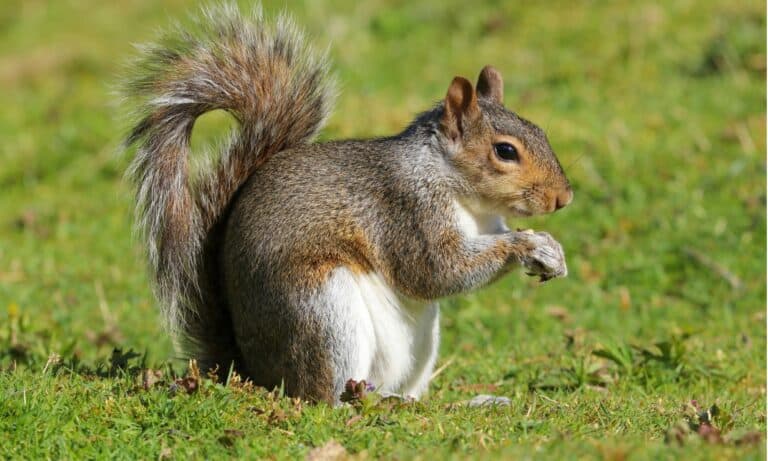
Its rodents include gray squirrels, fox squirrels, chipmunks, and southern flying squirrels. Alabama’s predators include the bobcat, coyote, red fox, and gray fox. Its coastal waters are home to sharks, strange fish like the Clymene dolphin (Stenella clymene) and common marine mammals like the killer whale and California sea lion.

Bat species include the Mexican free-tailed bat, eastern red bat, and evening bat.

One of Alabama’s strange critters is the nine-banded armadillo (Herpailurus yagouaroundi). The state mammal of Texas, this small, armored beast spends its days eating insects and small reptiles.

The Official Animal of Alabama
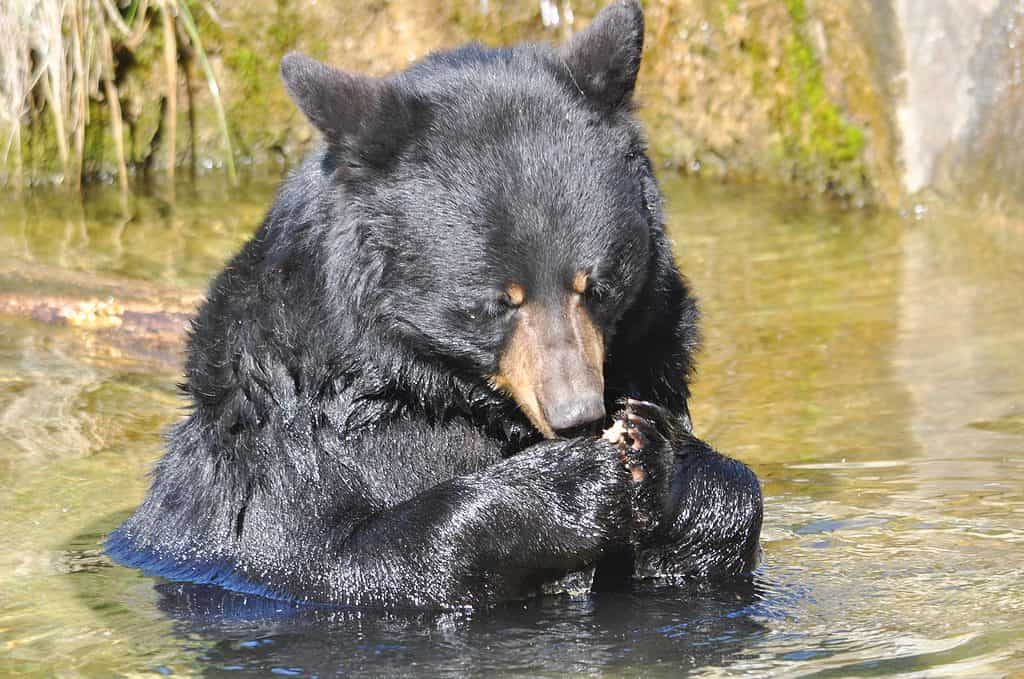
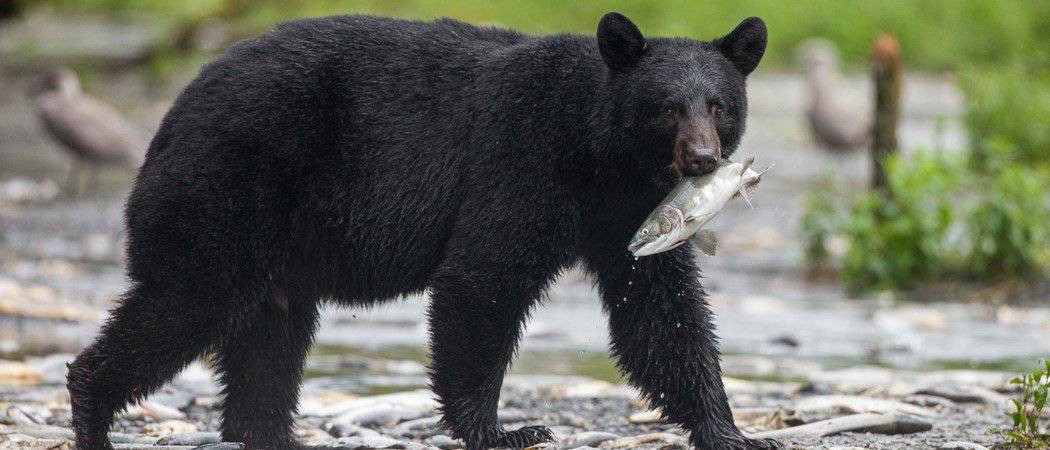
Black bear in water bringing its two front paws to its face

About 200 black bears call Alabama home

Alabama’s official state animal is the North American black bear (Ursus americanus). It shares this state mammal with West Virginia. Black bears were once rare in Alabama, but their population has grown recently.

Presently about 200 of these lumbering mammals known for having a sweet tooth, call the state home. Black bears are mainly found in three counties: Baldwin, Mobile, and Washington. However, they can also be found in northeast Alabama where they have settled down nicely in Cherokee, DeKalb, and Etowah counties.

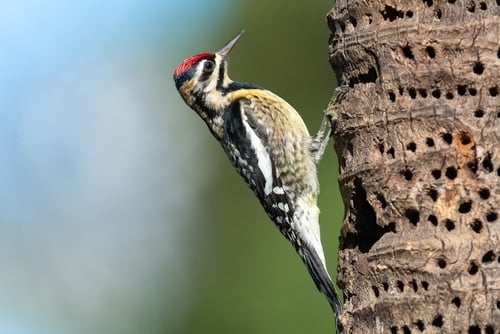
The northern flicker (Colaptes auratus), also known as the yellowhammer is the state’s bird. As a matter of fact, it is actually the reason Alabama is referred to as the Yellowhammer State. The avian which is noted for its gray-brown speckled plumage, and in the case of males, a black or red bar beneath their beaks, can be found throughout the United States.

Alabama’s official amphibian is the red hills salamander. This strange creature lives in deep forest ravines and can grow 11 inches long. The red hill salamander is threatened because of habitat loss.

The Official Insect of Alabama
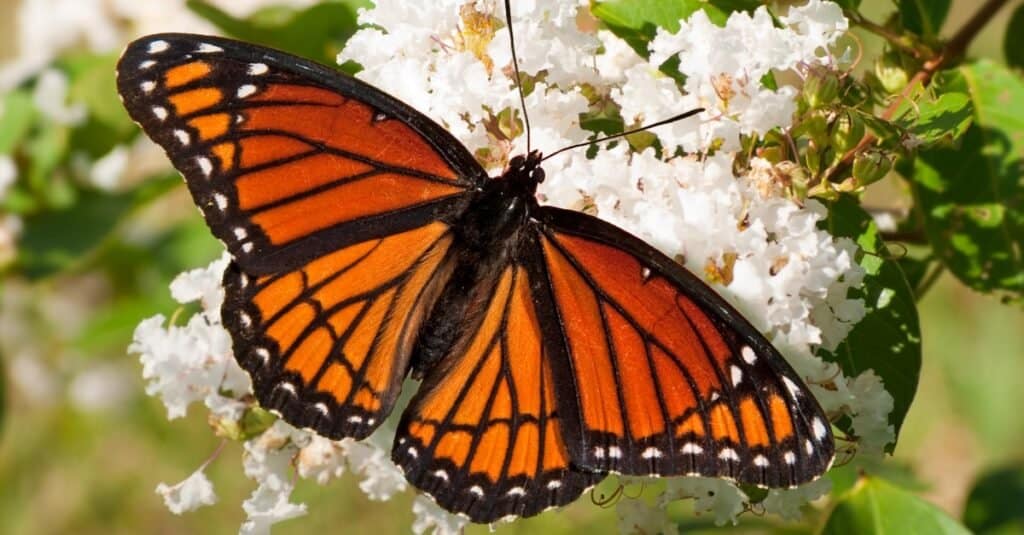
Viceroy Butterfly Vs Monarch Butterfly

Monarch butterflies store the toxins from the milkweed on which they lay their eggs and which their larvae feed on

The official Alabama state insect is the Monarch butterfly. The Alabama legislature designated the local butterfly as the state insect in 1989. Authorities from Selma, which had dubbed the city the Butterfly Capital of Alabama in 1982, demanded the action.

Also known as Danaus plexippus, these arthropods are recognized by their large orange wings, prominent black veins, and white, pearl-shaped markings clusted at the borders of each wing, on thick black bands. Their migrations which are especially noteworthy and cover vast distances are fraught with risk. However, these beautiful butterflies protect themselves by storing the toxins from the milkweed on which they lay their eggs, and which sustains their larvae, in their bodies.

Where To Find the Top Wild Animals in Alabama
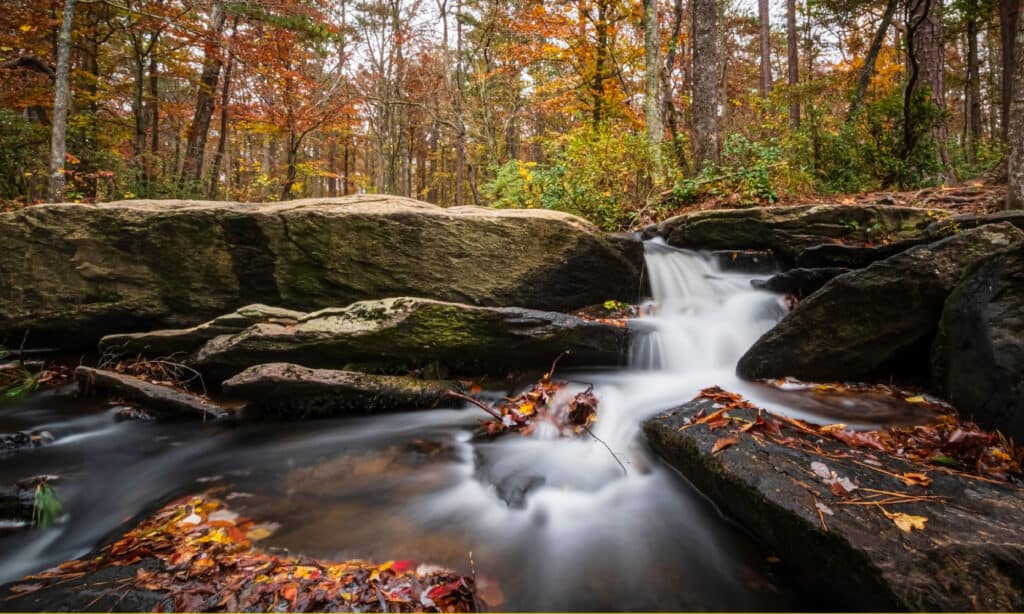
Cheaha Falls Alabama

Talladega National Forest is home to several waterfalls and wide variety of wildlife

More than 1 million people visit Alabama each year to view wildlife and birds. Alabama has dozens of reserves, national parks, and protected natural areas. They are all wonderful places to see the state’s most common animals.

The Largest Animal in Alabama

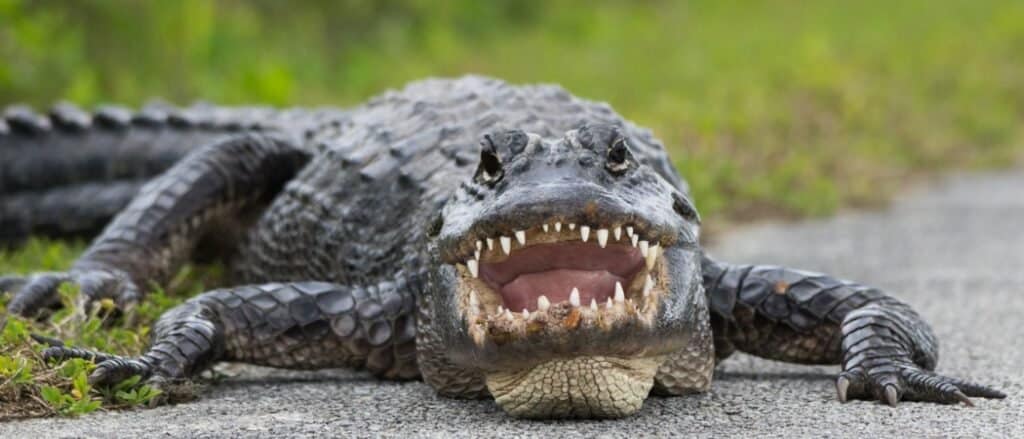
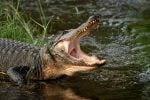
alligator looking at camera with mouth open

Alligators are capable of measuring 15 feet and weighing 1,000 lbs

Alabama’s largest critter is the American Alligator (Alligator mississippiensis). Found in the lower part of the state, it is capable of reaching 15 feet in length and 1,000 lbs in weight. An example of a spectacular comeback, the reptile was once hunted to near extinction before protective measures which were set in place, enabling its numbers to spring to impressive levels, once more.

These apex predators tend to hang around lakes, reservoirs, rivers, swamps, and wetlands. In spite of their preference for the southern parts of the state, alligators have become a frequent occurrence in Huntsville. Alabama’s Alligator Alley is one of the very best places where you can observe these reptiles live in relative tranquility.

The Rarest Animal in Alabama
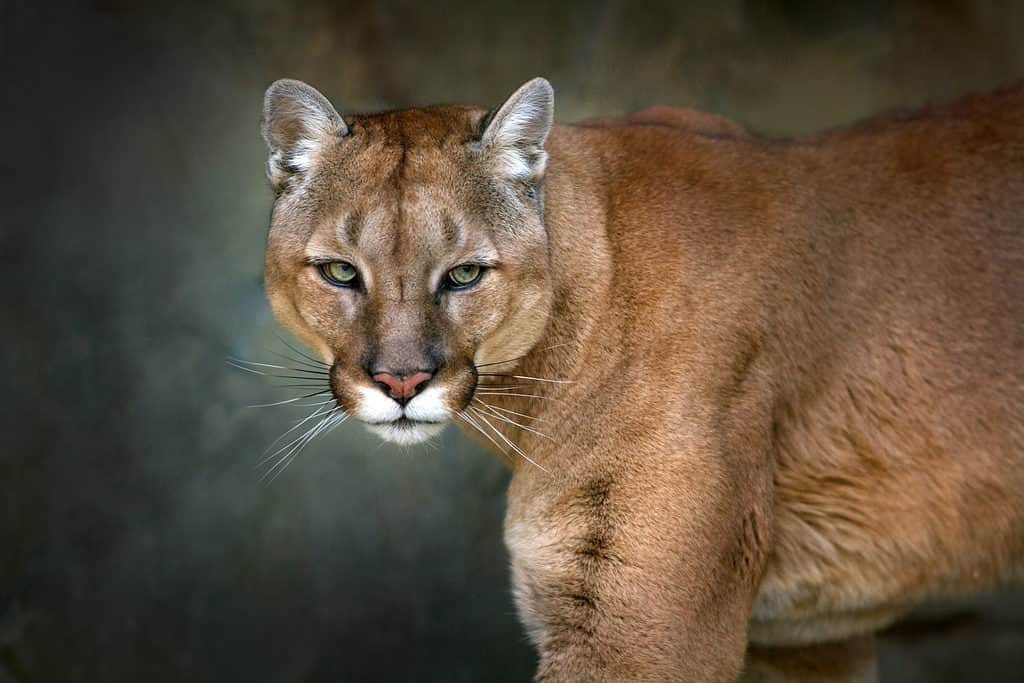
Mountain lion stares into camera

Cougars were extirpated from the Yellowhammer State in the 19th century

Cougars are the rarest animals in Alabama at present. The wild felines which are known to be solitary by nature and capable of weighing 232 lbs at the most and measuring and measuring 7 feet in length once lived in the state. However their population became inexistent by the 19th century owing to encroachment on their habitat as well as extensive hunting.

And although nearby Florida has experienced its own success story, with numbers rising from just 20 to 200, Alabama has not been as fortunate. However, sightings of these cats have been reported, although certain experts assert that they are most likely felines released into the wild by their owners.

However, in 2008, a 140 lbs male was shot at West Point Lake which itself, sits on the shared border between Alabama and Georgia.

The Most Dangerous Animals in Alabama Today
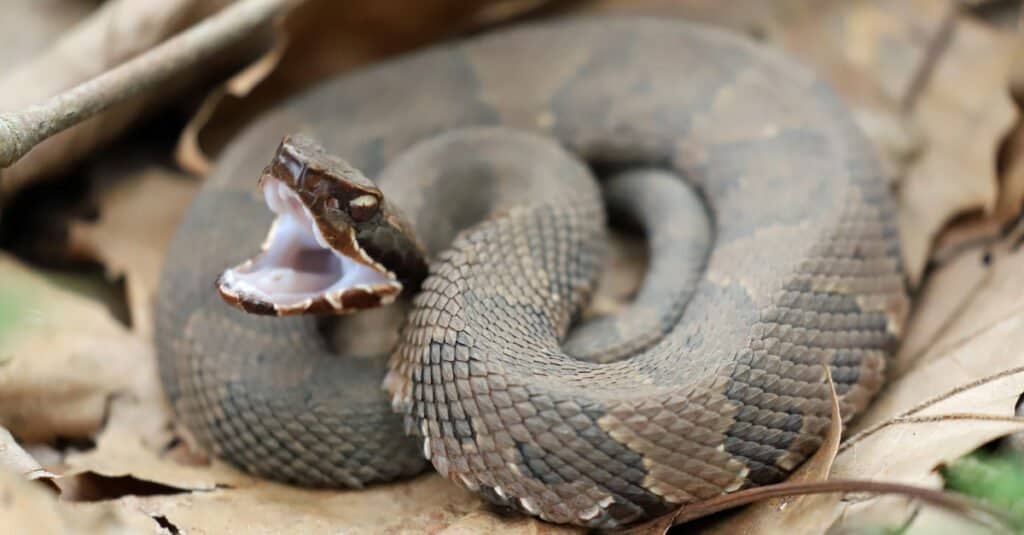
Side view of a Cottonmouth snake, ready to strike. The snake has a large spade-shaped head.

The cottonmouth is North America’s only venomous water snake

There were 56 animal-related fatalities in Alabama between 1999 and 2003. The following are a couple of the most dangerous animals in Alabama:

Brown recluse spider: This tiny spider is mostly found in the northern part of the state. They enjoy warm places like bedding and boxes. Their bite causes intense pain, and their venom can cause tissue death.

Snakes: Alabama has six venomous snake species, including the cottonmouth or water moccasin, which is the only venomous water snake in North America. Fortunately, their bite is not deadly if you get prompt medical attention. Alabama is also home to some black snakes and copperhead snakes.

Endangered Animals
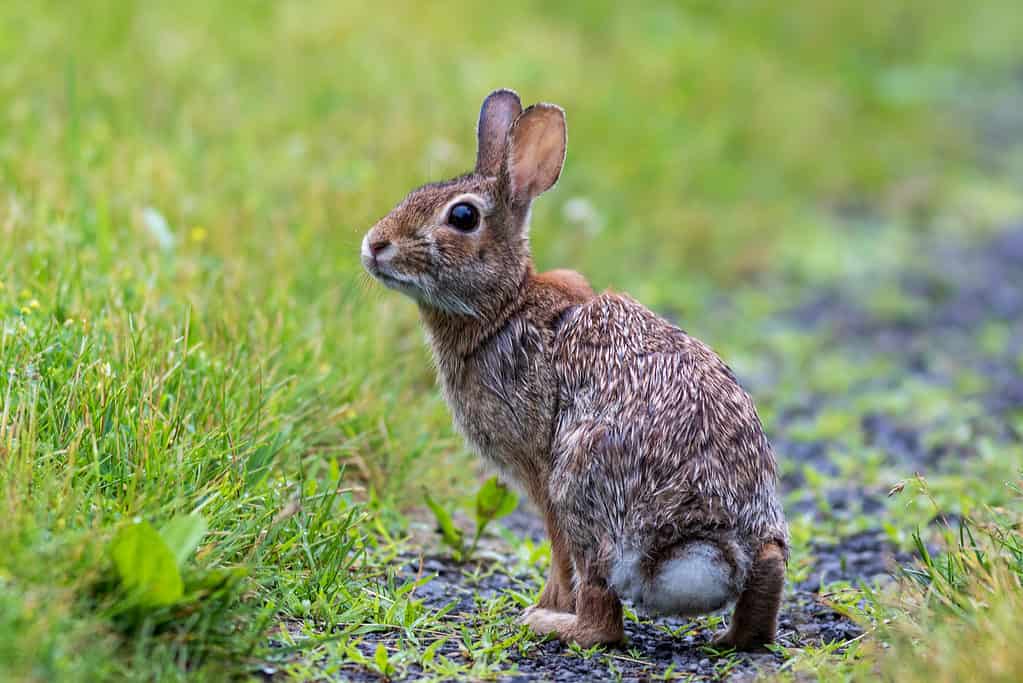
The Appalachian cottontail which can only be found in Northern Alabama is endangered

Rice’s whale (Balaenoptera ricei) is a species of baleen whale native to the Gulf of Mexico. It is on the brink of extinction. These whales have not been a target of whaling activity, but they are highly sensitive to ecological disasters, underwater noises from vessel traffic and other human interference.

The Alabama beach mouse (Peromyscus polionotus ammobates) is one of the rarest mouse species in the world. It is found in only a few nature reserves and isolated areas of the state. It is one of the very few mouse species that live in sand dunes. Beach mice are a key part of the coastal dune ecosystem, and thriving mouse populations are a sign of dune health. The state has made protection of these mice one of its top conservation priorities.

The Appalachian cottontail (Sylvilagus obscurus) is found only in northern Alabama and is endangered. The marsh rabbit (Sylvilagus palustris) is also endangered.

Four species of animal once lived in Alabama but no longer occur there. They are the red wolf, cougar, elk and bison.

Check out more endangered animals living in Alabama.

Alligators, Armadillos and Alabama
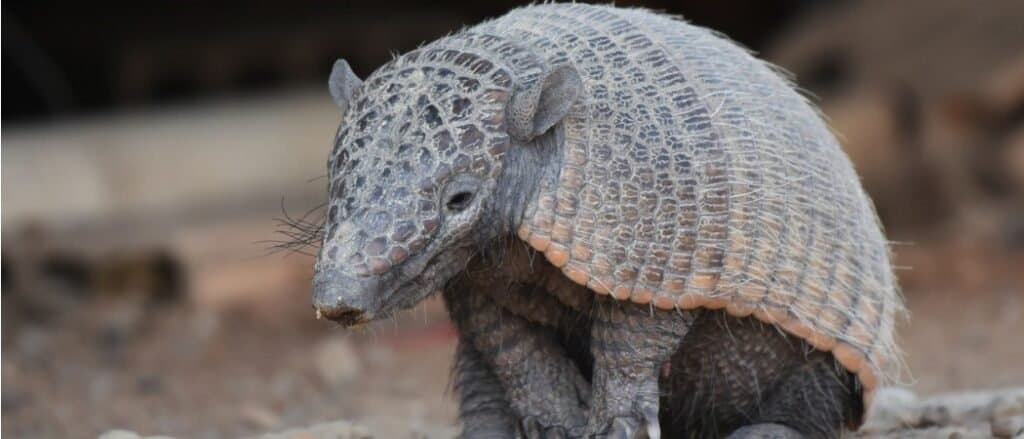
Are Armadillos Mammals

Armadillos can be found throughout Alabama except in eight counties, out of the state’s 67

Alabama is a wonderful place to watch wildlife and spot birds. Its mild weather and diverse habitats have allowed its native species to thrive. Continued conservation efforts will help protect endangered animals that help those ecosystems stay healthy.

Alabama takes special pride in having been the very first state to protect Alligators, in 1938. About 70,000 of these large reptiles call the Yellowhammer State home and enjoy federal as well as state protection. The harming, owning of, or harassing of an alligator is prohibited by law in Alabama.

Nine-banded armadillos were first spotted in the state in the 1940s, and at present reside in every county in the state with the exception of eight out of 67. They have a penchant for raiding quail and turkey nests for eggs and digging up gardens. However, residents can contact their local extension office for assistance with these adaptable creatures.

Native Plants in Alabama
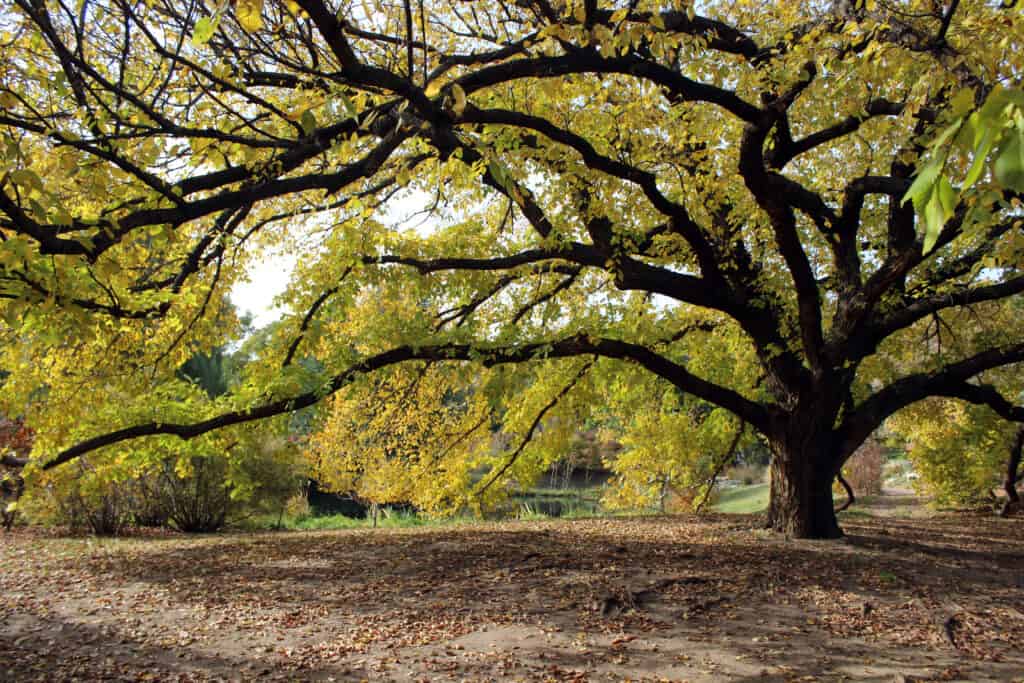
American elm tree

The American elm is one of the many tree species native to Alabama

For lovers of flora and fauna, Alabama is the place to be. Located in the subtropical coniferous biome, you can find plants ranging from fireweed to ferns. The native plants in Alabama are worth exploring, as they flourish in diverse habitats.

Yellow or golden canna known for its ability to attract bees, butterflies, and dragonflies grows in the state, as do prickly white poppies known for their beautiful white flowers and leaves which are used as natural remedies. Tree species which grow in Alabama include, American beech, American elm, black cherry, pecan, river birch, sassafras, sourwood, southern red oak, sweetgum, white oak.

Animals Found in Alabama

253 species documented in our encyclopedia

Thank you for reading! Have some feedback for us?