
Quick Take
- The Great Migration sees more than a million wildebeest, alongside zebras and other grazing animals, move across the Serengeti-Mara ecosystem each year.
- The animals continually move in search of fresh grass and water as seasonal conditions change across the landscape. Understand the ecosystem role →
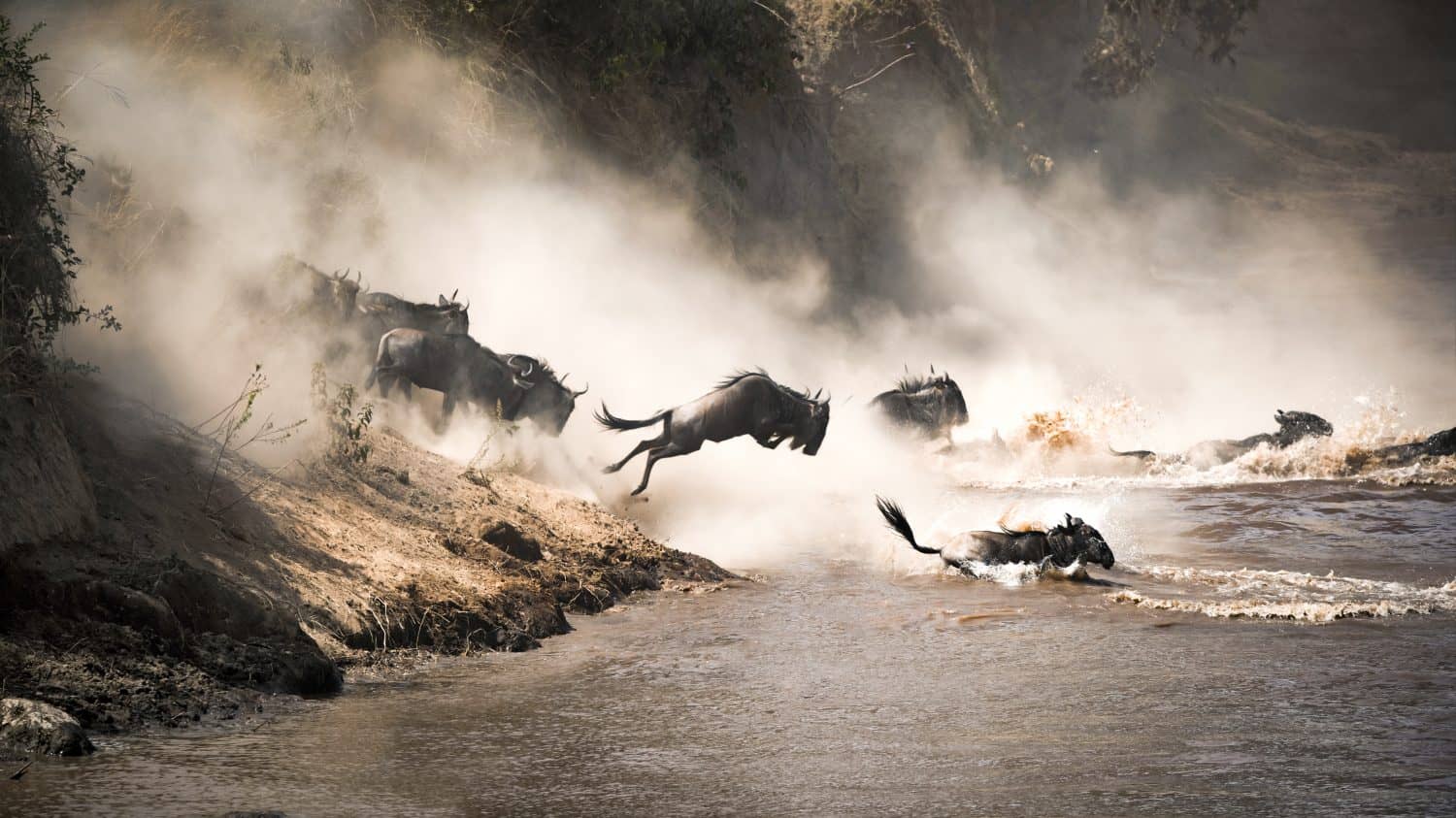
- The herds cross rivers as they continue moving between seasonal grazing areas, following the availability of fresh grass and water across the Serengeti-Mara ecosystem. See the crossing behavior →
- River crossings are one of the most dangerous parts of the migration, with fast-flowing water, steep banks and waiting crocodiles posing serious risks to the herds. Explore the death toll →
One of the best-known natural phenomena in Africa is the Great Migration. This seasonal movement sees millions of animals travel across the Serengeti-Mara ecosystem between Tanzania and Kenya in search of fresh grazing. September is one of the most dramatic months in the annual migration, as the animals that have already reached the northern plains now face some of the landscapes’ most significant obstacles – the Mara and Talek rivers. Keep reading to learn what happens and why it’s so important!
Continue reading
Why Is the Great Migration So Significant?
The Great Migration is the largest seasonal movement of mammals in the world. Every year, millions of wildebeest, zebra, and antelope make the incredible journey between the Maasai Mara and Serengeti ecosystems. This vast undertaking every year isn’t simply a movement of the animals from one area to another. Instead, it allows the herds to follow the seasonal rainfall in order to find the best grazing land. The herds move in a continuous clockwise motion between Tanzania and Kenya. The circular movement sees the animals cover between 500 and 1,000 miles every year.
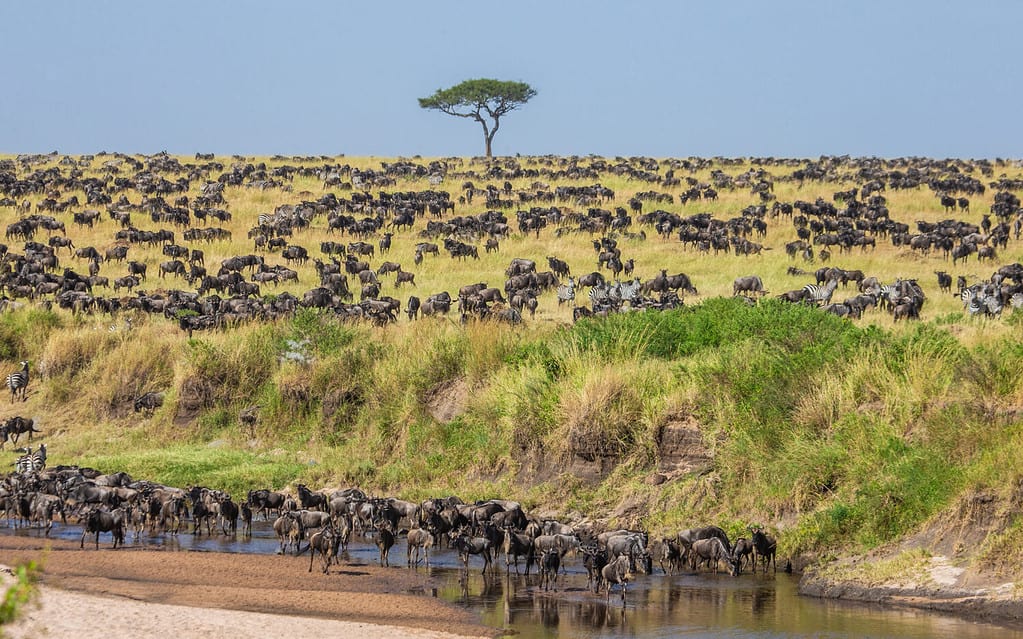
Vast numbers of wildebeest, zebra, and gazelle undertake the seasonal migration every year.
©GUDKOV ANDREY/Shutterstock.com
Around two million animals make this huge migration every year, with wildebeest making up the vast majority of the animals. Around 1.2 to 1.5 million wildebeest take part in the seasonal movement, along with around 300,000 zebras. The remaining animals include various species of antelope. Wildebeest are the most numerous species during the Great Migration, as they have a nomadic lifestyle and are constantly searching for fresh food and water. However, zebras travel alongside the wildebeest. This is because the two species have a symbiotic relationship when it comes to finding food and protection from predators.
Although the mass migration is vital for the health of the animals that undertake it, it’s also important for the ecosystems. Overgrazing is a real risk to many areas, especially when they don’t have much rain to support grass growth, and this can lead to poor grazing in the following years. The migration causes large amounts of seeds to be dispersed through the animals’ digestive system. Therefore, the seasonal movement allows for periods of regrowth, allowing the landscape to support the herds in the years to come.
September River Crossings
During the migration, the herds don’t move as one continuous mass, but instead spread out across the plains. By September, the search for grazing has taken many of the herds towards the northern Serengeti and the Mara River corridor, where they now encounter the Mara and Talek Rivers. These rivers create a major obstacle for the herds, as they must cross the rivers to reach the fresh grazing on the other side. This creates a natural bottleneck as the animals all congregate at suitable crossing places. However, rather than crossing the river and remaining on one side, the herds often cross and recross the rivers to take advantage of the richer grazing around them.
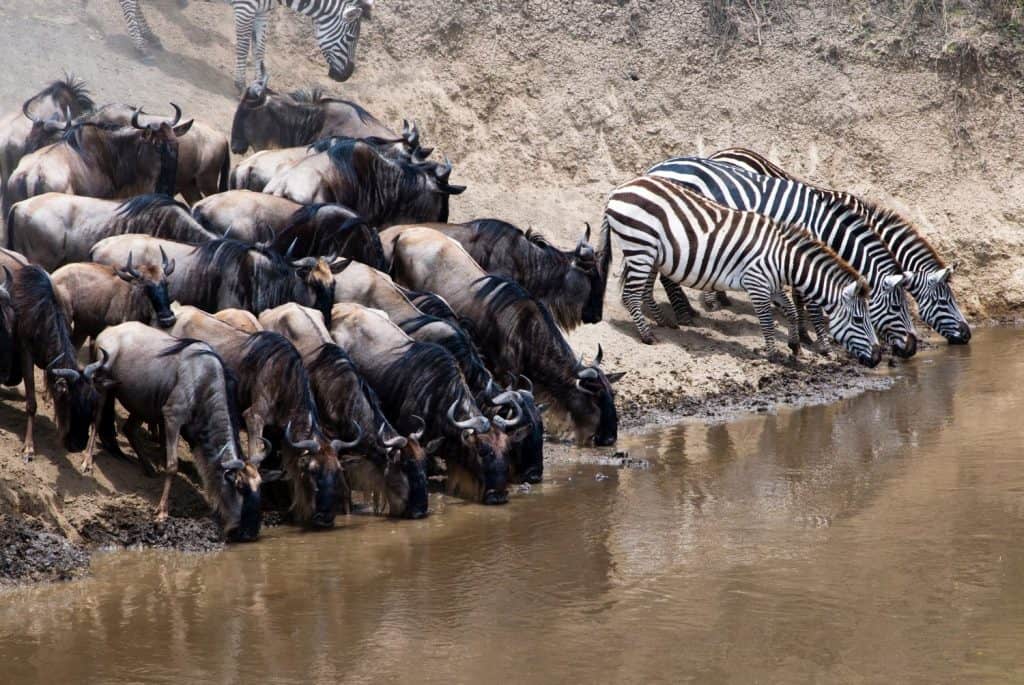
The Mara and Talek rivers are crossed during the Great Migration as the animals search for fresh grazing.
©Robert Harding Video/Shutterstock.com
These river crossings create some of the most dramatic events in the entire migration, as they see mass concentrations of animals all gathered on the riverbanks as they wait to cross. However, the crossings themselves are anything but simple.
The riverbanks are sometimes steep, and the animals often hesitate on the edge of them. Often, they wait for long periods of time on the banks, teetering on the edge as they consider entering the water. When they do eventually enter the water, it’s often a sudden, fast plunge into the current as the crossing begins. Once one herd member decides to brave the water, large numbers often follow at once, creating incredible scenes as hundreds of animals attempt to cross at once. As so many animals enter the water in such a short period, it provides some of the most extraordinary sights of the entire migration.
Why Are the River Crossings So Dangerous?
Although the river crossings are an important part of the migration, they are not without danger. The rivers can be deep and fast-flowing, and the steep banks can be difficult to clamber out of, especially after they have become churned up by thousands of feet. However, the biggest risk comes from predators.
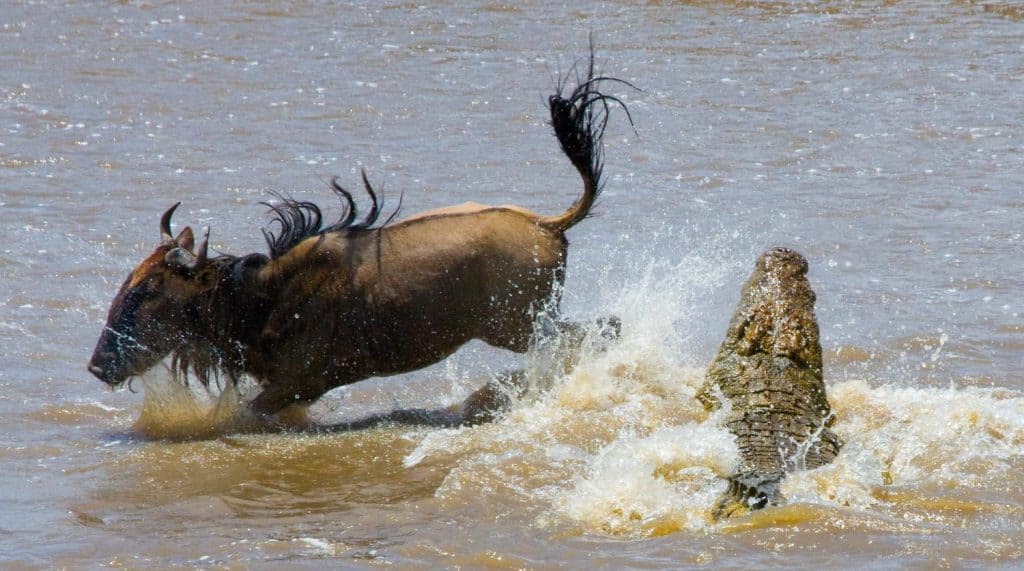
Nile crocodiles are one of the greatest threats to animals crossing the Mara River.
©GUDKOV ANDREY/Shutterstock.com
Contrary to common belief, animals such as lions, leopards, and hyenas don’t actually follow the herds through their migration route. Instead, they take advantage when the herds are in their home ranges, as the migration provides a significant seasonal increase in their food. Animals waiting to cross the rivers or those that are clambering out of the water provide the perfect target for these large predators. The vast concentration of animals in one place provides predators with far more hunting opportunities than they would usually have. Therefore, there’s typically a surge in predator activity when the herds reach the rivers.
Nile crocodiles are one of the biggest threats to animals at the river crossings. These powerful predators can reach 20 feet long. The murky water can make it difficult for animals to see what is beneath them, and crocodiles remain submerged in the water until they seize their opportunity and attack. Young, old, injured, or isolated animals are often the most vulnerable to predation, although every animal is at risk. It’s estimated that between 250,000 and 300,000 wildebeest and 30,000 zebras die every year on the route through injury and predation. Despite these risks, the need for food and water drives the migration.