Introduction
States are distinguished by many different aspects relating to their culture, location, roles in the United States, and natural ecosystems. Various different symbols represent states, including flags, trees, birds, animals, and flowers. However, many do not know every state, except Iowa and Michigan, features an official state insect.
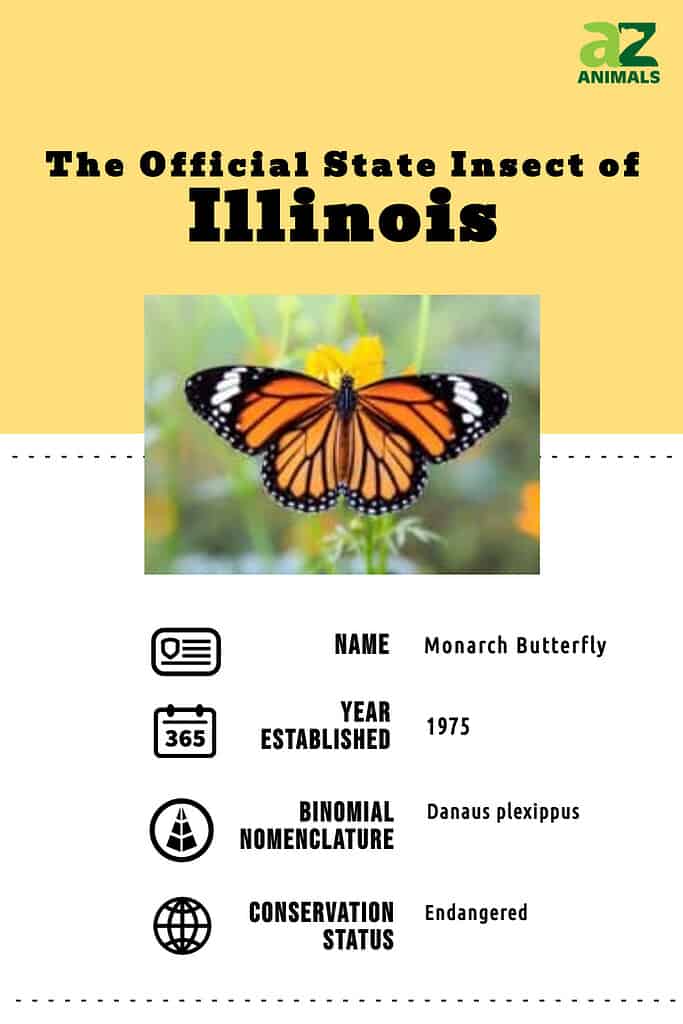
Each state’s insect showcases the often-overlooked beauty and intricacies of the state’s wildlife. California was the first to adopt the dogface butterfly as its state insect in 1929, and others followed suit. Here is a deeper look at the insect that represents the state of Illinois. The official Illinois State Insect is the monarch butterfly.
Appearance of the Monarch Butterfly
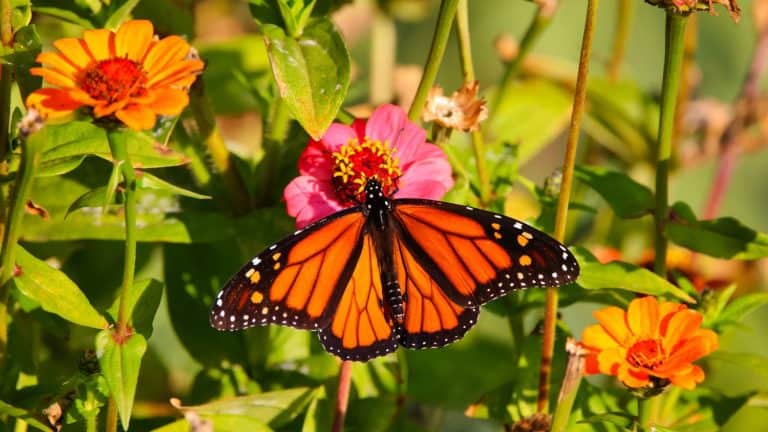
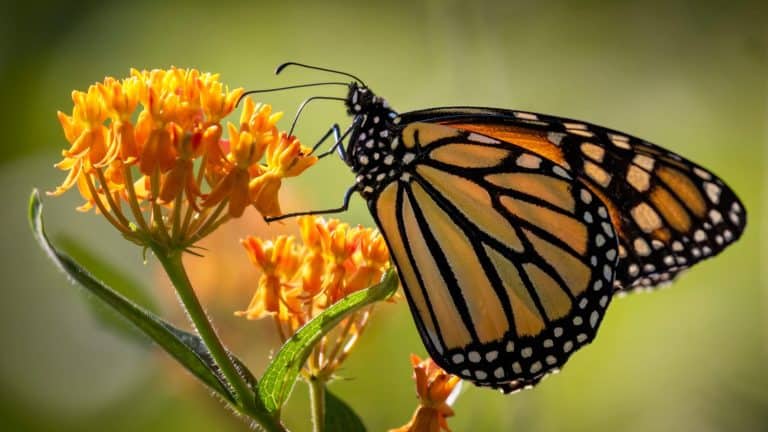
Often confused with the viceroy butterfly, the Danaus plexippus, or monarch butterfly, is a truly beautiful insect. These butterflies have black legs, antennae, and hairy black bodies adorned with white dots. Their wings are predominately a light orange color, crossed with black veins that form an asymmetrical pattern.
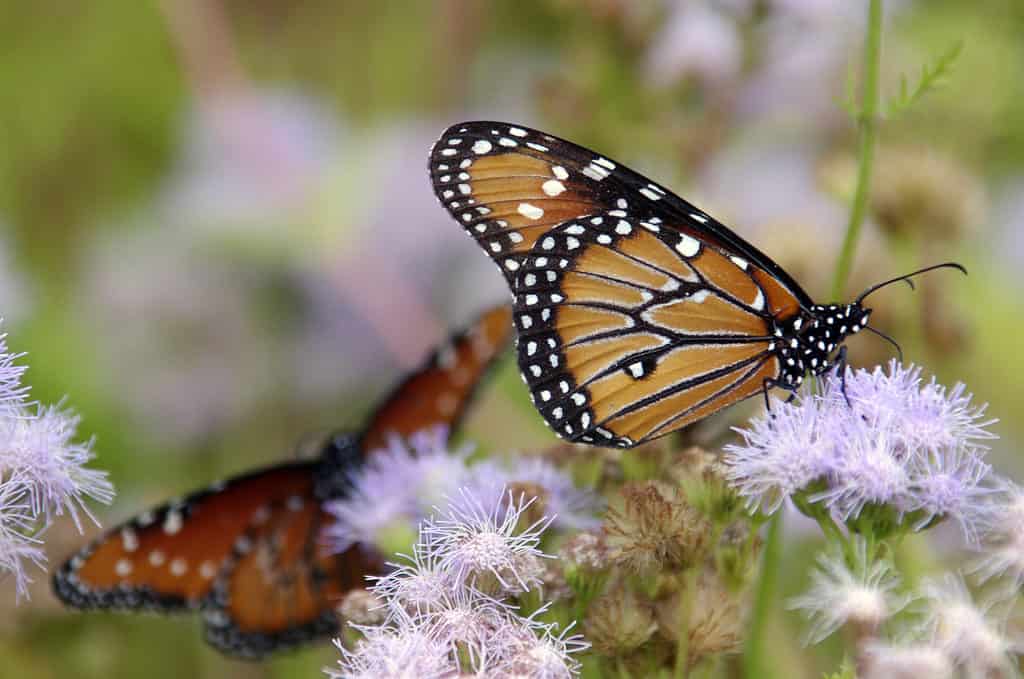
The monarch is the official Illinois state insect.
©iStock.com/MruthCotrofeld
The ends of the monarch butterfly’s wings are also black, decorated with more white dots along the perimeter. Their wingspan ranges from around three-and-a-half to four inches (nine to ten-and-a-quarter centimeters), and they weigh around 25 hundredths of an ounce (one-thousandth of a pound). Male monarch butterflies are identifiable by the presence of two black dots on their hindwings.
Distribution
Outside of Illinois, monarch butterflies are all over North and South America. Populations of these butterflies also live in Hawaii, Portugal, Spain, Australia, and New Zealand. These insects are herbivores and flock to areas where milkweed is prominent. While monarch butterflies drink nectar from numerous flowers, they solely breed in warm areas where milkweed grows. The sole food source for monarch caterpillars, this plant has a chemical makeup that contains a cardiac poison to which these insects are immune. The consumption of milkweed makes monarch butterflies poisonous to predators and causes them to spit it out when attacked by larger animals. This chemical makeup and the bright coloring of these insects warn predators of their poisonous nature, offering them an extra layer of protection.
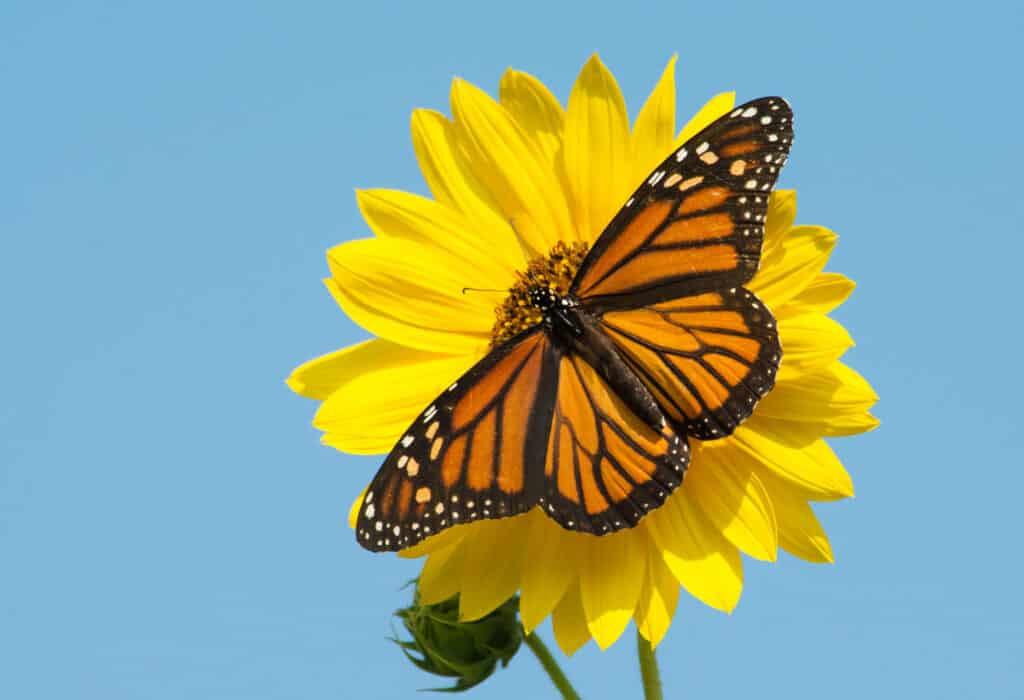
Monarch butterflies live throughout North and South America.
©Sari ONeal/Shutterstock.com
Life Cycle and Behavior
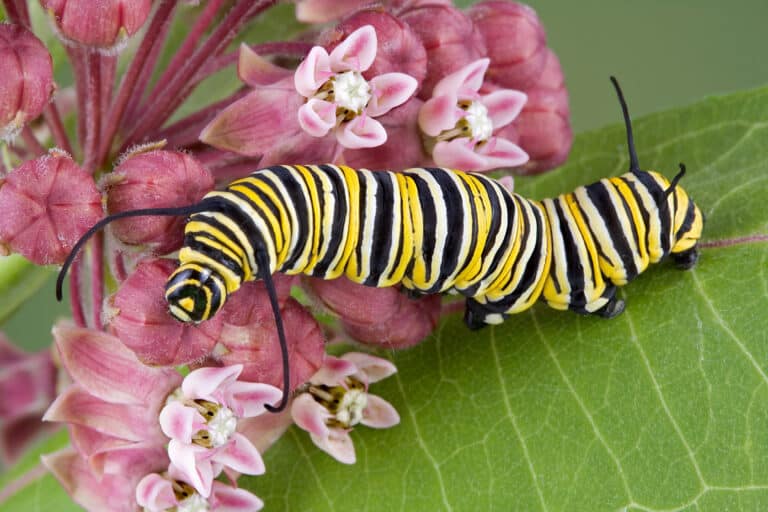
While milkweed is the main food source for monarch butterflies, it also plays an important role in their breeding. Four days after these butterflies emerge from their cocoons, they begin to mate with one another. After mating, female monarch butterflies will lay between 300 and 500 eggs on the leaves of milkweed plants. They attach the eggs to the leaf by secreting a glue-like bodily fluid and continue to lay eggs for up to five weeks. The caterpillars emerge from their eggs after just a few days, living off of the milkweed plants they were laid on to grow and develop.
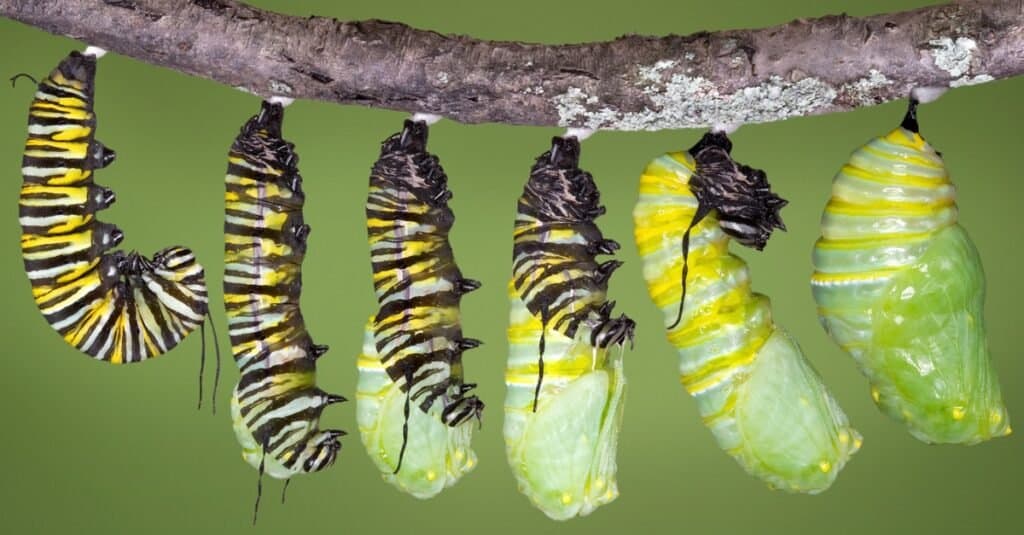
Milkweed is both food and a nursery for the monarch butterfly.
©iStock.com/CathyKeifer
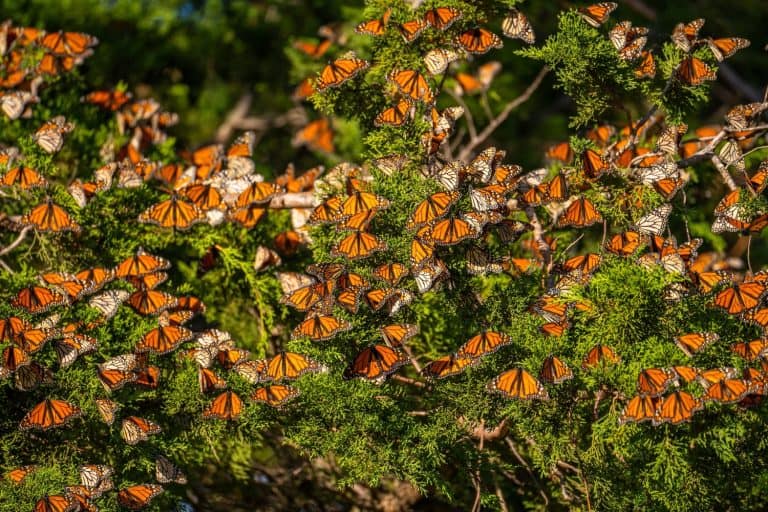
After two weeks of eating and growing, the caterpillars enter the pupa, or chrysalis stage. This is when they form a cocoon around themselves and continue growing while shielded from the wilderness. After around a week in their pupa stage, the monarch butterfly emerges from the cocoon and continues the cycle. Monarch butterflies mate during the summer for anywhere from two to five weeks during the summer months before many migrate from northern states such as Illinois all the way to South America in search of a warmer climate. These butterflies have a lifespan of between six and eight months, so they complete the mating cycle several times during their lifetime.
Conservation and Endangerment of the Official Illinois State Insect
The wild monarch butterfly population is declining, especially in the United States. While these insects are not yet endangered, many groups have petitioned for their addition to the list in an effort to raise awareness about the threat to their survival. Since 1980, Western monarchs have declined by almost 99 percent, and Eastern have declined by around 80 percent. This dramatic decrease in the monarch butterfly population is in part due to the removal of milkweed from many prominent areas of the United States. Many farmers label milkweed as a weed and spray them with herbicides or other weed killers to save their crops. This significantly dwindles the food source for monarch butterflies, making it harder for them to reproduce and maintain their population.
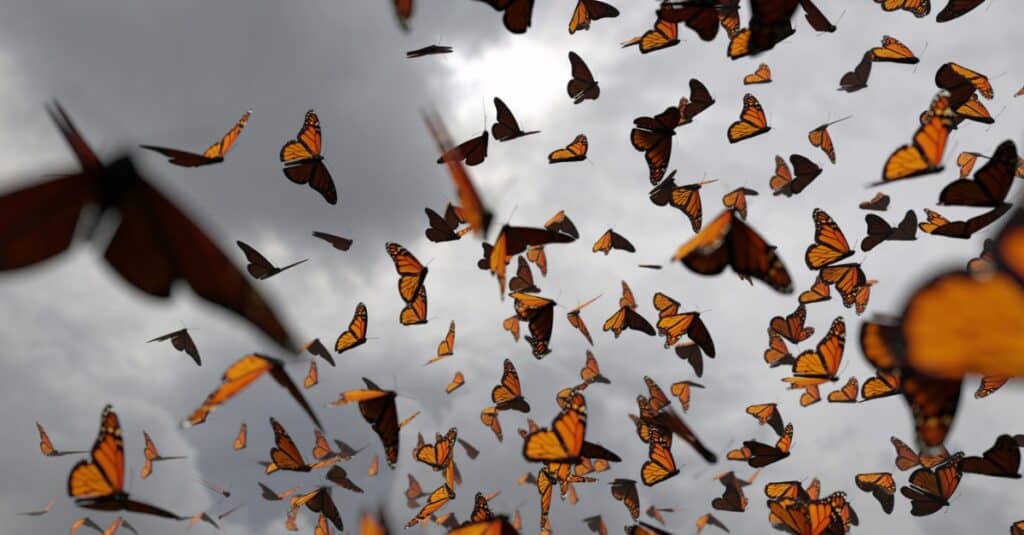
The wild monarch butterfly population decreases thanks to the widespread use of pesticides.
©iStock.com/dottedhippo
Because these insects are sensitive to temperature, as seen by their dramatic migration cycle, the impact of climate change significantly affects monarch butterflies. These volatile and unpredictable temperatures make unstable habitats for monarch butterflies, making it harder for them to settle down and grow their populations. Many people have begun to take notice of these issues and have taken the initiative to reverse the damage. Many sanctuaries opened up to protect domestic monarch butterflies, and cities have initiated to reintroduce milkweed into their ecosystems to help save them.
The Illinois Monarch Project is an initiative that wants to add 150,000,000 new milkweed plants to the state by 2038. The project offers many resources and ways to help. Their work ensures monarch butterflies will continue to thrive in Illinois and remain the staple insects of the state.