
Quick Take
- The reason wild birds actually respond to Samuel's imitations is not what it looks like, and the real explanation reframes everything you assume about communicating with animals. Why birds actually respond →
- Birds produce sound with anatomy humans simply don't have, yet this 12-year-old is able to elicit responses with his lifelike sounds. See the vocal science →
- Samuel's method for nailing a crow call involves his whole body in a way that sounds absurd, though that changes once you learn what crows themselves do when they call. How the crow call works →
- Even with 132 species mastered, certain birds are out of Samuel's capabilities to imitate. Where imitation hits its limit →
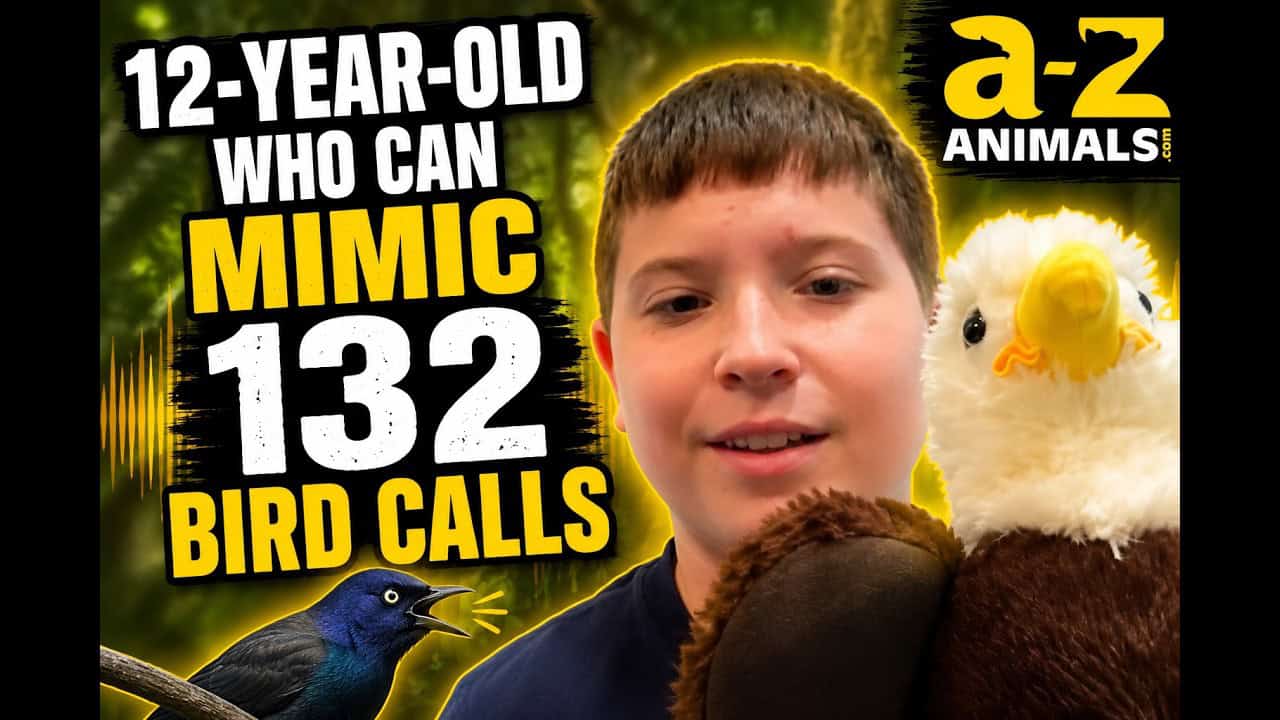
Samuel Henderson was four years old and eating Dippin’ Dots at the zoo when a great-tailed grackle caught his attention. He copied the bird’s call, and the bird answered him. Eight years later, the Oklahoma preteen keeps a journal listing 132 bird species he can imitate. Videos of his bird calls have also attracted tens of millions of views on social media channels.
In a recent interview with a-z-animals.com, Samuel demonstrated several of those calls, including a crow, mourning dove, bald eagle, and Australian magpie. His mother said he began copying sounds almost as soon as he could speak. He mimicked television audio, laughter, and the sounds made by the family’s pet cockatiels. Birds became his main interest once he realized wild birds would sometimes answer him.
Continue reading
Why Birds Answer His Calls
Many songbirds use their voices to defend their territory. If they hear the normal song of another bird of their species, a nearby male may call back or move closer because it thinks another bird has entered its space.
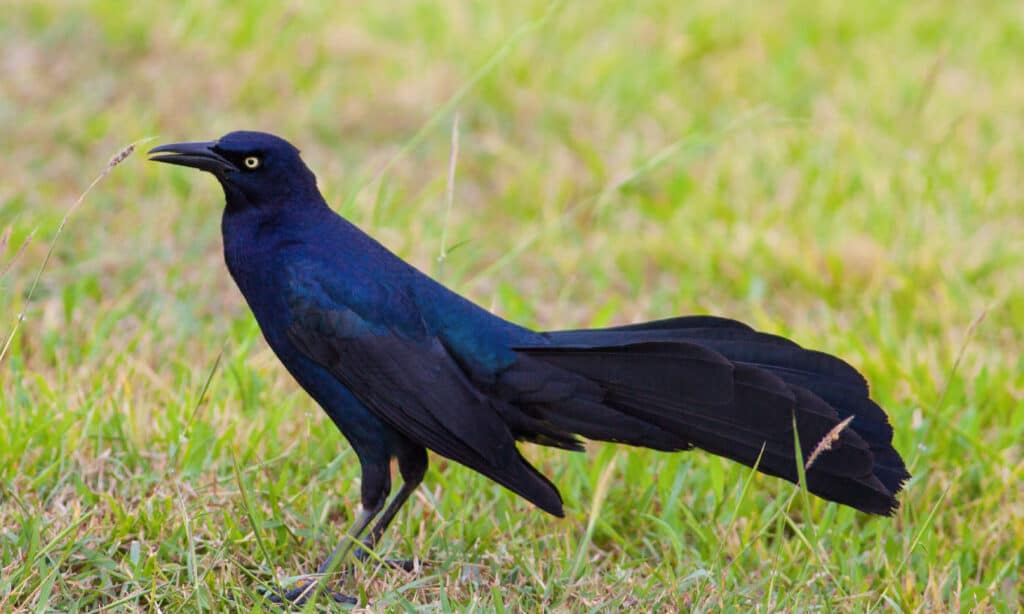
The great-tailed grackle was the first bird that Samuel imitated — and it responded.
©Melinda Fawver/Shutterstock.com
Scientists have taken advantage of this behavior for decades when studying birds in the wild. They sometimes play recordings of bird songs and listen or watch for a response. The Cornell Lab of Ornithology’s Macaulay Library maintains a large collection of bird recordings that can be used for this kind of research.
So when the grackle answered four-year-old Samuel, it was almost certainly reacting because his imitation sounded like another grackle. The bird was not having a conversation with him in the human sense. Samuel understands that distinction too. During the interview, he said he does not actually know what the birds are saying.
How a Human Can Sound Like a Bird
Samuel’s ability raises another interesting question. How can a human child make sounds that come from an animal with a completely different sound-producing system?
Birds do not make sounds with a voice box like humans do. Instead, they use an organ called the syrinx, which sits deep in the chest where the windpipe divides before reaching the lungs. In many songbirds, this organ can produce sound from two sides independently. That allows birds such as thrushes and mockingbirds to make two pitches at the same time.
Research by Franz Goller and other scientists has examined in detail how this unusual bird sound system works.
Humans cannot reproduce that two-sound ability. Instead, talented bird mimics try to get close to the overall sound of a call. They copy how high or low it is, how the pitch rises and falls, how long each sound lasts, and the general quality of the sound. To do that, they use the human voice box along with the tongue, lips, and careful control of their breathing.
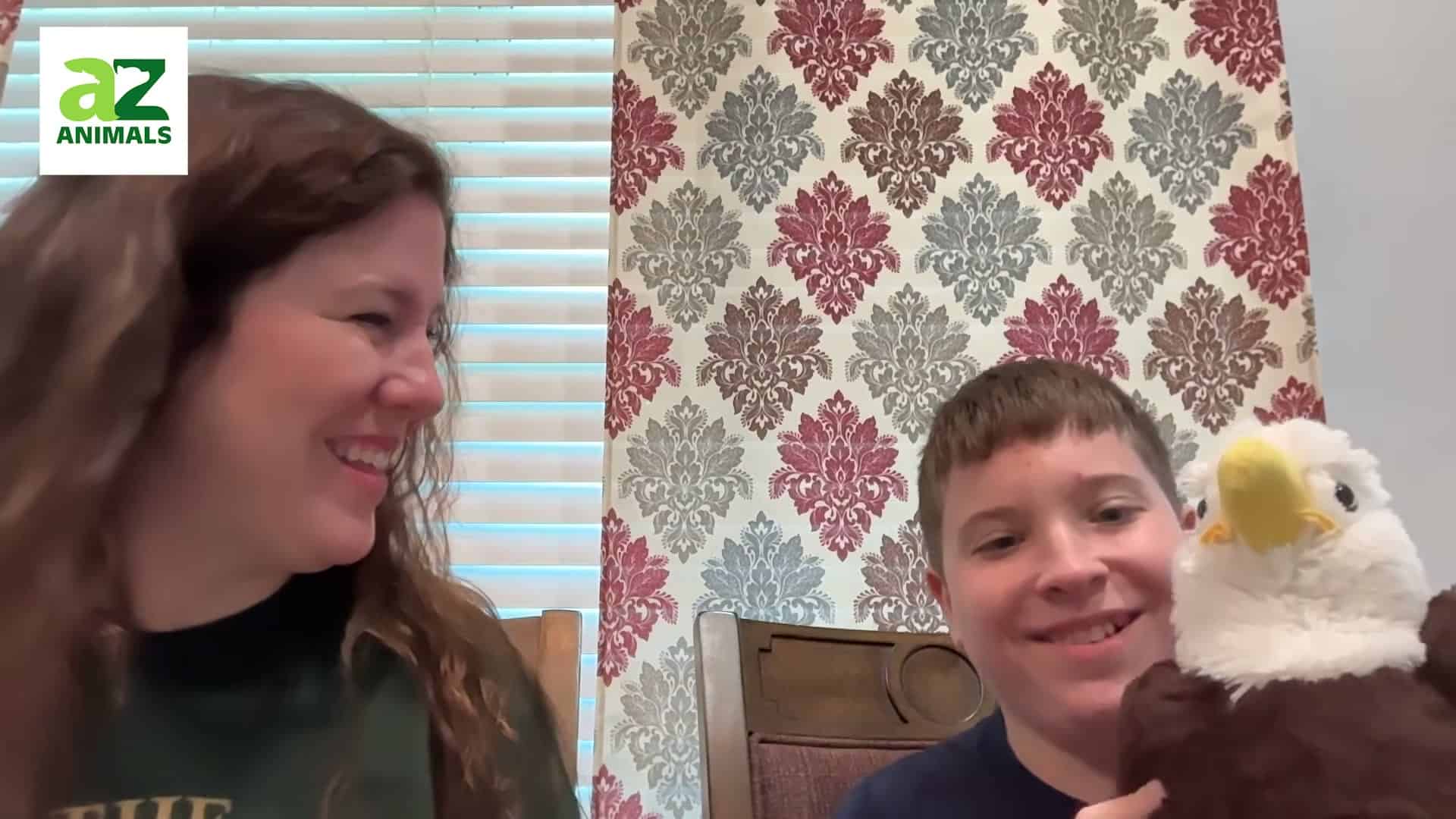
Samuel and his mom at home
©A-Z-Animals via YouTube — used under fair use – Original / License
Samuel described some of this during the interview. When asked what parts of his body he uses to make the Australian magpie’s flowing song, Samuel pointed to his lungs and belly. That fits with the kind of breath control singers are taught to use, where the muscles involved in breathing help provide steady support for the voice.
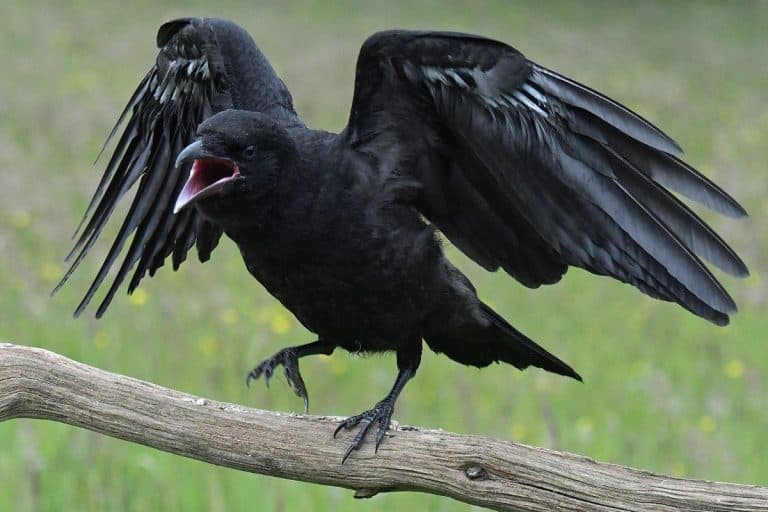
Samuel has also noticed that body position can matter. He said making an American crow’s rough caw requires him to hold his head up and then bend it down, similar to the way the bird moves while calling. Crows are known to use recognizable body positions when making certain calls. Those movements may help carry the sound and communicate with other crows, according to studies of crow behavior by researchers including Kevin McGowan at the Cornell Lab.
Even with his skills, Samuel says there are bird calls he cannot reproduce.
He named the painted bunting and indigo bunting as examples because their songs are too high and complicated for him to copy accurately. Small songbirds can produce extremely fast changes in pitch, sometimes at frequencies that are difficult for the human voice to reproduce cleanly. Highly skilled human whistlers may come close to some sparrow songs, but matching all the tiny details in a bunting’s song is genuinely difficult.
Samuel says his favorite bird is the resplendent quetzal. The species lives in mountain forests in Central America, including Costa Rica. It has major cultural importance in the region and is the national bird of Guatemala. The IUCN lists the resplendent quetzal as near threatened because of the loss of its mountain forest habitat.
What the Birds Are Really Hearing
Samuel’s talent can also help clear up a common misunderstanding about what happens when people appear to “talk” to birds.
Songbirds learn many of their sounds by listening to adult birds while they are young. There is an important stage in their development when this learning takes place. Scientists, including neuroscientist Erich Jarvis at Rockefeller University, have compared parts of this process with the way humans learn language.
But when a bird responds to a convincing human imitation, that does not mean the person and bird understand each other’s thoughts. The bird is recognizing familiar features in the sound and reacting to them.
That does not make the exchange any less remarkable. A bird call lasting only a few seconds can carry enough information for another bird to recognize it and respond. Samuel has trained his ear well enough to reproduce some of that information closely enough to get an answer.
And he is still learning. Samuel continues adding new species to his journal, with one simple goal in mind: learn every bird call he can.