
Quick Take
- Nevada’s best birdwatching spots range from arid deserts to high-altitude mountain habitats.
- Nevada is a crucial stopover for migratory birds along the Pacific and Central Flyways.
- Ruby Lake National Wildlife Refuge is a critical breeding ground for canvasback ducks.
Nevada is a high-diversity birding destination with over 490 species recorded in the state. A crucial stopover on the Pacific Flyway, Nevada supports a variety of habitats, including arid desert, riparian wetlands, and high-altitude mountain ranges. The best time to visit is during spring and fall migration, when desert springs and reservoirs act as magnets for migratory birds. Continue reading to discover some of Nevada’s best birdwatching spots.
Henderson Bird Viewing Preserve
Situated along the Pacific Flyway, the Henderson Bird Viewing Preserve is a 140-acre, year-round birding destination near Las Vegas. The preserve has nine ponds that serve as critical stopover points for migratory waterfowl and resident desert species. Henderson Bird Viewing Preserve has one of the highest bird species totals in Southern Nevada, with over 270 documented species.
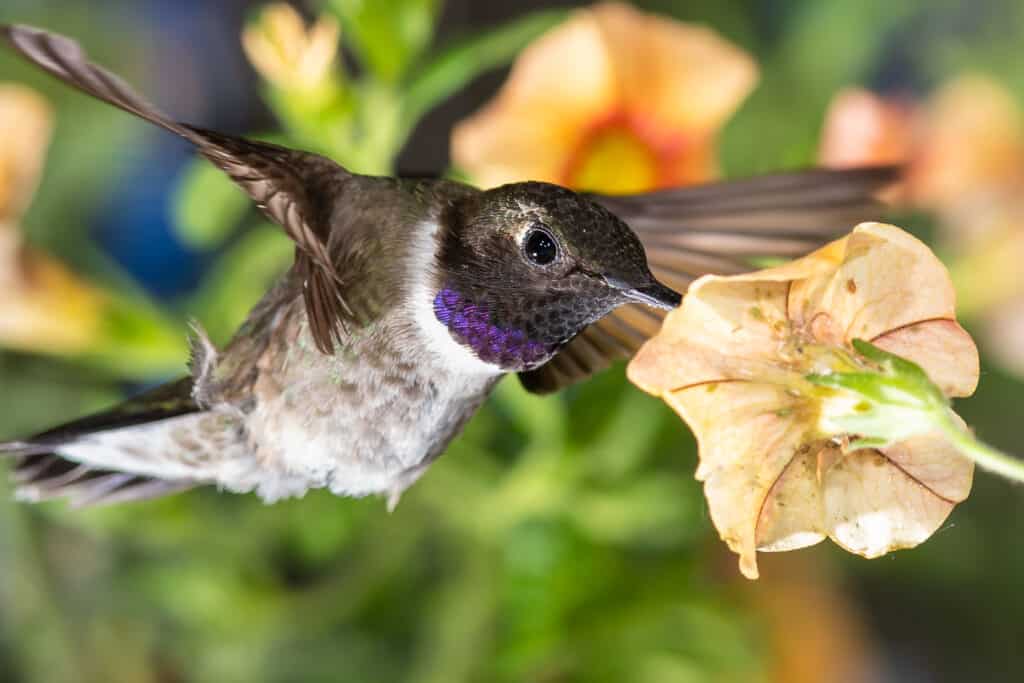
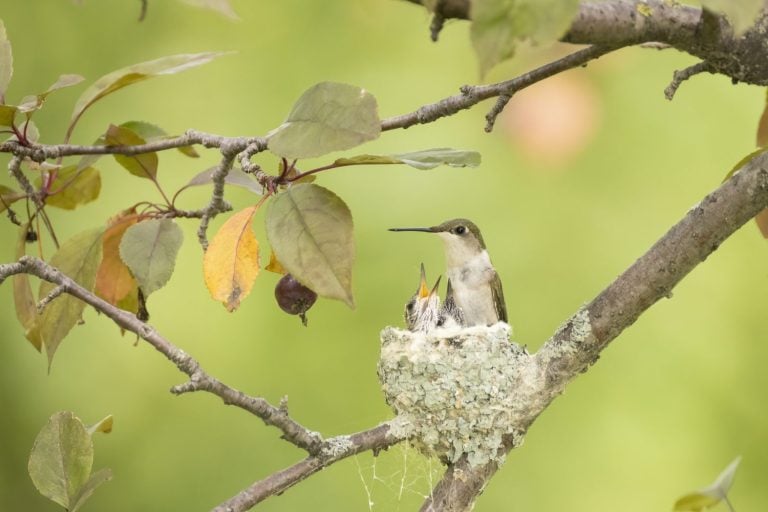
Black-chinned hummingbirds can be seen at Henderson Bird Viewing Preserve from spring to early fall.
©rck_953/Shutterstock.com
The preserve’s nine ponds were originally constructed as wastewater evaporation ponds for the nearby wastewater treatment facility. When the original facility was relocated, the ponds were repurposed as habitats for migratory birds and wildlife. The nine ponds have varying depths and special features, such as reeds for nesting, to attract a diverse range of waterfowl and desert birds.
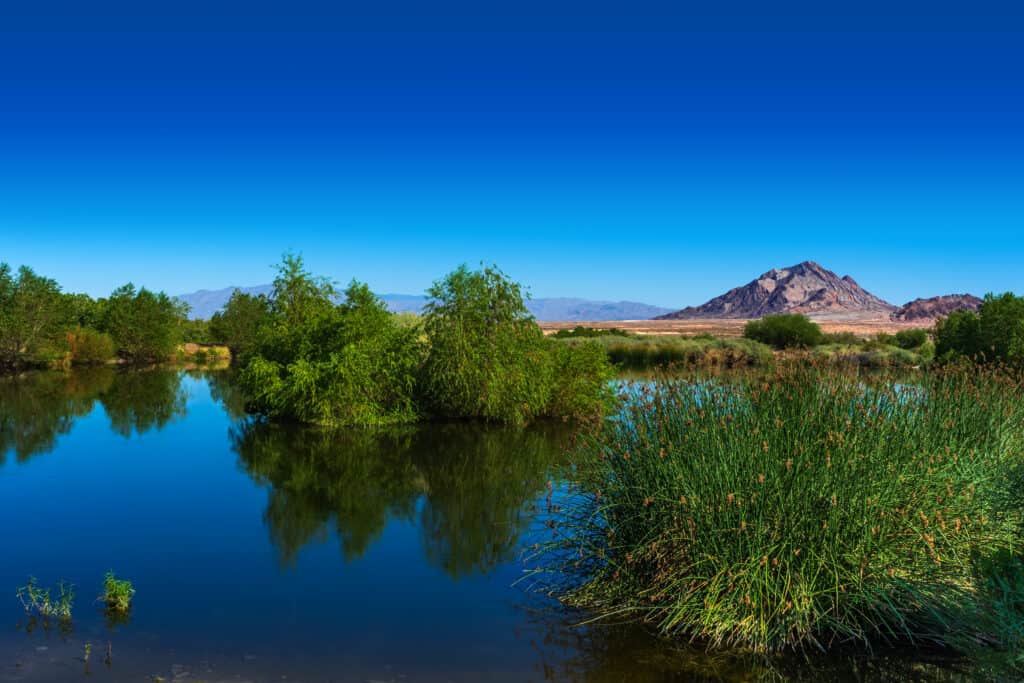
The ponds at Henderson Bird Viewing Preserve are repurposed wastewater retention ponds.
©iStock.com/sanfel
Common bird species at the Henderson Bird Viewing Preserve include:
- Ruddy Duck
- Greater Roadrunner
- Black Skimmer
- Cinnamon Teal
- Black-chinned Hummingbird
- Western Grebe
- Neotropic Cormorant
- Long-tailed Duck
- Costa’s Hummingbird
- Abert’s Towhee
- Common Gallinule
- American Avocet
Ruby Lake National Wildlife Refuge
Ruby Lake National Wildlife Refuge is located in Northeast Nevada. The 40,000 acres of high-elevation marshes and meadows attract wildlife to the arid Great Basin. Situated along the Pacific and Central migration flyways, the refuge hosts over 200 bird species, including trumpeter swans, white-faced ibis, and various grebes.
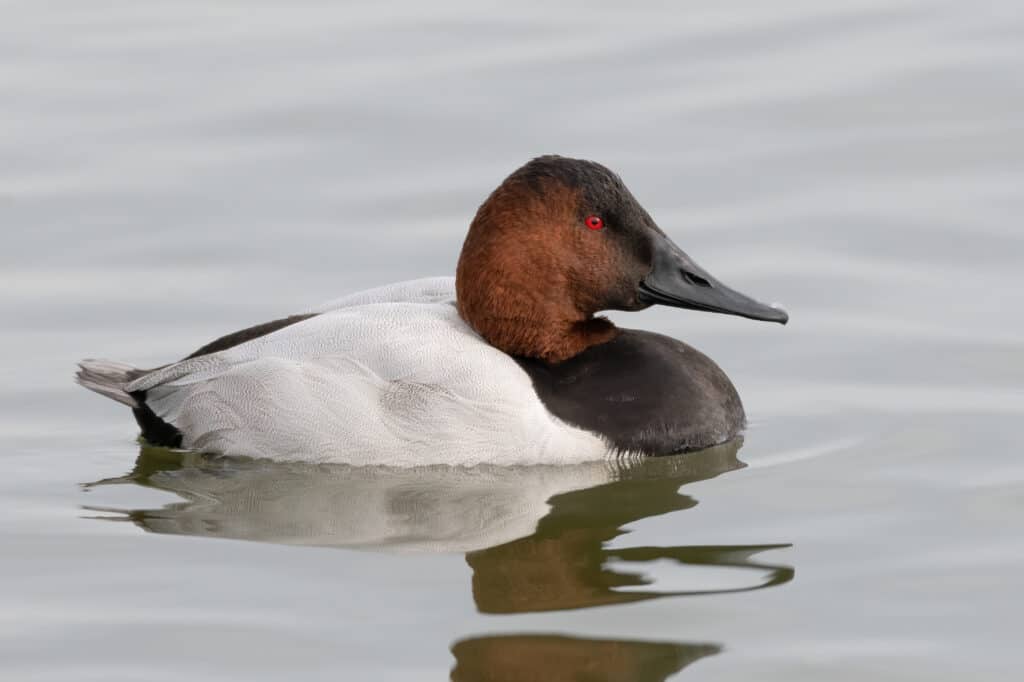
Ruby Lake is known as a breeding ground for canvasback ducks.
©Jim Beers/Shutterstock.com
The refuge’s spring-fed marshes and bulrush beds provide essential, nutrient-rich diving duck habitat, playing host to the highest concentration of nesting canvasbacks west of the Mississippi River.
Other bird species to view at Ruby Lake National Wildlife Refuge include:
- Redhead Duck
- Greater Sandhill Crane
- Eared Grebe
- Western Grebe
- Clark’s Grebe
- Northern Shoveler
- Gadwall
- Green-winged Teal
- American Bittern
- Black-crowned Night Heron
- Marsh Wren
- Sage Thrasher
- Wilson’s Warbler
- Cassin’s Finch
- Clark’s Nutcracker
- Spotted Sandpiper
The Corn Creek Field Station at Desert National Wildlife Refuge
The Corn Creek Field Station at Desert National Wildlife Refuge is a rare oasis in the Mojave Desert. It is recognized as an Important Bird Area (IBA) supporting over 150 bird species and serving as a crucial migratory stopover. The area is recognized for attracting both rare migrant and desert species. Mesquite groves, cottonwoods, and a stream act as magnets for birds in an otherwise arid landscape. During spring and fall, the oasis hosts migratory warblers, orioles, and thrushes.
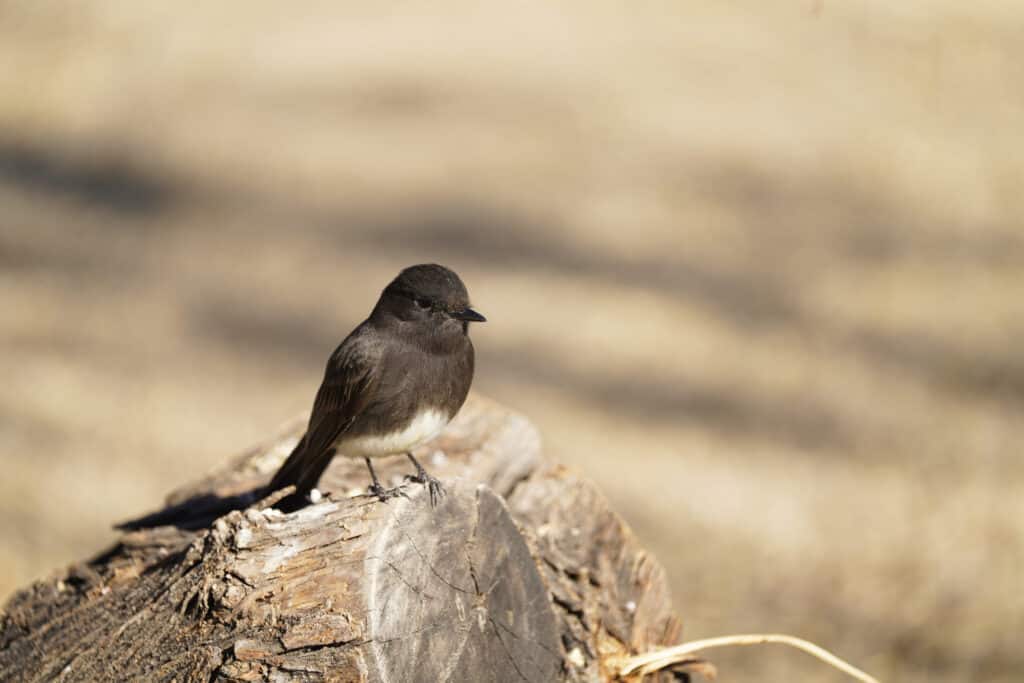
Black Phoebes eat insects that they catch in the air.
©iStock.com/G Parekh
Common bird species at the Desert National Wildlife Refuge include:
- Black Phoebe
- Le Conte’s Thrasher
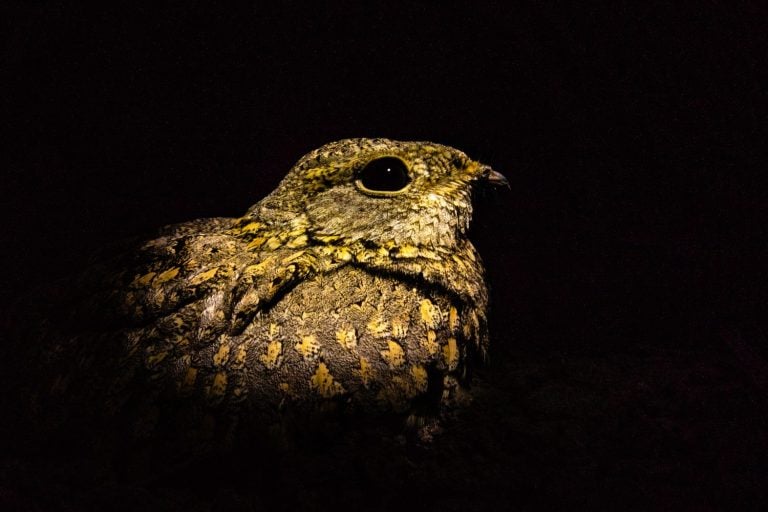
- Lesser Nighthawk
- Sagebrush Sparrow
- Hooded Oriole
- Black-tailed Gnatcatcher
- Greater Roadrunner
- Crissal Thrasher
- Lucy’s Warbler
- Gambel’s Quail
- Ash-throated Flycatcher
- Anna’s Hummingbird
- Rufous-backed Robin
- Brown Thrasher
- Tropical Kingbird
- Rose-breasted Grosbeak
- Lewis’s Woodpecker
- Northern Parula
- American Redstart
- Gray Catbird
Floyd Lamb Park at Tule Springs
Offering a 680-acre lush oasis with lakes that attract diverse waterfowl, migratory birds, and resident species, contrasting sharply with the surrounding desert, Floyd Lamb Park at Tule Springs is famous for its resident peacocks, ducks, and various birds of prey. The park’s lakes host a variety of ducks and waterfowl, while the park’s cottonwoods, fruit trees, and various shade trees provide habitats for raptors like the Red-shouldered Hawk.
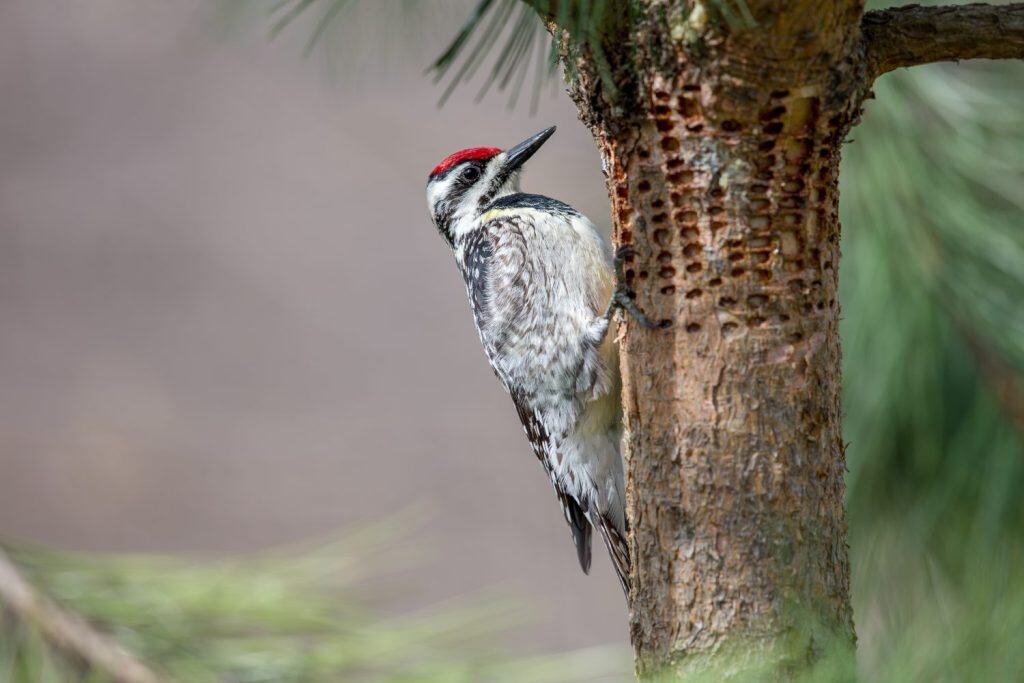
Yellow-bellied sapsuckers can be seen at Floyd Lamb Park at Tule Springs from late September through April.
©James.Pintar/Shutterstock.com
The park is also home to the Las Vegas Tree Nursery, a Nevada Department of Forestry facility that produces up to 250,000 plants annually. The nursery specializes in species native or adapted to the Mojave Desert for mitigation and restoration.
Common Bird Species at the Floyd Lamb Park:
- Pied-Billed Grebe
- Ladder-backed Woodpecker
- Cooper’s Hawk
- Burrowing Owl
- Costa’s Hummingbird
- Greater Roadrunner
- Black-crowned Night Heron
- Black Phoebe
- Ruddy Duck
- Yellow Warbler
- Double-crested Cormorant
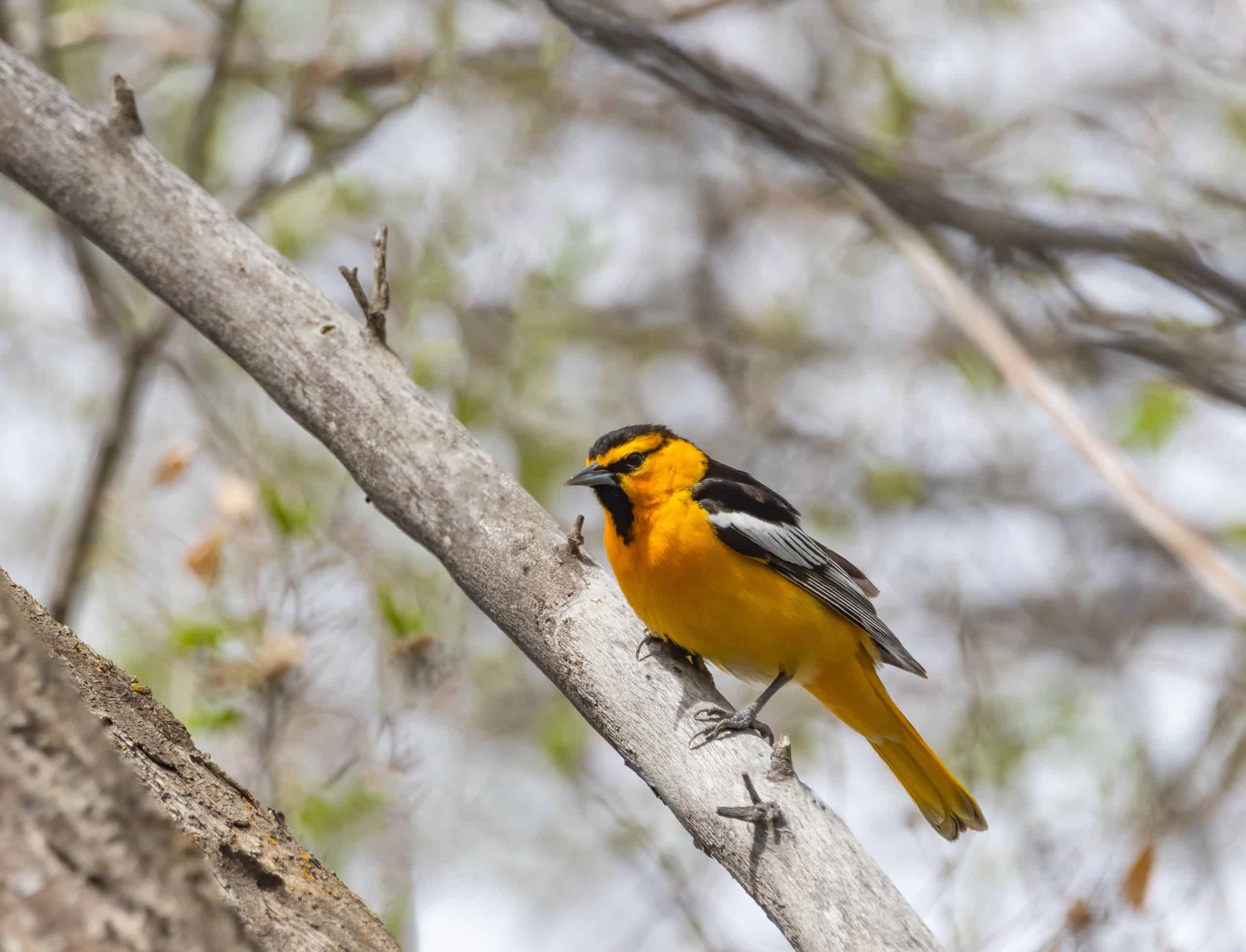
- Bullock’s Oriole
- Black-throated Blue Warbler
- Blackpoll Warbler
- Yellow-bellied Sapsucker
- Cackling Goose
- Red-breasted Nuthatch
Stillwater National Wildlife Refuge
Stillwater National Wildlife Refuge, located near Fallon, Nevada, is an 80,000-acre wetland oasis in the Great Basin, recognized as a globally important bird area (GIBA). It serves as a vital stopover on the Pacific Flyway, hosting hundreds of thousands of migratory shorebirds and waterfowl annually.
More than 290 bird species have been documented at the refuge, including American avocets, long-billed dowitchers, tundra swans, and canvasback ducks. Peak migration from late April to mid-May and from July through September brings high numbers of shorebirds, while waterfowl are most numerous in late fall.
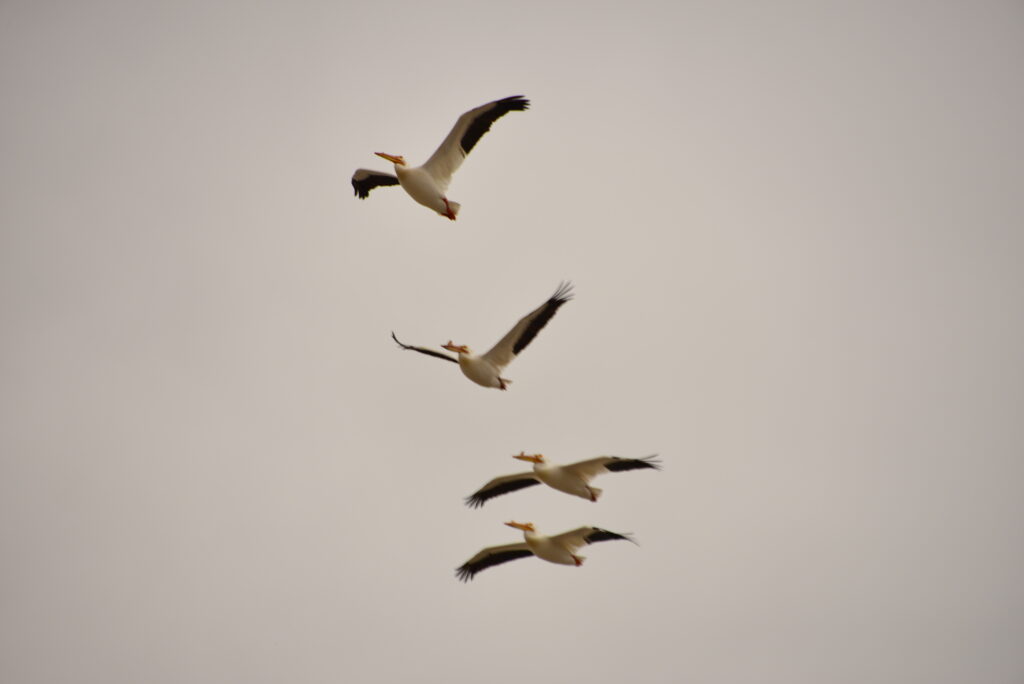
Over 20,000 waterbirds come to the Stillwater National Wildlife Refuge, including pelicans.
©iStock.com/Elizabeth Lara
Common Bird Species at the Stillwater National Wildlife Refuge:
- Double-Crested Cormorant
- Wilson’s Phalarope
- American White Pelican
- Red-necked Phalarope
- American Avocet
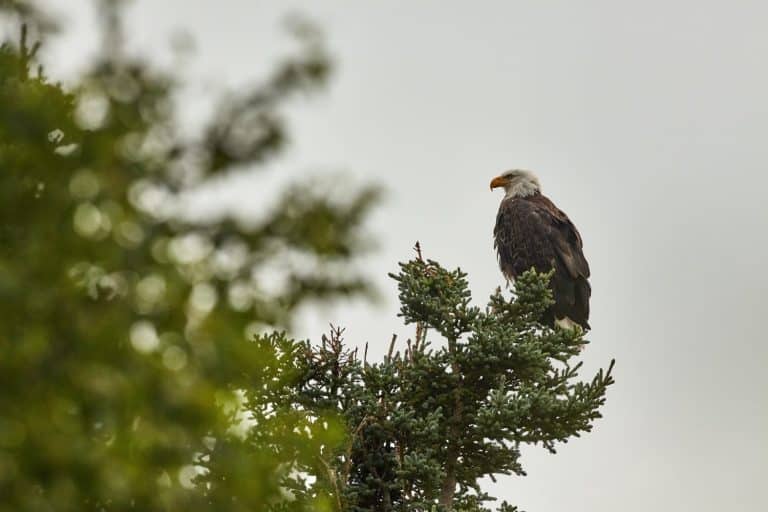
- Bald Eagle
- Rough-legged Hawk
- Cinnamon Teal
- Peregrine Falcon
- Northern Shoveler
- Black-necked Stilt
Great Basin National Park
Great Basin National Park is an exceptional birding destination, boasting over 250 species in its high-elevation habitats, ranging from 5,000 to over 13,000 feet. The dramatic elevation change creates diverse life zones. Lowlands feature Sage Thrashers and Loggerhead Shrikes, while high elevations host Clark’s Nutcrackers and Mountain Chickadees.
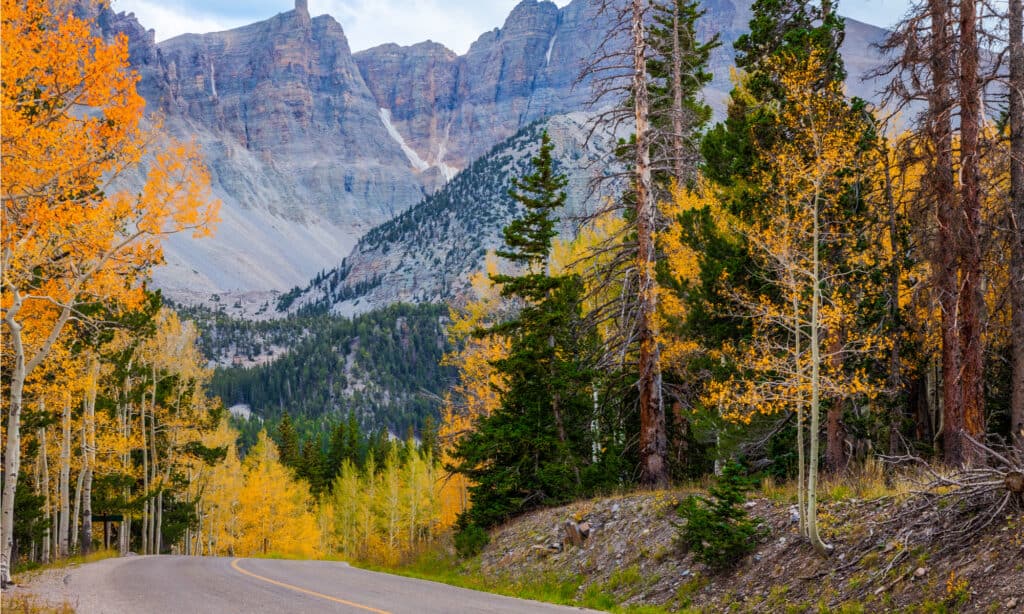
Wheeler Peak, at over 13,000 feet in elevation, is an overwhelming sight in the highly scenic Great Basin National Park in Nevada.
©Arlene Waller/Shutterstock.com
Due to its high-altitude habitats, Great Basin National Park is recognized as an Important Bird Area (IBA). Spring and summer are ideal for spotting breeding birds.
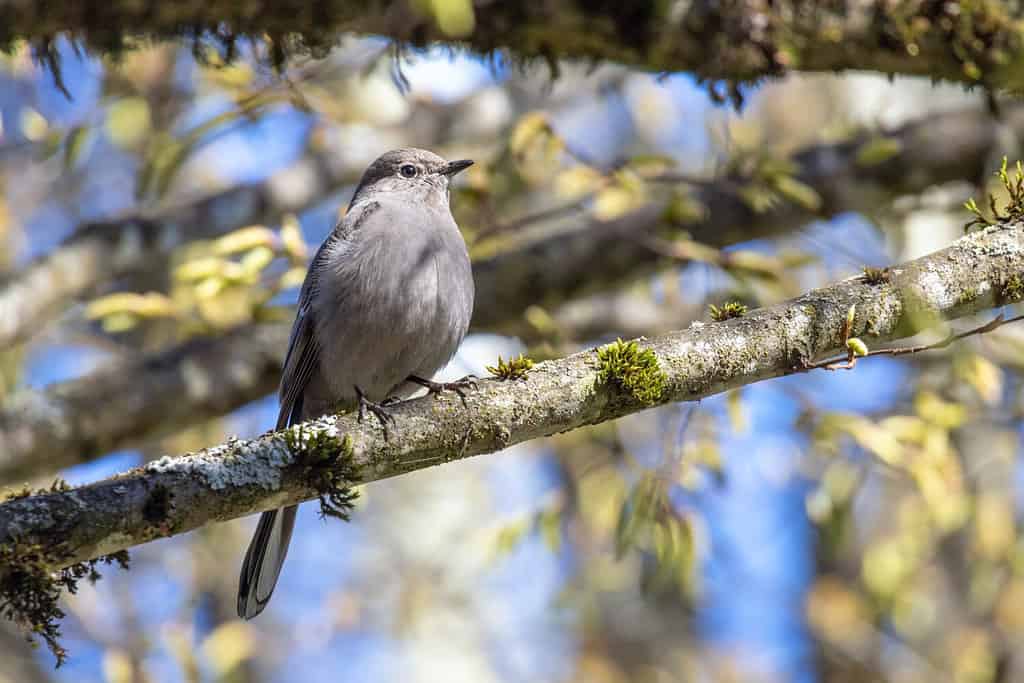
Townsend’s solitaires are year-round residents at Great Basin National Park.
©Feng Yu/Shutterstock.com
Common Bird Species at the Great Basin National Park include:
- American Three-toed Woodpecker
- Mountain Chickadee
- Juniper Titmouse
- Pine Siskin
- California Scrub Jay
- Black Rosy Finch
- Townsend’s Solitaire
- Williamson’s Sapsucker
- Pinyon Jay
- Cordilleran Flycatcher
- Black-chinned Hummingbird
In addition to this list, some of Nevada’s other birdwatching spots include the Pahranagat National Wildlife Refuge, Spring Mountain National Recreation Area, and Overton Wildlife Management Area.