
A
Species Profile

American Leopard Hound

Canis lupus familiaris

Nose to the ground, game up the tree
SasaStock/Shutterstock.com

American Leopard Hound Distribution

Click a location to explore more animals from that region

Origin Location

This map shows the native origin of the American Leopard Hound. As a domesticated species, they are now found worldwide.

Loading map...

Size Comparison

Human 5'8"
American Leopard Hound 2 ft

American Leopard Hound stands at 35% of average human height.

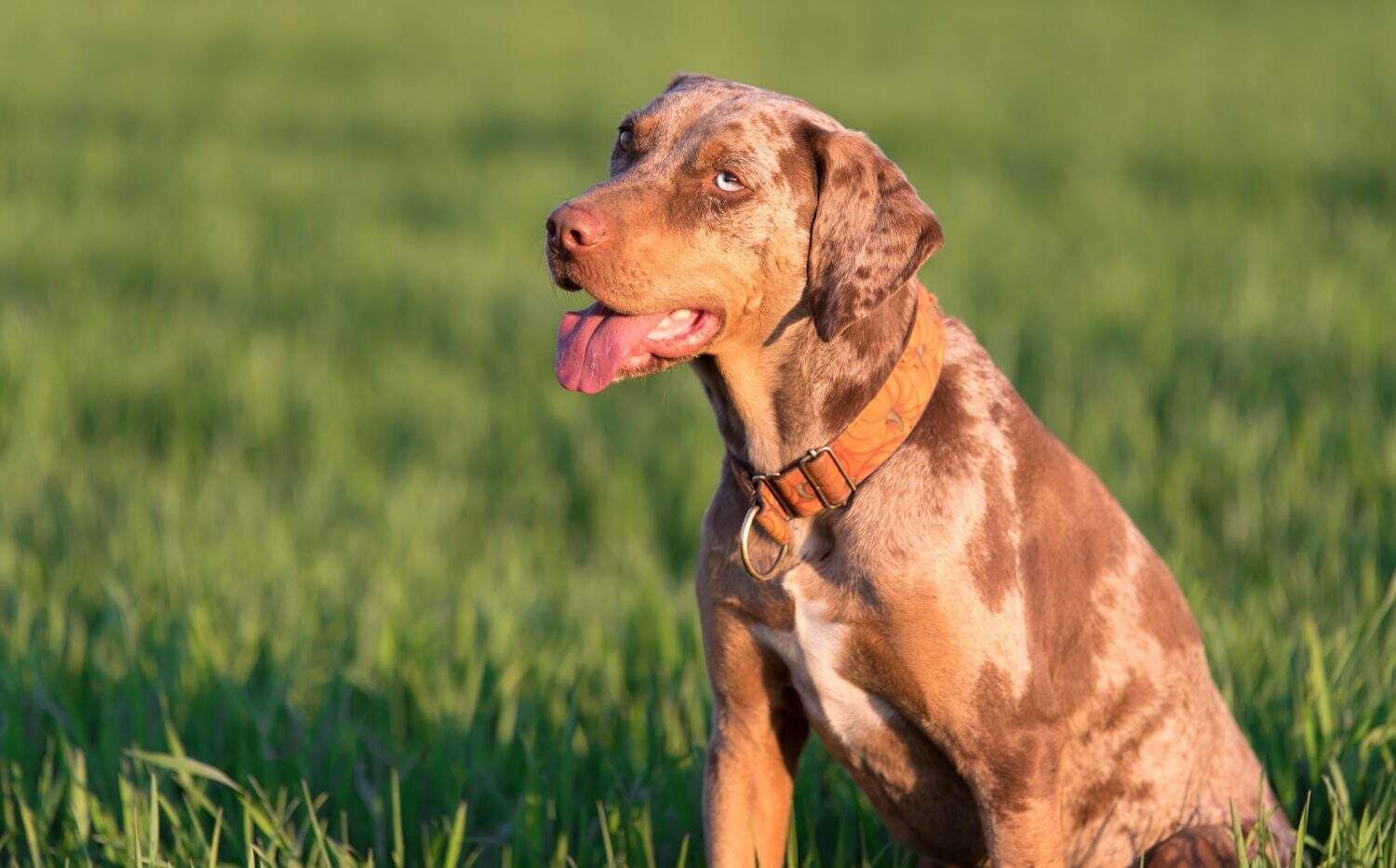
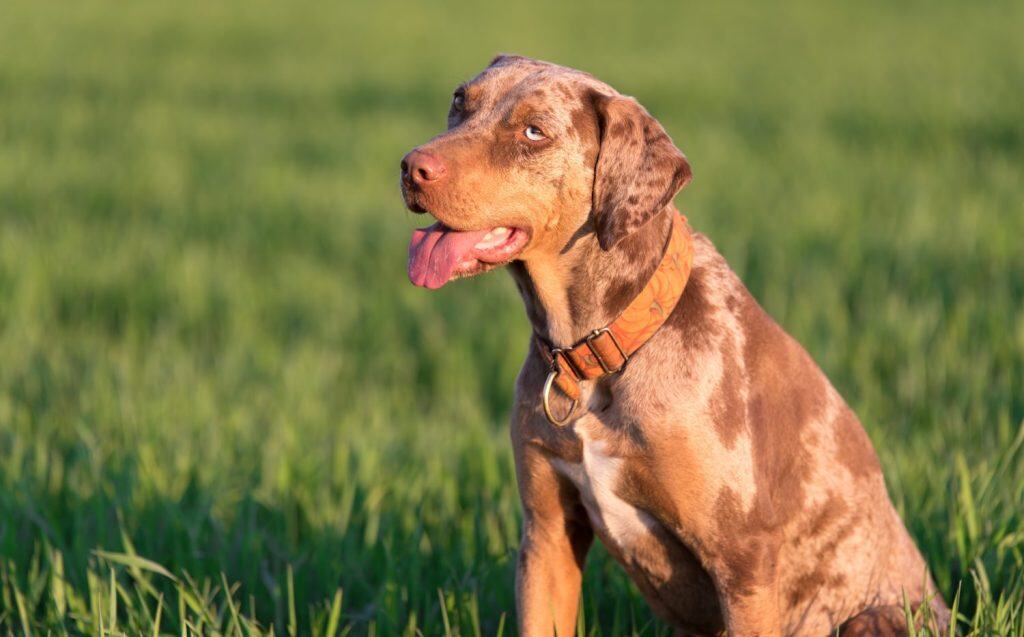
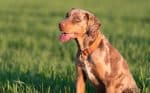
Portrait of a Leopard Hound dog in the green

At a Glance

Domesticated
Also Known As Leopard Hound, Leopard Cur, Leopard Dog
Diet Omnivore
Activity Crepuscular+
Lifespan 5.5 years
Weight 34 lbs
Status Not Evaluated
Did You Know?

The breed was long known in registries as the "Leopard Cur" before being renamed "American Leopard Hound" (UKC).

Scientific Classification

The American Leopard Hound is a domestic dog breed developed in the United States and used primarily as a versatile hunting hound (notably for trailing and treeing game). It is distinct from the Catahoula Leopard Dog despite similar-sounding names.

Kingdom
Animalia
Phylum
Chordata
Class
Mammalia
Order
Carnivora
Family
Canidae
Genus
Canis
Species
Canis lupus

Distinguishing Features

  • Hound-type hunting dog used for scent trailing and often treeing game
  • ‘Leopard’ patterning may occur (merle/leopard-like coat patterns are commonly referenced in breed descriptions)
  • Athletic, endurance-oriented working build typical of hunting hounds
  • Often discussed historically under or alongside the term “Leopard Cur,” depending on registry and lineage

Physical Measurements

Males and females differ in size

Height
2 ft (1 ft 10 in – 2 ft 3 in)
1 ft 11 in (1 ft 9 in – 2 ft 1 in)
Length
3 ft 7 in (3 ft 1 in – 3 ft 11 in)
3 ft 9 in (3 ft 3 in – 4 ft 3 in)
Weight
60 lbs (44 lbs – 75 lbs)
53 lbs (40 lbs – 66 lbs)
Tail Length
1 ft 4 in (1 ft 2 in – 1 ft 6 in)
1 ft 3 in (1 ft 1 in – 1 ft 6 in)
Top Speed
30 mph
About 48 km/h

Appearance

Primary Colors
Secondary Colors
Skin Type Short, tight, close-lying coat over pigmented skin; generally low-odor and relatively easy-care, with moderate weather resistance but limited insulation compared to double-coated breeds.
Distinctive Features
  • Domestic dog (Canis lupus familiaris) selectively bred as a versatile U.S. hunting hound for trailing and treeing game-more specialized for scent work, handler cooperation, and stamina than the base wild canid.
  • Distinct from the Catahoula Leopard Dog despite similar 'leopard' naming: typically a hound/cur-type hunting dog emphasis (trail + tree), with its own registry history and breed standard rather than the Catahoula's herding/stock-dog association.
  • Historical naming/registry context: long known in some registries/regions as the 'Leopard Cur' before being renamed/standardized as the American Leopard Hound; 'leopard' refers to coat pattern, not relation to any wild leopard species.
  • Athletic, medium-to-large, leggy build with a deep chest and strong loin suited to long hunts; generally lighter and more endurance-oriented than many heavier-boned cur types.
  • Drop ears and a strong, open nostril structure consistent with scent hounds; ears require routine checks/cleaning after fieldwork.
  • Tail typically long and carried level to slightly up when working; overall outline built for covering ground efficiently.
  • Coat is short and dense: sheds but usually needs only minimal grooming; field use commonly leads to superficial scrapes-routine skin/coat checks are important.
  • Temperament in work: high prey drive, persistent trailing, and strong treeing instinct; can be vocal on track-training should channel baying and reinforce recall/handler check-ins.
  • Care requirements: needs substantial daily exercise and mental work (scent games, tracking, long structured runs/hikes); insufficient outlet often leads to restlessness or nuisance barking.
  • Training needs: early socialization and consistent reinforcement-based training; strong nose and hunt drive benefit from structured scentwork and dependable leash/long-line manners.
  • Health considerations seen in active hunting lines: hip dysplasia (screen breeding stock), elbow/orthopedic wear from hard miles, ear infections (especially after swimming or humid hunts), and skin irritation from environmental exposure.
  • Additional health/care cautions: risk of bloat (GDV) in deep-chested individuals-use meal management and avoid hard exercise right around feeding; rigorous parasite prevention and tick-borne disease monitoring are important for working dogs.
  • Eye/hearing: leopard-patterned coats can resemble merle-like presentations; while not the same as Catahoula-associated issues, responsible breeders still monitor for congenital eye/hearing problems and avoid risky pattern-to-pattern pairings when relevant in their lines.

Sexual Dimorphism

Mild-to-moderate sexual dimorphism typical of many working domestic dogs: males tend to be larger and more heavily muscled, while females are often slightly smaller and more refined without major coat-pattern differences.

  • Slightly broader head and muzzle; heavier bone and musculature through neck/shoulders.
  • Often thicker chest and more pronounced overall mass at the same height range.
  • More refined head and lighter frame; often appears a bit more streamlined and agile.
  • May mature slightly earlier in body condition, with the same range of coat colors/patterns as males.

Did You Know?

The breed was long known in registries as the "Leopard Cur" before being renamed "American Leopard Hound" (UKC).

Despite the "leopard" name, the pattern is typically spotting/ticking; it's not the same as the merle-heavy look common in Catahoulas.

American Leopard Hounds are prized for trailing (including colder/older scent) and for "treeing" game-driving animals up a tree and holding them with voice.

They're versatile hunters historically used on raccoon and squirrel, and in some regions on larger game where legal and appropriate.

Compared with many cur-type working dogs, the American Leopard Hound is generally more "houndy" in build and behavior-nose-first, vocal, and track-driven.

Because it's a working-bred dog, individuals can vary more in size, coat pattern, and style than many modern show-focused breeds.

A secure fence matters: a good nose plus prey drive can override recall if they catch an interesting track.

Unique Adaptations

  • Specialized olfaction typical of domestic dogs (Canis lupus familiaris) but selected in this breed for sustained trailing stamina and track persistence.
  • Athletic, efficient gait suited to covering rough terrain for long periods during hunts.
  • Short, low-maintenance coat that sheds debris easily; common spotting/ticking helps camouflage in brushy environments.
  • Hound voice: a functional adaptation for hunters-audible location tracking over distance and dense cover.
  • High pain tolerance and toughness often reported in working lines (still requires careful veterinary assessment because they may "work through" injuries).

Interesting Behaviors

  • Cold-trailing and track-switching: methodically working older scent lines and problem-solving when the trail breaks.
  • Treeing/baying: using a sustained, ringing voice to hold game at a tree until the hunter arrives.
  • Wide ranging on scent: casting back and forth to "find the edge" of a track, then settling into a steady trailing rhythm.
  • Pack compatibility (with independence): can work with other hounds yet make decisions on the trail without constant direction.
  • Scent-first attention: outdoors they may appear "selectively deaf" when a track is hot-training must account for instinct.
  • Home/off-duty contrast: many are calm indoors once exercised, but become intensely driven when given a hunting or scent-work outlet.

Cultural Significance

The American Leopard Hound (Canis lupus familiaris) is a U.S. hunting dog from the South and Midwest used for trailing and treeing. Hunters ran night hunts and hound clubs, breeding for nose, grit, and endurance. Renamed from Leopard Cur to distinguish it from cur types and the Catahoula Leopard Dog.

Myths & Legends

Frontier-era hunters' lore tells of "leopard" dogs valued because their spotted coats blended into dappled woods, making them seem almost invisible as they worked a track.

Some long-running origin stories say American Leopard Hound came from mixing local frontier dogs with imported hunting stock. These tales stay in the breed's oral history even when exact lineage is hard to prove.

In coonhunting tales, the American Leopard Hound (Canis lupus familiaris) is praised as a dog that can 'put a ring around the tree' — meaning it finds the tree fast and stays there barking.

A common hunting story says renaming Leopard Cur to American Leopard Hound showed the dogs became seen more as scent-trail and treeing hounds, not just general farm working dogs.

Some local hunters say a dog that 'opens honest,' meaning it barks only when truly on track, brings luck on a hunt, while a babbling hound 'steals daylight.' This lesson is told when choosing pups.

Conservation Status

NE Not Evaluated

Has not yet been evaluated against the criteria.

Population Stable

Life Cycle

Birth 6 pups
Lifespan 6 years

Lifespan

In the Wild
3–8 years
In Captivity
11–14 years

Reproduction

Mating System Polygynandry
Social Structure Managed Domestic
Breeding Pattern Serial
Fertilization Managed Selective
Birth Type Managed_selective

American Leopard Hound (Canis lupus familiaris): biologically polygynandrous (mates with multiple partners), but breeding is managed by people with planned, temporary (serial) pairings; not a cooperative breeder.

Behavior & Ecology

Social Pack Group: 4
Activity Crepuscular, Diurnal, Cathemeral
Diet Omnivore Meat-forward meals (especially beef or chicken-based, high-protein working-dog formulas)

Temperament

Breed distinction vs base species (wolf): markedly more human-directed and trainable for cooperative tasks (handling, transport, recall work) while retaining stronger independent problem-solving typical of scenthounds; less rigid dominance structure than wild Canis lupus packs.
HUBS: high social persistence on task-once engaged on scent/game, attention narrows and responsiveness can drop; variation is high, with some lines more biddable and others more independent depending on working selection and training history.
Generally confident, energetic, and people-affiliative with familiar humans; can be reserved with strangers until assessed, especially if under-socialized.
High prey drive and strong tracking focus; may chase wildlife and roaming cats-management and early training are important for safe off-leash behavior.
Dog-to-dog sociability is often good in working contexts, but arousal can increase rough play or competitive behavior around food/toys; structured introductions help.
Care requirement: needs substantial daily aerobic exercise plus scent/brain work (tracking games, trailing, hunt-style outings). Under-exercised individuals may become vocal, restless, or destructive.
Care requirement: training should prioritize recall, impulse control, and leash skills; reward-based methods outperform harsh corrections, which can increase avoidance or shut-down in sensitive individuals.
Health risks: ear irritation and infections from droopy hound ears and outdoor work; joint wear or injuries from rough ground; possible hip dysplasia. Parasite and tick prevention is vital for hunting dogs.
Care requirement: routine ear checks/cleaning after field work, paw/skin inspection, and maintaining lean body condition to support endurance and joint health.

Communication

Bark Alert/attention-seeking; can increase with boredom
Bay/long bawl Scent-trailing/locating; a key working signal
Howl Occasionally; social contact or arousal
Whine/whimper Frustration, greeting, solicitation
Growl Resource guarding, discomfort, play intensity
Scent communication: urine marking, ground sniffing/overmarking; heavy reliance on olfaction compared with many companion breeds.
Body language: ear/tail carriage, freezing, hackles, and forward posture to signal arousal or intent; play bows and loose wiggly gait for affiliation.
Proximity and contact-seeking: leaning, following, and check-ins with handler Varies-more frequent in highly trained individuals
Visual attention shifts: rapid head/eye scans when on track; reduced eye contact with humans during scent lock-on is common.
Touch and play: mouthy play and shoulder bumps may occur; appropriate outlets and training reduce escalation in multi-dog groups.

Habitat

Biomes:
Temperate Forest Temperate Grassland Mediterranean Desert Hot Desert Cold Boreal Forest (Taiga) Tundra Alpine Wetland Freshwater Savanna Tropical Dry Forest Tropical Rainforest Marine +8
Terrain:
Plains Hilly Valley Riverine Coastal Rocky
Elevation: Up to 18044 ft 8 in

Ecological Role

Domestic hunting hound and human-associated mesopredator surrogate (does not fill the wild wolf niche, but influences local wildlife interactions through hunting/trailing work). Distinct from the wild base species (gray wolf) by relying on human-provided nutrition and being selectively bred for scent trailing, treeing, endurance, and handler cooperation rather than self-sustaining predation.

Assists humans in locating and managing game species (trailing/treeing) Can contribute to local pest control when used to hunt nuisance species (e.g., raccoon/opossum) Supports working-dog activities (scent work, tracking) that can aid property management and recovery tasks Companionship and human utility roles that reduce reliance on lethal control methods in some management contexts

Diet Details

Other Foods:
Grass Berries Pumpkin and squash Sweet potato Rice and oats

Human Interaction

Domestication Status

Domesticated

The American Leopard Hound (Canis lupus familiaris) is a United States hunting hound bred for trailing and treeing game. It has a strong nose, high stamina, athletic build, and a working nature. More bred for work and more independent than many pet dogs. Used by hunters, rural homes, sports like tracking, and sometimes rescued.

Danger Level

Low
  • Bites/scratches possible with any dog, typically linked to poor socialization, fear, pain, or mishandling
  • High prey drive can cause chasing/knocking-down risk, especially for small children or frail adults if under-exercised or poorly managed
  • Independent hunting temperament may reduce off-leash reliability; risk of accidents during pursuit (traffic/terrain) can indirectly endanger handlers during recovery
  • Zoonotic/parasite risks common to dogs if preventive care is neglected (ticks, fleas, intestinal parasites)

As a Pet

Suitable as Pet

Legality: American Leopard Hound (Canis lupus familiaris) is usually legal to own in most U.S. areas and countries, but must follow normal rules (license, leash, vaccinations). Not commonly banned by breed; limits come from behavior or local hunting/kennel rules.

Care Level: Experienced

Purchase Cost: $300 - $1,200
Lifetime Cost: $15,000 - $35,000

Economic Value

Uses:
Hunting and guiding services Sport and competition (tracking/nose work, hunting tests) Breeding and sale of working dogs Pet/companion animal market Veterinary, feed, equipment, and boarding services
Products:
  • Hunting utility (trailing and treeing game; locating wounded game)
  • Stud services and puppies from working lines
  • Training services (obedience, recall, tracking, field work)
  • Equipment purchases driven by ownership (tracking collars/GPS, leads, kennels, crates)

Relationships

Ecological Equivalents 5

Animals that fill a similar ecological role in their ecosystem

Treeing Walker Coonhound
Treeing Walker Coonhound Canis lupus familiaris Very similar working niche: trailing and treeing game—especially raccoon. Comparable high endurance, strong prey drive, and a vocal hound style; differs mainly in breed history and typical coat and patterning.
Plott Hound
Plott Hound Canis lupus familiaris Functional analog: a tough American hunting hound used on larger, more challenging quarry (e.g., bear or wild boar). Requires intense exercise and consistent training; many lines are oriented toward big-game hunting.
American Foxhound
American Foxhound Canis lupus familiaris Shares the scent-hound toolkit — keen nose, stamina, and a pack/field hunting tradition. Foxhounds are often more pack-oriented and specialized for long chases, while American Leopard Hounds are commonly described as versatile trail-and-tree dogs.
Catahoula Leopard Dog
Catahoula Leopard Dog Canis lupus familiaris Often confused because of the 'Leopard' name and spotted coat, but Catahoulas are stock/boar-catching, baying and herding/cur-type dogs, while American Leopard Hounds are primarily trailing and treeing hounds; they therefore occupy different working niches and require different handling and training.
American Leopard Hound
American Leopard Hound Canis lupus familiaris Bred for scent-trailing and treeing; has a high prey drive and strong endurance. Requires lots of exercise and training. Management and health considerations include coat-related issues and risks from merle breeding, need for secure fencing, regular ear checks, and susceptibility to hip dysplasia, bloat, and ticks.

The American Leopard Hound is an old breed of tree and hunting dog with an excellent sense of smell and speed. When out on the hunt, they have the ability to stay close to their quarry and avoid injury by ducking and dodging. The purpose for which they’re ultimately bred is to chase animals up a tree and alert the owner to their presence by barking. The dog’s true origins remain shrouded in mystery. One theory is that it descended from dogs brought to the Americas by Spanish conquistadors and possibly mixed with native dogs. Another theory is that it was developed entirely within the southern United States from a mixture of French, English, Irish, Scottish, and Spanish breeds.

Despite its venerable status in the American South, this breed was neglected for decades. By the middle of the 20th century, significant interbreeding with other dogs threatened to destroy what was unique about the American Leopard Hound. Only the efforts of a few dedicated breeders saved it from dilution. Since 2012, it has been classified by the American Kennel Club in its Foundation Stock Service, which works with breeders to provide help and establish standards. The stock service is a level short of full recognition.

The American Leopard Hound is characterized by an athletic body, built mostly for speed and agility, with a long, thin tail, slender legs, and drooping ears. The dense but short double coat, which consists of a rough outer layer and fine woolly underlayer, is some combination of black, blue, brown, gray, red, yellow, or merle colors. Around 60% of all dogs are solid in color; the rest are either leopard-spotted or brindle.

3 Pros And Cons Of Owning An American Leopard Hound

ProsCons
Loyal and Protective: The American Leopard Hound is very sociable; it’s especially protective of children.Strong Prey Drive: As a scent hound, this breed quite literally follows its nose everywhere.
Intelligent and Easy to Train: Owners should have few problems with teaching this breed commands.High Mental and Physical Needs: This breed will need lots of activities to remain occupied.
Athletic: This is a good choice for active owners.Not Very Suitable for Apartments: This dog needs plenty of space to run and play.

History Of The Breed

The American Leopard Hound is believed to be one of the oldest of the tree dog breeds in the Americas, and while its exact origins are not known, it is reputed that they descended from dogs that were brought to the New World, specifically Mexico, by Spanish conquistadors during the Spanish Inquisition. This hound was then brought to the United States by the settlers who would use it as a hog-hunting dog. Records indicate that the American Leopard Hound was established in North Carolina around the early 1700s.

Size and Weight

The American Leopard is a medium to large-sized dog. However, there is a fairly large range of different sizes.

Weight (Male):45-70 pounds
Weight (Female):45-70 pounds
Height (Male:):21-27 inches
Height (Female): 21-27 inches

Common Health Issues

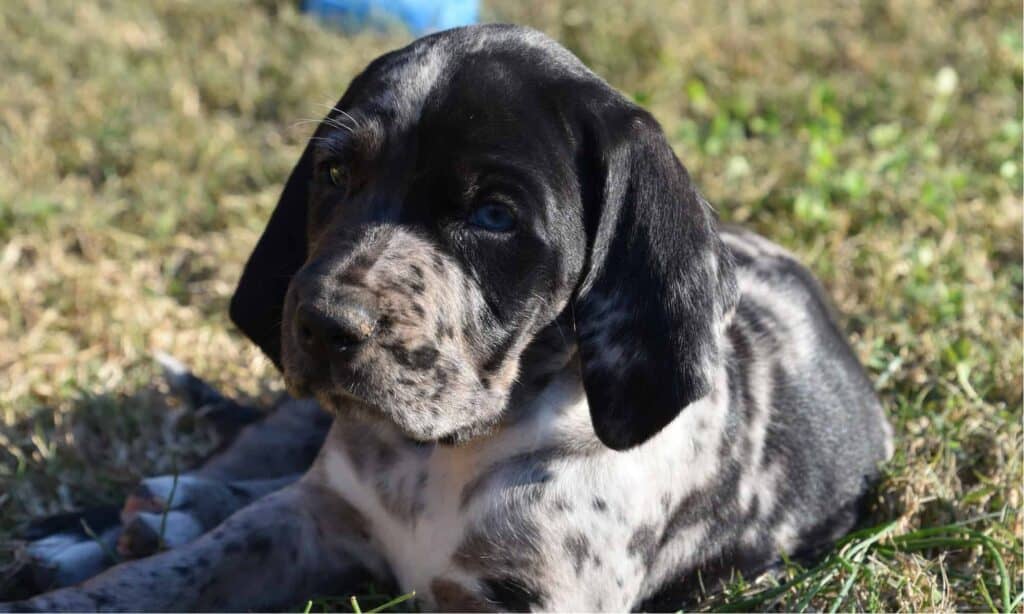
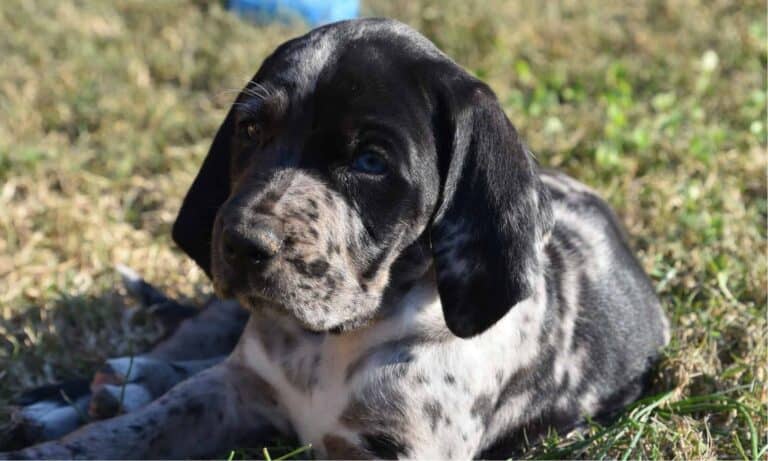
American Leopard Hound puppy

American Leopard Hounds are generally healthy but may be prone to several health issues.

The American Leopard Hound is a healthy breed with a typical lifespan of 12 to 15 years, but they do suffer from several problems, including deafness, cancer, and a developmental disorder called hip dysplasia, in which the joint can become loose in its socket, causing lameness and pain. Serious health problems can also result from the mating of two merle-colored parents. The double merle puppies are much more likely to suffer from deafness and blindness. Good breeders will generally test their stock for common inheritable issues. You can ask them to provide proof that their dogs have received a positive health assessment. You should also keep up regular appointments at the vet to catch health problems early.

Temperament

The American Leopard Hound is a highly intelligent breed, both in terms of social IQ and tracking ability. While it was originally bred to be a hunting dog, it also does exceptionally well as a member of the family. This breed is highly loyal and affectionate toward people of all ages; it seems to be particularly protective of children. Don’t expect to treat it like a simple companion, though. This breed has a very high-energy, purposeful, work-oriented personality; both its mental and physical needs should be met with games, toys, sports, exercise, and social interactions throughout the entire day. If it doesn’t obtain enough activity time, then it might channel some of its energy into destructive behavior.

How To Take Care Of The American Leopard Hound

The American Leopard Hound is a good choice for owners across the entire spectrum of experience levels. They’re fairly easy to train, easy to groom, and easy to feed. However, they do require an owner who’s heavily invested in their lives. Don’t expect to buy one and ignore it for half the day. They also need plenty of space for their physical activity.

The Best Dog Food

The American Leopard Hound will need around three cups of high-quality dog food per day, or at least enough to satisfy its immense activity level. You should watch its calorie intake and limit treats to prevent obesity.

Maintenance And Grooming

The American Leopard Hound should be fairly easy to groom; weekly brushing, combined with the occasional bath, should be sufficient to remove loose hairs and keep it looking clean and healthy. Owners will also need to trim their fast-growing nails with a clipper or grinder to prevent them from splitting or cracking. Clean out their ears on a regular basis to prevent infections and obstructions. Finally, you should devise a suitable dental hygiene plan with your vet to prevent teeth and gum disease.

Training
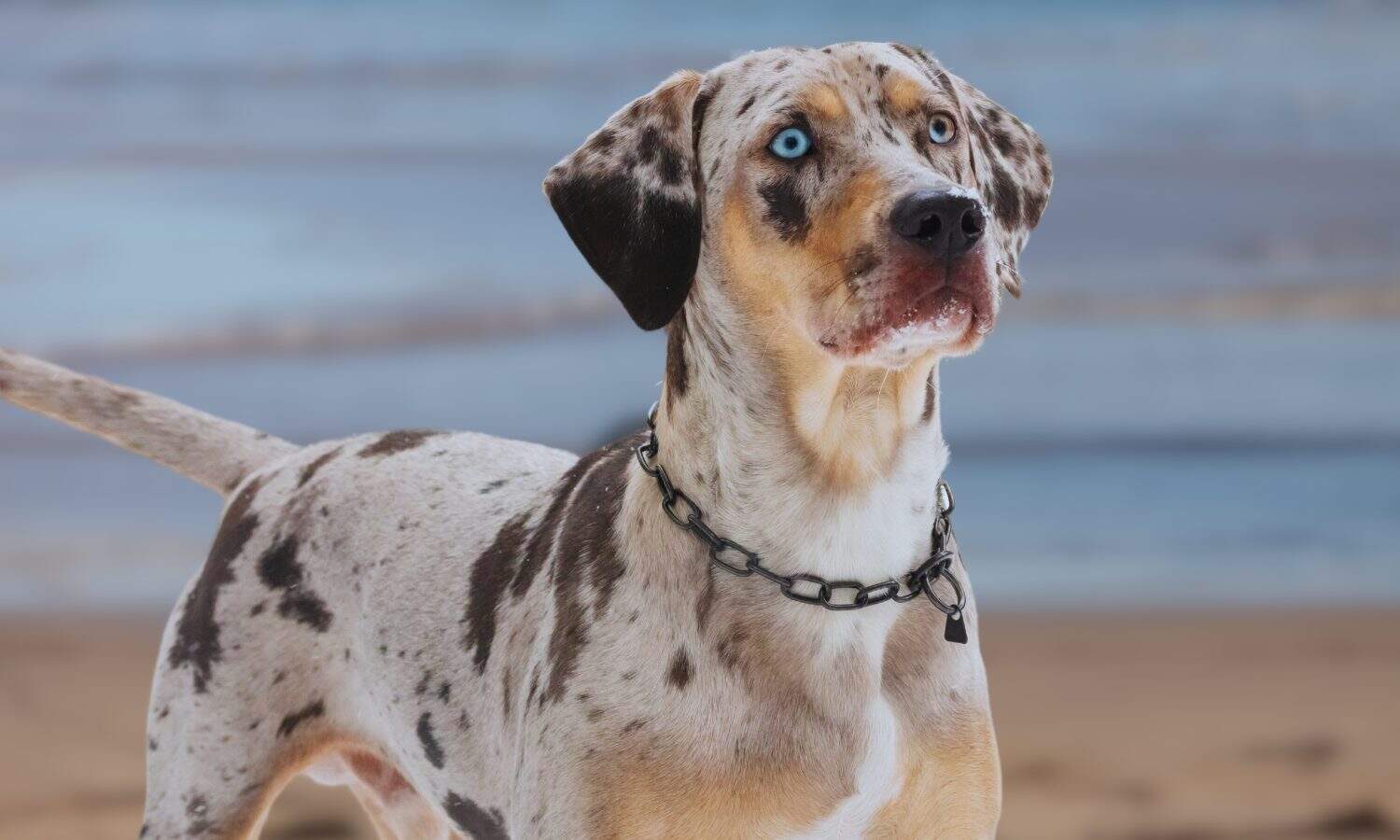
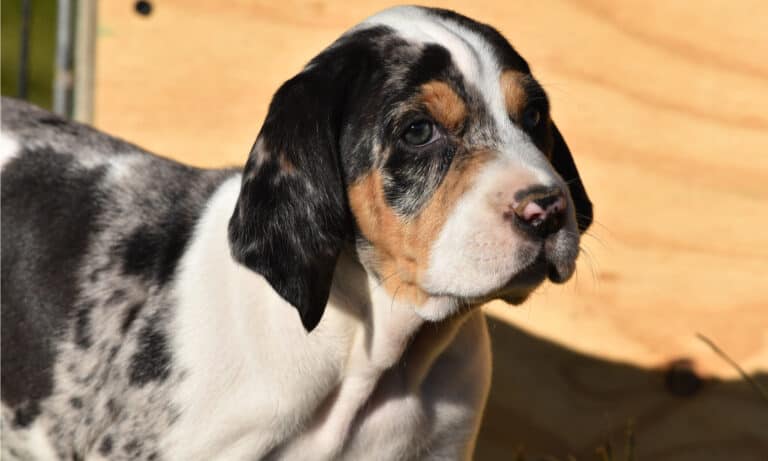
Adorable tri-colored white, brown and black purebred American Leopard Hound dog with glorious green eyes

As a scent hound, this breed has a tendency to follow its nose and get into trouble.

The American Leopard Hound is intelligent, eager to please, and capable of accomplishing the task at hand. Owners should have little trouble teaching this breed proper boundaries, etiquette, and commands. Clear, consistent directions and the occasional treat-inducements should be effective. Just keep in mind that its training should never be neglected, because as a scent hound, it does have the tendency to follow its nose and get into trouble. Encouraging eye contact and distracting its attention from prey can help focus its mind on your commands.

Exercise

The American Leopard Hound will need at least an hour of exercise every single day. This should ideally come in the form of multiple walks, hide and seek, ball games, fetching, tricks, and free running in a fenced yard. This breed also excels at dog sports and agility challenges. You should be careful about letting it run free in the open because it does have a strong prey drive.

Puppies
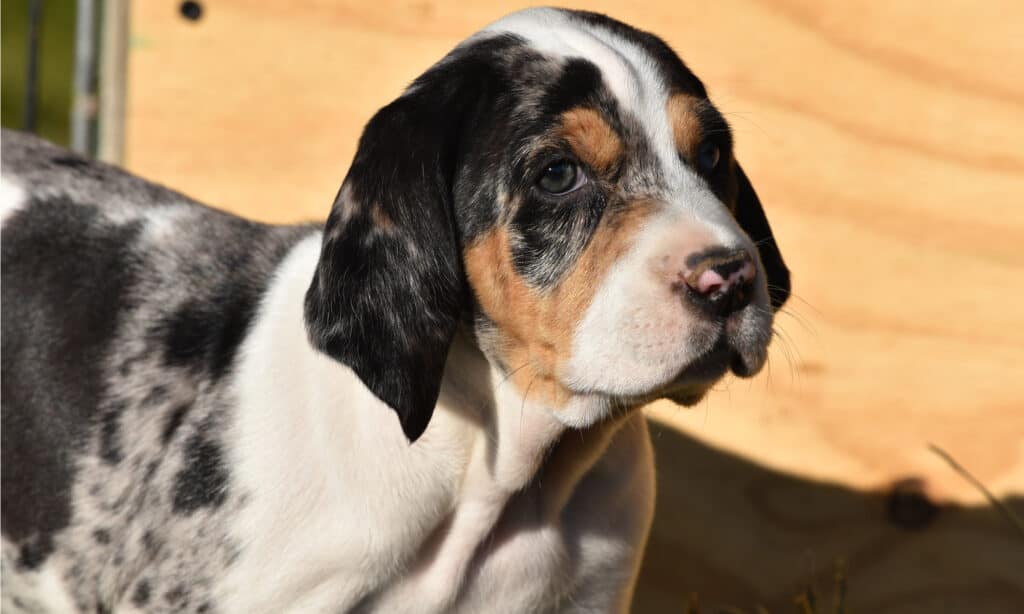
American Leopard Hound dog puppy

American Leopard Hound dog puppies should be socialized and trained almost immediately, which will be a great benefit to them.

American Leopard Hound puppies will benefit from early socialization and training from the moment they’re brought home. While naturally friendly and loyal, this breed can develop some bad behavior like any other dog if its training is neglected. Training should focus on dissuading some of the breed’s natural prey drive and hunting instincts. Besides at-home training, classes can offer additional support to really get the most out of the dog’s malleable early months. Crate training, while not mandatory, can help with housebreaking and behavioral issues. Consult your vet for other issues such as vaccines, neutering/spaying, and microchipping.

The American Leopard Hound And Children

This sociable, protective, and gentle breed will get along very well with children of all ages. However, it is important to teach younger children in particular how to approach and handle this dog, and even then, adults should be present to supervise all interactions in case something negative occurs.

Dogs Similar To The American Leopard Hound

  • Treeing Tennessee Brindle: The name tells you what you need to know about this breed. It’s a treeing hound from Tennessee with a brindle coat of fur. With its remarkable intelligence and keen sense of smell, it is an excellent hunting dog.
  • Treeing Walker Coonhound: A descendant of the American Foxhound, this breed of hunting dog was primarily designed to hunt raccoons; it can also chase after larger quarry such as deer and bobcats. An affectionate, confident, and intelligent breed, this medium-sized coonhound is characterized by a short and dense coat of black, white, and brown markings.
  • Treeing Cur: This is a medium-sized breed with excellent speed in rough terrain. Because it served multiple purposes on the farm, including hunter, guardian, and herder, appearance wasn’t a huge concern for its breeders. As the name suggests, it does have the ability to tree both large and small prey.

View all 328 animals that start with A

Sources

  1. American Kennel Club / Accessed October 8, 2021
  2. Petful / Accessed May 5, 2023
Melissa Bauernfeind

About the Author

Melissa Bauernfeind

Melissa Bauernfeind was born in NYC and got her degree in Journalism from Boston University. She lived in San Diego for 10 years and is now back in NYC. She loves adventure and traveling the world with her husband but always misses her favorite little man, "P", half Chihuahua/half Jack Russell, all trouble. She got dive-certified so she could dive with the Great White Sharks someday and is hoping to swim with the Orcas as well.
Connect:

Thank you for reading! Have some feedback for us?


American Leopard Hound FAQs (Frequently Asked Questions)

The price of a new puppy from a high-quality breeder is usually somewhere north of $1,000. Good breeders are usually worth the extra cost of doing business. They will only breed their dogs from high-quality stock and perform their own health evaluations. While it might be tempting to go with a cheaper breeder, you might end up paying more in the long run with health and behavioral issues. However, if you can’t afford this price, then a cheaper alternative is adoption. The price of adoption usually runs no more than a few hundred dollars.