S
Species Profile

Shantungosaurus

Shantungosaurus giganteus

Shandong's colossal duck-bill grazer
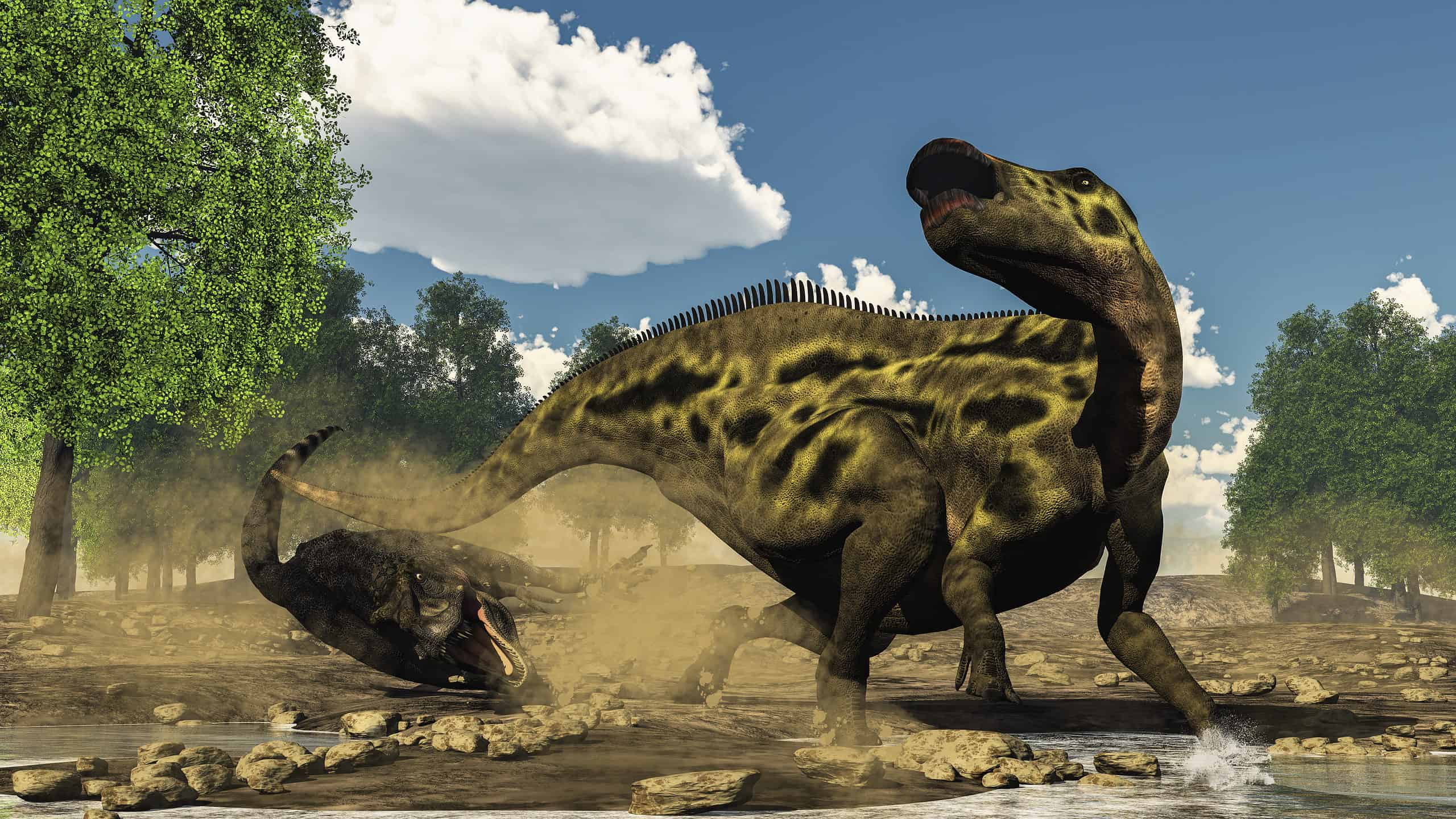
Elenarts/Shutterstock.com

Shantungosaurus Distribution

Click a location to explore more animals from that region

Endemic Species
Loading map...

Found in 1 country

Size Comparison

Human 5'8"
Shantungosaurus 16 ft 5 in

Shantungosaurus is 2.9x the height of an average human.

Shantungosaurus

At a Glance

Wild Species
Also Known As Shantung hadrosaur, Shandong hadrosaur, Shandong duck-billed dinosaur, Shantung duck-billed dinosaur
Diet Herbivore
Activity Cathemeral
Lifespan 22 years
Weight 16000 lbs
Status Not Evaluated
Did You Know?

Known from the Late Cretaceous Wangshi Group of Shandong Province, eastern China (Hu, 1973).

Scientific Classification

Shantungosaurus giganteus is a gigantic hadrosaurid (duck-billed) dinosaur from the Late Cretaceous of what is now Shandong Province, China. It is often cited among the largest known hadrosaurids.

Kingdom
Animalia
Phylum
Chordata
Class
Reptilia
Order
Ornithischia
Family
Hadrosauridae
Genus
Shantungosaurus
Species
giganteus

Distinguishing Features

  • Very large-bodied hadrosaurid (duck-billed) herbivore
  • Broad beak and dental batteries adapted for grinding vegetation
  • Robust limb bones consistent with heavy body mass
  • Hadrosaurid body plan: long tail, strong hind limbs, forelimbs capable of quadrupedal stance

Physical Measurements

Height
16 ft 5 in (14 ft 9 in – 18 ft 1 in)
Length
50 ft 10 in (45 ft 11 in – 55 ft 9 in)
Weight
14.3 tons (11.0 tons – 17.6 tons)
Tail Length
24 ft 7 in (21 ft 4 in – 27 ft 11 in)
Top Speed
16 mph
running

Appearance

Primary Colors
Secondary Colors
Skin Type Scaly, pebbly (tuberculate) reptilian skin inferred from hadrosaurid skin impressions; no feathers expected.
Distinctive Features
  • Late Cretaceous hadrosaurid from eastern China (Shandong); Wangshi Group deposits (Wang, 1973).
  • Extremely large hadrosaurid: length commonly estimated ~14-16.6 m (Paul, 2010; Campione & Evans, 2012).
  • Mass estimates vary widely; often cited roughly ~10-16 metric tonnes depending on method (e.g., Paul, 2010; Campione & Evans, 2012).
  • Broad 'duck-bill' snout with keratinous beak inferred; adapted for cropping tough vegetation.
  • Very large dental batteries with hundreds of teeth (hadrosaurid trait) for grinding fibrous plants; continuous tooth replacement.
  • Robust torso and powerful hindlimbs; likely primarily bipedal when moving quickly, quadrupedal while feeding (inferred from hadrosaurids).
  • Tail stiffened by ossified tendons (ornithischian trait), aiding balance in such a large-bodied animal.
  • Behavior and lifespan not directly known for this species; herding and seasonal movement are commonly inferred for hadrosaurids from trackways/bonebeds, but not demonstrated specifically for Shantungosaurus.

Did You Know?

Known from the Late Cretaceous Wangshi Group of Shandong Province, eastern China (Hu, 1973).

Often cited among the biggest hadrosaurids: a commonly reported adult length is ~14.7 m (Paul, 2010; widely repeated in technical/popular summaries).

Body-mass estimates for the largest hadrosaurids (including Shantungosaurus) commonly fall in the ~11-16 tonne range depending on method and specimen scaling (e.g., Campione & Evans, 2012).

As a hadrosaurid, it carried a 'dental battery'-densely packed tooth columns that formed a continuously renewing grinding surface (Horner, Weishampel & Forster, 2004).

Its broad, duck-bill snout was sheathed in keratin in life, functioning like a cropping beak for gathering vegetation (Horner, Weishampel & Forster, 2004).

Despite its size, it was built for long-distance walking: hadrosaurids had strong hindlimbs, stiffened tails, and could move both bipedally and quadrupedally (general hadrosaurid functional anatomy; Horner et al., 2004).

Direct lifespan data aren't known for Shantungosaurus specifically; however, bone histology in other hadrosaurids indicates rapid growth and reaching near-adult size within about a decade, implying lifespans plausibly on the order of a few decades (hadrosaurid growth studies summarized in Horner et al., 2004).

Unique Adaptations

  • Dental battery with continuous tooth replacement: Multiple stacked teeth per position created an ever-renewing grinding surface-one of the most specialized chewing systems among dinosaurs (Horner, Weishampel & Forster, 2004).
  • Cranial and jaw mechanics for efficient chewing: Hadrosaurids show complex jaw motion enabling powerful grinding rather than simple snapping bites, improving extraction of nutrients from tough plants (Horner et al., 2004).
  • Huge digestive capacity (inferred from body size): Its extraordinary size implies an enlarged gut volume, favoring fermentation and long retention times-an advantage for processing high-fiber plant diets.
  • Robust, weight-bearing limb design: A strong pectoral girdle and forelimbs supported long bouts of quadrupedal walking, while powerful hindlimbs provided propulsion-useful for a multi-ton herbivore moving across floodplains.

Interesting Behaviors

  • Herding (inferred): Hadrosaurids are frequently associated with group movement and mass-death assemblages, supporting the idea that Shantungosaurus likely traveled in herds for safety and foraging efficiency (inference from hadrosaurid bonebeds; Horner et al., 2004).
  • Bulk browsing and grazing: The wide beak could crop large amounts of low- to mid-height vegetation, while the dental battery ground plant material into fine pulp for digestion-well suited to processing abrasive, fibrous plants common in Late Cretaceous floras (Horner et al., 2004).
  • Mixed locomotion: Like many hadrosaurids, it likely foraged mainly on all fours (efficient for steady movement and feeding) but could shift weight back to the hindlimbs for faster travel or scanning (functional inference from hadrosaurid limb proportions; Horner et al., 2004).
  • Social signaling (inferred): Although Shantungosaurus lacks a tall hollow crest like some lambeosaurines, hadrosaurids likely used vocalizations, body posture, and visual cues for communication within groups (general inference discussed for hadrosaur social behavior; Horner et al., 2004).

Cultural Significance

Shantungosaurus giganteus is an important Chinese dinosaur find, named from Shandong (old spelling "Shantung"). Its very large size makes it a museum icon of East Asia's Late Cretaceous and shows hadrosaurids were diverse worldwide.

Myths & Legends

In northern China, people long ago found big fossil bones of Shantungosaurus giganteus and called them 'dragon bones,' tied them to rivers, storms, and mountains after floods or digging, before dinosaurs were known.

Shandong's long dragon stories, that see dragons as ones that bring rain and guard water and crops, help explain how huge ancient bones became stories of powerful underground or river creatures in local tales.

The name Shantungosaurus honors Shandong Province using the older spelling "Shantung," showing how Western spellings were used when many Chinese fossil sites were first brought into international science (Hu, 1973).

Conservation Status

NE Not Evaluated (prehistoric species; IUCN assessments apply to extant taxa)

Has not yet been evaluated against the criteria.

Population Unknown

Life Cycle

Birth 30 hatchlings
Lifespan 22 years

Lifespan

In the Wild
10–30 years

Reproduction

Mating System Data Deficient
Social Structure Aggregation Group
Breeding Pattern Seasonal
Fertilization Internal Fertilization
Birth Type Internal_fertilization

Direct mating behavior is unknown; as a large herd-living hadrosaurid, Shantungosaurus likely bred seasonally with multiple mates during brief encounters, using internal fertilization. No evidence supports long-term pair bonds or cooperative care beyond parental nesting.

Behavior & Ecology

Social Herd Group: 15
Activity Cathemeral
Diet Herbivore

Temperament

Generally non-aggressive herbivore; likely wary and flight-oriented when threatened.
Strongly social tendency inferred from hadrosaurid gregariousness; individuals likely synchronize movement/foraging.
Defensive when cornered; large adults could use mass, tail strikes, and trampling as deterrents (inferred).
Parental investment likely present (hadrosaur nesting/ontogeny evidence broadly supports care; Horner 1984), exact Shantungosaurus details unknown.

Communication

Low-frequency bellows/booms possible via larynx/air sacs; crestless saurolophine implies less resonant calls Inferred
Hisses/snorts during agitation and close-range interactions Inferred from extant large reptiles/birds analogs
Visual displays: head/neck elevation, lateral body presentation, tail posture changes for signaling Inferred
Tactile contact: flank/shoulder nudges to maintain spacing and coordinate movement within herds Inferred
Substrate-borne cues: foot stomps/ground vibration to alert nearby conspecifics Inferred

Habitat

Biomes:
Temperate Forest Temperate Grassland Freshwater Wetland
Terrain:
Plains Valley Riverine Muddy
Elevation: Up to 1640 ft 5 in

Ecological Role

Very large hadrosaurid megaherbivore (primary consumer) in Late Cretaceous terrestrial ecosystems of the Wangshi Group (Shandong, China), functioning as a bulk-browsing/grazing vertebrate.

High-volume herbivory shaping vegetation structure and plant community composition (inferred from megaherbivore role) Creation of browsing pressure and disturbance pathways through trampling (inferred) Nutrient cycling and redistribution via dung/urine (inferred) Potential propagule dispersal (seeds/spores) via ingestion and defecation, if consumed (inferred) Important prey biomass supporting large carnivorous dinosaurs in the same ecosystems (inferred trophic role)

Diet Details

Other Foods:
Conifer foliage and shoots Ginkgo leaves Cycad foliage Ferns Horsetails Angiosperm leaves and twigs Seeds and fruits +1

Human Interaction

Domestication Status

Wild

Shantungosaurus giganteus is an extinct hadrosaurid from the Late Cretaceous Wangshi Group of Shandong, China. It was never domesticated and is known only from fossils. Estimates give about 15–16.6 m length and a ~1.63 m skull. Lifespan is unknown; likely a large herbivore that lived in groups. Humans study, display, and trade its fossils.

As a Pet

Not Suitable as Pet

Legality: Shantungosaurus giganteus is extinct and not a living pet. Fossil owning, collecting, or trading depends on local laws. Chinese fossils have national and provincial protections and export limits. Illegal fossil trade happens.

Care Level: Expert Only

Purchase Cost:
Lifetime Cost:

Economic Value

Uses:
Scientific research value (taxonomy, hadrosaurid evolution, biomechanics) Museum and educational exhibit value (casts/replicas, interpretive programs) Geoheritage and tourism (fossil localities, regional natural history attractions) Commercial fossil/replica market (legitimate casts; illegal fossil trade risk)
Products:
  • museum displays (original fossils where legally held; more commonly casts)
  • research datasets (CT scans, measurements, comparative anatomical descriptions)
  • replicas/casts and educational materials
  • tourism/branding tied to dinosaur localities (non-material economic impact)

Relationships

Predators 2

Zhuchengtyrannus Zhuchengtyrannus magnus
Tyrannosaurid Tyrannosauridae

Related Species 6

Edmontosaurus Edmontosaurus annectens Shared Family
Lambeosaurus Lambeosaurus lambei Shared Family
Parasaurolophus
Parasaurolophus Parasaurolophus walkeri Shared Family
Tsintaosaurus Tsintaosaurus spinorhinus Shared Family
Saurolophus Saurolophus osborni Shared Family
Corythosaurus Corythosaurus casuarius Shared Family

Ecological Equivalents 4

Animals that fill a similar ecological role in their ecosystem

Edmontosaurus Edmontosaurus annectens Shantungosaurus giganteus was a very large, herd-living hadrosaurid herbivore about 14–15 m long and weighing several tons, occupying the same ecological role as Edmontosaurus.
Zhuchengosaurus Zhuchengosaurus maximus Large-bodied hadrosauroid/hadrosaurid-grade herbivore reported from Late Cretaceous Shandong; regional faunal overlap in the broader Zhucheng dinosaur assemblages suggests it plausibly shared low-to-mid browsing and high-volume plant-processing niches.
Saurolophus Saurolophus angustirostris Large saurolophine hadrosaur from the Late Cretaceous of Asia (Mongolia). Shares broadly similar locomotor and feeding ecology — high-throughput herbivory using a hadrosaurid dental battery — and serves as an Asian ecological comparator even when not from the exact same locality.
Alamosaurus Alamosaurus sanjuanensis Not closely related taxonomically (a sauropod), but ecologically similar as a very large terrestrial herbivore with substantial daily plant intake. Useful for niche comparisons regarding resource use, group movement, and predator deterrence by size. Cross-continental, not sympatric.

The Shantungosaurus was a genus of hadrosaurid dinosaurs that lived during the Late Cretaceous Period, approximately 83 to 74 million years ago. It was a giant dinosaur, holding the title of the largest duck-billed dinosaur (hadrosaurid dinosaur) ever found. Paleontologists have found fossils of the Shantungosaurus across various locations in China, suggesting that they lived in Asia. This massive dinosaur had powerful jaws lined with rows of densely packed teeth. However, it was a herbivore, feeding on pine branches and woody flowering plants.

Description and Size
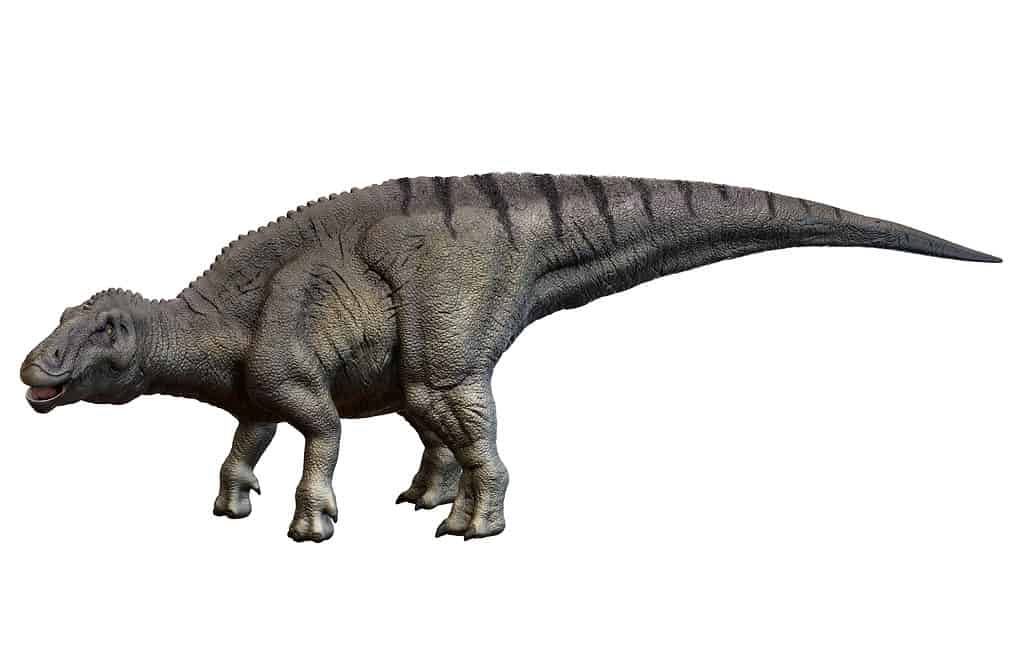
Shantungosaurus

The name Shantungosaurus means “Shandong Lizard.”

Shantungosaurus is a genus of herbivorous dinosaurs that lived during the Cretaceous Period. The name Shantungosaurus means “Shandong Lizard,” a reference to the Shandong province where the first fossil of this dinosaur was first found.

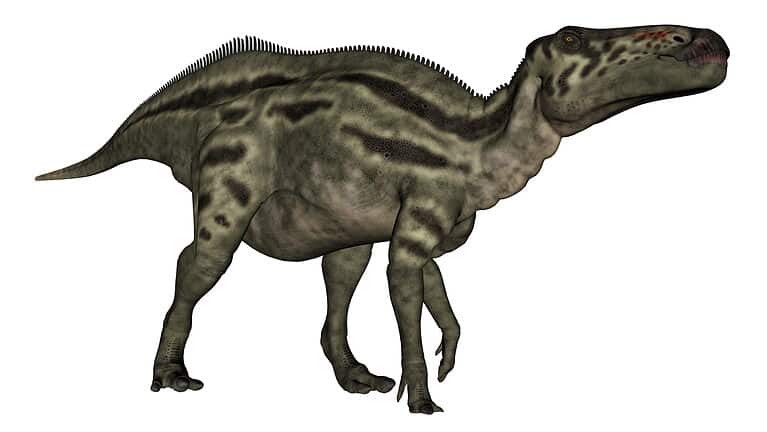
Shantungosaurus giganteus (the only species of this dinosaur found so far) is one of the largest ornithischians (bird-hipped dinosaurs) paleontologists have ever discovered. It had a massive skull measuring about 5.3 feet in length. There have been various estimates for the body length of this dinosaur. The two major reconstructions done so far have a body length of 48 feet and 54 feet. They stood at a height of about 23 feet tall at the shoulder. There is a possibility that the heaviest individuals weighed between 12 to 20 tons. 

Research paleontologist Gregory S. Paul proposed in 2016 that earlier estimates for this dinosaur’s size may have been exaggerated. He revised the measurements, putting it at 49 feet in length and 13 tons in mass. Despite this conservative estimate, Shantungosaurus remains the largest hadrosaur.

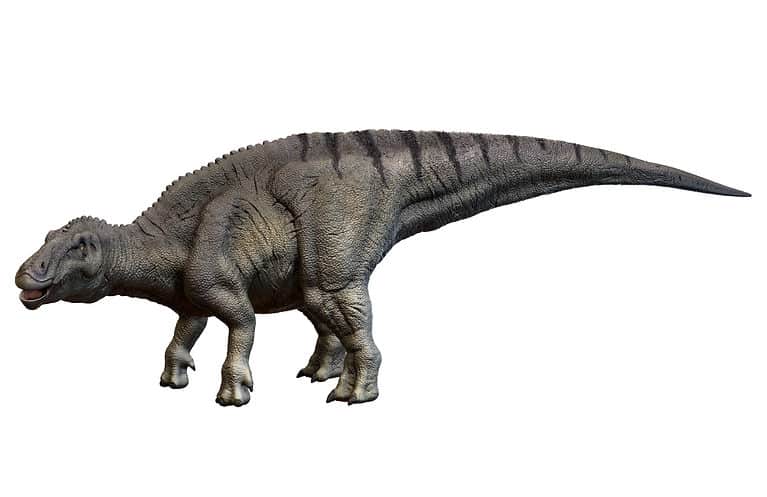
The Shantungosaurus‘ forelimbs were shorter in comparison with its hindlimbs but were still strong enough to support its great weight. This massive dinosaur had a long, heavy tail. The tail was supported by hardened tendons, which made it quite stiff. Based on the enormous size of the tail, scientists think it may have helped the dinosaur balance its weight while it walked. It had muscular legs with birdlike feet. Each of these feet had three toes ending in hoof-like nails. The toes were webbed and had thick pads in between them for support. 

Evolution and History 

Xing Xu, the Chinese scientist that described this dinosaur, noticed a lot of similarities between the Shantungosaurus and Edmontosaurus, a slightly smaller dinosaur that lived in North America. These similar qualities led him and his colleagues to conclude that both dinosaurs were related, with the Shantungosaurus being an Asian node of a joint Edmontosaurus–Shantungosaurus clade. 

In terms of their anatomy, both animals were practically the same, and the only difference between them was in the greater size of the Shantungosaurus. Both hadrosaurid dinosaurs evolved from a common subfamily of dinosaurs known as the saurolophinids. This clade of hadrosaurids is characterized by the absence of hollow crests on their head as against their crested relatives, the lambeosaurinids. 

Generally, the hadrosaurids evolved from the iguanodontian dinosaurs, which were quite popular during the Upper Jurassic, to the Lower Cretaceous Period. They retained the body layout of their ancestors and were a dominant group of dinosaurs towards the close of the Cretaceous. Although Shantugosaurus died off before the end of the period, many species of hadrosaurids were around when the disaster that wiped out all the non-avian dinosaur species took place. 

Diet — What Did Shantungosaurus Eat?

Fossil evidence suggests that this Shantungosaurus was an herbivorous dinosaur that primarily subsisted on thorny, low-growing flora. Its diet might have included pine branches and the woody plants that emerged during the Cretaceous. 

Like all duck-billed dinosaurs, Shantungosaurus had a horn-covered beak similar to a duck’s bill. However, while some Hadrosaurus species tend to have crested skulls, Shantungosaurus had a more flattened skull. 

It had no strong teeth in its beak, but its jaws were filled with rows of tiny teeth numbering over 1,500. The dinosaur’s unique detention is one of its most recognizable traits. They were arranged in 60 and 63 grooves that ran vertically in the dinosaur’s mouth. Each tooth had serrated edges and served as shearing blades for cutting tough plants. 

This dinosaur had very flexible joints in its facial bones, which provided remarkable flexibility of movement as it chewed. Paleontologists think that this characteristic may have cushioned the jaw to reduce the stress of chewing tough plant material. It had a huge opening close to its nostrils, which a loose flap of skin may have covered. Experts think the dinosaur could inflate this flap of skin to generate sounds. It also had a large cheek pouch which may have helped to prevent food from falling out of its mouth while chewing. 

Habitat — When and Where It Lived

Shantungosaurus lived in Asia during the Late Cretaceous Period. It was alive between 74 and 83 million years ago. Fossils of the Shantungosaurus have been discovered in many parts of China, including the provinces of Hebei, Jiangsu, and Shaanxi (China). It was a land-dwelling dinosaur but may have visited the shores of lakes and other water bodies to find food. They had diverse habitats that may have included meadows, grass plains, mountains, and forests.

Threats and Predators

Shantungosaurus lived during the Late Cretaceous Period, a period of the earth’s geologic history characterized by major natural disasters such as earthquakes and volcanic eruptions. Events like this would have put the population of the genus at risk.

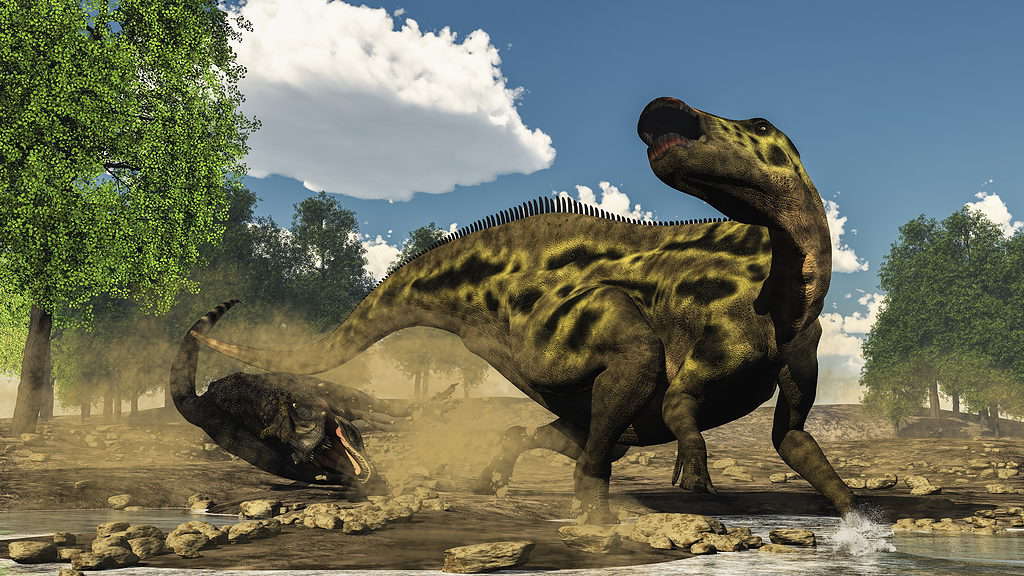
Herbivorous dinosaurs like this also faced a consistent threat from large predators. Although this was a massive dinosaur, big beasts similar in size to the Tyrannosaurus rex could attack and kill it since it did not have any armor or any other defensive mechanism. 

Shantungosaurus was capable of running fast on its two muscular hindlegs to escape predators. They also moved in herds to further protect themselves from large predators. 

One possible predator of the Shantungosaurus is the Tarbosaurus. This is a tyrannosaurid dinosaur that lived in Asia during the Cretaceous, around the same time as the Shantungosaurus. 

Discoveries and Fossils — Where Shantungosaurus Was Found

Scientists discovered fossils of the Shantungosaurus in the Shandong Peninsula of China. The fossiliferous site where the fossils were collected was discovered by paleontologists from the Chinese Ministry of Geology in 1964, and the dig took about two years. 

In 1973, scientist Hu Chengzhi published a description of the animal and named it Shantungosaurus, from the word “Shantung,” another name for the Shandong Province where this dinosaur fossil was found. 

More recently, scientists found new fossils from this same region. The latest find included skull bones, vertebrae, and limb bones. In 2007, these fossils were assigned to a new species named Zhuchengosaurus maximus. However, further study showed the individual discovered was a Shantungosaurus rather than another distinct species. 

Extinction — When Did Shantungosaurus Die Out?

The Shantungosaurus went into extinction about 74 million years ago. This was before the catastrophic event that wiped out all the non-avian dinosaur species about 66 million years ago. Scientists are uncertain of the exact cause of the dinosaur’s disappearance. 

Similar Animals to the Shantungosaurus

Similar animals to the Shantungosaurus include:

  • Edmontosaurus — The duck-billed Edmontosaurus lived about 73 to 66 million years ago during the late Cretaceous Period. It is one of the largest hadrosaurid dinosaurs and also among the last dinosaurs that walked the planet before they were wiped out at the end of the Cretaceous Period. 
  • Lambeosaurus — This is a genus of crested hadrosaurid dinosaurs that lived in North America about 75 million years ago. Although distantly related to the Shantungosaurus, this dinosaur had a distinctive hollow crest on its head, which gave it a different appearance. 
  • Saurolophus — This is a dinosaur genus that lived in Asia and North America during the Cretaceous about 70 million to 68 million years ago. It was one of the few dinosaurs that lived on multiple continents during its life. 
View all 391 animals that start with S

Sources

  1. Britannica / Accessed December 16, 2022
  2. Prehistoric Wildlife / Accessed December 16, 2022
  3. Wikipedia / Accessed December 16, 2022
Abdulmumin Akinde

About the Author

Abdulmumin Akinde

Abdulmumin is a pharmacist and a top-rated content writer who can pretty much write on anything that can be researched on the internet. However, he particularly enjoys writing about animals, nature, and health. He loves animals, especially horses, and would love to have one someday.
Connect:

Thank you for reading! Have some feedback for us?


Shantungosaurus FAQs (Frequently Asked Questions)

Shantungosaurus was a large herbivorous dinosaur that lived in Asia during the Late Cretaceous. It was alive about 84 to 73 million years ago.