
T
Species Profile

Texas Spiny Lizard

Sceloporus olivaceus

Spiky scales, Texas trails.
iStock.com/thomasmales

Texas Spiny Lizard Distribution

Click a location to explore more animals from that region

Loading map...
Texas Spiny Lizard is an agile climber.

At a Glance

Wild Species
Also Known As Olivaceous spiny lizard, Olive spiny lizard
Activity Diurnal+
Lifespan 5 years
Weight 0.03 lbs
Status Least Concern
Did You Know?

Adults are typically ~70-105 mm snout-vent length (SVL) and ~18-28 cm total length (reported in Texas field guides such as Dixon, 2013; Stebbins & McGinnis, 2018).

Scientific Classification

A medium-sized, diurnal spiny lizard of the south-central United States, commonly seen on tree trunks, wooden fences, and rocky areas; known for keeled, spiny scales and rapid, alert movements.

Kingdom
Animalia
Phylum
Chordata
Class
Reptilia
Order
Squamata
Family
Phrynosomatidae
Genus
Sceloporus
Species
Sceloporus olivaceus

Distinguishing Features

  • Strongly keeled (spiny) dorsal scales giving a rough texture
  • Gray-brown to olive coloration with darker crossbands/blotches; excellent camouflage on bark
  • Often perches on vertical surfaces (tree trunks, posts), frequently performing quick dashes to the opposite side to avoid predators
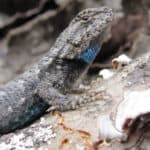
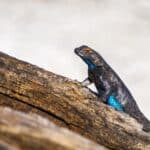
  • Males typically show blue patches on the sides of the belly/throat region (intensity varies seasonally and individually)

Physical Measurements

Males and females differ in size

Length
♂ 8 in (6 in – 9 in)
♀ 9 in (7 in – 10 in)
Weight
♂ 0 lbs (0 lbs – 0 lbs)
♀ 0 lbs (0 lbs – 0 lbs)
Tail Length
♂ 4 in (3 in – 5 in)
♀ 5 in (4 in – 6 in)
Top Speed
7 mph
running

Appearance

Primary Colors
Secondary Colors
Skin Type Dry, keratinized reptile skin with strongly keeled, spiny (mucronate) overlapping scales; enlarged, rough dorsal scales give a 'spiny' texture.
Distinctive Features
  • Adult total length typically ~19-28 cm; snout-vent length commonly ~7-12 cm.
  • Robust body with sharply keeled, pointed dorsal scales; overall rough texture typical of Sceloporus.
  • Dark, banded tail and crossbanded back provide camouflage on bark, fences, and rocks.
  • Diurnal basker; often perches on tree trunks or fence posts and rapidly circles to the far side when approached.
  • Non-venomous; relies on sprinting, crypsis, and startle displays rather than chemical defense.

Sexual Dimorphism

Males are more vividly marked, typically with prominent blue throat and paired blue belly patches and darker ventral pigmentation. Females are usually duller with reduced or absent blue and a paler belly, sometimes showing seasonal warm-toned side coloration when reproductive.

♂
  • Blue throat coloration and distinct paired blue belly patches
  • Often darker overall ventral surface and stronger contrast patterning
  • More conspicuous display postures (push-ups/head-bobs) using ventral colors
♀
  • Reduced/absent blue throat and belly patches; belly usually pale cream-white
  • Generally subtler dorsal contrast; pattern appears more muted
  • May show seasonal warm-toned (tan/orange-tinged) lateral wash when gravid

Did You Know?

Adults are typically ~70-105 mm snout-vent length (SVL) and ~18-28 cm total length (reported in Texas field guides such as Dixon, 2013; Stebbins & McGinnis, 2018).

Males usually show bright blue patches on the belly/throat used in displays; females are duller and often more patterned for camouflage on bark.

It's a classic "tree-trunk lizard": you'll often see it head-down on oak, pecan, juniper, or fence posts, ready to sprint to the far side of the trunk when approached.

Like many Sceloporus, it communicates with rapid push-ups and head-bobs-visual "signaling" that works well in sunny, open woodland.

Reproduction is spring-summer; published clutch sizes are commonly ~6-16 eggs (ranges reported wider in some sources), and females may lay more than one clutch in a season (e.g., Dixon, 2013; regional life-history summaries).

It's an insect eater that helps reduce yard pests-feeding on ants, beetles, caterpillars, and other arthropods (diet described broadly for the species in regional accounts).

If grabbed, it can shed its tail (autotomy) to escape; the tail may regrow but usually not to the original shape or length (a widespread squamate trait).

Unique Adaptations

  • Strongly keeled, spiny dorsal scales (a Phrynosomatidae/Sceloporus hallmark) that make the lizard harder for predators to grip and may reduce abrasion when squeezing into rough bark/rock crevices.
  • Cryptic "bark" coloration-gray/olive/brown mottling that blends with tree trunks and weathered wood (reflected in the species epithet olivaceus).
  • Specialized climbing performance: long toes and curved claws support rapid vertical sprinting and clinging on bark and posts.
  • Visual communication system: conspicuous blue ventral patches plus stereotyped push-up displays-an efficient way to signal in bright, open habitats where sound/scent carry less effectively.
  • Tail autotomy (breakable tail planes) to distract predators; regeneration follows but typically produces a shorter, structurally different tail.

Interesting Behaviors

  • Bark-ambush foraging: sits motionless on tree trunks or fence rails, then darts to snap up passing insects.
  • "Trunk-side hiding": when threatened, it quickly circles to the opposite side of a trunk/post to keep cover between itself and a predator.
  • Basking-and-bolt daily rhythm: warms up in morning sun, then alternates short basking bouts with rapid foraging runs through the day (diurnal thermoregulation typical of Sceloporus).
  • Territorial signaling: males perform push-ups/head-bobs and display blue ventral patches to rivals and potential mates; chases can occur in the breeding season.
  • Seasonal activity shifts: most visible in warm months; activity drops during cold spells, with sheltering in crevices, loose bark, or debris.
  • Predator evasion: freezes to match bark patterning, then sprints; if seized, tail autotomy may be used as a last resort.

Cultural Significance

The Texas spiny lizard (Sceloporus olivaceus) is a common backyard reptile in Texas, seen on porch posts, fences, and trees. It is a nature center ambassador and a model animal for studies of territory, body temperature, and life patterns.

Myths & Legends

Because this exact species is not strongly tied to a single widely recorded legend, it more often appears in regional "lizard" symbolism rather than species-specific folklore.

In Puebloan traditions of the U.S. Southwest, lizard images, often like the Texas Spiny Lizard (Sceloporus olivaceus), stand for the earth and survival in hot, dry places and appear in rock art and pottery.

Hopi tradition includes clan identities like the Lizard Clan, showing the lizard as a symbol of place, family ties, and the desert — a cultural link, not one story about Texas spiny lizards specifically.

In many Native American stories, "Lizard" is a small, tough character—quick, watchful, and good at getting away—traits that match Texas Spiny Lizard (Sceloporus olivaceus) seen on tree bark near homes and woods.

The name Sceloporus comes from Greek for "leg" and "pore," pointing to its femoral pores used for chemical signals. Olivaceus means olive-colored, linking the scientific name to its looks.

Conservation Status

LC Least Concern

Widespread and abundant in the wild.

Population Stable

Life Cycle

Birth 14 hatchlings
Lifespan 5 years

Lifespan

In the Wild
2–10 years
In Captivity
3–15 years

Reproduction

Mating System Polygynandry
Social Structure Solitary
Breeding Pattern Seasonal
Fertilization Internal Fertilization
Birth Type Internal_fertilization

Territorial males court and defend basking sites and nearby females during the spring-summer breeding season, mating with more than one partner. Copulation uses hemipenes (internal fertilization); females lay eggs and provide no post-oviposition care.

Behavior & Ecology

Social Solitary Group: 1
Activity Diurnal, Matutinal, Vespertine
Diet Insectivore ants (Formicidae)
Seasonal Hibernates

Temperament

Strongly territorial in adult males; frequent push-up display contests and occasional chasing/biting.
Wary and fast-fleeing; typically freezes or spirals around trunks before sprinting to cover.
Across populations, boldness varies with disturbance: urban/perch-habituated individuals allow closer approach.
Females and juveniles generally less aggressive; avoid male territories except during breeding.

Communication

No species-specific vocal calls reported; communication is primarily non-vocal in Sceloporus.
Visual displays: push-ups, head-bobs, lateral compression, and rapid posture changes Classic Sceloporus display repertoire
Color/pattern presentation: exposure of ventral patches and body orientation to maximize signal contrast during disputes.
Chemical cues: femoral pore secretions and tongue-flick investigation likely support recognition and reproductive state assessment.
Tactile interactions: mounting during copulation; physical grappling/biting can occur in escalated male-male conflicts.

Habitat

Biomes:
Temperate Forest Temperate Grassland Savanna
Terrain:
Plains Hilly Plateau Valley Riverine Rocky Coastal +1
Elevation: Up to 3937 ft

Ecological Role

Generalist insectivorous mesopredator in south-central U.S. woodland/edge and urbanized habitats; links arboreal/ground arthropod communities to higher trophic levels.

suppression of herbivorous and nuisance arthropods (local insect population regulation) energy transfer from invertebrates to predators (birds, snakes, small mammals) as a common prey item contributes to arthropod community structuring via selective predation on abundant taxa (e.g., ants/beetles/orthopterans)

Diet Details

Human Interaction

Domestication Status

Wild

Sceloporus olivaceus (Texas Spiny Lizard) is a wild phrynosomatid lizard native to the south-central United States. It has no domestication history. People mostly watch it in yards and parks, and sometimes handle it for education or research. Pet trade is limited and discouraged, often using wild-caught animals. Conflicts are minor, from cats, dogs, or handling stress.

Danger Level

Low
  • Minor bite/scratch risk if handled; can break skin but typically not medically significant.
  • Zoonotic pathogen risk common to reptiles (e.g., Salmonella) via handling or contaminated surfaces; standard hygiene reduces risk.
  • Ectoparasites (ticks/mites) possible on wild individuals in some areas.

As a Pet

Not Suitable as Pet

Legality: Legal rules for Texas Spiny Lizard (Sceloporus olivaceus) vary. Not federally protected, but states, parks, and cities may ban wild capture or sale. Check local laws and get legally bred pets only.

Care Level: Experienced

Purchase Cost: Up to $150
Lifetime Cost: $800 - $2,500

Economic Value

Uses:
Ecosystem services (insect predation) Education and outreach Scientific research (behavior, ecology, physiology) Nature tourism / backyard biodiversity value
Products:
  • No standard commercial products; value is primarily non-consumptive (ecosystem/education/research).

Relationships

Related Species 10

Eastern Fence Lizard
Eastern Fence Lizard Sceloporus undulatus Shared Genus
Prairie Lizard Sceloporus consobrinus Shared Genus
Desert Spiny Lizard Sceloporus magister Shared Genus
Twin-spotted Spiny Lizard Sceloporus bimaculosus Shared Genus
Mountain Spiny Lizard Sceloporus jarrovii Shared Genus
Clark's Spiny Lizard Sceloporus clarkii Shared Genus
Canyon Lizard Sceloporus merriami Shared Genus
Texas Horned Lizard Phrynosoma cornutum Shared Family
Side-blotched lizard Uta stansburiana Shared Family
Zebra-tailed Lizard Callisaurus draconoides Shared Family

Ecological Equivalents 5

Animals that fill a similar ecological role in their ecosystem

Eastern Fence Lizard
Eastern Fence Lizard Sceloporus undulatus Very similar ecology and behavior: diurnal, sit-and-wait insect eater that perches on logs, fences, or tree trunks; uses quick sprints and camouflage; about 19–28 cm long; exhibits push-up/head-bob displays and territorial behavior.
Tree Lizard
Tree Lizard Urosaurus ornatus Overlaps strongly in microhabitat use: a diurnal trunk/branch-percher in hot, open woodlands and riparian edges that uses vertical surfaces (tree trunks, fence posts) and makes quick dashes to the opposite side of the trunk when approached — a functionally similar predator-avoidance and foraging mode.
Desert Spiny Lizard Sceloporus magister A medium-to-large spiny lizard that uses elevated perches (trees, large shrubs, rocks, walls) and hunts large arthropods by ambush. Exhibits similar anti-predator behavior (freeze/flush, rapid sprinting to cover) and territorial visual displays.
Green Anole
Green Anole Anolis carolinensis Not closely related, but occupies a similar diurnal, visually oriented, insectivorous niche on vertical substrates (tree trunks, brush, fences) in parts of the south-central United States. Both species rely on quick bursts of speed, crypsis, and vigilance while perch-hunting.
Western Fence Lizard
Western Fence Lizard Sceloporus occidentalis Ecological analogue in western North America: a diurnal, perch-and-pounce insectivore that forages on rocks, logs, and wooden structures and exhibits strong territorial display behavior. Plays a similar functional role despite being largely allopatric with the Texas Spiny Lizard.

The Texas spiny lizard is a small reptile native to Mexico and the south-central region of the United States.

It prefers to live in mesquite trees and lowland areas that have heavy ground leaf cover. The spiny lizard is a common visitor to backyards and fences in Oklahoma, Texas, and Arizona. With a slender body and long tail, this spiny visitor helps people keep bugs out of their yards and homes.
4 Fun Facts About the Texas Spiny Lizard!

  • Male spiny lizards compete by doing push-ups.
  • Spiny lizard hatchlings can fend for themselves at birth.
  • The Texas spiny lizard’s preferred habitat is a mesquite tree.
  • If they lose their tails, they can regrow them.

Scientific Name and Species
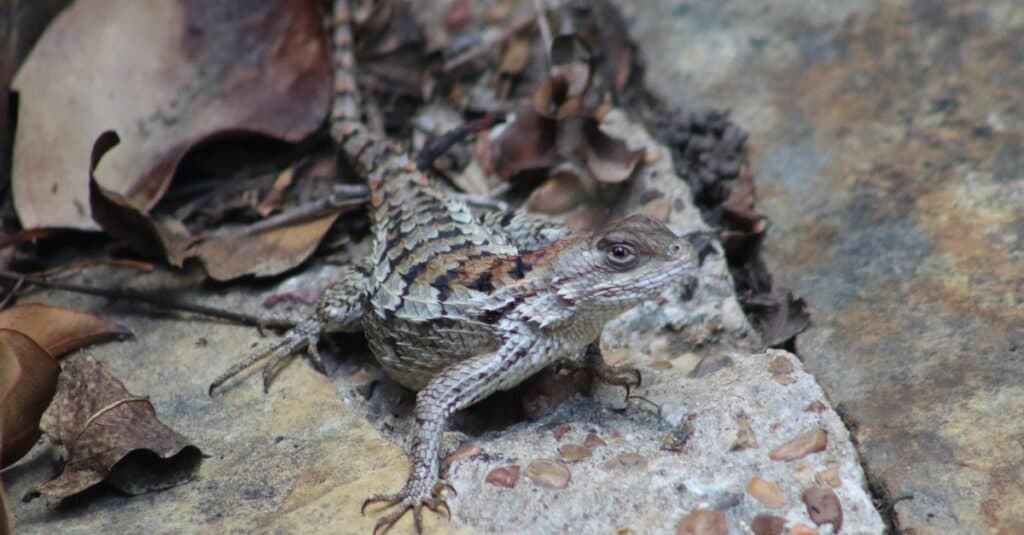
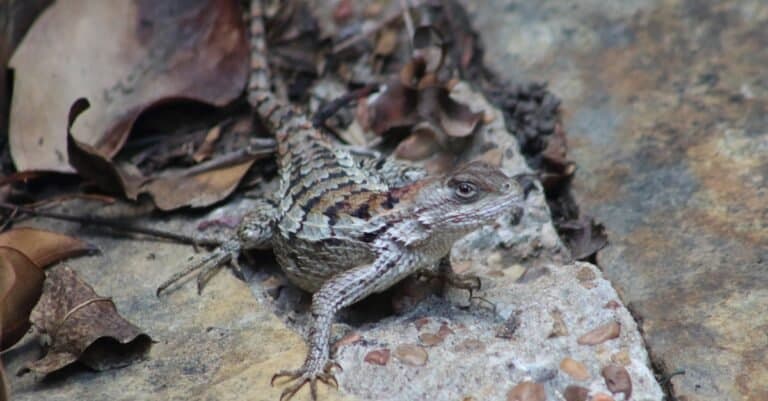
A close up of Texas spiny lizard on a stone walkway in a Texas backyard.

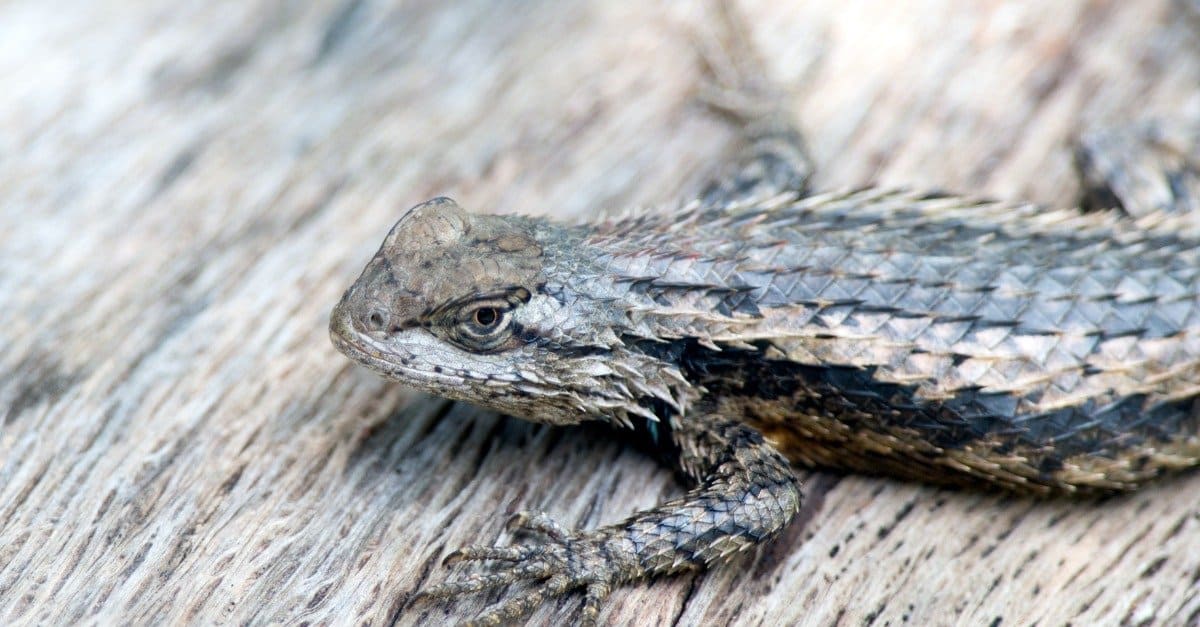
The Texas spiny lizard’s gray, black, and brown scales blend perfectly against mesquite trees and rocks.

The scientific name of the Texas spiny lizard is Sceloporus olivaceus. There are 10 species of Texas spiny lizard that have adapted to a variety of habitats:

  • Twin-spotted spiny lizard – lives near thickets, rock formations, or old buildings in a semi-arid desert environment.
  • Texas alligator lizard – this slow-moving lizard looks like an alligator.
  • Sagebrush lizard – you may only catch a glimpse of this nervous lizard before it darts away to hide.
  • Dunes Sagebrush lizard – this little lizard has the most particular habitat requirement – it only lives in a small area of dunes created by shinnery oak trees.
  • Greater short-horned lizard – these lizards love to eat ants and the occasional grasshopper.
  • Rose-bellied lizard – this tiny lizard grows up to two inches long and can be found on fenceposts or cacti in the desert.
  • Texas banded gecko – these small lizards are about four inches long with bands of yellow, brown, and black. They like to hide in rocks during the day.
  • Sceloporus consobrinus – this lizard can grow up to 7.5 inches long from snout to vent.
  • Reticulate collared lizard – this brown and tan lizard has a yellowish tint that forms a fishnet pattern on its body.
  • Lesser earless lizard – this lizard does have ears – they just don’t have external openings enabling it to burrow in the sand.

Evolution

All reptiles came from the same ancestors during the Carboniferous Period, 300 – 350 million years ago. Hylonomus, the oldest known fossil of a reptile, is believed to be 315 million years old. There are lizards all over the world that have adapted to habitats that are as varied as the thousands of species within this family.
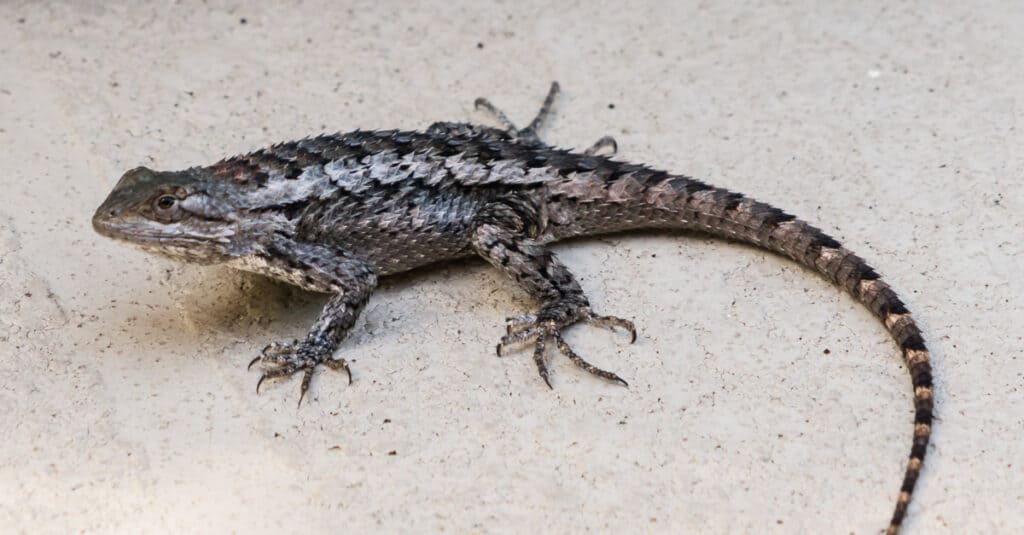
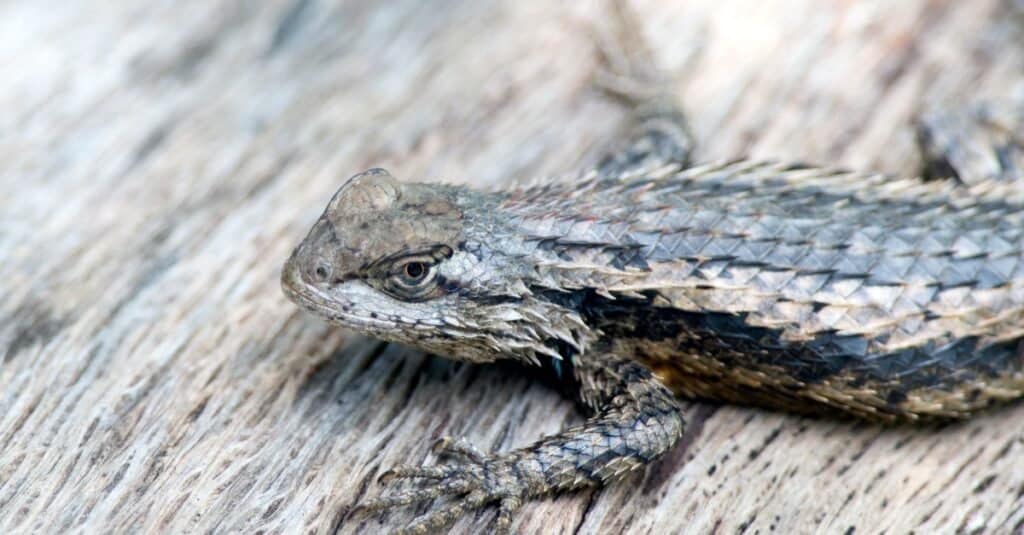
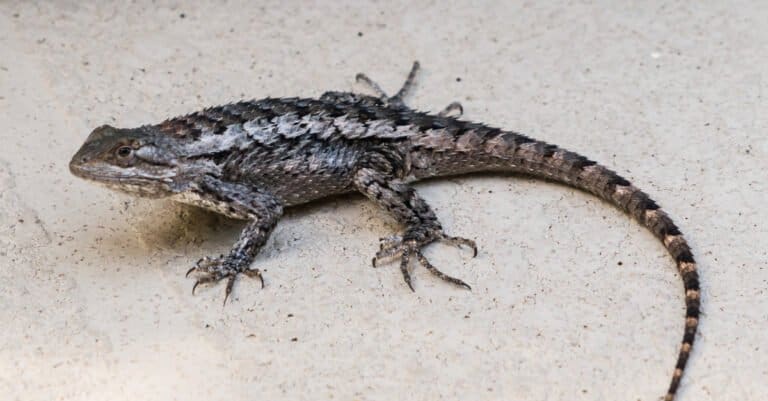
The Texas spiny lizard has large, clearly defined scales.

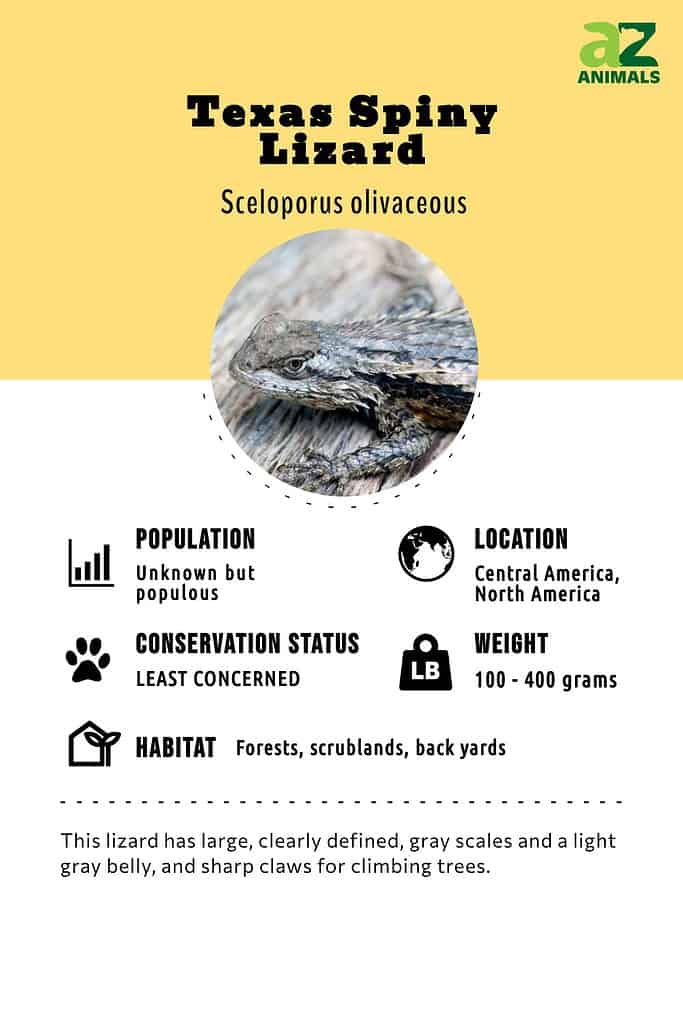
The Texas spiny lizard has large, clearly defined scales and long, sharp claws for climbing trees.

Appearance

The Texas spiny lizard has large, clearly defined scales. It is usually a dark gray color with a light grey belly. It has long toes ending in sharp claws that are ideal for its life among the trees. The spiny lizard enjoys climbing trees and digging into rotted wood, so those claws come in handy.

Male and female spiny lizards look alike, with a few differences in colors. Males have small blue patches on their bellies that females don’t have.

Identification of a Texas spiny lizard

Since there are many lizards in the Southeastern U.S. and Mexico, use these clues for the identification of a spiny lizard:

  • Length of 8 to 12 inches
  • Black, white, or red colors on the back
  • Gray underside
  • Blue patches on males

Behavior

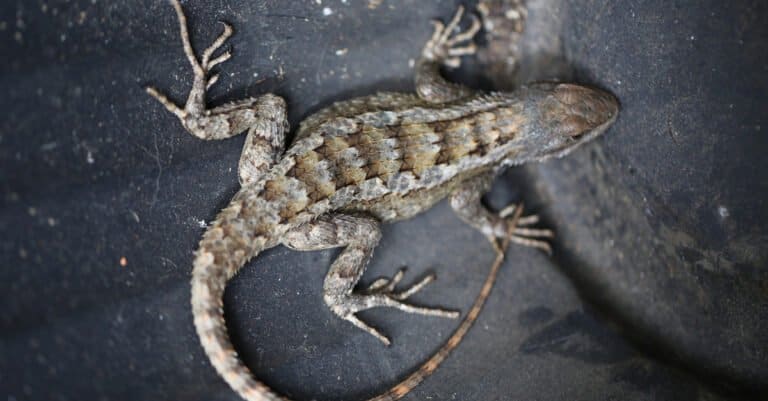
Texas Spiny Lizard is an agile climber.

Texas Spiny Lizard is an agile climber with perfect camouflage for hanging out on trees.

Texas spiny lizards are diurnal hunters who spend most of their time in trees or hiding in leaf litter. During hot daylight hours, they often come out to bask in the sunshine on tree branches or fence posts. That’s why some people call them “tree lizards” or “fence lizards.”

They are shy and elusive, and it can be hard to see them. If a large animal enters their territory, they are more likely to run and hide than fight.

Male spiny lizards are territorial and will fight with other males for territory and females. When they fight, they square off against each other and compete by doing push-ups. Both males will do push-ups until one gives up and runs away.

Spiny lizards often use their tails to defend themselves from predators. If the predator grabs the tail, the tail will detach from the lizard’s body. This is a defensive mechanism known as automatization. The tail distracts the predator, and this gives the lizard time to run to safety. Later, the lizard will grow a new tail.

Male vs female fighting does not occur among spiny lizards.
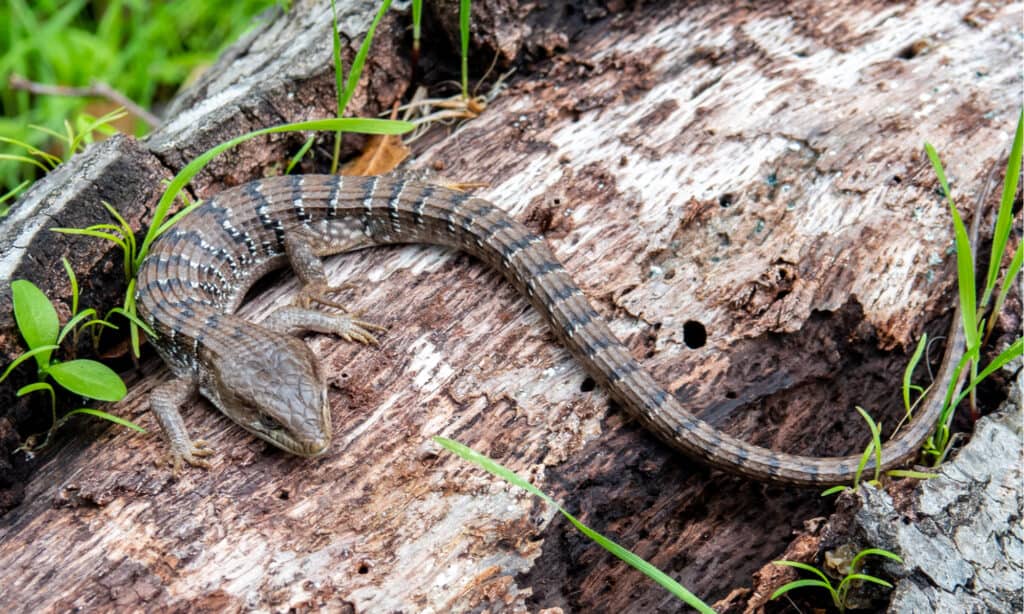
southern alligator lizard

Texas spiny lizards hibernate in leaf litter and wake up hungry for insects in the spring – making them perfect little helpers for gardeners.

Hibernation

Texas spiny lizards hibernate in the winter. They begin their hibernation during the cold winter months. They use leaf litter and other ground covers to hide until the weather gets warm again. Many gardeners take advantage of this by placing leaf litter in their gardens to encourage spiny lizard hibernation. In the spring, the hungry lizards get busy eating insects in the garden.

Behavior around humans

Texas spiny lizards are a favorite among many Texans and others who appreciate their cute behavior and ability to gobble up insect pests. They do not bite and are not poisonous.

Habitat
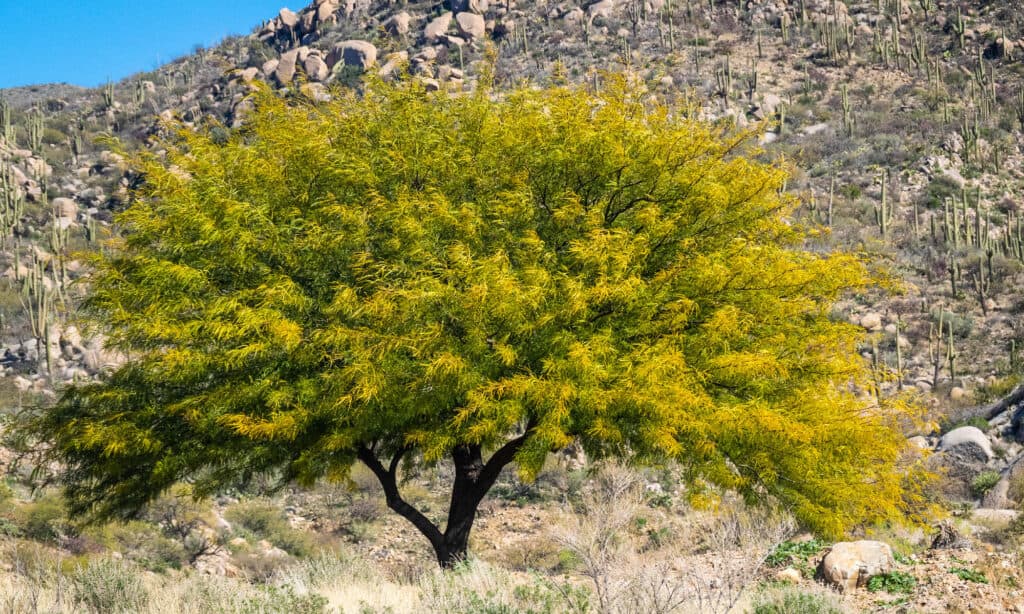
Mesquite Tree

Mesquite trees are the Texas spiny lizard’s favorite habitat.

These lizards spend most of their time in trees. They prefer mesquite trees but will take up residence in any type of scrub vegetation. They look for areas with plenty of leaf litter, which supplies cover and a fertile hunting ground for insects. Typically, they can be found in shrubland, forests, and other areas with dense tree growth.

Their colors allow them to camouflage themselves against tree bark and leaf litter. These lizards prefer tropical, temperate climates with plenty of sunshine.

Diet
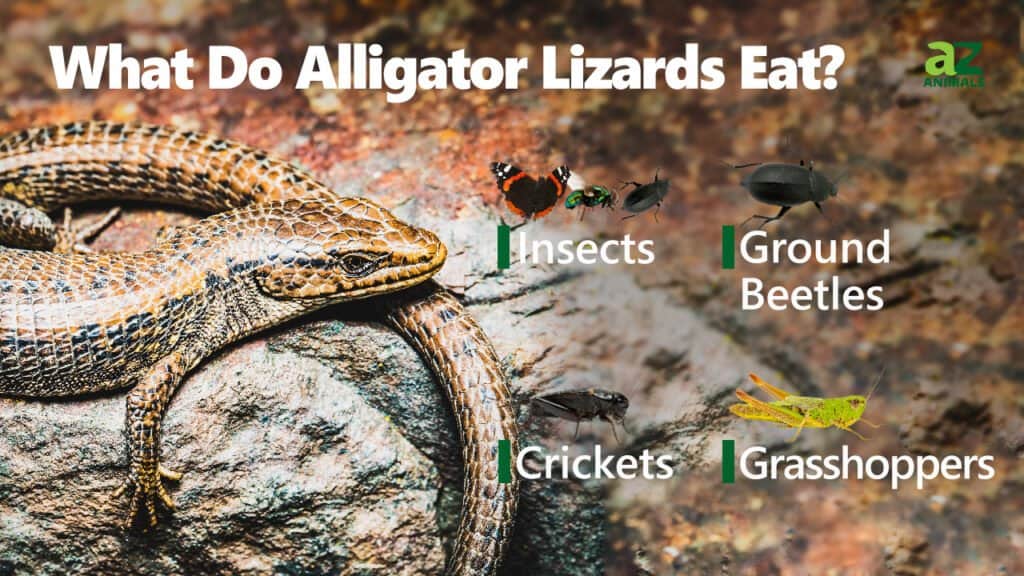
One species of the Texas spiny lizard is an alligator lizard – they all eat the same thing!

Texas Spiny Lizards are carnivores that largely feed on small insects. They eat beetles, wasps, grasshoppers, and crickets.

Predators and Threats
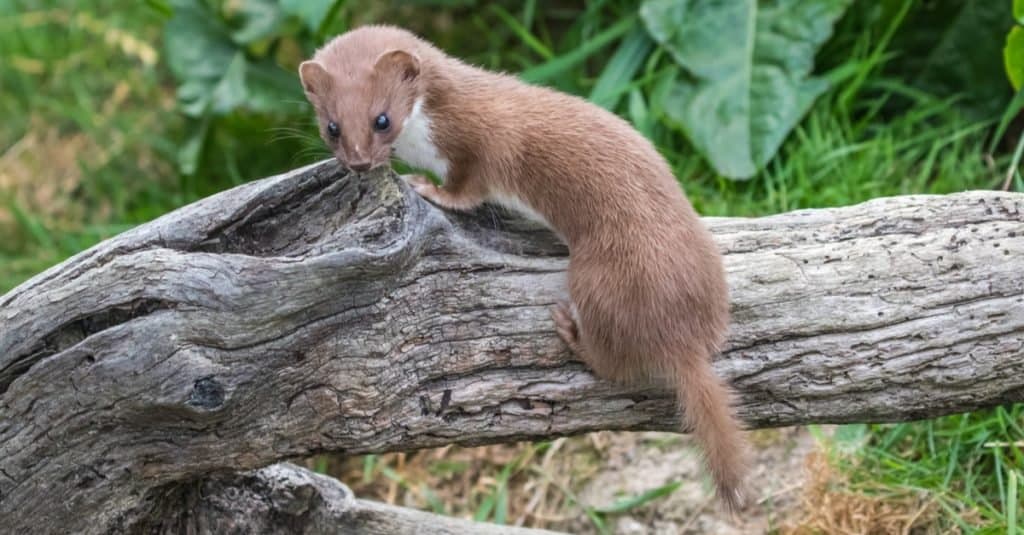
mink vs weasel

Weasels prey on lizards.

Like most lizards, these lizards can be prey for snakes, weasels, raptors, and larger lizards. The Texas spiny lizard does not face any current threats. It is a common lizard that has a healthy, stable population.

Reproduction and Life Cycle
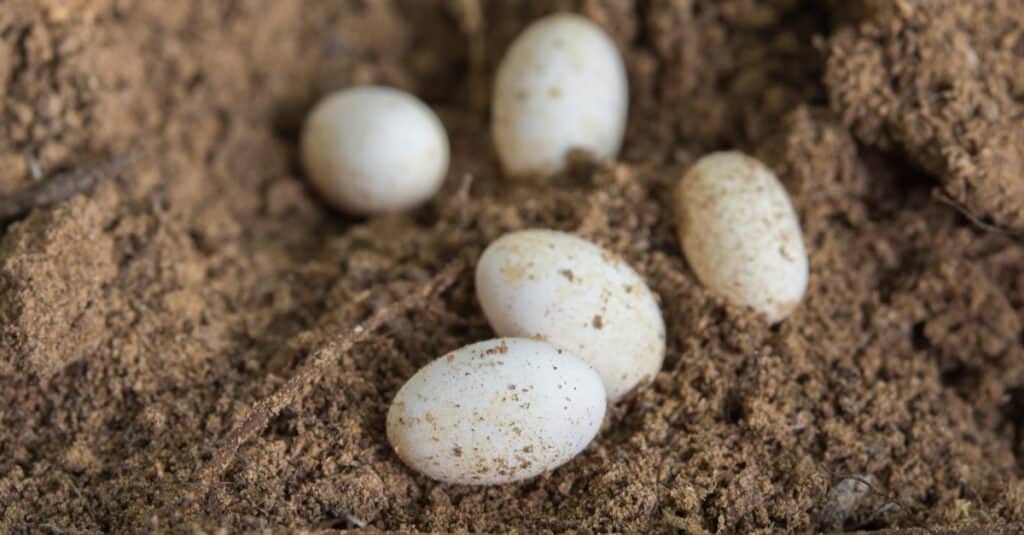
baby lizard eggs

Female spiny lizards lay four clutches of 4 – 20 eggs each year.

The spiny lizard’s breeding season happens during spring and summer. A female can have up to four clutches every year. Each clutch has from 4 to 20 eggs.

Gestation takes 90 to 100 days. When she’s ready to have the babies, she chooses a warm, dry spot in the ground. Once she chooses the right spot, she digs a small hole in the ground and backs up into it. She lays the eggs and covers them with soil.

The incubation period takes 43 to 83 days. The female does not return to the nest after depositing the eggs.

Young spiny lizard hatchlings are precocial, which means they are fully developed and able to live independently. They are 2 to 3 inches long at birth.

They have a lifespan of 2 to 5 years in the wild. Their lifespan in captivity is about 7 years.
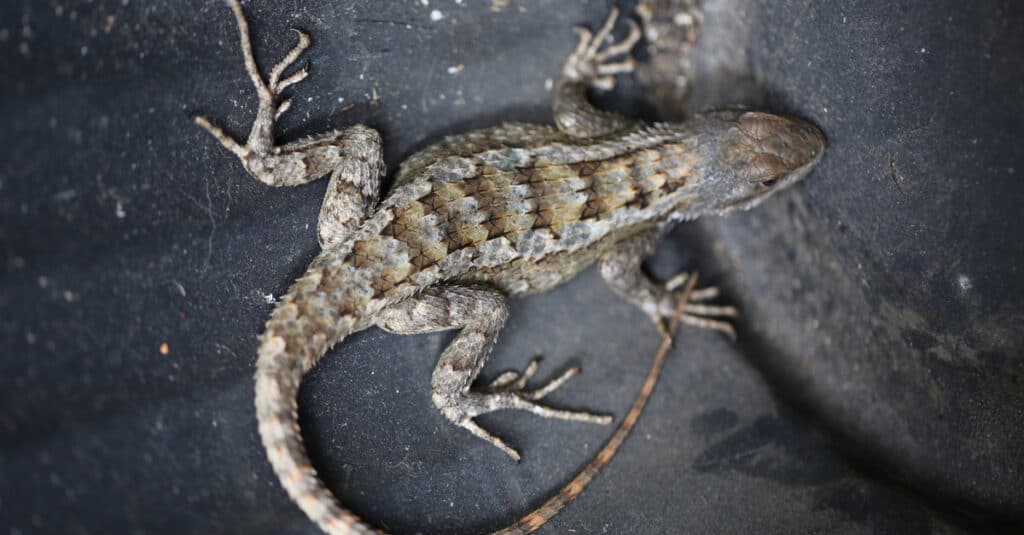
The Texas Spiny Lizard has long toes ending in sharp claws that are ideal for its life among the trees.

The Texas spiny lizard enjoys a conservation status of “least concern.”

Conservation Status

These lizards are listed as “least concern” by the International Union for the Conservation of Nature (IUCN). The exact population numbers of the spiny lizard are unknown, but the population is considered stable and healthy.

Enjoy These Sun-Loving Visitors!

These lizards are common visitors to trees, forests, and gardens. If you’re lucky, you may be able to watch a push-up competition right in your backyard.

View all 608 animals that start with T

Sources

  1. University of Texas / Accessed February 9, 2022
  2. Landmark Wildlife Management / Accessed February 9, 2022
  3. Learn About Nature / Accessed February 9, 2022
Lisha Pace

About the Author

Lisha Pace

After a career of working to provide opportunities for local communities to experience and create art, I am enjoying having time to write about two of my favorite things - nature and animals. Half of my life is spent outdoors, usually with my husband and sweet little fourteen year old dog. We love to take walks by the lake and take photos of the animals we meet including: otters, ospreys, Canadian geese, ducks and nesting bald eagles. I also enjoy reading, discovering books to add to my library, collecting and playing vinyl, and listening to my son's music.

Thank you for reading! Have some feedback for us?


Texas Spiny Lizard FAQs (Frequently Asked Questions)

No, they are not poisonous.