
B
Species Profile

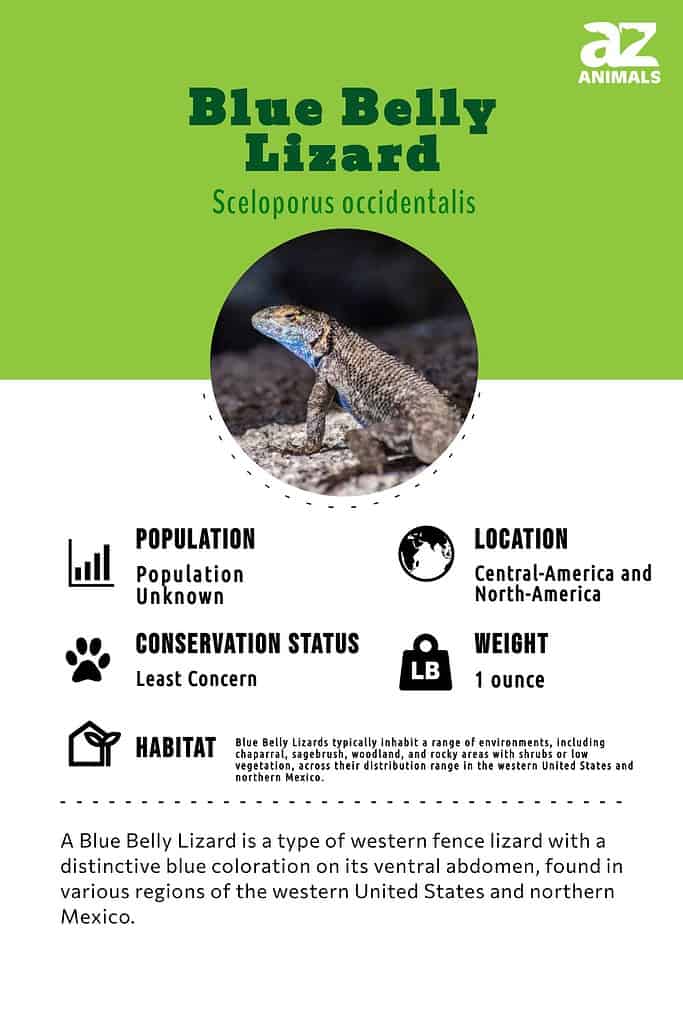
Blue Belly Lizard

Sceloporus occidentalis

Blue-belly push-ups on every fence
iStock.com/Sundry Photography

Blue Belly Lizard Distribution

Click a location to explore more animals from that region

Loading map...
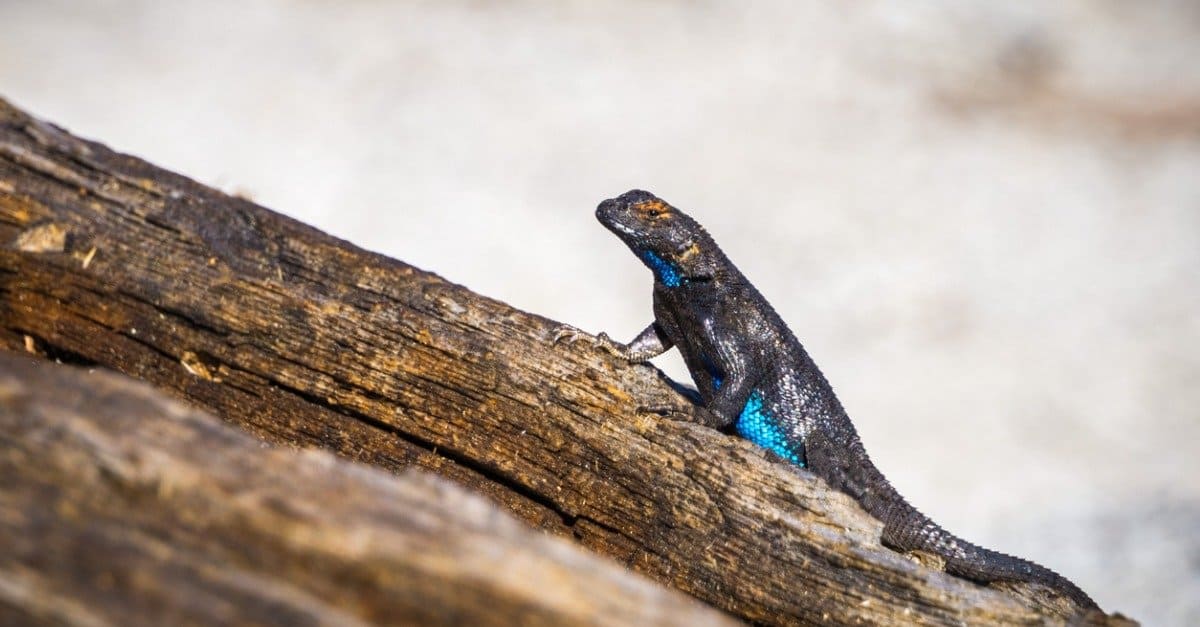
blue belly lizard on tree trunk

At a Glance

Wild Species
Also Known As Blue-belly, Blue-bellied lizard, Fence lizard, Pacific fence lizard, California fence lizard
Activity Diurnal+
Lifespan 4 years
Weight 0.02 lbs
Status Least Concern
Did You Know?

Adults are small: ~13-21 cm total length (snout-vent 5.7-9.1 cm) (Stebbins, 2003).

Scientific Classification

A small-to-medium spiny lizard common in the western United States. Males typically show vivid blue patches on the belly and throat, leading to the widespread nickname “blue-belly.”

Kingdom
Animalia
Phylum
Chordata
Class
Reptilia
Order
Squamata
Family
Phrynosomatidae
Genus
Sceloporus
Species
occidentalis

Distinguishing Features

  • Spiny/keeled dorsal scales giving a rough texture
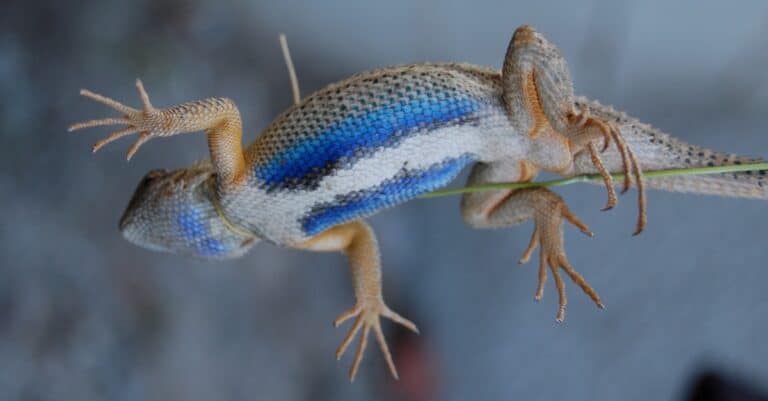
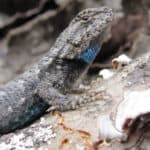
  • Males with conspicuous blue belly patches and often a blue throat patch
  • Often seen doing quick push-up displays on fences, rocks, or tree trunks
  • Cryptic gray-brown back patterning suited to bark/rock backgrounds

Physical Measurements

Males and females differ in size

Length
6 in (4 in – 8 in)
7 in (6 in – 8 in)
Weight
0 lbs (0 lbs – 0 lbs)
Tail Length
4 in (2 in – 5 in)
4 in (3 in – 5 in)
Top Speed
4 mph
About 2.0 m/s (varies)

Appearance

Primary Colors
Secondary Colors
Skin Type Dry skin made of keratin with overlapping, strongly keeled (spiny) dorsal scales typical of Sceloporus; overall rough, spiny feel. Tail long and scaled; autotomy (tail break) can leave regenerated, blunter tails.
Distinctive Features
  • Adult size commonly reported as ~13-21 cm total length (snout-vent length typically ~4.5-10 cm; sources commonly used in North American herpetology field references include Stebbins & McGinnis, 2018).
  • Spiny/keeled 'fence-lizard' scalation gives a rough, bristly appearance; individuals often look serrated along the back when viewed in side light.
  • Frequent everyday-perch behavior: commonly seen basking on fences, logs, rocks, and walls in suburban yards and parks across western North America; typically diurnal and sits elevated to scan for insects and rivals.
  • Territorial/advertisement display often includes conspicuous 'push-up' body bobbing while perched or on open ground; the display makes the blue ventral patches especially noticeable when the body is lifted and angled.
  • Color signal placement is characteristic: blue pigment concentrated on the ventral sides (belly) and often throat (especially in males), rather than a single continuous 'blue belly' across the entire underside.

Sexual Dimorphism

Sexes differ mainly in ventral coloration and signaling structures: males usually have more extensive, saturated blue ventral patches and more conspicuous dark markings associated with them; females are typically paler below with reduced or absent blue. Males also tend to show more pronounced display-related traits (e.g., head/jaw robustness, postanal scales).

  • Vivid paired blue patches on the sides of the belly; blue throat patch commonly present and more saturated than in females (nickname 'blue-belly' reflects this male trait).
  • Dark (often black) pigment adjacent to or bordering the blue ventral patches, increasing contrast during push-up displays.
  • Typically more robust head/jaw region and more conspicuous postanal scales compared with females (useful in close inspection/handling; not always obvious at distance).
  • Belly typically cream/white with little to no blue; if present, blue is usually faint and smaller in area than in males.
  • Throat usually pale with reduced blue; overall ventral contrast is lower, making underside less striking during displays.
  • Generally less pronounced postanal scaling and a less robust head profile than males.

Did You Know?

Adults are small: ~13-21 cm total length (snout-vent 5.7-9.1 cm) (Stebbins, 2003).

Males' "blue-belly" patches are real signaling colors-blue on the belly plus a blue throat patch used in displays (Stebbins, 2003).

They're famous "yard/park lizards": quick to bask on sunny fences, logs, boulders, and walls-often at human eye level.

They eat a wide menu of small prey (insects, spiders, and other arthropods), helping suppress pests in gardens.

Western Fence Lizards are key players in Lyme ecology: ticks that feed on them typically lose Lyme-causing Borrelia infection due to a borreliacidal factor in the lizard's blood (Lane & Quistad, 1998; Kuo et al., 2000).

Breeding is flexible: females can lay multiple clutches in a season, commonly totaling several eggs per clutch (often reported ~3-17 eggs, varying by locality and female size) (Stebbins, 2003; regional life-history studies).

Unique Adaptations

  • Spiny, keeled dorsal scales: the rough "spiny" texture (typical of Sceloporus) can deter predators and reduces abrasion during rock-scrambling.
  • High-contrast ventral signaling: males' bright blue ventral patches and throat patch function in social communication-short-range "badge" signals during push-ups and close encounters.
  • Borreliacidal blood factor: complements/serum factors in S. occidentalis can clear Borrelia burgdorferi from feeding Ixodes ticks, influencing regional Lyme disease risk (Lane & Quistad, 1998; Kuo et al., 2000).
  • Rapid sprint-and-freeze escape: they alternate explosive bursts with sudden stillness, exploiting background matching on bark, dirt, and rock surfaces.
  • Thermal flexibility: broad daily activity windows achieved by precise basking/shade choices-one reason they thrive in disturbed habitats like parks and suburban edges.

Interesting Behaviors

  • Perch-and-bask routine: they repeatedly shuttle between sun and shade to keep body temperature in a performance zone for sprinting and digestion (classic heliothermic thermoregulation in Sceloporus).
  • Territorial "push-up" displays: rapid forelimb push-ups (often with head-bobs) advertise ownership of a basking site and signal to rivals; males may also angle their bodies to maximize the visibility of blue patches.
  • Sit-and-wait hunting: they pause motionless, then dash to snap up moving prey-especially ants, beetles, flies, and spiders.
  • Instant refuge use: when startled they sprint to rock cracks, bark crevices, woodpiles, or under yard debris; many populations are strongly tied to vertical escape cover.
  • Seasonal brumation: in colder parts of the range they disappear for winter, re-emerging in spring for mating and territory establishment (timing varies with elevation/latitude).
  • Tail autotomy (escape tactic): if grabbed, the tail can break off and wriggle to distract predators while the lizard escapes; the tail later regenerates (often darker/shorter than original).

Cultural Significance

The Western Fence Lizard (blue-belly, Sceloporus occidentalis) is a common reptile in western U.S., especially California, seen in yards, parks, and trails. Males show bright blue belly/throat. They can lower Lyme-infected Ixodes pacificus ticks in some areas.

Myths & Legends

Name-and-lore tradition: "blue-belly" is a long-standing regional nickname (particularly in California) rooted in the male's bright blue ventral patches-often recalled in local outdoor stories as a hallmark of warm weather and backyard summers.

Western Fence Lizard (Blue-belly), Sceloporus occidentalis, is often the "first lizard" in western field guides because it sits on fences and trails, becoming a familiar figure in western outdoor culture.

Everyday folklore says the Western Fence Lizard (Blue-belly) (Sceloporus occidentalis) does 'push-ups'—stories by hikers and kids say it is 'exercising' or 'showing off' as a territorial display.

Conservation Status

LC Least Concern

Widespread and abundant in the wild.

Population Stable

Life Cycle

Birth 8 hatchlings
Lifespan 4 years

Lifespan

In the Wild
2–7 years
In Captivity
3–10 years

Reproduction

Mating System Polygynandry
Social Structure Solitary
Breeding Pattern Seasonal
Fertilization Internal Fertilization
Birth Type Internal_fertilization

Western Fence Lizard (Sceloporus occidentalis) males hold territories and mate with multiple females; females may mate with several males, so there are no long-term pair bonds. Fertilization is internal and brief. Females lay about 3–17 eggs in late spring–summer. No parental care.

Behavior & Ecology

Social Basking aggregation Group: 1
Activity Diurnal, Matutinal, Vespertine
Diet Insectivore Ants
Seasonal Hibernates

Temperament

Territorial (especially adult males in breeding season)
Alert/wary; rapid flight to cover when approached
Dominance-based spacing at basking sites (tolerance varies with density and thermal constraints)
Seasonally variable: more conspicuous and aggressive during breeding; less interactive during cooler periods

Communication

No true vocal communication is known for this species; any sounds (e.g., faint hissing) are incidental and typically associated with handling/defense rather than signaling.
Visual display signaling: stereotyped push-ups, head-bobs, body postures/orientation, and lateral compression used in territorial advertisement, threat, and courtship; blue ventral/throat patches in males function as conspicuous social signals during displays Well documented across Sceloporus; summarized in Vitt & Caldwell, 2014; Stebbins, 2003
Chase/approach-retreat interactions: short pursuit bouts to displace rivals from basking perches; escalation can include lunges and occasional biting in high-density contexts Reported in behavioral descriptions of S. occidentalis and congeners in regional accounts
Chemical cues: femoral pore secretions used for conspecific assessment/territory marking in many phrynosomatid lizards; Sceloporus species possess femoral pores and use substrate marking/chemical investigation as part of social assessment Genus-level evidence; see Vitt & Caldwell, 2014
Tactile contact: occurs during mating (mounting/copulation) and rare aggressive grappling; otherwise limited.

Habitat

Biomes:
Mediterranean Temperate Forest Temperate Grassland Temperate Rainforest Desert Cold
Terrain:
Mountainous Hilly Plateau Plains Valley Coastal Island Rocky Sandy +3
Elevation: Up to 10990 ft 10 in

Ecological Role

Abundant mid-level predator of terrestrial arthropods and an important prey base for higher trophic levels; also a key host affecting tick-pathogen dynamics in western North America.

Suppresses local arthropod populations (insect predation) Provides prey/energy transfer to birds, snakes, and small mammals Can reduce the prevalence of the Lyme disease bacterium in some hard ticks that feed on it because the lizard's blood kills the bacterium, lowering how often ticks remain infected after feeding and potentially reducing later transmission risk in western tick-Lyme ecology.

Diet Details

Main Prey:

Human Interaction

Domestication Status

Wild

Western Fence Lizard (Blue-belly) (Sceloporus occidentalis) has no history of domestication or breeds. People mainly see or study it in parks, yards, and classrooms. It is used in research on ticks and Lyme disease. Sometimes handled briefly; it flees, does push‑ups, or bites. Habitat loss, cats, pesticides, and roads affect it.

Danger Level

Low
  • Minor bites or scratches if handled; generally non-aggressive and prefers to flee.
  • Potential for Salmonella exposure as with many reptiles-risk increases with handling and poor hygiene; handwashing recommended.
  • If collected/handled outdoors, may carry ectoparasites (mites/ticks), though the lizard itself is not considered a direct venomous or high-injury hazard.

As a Pet

Not Suitable as Pet

Legality: Laws differ by place. For Western Fence Lizard, U.S. states let people own native reptiles but collecting from the wild is often restricted or needs permits. In California, capture or keeping is regulated. Check local laws; don’t take wild lizards.

Care Level: Experienced

Purchase Cost: Up to $80
Lifetime Cost: $500 - $1,500

Economic Value

Uses:
Ecosystem services (insect predation) Public education/outreach Biomedical/disease-ecology research value Nature-based recreation (wildlife viewing)
Products:
  • No conventional commercial products. Primary value is indirect: consumption of pest insects; use in research on thermoregulation/behavior and tick-pathogen ecology (notably studies of Borrelia burgdorferi clearance in ticks feeding on S. occidentalis).

Relationships

Related Species 10

Eastern Fence Lizard
Eastern Fence Lizard Sceloporus undulatus Shared Genus
Sagebrush Lizard Sceloporus graciosus Shared Genus
Desert Spiny Lizard Sceloporus magister Shared Genus
Yarrow's Spiny Lizard Sceloporus jarrovii Shared Genus
Texas Spiny Lizard
Texas Spiny Lizard Sceloporus olivaceus Shared Genus
Striped Plateau Lizard Sceloporus virgatus Shared Genus
Common Side-blotched Lizard Uta stansburiana Shared Family
Zebra-tailed Lizard Callisaurus draconoides Shared Family
Greater Earless Lizard Holbrookia maculata Shared Family
Desert Horned Lizard Phrynosoma platyrhinos Shared Family

Ecological Equivalents 5

Animals that fill a similar ecological role in their ecosystem

Sagebrush Lizard Sceloporus graciosus Very similar diurnal lizard that sits and waits for insects; uses low perches (rocks, logs, fence posts) to bask and display. Overlaps in western U.S. shrub-steppe and open woodland. Sceloporus occidentalis adults are ~5.7–9.1 cm SVL (~13–21 cm total).
Eastern Fence Lizard
Eastern Fence Lizard Sceloporus undulatus Close ecological analogue in the eastern U.S. Shows diurnal territoriality, perch-and-pounce foraging, and conspicuous push-up display behavior. Often compared directly in behavioral and ecophysiology literature because of similar habitat use (open woods/edges and human structures) and a similar insectivorous diet.
Common Side-blotched Lizard Uta stansburiana Shares dry, open microhabitats and a prey base of small arthropods, often co-occurring in western U.S. communities. Although usually smaller, it occupies the same daytime insectivorous niche and faces many of the same predators.
Western Skink Plestiodon skiltonianus Frequently overlaps in riparian edges, woodland margins, and rocky areas, and is primarily arthropod-feeding. Ecologically similar as a small-to-medium terrestrial lizard that consumes insects and spiders, though it is more secretive and less reliant on elevated perches and display behaviors than Sceloporus occidentalis.
Western Whiptail Aspidoscelis tigris Often found together in western arid and semi-arid landscapes. Both are diurnal insectivores that take similar arthropod prey, but whiptails chase prey while fence lizards sit on perches and wait.

“The blue belly lizard has small microscopic pores on the legs that release pheromones into the air and attract mates.”

The blue belly lizard, also known as the western fence lizard, is among the most common reptiles in the western United States.

They are often seen bathing in the sunlight around outdoor trails or buildings and homes. The sparkling blue scales of the male lizard are a distinctive marker of this species.

These scales serve an important role in the reproductive process. This article will cover some interesting facts about the identification, habitat, and diet of the blue belly lizard in the wild, as well as how to care for them as pets.

Scientific Name
What Do Blue Belly Lizards Eat - On a Fence Post

The scientific name of the blue belly lizard is Sceloporus occidentalis.

The scientific name of the blue belly lizard is Sceloporus occidentalis. The genus name Sceloporus is derived from two Greek words: Skelos, meaning leg, and porous, meaning pore or hole.

This is in reference to the large pores in the leg that release the pheromones. The species name occidentalis is simply the Latin word for the west.

The genus to which it belongs also includes other fence lizards and spiny lizards, all of which are common to the United States.

Appearance

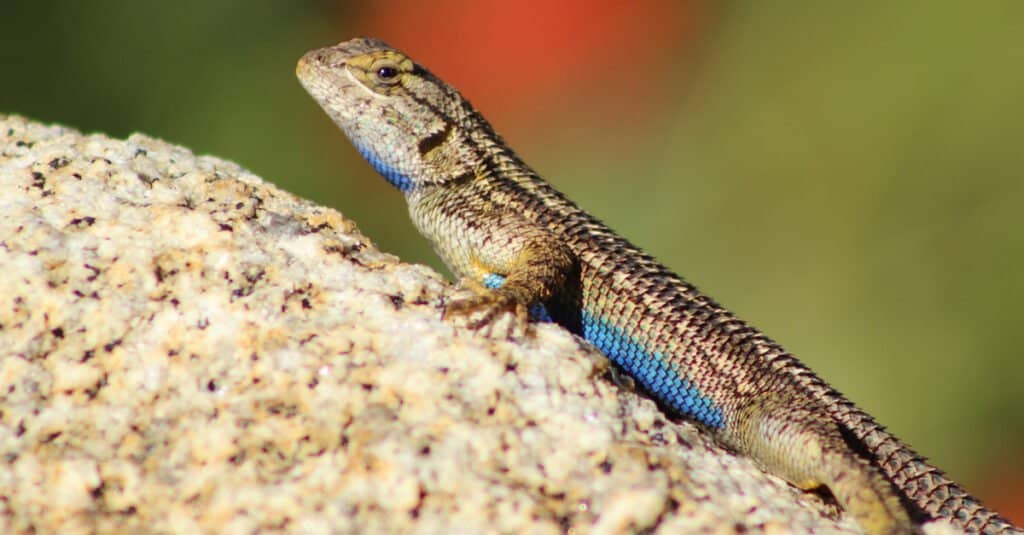
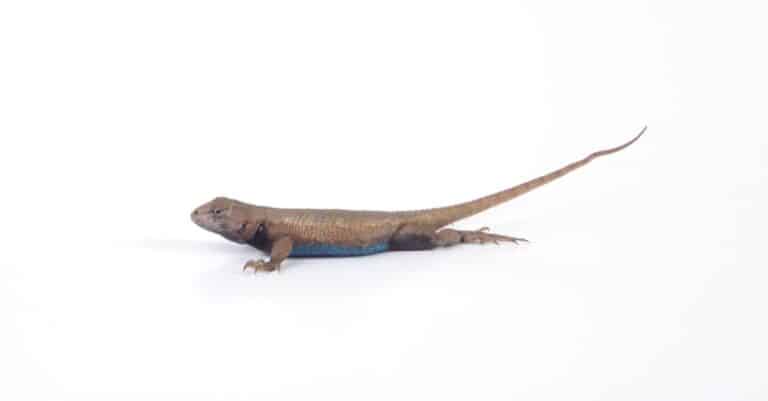
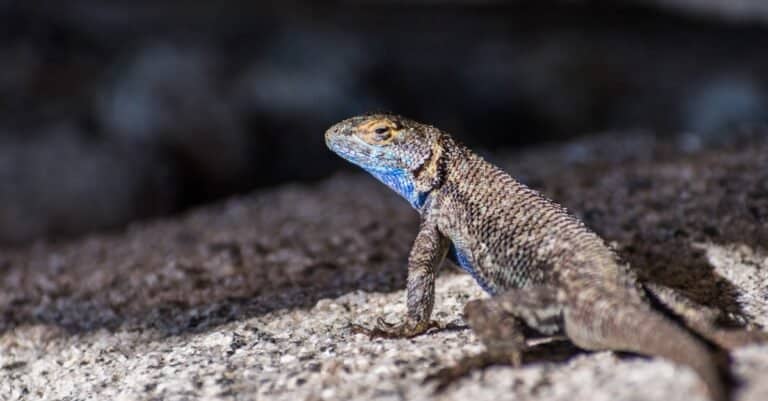
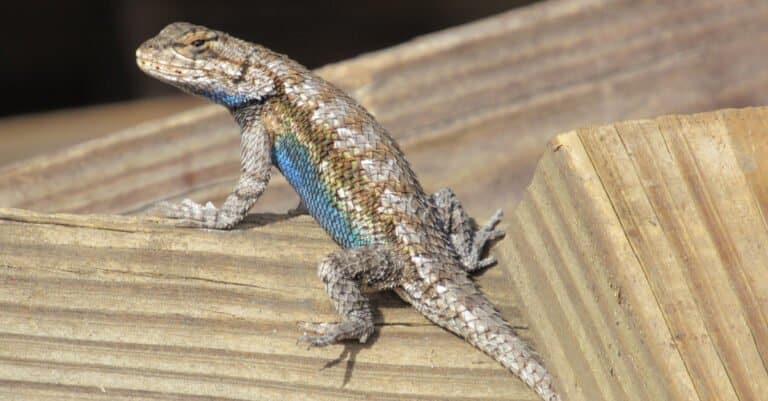
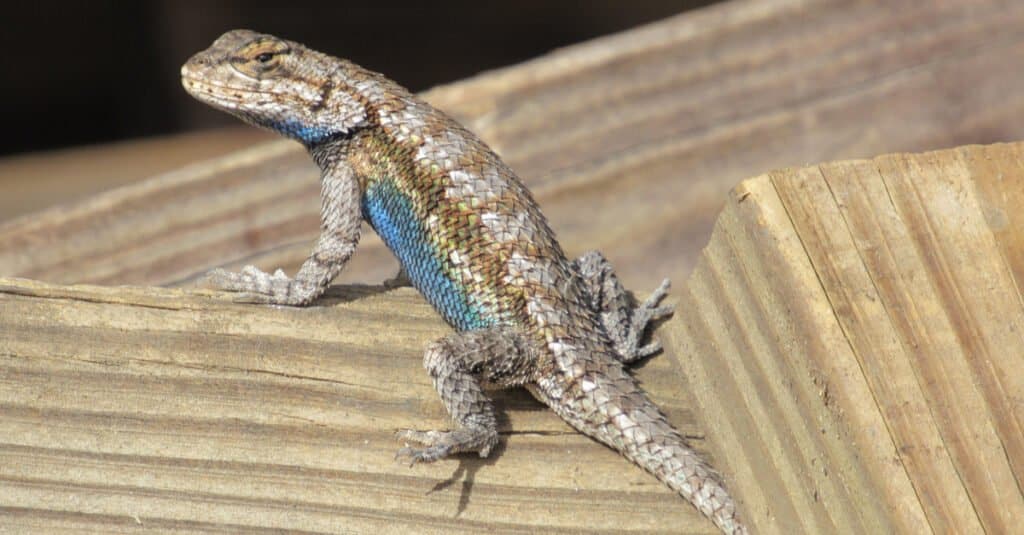
The blue belly lizard can be identified by the tan or gray-colored scales with wavy stripes on the back and bright blue scales around the sides and bottom of the abdomen. Only the adult male has this bright blue coloration. The female and juveniles tend to have just duller gray scales.

One of the major identification markers for the entire genus is the presence of sharp, spiny scales; hence why the genus is called the spiny lizards. Most members of this species measure somewhere between 4.3 inches and 8.3 inches long from the tip of the head to the end of the tail.

They have long and sharp claws that enable them to easily climb trees. While they do look quite similar to the eastern fence lizard, their range doesn’t overlap at all, which should make identification easier.
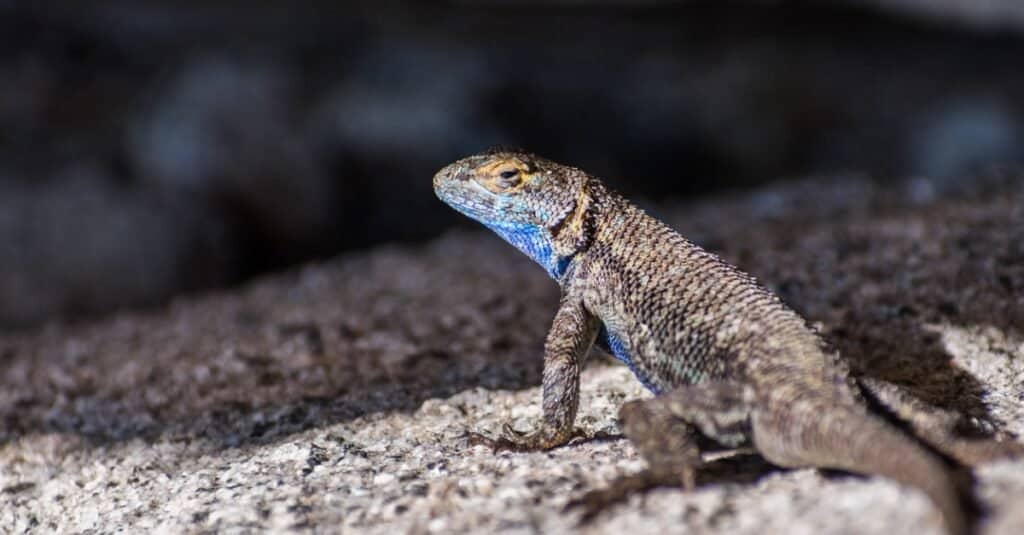
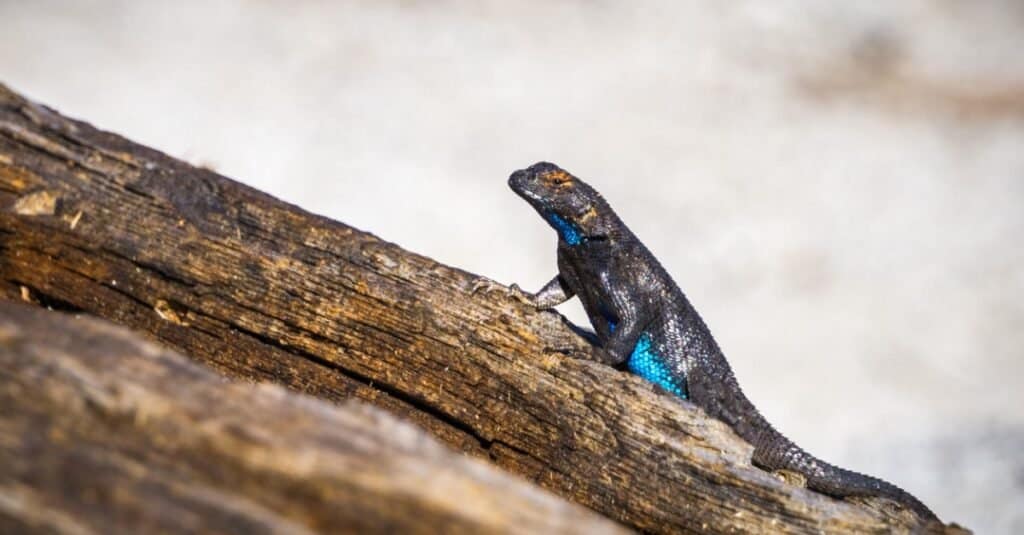
The bright blue belly is the most distinctive feature of the blue-belly lizard.

Behavior

Like all other reptiles, the daily behavior of the blue belly lizard is oriented around the ambient outdoor temperature of the surrounding environment.

Because they can’t produce enough of their own body heat to survive, the blue-belly lizards need to spend much of their time absorbing sunlight.

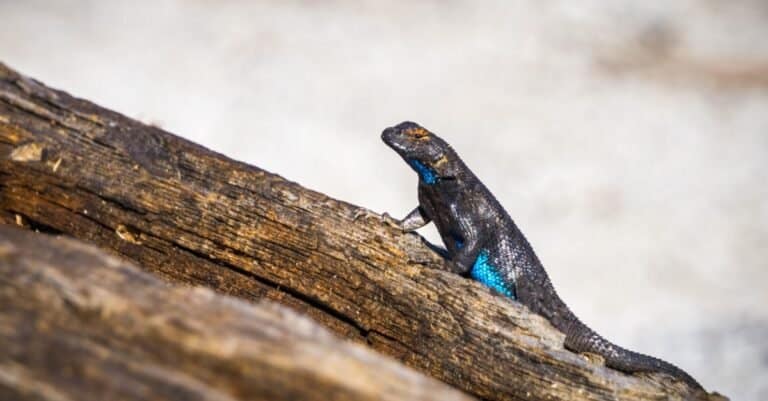
They can be seen in the daylight hours sunning on rocks, stony paths, logs, and fence posts; they tend to prefer high places, but any location will work for them. Their scales frequently change colors from light to dark, but this is probably done for the purpose of regulating temperature (the amount of heat they absorb) rather than camouflage.

The blue-belly lizard tends to remain by itself for most of the year. The only time they come together is briefly in the mating season when the males maintain and defend their own territory. When winter arrives, they take shelter in crevices or holes and then enter a state of hibernation in which their activity and metabolism are massively reduced.

The length of time they hibernate depends on the surrounding temperature of their environment.

Evolution and Origins

Throughout their extensive evolutionary timeline, lizards developed specialized abilities to enable them to glide, swim, survive in arid environments, inhabit high forest canopies, traverse smooth surfaces, and even run across water.

These reptiles originated from a creature resembling modern-day lizards, known as the Lepidosauria, which was later succeeded by the emergence of the Sphenodontia, and while male tuataras do not possess reproductive organs, they evolved numerous characteristics that persisted and thrived in the Squamata order.

Additionally, a subspecies to the blue-belly lizard, the western fence lizard, also known as the blue-belly due to the blue coloration on its ventral abdomen, is a frequently found lizard species in the regions of Arizona, California, Idaho, Nevada, Oregon, Utah, Washington, Northern Mexico, and neighboring areas.

Different Types

Here are the different types of blue-bellied lizards:

  • Great Basin fence lizard
  • Northwestern fence lizard
  • Sierra fence lizard
  • Coast range fence lizard
  • San Joaquin fence lizard
  • Island fence lizard

Habitat

Blue belly lizard on rock

The blue belly lizard is found all over the westernmost part of the United States.

The blue belly lizard is found all over the westernmost part of the United States, including the states of Utah, Idaho, Nevada, Washington, Oregon, and Arizona. However, the greatest concentration occurs in the state of California. It is also found in small parts of northern Mexico.

This species is comfortable in all kinds of habitats, including grasslands, forests, farmlands, and shrublands. It tends to avoid the harshest deserts because it needs a nearby source of water to survive.

Six subspecies are generally recognized: the great basin fence lizard, the northwestern fence lizard, the Sierra fence lizard, the coast range fence lizard, the San Joaquin fence lizard, and the island fence lizard. This last subspecies is found only on the Channel Islands off the coast of California.

The other subspecies generally stick to the geographical range indicated by their names.

Predators and Threats

Apart from its natural predators, perhaps the greatest threat to the blue belly lizard in the wild is habitat loss. This species has been forced to adapt to the encroachment of humans throughout most of its range. Despite this, the species still remains very common.

What eats the blue-belly lizard?

This species is preyed upon by coyotes, snakes, bobcats, hawks, and numerous other birds and mammals. While the open spots in which they soak up sunlight do potentially expose the lizard to predators, they employ a number of defensive measures to get away.

If threatened, the lizard can completely detach the tail from its body. The tail will eventually grow again about three to five weeks later, but it may have a different length and color pattern than the old one. The lizard also has remarkably fast reflexes to evade potential predators.

It will often run into bushes or scurry up trees.

What does the blue-belly lizard eat?

This species preys upon numerous types of spiders, caterpillars, beetles, mosquitoes, and grasshoppers. It also sometimes consumes other small lizards. For a complete list of the foods blue belly lizards eat, check out our “What Do Blue Belly Lizards Eat?” page.

Reproduction and Life Cycle

The annual reproductive season of the blue belly lizard generally takes place between April and July. Lizards can locate each other in the wild by sensing pheromones.

The females also seem to prefer males with the brightest colorations and the longest tails. The males have the ability to tell other potential rivals to stay away from their mate by doing a kind pushup-like motion on logs or rocks to show off their brightly colored underside.

Once mating is completed, the female’s abdomen will visibly swell with her fully fertilized eggs. She will dig a hole in the ground and lay up to three clutches of 10 to 17 eggs at a time. After a gestation period lasting three to six weeks, the eggs will fully hatch and dispense their young.

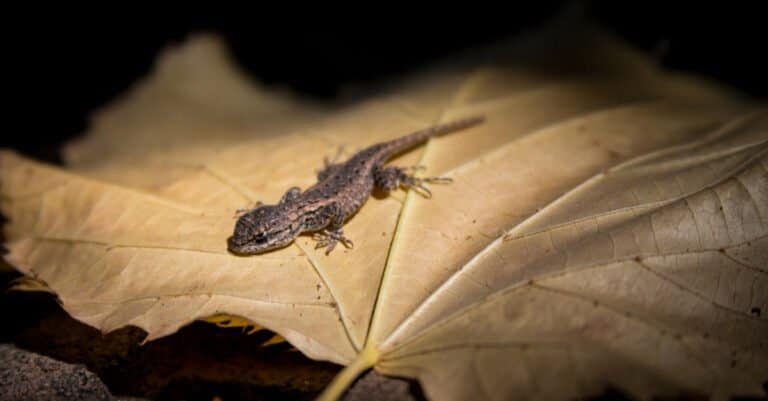
The juveniles are quite small at first, measuring only about an inch long. They receive no supervision or care from their parent and must fend for themselves from the start. The juveniles become sexually mature in the spring of their second year. They have a typical lifespan of five to seven years in the wild.

Population

The blue-belly lizard is considered to be a species of least concern by the IUCN Red List. Population numbers appear to be stable, but few scientists have ever performed a good population estimate to determine how many currently live in the wild.

View all 453 animals that start with B

Sources

  1. Friends of Edgewood / Accessed December 21, 2021
  2. Cuteness https://www.cuteness.com/article/care-blue-belly-lizard Jump to top / Accessed December 21, 2021
Rebecca Bales

About the Author

Rebecca Bales

Rebecca is an experienced Professional Freelancer with nearly a decade of expertise in writing SEO Content, Digital Illustrations, and Graphic Design. When not engrossed in her creative endeavors, Rebecca dedicates her time to cycling and filming her nature adventures. When not focused on her passion for creating and crafting optimized materials, she harbors a deep fascination and love for cats, jumping spiders, and pet rats.
Connect:

Thank you for reading! Have some feedback for us?


Blue Belly Lizard FAQs (Frequently Asked Questions)

This species is carnivorous. It mostly feeds on spiders and insects in the wild.