
Quick Take
- 477 resident and migratory bird species have been recorded in Kansas.
- The Quivira National Wildlife Refuge is crucial habitat for endangered and threatened species.
- The hardwood forests of Marais des Cygnes National Wildlife Refuge are unique in Kansas and attract birds that are uncommon elsewhere in the state.
- Kansas features approximately 3,000 miles of public birding trails throughout the state.
With at least 477 bird species recorded in the state, Kansas is a birder’s paradise. As part of the Central Flyway, the state welcomes a wide variety of migratory birds during the spring and fall. Kansas is also home to the largest inland wetland and the largest tallgrass prairie ecosystem in the U.S., providing both resident and migrant birds with essential habitat. Its location in the middle of the country allows Kansas birders to catch a glimpse of both eastern and western bird species. Whether you’re a backyard birder or an avid birding adventurer, these top bird watching spots are must-visit destinations.
Cheyenne Bottoms Wildlife Area
The 41,000-acre Cheyenne Bottoms wetland complex in central Kansas is one of the most important stopover sites for waterfowl and shorebirds in the U.S. The Nature Conservancy owns and oversees the 8,018-acre Cheyenne Bottoms Preserve, which is adjacent to the 19,857-acre Cheyenne Bottoms Wildlife Area managed by the Kansas Department of Wildlife and Parks. The best times to visit are during the spring and fall migrations. Waterfowl and sandhill cranes begin arriving in February, followed by wading birds in March and April, and shorebirds in late April and early May. The fall migration may begin as early as July and last through October. To discover which birds are found here and when they are present, birders can download the Birds of Cheyenne Bottoms checklist.
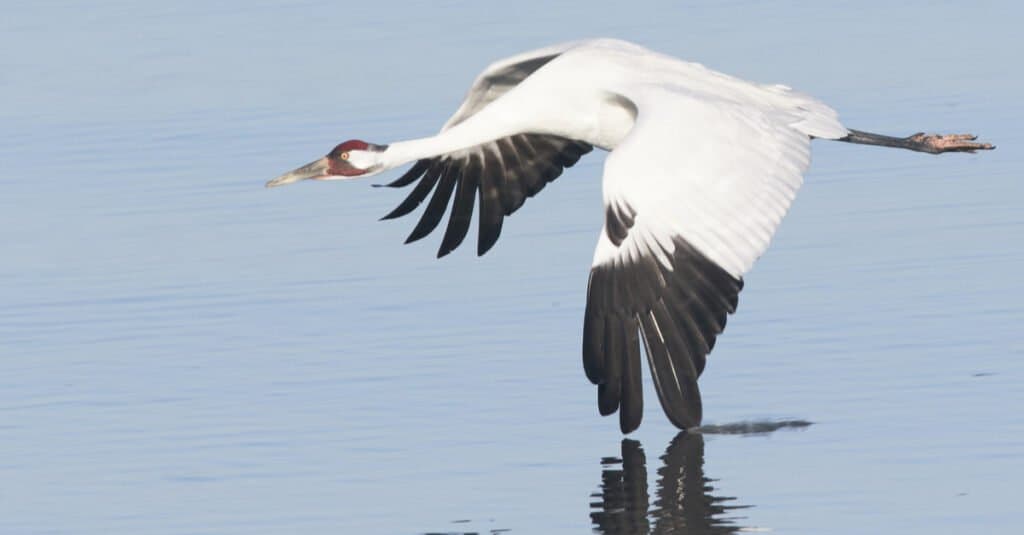
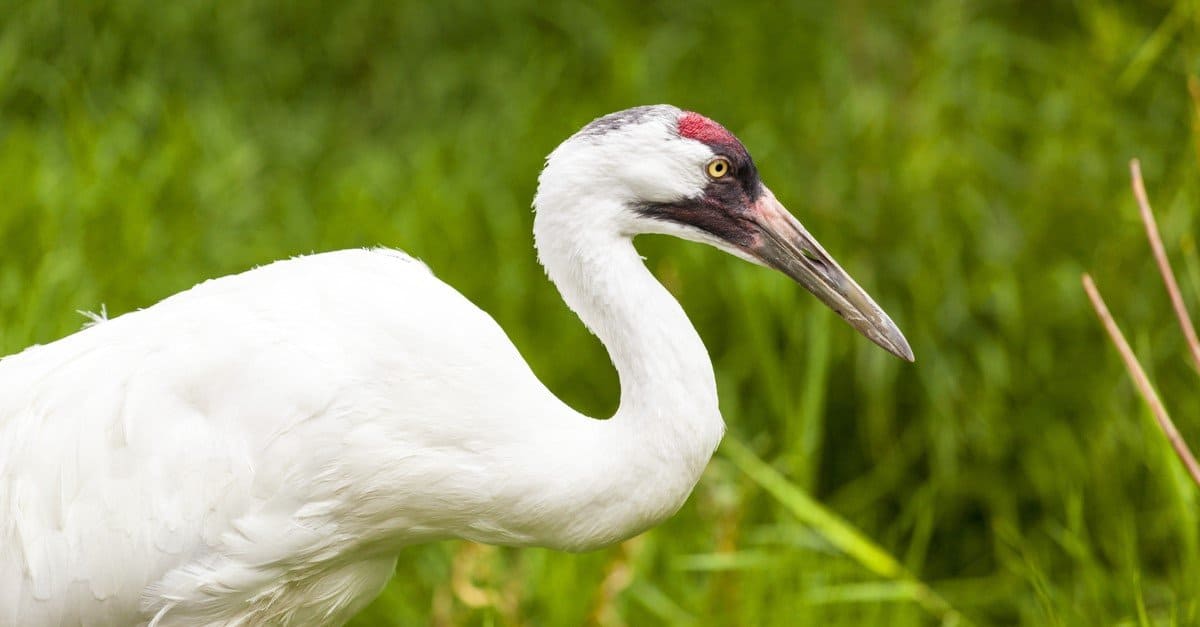
Whooping cranes visit Cheyenne Bottoms Wildlife Area in spring and fall.
©Kent Ellington/Shutterstock.com
Common birds you may see at Cheyenne Bottoms Wildlife Area include:
- American bittern
- White-faced ibis
- Stilt sandpiper
- American avocet
- Great blue heron
- Black tern
- Forster’s Tern
- Red-tailed hawk
- Canada goose
- Yellow-headed blackbird
- European starling
Quivira National Wildlife Refuge
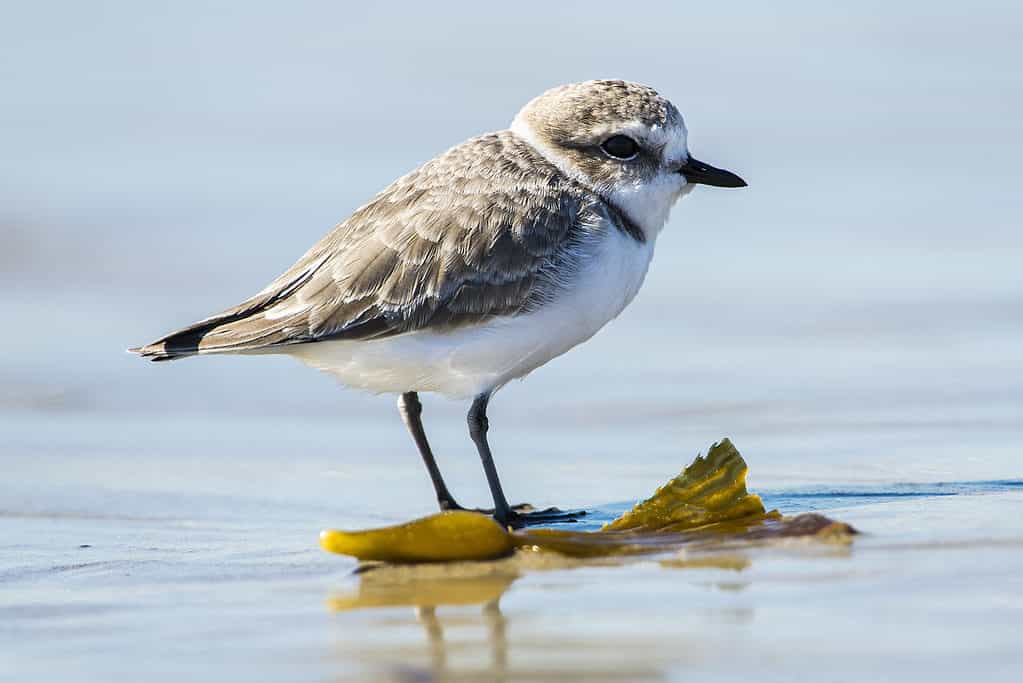
The Quivira National Wildlife Refuge is essential habitat for threatened western snowy plovers.
©iStock.com/drferry
The Quivira National Wildlife Refuge in south-central Kansas in south-central Kansas is one of the country’s most important bird habitats and has been designated a Wetland of Global Importance. This 22,135-acre wildlife area hosts over 300 species of visiting and nesting birds in its grasslands, ponds, sandhills, and salt marshes each year. Most migratory birds can be seen from March through April and again from September through December. Visitors can see hundreds of thousands of ducks and geese at their peak in November. The refuge is also crucial habitat for endangered and threatened species such as whooping cranes, interior least terns, and western snowy plovers. All parts of the refuge are open to foot traffic, and there are 15 auto tours listed on the facility map.
Common birds you may see at Quivira National Wildlife Refuge include:
- Sandhill crane
- American avocet
- Eastern meadowlark
- Black-necked stilt
- Blue-winged teal
- American white pelican
- Black rail
- Marsh wren
- Yellow-headed blackbird
- Upland sandpiper
Marais des Cygnes National Wildlife Refuge
The Marais des Cygnes National Wildlife Refuge encompasses 7,500 acres of bottomland hardwood forests, prairies, shrublands, and wetlands. Located in eastern Kansas near the Missouri border, the refuge provides resting and nesting habitat for migratory songbirds, shorebirds, waterfowl, and more. The hardwood forests are unique in Kansas and attract birds that are uncommon elsewhere in the state. Late spring is one of the best times for birders to visit, as more than 30 species of warblers migrate through the area. Early summer is also recommended, as breeding birds are active and defending their territories.
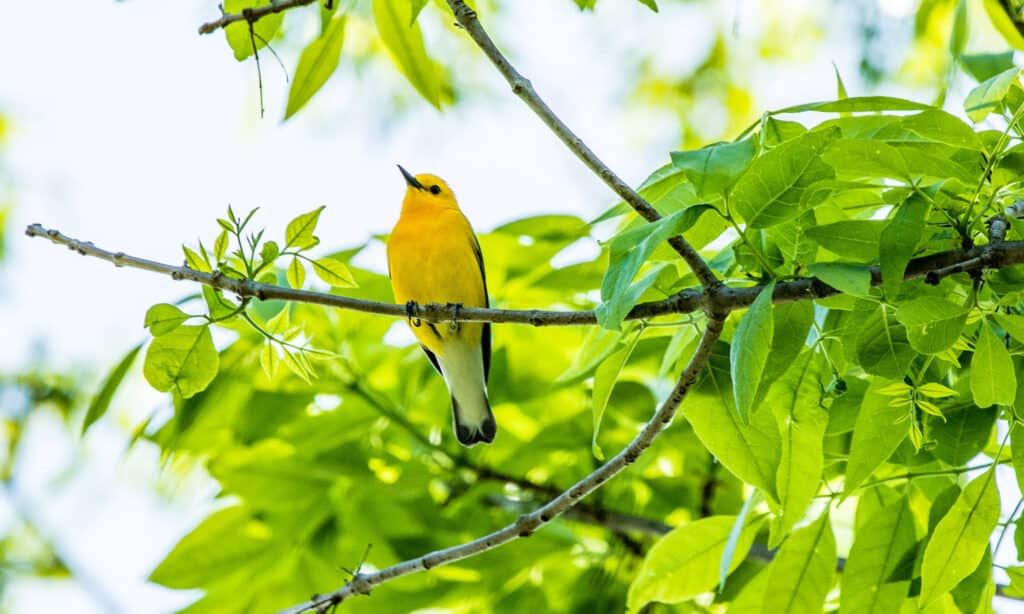
Prothonotary warblers breed at Marais des Cygnes National Wildlife Refuge.
©Mark C. Morris/Shutterstock.com
Common birds you may see at Marais des Cygnes National Wildlife Refuge include:
- Prothonotary warbler
- Trumpeter swan
- Redheaded woodpecker
- Northern parula warbler
- Red-shouldered hawk
- Scissor-tailed flycatcher
- Bell’s vireo
- Yellow-breasted chat
- Acadian flycatcher
- Henslow’s sparrow
Flint Hills National Wildlife Refuge
Located in east-central Kansas, the 18,463-acre Flint Hills National Wildlife Refuge features diverse habitats including wetlands, bottomland hardwood forests, tallgrass prairies, riparian areas, and even agricultural lands. Spring and fall are the best times to visit the refuge to see migratory waterfowl, wading birds, and shorebirds. Bald eagles are also common visitors during the winter, and several species of warblers return to the refuge in April. Doves can be seen in early fall, along with thousands of ducks and geese, which reach peak numbers in November. Birders can hike three designated trails that provide access to different habitats within the refuge.
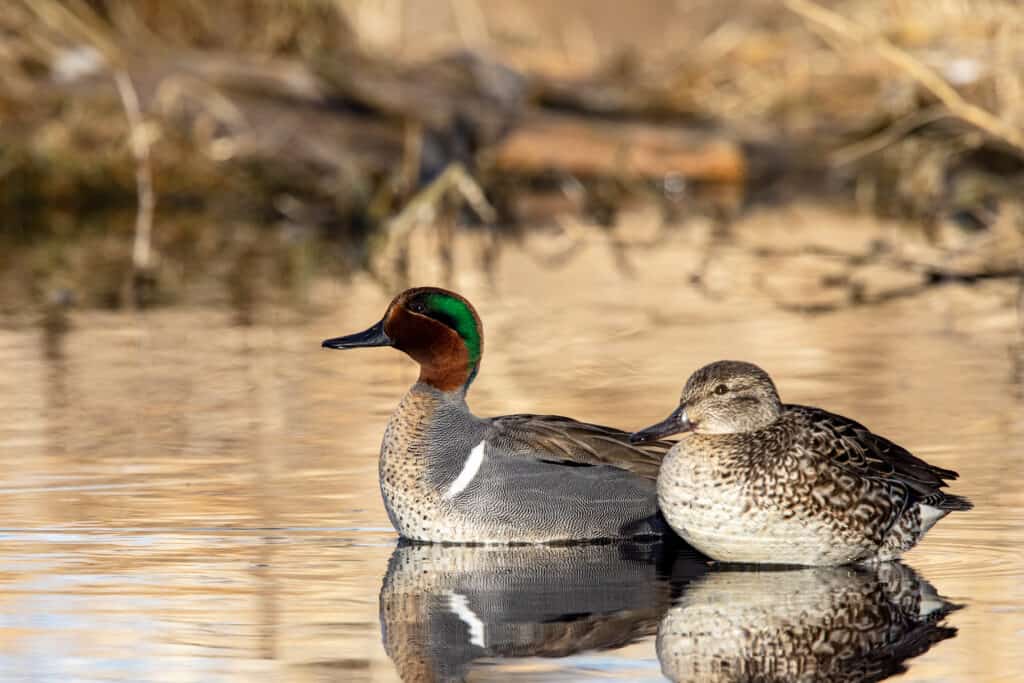
Green-winged teals return to the Flint Hills National Wildlife Refuge every spring and fall.
©J Edwards Photography/Shutterstock.com
Common birds you may see at Flint Hills National Wildlife Refuge include:
- Northern pintail
- Mallard
- Blue-winged teal
- Green-winged teal
- American wigeon
- American white pelican
- Wild turkey
- Upland sandpiper
- Grassland sparrow
- Great blue heron
Baker University Wetlands
The Baker University Wetlands, located south of Lawrence, is a 927-acre marsh and prairie habitat open to the public. Visitors have recorded 278 species of birds in the wetlands, making it a popular spot for local birders. Summer is a great time to visit, with peak numbers of shorebirds in May and August. Geese, dabbling ducks, and wading birds are common during the fall. Wood ducks, red-headed woodpeckers, and sedge wrens are just a few of the birds that nest in the wetlands. More than 11 miles of hiking trails are open to visitors from dawn to dusk daily.
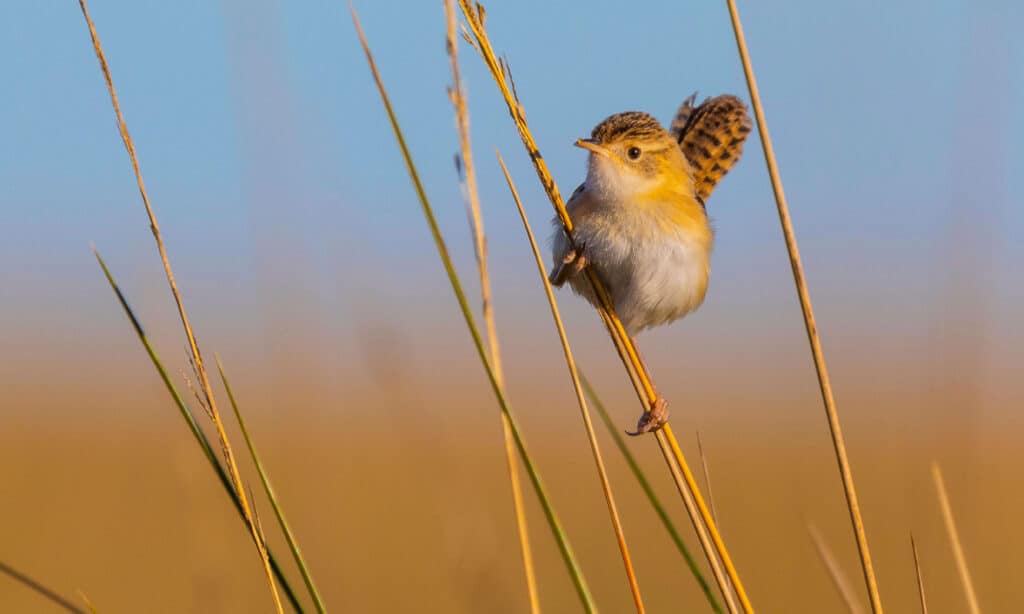
The sedge wren nests in Baker University Wetlands.
©Pablo Rodriguez Merkel/Shutterstock.com
Common birds you may see at Baker University Wetlands include:
- Bell’s vireo
- Sora
- Least bittern
- Yellow rail
- Blue-winged teal
- Northern bobwhite
- Northern harrier
- American bittern
- Black rail
- Virginia rail
Whether you live in Kansas or are planning a visit to the state, there are many great birding destinations to explore. Other popular locations for bird watching include Clinton Lake, Wilson Lake, Perry Lake, Shawnee Mission Park, Cimarron National Grassland, and Scott State Park. Visitors can find bird watching opportunities at Kansas state parks as well. Kansas also offers approximately 3,000 miles of public birding trails across the state.