
Colorado’s most common trees are fir, spruce, and pine trees. These conifers thrive in Colorado’s mountainous terrain. But what about palm trees? While you won’t see palms when you are skiing the slopes in Vail, Aspen, Breckenridge, or Telluride, that doesn’t mean Coloradans can’t enjoy a little tropical palm tree vibe around their homes. You can grow palm trees in Colorado if you’re willing to make the right accommodations. For most gardeners in The Centennial State, that means growing container palms that can be moved indoors during cold weather months.
Know Your Zone
The most important thing to know when considering palm trees is your USDA plant hardiness zone. Colorado has a huge range of hardiness zones, from Zones 3a-7a. Most Coloradans live in Zones 4b-6a.
Palm trees typically grow in tropical or desert climates. Many are native to the Caribbean and South America. Most palm trees have no cold tolerance whatsoever. These trees would never survive a Colorado winter.
There are cold-weather palm trees on the market, but don’t let that label fool you. Many of these “cold weather” palms can’t survive in any zone colder than Zone 9. Where is this hardiness zone, you ask? Much of central Florida lies in Zone 9. Does anyone in their right mind consider Florida a cold-weather state? Of course not! This is the problem with so-called cold weather palms. The “cold weather” label is certainly relative.
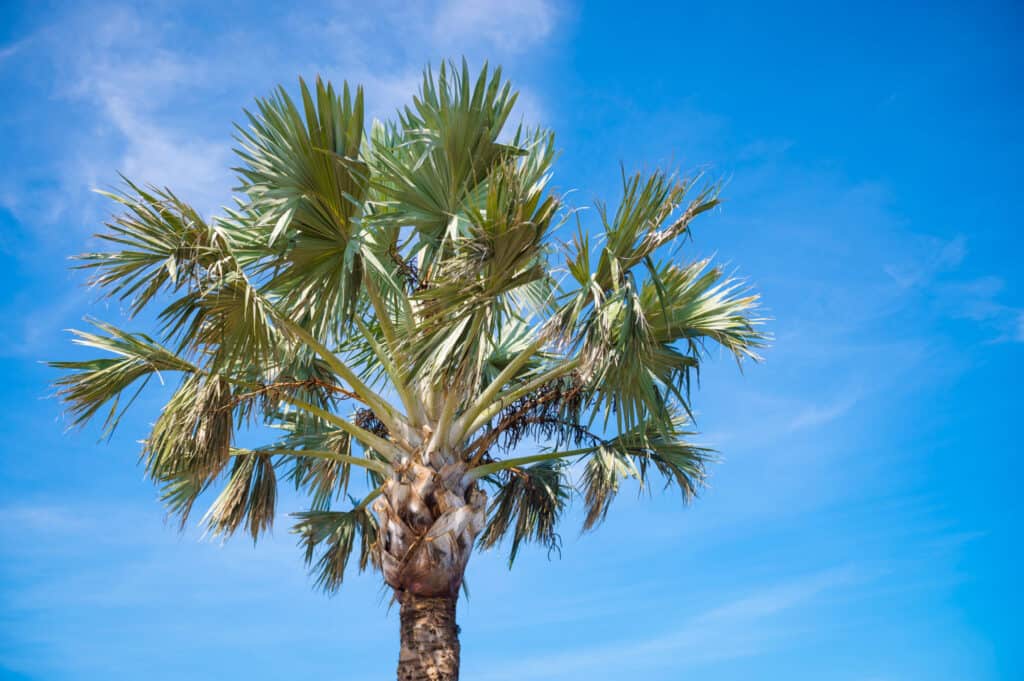
Most palms, such as the sabal palmetto (Florida’s state tree), could never survive a Colorado winter.
©lazyllama/Shutterstock.com
Container Palms
The majority of palm trees are not going to grow outdoors in Colorado, but there are a few palm varieties that thrive in containers. These palms grow indoors during the cold weather months but can also be moved outside on warm, sunny days.
Relatively few palms grow well in containers, but those that do are normally easy to find at nurseries or commercial retailers. Here are a few of the best options for container palms that can bring a taste of the tropics to your Colorado home.
Parlor Palm (Chamaedorea elegans)
Any discussion of indoor palms needs to begin with the parlor palm. As its name suggests, it is among the easiest of all palms to grow indoors. In its native region of southern Mexico and Guatemala, this palm can grow up to 16 feet tall. As an indoor palm, though, vertical growth of three to six feet with a two to three-foot spread is typical. It will take several years to reach that mature size, though.
When grown outdoors in very warm climates, this palm will produce sprays of small yellow flowers followed by black fruits. Indoor parlor palms rarely, if ever, flower. Parlor palms (also known as Neanthe bella palms) need only average sunlight and typical household temperatures to thrive. Consistent moisture is key for this palm to flourish.
The fronds of the parlor palm are popular in cut arrangements and other decorations. The fronds remain green for more than a month after cutting. This low-maintenance, non-toxic palm should be at the top of the list for Coloradans who want to bring a touch of the tropics to their homes.
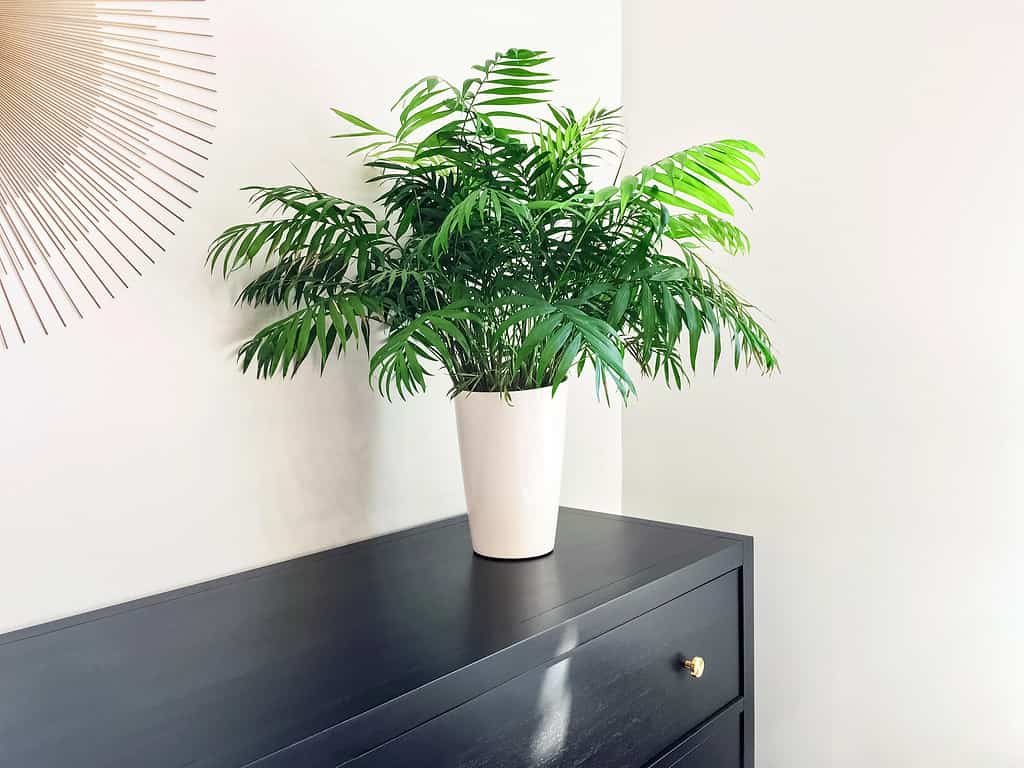
The parlor palm is possibly the easiest palm to grow indoors.
©Studio Light and Shade/Shutterstock.com
Cascade Palm (Chamaedorea cataractarum)
The cascade palm (sometimes called the cat palm) grows in the jungles of Central America, but it is an understory palm. This means the palm can thrive in low light conditions, which is perfect for indoor growing. In fact, direct sunlight can cause leaf burn.
These palms grow near water sources in their native habitat. They need a generous amount of water and humidity to thrive. This can be an issue, especially during the winter months when your heating source dries out the air in your home. Water this palm often, but don’t stop at the roots. Douse the entire palm, leaves, and all.
This palm does not have a central trunk. Instead, it grows in clumps of fronds. Such growth makes this palm easy to propagate through division. When the palm matures, you can separate the fronds and replant them in separate containers or share them with family or friends. Cascade palms are non-toxic.
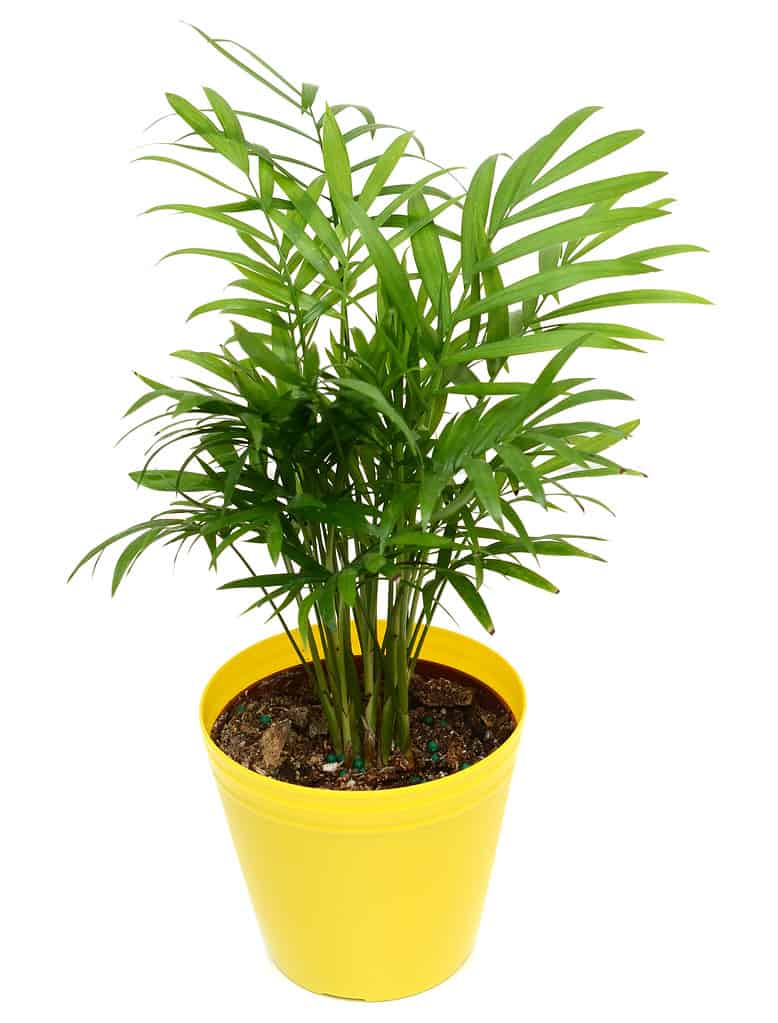
The cascade palm thrives in low light, making it a wonderful choice for indoor growing.
©iStock.com/hongquang09
Areca Palm (Dypsis lutescens)
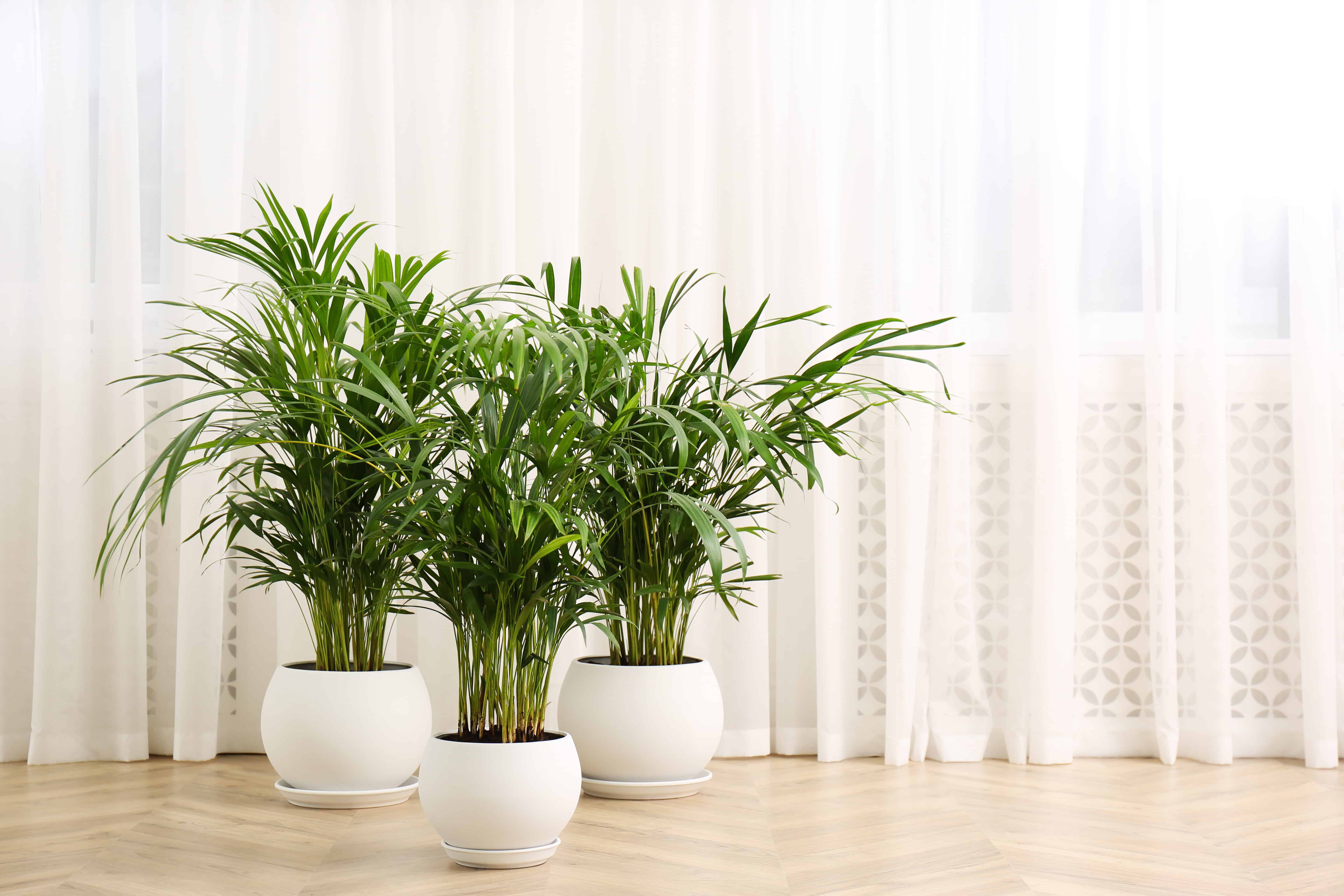
The areca palm may also be sold under other common names such as bamboo palm, golden cane palm, yellow palm, or butterfly palm. It is native to Madagascar and features large green fronds with a gentle curve.
The areca palm can tolerate low light conditions but don’t pass up an opportunity to move it outside in warm and sunny weather. Keep the soil consistently moist, but avoid waterlogging the palm. Adequate drainage holes are key (as they are with all container palms).
In its native habitat, this palm can grow 30 feet high with a 20-foot spread. In a container, it will top out at seven to eight feet. The areca palm is non-toxic.
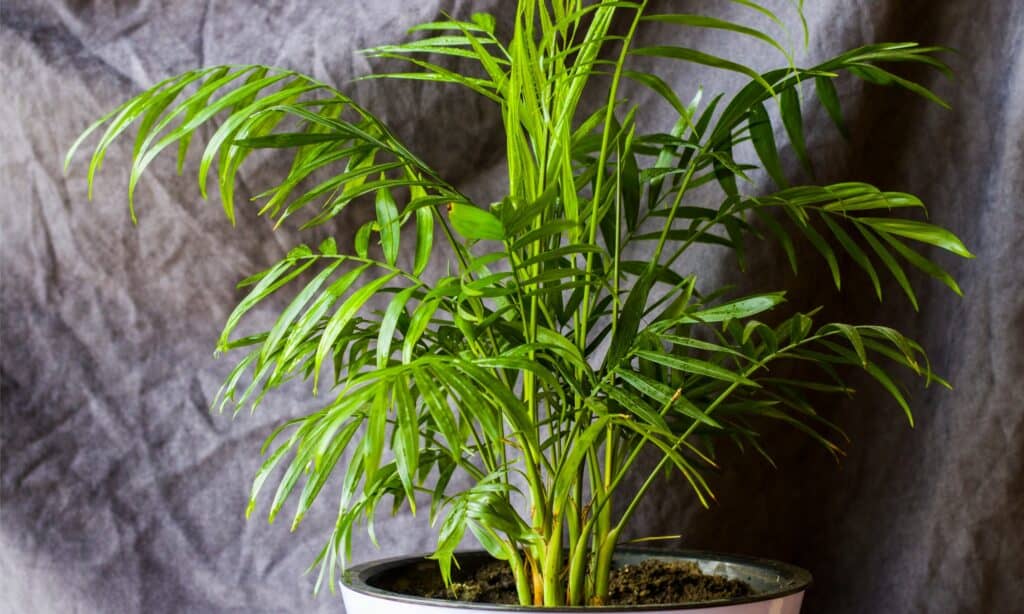
The areca palm has lovely green fronds with a gentle downward curve.
©iStock.com/Tamar Dundua
Sago Palm (Cycas revoluta)
We’re cheating on this one, but in a discussion of growing tropical palms in Colorado, it feels like we’re already bending the rules quite a bit. The sago palm is not a true palm, despite its common name. It is a cycad. Cycads date back to the time of the dinosaurs and remain virtually unchanged during their long history. They are among the oldest plants in the world. But, even though the sago palm is not a true palm, it certainly features a tropical palm-like appearance. Let’s just go with it, shall we?
In its native habitat of warm regions in Japan and China, the sago palm can grow up to ten feet tall. It will not grow to these heights in a container, though. And even if it did, it would take a very long time. The sago palm grows painfully slow. It can take nearly 100 years to reach its mature height!
The sago palm is sometimes called the sago cycas, king sago palm, and Japanese sago palm. Refer to the botanical name before making a purchase if you are unsure.
There is a very important difference between the sago palm and the true palms discussed above. The sago palm is highly toxic to both people and pets.
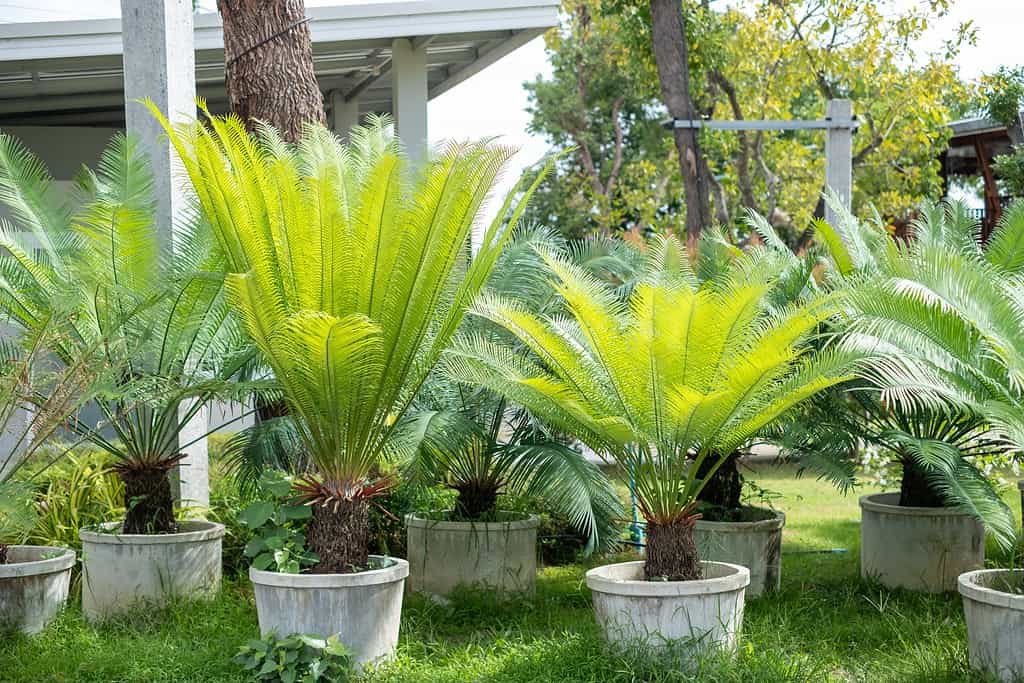
Sago palm trees are wonderful options for container growing.
©ISEN STOCKER/Shutterstock.com
An Outdoor Palm Option for *Some* Coloradans
For some Colorado gardeners, growing a year-round outdoor palm is simply not an option. For others, there is a possible option to consider. The needle palm (Rhapidophyllum hystrix) may be the most cold-hardy palm available. This palm can survive in climates down to Zone 5b, which is virtually unheard of among palm trees.
Growers in Colorado’s highest elevations need to stick with indoor palms, but others can potentially grow the needle palm as a year-round outdoor plant. Much of eastern Colorado, as well as the western edge of the state, has a climate where this palm could grow. Gardeners in Grand Junction, Pueblo, and even Denver can give the needle palm a try. As with everything in gardening, nothing is guaranteed. However, it is certainly worth trying if you want to add a palm to your landscape.
The palm’s name comes from the three to four-inch needle-like spines along the base of the leaf stems. Hystrix in the plant’s botanical name is Greek for “porcupine,” so it is sometimes known as the porcupine palm. Gloves and long sleeves are a must when working with this palm. However, those spines also mean that deer and other wildlife will steer clear of the needle palm.
The palmate (fan-shaped) leaves are deep green and grow about two feet long. The needle palm is a small palm, topping out at five to ten feet tall with a spread of five feet at maturity. It grows slowly, especially in colder climates, so it will take a long time to reach this size.
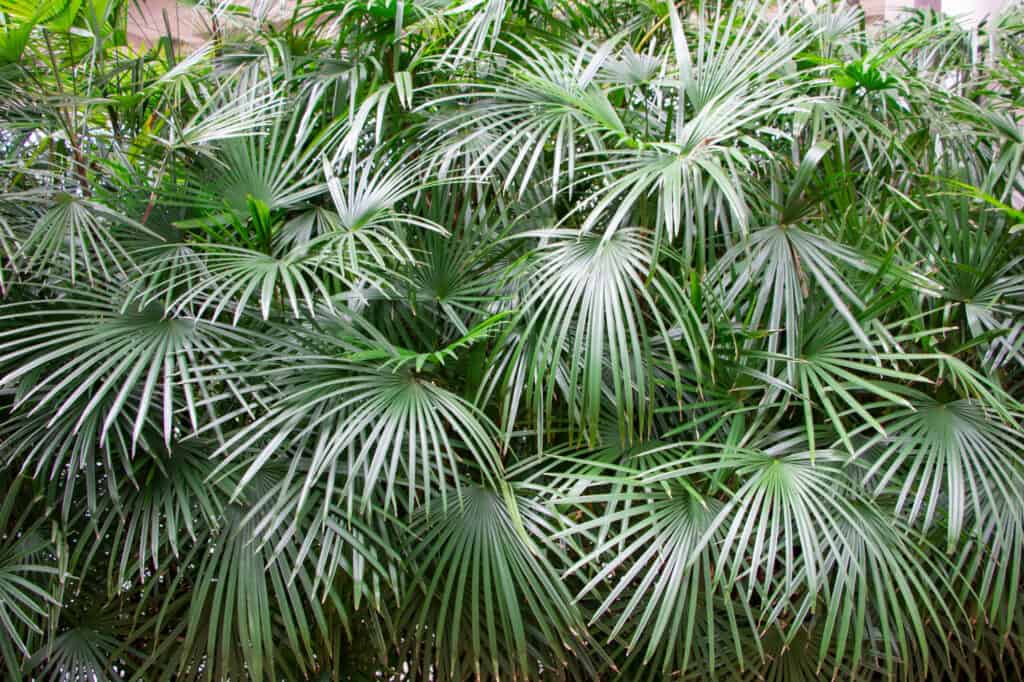
The needle palm is one of the very few palms that can grow outdoors year-round in parts of Colorado.
©Sanyawadee/Shutterstock.com
Basics for Growing Indoor Palms
The needle palm is an outlier. Almost every other Colorado palm tree must be grown indoors for much of the year. If you want to enjoy some container palms in your home, here are a few basic tips to keep in mind.
Placement
Do not place palms in the direct drafts of HVAC units. The cold air from your air conditioner can damage the palm. Also, the warm air from a furnace can dry out the soil and also harm the palm.
Watering
Most palms thrive with regular watering, but waterlogged soil is a definite no-no. As noted above, make sure the containers have adequate drainage holes. Water your container palm regularly to keep the soil consistently moist.
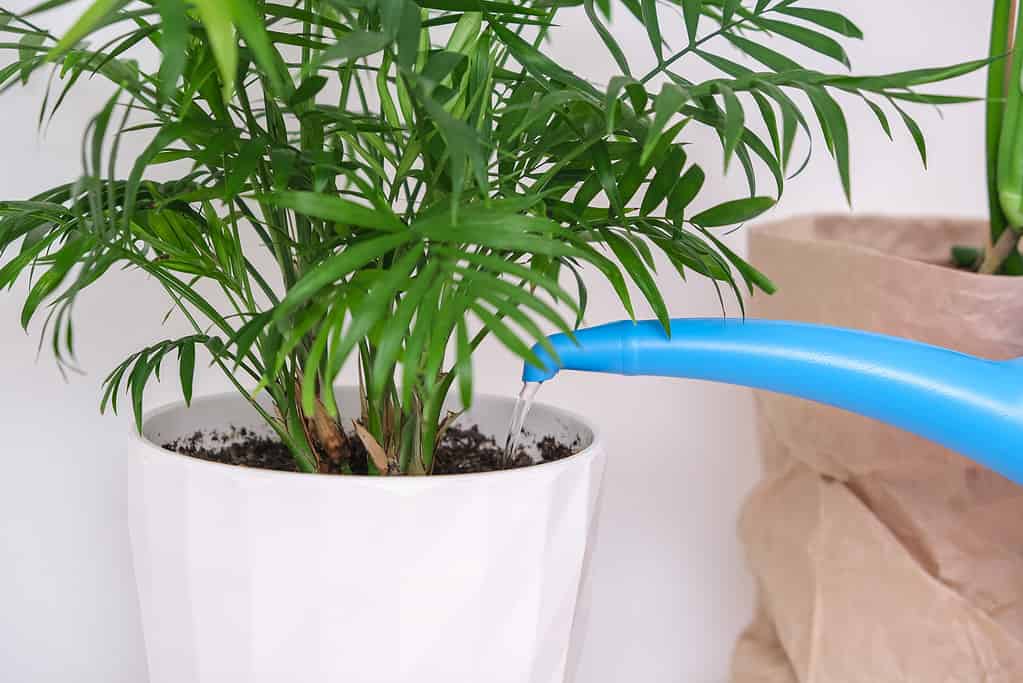
Indoor palms need consistent moisture to thrive.
©iStock.com/Detry26
Feeding
Most palms thrive with regular feeding, but be sure to use a high-quality fertilizer. Cheap fertilizers may contain heavy salts, which can damage or even kill the palm. Fertilize from spring to fall for best results.
Sunlight
A sunlit room is best for most container palms. While the palms discussed above are well-suited for low light conditions, they still need some sun. Low light does not mean any light! A sunny window is highly recommended. And when the weather warms up, take your container palm outside to soak up some sunshine. This will give your palm a noticeable boost. Just remember that many of these palms can’t tolerate temperatures lower than 50°F. Keep a close eye on the weather forecast when you give your container palm some outside time.
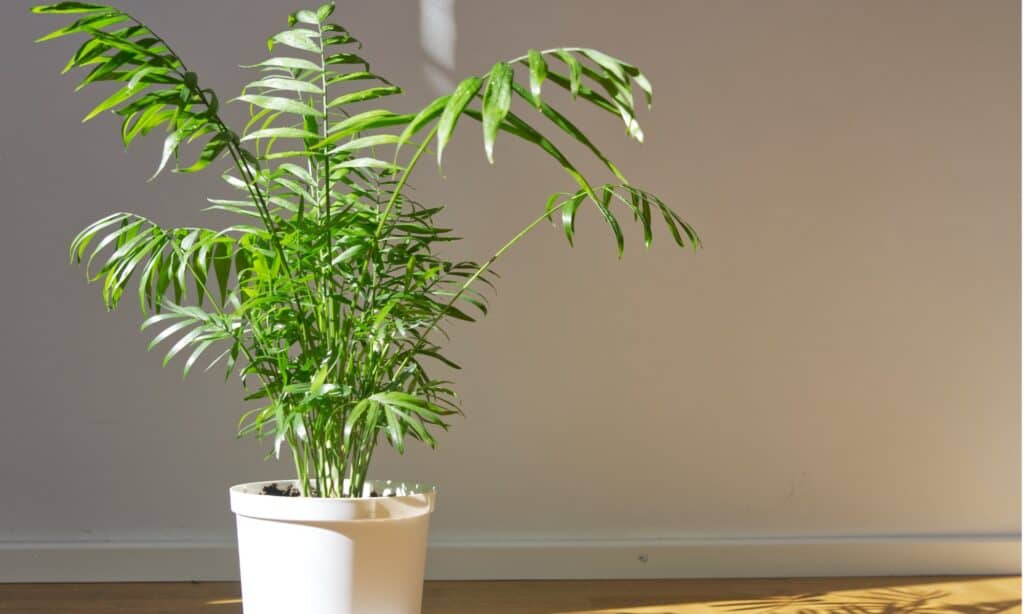
Container palms, such as this parlor palm, still need some sunlight to flourish.
©iStock.com/Wheatfield
Pruning
Some palm growers are too quick with the shears. Even when some fronds or branches turn brown, you may want to keep your shears holstered. The brown parts of the palm could still be aiding in photosynthesis. Cutting them away too soon removes nutrients the palm is using to feed its vibrant green branches and fronds. Only prune away the parts that are very clearly dead. While this browning is not necessarily the most beautiful part of palm growing, it is natural and important for the palm’s flourishing.
Pests
Indoor palms are easy to care for but susceptible to common houseplant pests such as aphids, spider mites, and scale. If these pests show up, neem oil can eradicate the infestation. It is organic and harmless to the palm. It is also non-toxic for pets and people.
Insecticidal soap is another option, but some palms can be sensitive to this treatment. Spray a small amount on the plant to see how it responds. You may wish to do this before the pests arrive. That sounds counterintuitive, but you need to allow time to ensure the palm is not sensitive to this treatment. When pests such as spider mites arrive, you don’t have much time. A few of these pests can turn into a full-blown infestation very quickly. You’ll want to know that you can safely and generously apply insecticidal soap if/when the need arises.
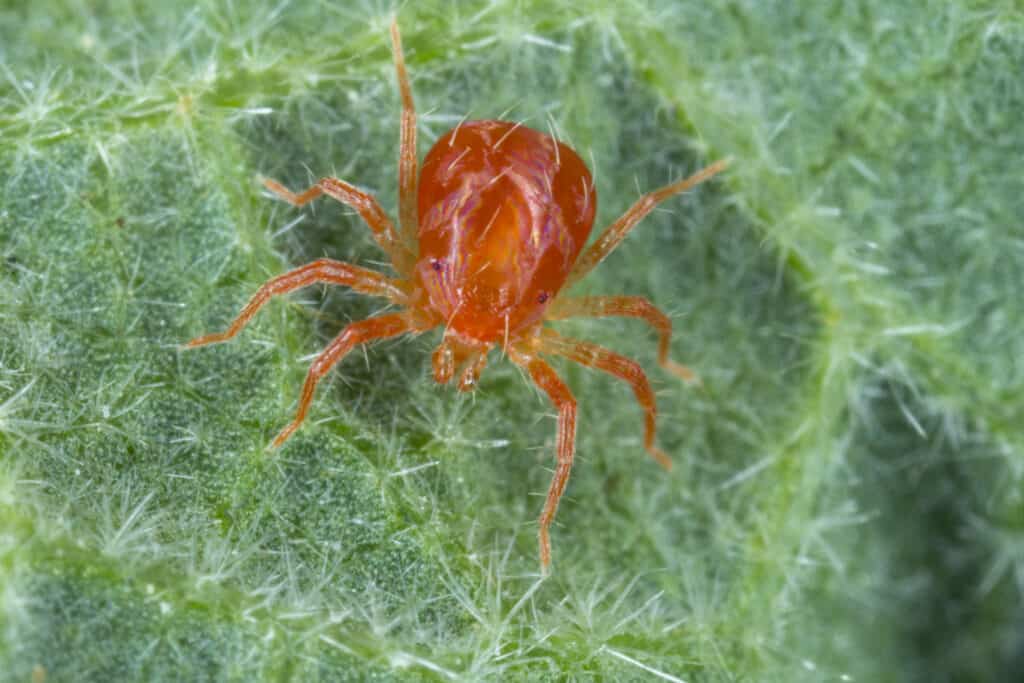
Spider mites can be a problem for most houseplants, including palms.
©Tomasz Klejdsz/Shutterstock.com