
Who doesn’t love palm trees? Watching the fronds of these trees gently wave in the breeze transports us to a tropical paradise, listening to the waves crashing against the shore while enjoying a fruity island beverage. It is no surprise that many gardeners want to add a bit of that tropical vibe to their landscapes and homes. But can you really grow these tropical trees outside the tropics? Is it even possible to grow palm trees in a colder climate like that of Maryland? The simple answer is yes. It is indeed possible. But there are definite limitations that Maryland growers need to know.
USDA Hardiness Zones
Palm trees are part of the plant family Arecaceae, a family of perennial flowering plants in the monocot order Arecales. There are over 2,600 species of palms, the majority of which have no cold tolerance whatsoever. Many palms are native to the Caribbean and South America, where cold snaps simply do not happen.
There are cold-weather palm trees that are commercially available, but that may seem like a bit of a misnomer. Check the recommended USDA plant hardiness zones for these palms, and you’ll quickly realize the phrase “cold weather” is relative. Many of these so-called cold weather palms cannot tolerate anything below Zone 9. For a little perspective, much of south Texas and central Florida is classified as Zone 9. That’s all that many “cold weather” palms can handle.
Although Maryland is the ninth smallest state in the United States, it still features hardiness zones that range from Zone 5b to Zone 8a. Zone 5b is found in a small area in the northwest, and Zone 8a encompasses a tiny sliver of extreme southeastern Maryland. Most Marylanders live in Zones 6a-7b. A very small number of palm trees can grow in these zones, but they are popular and are normally fairly easy to find at commercial nurseries and retailers.
Here are a few palm trees that can thrive in The Old Line State. We’ll also discuss some indoor palm options for Marylanders who live in the coldest reaches of the state or for anyone who wants to add a tropical flair to their home.
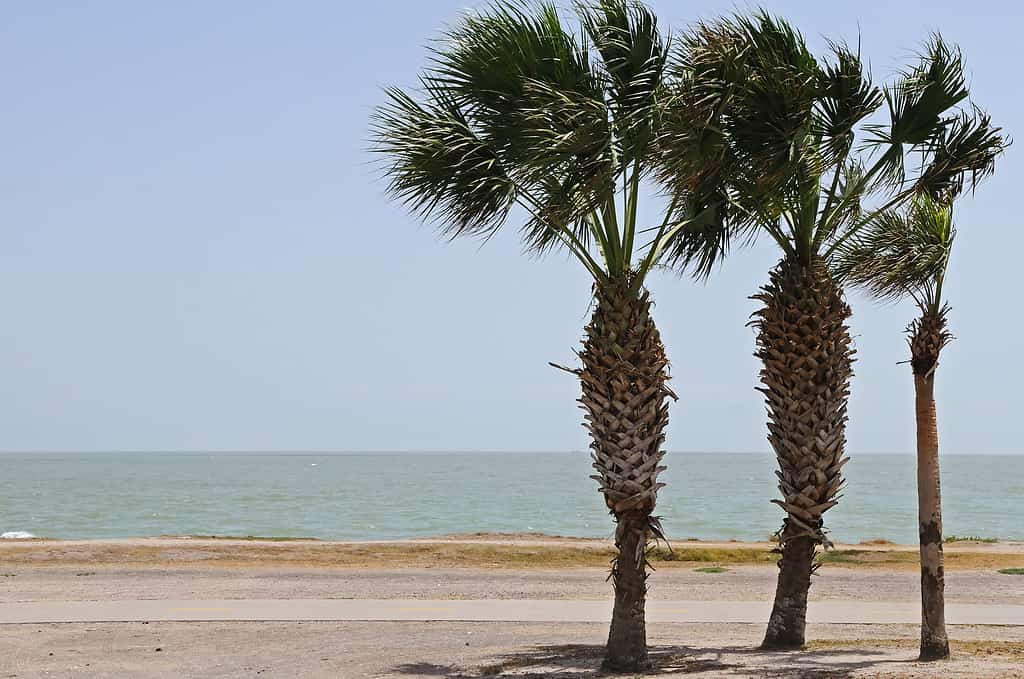
Corpus Christi, Texas lies in Zone 9. Most palm trees can’t grow in regions colder than this.
©iStock.com/carrollmt
Needle Palm (Rhapidophyllum hystrix)
The needle palm may be the most cold-hardy palm on the market today. It is native to Alabama, Florida, Georgia, Mississippi, and South Carolina. This palm is hardy to Zone 5b. This is one of the very, very few palms that can be grown anywhere in the state of Maryland.
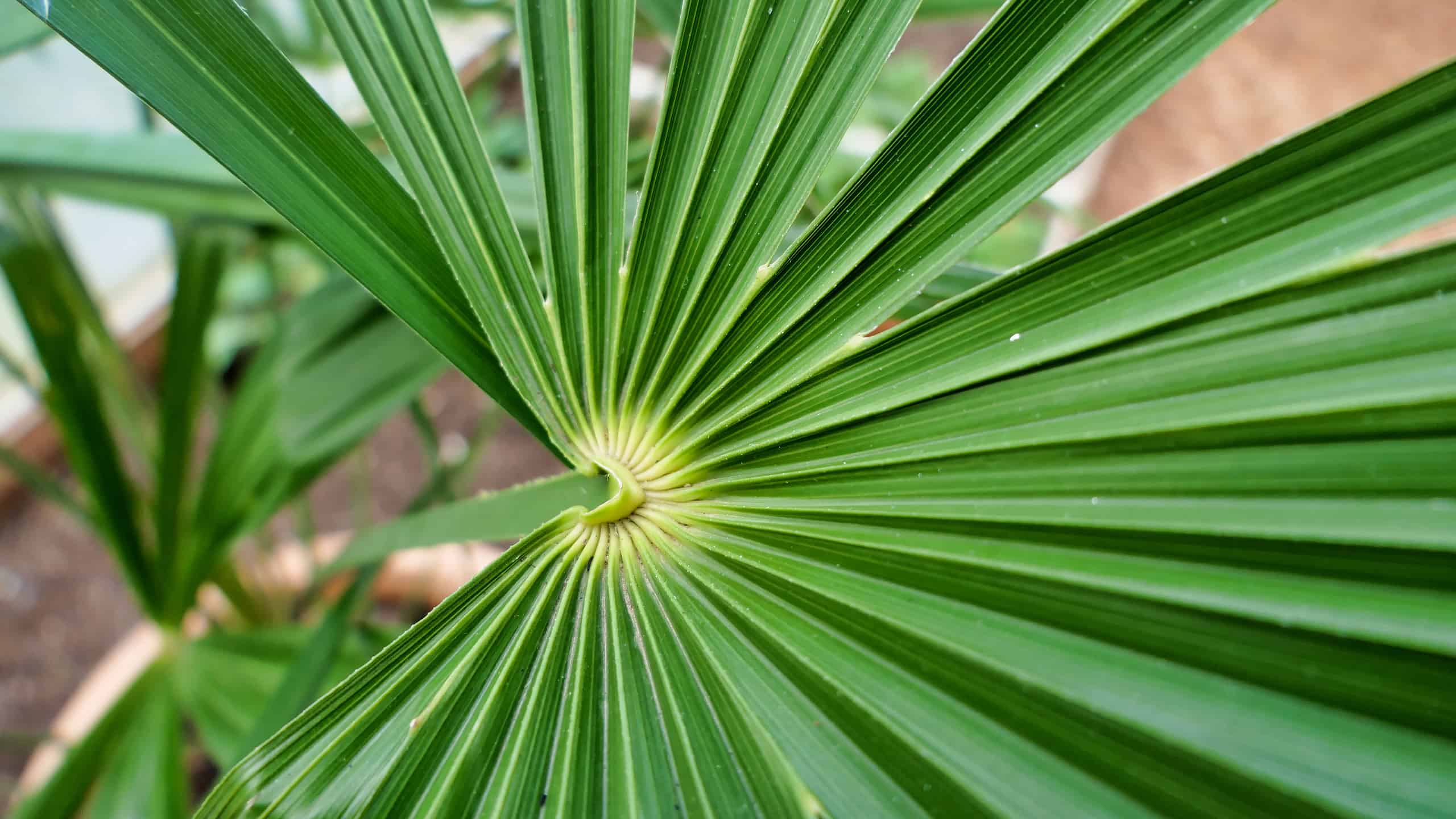
Most palms feature a single trunk, but the needle palm has stems that grow tightly together from a single base. The palmate (fan-shaped) leaves are deep green and grow about two feet long.
The palm’s name comes from the three to four-inch needle-like spines along the base of the leaf stems. The palm is sometimes called the porcupine palm, which is reflected in its botanical name. Hystrix is Greek for “porcupine.” You’ll definitely want to wear gloves and long sleeves when working with this palm! There is an upside to the plant’s spiky nature, though. It is seldom damaged by deer and other wildlife.
This small shrubby palm is a slow grower. At maturity, it tops out at five to ten feet tall, with a maximum spread of five feet. The needle palm is non-toxic.
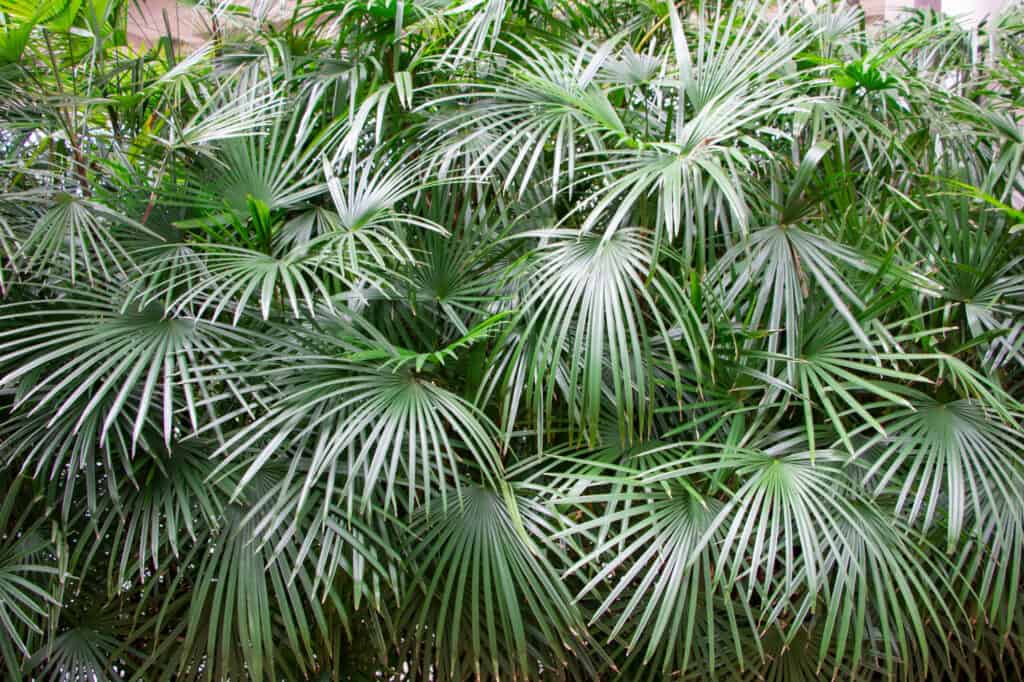
The palmate leaves of the needle palm have a tropical feel, yet the palm is exceptionally cold-tolerant.
©Sanyawadee/Shutterstock.com
Mazari Palm (Nannorrhops ritchiana)
The Mazari (some horticulturists spell it “Mazzari”) palm is endemic to deserts in the high altitudes of northern Pakistan and Afghanistan. It is another exceptionally cold-hardy palm, recommended for Zone 6b and up. Growers in Garrett, Allegany, and Washington counties should probably skip this palm. Gardeners in Frederick, Carroll, Baltimore, and Hartford counties should proceed with caution. All other Marylanders can likely grow a successful Mazari palm.
Because this palm is a desert native, it is exceptionally drought-tolerant. The Mazari palm needs soil with excellent drainage to flourish.
This tree is sometimes categorized as a shrub. Like the needle palm, it is trunkless and instead features several stems that grow tightly from a single base. The leaves are bluish to grayish green. Each leaf features at least 20 leaflets that are one to two feet long. The Mazari palm is non-toxic and is being studied for possible medicinal uses.
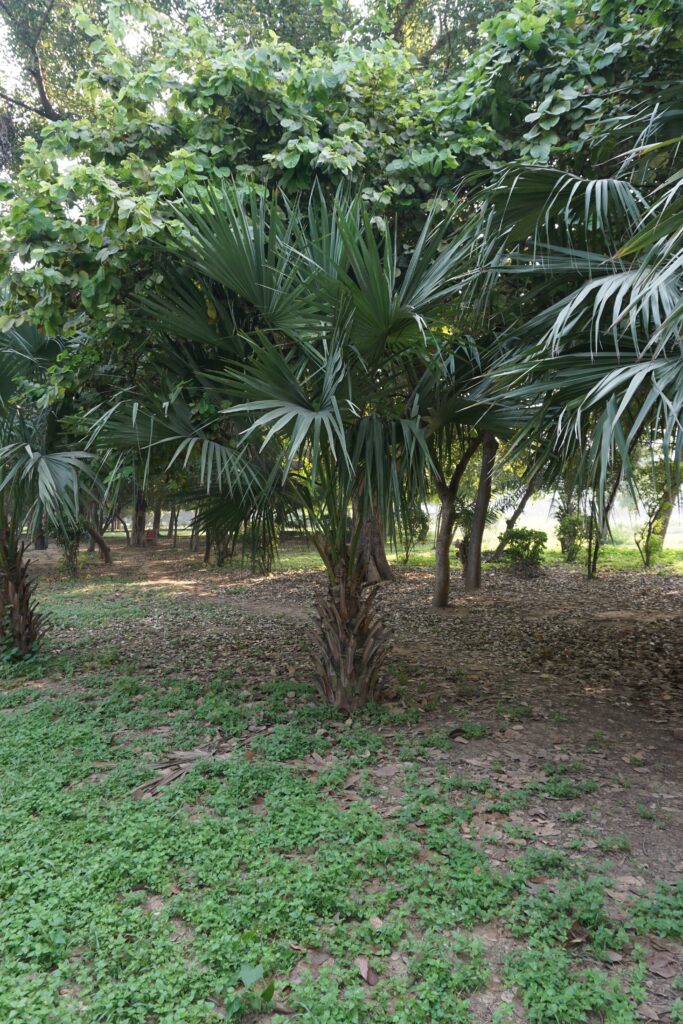
The Mazari palm is a cold-hardy, drought-tolerant palm that can thrive in much of Maryland.
©Vipul1989/Shutterstock.com
Saw Palmetto (Serenoa repens)
Even non-gardeners are often familiar with saw palmetto. Just take a walk down the vitamin aisle at your local store, and you will find saw palmetto capsules sold as a dietary supplement. But it is also a lovely ornamental palm that is quite cold-hardy.
Saw palmetto is another palm where horticulturists disagree. Some call it a tree, others say it is a shrub. Either way, this palm is hardy to Zone 7a. Roughly any Maryland gardener south of Baltimore should have no problem growing saw palmetto. But this is just the “official” recommendation. There have been growers who have seen wonderful results growing saw palmetto in Zone 6b. The palm has withstood temperatures down to -5°F. This opens up the option for most Marylanders to plant saw palmetto.
This palm is low-growing with a palmate leaf pattern. The leaves are stiff and light to medium green in color. The stem is spiny, so this is another instance where gloves are recommended when tending to this palm. Saw palmetto is non-toxic.
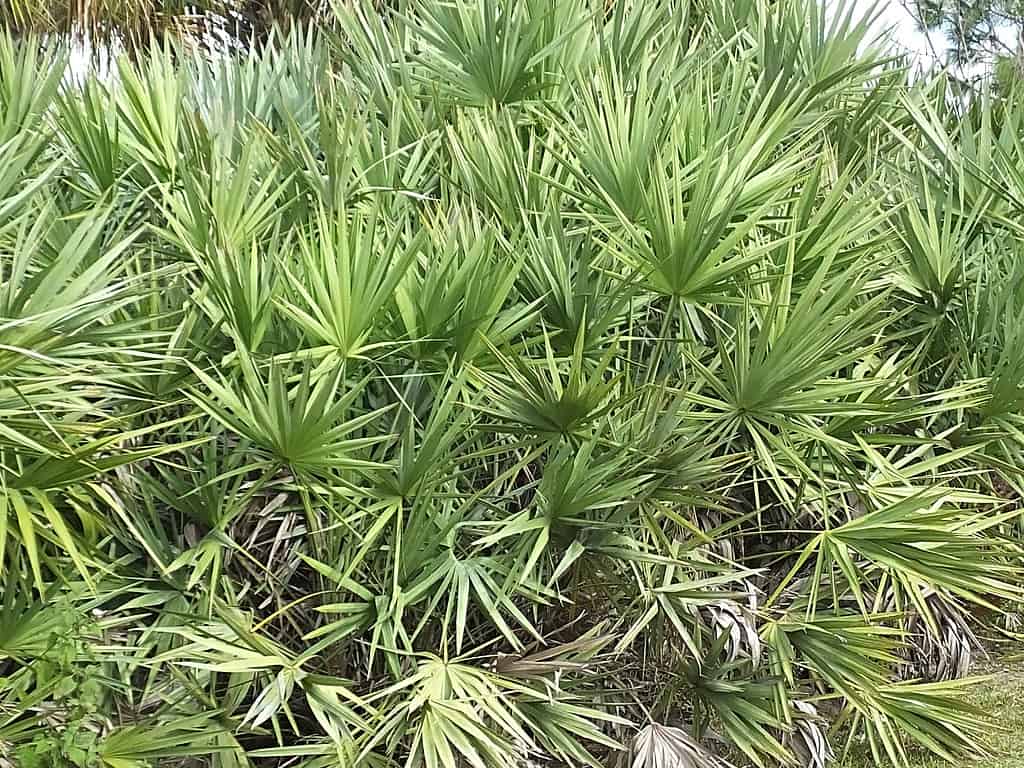
Saw palmetto grows low to the ground with stiff palmate leaves. It may be hardy to zones as cold as Zone 6b.
©iStock.com/passion4nature
European Fan Palm (Chamaerops humilis)
This palm tree is not a good option for all Maryland landscapes as it is only cold-hardy to Zone 7b. Many growers south of Baltimore along the western shore of the Chesapeake Bay can grow this palm. Also, gardeners south of Easton on the east side of the bay can grow thriving European fan palm trees.
This palm is native to the Mediterranean and northern Africa. It is a multi-trunk palm tree, with up to eight “sucker” trunks growing from the base of the main trunk. Growers can allow the tree to take this natural shape. They can also remove the suckers as they appear, in which case the European palm will grow as a single-trunked tree.
This tree, also known as the Mediterranean fan palm and the dwarf fan palm, is a small to mid-size palm. It is a slow grower, though. Given time, this palm will grow to heights around 15 feet with a spread of 10-20 feet.
The European fan palm is drought-tolerant and is also salt-tolerant. This is a great option for growers along the Chesapeake Bay and the Atlantic coast. The European fan palm tree is non-toxic.
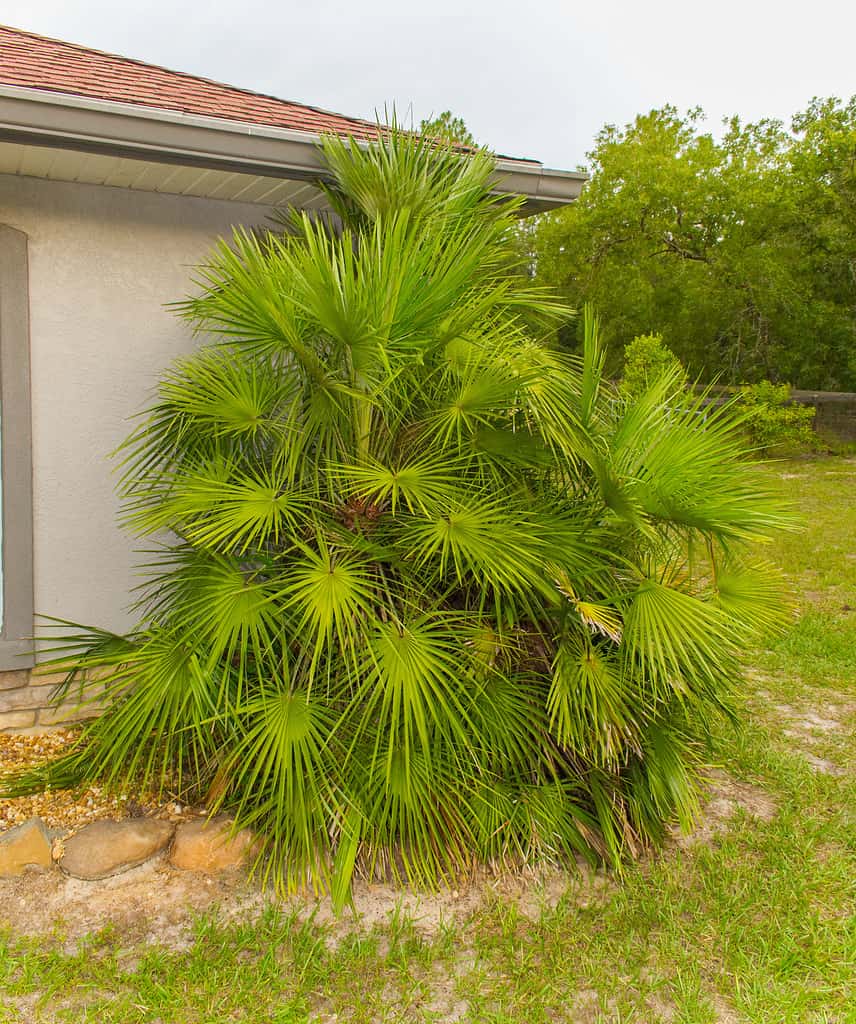
The European fan palm is cold-hardy to Zone 7b and is also drought and salt-tolerant. Great for coastal areas!
©iStock.com/Chase D'animulls
Indoor Palm Trees
If you live in the coldest parts of Maryland (or if you just want to spruce up your home with some tropical greenery), there are several wonderful options for indoor palms. By growing these palms in containers, you can protect them from the winter chill. You can also take them outdoors on a warm sunny day so they can soak up some rays. Just remember that temperatures under 50°F can damage some of these palms.
Some great choices for indoor container palms include:
- Parlor Palm (Chamaedorea elegans)
- Areca Palm (Dypsis lutescens)
- Cascade Palm (Chamaedorea cataractarum)
- Majesty Palm (Ravenea rivularis)
When growing indoor palms, be sure to keep the palm away from air conditioning drafts. The cold air can make the branches and fronds brittle or otherwise damage the palm. Also, a sunny room will help the palms thrive when they can’t be taken outside to bask in the sun.
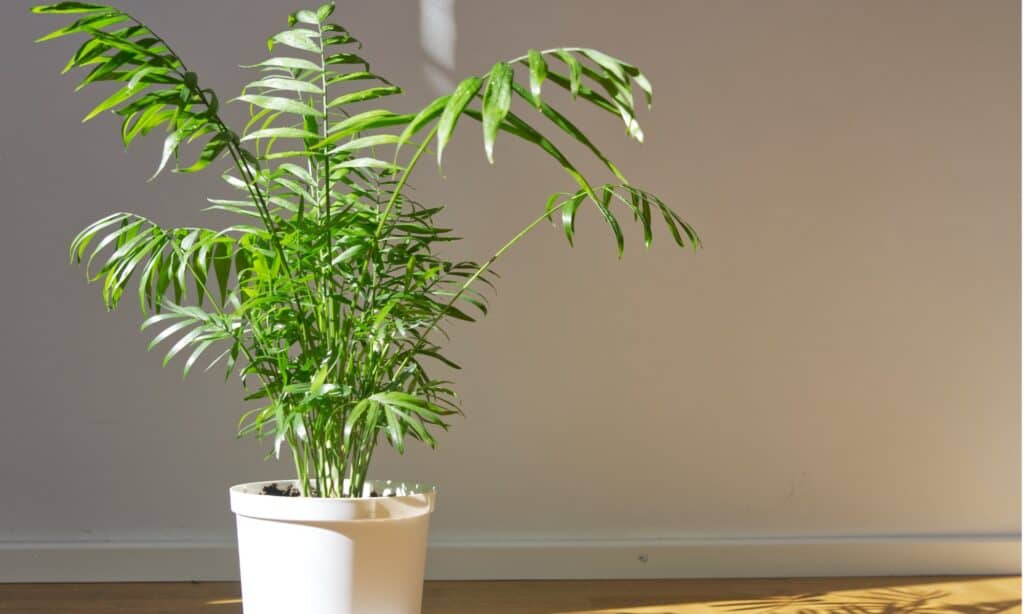
The parlor palm is one of the most popular container palms on the market.
©iStock.com/Wheatfield
Outdoor Palm Tree Basics
Planting
When planting a palm in your landscape, select a well-draining site that receives at least six hours of sunlight per day. Dig a hole close to the height of the root ball. The very top of the root ball should sit just above the soil line. Dig a hole about twice the width of the root ball.
When placing the tree in the hole, ensure that it is perfectly vertical. View the tree from multiple angles to make sure it is not leaning.
Fill in the hole with 50% native soil and 50% commercial potting mix. Water the palm deeply and cover the site with two inches of mulch.
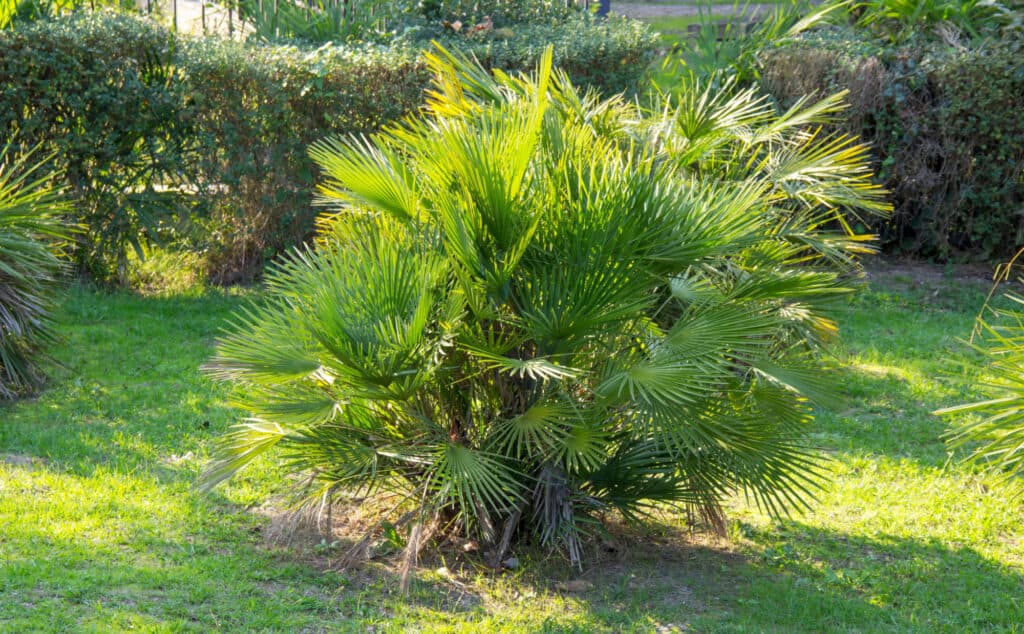
In the appropriate hardiness zones, palms such as the European fan palm are easy to grow.
©ToKa74/Shutterstock.com
Watering
Water the palm daily for the first week after planting. At the end of the first week, dial back the watering to twice a week. Do this for the next three months to allow the palm to establish. After those first three months, you can probably stop watering altogether. You can always give the palm an occasional drink if the weather is dry, but many palms are at least moderately drought-tolerant.
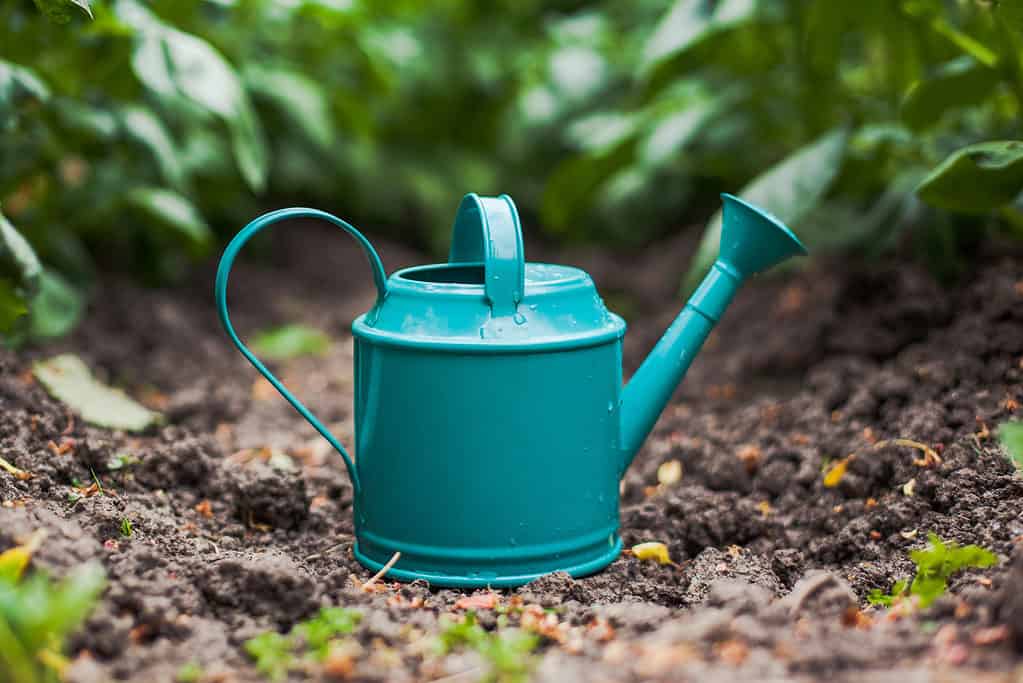
Regular watering for the first few months after planting will help your palm establish and thrive.
©iStock.com/Tgordievskaya
Fertilizing
Many palms will benefit from regular feeding. Choose a high-quality, slow-release fertilizer. Feed the palm at planting and then again each spring. You can also feed the palm in the fall if it seems to need a boost. Don’t skimp on the fertilizer quality. The heavy salts in cheaper fertilizers can damage the roots and possibly kill the palm tree.
Winter Protection
In cooler climates such as Maryland’s, wrapping young palm trees with frost cloth or burlap can help protect them in their first winter. The palms discussed earlier likely will not need this layer of protection after the first winter, but you can always wrap them during extreme cold snaps just to be on the safe side. Adding a thick layer of mulch during the winter can also help insulate the roots against the chilly winter temperatures.
Pruning
Most palm trees need little to no pruning. Some fronds and branches will naturally turn brown but don’t be too quick to cut them away from the palm tree. Those brown parts of the palm may still be aiding in photosynthesis. Removing them too early will cut off nutrients that the palm is using. Wait until the fronds or branches are clearly dead before cutting them off. It is not always the most visually-appealing part of palm tree growth, but it is natural and vital to the palm’s continued success.
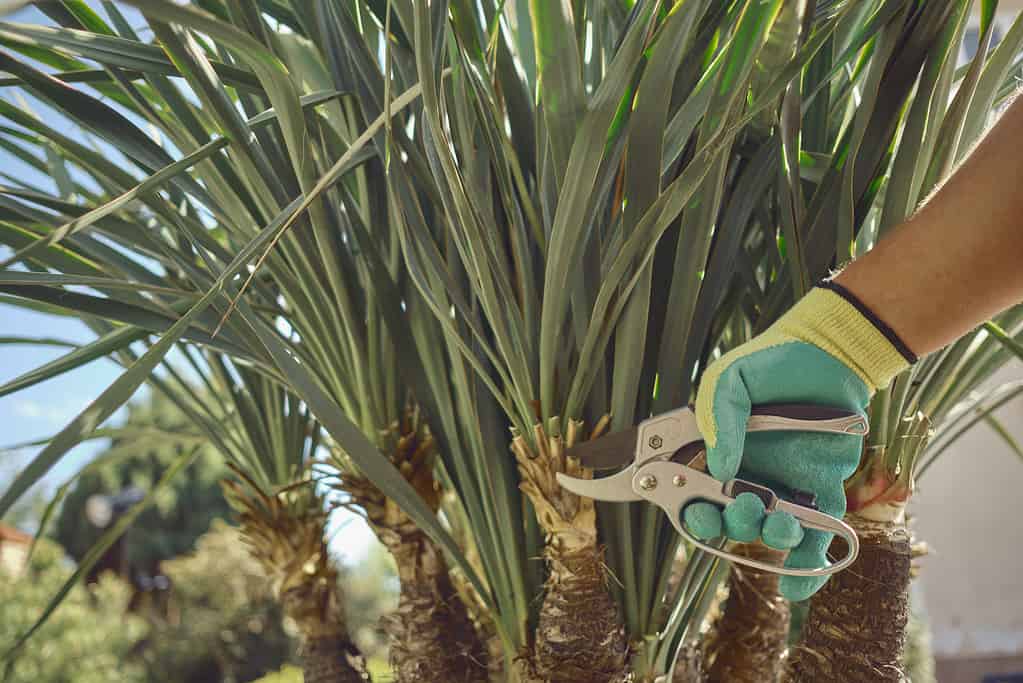
Most palms require little pruning. If you do need to prune a bit, use clean, sharp shears.
©iStock.com/Sergey Nazarov