G
Species Profile

Goose

Webbed feet, sky roads, wetland lives
Joos/Shutterstock.com

Goose Distribution

Click a location to explore more animals from that region

Invasive Species

This map shows coastal regions where Goose are found.

Loading map...

Found in 85 countries

Size Comparison

Human 5'8"
Goose 1 ft 8 in

Goose stands at 29% of average human height.

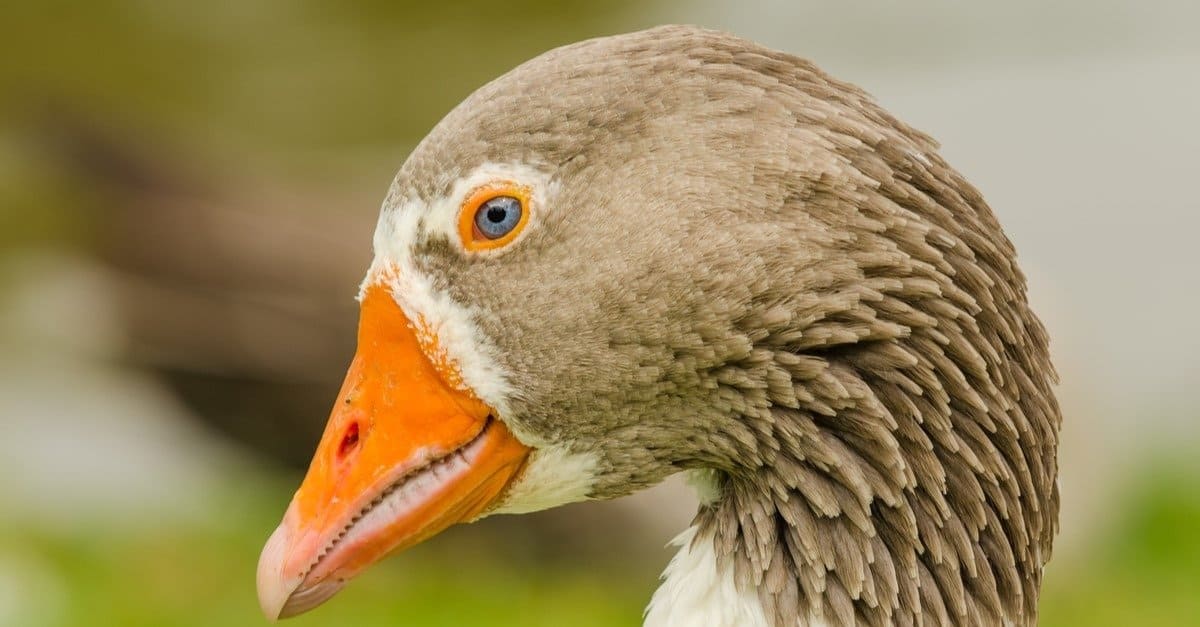
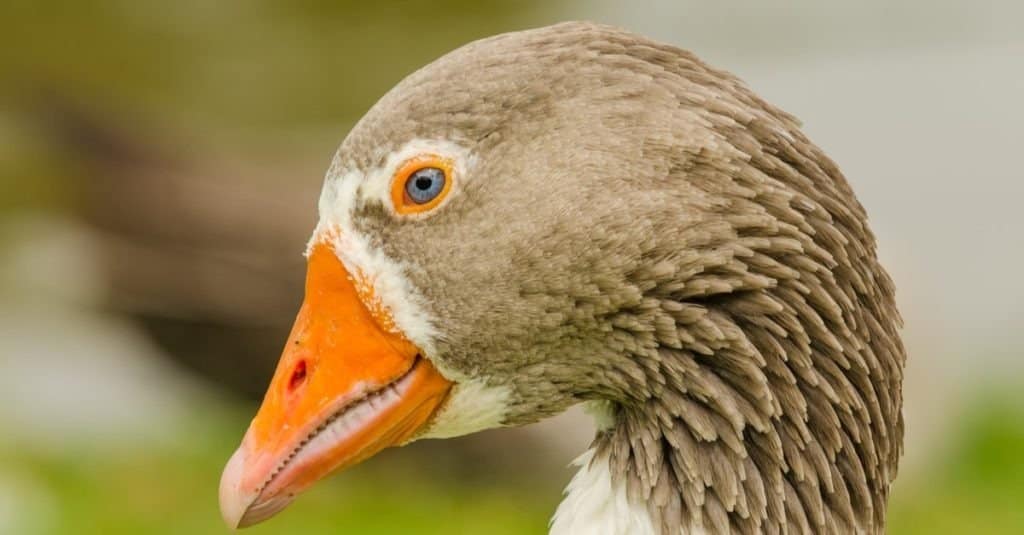
Goose close-up of the head

At a Glance

Family Overview This page covers the Goose family as a group. Stats below are general traits shared across the family.
Also Known As Waterfowl, Wildfowl, Ducks, geese and swans, Waterbirds
Diet Omnivore
Activity Diurnal+
Lifespan 12 years
Weight 15 lbs
Status Not Evaluated
Did You Know?

Family Anatidae includes ducks, geese, and swans; "true geese" are mainly in the genera Anser and Branta.

Scientific Classification

Family Overview "Goose" is not a single species but represents an entire family containing multiple species.

Geese are large-bodied waterfowl within Anatidae, generally characterized by strong flight, seasonal migration (many species), grazing/foraging on grasses and aquatic plants, and social flocking behavior. "True geese" are mainly in the genera Anser (grey geese) and Branta (black geese), but the word "goose" is also applied to some more distant anatids in common names.

Kingdom
Animalia
Phylum
Chordata
Class
Aves
Order
Anseriformes
Family
Anatidae

Distinguishing Features

  • Large waterfowl with long neck and robust body
  • Broad, often serrated bill adapted for grazing and plant feeding
  • Strong, direct flight; many species migrate long distances
  • Social flocking; loud honking calls common
  • Typically ground-nesting near water; goslings precocial (mobile soon after hatching)

Physical Measurements

Males and females differ in size

Height
2 ft 2 in (8 in – 4 ft 11 in)
1 ft 6 in (8 in – 3 ft 11 in)
Length
1 ft 10 in (11 in – 5 ft 3 in)
Weight
3 lbs (0 lbs – 33 lbs)
2 lbs (1 lbs – 26 lbs)
Tail Length
5 in (2 in – 10 in)
4 in (2 in – 10 in)
Top Speed
81 mph
Fly about 60-90 km/h

Appearance

Primary Colors
Skin Type Feathered body with dense, water-resistant plumage kept oily by preen oil; bare, hard bill (often with lamellae) and scaled, webbed legs/feet; thick down and strong contour feathers.
Distinctive Features
  • Family-wide size range (smallest to largest members): roughly ~26-183 cm total length; ~0.16-17 kg body mass; wingspan approximately ~38-250+ cm (broadly spanning tiny pygmy-geese/teal-sized ducks to large swans).
  • Family-wide lifespan range: commonly ~5-20 years in the wild for many species; longer-lived geese and swans may reach ~20-30+ years; exceptional individuals (especially in protected conditions/captivity) can exceed ~30-40+ years depending on species and circumstances.
  • Core waterfowl body plan: streamlined body, strong flight musculature, and webbed feet; many species are strong fliers with high wing-loading variation (from rapid-flapping ducks to powerful geese and large swans).
  • Bills vary by group: ducks have lamellae to filter food; geese (Anser, Branta) have wider bills for grazing grasses and aquatic plants; swans mostly eat underwater plants.
  • Wetland dependence is common but not universal: most species use lakes, rivers, marshes, coastal lagoons, or tundra ponds; some geese and a subset of ducks forage extensively on terrestrial fields/grasslands while roosting on water.
  • Many Anatidae species are social and form flocks outside the breeding season. Migration is common and often long-distance in temperate/high-latitude breeders (true geese, many ducks), while some taxa are partly migratory or resident in tropics.
  • Many Anatidae show seasonal cycles. Ducks have major post-breeding molts; males may enter dull 'eclipse' plumage. Geese and swans molt wings together and become flightless. Nests range from hidden vegetation to open tundra or shore.
  • True geese (Anser = grey geese; Branta = black geese) are long-necked, heavy-bodied grazers that flock and migrate. They are less built for dabbling or diving than ducks and smaller than swans.
  • Vocal and social signals: honking/cackling is common in geese; many ducks have quieter or sex-specific calls; swans often have loud bugling/trumpeting or softer calls depending on species-communication supports flock cohesion and pair/brood coordination.
  • Defensive/foraging adaptations: strong wings for flight and threat displays; robust bills for grazing or foraging; some species show territorial aggression during breeding, while others breed more loosely in colonies or dispersed pairs depending on ecology.

Sexual Dimorphism

Sexual dimorphism (differences between males and females) in Anatidae varies widely. Many ducks show strong color differences—bright males and duller females, often seasonal (breeding vs eclipse). True geese (Anser, Branta) and most swans look alike; differences are often in size, voice, or behavior, with males usually slightly larger.

  • In many ducks: brighter/iridescent head or body plumage, higher-contrast patterning, and more conspicuous wing speculum effects; seasonal breeding plumage often most pronounced.
  • In some species: ornamental feathers (e.g., curled tail feathers in several dabbling ducks) or more vivid bill/soft-part coloration during breeding.
  • Often slightly larger body size and/or heavier build than females, especially in many duck species; size differences are usually subtle in geese and swans.
  • In many ducks: more cryptic 'spotted'/mottled brown-gray camouflage suited to nesting concealment; typically less iridescent and lower contrast than males.
  • More consistent year-round plumage in many species; in groups with strong male seasonality, females often remain relatively stable while males change dramatically.
  • In many geese and swans: females resemble males closely, with differences often primarily in average size (female slightly smaller) rather than distinct coloration.

Did You Know?

Family Anatidae includes ducks, geese, and swans; "true geese" are mainly in the genera Anser and Branta.

Sizes span from small pygmy-geese (~26-30 cm) to trumpeter swans (~138-165+ cm) with wingspans up to ~2.5 m.

Many species molt all their flight feathers at once, becoming flightless for weeks and relying on safe wetlands.

Geese tend to be grazers with longer necks and stronger terrestrial walking than many ducks; swans are generally the largest, longest-necked anatids.

Some anatids dive with powerful feet (e.g., pochards, scaup, mergansers), while others "dabble" and tip-up at the surface (many typical ducks).

Pair bonds are often seasonal in ducks but can be long-term in many geese and swans, with shared territory defense and chick-rearing.

Down feathers from geese and ducks have long been valued for insulation; the family is also central to global hunting, farming, and conservation stories.

Unique Adaptations

  • Lamellae (bill combs): Many anatids have fine ridges along the bill edges that help strain small food items, grasp vegetation, or handle slippery prey-adapted to each feeding niche.
  • Webbed feet and leg placement: Efficient paddling and maneuvering in water; some divers have legs set farther back for propulsion, trading off agility on land.
  • Dense waterproof plumage: Overlapping feathers plus oils from the uropygial (preen) gland help shed water and retain warmth; down provides strong insulation in cold water.
  • Countercurrent heat exchange: Blood-vessel arrangements in legs/feet reduce heat loss while standing on ice or in cold water.
  • Salt glands: Many coastal and marine-feeding species can excrete excess salt, enabling use of brackish and ocean habitats.
  • High-power flight anatomy: Large flight muscles and efficient aerodynamics support long-distance migration; many species exploit tailwinds and fly in formations that reduce energy cost.
  • Flexible neck and head morphology: From short-necked dabbling ducks to long-necked geese and swans, neck length and skull/bill shape track feeding depth and diet across the family.

Interesting Behaviors

  • Migration and flyways: Many species undertake long seasonal migrations, often traveling in coordinated flocks; others are resident or only locally nomadic depending on climate and food.
  • Flocking and social cues: Anatids commonly feed, roost, and travel in groups; flock structure can range from loose feeding aggregations (many ducks) to cohesive family groups (many geese and swans).
  • Foraging styles (high variation): Dabblers skim, filter, and "tip-up" in shallow water; divers pursue prey underwater; geese and some sheldgeese graze on land and in marshes; mergansers specialize on fish with narrow, toothed bills.
  • Pair bonding and displays: Courtship can include synchronized swimming, head-bobbing, vocal duets, and ritualized preening; mating systems range from mostly monogamy to more promiscuous patterns in some ducks.
  • Brood care: Young typically leave the nest soon after hatching and feed themselves, but parents (especially in geese and swans) often guard, lead, and defend them aggressively.
  • Wing molt and refuge use: During simultaneous wing-feather molt, many species concentrate on predator-safe lakes or marshes.
  • Vocal communication: Calls range from the quiet whistles of some ducks to loud "honks" of geese and trumpet-like swan calls, used for contact, alarm, and coordination in flight.

Cultural Significance

Anatidae (ducks, geese, swans) are central to farming (meat, eggs, down). Domestic ducks come from the mallard; domestic geese from greylag and swan goose. Wild ducks and geese are game and wetland health indicators. Swans stand for beauty, loyalty, change; goose migrations mark seasons.

Myths & Legends

The "Swan Maiden" motif (found across Eurasia): a man steals the feather garment of a swan-woman, preventing her from returning to her swan form until it is recovered-stories of marriage, loss, and transformation.

Greek myth of Leda and the Swan: Zeus appears as a swan in a famous tale that influenced centuries of European art and literature.

Sacred swan/goose in Hindu and Buddhist traditions: a revered swan- or goose-like bird symbolizing discernment and spiritual purity; interpretations vary between swan and goose across regions.

Rome's sacred geese of Juno: legendary accounts say geese kept at Juno's temple honked an alarm that helped save the Capitol from a night attack by Gauls.

Hans Christian Andersen's "The Wild Swans": a fairy tale centered on enchanted brothers turned into swans and a sister's quest to break the spell.

Aesop's fable "The Goose That Laid the Golden Eggs": a cautionary tale about greed, widely retold across cultures.

Chinese cultural tradition of mandarin ducks: celebrated in art and wedding symbolism as emblems of affection and marital harmony (a long-standing association even when not strictly a 'myth').

Conservation Status

NE Not Evaluated (family-level; member species span a wide range of IUCN categories from LC to EX, with several EN/CR species)

Has not yet been evaluated against the criteria.

Population Unknown

Protected Under

  • CITES: many Anatidae species are listed in the CITES Appendices (listing varies by species)
  • Convention on Migratory Species (CMS/Bonn Convention): several migratory waterfowl are listed; protections vary by species and range states
  • AEWA (Agreement on the Conservation of African-Eurasian Migratory Waterbirds): covers numerous Anatidae populations across Africa-Europe-West/Central Asia flyways
  • Ramsar Convention on Wetlands: key mechanism for protecting critical breeding, staging, and wintering wetlands used by Anatidae
  • United States: Migratory Bird Treaty Act (MBTA) protects most native migratory waterfowl; hunting regulated via federal/state frameworks
  • European Union: Birds Directive provides protection for wild birds and designation of SPAs; hunting permitted for certain species under regulated conditions
  • Family-level conservation landscape (summary): Anatidae is highly diverse (dabbling ducks, diving ducks, geese, swans, shelducks, whistling-ducks, sea ducks), so risk is uneven-many widespread species are LC, but multiple species are VU/EN/CR and there are also extinct lineages within the family (EX). Notable at-risk examples in recent assessments include critically endangered pochards and other range-restricted freshwater ducks (e.g., Madagascar Pochard CR; Baer's Pochard CR) and several threatened forest/wetland specialists (status varies by species/region).
  • Family-level biology ranges (across species; approximate): adult body length ~26-165 cm; mass ~0.15-14+ kg; wingspan roughly ~40-240 cm. Lifespan commonly ~5-15 years in the wild for many ducks, with geese/swans often ~10-25+ years; captive maxima can exceed ~30 years. Ecology/behavior generalizations: most are strongly tied to wetlands/coasts; diets range from largely herbivorous grazing (many geese/swans) to omnivory and specialized diving for mollusks/crustaceans (many sea ducks). Many species are migratory and highly social (flocking), but some are resident/territorial, and nesting strategies vary from ground nests in open tundra/grassland to tree cavities in some ducks-so management needs are often population- and flyway-specific.

You might be looking for:

Greylag Goose

22%

Anser anser

A widespread Eurasian true goose; wild ancestor of many domestic geese.

Canada Goose

22%

Branta canadensis

Common large North American goose, often associated with parks and lakes.

Snow Goose

16%

Anser caerulescens

North American goose with white and blue morphs; large migratory flocks.

View Profile

Barnacle Goose

12%

Branta leucopsis

Black-and-white goose breeding in the Arctic, wintering in NW Europe.

Domestic Goose

10%

Anser anser domesticus

Domestic form primarily derived from the Greylag Goose (and in East Asia also from Swan Goose).

Life Cycle

Birth 8 chicks
Lifespan 12 years

Lifespan

In the Wild
5–30 years
In Captivity
10–50 years

Reproduction

Mating System Monogamy
Social Structure Socially Monogamous
Breeding Pattern Seasonal
Fertilization Internal Fertilization
Birth Type Internal_fertilization

Anatidae (ducks, geese, swans) are mainly socially monogamous. Ducks usually form seasonal pairs; many geese and swans form long-term or lifelong pairs. Extra-pair and forced matings occur in some ducks. Polygyny, polyandry, and cooperative breeding are rare.

Behavior & Ecology

Social Flock Group: 50
Activity Diurnal, Crepuscular, Cathemeral
Diet Omnivore Aquatic vegetation and seeds (family-wide common staples; exact preference varies strongly by genus, season, and life stage)
Seasonal Migratory 6,214 mi

Temperament

Lifespan range across the family: commonly ~3-30 years in the wild depending on species and conditions; some geese/swans and some ducks can exceed ~30 years, with occasional captive/record maxima reaching ~40+ years.
Most Anatidae live in or near water and move seasonally; many migrate long distances while others stay. They feed by grazing (geese), dabbling or diving (ducks), eating plants, seeds, and small animals.
Generally wary and alert in open habitats; often quick to flush and strongly flight-capable; vigilance typically increases in exposed feeding areas and in hunted/disturbed landscapes.
Often gregarious outside breeding, but can become territorial or aggressive when nesting, defending mates, or guarding broods (especially in many swans and geese).
Dominance interactions are common in dense feeding/roosting groups; intensity varies by species, season, and resource limitation.
Strong parental investment is typical for brood care (female-led in many ducks; both parents commonly involved in geese/swans), but the degree of biparental care varies widely across the family.

Communication

quacks Varied across dabbling ducks
honks and cackles Common in many geese
trumpeting calls Notably in swans
whistles and peeps Common in several duck groups
grunts, growls, and chatter calls Agonistic/contact contexts
hisses Threat/aggression, especially in larger taxa
visual courtship displays Head-bobbing, neck-stretching, wing-flapping, body-posture routines
plumage and bill coloration signaling Sex recognition, mate choice; strong seasonal variation in many ducks
synchronized flight/formation cues and group takeoff signals Especially in migratory geese/swans
mechanical/sonation sounds from wings in flight in some ducks Species- and sex-specific in certain groups
tactile interactions such as allopreening and contact during pair-bond maintenance and brood tending
threat postures and displacement behaviors (charging, bill-pointing, wing-raising) used to mediate dominance and spacing in flocks

Habitat

Biomes:
Freshwater Wetland Marine Tundra Boreal Forest (Taiga) Temperate Grassland Temperate Forest Mediterranean Savanna Tropical Dry Forest Tropical Rainforest Desert Hot Desert Cold Alpine +8
Terrain:
Coastal Island Riverine Plains Valley Plateau Mountainous Rocky Sandy Muddy +4
Elevation: Up to 18044 ft 8 in

Ecological Role

Widespread wetland and coastal consumers spanning grazing herbivory to omnivory and occasional piscivory; they link aquatic and terrestrial food webs and can strongly shape plant and invertebrate communities.

Seed dispersal (including aquatic plants) and movement of propagules among wetlands Grazing and herbivory that can influence vegetation structure and nutrient availability Regulation of aquatic invertebrate populations (especially during breeding/duckling rearing) Nutrient cycling and cross-ecosystem nutrient transport via guano and movements between roosting/feeding sites Bioturbation of sediments during dabbling/grubbing, affecting water clarity and benthic community dynamics Important prey base for predators (raptors, mammals) and scavengers, supporting broader biodiversity

Diet Details

Main Prey:
Aquatic insects and larvae Aquatic and terrestrial invertebrates Mollusks Crustaceans Small fish Amphibian eggs and larvae
Other Foods:
Grasses and sedges Aquatic macrophytes Emergent vegetation Seeds and grains Tubers, rhizomes, and roots Fruits and berries Algae and biofilm +1

Human Interaction

Domestication Status

Semi domesticated

Anatidae (ducks, geese, swans) are mostly wild, but some groups are domesticated or managed. Domestic ducks mostly come from the mallard; domestic geese come from the greylag goose (Europe/West Asia) and the swan goose (East Asia). People raise them for meat, eggs, fatty liver, and down, hunt or control feral populations.

Danger Level

Moderate
  • physical injury from defensive aggression (especially nesting geese/swans): bites, wing strikes, chasing, falls
  • zoonotic and foodborne pathogens associated with feces or handling (e.g., Salmonella, Campylobacter; avian influenza risk in specific contexts)
  • water quality impacts in high-density urban/park settings (fecal contamination, algal blooms indirectly via nutrient loading)
  • agricultural conflict (crop grazing/trampling by some geese and swans)
  • aircraft bird-strike hazard (notably with larger geese and swans near airports)
  • rare injuries during hunting activities (human-to-human firearm risk is a contextual hazard, not caused by the birds themselves)

As a Pet

Not Suitable as Pet

Legality: Rules vary. Wild Anatidae often need permits or are illegal to keep; domestic ducks and geese are usually allowed with local rules. Swans and other wild waterfowl may be restricted for health, invasive species, or welfare; park release often banned.

Care Level: Experienced

Purchase Cost: $10 - $5,000
Lifetime Cost: $500 - $50,000

Economic Value

Uses:
Food and agriculture Hunting and recreation Feathers/down and textiles Ecosystem services and disservices Tourism/cultural value Research and conservation management
Products:
  • meat (duck, goose; some swan husbandry historically/regionally)
  • eggs
  • fatty liver production (in some production systems; regionally regulated/controversial)
  • down and feathers (bedding/insulation, apparel)
  • hunting harvest value (game species; guided hunts)
  • ornamental/estate waterfowl (sales of domestic/ornamental breeds; permitted collections)
  • wildlife tourism (birdwatching, wetlands visitation)
  • management costs (crop protection, invasive/feral control, airport wildlife hazard management)

Relationships

Related Species 2

Screamers Anhimidae Shared Order
Magpie goose Anseranas semipalmata Shared Order

Ecological Equivalents 5

Animals that fill a similar ecological role in their ecosystem

Anatidae
Anatidae Anatidae Family-wide ranges and generalizations.
Rails and coots Share wetland habitats (marshes, reedbeds, lake edges) and overlap in diet (aquatic vegetation, seeds, invertebrates). Often coexist and compete for similar shallow-water resources.
Grebe
Grebe Podicipedidae Occupy the same freshwater lakes and ponds; their diving behavior overlaps with diving ducks, creating potential niche overlap for aquatic invertebrates and small fish.
Cormorants and shags Phalacrocoracidae Share coastal and inland waters with fish-eating anatids (e.g., mergansers), overlapping in aquatic hunting zones and roosting sites.
Gulls
Gulls Laridae Frequent the same shores, lakes, and wetlands; can compete for food, especially human-subsidized resources, and can also prey on eggs and ducklings in shared breeding colonies.

Types of Goose

29

Explore 29 recognized types of goose

Mallard
Mallard Anas platyrhynchos
Northern Pintail
Northern Pintail Anas acuta
Northern Shoveler Spatula clypeata
Gadwall
Gadwall Mareca strepera
Eurasian Wigeon Mareca penelope
Green-winged Teal Anas crecca
Wood Duck
Wood Duck Aix sponsa
Mandarin Duck Aix galericulata
Common Eider Somateria mollissima
King Eider
King Eider Somateria spectabilis
Long-tailed Duck Clangula hyemalis
Common Goldeneye
Common Goldeneye Bucephala clangula
Bufflehead Bucephala albeola
Common Merganser Mergus merganser
Red-breasted Merganser Mergus serrator
Ruddy Duck
Ruddy Duck Oxyura jamaicensis
Common Shelduck Tadorna tadorna
Black-bellied Whistling-Duck
Black-bellied Whistling-Duck Dendrocygna autumnalis
Wandering Whistling-Duck Dendrocygna arcuata
Greylag Goose Anser anser
Snow Goose
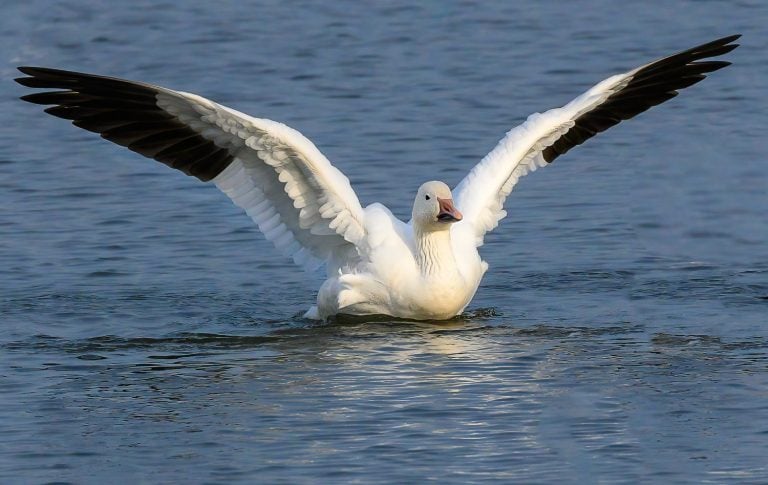
Snow Goose Anser caerulescens
Bar-headed Goose Anser indicus
Canada Goose Branta canadensis
Barnacle Goose Branta leucopsis
Brent Goose Branta bernicla
Mute Swan Cygnus olor
Whooper Swan Cygnus cygnus
Trumpeter Swan Cygnus buccinator
Black Swan Cygnus atratus

This bird’s loud, aggressive behavior has become something of a running joke in modern media (epitomized by the popular action puzzle video game, Untitled Goose Game), but as a very caring parent, it is usually just trying to protect its young from danger.

The Canada goose is the most common species in North America, but the bird has adapted to live in many different regions around the world.

An Amazing Bird: 4 Goose Facts!
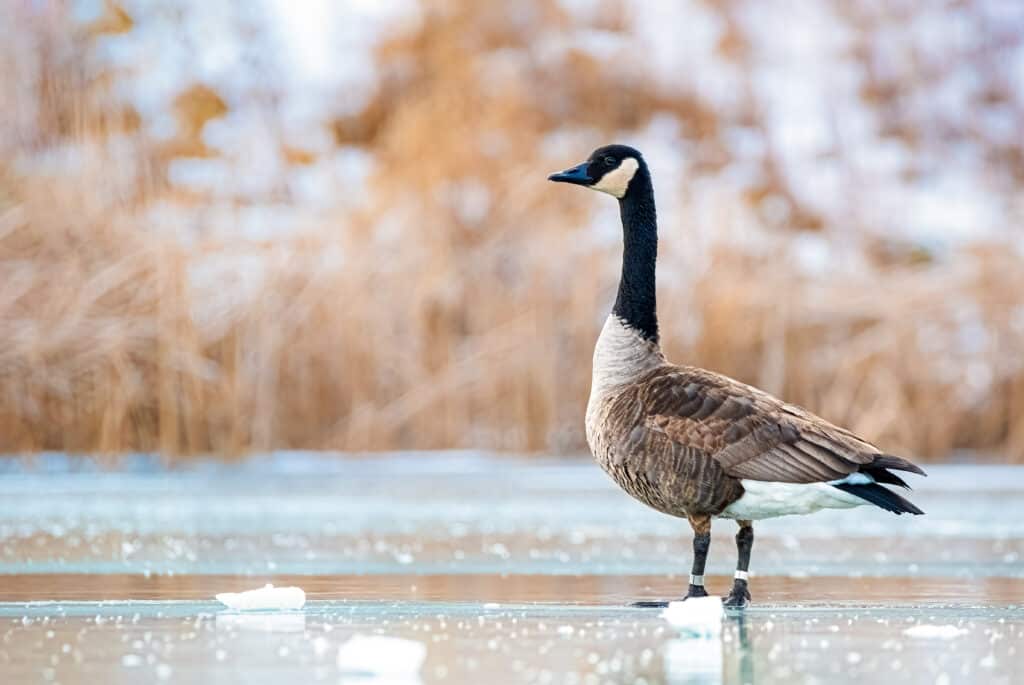
A canada goose, frame right, looking left, is standing with its wings folded on ice, a frozen pond/lake. The goose is mostly gray/taupe with a long dark neck and a white throat. Its feet are not visible.

Fossils of these birds have been found dating back some 10 to 12 million years ago.

Here are a few amazing goose facts:

  • Domesticating geese was a somewhat common job or pastime in Ancient Egypt, Rome, and Greece. The Roman naturalist Pliny (200s AD) once told an amusing anecdote of a pet goose that was inseparable from its owner.
  • Today, most domesticated birds are descended from the graylag, the swan goose, and a few other species for the purpose of cultivating their feathers (which end up in quilts, pillows, and coats) or meat and pâté (most commonly in foie gras). They have been selectively bred for traits such as size, temperament, and egg production.
  • The goose is a bird that has made an indelible mark on human culture as a harbinger of winter and an important component of numerous idioms and phrases. “Killing the goose that lays the golden eggs” is a reference to one of Aesop’s Fables as a warning against greedy behavior.
  • Fossils of these birds have been found dating back some 10 to 12 million years ago.
  • The term goose can refer not just to the bird itself, but also to the adult female specifically. She’s sometimes called a hen to avoid confusion. An adult male is generally referred to as a gander.

List of Types of Geese

Here is a full list of all the different species of geese:

  • Canada goose (Branta canadensis)
  • Greylag goose (Anser anser)
  • Snow goose (Anser caerulescens)
  • Swan goose (Anser cygnoid)
  • Greater white-fronted goose (Anser albifrons)
  • Barnacle goose (Branta leucopsis)
  • Brent goose (Branta bernicla)
  • Bar-headed goose (Anser indicus)
  • Cackling goose (Branta hutchinsii)
  • Domestic swan goose (Anser cygnoid domesticus)
  • Tula Fighting Goose (Anser anser f. domestica)
  • Bean goose (Anser fabalis)
  • Ross’s goose (Anser rossii)
  • Nene (Hawaiian Goose) (Branta sandvicensis)
  • Emperor goose (Anser canagicus)
  • Pink-footed goose (Anser brachyrhynchus)
  • Lesser white-fronted goose (Anser erythropus)
  • Red-breasted goose (Branta ruficollis)
  • Tundra bean goose (Anser serrirostris)

Where to Find Them
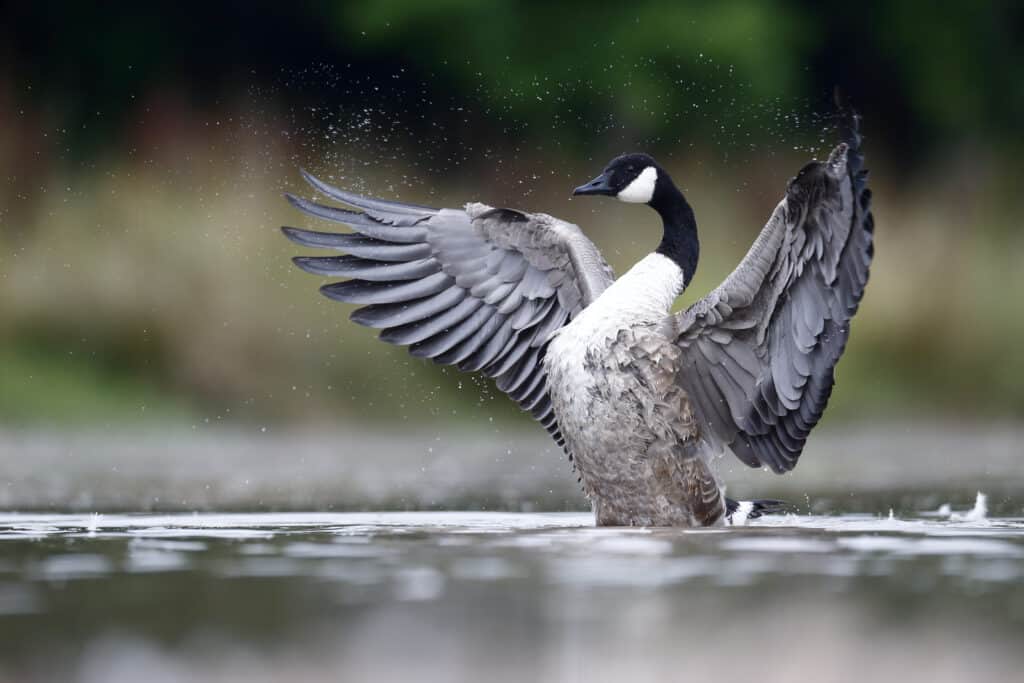
Canada Goose flapping wings

Geese are found in Europe, Asia, and North America.

The goose is a bird that has evolved over millions of years to live near the freshwater rivers, lakes, ponds, and streams of Europe, Asia, and North America. Most species prefer temperate or Arctic climates, but the Hawaiian species is an obvious exception since it lives in tropical climates.

Evolution and Origins

The European domestic goose is descended from the wild greylag goose. In fact, based on its pink bill, the coloration suggests that it is more likely from the eastern subspecies (Anser anser rubrirostris) than the nominate western subspecies.

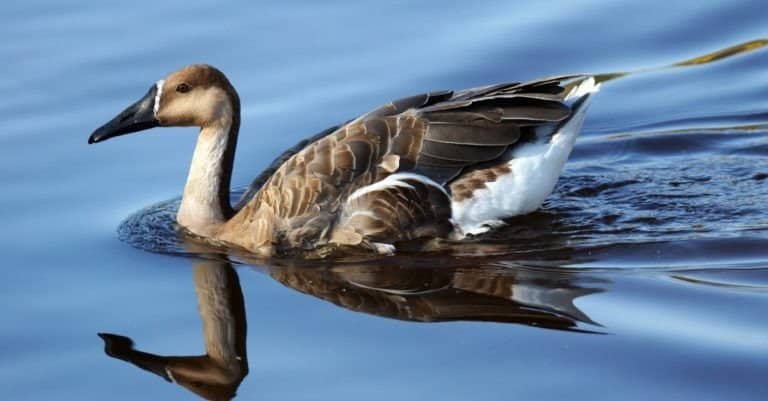
There are two key types of domestic geese. The first were thought to have origins in Europe. They may have also been descendants of the wild Greylag goose, and the second group is suggested to have their origins in Asia, and may be descendants of the wild Swan goose.

Nests

The bird’s nest is a very simple construction of leaves, grass, twigs, mosses, and lichen in the ground, sometimes near an elevated area.

Scientific Name
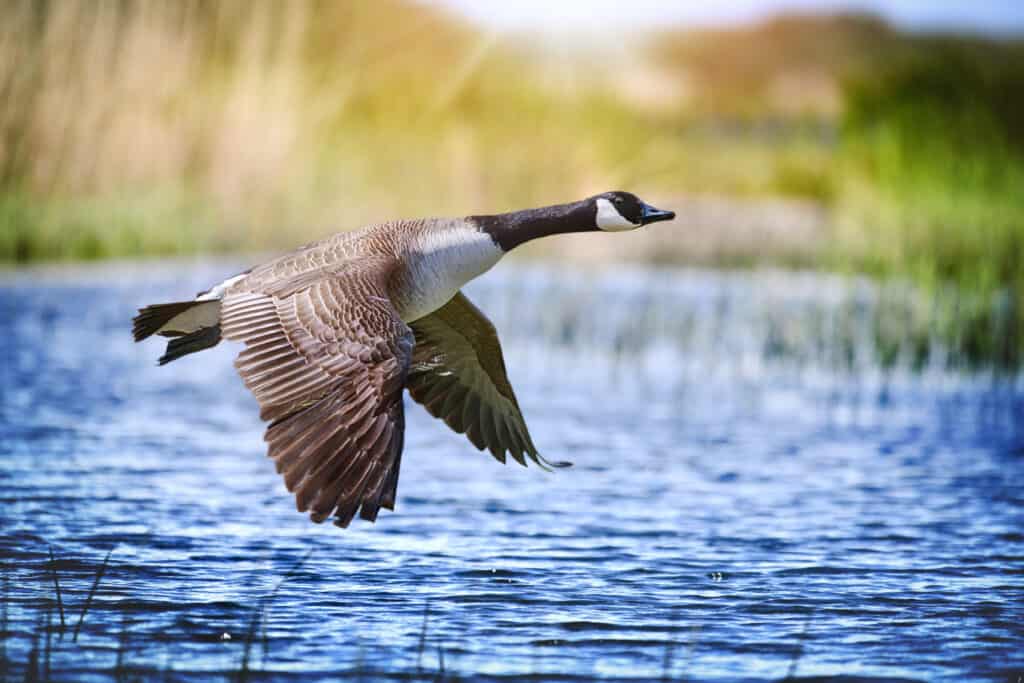
Center frame: Canada Goose flying over water,. The goose's wings are large and spread. The goose is flying low, so low that its wing its almost in the slate blue water. The goose is grey and brown with a long pblack neck, and black head, with a white throat. Out-of-focus natural outdoor background.

Geese belong to the family of Anatidae.

Closely related to ducks, swans, and other waterfowl, these birds belong to the family Anatidae, which appears to derive from the Latin anas for a duck. “Goose” is not really a single classification at all. Instead, it is generally defined as any member of two different genera: Anser, which includes the grey and white geese, and Branta, which includes the black geese.

There are some 16 or 17 recognized species, including the Canada goose, the barnacle goose, the white-fronted goose, the snow goose, the swan goose, and the brent goose. Several more species (among them the magpie and the pygmy goose) are not true geese at all, despite their names.

Size, Appearance & Behavior

These birds are very recognizable due to their plump body, slender necks, and humped bills that tapers at the end of the mouth. Although physically similar to the closely related swan, they usually exhibit grey or black feathers all over their smaller body with a black or orange bill.

The terms gray, white, and black goose generally refer to the color of the neck and head (the black goose has an additional white mark around the chin as well). One of the largest species is the Canada goose, which can weigh up to 14 pounds and reach about 43 inches in length, though the greylag goose and swan goose can also reach similar or greater sizes. The males tend to be slightly larger than the females, but the sexes are otherwise similar in color and appearance.

The social life of these birds revolves around large flocks called gaggles (though in the air they’re called skeins). When defending against threats or interacting with other members, these flocks are a loud cacophony of honks and cries. Sometimes, when they are particularly angry, they will vibrate their neck feathers in defiance.

After triumphing over a foe, they will also emit a kind of victory cry. As members of the waterfowl family, these birds are obviously excellent swimmers and flyers, but the more forward position of their feet, compared with swans and ducks, also makes them better walkers.

Geese can sleep while staying alert by shutting down one half of their brain. This is called the unihemispheric method and is shared with other animals like dolphins.

Graylag goose [Anser anser]

Greylag goose flying over water.

Migration Timing and Pattern

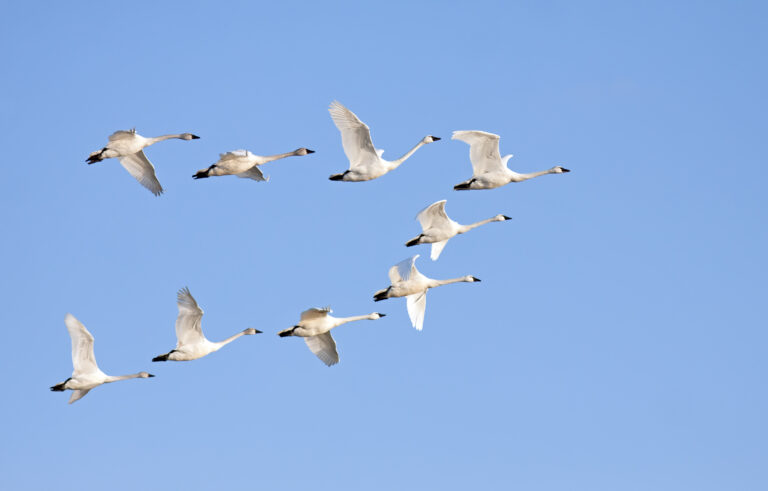
These birds migrate in V formations, which allows them to conserve energy by taking advantage of the air currents created by the wings of those ahead of them. This is why they constantly trade places: the bird at the front expends more energy than the bird toward the back.

Migratory patterns vary by species. Canada geese, for instance, travel as far south as Mexico and the Southern United States in the winter, sometimes up to 3,000 miles along a single route. Hawaiian geese (also called the nene) remain mostly within the island chain of their birth all year round.

A Herbivorous Bird

These birds are mostly herbivorous grazers; the bill and mouth are specially adapted for grasping and tearing at vegetation.

What does the goose eat?

The bird’s diet consists of sedges, grasses, grains, seeds, and aquatic plants. It will only sometimes resort to insects and fish.

Predators and Threats
Most Romantic Animals

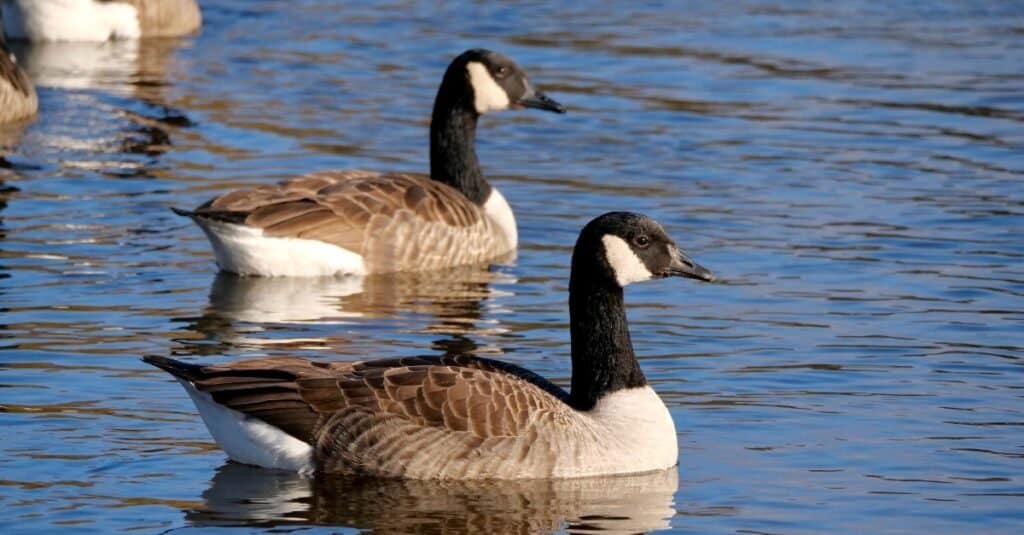
Geese face threats from hunting and habitat loss.

These birds sometimes face threats from hunting, habitat loss, and predation (both natural and introduced species). These threats tend to be localized, however, and affect each population differently, rather than all geese as a whole.

What eats the goose?
Are bobcats dangerous - Bobcat

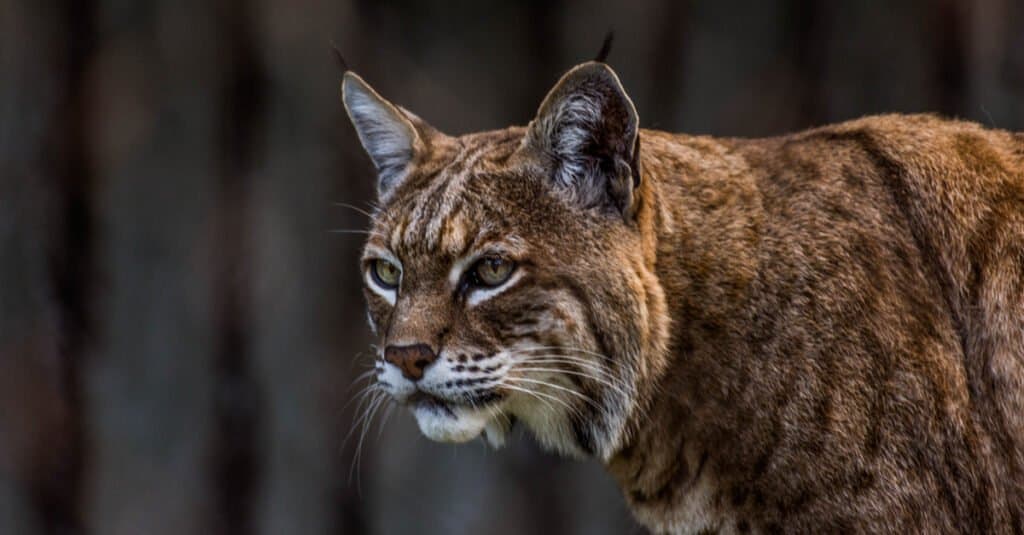
The bobcat is a natural enemy of geese.

Adult birds only have a few natural predators, including coyotes, bobcats, and humans. But eggs and juveniles make a tempting target for skunks, foxes, raccoons, crows, snakes, hawks, snapping turtles, and almost any other carnivorous animal of decent size. Since only the largest carnivores want to tussle with a full-sized goose, most of them resort to subterfuge and guile.

Reproduction, Babies, and Lifespan
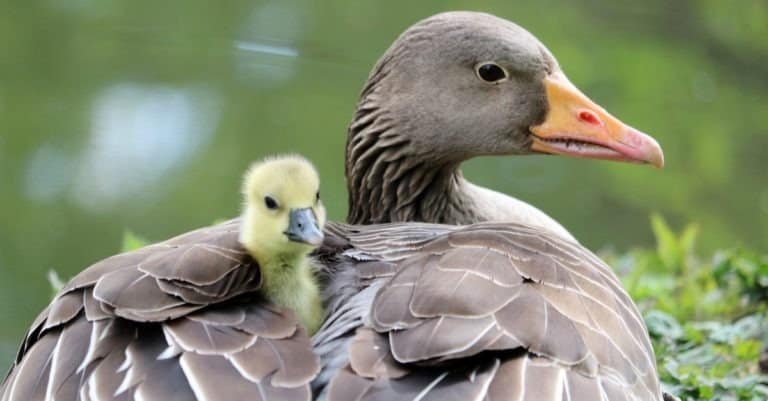
Mother goose and baby

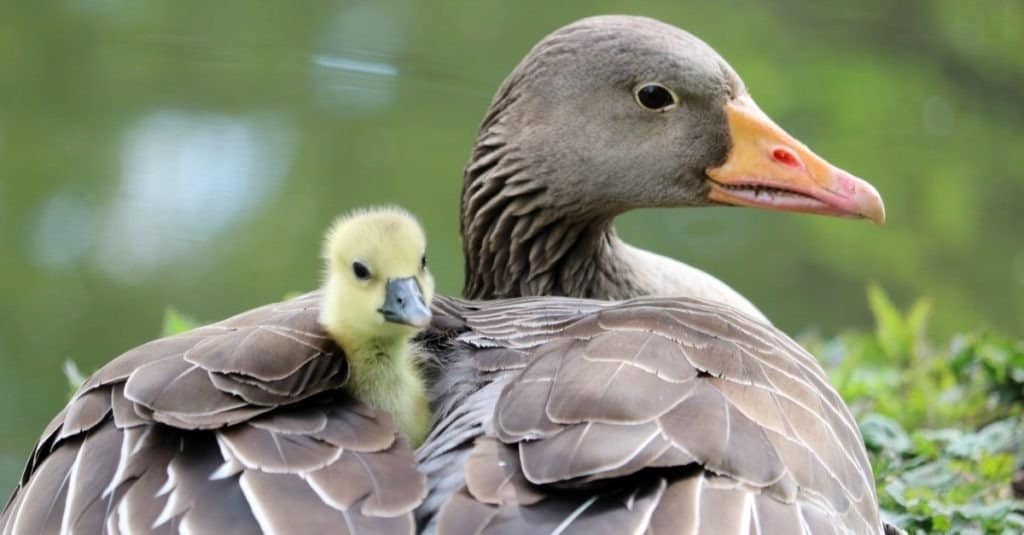
A goose and her baby.

These birds form lifelong monogamous bonds with a single partner. Together they produce a single clutch of white eggs (usually up to 10, depending on the species) in the spring breeding season. If one of the birds dies, the surviving mate will pair up with another partner within the same season.

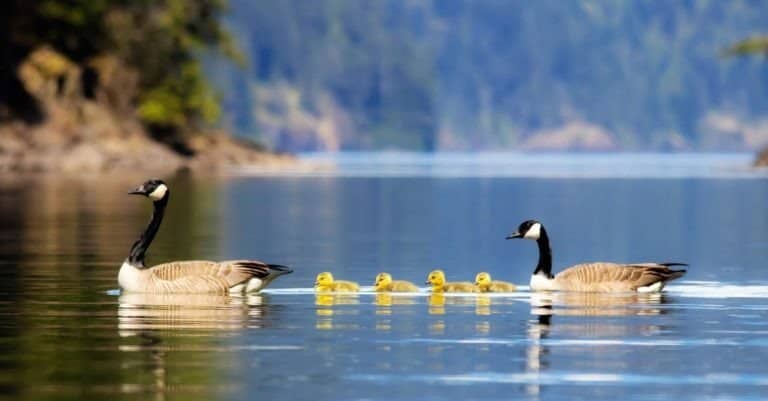
Once she lays the eggs, the female has sole responsibility to incubate them, while the male gander stands guard to protect against threats. Emerging from the egg with downy feathers, the gosling has the ability to fend for itself almost immediately, but it remains under the protection of its parents for the first summer of its life.

The parents will lead the goslings in a single-file line and hiss at anything that approaches. Geese have a life expectancy of around 10 to 15 years, but they have been known to live some 30 years in captivity.

Population

According to the IUCN Red List, most goose species are considered to be of least concern, perhaps because they are rarely hunted enough to be threatened directly.

Of the true goose species, the red-breasted goose (Branta ruficollis) is listed as Vulnerable, the Hawaiian goose (nene, Branta sandvicensis) is listed as Near Threatened, the emperor goose (Anser canagicus) is Least Concern, and the greater white-fronted goose (Anser albifrons) is also of Least Concern according to the IUCN Red List as of 2025.

View all 261 animals that start with G

Sources

  1. Britannica / Accessed January 4, 2021
  2. Thought Co / Accessed January 4, 2021
Rebecca Bales

About the Author

Rebecca Bales

Rebecca is an experienced Professional Freelancer with nearly a decade of expertise in writing SEO Content, Digital Illustrations, and Graphic Design. When not engrossed in her creative endeavors, Rebecca dedicates her time to cycling and filming her nature adventures. When not focused on her passion for creating and crafting optimized materials, she harbors a deep fascination and love for cats, jumping spiders, and pet rats.
Connect:

Thank you for reading! Have some feedback for us?


Goose FAQs (Frequently Asked Questions)

Geese are Omnivores, meaning they eat both plants and other animals.