





Monkey Facts
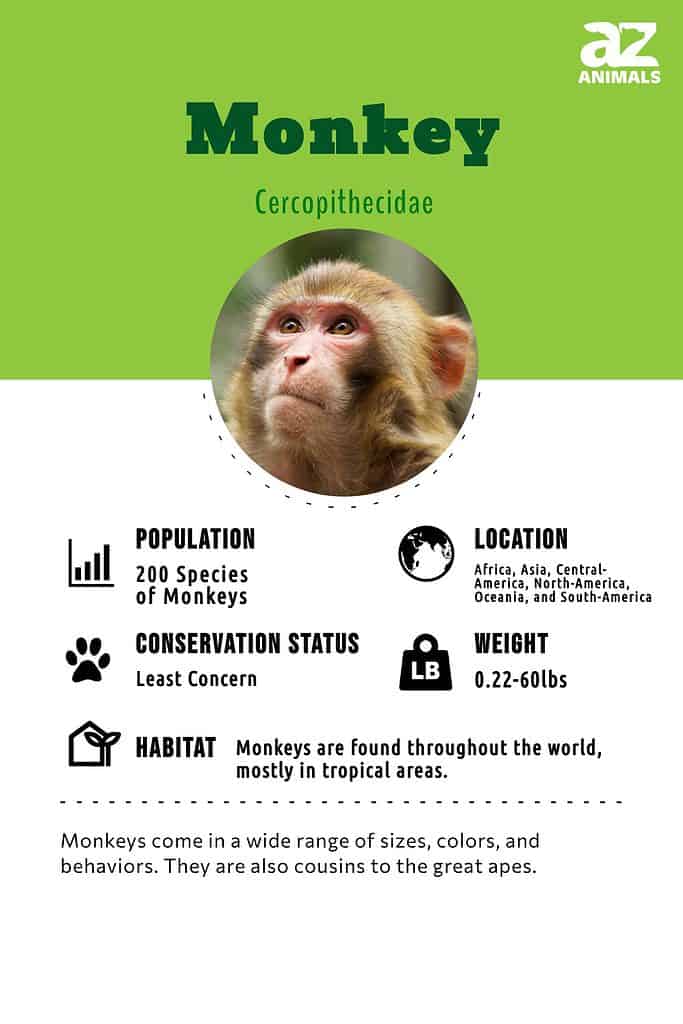
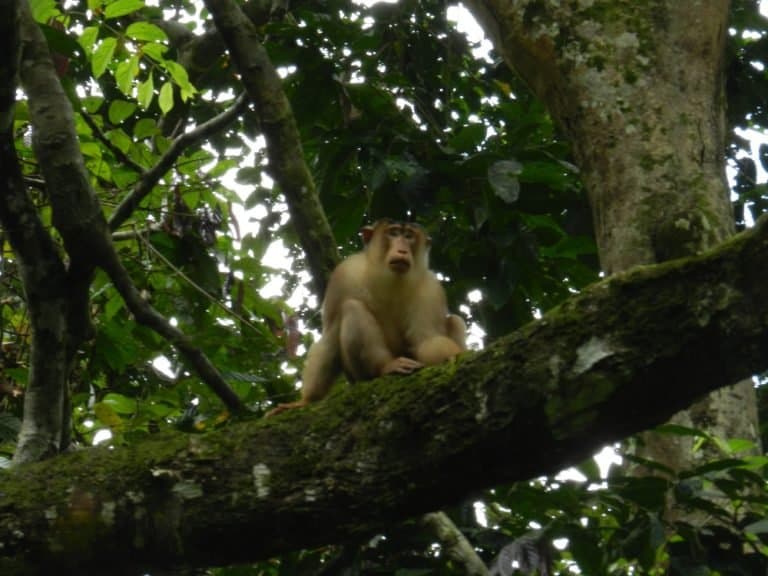
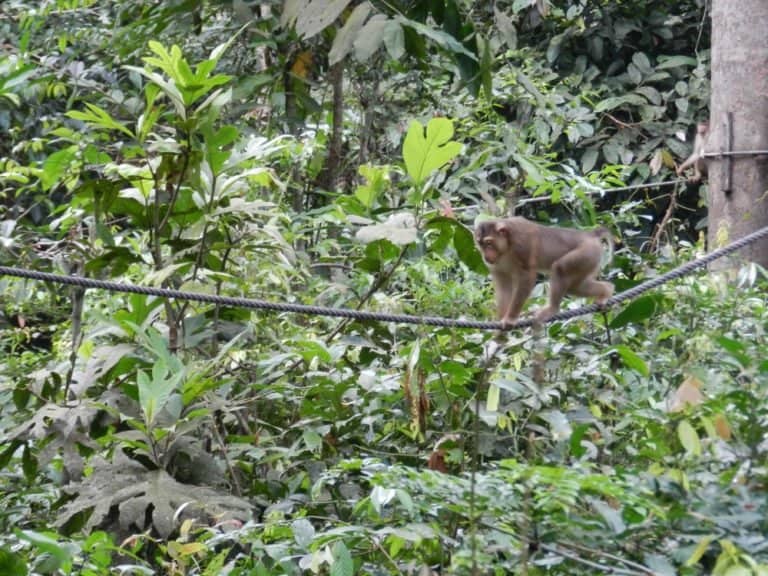
Monkeys are primates that comprise a wide range of species throughout much of the tropical world. Despite their raw variety, most of them face threats from human development, capture, and hunting. Though all monkeys have many similar characteristics and a close relationship to humans, an early evolutionary shift created two major groups today: “old” and “new” world monkeys.
Though they don’t walk on two legs, monkeys are closely related to humans–only great apes, such as chimpanzees, are more related. Monkeys are some of the most popular animals in the world.
6 Top Monkey facts
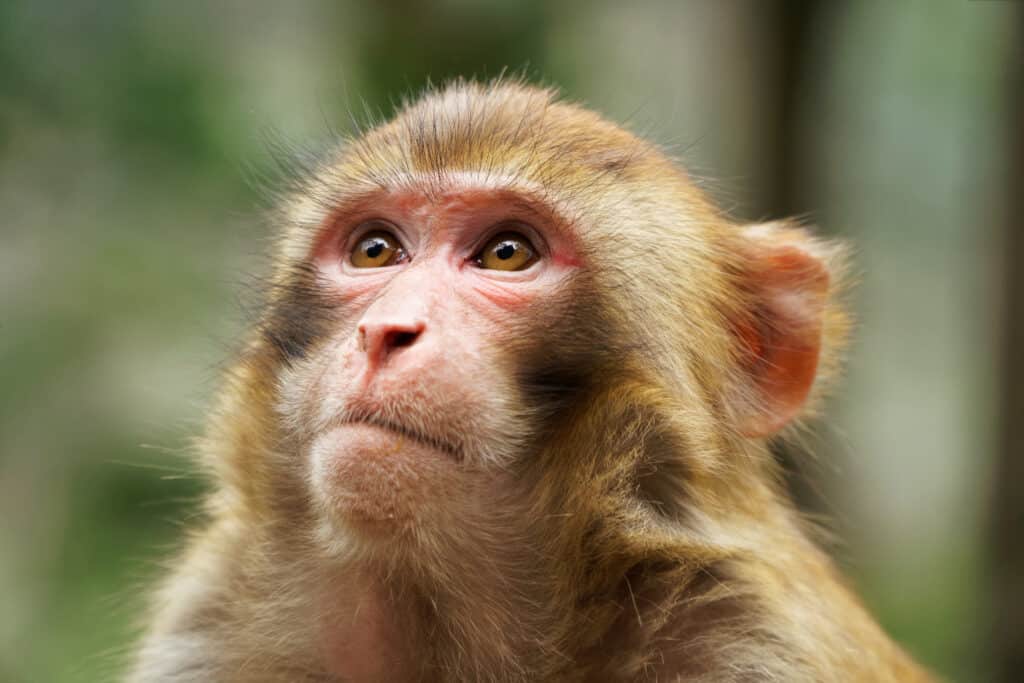
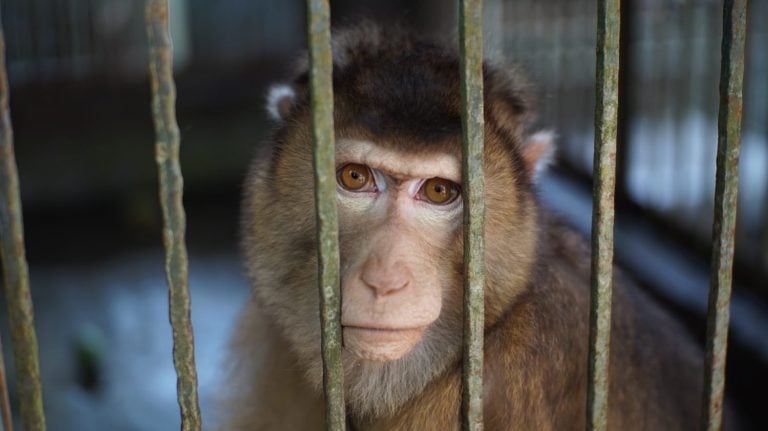
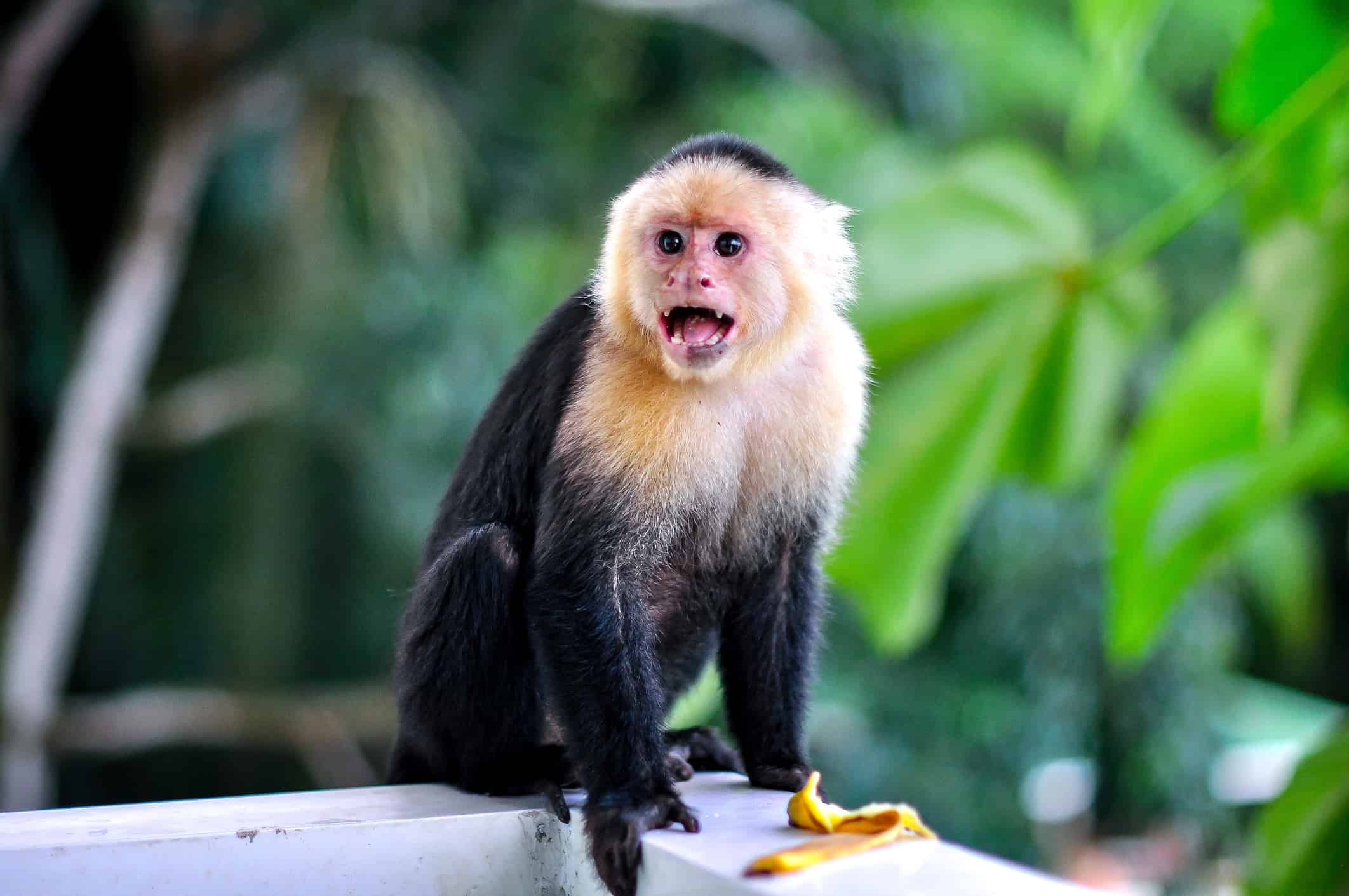
Monkeys at risk: out of over 250 species, only one type of monkey was listed as being of “least concern” for extinction.
©Blueton/Shutterstock.com
- Monkeys at risk: out of over 250 species, only one type of monkey was listed as being of “least concern” for extinction!
- Born tree: some monkeys can swing through branches as fast as a racehorse!
- Hanging out: Unlike their cousins, the apes, monkeys often have long tails–but only new world monkeys can use them to hang!
- Pocket-sized: the world’s smallest monkey, the pygmy marmoset, is less than six inches long and weighs less than a pack of playing cards!
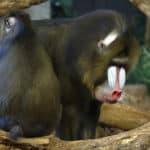
- Mega-sized: the world’s largest monkeys can reach significant sizes. For example, male mandrills have reached 119 pounds in size!
- While the thought of a pet monkey may seem nice, they are illegal to own in most states.
Evolution and Origins
Most research suggests that monkeys evolved from prosimians during the Oligocene Epoch. Additionally, apes then evolved from catarrhines in Africa during the Miocene Epoch. With that said, scientists decided that apes should be divided into the lesser apes and the greater apes.
Studies also suggest that the ancestors of monkeys originated in Africa and the first known group is thought to have reached South America 40 million years ago. This happened when the land masses were closer together and made migration easier than it is today. As of today, the oldest known monkey skeleton is Canaanimico amazonensis. The skeleton has been dated to 26.5 million years ago.
Scientific name
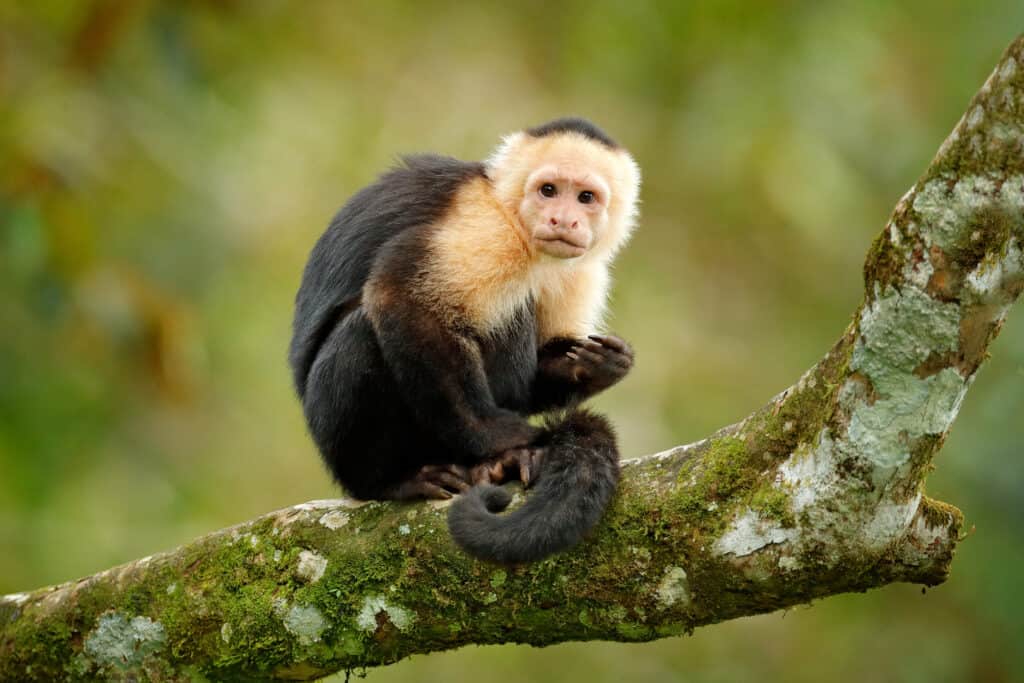
Monkeys fall under two scientific names: simiiformes catarrhini and simiiformes platyrrhini.
©Ondrej Prosicky/Shutterstock.com
Monkeys fall under two scientific names: simiiformes catarrhini and simiiformes platyrrhini. Simiiformes, from which the word “simian” is derived, come from the Latin “simia” for ape or monkey. Catarrhini comes from the Latin for “hook-nosed,” likely a reference to the closer, downward-pointed nostrils of these monkeys. This is in contrast to Platyrrhini, which comes from the Latin word for “broad-nosed,” a reference to the more flattened nostrils of this class of monkeys.
Appearance and behavior

Monkeys come in a wide range of sizes, colors, and behaviors.
©Gabi Siebenhuehner/Shutterstock.com
Monkeys are something of a cousin to apes. Great apes-including chimpanzees, gorillas, and orangutans–have larger brains and no tails. There exist over 250 species of monkeys, including macaques, tamarinds, and marmosets. Monkeys come in a wide range of sizes, colors, and behaviors. These range from the pygmy marmoset, which is less than six inches tall and weighs about as much as a deck of playing cards, to the colorful-nosed mandrill, which can weigh over 100 pounds and top out at over three feet long.
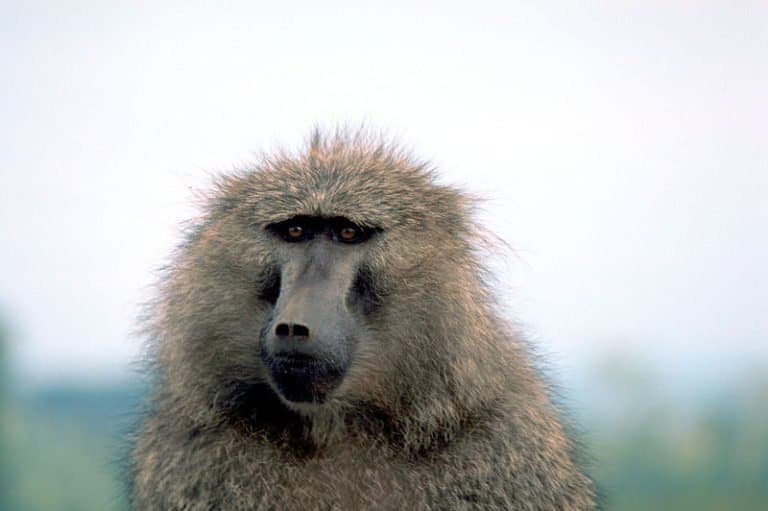
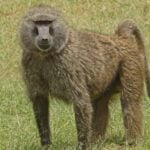
Overall, monkeys fall into two broad categories of appearance. Old World monkeys, or simiiformes catarrhini, mostly have more forward-facing noses, similar to humans. Virtually all catarrhini have tails, though none of them are prehensile, meaning they cannot use them to grab objects such as tree branches. The baboon is one example of an old-world group of monkeys, with long snouts and gray, brown, or tan fur that gets long around the chest and head. The tail of the baboon is approximately five inches long.
New World monkeys, simiiformes platyrrhini, have flatter noses with nostrils that face more to the sides. They are also the only type of monkeys that feature prehensile tails, meaning they can use their tails to grab objects and hang from trees. One common example of a platyrrhini is the spider monkey, which has a pink face poking out of noticeably long black fur.
Many monkeys avoid traveling on the ground, moving by way of what scientists call “brachiation.” Brachiation means moving around by swinging from one branch to another. Many monkeys, such as the spider monkey, have adapted long arms relative to their body for this purpose.
This, in addition to their prehensile tail, allows them to reach far for the next branch. Brachiation isn’t slow, either–some gibbons can move through the branches as fast as 34 miles per hour, the same speed as a racehorse.
Check out the most beautiful monkeys in the world and the ugliest monkeys in the world. Also, find out if monkeys can actually swim.
Habitat
Monkeys are found throughout the world, mostly in tropical areas. Catarrhini is found in Africa and Asia, while platyrrhinic mostly call Central and South America home. Most monkeys live in tropical areas, particularly in forests. Monkeys do, however, vary in the types of environments in which they thrive. Baboons, for example, live in places that are arider, or dry, in the southern countries of Africa, where it can also get cooler.
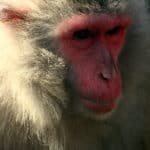
The Japanese macaque, covered in thick white-ish hair, is one of the northernmost surviving monkeys, living where there can be snow for months in parts of northern Japan. Some of them do so by relaxing in hot mountain springs.
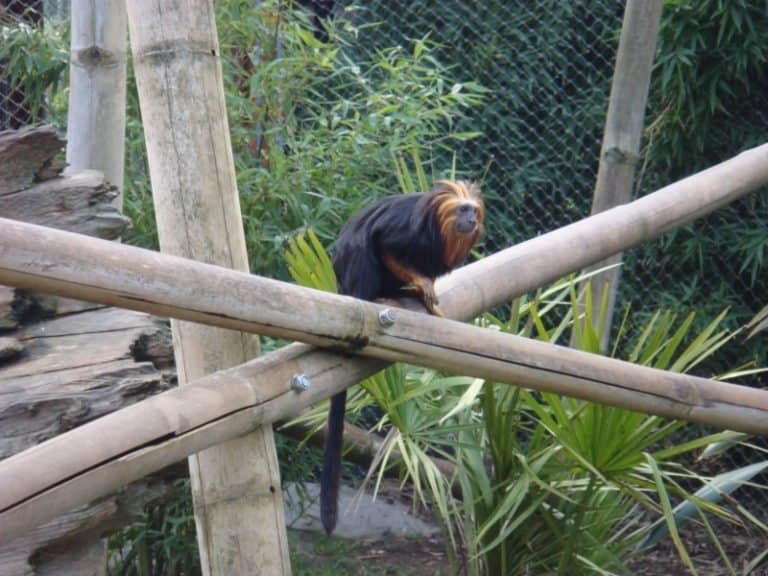
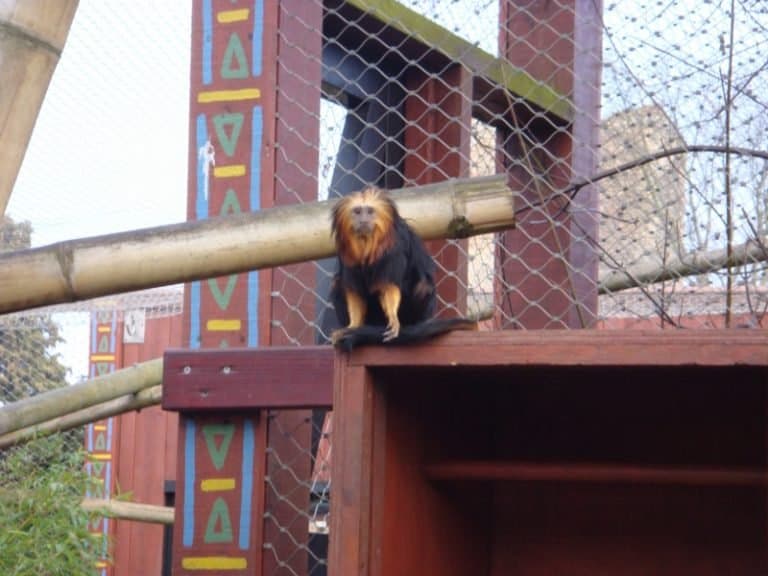
Meanwhile, the golden-headed lion tamarin lives in a low area of Brazil, where there’s lots of rain and the average temperature is over 80 degrees Fahrenheit. The lion tamarin also spends its life in the trees, specifically between 10 and 30 feet off the ground, while a baboon will usually only go to high places, such as cliffs, to sleep and get away from predators.
Diet
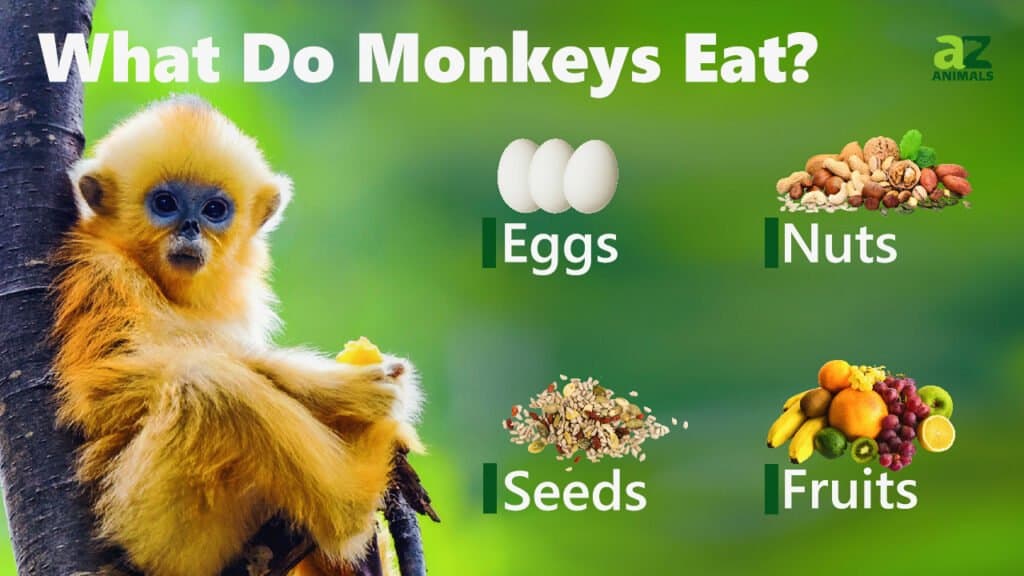
Most monkeys are omnivores, which means they eat a combination of meat and plants. Because of their size, the majority of monkeys get their “meat” from insects or grubs. Larger monkeys will also eat larger prey, such as lizards, or steal bird eggs. Fruit, nuts, and seeds also form a large part of most monkeys’ diets. It is a common conception that monkeys eat bananas, but you can find out if monkeys really eat bananas in this article.
The amount of meat or plants eaten by a monkey depends on their environment as well as the time of the year. Monkeys might feast on grubs during those insects’ breeding times or eat lots of fruit while it is ripe, then resort to more dependable food for the rest of the year. The squirrel monkey, for example, gets three-quarters of its nutrition from insects, but will mostly eat plants and fruits, particularly from the Attalea maripa palms, during the rainy season.
For a complete list of the food monkeys eats, check out our “What Do Monkeys Eat” page.
Predators and threats
Monkeys across the world face dangers from other animals as well as humans. In Africa particularly, larger predators such as lions will attempt to hunt monkeys. However, the biggest threat to most monkeys comes from humans.
Humans threaten monkeys through hunting and development. Farmers and loggers can damage a species of monkey’s ecosystem, even when humans clear out a small area. The clearing of trees for crops or lumber can disrupt the ways in which the monkey searches for food for example. In addition, some regions allow monkeys to be hunted for food or captured for sale as pets.
Reproduction, babies, and lifespan
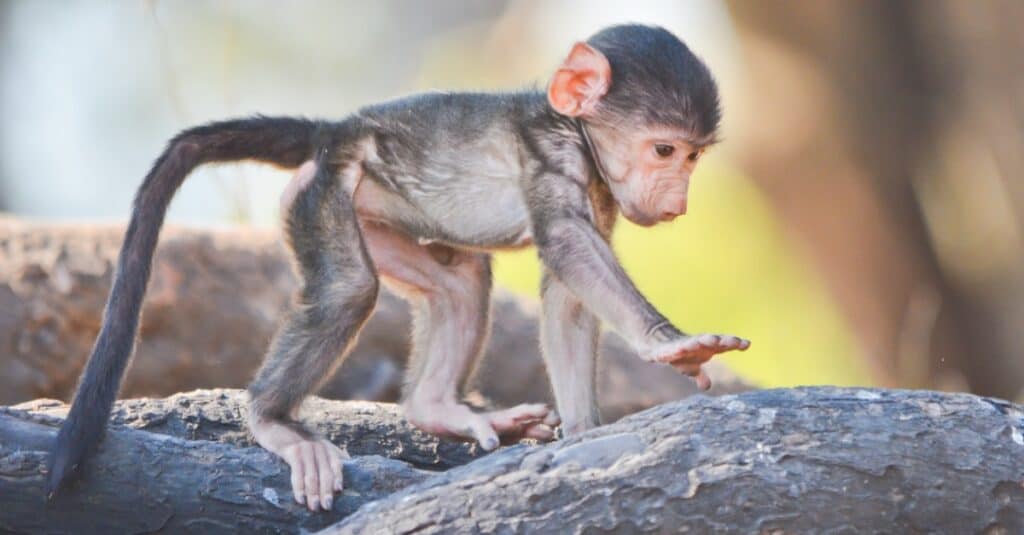
Monkeys give live birth to one or two babies at a time.
©iStock.com/marcelauret
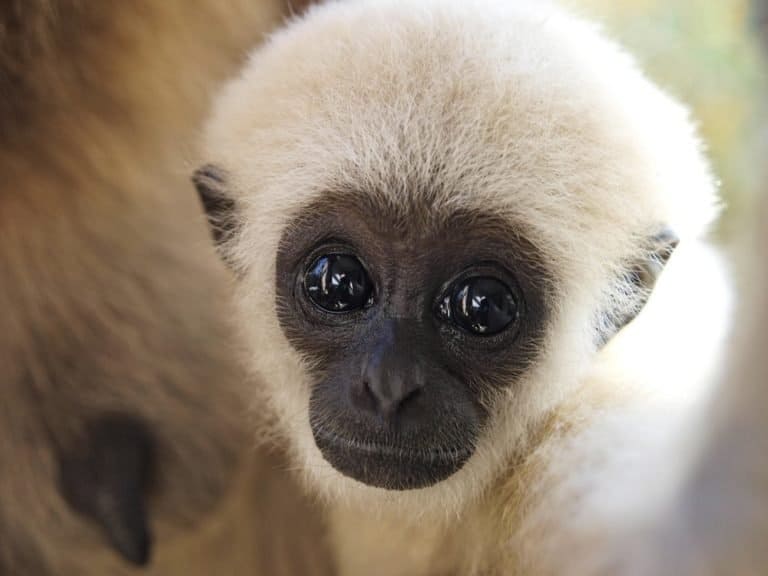
Much like humans, monkeys give live birth to one or two babies at a time and live long lives compared to other mammals. Though smaller monkeys can have life spans more like a household pet–around 15 years, on average, for many tamarinds–larger monkeys can live as long as 35 years in the wild. Monkeys live even longer in captivity, including one bornean gibbon that made it to 60 years old.
Monkeys grow to maturity within a few years, overall. Like humans, it can take about a year for a fertile female to mate and give live birth to a baby monkey. These timelines are typically shorter for smaller, more rodent-sized monkeys. Like humans, monkeys often have a near-monthly cycle where they can get pregnant. Despite this, most monkey species have a mating season that revolves around food availability.
Most monkey species will give birth to a new baby approximately once every year. Monkey mothers will typically nurse and care for a newborn monkey for at least a few months until the baby monkey becomes more independent. During this time, the baby monkey might cling to the mother exclusively, preventing the mother from having another baby.
Many monkey species form family groups with many adult females and an “alpha” male with whom most of the females mate. Non-alpha males born into these groups might separate from the group in adulthood to form their own family group. As the alpha male grows older or dies, another male may take over as the alpha.
Population
The number of monkeys around the world varies dramatically by species. Some are relatively abundant–such as the Bornean gibbon, of which there are hundreds of thousands estimated worldwide–while the Hainan black-crested gibbon is one of the rarest monkeys, with less than 30 alive in the world. Regardless of population, almost every monkey in the world is on the decline and is classified as “endangered” by conservation groups.
The black-crested gibbon, specifically, is listed as “critically endangered” by the International Union for the Conservation of Nature (IUCN). Other IUCN critically-endangered monkeys include the gray-headed lemur, the blond capuchin, the Myanmar snub-nosed monkey, and the Sarawak surili.
A few species of monkeys are defined as being only “vulnerable,” a category that is better than “endangered” under the IUCN rating. Vulnerable monkeys include the black-crowned dwarf marmoset and the Natuna Island surili.
The gelada, a type of baboon found in Ethiopia, is one of the only monkeys to earn the IUCN “Least Concern” ranking.
Monkey Pictures
View all of our Monkey pictures in the gallery.

Millie Bond - Copyright A-Z Animals
Sources
- David Burnie, Dorling Kindersley (2011) Animal, The Definitive Visual Guide To The World's Wildlife / Accessed December 5, 2008
- Tom Jackson, Lorenz Books (2007) The World Encyclopedia Of Animals / Accessed December 5, 2008
- David Burnie, Kingfisher (2011) The Kingfisher Animal Encyclopedia / Accessed December 5, 2008
- Richard Mackay, University of California Press (2009) The Atlas Of Endangered Species / Accessed December 5, 2008
- David Burnie, Dorling Kindersley (2008) Illustrated Encyclopedia Of Animals / Accessed December 5, 2008
- Dorling Kindersley (2006) Dorling Kindersley Encyclopedia Of Animals / Accessed December 5, 2008
- David W. Macdonald, Oxford University Press (2010) The Encyclopedia Of Mammals / Accessed December 5, 2008