
E
Species Profile

Eskipoo

Canis lupus familiaris

Fluffy brains, big heart.
Zeljka/Shutterstock.com

Eskipoo Distribution

Click a location to explore more animals from that region

Origin Location

This map shows the native origin of the Eskipoo. As a domesticated species, they are now found worldwide.

Loading map...

Found in 1 state/province

Size Comparison

Human 5'8"
Eskipoo 1 ft 4 in

Eskipoo stands at 23% of average human height.

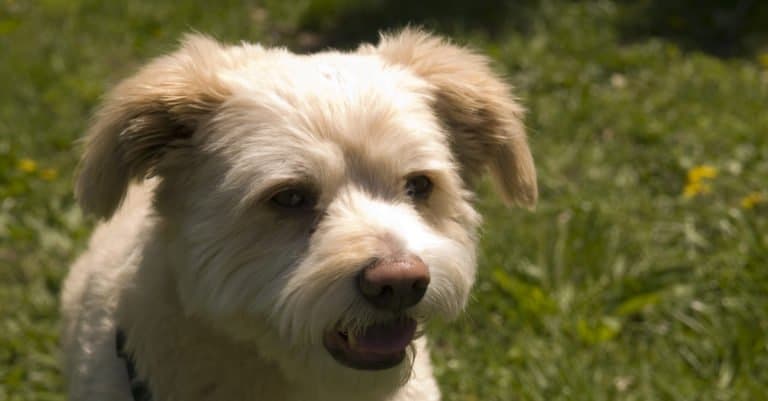
eskipoo standing in the grass

At a Glance

Domesticated
Also Known As dog, domestic dog, canine, domestic canine, pooch, pup, puppy, man's best friend
Diet Omnivore
Activity Diurnal+
Lifespan 12 years
Weight 18 lbs
Status Not Evaluated
Did You Know?

Also spelled Eskipoo/Eskapoo; sometimes marketed as "Eskadoodle."

Scientific Classification

An informal designer-dog cross between the American Eskimo Dog (a small-to-medium spitz companion breed) and a Poodle (toy/miniature/standard lines may be used). Not a standardized, universally recognized pure breed in major kennel clubs; typically categorized as a mixed-breed companion dog.

Kingdom
Animalia
Phylum
Chordata
Class
Mammalia
Order
Carnivora
Family
Canidae
Genus
Canis
Species
Canis lupus familiaris

Distinguishing Features

  • Companion dog; appearance varies by which parent is more strongly expressed
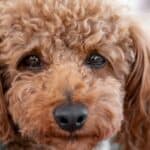
  • Often a fluffy or curly-to-wavy coat; may be low-shedding if poodle coat traits predominate
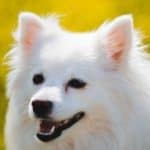
  • Spitz-like facial features and erect or semi-erect ears may occur; coat commonly white/cream but can vary
  • Size varies with the Poodle parent (toy/mini/standard), so adult size can range widely

Physical Measurements

Males and females differ in size

Height
1 ft 2 in (10 in – 1 ft 8 in)
1 ft 2 in (9 in – 1 ft 11 in)
Length
2 ft (1 ft 6 in – 2 ft 9 in)
2 ft 2 in (1 ft 8 in – 2 ft 11 in)
Weight
24 lbs (11 lbs – 49 lbs)
20 lbs (9 lbs – 55 lbs)
Tail Length
9 in (6 in – 12 in)
9 in (6 in – 12 in)
Top Speed
22 mph

Appearance

Primary Colors
Secondary Colors
Skin Type Canis lupus familiaris skin can be spitz-type double coat with a dense undercoat that sheds, or Poodle-like single curly coat that sheds little but mats. Skin may get dry or irritated with allergies.
Distinctive Features
  • Designer cross (American Eskimo Dog × Poodle), commonly spelled Eskipoo/Eskapoo; not a standardized, universally recognized kennel-club breed and should not be treated as a wild species or formal taxonomic unit beyond domestic dog.
  • Overall look ranges from spitz-like (wedge head, erect ears, plush coat, plumed tail) to poodle-influenced (curlier coat, narrower muzzle, more refined outline), with many intermediate combinations.
  • Size is variable because Poodle ancestry may be toy/miniature/standard; adults can range from small to medium (and occasionally larger when standard lines are used).
  • Coat can be straight-to-wavy-to-curly; may be low-shedding for some individuals (more Poodle-like) or seasonally heavy-shedding with an undercoat (more Eskie-like).
  • Tail often carried high with a plume/curve over the back when spitz traits are strong; may be less tightly curled in more Poodle-leaning individuals.
  • Common breed-type concerns (not universal): patellar luxation (small lines), hip dysplasia (especially larger individuals), progressive retinal atrophy/other eye issues, dental crowding in smaller dogs, and allergy/atopy-related skin/ear irritation.
  • Frequent brushing—extra for curly coats to stop mats and for spitz undercoats—plus professional grooming if very curly, regular ear cleaning for hairy ear canals, and careful dental care, especially small dogs.

Sexual Dimorphism

Typically mild sexual dimorphism: males often trend slightly taller/heavier with broader heads/neck ruff, but overlap is substantial due to mixed-breed variability and differing Poodle sizes used.

  • Often slightly larger frame and heavier bone
  • May have a broader skull/muzzle and more pronounced neck/shoulder mass
  • Can carry a fuller ruff/plume when spitz coat is inherited strongly
  • Often slightly lighter, finer-boned build
  • May present a more refined head and narrower chest
  • Coat length/texture differences are individual rather than strongly sex-linked

Did You Know?

Also spelled Eskipoo/Eskapoo; sometimes marketed as "Eskadoodle."

Not a standardized, widely kennel-club-recognized breed; usually classed as a mixed-breed companion dog.

Size can range widely because the Poodle parent may be Toy, Miniature, or Standard.

Coat texture varies from spitz-like plush to poodle-curly; shedding ranges from moderate to low depending on genes.

Often inherits "circus-dog" aptitude: both Poodles and American Eskimo Dogs have strong trainability histories.

Many develop a signature "alert bark" and watchdog posture from the spitz side-despite being friendly with family.

Can be very people-attached; early alone-time training helps prevent separation-related behaviors.

Unique Adaptations

  • Domestic-dog sociability: compared with wild Canis lupus (gray wolves), dogs are adapted for cooperative communication with humans (e.g., gaze-following and responsiveness to cues).
  • Coat diversity toolbox: the cross can combine a spitz double-coat (insulation, weather resistance) with poodle-type curl (reduced loose hair), producing many coat outcomes.
  • Trainability blend: Poodle biddability plus American Eskimo Dog eagerness can yield strong performance in obedience, trick work, and agility-when mental needs are met.
  • Cold sensitivity varies: individuals with more poodle-like coat and less undercoat may need extra warmth in winter, while spitz-leaning coats can be more cold-tolerant.
  • Potential "hybrid vigor" is possible in mixes, but health risks from either parent line can still appear-screening matters.

Interesting Behaviors

  • "Velcro dog" tendencies-following a favorite person room to room.
  • Spitz-style alerting: quick to announce visitors or unusual sounds; may need quiet-cue training.
  • Bouncy, playful "pounce" during games; many enjoy fetch and tug.
  • High problem-solving drive: learns patterns fast (and can learn unwanted habits just as fast).
  • Social checking-in: frequent eye contact and "asking" behaviors during training sessions.
  • May do "spin then sit/lie" settling rituals, common in many domestic dogs.
  • Play-bowing and exaggerated, puppy-like facial expressions-neotenous social signals typical of domestic dogs (vs. wolves).

Cultural Significance

Eskipoo mixes come from the modern designer dog trend. Poodles are famous European water dogs turned show and pet dogs. American Eskimo Dogs are spitz companions tied to American shows and family life. People want Eskipoos for friendly, trainable, teddy-bear pets, but looks and coat can vary.

Myths & Legends

Early 1900s American Eskimo Dogs, a spitz-type dog, were tied to traveling circuses; trained dogs even walked high wire, giving them the image of the "clever white circus dog."

During World War I in the United States, the breed's link to "German Spitz" became unpopular, and the name "American Eskimo Dog" appeared during a move away from German names — a common Eskie origin story.

Poodles come from old European hunting stories as "water dogs." Their lion-style show clip is said to help swimming: shave for speed, leave hair to protect joints and organs in cold water.

In modern pet folklore, Eskipoo/Eskapoo puppies are frequently described as "hypoallergenic teddy bears," a contemporary belief tied to poodle ancestry and the broader doodle trend-despite coats and dander levels varying dog to dog.

A common household superstition around white, fluffy companion dogs (including spitz types) is that they "sense visitors before the doorbell," feeding into their reputation as little guardians-an anecdote many families repeat about their Eskie mixes.

Conservation Status

NE Not Evaluated

Has not yet been evaluated against the criteria.

Population Stable

Life Cycle

Birth 4 pups
Lifespan 12 years

Lifespan

In the Wild
10–13 years
In Captivity
10–15 years

Reproduction

Mating System Polygynandry
Social Structure Managed Domestic
Breeding Pattern Transient
Fertilization Managed Selective
Birth Type Managed_selective

Mating is polygynandry at the population level, though breeders often use one stud with many females (practical polygyny). Humans control mate choice and timing, using natural mating or artificial insemination. Pair bonds are brief; size-matching and health screening matter.

Behavior & Ecology

Social Pack Group: 4
Activity Diurnal, Crepuscular, Cathemeral
Diet Omnivore Animal-protein-forward meals (commonly chicken, turkey, beef, or fish-based formulas) with palatable fats; many individuals strongly prefer meat aromas over plant foods.

Temperament

Affectionate, people-oriented companion; typically enjoys cuddling and proximity seeking
Highly intelligent and trainable (Poodle influence), often quick to learn cues and routines; can become bored without enrichment
Alert and vocal-prone compared with many other doodle-type mixes (American Eskimo influence); may develop nuisance barking if reinforcement history supports it
Playful and social with familiar dogs; may be initially wary of strangers without structured socialization
Energy level ranges from moderate to high; size/line differences matter (toy/mini Poodle lines often higher arousal; larger lines often need more sustained exercise)
Temperament varies widely among domestic dogs depending on breed, genetics, early socialization, and individual experience; domestication generally selected for increased sociability and reduced fear toward humans compared with wild canids.
Common challenges: separation-related behaviors, overexcitement/jumping, leash reactivity from insufficient socialization, and resource guarding in a minority of individuals-improved by early training and consistent routines
Care requirements (behavioral): daily physical activity plus mental work (sniffing games, obedience, trick training); consistent alone-time training; structured greetings to reduce arousal
Care requirements (grooming): coat can range from curly/low-shedding to spitz-like double coat with seasonal shedding; frequent brushing and routine professional grooming help prevent matting and manage shedding
Watch for patellar luxation, hip dysplasia, progressive retinal atrophy or cataracts, dental disease (small dogs), ear infections with floppy/poodle-like ears and dense coats, and allergies/dermatitis; check parents and keep weight and teeth care.

Communication

Barking Alert/alarm and demand barking are common in some lines
Whining/whimpering Attention-seeking, frustration, or mild anxiety
Growling Boundary-setting, resource guarding, or play growls
Howling Less common, can occur in response to sirens or excitement
Yips/high-pitched barks Often in smaller individuals or high arousal
Facial expressions and eye contact Strong handler checking-in typical of Poodle-influenced lines
Ear and tail carriage shifts Spitz-like upright ears may make subtle changes easy to read
Play bows, pawing, and bouncing approaches High play solicitation
Mouthiness/soft mouthing during play Manageable with training
Scent investigation and marking More common in intact individuals; managed via training and neuter/spay decisions
Leaning, nudging, and body blocking for attention Affiliative contact-seeking

Habitat

Biomes:
Temperate Forest Temperate Grassland Mediterranean Boreal Forest (Taiga) Tundra Alpine Desert Hot Desert Cold Savanna Tropical Dry Forest Tropical Rainforest Wetland Freshwater Marine +8
Terrain:
Plains Hilly Mountainous Coastal Island Valley Plateau Riverine +2
Elevation: Up to 16404 ft 3 in

Ecological Role

Domestic omnivorous companion (human-associated canid) with opportunistic predation/scavenging tendencies; ecological impact is largely mediated by human care and local regulations.

companionship and social/psychological benefits for humans alert/guard signaling in the home environment pest deterrence and occasional control of small rodents (opportunistic) participation in therapy/service roles (trainability varies by individual)

Diet Details

Main Prey:
Small mammals Birds Insects
Other Foods:
Berries and fruits Vegetables Grains and starches Edible fungi and plant matter

Human Interaction

Domestication Status

Domesticated

Canis lupus familiaris is the domesticated dog that came from gray wolves after a long shared history with humans over tens of thousands of years. The Eskipoo (American Eskimo Dog × Poodle) is a modern mixed-breed companion. Size, coat, behavior, and health vary by parents. Bred to be affectionate, have spitz looks, and often low-shedding.

Danger Level

Low
  • bite or nip risk, especially with poor socialization, fear, pain, or handling intolerance (risk varies by individual and upbringing)
  • small-to-medium dog injury risk (knocks/trips, jumping) and child-handling conflicts
  • allergies/asthma triggers from dander/saliva (coat type may be lower-shedding but not hypoallergenic)
  • zoonotic/parasite risks if not on prevention (fleas, ticks, roundworms, hookworms); generally controllable with routine care
  • reactivity/noise issues (spitz alert barking) that can lead to neighbor conflicts rather than direct physical danger

As a Pet

Suitable as Pet

Legality: Canis lupus familiaris (domestic dog) is usually legal as a pet where dogs are allowed, but local rules—licenses, leashes, shots, registration, limits, HOA or rental rules—and dangerous-dog laws can still apply.

Care Level: Moderate

Purchase Cost: $300 - $2,500
Lifetime Cost: $15,000 - $45,000

Economic Value

Uses:
Companion animal industry Breeding and sales (designer cross market) Veterinary care Grooming services Training/behavior services Pet boarding/daycare Pet insurance Therapy/ESA and community programs (individual-dependent)
Products:
  • companion/household pet services
  • professional grooming (clipper cuts, de-matting, deshedding where applicable)
  • training classes (basic manners, recall, leash skills)
  • veterinary preventive care (vaccines, parasite control, dental care)
  • pet supplies (food, crates, enrichment toys, leashes/harnesses)
  • boarding/daycare and walking services

Relationships

The Eskipoo is a designer dog achieved by crossing an American Eskimo Dog with a poodle. Breeders developed this dog, which weighs around 15 pounds and stands about 11 inches tall, as a happy-go-lucky family addition. Most have a double coat, which may make them ideal companions on cold winter days. Almost all have floppy ears, a trait common to both parent breeds. If you are looking for a new member of your family, consider the Eskipoo. They love to be with you all the time, and their antics will have you laughing frequently.

3 Pros and Cons of Owning Eskipoos

ProsCons
Family dogs: They love to be in the middle of everything, so whatever your family is doing is fine with them.Suffer separation anxiety: They suffer from more separation anxiety than most breeds.
Intelligent: They are very smart animals who want to please their owners.Stubborn: Sometimes these dogs want to do things their way.
Great snuggles: They love to snuggle with you, and their coat will help you stay warm as they take a nap on your lap.Energetic: They are energetic animals that need activities to keep them mentally stimulated.

6 Types of Eskipoos

The Eskipoo — which is also called the Pookimo, Eskapoo, Eskimopoo, and Eskidoodle — can have a long and thick coat like the American Eskimo dog, or it can have a short curly coat like the poodle. Others fall somewhere in between. If you are worried that you will not have time to groom it properly, choose the poodle-type coat option. Since either option is very dense, these animals do better in cooler climates. You will find them in a variety of colors, including:

  • White: This is the typical color of an Eskipoo’s coat.
  • Black: Some Eskipoos are black all over, while on other animals, black is mixed with another color. All different shades of black are possible, including those with a red or blue tint.
  • Cream: All different cream shades are possible, from very light off-white to a deeper tan color.
  • Grays: These animals may be born with a gray coat, or it may turn that way before age five.
  • Apricot: These animals are a dull, saturated orange, very similar to an apricot’s color.
  • Brown: From light to dark, many different shades of brown are possible.
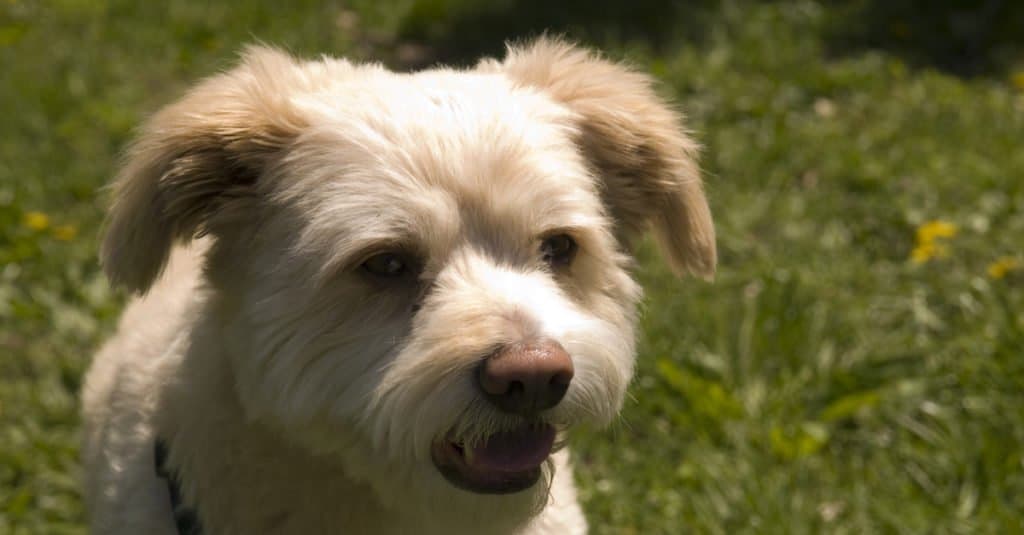
eskipoo standing in the grass

Eskipoos are typically white but can come in a variety of colors.

Evolution and Origins

As is the case with many hybrid dogs, the exact origin of the Eskipoo is unknown. However, it’s possible that it was developed when designer dogs started being bred in the 1990s, and crossbreeds with poodles — such as the Pomapoo, Maltipoo, Yorkiepoo, Cavapoo, Labradoodle, Schnoodle, and Goldendoodle — became popular.

An Eskipoo’s appearance (particularly its coat), health, and temperament can vary depending on which of its parent breeds it takes after, so it’s instructive to take a look at the American Eskimo Dog and poodle to better understand the Eskipoo.

Both parent breeds come in three sizes — standard, miniature, and toy — with the miniature size of the American Eskimo Dog often used for breeding the Eskipoo. Both breeds have European roots, German ties, and circus performance experience.

Despite its name, the American Eskimo Dog has nothing to do with indigenous Inuit people but is descended from a Nordic breed of dog known as the German Spitz and is believed to have been brought to the U.S. by German immigrants in the early 1800s. These dogs gained popularity as show dogs due to their agility and intelligence, with the most famous being Stout’s Pal Pierre, known as the first dog to walk the tightrope, who performed with Barnum & Bailey Circus during the 1930s.

The poodle can trace its lineage to Germany in the 1400s when it was bred to assist in duck hunting. The French further developed the breed, which they called the Caniche, which translates to “duck dog”. While the miniature poodle was often used by the nobility to hunt truffles, the toy poodle became a lapdog owned by royalty and the rich. Poodles were also once featured as circus performers and became especially popular as show dogs following a poodle named Nunsoe Duc de la Terrace winning Best in Show at the Westminster Kennel Club Dog Show in 1935.
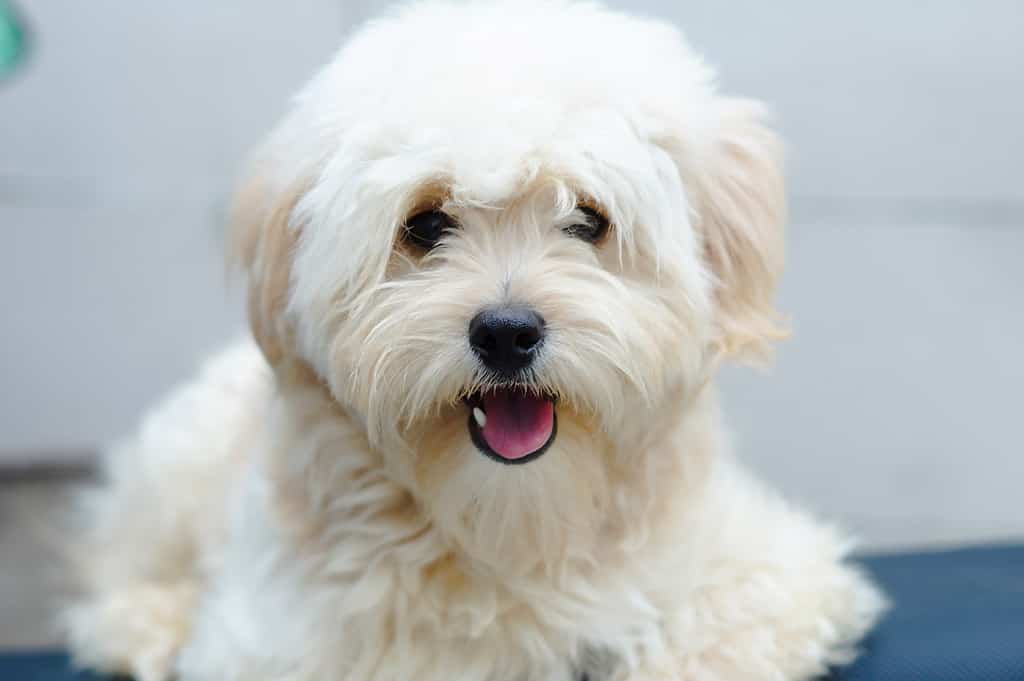
Pomapoo

Like the Eskipoo, the Pomapoo is a poodle hybrid and is a crossbreed with the Pomeranian.

Size and Weight

Eskipoos can stand between 9 and 15 inches tall at the shoulder. They weigh between 10 and 20 pounds. There is little difference between the sizes of males and females.

Common Health Issues

American Eskimo Dogs are particularly prone to cataracts, and they can pass this condition on to Eskipoos. In a mature cataract, the part of the eye that is typically black turns white. This condition can cause blindness. Since it is often hereditary, this is a question that you may want to ask the breeder about the parent. Many learn to adapt very well to being blind.

Another disease that American Eskimo dogs are prone to is digital squamous cell carcinoma, and it can be a problem for some Eskipoos. Several factors can cause these cancerous tumors on the dog’s paws, including exposure to too much sunlight. Watch your Eskipoos’ feet for crusted over or irritated places and get them checked out by a veterinarian.

Luxating patella is a displaced kneecap. Watch your Eskipoo run across the yard, and you may see it running on three feet. Then, suddenly, they are running on all four again. This is the most common sign of luxating patellae. This disease is also prevalent in Maltese, Chihuahua, French Poodle, and Bichon Frise breeds and may cause the dog to throw its leg out to the side when it runs. It can be surgically corrected if needed because it often leads to other bone and ligament issues.
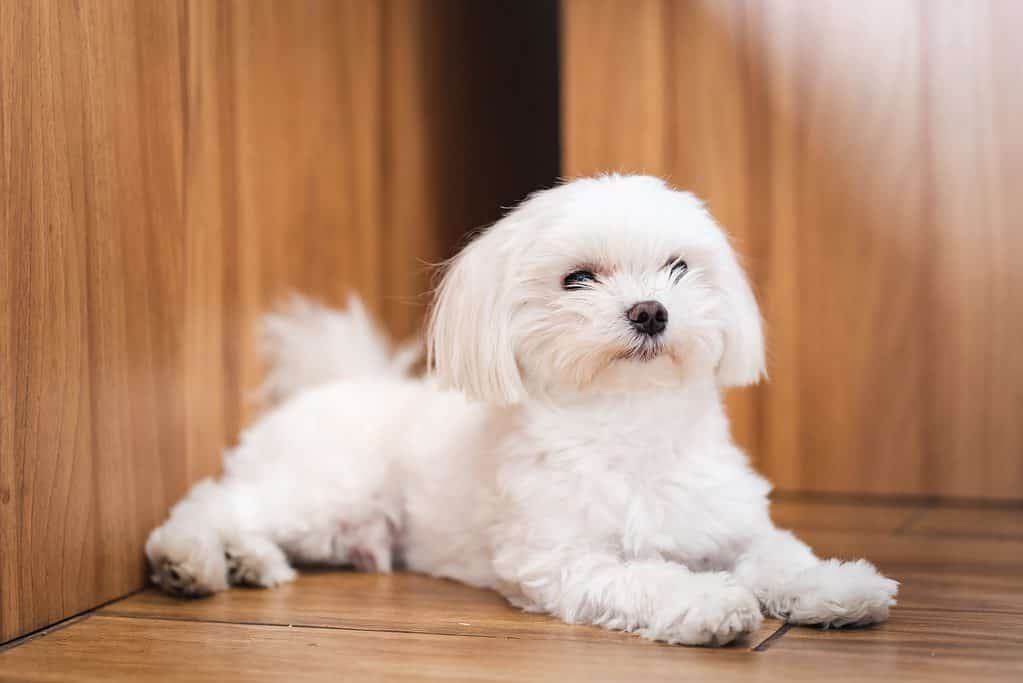
Teacup Maltese

Like the Eskipoo, the Maltese is also prone to luxating patellas.

Temperament

If you and your family are looking for a loyal companion, it is hard to beat the Eskipoo’s temperament. Like its parent breed, the American Eskimo Dog, these dogs will gladly join in whatever way they can in anything that your family has planned. They have a very loyal temperament to your family, so they have a hard time adjusting if you are gone for even a couple of hours.

The Eskipoo is a high-energy dog. Therefore, you need to be sure that it gets plenty of playtime every day. If you don’t provide it, you can sometimes expect this dog to show a little destructive temperament.

As a breed, the Eskipoo is very sensitive, and it strives hard to fit in. If you are having a good day, then expect this dog to be active and happy. If life is not going your way, it is perfectly content to sit by you while you mope or cry. Getting an Eskipoo hug can be a great way to get to feeling better.
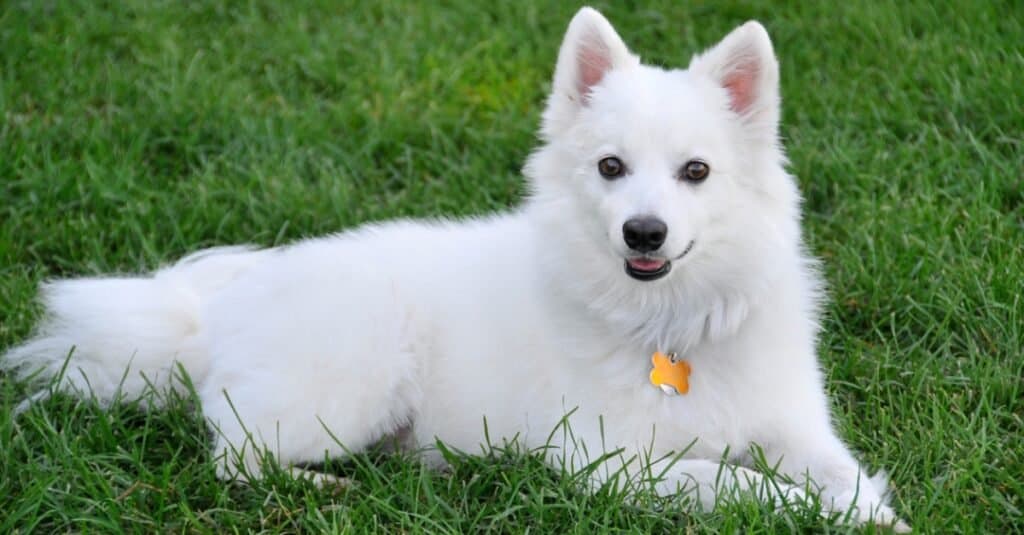
American Eskimo Dog laying in green grass

The Eskipoo takes after its parent breed, the American Eskimo Dog, in its family-friendly temperament.

How to Take Care of Eskipoos

It is natural for new pet Eskipoo owners to be a little nervous that they will meet all their new dog’s needs. Thinking about several factors can help ensure that you meet your Eskipoo puppy or older dog’s needs appropriately.

The Best Dog Food

Full-grown Eskipoos are prone to obesity, like many other breeds, so ensure that you feed them high-quality food twice a day. Additionally, they may suffer from dental issues, so feed them dry kibble whenever possible.

Eskipoo puppy food: Feed the Eskipoo pup a combination of wet and dry dog food for the first 10 months. Then, switch over to totally dry dog food. Be sure to choose a high-quality food with a high amount of calcium, as it can later help prevent bone and joint problems.

Eskipoo adult food: You should feed adult Eskipoos at least two meals a day. This is an active breed, so your dog may eat more than many dogs that are the same size, like the Pug or the Havanese. Watch to make sure that your dog does not become obese.

Because of Eskipoos’ propensity for digital squamous cell carcinoma, high-quality food with limited ingredients may remove potentially harmful additives from their diet.

Maintenance and Grooming

The Eskipoo can inherit its coat from either parent. If it gets its coat from its American Eskimo parent, then you need to give it a bath weekly and comb its coat every day with a wide-tooth comb. It also needs to go to the groomer for a trim about once a month.

If the Eskipoo gets its coat from its Poodle parent, it still needs a bath weekly because of its dense, curly coat. Brush the dog with a soft brush two or three times a week. Dogs with this coat need to go to the groomer about every two months.
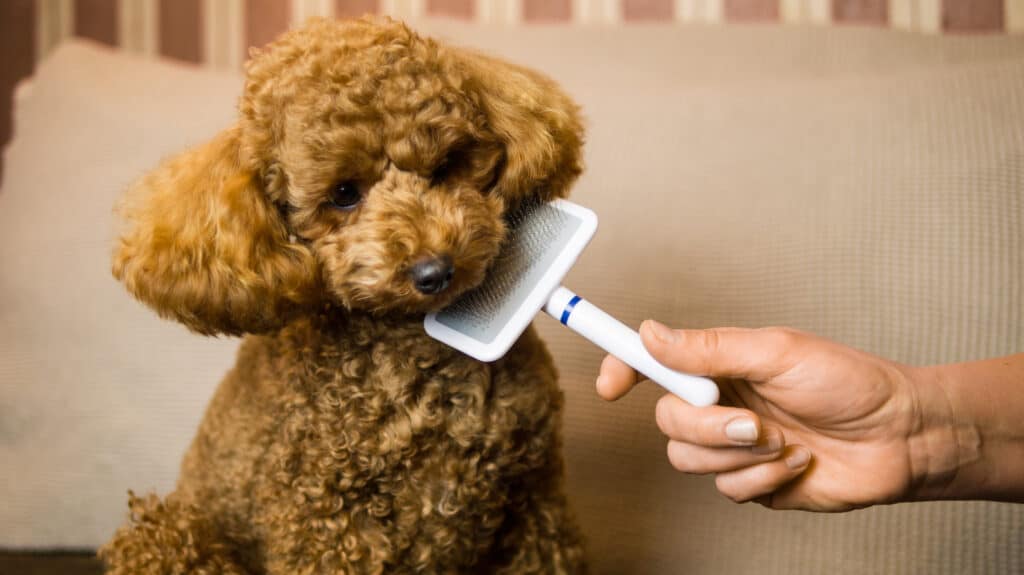
combing poodle hair

If your Eskipoo inherits the coat of its poodle parent, brush the dog 2-3 times a week.

Training

The Eskipoo is easy to train if you rely on positive reinforcement. Like its parent breed, the American Eskimo Dog, this breed is generally a people pleaser, so it can be easily trained. Some dogs, however, retain a stubborn streak.
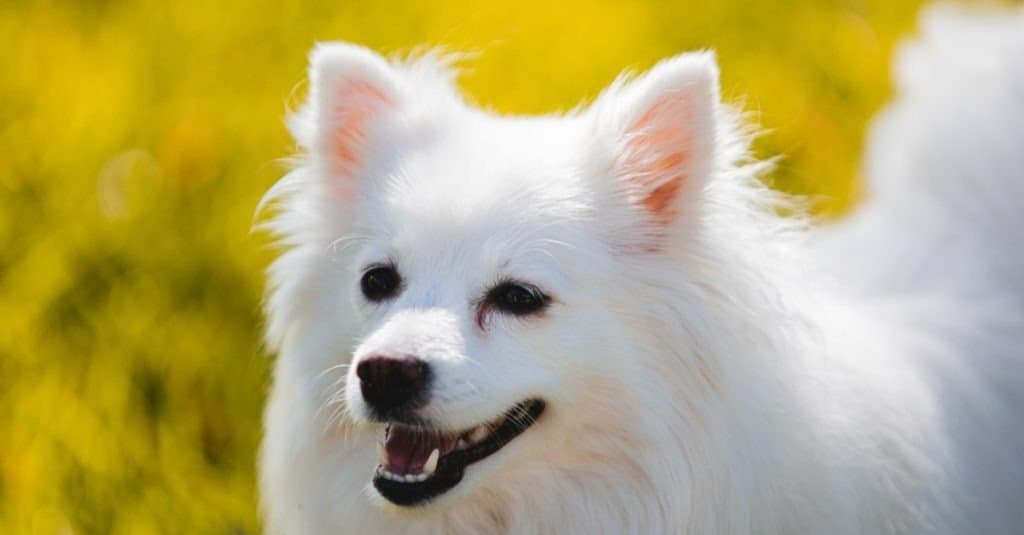
American Eskimo Dog

Like its parent breed, the American Eskimo Dog, the Eskipoo is easy to train with positive reinforcement.

Exercise

Like its high-energy parent breed, the poodle, the Eskipoo is an active dog that needs regular exercise. Two 30-minute walks a day can benefit this dog, along with some time to romp in the backyard or engage with the family while they are doing an activity.

Puppies

Your Eskipoo puppy must go to the veterinarian to check its health and get started on heartworm prevention and any other options to ensure healthy growth. Be sure to follow up regularly with your puppy’s health needs.
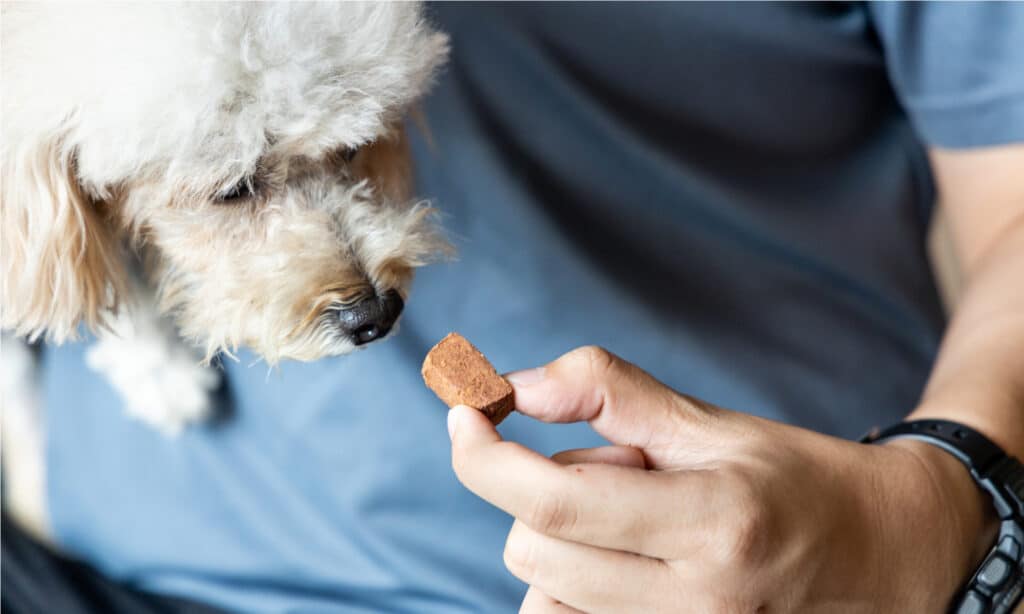
dewormer for puppies

Eskipoo puppies should be given heartworm-preventative medication.

Eskipoos and Children

Eskipoos make excellent dogs for families. Be sure to teach the child how to interact with the dog appropriately. If it is an Eskipoo pup, you may need to supervise playtime.

Dogs Similar to Eskipoos

Several dog breeds are about the same size as the Eskipoo, including:

  • Boston Terrier: With this breed, there is less grooming required than with the Eskipoo, and these dogs prefer the same active lifestyle.
  • Cavalier King Charles Spaniel: Some Cavalier King Charles Spaniels can be more stubborn than the Eskipoo, but they suffer from the same separation anxiety.
  • Shiba Inu: Like the Eskipoo, this breed can suffer from separation anxiety. It is normally harder to train a Shiba Inu than an Eskipoo.
  • Shih Tzu: Like the Eskipoo, this breed hates hot weather, though the Eskipoo can make a better family dog than the Shih Tzu.

View all 185 animals that start with E

Sources

  1. petplace.com / Accessed March 10, 2021
  2. doglime.com / Accessed March 10, 2021
  3. petplace.com / Accessed March 10, 2021
  4. dog-learn.com / Accessed March 10, 2021
  5. resources.bestfriends.org / Accessed March 10, 2021
  6. vcahospitals.com / Accessed March 10, 2021
  7. globaldogbreeds.com / Accessed March 10, 2021
Ashley Haugen

About the Author

Ashley Haugen

Ashley Haugen is the editor of A-Z Animals. She's a lifelong animal lover with an affinity for dogs, cows and chickens. When she's not immersed in A-Z-Animals.com (her favorite editorial job of her 25-year career), she can be found on the hiking trails of Middle Tennessee or hanging out with her family, both human and furry.
Connect:

Thank you for reading! Have some feedback for us?


Eskipoo FAQs (Frequently Asked Questions)

An Eskipoo is a cross between a poodle and an American Eskimo dog.