










P
Species Profile

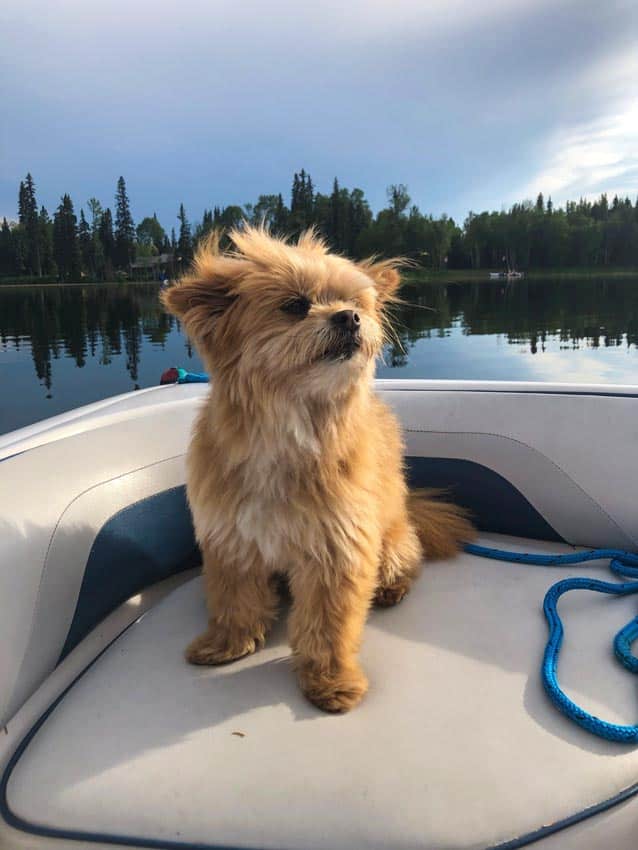
Pomapoo

Canis lupus familiaris

Tiny fluff, clever heart.
Jimmy Gunawan/Shutterstock.com

Pomapoo Distribution

Click a location to explore more animals from that region

Origin Location

This map shows the native origin of the Pomapoo. As a domesticated species, they are now found worldwide.

Loading map...

Size Comparison

Human 5'8"
Pomapoo 10 in

Pomapoo stands at 15% of average human height.

Pomapoo

At a Glance

Domesticated
Diet Omnivore
Activity Diurnal+
Lifespan 13 years
Weight 7 lbs
Status Not Evaluated
Did You Know?

"Pomapoo" is a designer-dog name; the dog is still the domestic dog, not a separate species.

Scientific Classification

Pomapoo is a hybrid companion dog produced by crossing a Pomeranian with a Poodle (most often Toy or Miniature). As a crossbreed, it does not have a unique scientific species name beyond the domestic dog.

Kingdom
Animalia
Phylum
Chordata
Class
Mammalia
Order
Carnivora
Family
Canidae
Genus
Canis
Species
lupus

Distinguishing Features

  • Small companion-dog size (varies with Poodle parent size)
  • Coat can be fluffy/spitz-like, curly, or wavy; often low-shedding influence from Poodle but not guaranteed
  • Erect or semi-erect ears; fox-like face possible from Pomeranian influence
  • High variability in appearance and temperament typical of first-generation crosses

Physical Measurements

Height
11 in (9 in – 1 ft 1 in)
Length
1 ft 6 in (1 ft 2 in – 1 ft 10 in)
Weight
11 lbs (7 lbs – 15 lbs)
Tail Length
6 in (4 in – 7 in)
Top Speed
17 mph
running

Appearance

Primary Colors
Secondary Colors
Skin Type Domestic dog skin with hair-bearing coat; typically dense undercoat influence from Pomeranian plus wavy/curly Poodle-type outer coat, ranging from plush double-coat to curlier single-coat; moderate sensitivity possible (itching/dryness).
Distinctive Features
  • Domestic dog crossbreed (Pomeranian × Toy/Miniature Poodle); not a separate species from the domestic dog.
  • Small companion size with high variability: often ~2-7 kg and ~20-30 cm at shoulder depending on parent sizes.
  • Coat ranges from fluffy spitz-like to loose curls; shedding can be low-to-moderate but not guaranteed "hypoallergenic."
  • Common look: foxlike Pomeranian face with Poodle curl/wave, compact body, and plumed tail (often carried over back).
  • Ears may be erect, semi-erect, or dropped; expression typically bright with large, dark eyes.
  • Temperament trend: lively, affectionate, alert; can be vocal and may develop separation anxiety without training.
  • Care: frequent brushing (several times weekly; daily for curlier coats) to prevent matting; professional grooming every ~4-8 weeks if curl/wave is strong.
  • Exercise: short daily walks plus play; mental enrichment helps reduce barking and restlessness.
  • Training: responds well to positive reinforcement; early socialization helps curb reactivity and excessive alert barking.
  • Health concerns seen in parent lines: patellar luxation, tracheal collapse, dental crowding/periodontal disease, progressive retinal atrophy, cataracts, allergies/atopic dermatitis, and occasional hip issues.
  • Watchpoints: small-dog anesthesia/dosing sensitivity; monitor weight, as obesity worsens joint and airway problems.
  • Species context: compared with the wild-type wolf, this breed is much smaller with shortened muzzle options, higher coat variability, and strong human-directed social behavior.

Sexual Dimorphism

Sexual dimorphism is mild: males are often slightly larger and heavier with broader heads/neck. Females tend to be a bit lighter and may appear more refined; coat length and color are not reliably sex-linked.

♂
  • Often slightly taller/heavier; broader chest and head in some lines.
  • May show more territorial marking and roaming tendencies if intact.
♀
  • Often slightly smaller with a narrower head and lighter bone.
  • May show heat-cycle-related coat changes and behavioral shifts if intact.

Did You Know?

"Pomapoo" is a designer-dog name; the dog is still the domestic dog, not a separate species.

Pomapoos are a cross between a Pomeranian and a Toy or Miniature Poodle, so adult size can vary from very small to small-medium depending on the parents.

Coat types vary widely-even within a litter-ranging from Pomeranian-like double coats to curlier Poodle-influenced coats.

Many inherit Poodle-like intelligence and "busy" problem-solving, paired with Pomeranian-style bold alertness.

Color variety is broad (cream, black, brown, orange, sable, parti), reflecting both parent breeds' diverse coat genetics.

They often excel as companion dogs for apartment living when given daily enrichment and training.

Because they're crossbred, health and temperament are probabilistic-not guaranteed-so parent health testing matters a lot.

Unique Adaptations

  • Domestic-dog flexibility: like all dogs (descended from wolves), Pomapoos are highly attuned to human cues, routines, and reinforcement.
  • Small-body thermoregulation: compared with wild canids, small companion breeds often seek warmth and benefit from weather protection in cold conditions.
  • Variable coat function: Pomeranian ancestry can contribute insulating undercoat; Poodle ancestry can contribute curl/texture that may reduce shedding-but outcomes vary.
  • High trainability potential: Poodle lineage often boosts responsiveness to structured training and puzzle-like tasks.
  • Compact companion morphology: short-to-moderate muzzle length (varies), small paws, and lighter frame suit indoor living-yet require careful handling to prevent injury (jumps/falls).

Interesting Behaviors

  • Alert "watchdog" barking: often quick to announce door sounds or strangers, reflecting Pomeranian vigilance.
  • Shadowing/following: many bond closely and trail their person from room to room, a common companion-dog pattern.
  • "Sass + smarts" training moments: can learn tricks fast but may test boundaries; short, reward-based sessions work best.
  • Toy play and zoomies: bursts of high energy indoors; structured play can substitute for long endurance exercise.
  • Mouthing/chewing when bored: especially in young dogs-food puzzles and chew-appropriate outlets help.
  • Preference for soft laps and warm spots: small dogs lose heat faster and often seek cozy resting places.

Cultural Significance

Pomapoo (Pomeranian × Poodle mix) reflects the designer-dog trend: small, friendly, and often low-shedding with teddy-bear looks for city living and social media. Ethical concerns stress responsible breeding, health testing of parents, honesty about traits, and avoiding impulse buys.

Myths & Legends

In European folklore, small spitz-type "fox dogs" (ancestors of today's Pomeranian-type dogs) were sometimes treated as lucky household guardians, believed to "raise the alarm" against unwelcome visitors-an echo of the modern Pomapoo's watchful barking.

The Poodle's historical reputation in continental Europe includes stories of exceptionally clever performing dogs in traveling shows and courts, celebrated for learning intricate routines-an ancestry often invoked when people describe Pomapoo trick-training talent.

A common story says Pomeranian spitz dogs became popular after Queen Victoria’s love of tiny Pomeranians made the 'toy' look popular, later helping create demand for small companion mixes like the Pomapoo.

"Teddy bear dog" is an almost-legend name for fluffy companion mixes; owners tell family stories of these dogs bringing comfort and acting as "little guardians," modern home tales spread by social media and communities.

Conservation Status

NE Not Evaluated

Has not yet been evaluated against the criteria.

Population Stable

Life Cycle

Birth 2 pups
Lifespan 13 years

Lifespan

In the Wild
12–15 years
In Captivity
10–18 years

Reproduction

Mating System Polygynandry
Social Structure Managed Domestic
Breeding Pattern Transient
Fertilization Managed Selective
Birth Type Managed_selective

Pomapoos reproduce like domestic dogs under human-managed pairings rather than stable pair bonds. Mating occurs via copulation with internal fertilization; chosen sires and dams may have multiple partners across breeding attempts, with bonds typically short-lived.

Behavior & Ecology

Social Pack Group: 3
Activity Diurnal, Crepuscular, Cathemeral
Diet Omnivore Animal-protein-forward foods (e.g., chicken or turkey-based complete small-breed kibble; occasional cooked lean meat as training rewards).

Temperament

Species context (domestic dog): highly social, human-directed bonding replaces wild wolf pack ecology.
Pomapoo distinguishing traits: smaller, companion-oriented, typically more "alert" and vocal than many dogs.
HUBS: across Pomapoos, people-focus and playfulness are common; variation follows Pomeranian vs Poodle influence.
Often affectionate, cuddly, and attention-seeking; may shadow owners and prefer lap contact.
Typically intelligent and trainable; benefits from short, frequent sessions and positive reinforcement.
Can be bark-prone (watchdogy); early cue-training ("quiet") and enrichment reduce nuisance barking.
May show separation sensitivity; thrive with predictable routines and gradual alone-time training.
Socialization is important to prevent timidity/reactivity; size can make them wary of rough dogs.
Care needs: moderate daily exercise plus mental games; avoid overexertion in heat for small dogs.
Coat care varies by mix: regular brushing, mat checks, and professional grooming every 4-8 weeks.
Health tendencies (risk varies by lineage): dental disease, patellar luxation, tracheal collapse, eye issues (PRA), allergies.
Other potential concerns: Legg-Calvé-Perthes, obesity, and anxiety-related behaviors; maintain lean body condition.
Preventive care: consistent dental hygiene, weight management, and screening based on parent breed history.

Communication

sharp alert barks/yaps
excited play barks
whining for attention or proximity
growls during rough play or resource guarding
howls/"talking" in some individuals
tail carriage and wag speed signaling arousal/comfort
ear position and facial tension indicating fear or confidence
pawing, nudging, and climbing onto laps to solicit contact
play bows and bouncy gait initiating play
scent marking and sniffing as social information gathering
averted gaze, lip-licking, and yawning as appeasement/stress signals

Habitat

Biomes:
Temperate Forest Boreal Forest (Taiga) Tundra Alpine Temperate Grassland Savanna Desert Hot Desert Cold Mediterranean Tropical Rainforest Tropical Dry Forest Freshwater Wetland Marine +8
Terrain:
Mountainous Hilly Plateau Plains Valley Coastal Island Riverine +2
Elevation: Up to 16404 ft 3 in

Ecological Role

Domesticated companion omnivore/mesopredator-in-miniature; primarily a human-associated household animal rather than a wild ecological niche occupant.

Human companionship and psychosocial benefits (companion/therapy potential) Sentinel behavior (alert barking) that can deter intruders/other animals Opportunistic pest/rodent deterrence in home/garden settings (limited by size and management) Nutrient cycling via consumption of commercial foods and production of waste that can be managed/composted where permitted (anthropogenic ecosystem linkage)

Diet Details

Main Prey:
Small rodents Small birds and ground-nesting bird eggs Insects and other small invertebrates Carrion and food scraps
Other Foods:
Fruits Vegetables Grains and starches Edible fungi and plant matter

Human Interaction

Domestication Status

Domesticated

The domestic dog (Canis lupus familiaris) is a fully domesticated subspecies of the gray wolf, shaped by people for tameness and roles like companionship. The Pomapoo is a modern hybrid of Pomeranian and Poodle, not a formal breed. It was bred for small size, friendly nature, and often a lower-shedding coat; traits and health vary.

Danger Level

Low
  • Bites/scratches: Usually low severity due to small size, but risk increases with fear, poor socialization, rough handling by children, or pain from dental/orthopedic issues.
  • Reactivity/nuisance barking: Alert, vocal tendencies can lead to neighbor conflicts or stress in dense housing if not trained.
  • Zoonotic risks common to dogs: parasites (fleas/ticks), ringworm, and rare bite-wound infections-mitigated by veterinary prevention and hygiene.
  • HUBS (range of human interactions across domestic dogs, with Pomapoo emphasis): Primarily close-contact companionship in homes; frequent handling (grooming, carrying, vet care); social interactions in public spaces (parks, cafes, travel) with a need for polite manners; reliance on human-managed healthcare and grooming; potential use as a therapy/comfort animal when temperament is suitable; risk interactions are mostly minor (nipping, noise complaints) rather than physical danger.

As a Pet

Suitable as Pet

Legality: Pomapoo (Pomeranian-Poodle mix) is usually legal to own as a pet in most places. Check local dog licenses and shots, landlord or HOA pet/size rules, and breeding or sales laws.

Care Level: Moderate

Purchase Cost: $800 - $3,500
Lifetime Cost: $18,000 - $45,000

Economic Value

Uses:
Companion animal market Pet services economy (grooming, training, boarding, veterinary care) Therapy/ESA candidate (individual-dependent) Small-scale breeding/designer-dog market (variable ethics/quality)
Products:
  • Sale/adoption of Pomapoo puppies (price varies by lineage, health testing, region)
  • Routine veterinary services (vaccines, parasite prevention, spay/neuter, dental cleanings)
  • Professional grooming (haircuts, de-matting, coat maintenance)
  • Training/socialization services (basic manners, reactivity/barking management)
  • Pet supplies (crates, carriers, small-dog harnesses, dental chews, enrichment toys)

Relationships

Ecological Equivalents 6

Animals that fill a similar ecological role in their ecosystem

Pomeranian
Pomeranian Canis lupus familiaris One parent breed. Overlaps strongly in niche as a small companion/toy dog. Contributes compact size, an alert/watchful temperament, and dense double-coat tendencies that can increase grooming needs and shedding compared with many single-coat dogs.
Poodle
Poodle Canis lupus familiaris One parent breed; occupies a similar niche as an indoor companion with high trainability. Contributes higher biddability/working intelligence and often a curlier coat texture (sometimes lower-shedding but not truly hypoallergenic). May increase the need for mental enrichment and regular professional grooming.
Maltipoo
Maltipoo Canis lupus familiaris Very similar niche: a small companion 'poo-mix' with comparable grooming requirements, family-friendly temperament, and common small-dog health risks (patellar luxation, dental disease). Often chosen for apartment living and typically has moderate exercise needs.
Cockapoo
Cockapoo Canis lupus familiaris Crossbreed companion occupying a similar companion niche, with variable coat types and grooming demands. Shares tendencies toward ear issues (hairy, floppy ears in many individuals), skin allergies, and requires consistent training to prevent nuisance barking and separation-related behaviors.
Cavapoo
Cavapoo Canis lupus familiaris Comparable small-companion niche and sociability, with a similar care profile: routine grooming, dental care, and structured alone-time training. Highlights that Cavapoo temperament and energy can vary widely depending on Cavalier King Charles Spaniel versus Poodle influence.
Papillon
Papillon Canis lupus familiaris Ecological analogue among toy breeds. A small, alert, trainable companion that benefits from daily enrichment and positive-reinforcement training. Similar risks include dental crowding and patellar luxation, which are common in small-bodied dogs.

Pomapoos are a hybrid dog breed that is a mix between a Pomeranian and a Toy Poodle. They are small dogs that only weigh up to 15 pounds, but often less. As a mixed breed, a Pomapoo’s personality may vary, but in general, they are very friendly and affectionate and can have a very spunky personality.

Pomapoos are generally easy to train and can make a good family dog for homes with older children. They may also be called a Pooranium, Pompoo, or Pomeroodles.

Pomapoo

Many Pomapoos will require professional grooming to keep their coat looking its best. A Pomeroodle may have a straight coat, a curly coat, or something in between.

Origin and Evolution

As we mentioned, a Pomapoo is a mix between the Pomeranian and Toy Poodle dog breeds. This means they are not purebred like their parents. This type of dog may have existed naturally over the years. However, designer breeders started intentionally mixing Pomeranians and Toy Poodles in the late 1990s. It probably started somewhere in North America. This was probably in order to minimize the health problems.

Despite it being a designer breed, many Pomapoos can be found in shelters and rescue homes. The breed is not recognized by the American Kennel Club.

Pros and Cons of Owning a Pomapoo

Pros!Cons!
Affectionate: They have a very loving personality and enjoy cuddling with their family.Prone to separation anxiety: This mixed breed does not like being left alone and may develop separation anxiety or engage in destructive behaviors if alone for too long.
Intelligent: They are smart dogs who can be easily trained or taught new things.High maintenance: A Pomapoo’s coat will often require professional grooming.
Moderate activity needs: They don’t have an extremely high activity requirement.Barking: Pooraniums bark more than some other breeds.
Animal, Animal Hair, Animal Wildlife, Beauty, Brown

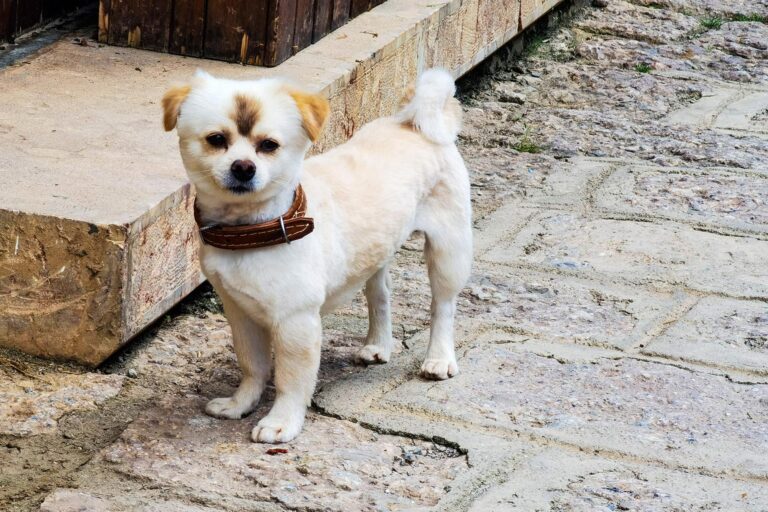
Pomapoos are a small mixed dog breed, with a full-grown adult up to 10 inches tall and 15 pounds in weight.

Size and Weight

Pomapoos are a small mixed dog breed. As a mix between a Toy Poodle and a Pomeranian, both the parents of a Pomapoo are small themselves. Full-grown Pomapoos are between 8 and 10 inches tall and weigh between 5 and 15 pounds.

Common Health Issues

Pomapoos are healthier than many purebreds, but there are still a few health concerns you’ll want to be on the lookout for with this breed.

Some Pomeranians can suffer from obesity if they are overfed. Obesity can lead to other issues, such as heart conditions or problems with other organs.

Another somewhat common issue in small-breed dogs like Pomapoos is a luxating patella. The kneecap on one or both knees slips out of place and can cause the dog pain. Surgery is sometimes required to correct this condition.

Some Pomapoos may also develop cataracts. Cataracts are cloudy spots that can vary in size. They can cause a loss of vision, but many dogs are still able to see light and dark. In some cases, surgery may be required to treat cataracts.
To recap, a few health concerns for Pomapoos include:

  • Obesity
  • Luxating patella
  • Cataracts
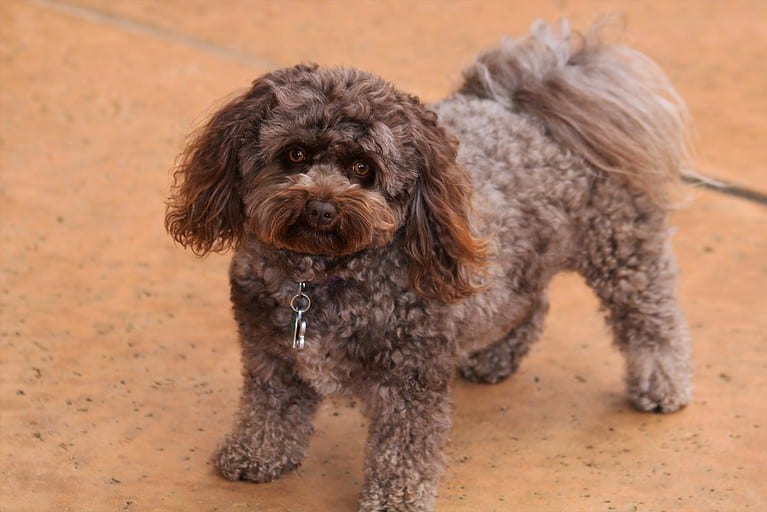
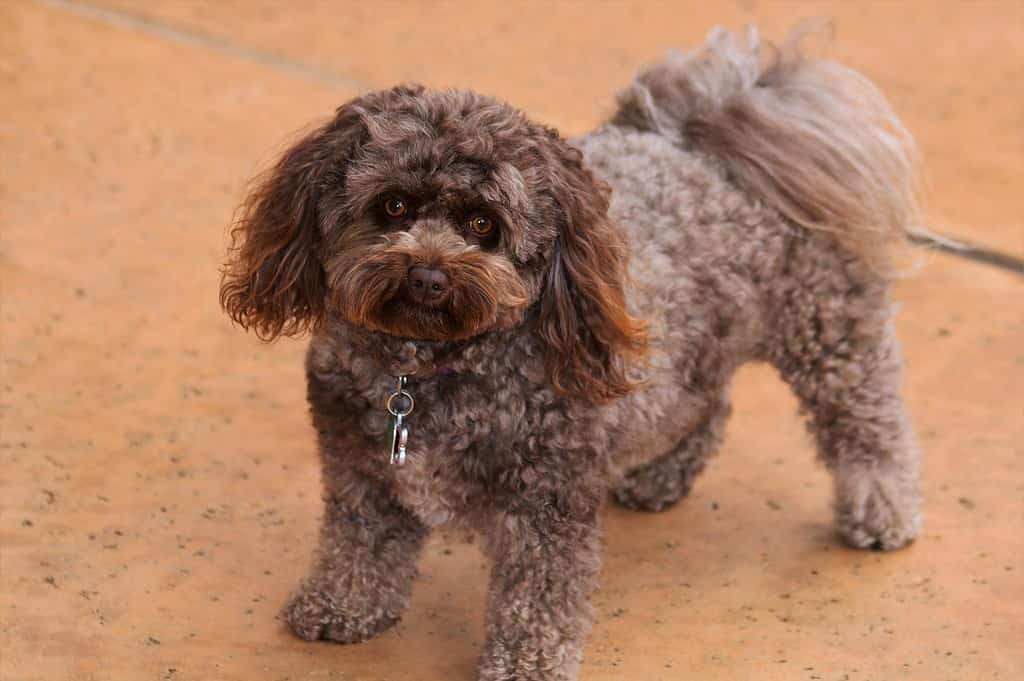
Brown Pomapoo Dog Portrait

Most Pomapoos have a high intelligence level, which can make them easier to train than many other breeds.

Temperament and Behavior

While Pomapoos may be very small dogs, they are known to have big personalities. They can be very outgoing and friendly, especially with those they trust. Some Pomeroodles exhibit more reserved behaviors around strangers, like their Pomeranian parent.

Pomapoos are intelligent and relatively easy to train. Their traits can make them good pets for individuals or families with older children. This breed does not like being left alone, so they are best suited for families where someone will be home most of the day. They also often like having another dog as a companion.
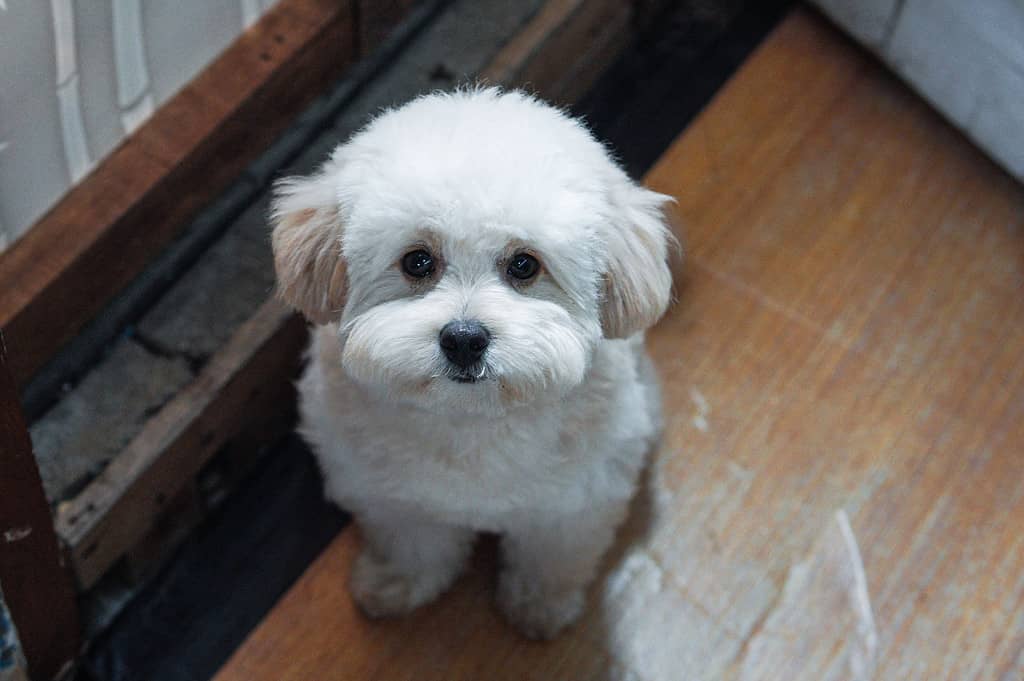
pomapoo

Pomapoos don’t have a very high exercise need. They can live happily in an apartment and can also make great lapdogs.

How to Take Care of a Pomapoo

Since Pomapoos are a unique breed, they will require unique care. Keep a Pomapoo’s temperament, health needs, dietary needs, and activity needs in mind as you prepare to care for your dog.

The Best Dog Food for Pomapoos

Pomapoos are small dogs and should be fed small-breed dog food. Feed your pup between two and three small meals each day to prevent them from overeating and gaining too much weight, since this breed can become overweight if they eat too much. Many owners of obesity-prone dogs have success giving their pup a raw diet for more complete nutrition and less processing.

Check with your veterinarian for specific recommendations about the appropriate amount of food for your Pooranium based on their age, weight, activity level, and any health concerns. Also, keep in mind that puppies should eat between 3 and 4 smaller meals throughout the day since they have a smaller stomach than a full-grown dog.

Maintenance and Grooming

Many Pomapoos will require professional grooming to keep their coat looking its best. A Pomeroodle may have a straight coat, a curly coat, or something in between.

In addition to professional grooming sessions, you’ll also need to brush your dog’s coat regularly to keep it from getting matted and tangled. You’ll also need to wash the area under their eyes to prevent staining, brush their teeth, trim their nails, and keep their ears clear and clean.

Training

Most Pomapoos have a high intelligence level, which can make them easier to train than many other breeds. It is recommended to start training and socializing your dog from an early age to simplify the training process.

Some Pomapoos may also be stubborn like a Pomeranian, so beginning training from a younger age will help with this as well. Pomapoos respond best to training methods that focus on positive reinforcement.

Exercise

Pomapoos don’t have a very high exercise need. They can live happily in an apartment and can also make great lapdogs. However, you’ll still need to help your pet get some exercise in the form of short walks or games of fetch.

Puppies

Bringing home a puppy is a lot like bringing home a new baby. They’ll require a lot of care, time, and attention. Be prepared to begin training and socializing your dog as soon as you bring them home. This will help them begin to learn expectations and how to act in different situations more quickly.

Find a veterinarian, purchase food, and get all the supplies your new puppy will need set up before you bring them home. This way, your house will be ready, and you won’t feel like you are rushed to gather everything you need when the puppy comes home.
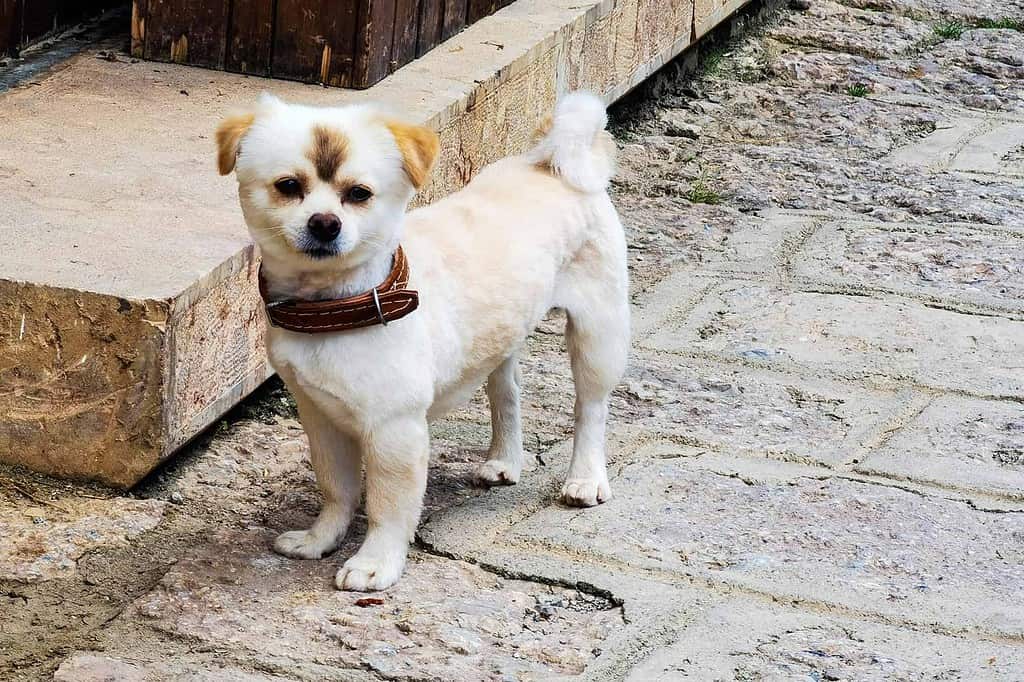
Pomapoo puppy posing with a red wheelbarrow

Bringing home a Pomapoo puppy is a lot like bringing home a new baby. They’ll require a lot of care, time, and attention.

Pomapoos And Children

Pomapoos are very friendly and affectionate, and can be good pets for older children. However, because of their size, they could very easily be injured by a toddler or young child who doesn’t know how to interact appropriately with a dog. Wait to bring home a Pooranium until the children in the house are older and know how to treat a dog.
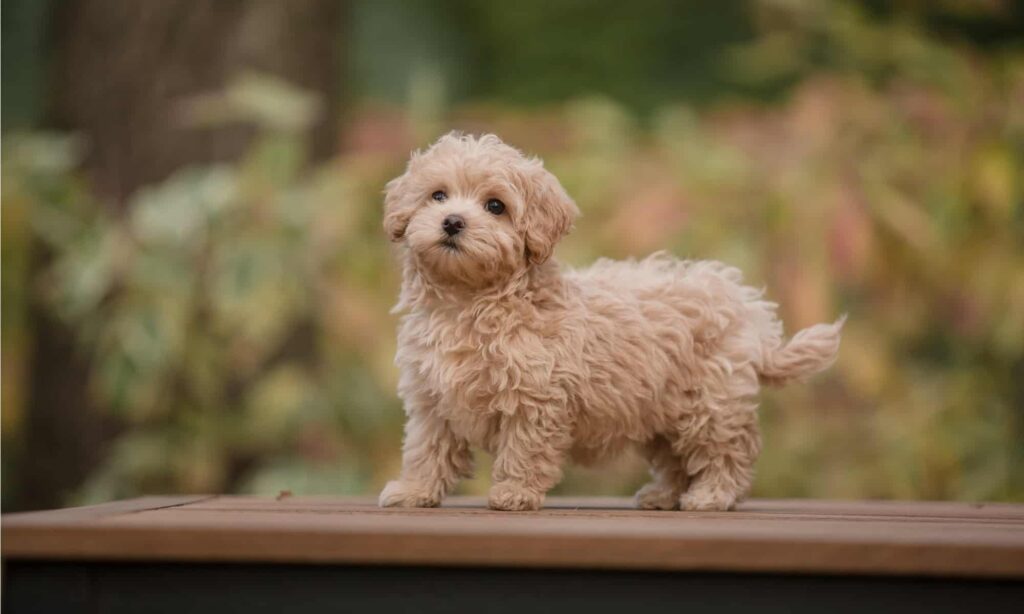
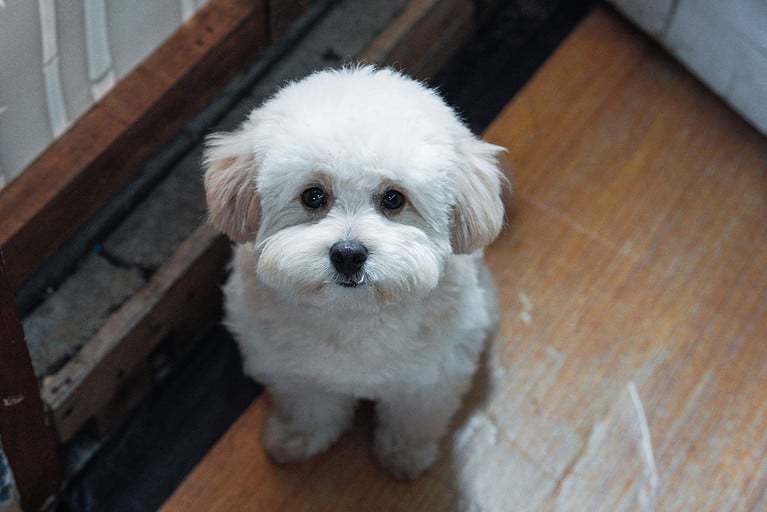
maltipoo

Maltipoos are easier to groom than Pomapoos.

Dogs similar to Pomapoo

Poodles, Maltipoos, and Havapoos are three breeds that share some similarities with Pomapoos.

  • Poodle: Poodles and Havapoos are both very intelligent dogs that generally require professional grooming to keep their coats looking their best. Poodles generally do better in homes with young children or pets than Pomapoos do.
  • Maltipoo: Maltipoos and Pomapoos are both very playful, social, and affectionate. Both dogs are similarly sized, with a Maltipoo weighing between 5 and 20 pounds and a Pomapoos weighing between 5 and 15 pounds. Maltipoos are easier to groom than Pomapoos, however.
  • Havapoo: Havapoos and Pomapoos are both small dogs. A Havapoo may be a bit larger, with a weight range between 7 and 20 pounds, compared to the 5-to-15-pound range for a Pomapoo. Pomapoos are a bit shorter, though, with a height of only between 8 and 10 inches compared to the 8 to 15 inches that a Havapoo may be. Both breeds are very friendly and intelligent.

Famous Pomapoos

Pomapoos are cute and have fun personalities. There are a few dog owners who like to post about their adventures with their pet Pomapoos on Instagram.

  • Choco is a Pomapoo from Georgia with over 1,400 followers on Instagram. She loves spending time outside, and her owner likes dressing her up for the holidays.
  • Hopper is a black Pomeroodle from Toronto. He has over 5,300 followers. His owners like posting pictures of him with his human baby sister.

Pomapoo

A Pomapoo can be very outgoing and friendly, especially with those they trust.

View all 246 animals that start with P

Sources

  1. Dogtime / Accessed February 15, 2021
  2. Vetstreet / Accessed February 15, 2021
  3. Rover / Accessed February 15, 2021
  4. Doggie Designer / Accessed February 15, 2021
  5. Dogell / Accessed February 15, 2021
  6. Dogell / Accessed February 15, 2021
  7. Mans Best Friend / Accessed February 15, 2021
  8. Embrace Petinsurance / Accessed February 15, 2021
  9. OVRS / Accessed February 15, 2021

Ashley Haugen

About the Author

Ashley Haugen

Ashley Haugen is the editor of A-Z Animals. She's a lifelong animal lover with an affinity for dogs, cows and chickens. When she's not immersed in A-Z-Animals.com (her favorite editorial job of her 25-year career), she can be found on the hiking trails of Middle Tennessee or hanging out with her family, both human and furry.
Connect:

Thank you for reading! Have some feedback for us?


Pomapoo FAQs (Frequently Asked Questions)

A Pomapoo will typically cost between $500 and $2,000 to purchase through a breeder. Some rescue organizations may also have Pompoos up for adoption. The price to adopt a Pomapoo through a rescue organization will be a lot less, and you should expect to spend a few hundred dollars.

Don’t forget to also consider the price of owning and taking care of a dog. Your Pomapoo will need food, supplies, and veterinary care. These can add up to at least $1,000 to $1,500 for your first year owning the dog and at least $500 to $1,000 for each other year of ownership.