
Quick Take
- One state has more rattlesnake species than any other in the country, and the identity of its most dangerous venom might surprise you. Arizona's rattlesnake dominance →
- It's no surprise that the state ranked #1 for individual snake population also has the most species diversity. Texas snake population lead →
- Invasive snakes have quietly made one state's most famous region a hotspot unlike anywhere else in America. Everglades invasive python crisis →
- A single desert region within one state hosts more snake species than most entire states, and that state is not in the South. Chihuahuan Desert snake density →
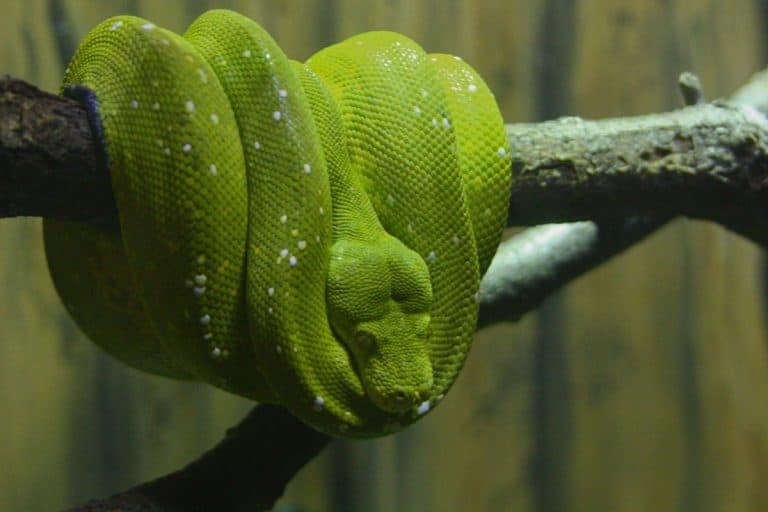
The United States is home to around 150 snake species. As you might imagine, these snakes aren’t evenly distributed among the 50 states. Some areas are more snake-infested than others. If you’re planning on going camping or hiking, suffer from ophidiophobia, or are a big fan of these reptiles, you might want to know which states are home to the most snakes. This article takes a look at the most snake-infested states in America.
10. Louisiana
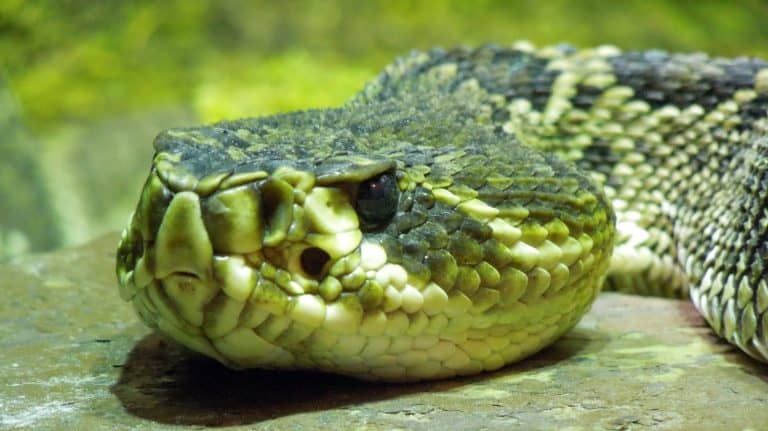
The Louisiana Department of Wildlife and Fisheries snake species field guide lists 42 snakes, but other info from the Department suggests there are as many as 47 species. The state is home to six venomous snake species, including the eastern copperhead, the eastern diamond-backed rattlesnake, the harlequin coral snake, northern cottonmouth, pygmy rattlesnake, and the timber rattlesnake, also known as the canebrake rattlesnake, which is considered the most dangerous venomous snake in the state.
Louisiana also has dozens of nonvenomous snakes. Some of the most common snakes that visitors might encounter include the western ratsnake, Dekay’s brownsnake, the common gartersnake, speckled kingsnake, rough greensnake, and a variety of semi-aquatic watersnakes in the swamps and bayous.
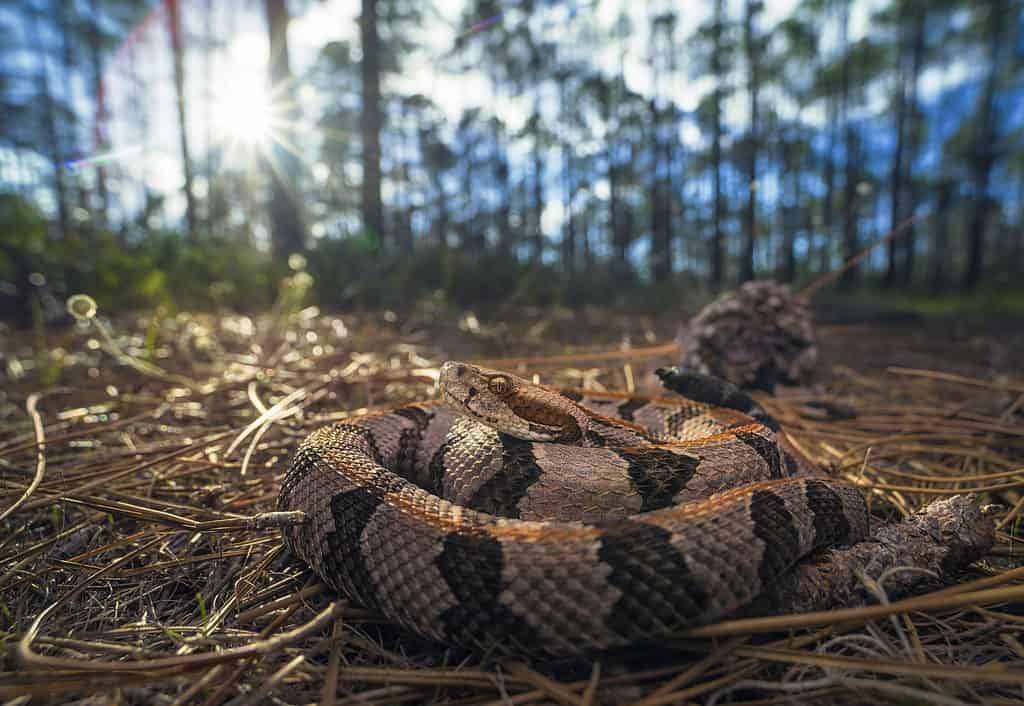
Louisiana is home to the timber rattlesnake, which can reach up to 5 feet long.
©Kristian Bell/Shutterstock.com
9. Missouri
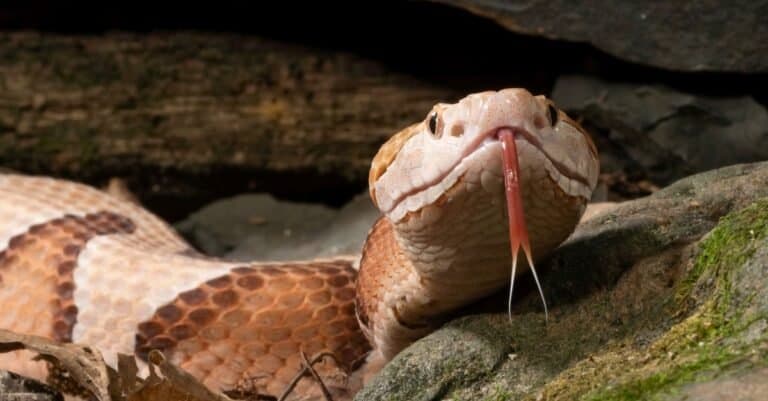
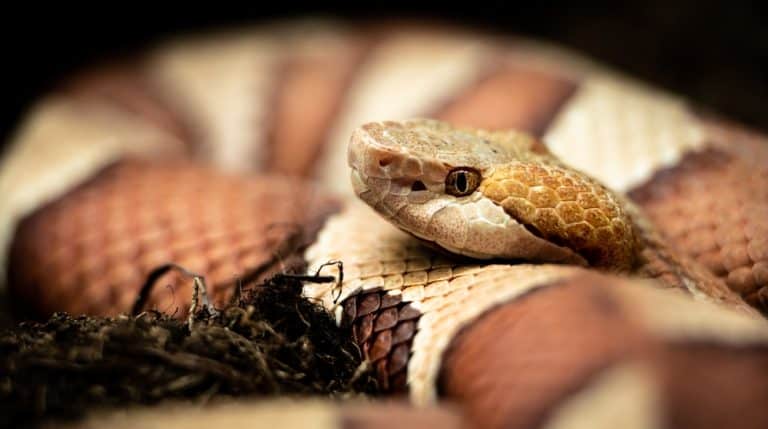
Although the Missouri mule is the state’s official animal, the state is home to 47 species of snakes. However, only five species are venomous snakes, which include western cottonmouths, eastern Massasauga rattlesnakes, Osage copperheads, pygmy rattlesnakes, and timber rattlesnakes. The most common venomous snake in Missouri is the copperhead.
Some of Missouri’s common nonvenomous snakes include western ratsnake, speckled kingsnake, eastern gartersnake, eastern yellow-bellied racer, and northern and midland watersnakes. Snakes tend to be found near water or in the wetlands and swamps, in the hills of the Ozarks, and along the Mississippi and Missouri River bottomlands.
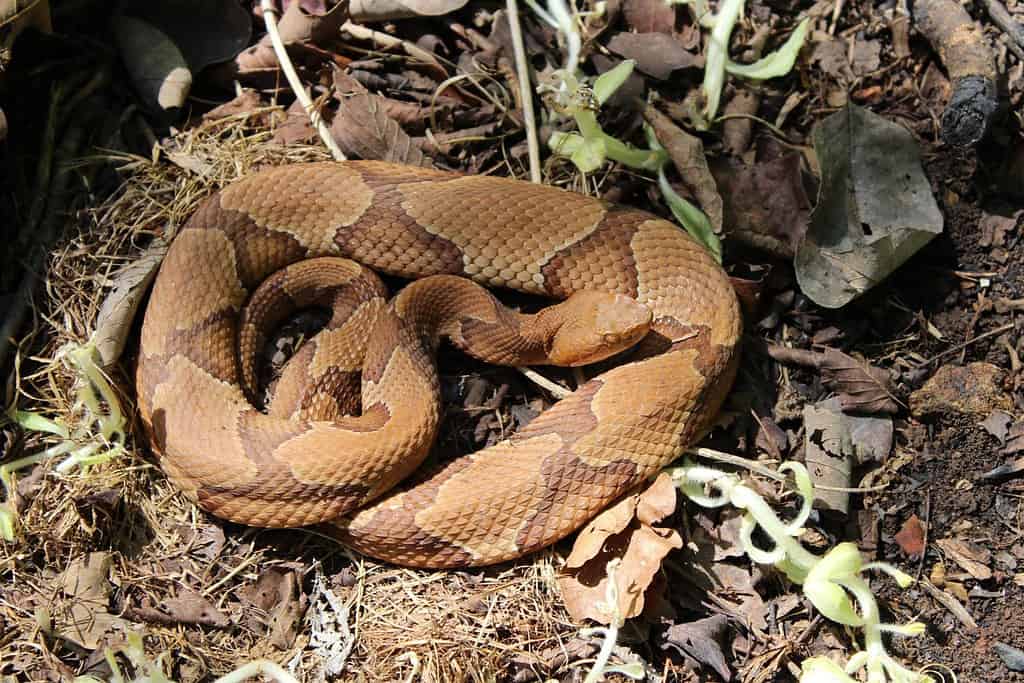
The Osage copperhead is the most common venomous snake in Missouri.
©Dylan Wallace/Shutterstock.com
8. Georgia
The state of Georgia is also known for its large number of snakes. There are 47 species of snakes in Georgia, but only seven are venomous, including copperheads, northern cottonmouths, Florida cottonmouths, eastern coral snakes, eastern diamond-backed rattlesnakes, timber rattlesnakes, and pygmy rattlesnakes.
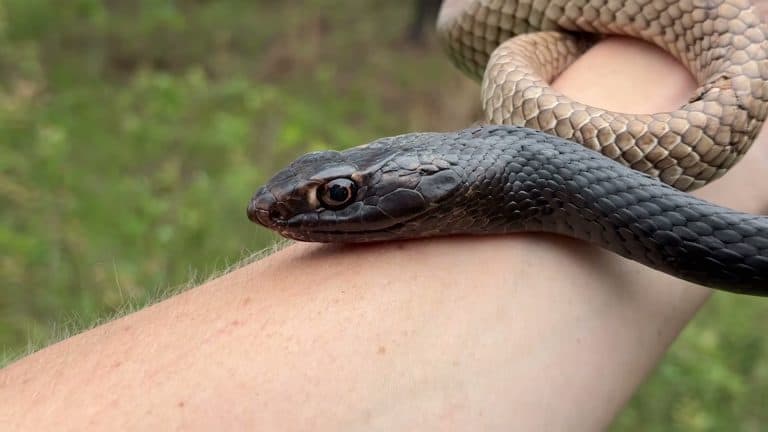
Some of Georgia’s most common nonvenomous snakes are black racers, central rat snakes, DeKay’s brown snake, common garter snakes, banded watersnakes. Snakes are primarily found in the northern mountains to the barrier islands that lie along the Atlantic coast. However, it isn’t uncommon to find them in the city.
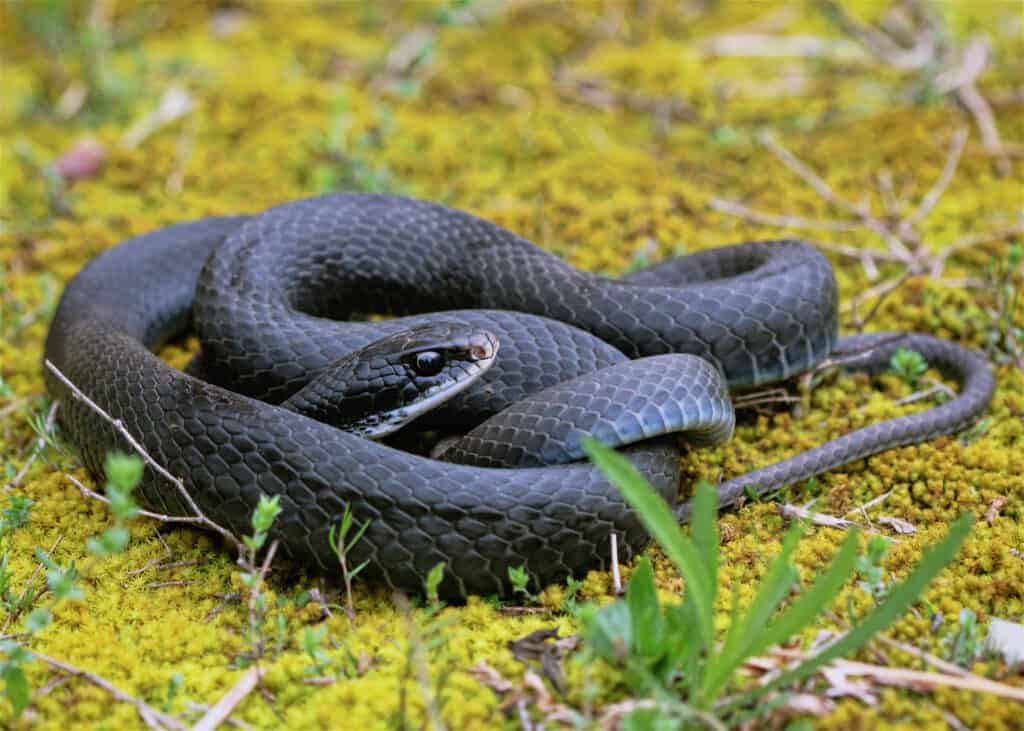
Black racers are among the most common nonvenomous snakes in Georgia.
©Matthew L Niemiller/Shutterstock.com
7. Alabama
Alabama is home to 49 species of snakes. Six of these species are venomous: copperheads, cottonmouths, timber rattlesnakes, pygmy rattlesnakes, eastern diamondback rattlesnakes, and eastern coral snakes. The state is also known to have 12 subspecies of watersnakes, which include banded watersnakes, brown watersnakes, diamond-backed watersnakes, and gulf swampsnakes.
Nonvenomous snakes most often seen include the common garter snake, the grey rat snake, and the rough green snake. Most of the snakes in Alabama tend to be found near water. They can also be found in the delta wetlands and the forests throughout the state.
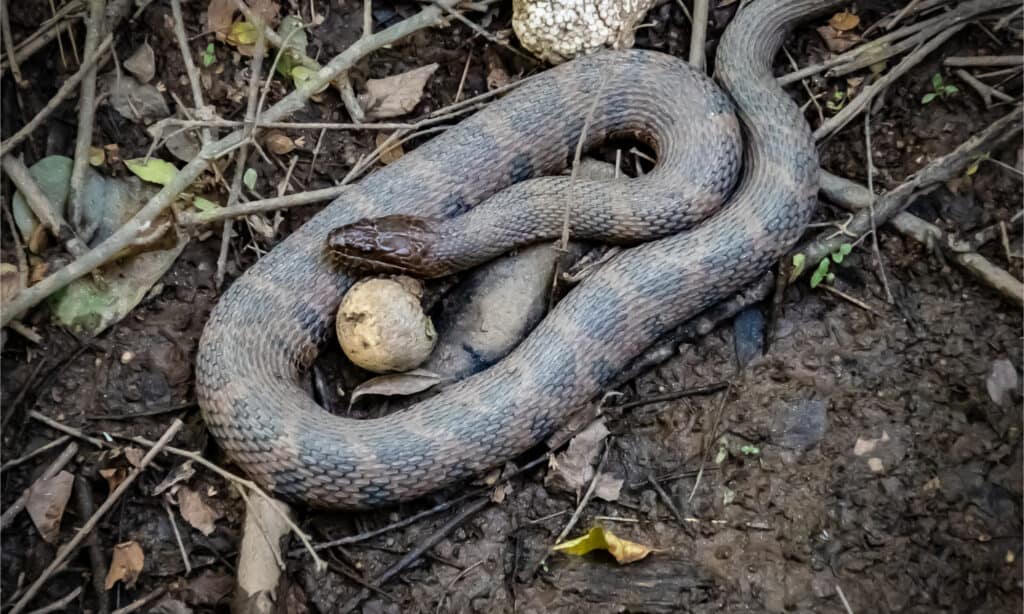
Alabama has 12 species of watersnakes, including the banded watersnake.
©Deborah Ferrin/Shutterstock.com
6. Oklahoma
Oklahoma has 49 species of snakes, 7 of which are venomous. Most of Oklahoma’s venomous snakes are rattlesnakes, including western diamondback rattlesnakes, prairie rattlesnakes, western pygmy rattlesnakes, and timber rattlesnakes. There are also copperheads and western cottonmouths in this state. Snakes like the western diamondback and prairie rattlesnake are more common in the arid prairies and rocky hills in the west and south, while timber rattlesnakes and copperheads prefer wetter, forested habitats in the eastern part of the state.
Of the nonvenomous snakes, western ratsnakes, bullsnakes, eastern hognose snakes, garter snakes, and glossy snakes are common sights. Visitors may also spot diamondback watersnakes and plain-bellied watersnakes around lakes, ponds, and slow-moving rivers and streams. According to the Oklahoma Wildlife Department, half of the state’s snake species are tied to water.
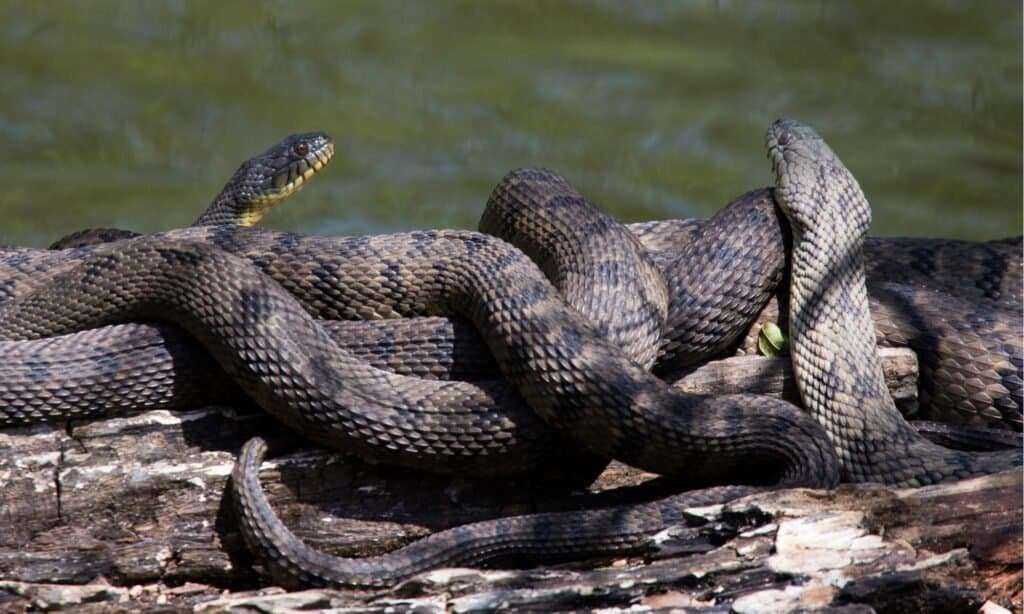
Diamondback watersnakes are one of the most common watersnakes found in Oklahoma.
©Laurie L. Snidow/Shutterstock.com
5. New Mexico
New Mexico is known to have over 50 snake species, including 7 rattlesnakes, 1 coral snake, and 38 nonvenomous species. Venomous rattlesnakes include the rock rattlesnake, western diamondback, Mojave rattlesnake, black-tailed rattlesnake, western prairie rattlesnake, the Massasauga rattlesnake, and the New Mexico ridge-nose rattlesnake. The federally protected ridgenose rattlesnake is a rare snake only found in the high-elevation sky island region of the southwestern U.S. and northwestern Mexico. The western coral snake is found in the southwestern corner of the state.
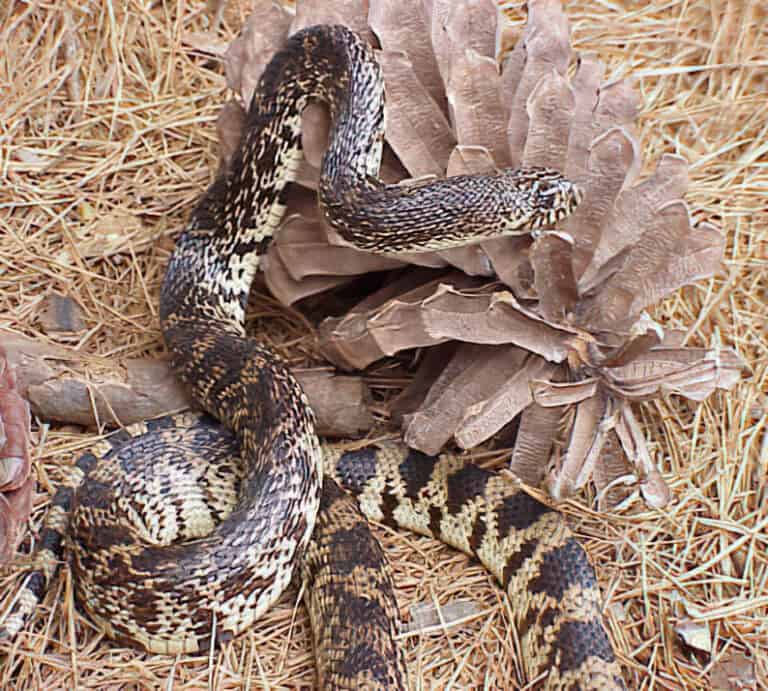
The New Mexico part of the Chihuahuan desert is considered one of the most snake-infested areas in the state. It is said to be home to more than 20 species of snakes. In addition to rattlesnakes, some of the most common snakes found in the Chihuahuan desert include gopher snakes and coachwhips. Some other common nonvenomous snakes in New Mexico include the Sonoran whipsnake, plains hog-nosed snake, and the desert kingsnake.
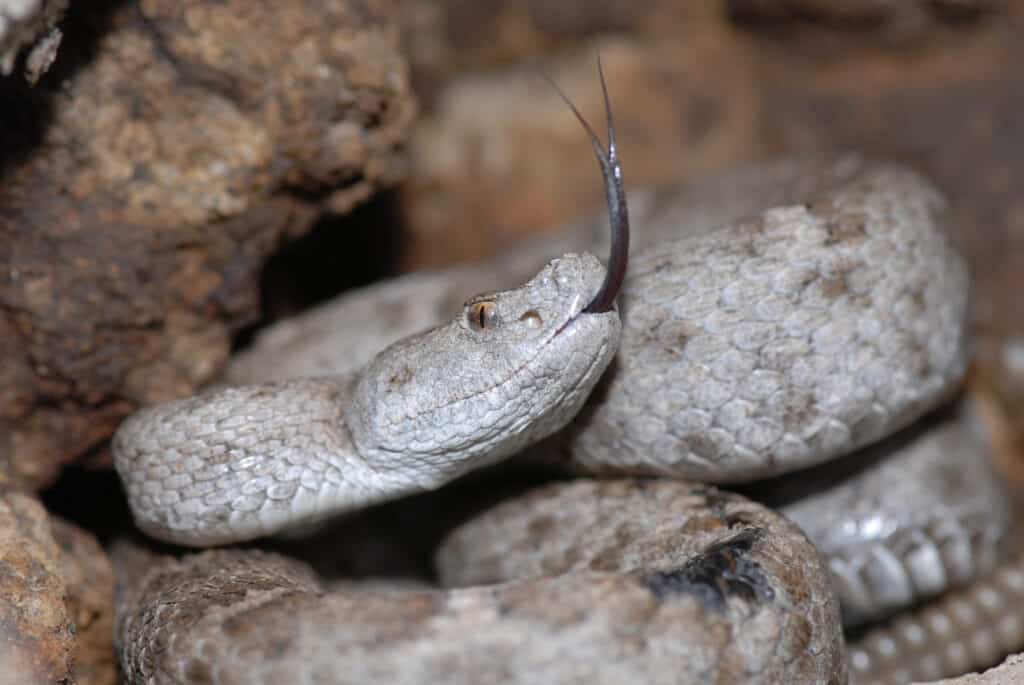
The New Mexican ridgenose rattlesnake is a rare, federally protected venomous snake species.
©iStock.com/Shoemcfly
4. Florida
Florida is home to at least 50 species of snakes, and it is widely believed to rank second only to Texas in population estimates of individual snakes. Some of the most snake-infested areas in Florida are the freshwater wetlands, coastal mangroves, dry uplands, and even residential areas. Florida has six species of venomous snakes, including southern copperheads, eastern diamondback rattlesnakes, dusky pygmy rattlesnakes, cottonmouths, coral snakes, and timber rattlesnakes.
Some of the most common nonvenomous snakes are southern black racers, corn snakes, yellow rat snakes, Florida banded water snakes, eastern garter snakes, and southern ring-necked snakes. South Florida and the Everglades have the highest concentration of snakes in the state, due to the humid wetland habitat and large numbers of invasive Burmese pythons.
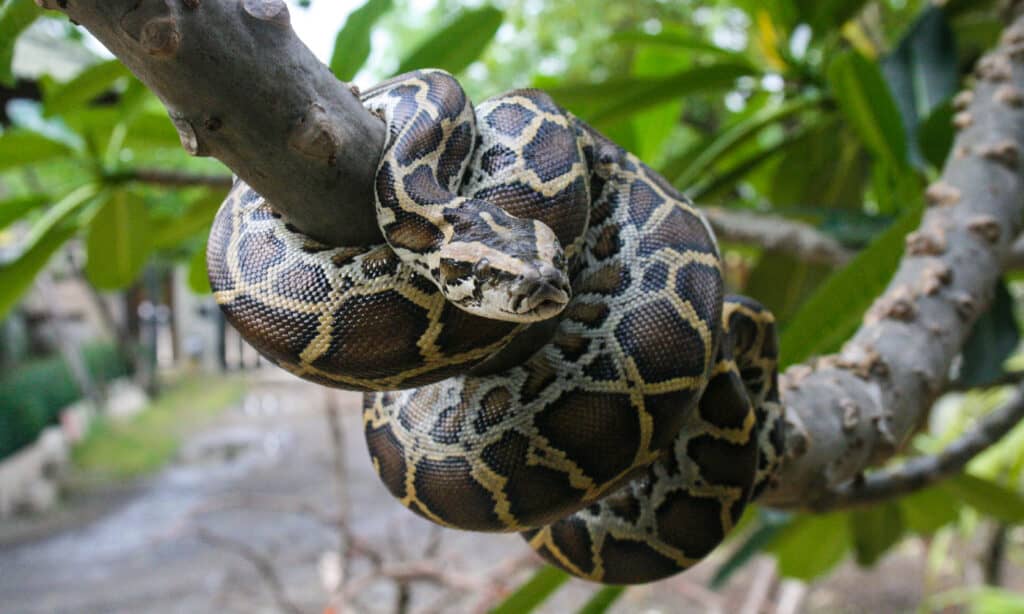
There are large numbers of non-native Burmese pythons in Florida.
©iStock.com/Lunatic_67
3. Arizona
Arizona is densely populated with 52 species of snakes, and 14 of these are venomous. southern and central Arizona, especially where the Phoenix metro area meets the desert, has the highest concentration of snakes. Places such as Gold Canyon, north Scottsdale, and other open-space areas in Phoenix see more snakes than others. The Sonoran desert is also well-known for its snake populations, which include Sonoran mountain kingsnakes, sidewinders, and highly venomous Sonoran coral snakes.
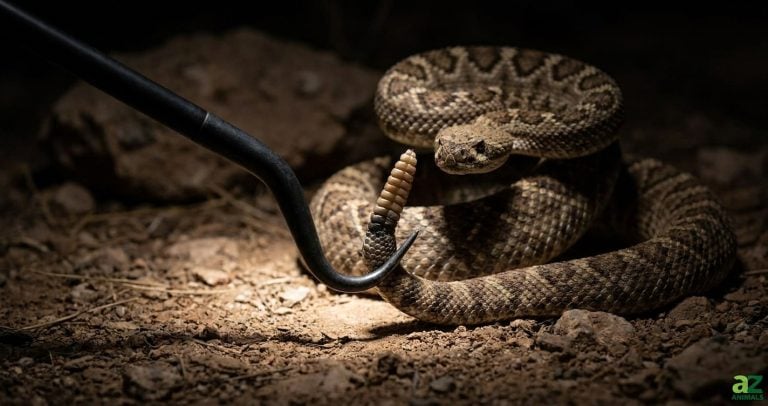
The state has more rattlesnake species than any other U.S. state. Some of Arizona’s most venomous snakes are the ridgenose rattlesnake, Arizona black rattlesnake, and the Grand Canyon rattlesnake. Some scientists believe that the Mojave rattlesnake has the most dangerous venom of any rattlesnake. Gopher snakes, long-nosed snakes, and California kingsnakes are among the most common non-venomous snakes in the state.
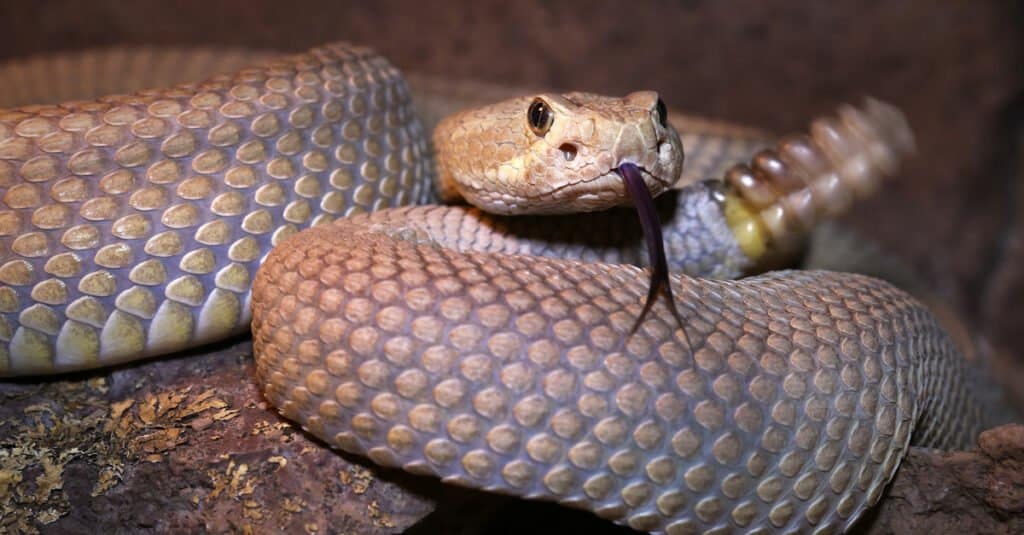
Arizona is home to the Mojave rattlesnake, which some scientists believe have the most toxic venom.
©Ryan M. Bolton/Shutterstock.com
2. Mississippi
Mississippi, which borders the Gulf of Mexico, is a breeding ground for snakes due to its swamplands. The state has a total of 55 snake species. Fortunately, only 6 species are venomous: the cottonmouth, copperhead, pygmy rattlesnake, eastern diamondback rattlesnake, the timber/canebrake rattlesnake, and the coral snake.
While 13% of Mississippi is made up of wetlands, which create desirable habitats for snakes, the state sits at the foot of the Appalachian mountains so there are forests, mountains, hills, and grasslands. Of course, there is also the Mississippi River and the delta region. Some of the most common nonvenomous snakes that inhabit this state include Dekay’s brownsnake, the North American racer, the grey ratsnake, and the speckled kingsnake.
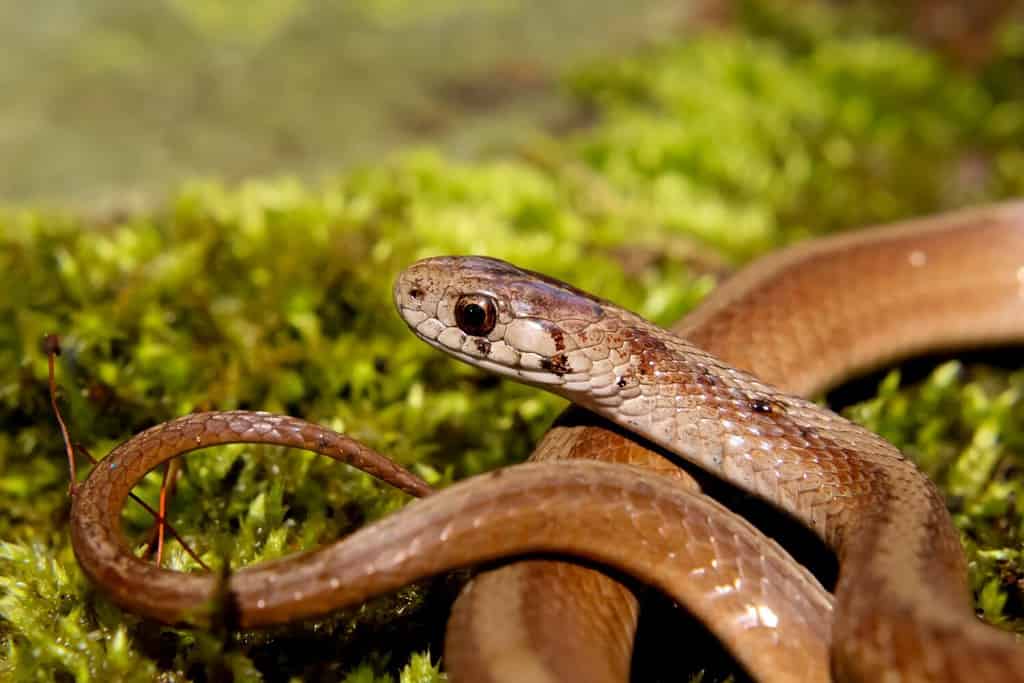
Dekay’s brownsnake is one of the most common nonvenomous snakes in Mississippi.
©Christopher Troll/Shutterstock.com
1. Texas
Texas is home to about 68 snake species, or around 105 including species and subspecies. The state is also considered to have the highest population of individual snakes in the U.S. The state is home to 10 rattlesnake species and subspecies, copperheads, cottonmouths, and Texas coral snakes. Fortunately, only 15 of these snakes are potentially dangerous to humans. The most common and widespread venomous snake in the state is the western diamondback rattlesnake. It is found throughout Texas with the exception of the easternmost part of the state.
The Texas rat snake is one of the most common snakes in the state. It is a nonvenomous snake, although it tries to rattle its tail to look like a rattlesnake and ward off predators. Other snakes native to Texas are the Texas indigo snake, the Texas brown snake, and the Texas blind snake. Snakes are found in every county in Texas, but they are found in greater numbers in Central Texas.
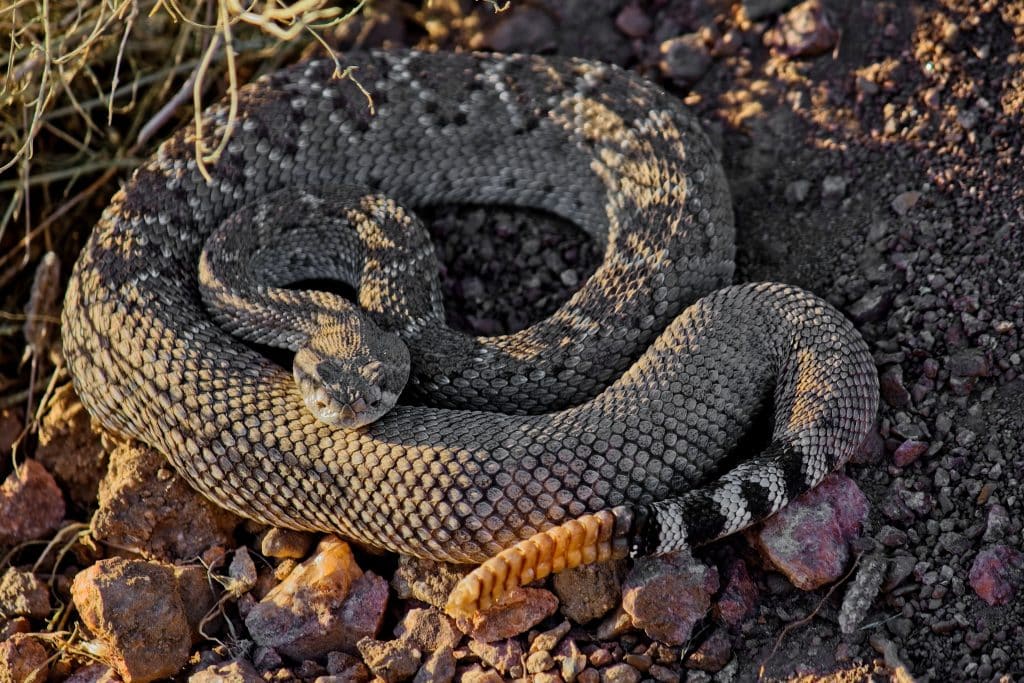
The venomous western diamondback rattlesnake is found in all but the easternmost part of Texas.
©Wirestock Creators/Shutterstock.com