

C
Species Profile

Collared Peccary

Pecari tajacu

Not a pig-America's javelina
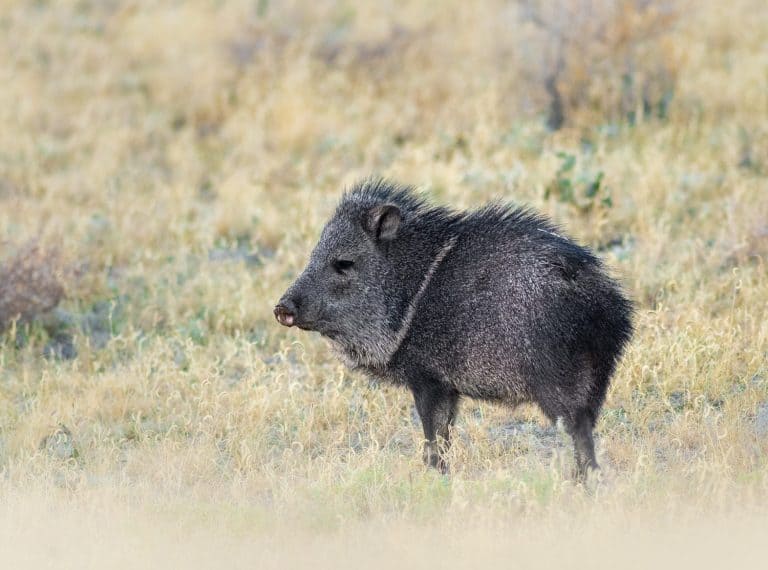
Dennis W Donohue/Shutterstock.com

Size Comparison

Human 5'8"
Collared Peccary 1 ft 6 in

Collared Peccary stands at 26% of average human height.

Collared Peccary in Rio Grande Valley of southern Texas

At a Glance

Wild Species
Also Known As Javelina, Javalina, Peccary, Skunk pig, Musk hog, Musk pig
Diet Omnivore
Activity Diurnal+
Lifespan 10 years
Weight 30 lbs
Status Least Concern
Did You Know?

Not a true pig: peccaries are in Tayassuidae, distinct from Old World pigs (Suidae).

Scientific Classification

A medium-sized New World peccary (pig-like ungulate) found from the southwestern United States through Central America into much of South America. It is adaptable and occupies a wide range of habitats, often living in small groups.

Kingdom
Animalia
Phylum
Chordata
Class
Mammalia
Order
Artiodactyla
Family
Tayassuidae
Genus
Dicotyles
Species
Dicotyles tajacu

Distinguishing Features

  • Noticeable pale/whitish collar of longer hairs around the neck and shoulders
  • Compact, pig-like body with bristly coat and relatively short legs
  • Small, straight tusks (canines) typical of peccaries
  • Scent gland on the rump used for social communication
  • Typically forms small herds; known for chattering vocalizations

Physical Measurements

Height
1 ft 6 in (1 ft 4 in – 1 ft 8 in)
Weight
49 lbs (33 lbs – 66 lbs)
Tail Length
1 in (1 in – 2 in)
Top Speed
25 mph
Javelina reported 56 km/h, unverified

Appearance

Primary Colors
Secondary Colors
Skin Type Skin covered by coarse, bristly guard hairs with sparse underfur; hide is tough and leathery. A large dorsal rump scent gland on the middle of the back near the rump can stain nearby hair.
Distinctive Features
  • Not a true pig (family Tayassuidae, New World peccary): compact, pig-like body but with peccary traits (e.g., dorsal rump gland, different dentition/foot structure than Suidae).
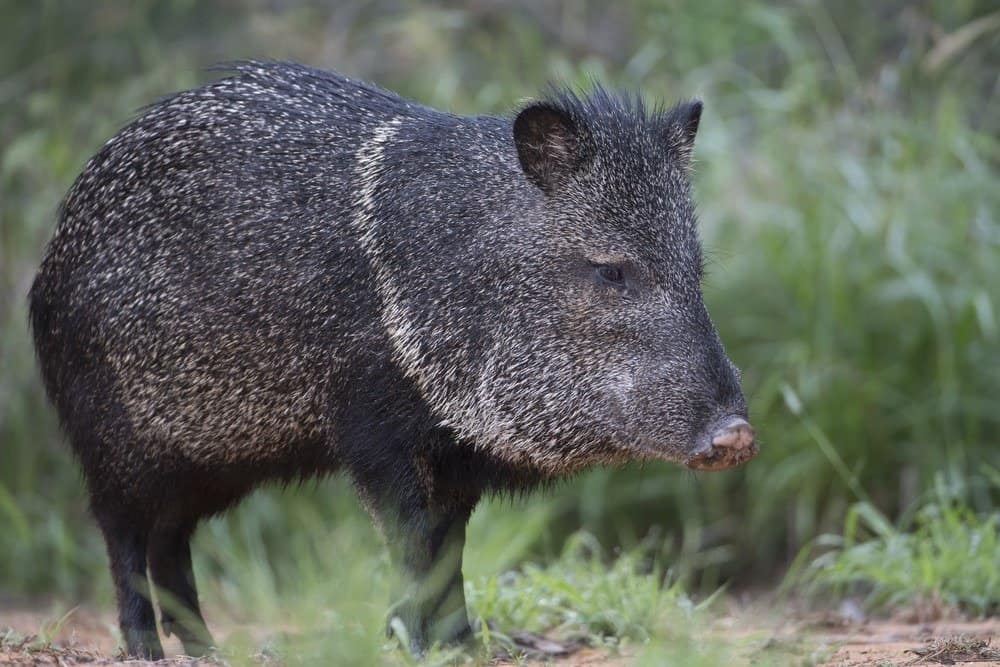
  • Pale/cream "collar" band around neck/shoulders is the primary visual ID feature in the field.
  • Dorsal rump scent gland (midline near the rump) used for scent marking and social recognition; secretions can leave the rump area appearing darker/greasier.
  • Coarse, bristly pelage; hair can stand up along the back forming a low mane/crest when alarmed.
  • Short, inconspicuous tail (typically ~2-5 cm reported in species descriptions).
  • Adult size (typical reported ranges): head-body length ~80-100 cm; shoulder height ~30-50 cm; adult mass commonly ~16-27 kg (ranges summarized in widely used references such as Nowak and Animal Diversity Web).
  • Head: relatively blunt snout; small, sharp canines/tusks compared with wild boar; canines are used defensively but aggression is context-dependent (often defensive when threatened, cornered, or protecting young).
  • Feet: cloven hooves; adapted for walking/foraging over varied terrain (desert scrub, thorn forest, tropical dry forest, woodland, and human-modified habitats).
  • Social appearance/behavior (field-sign relevant): usually encountered in small herds (commonly ~5-15; varies by habitat and hunting pressure), moving in tight groups and using frequent vocalizations and scent cues.
  • Diet-linked field signs: omnivorous but mostly herbivorous-feeds heavily on fruits, seeds, roots, tubers, cacti (in arid regions), and occasionally animal matter; this influences tooth wear and body condition seasonally.
  • Longevity: commonly ~7-8 years in the wild; can exceed 20 years in captivity (records in zoo/husbandry reports and summarized in mammal reference works).

Did You Know?

Not a true pig: peccaries are in Tayassuidae, distinct from Old World pigs (Suidae).

Adults are typically 80-100 cm head-body length, with a very short tail (2-5 cm).

They usually weigh ~14-30 kg (regional variation; some adults exceed 30 kg).

Gestation is about 138-145 days; litters are 1-4, most often 2 young.

Herds are commonly ~6-12 animals, but can form larger groups (dozens) where food is abundant.

They have a conspicuous rump scent gland used to mark trails and help group members recognize each other.

In captivity they can live over two decades (reported up to ~24 years), far longer than typical wild lifespans (~7-10 years).

Unique Adaptations

  • Rump scent gland "badge": a specialized dorsal gland near the tail base provides strong odor cues for individual/group recognition and route marking.
  • Foregut fermentation: a multi-chambered stomach supports microbial digestion of fibrous plant foods (an efficient strategy for a mostly herbivorous diet without true rumination).
  • Desert hardiness: ability to exploit water-rich succulents and tough browse helps populations persist in arid habitats where free water is scarce.
  • Compact, robust build with short tail: reduces exposed surface area and snag risk in thorny scrub; suited to moving through dense understory.
  • Distinct foot structure vs. true pigs: peccaries typically have three functional toes on the hind feet (pigs usually have four), aiding sure-footing on rough terrain.
  • Sharp canines/tusks with powerful jaw muscles: effective for defense and for processing tough plant material (e.g., hard seeds, roots, cactus pads).

Interesting Behaviors

  • Small-herd living with tight social spacing: individuals often travel, rest, and forage in cohesive groups (commonly ~6-12).
  • Scent communication: they rub the dorsal rump gland on rocks/vegetation and may anoint each other, reinforcing group identity and signaling territory use.
  • Defensive group responses: when threatened, herd members may bunch together, chatter/clack teeth, and rush as a unit; adults can aggressively defend young with tusk-slashing bites.
  • Flexible activity patterns: more diurnal in cooler/undisturbed areas, shifting toward crepuscular or nocturnal activity under heat or human pressure.
  • Omnivorous but mostly herbivorous foraging: they browse leaves, fruits, seeds, roots, and fungi; in deserts they heavily use cacti (e.g., prickly pear) and other succulents.
  • Use of shelters: in hot or cold weather they may bed in dense cover, caves, hollow logs, or under shrubs for thermal buffering.
  • Vocal and tactile communication: grunts, barks, and tooth-chattering accompany close-contact nudging and group movement coordination.

Cultural Significance

The collared peccary (Pecari tajacu), often called javelina, is a game animal and Sonoran Desert symbol. Hunted for meat and hides and shown in art and stories, it is not a true pig and adapts to many habitats, sometimes eating crops near towns.

Myths & Legends

Sonoran Desert oral traditions (including O'odham storytelling) feature recurring "Coyote and Javelina" tales, where the social, hot-tempered javelina clashes with the trickster Coyote-often portraying javelina herds as formidable when they act together.

In parts of the Amazon, people speak of collared peccary (Pecari tajacu) herds as animal owners or forest guards; hunters say herds appear or vanish depending on respect for the forest and ritual rules.

In Mesoamerican and Central American stories, peccaries (Pecari tajacu) are a famous forest prey. Their herd teamwork and sudden attacks test hunters and teach community rules about hunting and sharing.

Spanish-colonial frontier stories made the name "javelina" popular; local tales say the Collared Peccary (Pecari tajacu) is a bold pest in towns and part of desert stories warning not to underestimate it.

Conservation Status

LC Least Concern

Widespread and abundant in the wild.

Population Stable

Protected Under

  • Occurs in numerous protected areas (national parks, biological reserves, and indigenous/community conserved areas) throughout its range; protection effectiveness varies by site and country.
  • Hunting is regulated in parts of its range (e.g., treated as a game species in the United States with state-level seasons/bag limits; regulations vary widely across Latin American countries).

Life Cycle

Birth 2 piglets
Lifespan 10 years

Lifespan

In the Wild
7–15 years
In Captivity
15–24.3 years

Reproduction

Mating System Polygynandry
Social Structure Aggregation Group
Breeding Pattern Transient
Fertilization Internal Fertilization
Birth Type Internal_fertilization

Collared peccary (Pecari tajacu) live in mixed-sex groups (~6–12). Mating is polygynandrous: many males and females mate, but dominant males often get more access by guarding or chasing rivals. No lasting pair bonds; gestation ~145 days, 1–3 young.

Behavior & Ecology

Social Herd (band) Group: 10
Activity Diurnal, Crepuscular, Nocturnal
Diet Omnivore Prickly pear cactus (Opuntia spp.)-pads (cladodes) and fruit

Temperament

Highly social and group-cohesive; individuals are rarely encountered far from their herd
Generally wary; can become bold/defensive at close range, especially when cornered or when protecting young
Strong in-group tolerance with dominance-based interactions (e.g., displacement, threat postures)
Territorial or home-range-defending tendencies vary by habitat/resource distribution; inter-group encounters may involve threats and brief aggression
Behavioral plasticity: activity and wariness increase under hunting pressure and/or high daytime heat (often shifting toward crepuscular/nocturnal activity)

Communication

low grunts and contact calls used during foraging/travel
alarm calls described as sharp barks/woofs in disturbance contexts
tooth clacking/jaw popping as an agonistic threat signal
squeals from juveniles during distress/handling
scent marking and group recognition via the dorsal rump Supracaudal) scent gland; individuals rub on each other and on objects to reinforce group odor (noted widely for the species; see Sowls 1997
urine/fecal marking at frequently used paths/rest sites Reported in field accounts
tactile social contact: nose-to-body sniffing, rubbing, and close huddling while resting
visual/body-posture displays: head-up orientation, piloerection, and direct approach/charge during threats; coordinated group facing/defense against perceived predators

Habitat

Biomes:
Tropical Rainforest Tropical Dry Forest Savanna Desert Hot Mediterranean Temperate Grassland Temperate Forest Wetland Alpine +3
Terrain:
Mountainous Hilly Plateau Plains Valley Coastal Island Riverine Rocky Sandy Muddy +5
Elevation: Up to 9842 ft 6 in

Ecological Role

Omnivorous rooter/seed consumer that functions as both seed predator and seed disperser, and as a soil-disturbing ecosystem engineer.

Seed dispersal via fruit consumption and defecation (endozoochory) for some fleshy-fruited plants; contrasting seed predation on mast/seeds Bioturbation/soil disturbance through rooting and digging, which can alter seedbed conditions and affect plant recruitment Nutrient cycling through concentrated dung/urine deposition at feeding and resting sites Trophic support as an important prey species for large and mid-sized carnivores (e.g., jaguar, puma, coyotes depending on region)

Diet Details

Main Prey:
Insects Invertebrates Small vertebrates Bird eggs and nestlings Carrion
Other Foods:
Cacti Agave and other succulents Fruits and berries from shrubs and trees Mast and hard seeds Roots, tubers, bulbs and rhizomes Herbaceous vegetation Fungi +1

Human Interaction

Domestication Status

Wild

The collared peccary (Pecari tajacu) is not domesticated and has no breed like pigs. It can become used to people near towns or farms, is kept in zoos, and is sometimes semi‑tamed by rural and Indigenous groups. Small ranch trials have occurred in Latin America, but it stays wild with strong social, defensive behavior.

Danger Level

Moderate
  • Defensive charges and bites when cornered or when protecting young; can inflict deep lacerations with sharp canine teeth (tusks) capable of serious injury.
  • Group defense: herds (typically ~5-15 animals, sometimes more) may collectively confront perceived threats, increasing injury risk compared with solitary wildlife.
  • Vehicle collisions in regions where they cross roads near habitat edges.
  • Zoonotic/occupational risks for hunters/handlers: potential exposure to pathogens reported in wild suids/peccaries in the Americas (risk depends on region and handling practices).
  • Pet/yard conflicts: may attack dogs during encounters; dogs may provoke defensive responses.

As a Pet

Not Suitable as Pet

Legality: Laws vary by place. In much of the U.S. Collared peccaries (Pecari tajacu) are treated as native or feral swine; keeping is often banned or needs a permit. In Latin America permits and limits are common.

Care Level: Expert Only

Purchase Cost: Up to $1,500
Lifetime Cost: $20,000 - $90,000

Economic Value

Uses:
Subsistence and commercial hunting Wildlife management (pest control / nuisance mitigation) Leather/hide trade (localized) Ecotourism / wildlife viewing Research and zoo exhibition
Products:
  • meat (game)
  • hide/leather (including glove leather in some markets)
  • trophies/teeth (limited/local)
  • guided hunts and wildlife-viewing services (context-dependent)

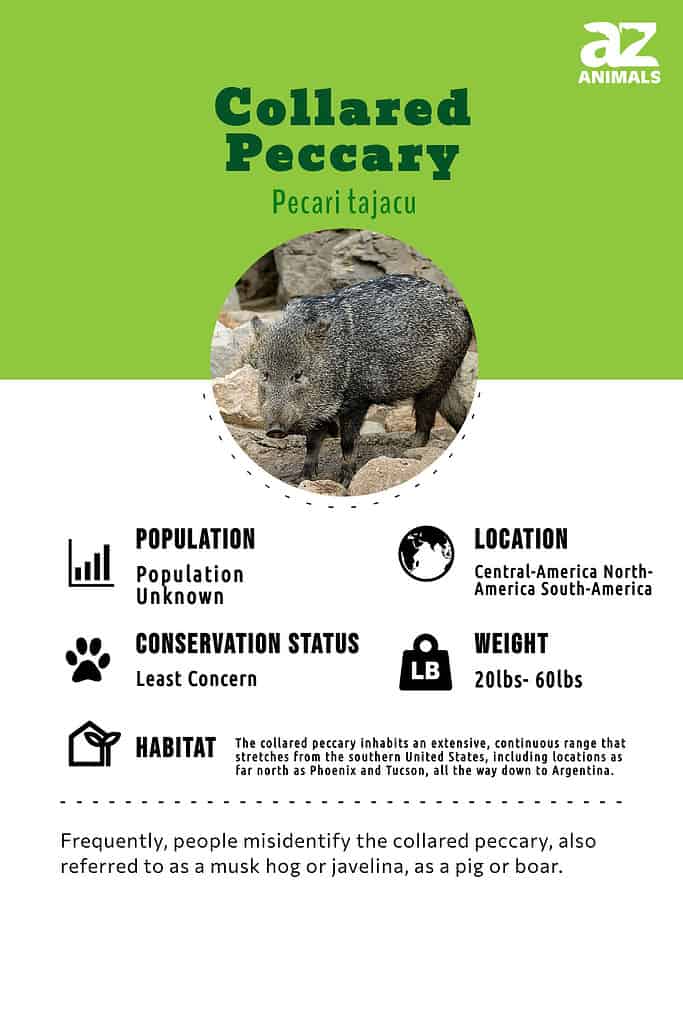
The collared peccary (also called a musk hog or javelina) is commonly mistaken for a pig or boar.

But despite their similar appearances, the peccary is not a true pig in any sense of the word. Because of the differences in the skeleton, teeth, and stomach, they belong to entirely different families. This species is endemic to the warm and tropical regions of the Americas, where it’s thriving as one of the most common mammals.

4 Incredible Collared Peccary Facts!

  • Peccaries walk on the middle two toes of the foot. The other toes are greatly reduced dewclaws (like dogs) located higher on the leg.
  • Peccaries evolved some 30 million years ago from pig-like ancestors in Europe. They then spread out to every other continent except for Australia and Antarctica. The facts suggest that they have been extinct from the Old World for some time, but they reached their current home in the Americas some three million years ago.
  • Collared peccaries are hunted, kept as pets, and even raised on farms. This interaction with humans probably stretches back since people first arrived in the Americas. The Mayans were known for keeping herds of peccaries to use for rituals and food.
  • Collared peccaries trample and dig out the soil to create cool mud wallows, especially when nearby sources of water have dried out. These wallows become distinct ecosystems for frogs and other semi-aquatic animals.

Scientific Name
Craziest Animal Adaptations: Collared Peccary

The Collared peccary is an omnivore, but its diet is mostly based on plants. It likes to eat seeds, prickly pears, berries, beans, tubers, and roots.

The scientific name of the collared peccary is Pecari tajacu. Both Pecari and peccary derive from the South American language of Carib. The pronunciation of both terms is peck-uh-ree. Tajacu appears to be the Portuguese term for the species.

There are three currently recognized species of peccaries, all of which are classified within the family of Tayassuidae (or javelinas), including the Chacoan peccary and the white-lipped peccary.

In 2007, some taxonomists also recognized a fourth species, Pecari maximus, or the giant peccary, but the wider scientific consensus is that it’s a member of the collared peccary species. Apart from this exception, the collared peccary is considered to be the only living member of its genus.

Furthermore, the family of Tayassuidae, also known as javelinas, encompasses all three presently acknowledged peccary species, which include the Chacoan peccary and the white-lipped peccary.

Appearance
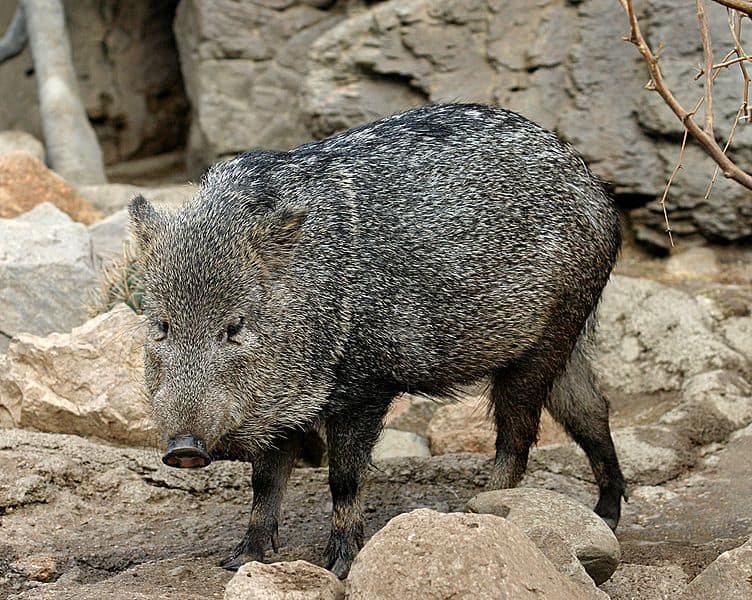
Collared Peccary at the Henry Doorly Zoo in Omaha, Nebraska

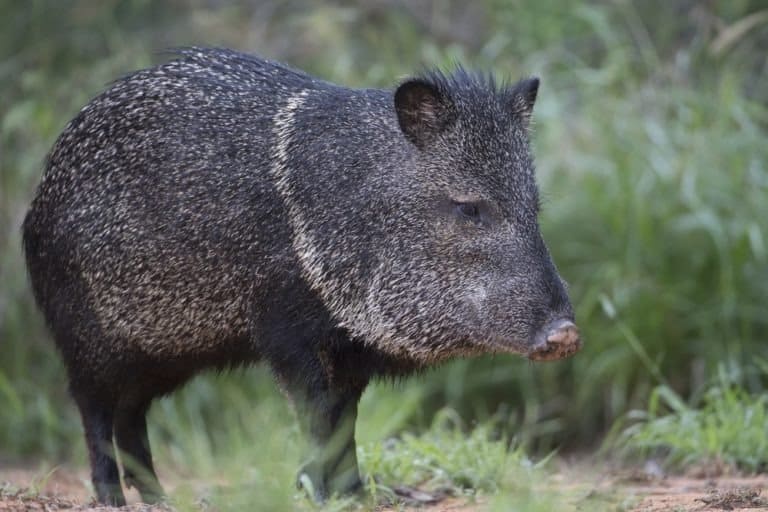
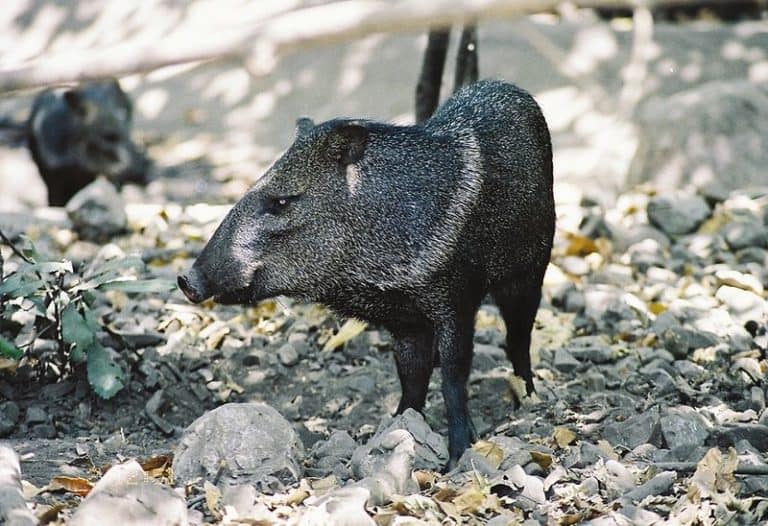
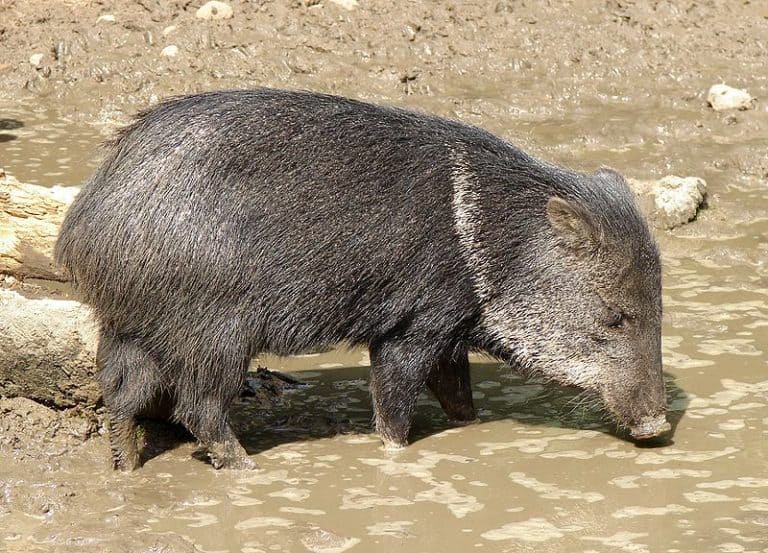
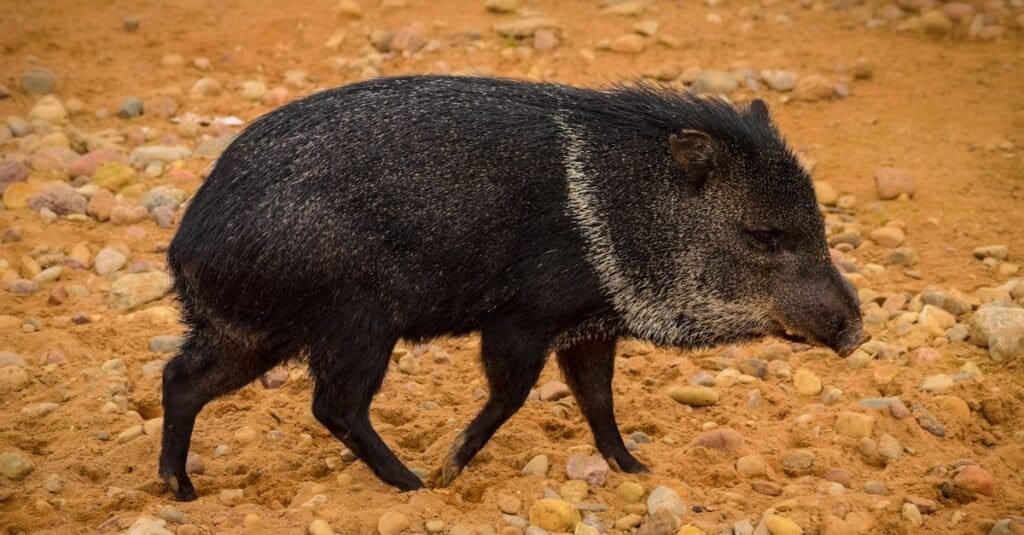
The peccary bears a striking resemblance to a wild boar. It has a large, angular head, a circular snout, small ears, a barely visible tail, and huge canines (which do not protrude from the lips). The coarse fur has a dark brown color with a light brown or white lining that extends like a collar from the lower jaw to the back (hence the name of the species).

The teeth are one of the main distinguishing factors between the pig and the peccary. The latter has vertical canines that grow straight up or down rather than the curved canines of boars. These canines lock together to stabilize the jaw and improve the force of the bite.

Although this dental arrangement limits the chewing to a simple up-and-down motion, it also allows the peccary to exert enough force to crack open the exceptionally tough shell of a palm nut.

The collared peccary is the smallest of all peccary species, measuring less than 3 feet long from head to tail and 12 to 20 inches at shoulder height and weighing between 37 and 66 pounds on average. The largest members of this species grow to some 93 pounds and 3.5 feet. This is about the size of a medium to large dog breed.

Evolution and Origins

The late Eocene of the western US has provided the oldest confirmed evidence of a peccary, suggesting that the divergence between pigs and peccaries occurred over 35 million years ago.

Peccaries have a significant presence in North America and were likely limited to the Western Hemisphere throughout their history.

About 30 million years ago, peccaries emerged from ancestors in Europe that were similar to pigs. Following their evolution, they dispersed to all continents, except for Australia and Antarctica.

Peccaries belong to the same suborder Suina as pigs and share a resemblance to them. They have existed in South America since prehistoric times. The first recorded scientific mention of peccaries in the New World dates back to 1547 in Brazil, where they were labeled as “wild pigs”.

Behavior
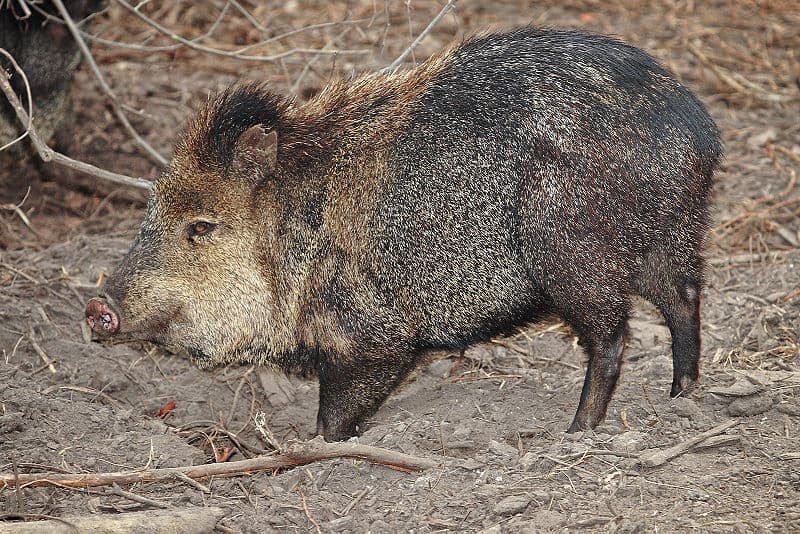
Collared Peccary, Melbourne Zoo

The collared peccary’s social life revolves around very close and cohesive herds consisting of five to 15 individuals (though sometimes up to 50). These herds exhibit standard hierarchical behavior with a dominant male at the top and the rest of the ranking determined by size.

Except when they break up into smaller foraging groups, the facts suggest that these herds are fairly stable units. The hierarchy doesn’t change much, and they rarely accept new members. This species is most active during the day, but feeding and foraging times shift more toward nighttime in the summer to deal with the oppressive heat.

Each group covers a massive territory sometimes reaching over 1,000 hectares in size (a single hectare is equivalent to 10,000 square meters). Both males and females will defend the territory with aggressive displays such as squaring off, flattening their ears, and chattering with their canines. A fight is a vicious affair that can cause serious injury due to full-body contact or bites.

Collared peccaries exhibit some of the same traits as a pig. They wallow in mud to cool down, have excellent swimming capabilities, and find food buried in the soil with their amazing sense of smell. In fact, smell is the main means of communicating with each other and obtaining sensory information. Collared peccaries give off a strong musky odor through a gland on their back (hence the name musk hog).

The scent is then rubbed on rocks, trees, and stumps to mark their territory. It’s also used to identify other members of the group. This compensates for their small eyes and relatively poor sight.

Touch is another important aspect of their communication. They will rub their bodies against each other and exchange scents, groom other members of the herd, and lay in close proximity while sleeping. Grunts, woofs, and barks are all part of their communication repertoire as well.

Unlike many other hoofed animals (including pigs), the collared peccary lacks a ruminating stomach that allows it to ferment plant material to break it down. Instead, this species has a more complex three-chambered stomach for digesting tough plant matter. The peccary stomach is actually more efficient than the stomach of the closely related pig.

Collared peccaries are also fairly intelligent creatures with a rich emotional life. A series of videos captured in central Arizona as part of a school science fair project shows a herd appearing to grieve over the death of a fellow member. Over a period of 10 days, the herd repeatedly returned to the corpse, slept beside it, and chased away coyotes from it. This was the first report of collared peccaries engaging in such behavior, but it is highly suggestive. The depth of their interactions with the dead body probably couldn’t be explained by curiosity alone.

Habitat
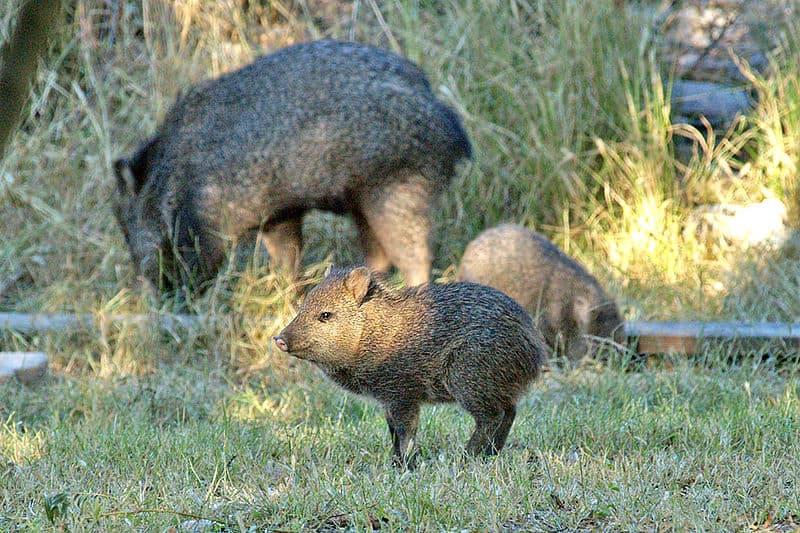
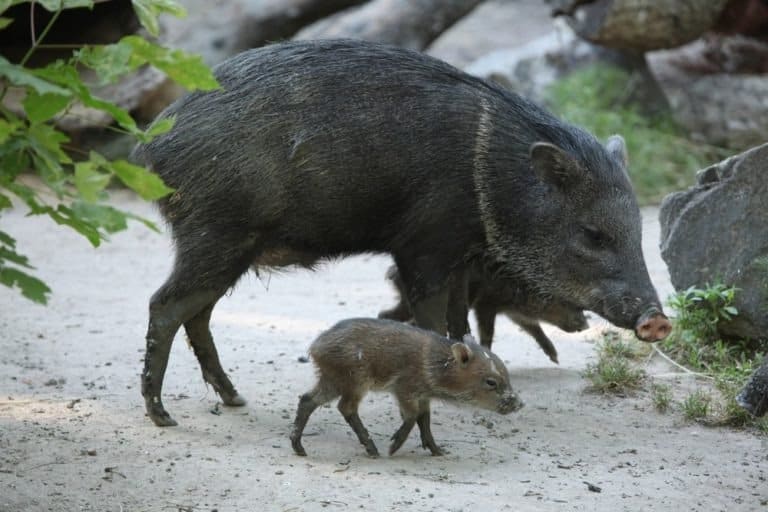
Juvenile Collared Peccary with mother

The collared peccary occupies a massive unbroken range that extends from the Southern United States (as far north as Phoenix and Tucson) down to Argentina. The only Caribbean islands where it’s endemic are Trinidad and Tobago, but it has been introduced into several others. This species occurs in a variety of different habits: tropical rainforests, shrublands, grasslands, swamplands, and mesquite deserts with prickly pear cacti. It has also adapted to life in residential human neighborhoods.

Diet and Predators

The peccary serves as an important intermediary part of the local ecosystem. It transfers nutrients and resources between plant matter and small prey at the bottom of the food chain and apex predators at the top. They also play an important though inadvertent role in dispersing seeds throughout the ecosystem. As small seeds pass through their digestive tract and the rest are spit out, new plants are created across their entire territory.

What does the collared peccary eat?

The collared peccary has a very wide palate that encompasses both meat and plants, but the bulk of its diet consists of roots, bulbs, beans, nuts, berries, fungi, grass, and cacti. They sometimes supplement the diet with calcium, sodium, chlorine, and magnesium from naturally occurring mineral licks.

The exact composition depends on the nature of its habitat. In the southern part of the range, the collared peccary is more likely to consume meat from snakes, fish, frogs, eggs, and carrion.

In deserts, agaves and prickly pears are the most prized foods because of their high water content. In rainforests, the diet is largely fruit-based. One study estimated that the collared peccaries of Peru consumed some 128 different plant species.

What eats the collared peccary?

Apex carnivores such as pumas, coyotes, jaguars, and bobcats are the main predators of the collared peccary. Humans have also traditionally hunted this species for food and hide dating back thousands of years.

Reproduction, Babies, and Lifespan

Collared peccaries have no set mating season. They are free to breed at any time of the year based on climate and rainfall. The dominant male jealously guards all breeding rights with the females of the herd. The lesser males have no breeding rights themselves, but unlike many other hierarchical species, they stay within the herd for the entire year instead of forming their own all-male bachelor groups.

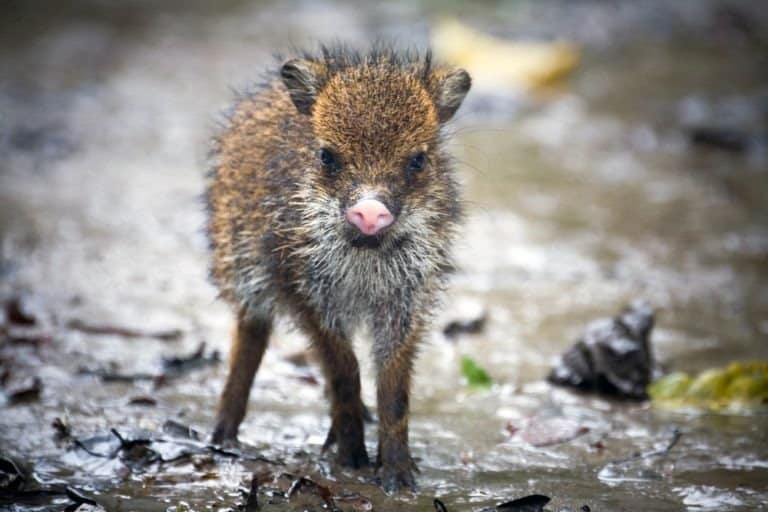
After a gestation period of around five to six months, the female peccary leaves the herd to give birth alone. She produces one to three, but rarely four, offspring at a time. Weighing no more than 1 to 1.5 pounds, these newborns are dependent on the mother and her older sisters. The rest of the herd is not trusted with the young.

Peccaries develop rapidly over a short period of time. The young are fully weaned off their mother’s milk at two to three months of age. Females reach sexual maturity between eight and 14 months, while males reach sexual maturity at a more consistent 11 months.

Tropical peccaries tend to give birth more often than desert-based peccaries, possibly due to the abundance and availability of resources. The life expectancy of this species is some 24 years in the wild, but many fall victim to predators before they die of old age. In captivity, where they are free from predators and most diseases, some peccaries exceed 30 years of age.

Population

Precise population estimates are hard to come by, but the IUCN Red List currently considers the collared peccary to be a species of least concern with stable population numbers. Some local populations in Central America and the Amazon may be threatened due to the destruction of the rainforests. But because the species is so adaptable, it can live in a wide range of different habitats, even among humans.

Zoo

The collared peccary is a prime exhibit at the Happy Hollow Park and Zoo in San Jose, the Potawatomi Zoo in South Bend, the GarLyn Zoo in Naubinway, Michigan, and the Phoenix Zoo. In Canada, this species can be found at the Greater Vancouver Zoo.

View all 392 animals that start with C
How to say Collared Peccary in ...
English
Collared Peccary
Dutch
Halsbandpekari
Portuguese
Caititu, Cateto

Sources

  1. Britannica / Accessed December 14, 2020
  2. Animal Diversity Web / Accessed December 14, 2020
  3. San Diego Zoo / Accessed December 14, 2020
Rebecca Bales

About the Author

Rebecca Bales

Rebecca is an experienced Professional Freelancer with nearly a decade of expertise in writing SEO Content, Digital Illustrations, and Graphic Design. When not engrossed in her creative endeavors, Rebecca dedicates her time to cycling and filming her nature adventures. When not focused on her passion for creating and crafting optimized materials, she harbors a deep fascination and love for cats, jumping spiders, and pet rats.
Connect:

Thank you for reading! Have some feedback for us?


Collared Peccary FAQs (Frequently Asked Questions)

The collared peccary measures less than 3 feet long and weighs between 37 and 66 pounds on average.