N S W E
Wildlife Expeditions

Wildlife of
Arizona

Arizona's sky-island mountains and iconic deserts pack an extraordinary mix of Sonoran, Mojave, and Colorado Plateau wildlife into one state.
196 Species
294,207 km² Land Area
Overview

About Arizona

Arizona has big changes in elevation — hot desert basins to pine-covered peaks — so it contains many kinds of habitats. This supports desert animals like javelina and Gila monsters, grassland and canyon species, and cool mountain communities with black bears and Mexican spotted owls. Long rivers and oases run through the dry land, drawing many animals and making wildlife common in places that look empty at first. Key areas are the Sonoran Desert (saguaro forests, spring blooms, many reptiles and pollinators), the Mojave Desert (open desert with desert tortoises and kit foxes), and the Colorado Plateau (pinyon-juniper woods, slickrock, and canyons with bighorn sheep and raptors). Southeastern “sky islands” are isolated mountains where temperate and tropical species meet, boosting bird and butterfly numbers. Rivers like the Colorado, Salt, Verde, and San Pedro are vital for migratory birds, native fish, and amphibians.

Physical Features

Geography

Arizona's wildlife follows sharp changes in elevation and moisture: hot, dry desert basins have Sonoran and Mojave desert species, while higher, cooler "sky island" ranges and the Colorado Plateau support pine and fir forests and alpine meadows. Major rivers (Colorado, Gila, Salt, Verde) create riparian oases and wetlands that concentrate wildlife and help migration and breeding.

294,207 km² (land area) Land Area
6th largest U.S. state Size Rank
State Type
Elevation Range

~22 m (Colorado River near the southwest corner) to 3,851 m (Humphreys Peak)

Coastline

No ocean coastline; extensive shoreline occurs on major reservoirs and lakes (notably Lake Powell and portions of Lake Mead), plus smaller lakes/impoundments that add important aquatic and riparian habitat.

Key Landscapes

Sonoran Desert lowlands (saguaro-palo verde desertscrub; warmer, more biologically productive desert in the south and west) Mojave Desert fringe in the northwest (drier desertscrub; Joshua tree zone) Colorado Plateau (north/NE mesas, canyonlands, and pinyon-juniper; includes extensive high-desert habitats) Grand Canyon and associated canyon ecosystems (dramatic vertical habitat zonation; Colorado River corridor) Sky Island mountain ranges of southeastern Arizona (Madrean 'sky islands' with oak woodland to mixed conifer; isolated habitats that drive endemism and range limits) Mogollon Rim (major escarpment and ecological boundary between desert lowlands and plateau forests)
State Symbols

Official Wildlife Symbols

animal

Ringtail

Designated 1986

bird

Cactus wren

Designated 1931

fish

Apache trout

Designated 1986

insect

Two-tailed swallowtail (state butterfly)

Designated 2001

reptile

Arizona ridge-nosed rattlesnake

Designated 1986

wildflower

Saguaro cactus blossom

Designated 1931

tree

Palo verde

Designated 1954

Parks & Reserves

Protected Areas

Arizona's protected areas span wide elevation and habitat ranges—from Sonoran and Mojave Desert lowlands with saguaro forests and washes to the Colorado Plateau's canyonlands and high conifer forests. Protection rests on national parks (Grand Canyon, Saguaro), large BLM/USFS wilderness areas, and refuges that protect desert bighorn sheep, Sonoran pronghorn, and rare riparian corridors for migratory birds and threatened amphibians.

Protected Coverage

≈25-30% (varies by definition; includes designated federal/state protected areas such as national parks/monuments, wilderness areas, wildlife refuges, and major state parks-Arizona also has extensive other public lands with mixed-use management).

National Parks & Preserves

Grand Canyon National Park

≈1,217,000 acres (≈4,926 km²)

A vast canyon-and-plateau ecosystem with strong elevation-driven biodiversity; critical for raptors and cliff-nesting birds, plus one of the Southwest's most important California condor recovery landscapes.

California condor Desert bighorn sheep Elk Mule deer Mountain lion

Saguaro National Park

≈92,000 acres (≈372 km²)

Iconic Sonoran Desert protected around Tucson; outstanding for desert wildlife viewing across saguaro forests, rocky bajadas, and washes that concentrate birds and reptiles.

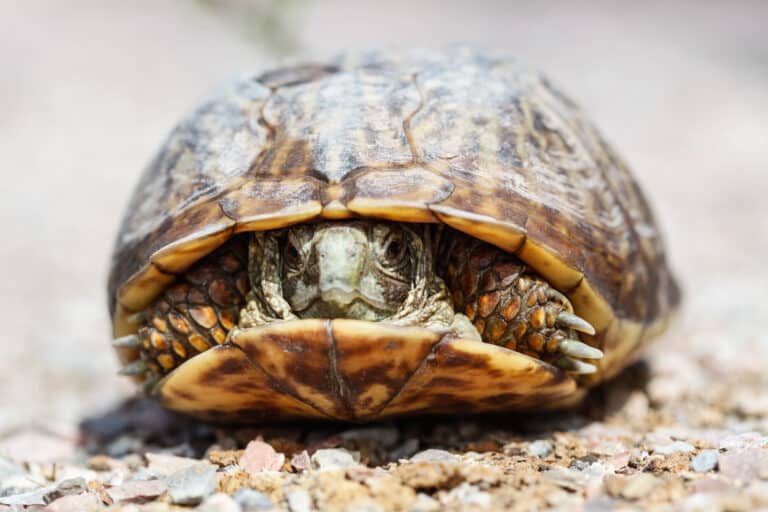
Gila monster Javelina (collared peccary) Desert tortoise Harris's hawk Cactus wren

Petrified Forest National Park

≈221,000 acres (≈895 km²)

Colorado Plateau grassland/badlands habitat supporting pronghorn and a strong raptor community; wide-open vistas make wildlife spotting relatively easy.

Pronghorn Burrowing owl Golden eagle Kit fox Prairie rattlesnake

State & Provincial Parks

Kartchner Caverns State Park

≈4,000 acres (≈16 km²)

A major cave system and surrounding desert grassland that supports seasonal bat use and a rich mix of Southeastern Arizona wildlife in a well-managed conservation setting.

Cave myotis (bat) Ringtail Coatimundi Coues white-tailed deer Western screech-owl

Catalina State Park

≈5,500 acres (≈22 km²)

A biodiversity-rich desert-to-foothills transition zone at the base of the Santa Catalina Mountains; reliable for mammals and raptors along washes and bajadas.

Mule deer Javelina (collared peccary) Bobcat Harris's hawk Gila monster

Dead Horse Ranch State Park

≈423 acres (≈1.7 km²)

One of Arizona's best riparian wildlife-viewing state parks; lagoons and Verde River frontage attract migratory birds and support beaver and other wetland-associated species.

River otter American beaver Bald eagle Great blue heron Neotropical migratory songbirds

Wildlife Refuges

Buenos Aires National Wildlife Refuge

≈118,000 acres (≈477 km²)

Grassland and desert scrub conservation landscape focused on restoring native grasslands and supporting rare birds; also a key area for raptor viewing.

Masked bobwhite (reintroduction focus) Pronghorn Scaled quail Ferruginous hawk Coyote

Kofa National Wildlife Refuge

≈666,000 acres (≈2,695 km²)

Rugged Sonoran Desert mountains and bajadas that protect one of Arizona's premier desert bighorn sheep ranges and intact desert predator-prey communities.

Desert bighorn sheep Kit fox Golden eagle Gila monster Mule deer

San Bernardino National Wildlife Refuge

≈2,300 acres (≈9 km²)

Rare spring-fed wetlands in the desert supporting threatened riparian birds and sensitive amphibians-an outsized refuge for biodiversity in a small footprint.

Chiricahua leopard frog Southwestern willow flycatcher Yellow-billed cuckoo Black-necked garter snake Mexican duck

Bill Williams River National Wildlife Refuge

≈6,100 acres (≈25 km²)

A vital riparian corridor near Lake Havasu that functions as a major migratory bird stopover and breeding area for Southwestern riparian specialists.

Southwestern willow flycatcher Yellow-billed cuckoo American beaver Bobcat Migratory waterfowl

Wilderness Areas

  • Superstition Wilderness (Tonto National Forest)
  • Mazatzal Wilderness (Tonto National Forest)
  • Kachina Peaks Wilderness (Coconino National Forest)
  • Chiricahua Wilderness (Coronado National Forest)
  • Aravaipa Canyon Wilderness (BLM/USFS)
  • Four Peaks Wilderness (Tonto National Forest)
  • Paria Canyon-Vermilion Cliffs Wilderness (BLM)
Animals

Wildlife

Arizona's wildlife diversity is shaped by steep elevation and climate gradients: Sonoran and Mojave Desert lowlands (saguaro-palo verde desert, desert washes, and sky-island mountain ranges), the high forests and canyonlands of the Colorado Plateau, and major riparian corridors (Colorado, Gila, Salt, Verde rivers). This mix produces an unusually broad Southwest species assemblage-desert specialists (reptiles, small mammals, bats), montane and plateau forest wildlife (elk, black bear, owls), and a disproportionate share of the state's rare species tied to springs, spring-fed desert wetlands, and desert rivers (native fishes, frogs).

≈110-120 species Mammals
≈540-560 species (migrants plus breeders) Birds
≈95-110 species Reptiles
≈25-35 species Amphibians
≈70-90 species (native + introduced; native desert fishes are a smaller subset) Fish
Examples

Iconic Species

Mexican Gray Wolf A flagship predator of Arizona's high country; reintroduced to the White Mountains and surrounding forests, it represents one of the most visible large-carnivore recovery efforts in the U.S.
Mountain Lion
Mountain Lion Widely distributed from deserts to ponderosa forests; emblematic of Arizona's rugged, wild landscapes and a top predator in many ecosystems.
Sonoran Desert Tortoise A signature Sonoran Desert reptile often sought in saguaro country; long-lived and strongly associated with rocky desert slopes and alluvial fans.
Gila Monster
Gila Monster One of the few venomous lizards in the world and an Arizona icon; most associated with Sonoran Desert scrub and rocky foothills.
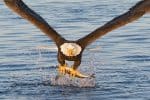
Bald Eagle
Bald Eagle A major conservation success in Arizona, especially along desert rivers and reservoirs (Salt/Verde/Gila systems), where visitors commonly look for nesting pairs and fishing eagles.
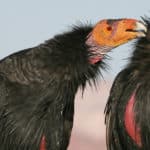
California Condor
California Condor Reintroduced to the Grand Canyon region; soaring condors are a premier wildlife experience on the Colorado Plateau and one of the state's most celebrated sightings.
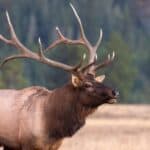
American Elk
American Elk A defining big-game species of northern Arizona's forests and meadows (e.g., around the Mogollon Rim and Kaibab Plateau), especially visible in fall rut.
Bighorn Sheep (Desert Bighorn) An emblem of Arizona's canyon and desert-mountain country; often searched for in rugged ranges and along major canyon systems.
Mexican Spotted Owl A cornerstone species of mature forests and deep canyon habitats in Arizona's mountains and plateau country; central to regional old-growth and canyon ecosystem conservation.

Endemic & Rare Species

Sonoran Pronghorn

Antilocapra americana sonoriensis

Endangered (U.S.); extremely limited U.S. range

One of North America's most desert-adapted large mammals; Arizona supports a critical portion of the U.S. population in the Sonoran Desert, where heat and drought make recovery challenging.

Chiricahua Leopard Frog

Lithobates chiricahuensis

Threatened (U.S.)

A sky-island amphibian associated with spring-fed desert wetlands; its presence reflects the health of springs, stock tanks, and riparian wetlands-habitats that are scarce and vulnerable in Arizona.

Gila Topminnow

Poeciliopsis occidentalis

Endangered (U.S.)

A small native desert fish once widespread in the Gila basin; now restricted to refuges and remnant waters because of habitat loss and nonnative fish (including mosquitofish).

Razorback Sucker

Xyrauchen texanus

Endangered (U.S.)

A large, long-lived Colorado River native fish; Arizona's river reaches and backwaters are central to ongoing recovery actions (stocking, managed flows, and nonnative control).

Loach Minnow

Tiaroga cobitis

Threatened (U.S.)

A riffle-dwelling specialist of clear, flowing streams in the Gila River basin; highly sensitive to altered flows, sedimentation, and introduced fishes.

Arizona Ridge-nosed Rattlesnake

Crotalus willardi

State-protected/locally rare; sky-island specialist

A sought-after but seldom-seen rattlesnake of southeastern Arizona's montane woodlands; its limited, patchy range makes it a conservation priority.

Jaguar

Panthera onca

Endangered (U.S.); extremely rare visitor

Not a resident breeding population, but Arizona represents the northern edge of jaguar occurrence in the Americas; occasional males photographed in the Sky Islands are globally notable.

Mexican Long-nosed Bat

Leptonycteris nivalis

Endangered (U.S.)

A migratory nectar-feeding bat linked to agaves; southeastern Arizona can be important during seasonal movements, highlighting the value of intact desert and mountain flowering corridors.

Notable Populations

  • One of the most visible, routinely observed reintroduced populations of California Condors in the wild (Grand Canyon/Colorado Plateau region).
  • A major Southwestern stronghold for Mexican Spotted Owl across mixed-conifer forests and canyon systems.
  • A nationally important recovery landscape for Mexican Gray Wolf in the U.S. Southwest (Arizona-New Mexico recovery area).
  • Arizona's desert river corridors (Salt/Verde/Gila and reservoirs) support prominent Bald Eagle nesting and viewing opportunities in an arid-state setting.
  • Critical U.S. habitat for the Sonoran Pronghorn, among the most heat- and drought-adapted large mammals in North America.

Recent Changes

  • Mexican Gray Wolf reintroduction and ongoing population growth/management since 1998 in the Arizona-New Mexico recovery area.
  • California Condor reintroduction to northern Arizona (Grand Canyon region) beginning in the 1990s; continued management to reduce lead exposure and improve breeding success.
  • Expanded use of reclaimed riparian habitats by several raptors and waterbirds in some river/reservoir systems, alongside continuing pressures from drought and altered flows.
  • Native desert fishes (e.g., Colorado River and Gila basin species) continue to face declines from prolonged drought, warming waters, habitat fragmentation, and nonnative predators-driving ongoing stocking/refuge and habitat-restoration efforts.
  • Amphibian declines and fluctuations (including Chiricahua Leopard Frog) linked to chytrid fungus, drying wetlands, and loss/degradation of springs and spring-fed desert wetlands; targeted wetland restoration and disease-aware translocations continue.
  • Intermittent detections of jaguar (and occasional ocelot in the borderlands) continue in southeastern Arizona, reflecting cross-border connectivity and the importance of Sky Island habitats.
Visit

Wildlife Viewing

Arizona offers great wildlife viewing across big elevation and habitat changes—from Sonoran and Mojave Desert lowlands with saguaro forests and washes to high-elevation pine forests and Colorado Plateau canyonlands. Visitors can see desert species (javelina, roadrunner, Gila monster), big-game and mountain animals (elk, mule deer, black bear), and many birds along riparian areas and wetlands.

Best Seasons

Spring (Mar-May)

Peak variety: desert wildflower bloom improves daytime viewing and photography; bird migration ramps up along riparian areas (San Pedro River, Verde River). Many species are active before summer heat. Good chances for reptiles (warming days) and raptors. Expect cool-to-warm days; higher elevations still chilly early in spring.

Summer / Monsoon (Jun-Sep)

Plan for early mornings and evenings. Monsoon storms (typically Jul-Sep) bring dramatic skies, greener desert, and increased activity around temporary water and insects (excellent for bats and nighthawks at dusk). Higher elevations (Flagstaff, Mogollon Rim) are comfortable for elk and forest wildlife. Use caution with heat and flash floods; night outings can be especially productive.

Fall (Oct-Nov)

Comfortable temps return; strong season for big-game viewing in high country and along the Mogollon Rim. Raptors and songbirds move through; cottonwoods along rivers turn gold for scenic wildlife photography. Great time for longer hikes and canyon country without extreme heat.

Winter (Dec-Feb)

Best season for waterfowl and many wintering birds in wetlands and river valleys; also good for bighorn sheep viewing where accessible. Lower deserts (Tucson/Phoenix areas) are mild and productive for birding; higher elevations can be snowy, limiting access but offering tracks-and-sign opportunities and quieter landscapes.

Top Wildlife Experiences

  • Dawn desert wildlife walk in Saguaro National Park (Tucson) - look for javelina, cactus wrens, Gila woodpeckers, roadrunners, and (with luck) desert tortoise; best light and activity within the first 2 hours after sunrise.
  • Birding the San Pedro Riparian National Conservation Area (near Sierra Vista) - one of the Southwest's premier bird corridors for migration; scan cottonwood-willow habitat for hummingbirds, flycatchers, warblers, and raptors; plan a slow morning along the river trail system.
  • Cave Creek Canyon (Chiricahua Mountains, near Portal) hummingbird-and-montane bird circuit - visit feeders and trails for specialty species; combine with nearby Chiricahua National Monument for canyon and woodland wildlife.
  • Canoe/kayak wildlife float on the Lower Salt River (near Phoenix/Mesa) - watch for wild horses, waterbirds, and raptors along riparian habitat; go early to avoid crowds and heat.
  • Bald eagle viewing along the Verde River / Bartlett Lake region - focus on winter and early spring for the most consistent eagle activity; bring a spotting scope for distant perches and nests (view from respectful distances).
  • Night wildlife outing in the Sonoran Desert (Organ Pipe Cactus National Monument or Tucson area) - spotlighting with permitted guides can reveal owls, nighthawks, kit foxes, and other nocturnal desert life; also excellent for stargazing with wildlife listening stops.
  • High-country elk watching near Flagstaff and the Mogollon Rim - drive forest roads and open meadows at dawn/dusk; pair with a quiet hike for tracks, scat, and calling in fall.
  • Wetland birding at Riparian Preserve at Water Ranch (Gilbert) or Tres Rios Wetlands (Phoenix area) - easy trails and blinds for close views of herons, egrets, ducks, and seasonal shorebirds; ideal for families and photographers.

Wildlife Watching Types

Desert wildlife viewing (saguaro forest, desert scrub, washes) Riparian corridor wildlife watching (riverbirding, beaver habitat, raptors) Birding hotspots and migration watching (spring/fall passerines; winter waterfowl) Raptor watching (eagles, hawks, falcons-especially near lakes and river valleys) Reptile and amphibian watching (best in warm seasons; monsoon boosts activity) Nocturnal wildlife viewing (owls, bats, foxes; night drives/walks) High-elevation/montane wildlife watching (elk, mule deer; forest birds) Wildlife photography-focused outings (golden hour desert, wetlands blinds, canyon overlooks)

Guided Options

  • Arizona Game and Fish Department: Wildlife viewing information, site guides, and seasonal advisories (good starting point for planning and ethics).
  • National Park Service ranger programs: Saguaro National Park and other NPS units often offer guided walks/talks focused on desert ecology and wildlife.
  • Friends of the San Pedro River (and local nature organizations in Sierra Vista area): guided bird walks and seasonal events along the San Pedro corridor.
  • Audubon chapters and birding festivals (statewide, especially in southern Arizona): organized field trips led by expert birders during peak migration and winter seasons.
  • Local outfitter-guided paddling trips on the Lower Salt River: wildlife-focused floats that emphasize birds, riparian ecology, and responsible viewing.
  • Portal / Cave Creek Canyon local guiding (southeastern Arizona): specialty birding guides for Chiricahua and Sky Island regions, including hummingbird-focused outings.
  • HawkWatch International (regional programming): raptor identification and migration education events when scheduled in Arizona migration corridors.
  • Organ Pipe Cactus National Monument & Coronado National Forest interpretive programs: seasonal guided hikes and talks (check current schedules and permits).
Habitats

Ecosystems

Arizona ranges from Sonoran and Mojave Desert lowlands to the Colorado Plateau and "sky island" mountains, so many ecosystems are close together. Hot deserts cover the south and west; pinyon-juniper woodlands, ponderosa pine, mixed conifer, alpine-like peaks and canyon and riparian areas occur higher. Rivers Colorado, Salt, Verde, Gila, San Pedro and Little Colorado and wetlands are vital for wildlife.

Biomes

Hot Desert

Sonoran Desert (saguaro-paloverde, creosote, desert washes) and parts of the Mojave in western Arizona; includes extensive bajadas, dunes, and rocky desert ranges with ephemeral streams.

Largest share of the state; dominant across southern and western lowlands (roughly half or more).

Cold Desert

Colorado Plateau shrublands and cold desert grass/shrub mosaics at higher elevations and latitudes (sagebrush, saltbush, blackbrush), with colder winters and summer monsoon influence.

Broadly in northern Arizona and plateau margins; substantial but secondary (roughly a quarter to a third).

Temperate Forest

Montane forests including ponderosa pine in mid-elevations and mixed conifer (Douglas-fir, white fir, spruce-fir) at higher elevations; also riparian cottonwood-willow galleries that function as temperate forest strips along rivers.

Patchy but extensive on uplands (e.g., Mogollon Rim, White Mountains, San Francisco Peaks); roughly a tenth of the state (locally dominant at elevation).

Temperate Grassland

Semi-arid grasslands and savanna-like grass-oak transitions (notably in southeastern Arizona) with monsoon-driven productivity; includes plains grasslands and grassy openings among shrubs/woodlands.

Localized, especially in southeastern basins and some plateau parks; small to moderate share (a few percent).

Alpine

High-elevation treeline/subalpine conditions on the highest peaks (e.g., San Francisco Peaks, parts of the White Mountains), with cold, windy environments and short growing seasons; true alpine is limited in extent.

Very limited-confined to highest summits (well under 1%).

Freshwater

Rivers, perennial/seasonal streams, springs, and reservoirs (e.g., Colorado River system, Salt-Verde system) supporting riparian corridors and aquatic communities in an arid matrix.

Linear and localized but statewide in distribution; small areal extent (well under 1%) with high ecological importance.

Wetland

Riparian wetlands, cienegas, marshy backwaters, and managed wetlands near rivers/reservoirs (including important desert spring-fed wetlands in the southeast).

Very limited in area (well under 1%) but concentrated along major river corridors and spring complexes.

Marine

Not present (landlocked state).

None.

Mediterranean

Not present; Arizona lacks the winter-wet/summer-dry coastal Mediterranean climate/vegetation type in a classic form.

None.

Boreal Forest (Taiga)

Not present as a true biome; some high-elevation conifer forests have cool-climate affinities but are classified as temperate montane forests.

None.

Tundra

Not present; only very limited alpine-like conditions at highest peaks and no widespread tundra biome.

None.

Tropical Rainforest

Not present.

None.

Tropical Dry Forest

Not present.

None.

Savanna

Not present as a distinct biome; some grassland-oak/mesquite savanna-like habitats occur but are better represented under temperate grassland/woodland.

None (or very limited as transitions).

Habitats

Desert

Sonoran Desert (saguaro, palo verde, ocotillo; desert washes) and Mojave Desert (creosote, Joshua tree near NW AZ) with rocky ranges and broad valleys.

Shrubland

Colorado Plateau shrublands (sagebrush/blackbrush/saltbush) and desert scrub transitions; extensive across northern plateaus and basin margins.

Grassland

Southeastern Arizona grasslands (e.g., San Rafael Valley, Sonoita Plain) and plateau grasslands with monsoon-driven seasonal growth.

Woodland

Pinyon-juniper woodland widespread on the Colorado Plateau and along elevation bands; also oak woodlands in "sky island" foothills.

Coniferous Forest

Ponderosa pine forests along the Mogollon Rim and higher plateaus; mixed conifer and spruce-fir in the White Mountains and high peaks.

Forest

Montane forest mosaics (ponderosa pine to mixed conifer) plus riparian gallery forests (cottonwood-willow) along perennial rivers and larger washes.

Deciduous Forest

Primarily riparian: Fremont cottonwood, Goodding willow, Arizona sycamore and other deciduous trees in canyon bottoms and along rivers/streams.

Mountain

Sky island ranges (Chiricahua, Santa Catalina, Huachuca, Pinaleño) and high volcanic peaks (San Francisco Peaks) creating sharp habitat turnover with elevation.

Cave

Karst and lava-tube caves in parts of northern/central Arizona and the Colorado Plateau, supporting bats and specialized cave fauna.

Cliff/Rocky Outcrop

Extensive canyon and escarpment habitats (Grand Canyon, Vermilion Cliffs, Mogollon Rim) important for raptors, cliff-nesting birds, and specialized plants.

River/Stream

Major systems: Colorado River (incl. Grand Canyon reach), Gila, Salt, Verde, San Pedro, Little Colorado-supporting key riparian biodiversity corridors.

Lake

Large reservoirs and natural lakes (e.g., Lake Powell, Lake Mead margins in AZ, Lake Pleasant, Roosevelt Lake) plus high-elevation lakes in the White Mountains.

Pond

Stock tanks, seasonal pools, and spring-fed ponds that provide critical breeding sites for amphibians and waterbirds in arid landscapes.

Wetland

Cienegas and riparian wetlands (notably in SE AZ), marshy river backwaters, and managed wetlands near rivers and reservoirs.

Marsh

Localized cattail/bulrush marshes along low-gradient river reaches, reservoir edges, and spring-fed wet areas.

Swamp

Limited; small cottonwood-willow floodplain thickets and backwater areas can form swampy conditions, but true swamps are uncommon in Arizona.

Urban

Major urban habitats around Phoenix metro and Tucson with heat-island effects, desert landscaping, and urban waterways.

Suburban

Expanding suburban matrices around major cities and in mountain foothills, affecting wildlife movement and increasing wildfire/invasive pressures.

Agricultural/Farmland

Irrigated agriculture concentrated in river valleys and basins (e.g., lower Colorado River, Gila/Salt valleys), creating managed green corridors and waterbird habitat but also altering flows.

Ecoregions

(WWF) Sonoran Desert (WWF) Mojave Desert (WWF) Arizona/New Mexico Plateau (WWF) Colorado Plateau shrublands (incl. Great Basin/Colorado Plateau shrub-steppe complexes) (WWF) Arizona Mountains Forests (WWF) Madrean Sky Islands (Madrean pine-oak woodlands) (WWF) Chihuahuan Desert (eastern/southeastern Arizona margins) (WWF) Petran Montane Conifer Forests (Sky Islands high-elevation mixed conifer) (EPA Level III) Arizona/New Mexico Plateau (EPA Level III) Arizona/New Mexico Mountains (EPA Level III) Chihuahuan Deserts (EPA Level III) Sonoran Basin and Range (EPA Level III) Mojave Basin and Range (EPA Level III) Colorado Plateaus (EPA Level III) Madrean Archipelago
Protection

Conservation

Primary Threats

  • Rising heat and long megadroughts shrink desert springs and seeps, stressing endemic fish, amphibians, and invertebrates. Hotter, drier conditions lengthen and worsen wildfires in ponderosa pine and mixed-conifer forests (Mogollon Rim/White Mountains), reducing old-growth and increasing post-fire erosion into rivers.
  • Development, channel changes, and vegetation clearing of riparian corridors (Salt, Verde, Gila, San Pedro, Colorado River) and desert washes reduce nesting and feeding places for birds and bats and destroy nursery areas for native fish. Losing spring-fed wetlands is especially harmful; many species live only nearby.
  • Groundwater pumping and reduced surface flows—including lower Colorado River deliveries and local aquifer overdraft—lower water tables, dry springs, and cut baseflows in rivers like the San Pedro and upper Gila tributaries. Water scarcity also makes it hard to keep environmental flows and restore wetlands.
  • Non-native fishes (largemouth bass, green sunfish, mosquitofish, trout) eat and compete with native desert fish, causing declines in isolated streams and springs. Invasive plants like tamarisk and some grasses change fire patterns and riparian structure; aquatic invasives harm water quality and habitat complexity.
  • Legacy and ongoing mine-related contamination (metals and acid drainage risk) in some watersheds, plus urban stormwater and wastewater inputs around major metro areas, can impair aquatic habitat. Agricultural runoff in irrigated valleys can increase nutrients/salinity, affecting native fish and riparian vegetation health.
  • Dams, diversions, groundwater-surface water disconnection, and flow regulation (notably on the Colorado River and many tributaries) simplify habitat, reduce floodplain renewal, and disrupt temperature/sediment regimes needed by native fish. Fire suppression and past grazing/woodcutting also altered forest structure, contributing to today's high-severity wildfire risk.
  • Road networks, highways, and utility corridors fragment habitats and increase wildlife-vehicle collisions (e.g., for large mammals in desert and plateau regions). Border-region barriers and associated lighting/roads can impede movement of species that rely on cross-border connectivity (e.g., jaguar movements from Mexico into southern Arizona).
  • Rapid growth in the Phoenix-Tucson corridor expands into Sonoran Desert habitat, increasing fragmentation, edge effects, predation from subsidized predators, and water demand. Urban heat islands and night lighting affect nocturnal species behavior and can disrupt migration and insect communities.
  • Irrigated agriculture concentrates water withdrawals and can reduce instream flows; conversion of floodplains and riparian terraces removes native vegetation. Agricultural canals and drainages can also spread non-native species and create ecological traps for wildlife.
  • High recreational use (off-highway vehicles, hiking, boating) can damage fragile desert soils/cryptobiotic crusts on the Colorado Plateau, disturb nesting raptors and shorebirds, and degrade riparian banks. Increasing visitation to sensitive springs and canyon habitats can trample vegetation and increase litter and erosion.
  • Illegal hunting and side effects (disturbing nest sites or lead exposure when non-lead ammo isn't used) can harm scavengers and raptors. Managing game animals also shapes habitat choices and water projects in dry, arid areas.
  • Wildlife diseases such as chytridiomycosis in amphibians and pathogens affecting bats (e.g., white-nose syndrome risk and other stressors) threaten small, fragmented populations. In desert systems, drought stress can amplify disease susceptibility and reduce resilience after outbreaks.
  • Hardrock mining and associated roads, groundwater use, and tailings can fragment habitats and pose water-quality risks, particularly in upland and riparian headwater areas where contaminants can travel downstream into sensitive aquatic habitats.
  • As development expands into wildland interfaces, conflicts increase with black bears, mountain lions, coyotes, and javelina, sometimes leading to lethal control or displacement. Conflicts can also arise around livestock depredation in rural areas and around water sources used by both wildlife and people.
Fun Facts

Did You Know?

It's not a "pig": Arizona's javelina is a collared peccary, not a wild boar-despite the similar look and common nickname "skunk pig."

Some Arizona desert mammals can thrive without ever drinking liquid water. Kangaroo rats survive largely on metabolic water produced from seeds, and they conserve moisture with extremely efficient kidneys.

Harris's hawks-common in southern Arizona-are famous for cooperative hunting: family groups coordinate chases and take turns flushing prey, a rare strategy among raptors.

Elf owls in the Sonoran Desert often nest in saguaro cactus cavities carved by woodpeckers (like gilded flickers), meaning a cactus can function like a multi-story "apartment complex" for birds over decades.

Arizona's iconic desert "road runner vs. rattlesnake" image has real ecology behind it: greater roadrunners are known to prey on small snakes (including venomous species) when size and conditions allow.

Arizona is home to the Gila monster (Heloderma suspectum), widely cited as the largest lizard native to the United States-and one of the world's only two genuinely venomous lizard species (the other is the Mexican beaded lizard).

Arizona is often described by arachnologists as the U.S. leader in scorpion diversity, with roughly 60 native scorpion species recorded in the state (including the medically significant Arizona bark scorpion).

Arizona has documented about 15 hummingbird species-more than any other U.S. state-with southeastern "Sky Island" canyons (like the Huachuca and Santa Rita ranges) serving as a national hotspot for hummingbird variety.

The only wild (free-ranging) Mexican gray wolf population in the United States lives in the Arizona-New Mexico recovery area; all other Mexican wolves in the U.S. are in captivity or managed facilities.

Arizona hosts the elf owl (Micrathene whitneyi), the smallest owl in the world by length, and it breeds in the state-often using old woodpecker cavities in giant saguaro cacti.

Though it’s thought of as a desert state, Arizona has a surprisingly wide variety of climates that support a wide variety of wildlife from rodents to reptiles, birds and large predators be they common and familiar or the rarest and the strange. Here is information about some of the animals in Arizona.

The Official Animals of Arizona
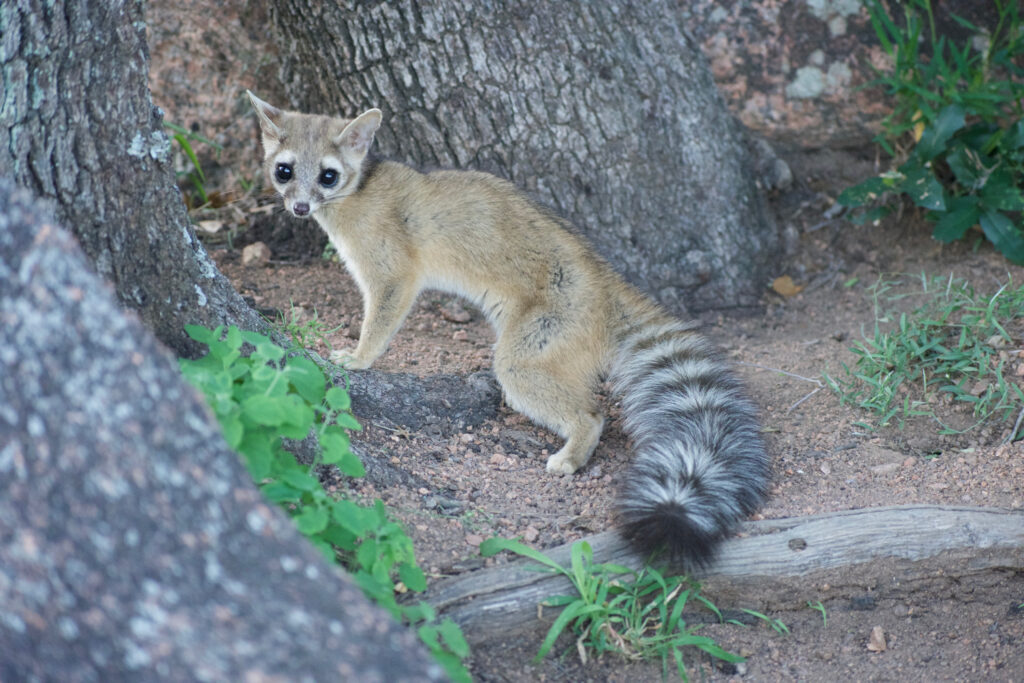
Ringtail Cat

The Ringtail Cat is Arizona’s state animal. It is believed to be related to the raccoon

Arizona doesn’t have an official animal per se, but the official mammal is the ringtail cat, which isn’t a cat at all but is related to the raccoon. Also called the bassarisk, it is smaller than a pet cat, and its tail with its diagnostic black and white rings can be as long as its body.

Official State Bird

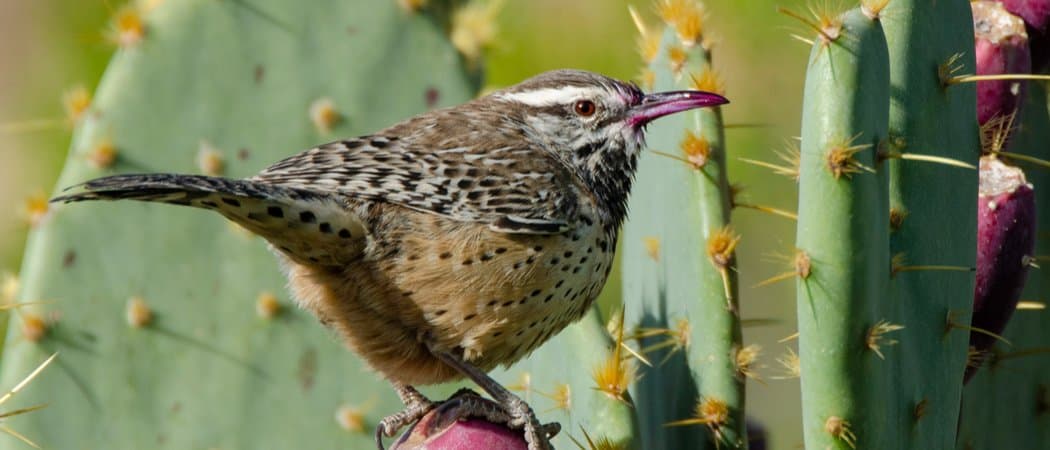
Arizona’s state bird is the cactus wren. This bird is only found in the deserts of the southwest and upper Mexico. It’s the United States’ largest wren at 7 to 7.5 inches long. Its plumage is rather a drab brown with white and black patterning, and it has a song like a car engine that won’t turn over. It gets its name because it is perfectly at home among the prickles of saguaro and cholla plants.

By the way, the phoenix, which gives its name to the state capital, is a mythological bird that burns itself to ashes after some long number of years, then is reborn from its own ashes. The city was given the name Phoenix by settlers who built their city on the ashes of an earlier one built by native Americans.

Official State Amphibian

The state amphibian is the Arizona tree frog, also called wright’s mountain tree frog. Pale olive green with a paler ventral area, it can be found in the marshes and around the rivers of Arizona.

Official State Butterfly

Arizona’s state butterfly is the two-tailed swallowtail butterfly. This gorgeous insect has pale Naples yellow wings with black tiger stripes, delicate tails, blue patches, and orange eyespots on the hindwings.

Official State Fish

The official state fish is the Apache trout. This golden trout lives only in the streams and lakes of White Mountain. Though other species of trout have been introduced into Arizona, the Apache is one of only two that is actually native to the state. A popular gamefish, it can grow to 20 inches long but is usually much smaller.

Official State Reptile

Arizona’s state reptile is the Arizona ridge-nosed rattlesnake. Found in the “sky island” just where Arizona meets Mexico, this is a small rattlesnake that grows to only 1 to 2 feet in length. It gets its name from the ridged scales along its nose.

Where To Find The Top Wild Fauna in Arizona
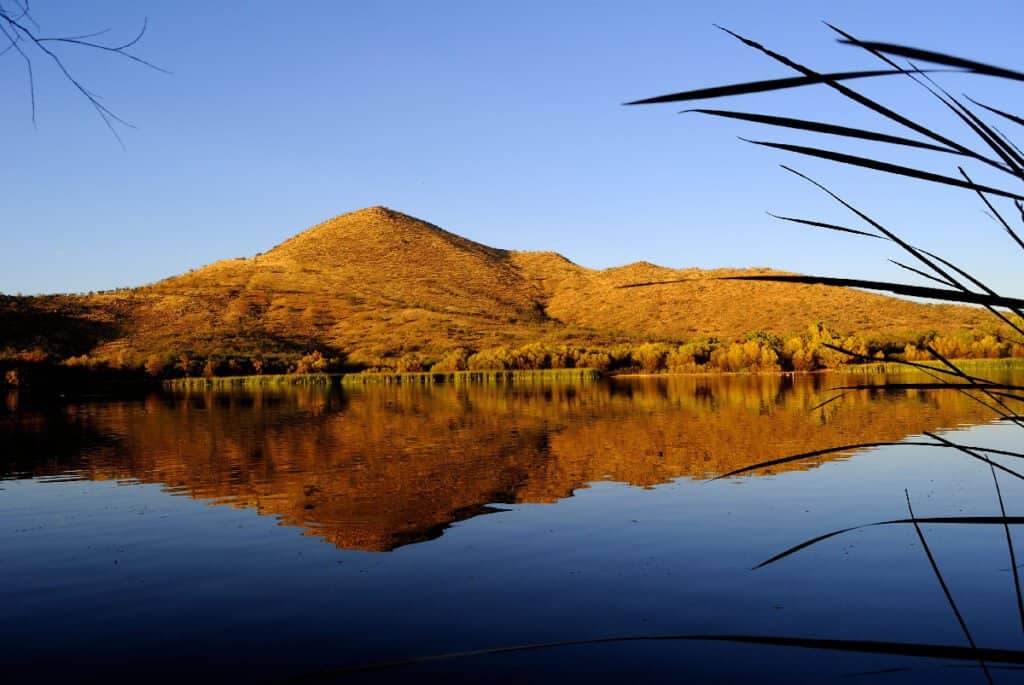
Patagonia Lake is just one of Arizona’s many locations where visitors can admire nature and wildlife

Much of Arizona’s wildlife can be found in its state parks and trails. The state parks include Catalina, Cattail Cove, Lyman Lake, Lost Dutchman, Patagonia Lake, Lake Havasu, the San Rafael State Natural Area, Tonto Natural Bridge, and the Verde River. These parks are found mostly in the central, southern, and western areas of the state.

Small Mammals

Arizona’s small mammals include kinds of skunks and species of shrew. Some rodents found in Arizona are the American beaver, the North American porcupine, gophers, pocket mice, and kangaroo rats, voles, wood rats, cotton rats, and deer mice. The state is also home to the nutria, a largish, introduced rodent that’s a bit of a pest because of its voracious appetite for vegetation. Other rodents are types of chipmunks, squirrels, and prairie dogs.

Besides the ring-tailed cat, there is also the raccoon and the white-nosed coati. Mustelids are the river otter, weasels, ferrets, and the American badger. The collared peccary or javelina can also be found in Arizona’s state parks.

Deer and Other Ungulates
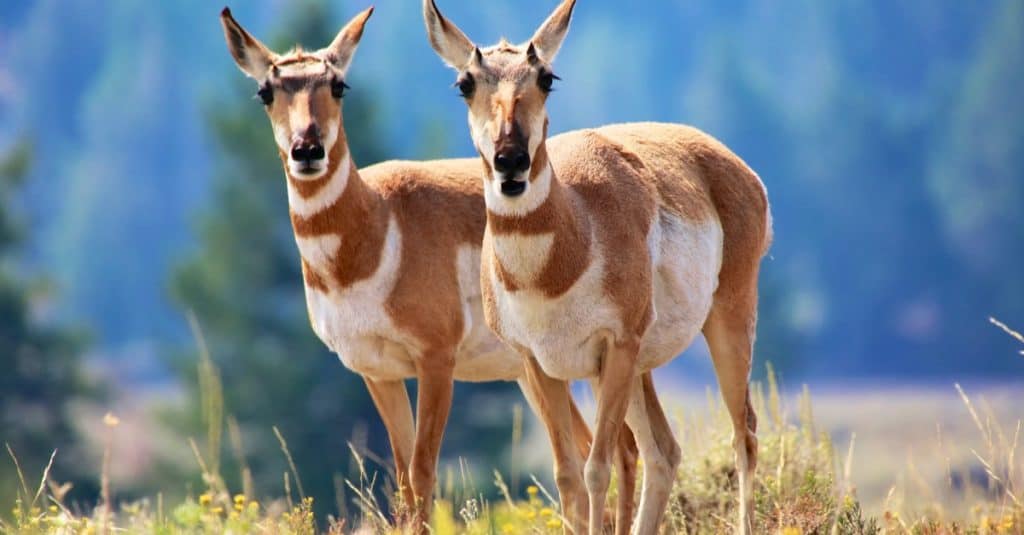
Pronghorn antelope in Yellowstone Park.

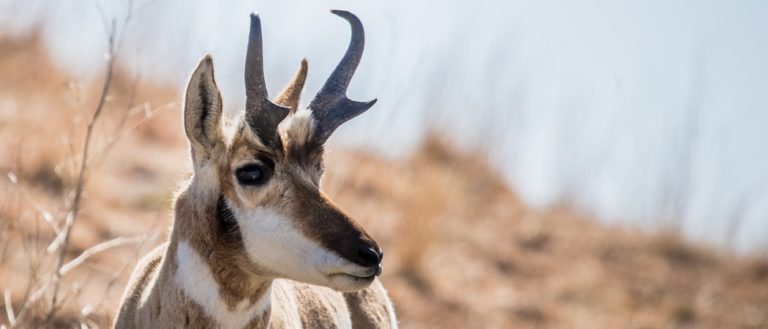
Pronghorn antelopes are one of the many herbivores which call Arizona home

Mule deer, named for their large ears, and a subspecies of white-tail deer called the Coues whitetail occupy different habitats in Arizona. The mule deer, which is a bit more acclimated to the desert, can be glimpsed at Lost Dutchman and Picacho Peak State Parks, while the whitetail deer can be found in Patagonia State Park and Kartchner Caverns as well as Oracle State Park.

Arizona is also home to the Sonoran pronghorn, bighorn sheep, the American bison, and elks.

Predators
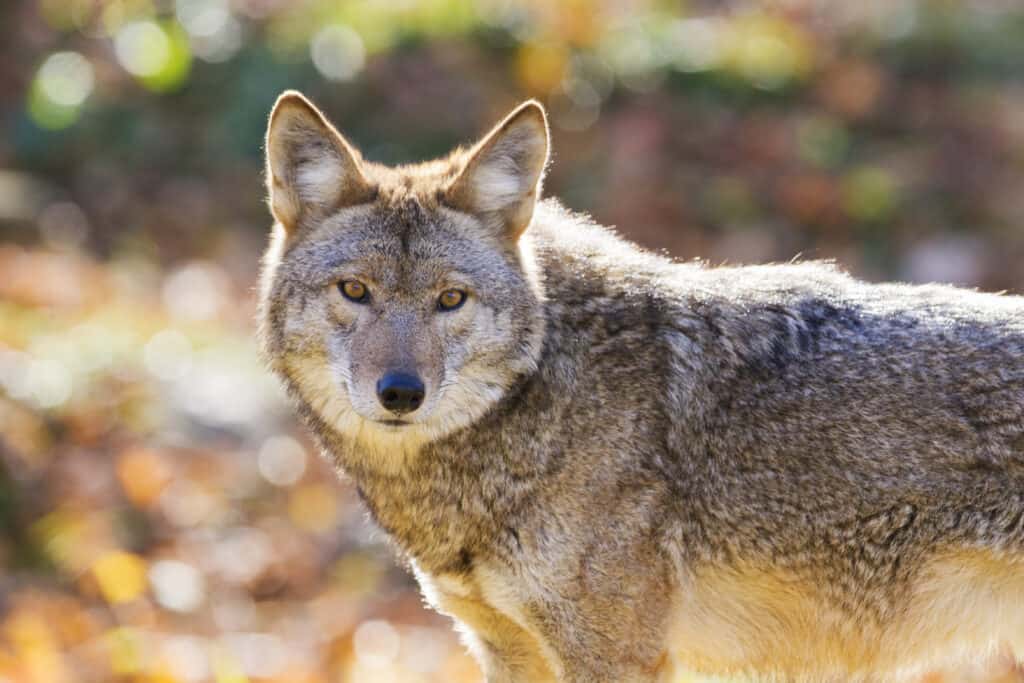
coyote in sunlight

Coyotes are one of Arizona’s key predators

Arizona’s top predators include the coyote, the black bear, mountain lions, lynxes, and ocelots. A visitor might even glimpse a rare Mexican wolf, a subspecies of the gray wolf, or a jaguar. Black bears are seen in Tonto Natural Bridge as well as Slide Rock.

There are also three species of foxes: gray, kit, and red. Of the three of them the gray is the most common and can be found hanging out in mountainous regions or woods. Kit foxes known for their sandy brown fuzzy fur are far more elusive and tend to prefer arid regions.

Birds
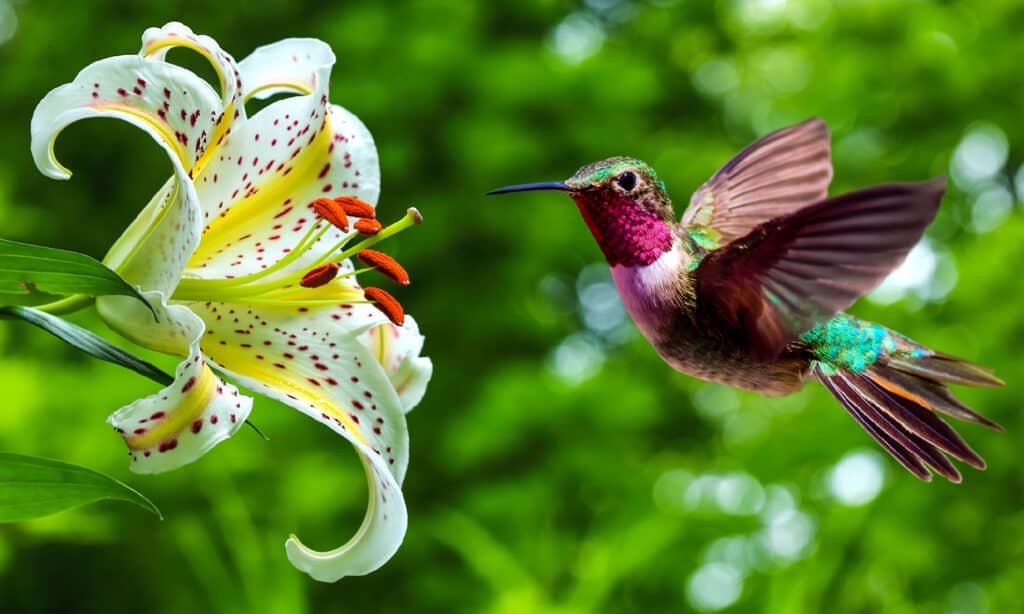
Hummingbird, Flower, Bird, Close-up, Color Image

Hummingbirds can be found in several parks or backyards

Arizona birds include the state bird, the cactus wren. Birds are of course not confined to the state parks and can be found in city parks and backyards. They include hummingbirds, woodpeckers, warblers, goldfinch, grackles, phoebes, and sparrows. Birds that are found in places such as Dead Horse Ranch and Lyman Lake include waterfowl such as blue herons, black ibis, grebes, egrets, ducks, and geese. Roadrunners, quail, and owls can be glimpsed at Kartchner Caverns. Birds of prey include ospreys and several species of hawk.

The California condor is also seen in Arizona. Though much effort has been put into its conservation, this huge and magnificent bird is still endangered.

Reptiles
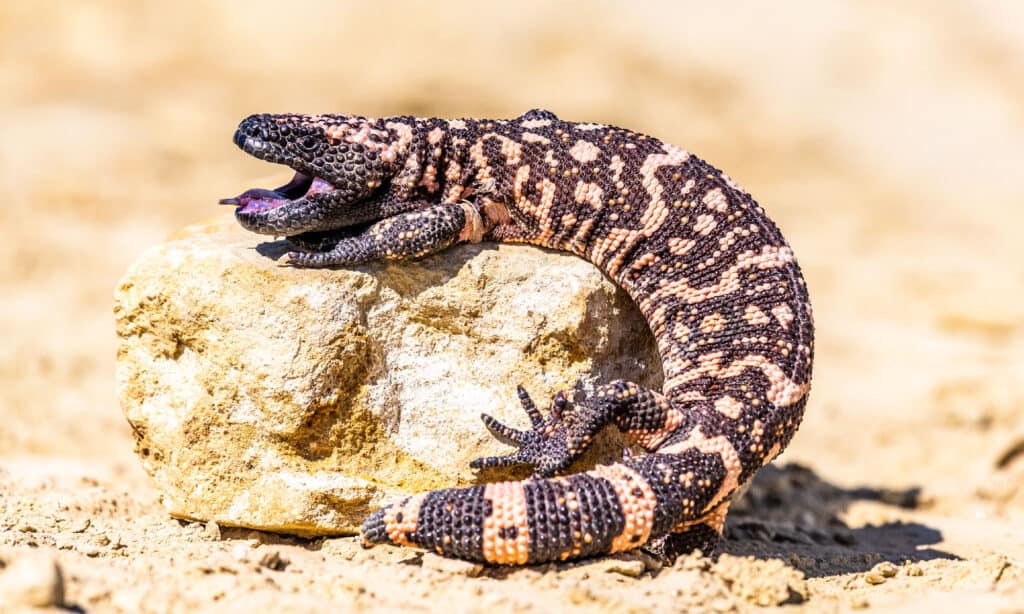
Lizard Gila Monster( Heloderma suspectum)

The Gila monster is one of America’s rare venomous lizards

The chuckwalla is a type of iguana and can be commonly seen in most of Arizona’s state parks. It’s an herbivore that can grow to 16 inches in length and change color to camouflage itself.

The famous Gila monster is known for the lovely patterns on its beaded skin and for being a rare venomous American lizard. It is difficult for a human to be envenomated by one of these robust-bodied lizards since the animal has to hang on and chew, but the venom is used to paralyze its prey. Dinner for the Gila monster includes birds, smaller reptiles, and small mammals such as mice. Gila monsters also eat carrion and eggs.

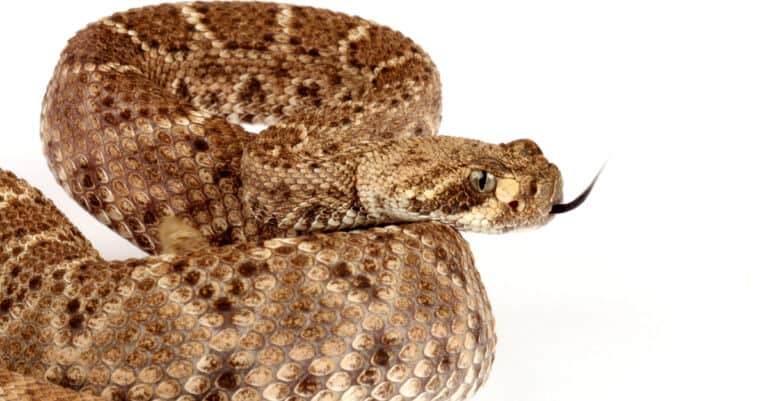
Arizona has several species of rattlesnake, with the Arizona ridge-nosed rattlesnake being the state reptile. The western diamondback rattler can also be found in most state parks. These snakes get their name because of the keratinous rattles at the ends of their tail that they shake when they feel threatened.

Insects
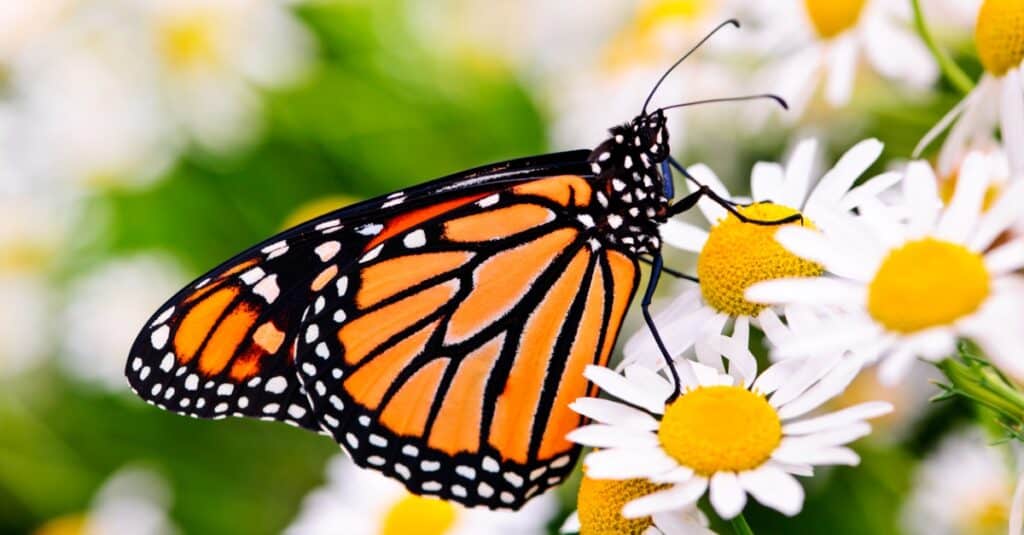
monarch butterfly on white flower

Arizona is home to a wide range of insects including Monarch butterflies

Arizona insects are of course found throughout the state. Besides the beautiful two-tailed swallowtail butterfly is the assassin bug, which has a fang to “assassinate” other insect prey and even prick human skin. Still, people welcome it in their garden as it hunts insect pests. Another insect is the ambush bug, which lies in wait on sunflowers and ambushes bugs that come too near. Other insects are the backswimmer, an aquatic bug that swims on its back, the broken-backed seed bug, a pest whose strange wing formation gives it its name, aphids, stinkbugs, squash bugs, ants, antlions, and water striders. There are many species of flies, wasps, bees, and dragonflies

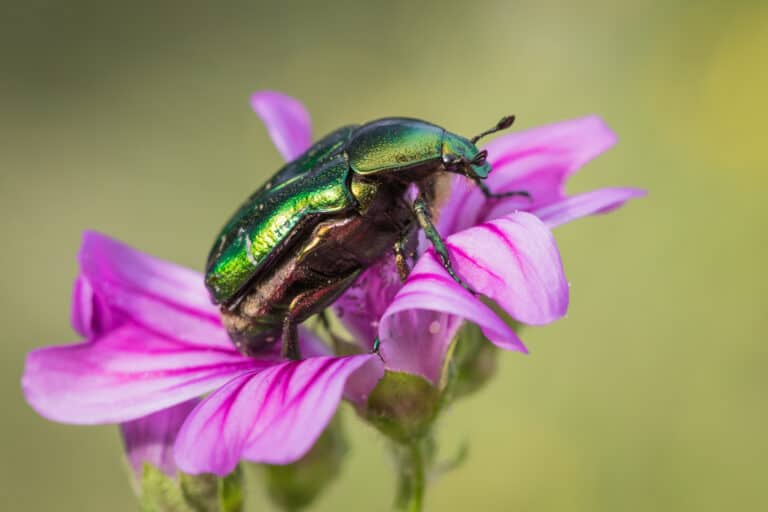
Lovelier insects include the anise swallowtail butterfly, the Aphrodite fritillary butterfly, the candy-striped leafhopper, the Calleta silkmoth, mourning cloak, and monarch butterflies, the Carolina mantis, the dogbane leaf beetle with its iridescent green carapace, katydids, the goldsmith beetle, and the mottled tortoise beetle. Velvet ants, which are really wasps, are pretty but deliver a powerful sting.

Other Arizona arachnids include many types of spiders, including sac spiders, crab spiders, orb weavers, tarantulas, black widows, brown recluse spiders, house spiders, wolf spiders, the parson spider, and jumping spiders. There are also ticks, centipedes, sowbugs, camel spiders, and scorpions.

Fish
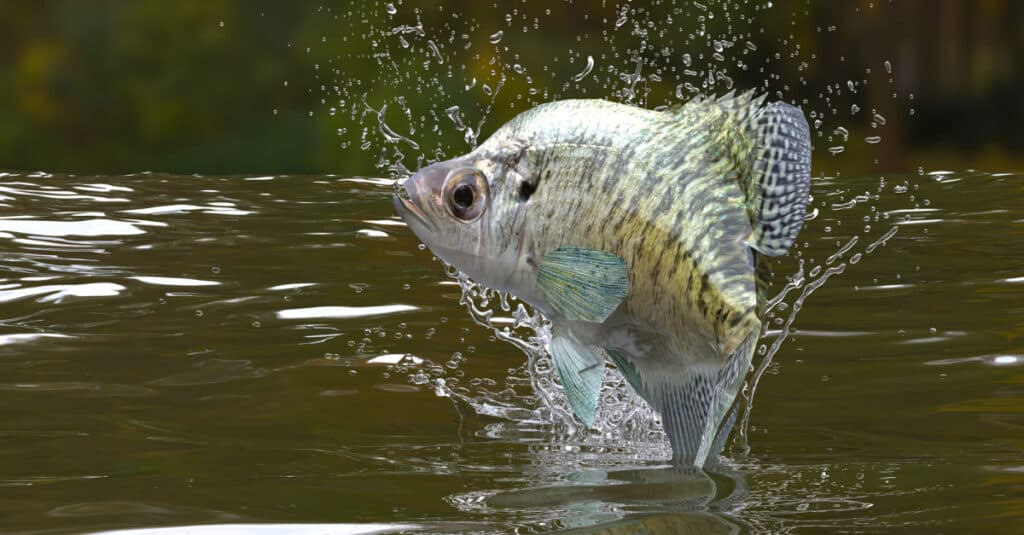
Crappie jumping out of water

Crappie are abundant in Arizona’s rivers

The Apache trout is not the only trout found in Arizona’s rivers, streams, and lakes. Others include the brook trout, the brown trout, the rainbow trout, and the cutthroat trout, named for the slash of bright red beneath its lower jaw.

Other fish found in Arizona are the Redear sunfish, the roundtail chub, tilapia and bass, walleye and white crappie, Arctic grayling, and bigmouth buffalo. Other fishes are species of dace, suckers, pupfish, spinedace and spikedace, mullet, topminnows, pikeminnows, and woundfin.

The Largest Animal in Arizona
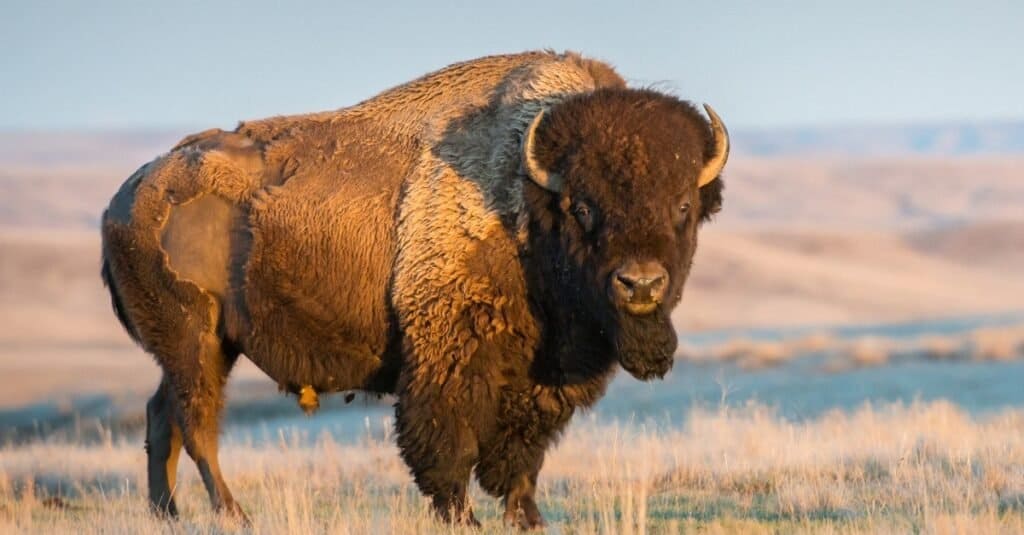
Bearded Animals

In spite of their immense bulk, bison are amazing athletes and are capable of leaping great heights, swimming, and reaching impressive speeds when running

The bison is Arizona’s largest animal with populations found in two main locations in the state. The first is Raymond Wildlife Area, a wooded and scrubland refuge under 15,000 acres dominated by sloping plains.

The second is House Rock Ranch. These giant herbivores spend their days munching fresh grass in copious quantities – they’re capable of tucking away 30 lbs or more, per day.

A glimpse at these deceptively placid mammals shows how impressive they are. Males are capable of reaching 6 feet and weighing 2,000 lbs. Their bulk notwithstanding, they are capable of astounding feats of agility. Bisons have been known to leap vertical heights of 6 feet and to achieve speeds of 35 – 40 mph. They are also strong swimmers and are capable of executing quick spins, as well.

The Rarest Animal in Arizona
Wolf quiz

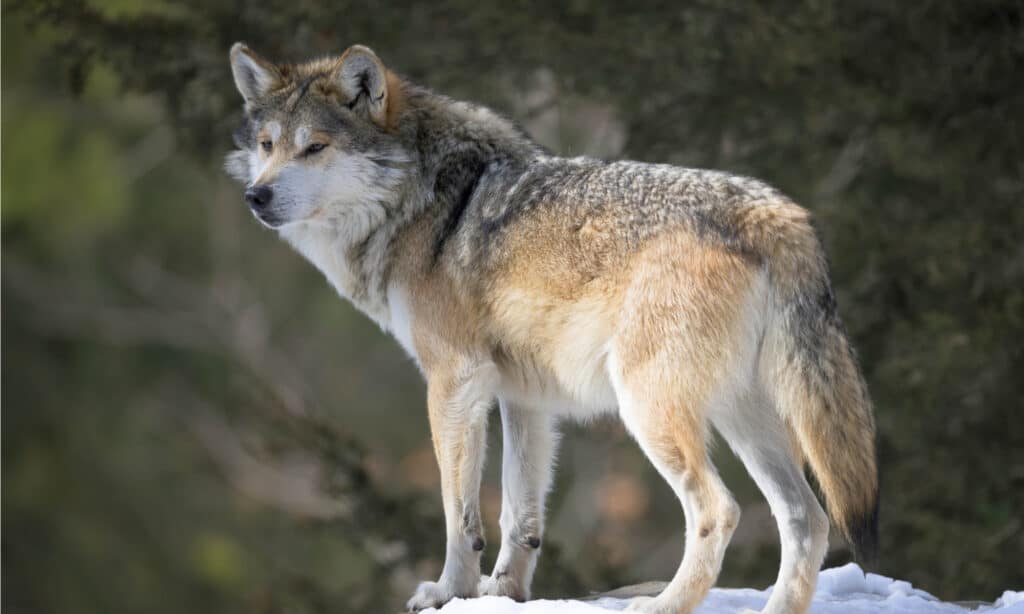
Mexican gray wolves remain in danger of extinction in Arizona which was once part of their original range

The Mexican gray wolf is one of Arizona’s rarest animals and remains in danger of extinction. The carnivore referred to as “el lobo” is somewhat smaller than its larger gray wolf cousin and also has a darker pelt. Its original range was Northern Mexico, Southeastern Arizona, and Southern New Mexico.

In 1998, 11 wolves which had been raised in captivity were released into the wild in the eastern part of the state. The first wild-born litter arrived four years later in 2002.

More than two decades later after that initial release, the authorities were able to count 12 breeding pairs in the state. Slightly less than the number counted in New Mexico, which was 13.

Zoos in Arizona
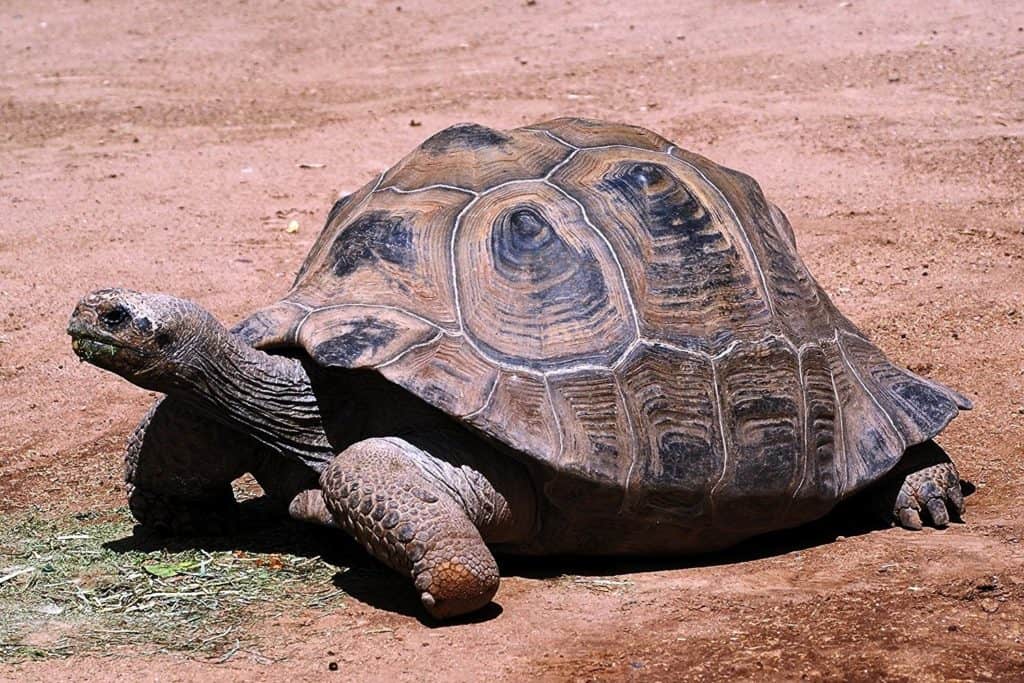
Pheonix Zoo is home to several rare species including this giant tortoise

Besides its many state parks, people can also see animals in its zoos. They include the Phoenix Zoo, the Wildlife World Zoo, Aquarium & Safari Park in Litchfield Park which has exotic animals such as big cats, antelopes, sea lions, wobbegong sharks, piranhas, and a strange and wonderful albino alligator.

Reid Park in Tucson houses leopards, giant tortoises, and African elephants, and Heritage Park Zoological Sanctuary has animals found in Arizona such as black bears, peccaries, scorpions, pronghorns, and mountain lions.

Wild Animals in Arizona
jaguarundi sitting on a branch in the wild

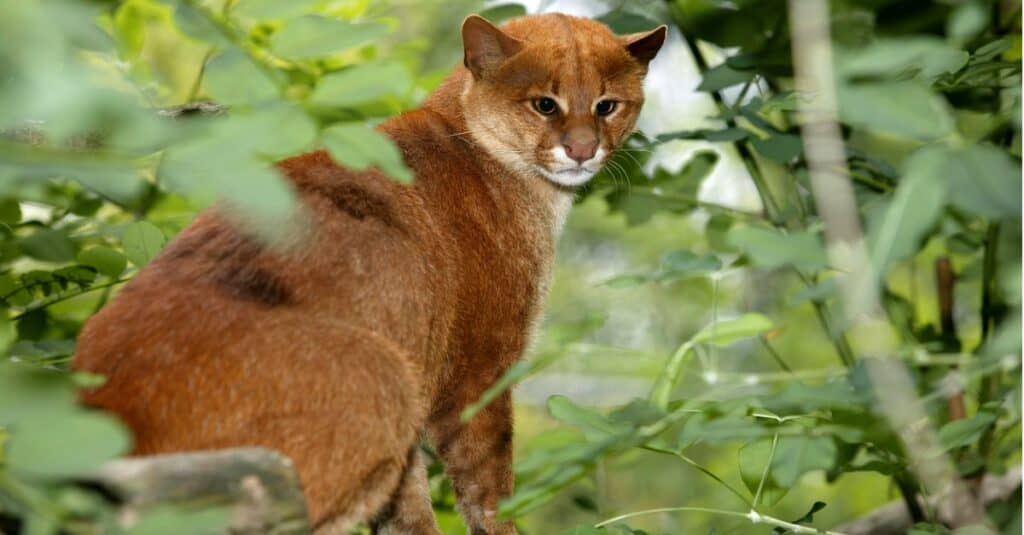
Jaguarundis are solitary by nature and are also diurnal

Besides the animals already named, Arizona is home to the northern Mexican garter snake and the bony-tailed chub which, like most chubs, is endangered. Other wild animals include the Sonora tiger salamander, the southwestern willow flycatcher, the masked bobwhite, and the desert tortoise. The greater roadrunner is actually a type of cuckoo and is common in the state parks. Bats include the pallid bat, the big brown bat, the little brown bat, the Arizona myotis, the western red, and species of long-nosed and free-tailed bats.

The weasel-like jaguarundi which is solitary by nature, but gregarious in captivity, has also been sighted in the state. The feline which is diurnal by nature prefers to live close to the water and supplements its diet with fresh fish.

The Most Dangerous Animals In Arizona Today
Deadliest Animals in America

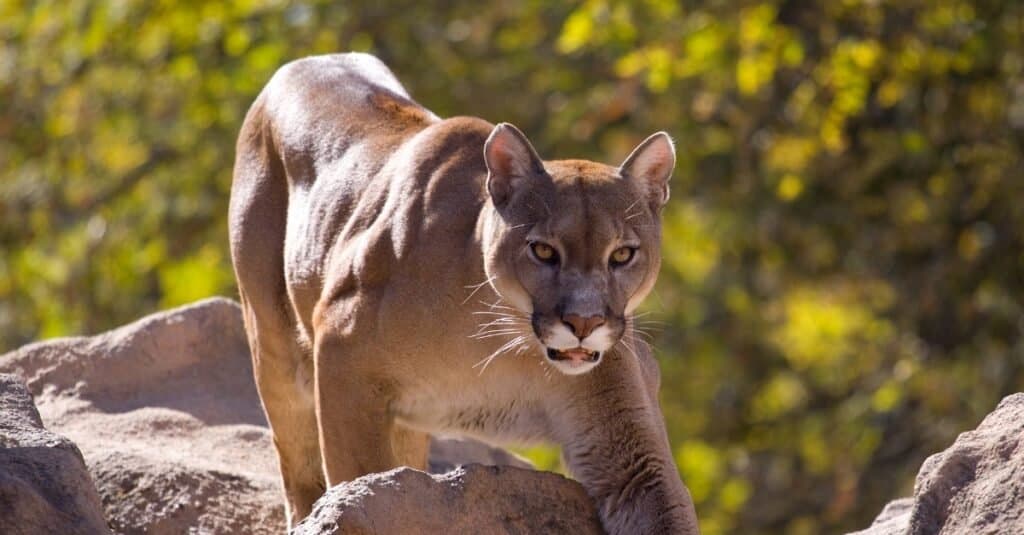
Cougar attacks are on the rise in Arizona

There are a number of dangerous animals in Arizona. Let’s dive into a few more notable ones:

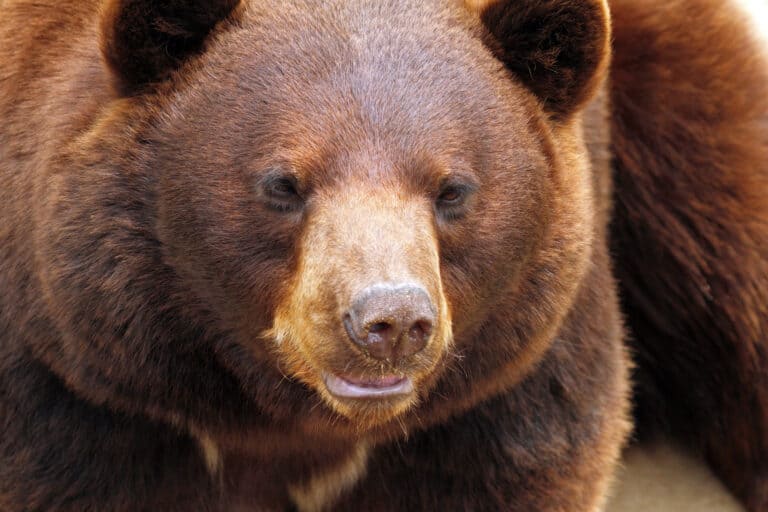
  • American black bear – Though not as aggressive as the grizzly, which has been extirpated in Arizona anyway, the American black bear is still a creature to be careful around. Black bears who have gotten used to humans indirectly or directly feeding them are sometimes aggressive towards them.
  • Bark scorpion – This scorpion is considered the most venomous scorpion in all of North America. It’s common in Arizona, and its venom can kill a human if antivenin isn’t administered in time. It looks like its less venomous cousins but is more slender. It’s simply a good idea to avoid handling scorpions altogether. Check out some other types of scorpions in Arizona.
  • Rattlesnakes – The rattlesnakes of Arizona can also deliver a bite that can send an adult human to the hospital. As with the bark scorpion, antivenin has saved many a life or prevented long-lasting complications.
  • Mountain lions – Mountain lion attacks are uncommon, but they are increasing as more and more humans move into the big cat’s territory. Most people killed by mountain lions are children.
  • Bison – Though they are not nearly as aggressive, bad-tempered or vindictive as their cousins the African buffalo, American, and Plains bison can be unpredictable and can charge for no reason and without warning. This is especially true during the rut, which happens in the summer.

Endangered Animals In Arizona
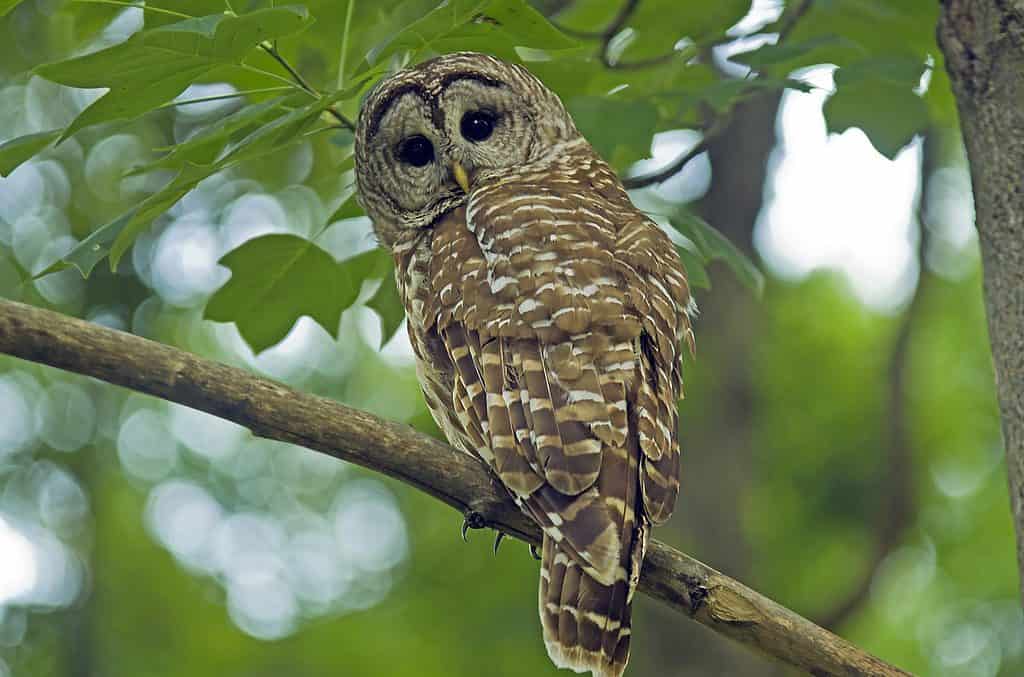
male spotted owl

The Mexican spotted owl is the largest owl in North America

Like every other state, Arizona is home to creatures that have become endangered due to overhunting, pollution, climate change, and habitat disruption. They include:

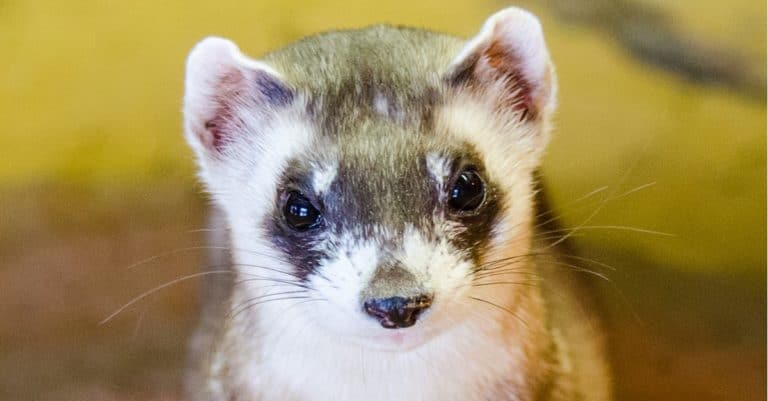
  • The black-footed ferret – This little weasel is one of the rarest animals in North America, and is, surprisingly, the only ferret that’s native to the continent.
  • The Mexican spotted owl – This big owl is the largest in North America and is threatened. It can be identified by its large size, barred gray and brown feathers, and unnervingly large, wholly black eyes.
  • The Mexican gray wolf – This wolf is endangered, even though it was reintroduced into Arizona in the 1990s.
  • Jaguars – Many people are surprised to know that there are jaguars in Arizona. It is still one of the rarest of the big cats in North America and is considered endangered.
  • The black rail – The bird which can also be found in Florida and California in significant numbers is noted for its dark plumage and short beak. It is also nocturnal by nature and prefers sprinting through heavy vegetation, rather than taking to the air.

Lakes in Arizona
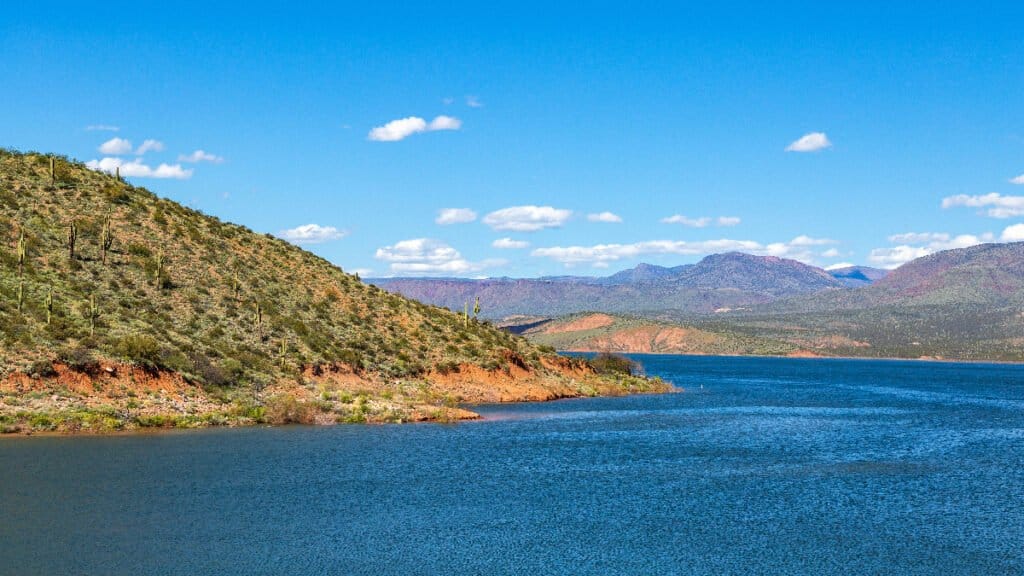
Arizona’s Saguaro Lake is a popular bass fishing destination

Arizona lakes are well known for their fishing and recreational opportunities. In addition to natural lakes, a number of reservoirs such as Lake Mead have expanded the number of lakes in the state. Popular fishing lakes in Arizona include Bartlett Lake, which has large and smallmouth bass in addition to black crappie, and bluegill. Another popular fishing lake is Saguaro Lake, which is known for its bass fishing.

There is also Canyon Lake which lies east of Phoenix, the state’s capital. Named for the red canyon walls that rise up around it, this body of water is home to a wide variety of fish including bass (large and smallmouth) bluegill, carp, channel catfish, crappie, sunfish, and yellow bass. Check out the biggest lakes near Pheonix, Arizona.

Native Plants in Arizona
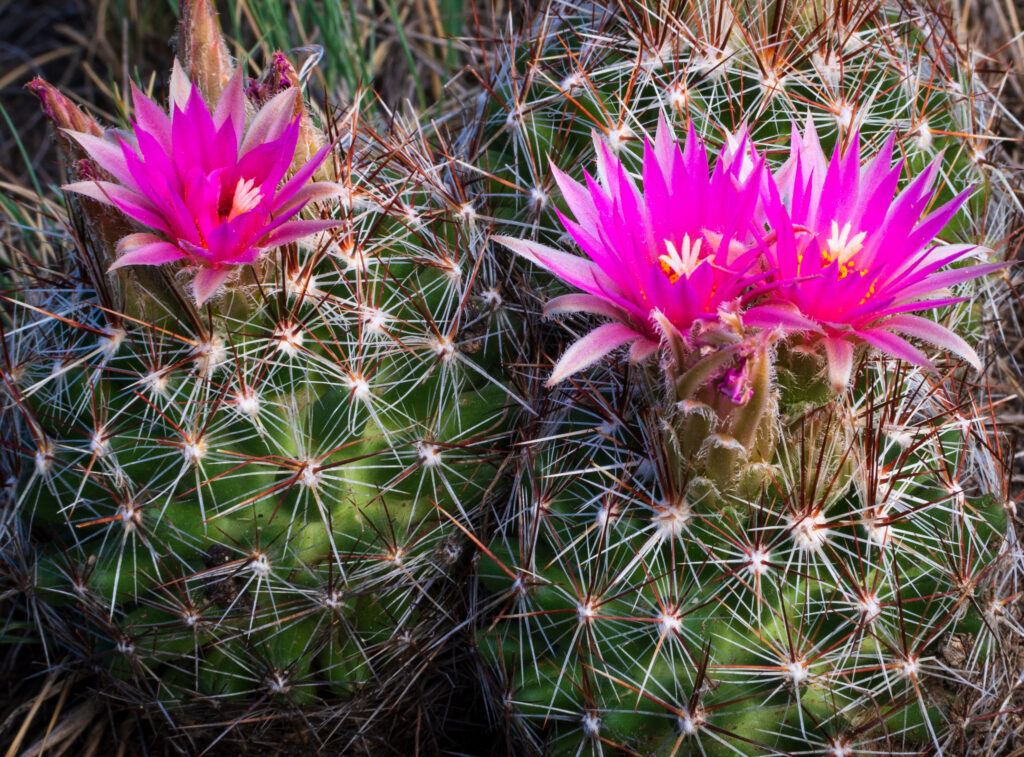
Beautiful pink cactus flowers. Escobaria vivipara.

The Arizona spinystar is known for its beautiful purple and pink flowers with golden centers

Despite ranking 14th in population and 6th in terms of land mass of all states in the U.S., Arizona still boasts of more than 4000 indigenous plant varieties, such as cacti, wildflowers, shrubs, and trees that can flourish in its predominantly arid regions.

Examples include the Arizona Ash which can grow up to 30 or even 50 feet and blooms between March and May and the Arizona spinystar, a cactus known for its beautiful purple and pink flowers with golden centers which bloom between April and August. The beaver tail prickly pear is also another cactus with pretty flowers in a vivid pink which blossom between February and June.

The Flag of Arizona

Flag of Arizona waving in the wind

The flag of Arizona represents the 13 original colonies of the United States on its upper half

The flag of Arizona was created in 1910 when the Arizona Territory rifle team was due to participate in a Ohio competition and needed a flag. And though it was designed quickly it is one of the most distinctive and colorful flags in use today.

The Arizona state flag has a solid blue bottom half paying tribute to the flag of the United States of America and a top half that has thirteen alternating red and yellow rays representing the thirteen original colonies of the US, with the colors of the rays referring to the Spanish flags carried by the explorer Coronado when he came to Arizona in 1540. The gold star shown just below the horizon of the rays symbolizes the setting sun and the color gold is for Arizona’s copper production which is the largest in the US.

Animals Found in Arizona

196 species documented in our encyclopedia

Thank you for reading! Have some feedback for us?