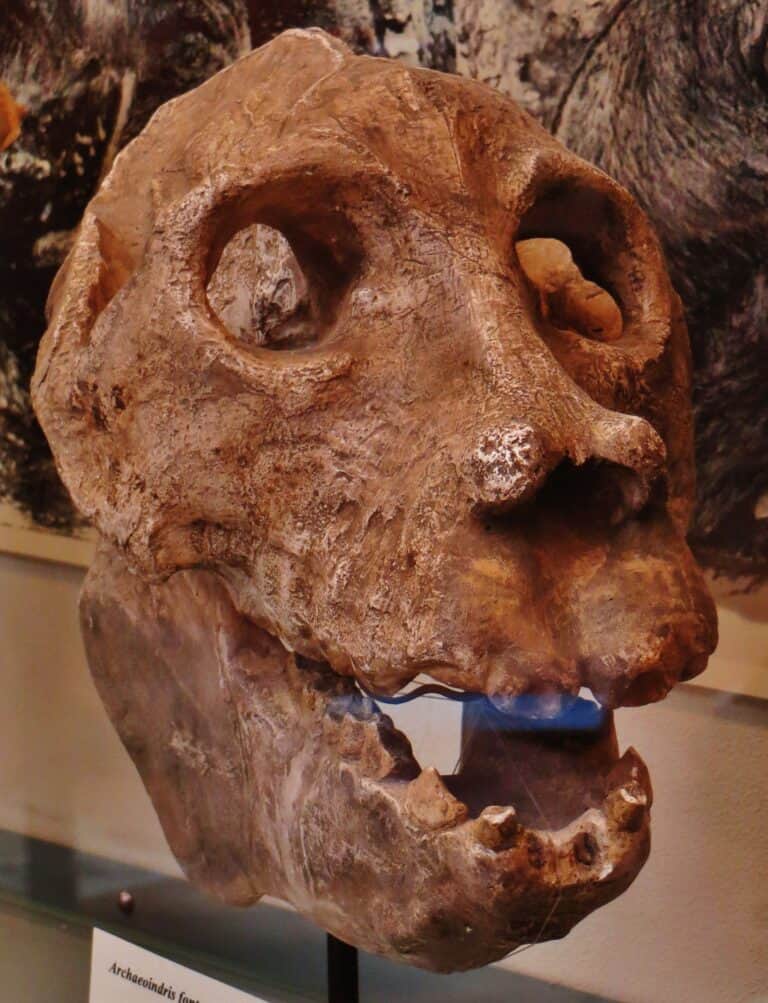
Archaeoindris
Madagascar's lost giant sloth lemur

Madagascar's lost giant sloth lemur
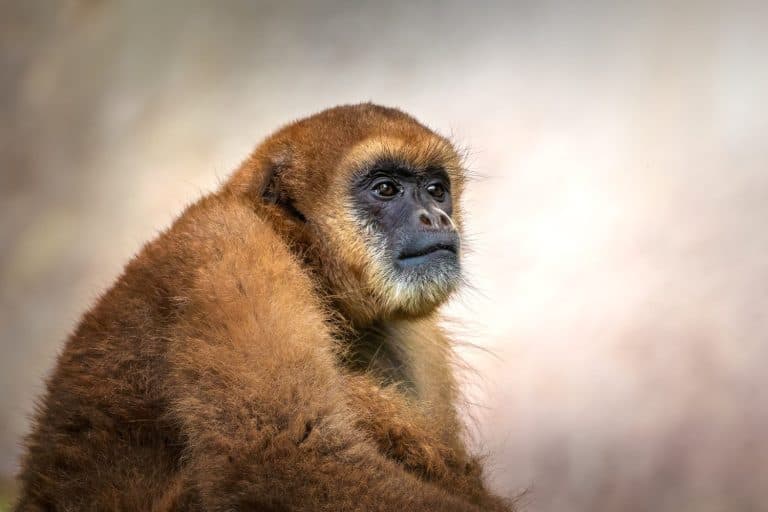
Fifth-tail climbers of the Amazon
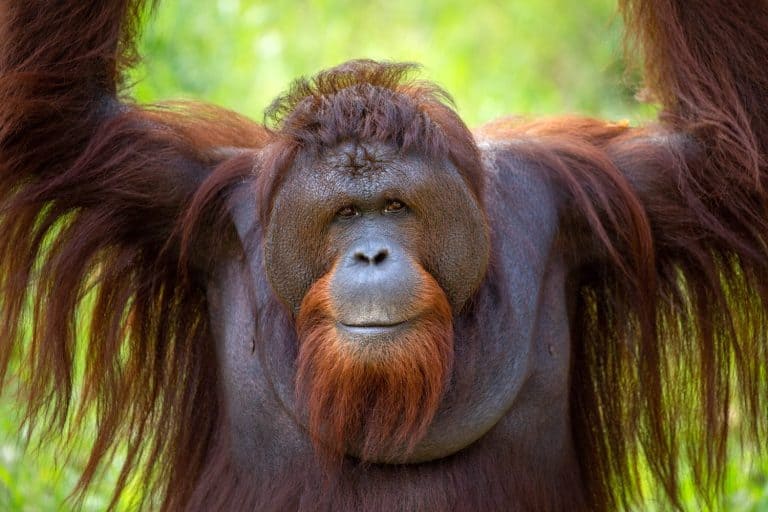
Red apes, rainforest architects
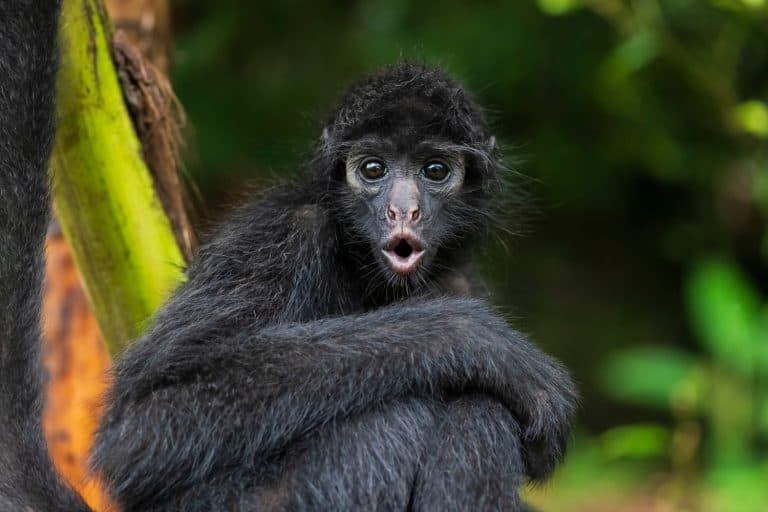
Fifth-tail flyers of the rainforest
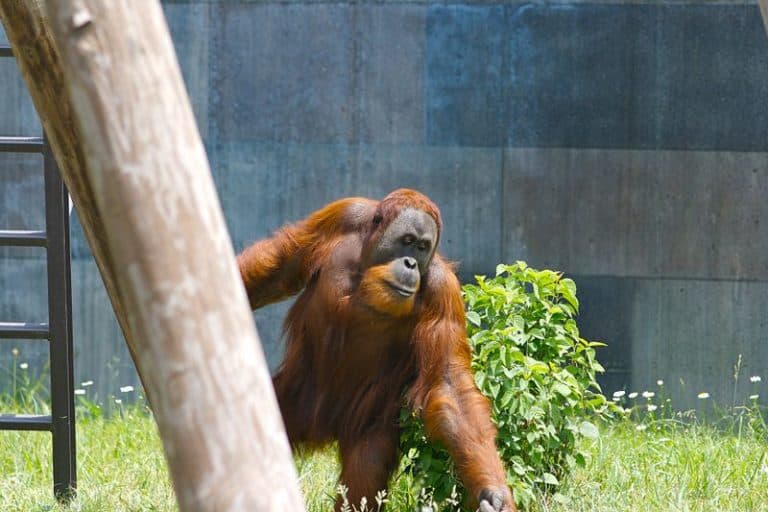
The forest's red-haired engineer
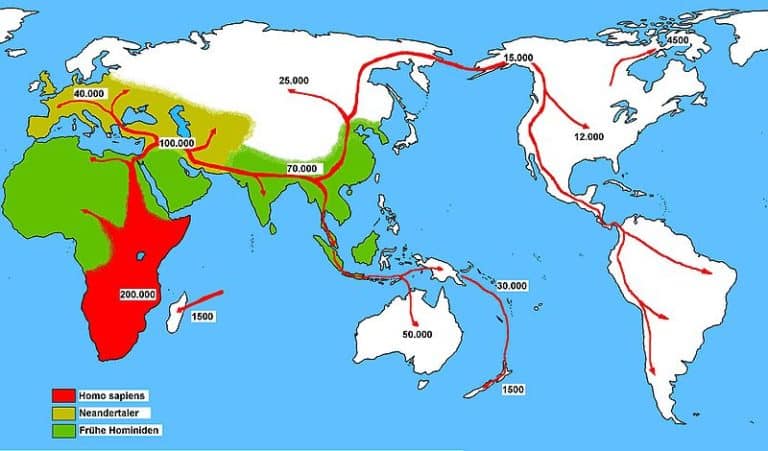
The culture-building biped
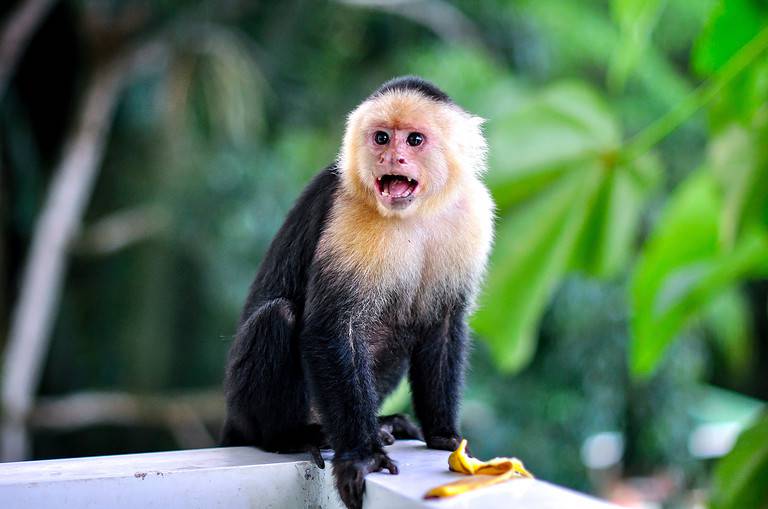
Hands, minds, and social lives
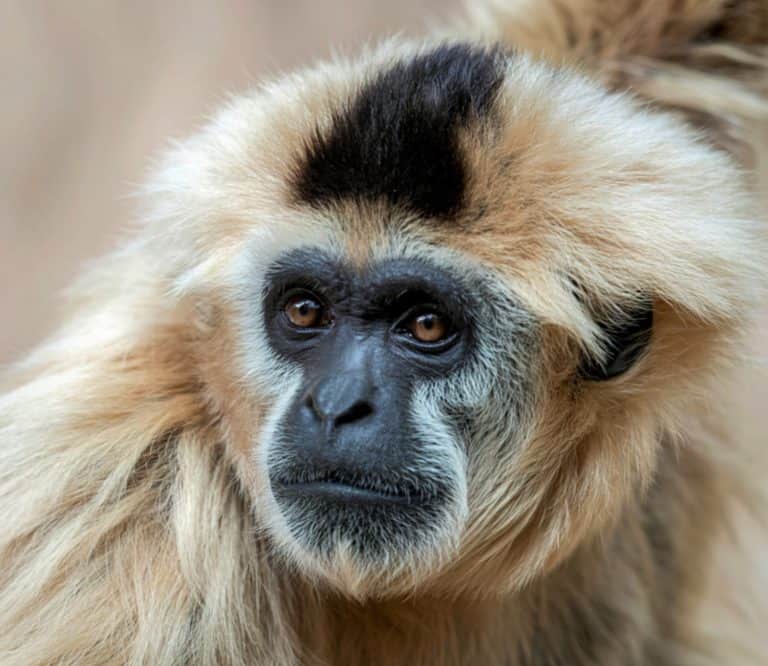
Canopy acrobats with duet songs
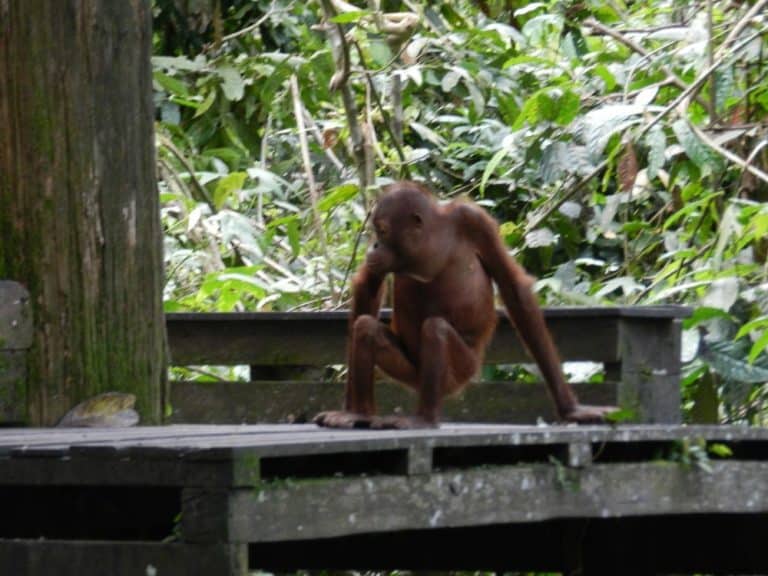
Borneo's forest genius in the canopy

Batang Toru's last great ape
Brachiation is a form of arboreal locomotion in which an animal progresses beneath supports (e.g., branches or vines) by swinging the body hand-over-hand, using the forelimbs as the primary weight-bearing and propulsive structures. Movement relies on dynamic, pendulum-like transfer of body mass through the upper limbs and shoulder girdle while the hindlimbs play a reduced or variable role.
Brachiation is a way some animals move in forest canopies by hanging below branches and swinging like a pendulum. They move forward by taking turns grabbing with their hands, swinging their shoulders and elbows, and timing releases to use gravity to swing ahead. Some species do pure arm-swinging ("true" brachiation); others let their hindlegs touch supports or help steady them. This movement needs body parts fit for it: very mobile shoulder joints, a movable scapula, long forelimbs, and strong grasping hands, plus good trunk and hip control to keep balance when swinging. Gibbons and siamangs brachiate most; other primates do it too. It helps animals move fast and save energy in complex canopies while avoiding weak or broken branches.
Etymology: From Latin "brachium" meaning "arm"; "brachiation" refers to locomotion primarily using the arms.
Brachiation is the same as any climbing or moving in trees; in fact it specifically involves below-branch, hand-over-hand swinging with forelimb-dominated support.
All apes (or all primates) primarily brachiate; in reality, true brachiation is most specialized in gibbons/siamangs, while many species use mixed climbing, quadrupedalism, and other suspensory behaviors.
Brachiation is purely strength-based; efficient brachiation also depends heavily on timing, pendular mechanics, and momentum management, not just muscular power.
Brachiating is essentially pendulum locomotion: the body's center of mass swings beneath an overhead support while one arm (or both) alternately acts as a hanging pivot. From a dead-hang, the animal converts gravitational potential energy into forward kinetic energy by letting the body arc under the branch, then redirects and adds energy to the swing by actively torquing the shoulder and trunk. Long forelimbs increase pendulum length, lowering natural swing frequency and allowing large stride lengths; a mobile shoulder girdle (scapula and clavicle positioning) enables the arm to stay overhead through wide ranges of motion while keeping joint loads tolerable.
During each transfer, the supporting arm experiences high tensile loads (body weight plus centripetal forces), especially near the bottom of the swing where speed is highest. The animal manages these loads by aligning joints under tension, using elastic energy storage in tendons/soft tissues, and coordinating scapulothoracic motion to distribute stress. At the forward apex, the free arm reaches to the next hold; the body briefly shifts from single-arm to double-arm support, then the trailing hand releases and the new lead arm becomes the pivot. Legs contribute mainly as a mass to shape the swing (tucking/extension changes the moment of inertia) and as stabilizers rather than primary propulsors.
Primarily generated by timed shoulder and upper-body work that adds torque and forward velocity to the pendulum swing: shoulder flexors/extensors and adductors, latissimus/pectoral complex, scapular stabilizers, elbow flexors for pull-through, and trunk rotation. Additional propulsion comes from manipulating body configuration (tucking/arching, leg swing) to pump the pendulum (changing moment of inertia) and from elastic recoil in tendons/soft tissues during high-load phases.
Direction is controlled by choosing the next handhold and by asymmetrically modulating forces during the swing (unequal pull/push between arms, trunk rotation, and lateral shoulder abduction/adduction) to create yaw and lateral displacement. Subtle leg and hip motions shift the center of mass to bias the swing plane, while wrist/hand orientation and grip placement adjust heading and allow turns, lane changes, or side-to-side brachiation.
A repeating swing-and-transfer cycle in which the body acts like a suspended pendulum. Each step transitions from single-arm support through a brief double-support catch, then returns to single-arm support on the new limb. Speed and efficiency depend on timing muscle input to amplify the pendulum swing and on precise reach-and-grasp placement at the forward apex.
Fast, rhythmic hand-over-hand progression with minimal pauses; relies on efficient pendulum pumping and brief double-support. Typical of specialized brachiators with long arms and highly mobile shoulders.
Alternates brachiating swings with other arboreal modes (clambering, occasional foot support on branches, or short climbs). Often used by less-specialized primates to traverse gaps or unstable supports.
High-energy brachiation used to cross larger gaps: greater swing amplitude, more forceful shoulder/trunk pumping, and sometimes a brief aerial phase between holds (release and catch).
Movement along roughly horizontal, evenly spaced supports (e.g., vines/branches) with reduced swing amplitude; emphasizes rapid reach frequency and precise timing rather than large pendulum arcs.
Slow progression with longer double-support and reduced peak loads; uses controlled weight transfer and shorter swings for stability on flexible or uncertain supports.
Provide primary reach, support, and propulsion during hand-over-hand swinging under branches
Allows large, multi-planar arm excursion and transmits body weight through the upper limb during swing and catch phases
Controls swing arc, absorbs impact at branch contact, and positions the hand for efficient grasping
Secure branch grasp, rapid release/re-grasp, and fine adjustment during dynamic weight transfer
Stabilizes the body during pendular motion and enables efficient transfer of forces between shoulders and hips
Secondary stabilization, posture control, and occasional assist in climbing or landing
Brachiating animals have strong upper-body and core muscles. Latissimus dorsi and teres major power shoulder pulls. Pectoralis major/minor and anterior deltoid guide swings. Strong rotator cuff (supraspinatus, infraspinatus, teres minor, subscapularis) and scapular stabilizers (serratus anterior, trapezius, rhomboids) stabilize the shoulder. Elbow flexors (biceps brachii, brachialis, brachioradialis) and forearm flexors (flexor digitorum profundus/superficialis, flexor pollicis longus) maintain grip. Extensors and wrist stabilizers control release and absorb shock. Core muscles (rectus abdominis, obliques, erector spinae) manage twist. Lower limbs are less for propulsion; hip abductors/adductors and hamstrings aid stability and climbing.
Key osteological and joint adaptations: highly mobile ball-and-socket glenohumeral joint with broad rotational range; dorsally placed scapula and strong clavicle to widen the shoulder girdle and resist compressive/bending forces; robust humerus with enlarged muscle attachment sites for shoulder adductors/extensors; stable elbow optimized for repeated flexion loading; radius/ulna permitting strong pronation-supination to match branch orientations; reinforced wrist and carpal joints to tolerate traction and shear during catches; elongated metacarpals/phalanges with curvature for secure hook grasp; thorax broad/shallow and spine capable of controlled rotation to maintain balance through a pendular cycle; hindlimbs relatively shorter with mobile hips for alignment rather than primary propulsion.
Typical travel speed ~2-6 m/s along continuous canopy supports; short bursts (gap-crossing/escape) ~7-9 m/s when branch spacing and grip allow.
vs Humans: Much faster than human walking (≈1.2-1.6 m/s), comparable to a human run/jog (≈3-6 m/s), but usually below elite human sprint peak (≈10-12 m/s).
Usually sustained in bouts rather than continuously: repeated swings for ~1-5 minutes are common before a brief pause/transition; a fit brachiator can string together intermittent bouts for ~30-60+ minutes during travel, but fatigue accumulates quickly without rests (high upper-body demand).
Can be highly efficient at steady, rhythmic speeds because it exploits pendulum-like energy exchange (gravity + elastic recoil), reducing muscular work compared with continuous climbing; efficiency drops sharply during accelerations, big gap-crossings, braking, or when supports are irregular.
Approximate steady-mode cost of transport often modeled/estimated around ~0.5-1.0 J-kg⁻¹-m⁻¹ (varies widely with branch spacing and technique): typically lower than vertical climbing (often ~2-4+ J-kg⁻¹-m⁻¹) and often similar to or slightly better than terrestrial running (~0.8-1.2 J-kg⁻¹-m⁻¹), but worse than very efficient wheeled motion and can exceed running when frequent starts/stops are required.
Fastest specialized brachiation among primates
Reported peak speeds up to ~55 km/h (≈34 mph) during rapid arm-swinging travel.
Heaviest/most massive true brachiating ape
Adults commonly ~10-14 kg (≈22-31 lb), exceeding most other gibbons while still routinely brachiating.
Largest-bodied ape regularly using extensive suspensory, arm-dominated locomotion (incl. modified brachiation)
Adult males often ~50-90+ kg (≈110-200+ lb), yet still employ arm-led suspension to navigate canopy supports.
Continuous suspension beneath a support with efficient forward progress via repeated hand-to-hand transfers-analogous to moving under branches while keeping the body's weight supported from above.
Designing spaced grips and dynamic transitions that reward shoulder mobility, grip endurance, and rapid weight shifts, mirroring brachiation's swing cadence and momentum management.
Upper-limb-dominant progression where propulsion comes from pull and swing rather than stepping; emphasis on grip, scapular control, and efficient body positioning to conserve energy.
Two-arm alternating grasp with dynamic swinging to traverse sparse handholds; research prototypes explicitly model gibbon-like brachiation for energy-efficient movement across overhead structures.
Brachiation highlights extreme shoulder range of motion and load-bearing stability; rehab tools borrow the idea of supported suspension and controlled swing to train coordination and joint stability.
Reducing lower-limb loading by transferring weight to overhead support, echoing brachiation's strategy of hanging support and controlled dynamic movement beneath a structure.
Branch-like grasp geometries that enable rapid, secure capture and release; attention to friction, diameter, and compliance as seen in primate grip on variable branches.
Found across: Primates (especially lesser apes: gibbons/siamangs; also great apes to varying degrees), New World monkeys with suspensory tendencies (notably Atelidae: spider monkeys and relatives), Some arboreal mammals with frequent below-branch suspension (e.g., sloths, certain procyonids like kinkajous), Occasionally seen as partial/assisted behavior in other arboreal mammals that hang or move beneath supports (tail- or claw-assisted), though true hand-over-hand brachiation is concentrated in primates.
Some brachiators can temporarily "turn off" their grip: their fingers and palms use skin friction and hook-like finger posture so they don't need a constant crushing squeeze to stay on a branch.
The shoulder joint is the star-brachiation relies heavily on extreme shoulder range of motion and a stable shoulder blade, letting the body act like a pendulum with minimal muscular effort between grabs.
Many brachiators have long, curved fingers and reduced thumbs; a smaller or less-opposable thumb can actually help by avoiding snagging during fast hand-over-hand transitions.
Swinging isn't just about speed-it can be quieter and less conspicuous than running on branches, since the animal is often not bouncing directly on the substrate with every step.
Efficient brachiation often uses timing that matches the body's natural swing period (like pumping a playground swing), meaning small bursts of muscle at the right moments can produce large forward gains.
Energy-wise, brachiation can function like a pendulum: once moving, each reach can recycle momentum the way a playground swing keeps going with only occasional "pumps," rather than starting and stopping each step like climbing.
In tight canopy routes, brachiation can be more direct than quadrupedal branch-walking-more like taking "airline-style" straight-line hops between handholds instead of weaving along a narrow, obstacle-filled balance beam.
Peak movement through the trees can look like a rapid series of controlled "falls": compared to careful climbing (slow, continuous lifting), brachiation trades steady upward work for brief, high-power reaches that cover more distance per effort burst.
Hands, minds, and social lives
Red apes, rainforest architects
The culture-building biped
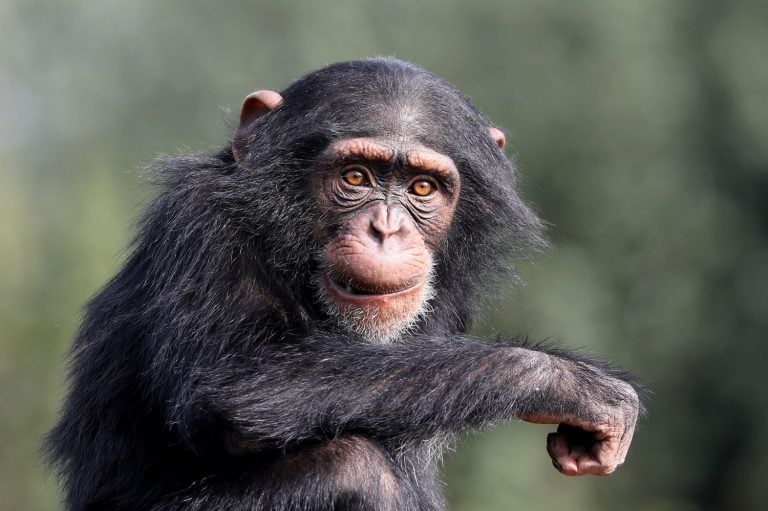
Tools, talk, and tight-knit tribes
Fifth-tail flyers of the rainforest
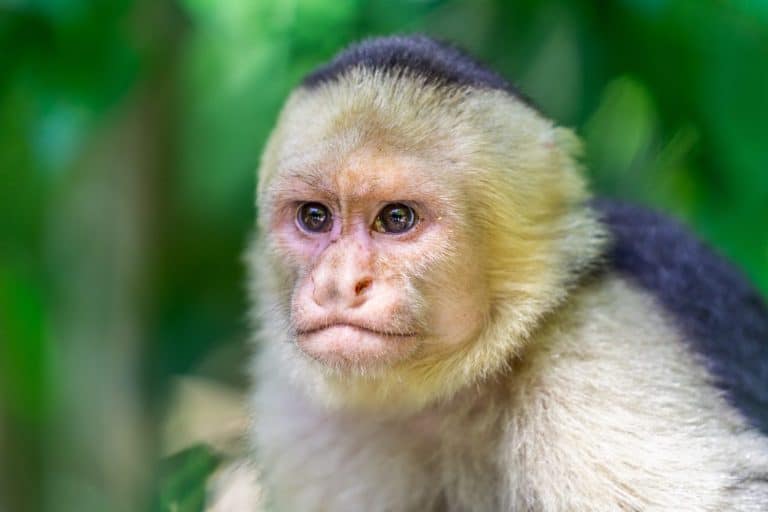
Big brains behind a white face
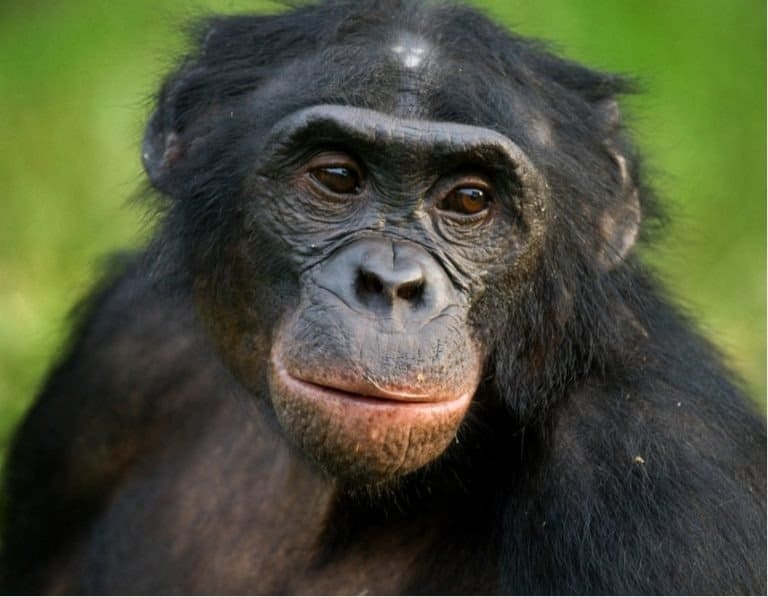
DRC's "make-peace" great ape
Canopy acrobats with duet songs
Fifth-tail climbers of the Amazon
The forest's red-haired engineer
Borneo's forest genius in the canopy
Batang Toru's last great ape
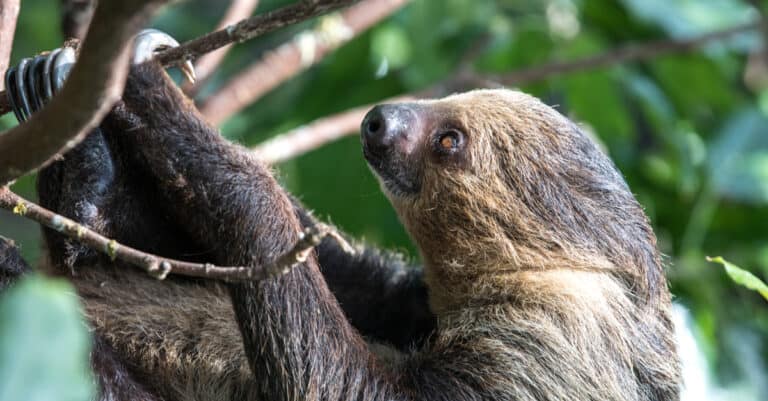
Two claws, night life, rainforest slow
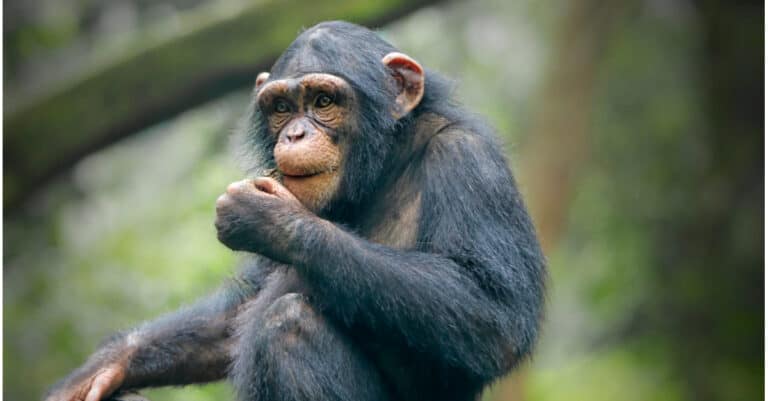
Tailless thinkers of the treetops
Madagascar's lost giant sloth lemur
Thank you for reading! Have some feedback for us?
We appreciate your help in improving our content.
Our editorial team will review your suggestions and make any necessary updates.
There was an error submitting your feedback. Please try again.