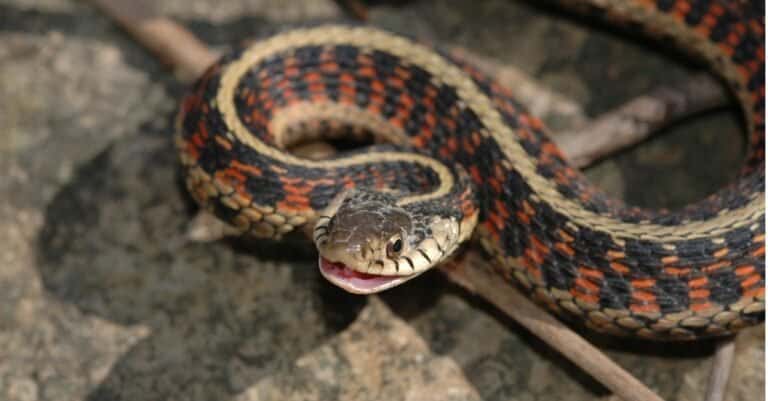
Garter Snake
Stripes you can trust

Stripes you can trust
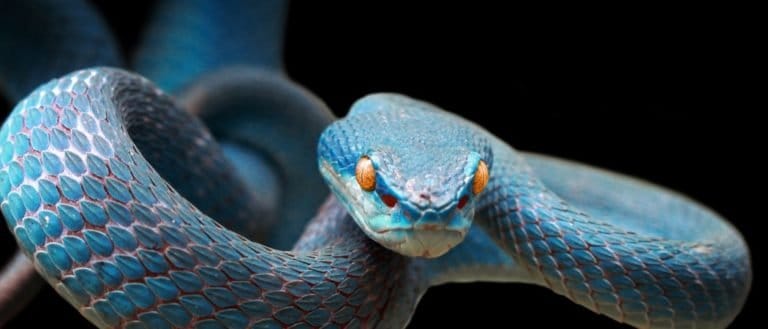
Built to glide, strike, and swallow
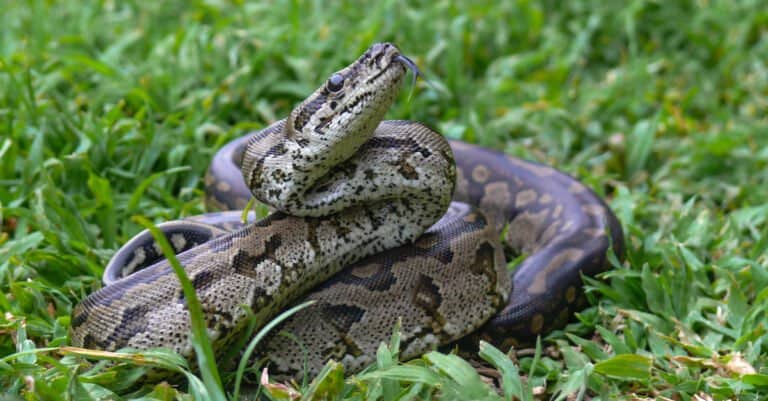
Big. Silent. Africa's rock python.
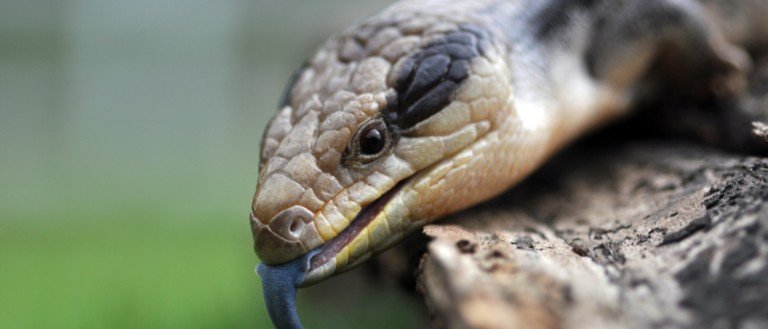
Smooth scales, global explorers
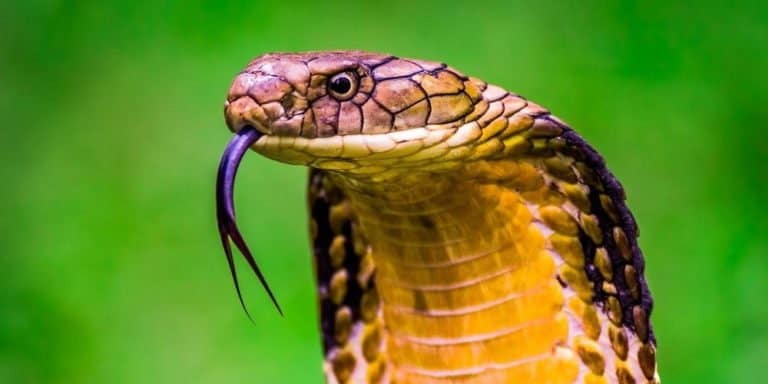
Snake-eater, nest-builder, giant of Asia
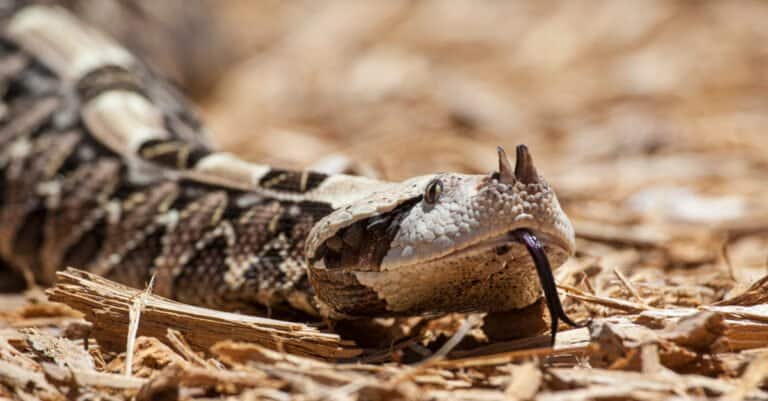
Leaf-litter ghost with 5-cm fangs
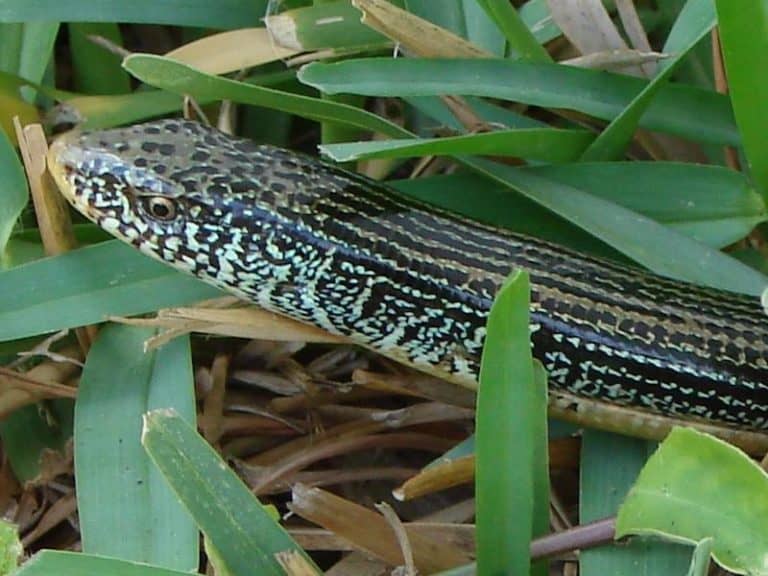
All the lizard-none of the legs.
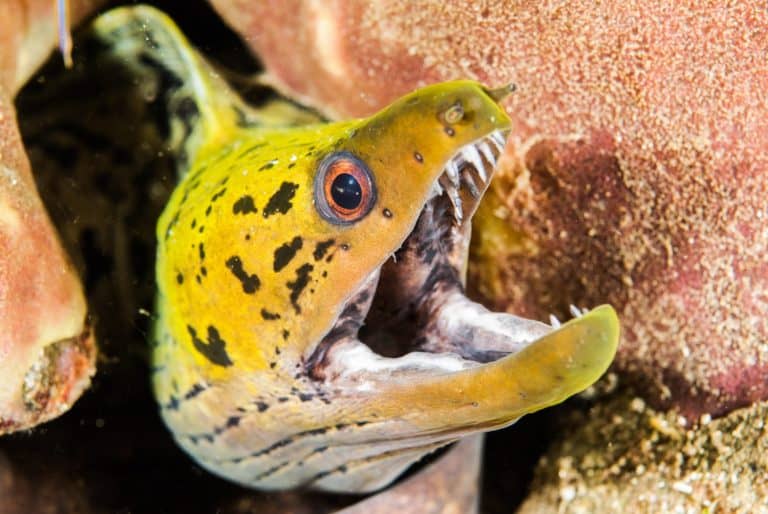
Crevice kings with a second bite
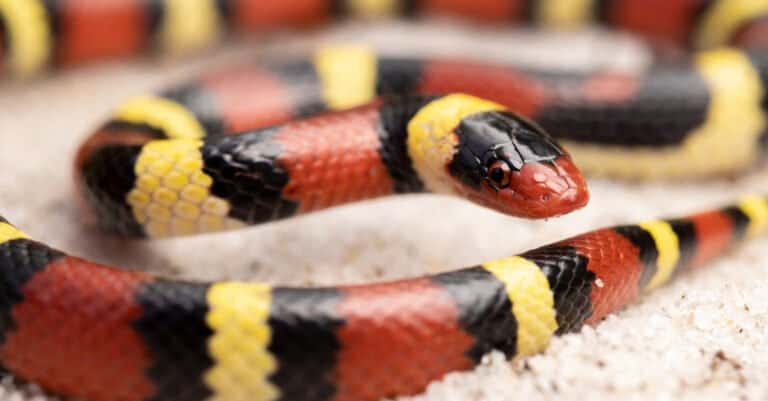
Coral look-kingsnake calm.
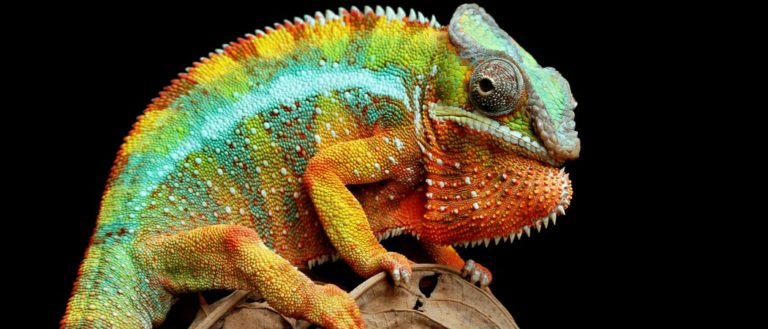
From geckos to dragons-lizard power
Slithering is a form of limbless terrestrial locomotion in which an elongated body generates traveling waves of bending or shortening against the substrate to produce net forward motion. Propulsion results from cyclic muscular contractions that exploit frictional anisotropy and interactions with environmental irregularities to create directional thrust.
Slithering is how limbless animals, mainly snakes, move by making waves in their bodies. They use muscles along the body to make bends or short length changes. Some parts hold fast while other parts push forward, often helped by scales. Main modes are lateral undulation (S-shaped bends push against rocks, plants, or bumps), concertina (alternating anchors and extensions in tunnels or rough places), sidewinding (lifting parts and rolling on loose sand), and rectilinear (slow, straight movement using belly scutes). Slithering depends on contact with the ground: animals push along the surface and control forces so they don't slide. Directional friction (more grip one way than the other) and surface features like roughness, slope, and obstacles determine which mode works best.
Etymology: From Middle English *slytheren* / *slidderen* ("to slip, slide"), related to *slither* and *slidder*; likely connected to Germanic roots meaning "to slide" or "to slip."
Snakes (and other slitherers) move primarily by "pushing off" with the head or tail; in reality thrust is distributed along the body.
Slithering is a single gait; in fact different modes (e.g., sidewinding vs rectilinear) are used depending on terrain and friction.
Smooth surfaces make slithering easier; very smooth, low-friction surfaces often reduce traction and can hinder forward progress.
Slithering is limbless terrestrial locomotion produced by traveling waves of bending and/or shortening along the body. Axial muscles (segmental epaxial/hypaxial groups) generate lateral curvature or local compression; the body alternates between segments that push against the environment and segments that are repositioned. Net motion emerges when internal shape changes are converted into external reaction forces via frictional anisotropy (it is easier for the belly scales to slip forward than backward) and/or by pushing on environmental asperities (pebbles, grass stems, wall irregularities). Because internal forces alone cannot change the motion of the center of mass (conservation of momentum; Newton's second law applied to the whole system), progress requires external contacts that provide sideways or backward reaction forces.
Mechanically, the body acts like a deformable multi-link chain: a kinematic wave of curvature travels from head toward tail while contact points intermittently "anchor" against the substrate. Different substrates shift which frictional components dominate: on rough ground, lateral pushes on asperities can be very effective; on smooth ground, movement relies more on directional friction from ventral scales and careful control of normal force distribution along the body. Efficient slithering keeps portions of the body within static friction (anchored) while other portions move with kinetic friction (slipping), managing slip to maximize forward displacement per unit muscular work.
Propulsive force is generated by axial muscle contractions that create lateral bends (undulation/sidewinding), localized shortening (concertina/rectilinear), and controlled modulation of normal force along the belly. These shape changes produce external reaction forces through (1) frictional anisotropy of ventral scales (higher resistance to backward slip than forward) and/or (2) mechanical interlocking/pushing against environmental asperities. The net forward impulse is the sum of forward components of these reaction forces during the cycle.
Direction is controlled by changing the amplitude, wavelength, and phase of body curvature, biasing contact forces to one side, and adjusting which segments anchor. Turning can be achieved by increasing curvature on the inside of a turn, shifting the wave so lateral forces have a sideways component, or selectively strengthening anchors on one side to pivot the body. Fine control also comes from head-led path selection (placing the anterior body along a new heading) with the posterior wave following the updated trajectory.
A repeating cycle of body-wave generation and contact management. The animal establishes one or more stable contact zones, sends a traveling wave of curvature and/or compression down the body, converts lateral/backward reactions at contact zones into forward translation, then repositions the next segment(s) to renew contacts.
A posteriorly traveling S-shaped wave. Multiple body segments push laterally against substrate irregularities while others slide forward, producing efficient motion on rough terrain and in vegetation.
Body forms lifted loops with only a few contact patches on the ground; contact patches move like a conveyor belt. Produces minimal slip on low-friction or yielding substrates (sand), with reduced sinkage and heat transfer.
Alternating anchor-and-extend behavior. The body forms tight bends to brace against walls/irregularities, then the front extends forward, anchors, and the rear is pulled up. Common in tunnels, narrow passages, or when lateral pushes are constrained.
Near-straight posture; slow, creeping motion produced by sequential activation of muscles associated with the ribs and skin (costocutaneous/intercostal and related ventral musculature) that shifts the ventral skin and belly scales forward, then pulls the body forward as the scales grip. Effective on flat surfaces where large lateral bends are disadvantageous.
Emphasizes pushing against discrete external features (rocks, stems) with relatively higher lateral force; performance depends strongly on obstacle spacing and friction.
Provides continuous contact with the substrate and generates traveling body waves for propulsion (lateral undulation, concertina, sidewinding, rectilinear).
Create frictional anisotropy-high resistance to backward/side slip and lower resistance forward-converting muscle forces into forward motion.
Acts as a flexible beam for transmitting bending and compressive forces; ribs help maintain body shape and provide muscle attachment points.
Transmit forces between muscle segments and to the skin/scales; helps maintain hydrostatic-like pressurization for rectilinear motion.
Initiates steering, anchoring, and obstacle negotiation; provides sensory guidance for route selection.
Assists with anchoring, steering, and fine control of wave termination; can provide extra purchase on rough terrain.
Dominant axial muscle groups arranged in segmental series: epaxial and hypaxial muscles including longissimus dorsi, iliocostalis, spinalis/semispinalis, and costocutaneous and intercostal muscles that couple ribs to skin. Alternating left-right activation produces lateral undulation; co-contraction with selective rib/skin coupling supports rectilinear "crawler" motion by lifting/advancing sections of the belly. Strong segmental myomeres with connective-tissue septa enable localized stiffening for concertina anchoring and for sidewinding where lift-and-set patterns reduce slipping on low-friction substrates.
Numerous small vertebrae with interlocking zygapophyses allow large ranges of lateral flexion while maintaining stability; ribs along most of the trunk provide extensive attachment sites and help tune stiffness and body profile. Intervertebral joints and ligaments permit distributed curvature (smooth traveling waves) rather than hinge-like bends. Limb girdles are reduced/absent in most slitherers, minimizing protrusions and allowing uninterrupted axial wave propagation. Vertebral morphology often balances flexibility with resistance to excessive torsion and buckling during compressive phases of rectilinear and concertina locomotion.
~0.2-1.5 m/s for sustained travel on suitable terrain; burst speeds for fast species and favorable gaits (e.g., lateral undulation/sidewinding) can reach ~3-6 m/s for short intervals.
vs Humans: Typical slithering is slower than human walking (~1.3-1.6 m/s) and far slower than human running (~3-6 m/s) or sprinting (~8-10+ m/s). Peak snake bursts can overlap the low end of human running but are not sustained.
Low-to-moderate endurance. Many snakes can "cruise" at low speeds (≈0.2-0.6 m/s) for tens of minutes to a few hours with intermittent pauses (strongly temperature- and hydration-dependent). High-speed bursts (≥2-3 m/s) are usually sustainable only for seconds to a few minutes before fatigue/overheating risk increases.
Moderate mechanical efficiency but highly terrain-dependent: efficient when the body can push against surface irregularities with favorable directional friction; inefficient on smooth or slippery substrates where slip increases and more muscular work is wasted.
Not inherently higher than legged locomotion: measured net cost of transport for snakes using lateral undulation on suitably rough substrates is often comparable to similarly sized limbed ectotherms (roughly ~1-5 J/kg/m, varying with speed, substrate, and gait). Concertina and rectilinear locomotion can be substantially more expensive, and smooth/low-friction substrates can raise costs by increasing slip.
Longest snake (maximum recorded length)
~7.5 m (24.6 ft) recorded; unverified claims longer exist
Heaviest snake (largest reliably measured mass)
~97.5 kg (215 lb) for a very large measured female in published field data; substantially higher masses are reported anecdotally but are not well-verified
Smallest snake (adult total length)
About 10 cm (4 in) adult total length
Fastest snake (commonly cited top speed)
Up to ~20 km/h (12 mph) reported in short bursts
Snake lateral undulation and concertina gait: segmented bodies generate traveling waves to move through rubble, pipes, and tight gaps where wheeled/legged robots fail; use distributed actuation and frictional contact points to anchor and advance.
Snake sidewinding: minimizes slip and heat transfer on loose sand by maintaining discrete contact patches and shifting them in a coordinated wave; inspires locomotion controllers and tread/contact strategies for granular terrain.
Rectilinear/low-profile body wave motion and high compliance: navigation through confined, tortuous passages with controlled curvature, push-pull stability, and reduced tissue stress; "follow-the-leader" path planning echoes snake body following.
Concertina-like anchoring and extension: alternating grip/advance cycles mimic how snakes brace against walls to move through narrow channels; designs use expandable friction pads or bristles to create directional resistance.
Snake ventral scales create frictional anisotropy (easy forward glide, resist backward slip). This inspires textured polymer skins, microstructured tread, and one-way friction fabrics for improved traction and energy efficiency.
Rectilinear progression via sequential muscle activation: traveling contraction waves produce net motion without large lateral bending; inspires soft pneumatic/hydraulic robots that inch forward by alternating anchoring and extension.
Central pattern generator-like rhythmic coordination in snakes: control algorithms generate stable traveling waves that adapt frequency/amplitude to friction and obstacles, improving robustness in unknown environments.
Slithering's continuous ground contact and distributed load: enables stealthier movement and reduced ground pressure compared with point-contact legs; informs chassis compliance and contact distribution.
Found across: Snakes (Serpentes): primary and most diverse slithering specialists; use lateral undulation, concertina, sidewinding, and rectilinear modes, Limbless lizards (multiple squamate lineages): e.g., Anguidae (glass lizards/slow worms), Pygopodidae (flap-footed geckos), Scincidae (some skinks), Amphisbaenians (Amphisbaenia; "worm lizards"): mostly subterranean, using concertina-like and axial-wave locomotion through soil, Caecilians (Gymnophiona): limbless amphibians that use annular body-wall contractions and axial waves for soil-based 'slithering'/burrowing
Slithering isn't one motion but a toolkit: snakes can switch among lateral undulation, sidewinding, concertina, and rectilinear "caterpillar-like" waves depending on how much traction the ground provides.
Rectilinear slithering can be nearly "silent" and low-sheen: some snakes move forward without obvious side-to-side bending by alternately anchoring sections of belly scales and pulling the rest of the body along.
Sidewinding reduces sinkage and overheating on loose sand by keeping only a few body segments in contact at a time, leaving a distinctive set of parallel track marks.
Friction is directional: the microstructure and overlap of belly scales can resist backward slip more than forward glide, helping convert body waves into net forward motion.
Snakes can still make forward progress in cluttered terrain even with very little overall sliding-by bracing against rocks, branches, or grass stems (environmental "push points") and ratcheting ahead.
On very low-friction surfaces (like smooth glass), a snake's usual undulation produces much less forward motion-like trying to swim on land without anything to push against-showing how critical tiny surface bumps and directional friction are.
Sidewinding is to loose sand what a snowshoe is to powder: spreading contact in time and space to avoid sinking, often enabling faster, steadier travel than standard undulation on the same substrate.
Rectilinear locomotion resembles a moving conveyor belt: the skin and muscles cycle in waves so the body advances while parts of the belly alternately "stick" and "slide," trading speed for control and stealth.
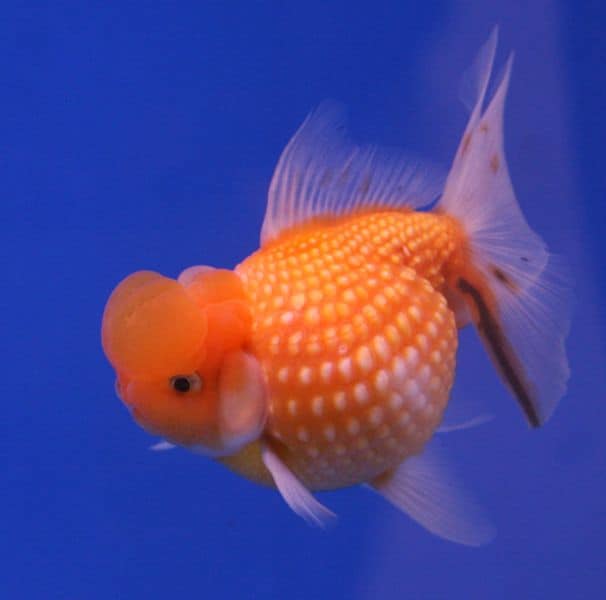
Bony rays, endless ways.
From geckos to dragons-lizard power
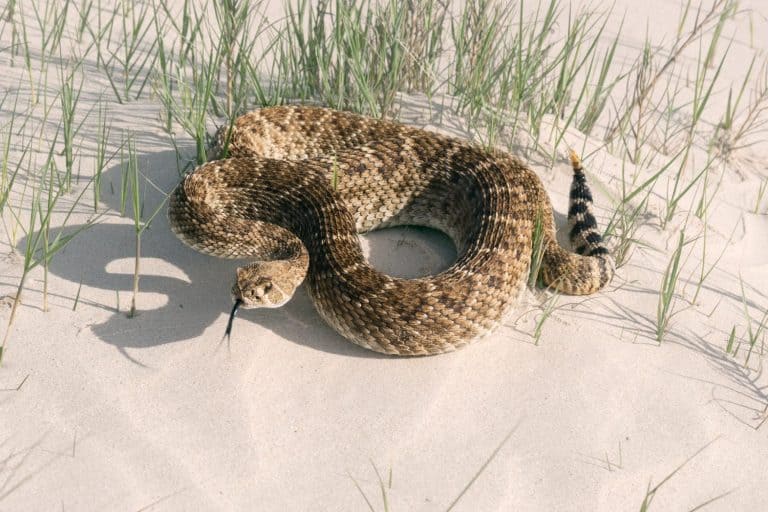
Hear the rattle, give it space.
Built to glide, strike, and swallow
Crevice kings with a second bite
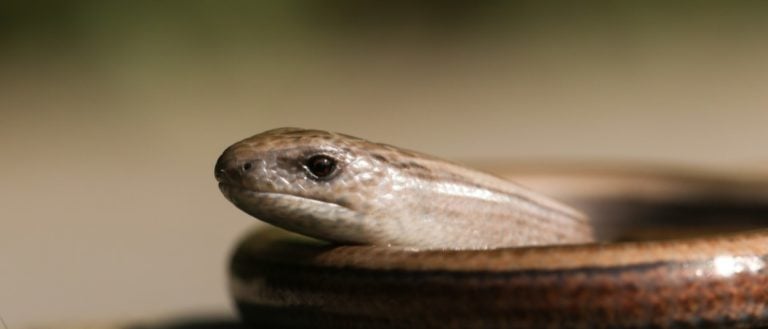
Blinking lizard, not a snake
All the lizard-none of the legs.
Snake-eater, nest-builder, giant of Asia
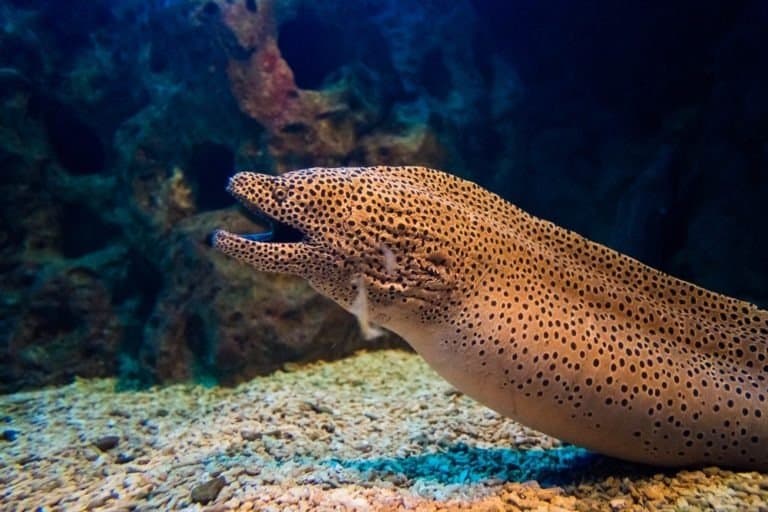
Long bodies, long journeys.
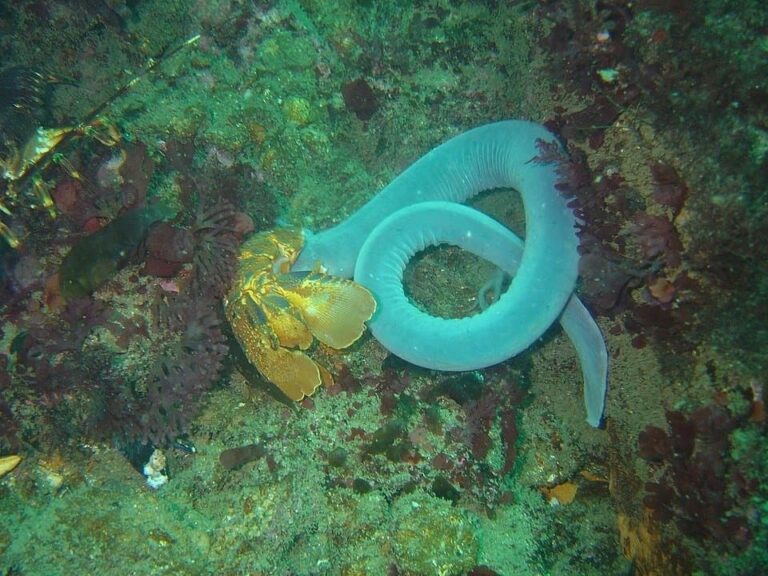
Slime, knots, and ancient jaws-none!
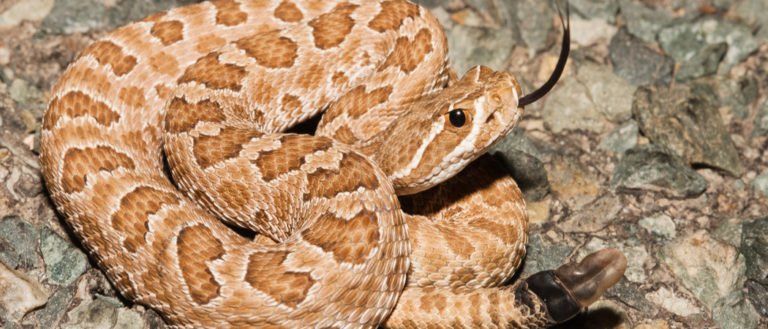
Rattle of the Grasslands
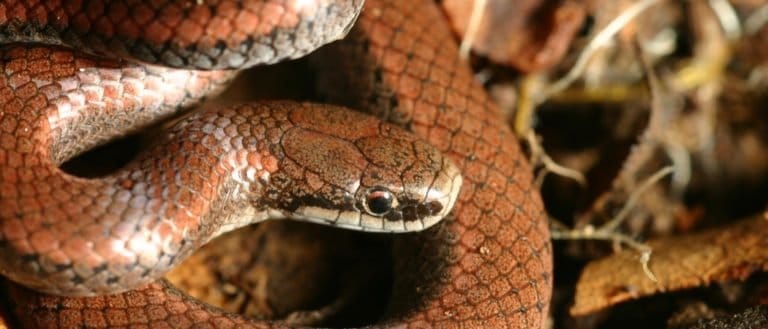
Small snake, sharp tail, slug hunter
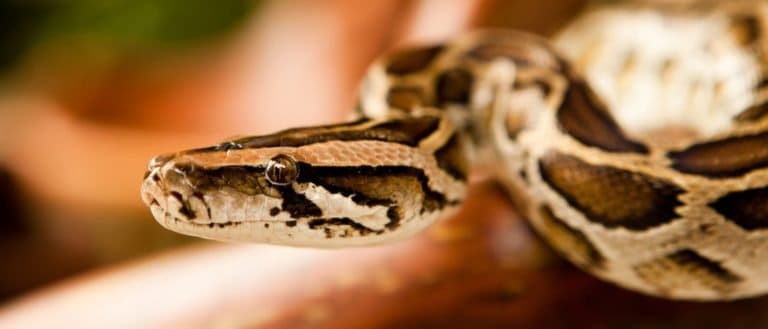
Big, blotched, built to constrict
Smooth scales, global explorers

Tentacled tunnel-hunters of the tropics
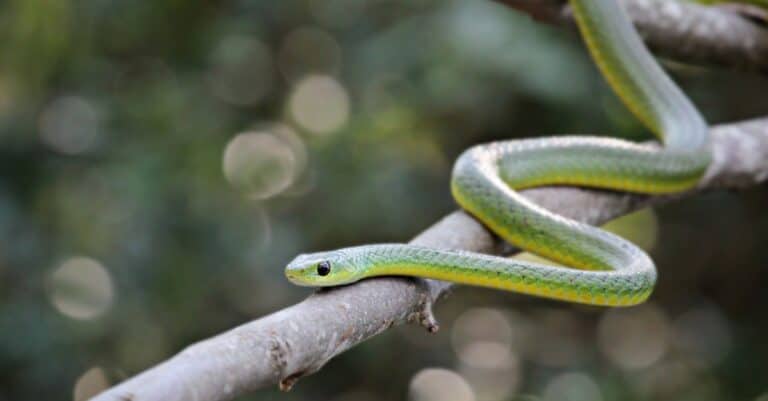
Big eyes. Tree life. Serious venom.

Rainforest shadow with a heat-sense
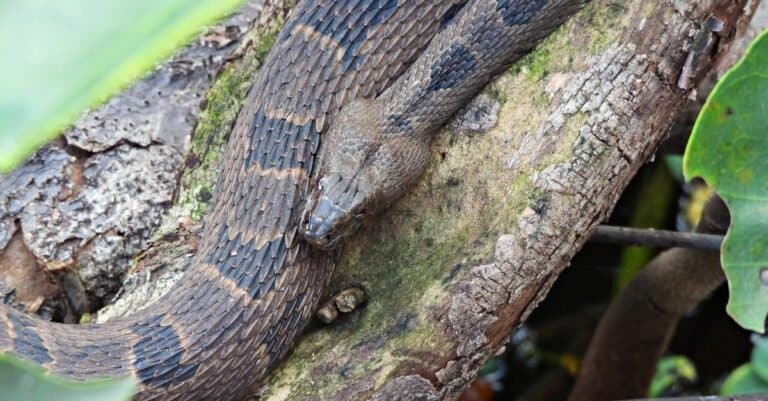
Big river snake, not a cottonmouth
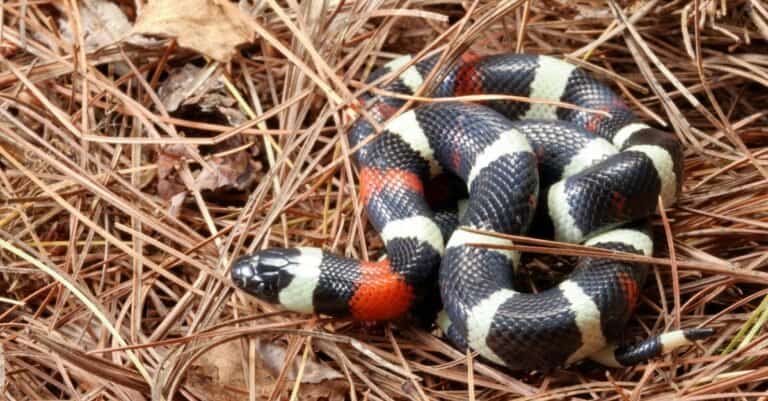
Bright bands, harmless bite-Milk Snake!
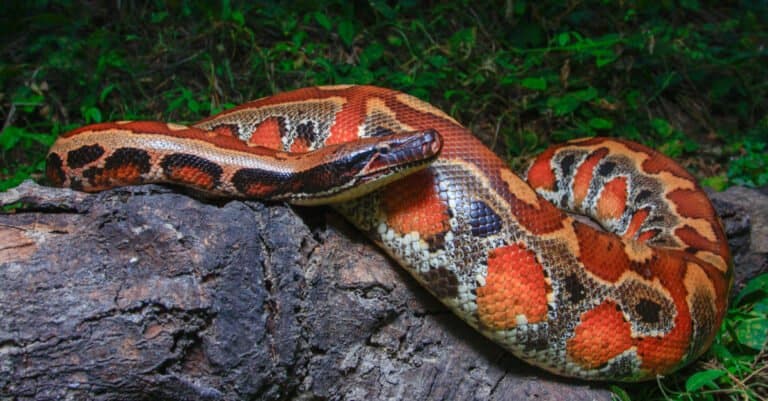
Short tail. Heavy muscle. Red power.
Leaf-litter ghost with 5-cm fangs
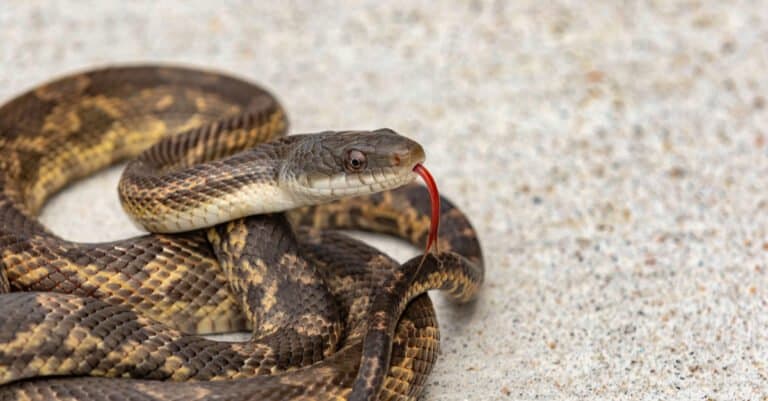
Texas' climbing rodent patrol
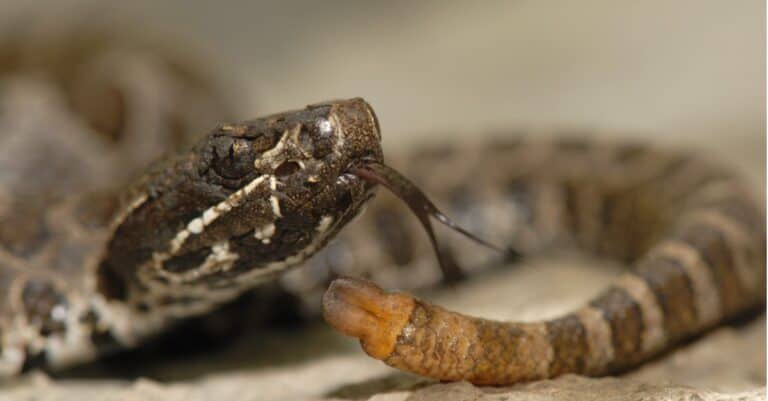
Small rattle. Big wetland neighbor.
Coral look-kingsnake calm.
Thank you for reading! Have some feedback for us?
We appreciate your help in improving our content.
Our editorial team will review your suggestions and make any necessary updates.
There was an error submitting your feedback. Please try again.