
Quick Take
- The leading cause of death in captive chinchillas isn't disease or injury, and most owners never see it coming.
- Giving a chinchilla a bath could seriously harm it, because these animals stay clean in a way almost no one expects.
- A chinchilla can outlive a cat or dog, though this is only possible under one specific set of conditions.
- Wild chinchillas have a defense mechanism when grabbed by a predator that's as bizarre as it sounds effective.
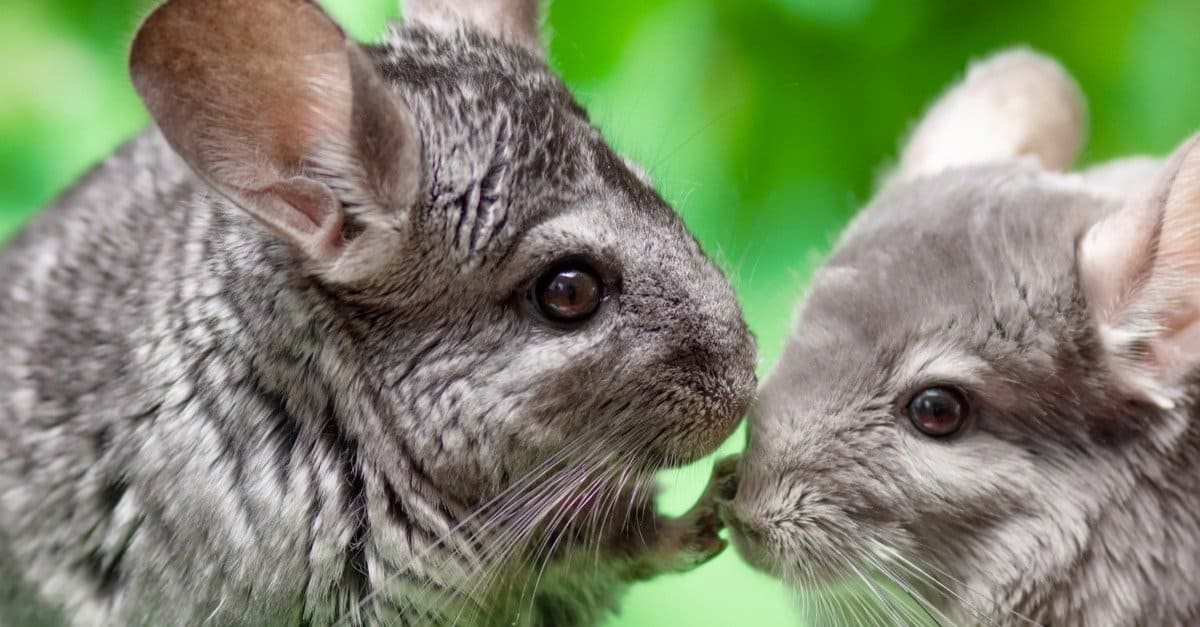
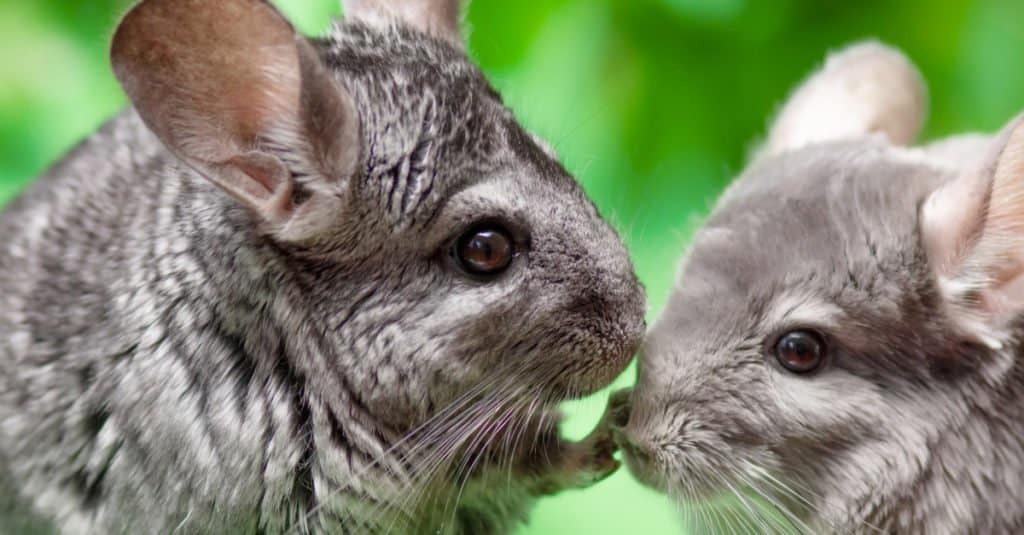
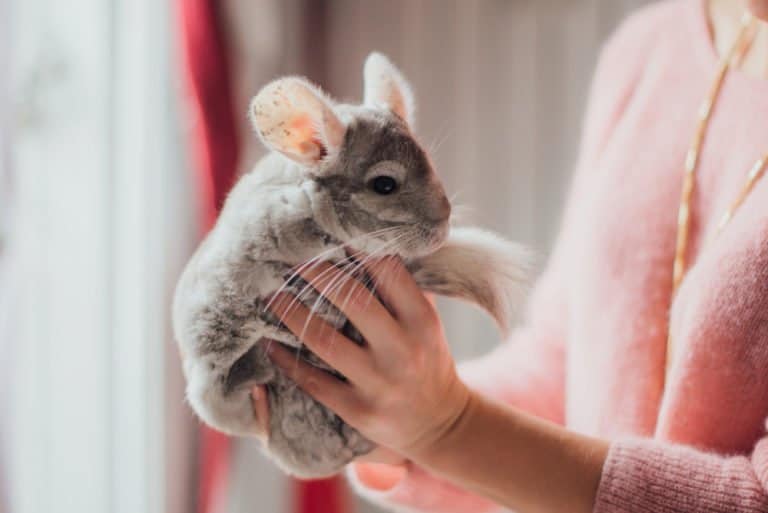
Chinchillas are native to the Andes Mountains, particularly Chile and Peru. They are smart, cute members of the rodent family with extremely soft, plush coats of fur. Most chinchillas have gray fur, but they can also be black, white, tan, or beige. Chinchillas are active and loving and make excellent pets for families that are ready to give them the attention they crave. In fact, a chinchilla may become very attached to its family. However, they aren’t recommended for toddlers and young children who may unknowingly handle them roughly. Whether you are considering getting a chinchilla for a pet or you simply want to learn more about them, here is everything you’ll want to know about chinchillas.

Interesting Facts
- Chinchillas are clean animals, but they do not take a bath in water. Instead, they take a dust bath.
- They need a lot of room to play and sleep in. They are active animals, so their habitat should include a large exercise wheel, tunnels, and hide areas (i.e., hide houses).
- Chinchillas are crepuscular, which means they are most active between dusk and dawn, and nocturnal, meaning they are more active at night and sleep during the day.
- One of the leading causes of death among chinchillas in captivity is refusing to eat.
Classification and Scientific Name
Chinchillas are small, furry animals that belong to two species: Chinchilla chinchilla (previously brevicaudata) and Chinchilla lanigera. They belong to the parvorder Caviomorpha and are slightly bigger than ground squirrels. They are native to the Andes Mountains in South America, where they live in herds at high elevations of up to 14,000 ft. Historically, they lived across Bolivia, Peru, Argentina, and Chile, but modern wild colonies are now known to exist primarily in Chile and Bolivia. The family Chinchillidae also includes their relatives, viscachas, though chinchilla rats, which are closely related to both, belong to their own separate family, Abrocomidae.
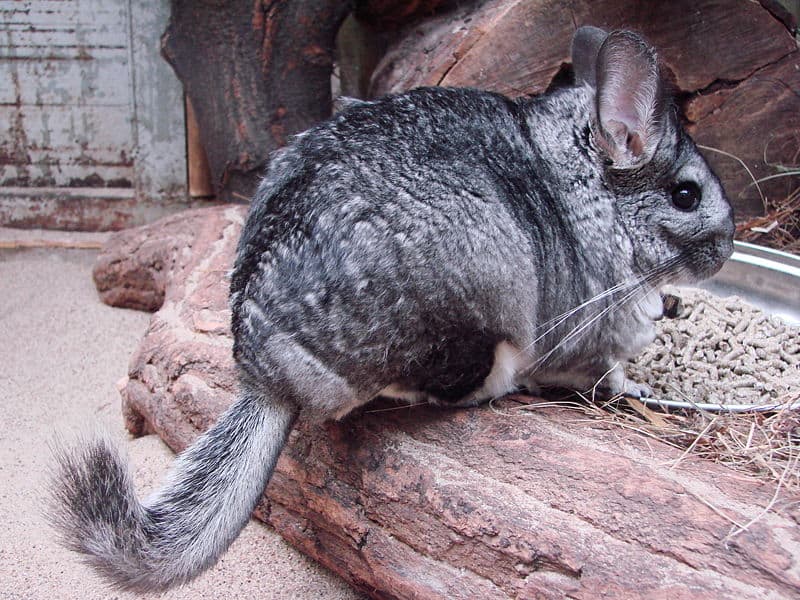
There are two species of chinchilla.
Evolution
New evidence from chinchilla fossils provides insight into how early rodents adapted to a dry, open environment. This type of environment would have meant that the animals had to find ways to cope with a diet high in abrasive food sources long before horses and other mammals on other continents developed similar adaptations for their teeth.
It is believed that this adaptation likely allowed them to survive better in the harsh conditions, as well as helping them use more of their resources wisely by not needing to continually replace worn-out teeth from eating tough grasses. The discovery also provided support for what may be some of the oldest grasslands in existence, as these ancient species lived approximately 32.5 million years ago in what is now known as the Chilean Andes — some 15 million years before grasslands emerged elsewhere.
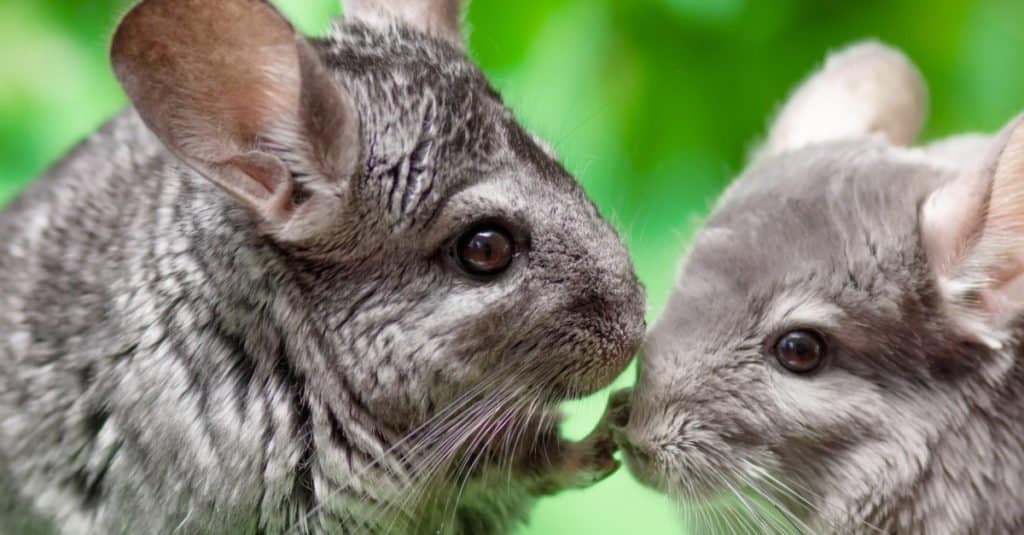
Chinchillas have been around for 15 million years.
©Creatopic/Shutterstock.com
Habitat
Chinchillas have long been found in the coastal regions, hills, and mountains of Chile, Peru, Argentina, and Bolivia. However, due to over-exploitation for their fur in the early 1900s, chinchilla populations drastically declined. By 2007, it was believed that there were no more chinchillas left in Argentina after five years of fieldwork in Jujuy Province failed to find a single specimen. Populations thought to be extinct by 1953 had later been rediscovered living in the Antofagasta Region during the late 1900s and early 2000s. There is some evidence that suggests that native populations may still exist in Bolivia and Peru, with one specimen being discovered as recently as 2003 when it was found at a restaurant located in Cerro de Pasco.
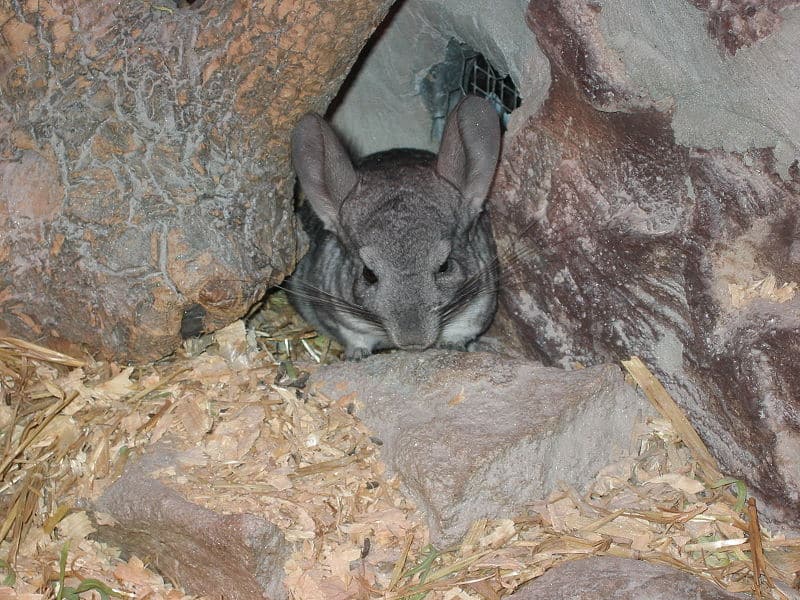
Chinchillas have long been found in the coastal regions, hills, and mountains of Chile.
Behavior
In the wild, chinchillas are excellent jumpers and can leap up to 6 ft. This allows them to find shelter in burrows or crevices in rocks from potential predators, including skunks, felines, snakes, canines, and birds of prey. They have a variety of defensive tactics they use when threatened, such as spraying urine and releasing fur if bitten.
Their diet primarily consists of plant leaves, fruits, seeds, and small insects, which they feed on during dawn or dusk before retreating into their burrows at nightfall. Chinchillas live in social groups called herds that range in size from 14 members up to 100 for protection against predators as well as for social interaction purposes.
Chinchillas breed any time of the year, with a gestation period that is longer than most rodents at 111 days. The litters are usually small, consisting predominantly of two babies who are born fully furred with eyes open, unlike many other rodents.
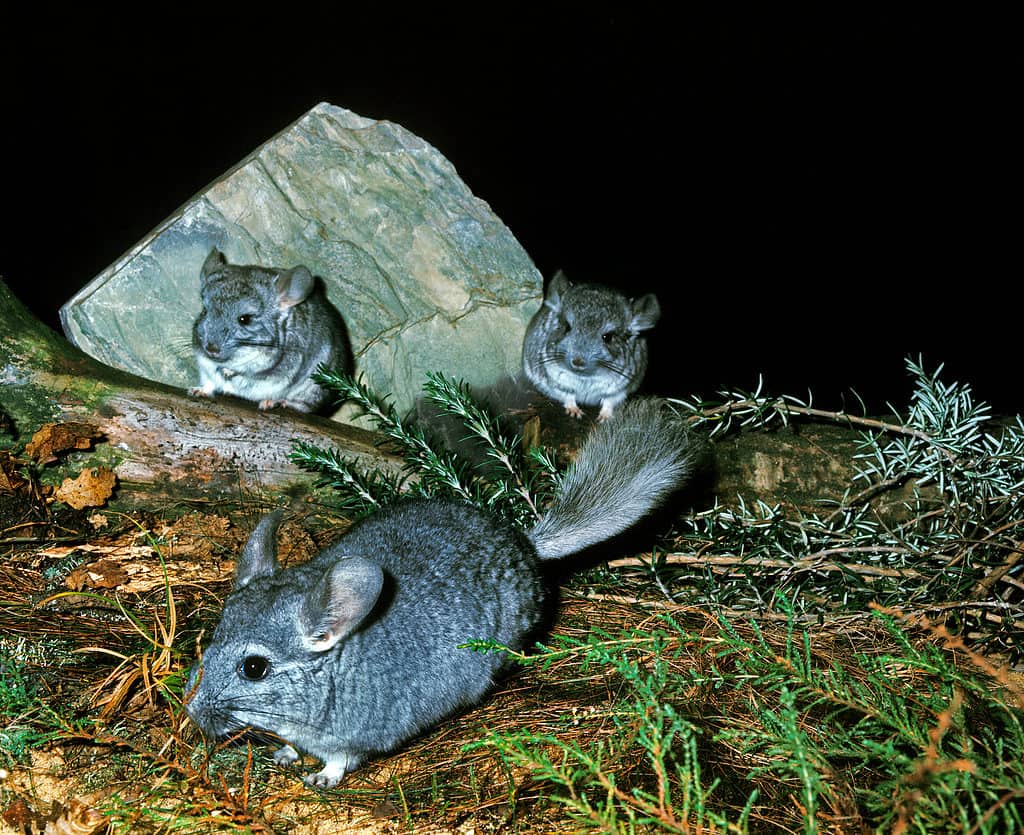
Chinchillas are most active at dawn and dusk.
©slowmotiongli/Shutterstock.com
Appearance
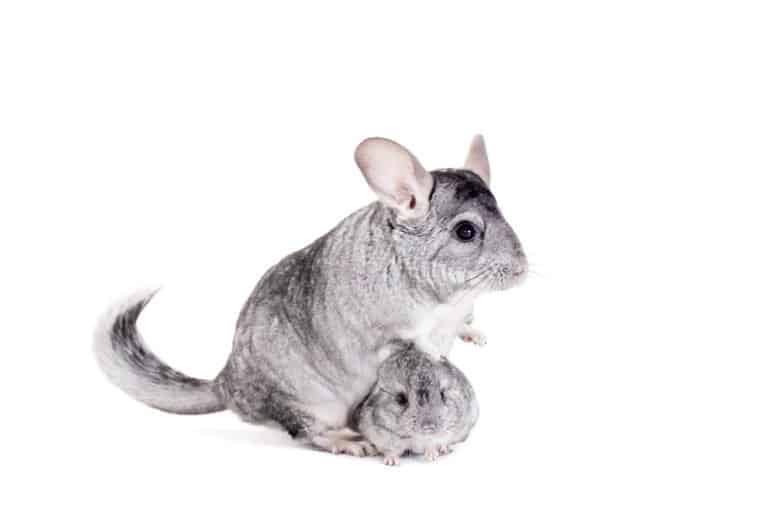
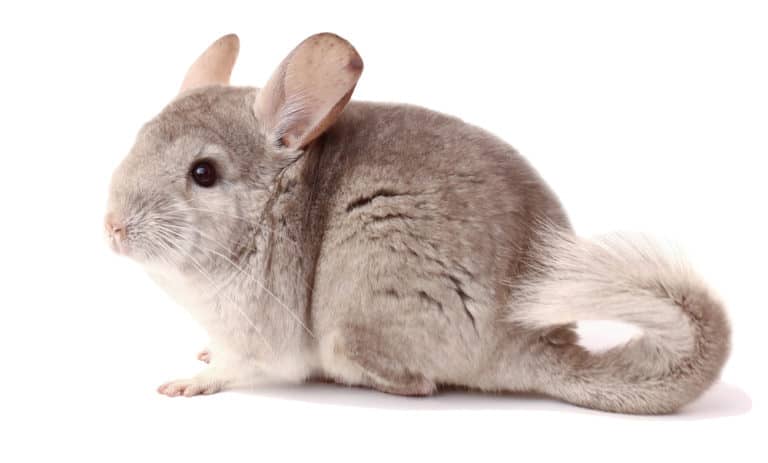
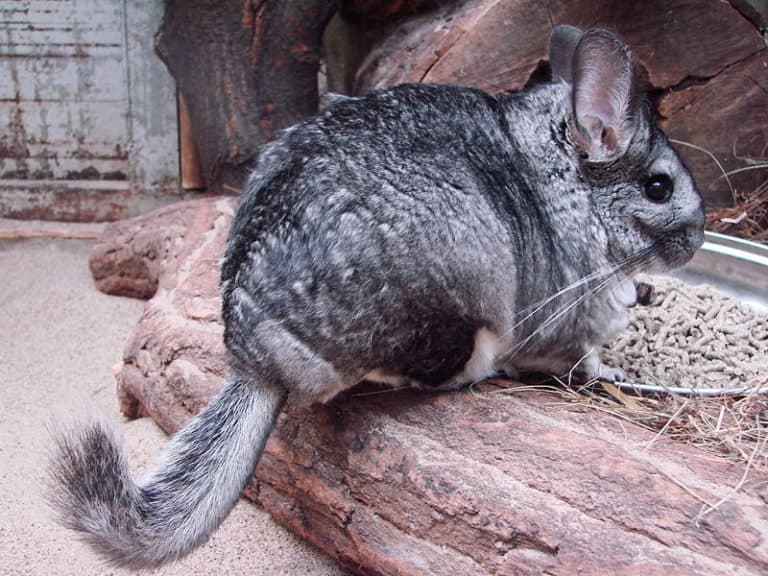
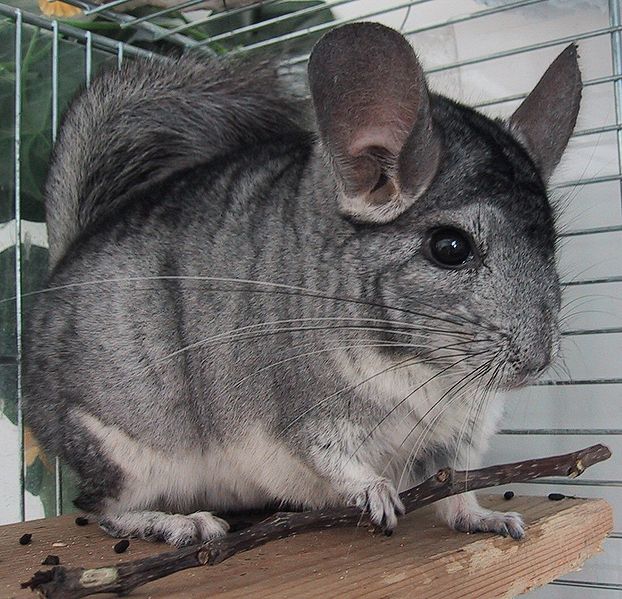
Chinchillas have rounded ears, plump furry bodies, short legs, and long tails. The body of an average chinchilla grows to about 10 inches long, but it can range from 8 inches to 11 inches, and its tail will typically be about 5 to 6 inches in length. A fully grown chinchilla typically weighs between 1 and 1.5 pounds (450–680 grams). Females are generally larger than males.
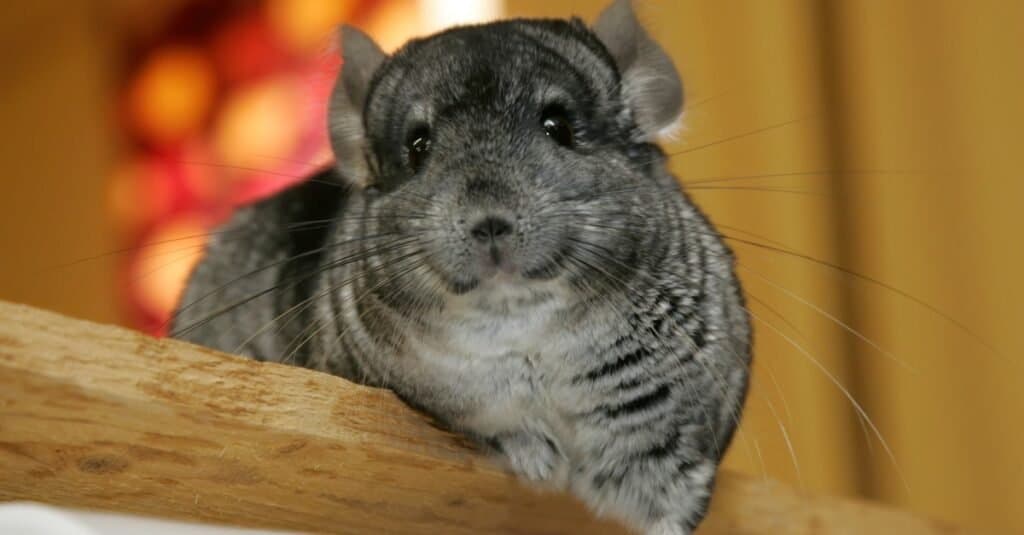
Chinchillas have rounded ears, plump furry bodies, short legs, and long tails.
©AJSTUDIO PHOTOGRAPHY/Shutterstock.com
Breeding, Mating, and Birth
The breeding age for chinchillas can begin when they are about eight months old. Mating takes place seasonally and is based on the light cycle. For instance, mating season occurs from November through May in the northern hemisphere. Female chinchillas generally have a long pregnancy, with the length of gestation being about 111 days. Chinchilla babies, which are known as kits, are usually born in the morning. The litter size is usually small, with only two babies. However, there may be as many as six in a litter. The babies are born covered in fur, with their eyes open and weighing about 2 ounces. Chinchilla babies are very active, and they begin playing and running from the moment of birth. Mama chinchillas are extremely protective of their babies, but some fathers may be aggressive toward the babies and may attempt to kill them. Chinchillas are strong enough to be moved to a new home after they are weaned, which is at 8 weeks.
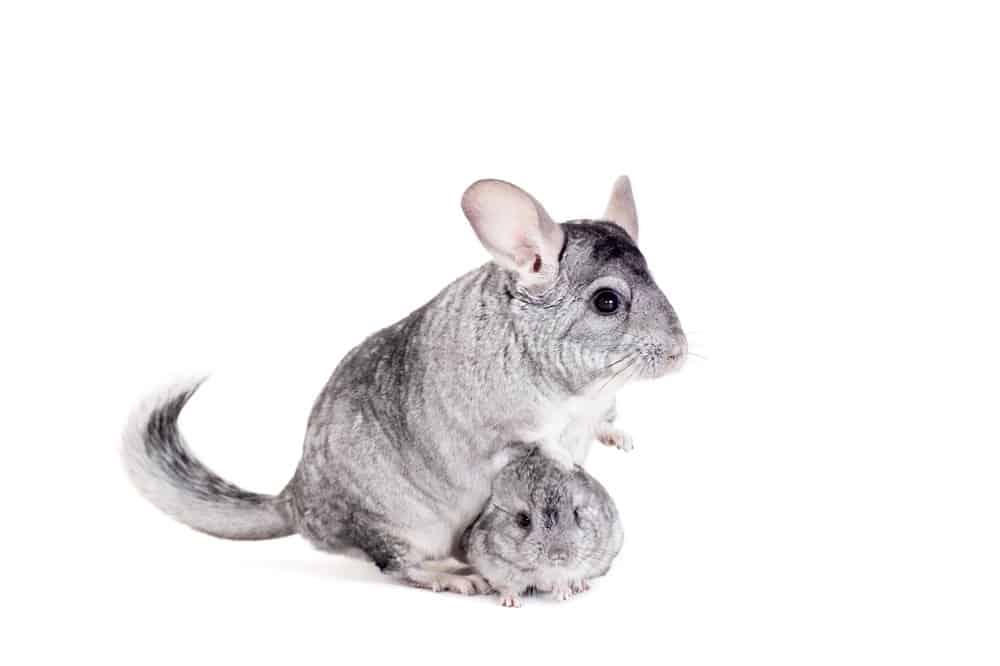
Baby chinchillas are born covered in fur, with their eyes open and weighing about 2 ounces.
©Rosa Jay/Shutterstock.com
Diet
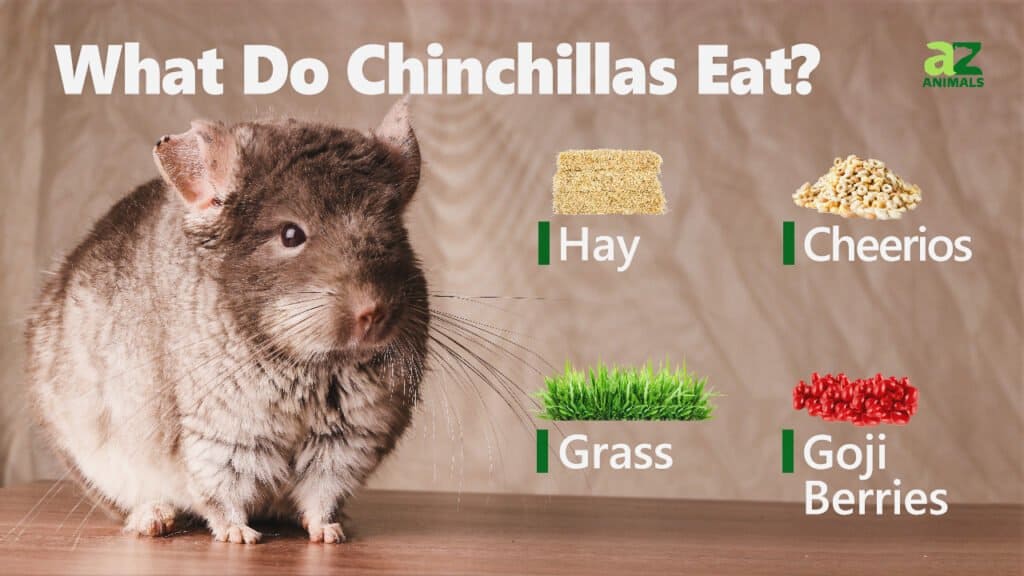
As vegetarians, chinchillas have a sensitive stomach, so they must eat a specific diet in order to maintain their health. Your pet chinchilla’s diet should include food pellets that are specifically made for chinchillas. Along with commercially made food pellets, they eat hay, which is important to their diet and helps wear down their growing teeth. A chinchilla loves to eat treats, but they should be limited, especially if they are high in sugar or fat, which can lead to digestive problems. Treats may include seeds, nuts, hibiscus leaves, dandelion leaves, and dried fruit. Chinchillas should also have access to a salt block to help them get the essential minerals their body may be lacking. It’s also important for them to have access to plenty of fresh, clean water, such as through a water bottle. If your chinchilla’s fur begins to look wavy, it’s most likely caused by too much protein in their diet, but over time it will be restored to normal if they eat a healthier, balanced diet.
Lifespan
In the wild, chinchillas have a lifespan of about 8 to 10 years. However, in captivity, with proper nutrition and care, the lifespan of a chinchilla is as much as 20 years. There are several reasons why chinchillas live longer in captivity than they do in the wild. One reason they don’t live as long in the wild is that they are preyed upon by larger animals, such as foxes and wild cats. Another reason is that they are hunted for their fur, one of the main reasons they have become an endangered species.
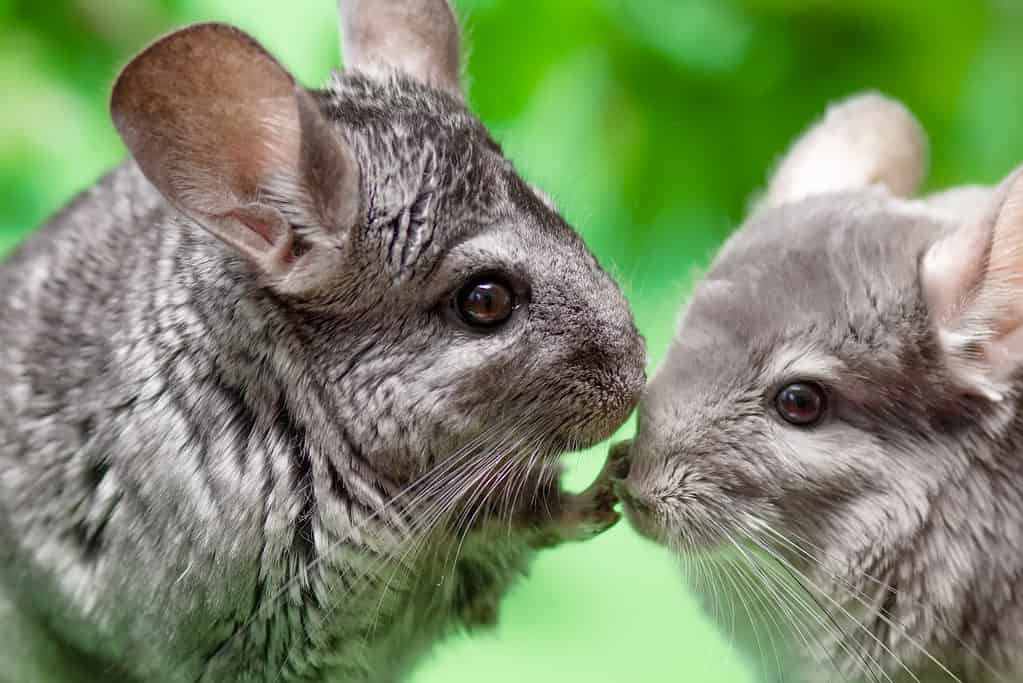
In the wild, chinchillas live for 8 to 10 years.
©Creatopic/Shutterstock.com
Predators and Threats
Wild chinchillas face a variety of predators and threats. These include large cats such as the mountain lion, foxes, and birds of prey such as falcons, hawks, and eagles. Smaller animals like skunks, weasels, and even snakes can also pose a threat to wild chinchillas.
Additionally, they are vulnerable to human activity, such as hunting or trapping for their fur. Since they live in arid areas with limited resources, they may also suffer from competition with other animals for food or shelter. To protect themselves from these dangers, wild chinchillas have evolved keen senses of sight and hearing that help them detect predators before it is too late. They are also able to move quickly between rocks when threatened, which helps them evade danger until it passes.
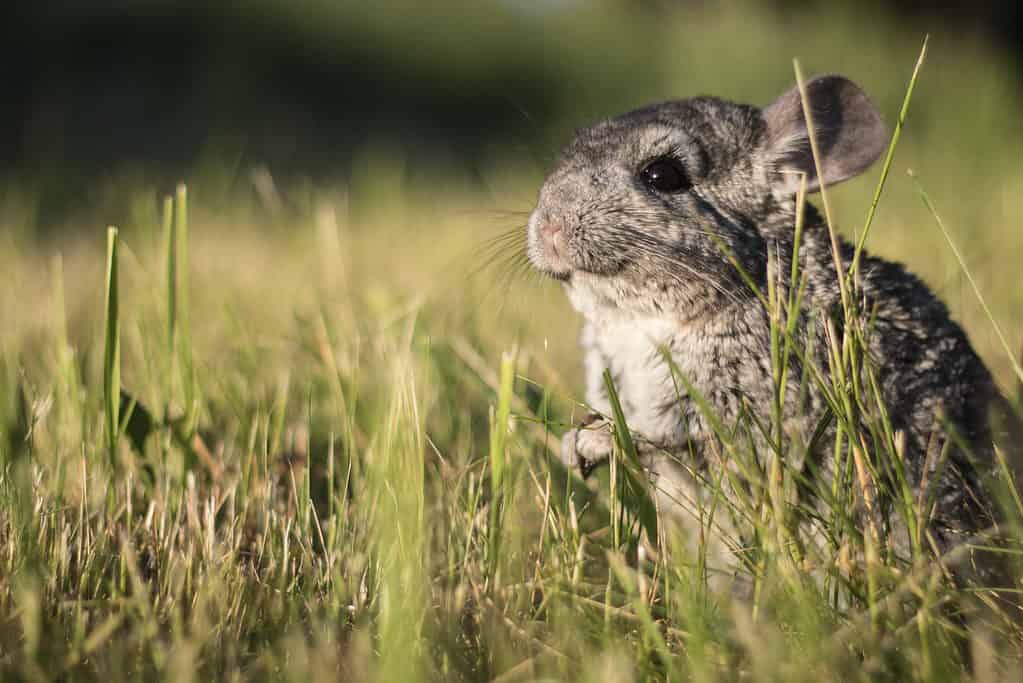
Chinchillas have many predators, including large cats such as the mountain lion, foxes, and birds of prey such as falcons, hawks, and eagles.
©PawelPonichtera/Shutterstock.com
Health in Captivity
Chinchillas will live a long, happy, and healthy life as long as they are fed a well-balanced diet, get lots of attention, and have a clean habitat. However, like other animals, they may get sick. One of the first signs that your chinchilla isn’t feeling well is that it will stop eating and begin to drastically lose weight. One of the leading causes of death among chinchillas in captivity is refusing to eat. Chinchillas, like other rodents, have teeth that do not stop growing, and if they grow too large, it makes it difficult for them to eat or may cause infection, which may lead to death. It is extremely important to routinely check their teeth or have your veterinarian examine the teeth and ensure they have plenty of hay to chew on, which helps to grind their teeth down.
Chinchillas prefer cooler temperatures, so it’s important to prevent overheating. Your chinchilla will become quite attached to you over time, but in the beginning, it’s important that you are gentle and consistent when holding them. When approaching your chinchilla, you should be slow-moving and calm until they become familiar with you. Chinchillas, like many other animals, will bite if they are scared or uncomfortable because this is their way of communicating. However, they may also bite or nip when they are happy. In the process of training a chinchilla not to bite, it is important to understand their temperament. This will help you understand when they are upset, don’t want to be held, or are showing happy emotions. A baby chinchilla may nip more than an adult and will occasionally bite, but they do not intentionally bite hard enough to draw blood. If biting becomes excessive, you can gently tap your chinchilla on the head and say “no.” They are loving pets and will continue to adapt to you as you will to them.
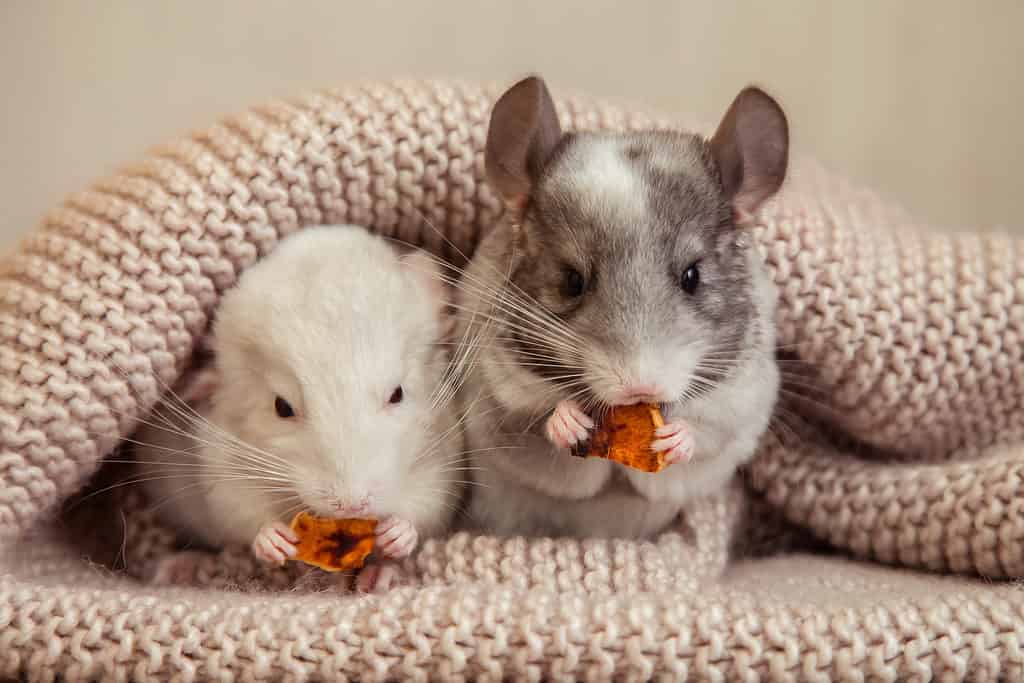
One of the leading causes of death among chinchillas in captivity is refusing to eat.
©Luniaka Maria/Shutterstock.com
Population
The exact population of wild chinchillas is unknown, but it is estimated that there are only 10,000 left in the world. This makes them an incredibly endangered species, and they are protected by law in their natural habitat.
Unfortunately, due to the remote nature of many areas of the Andes Mountains where they live, it can be difficult to properly monitor hunting activity. Illegal hunting continues to take place, which threatens their already limited numbers. Chinchillas are hunted for their fur despite it being illegal in most countries. To prevent extinction in the wild, effective human intervention and conservation measures must be taken immediately.
Despite this situation, breeding chinchillas for pets has been successful when done responsibly in captivity. Hundreds of domesticated chinchillas are bred every year by people looking for pets. Efforts must continue to protect these creatures from extinction while allowing responsible captive breeding, so that future generations may enjoy owning pet chinchillas.
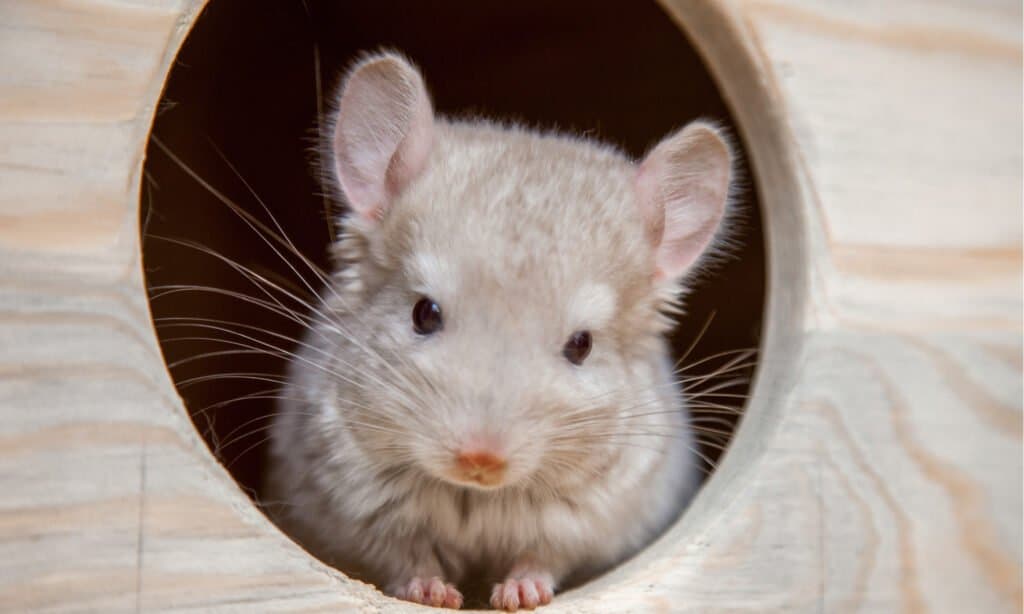
There are only 10,000 chinchillas left in the wild.
©Luniaka Maria/Shutterstock.com
Conservation
The two species of chinchilla have had a difficult time in recent years. The population has been decimated by human hunting, leading to an estimated 90% global population loss over the last 15 years. This dramatic decrease was so serious that both species were listed as “Critically Endangered” on the IUCN Red List of Threatened Species by 2008. Fortunately, some areas have seen limited recovery since then, allowing them to be reclassified as “Endangered” in 2016. Despite this improvement in certain parts of their range, they remain threatened due to ongoing human hunting and habitat destruction caused by activities such as farming and mining. Conservation efforts are needed worldwide if we are going to ensure these animals do not become extinct in the wild.
Chinchilla Pictures
View all of our Chinchilla pictures in the gallery.

Anya Poustozerova/Shutterstock.com
How to say Chinchilla in ...
Sources
- David Burnie, Dorling Kindersley Animal, The Definitive Visual Guide To The World's Wildlife / Accessed November 10, 2008
- Tom Jackson, Lorenz Books The World Encyclopedia Of Animals / Accessed November 10, 2008
- David Burnie, Kingfisher The Kingfisher Animal Encyclopedia / Accessed November 10, 2008
- Richard Mackay, University of California Press The Atlas Of Endangered Species / Accessed November 10, 2008
- David Burnie, Dorling Kindersley Illustrated Encyclopedia Of Animals / Accessed November 10, 2008
- Dorling Kindersley Dorling Kindersley Encyclopedia Of Animals / Accessed November 10, 2008
- David W. Macdonald, Oxford University Press The Encyclopedia Of Mammals / Accessed November 10, 2008