
Quick Take
- This species matches the cognitive capacity of 4-year-old humans to solve complex problems.
- Digging 19-foot tunnels introduces a catastrophic vulnerability that leaves 99% of nests at risk.
- A 1992 video confirmed a surprising diet that results in the death of sheep.
- Surviving the 94-day fledge is mandatory to increase the 40% first-year survival odds.
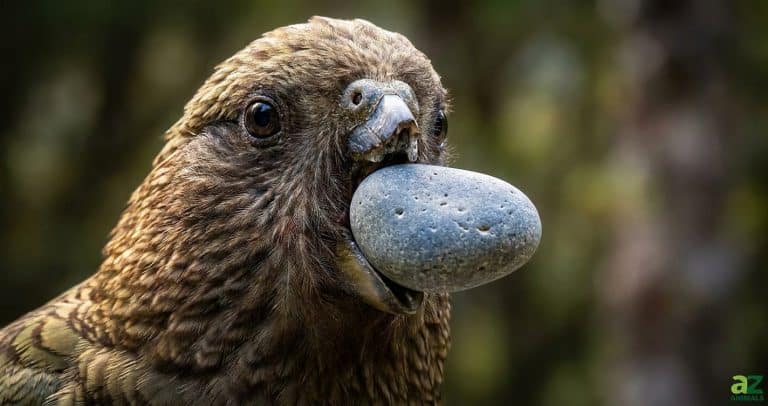
The kea (Nestor notabilis) is a large parrot endemic to New Zealand’s South Island, where they inhabit steep mountains. Nicknamed the “naughty alpine parrot,” this species is playful, curious, and highly intelligent. If you ever get the chance to visit their natural habitat, hang on to your wallets! They are notorious for messing with tourists, often begging for food, stealing belongings, and throwing rocks.

5 Amazing Kea Facts
- They are one of the few parrot species to inhabit high elevations, around 5,200 feet above sea level or higher.
- Kea do not fear humans. They enjoy messing with visitors and are not shy about asking for food.
- They dig underground tunnels, which lead to a larger chamber for their nests.
- They are named for their loud vocalizations, “kee-aaa!”
- They are as intelligent as a four-year-old human!
Where to Find the Kea Bird
Kea are endemic to New Zealand, where they live year-round. They live on the South Island’s coasts and mountains, from lowland river valleys and coastal forests to alpine regions like Arthur’s Pass. They primarily inhabit southern beech forests on steep mountainsides and are one of the few parrot species to live at high elevations. If you travel to their environment, you won’t have difficulty finding them. They are unafraid of humans and enjoy playing and being mischievous. This lovable pest may come right up to you, asking for food or attempting to steal your belongings.
Nests
They pick their nesting sites in southern beech forests on steep mountainsides, around 5,200 feet above sea level. They nest on the ground under large trees, in rock crevices, or between roots. These parrots dig tunnels 3 to 19 feet long, which lead to a large chamber lined with moss, lichen, and rotting wood.
Classification and Scientific Name
The kea (Nestor notabilis) belongs to the Psittaciformes order in the Nestoridae family, encompassing the kea and kaka, endemic parrot species in New Zealand. The Nestor genus also includes these species.
Size, Appearance, & Behavior
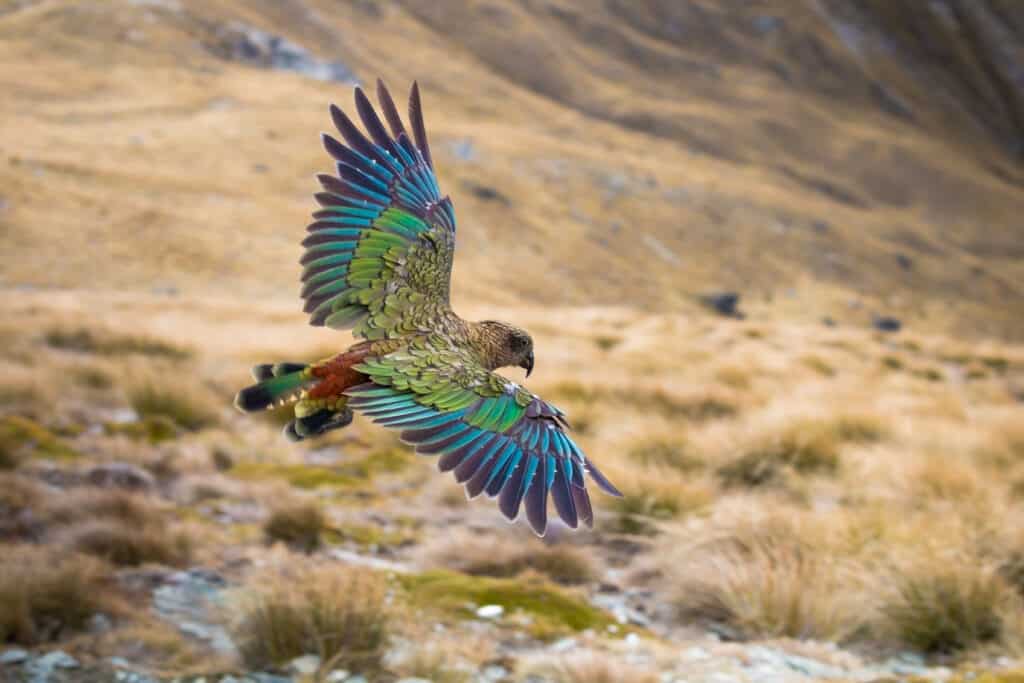
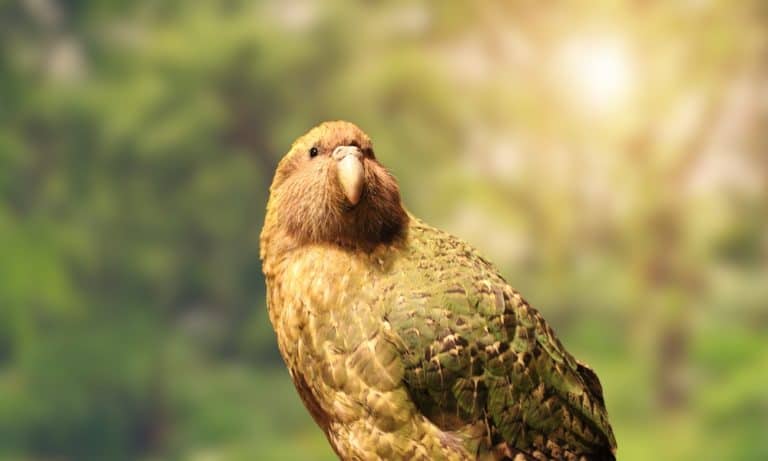
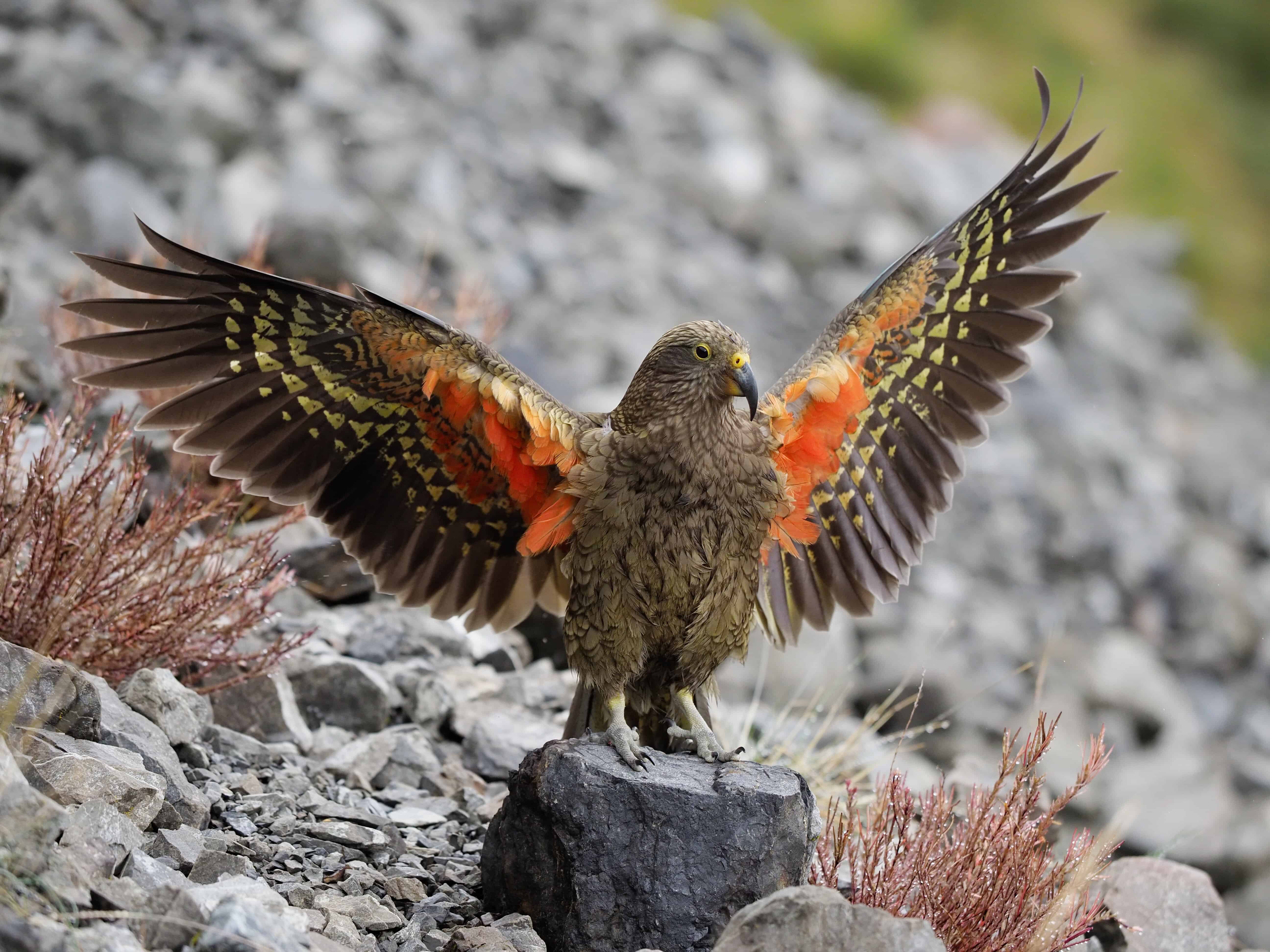
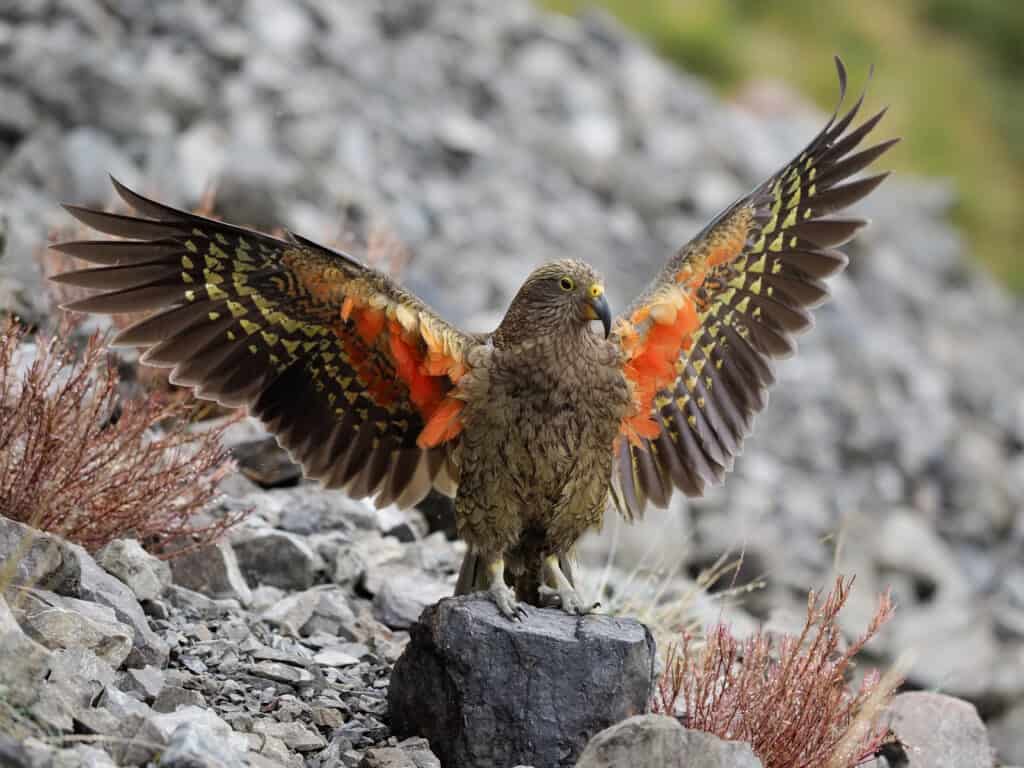
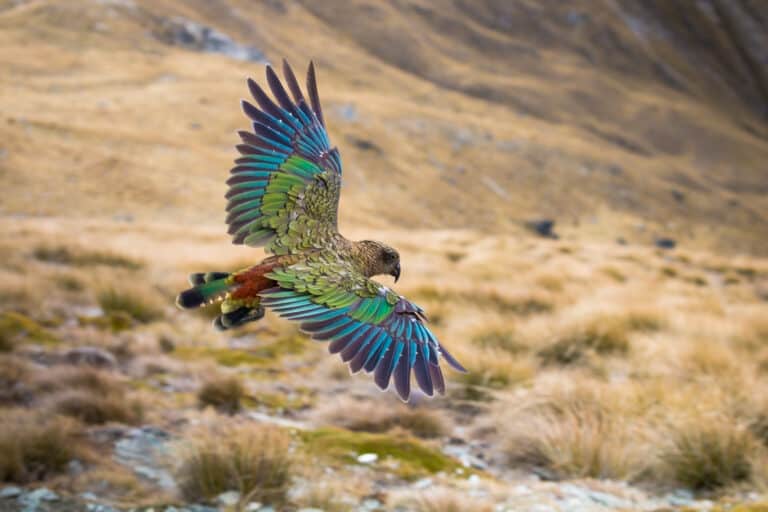
With a wingspan of three feet, the kea is a striking bird.
©Olivia Oates/Shutterstock.com
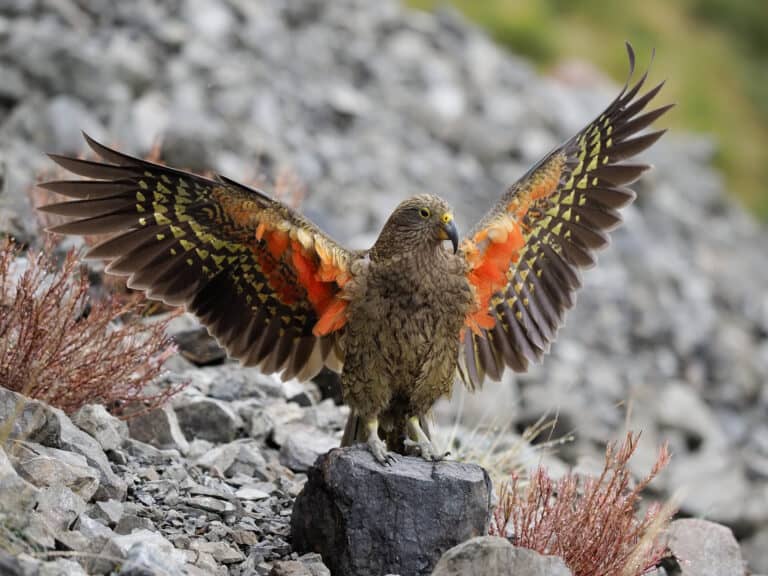
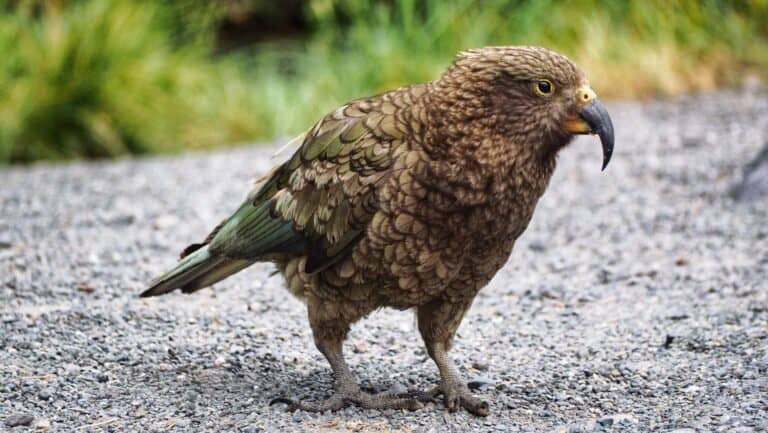
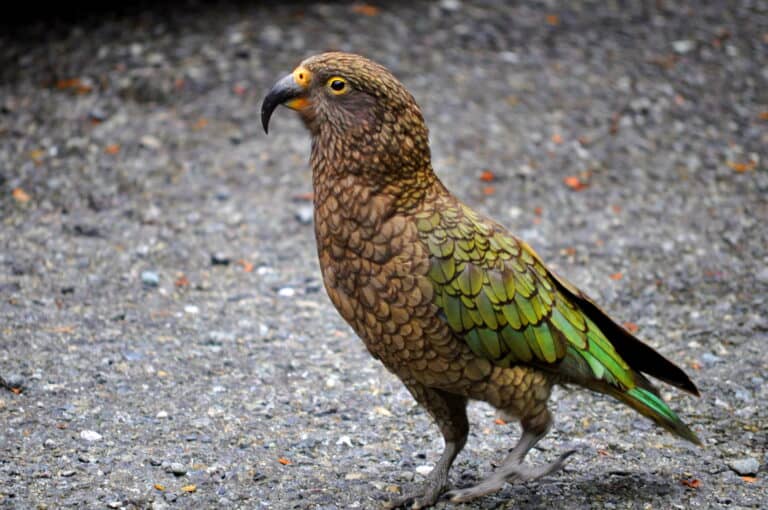
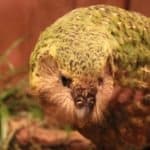
The kea is a large parrot, measuring 18 to 22 inches long and weighing 1.6 to 2.2 pounds, with a three-foot wingspan. They have long, curved beaks, short, broad tails, and large feet. Adults have olive-green plumage, grey beaks, orange-red rump and back feathers, dull blue outer wings, and a bluish-green tail with black tips.
This highly social species lives in groups of up to 13 birds year-round. They also form lifelong pairs and raise their young together. Kea are incredibly intelligent. Research confirms they have an intellect on par with monkeys and four-year-old humans, making them one of the smartest animals on our planet. They can solve complex problems, work together towards a common goal, and use tools. These skills are exceptionally rare in the animal kingdom, with only around 30 species exhibiting tool use. Kea are named for their vocalizations, which include a loud, high-pitched descending “kee-aaa.” These birds don’t talk or use mimicry but communicate with laughs, squeals, and hollers. Their nickname is “naughty alpine parrot,” aptly named for their curious, playful, and naughty behavior. Kea will steal wallets, passports, and food and find joy in tormenting visitors. They regularly throw rocks at people, break into dog doors, and chew off car antennas.
Migration Pattern and Timing
Kea are nonmigratory and remain in their environments year-round.
Diet
Kea are opportunistic omnivores who eat more than 40 plant species.
What Does the Kea Bird Eat?
Their diet includes leaves, nectar, fruit, nuts, seeds, pollen, roots, beetle larvae, snails, shearwater chicks, rabbits, and sheep. Rumors of their sheep-feeding habits emerged in the 1800s, but it wasn’t confirmed until a 1992 video emerged. Kea pick pieces of fat and flesh from sheep’s backs, especially when food is scarce. The sheep typically die from infection, not from being eaten. They also routinely raid human garbage bins and take food from tourists.
Predators, Threats, and Conservation Status
The IUCN lists the kea as EN or “endangered.” This species is rapidly declining due to introduced mammalian predators, such as stoats, cats, and possums. Keas were once heavily persecuted and had bounties placed on them for attacking sheep. Farmers are still responsible for killing an unknown number each year. Their other threats include deforestation, collisions, lead poisoning, and climate change.
What Eats the Kea Bird?
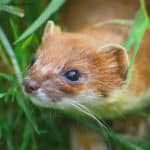
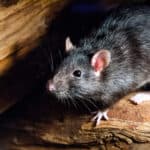
Their primary predators include stoats, brush-tailed possums, and domestic cats. Rats are also known for stealing kea eggs from their nests. Predators, especially stoats, attack 60% of kea nests. In some areas with substantial mammalian predator populations, 99% of kea nests were compromised. They dig their nests in holes in the ground, making them highly susceptible to ground-dwelling predators. The Department of Conservation monitors some of their populations and found that an aerial application of possum poison reduced the kea’s nest threat by 27%.
Reproduction, Young, and Molting
Kea birds are monogamous and mate for life, breeding yearly between July and January. Females lay two to five white eggs and incubate them for 21 days. The young fledge the nest around 94 days, but only have a 40% chance of survival within their first year of life. Female keas reach sexual maturity around three years, and males around four and five years. They have an average lifespan of 12 years but can live up to 50 years in captivity.
Population
The global kea population is estimated to number 4,000 mature individuals. Their populations are in a downward trend, declining by 50% over the last three generations. They’ve seen steeper declines in areas without predator control measures in place.
Kea Pictures
View all of our Kea pictures in the gallery.

Olivia Oates/Shutterstock.com
Sources
- IUCN Red List / Accessed November 2, 2022
- Springer Nature Link / Accessed November 2, 2022
- Diamond, Judy; Bond, Alan Kea, bird of paradox: the evolution and behavior of a New Zealand parrot. Univ of California Press, 1999. / Accessed November 2, 2022