Quick Take
- One venomous snake in Oklahoma is so small most people walk right into its striking range before they even notice it's there. Meet Oklahoma's smallest venomous snake →
- One common Oklahoma snake looks almost identical to a venomous species, and most people have no idea how to tell them apart. See the cottonmouth lookalike →
- The venomous snake most likely to actually bite you isn't the one most Oklahomans worry about. Learn about the most bite-prone snake →
- Some non-venomous Oklahoma snakes actively seek out human homes and yards, and there is a good chance you already have one living nearby. See the snake near your home →
From lush grasslands to multiple mountain ranges, Oklahoma has just about every type of natural landscape contained in one state. There is a lot of wildlife in Oklahoma, including a lot of snakes. Oklahoma is near the top of the list of states that have the most snakes. There are almost 50 native types of snakes in this state and seven of those different types of snakes are venomous. So when you’re in Oklahoma, it’s a smart idea to keep a sharp eye on the ground all around you regardless of what you are doing outdoors.
A Complete List Of Snakes In Oklahoma
Check out our list below to see all of the snakes in Oklahoma and which of these snakes are venomous.
| Name | Scientific Name | Is It Venomous? |
|---|---|---|
| Copperhead Snake | Agkistrodon contortrix | Yes |
| Western Cottonmouth Snake | Agkistrodon piscivorus leucostoma | Yes |
| Western Diamond Back Rattlesnake | Crotalus atrox | Yes |
| Timber Rattlesnake | Crotalus horridus | Yes |
| Prairie Rattlesnake | Crotalus viridis | Yes |
| Western Massasauga Rattlesnake | Sistrurus tergeminus | Yes |
| Pygmy Rattlesnake | Sistrurus miliarius | Yes |
| Glossy Snake | Arizona elegans | No |
| Western Worm Snake | Carphophis vermis | No |
| Scarlet Snake | Cemophora coccinea | No |
| Southern Black Racer | Coluber constrictor | No |
| Ring-Neck Snake | Diadophis punctatus | No |
| Great Plains Rat Snake | Pantherophis emoryi | No |
| Black Rat Snake | Pantherophis obsoletus | No |
| Mud Snake | Farancia abacura | No |
| Western Hognose Snake | Heterodon nasicus | No |
| Eastern Hognose Snake | Heterodon platyrhinos | No |
| Texas Night Snake | Hypsiglena jani | No |
| Prairie King Snake | Lampropeltis calligaster | No |
| Speckled King Snake | Lampropeltis holbrooki | No |
| Western Milk Snake | Lampropeltis gentilis | No |
| Texas Blind Snake | Rena dulcis | No |
| Glossy Crayfish Snake | Liodytes rigida | No |
| Coachwhip Snake | Masticophis flagellum | No |
| Yellow-Bellied (or Plain-Bellied) Water Snake | Nerodia erythrogaster | No |
| Broad-Banded Water Snake | Nerodia fasciata | No |
| Diamondback Water Snake | Nerodia rhombifera | No |
| Northern Water Snake | Nerodia sipedon | No |
| Rough Green Snake | Opheodrys aestivus | No |
| Bull Snake | Pituophis catenifer | No |
| Graham’s Crayfish or Water Snake | Regina grahami | No |
| Long-nosed Snake | Rhinocheilus lecontei | No |
| Great Plains Ground Snake | Sonora episcopa | No |
| Dekay’s Brown Snake | Storeria dekayi | No |
| Texas Brown Snake | Storeria dekayi texana | No |
| Red-Bellied Snake | Storeria occipitomaculata | No |
| Flat-Headed Snake | Tantilla gracilis | No |
| Black-Headed Snake | Tantilla nigriceps | No |
| Black-Necked Garter Snake | Thamnophis cyrtopsis | No |
| Wandering Garter Snake | Thamnophis elegans | No |
| Checkered Garter Snake | Thamnophis marcianus | No |
| Western Ribbon Snake | Thamnophis proximus | No |
| Plains Garter Snake | Thamnophis radix | No |
| Common Garter Snake | Thamnophis sirtalis | No |
| Lined Snake | Tropidoclonion lineatum | No |
| Rough Earth Snake | Virginia striatula | No |
| Smooth Earth Snake | Virginia valeriae | No |
| Desert Kingsnake | Lampropeltis splendida | No |
Even though it might seem like there’s an exceptionally large number of snakes in Oklahoma, when you consider how many different habitat types Oklahoma has, it doesn’t seem surprising that there are so many snakes. Just a few of the snakes that you can find in Oklahoma are:
Glossy Snake
Glossy snakes have smooth scales with a reflective quality that makes them look like glass. They have tan, brown, or grey blotches bordered in black over a cream, pinkish, or white base color. These non-venomous snakes measure between 2 and 4 feet long. The snakes are typically found in sandy soil in the western third of Oklahoma.
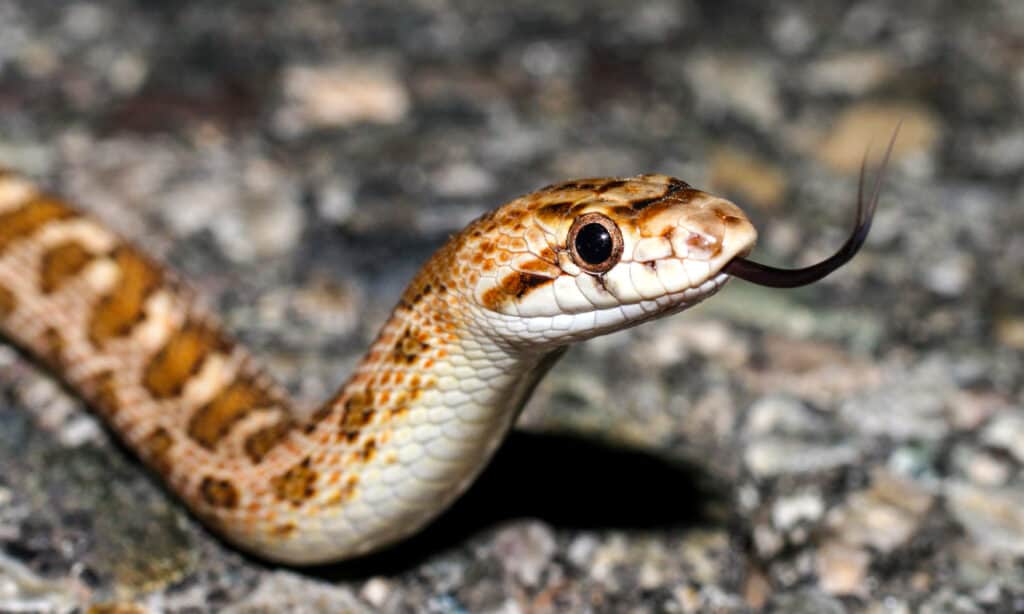
Glossy snakes measure between 2 and 6 feet long.
©Casey K. Bishop/Shutterstock.com
Great Plains Rat Snake
The great plains rat snake is shades of brown and tan with large irregular blotches. This rat snake reaches between 2 and 4 feet long. Rat snakes are heavy and look like they might be aggressive but they are harmless and prefer to stay away from people. Great plains rat snakes are typically found in wooded areas or in grasslands. They often take up residence in old buildings, barns, and sheds.
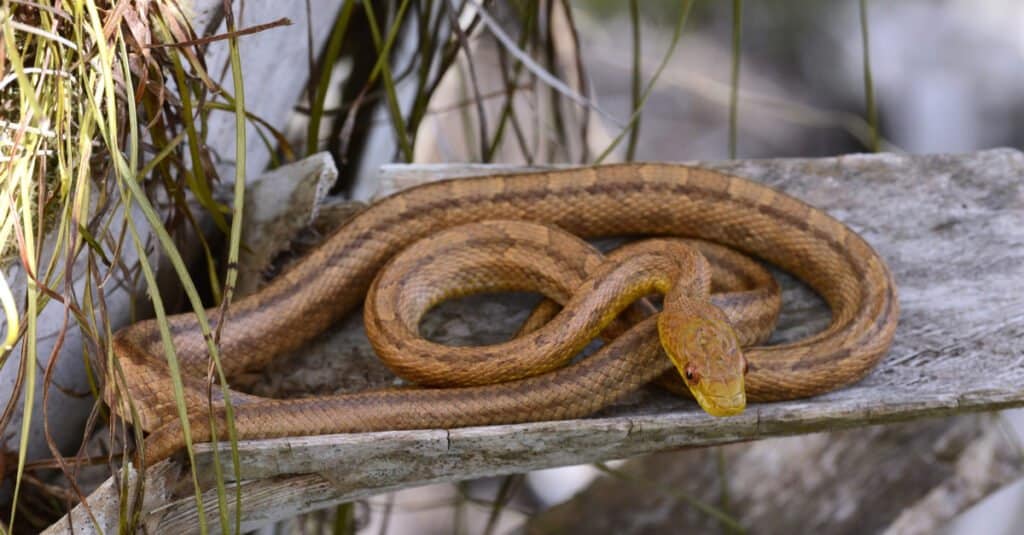
Great plains rat snakes look like they may be aggressive, but they really aren’t.
©Patrick K. Campbell/Shutterstock.com
Coachwhip Snake
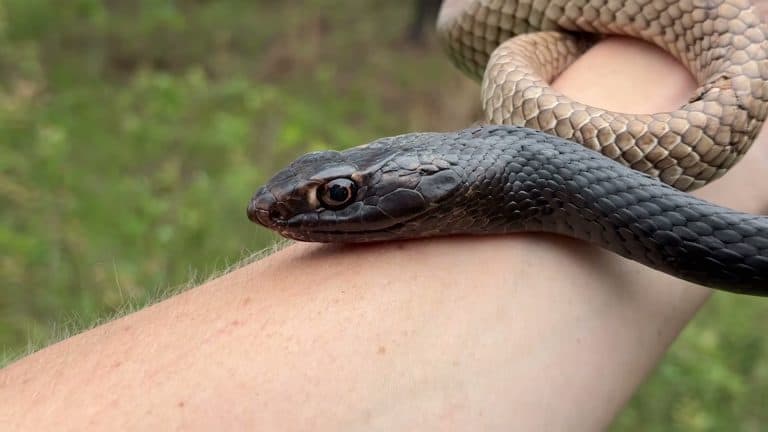
Coachwhip snakes have a different color pattern depending on where the snake is from. Eastern Coachwhip snakes’ upper bodies are black, and they fade gradually to a reddish-brown color on the lower half. Western Coachwhip snakes are solid in color, usually black, and have a pinkish-red belly. Coachwhips can be up to a whopping 8 feet long and they move very quickly. They can also climb and may seek refuge in a tree if you surprise them. These snakes will bite if cornered or if they think they are being threatened, but they are not venomous.
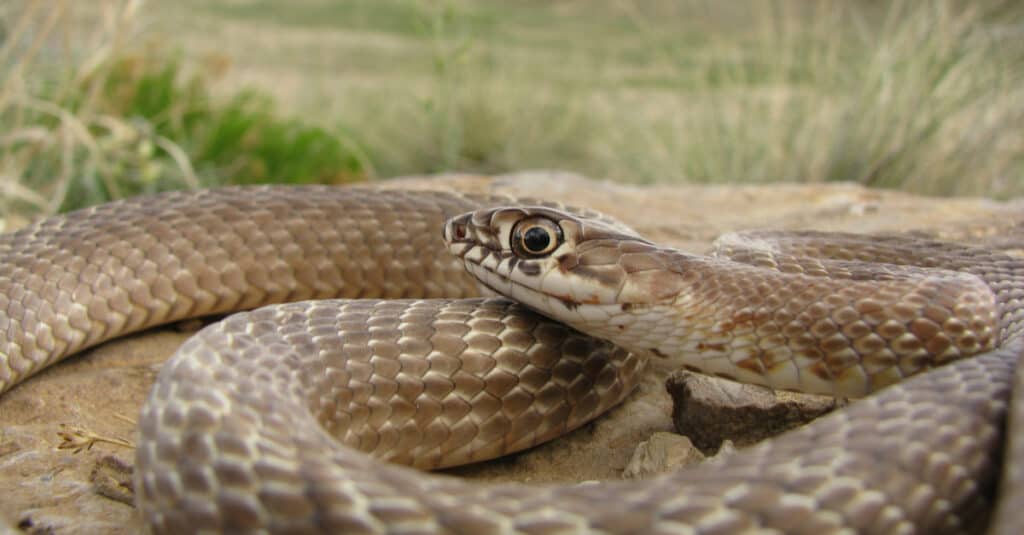
Coachwhip snakes will bite when cornered but are non-venomous.
©Joe Farah/Shutterstock.com
Prairie King Snake
The prairie king snake is found throughout Oklahoma. These snakes are typically just 3-4 feet long but they have a heavy appearance. The body of the prairie king snake is typically brown or tan with darker brown or black markings down the entire body. King snakes are docile and don’t mind being around people. Because they aren’t afraid of humans, they can often be found hunting or nesting in old buildings, in fallen trees, and around homes and yards. Even though the prairie king snake isn’t a threat to humans, you should still be careful around them. Any snake can bite or be aggressive if it feels threatened.
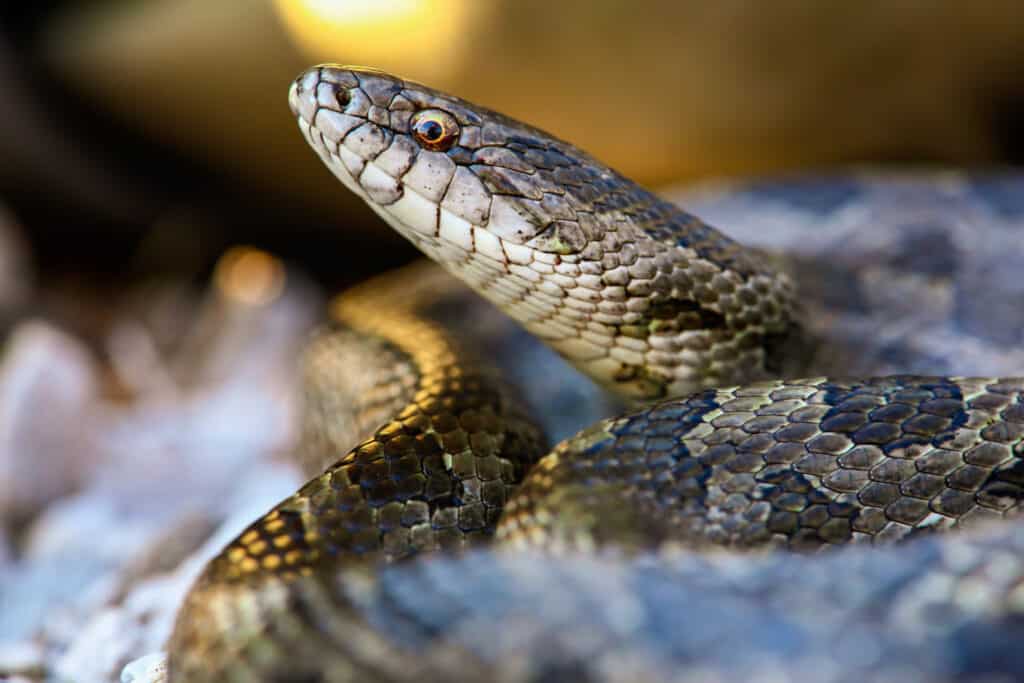
A prairie king snake is docile and doesn’t mind being around humans.
©bradenjalexander/Shutterstock.com
Northern Water Snake
Northern water snakes are fully aquatic and can live in any type of water. Typically in Oklahoma, you will find them near lakes or ponds in the flat central regions, but you can also find them in mountain streams and other bodies of water. Some northern water snakes may not even measure 2 feet long, but they have very heavy and wide bodies, making them look bigger than they are. Water snakes have similar coloring to the cottonmouth snake, but they are not venomous.
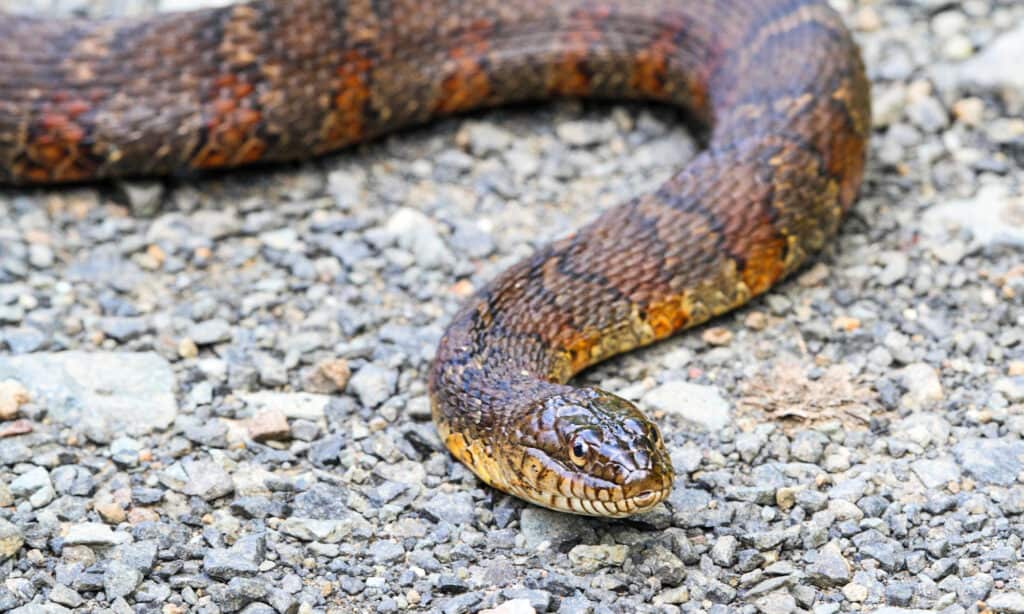
Northern watersnakes are one of the most widespread watersnakes in North America.
©Steve Byland/Shutterstock.com
Venomous Snakes in Oklahoma
Oklahoma has a higher number of venomous snakes compared to other states, with seven venomous snake species. Check the chart above to see a complete list of which snakes are venomous. Some of the venomous snakes in Oklahoma are:
Copperhead Snake
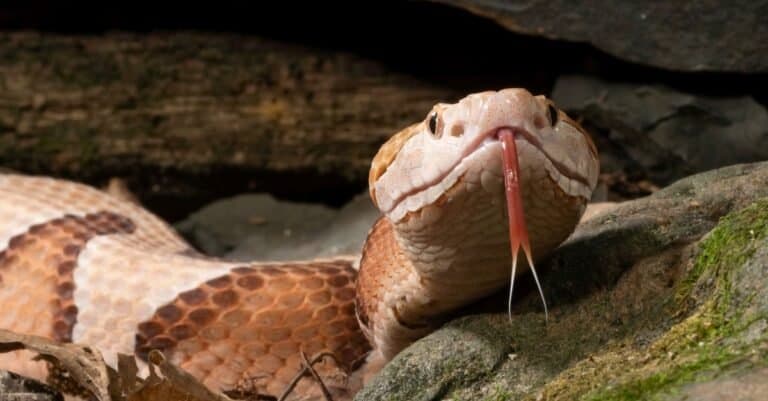
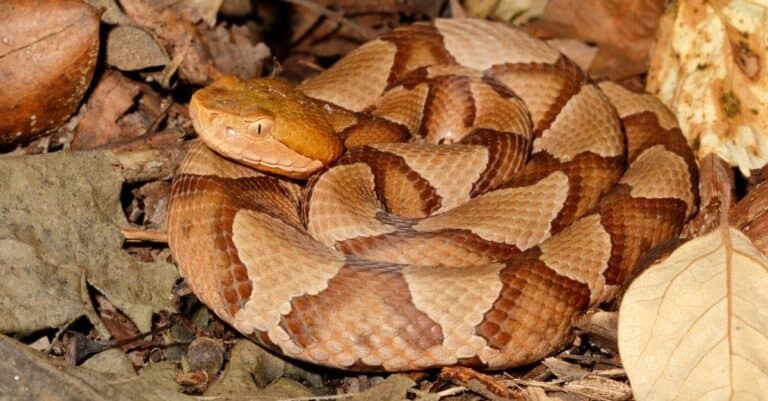
In Oklahoma, the copperhead snake is mostly found in the eastern part of the state. There is a very stable population of copperheads, so always keep a sharp eye on the ground when you are raking leaves, cutting grass, or hiking in some of the state’s many state parks. Copperheads measure 2-3 feet long but they are very wide. Theses snakes have coppery-red heads and dark, hourglass-shaped markings. They are more likely to bite than other venomous snakes because they are more likely to be accidentally stepped on.
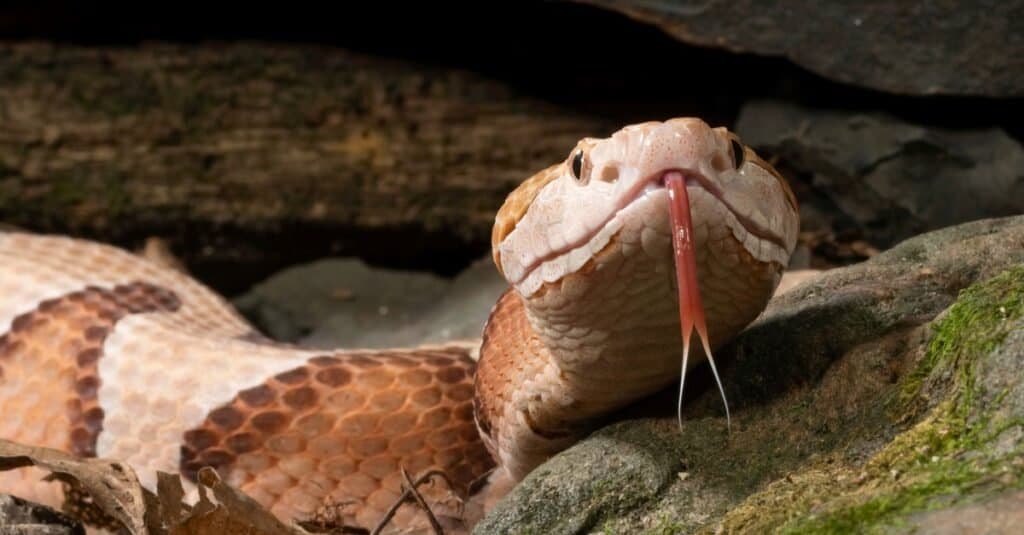
Copperheads are more likely to bite than other types of venomous snakes.
©Joe McDonald/Shutterstock.com
Western Cottonmouth Snake
Cottonmouths, also called water moccasins, are the only semi-aquatic venomous snakes. So if you’re the kind of person that spends time on the water boating or near the water fishing you should be watching for cottonmouths. They are primarily found in the eastern and southeastern part of the state. Western cottonmouths are usually olive, brown, or solid black. the distinguishing feature to look for is the white interior of the snake’s mouth. These snakes generally reach between 2 and 4 feel long.
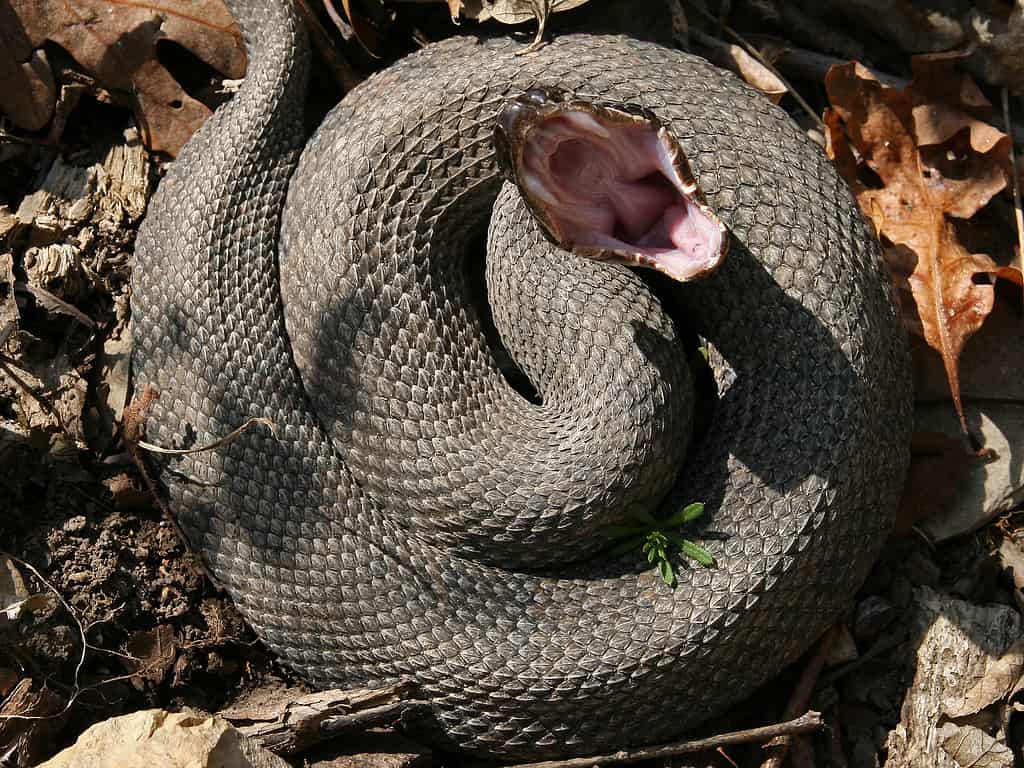
The western cottonmouth snake showing off its white mouth.
©Ryan M. Bolton/Shutterstock.com
Western Diamond Back Rattlesnake
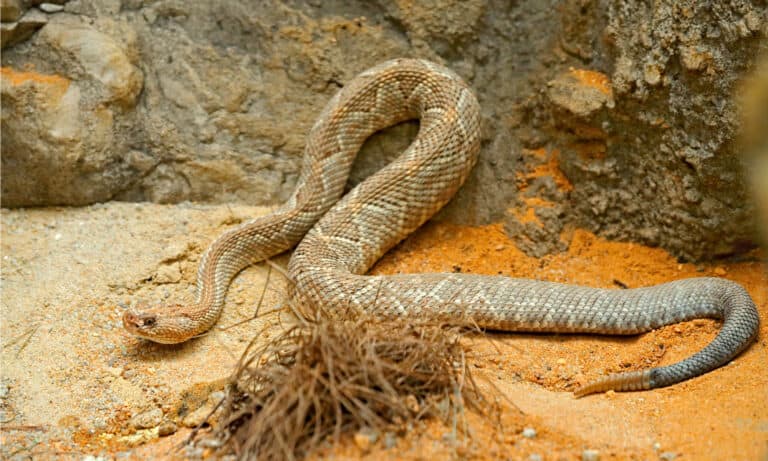
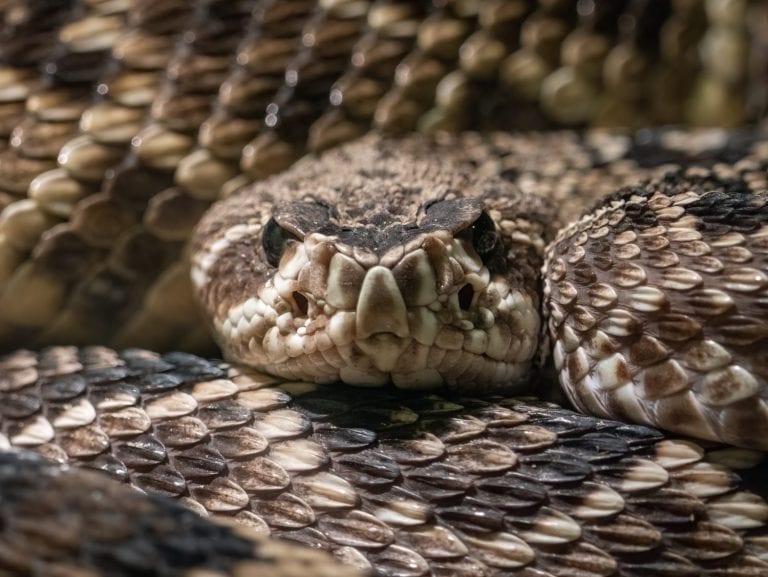
Western diamondback rattlesnakes are found in the western part of Oklahoma. These venomous snakes have alternating light and dark markings in a diamond pattern that makes this snake easy to identify. Like most rattlesnakes, the western diamondback will raise up and rattle before striking, which should give you time to back away slowly if you come across one. Most adults measure between 4 and 5 feet in length.
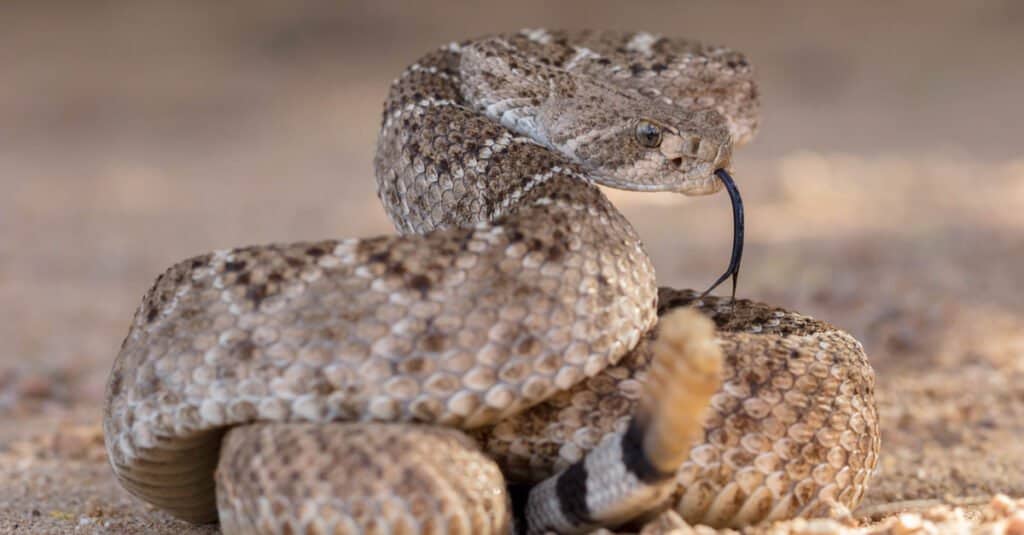
Western diamondback snakes are found in the western part of Oklahoma.
©Alexander Wong/Shutterstock.com
Western Massasauga Snake
Another small venomous snake is the western massasauga snake. In Oklahoma, this snake lives mainly in the western and northern parts of the state. Western massasauga snakes measure 1.5-3 feet in length. They are light grey, tan, or light brown with dark brown or black blotches down their backs. These snakes favor shallow wetlands and the nearby upland areas.
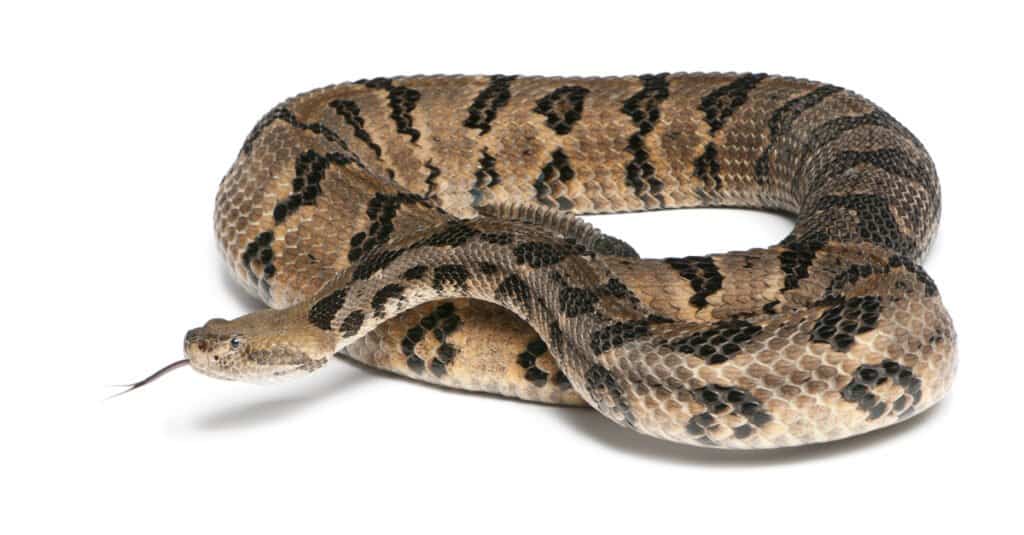
In Oklahoma, the western massasauga snake is found in the western and northern parts of the state.
©fivespots/Shutterstock.com
Pygmy Rattlesnake
Pygmy rattlesnakes are the smallest venomous snakes. They are typically just about 1-1.5 feet long. The Pygmy rattlesnake’s small size actually makes it more dangerous, as it is so small you probably won’t see it until you’re in the snake’s striking range. These snakes are associated with forest habitats, including riparian woodlands. They are generally light grey, tan, brown, reddish-brown, or light pinkish with a pattern of dark brown to black blotches running down their backs.
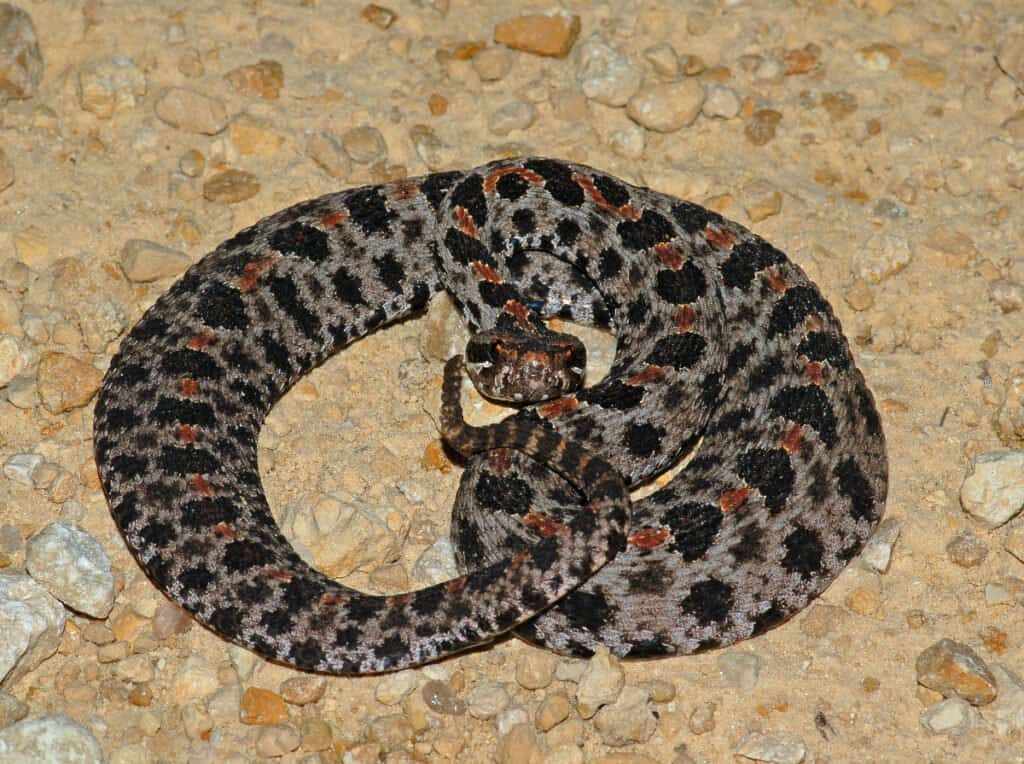
The pygmy rattlesnake is so small, you probably won’t see it until you are within its striking range.
©Gerald A. DeBoer/Shutterstock.com