A
Species Profile

Allosaurus

Allosaurus

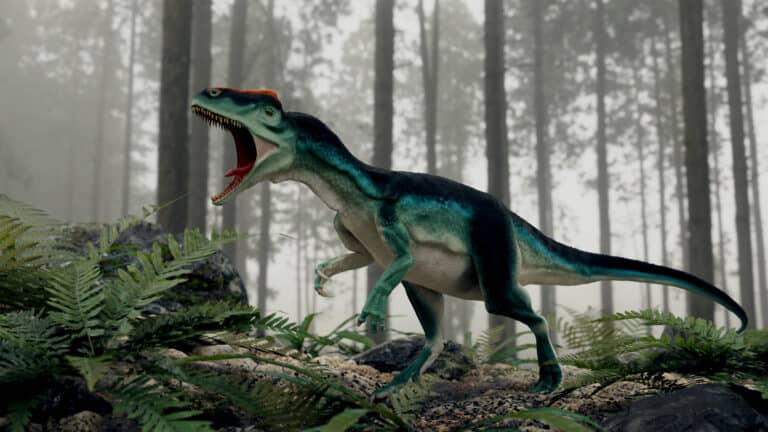
Jurassic hunter of the Morrison
Lord Beard/Shutterstock.com

Allosaurus Distribution

Click a location to explore more animals from that region

Loading map...

Size Comparison

Human 5'8"
Allosaurus 9 ft 2 in

Allosaurus is 1.6x the height of an average human.

The tail of the Allosaurus was quite large and pointy.

At a Glance

Genus Overview This page covers the Allosaurus genus as a group. Stats below are general traits shared across the genus.
Also Known As Allosaur
Diet Carnivore
Activity Cathemeral+
Lifespan 22 years
Weight 2500 lbs
Status Not Evaluated
Did You Know?

Allosaurus fossils are so abundant in the Morrison Formation that the genus helps define the classic Late Jurassic predator guild of western North America.

Scientific Classification

Genus Overview "Allosaurus" is not a single species but represents an entire genus containing multiple species.

Allosaurus is a genus of large-bodied, carnivorous theropod dinosaurs from the Late Jurassic, best known from abundant fossils in the Morrison Formation of North America. It was an apex/upper-tier predator in its ecosystems, with a large skull, serrated teeth, and three-fingered forelimbs.

Kingdom
Animalia
Phylum
Chordata
Class
Reptilia
Order
Saurischia
Family
Allosauridae
Genus
Allosaurus

Distinguishing Features

  • Large theropod with proportionally big skull and robust jaws
  • Serrated, blade-like teeth adapted for slicing flesh
  • Three-fingered hands with large claws
  • Paired crests/ridges above the eyes in many reconstructions
  • Powerful hind limbs; long balancing tail

Physical Measurements

Height
9 ft 10 in (6 ft 7 in – 11 ft 10 in)
Length
27 ft 11 in (22 ft 12 in – 39 ft 4 in)
Weight
1.7 tons (1,543 lbs – 2.8 tons)
Tail Length
14 ft 9 in (9 ft 10 in – 19 ft 8 in)
Top Speed
22 mph
about 35 km/h

Appearance

Primary Colors
Secondary Colors
Skin Type Allosaurus, a non-avian theropod, likely had pebbly reptile-like scales over most of its body, with keratin claws and foot pads. Extensive feathers lack direct evidence; sparse filaments in young or neck/back remain possible.
Distinctive Features
  • Allosaurus, such as A. fragilis, A. jimmadseni, and A. europaeus, were about 7–11+ meters long, stood 2–3.5 meters at the hips, weighed about 1–3+ tons, skull length in large adults about 0.8–1.1 meters.
  • Late Jurassic, large-bodied carnivorous theropod (Allosauridae), best known from abundant Morrison Formation material; also represented in Iberian Late Jurassic deposits (indicating geographic and potentially ecological variation within the genus).
  • Skull built for active predation: large, lightly constructed yet robust cranial architecture with recurved, serrated (ziphodont) teeth suited for slicing; capable of delivering powerful bites and repeated tearing motions (exact feeding mechanics debated).
  • Paired cranial/lacrimal crests or ridges above the eyes (shape and prominence vary among specimens and may vary among species and ontogenetic stages).
  • Three-fingered forelimbs with large manual claws; forelimbs likely used to seize/hold prey or assist in feeding rather than primary killing via grappling alone.
  • Bipedal cursorial locomotion with strong hind limbs and a long, muscular tail for balance; proportions vary across individuals/species but overall build is that of a fast, agile large theropod relative to later tyrannosaurids (not contemporaneous).
  • Ecology/behavior generalizations across the genus: upper-tier predator and frequent scavenger; commonly associated prey in Morrison-type ecosystems includes large sauropods (e.g., Diplodocus, Camarasaurus, Apatosaurus) and thyreophorans (e.g., Stegosaurus), plus medium-sized ornithopods and smaller vertebrates.
  • Mostly hunted alone and sometimes scavenged, but Allosaurus may have sometimes gathered at carcasses or hunted in groups; behavior likely varied with environment, food supply, and age.
  • Allosaurus likely became able to breed in their teens. Large individuals may have lived about 15–30+ years based on theropod growth, but age varied by species and environment and is uncertain.

Did You Know?

Allosaurus fossils are so abundant in the Morrison Formation that the genus helps define the classic Late Jurassic predator guild of western North America.

The genus includes multiple species with different builds-some more gracile, others more robust-suggesting niche or geographic variation within Allosaurus.

Allosaurus teeth were serrated and continually replaced, a common theropod strategy for coping with frequent tooth breakage during feeding.

Many Allosaurus bones show healed injuries, hinting at a risky lifestyle involving dangerous prey (like stegosaurs and sauropods) and/or conflicts with other predators.

The famous Cleveland-Lloyd Dinosaur Quarry (Utah) preserves an extraordinary concentration of Allosaurus remains, fueling decades of research on its biology.

O.C. Marsh named the genus in 1877; "Allosaurus" means "different lizard," reflecting how unusual its vertebrae seemed compared with other finds of the time.

Pop culture helped cement its fame-especially the widely publicized "Big Al" specimen and documentaries that showcased its growth and injuries.

Unique Adaptations

  • Large skull with robust jaw musculature and blade-like, serrated teeth for cutting flesh rather than crushing.
  • Three-fingered forelimbs with large claws-shorter than the hind limbs but likely useful for grasping and stabilizing prey at close range.
  • Bipedal, long-tailed body plan that counterbalanced the head and torso, supporting efficient locomotion for an active predatory lifestyle.
  • Skeletal features typical of allosaurids (e.g., cranial ornamentation/ridges and reinforced skull architecture) consistent with withstanding high stresses during feeding.
  • Continuous tooth replacement and a tooth shape suited to "zipper-like" slicing helped maintain feeding efficiency despite frequent wear.

Interesting Behaviors

  • Apex/upper-tier predator role in many Morrison ecosystems, commonly associated with hunting or scavenging large-bodied herbivores (e.g., sauropods) and medium-to-large prey (e.g., stegosaurs).
  • Feeding behavior likely emphasized slicing with laterally compressed, serrated teeth; tooth wear and breakage patterns fit frequent contact with bone and tough tissue.
  • Neck and skull mechanics suggest a "strike-and-slash" style was plausible, with the head/neck delivering powerful bites while the body stayed balanced on strong hind limbs.
  • Potential social behavior varies by interpretation: mass bone accumulations (e.g., quarry assemblages) are consistent with scenarios ranging from group aggregation at resources to non-social attritional trapping-evidence is suggestive but not definitive.
  • Ontogenetic (growth-stage) differences likely influenced ecology: younger/smaller individuals probably targeted smaller prey and scavenging opportunities more often than the largest adults.

Cultural Significance

Allosaurus is a famous theropod from the Morrison Formation. Allosaurus fragilis is Utah's state fossil. Many bones from sites like Cleveland-Lloyd helped scientists learn about Late Jurassic predators and dinosaur discovery in North America, including the Bone Wars.

Myths & Legends

Name-story (1877): Othniel Charles Marsh coined "Allosaurus" ("different lizard") because its vertebrae seemed distinctly unlike other known reptiles, a snapshot of how baffling early theropod anatomy appeared to 19th-century paleontologists.

Bone Wars association: Allosaurus became woven into the legendary rivalry between Marsh and Edward Drinker Cope-an enduring historical tale in American science culture about ambition, rapid discovery, and the race to name new dinosaurs.

"Big Al" modern legend: The heavily publicized specimen nicknamed "Big Al" (and related displays/media) turned an individual Allosaurus into a widely retold story about survival with injuries, helping shape popular narratives of dinosaur life histories.

Allosaurus, a Morrison Formation icon in the American West, is a symbol of the 'Jurassic frontier.' Museums, state parks, and quarry stories link local lands to Earth's deep past.

Conservation Status

NE Not Evaluated

Has not yet been evaluated against the criteria.

Population Unknown

You might be looking for:

Allosaurus fragilis

75%

Allosaurus fragilis

Best-known and type species of Allosaurus; abundant in the Late Jurassic Morrison Formation (western North America).

Allosaurus jimmadseni

18%

Allosaurus jimmadseni

Recognized species from the Morrison Formation; sometimes informally called 'Big Al' relative form in older popular accounts.

Allosaurus europaeus

7%

Allosaurus europaeus

Proposed European species from the Late Jurassic of Portugal; taxonomy less universally accepted/less commonly intended.

Life Cycle

Birth 20 hatchlings
Lifespan 22 years

Lifespan

In the Wild
15–30 years

Reproduction

Mating System Data Deficient
Social Structure Solitary
Breeding Pattern Seasonal
Fertilization Internal Fertilization
Birth Type Internal_fertilization

Allosaurus shows no direct fossil proof of its mating system. Likely mated by internal fertilization in seasonal times. Adults were mainly solitary but could gather at food or breeding sites, possibly allowing multi-partner mating. Parental care or cooperative breeding not supported.

Behavior & Ecology

Social Aggregation Group: 2
Activity Cathemeral, Crepuscular, Diurnal
Diet Carnivore Juvenile to subadult sauropods

Temperament

Opportunistic predator/scavenger (context-dependent foraging across individuals and species)
Territoriality likely in high-resource areas (inferred; intensity may have varied with population density and habitat)
Intraspecific aggression plausible (risk of injury around mates/carcasses; tolerance may increase at abundant food sources)
Bold/active pursuit behavior likely when targeting mid-to-large prey, with individual variation by size/age and local prey availability

Communication

low-frequency booming/bellowing-like calls Inferred as plausible for large theropods; not directly demonstrable
hisses/snorts/rasps Inferred; common simple respiratory sounds in reptiles and birds
visual displays Posture, head/neck movements, jaw gaping, body orientation
tactile interactions Biting/neck-jostling during competition or courtship; inferred from theropod behavior and injury patterns
substrate-borne cues Foot stamping/ground vibrations as potential signals; speculative
chemical cues Possible use of scent for recognition/territory, but evidence is weak and highly uncertain

Habitat

Biomes:
Temperate Grassland Temperate Forest Freshwater Wetland
Terrain:
Plains Plateau Valley Riverine Rocky Sandy Muddy +1
Elevation: Up to 8202 ft 1 in

Ecological Role

Upper-tier predator (often apex or near-apex depending on species/population and local predator guilds) in Late Jurassic terrestrial ecosystems.

Regulation of large-herbivore populations and age structure (disproportionately impacting juveniles/subadults) Removal and recycling of nutrients via scavenging and carcass processing Provisioning of carrion resources for smaller carnivores/scavengers through partial consumption and carcass opening Maintaining prey behavioral vigilance and influencing habitat use (top-down ecological pressure)

Diet Details

Main Prey:
Sauropods Stegosaurs Medium-sized ornithopods Smaller theropods and other vertebrates Carrion

Human Interaction

Domestication Status

Wild

Allosaurus (Late Jurassic) is extinct and was never domesticated. It reached about 7–12 m long, weighed ~700–2,000+ kg, hip height ~2–4 m, skull ~0.7–1+ m. Thought to live about 15–30+ years. Likely a top predator that also scavenged; social behavior uncertain. Humans know it from fossils, research, museums, trade, and media.

As a Pet

Not Suitable as Pet

Legality: Not applicable as a living pet (extinct). Ownership/collection pertains only to fossil specimens and replicas; legality depends on jurisdiction, land ownership, permitting, and cultural heritage laws (e.g., public-land fossils often protected; export/import and commercial sale may be restricted).

Care Level: Expert Only

Purchase Cost:
Lifetime Cost:

Economic Value

Uses:
Science and research value Museum/exhibition value Education and outreach Tourism (geotourism/paleotourism) Collectibles/replica market Media and merchandising
Products:
  • museum exhibits and ticketed displays featuring mounts/casts
  • scientific publications, grants, and educational programming
  • licensed casts/replicas (full skeletons, skulls, teeth replicas)
  • documentary/film/game appearances and related merchandising
  • guided fossil-site tourism and local hospitality revenue
  • (jurisdiction-dependent) legally traded fossil specimens and prepared elements with documented provenance

Relationships

Predators 3

Saurophaganax Saurophaganax maximus
Torvosaurus Torvosaurus tanneri
Allosaurus
Allosaurus Allosaurus spp.

Related Species 5

Allosaurus
Allosaurus Allosaurus fragilis Shared Genus
Allosaurus
Allosaurus Allosaurus jimmadseni Shared Genus
European allosaur Allosaurus europaeus Shared Genus
Saurophaganax Saurophaganax maximus Shared Family
Acrocanthosaurus Acrocanthosaurus atokensis Shared Genus

Ecological Equivalents 4

Animals that fill a similar ecological role in their ecosystem

Torvosaurus Torvosaurus tanneri Large-bodied Jurassic theropod that lived in overlapping or near-overlapping times and habitats (including the Morrison), occupying a similar role as an upper-tier predator and likely acting as a competitor and scavenging rival where sympatric.
Ceratosaurus
Ceratosaurus Ceratosaurus nasicornis Contemporary Morrison theropod with partial niche overlap: engaged in predation and scavenging on medium-to-large vertebrates, but likely partitioned resources by prey choice, habitat use, or hunting strategy. Serves as a common ecological comparator rather than a close taxonomic relative.
Saurophaganax Saurophaganax maximus Very large Morrison theropod often treated as a competing apex/upper-tier predator. Sometimes argued to be closely related to or included within Allosaurus, making it both an ecological and taxonomic point of comparison.
Tyrannosaurus Tyrannosaurus rex Not contemporaneous (Late Cretaceous vs Late Jurassic), but frequently compared as a later, convergently large theropod apex predator; useful for contrasting skull and forelimb function and predator-prey dynamics across time.

Types of Allosaurus

3

Explore 3 recognized types of allosaurus

Allosaurus (classic Morrison allosaur) Allosaurus fragilis
Allosaurus (Morrison species recognized by some authors) Allosaurus jimmadseni
European allosaur Allosaurus europaeus

The Allosaurus is a genus of large, theropod dinosaurs that lived during the Jurassic epoch about 155 to 145 million years ago. It was a massive, bipedal dinosaur, which means it walked on its two hind legs and had short arms. It is one of the best-known dinosaurs of all time due to the abundance of fossil remains. As one of the largest carnivores that lived during its time, equipped with rows of large and sharp teeth, Allosaurus was an apex predator, feeding on large herbivores. 

Description and Size

The name “Allosaurus” means “different lizard,” alluding to the unique concave vertebrae of this dinosaur, which were different from that of any other dinosaur found before that time. 

Allosaurus belonged to a group of dinosaurs known as the Caronosauria. Members of this group are among the largest predatory dinosaurs to have ever lived. In size, the Allosaurus reached an average length of up to 28 feet and was about 15 feet tall. However, Allosaurus fragilis, the largest member of this genus, reached an estimated length of about 32 feet. It had a massive head that measured about 3 feet long. Allosaurus also had a short, thick neck to support the weight of the massive head. Although weight estimates vary, this dinosaur probably weighed between 4,600–5,700 pounds. The smallest species in the genus, Allosaurus europaeus, was roughly 23 feet long and was about 2000 pounds in body mass. 

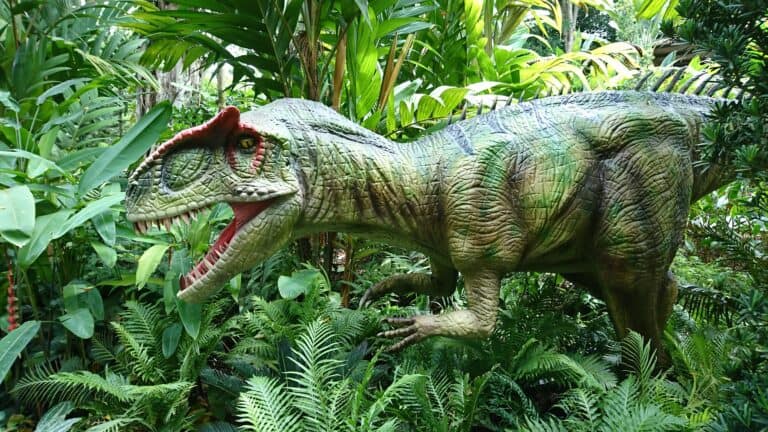
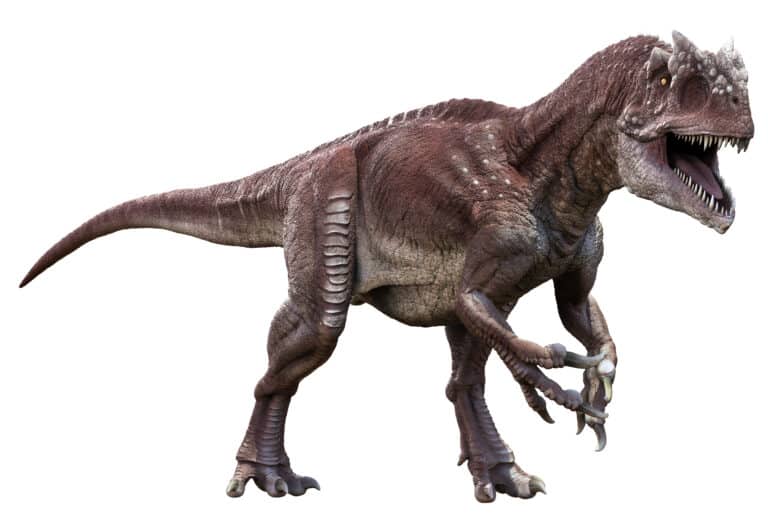
As a flesh-eating dinosaur, Allosaurus had sharp, curved teeth with saw-like edges. It also had sharp claws. It was bipedal, which means it walked on powerful hind legs while the forelimbs were reduced. Each of the Allosaurus‘ three rear toes featured a sharp claw, while its three fore-toes had long, gripping claws. Finally, it had a long, powerful, bulky tail that mainly helped with stability. 

The Allosaurus’ teeth measured up to four inches. The teeth grew shorter and curved towards the back of the dinosaur’s mouth for an enhanced savage bite. Fossils of the Allosaurus have been found with some skin impressions preserved. The skin impressions show that this dinosaur had scales on at least some parts of its body. Each of these scales measured about 0.04–0.12 inch in diameter.
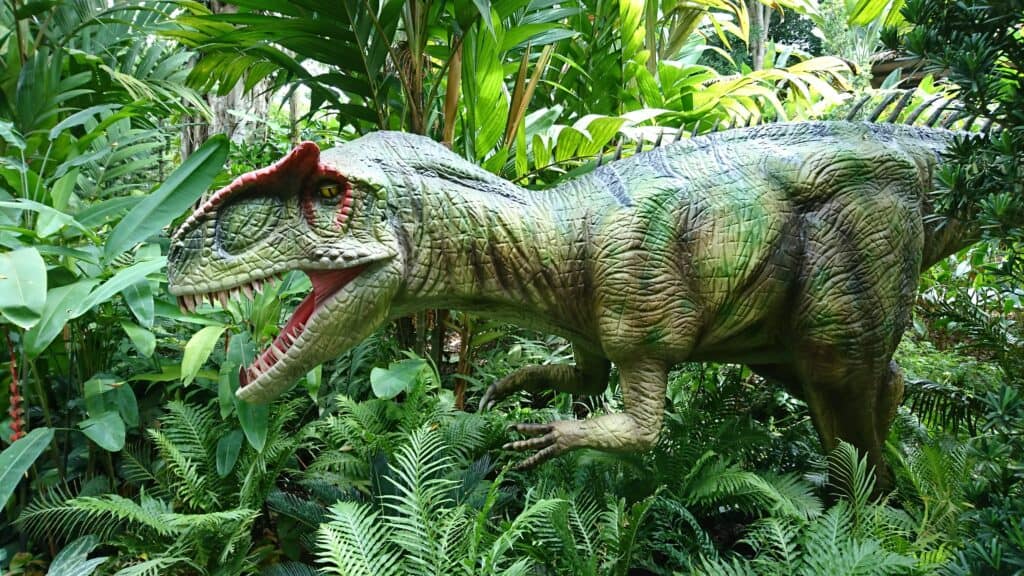
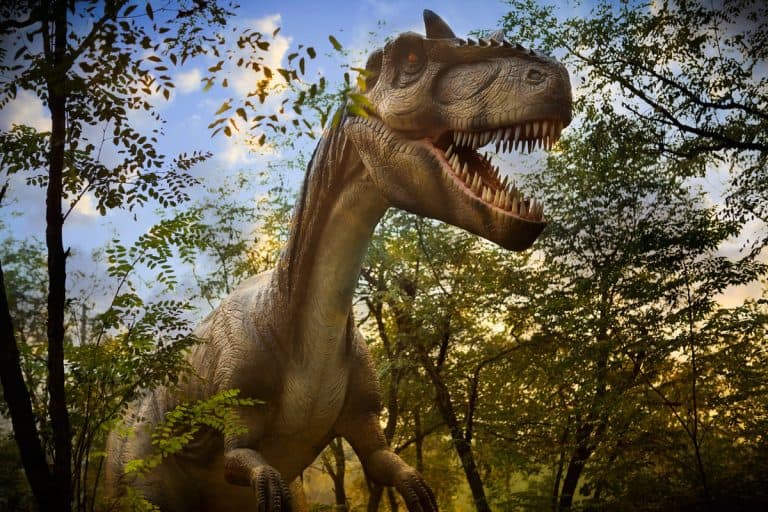
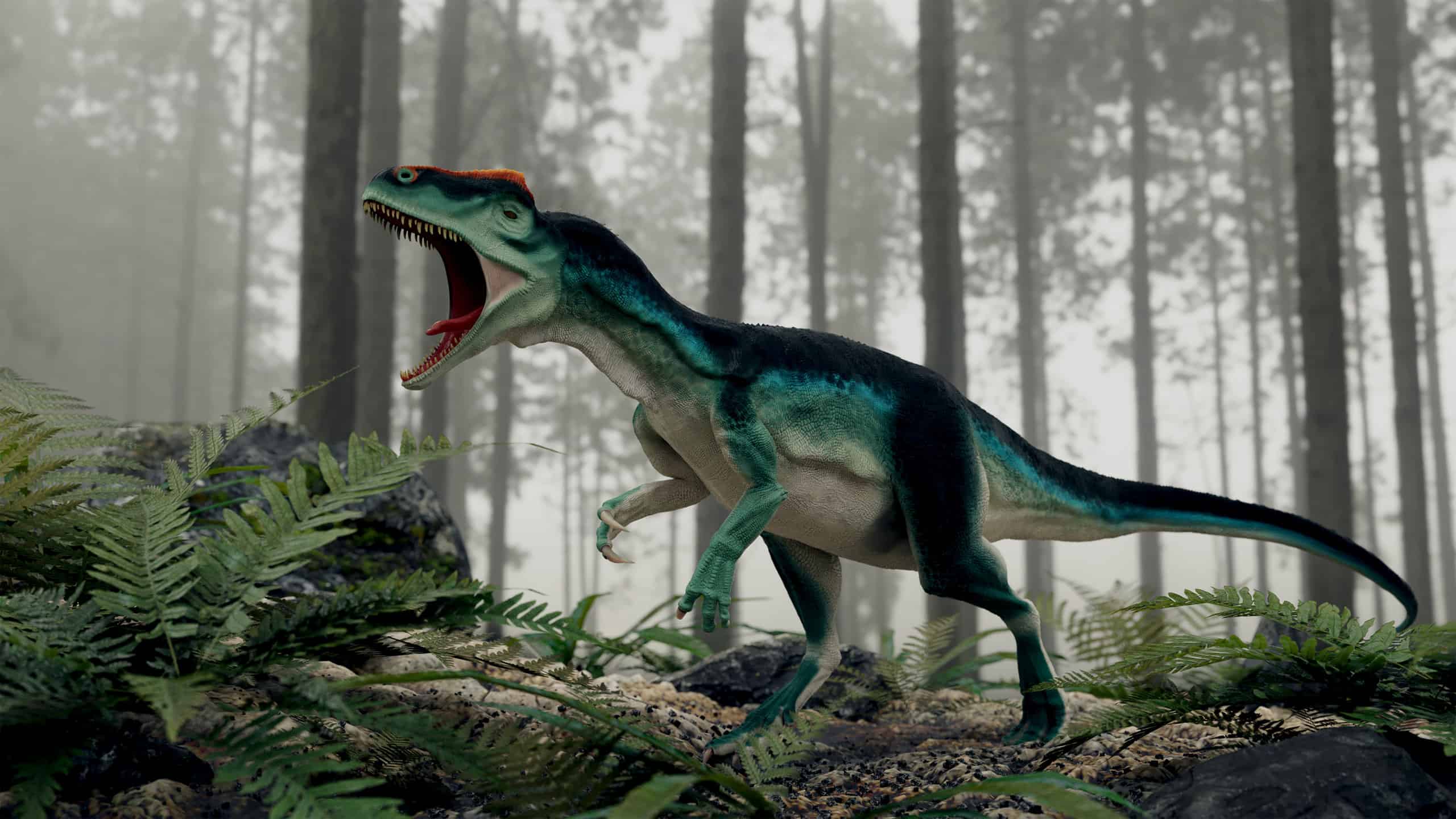
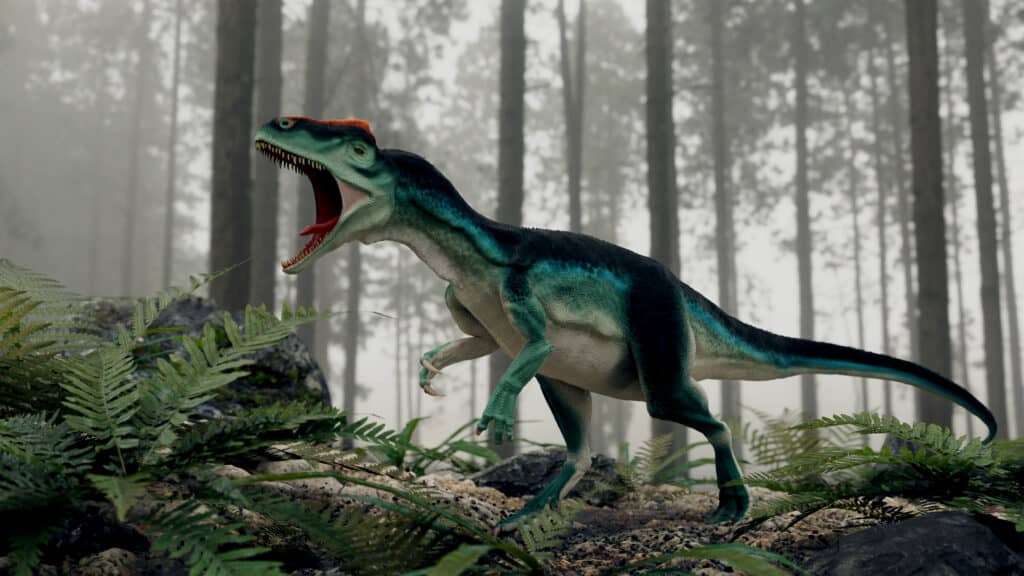
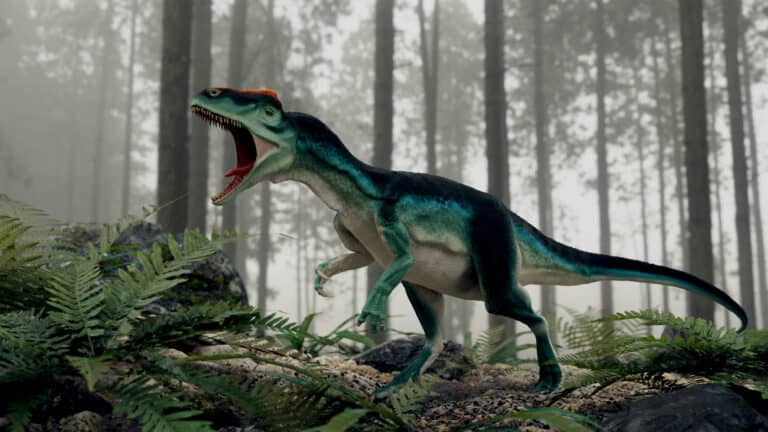
Allosaurus dinosaur that lived during the Jurassic epoch

Allosaurus had sharp, curved teeth with saw-like edges, sharp claws and was bipedal.

Diet—What Did Allosaurus Eat?

Allosaurus belongs to a group of dinosaurs known as the carnosaurs. Members of this group are known for their predatory behavior and were among the largest predatory dinosaurs to have ever roamed the earth. Allosaurus was an active predator whose prey consisted of large animals. Scientists have evidence for at least one of the main prey of this dinosaur, the Stegosaurus

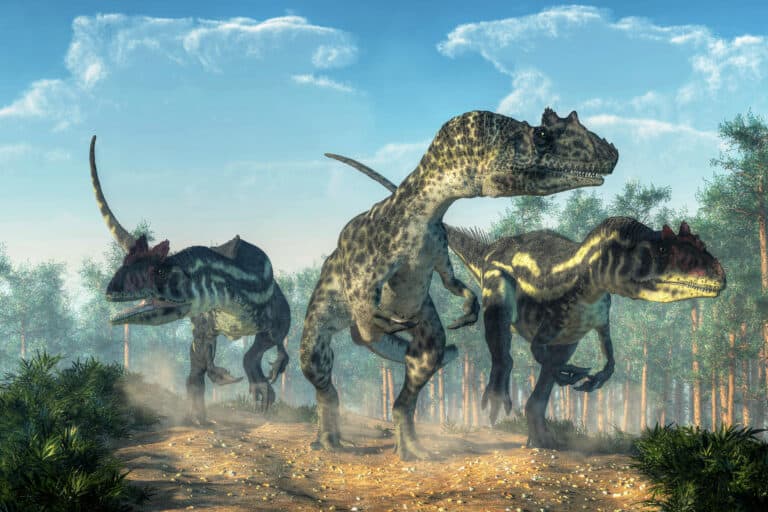
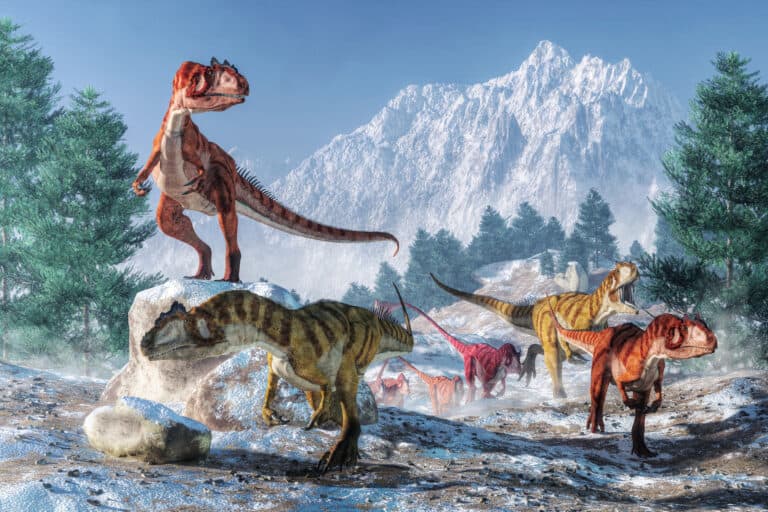
It is believed that the Allosaurus targeted herbivores and hunted them actively. However, some experts think it might have been a scavenger as well. This dinosaur hunted in cooperative packs. Taking down enormous prey with their collective efforts. However, they occasionally went on solitary hunts, waiting in ambush behind dense vegetation for their prey.

The Allosaurus could kill healthy, medium-sized sauropods or large sauropods, such as Apatosaurus, that were sick or injured for food. It was an aggressive and fierce predator, as noted by the tooth marks discovered by researchers on the vertebrae of an Apatosaurus. This and several other fossil evidence points to an active predatory lifestyle for this dinosaur. 
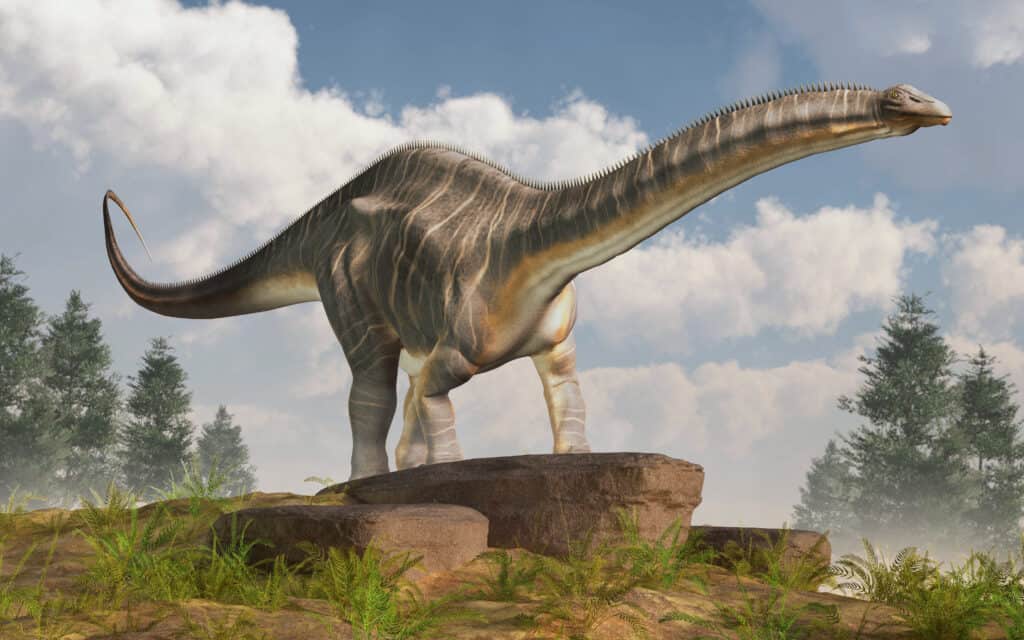
Sauropod (Apatosaurus)

The Allosaurus could kill healthy, medium-sized sauropods or large sauropods, such as Apatosaurus, that were sick or injured for food.

Habitat—When and Where Allosaurus Lived

Allosaurus thrived during the late Jurassic epoch about 155 to 145 million years ago. Fossils of this dinosaur are quite abundant in North America’s Morrison Formation. In fact, fossils of this dinosaur account for 70 to 75% of theropod specimens found in this formation. 

Scientists have interpreted the nature of this habitat as semi-arid floodplains with distinct wet and dry seasons. Gallery forests of gigantic ferns and other types of trees were present too. However, because of the enormous size of this dinosaur, these creatures likely spent the majority of their lives in open floodplains, only venturing into more heavily wooded areas on occasion. This is due to the fact that forests would have been more difficult for them to navigate.

Threats and Predators

The Allosaurus lived during the Late Jurassic Period; its rival predators during this period were the 39-foot-long Torvosaurus and the horn-nosed Ceratosaurus carnivore. The Ceratosaurus could grow over 19 feet, and there were other carnivores that had similar or smaller sizes to the Allosaurus. However, the battle existed mostly about who gets the prey.

Discoveries and Fossils—Where Allosaurus Was Found

The first Allosaurus bone ever found was described by Joseph Leidy after it was sent to him by Ferdinand Vandeveer Hayden in 1869. However, he erroneously assigned it to the genus Poekilopleuron

Othniel Charles Marsh gave the name “Allosaurus” to a specimen that was unearthed in 1877. This specimen only provided a small number of dinosaur bone fragments. Marsh and his scientific competitor, Edward Drinker Cope, named many more dinosaur fossils over the years that seemed to be unique. However, as time went on, it was discovered that these fossils were also fossils of the Allosaurus. This caused quite a bit of confusion in the early records of this dinosaur.

H. F. Hubbell, a collector who worked for Edward Cope, found an Allosaurus skeleton in 1879 but apparently did not inform Cope about the completeness of the bones he had found. In 1903, following Hubbell’s death, the specimen was eventually studied and turned out to be one of the most complete theropod skeletons found to date.

Efforts towards the end of the 19th century and the early 20th century were focused on clearing up the confusion caused by the multiple names. Between 1960 and 1965, a team led by James Henry Madsen found more than a thousand dinosaur bones in Utah. At least 46 Allosaurus fragilis individuals were found in the pile. 

In 1991, a joint team of researchers from the Rockies Museum and the University of Wyoming Geological Museum discovered a nearly complete Allosaurus fossil. The fossil, which was 95% intact, was nicknamed “Big Al.” In 1996, this same team of researchers discovered “Big Al Two,” which is the best preserved Allosaurus fossil to date.
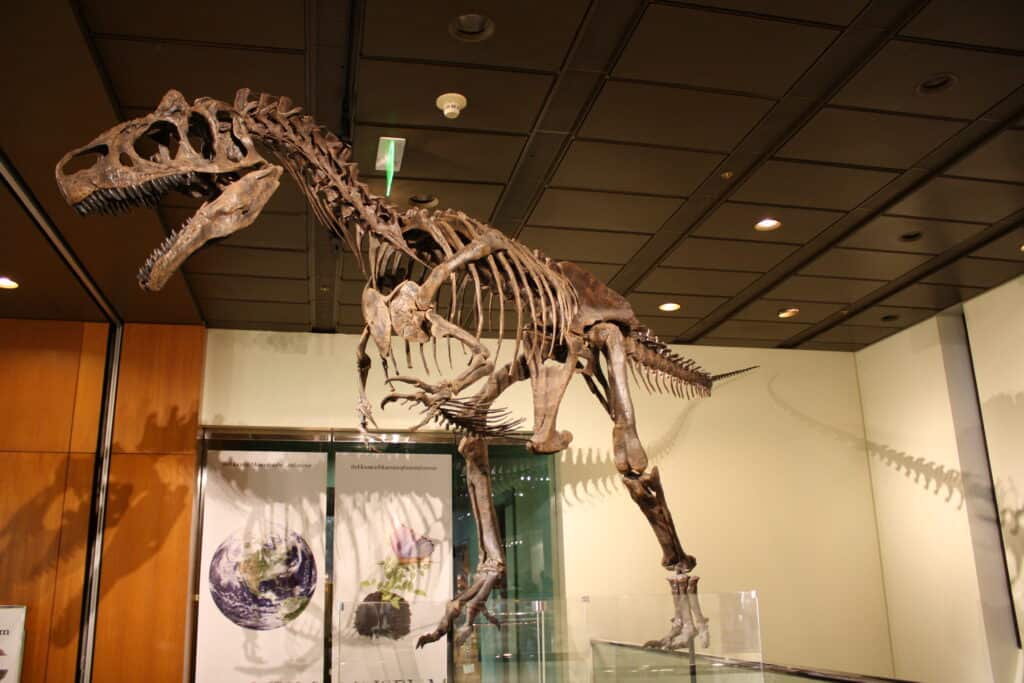
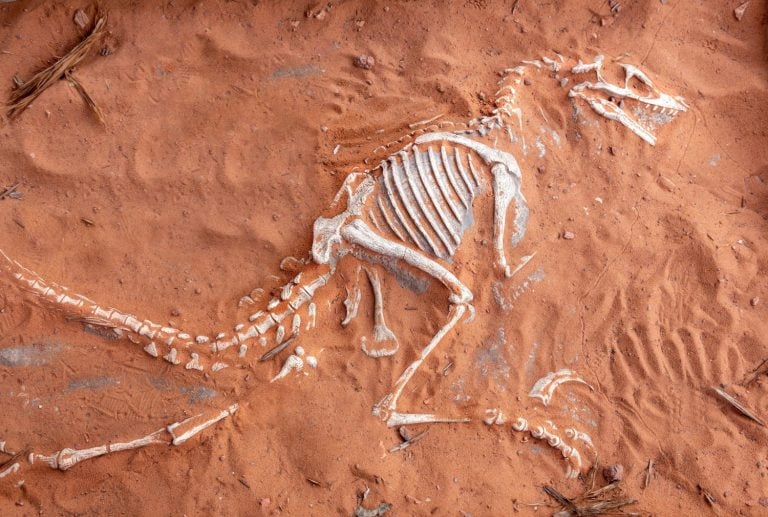
Allosaurus (Big Al II) skeleton

Big Al II was discovered in the Morrison Formation in 1996 and is the best preserved Allosaurus fossil to date.

Extinction—When Did Allosaurus Die Out?

Available data indicates that the Allosaurus went into extinction around 144 million years ago. There are different theories about the extinction of this species. Some of the theories suggest that a drought occurred during the period, which led to the death of many dinosaurs, including the Allosaurus.

Similar Animals to the Allosaurus

Similar animals to the Allosaurus include: 

  • Tyrannosaurus rex (T-Rex) — The T. rex, which means “king of the tyrant lizards,” was a muscular dinosaur that lived in the western part of North America during the Late Cretaceous. The Tyrannosaurus rex is one of the most well-known dinosaurs of all time. 
  • Ceratosaurus — The Ceratosaurus was one of the apex predators of the Jurassic. It was about six to seven meters long, with a deep jaw and long, blade-like teeth. It lived around the same time as the Allosaurus and was similar in physical appearance as well.  
  • NeovenatorNeovenator is a genus of theropod dinosaurs that lived in Europe during the Early Cretaceous Period. Measuring about 23 feet in length, Neovenator had a slender build and weighed one metric ton. It belongs to the clade of Allosauroidea, along with the Allosaurus
View all 328 animals that start with A

Sources

  1. Enchanted Learning / Accessed November 12, 2022
  2. Micro B Life / Accessed November 12, 2022
  3. McGill / Accessed November 12, 2022
  4. Brittanica / Accessed November 12, 2022
  5. Animals Network / Accessed November 12, 2022
Abdulmumin Akinde

About the Author

Abdulmumin Akinde

Abdulmumin is a pharmacist and a top-rated content writer who can pretty much write on anything that can be researched on the internet. However, he particularly enjoys writing about animals, nature, and health. He loves animals, especially horses, and would love to have one someday.
Connect:

Thank you for reading! Have some feedback for us?


Allosaurus FAQs (Frequently Asked Questions)

The T-Rex was significantly larger than the Allosaurus. While an adult Allosaurus was between 28 and 39 feet, the average T-Rex adult was about 40-50 feet long.