

R
Species Profile

Redtail Catfish

Phractocephalus hemioliopterus

Big head. Red tail. River titan.
Bk87/Shutterstock.com

Redtail Catfish Distribution

Click a location to explore more animals from that region

This map shows coastal regions where Redtail Catfish are found.

Loading map...
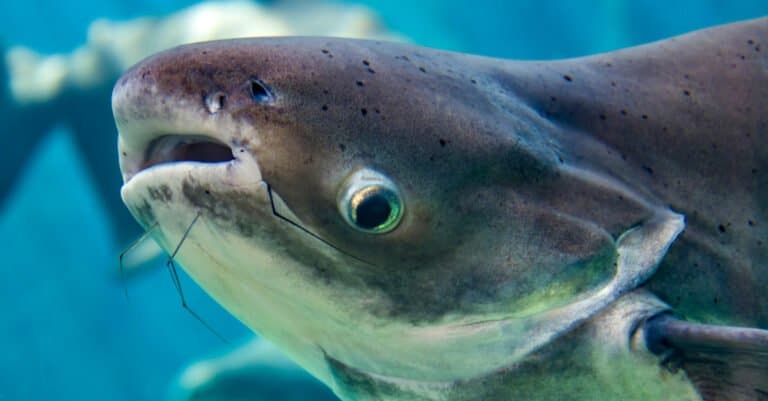
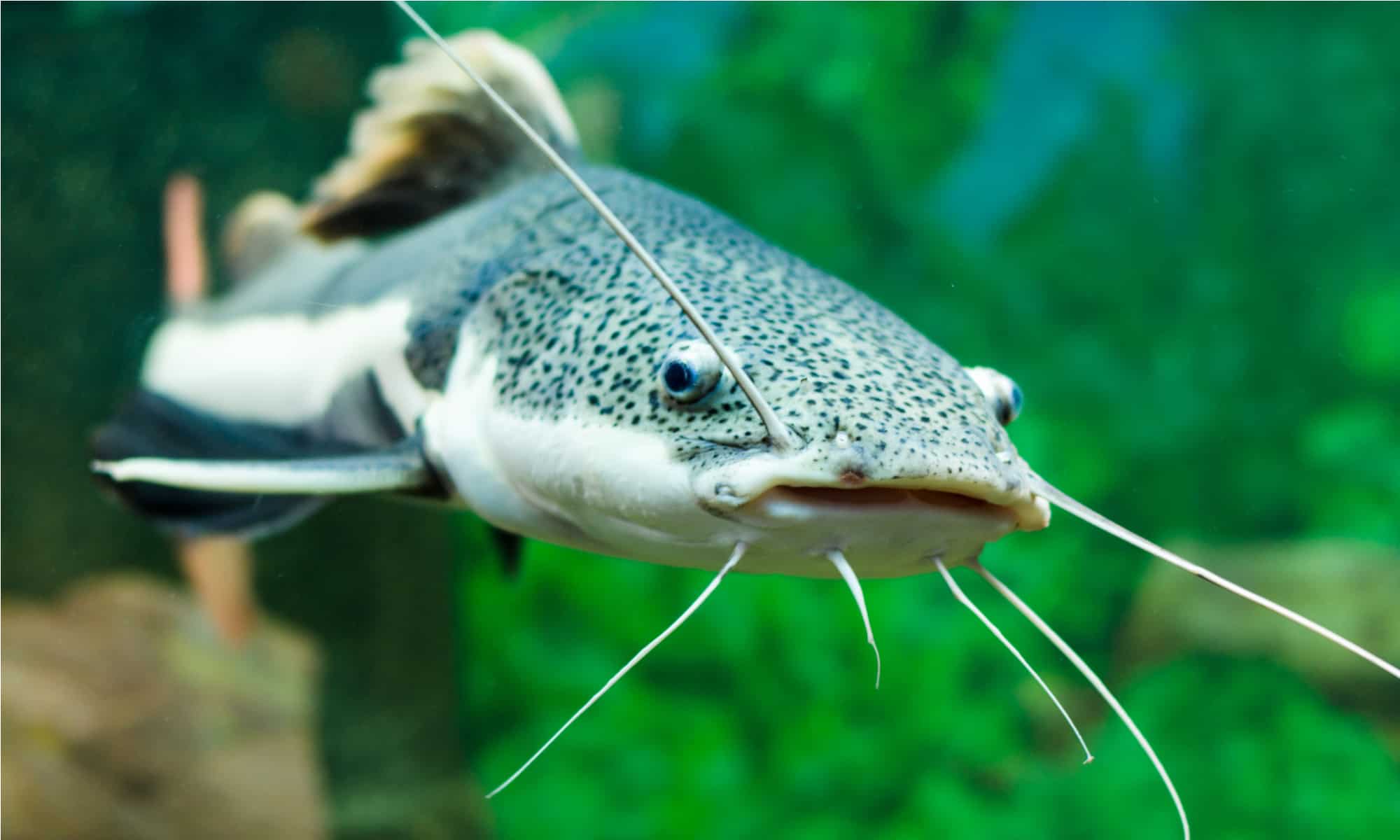
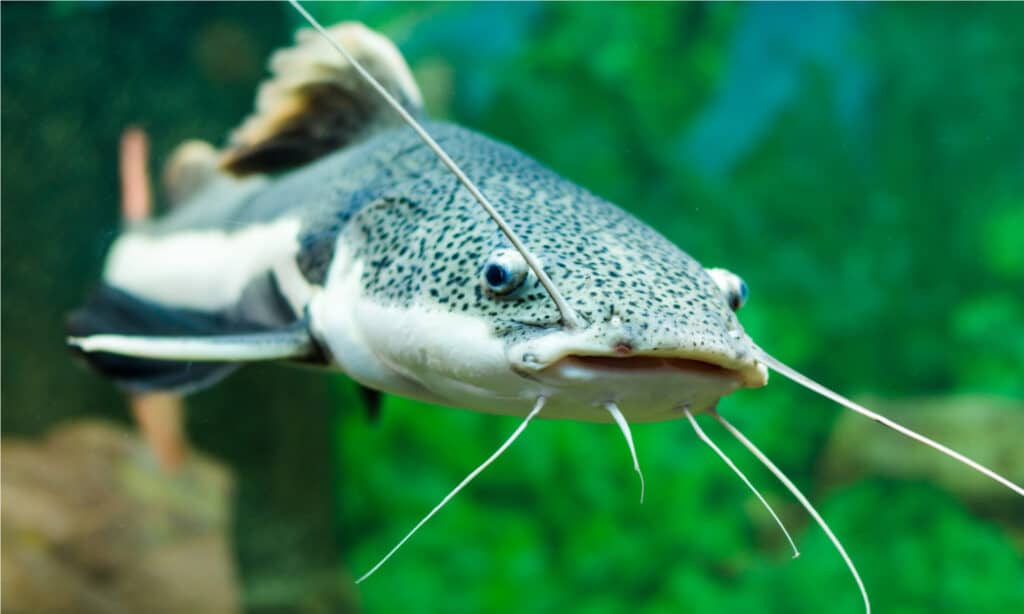
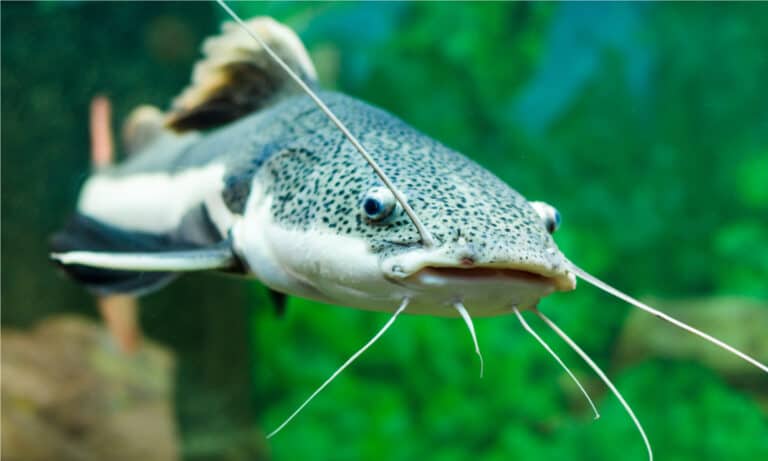
Redtail catfish in the aquarium. The fish is a long-whiskered catfish.

At a Glance

Wild Species
Also Known As Pirarara, Pirarará, Redtail cat, Red-tailed cat, Amazon redtail
Diet Carnivore
Activity Nocturnal+
Lifespan 15 years
Weight 44 lbs
Status Least Concern
Did You Know?

Record size: up to 180 cm total length and ~80 kg reported (FishBase).

Scientific Classification

A very large South American freshwater catfish known for its reddish-orange caudal fin and massive head; native to major river basins of northern South America and widely traded in aquaria (often outgrowing home tanks).

Kingdom
Animalia
Phylum
Chordata
Class
Actinopterygii
Order
Siluriformes
Family
Pimelodidae
Genus
Phractocephalus
Species
hemioliopterus

Distinguishing Features

  • Bright red/orange tail (caudal fin) with dark body
  • Broad, flattened head and large mouth typical of large pimelodid catfish
  • Long barbels around the mouth (sensory whiskers)
  • Can reach very large sizes (commonly over 1 m in the wild)

Physical Measurements

Length
3 ft 3 in (1 ft 12 in – 4 ft 5 in)
Weight
55 lbs (22 lbs – 97 lbs)

Appearance

Primary Colors
Secondary Colors
Skin Type Scaleless, smooth, mucus-coated skin typical of siluriform catfishes; head heavily ossified (bony cranial shield).
Distinctive Features
  • Very large pimelodid catfish; maximum reported total length 180 cm TL (FishBase; Froese & Pauly, accessed 2024-2025).
  • Maximum reported weight about 80 kg (FishBase; Froese & Pauly, accessed 2024-2025).
  • Longevity reported up to ~15 years (FishBase; Froese & Pauly, accessed 2024-2025).
  • Massive, broad, flattened head with a wide terminal mouth adapted for engulfing prey.
  • Long maxillary barbels ("whiskers") plus shorter mandibular barbels; typical long-whiskered pimelodid profile.
  • Caudal fin strongly forked and conspicuously orange-to-red, a key field identification marker.
  • Often shows a crisp boundary between dark upper body and white underside, forming a lateral 'banded' look.
  • Nocturnal/crepuscular, opportunistic predator-scavenger; takes fish, crustaceans, and carrion (commonly reported in Amazon-Orinoco ecology accounts).
  • Native to major northern South American basins (notably Amazon and Orinoco); an extremely large species that rapidly outgrows most home aquaria.

Sexual Dimorphism

Sexual dimorphism is subtle. Adult females are typically deeper-bodied and broader through the abdomen when gravid, while males may appear slightly slimmer and can show a more pronounced genital papilla during breeding condition.

  • Often slightly slimmer-bodied at the same length, especially outside feeding peaks.
  • Genital papilla may appear more pointed/obvious when reproductively active (subtle, vent inspection needed).
  • Typically deeper-bodied with a fuller abdomen, especially when gravid.
  • Can appear wider across the mid-body at comparable total length.

Did You Know?

Record size: up to 180 cm total length and ~80 kg reported (FishBase).

ID hallmark: the reddish-orange caudal fin is a key field mark even in turbid rivers.

A true pimelodid: it has long sensory barbels ("whiskers") to find prey in low light.

Often sold as a small "cute" aquarium fish, it can reach >1 m and requires pond/public-aquarium-scale housing.

Diet shifts with size: juveniles take smaller invertebrates/fish; large adults become powerful piscivores and scavengers.

Lives across multiple big basins: native to the Amazon and Orinoco drainages (northern South America).

Unique Adaptations

  • Long barbels packed with taste/touch receptors: "chemical + tactile radar" for locating prey in muddy, low-visibility rivers.
  • Huge gape and strong suction feeding: allows engulfing relatively large prey items compared with many fishes of similar length.
  • Robust head and body armor-like skin texture: helps withstand rough contact with logs, rocks, and struggling prey in fast or debris-filled water.
  • Countershaded body with high-contrast tail: dark dorsum for camouflage from above, pale belly from below; bright tail likely aids species recognition at close range in turbid water.

Interesting Behaviors

  • Primarily nocturnal foraging: hunts along channels, edges, and submerged structure when light is low (a common pattern in many catfishes).
  • Benthic ambush + roaming predation: uses slow cruising and sudden suction strikes to engulf fish and other animals.
  • Opportunistic feeding: takes fish, crustaceans, and carrion; will also consume seasonally available items encountered while foraging (reported in diet studies of large pimelodids, and commonly noted for this species).
  • Flood-season movement: activity and feeding expand into inundated margins during high water, tracking prey into flooded habitats (common Amazon/Orinoco large-catfish ecology).
  • In captivity, learns routines quickly: readily conditions to feeding schedules and can become boldly interactive around keepers-one reason it's popular but frequently rehomed.

Cultural Significance

Phractocephalus hemioliopterus, the Redtail Catfish of the Amazon–Orinoco, is a well-known giant river fish. Called many local names, it is eaten and used in sport fishing, seen in public aquariums, and often outgrows home tanks, leading to rescues, rehoming, and teaching people how to care for large pet fish.

Myths & Legends

A naming tradition in the Brazilian Amazon says the regional name for the Redtail Catfish (Phractocephalus hemioliopterus) comes from an Indigenous language and means its bright red tail, easy for river people to spot.

In Amazon and Orinoco oral stories, anglers call the redtail catfish very powerful and hard to catch, telling tall tales of it breaking lines or towing small boats as part of fishing culture.

Explorers' natural history tales and early museum stories often called the redtail catfish (Phractocephalus hemioliopterus) a giant river monster, making it famous in local stories and aquariums.

Conservation Status

LC Least Concern

Widespread and abundant in the wild.

Population Unknown

Life Cycle

Birth 200000 frys
Lifespan 15 years

Lifespan

In the Wild
10–20 years
In Captivity
15–30 years

Reproduction

Mating System Promiscuity
Social Structure Aggregation Group
Breeding Pattern Seasonal
Fertilization Broadcast Spawning
Birth Type Broadcast_spawning

Adults are largely solitary but form brief spawning aggregations during rising-water seasons. Females release buoyant eggs into the current while multiple males simultaneously shed milt (external fertilization). No nest building or parental care; mates do not remain bonded.

Behavior & Ecology

Social Solitary Group: 1
Activity Nocturnal, Crepuscular
Diet Carnivore Fish (whole fish; taken live or scavenged dead fish/carrion)
Seasonal Migratory

Temperament

Strongly solitary, non-gregarious predator; adults often intolerant of similarly sized conspecifics in confined habitats.
Opportunistic piscivore with broad diet; will swallow large prey whole, including fish and crustaceans.
Adults are generally solitary and primarily nocturnal (often most active at dusk and night).
Large-bodied river-channel species; commonly reported to rest under structure by day and forage at night (field observations summarized in FishBase: Froese & Pauly, Phractocephalus hemioliopterus, accessed 2025).
Maximum reported size 134 cm TL (FishBase: Froese & Pauly, accessed 2025); large size correlates with low sociality and wide home ranges typical of big pimelodids.

Communication

Audible stridulatory clicks/grunts produced by pectoral-fin spine rubbing, as in many Siluriformes E.g., Ladich & Fine 2006; general mechanism, species-specific reports limited
Chemical communication via olfaction/taste (barbels and external taste buds) for prey detection and likely conspecific recognition; species-specific trials scarce.
Mechanosensory signaling through lateral line (water displacement) during close-range interactions, especially in turbid rivers.
Tactile contact with barbels and body positioning during brief mating or displacement encounters; consistent with pimelodid behavior in large rivers.

Habitat

Biomes:
Freshwater Wetland Tropical Rainforest Savanna
Terrain:
Riverine Plains Valley Muddy Sandy
Elevation: Up to 656 ft 2 in

Ecological Role

Large riverine predator (upper-level/mesopredator) and facultative scavenger in northern South American freshwater systems (Amazon-Orinoco-Essequibo basins).

Regulates prey-fish communities by removing abundant and/or vulnerable fishes, influencing community structure and trophic dynamics. Transfers energy across habitats (main channel ↔ floodplain) by feeding on mobile fishes and crustaceans during seasonal movements. Carrion removal/scavenging contributes to nutrient recycling and can reduce persistence of dead biomass in warm, productive waters.

Diet Details

Main Prey:
Fish Crustaceans Other aquatic animals

Human Interaction

Domestication Status

Wild

Redtail catfish (Phractocephalus hemioliopterus) is not domesticated. This large wild Pimelodidae fish from the Amazon and Orinoco is caught for food and sold live for aquariums. It is sometimes grown in ponds or fish farms but not bred like carp or tilapia. Related catfishes support fisheries, sport angling, pond culture, can invade new areas, and cause spine injuries.

Danger Level

Moderate
  • Handling injury from strong pectoral/dorsal spines (puncture/laceration risk), especially during capture or tank transfers
  • Bites/lacerations possible from a very large, powerful fish if handled improperly
  • Indirect risk: releases from the aquarium trade can contribute to invasive populations elsewhere, potentially impacting local fisheries/ecosystems

As a Pet

Not Suitable as Pet

Legality: Redtail Catfish (Phractocephalus hemioliopterus) is often legal to own or sell, but many places limit it because it grows over 1 m and can become invasive; check local rules.

Care Level: Expert Only

Purchase Cost: $20 - $200
Lifetime Cost: $3,000 - $50,000

Economic Value

Uses:
Food (capture fisheries) Ornamental aquarium trade (live fish) Sport fishing (regional) Pond grow-out/aquaculture (limited, regional)
Products:
  • fresh/frozen fillets and whole fish for consumption
  • live juveniles for the aquarium trade

Relationships

Predators 5

Black caiman Melanosuchus niger
Spectacled caiman Caiman crocodilus
Giant otter
Giant otter Pteronura brasiliensis
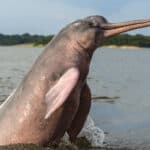
Amazon river dolphin
Amazon river dolphin Inia geoffrensis
Human
Human Homo sapiens

Related Species 6

Barred sorubim Pseudoplatystoma fasciatum Shared Family
Piraiba Brachyplatystoma filamentosum Shared Family
Tiger shovelnose catfish Pseudoplatystoma tigrinum Shared Family
Marbled shovelnose catfish Leiarius marmoratus Shared Family
Shovelnose catfish Sorubim lima Shared Family
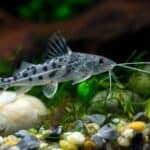
Pictus catfish
Pictus catfish Pimelodus pictus Shared Family

Ecological Equivalents 5

Animals that fill a similar ecological role in their ecosystem

Asian redtail catfish Hemibagrus wyckioides Large, nocturnal river-channel catfish with an opportunistic predatory and scavenging lifestyle. Often compared in the aquarium trade for similar behavior (rapid growth and risk of outgrowing tanks). Both occupy deep runs and forage heavily at night.
Piraiba Brachyplatystoma filamentosum Very large pimelodid catfish that occupies main-river habitats and feeds primarily on fish; occupies a similar role as a high-level predator and scavenger in large South American river systems (Amazon and Orinoco).
Barred sorubim Pseudoplatystoma fasciatum Medium-to-large pimelodid predator of river channels and floodplains. Exhibits ambush and pursuit predation on fish and crustaceans, with heavy use of structure and deeper water during daylight.
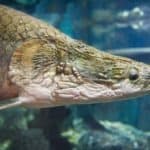
Arapaima
Arapaima Arapaima gigas Another very large-bodied Amazonian freshwater predator. Although an air-breather, it strongly overlaps in niche as a top predator in floodplain lakes and slow-moving channels, consuming fish and other aquatic animals, and its juveniles are vulnerable to larger predators.
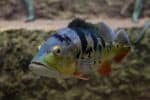
Peacock bass
Peacock bass Cichla temensis Large piscivorous floodplain and river predator that overlaps in prey base (fish) and in use of habitat edges during high water; provides a functional comparison as a high-consumption predator in the same basins.

The redtail catfish is a large, colorful fish that is native to the Amazon and Orinoco river basins of South America. It only lives in freshwater streams and rivers. Distinctive for its bright red fins and enormous size, this attractive fish is a popular exhibit in aquariums.

4 Amazing Facts About the Redtail Catfish

  • It uses its long, sensitive whiskers to smell.
  • It can grow up to 6 feet long.
  • Unlike other catfish, it is an active and aggressive predator.
  • It is one of the three giant catfish species native to the Amazon.

Redtail Catfish Classification and Scientific Name

The fish’s scientific name is Phractocephalus hemioliopterus. In Venezuela, it is known as the cajaro. In Brazil, it is called the pirarara. It is the only extant species of the genus Phractocephalus.

The Redtail Catfish is one of the three giant species of catfish in the Amazon. The other two are the piraiba and the jau.

Redtail Catfish Appearance

This fish is a pimelodid or long-whiskered catfish. It is a large fish that can grow almost 6 feet long and have a top weight of 180 pounds. Most redtail catfish, however, do not get this big. They are usually 3 to 4 feet long.

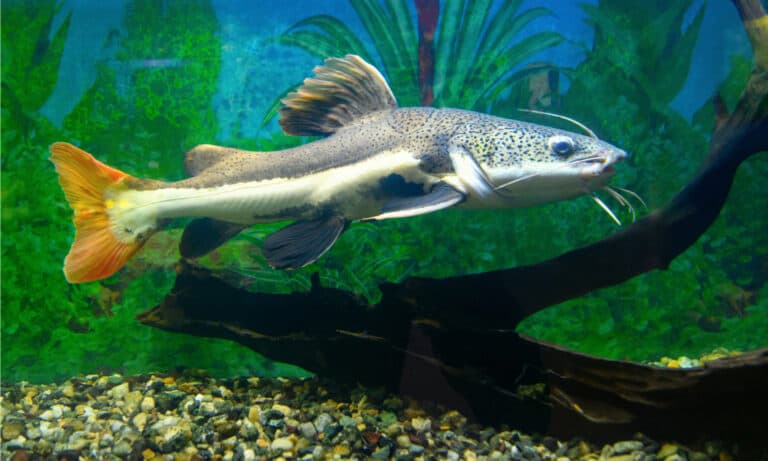
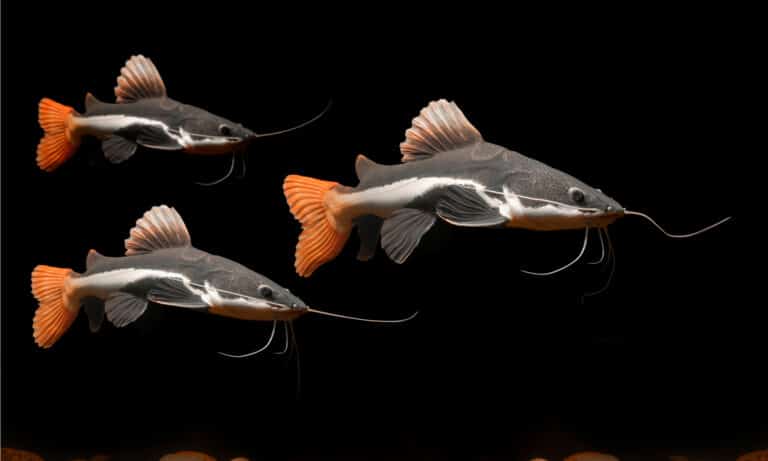
Unusual for a catfish, the redtail is very colorful. It has a brown-spotted back and yellow sides. The fish often has dark gray scales with a bold, darker pattern on each side. Its most distinctive features are its bright red dorsal fin and the red caudal fin that gives this fish its name. It usually has a black body and a white belly. It has a wide, flat head with long whiskers.

Its fighting spirit and bright, unusual colors make it one of the most exotic-looking river fish.
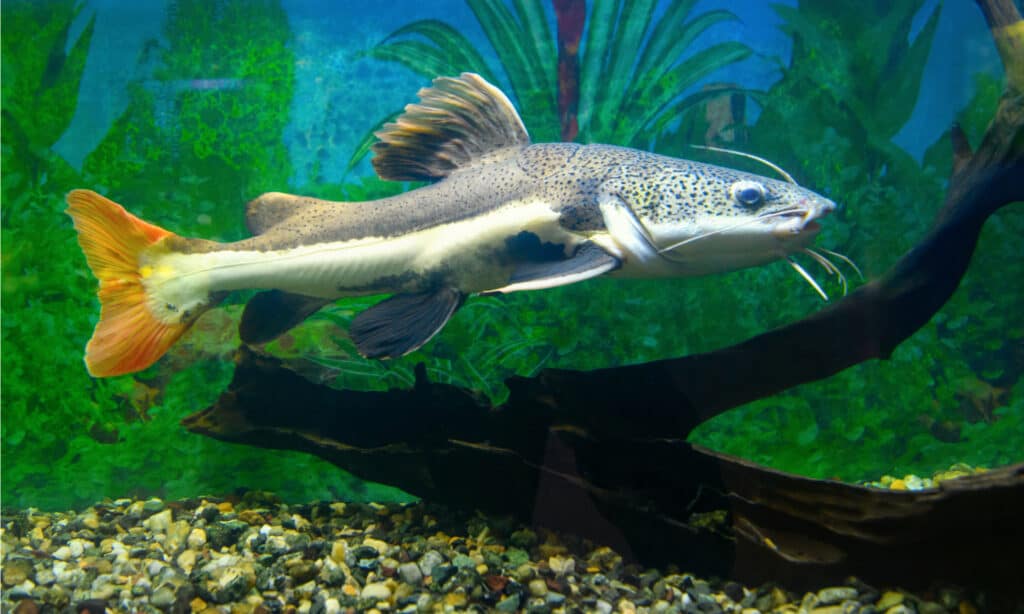
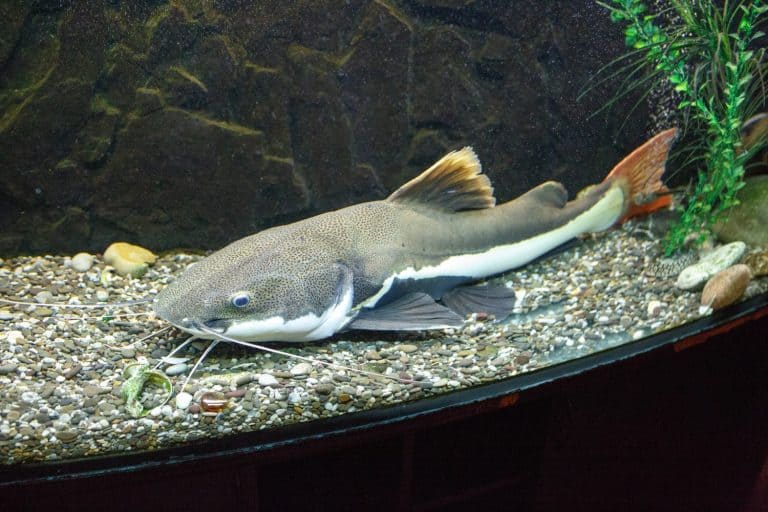
Red-tailed catfish in the aquarium. Redtail Catfish is one of the three giant species of catfish in the Amazon.

Red-tailed catfish in the aquarium. Redtail Catfish is one of the three giant species of catfish in the Amazon.

Distribution, Population, and Habitat

The redtail catfish is native to the Amazon, Orinoco, and Essequibo River basins of South America. It lives in freshwater streams in Ecuador, Brazil, Colombia, Peru, and Venezuela.

Redtail catfish are considered the most attractive catfish, and they are popular in aquarium exhibits. Some places where you can see them are:

There is also an Asian redtail catfish (Hemibagrus wyckioides), a different species native to Thailand and other parts of Southeast Asia.

Redtail Catfish Predators and Prey

The redtail catfish’s chief predators are humans, who regularly hunt it as a game fish. It is a large, aggressive fish that usually dominates its environment.

Unlike other catfish species, the redtail does not cling to the bottom and wait for prey to approach. It is an active, energetic predator that is known to have a voracious appetite. Red-tailed catfish are territorial fish that defend their hunting grounds aggressively. They are good fighters who will attack other fish trying to move in on their chosen area.

During the day, it is almost motionless. At night, it goes in search of prey.
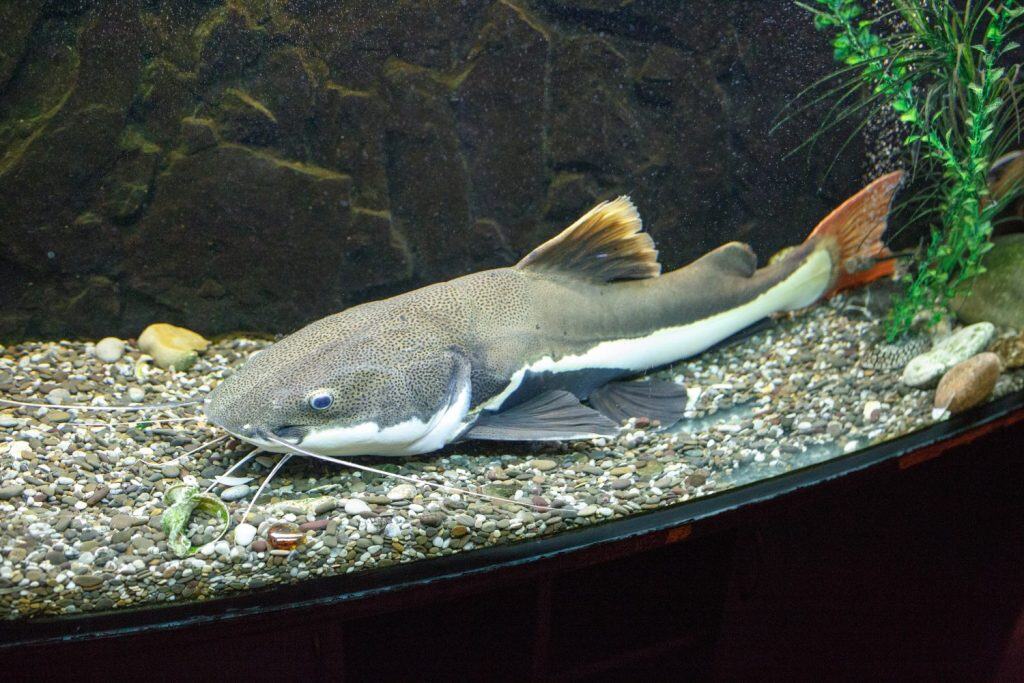
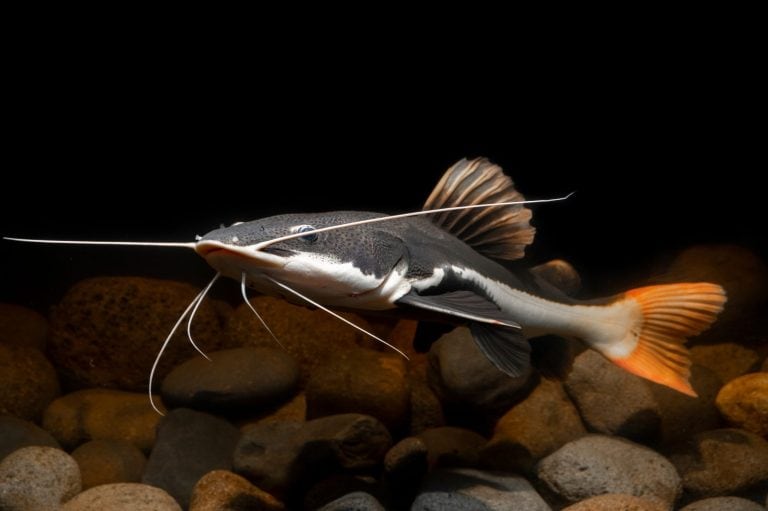
Redtail catfish (Phractocephalus hemioliopterus) in the aquarium

The redtail catfish looks for prey at night.

What Does the Redtail Catfish eat?

The fish’s diet includes:

Reproduction and Lifespan

The mating season for most redtail catfish is between May and July. This fish has an unusual mating routine. After bumping into a male, a female catfish opens her mouth to receive the male’s sperm. She then lays the eggs, which she holds in her ventral fins. She deposits the sperm on the eggs and then places the eggs in a hidden nest. The baby catfish hatch about five days later. A baby catfish is called a fry.

Redtail catfish have a long lifespan. They can live 15 years in captivity, but they live even longer in the wild. Captivity is stressful if they are in a tank that’s too small for them.
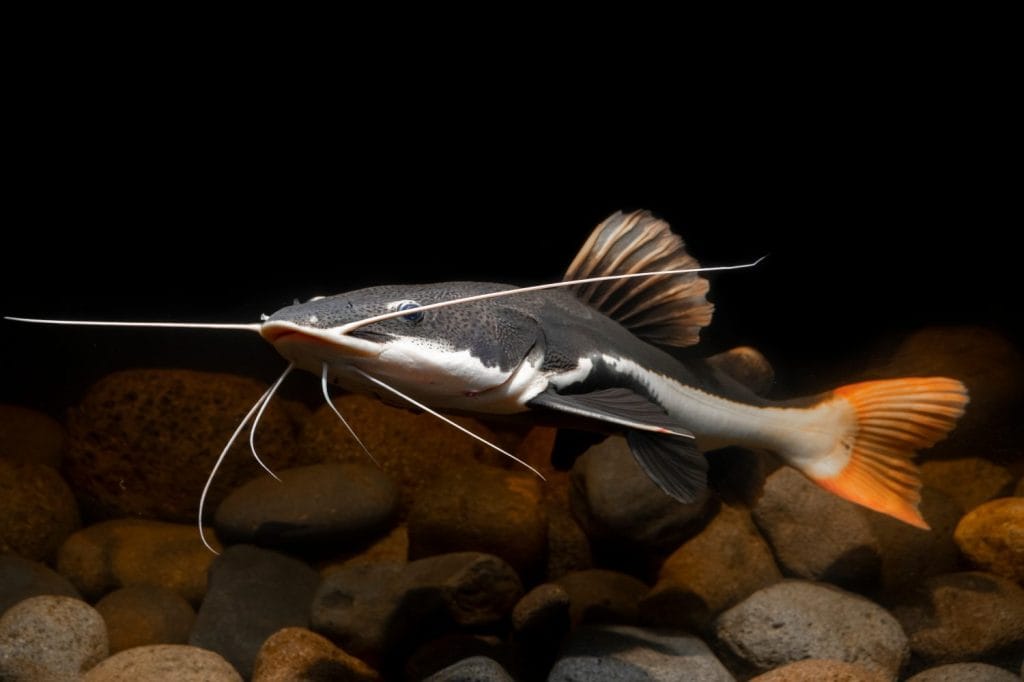
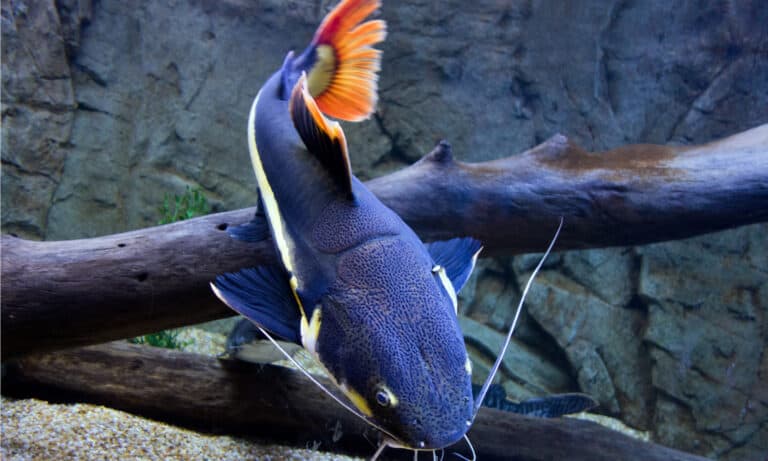
Underwater photography of The Red Tail Catfish (Phractocephalus hemiliopterus). This tropical fish is native to the Amazon, Orinoco, and Essequibo river basins of South America.

The Red Tail Catfish (Phractocephalus hemiliopterus) is native to the Amazon, Orinoco, and Essequibo river basins of South America.

Redtail Catfish in Fishing and Cooking

Redtail catfish are a very popular game fish. Many people visit the Amazon region intending to catch these and other large, exotic river fish. They are considered excellent game fish because they put up a fierce battle. Their size and beautiful colors also make them fun for experienced anglers to catch.

These massive fish provide plenty of meat. Natives of the Amazon region, however, don’t eat them because their meat is dark. To develop redtails as a food source, some fisheries have bred them with other species like the Tiger Shovelnose. This pairing produces a hybrid called the Tiger Redtail Catfish that has light-colored meat.

There are many ways to cook catfish. Its low price and good flavor have made it a staple of many cuisines. One of the most popular ways is to flour it, season it, and deep-fry it. It is also a good fish to grill or bake. Catfish meat is dense, tender, and sweet.

Population

The redtail catfish (Phractocephalus hemioliopterus) is listed as Least Concern on the IUCN Red List as of 2025. Population numbers are unknown, but the population appears stable.

Colorful River Giant

This catfish is a striking fish with a fighting spirit. It is good to eat and beautiful to look at. If you get a chance to see one in an aquarium, don’t miss the opportunity to see this giant of the Amazon.

View all 181 animals that start with R

Sources

  1. USGS: Nonindigenous Aquatic Species / Accessed March 1, 2022
  2. Aquarium Source / Accessed March 1, 2022
  3. Wikipedia / Accessed March 1, 2022
Thank you for reading! Have some feedback for us?


Redtail Catfish FAQs (Frequently Asked Questions)

It is called that because of its bright red dorsal and caudal fins.