




T
Species Profile

Taipan

Oxyuranus

Fast hunters, potent venom, wide deserts
Ken Griffiths/Shutterstock.com

Taipan Distribution

Click a location to explore more animals from that region

Endemic Species
Loading map...
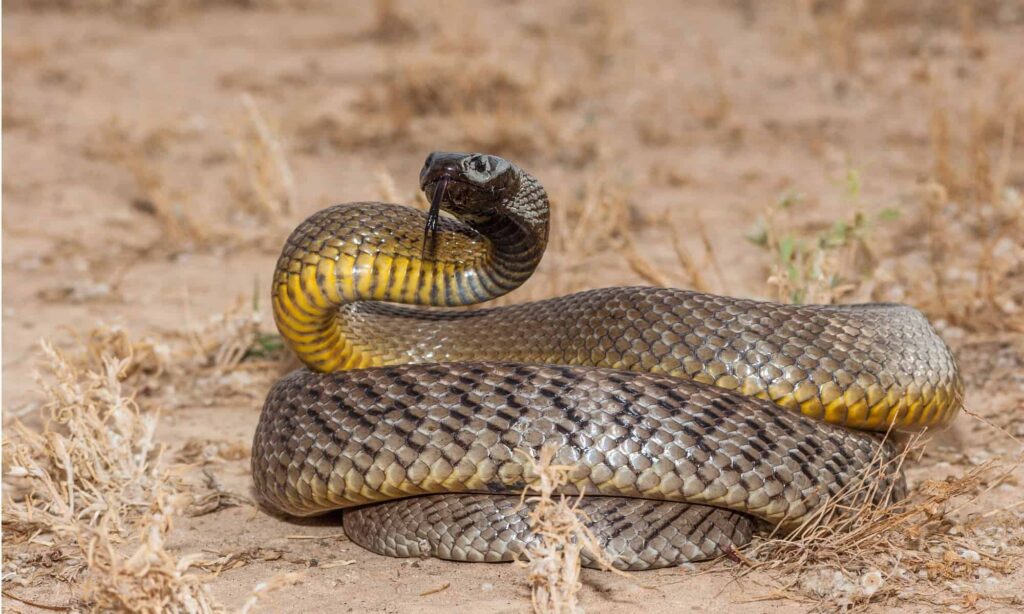
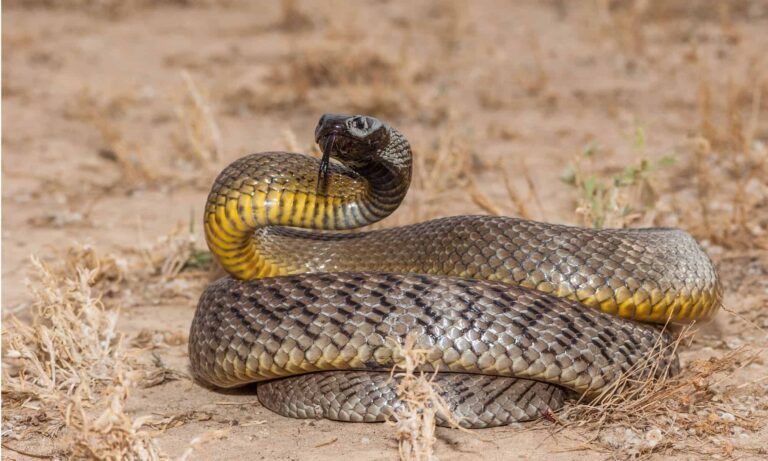
Oxyuranus microlepidotus, also known as Inland taipan, known as the world's most venomous and deadly snake.

At a Glance

Genus Overview This page covers the Taipan genus as a group. Stats below are general traits shared across the genus.
Diet Carnivore
Activity Diurnal+
Lifespan 11 years
Weight 6 lbs
Status Not Evaluated
Did You Know?

The genus includes some of the world's most medically significant snakes; taipan envenoming can cause rapid neurotoxic and blood-clotting crises without treatment.

Scientific Classification

Genus Overview "Taipan" is not a single species but represents an entire genus containing multiple species.

Taipans (genus Oxyuranus) are large, highly venomous elapid snakes native to Australia and New Guinea. They are active hunters of small mammals and are noted for speed, alertness, and medically significant bites.

Kingdom
Animalia
Phylum
Chordata
Class
Reptilia
Order
Squamata
Family
Elapidae
Genus
Oxyuranus

Distinguishing Features

  • Very large, slender-bodied elapid snakes with relatively long heads
  • Highly potent neurotoxic/hemotoxic venom (species-dependent)
  • Fast-moving and alert; capable of rapid defensive strikes
  • Coloration variable (often brown/olive tones; some species show seasonal darkening)

Physical Measurements

Males and females differ in size

Length
7 ft 7 in (3 ft 11 in – 10 ft 10 in)
6 ft 7 in (3 ft 11 in – 9 ft 10 in)
Weight
6 lbs (1 lbs – 13 lbs)
6 lbs (2 lbs – 13 lbs)
Tail Length
0 in (0 in – 0 in)
10 in (5 in – 1 ft 6 in)
Top Speed
7 mph
slithering
Venomous

Appearance

Primary Colors
Secondary Colors
Skin Type Smooth, glossy overlapping scales; streamlined body with relatively large head and prominent eyes typical of active-foraging elapids.
Distinctive Features
  • Adult total length across Oxyuranus ranges roughly ~1.0-3.0 m; exceptional records may exceed ~3.0 m in the largest taxa. Build varies from relatively slender to robust depending on species and habitat.
  • Estimated lifespan across the genus is commonly ~10-20 years (shorter in the wild, longer in captivity); values vary by species and local conditions.
  • Diagnostic traits vs many other Australian elapids: very large size, smooth glossy scales, long forward-reaching head with distinct neck, large eyes, and an alert, fast-moving, active-foraging posture.
  • Behavior/ecology generalization: primarily active hunters that track prey (especially small mammals) using chemoreception; typically shelter in mammal burrows, soil cracks, or deep ground cover. Activity can be diurnal/crepuscular and shifts with temperature and region.
  • Oxyuranus habitats: coastal forms live in humid forests, woodlands, and cane edges; inland forms use dry clay plains and gibber margins; desert forms live on rocky ranges and sparse shrubland; New Guinea taxa use savanna.
  • Medical significance: among the most medically important snakes in Australia/New Guinea; envenomation can cause rapid systemic illness. Human-snake conflict is mostly defensive encounters; bites often occur when surprised, cornered, or handled.
  • First-aid context (genus-level): pressure-immobilization bandage and urgent transport are critical; avoid washing bite area if safe (for venom detection), avoid tourniquets/cutting/suction. Definitive care is antivenom and supportive treatment per local protocols.
  • Taipan species: O. scutellatus (coastal) on northern/eastern coasts; O. microlepidotus (inland) in arid interior; O. temporalis (desert/central) in remote central regions; New Guinea taipan often treated as O. scutellatus canni or O. canni.

Sexual Dimorphism

Sexual dimorphism is subtle: males average longer and may appear more slender, with proportionally longer tails and slightly larger heads. Females can appear more robust when gravid; coloration differences are generally minor and inconsistent across taxa.

  • Often greater average total length in many populations
  • Proportionally longer tail (hemipenal bulge may be noticeable near tail base)
  • May show slightly larger head relative to body in some populations
  • Often heavier-bodied for a given length, especially when gravid
  • Shorter tail proportion on average
  • Body girth increases markedly during reproductive season

Did You Know?

The genus includes some of the world's most medically significant snakes; taipan envenoming can cause rapid neurotoxic and blood-clotting crises without treatment.

Across the genus, adult size ranges roughly from ~1 m to >3 m total length (largest individuals occur in coastal taxa).

Taipans are unusually "high-strung" when threatened-often highly alert with quick, decisive strikes-yet they typically avoid conflict if given space.

Most taipan diets are strongly mammal-focused (especially rodents), which links their ecology to rodent population booms and farm edges.

Some populations show seasonal shifts in coloration (notably in inland forms), likely tied to thermoregulation and camouflage.

The inland taipan was long rarely encountered by science, contributing to its outsized reputation; its remote range limits human contact compared with coastal taxa.

Modern first aid (pressure-immobilization and urgent medical care) and antivenom have greatly improved outcomes where treatment is prompt.

Unique Adaptations

  • Highly efficient venom delivery: fixed front fangs (elapid-type) and well-developed venom glands enable fast injection during short, repeated strikes.
  • Venom specialized for mammal prey: strong systemic effects (including neurotoxicity and profound coagulation disturbance) suit rapid immobilization of endothermic prey; potency and toxin mix vary among species.
  • Athletic build for speed and endurance: long-bodied, relatively slender construction supports rapid pursuit across open ground and through grass/scrub.
  • Sensory toolkit for active hunting: keen vision, tongue-flick chemoreception, and strong prey-tracking ability after envenoming.
  • Habitat flexibility across the genus: shared "taipan" design is expressed in coastal tropical savannas, arid interior plains, and southern New Guinea lowlands-showing ecological breadth within one genus.
  • Diagnostic look among Australian elapids: typically large, long-headed snakes with smooth-looking scales and a confident, forward-foraging posture; they are often more long-limbed in appearance than many stout-bodied Australian elapids (with overlap and regional variation).

Interesting Behaviors

  • Active foraging hunters: rather than waiting in ambush, many taipans patrol habitat edges and rodent runways, using vision and scent to locate prey.
  • Rapid multi-strike feeding: they may deliver several quick bites and release, then track the envenomed prey-reducing risk from struggling rodents.
  • Threat display and "readiness": when cornered, many individuals raise the forebody, tense, and fixate on movement; intensity varies by individual and context.
  • Strong use of shelter: daytime refuge in animal burrows, soil cracks, hollow logs, or vegetation mats is common; patterns differ with climate (coastal vs arid vs New Guinea lowlands).
  • Seasonal/temperature-linked activity: activity windows shift with heat-more crepuscular or early-day movement in very hot regions; coastal populations may be active across a broader daily window.
  • Reproduction (genus-level): egg-laying is typical; timing and clutch sizes vary among species and regions with rainfall and temperature.

Cultural Significance

Taipans (Oxyuranus) shape safety messages, rural medical training, and antivenom history. The name stands for extreme danger. People change land use—control rodents, keep yards clear, avoid risky habitats—and choose coexistence and fast emergency care.

Myths & Legends

Name-and-language history: "taipan" is widely reported to derive from an Aboriginal language term used in far-northern Australia for a dangerous snake-an example of Indigenous ecological knowledge entering English as a warning label.

Australian Aboriginal 'creation snake' stories, like the Rainbow Serpent, are common and vary by language; not taipan-specific, they show snakes as powerful ancestors who shape waterways, landforms, and community law.

New Guinea and Torres Strait communities have many snake-spirit and guardian-serpent traditions linked to rivers, swamps, and clan identity; these are not about one species, shaping how big lowland snakes are seen.

Because inland taipans were rarely kept or seen, settlers and bush workers told scary warning stories, though real danger depends on where people live and how often they meet the snake.

In colonial northern Australia, folk stories treated large fast snakes, especially taipans (Oxyuranus), as signs of bad luck or tests of bush skills. Near stock routes and camps, near-miss tales taught avoidance.

Modern cultural storytelling: in contemporary Australian media, the taipan is frequently invoked as the emblem of an extreme, no-compromise danger-an inherited narrative that blends real medical risk with the drama of outback survival tales.

Conservation Status

NE Not Evaluated (genus-level); species are assessed individually and are mostly Least Concern, with some very poorly known taxa potentially Data Deficient/Not Evaluated

Has not yet been evaluated against the criteria.

Population Unknown

Protected Under

  • Australia: protected as native wildlife under state/territory nature conservation and fauna legislation (specific protections and permit requirements vary by jurisdiction)
  • Australia (federal): Environment Protection and Biodiversity Conservation Act 1999 provides a framework for protecting listed threatened species and regulating actions impacting matters of national environmental significance

You might be looking for:

Coastal taipan

50%

Oxyuranus scutellatus

Large, fast, medically important species of northern and eastern Australia; often the default referent in general contexts.

View Profile

Inland taipan

33%

Oxyuranus microlepidotus

Also called the “fierce snake”; inhabits arid inland Australia; renowned for extremely potent venom (rarely encountered).

View Profile

Western desert taipan

12%

Oxyuranus temporalis

Recently described, very poorly known species from remote western desert regions of Australia.

View Profile

Papuan taipan

5%

Oxyuranus scutellatus canni

New Guinea form often treated as a subspecies (or sometimes as a distinct taxon depending on authority); major medical significance regionally.

Life Cycle

Birth 12 hatchlings
Lifespan 11 years

Lifespan

In the Wild
8–15 years
In Captivity
12–20 years

Reproduction

Mating System Polygynandry
Social Structure Solitary
Breeding Pattern Seasonal
Fertilization Internal Fertilization
Birth Type Internal_fertilization

Across Oxyuranus, adults are largely solitary and come together mainly during the breeding season. Males may compete for access to females, and both sexes can mate with multiple partners; females lay and do not provision young.

Behavior & Ecology

Social No fixed group name (typically solitary) Group: 1
Activity Diurnal, Crepuscular
Diet Carnivore Rodents (rats and mice)
Seasonal Hibernates

Temperament

Highly alert and fast-moving; generally avoids confrontation when escape routes exist.
Defensive if cornered or surprised; may deliver rapid strikes in close quarters.
Temperament varies with species, temperature, reproductive state, and recent disturbance.

Communication

Hissing or forceful exhalation when threatened Infrequent; mainly defensive
Chemical signaling via pheromones and scent trails; tongue-flicking and vomeronasal sensing.
Tactile contact during courtship and mating E.g., alignment, body rubbing, following
Visual/body postures in defense Elevating forebody, orienting head, retreat-and-freeze
Likely individual spacing mediated by scent cues and habitat use rather than social bonds.

Habitat

Biomes:
Tropical Rainforest Tropical Dry Forest Savanna Desert Hot Temperate Grassland Temperate Forest Wetland +1
Terrain:
Coastal Plains Plateau Valley Riverine Hilly Rocky Sandy +2
Elevation: Up to 4921 ft 3 in

Ecological Role

Large-bodied terrestrial mesopredators (sometimes functioning as top predators locally) specializing in small mammals, especially rodents, across Australian and southern New Guinean ecosystems.

Regulation of rodent populations (including outbreak control in boom years) Indirect reduction of crop damage and potential rodent-borne disease risk via predation pressure Energy transfer and trophic structuring (linking small-mammal prey to higher predators/scavengers via snake biomass) Contribution to ecosystem balance by selectively removing vulnerable or abundant small mammals

Diet Details

Main Prey:
Rodents Small marsupials Small birds Small reptiles

Human Interaction

Domestication Status

Wild

Taipans (Oxyuranus) are not domesticated. Most human contact is accidental. Bites happen during surprise encounters, when people try to kill or handle them, or in jobs such as farming and snake work. Captivity is rare and limited to secure facilities and licensed specialists for antivenom, research, and teaching. Habitat change can boost rodents and raise encounters.

Danger Level

Extreme
  • Medically severe envenomation: rapid systemic toxicity requiring urgent critical care and antivenom
  • High venom yield and efficient delivery; bites can be life-threatening without prompt treatment
  • Occupational risk to snake handlers, field researchers, and rural workers; risk increases with attempted capture/kill/handling
  • Secondary risks: delayed access to care in remote areas, accidental exposure during transport/husbandry, and psychological/behavioral risks from keeping highly dangerous animals

As a Pet

Not Suitable as Pet

Legality: Highly regulated and often prohibited. Where allowed at all, keeping taipans typically requires specialist venomous-snake permits/licensing, secure inspected facilities, and strict transport/record rules. Private ownership is widely banned or restricted (commonly limited to licensed professionals, educational institutions, or antivenom/research programs).

Care Level: Expert Only

Purchase Cost: $500 - $5,000
Lifetime Cost: $10,000 - $100,000

Economic Value

Uses:
Public health (antivenom production and clinical toxicology) Biomedical/scientific research (venom biochemistry, pharmacology, diagnostics) Education/outreach (zoos, licensed reptile programs) Ecosystem services (predation on rodents; indirect value in some agricultural contexts) Ecotourism/nature tourism (limited, niche)
Products:
  • Antivenom (produced using venom from captive specimens)
  • Purified/characterized venom components for research reagents
  • Educational programs/exhibits and professional training materials

Relationships

Predators 6

Wedge-tailed eagle Aquila audax
Brown falcon Falco berigora
Large monitor lizards Varanus
Mulga snake
Mulga snake Pseudechis australis
Feral cat Felis silvestris catus
Human
Human Homo sapiens

Related Species 6

Brown snakes
Brown snakes Pseudonaja Shared Family
Black snakes Pseudechis Shared Family
Tiger snakes Notechis Shared Family
Death adders Acanthophis Shared Family
Australasian copperhead Austrelaps Shared Family
Sea snakes
Sea snakes Hydrophis Shared Family

Types of Taipan

3

Explore 3 recognized types of taipan

“Taipan is the Most Venomous Snakes On Earth”

It’s true that the taipan has fantastically potent venom, but it also benefits humans by eating vermin such as rats and mice. Found only in Australia and New Guinea, taipans are long snakes that can move fast, whether to escape danger or deliver a fatal bite. Amazingly, these super-charged predators are prey for other snakes such as the king brown snake and the mulga.
Four Amazing Facts About Taipans

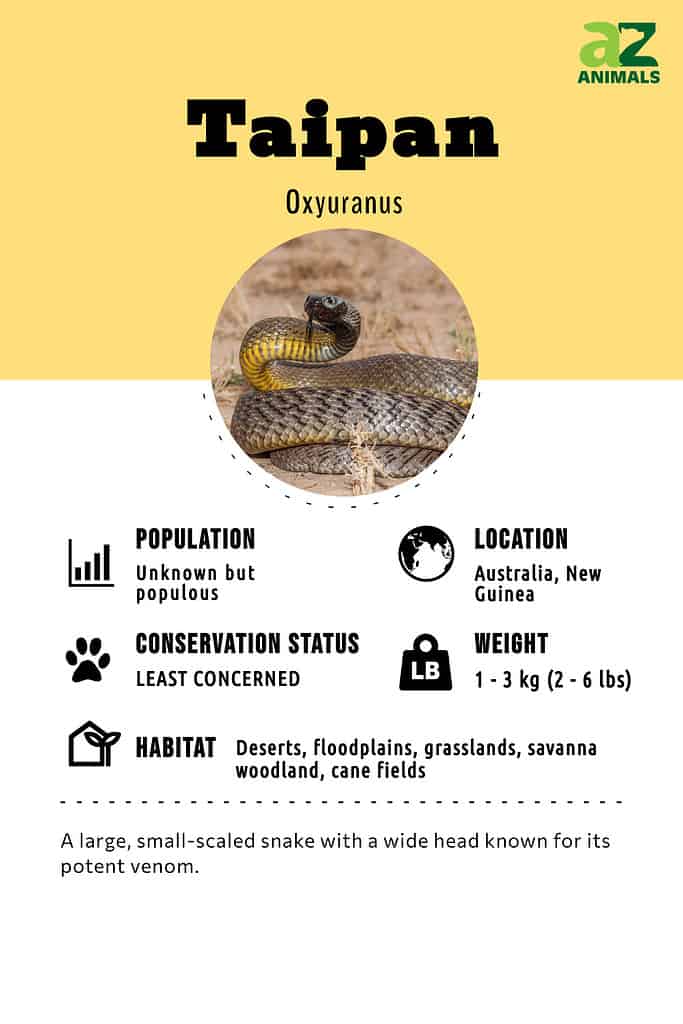
Here are four facts about the taipan.

  • The inland taipan is the most venomous snake on earth, and the coastal taipan is the third most venomous snake on earth. The second most venomous snake on earth is probably Pseudonaja textilis, the eastern brown snake, also found in Australia and New Guinea.
  • The Central Ranges taipan was discovered in 2007 and became the first taipan to be discovered in over a century.
  • Taipan is the name the Wik-mungkan people of Queensland, Australia give to this snake.
  • The venom of the taipan has evolved to target warm-blooded animals such as rodents and marsupials.
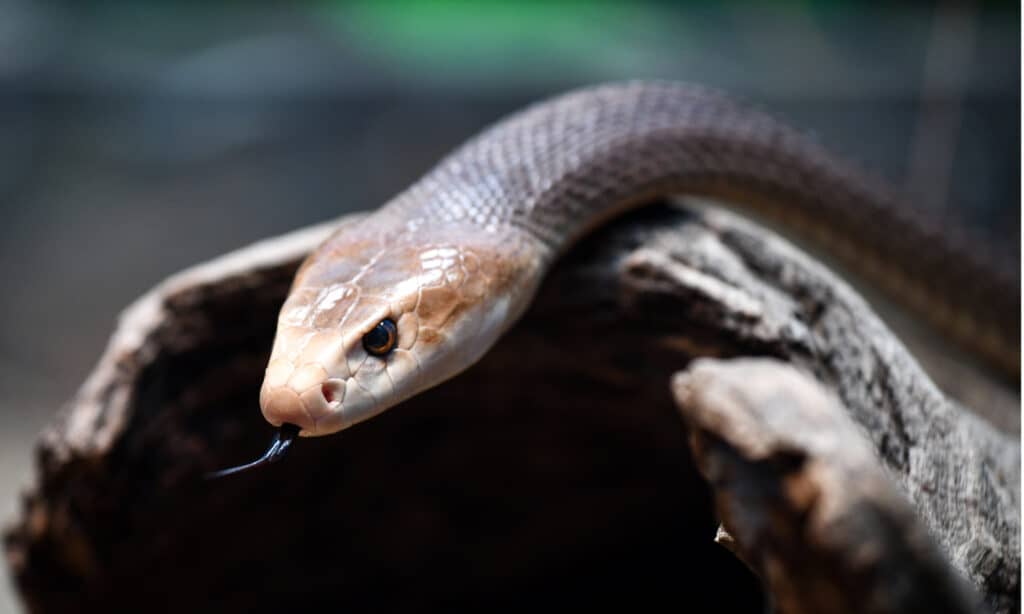
A head shot of a coastal taipan flicking its tongue

The coastal taipan snake’s head is wider than the rest of its body.

Where To Find Taipans

Depending on the species, taipans live in burrows or crevices in the deserts of western Australia, in semi-dry areas in the center of Australia, or in the woods and monsoon forests near the coasts of Australia or Papua New Guinea. The coastal taipan is especially fond of sugarcane fields where its rodent prey is abundant.

Scientific Name

The genus name for taipans is Oxyuranus. The real meaning of this name comes from the Greek oxys, which means “sharp” and ouranos, which means “the vault of heaven” and is also the origin word for the lovely blue planet Uranus. It refers to the needle-like structure at the top of the snake’s palate. Some mistakenly believe that Oxyuranus means “sharp-tailed” because oura is Latin for “tail.” But the snake does not have a sharp tail.

There are three species of taipan, O. scutellatus, O. temporalis and O. microlepidotus. Scutellatus means “saucer-shaped” in Latin. O. scutellatus has two subspecies:

  • O.s. canni
  • O.s. scutellatus

Temporalis means “temples of the head” in Latin, and microlepidotus means “small scales” in Greek.
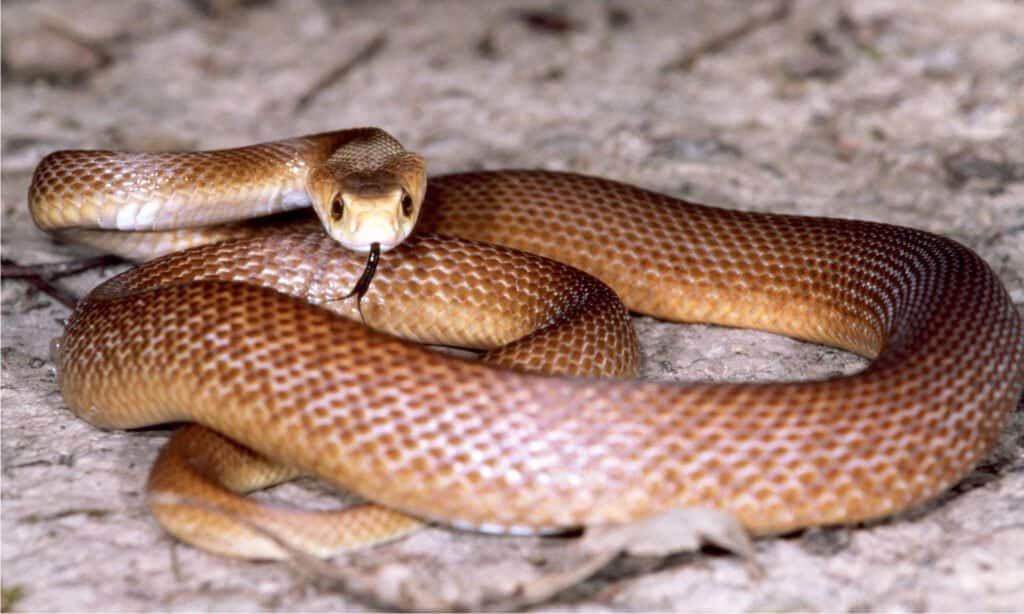
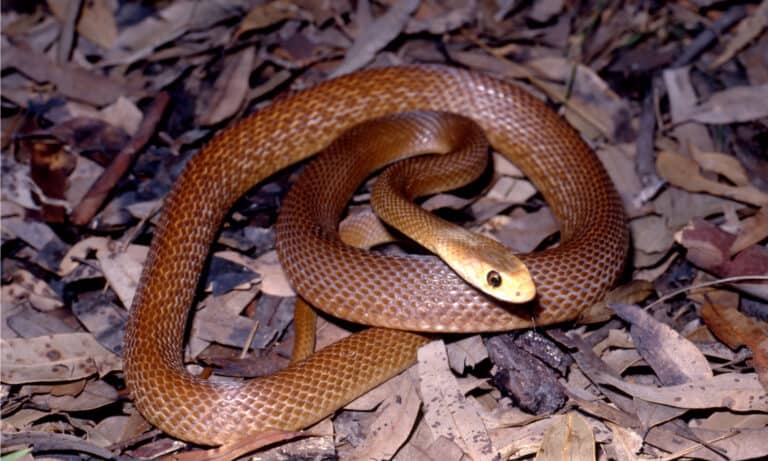
Coastal Taipan, a snake similar to the Central Ranges Taipan. The Central Ranges Taipan has a brown body with pale head.

Coastal Taipan, a snake similar to the Central Ranges Taipan. The Central Ranges Taipan has a brown body with pale head.

The Different Types of Taipan

There are three species of taipan.

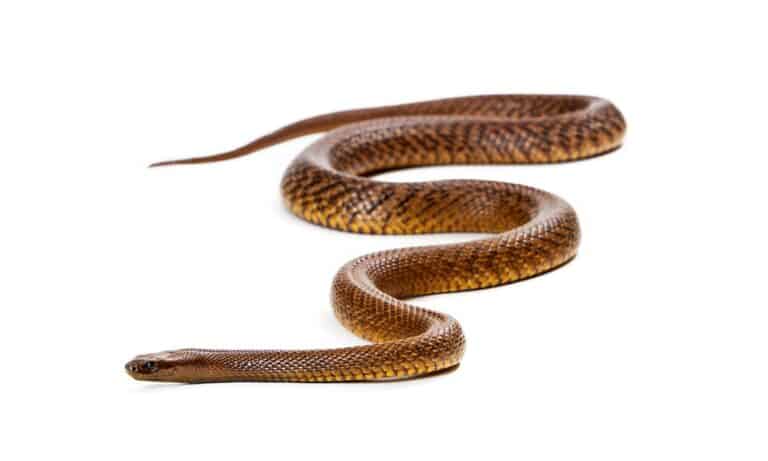
  • The coastal, or common taipan, Oxyuranus scutellatus, lives in a variety of habitats. These include sugarcane fields, woods, savannas, and monsoon forests. It is a long and fast snake that can grow over 9 feet in length. Its conservation status is least concern. The subspecies, Papuan taipan, O.s. canni, is found in the southern portion of the island of New Guinea.
  • The central ranges taipan, Oxyuranus temporlis, was only recently discovered and is found in the deserts, shrublands, and grasslands and among the blue gum trees of western Australia and the Northern Territory. It too can grow over 9 feet in length, and though it seems rare its conservation status is the least concern.
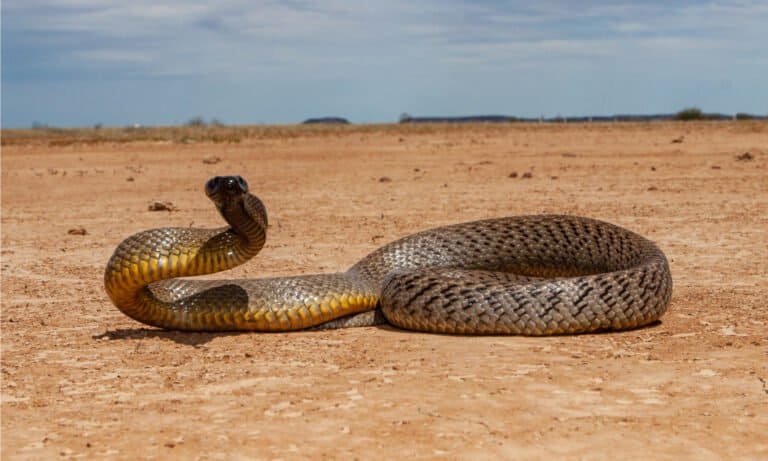
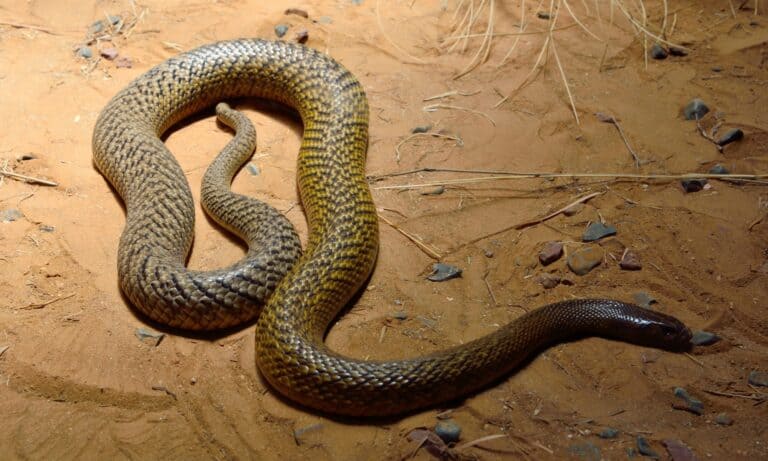
  • The inland taipan, Oxyuranus microlepidotus, lives in the hot and dry deserts of west and southwest Queensland, South Australia, New South Wales, and the Northern Territory. Because of the area’s climate, the snake spends much of the day hiding in burrows, sinkholes, or rock crevices. Though its status is also of the least concern, the inland snake, like other Australian snakes, is protected.
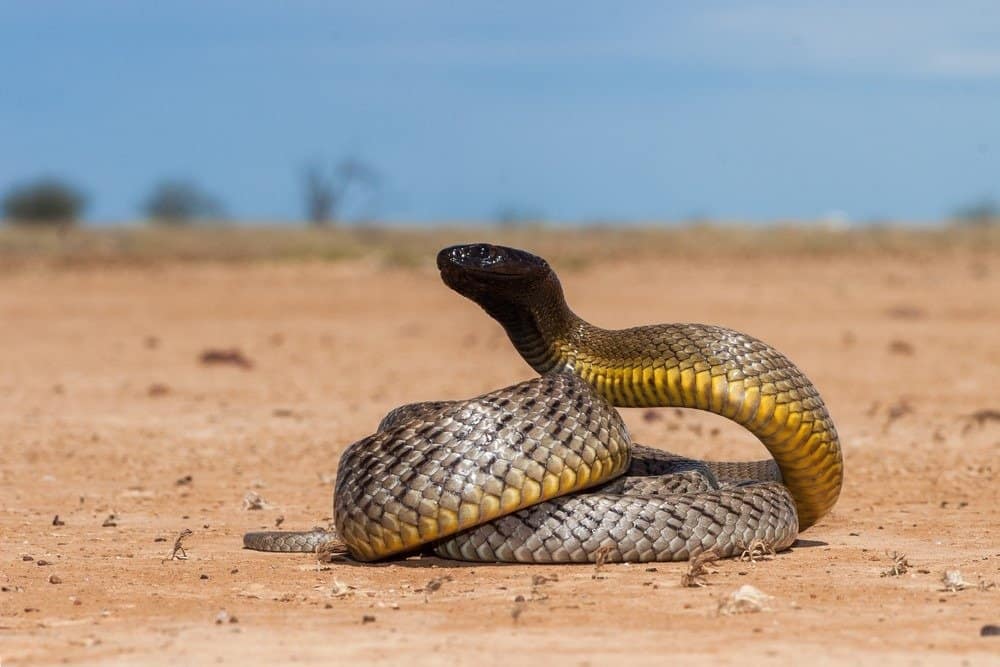
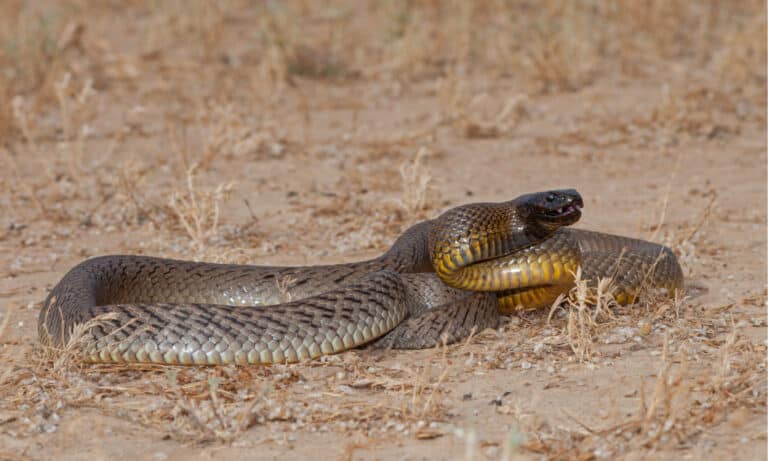
10 Most Venomous Animals - Inland Taipan in strike position

The Inland taipan is a different color that the coastal and central ranges taipans – and is adapted to desert life.

Evolution

Fossil records show that snakes first appeared during the Cretaceous period – although they often retained their hind limbs. The earliest true snake fossils come from the marine simoliophiids, the first being Hassiophis terasanctus, dated between 112 – 94 million years ago.
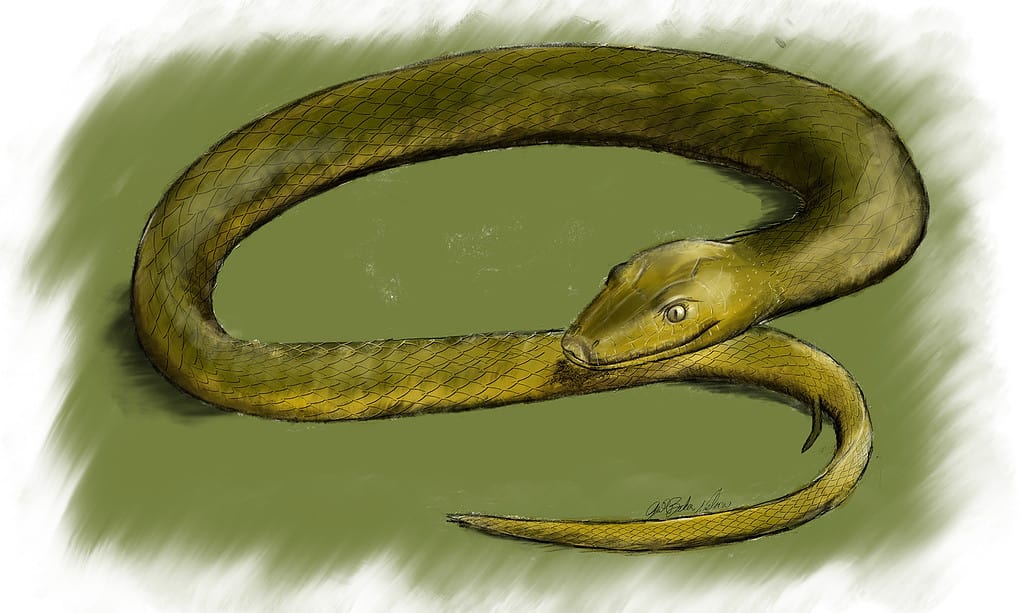
Haasiophis terrasanctus
Haasiophis terrasanctus, found in Israel, is one of the first “true” snakes and still has hind legs.

Scientists believe that snakes descended from lizards. Pythons and boas, the most primitive snakes, have vestigial hind limbs and some have remnants of a pelvic girdle appearing as horny projections.

Many modern snakes originated during the Paleocene alongside the radiation of mammals that occurred after the extinction of non-avian dinosaurs. The expansion of grasslands in North America led to a major radiation of snakes. During the Miocene, the number of snake species increased with the first vipers and elapids and the diversification of Columbridae.

How To Identify Taipans: Appearance and Description
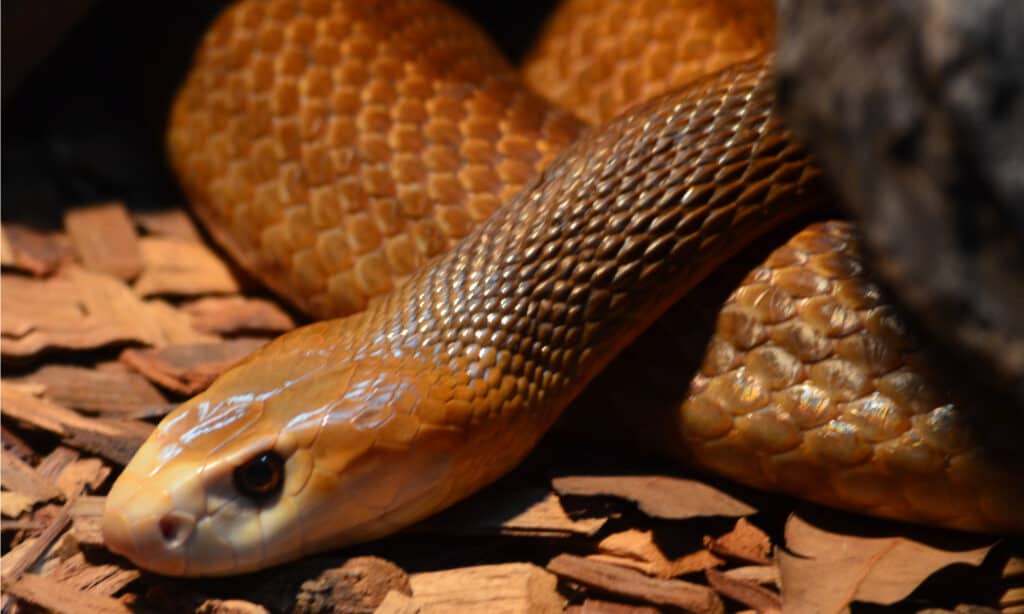
A large taipan can grow to over 9 feet – and with great size comes a large load of venom.

One of the reasons that taipans are so extraordinarily dangerous to humans is that they are quite large snakes. A large taipan can grow to over 9 feet in length and a snake that large can carry a large load of venom. Females are larger than males. Interestingly, the fangs are surprisingly small and don’t need to fold back into the mouth as is the case with some vipers. The fangs of the inland taipan, for example, are between 0.14 and 0.24 inches long.

Taipans can come in colors that range from brown to gray to light brownish-green to buff to beige. Once in a while, there may be a blue morph. Sometimes the scales are edged with black or yellow to create an appealing pattern. Not only this, the snake’s color changes with the seasons. They become lighter in color during the warm weather and darker during the cooler weather. Their ventral area is paler than the dorsal area.

At first glance, these snakes look alike, but they can be told apart by the number of scales along the edge of the mouth of the lower jaw if one is brave enough to count them.
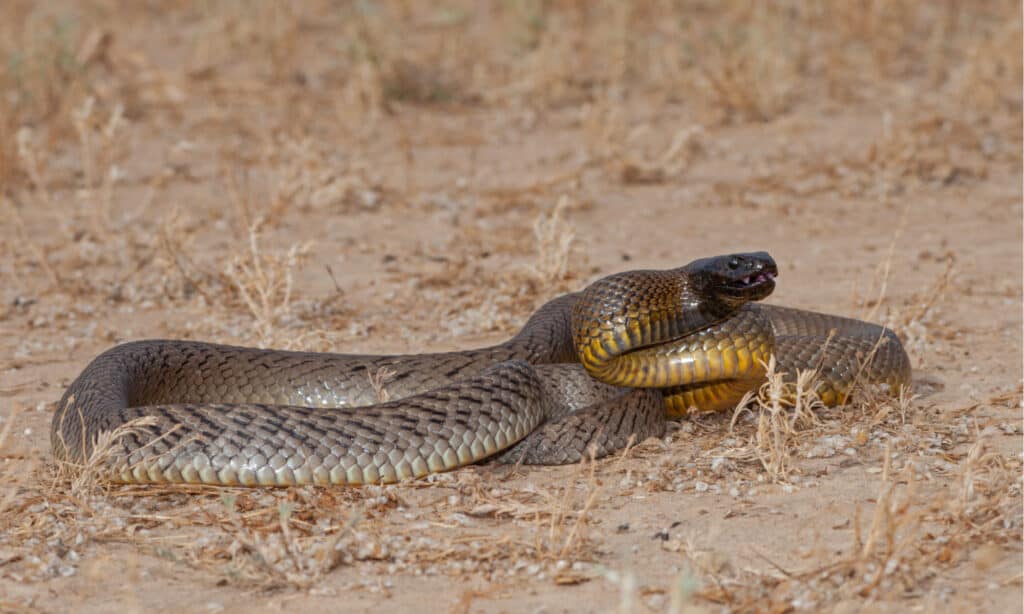
Inland Taipan ( Oxyuranus microlepidotus) in it's habitat, South Western Queensland Australia. Because of the area’s climate, the snake spends much of the day hiding in burrows, sinkholes or rock crevices.

Oxyuranus microlepidotus, also known as Inland taipan, is known as the world’s most venomous and deadly snake.

Venom: How Dangerous Are Taipans?

Taipans are among the most venomous snakes on earth. Of the three most venomous species, two of them are taipans. Their venom was made to subdue warm-blooded animals and contains a deadly stew of neurotoxins that attack the nervous system, hemotoxins that attack the blood, and myotoxins that attack the muscles. Taipan venom also stops the blood from clotting, which can lead to fatal brain bleeds and may also contain toxins that destroy the kidneys. The death rate of an untreated taipan bite is about 80 percent, and even if the victim doesn’t die, they can suffer severe and long-lasting injury and impairment.

Diet
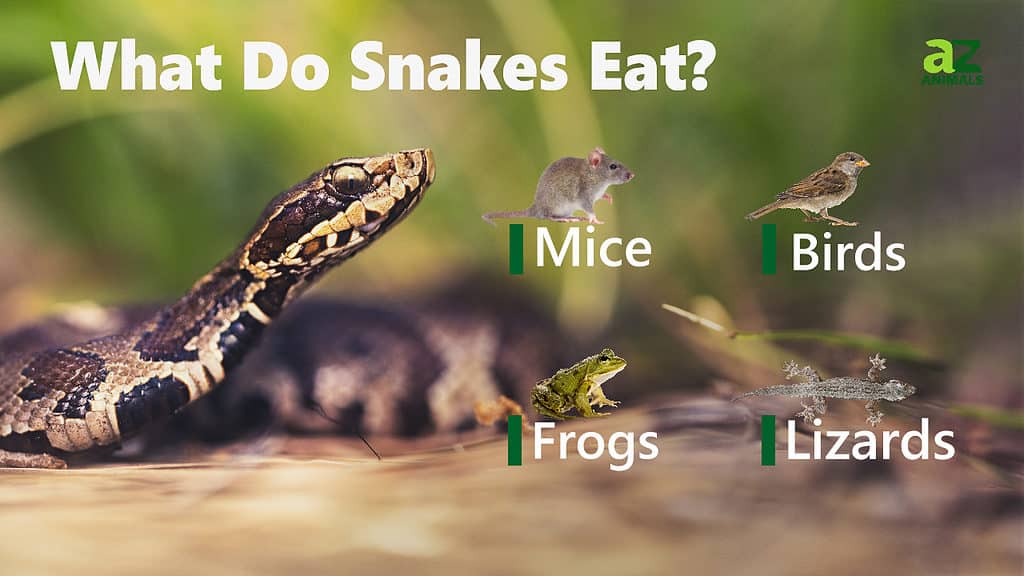
snakes eats

Despite the lethality of its venom, taipans are beneficial in that they love to eat rats and mice, especially those that infest sugarcane fields. Taipans also eat birds and little marsupials such as kultarrs and bandicoots.

Behavior and Humans
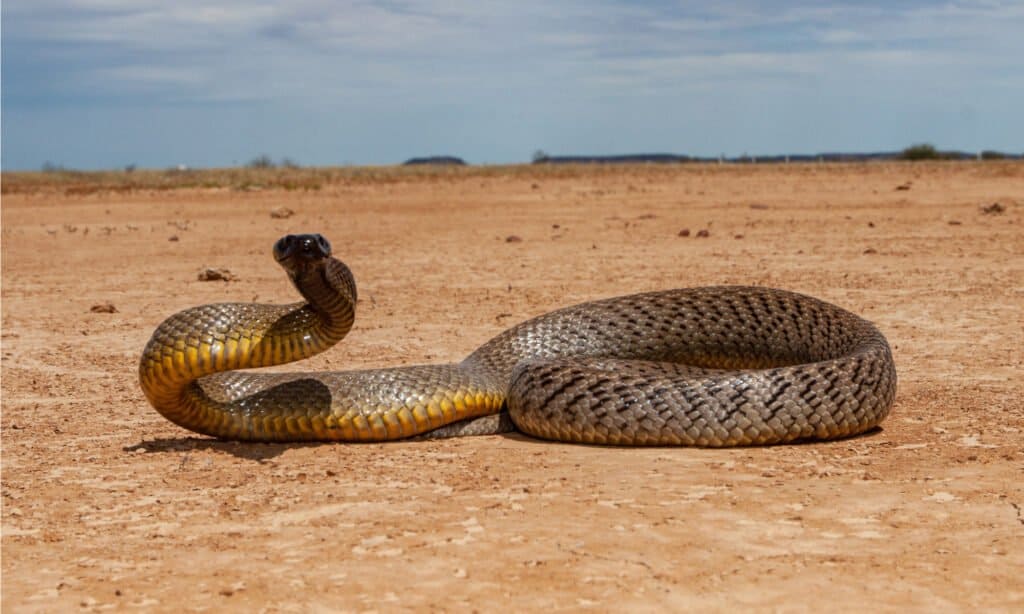
Inland Taipan, a snake similar to the Central Ranges Taipan. The Central Ranges Taipan a species of highly venomous, deadly, and fast-moving taipan snakes.

After a taipan finds prey, it bites it several times and waits patiently for it to die before consuming it.

Taipans are usually active during the day, but if the temperature becomes too hot, they will hunt in the evening or at night when it’s cooler. Their hunting strategy is to find prey, bite it a few times, then wait for it to die of the venom. Then, the snake uses its forked tongue to pick up the prey’s chemical trail. When it finds the body, it swallows it whole. The strategy of quickly envenomating prey protects the snake from injury from sharp-toothed creatures such as plague rats. But as with many venomous animals in Australia, the snake’s venom is far more potent than is needed. Humans are not the snake’s prey, but a bite from a coastal taipan can kill 56 humans.

Generally, taipans are shy and prefer to avoid threats by trying to get away from them, but they will attack and bite if they are cornered. The coastal taipan has a reputation for being bad-tempered, but it too would rather avoid danger. Because of this, taipan bites are rare.

Taipans mate in the spring, which in Australia and New Guinea is from August to December. The males engage in combat where they try to force their rival’s head down to the ground. These bouts can last for hours until one male gives up and slithers away. The male then mates with the interested female, and this too can take some hours. She may also mate with two or more males during the breeding season.
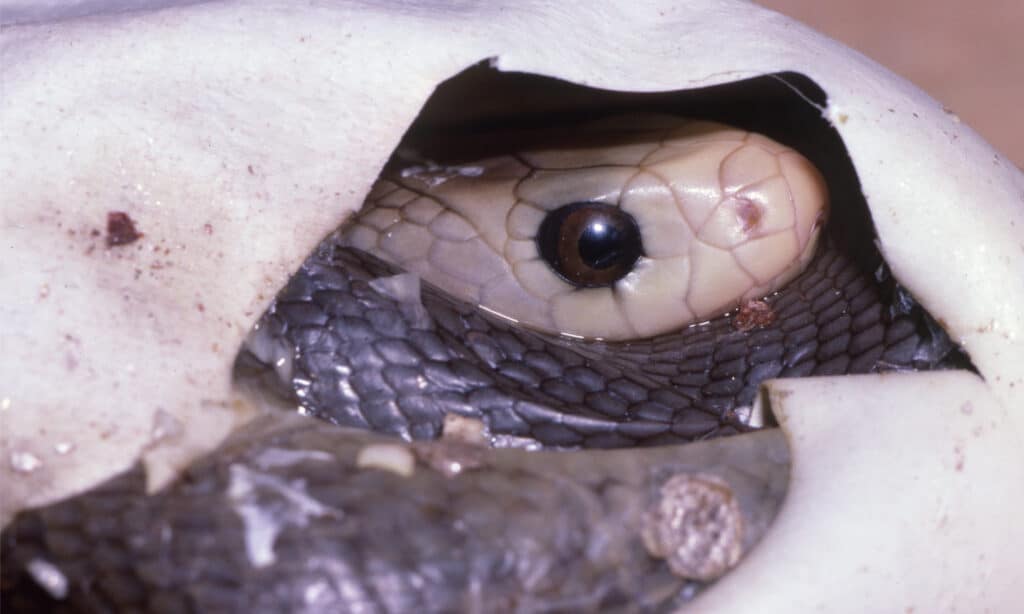
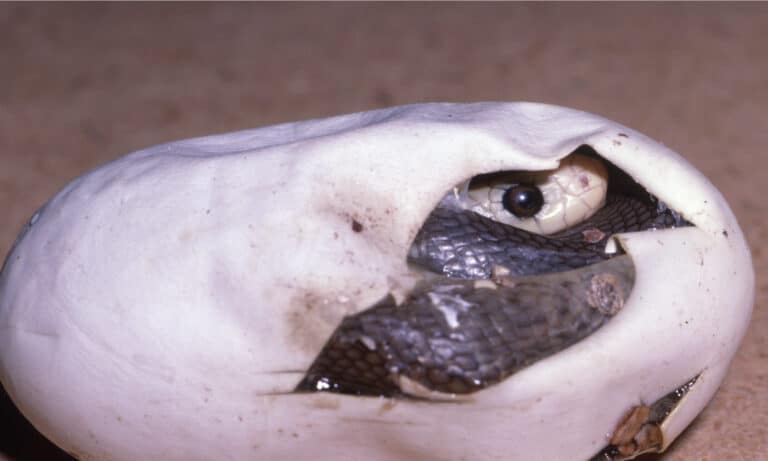
Cut away of egg showing Coastal Taipan inside

Coastal taipan lay from 3 – 20 eggs.

Two months later, she’ll lay between 12 and 24 eggs. The older and larger she is, the more eggs she’ll lay. The female leaves the eggs after she’s laid them and may wait a couple more years before she mates again. The baby snakes hatch after about two months and grow very quickly. Males are ready to breed when they’re about 16 months old, while females are ready when they’re about two years old. The lifespan of this snake is between 10 and 15 years, but the Australia Zoo had an inland taipan that lived to be over 20.

View all 608 animals that start with T

Sources

  1. Wikipedia / Accessed May 3, 2022
  2. The Reptile Database / Accessed May 3, 2022
  3. Australian Museum / Accessed May 3, 2022
  4. Billabong Sanctuary / Accessed May 3, 2022
  5. Kidadl / Accessed May 3, 2022
  6. Australian Museum / Accessed May 3, 2022
Lisha Pace

About the Author

Lisha Pace

After a career of working to provide opportunities for local communities to experience and create art, I am enjoying having time to write about two of my favorite things - nature and animals. Half of my life is spent outdoors, usually with my husband and sweet little fourteen year old dog. We love to take walks by the lake and take photos of the animals we meet including: otters, ospreys, Canadian geese, ducks and nesting bald eagles. I also enjoy reading, discovering books to add to my library, collecting and playing vinyl, and listening to my son's music.

Thank you for reading! Have some feedback for us?


Taipan FAQs (Frequently Asked Questions)

There are three species of taipan. They are the common taipan, which has two subspecies, the inland taipan, and the central ranges taipan.