
Quick Take
- Nobody actually knows how many snakes live in the U.S. The reason says a lot about how well they hide.
- A new road-survey trick may finally crack the code on counting snakes that are almost never seen twice.
- One state wins the snake-diversity crown, and it isn't the one you'd guess from the desert stereotype.
- Two states have zero snakes, but one of them has a sneaky stowaway story.
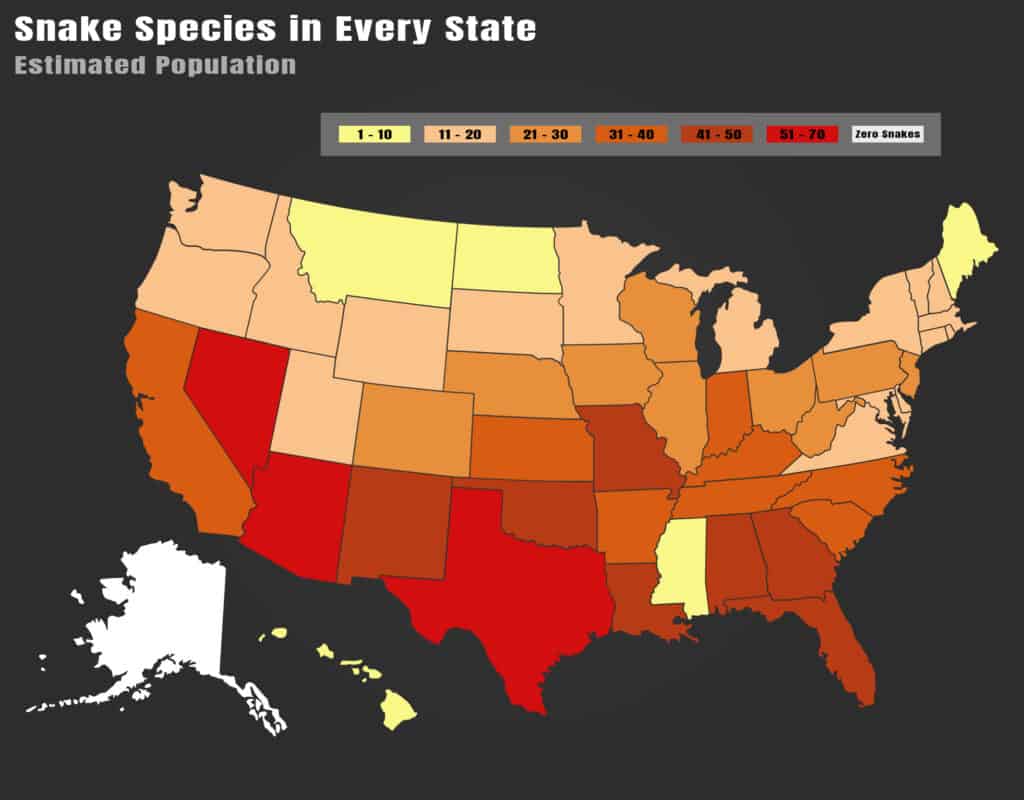
Snakes are found all over the United States, but how does the snake population break down by state? Due to the challenges of accurately estimating determining snake populations, we’ve listed the number of snake species you can expect to see in each U.S. state. However, first, we’ll discuss why monitoring snake abundance is so difficult, as well as how scientists are working to find better ways to track snake populations for conservation purposes.
What Is the Total Snake Population in the U.S.?
How many snakes live in the United States? The answer is that we don’t know. While conservationists point out that the global snake population is declining all over the world, one major problem is that we don’t know how many snakes we’re talking about. Researchers explain that “Reliable data on snake populations are rare due to the challenges of sampling these patchily distributed, cryptic, and often nocturnal species and also due to their underrepresentation in the ecological literature.”
There are two reasons for this underrepresentation. One is that snakes have not been listed as a priority species for protection and tracking until recently. The other is that snakes are notoriously difficult to track. They are usually nocturnal, and they’re excellent at hiding. Research on snake monitoring efforts has shown 1/5th of all reptiles are classed as Data Deficient, which is a conservation category developed by the International Union for Conservation of Nature (IUCN). Data Deficient means we don’t have enough information on their population status to determine whether a species is at risk of extinction. The article notes, “Snakes have some of the lowest detection rates among reptiles.”
Tracking Snake Populations
Wildlife scientists have tried to develop ways to track populations of snakes and other reptiles. They primarily use two methods. One is the occupancy model, which looks at the snake’s surrounding environment to see how it has been affected by the presence of snakes. Another is the capture-mark-release (CMR) model, which involves trapping snakes, tagging them with a marker, and then releasing them back into the wild. Neither of these have been sufficient to develop accurate population estimates. The need for good methods is urgent, however, because biologists want to figure out what is causing the decline in snake populations.
In 2017, a scientist at the University of Arkansas, developed a new method for counting secretive species that he calls the Innovative Density Estimation Approach for Secretive Snakes (IDEASS). CMR is the traditional way to estimate some species populations, but that has limited use with snakes because they are seldom recaptured and they are very secretive. However, IDEASS allows researchers to estimate densities without recapturing individuals. It uses road surveys as the most reliable way to track and monitor all these elusive snakes. The method is currently being tested on government-owned land to monitor snake populations.
How Many Snake Species Live in Every U.S. State?
So, as we explained above, this article will list the number of snake species known to live in each state, rather than population numbers. We’ll also include information about the types of snakes that can be found there.
Alabama: 49
Alabama has 49 snake species, including 12 aquatic species and six venomous species. Venomous snakes include the copperhead, cottonmouth, eastern diamondback rattlesnake, timber Rattlesnake, pygmy rattlesnake, and the eastern coral snake.
Alaska: 0
Alaska has no snake species.
Arizona: 52
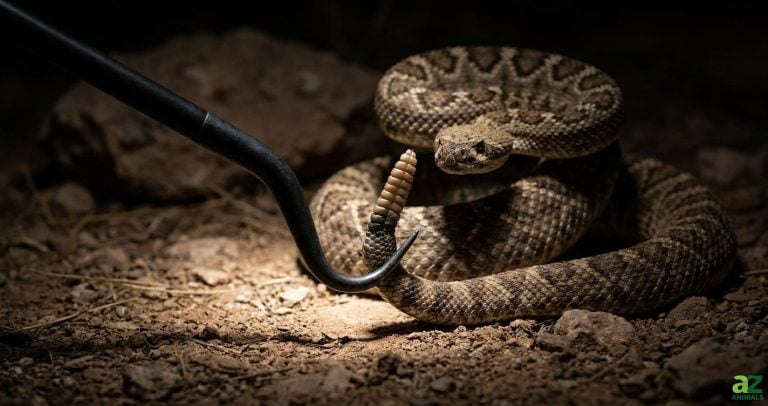
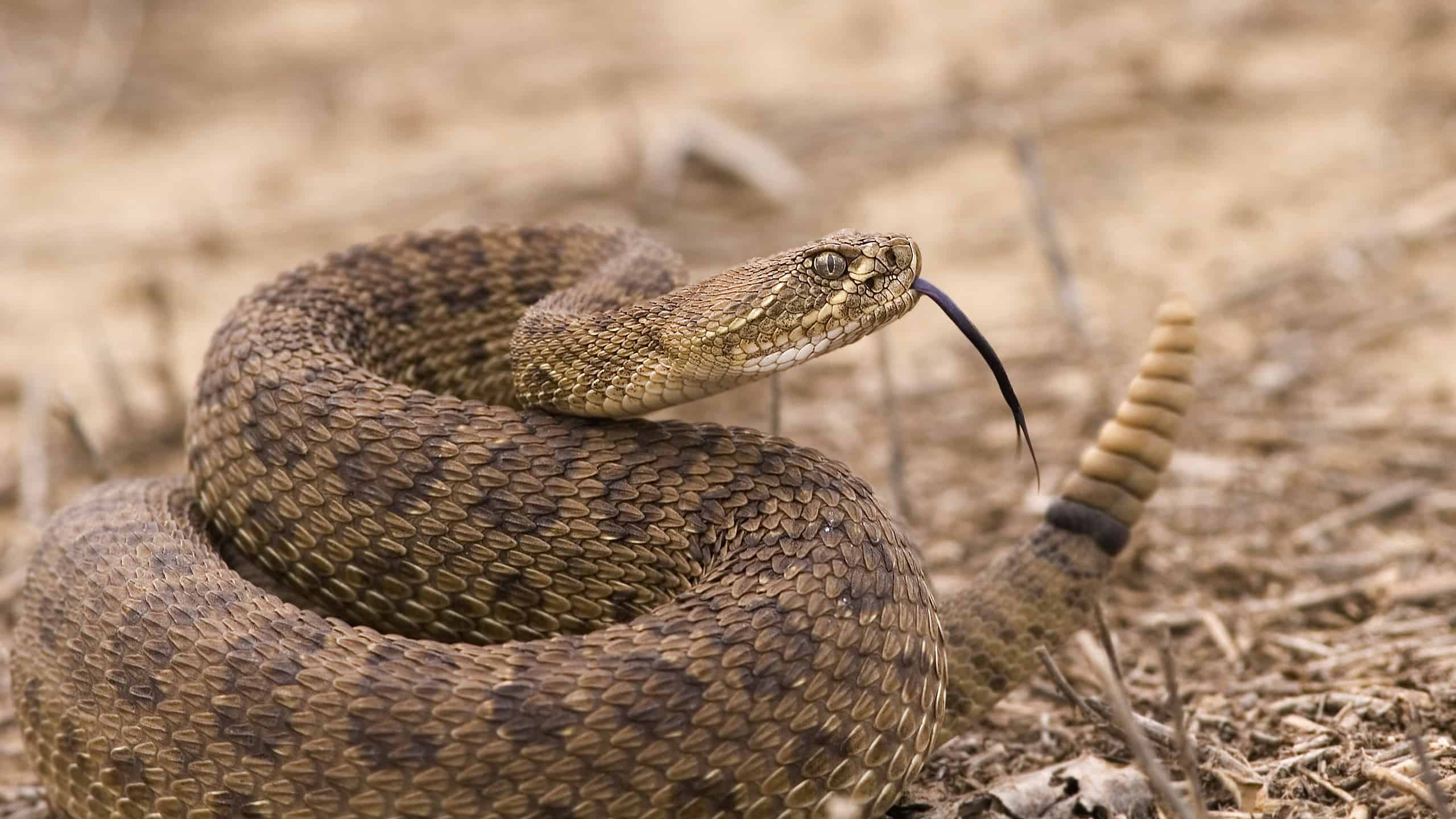
Of Arizona’s 52 snake species, 13 are rattlesnakes. The state has more rattlesnake species than any other. The most commonly encountered rattlesnakes in Arizona are the western diamondback, sidewinder, Mojave, and black-tailed rattlesnake.

Arizona is home to 13 species of rattlesnakes, which is more than any other state.
©DMartin09/Shutterstock.com
Arkansas: 39
Arkansas has 39 snake species. Six are venomous, including the eastern copperhead, northern cottonmouth, western diamond-backed rattlesnake, timber rattlesnake, western pigmy rattlesnake, and Texas gulfcoast coralsnake. The most common native snakes are the eastern hognose and the black rat snake.
California: Nearly 50
California is home to nearly 50 native snake species, including seven species of rattlesnake. These include the Mojave, Panamint, red diamond, sidewinder, speckled, and western dimondback, and western rattlesnake.
Colorado: 29
With 29 snake species, Colorado is a good place to try to spot these slithering beauties. Only three of its species are venomous, and they’re all rattlesnakes. The western massasauga rattlesnake, the midget faded rattlesnake and the prairie rattlesnake all call the state home.
Connecticut: 14
Connecticut has 14 snake species, but only two are venomous: the northern copperhead and timber rattlesnake. Some common non-venomous species include the eastern milk snake and the northern redbelly.
Delaware: 19
Delaware is home to 19 snake species. The most common snakes in the state are the eastern rat snake, black racer, common garter snake and the common water snake. The only venomous snake in the state is the eastern copperhead.
Florida: 50
With 50 native snake species, Florida’s wild areas have more snakes than any state on the east coast. Its native snakes include the Florida brown snake and the ring-necked snake. Only six snake species are venomous: the eastern coral snake, the southern copperhead, the cottonmouth, the eastern diamondback rattlesnake, the timber rattlesnake, and the dusky pygmy rattlesnake.
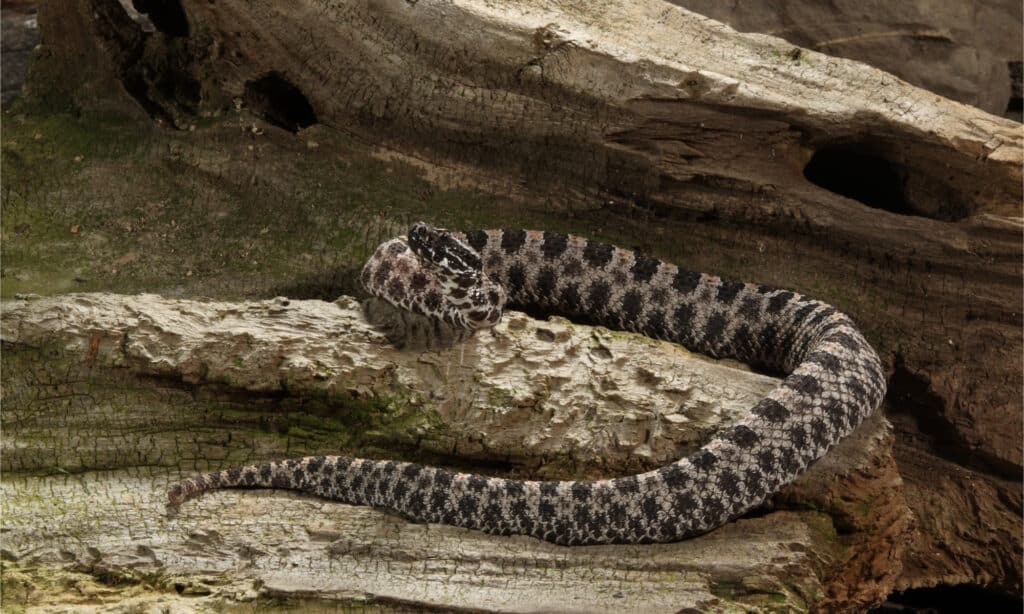
The dusky pygmy rattlesnake is one of six native venomous snakes in Florida.
©Dennis W Donohue/Shutterstock.com
Georgia: 47
Like its neighbor Florida, Georgia has a large, diverse snake population with 47 native species. Its snakes live all over the state and include brown water snakes, queen snakes, common garter snakes, and ring-necked snakes. Venomous snakes are the copperhead, northern cottonmouth, Florida cottonmouth, eastern coral snake, eastern diamondback rattlesnake, pygmy rattlesnake, and the timber rattlesnake.
Hawaii: 0
Hawaii has no native land snake species. However, experts believe the Brahminy blind snake was accidentally introduced to Hawaii in the 1930’s in landscaping shipments. Yellow-bellied sea snakes also occasionally drift in the waters off Hawaii, but they do not come on land.
Idaho: 12
Idaho is home to 12 snake species, including the commonly seen garter snake, gopher snake, and North American racer. Only the western rattlesnake and the prairie rattlesnake are venomous.
Illinois: 40
Illinois has 40 native snake species, but only four are venomous. The venomous snakes found in Illinois are the copperhead, cottonmouth, timber rattlesnake, and massasauga rattlesnake. Some common non-venomous snakes found in the state are common and plains garter snakes, eastern and western foxsnakes, and DeKay’s brownsnake.
Indiana: 32
There are 32 snake species in the Hoosier State. Some common snakes include the eastern hog-nosed snake, gray rat snake, and the common garter snake. It is also home to four venomous snakes, including the copperhead, cottonmouth, eastern massasauga rattlesnake, and the timber rattlesnake.
Iowa: Almost 30
Iowa has nearly 30 snake species, including four that are venomous. These include the massasauga, timber, and prairie rattlesnakes, as well as the copperhead. Common snakes you may see are the common garter snake, bullsnake, western foxsnake, and the North American Racer.
Kansas: 42
Kansas’s farms invite rodents, who make a tasty meal for its 42 snake species. They are mostly harmless ring-necked snakes, hognoses, rat snakes, and garter snakes. Only copperheads, cottonmouths, and timber, massasauga, western diamondback, and prairie rattlesnakes are venomous.
Kentucky: 33
Kirtland’s snakes, ribbon snakes, northern water snakes, and pine snakes are just a few of the 33 snake species that call Kentucky home. Just four of these snakes are venomous, including the copperhead, western cottonmouth, timber rattlesnake, and the pygmy rattlesnake.
Louisiana: 47
Louisiana’s swamps and bayous provide ideal hunting and hiding grounds for its 47 native snake species. You are most likely to see the ring-necked snake, scarlet kingsnake, pine snake, and Mississippi green water snake. The eastern copperhead, harlequin coral snake, eastern diamondback rattlesnake, northern cottonmouth, pygmy rattlesnake, and timber rattlesnake are the state’s venomous snakes.
Maine: 9
Maine has nine snake species, but no venomous snakes. Some of the most common species are the eastern ribbon snake, western ribbon snake, eastern garter snake, and the common garter snake.
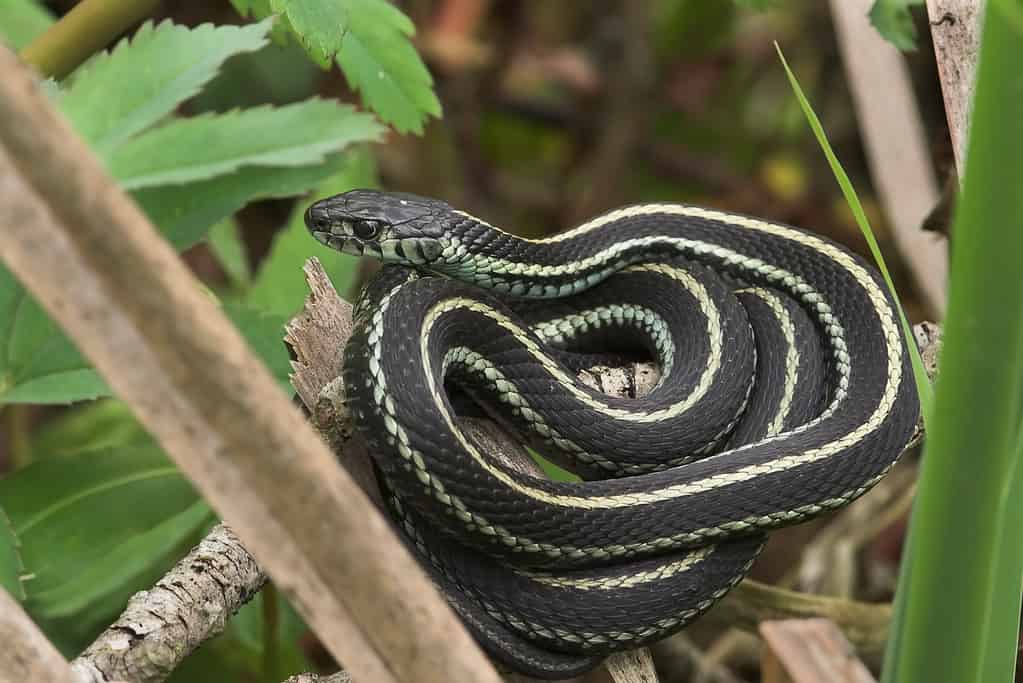
Garter snakes are among the most widely distributed snake species in the U.S.
©iStock.com/rkhalil
Maryland: 27
Maryland has 27 native snake species. They include common water snakes, plain-bellied water snakes, queen snakes, and smooth earth snakes. One of the state’s most attractive snakes is the small, reddish-brown mountain earth snake. There are just two venomous snakes: the timber rattlesnake and the eastern copperhead.
Massachusetts: 14
Massachusetts has 14 snake species, which are mostly non-venomous. The largest is the black rat snake, which can grow more than 8 feet long. It is harmless, and it’s also listed as endangered in the state. Only the the timber rattlesnake and the copperhead are venomous.
Michigan: 18
The eastern garter snake, Butler’s garter snake, the northern ribbon snake, and the western fox snake are some of the native species that call Michigan home. The state’s 18 native species include only one venomous snake, the eastern massasauga.
Minnesota: 17
Most of the 17 native species in Minnesota are harmless garden visitors. Among these are the plains hognose, northern water snake, gopher snake, common garter snake, and the smooth green snake. The state has just two venomous snake species, the eastern massasauga and timber rattlesnakes.
Mississippi: 55
Mississippi’s warm waters are home to 55 snake species. Six venomous snakes inhabit the state, including the copperhead, cottonmouth, eastern coral snake, pygmy rattlesnake, eastern diamondback rattlesnake, timber rattlesnake. Common non-venomous snakes are the common garter snake, eastern milk snake, and the black racer.
Missouri: 49
There are 49 snake species and subspecies in the state of Missouri. Here, you’ll find eastern yellow-bellied racers, northern scarlet snakes, prairie ringneck snakes, and western worm snakes. Venomous snake species include the eastern copperhead, northern cottonmouth, timber rattlesnake, the eastern and prairie massasauga rattlesnakes, and the western pygmy rattlesnake.
Montana: 10
The chances of encountering a deadly snake in Montana are low. The state has just 10 native species, and only one, the prairie rattlesnake, is venomous. Non-venomous snakes you may spot include northern rubber boas, plains hognose snakes, and common garter snakes.
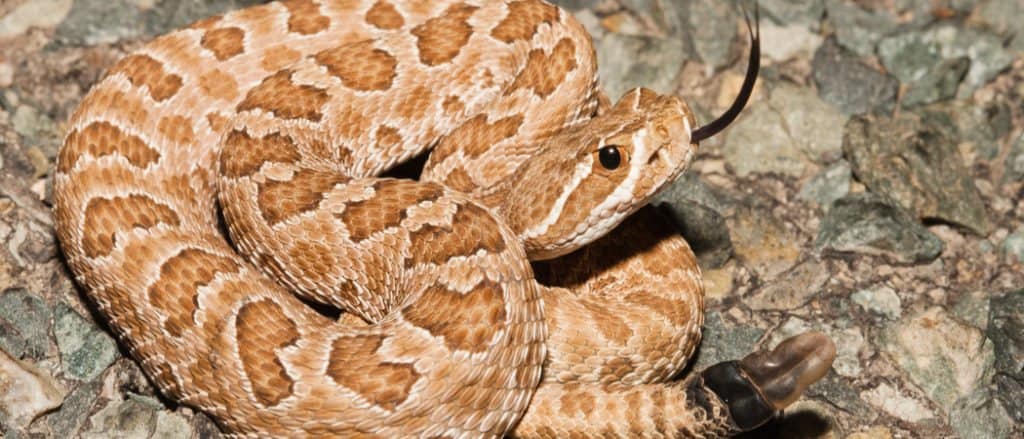
The prairie rattlesnake is Montana’s only venomous snake.
©Nathan A Shepard/Shutterstock.com
Nebraska: 29
The eastern glossy snake, speckled kingsnake, smooth green snake, and coachwhip are some of the 29 snake species you’ll find in Nebraska. The state is also home to the western foxsnake and Graham’s crayfish snake. It has four venomous species, including the copperhead, as well as the massasauga, prairie, and timber rattlesnakes.
Nevada: Over 25
Nevada is home to over 25 snake species. Venomous snakes include six species of rattlesnakes: the sidewinder, speckled, panamint, Mojave, Great Basin and western diamondback rattlesnakes. However, you’ll also find many non-venomous species like the beautiful Arizona Mountain and the California Lyre. The coachwhip, desert glossy snake, and desert night snake are among its native species.
New Hampshire: 11
New Hampshire has 11 snake species. Five of these species are considered in greatest need of conservation. These include the venomous timber rattler, the only venomous snake in the state, as well as the eastern hognose, northern black racer, smooth green snake, and ribbon snake. Fortunately, killing snakes is illegal in the state, which provides these threatened snakes with some protection.
New Jersey: 22
The New Jersey has 22 native snake species. Common snakes include the northern water snake, eastern milk snake, and the eastern kingsnake. It only has two venomous species, the northern copperhead and the timber rattlesnake.
New Mexico: 49
Like Texas and Arizona, New Mexico is home to many snakes. The state has 49 native snake species, including eight venomous snakes. Its unique native species include the Sonoran coral snake, New Mexico blind snake, Chihuahuan night snake, and the plains black-headed snake. Venomous snakes include the rock rattlesnake, western diamondback rattlesnake, western (prairie) rattlesnake, Mojave rattlesnake, black-tailed rattlesnake, massasauga rattlesnake, ridgenose rattlesnake, and the western coral snake.
New York: 17
New York has 17 native snake species. The common garter snake, black rat snake, and northern water snake are a few of the most common snake species. The state has just three venomous snakes, which are the northern copperhead, the timber rattlesnake, and the eastern massasauga rattlesnake.
North Carolina: 38
North Carolina has 38 snake species. Gentle green snakes, corn snakes, eastern milk snakes are among the state’s most common species. The state is also home to five venomous species, including the pygmy rattlesnake, eastern diamondback rattlesnake, copperhead, cottonmouth, and the timber rattlesnake.
North Dakota: 8
North Dakota’s 8 snake species include one venomous species, which is the prairie rattlesnake. The Plains garter snake and the common garter snake are the two most common snake species in the state.
Ohio: 25
The state of Ohio has 25 species of snakes. Most of its snakes are harmless, including the common queen snake, northern water snake, eastern garter snake, and the North American racer. The eastern copperhead, massasauga rattlesnake, and timber rattlesnake are the only venomous snakes in the state.
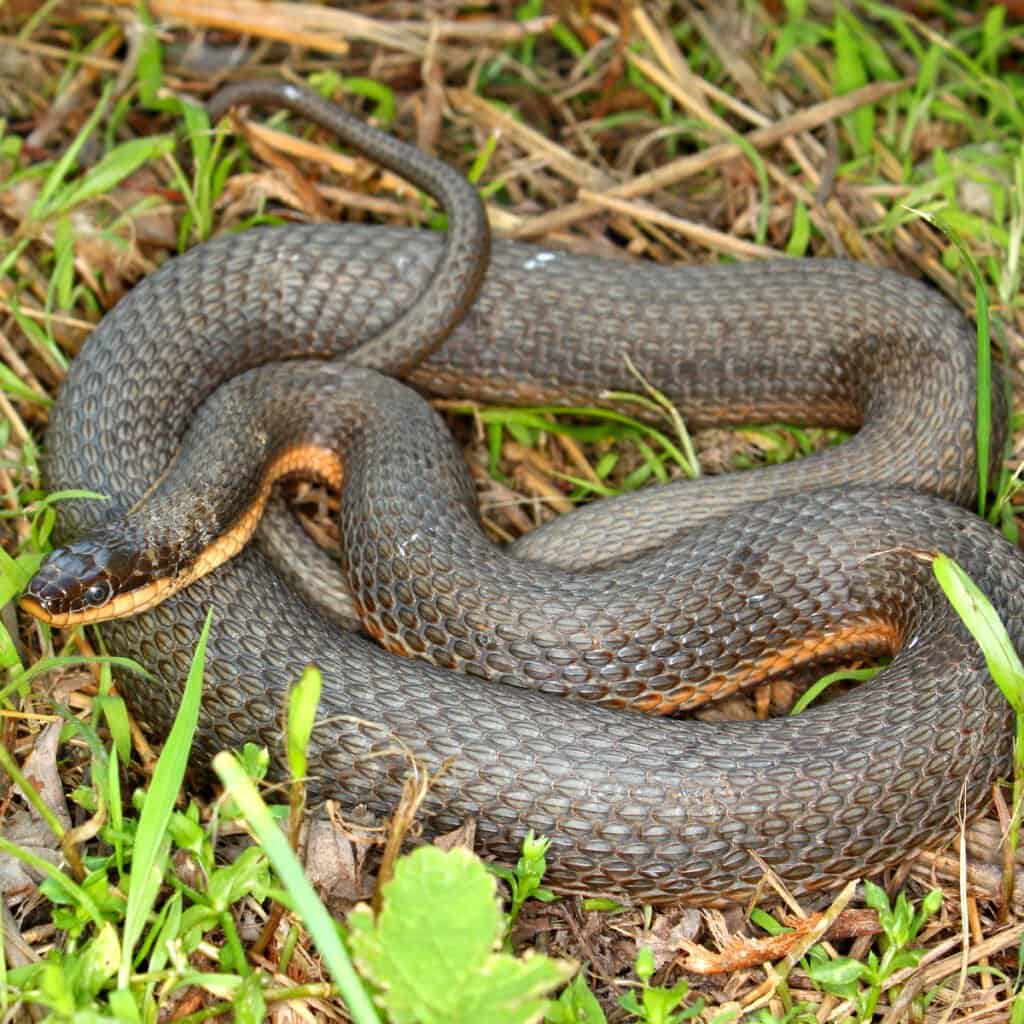
The queen snake is a non-aggressive, non-venomous snake found across North America.
©Jason Patrick Ross/Shutterstock.com
Oklahoma: Nearly 50
The state of Oklahoma has nearly 50 native snake species, including 7 venomous ones. Common snakes include plain-bellied and diamond-backed water snakes, bullsnakes, and kingsnakes such as the speckled kingsnake and the prairie kingsnake. The state’s venomous snakes are the copperhead, cottonmouth, and timber, western diamondback, prairie, western massasauga, and western pygmy rattlesnakes.
Oregon: 15
Oregon is home to 15 native snakes. The California mountain kingsnakes and rubber boa are two of the state’s unique species. Only the Western rattlesnake is venomous.
Pennsylvania: 21
Pennsylvania’s woodlands are home to 21 snake species, including common snakes such as the central ratsnake, northern black racer, eastern hognose, and eastern milksnake. Only three of the species found in Pennsylvania are venomous. These are the timber rattlesnake, eastern massasauga rattlesnake, and the eastern copperhead.
Rhode Island: 12
There are no venomous snake species in Rhode Island, but there are 12 non-venomous snakes native to the state. Some common species include the eastern garter snake, the eastern ratsnake, and the eastern hognose snake.
South Carolina: 38
There are 38 species of snakes in South Carolina. Black racers, rough green snakes, eastern kingsnakes and non-venomous water snakes are some of the most common species in the state. There six species of venomous snakes, including the copperhead, coral snake, cottonmouth, pygmy rattlesnake, eastern diamondback rattlesnake, and the timber rattlesnake.
South Dakota: 16
South Dakota has many reptiles, including 16 different snake species. Only one, the prairie rattlesnake, is venomous. North American racers, common garter snakes, and eastern hognose snakes can also commonly be found in South Dakota.
Tennessee: 32
Red corn snakes, gray rat snakes, and red-bellied mud snakes are among Tennessee’s 32 native snake species. Only four venomous snakes inhabit the state, including northern copperheads, cottonmouths, pygmy rattlesnakes and timber rattlesnakes.
Texas: 68
Texas has a large, diverse snake population. There are 68 species of snakes, but including sub-species, conservationists think there may be around 105 species that call Texas home. The vast majority are harmless, such as the Texas indigo, Texas rat snake, coachwhip, and speckled kingsnake. There are 15 venomous snake species and subspecies in the state, including rattlesnakes, cottonmouths, copperheads, and coral snakes. The state’s most venomous species is the Texas coral snake.
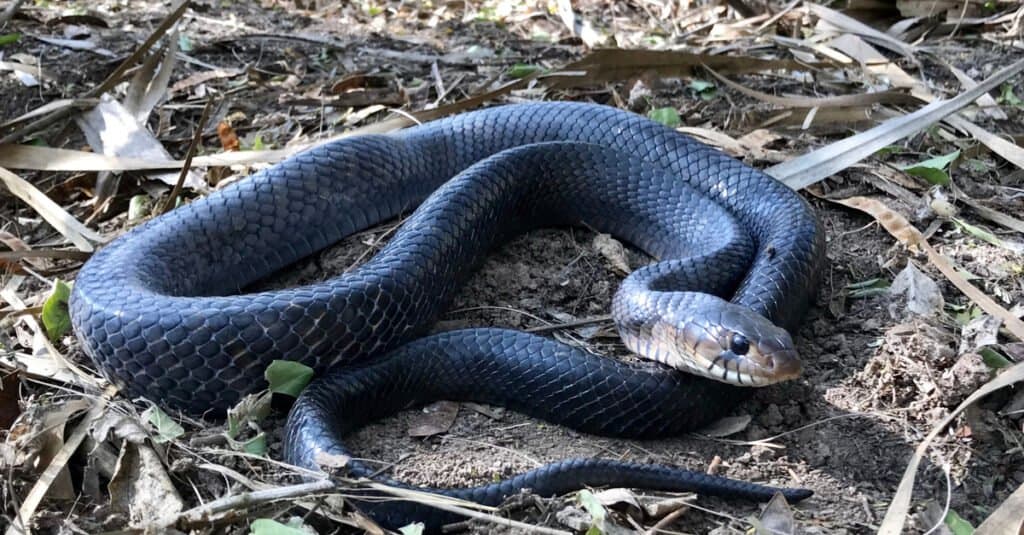
Texas indigo snakes are long, large-bodied snakes with a base color of iridescent black scales.
©Joe Farah/Shutterstock.com
Utah: 31
Utah has 31 species of snakes. Some of the common non-venomous snakes include the Great Basin gopher snake, wandering garter snake, western yellow-bellied racer, and the rubber boa. Fortunately, only seven snakes that inhabit the state are venomous: the sidewinder, speckled rattlesnake, Mojave rattlesnake, western rattlesnake, Hopi rattlesnake, midget-faded rattlesnake, and the Great Basin rattlesnake.
Vermont: 11
Vermont is home to 11 native snake species, including the central ratsnake, the red-bellied snake, and the common garter snake. The timber rattlesnake, the state’s only venomous snake species, is listed as endangered in the state.
Virginia: 32
Virginia is home to 32 snake species. Along with harmless northern pine snakes, red-bellied snakes, and garter snakes, you’ll find Virginia’s three venomous snakes: northern copperheads, northern cottonmouths, and timber rattlesnakes.
Washington: 12
The state of Washington has around 12 snake species. This state’s common harmless snakes include the Northern garter snake, the western terrestrial garter, the gopher snake, the black racer, and the night snake. Washington’s only venomous snake species in the western rattlesnake.
West Virginia: 24
Wild, wonderful West Virginia has many 24 snake species. Two of the snake species are venomous, the timber rattlesnake and eastern copperhead. Some of the state’s most common snakes include eastern garter snakes, eastern rat snakes, Northern black racers, Northern brown snakes, and common water snakes.
Wisconsin: 21
Of Wisconsin’s 21 species, 14 are classified as rare, threatened, or endangered. A few of these snakes are the queen snake, both eastern and western ribbon snakes, North American blue racer, gray rat snake, and Butler’s garter snake, among others. There are two venomous snakes in Wisconsin, the timber rattlesnake and the eastern massasauga rattlesnake.
Wyoming: 16
Of the 16 snake species in Wyoming, only two are venomous. These are the prairie rattlesnake and the midget faded rattlesnake. Common non-venomous snakes include the bullsnake, western milksnake, both the Plains and red-sided garter snake, and the northern rubber boa.