G
Species Profile

Giant African Land Snail

Achatina fulica

Big shell, bigger invasion story
Mark Brandon/Shutterstock.com

Giant African Land Snail Distribution

Click a location to explore more animals from that region

Invasive Species
Loading map...

Size Comparison

Human 5'8"
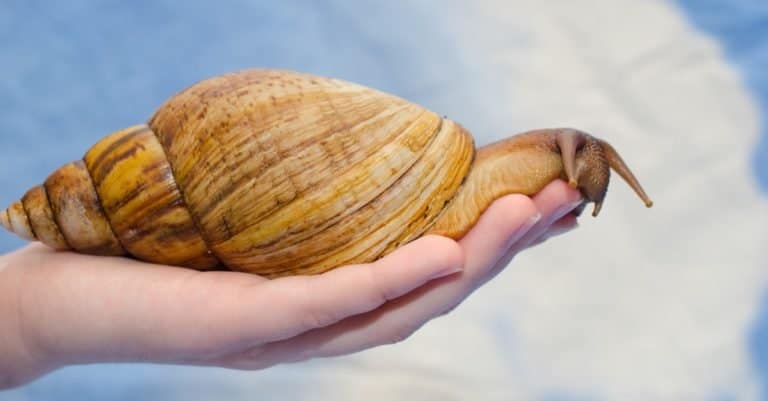
Giant African Land Snail 5 in

Giant African Land Snail stands at 7% of average human height.

Giant African snail or giant African land snail

At a Glance

Wild Species
Also Known As Giant African snail, African land snail, Achatina (colloquial)
Diet Herbivore
Activity Nocturnal+
Lifespan 5 years
Weight 0.4 lbs
Status Not Evaluated
Did You Know?

Adults commonly reach 10-15 cm shell length; maximum reported shell length is ~20 cm (Mead 1961; Raut & Barker 2002).

Scientific Classification

A very large air-breathing terrestrial snail native to East Africa and globally notorious as an invasive species, agricultural pest, and potential vector of some parasites. Common in the pet/food trade and often moved unintentionally via plants and cargo.

Kingdom
Animalia
Phylum
Mollusca
Class
Gastropoda
Order
Stylommatophora
Family
Achatinidae
Genus
Achatina
Species
Achatina fulica

Distinguishing Features

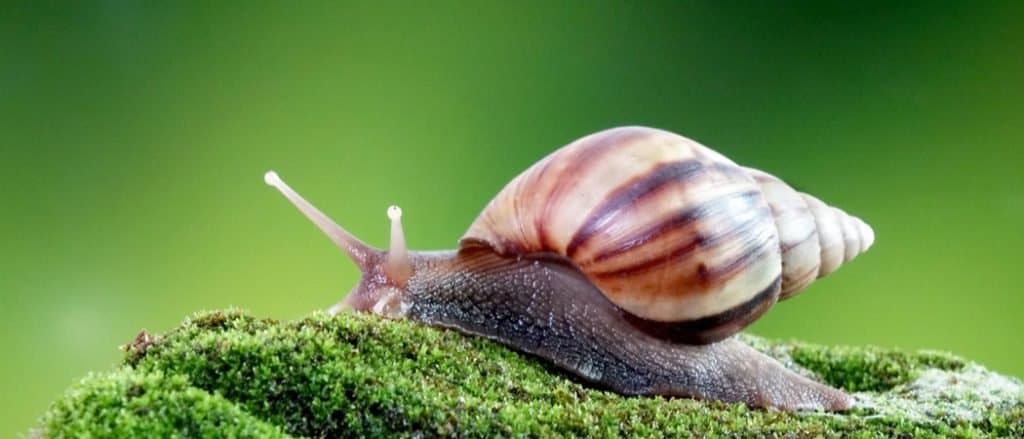
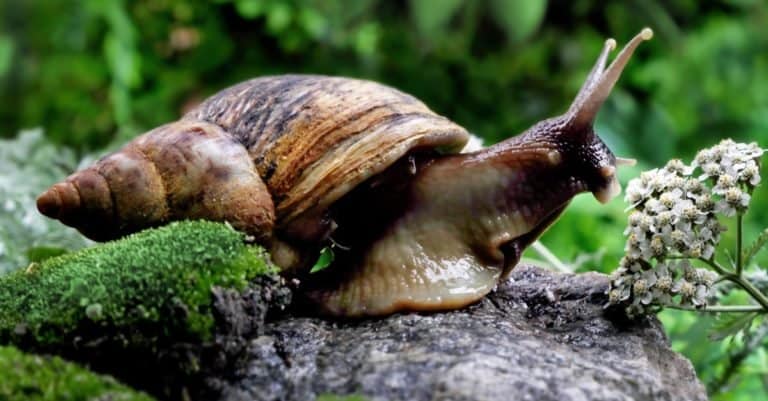
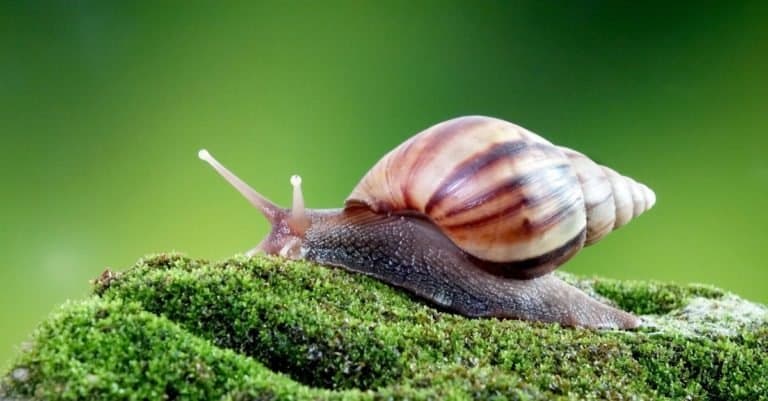
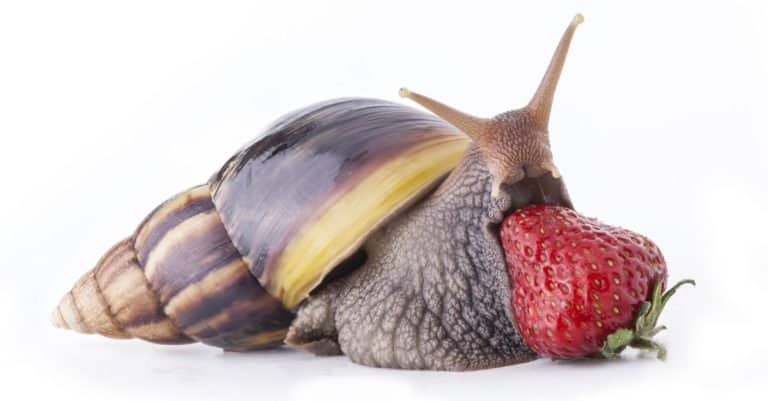
  • Very large shell (often 10–20 cm in adult length) with an elongated, conical spire
  • Shell typically brown with darker longitudinal streaks/striping (variable)
  • Large, muscular body with two pairs of tentacles (eyes on the longer pair)
  • Air-breathing land snail (pneumostome visible on the right side of the mantle)

Physical Measurements

Height
5 in (3 in – 8 in)
Length
5 in (3 in – 8 in)
Weight
0 lbs (0 lbs – 1 lbs)
Top Speed
0 mph
about 0.048 km/h; usually slower

Appearance

Primary Colors
Secondary Colors
Skin Type Soft, moist, mucus-covered skin of a pulmonate land snail; foot and mantle are fine, grainy and very stretchy. Makes lots of mucus to move and stay moist; can form a dried epiphragm when resting.
Distinctive Features
  • Very large terrestrial pulmonate snail (Family Achatinidae) with an elongate-conical shell and tall, pointed spire.
  • Adult shell typically ~7-20 cm in length; widely cited maximum about 20 cm.
  • Shell commonly has ~7-9 whorls with a relatively narrow, elongated profile compared with some other giant African snails.
  • Two pairs of retractable tentacles: upper (longer) pair bears the eyes; lower (shorter) pair used primarily for tactile/chemosensory sensing.
  • Large muscular foot; locomotion leaves a conspicuous mucus trail-often noticeable on vegetation, walls, or soil surfaces.
  • Air-breathing (pulmonate) land snail: visible pneumostome (respiratory opening) on the right side of the mantle cavity.
  • Behaviorally, typically nocturnal/crepuscular and most active in warm, humid conditions; often shelters during the day under debris/vegetation or in soil. This activity pattern is frequently noted in invasive-range field observations (e.g., Raut & Barker 2002).
  • Capable of aestivation during dry/cool conditions by retracting into the shell and sealing the aperture with an epiphragm; this aids survival during transport and contributes to invasive spread.
  • Globally notorious invasive agricultural pest: broad host range and feeding damage often visible as rasped leaf surfaces, irregular holes, and gnawed seedlings; shell and slime trails are common field signs in infested areas.
  • Giant African Land Snail can be an intermediate host for some nematodes, such as Angiostrongylus cantonensis, but this is a health problem for people and animals only where those parasites exist.

Did You Know?

Adults commonly reach 10-15 cm shell length; maximum reported shell length is ~20 cm (Mead 1961; Raut & Barker 2002).

A single clutch often contains ~100-400 eggs, and multiple clutches per year can yield >1,000 eggs annually under favorable conditions (Raut & Barker 2002).

It is a simultaneous hermaphrodite (has both male and female organs) and can reproduce after mating; self-fertilization has been documented when isolated (Tomiyama 1996).

Listed among the '100 of the World's Worst Invasive Alien Species' (ISSG/IUCN; Lowe et al. 2000).

Feeds on an extremely broad diet-hundreds of plant species plus detritus and fungi-helping explain its pest status (Raut & Barker 2002).

During dry spells it can seal its shell with a calcified mucus "door" (epiphragm) and aestivate to conserve water (Raut & Barker 2002).

Unique Adaptations

  • Large, conical, banded shell: provides physical protection and reduces water loss; the tall spire and thickened adult shell lip are characteristic of many Achatinidae (Achatina/Lissachatina group).
  • Epiphragm formation: a hardened, calcified mucus seal that helps the snail survive dry conditions by limiting evaporation (Raut & Barker 2002).
  • Simultaneous hermaphroditism: increases odds of successful reproduction at low population density; self-fertilization is possible (documented experimentally), aiding establishment after accidental introduction (Tomiyama 1996).
  • Exceptional fecundity: large clutches and repeated egg-laying enable rapid population growth, a key trait shared across several giant African land snails (Achatinidae) used in invasion risk assessments (Raut & Barker 2002).
  • Mucus versatility: adhesive, lubricating slime supports climbing, reduces abrasion, and can slow dehydration-useful for nocturnal foraging and dispersal across varied surfaces.

Interesting Behaviors

  • Nocturnal/crepuscular activity: most feeding and movement occurs at night or in humid, low-light conditions; individuals shelter by day to reduce desiccation (Mead 1961; Raut & Barker 2002).
  • Aestivation in drought: retreats into the shell and forms an epiphragm to reduce water loss; can persist through unfavorable seasons before reactivating with rain or humidity (Raut & Barker 2002).
  • High-volume grazing with a radula: rasps leaves, seedlings, soft fruits, and decaying plant matter; also scavenges and may consume calcium-rich materials to support shell growth (Raut & Barker 2002).
  • Egg-laying in soil/litter: deposits clutches in shallow burrows or under debris; egg deposition often peaks in warm, wet periods (Raut & Barker 2002).
  • Trail-following and site use: follows mucus trails and repeatedly uses humid refuges (under boards, stones, dense groundcover), which can concentrate local damage.

Cultural Significance

Giant African land snails (Achatina fulica and relatives) are eaten and sold in parts of Africa as cheap protein. They are hardy, breed fast, can harm gardens and carry Angiostrongylus cantonensis (rat lungworm). They are pets and used in classrooms to teach about invasive species and how to stop them.

Myths & Legends

Giant African Land Snail (Achatina fulica) appears in West and Central African folktales as a patient, seen as weak, clever creature who outwits Hare, Tortoise, or Leopard; its shell, a portable house, symbolizes self-reliance.

In Akan and other West African storytelling, snail imagery is associated with gentleness and peace-making; snail characters are sometimes portrayed as avoiding conflict by retreating into their shell, a moral lesson about restraint and self-control.

In many cultures, the Giant African Land Snail (Achatina fulica) and other snails, with their slow pace and spiral shells, stand for time, cycles, and patience in sayings and stories.

A common tale in invasion biology says a few released or escaped Giant African Land Snails (Achatina fulica), from pets or food, became a huge farm pest. This warning story follows its invasions.

Conservation Status

NE Not Evaluated

Has not yet been evaluated against the criteria.

Population Unknown

Life Cycle

Birth 200 hatchlings
Lifespan 5 years

Lifespan

In the Wild
3–7 years
In Captivity
5–10 years

Reproduction

Mating System Hermaphroditism
Social Structure Solitary
Breeding Pattern Transient
Fertilization Simultaneous Hermaphrodite
Birth Type Simultaneous_hermaphrodite

Behavior & Ecology

Social Aggregation Group: 1
Activity Nocturnal, Crepuscular
Diet Herbivore Tender leafy vegetation (notably soft crop leaves such as lettuce/cabbage) and ripe/overripe fruits (e.g., banana/papaya)
Seasonal Hibernates

Temperament

Non-aggressive toward conspecifics; interactions are mainly avoidance, incidental contact in shared refuges, and mating-related courtship (Raut & Barker 2002; Tomiyama 1992).
Giant African land snails avoid drying out and stay inactive (aestivate) in dry conditions, becoming active after rain or moist air; in very wet, shaded areas they may be active by day.
Opportunistic feeder with strong site/refuge fidelity in favorable microhabitats; high local densities can occur without territoriality (Raut & Barker 2002).
Long-lived for a pest gastropod: commonly reported lifespan ~5-7 years, with longer survival possible under protected/captive conditions (Raut & Barker 2002).

Communication

None No acoustic signaling known for this species
Chemosensory communication via mucus trails and substrate-borne chemical cues: individuals can follow conspecific trails to food/refuges and to locate mates Trail-following and chemoreception emphasized for terrestrial pulmonates; species-specific behavioral observations for the giant African land snail summarized in Raut & Barker 2002
Contact/tactile signaling during courtship and mating: extended tentacle/body contact and reciprocal positioning precede and accompany copulation Tomiyama 1992
Environmental cueing rather than social cueing dominates activity synchronization: humidity, rainfall, and temperature strongly gate emergence, creating apparent 'group' activity peaks without coordinated group behavior Raut & Barker 2002

Habitat

Biomes:
Tropical Rainforest Tropical Dry Forest Savanna Wetland Mediterranean Temperate Forest
Terrain:
Coastal Island Plains Valley Riverine
Elevation: Up to 3280 ft 10 in

Ecological Role

Invasive, highly polyphagous herbivore-detritivore/scavenger that functions as both a major agricultural pest and a decomposer; also serves as prey for vertebrates/invertebrates and as a medically important intermediate host for some nematode parasites.

Accelerates decomposition of plant litter and contributes to nutrient cycling via detritivory/scavenging Bioturbation/mixing of surface litter and topsoil during foraging and burrowing/estivation Food-web support as prey for predators/scavengers in invaded habitats (Negative impact) Strong herbivory on seedlings/crops and alteration of plant community composition in invaded ecosystems (Negative impact) Can facilitate parasite transmission as an intermediate host (e.g., Angiostrongylus cantonensis; Angiostrongylus costaricensis) when present in synanthropic settings

Diet Details

Main Prey:
Carrion Conspecific egg masses or hatchlings
Other Foods:
Tender leaves and shoots Fallen soft fruits Decaying plant material and leaf litter Fungi and algae biofilms Bark and seedlings Calcium sources

Human Interaction

Domestication Status

Semi domesticated

Achatina fulica is not domesticated by long-term breeding but is widely captive-bred and farmed for food, pets, and education, making it semi-domesticated. Native to East Africa, it was moved by people and is now a major invasive species. It lays ~100–400 eggs per clutch, is hermaphroditic, can aestivate, and is a crop pest and quarantine concern.

Danger Level

Moderate
  • Zoonotic parasite carriage: can act as an intermediate host for rat lungworm (Angiostrongylus cantonensis), a cause of eosinophilic meningitis in humans; infection risk increases with handling/consuming raw or undercooked snails or contaminated produce.
  • Potential carriage of other pathogens (e.g., bacteria such as Salmonella spp.) on the body or in mucus, posing hygiene/food-safety concerns.
  • Allergy/irritant risk from snail mucus for sensitized individuals (contact dermatitis-like reactions reported anecdotally).
  • Indirect harms: major agricultural damage and invasive spread leading to pesticide use and ecological disruption; not typically a direct physical threat (no venom; does not bite humans).

As a Pet

Not Suitable as Pet

Legality: Giant African land snail (Achatina fulica) is illegal or highly restricted in many places because it is invasive and a plant pest. In the US it is generally banned (USDA/APHIS). Check local laws—possession can require reporting or destruction.

Care Level: Moderate

Purchase Cost: Up to $30
Lifetime Cost: $150 - $900

Economic Value

Uses:
Food and small-scale farming (positive economic use) Pet/education trade (positive economic use) Biomedical/teaching specimens (positive economic use) Agricultural pest and quarantine target (major negative economic impact)
Products:
  • snail meat (marketed as an escargot substitute in some regions)
  • shell material (calcium source for poultry/feed supplements or crafts in some local uses)
  • mucus/slime (occasionally marketed for cosmetic or folk uses, where permitted)
  • live animals for classroom observation/research (where legal)

Relationships

Predators 8

New Guinea flatworm Platydemus manokwari
Rosy wolfsnail Euglandina rosea
Red imported fire ant Solenopsis invicta
Asian tramp snail-eating beetle Carabus (Damaster) spp.
Norway rat
Norway rat Rattus norvegicus
Black rat
Black rat Rattus rattus
Cane toad
Cane toad Rhinella marina
Tokay gecko
Tokay gecko Gekko gecko

Related Species 4

Giant Ghana snail Achatina achatina Shared Family
Reticulated giant African snail Lissachatina reticulata Shared Family
West African land snail Archachatina marginata Shared Family
Giant African land snail
Giant African land snail Lissachatina immaculata Shared Genus

Ecological Equivalents 6

Animals that fill a similar ecological role in their ecosystem

Brown garden snail Cornu aspersum Synanthropic terrestrial pulmonate that thrives in human-modified habitats and damages crops and ornamentals. Overlaps strongly with Achatina fulica in being a generalist herbivore/detritivore and a frequent hitchhiker in the plant trade.
White Italian snail Theba pisana Invasive, high-density land snail in disturbed and coastal habitats. Like Achatina fulica, it can reach outbreak densities and cause agricultural contamination and feeding damage. Niche: generalist grazer on low vegetation, litter, and crops.
Spanish slug Arion vulgaris Large, highly fecund invasive terrestrial gastropod pest. Ecological similarity is functional: nocturnal/crepuscular feeding; broad plant diet; strong association with gardens and agricultural areas; and rapid population growth under mild, wet conditions.
Leopard slug Limax maximus Large-bodied terrestrial gastropod that inhabits gardens and urban areas; overlaps with Achatina fulica in sheltering in moist refuges by day and feeding at night on plant material, fungi, and detritus, demonstrating functional similarity despite different taxonomy.
Rosy wolfsnail Euglandina rosea Often introduced for snail control and can prey on juvenile Achatina fulica. The relationship is a direct biotic interaction (predation) in invaded ecosystems.
New Guinea flatworm Platydemus manokwari Specialist predator of land snails; documented predator of Achatina fulica in invaded regions. Exerts direct predation pressure affecting prey population dynamics.

The Giant African Land Snail is a big, tough, well-traveled snail.
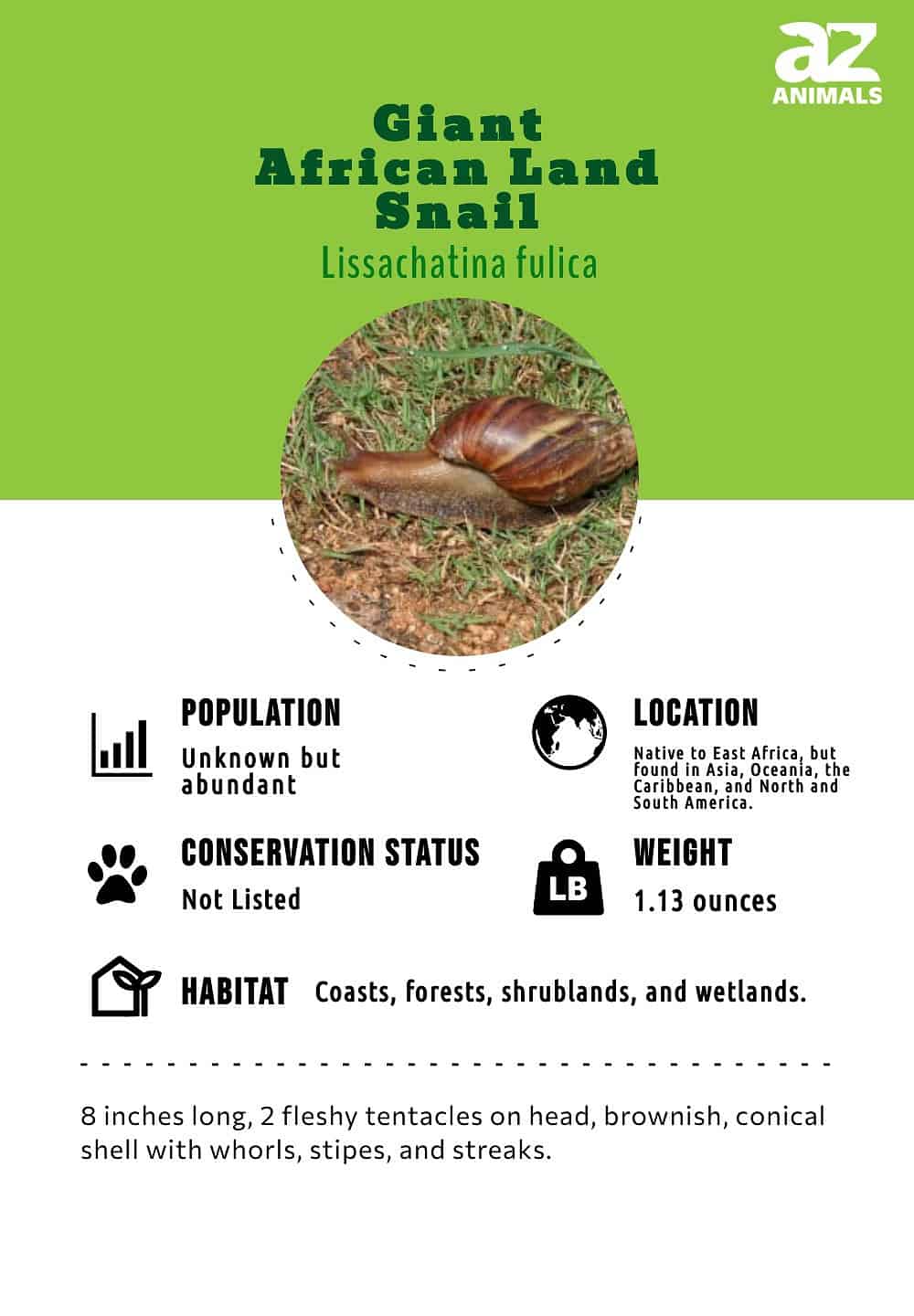
As its name suggests, the Giant African Land Snail is one of the largest snails in the world. Although it is native to East Africa, it has been introduced in many other places. It is a destructive, agricultural pest considered one of the top 100 invasive species in the world. The Giant African Land Snail evolved in tropical climes, but it has learned to thrive in more temperate areas and may even hibernate, or estivate, during the colder or drier months.

3 Incredible Facts

  • One of the problems with an infestation of these snails is that they often carry parasites that cause infections or serious diseases such as meningitis or schistosomiasis.
  • In the 1960s, the state of Florida spent a million dollars and 10 years to eradicate this snail, but it was reintroduced in 2011 and 2021, so new eradication programs are working to prevent crop loss.
  • The Giant African Land Snail never stops growing. Although its growth rate slows as it ages, it will keep growing until it dies.

Scientific Name
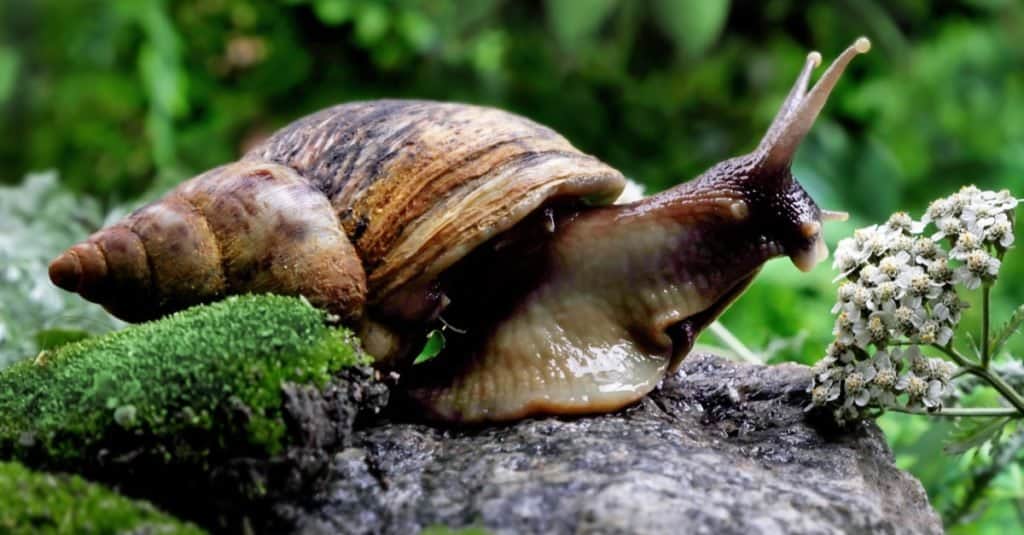
Giant African land snail.

The Giant African Land Snail is the result of perhaps 350 million years of evolution.

Although there are a few animals called the Giant African Land Snail, this article deals with the species Lissachatina fulica (formerly Achatina fulica). The snail belongs to the Achatinidae family. It is also known by a number of synonyms and has five subspecies. The species name is derived from the Greek word for “agate,” and may describe the attractive pattern on the animal’s shell. Fulica is Latin for a type of water fowl.

The ancestry of land snails, like the Giant African Land Snail, goes back 350-260 million years ago when plant life first appeared on land. Adaptations followed to enable mobility and eating.

Appearance

The first thing a person notices about a fully grown Giant African Land Snail is its size. The animal is almost 3 inches high, can grow to nearly 8 inches long, and can easily fill the palm of a grown man’s hand. It weighs a little over an ounce.

The largest of these snails was 14.7 inches long. That’s still not as large as its cousin, Achatina achatina. The largest of these snails, named Gee Geronimo, had a body that was 15.5 inches long, and a shell that was 10.75 inches long and weighed 2 pounds.

In Lissachatina fulica, the shell is higher than it is wide and the whorls turn either clockwise or counter-clockwise depending on the individual, although most snails have clockwise turning shells. By the time the snail is grown, the shell can have between seven and nine whorls, or spirals. Most shells are shades of brown with attractive stripes and streaks. The color depends largely on the animal’s diet and environment. The shell of the Giant African Land Snail is famously tough and rich in heavy metals. Like all land snails, L. fulica’s muscular “foot” allows it to move. Its head has two pairs of fleshy tentacles.

Behavior
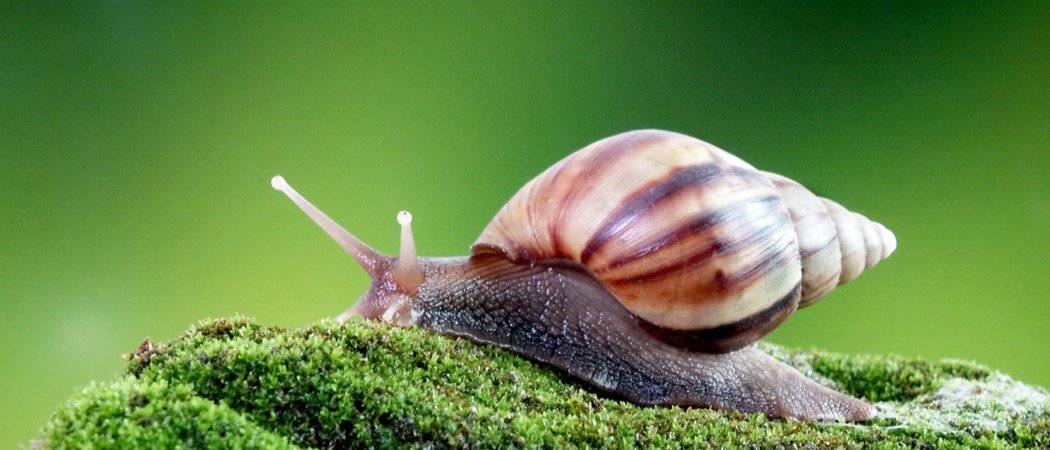
The Giant African Land Snail is solitary and seeks out other snails only when it’s time to breed. Like most other land snails, it lays down a protective trail of slime as it moves over rough terrain. The shell is also used for protection. The brownish shades of L. fulica‘s shell help camouflage it as well.

The snail is active at night and sleeps during the day after it buries itself in soil. During the night, the snail leaves its shelter and seeks food. It doesn’t hear as humans do, but it has other senses to alert it about its environment. Its eyes are found on the upper pair of its tentacles and the lower pair possess olfactory organs. The snail relies mainly on these two senses to help it navigate the world.

If a group of these snails get together, they are called a walk, a trail, an escargatoire or a rout.

Habitat

This giant snail originated in what are now the countries of Tanzania, Mozambique, Somalia, and Kenya and is currently found in much of the world including Asia, the Caribbean, and North and South America. Habitats where L. fulica flourishes include the coast, the forests, around rivers, shrublands and wetlands, and even cities. Since the snail doesn’t migrate, this means it was introduced into these other areas, either accidentally or deliberately. Some people collected them as pets, but the snail escaped; sometimes they were brought over on cargo ships or hitched a ride on vehicles; sometimes they were introduced as a food source. Because one gravid snail can lay hundreds of eggs at a time, it is easy for the snail population to explode in countries where the snail is not native.

Diet
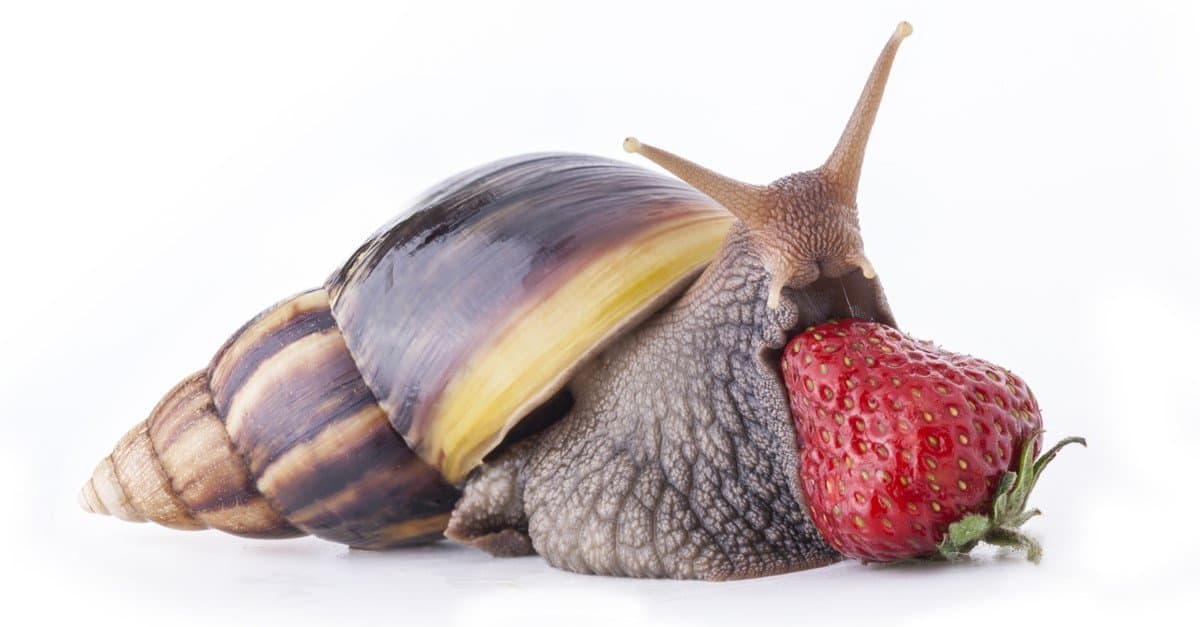
The snail is an herbivore and will eat an amazing variety of plant-based materials. Biologists have counted at least 500 types of plants that the snail will eat. It does not care if the plant is living or dead. This snail will even eat paper and concrete. To fortify its shell, it will eat sources of calcium such as pebbles, sand, and bones. It will eat the dead bodies of small animals. When food is really scarce, Giant African Land Snails will eat their own eggs or resort to cannibalism.

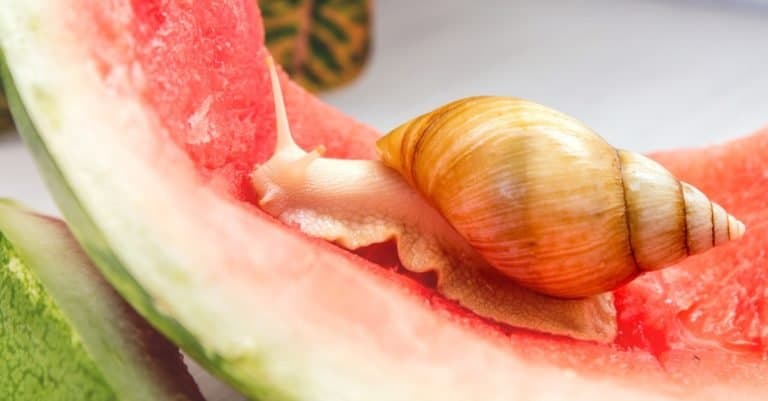
The diet of the snail changes as it ages. Young snails are partial to algae and plants and flowers that are soft or even rotting, although a snail caretaker should not feed a snail decaying food as it may still sicken them. Older snails prefer fresh, living vegetation, including fruits and vegetables such as cucumbers, bananas, and lettuce. The snail is able to eat such a varied diet because it has a radula, which resembles a long tongue full of serrated teeth. This organ grates the animal’s food and makes it easier to digest.

Predators and Threats

The Giant African Land Snail has a great many predators. These include rats, foxes, wild boars, hermit crabs, and other snails such as the cannibal snail. Fire ants and flatworms also attack and devour L. fulica, especially when it’s young. Despite this, the snail is not endangered.

Reproduction, Babies, and Lifespan
One of the most fascinating things about the Giant African Land Snail is that it is a hermaphrodite, which means it has both male and female reproductive organs. The snail starts life as a male, then becomes a hermaphrodite as it matures.

Since the snail can’t fertilize itself, it must seek a mate. L. fulica is particular when it comes to a mate, and it chooses according to age and size. If the potential mate is the same size, chances are higher that both snails will become gravid. If one is larger, the larger snail acts as the female.

The snails begin by tenderly courting, then exchanging sperm, which can be stored in the snail’s body for as long as two years. Mating has been known to last as long as two hours, and it happens at night. The snail lays its eggs between 8 and 20 days later in nests, or in the soil, or among rocks.

A snail that is laying eggs for the first time will probably lay only 100 or so. Later, it can lay as many as 500 eggs at a time. The older it gets, the more eggs it lays, and in hospitable climates, it can lay eggs every eight to twelve weeks.

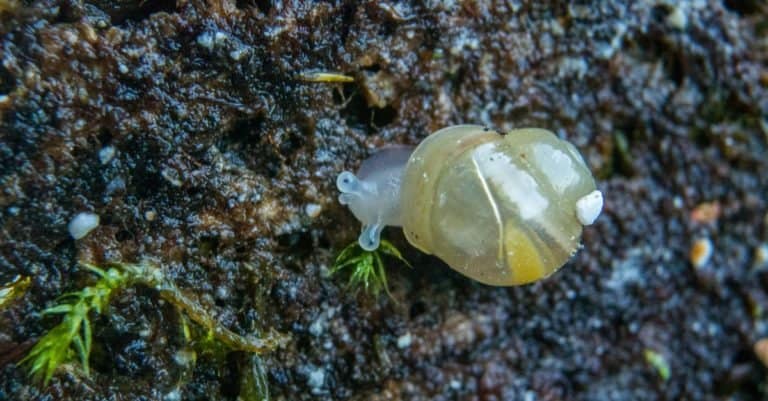
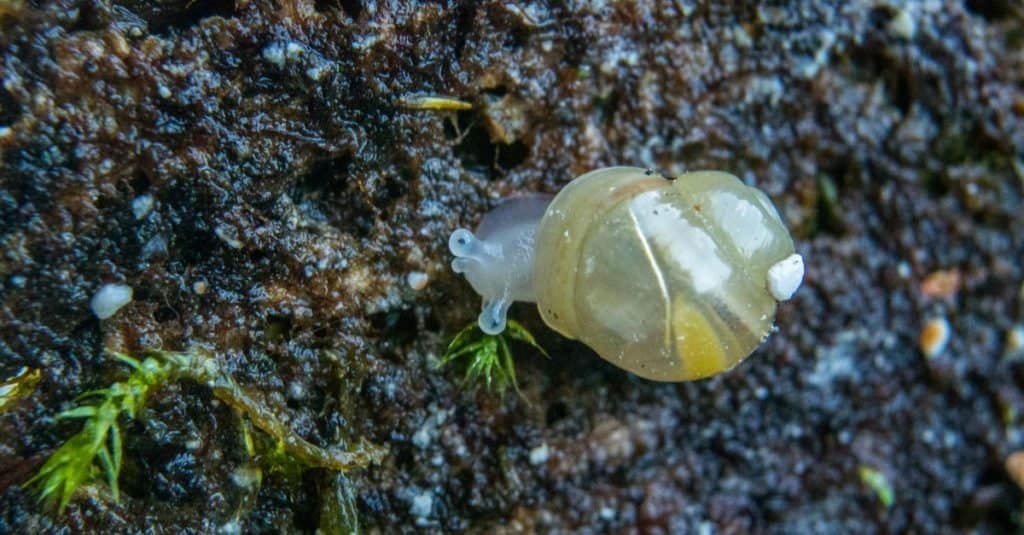
About 90 percent of the eggs will hatch in approximately two weeks, if the temperature goes above 59 degrees Fahrenheit. The baby snails or hatchlings are miniatures of their parents and do not undergo metamorphosis like sea snails. Neither parent provides care.

L. fulica is sexually mature when it is six months old. It has a lifespan of about 3 to 5 years, although some have lived as long as 10 years. Whether the animal is in captivity or the wild does not seem to make much difference in its lifespan. Although predators keep the numbers of these snails in check in their native areas, introduced snails die of old age, or because of eradication programs, or because the climate is inhospitable even for them.

Population
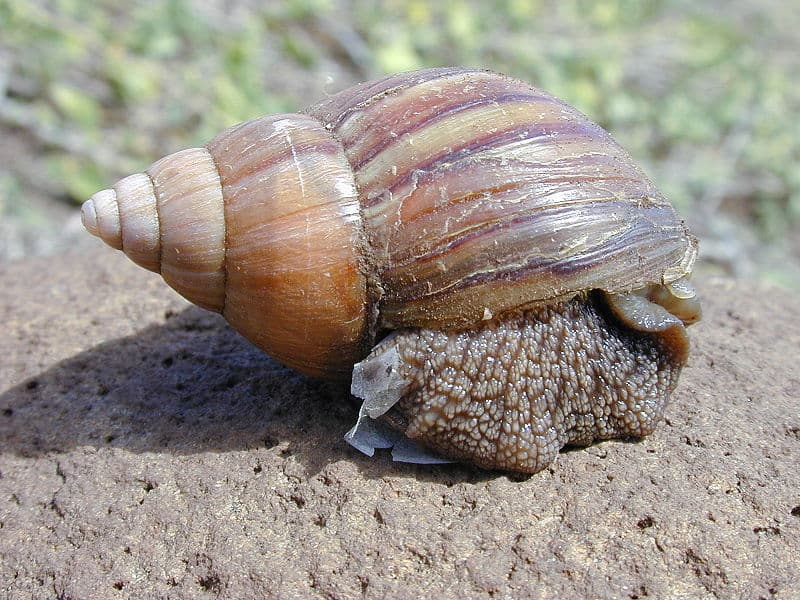
Given how quickly L. fulica reaches reproductive age, its fecundity, and its ability to quickly adapt to different habitats, there are probably millions of them worldwide. In Africa alone, they are found in 14 countries and are considered invasive in 8 of them, including Ghana, Madagascar, Nigeria, and the Seychelles.

The snail is found in 21 Asian countries, including Nepal, Israel, Sri Lanka, Japan, and Vietnam, and is considered invasive in all four of them. The snail is found in Italy and Spain but is under eradication in Italy.

In the United States, the snail is found in Florida, Hawaii, and Wisconsin and is invasive in Florida and Hawaii. L. fulica was first found in Florida in 1969, was eradicated, but returned in 2011 and is now under eradication again.

L. fulica is also invasive in many areas of Oceania, including American Samoa, French Polynesia, Palau, Papua New Guinea, and Samoa. It was eradicated in Tuvalu.

The snail is also invasive in much of South America, including Argentina, Brazil, Colombia, Ecuador, Paraguay, Peru, and Venezuela.

The snail has been introduced as early as before 1800 in Madagascar and as recently as 2013 in the Netherlands Antilles.

In the Zoo

As ubiquitous as the snail is, it is still exhibited in zoos. They include:


View all 261 animals that start with G

Sources

  1. Amateur Entomologist's Society / Accessed March 18, 2021
  2. NCBI Resources / Accessed March 18, 2021
  3. Wikipedia / Accessed March 18, 2021
  4. Animal Diversity Web / Accessed March 18, 2021
  5. Global Invasive Species Database / Accessed March 18, 2021
  6. Discovery Place / Accessed March 18, 2021
  7. Snail-World / Accessed March 18, 2021
  8. Britannica / Accessed March 18, 2021
Thank you for reading! Have some feedback for us?


Giant African Land Snail FAQs (Frequently Asked Questions)

Technically, the Giant African Land Snail is an herbivore as it eats all manner of vegetation, but since it will eat bones and even cement to get calcium for its shell, it can also be thought of as an omnivore.