N S W E
Wildlife Expeditions

Wildlife of
Ghana

Ghana stands out for its rare mix of rainforest, coastal wetlands, and Guinea savanna where visitors can track forest elephants and primates, then switch to world-class birding and classic savanna game in a single trip.
214 Species
227,533 km² Land Area
Overview

About Ghana

Ghana's wildlife character is defined by variety: humid Upper Guinean forests in the southwest, broad woodland savannas in the north, and a necklace of coastal lagoons and mangroves along the Gulf of Guinea. This blend of habitats supports an impressive spread of species-from elusive forest elephants and secretive antelopes in dense canopy to crocodiles, monkeys, and a high diversity of birds. For wildlife enthusiasts, Ghana offers a rewarding "cross-ecosystem" journey where each region feels distinct, yet travel between them is straightforward and culturally rich.

Key ecosystems shape the experience. In the forest zone, protected areas like Kakum and surrounding reserves safeguard remnants of one of West Africa's most threatened rainforest belts, providing refuge for primates and forest specialists and offering memorable canopy-level viewing opportunities. In the north, the Guinea savanna and riverine woodlands-epitomized by Mole National Park-deliver Ghana's most accessible large-mammal watching, with elephants, antelope, and active predators and scavengers around water sources. Along the coast, lagoons, estuaries, and mangroves act as nurseries for fish and feeding grounds for migrants, making Ghana a standout destination for shorebirds and wetland birdlife.

On the conservation front, Ghana plays an important role in protecting the Upper Guinean biodiversity hotspot and in maintaining a representative network of forest, savanna, and wetland protected areas in a densely populated region. Community-linked conservation, research, and habitat protection are increasingly central to safeguarding remaining forest blocks, stabilizing savanna wildlife, and sustaining coastal wetlands. What makes Ghana unique is the ability to combine iconic experiences-like rainforest canopy walks, primate encounters, and open savanna game drives-with exceptional birding and a strong sense of place shaped by local communities and landscapes.

Physical Features

Geography

Ghana's wildlife distribution follows a strong south-north rainfall and vegetation gradient: humid coastal and lowland zones support wetlands, lagoons, and remnants of tropical forest (key for primates and forest-dependent species), while the central transition belt is a forest-savanna mosaic and the north is dominated by Guinea/Sudanian savannas that favor large grazing mammals, savanna birds, and open-country predators. Major rivers (especially the Volta system) and extensive wetlands provide dry-season refuges and migratory bird habitat, and the Akwapim-Togo highlands create locally cooler, wetter habitats and corridor-like forest patches that influence species ranges.

227,533 km² (land area) Land Area
~83rd largest country by area; about the size of the United Kingdom Size Rank

Key Landscapes

  • Gulf of Guinea coastline, including sandy beaches and rocky headlands
  • Coastal lagoons and salt/freshwater wetlands (notably the Keta Lagoon complex and other Ramsar-style coastal wetlands) that concentrate waterbirds and migratory shorebirds
  • Lower Volta River floodplain and delta wetlands (important for fish, waterbirds, and riparian fauna)
  • Lake Volta (one of the world's largest artificial lakes) and associated shoreline habitats that reshape aquatic/riverine wildlife distributions
  • Volta river network (Black Volta, White Volta, Oti) creating riparian corridors through otherwise seasonal savanna landscapes
  • Southwestern and south-central lowland forest belt (Upper Guinean forest remnants) supporting forest mammals, primates, and high forest bird diversity
  • Forest-savanna transition zone (woodlands, gallery forests, and farm-fallow mosaics) where many species' ranges overlap and shift seasonally
  • Northern plains and rolling savannas (Guinea/Sudanian savanna) forming Ghana's main large-mammal and raptor landscapes, including key protected-area strongholds
  • Akwapim-Togo Range (eastern highlands; including Mt Afadja area) providing upland microclimates, forest patches, and altitudinal refugia

Ecoregions

  • Eastern Guinean forests (moist evergreen and semi-deciduous forests of southern Ghana)
  • Guinean forest-savanna mosaic (transition belt across central Ghana; interdigitated woodland, grassland, and gallery forest)
  • West Sudanian savanna (northern Ghana; seasonal savannas and woodlands supporting open-habitat fauna)
  • Guinean mangroves (patchy mangrove and brackish wetland habitats along parts of the Gulf of Guinea coast)
Parks & Reserves

Protected Areas

Ghana's protected-area system is managed mainly by the Wildlife Division of the Forestry Commission (national parks, resource reserves, wildlife sanctuaries, Ramsar sites) alongside a large network of Forest Reserves managed for watershed/forest protection and production. In addition, Ghana has expanded community-based conservation through CREMAs (Community Resource Management Areas), which function as locally governed conservancies that can connect wildlife habitat outside state-run parks-especially important in forest-savanna transition zones and around key corridors. Ecologically, Ghana's priority protected areas span Guinea savanna (north; best large-mammal viewing), Upper Guinean rainforests (southwest; primates/forest specialists), and coastal wetlands/lagoons (migrant shorebirds and waterbirds).

Protected Coverage

Approx. ~6-8% of Ghana's land area is under formal wildlife-focused protection (national parks, resource reserves, sanctuaries). If you also count the broader Forest Reserve estate (which is extensive but variably managed for conservation vs. production), the share of land under some form of protection/regulated management is often cited at roughly ~15%+.

Notable Parks & Reserves

Mole National Park

National Park

Ghana's flagship savanna park and the country's most reliable site for large-mammal viewing, with open woodland/grassland habitats that support significant antelope and elephant populations. It is also a key stronghold for northern savanna biodiversity and raptor-rich birdlife.

Kakum National Park & Assin Attandanso Resource Reserve

National Park + Resource Reserve

A premier Upper Guinean rainforest site known for canopy-level wildlife observation (via the famous canopy walkway) and high bird diversity, including many forest specialists. It protects a vital block of moist forest in southern Ghana where forest elephants and multiple primate species persist.

African forest elephant
Diana monkey
Olive colobus
Lesser spot-nosed monkey
African giant pouched rat
Great blue turaco
Hornbills (forest hornbills)

Ankasa Conservation Area (Ankasa Resource Reserve & Nini-Suhien National Park)

Resource Reserve + National Park (Ankasa Conservation Area)

Ankasa Conservation Area, made of Ankasa Resource Reserve and Nini-Suhien National Park, is one of Ghana's last intact evergreen rainforests. It is very important for rainforest primates, other forest animals, and has rich plant life.

African forest elephant
Diana monkey
Black-and-white colobus
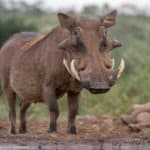
Red river hog
Yellow-backed duiker
African golden cat
African golden cat
Great blue turaco

Bui National Park

National Park

A major savanna-river ecosystem along the Black Volta, historically famous for its hippos and important as a refuge for elephants and other large mammals. The riverine habitats add strong waterbird and crocodile interest alongside terrestrial savanna wildlife.

Digya National Park

National Park

A large protected landscape on the shores of Lake Volta that supports wide-ranging mammals and important aquatic-terrestrial interfaces. Its size and mosaic of habitats make it significant for long-term conservation of elephants and other large vertebrates, though viewing can be challenging due to dense cover and remoteness.

Kyabobo National Park

National Park

Ghana's key upland/transition-zone park on the Togo border, combining rugged hills with Guinea savanna and woodland habitats. It is important for conserving northern ungulates and primates and for protecting headwaters and cross-border wildlife connectivity.

Shai Hills Resource Reserve

Resource Reserve

A highly accessible reserve near Accra that protects a dry savanna/rocky outcrop ecosystem and is important for education, day wildlife viewing, and local biodiversity conservation. The caves and cliffs add bat/raptor interest and complement the reserve's primates and antelope.

Keta Lagoon Complex Ramsar Site

Ramsar Wetland (coastal lagoon complex)

Ghana's most prominent coastal lagoon system for migratory shorebirds and waterbirds along the East Atlantic Flyway. It is a top national site for wader counts and wetland conservation, though wildlife interest is primarily avian rather than large mammals.

Black-winged stilt
Pied avocet
Curlew sandpiper
Grey plover
Common tern
Royal tern
Western reef heron

UNESCO World Heritage Sites

  • None (Ghana currently has no UNESCO World Heritage sites inscribed under the Natural criteria).
Animals

Wildlife

Ghana's wildlife diversity is shaped by a strong north-south ecological gradient: Guinea savanna and riverine woodland in the north (classic West African big-game scenery), transitioning through forest-savanna mosaic into the Upper Guinean rainforests of the south-west, plus coastal lagoons, mangroves, and marine turtle beaches along the Gulf of Guinea. This mix supports a "two-worlds" safari experience-savanna mammals and raptors in places like Mole National Park, and rainforest primates, hornbills, and secretive forest specialists in reserves such as Kakum, Ankasa, and Bia-backed by outstanding birding across wetlands, forests, and Sahel-influenced savannas.

≈280-320 species Mammals
≈740-780 species Birds
≈240-280 species Reptiles
≈100-130 species Amphibians

Iconic Species

African Elephant
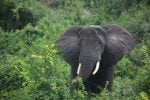
African Elephant Ghana's flagship large mammal, most reliably seen in the north-especially Mole National Park-where elephants use dams and river corridors in the dry season; smaller, more elusive forest-dwelling elephants persist in southern forest blocks and are important for conservation despite being hard to view.
Hippopotamus
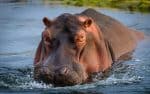
Hippopotamus A sought-after river species best known from the Black Volta system; boat and riverside viewing is most associated with the Wechiau Community Hippo Sanctuary area, one of Ghana's most reliable hippo-watching locations.
African Buffalo
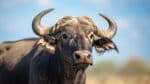
African Buffalo A key "savanna safari" animal in northern Ghana, regularly encountered in Mole National Park where herds move between woodland and open glades, particularly around water in the dry season.
Roan Antelope One of the most charismatic antelopes of Ghana's Guinea savanna; northern protected areas (notably Mole) are among the better places in the country to look for this species in open woodland and grassy plains.
Kob (Western Kob) A classic West African antelope that defines the Mole landscape-often seen grazing in groups on open floodplains and near dams, making it one of the most dependable large mammals for visitors.
Patas Monkey
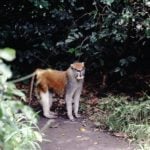
Patas Monkey A fast-running, savanna specialist primate of northern Ghana; sightings are most likely in open woodland and grassland mosaics, including around Mole's tracks and clearings.
Diana Monkey An Upper Guinean rainforest icon and globally threatened primate; Ghana's remaining high-quality forests (e.g., Ankasa and Kakum landscapes) are important for its persistence, though it is shy and best detected with expert guiding.
Chimpanzee (West African chimpanzee) Formerly occurred in western Ghana, but the chimpanzee is now likely extirpated or extremely rare in the country; any remaining individuals would be confined to remnant forest near the border with Ivory Coast (for example, the Bia Conservation Area) and would be very difficult to see without specialized surveys/permits.
White-necked Rockfowl (White-necked Picathartes) One of West Africa's most famous birding targets, nesting on shaded rock faces in forested areas; Ghana is among the more accessible countries to look for it via guided visits to known colonies in the forest zone.
West African Manatee A rare, secretive aquatic mammal associated with the Volta River system, lagoons, and mangroves; Ghana's wetlands and river backwaters provide important habitat, though sightings are unpredictable and often based on local knowledge.

Endemic Species

White-necked Rockfowl (Upper Guinean near-endemic) A near-endemic specialty of the Upper Guinean forests (including Ghana) with highly localized nesting colonies; Ghana is notable for relatively reachable sites compared with much of its range. Endemic
Baumann's Greenbul (Upper Guinean near-endemic) A forest understorey bird largely confined to the Upper Guinean rainforest region; Ghana's south-west forests are part of its core stronghold. Endemic
Yellow-bearded Greenbul (Upper Guinean near-endemic) A characteristic Upper Guinean rainforest greenbul with a restricted West African range; best sought in Ghana's wetter evergreen forests (e.g., Ankasa/Kakum-type habitats). Endemic
Togo Slippery Frog (Ghana-Togo near-endemic) A localized, stream-associated frog largely confined to the Ghana-Togo highlands/adjacent uplands; dependent on clean, fast-flowing forest streams and vulnerable to habitat change. Endemic
Togo Toad (Ghana-Togo near-endemic) A regionally restricted toad associated with rocky streams and upland habitats in the Ghana-Togo area; its limited range makes remaining suitable catchments in Ghana important for conservation. Endemic

Notable Populations

  • Mole National Park and adjacent northern landscapes form Ghana's premier stronghold for savanna megafauna (notably elephants, buffalo, kob, and roan antelope) and deliver the country's most consistent classic "game drive" experience.
  • Ghana's Upper Guinean forest remnants (Kakum-Assin corridor, Ankasa, Bia and surrounding forest reserves) are regionally significant for threatened rainforest biodiversity, especially primates and forest birds.
  • Ghana is one of the more practical countries in West Africa for targeted viewing of White-necked Rockfowl at known colonies with specialist guiding (a major draw for international birders).
  • The Black Volta/Wechiau area supports one of Ghana's best-known hippopotamus concentrations and is a flagship example of community-based wetland wildlife protection.
  • Coastal beaches and lagoons along the Gulf of Guinea support regionally important sea turtle nesting/foraging activity (notably green and olive ridley turtles), alongside major wetland bird habitats in lagoon and mangrove systems.
Protection

Conservation

Primary Threats

  • Conversion of forest and savanna mosaics to cocoa farms and food-crop fields (e.g., plantain, cassava, maize) fragments habitats around reserves such as Kakum/Assin-Attandanso and reduces connectivity for forest species. Expansion and intensification can also simplify on-farm tree cover, lowering biodiversity in cocoa landscapes.
  • Net loss and fragmentation of Upper Guinea forest remnants, riparian corridors, mangroves, and coastal wetlands from multiple land uses. Encroachment into reserve margins and degradation of buffer zones reduce effective habitat area for elephants, primates, and forest birds.
  • Illegal and unsustainable timber extraction (including chainsaw milling) degrades forest structure and opens access roads that accelerate farming encroachment and hunting. Even where canopy remains, selective logging can erode populations of large trees critical for forest biodiversity.
  • Illegal artisanal and small-scale gold mining causes acute deforestation, riverbank collapse, and toxic/solid pollution (silt and chemical contamination) in basins such as the Pra, Ankobra, and Offin. Mining footprints and associated camps increase hunting pressure and disrupt protected-area edges.
  • Sedimentation and chemical contamination from mining, agrochemical runoff in farming areas, and untreated urban/industrial wastewater affect lagoons and estuaries near Accra and other coastal towns (e.g., Sakumo and Densu Delta). Plastic pollution and oil/port-related contamination add stress to coastal and marine ecosystems.
  • High fishing effort in small pelagic fisheries (sardinella/anchovy complexes) and widespread illegal, unreported and unregulated practices (e.g., use of light fishing and illegal nets) contribute to declining catches, affecting coastal livelihoods and increasing pressure on nearshore ecosystems.
  • Bushmeat hunting and opportunistic killing persist in forest and savanna zones, including around protected areas and forest reserves. Snares and firearms can reduce populations of antelope and primates and threaten rare species through offtake and bycatch.
  • Trade in bushmeat and live animals (including some birds and reptiles) supplies local markets and, in some cases, cross-border demand. Even when volumes are localized, persistent trade can depress wildlife populations near accessible forests and savannas.
  • Elephants and other wildlife can raid crops near savanna protected areas (notably around Mole and other northern landscapes), causing farmer losses and occasional retaliatory actions. Primates and smaller mammals can also create persistent conflict in forest-edge farms.
  • Road upgrades, settlement expansion, and energy infrastructure (including hydropower reservoirs such as Akosombo and Bui) alter river flow regimes, inundate habitats, and increase access to previously remote areas, indirectly intensifying farming, logging, and hunting.
  • Dam operations and river regulation change seasonal flooding patterns and sediment delivery to wetlands/estuaries; drainage and modification of coastal lagoons/mangroves reduce nursery habitats for fish and migratory birds. Fire regime changes in savanna (late-season intense burns) can simplify vegetation and reduce habitat quality.
  • Rapid growth of Accra-Tema and other urban corridors drives encroachment on coastal wetlands and floodplains (e.g., Densu Delta/Sakumo area), increases sand winning/quarrying demand, and concentrates waste and wastewater discharges into sensitive lagoon systems.
  • Sea-level rise and stronger storm impacts accelerate coastal erosion and salinization around lagoons and low-lying wetlands, while rainfall variability and higher temperatures affect forest moisture, savanna water availability, and wildfire risk. These changes interact with land-use pressures to weaken ecosystem resilience.
  • High dependence on fuelwood and charcoal in many regions drives woodland degradation, especially in the savanna zone and peri-urban areas. Declining fish stocks also represent resource depletion that can push communities toward alternative pressures on natural habitats.
  • High visitation and surrounding land-use intensity near flagship sites (e.g., Kakum canopy walkway area) and along coastlines can increase noise, litter, off-trail impacts, and disturbance to nesting/roosting birds, particularly in wetlands used by migratory species.
  • Disease risk is primarily indirect: habitat fragmentation and wildlife-livestock-human contact at farm-forest edges can elevate zoonotic spillover risk and stress wildlife populations. In aquatic systems, poor water quality can increase fish disease susceptibility and mortality, compounding fisheries declines.
Visit

Wildlife Tourism

Ghana's wildlife tourism is a niche but fast-growing complement to its heritage and beach travel, centered on a compact network of accessible protected areas spanning rainforest, coastal wetlands, and Guinea savanna. Economically, it supports park fees, guiding, lodges, community tourism, and conservation jobs-especially around flagship sites like Mole National Park and Kakum. Historically, wildlife protection grew out of colonial-era forest reserves and post-independence national parks; today the focus is increasingly on community benefits, anti-poaching, and habitat connectivity. Accessibility is practical for travelers: Accra is the main gateway with good domestic roads to southern parks (Kakum, Shai Hills, coastal lagoons) and short internal flights/longer overland routes to the north (Mole). Expect wildlife viewing to be more experience-led than "big five"-style: primates, elephants in key areas, exceptional birds, and unique rainforest and wetland encounters.

Best Time to Visit

General planning: Ghana's main dry season (Nov-Mar) is usually best for comfortable travel and wildlife viewing; the wet seasons (roughly Apr-Jul and Sep-Oct, varying by region) bring lush scenery, peak bird activity, and easier forest amphibian/reptile sightings, but with muddier roads and more humidity.

Month-by-month highlights (practical):
- Nov-Dec: Start of dry season; clearer forest trails and easier road access. Great for Kakum canopy walk and forest birding; good for savanna wildlife in Mole as water sources concentrate animals.
- Jan-Feb: Driest period in many areas; best overall for Mole (higher chance of elephant encounters near water, excellent visibility). Harmattan haze can reduce distant views and affect coastal sunsets, but wildlife viewing remains strong.
- Mar: End of peak dry season; still strong in Mole; heat increases-plan early morning and late afternoon activities.
- Apr-Jun: Early rains/green season; forests are vibrant, birdlife and butterflies increase, and waterfalls/streams are fuller. Coastal wetlands can be productive for waders after rains; road conditions may slow travel.
- Jul-Aug: Often a relative "break" in rains in the south (varies); decent window for mixed itineraries (coast + forest). Good time for forest walks and lagoon birding.
- Sep-Oct: Second rainy peak in many southern areas; superb for rainforest ambience, frogs, and forest birds, but trails can be slick.

What to see when (quick cues):
- Want the easiest wildlife + smooth logistics: Nov-Mar.
- Want greener landscapes, birds, butterflies, and rainforest atmosphere: Apr-Jun or Sep-Oct (pack for rain and leeches in wetter forest conditions).

Top Wildlife Experiences

  • Sunrise-and-sunset safari drive in Mole National Park with a park ranger (time your drive for waterholes and open plains where elephants and antelope are most active).
  • Guided walking safari in Mole with an armed ranger-slow tracking on foot for signs, birds, and close-up viewing where conditions allow (a very different pace from driving).
  • Canopy walkway and guided forest interpretation at Kakum: cross the suspended bridges early for cooler temperatures, then do a ground-level forest walk focusing on primates, butterflies, and forest birds.
  • Night walk/spotlight wildlife outing (where offered) near forest reserves or lodge concessions: look for galagos (bushbabies), nocturnal birds, insects, and amphibians-bring a headlamp and wear long sleeves.
  • Boat safari on the Volta River/Lake Volta margins or delta areas to search for waterbirds, monitor lizards, and crocodiles (best in calm early mornings).
  • Coastal lagoon birding session (e.g., Densu Delta, Muni-Pomadze, Keta Lagoon area): a guided tide-timed walk to spot herons, egrets, terns, sandpipers, and seasonal migrants.
  • Rocky savanna hike at Shai Hills with a guide to combine short game viewing (antelope/baboons) with cave exploration for bats and geology-ideal as a half-day from Accra.
  • Community-guided primate-focused forest walk in the Volta Region (where locally organized): listen-and-search tracking for monkeys and forest birds, paired with cultural stops that support local livelihoods.
  • Butterfly and forest bird "slow safari" in a southern forest reserve: spend a full morning with binoculars and a specialist guide-Ghana is outstanding for multi-habitat bird lists in a short trip.
  • Conservation-forward visit: join a ranger-led talk or community project add-on (where available) to learn about anti-poaching, human-wildlife coexistence, and forest protection-an inspiring way to contextualize your sightings.

Safari Types Available

  • 4x4 game drives (best developed in Mole; typically morning and late afternoon)
  • Guided walking safaris with rangers (savanna and selected forest-edge areas)
  • Canopy walkway experiences (rainforest "aerial" viewing)
  • Boat safaris/river cruises (Volta and wetland systems; bird-focused)
  • Wetland/lagoon birding walks (tide- and season-dependent)
  • Night walks/spotlighting (nocturnal mammals, owls, insects-availability varies by site/lodge)
  • Hiking safaris (savanna escarpments, rocky outcrops, cave areas such as Shai Hills)
  • Community-based wildlife experiences (local guides, conservation education, combined nature/culture itineraries)
Fun Facts

Did You Know?

Accra hosts a massive urban roost of straw-coloured fruit bats (Eidolon helvum)-researchers have estimated seasonal numbers in the hundreds of thousands (sometimes approaching a million), making it one of the largest known bat gatherings in a major city.

Ghana has a famous "sacred monkey" landscape: at Boabeng-Fiema, mona monkeys and black-and-white colobus are protected by traditional taboos, and communities have historically held funeral rites for deceased monkeys-conservation enforced by culture, not fences.

You can encounter West African manatees in Ghana's inland waters (not just along the coast): the species occurs in the Volta River system and associated lagoons, surprising many people who assume manatees are only marine animals.

Some of Ghana's most productive bird habitats sit right beside dense urban development: coastal wetlands around the Accra-Tema area (e.g., Ramsar sites like Sakumo) can host large numbers of waterbirds, including migrants that travel from Europe to West Africa.

Ghana's wildlife isn't confined to one "jungle" type-within a relatively small country you can move from coastal lagoon ecosystems to Upper Guinea rainforest to Guinea savanna, and the species mix changes dramatically over just a few hours' drive.

Lake Volta (created by the Akosombo Dam) is widely cited as the world's largest man-made reservoir by surface area-about 8,482 km²-creating a vast new freshwater habitat for fish and waterbirds.

Mole National Park is Ghana's largest national park/protected area at roughly 4,840 km², protecting a big block of Guinea savanna wildlife habitat (elephants, antelope, primates, and more).

The Keta Lagoon Complex is Ghana's largest lagoon/wetland system (a Ramsar site of about 1,200 km²), making it one of the country's most important areas for waterbirds and migratory shorebirds along the Gulf of Guinea.

Kakum National Park's canopy walkway (about 350 m long, with platforms up to ~40 m high) is among the longest canopy walkways in Africa-an unusual "record-holder" way to see rainforest wildlife at treetop level.

Ankasa Conservation Area is often described as Ghana's most intact/wettest remaining lowland evergreen rainforest, giving it an outsized role as a refuge for true rainforest species (including forest elephants and many forest-dependent birds and butterflies).

There are 221 amphibian and reptile species, 724 bird species, and 225 mammalian species in this nation renowned for its copious quantities of gold which sits on the West African coast with its upper limits extending just shy of the Sahara desert.

Of the bird species found in Ghana, about 66% live in the country all the time while the others are seasonal visitors. At least 20 species of endemic or near-endemic species of butterflies live in the country. That said climate change, a shrinking habitat, and possible poaching may pose a threat to existing wildlife populations in the coastal nation.

The Official National Animal of Ghana
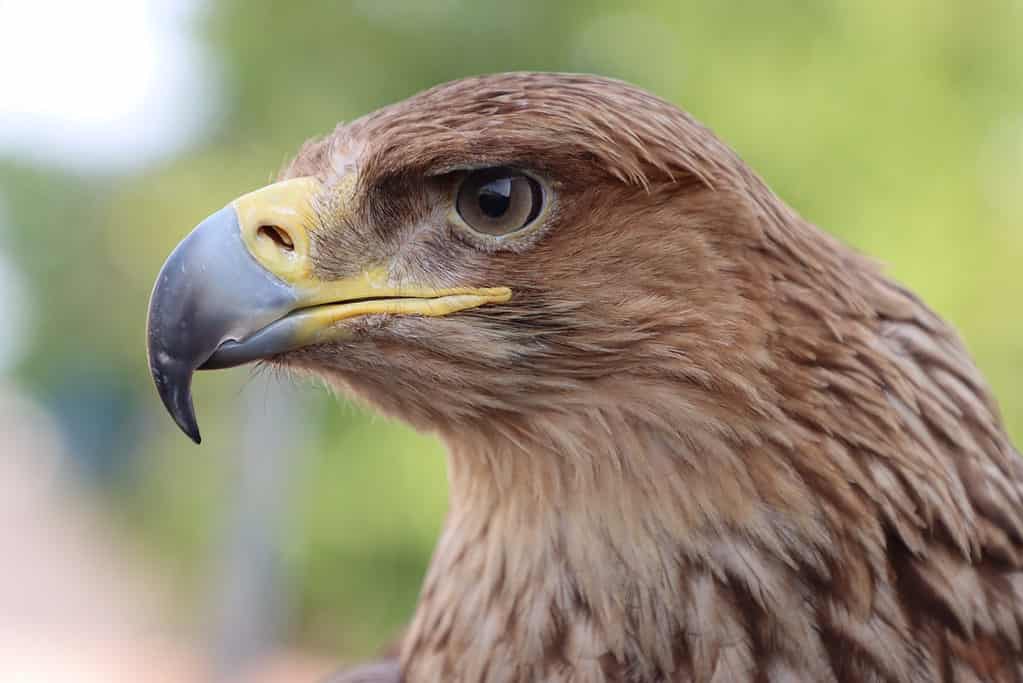
Eastern imperial eagle (Aquila heliaca)

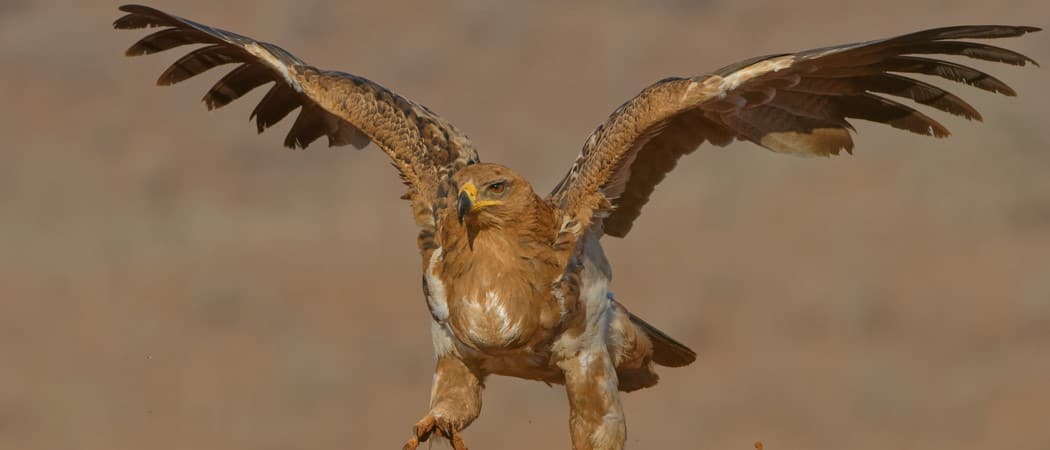
The tawny eagle enjoys a varied diet and hunts for or steals its food

The tawny eagle is the national animal of Ghana. This bird was chosen as a symbol of protection and strength. Two tawny eagles appear on the country’s crest, their gaze vigilant as though overseeing the wellbeing of the nations.

A large raptor somewhat reminiscent of a golden eagle with lighter-colored plumage, this avian can be found throughout western Africa, eastern, and southern Africa, and India. It may also be found in a few north African locations, such as south-central Morocco and even Algeria.

This national emblem is a skilled hunter although it is not above eating carrion or engaging in theft to obtain a meal. Compared to other eagles which live in the tropics, it enjoys a rather varied diet and hunts 200 species including flamingos, genets, and pigeons. The tawny eagle has a preference for savannahs, dry steppes, and desert regions.

As far as eagles go, the tawny eagle certainly isn’t the biggest and is actually considered rather small in size for a member of the Aquila genus, and medium-sized in general. That said, it is pretty large for a raptor and is capable of reaching 30 inches in length, and 7 lbs in weight.

The eagle is fairly tolerant of humans in Asia and may remain passive when approached by observers as long as a certain distance is maintained. About 100,000 individuals are believed to exist in the wild, at present.

Where To Find The Top Wildlife in Ghana
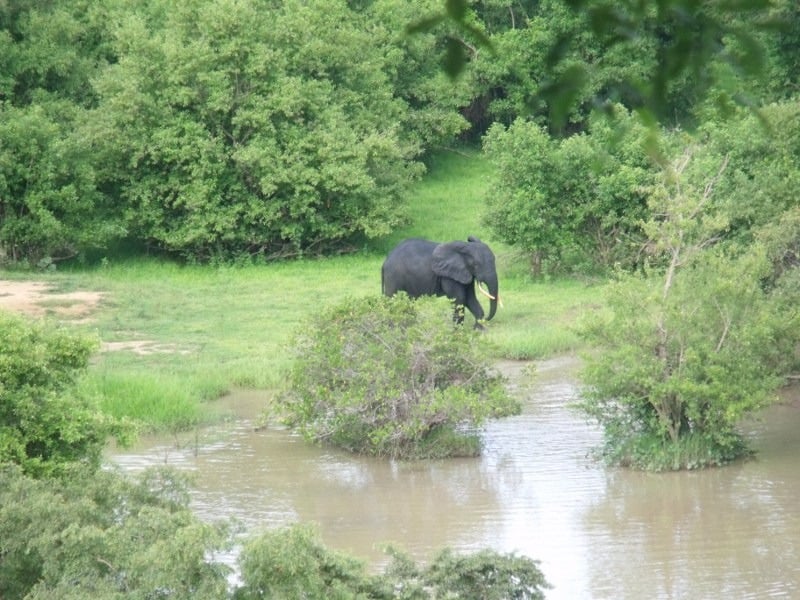
Ghana is home to a wide range of national parks and reserves

If you want to see wildlife in Ghana, visit the country’s different ecosystems. As various animals live in each one.

  • Mole National Park – In Northern Ghana, Mole National Park is a great place to go hiking, where you may see many examples of native animals, including hippos, buffalo, elephants, lions, and leopards. While you can visit animals in zoos in Ghana, like the Accra Zoo and the Kumasi Zoo, you may also want to see them in their natural surroundings.
  • Bui National Park – The Black Volta River, which is home to a large herd of hippos, bisects this national park. You are also very likely to see other native animals, like antelope, leopards, and monkeys.
  • Boin Tano Forest Reserve – The swampy area created by the Bisao and Tano rivers at this reserve is a great place to see endangered yellow-backed duiker and ursine colobus primates. This reserve’s bush-filled areas are also a fantastic place to see many of Ghana’s endangered birds, including white-breasted guinea fowls and the yellow-bearded greenbuls, along with other wildlife.
  • Nini Suhien National Park and Ankasa Resources Reserve – Managed as one unit, this area in southern Ghana is a great place to see African elephants and endangered Diana monkeys. Look in the bush at this park and reserve to see how many of the 260 bird species known to have visited this park you can spot.
  • Kakum National Park – The 1,150-foot-high Kakum Canopy Walkway is a fantastic place to spot Diana monkeys, yellow-backed duikers, red river hogs, and African elephants. This park’s bush-filled areas are home to many endangered birds, including African grey parrots and hornbills.

The Most Dangerous Animals in Ghana Today
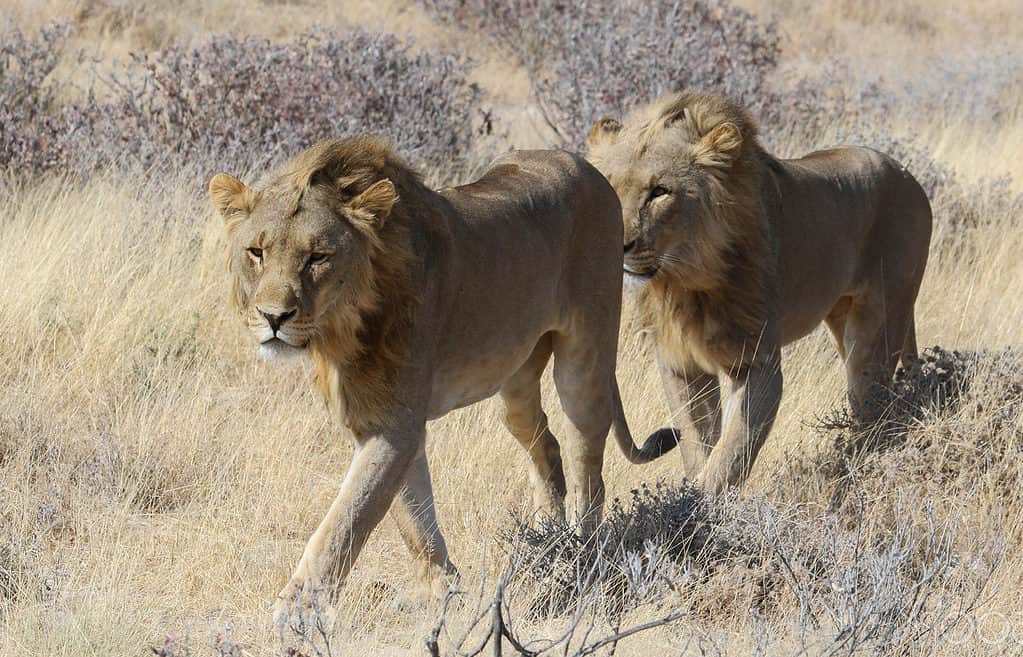
Two lions on grassland

In spite of their relatively small population lions constitute a real threat to human safety in Ghana

While most Ghana animals are friendly if you do not hurt them, there are some deadly animals in the country.

  • Hippopotamuses are large animals that often weigh more than 3,000 pounds, and they are highly unpredictable. They often use their tusks as weapons. Hippos have enormous teeth that can tear predators, including humans, to shreds. They are some of the most deadly animals in Ghana.
  • Mosquitoes – While the mosquito is tiny, but it is one of the most deadly animals in Ghana because it can transmit malaria. If you are going to travel to Ghana, be sure to take precautions to avoid this deadly animal.
  • Elephants – While elephants tend to be peaceful animals when left alone when humans encroach upon their territories, elephants often become dangerous. They often crush people to death.
  • Black mamba – The black mamba is the longest poisonous snake in Africa, and it can strike up to 12 times within a minute. These strikes shut down the respiratory system, so they are generally fatal. Help usually cannot act fast enough, which makes this one of the most dangerous animals in Ghana.
  • Lions – While the number of lions in Ghana is relatively small, there have been reports of lions killing humans.

Endangered Animals In Ghana
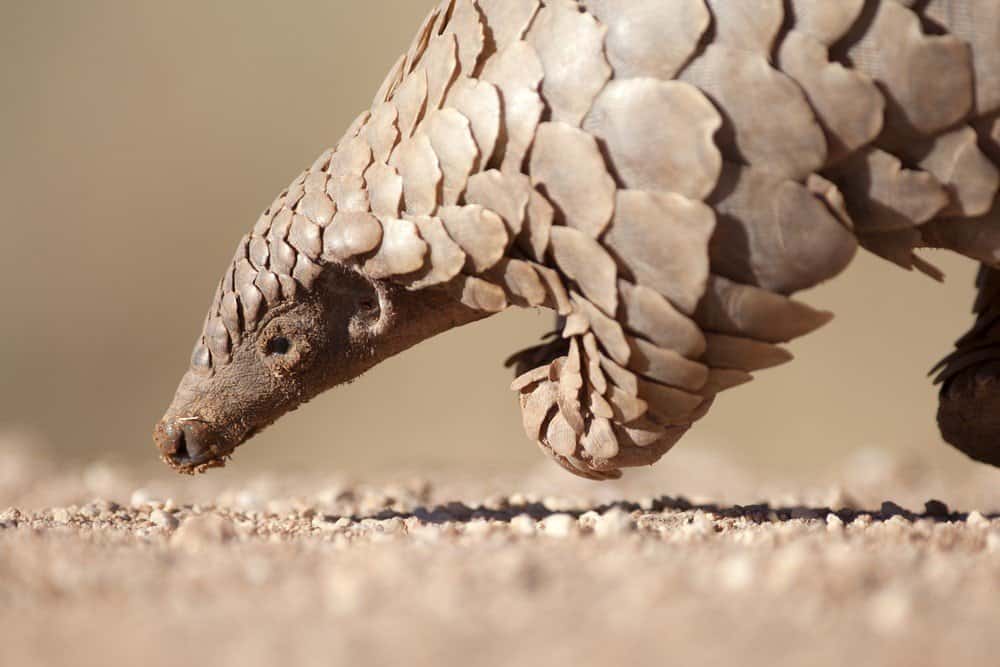
Pangolin looking for ants to eat

The tree pangolin is one of Ghana’s endangered species

There are many types of endangered animals in Ghana, and the number continues to grow as humans encroach on more native habitats regularly. Other animals are poached, and their body parts are sold for use in traditional medicine. The country is home to five endangered mammals, 11 vulnerable species and 14 near-threatened species. While shrews and bats make up many of these endangered animals, there are also other threatened species. Most of them are not poisonous.

  • African white-bellied pangolin: Also known as the tree pangolin (Phataginus tricuspid), this elusive mammal looks something like a sentient pineapple, with its pale three-pointed scales which seem to slightly extend outwards. Found in Western, Central, and Eastern Africa, it prefers humid heavily forested areas.
  • Baer’s wood mouse: A tiny rodent with light brown fur, this wood mouse also has large dark eyes, and can be found in neighboring Sierra Leone and Ivory Coast. Not much is known about the diminutive critter although scientists agree it is threatened by its shrinking habitat.
  • Big-eyed forest treefrog: This medium-sized, arboreal amphibian is characterized by light brown skin, bulging brown eyes, and large dark pupils. It is mostly found close to streams.

Other endangered species include:

  • Bobini reed frog
  • Dark-brown serotine
  • Ghana river frog
  • Ivory Coast frog
  • Ivory Coast running frog
  • Johnston’s genet
  • Liberia River frog
  • Olive colobus
  • Sooty mangabey

The Largest Animal in Ghana
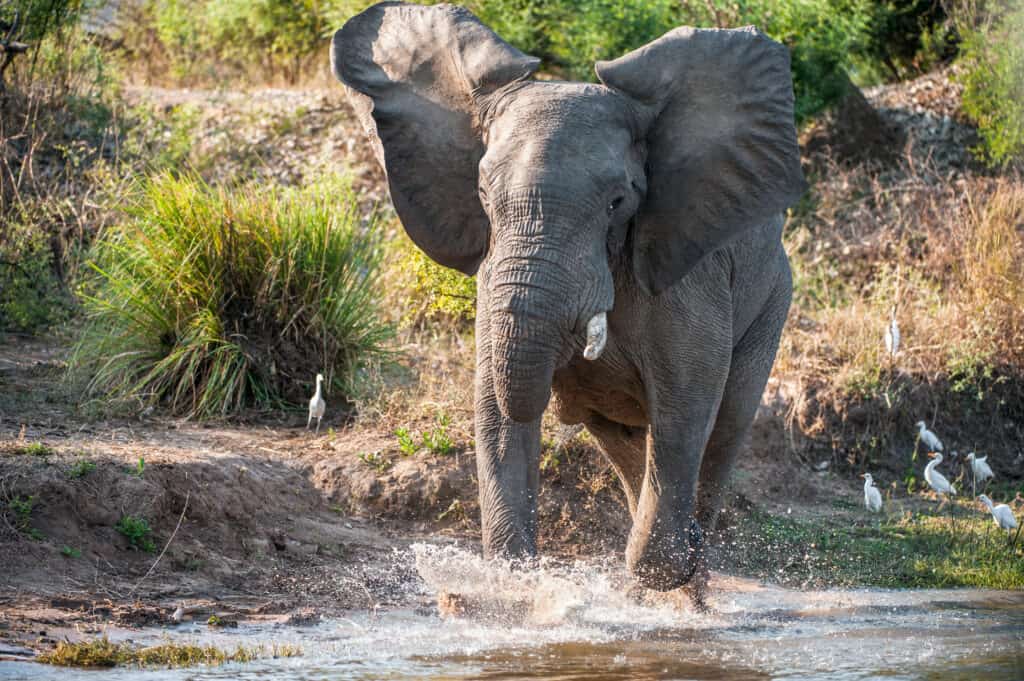
angered elephant

African forest elephants have seen their population plummet from several millions to under 100,000 in the space of two hundred years

Ghana’s largest animal is the African forest elephant (Loxodonta cyclotis) which can be found in its deciduous evergreen forests. Like their larger relatives, the African savannah elephant, they possess two protuberances at the end of their trunks. Unlike them, however, males of this subspecies reach a maximum height of 9 feet at the shoulder and are capable of weighing of 7 tons at the most.

Like their southern cousins, they are also highly sociable and can form groups as large as 20 individuals comprising of mothers, calves, and youngsters, under the sage direction of the family matriarch. They also enjoy a diet of calcium-rich bark, leaves, and fruits, and sip on mineral-rich water while also taking advantage of mineral licks to supplement their nutritional needs.

Unlike their cousins, their tusks are straight rather than curved and point downwards. These pachyderms which were revered as a symbol of power in ancient Ghana have experienced a drastic decline in terms of their population: at the start of the 19th century, they numbered 26 million as opposed to less than 100,000 today.

The Rarest Animal in Ghana
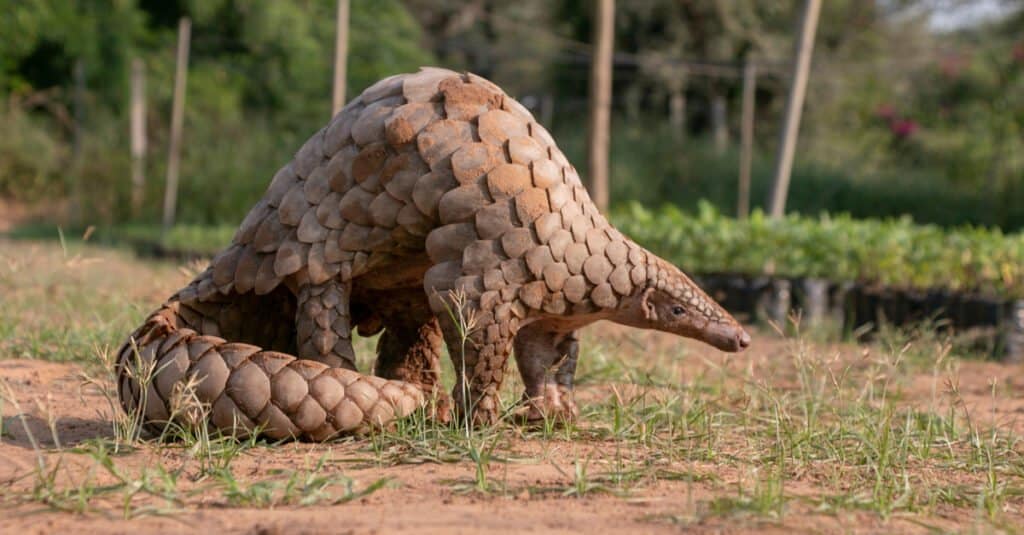
Animals that Eat Insects – Pangolin

The giant pangolin breaks open termite mounds and using its sticky tongue extracts their arthropod residents

The giant pangolin (Smutsia gigantea) is one of this west African nation’s rarest, and most elusive creatures. Found along the heavily forested regions close to the Atlantic coast, the largest of all pangolin species can also be found in Central and Eastern Africa. It is also capable of living in the savanna and prefers lowlands with water supplies.

The insectivore which spends its spare time breaking open termite mounds and extracting proteinous goodness thanks to a sticky tongue, is capable of measuring 16 inches in length. Such a feat of strength however is often beyond young giant pangolins and they must traipse after their mother tucking in once she’s exposed the hidden arthropods by shattering their mound.

Males of the species are capable of growing to 4.6 feet and weighing up to 72 lbs. Wildlife experts aren’t too sure just how many of these scaly mammals are left in the wild. However, they are certain that poaching and an interest in their scales has resulted in them becoming rather vulnerable.

The Flag of Ghana
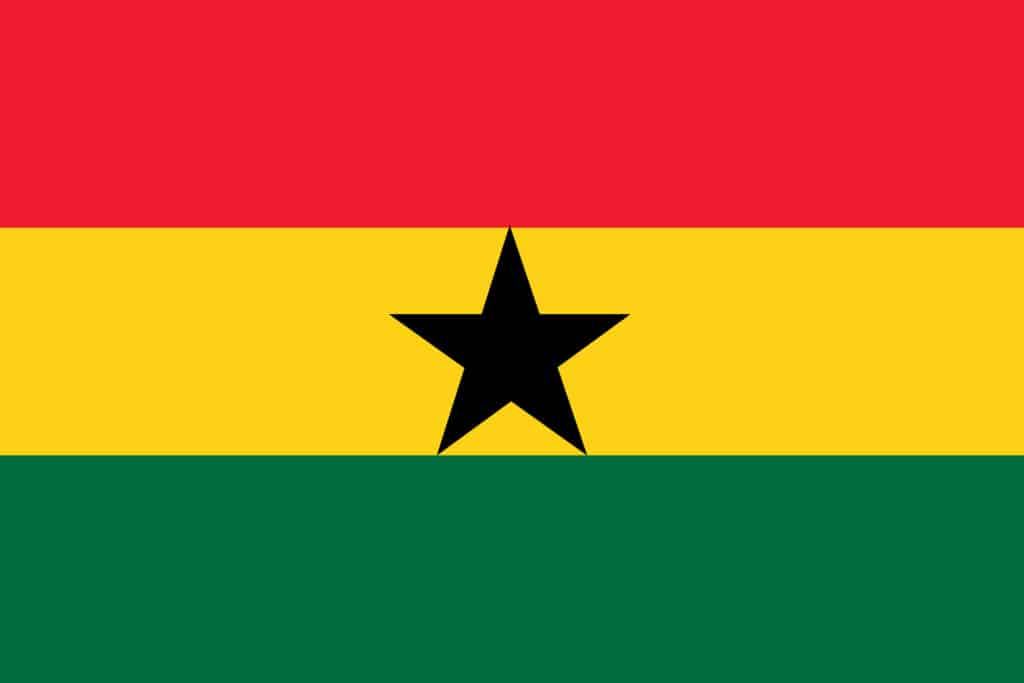
The Flag of Ghana Vector

The flag of Ghana features a three-striped style of red, gold, and green. A black star rests in the center. Red represents the blood of those who died during Ghana’s struggle for independence, gold represents Ghana’s mineral wealth, and green symbolizes the forestry of Ghana. The black star represents the Lodestar of African Freedom.

Ghana’s flag is comprised of red, gold, and green, with a black star situated in the center. Red symbolizes those who lost their lives as the country struggled to gain independence from British rule. The gold color symbolizes the mineral which once gave the nation its name, of which there is an abundance, as well as bauxite and diamond.

The flag’s green stripe represents Ghana’s verdant forests and fertile land which provides abundant crops and the timber and shea butter it is renowned for. Finally, the black star, also known as the Lodestar of African Freedom, represents Ghanaians’ ownership and control over their land. The flag itself was designed by artist and academic Theodosia Okoh and made official at the moment of the nation’s independence from Britain, on March 6, 1957.

Animals Found in Ghana

214 species documented in our encyclopedia

Thank you for reading! Have some feedback for us?